An epoxy floor usually peels because the coating lost its bond to the concrete: the slab was not mechanically prepared, the surface was contaminated or sealed, moisture pushed up from below, or the product did not suit the conditions. Small, well-defined failures can sometimes be patched, but widespread peeling generally means the old coating has to be removed back to sound concrete before the floor is resurfaced. The first step in any epoxy floor repair is finding out why it failed.
This guide covers the common signs of a failed garage coating, what causes them in Ontario, when a repair or recoat is realistic and how full epoxy resurfacing is done.
Peeling, delamination, blistering and cracking: what you are seeing
- Peeling at the door or tire paths: coating lifting where hot tires, salt and meltwater concentrate. Often points to weak bond or thin, DIY-grade coating.
- Sheets lifting with a clean underside: the coating came away without concrete attached, a sign it never bonded properly to the slab (often no grinding, or a sealer underneath).
- Coating lifting with concrete attached: the top of the concrete itself was weak (laitance, scaling, salt damage).
- Blisters or bubbles: can be moisture vapour or outgassing from the slab, or trapped solvent. Blisters that contain liquid are a strong moisture clue.
- Cracks through the coating: usually a crack or joint in the concrete that moved and reflected through a rigid layer.
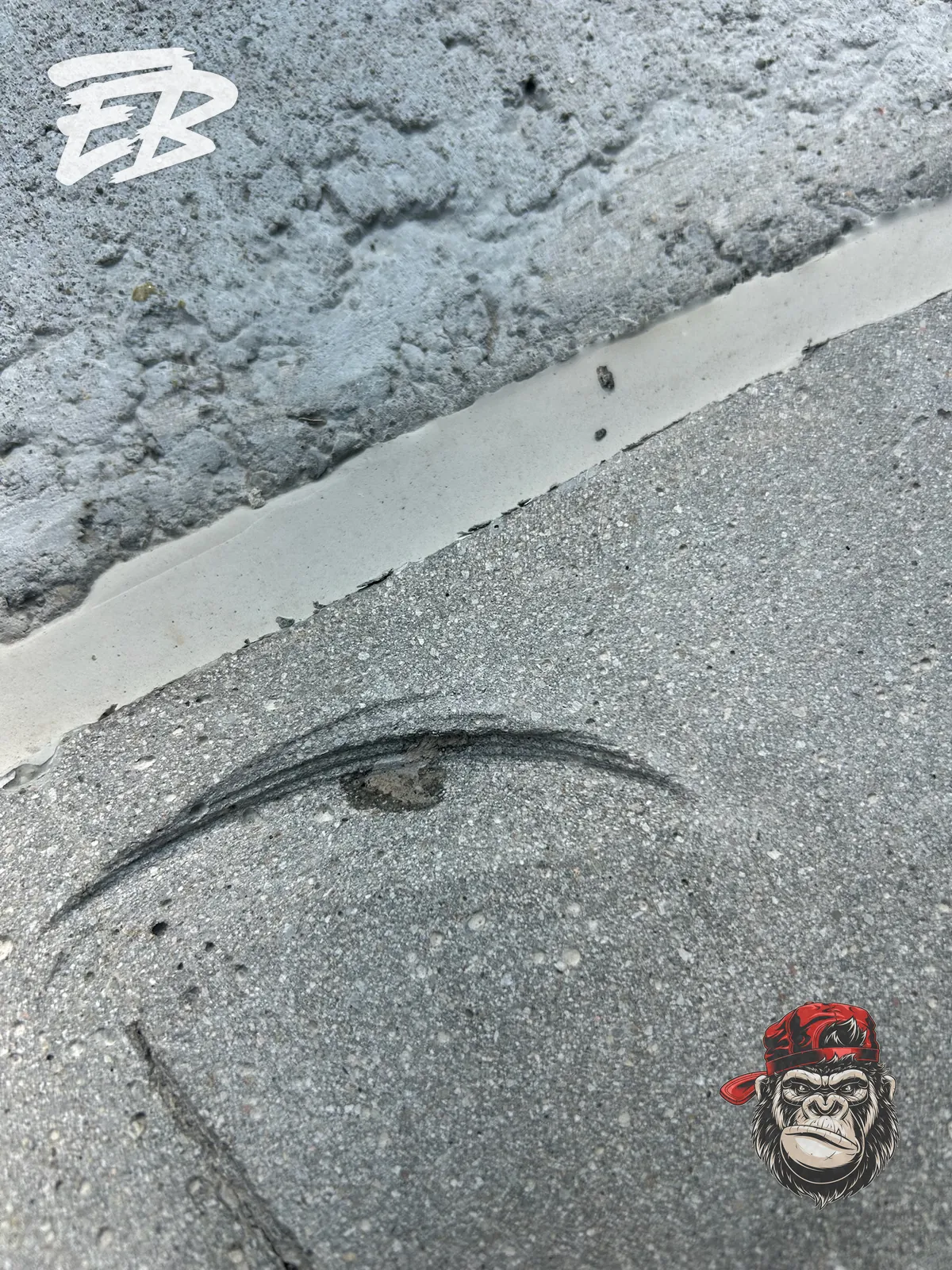
- Hot-tire marks and lifting: softening and pickup where warm tires sit, often with thin or incompletely cured products.
Why garage coatings fail in Ontario
No mechanical preparation
The most common cause. Coatings rolled over unground or acid-etched concrete bond to dust, laitance or sealer rather than to sound concrete. See concrete surface preparation for epoxy for what proper prep involves.
Moisture in the slab
Moisture vapour moving up through concrete can push coatings off, especially on slabs on grade and in basements. Moisture can be measured before coating, for example with the in-situ relative humidity method in ASTM F2170.
Salt and freeze-thaw damage
Road salt and meltwater break down the concrete surface near the door. If the coating sits on that weakened surface, it fails with it. Our post on scaling, pitting and spalling explains these patterns.
Unrepaired cracks and moving joints
Cracks that still move will crack a rigid coating above them. Joints need a detail that allows for movement.
Wrong product for the exposure
Thin one-part paints and some low-solids kits are not designed for vehicle traffic, hot tires and salt. Topcoats that are not UV-stable can also yellow and chalk where sunlight reaches the floor.
How a failed floor is assessed
Before quoting a repair, we look at:
- How much of the floor is affected, and where (door, tire paths, joints, random).
- Whether the coating is still well bonded in the "good" areas, checked by scraping and tapping.
- What came off with the coating: clean coating, dust, or concrete.
- Signs of moisture, efflorescence or liquid in blisters.
- Crack width, whether cracks are moving, and joint condition.
- What the old coating is, if known, and whether it is compatible with new materials.
When can a peeling epoxy floor be patched?
A local repair can make sense when:
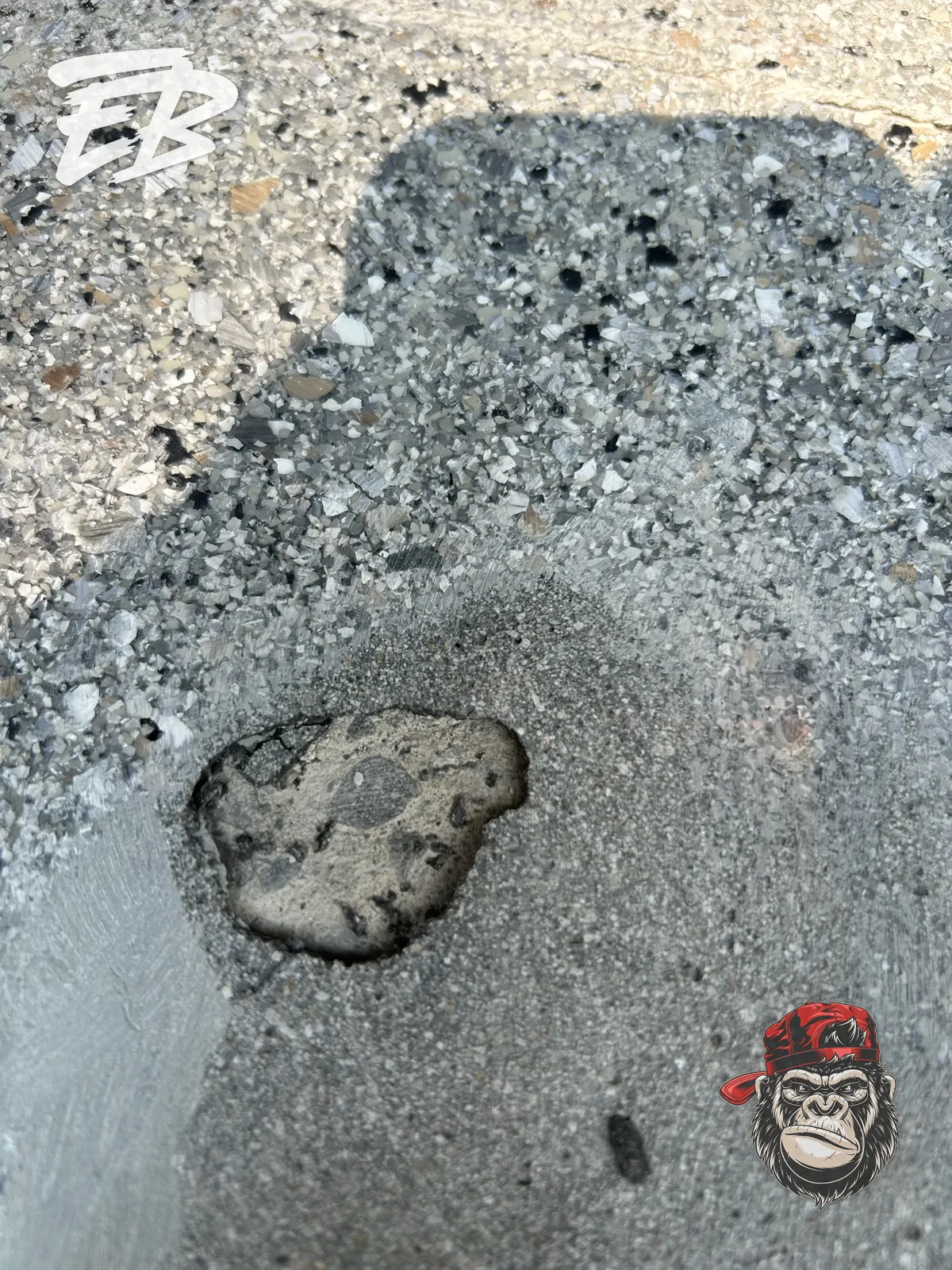
- The failure is limited to a small, defined area, such as a gouge or impact chip.
- The rest of the coating is well bonded and the cause is understood (for example, a dropped tool).
- The repair material is compatible with the existing coating.
Expect patches to be visible. Matching colour, gloss and flake pattern on an older floor is difficult, and a patch does not fix a floor that is failing for a systemic reason.
When epoxy resurfacing is the better answer
Full resurfacing is usually recommended when peeling is spread across the floor, when blisters keep appearing, or when the old coating's bond is doubtful. Resurfacing means:
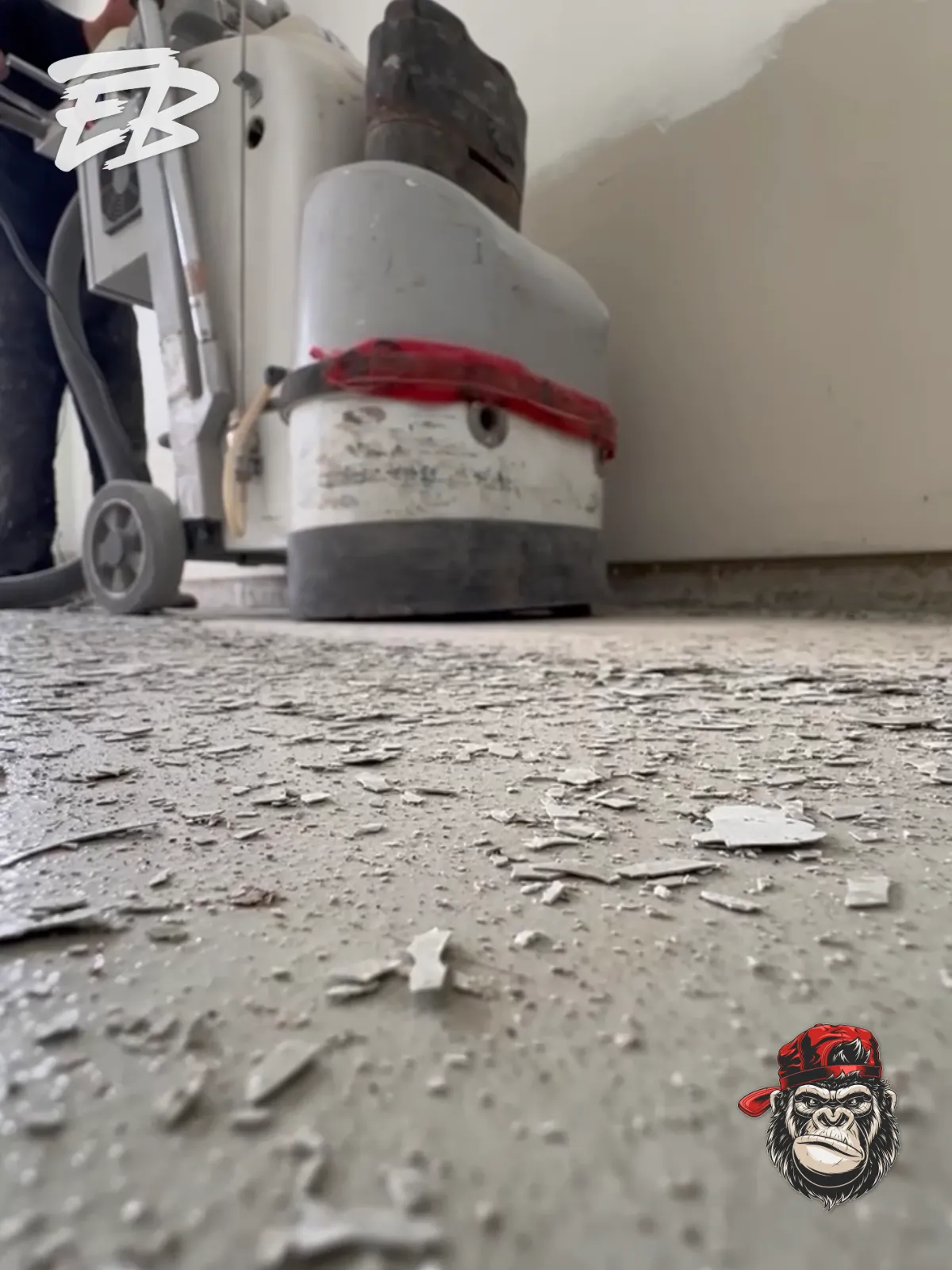
- Removing the old coating by grinding or other floor coating removal methods until sound concrete is exposed.
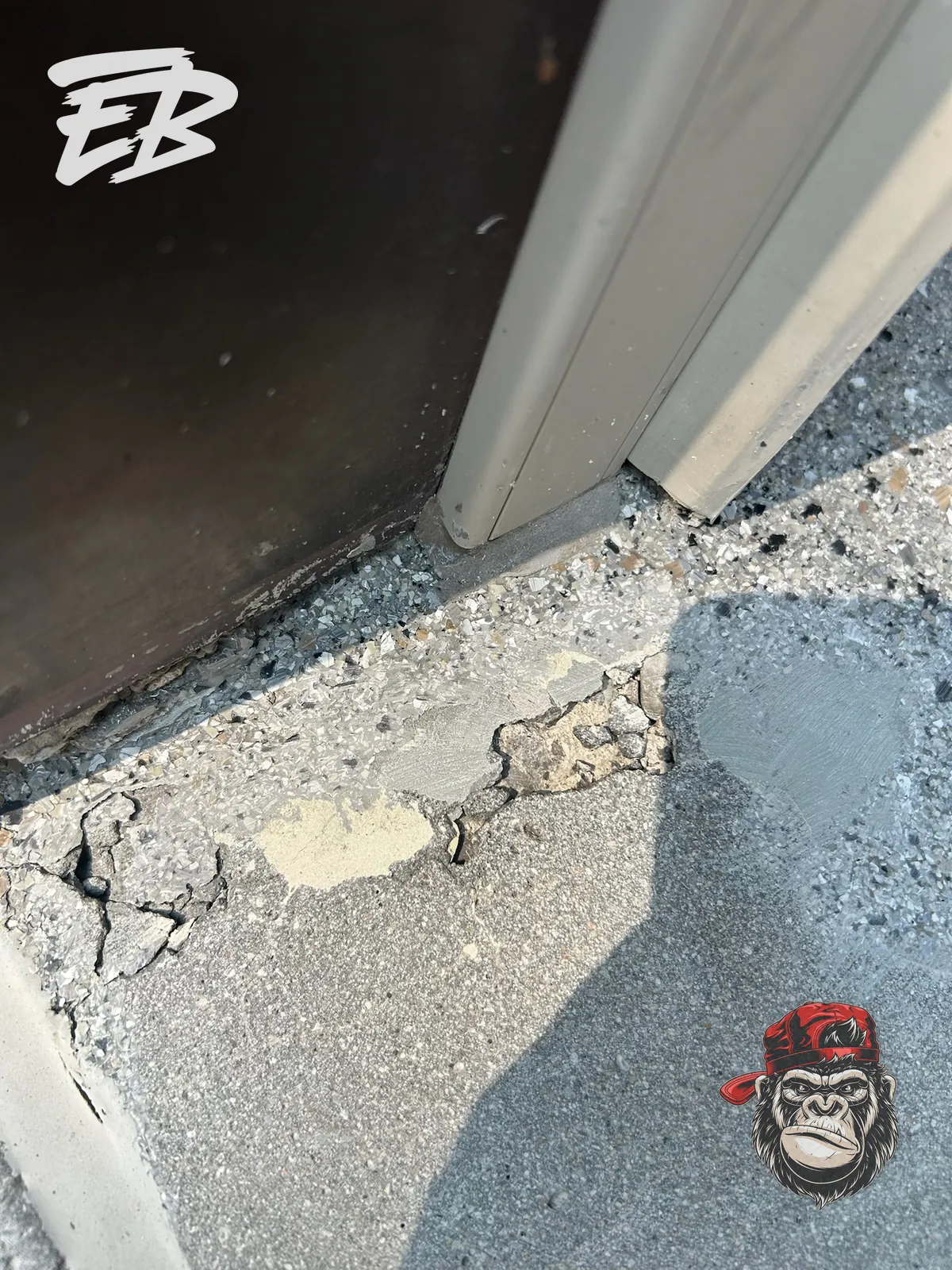
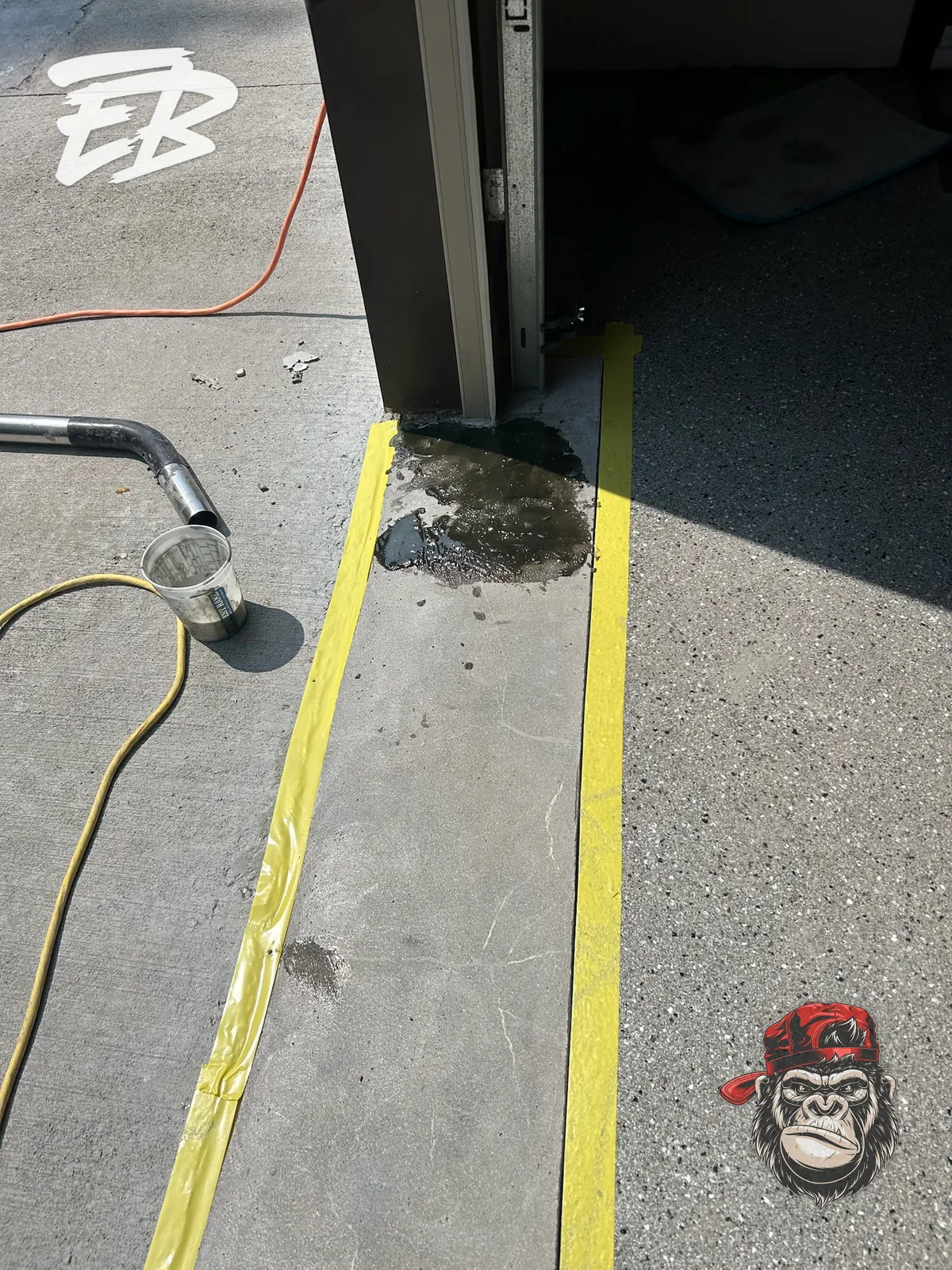
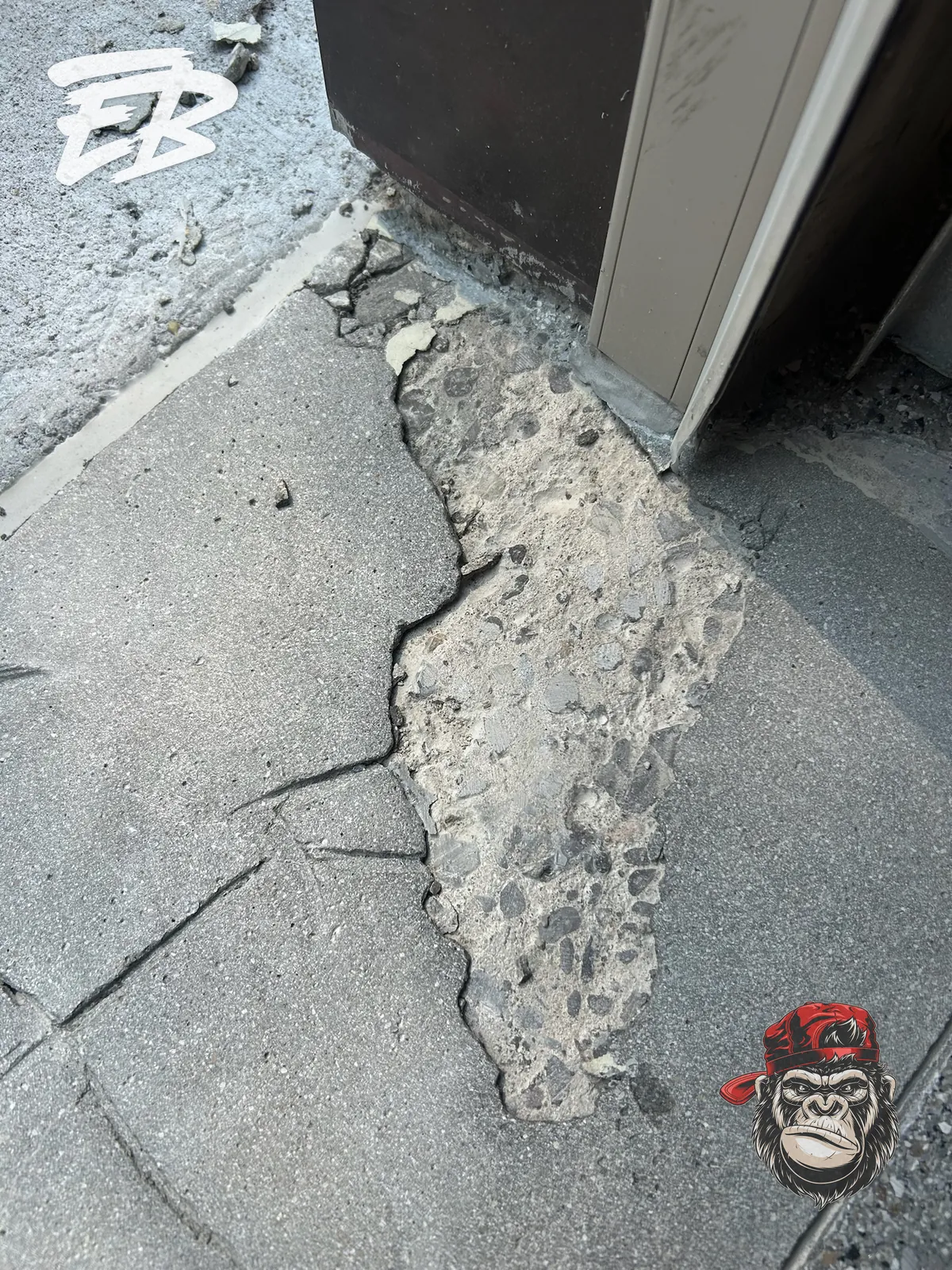
- Repairing the concrete: crack repair, spall and pit filling, and rebuilding damaged entrance edges.
- Testing moisture where the failure pattern suggests it, and adding a moisture-mitigating primer if the manufacturer allows it.
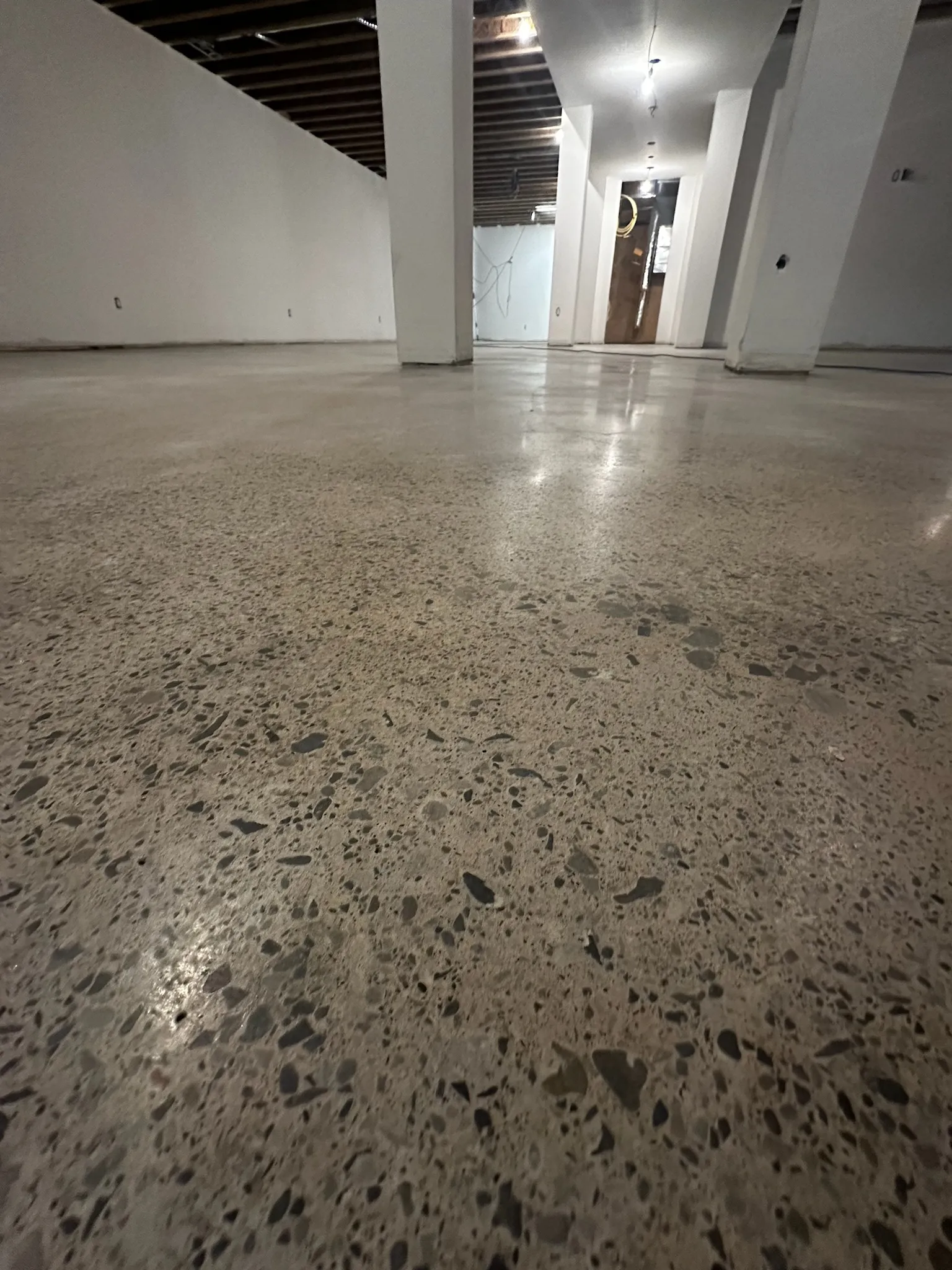
- Profiling the slab by concrete grinding to the profile the new system needs.
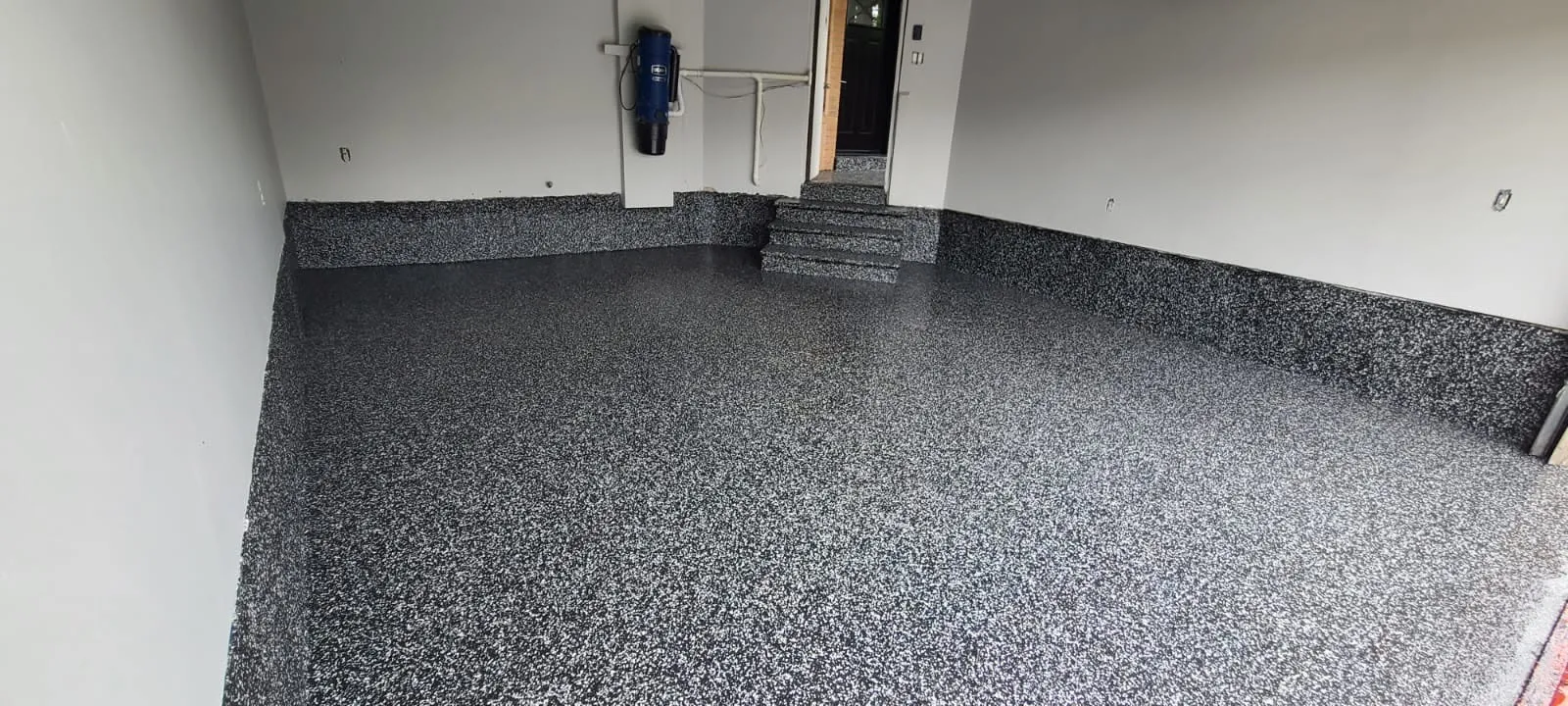
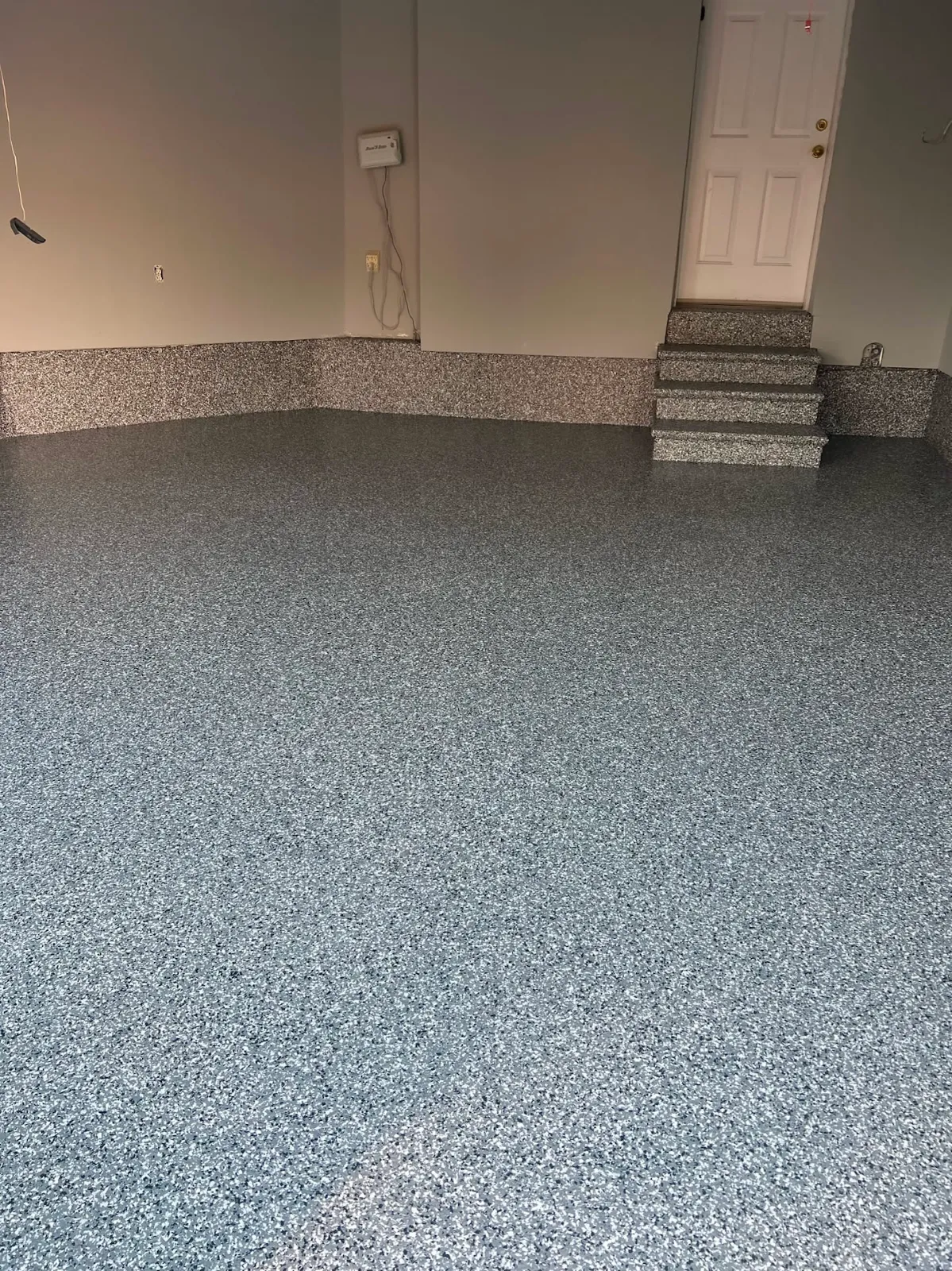
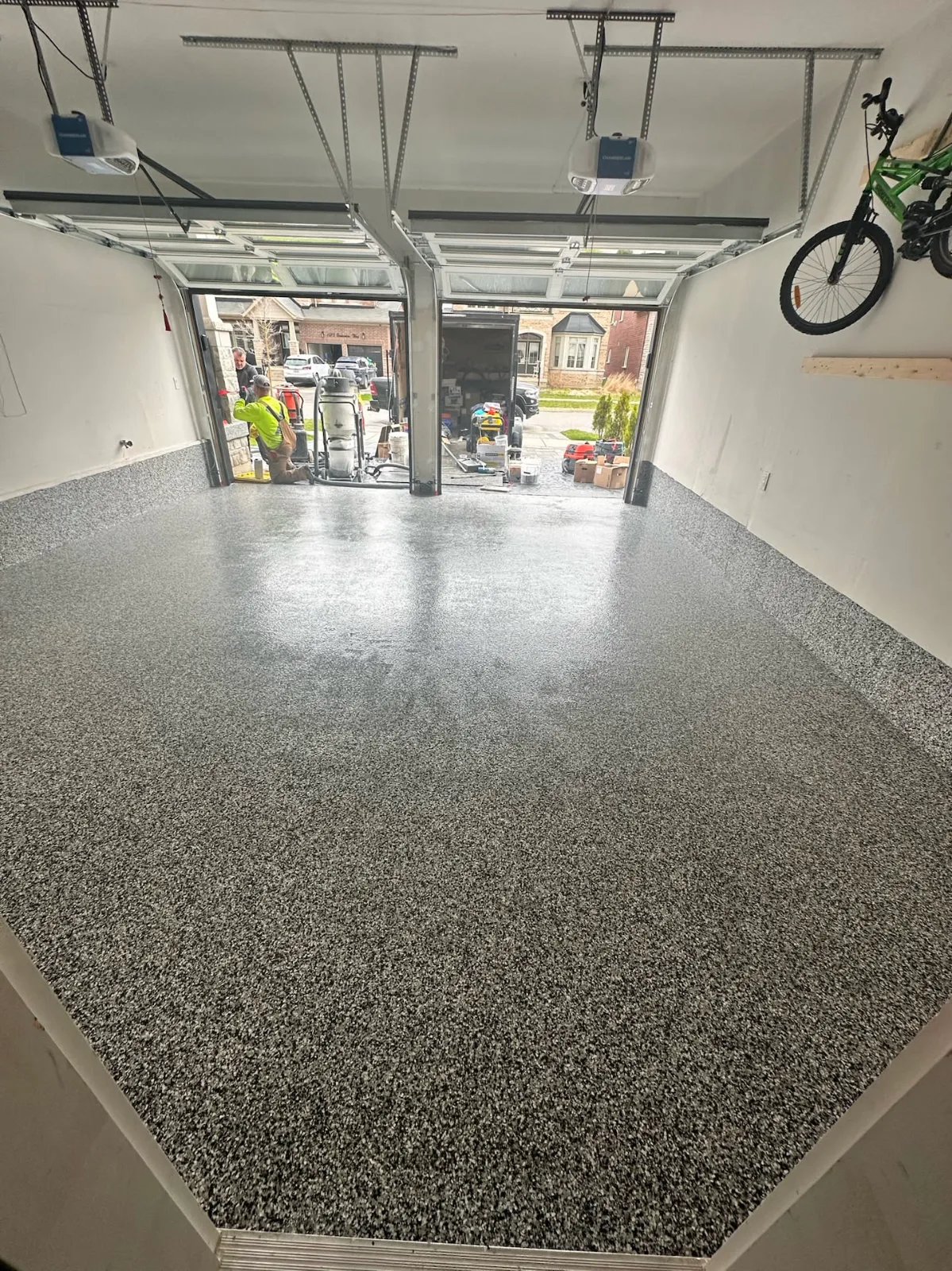
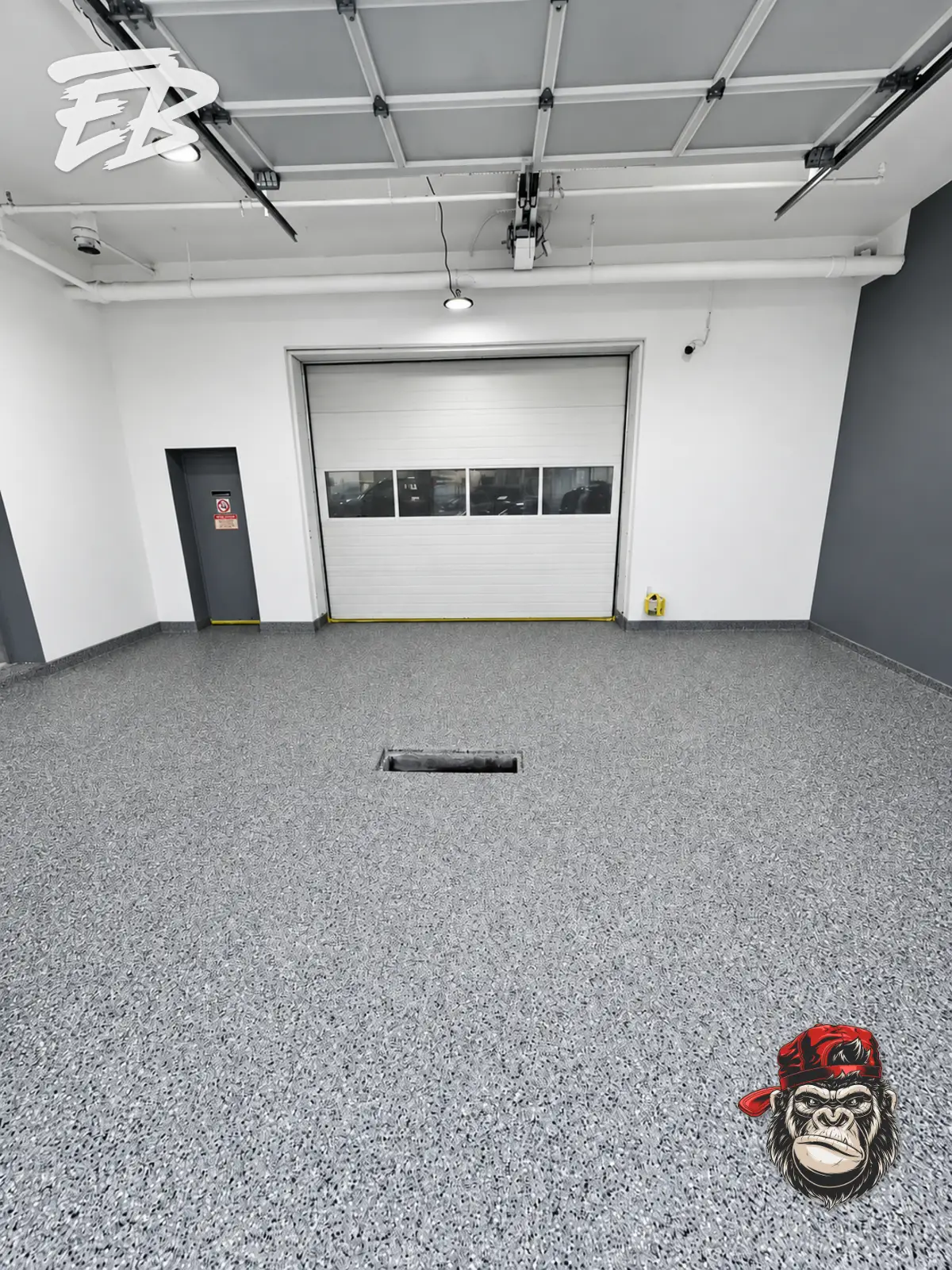
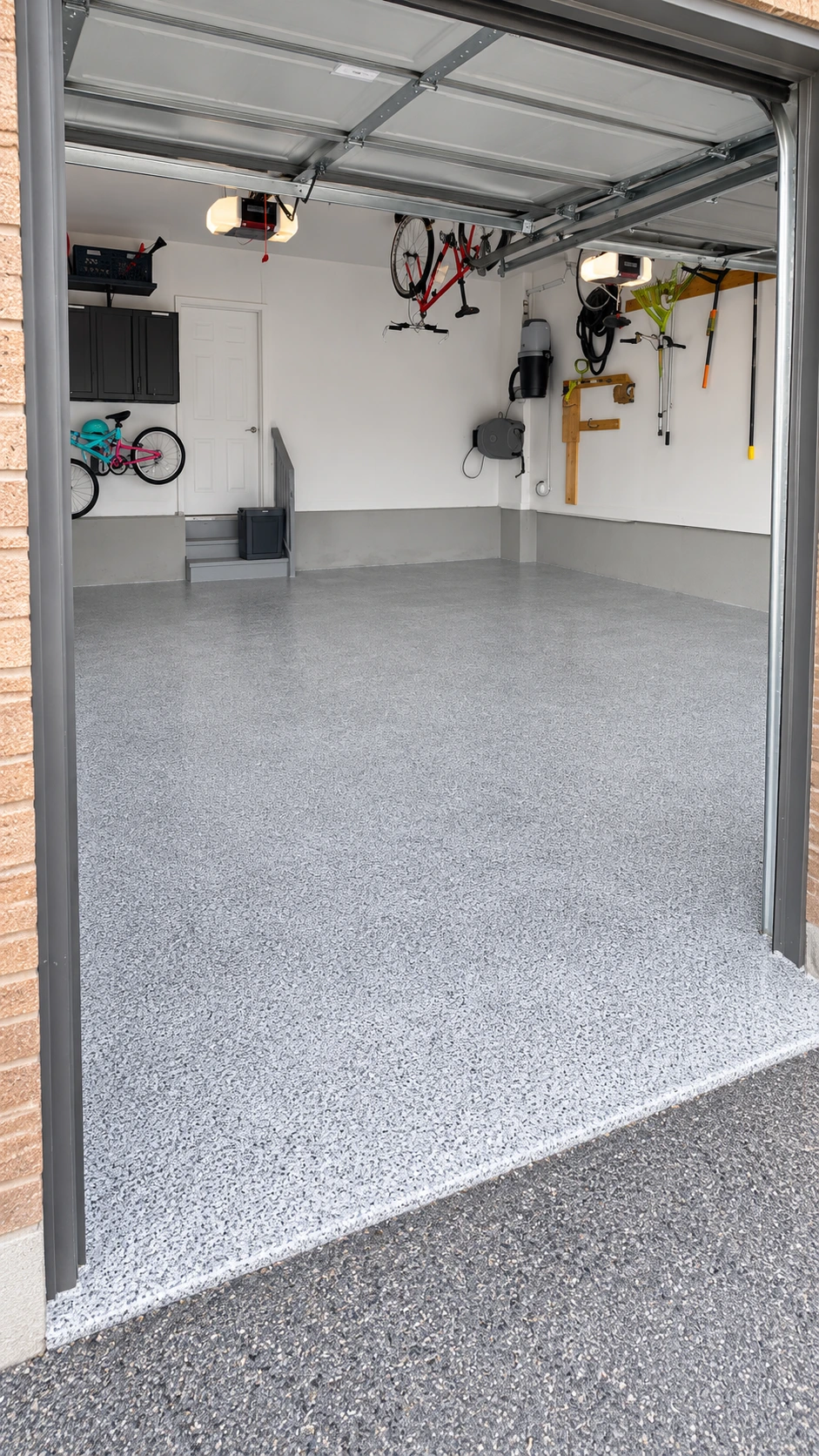
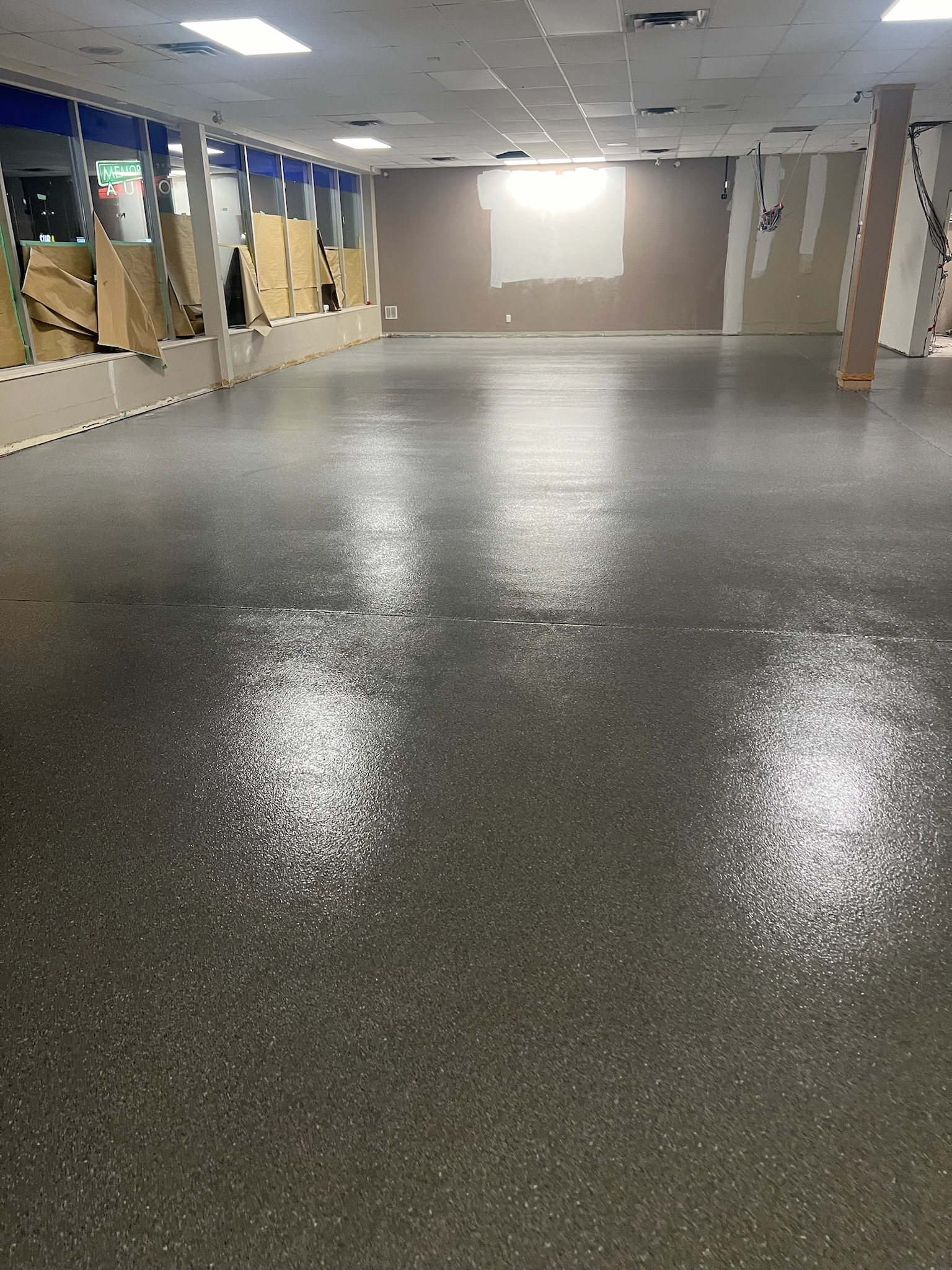
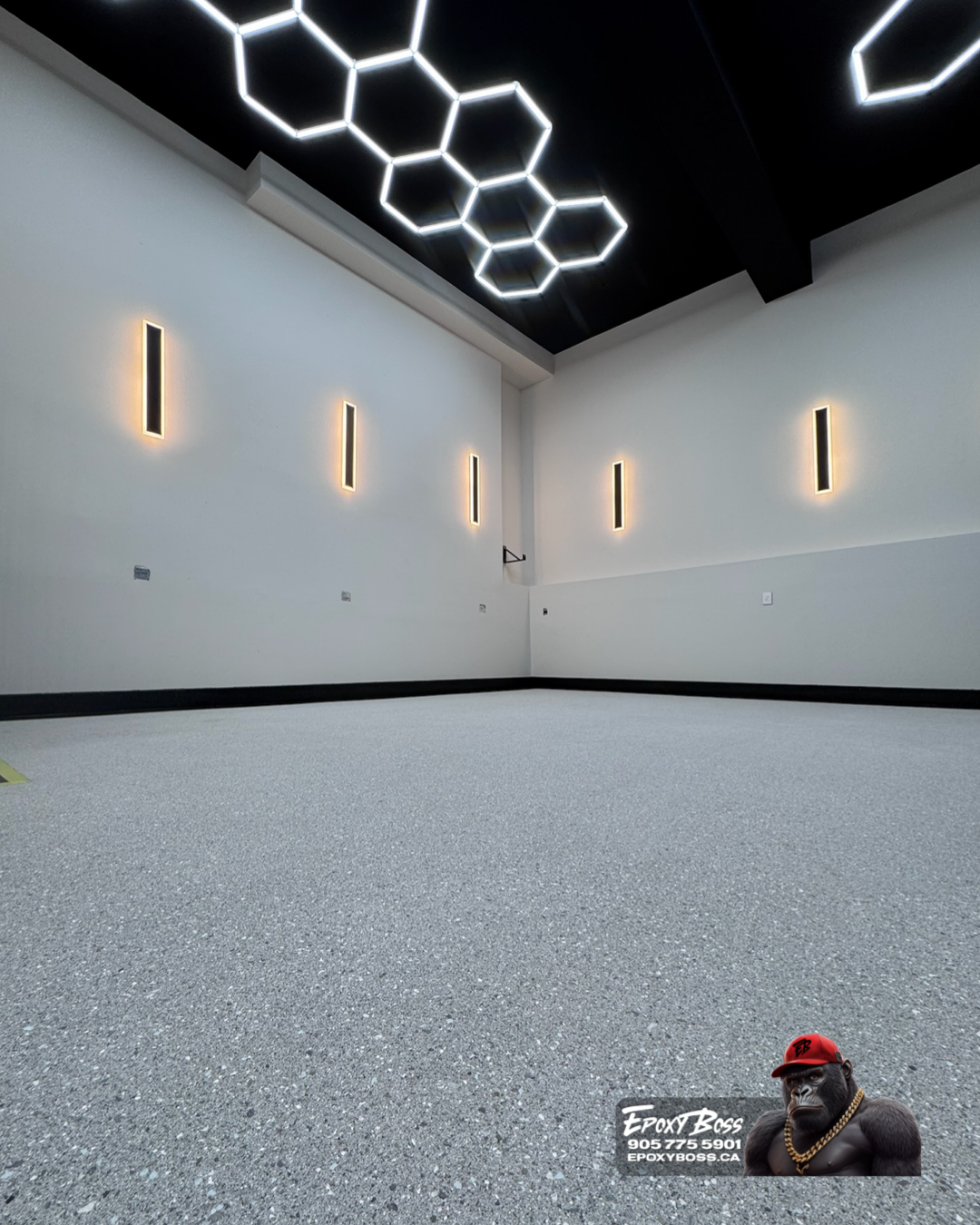
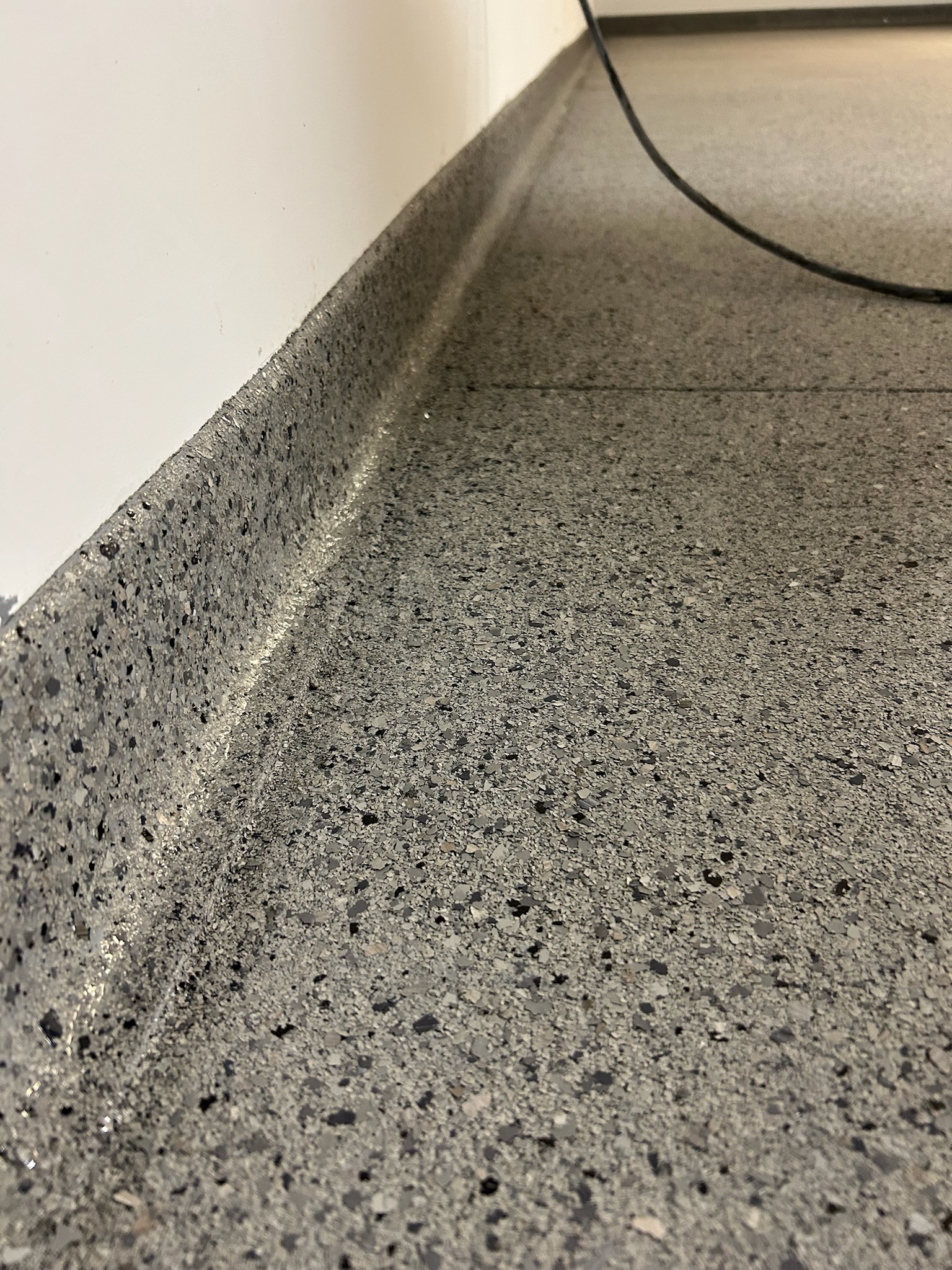
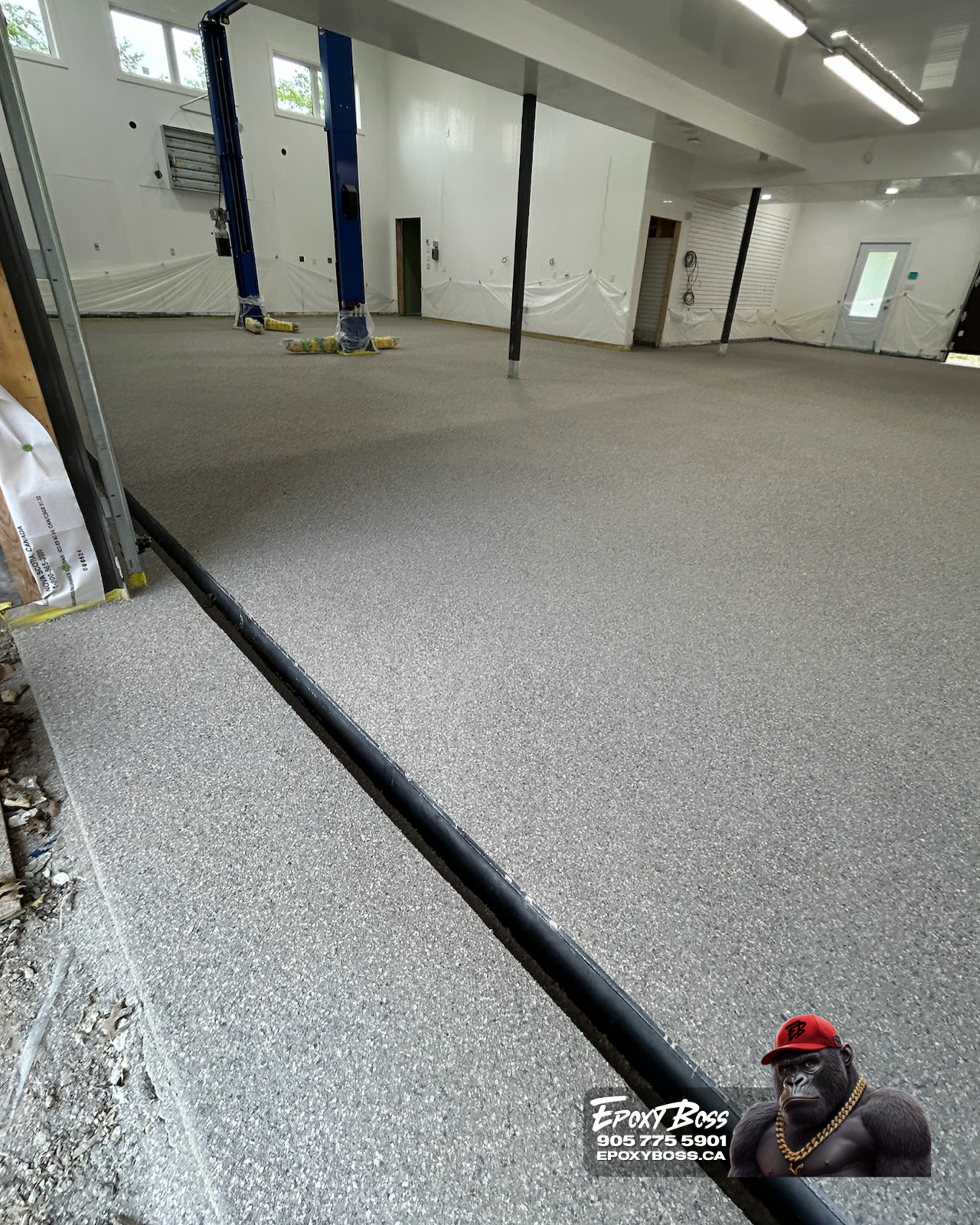
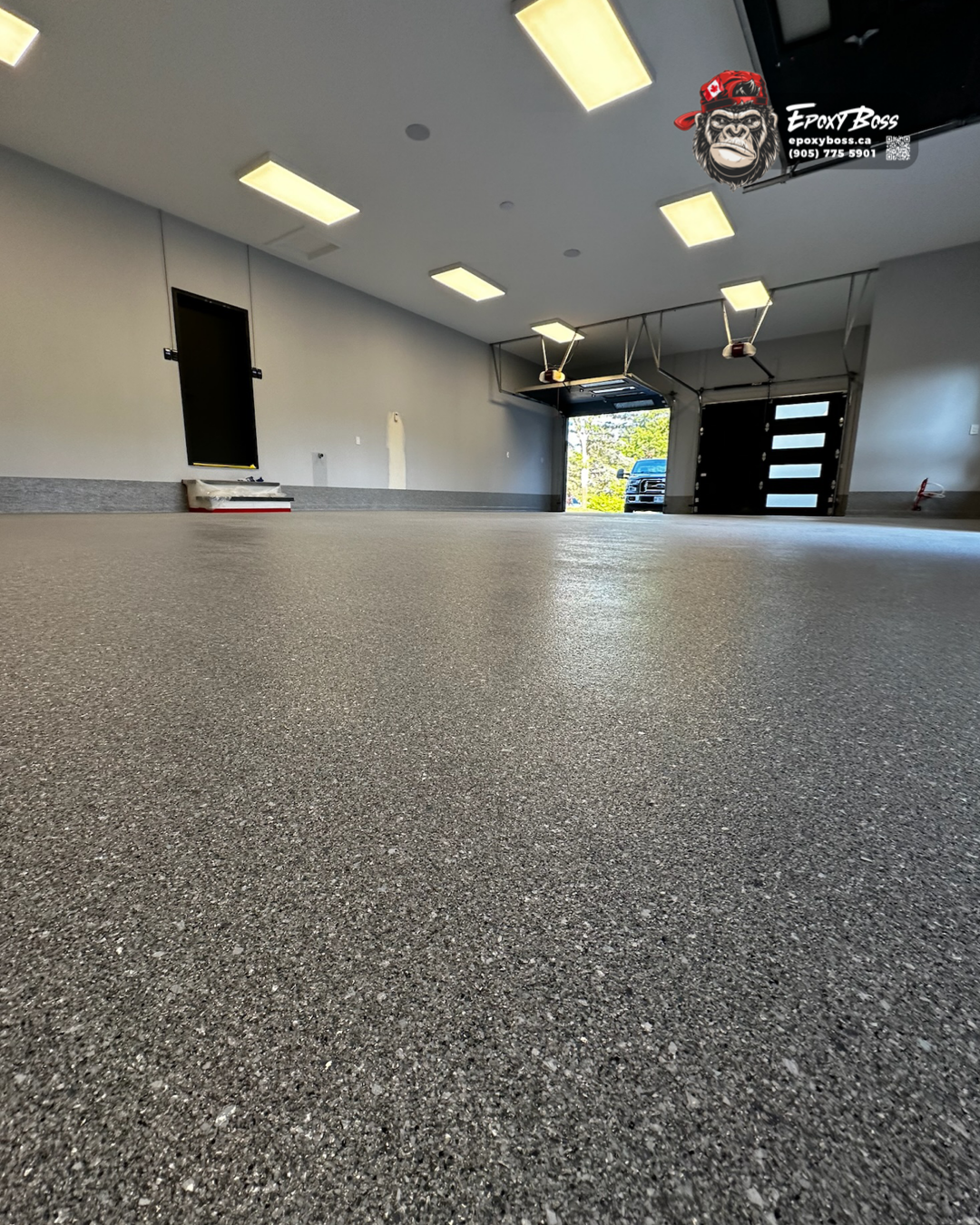
- Installing a new system, often a full-broadcast flake floor with a UV-stable clear topcoat.
Can a sound old coating simply be recoated? Sometimes. If it is well bonded, compatible and clean, it can be abraded and recoated. Our article on when you can recoat instead of replace covers that decision, and resurfacing a floor with cracks, stains and old paint walks through messier floors.
Barrie example: repairing the entrance before a new flake floor
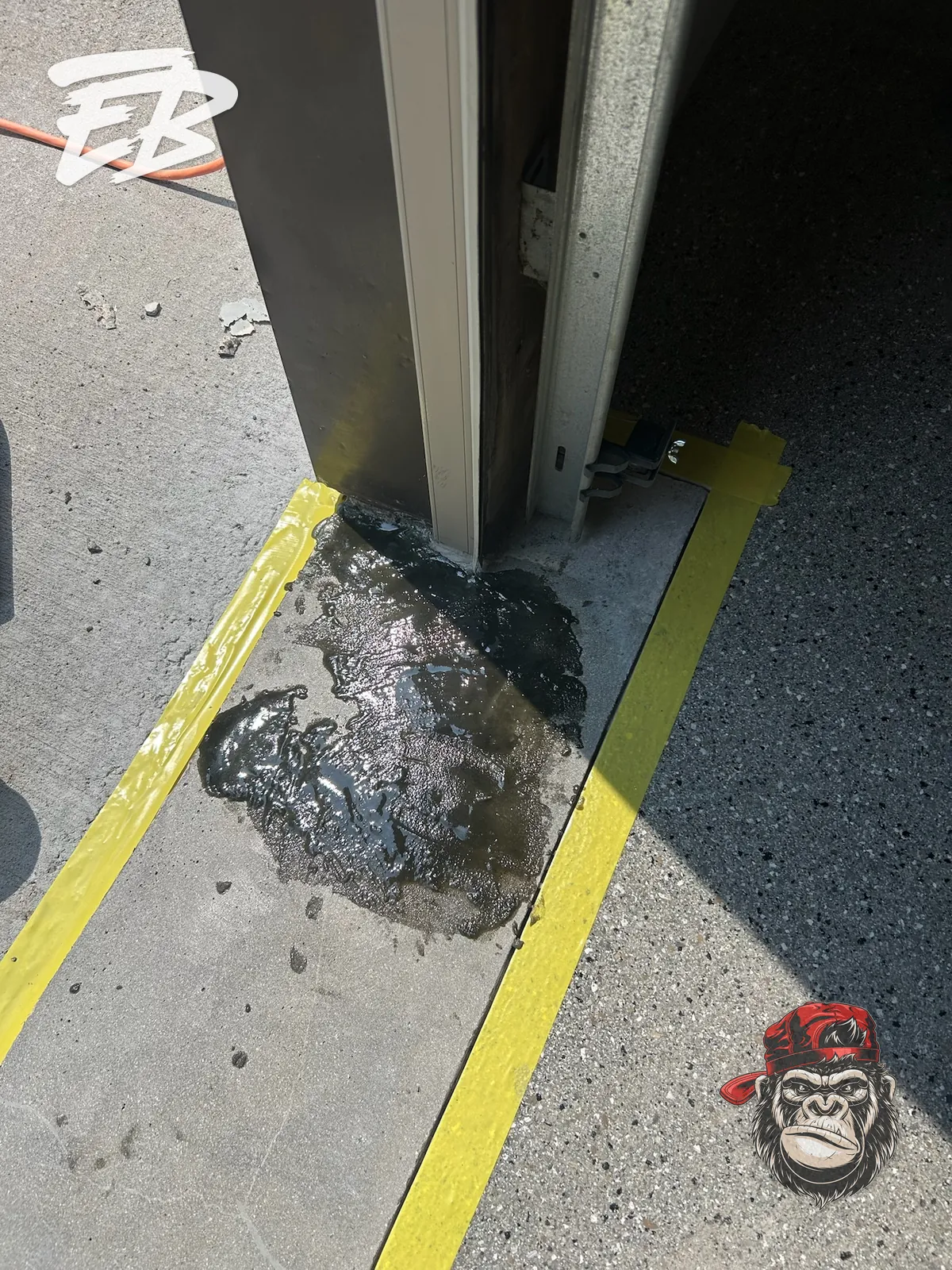
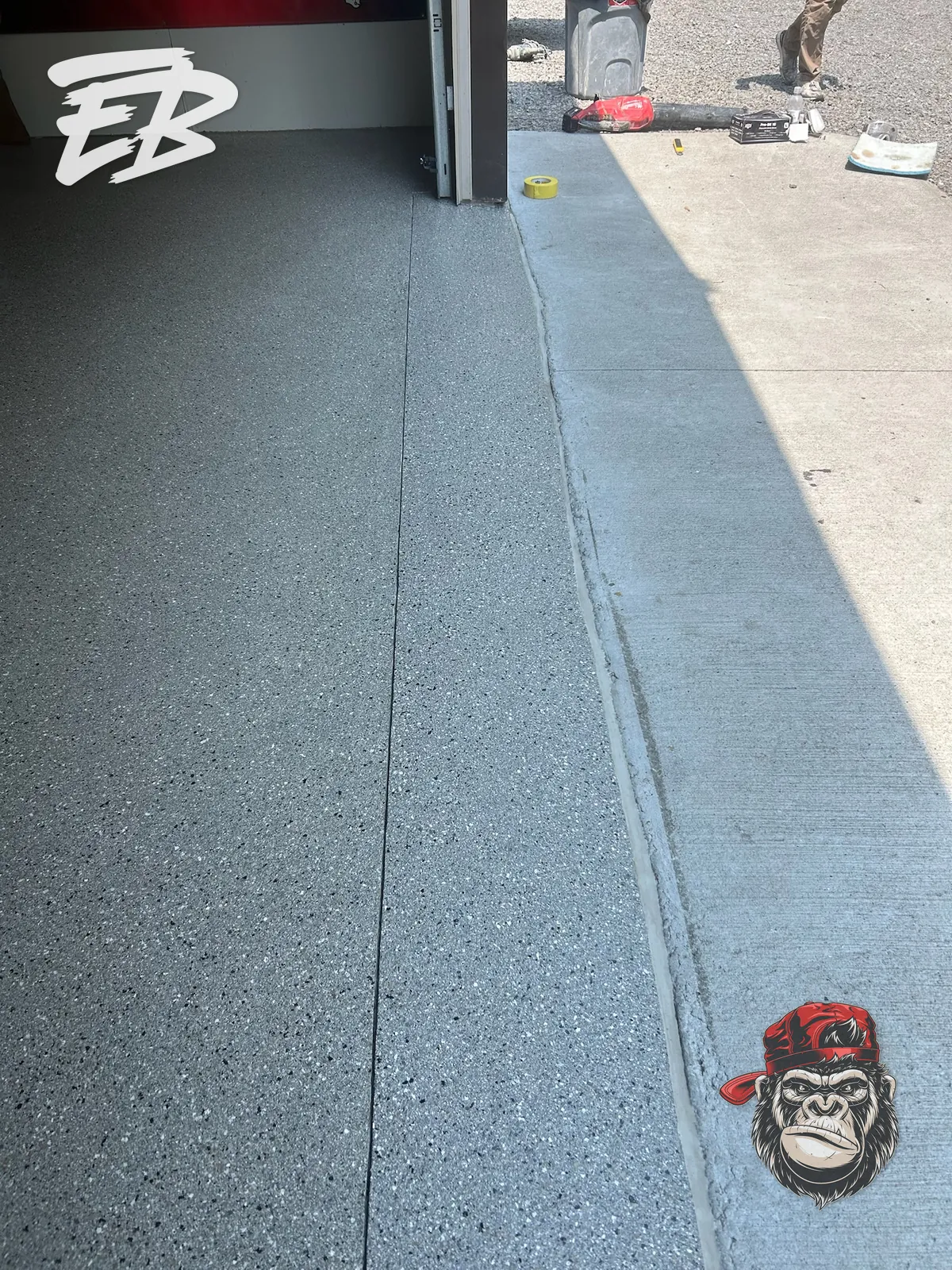
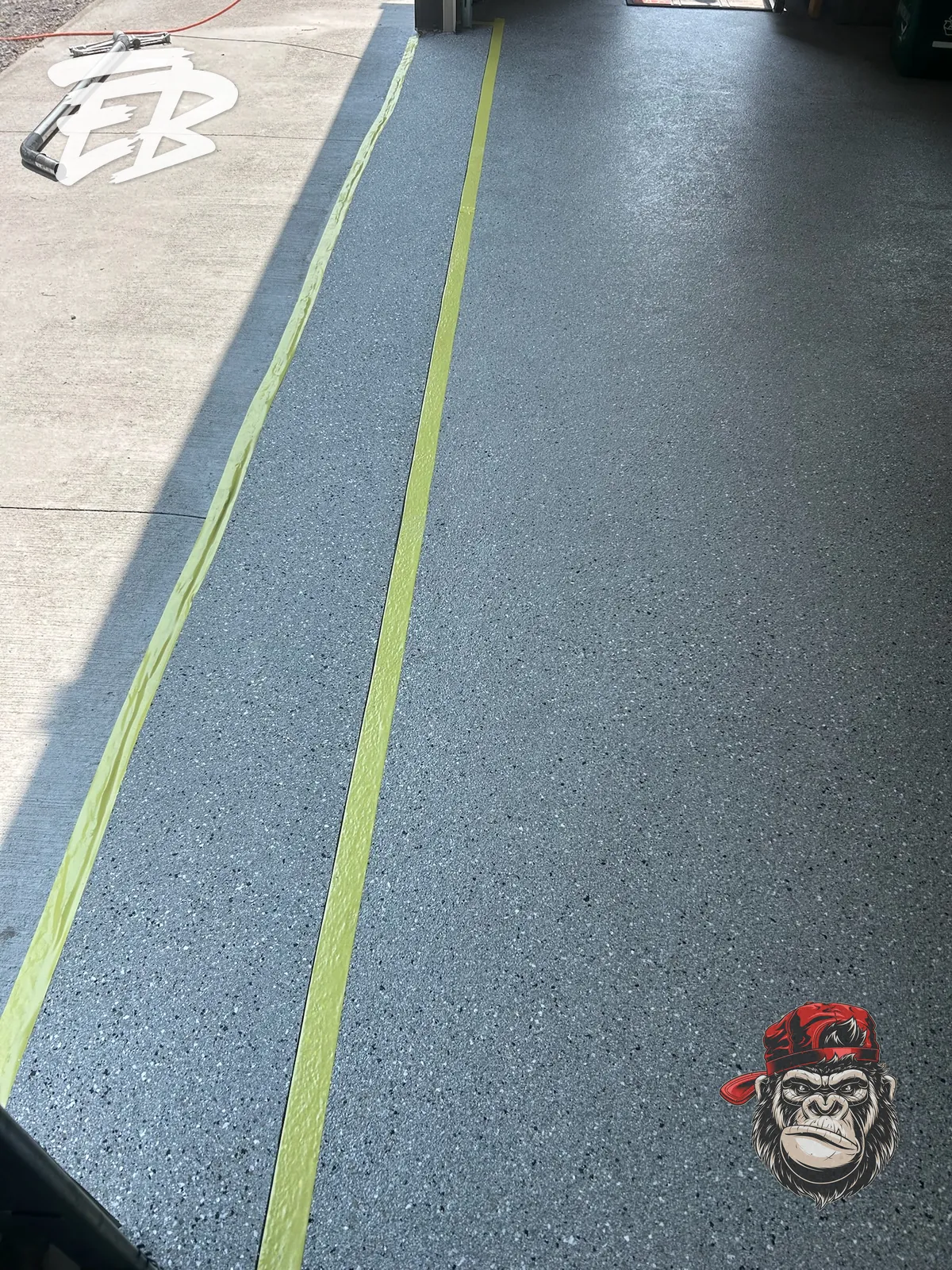
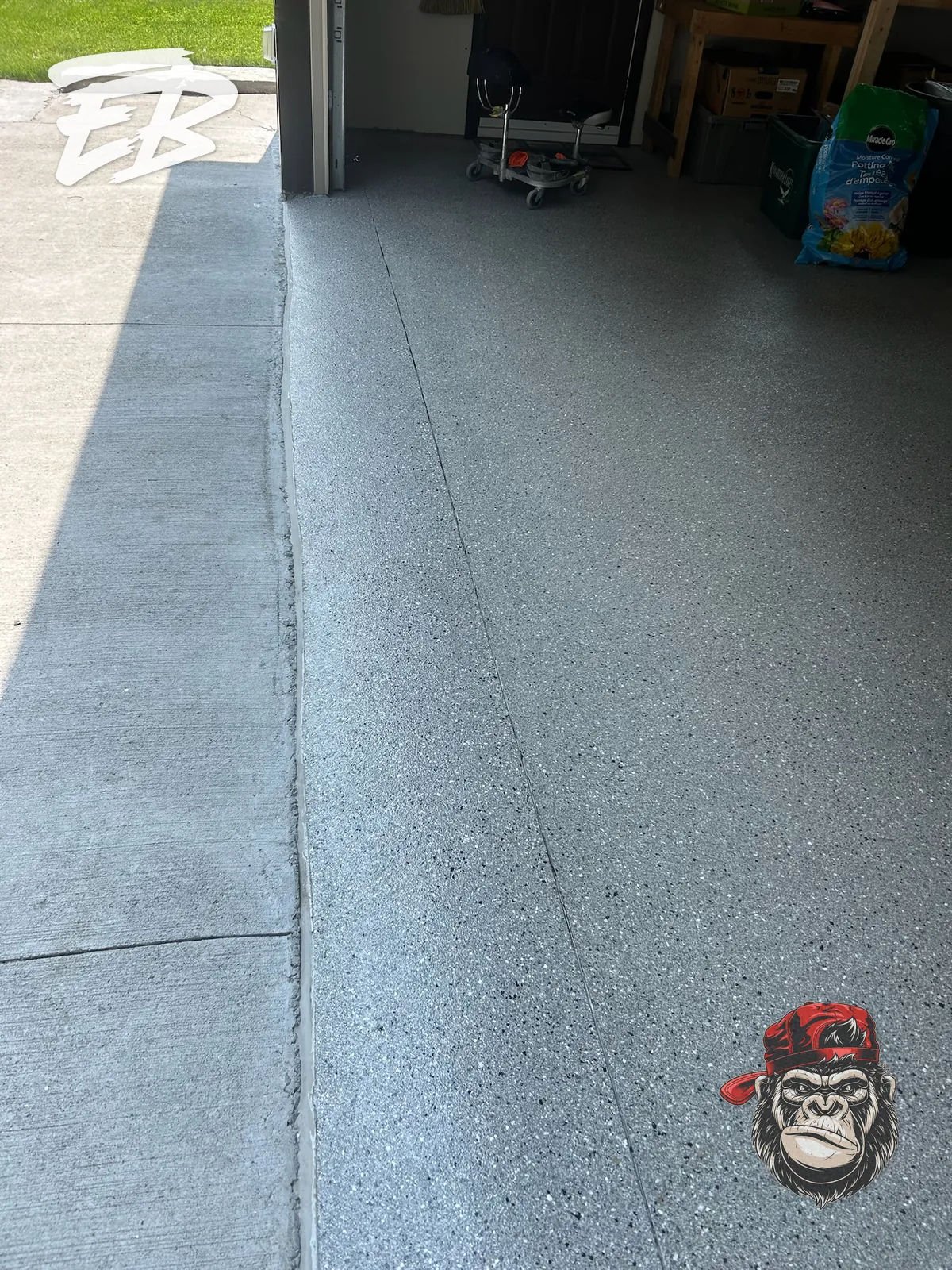
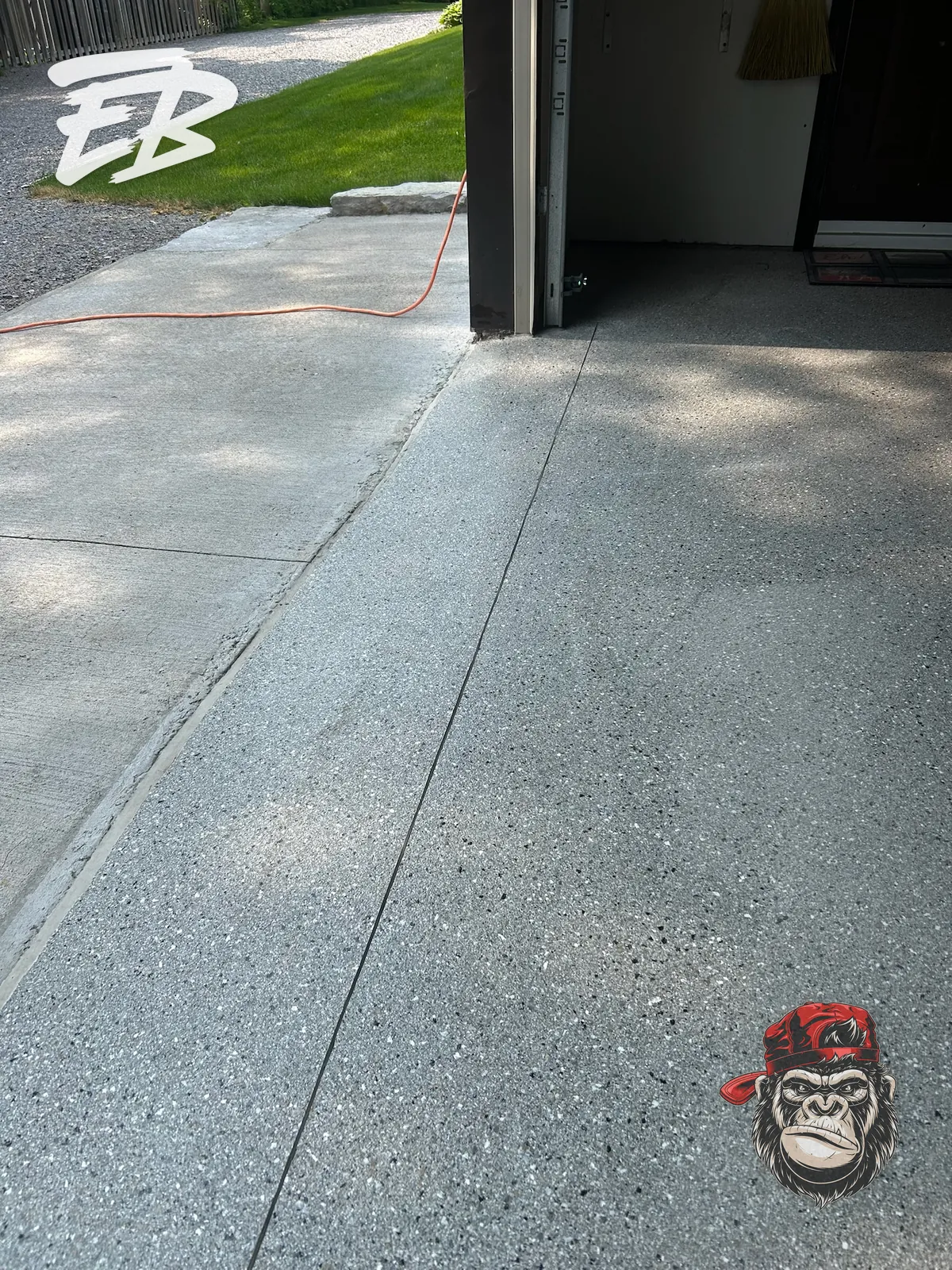
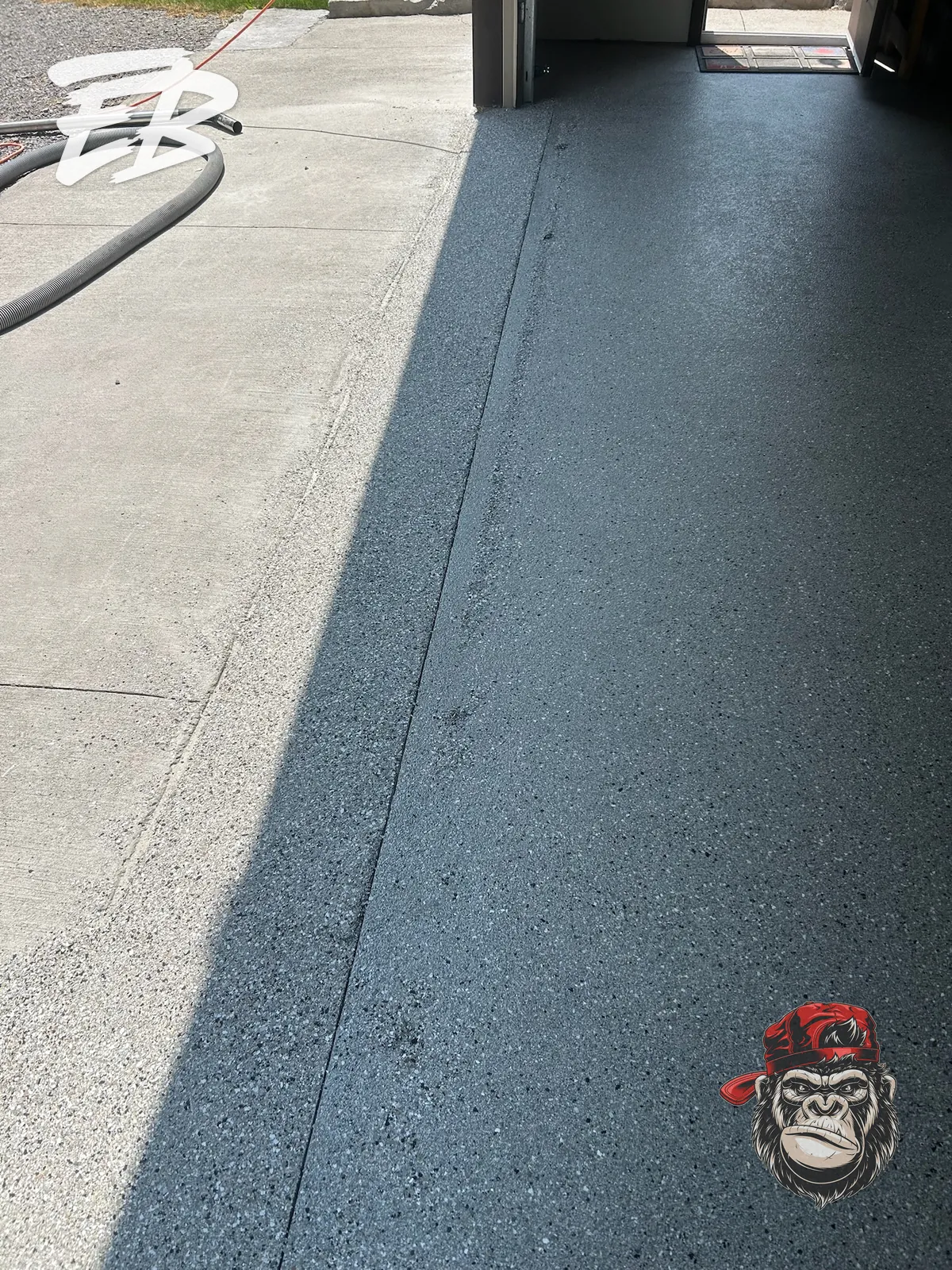
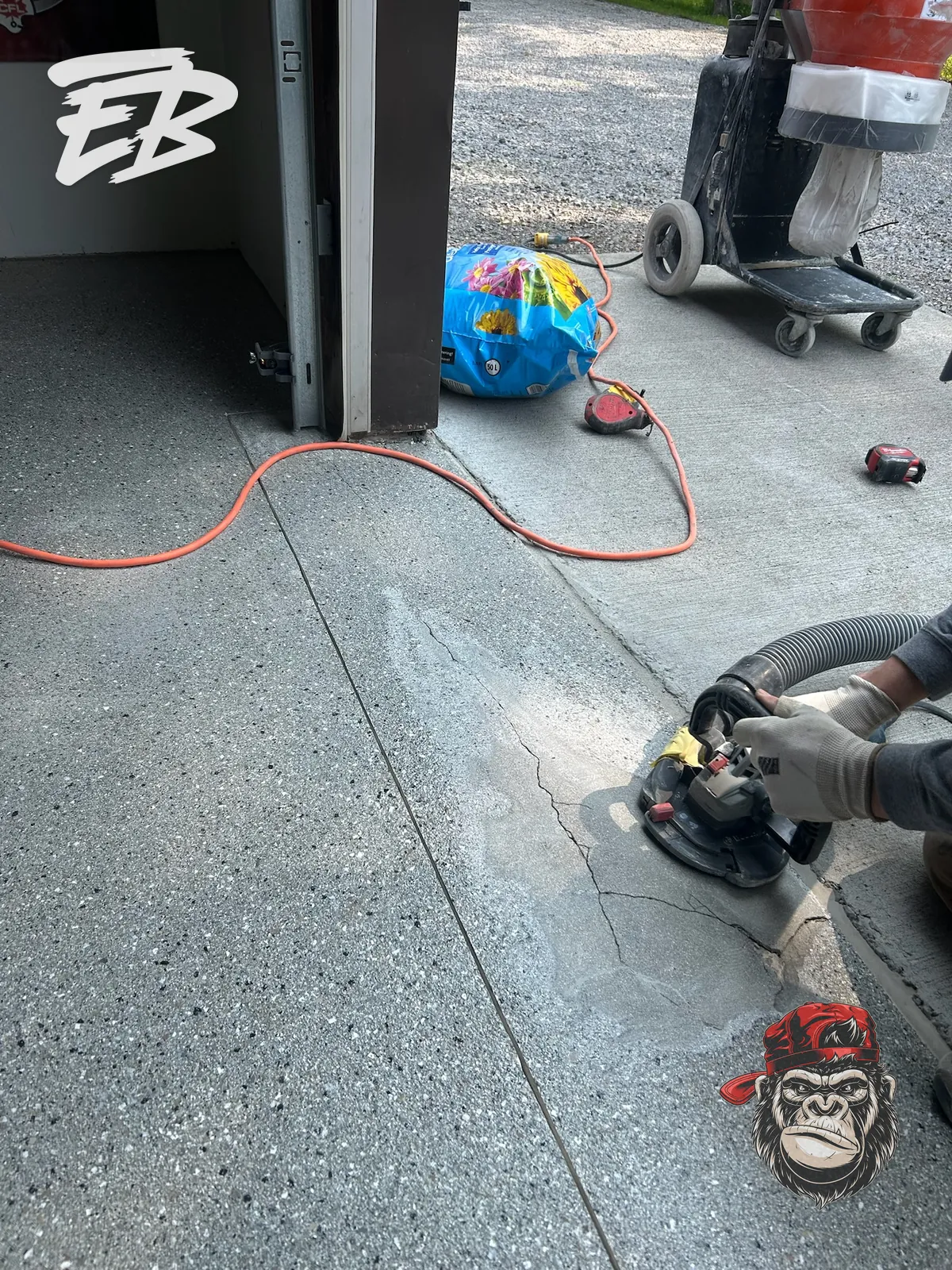
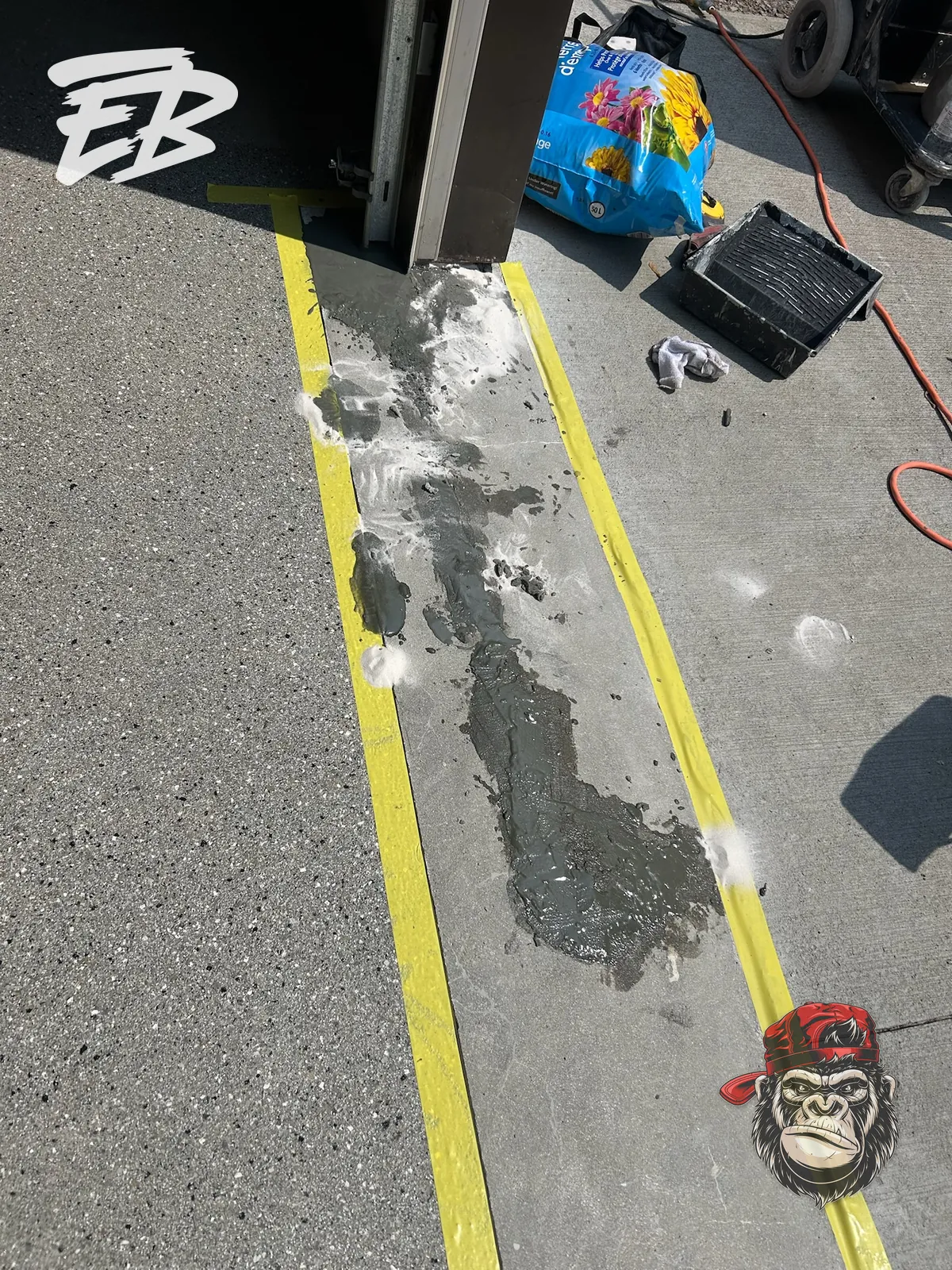
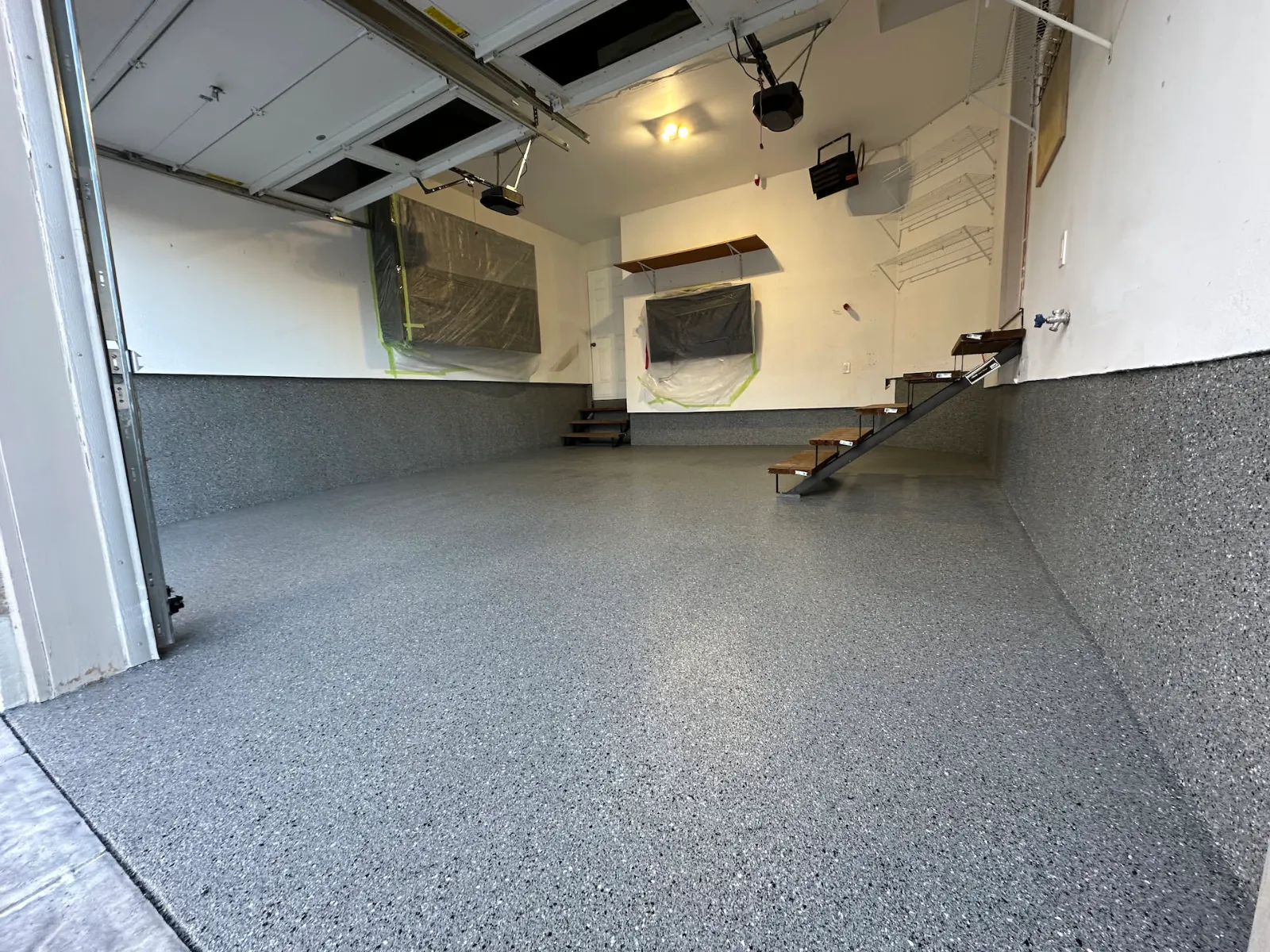
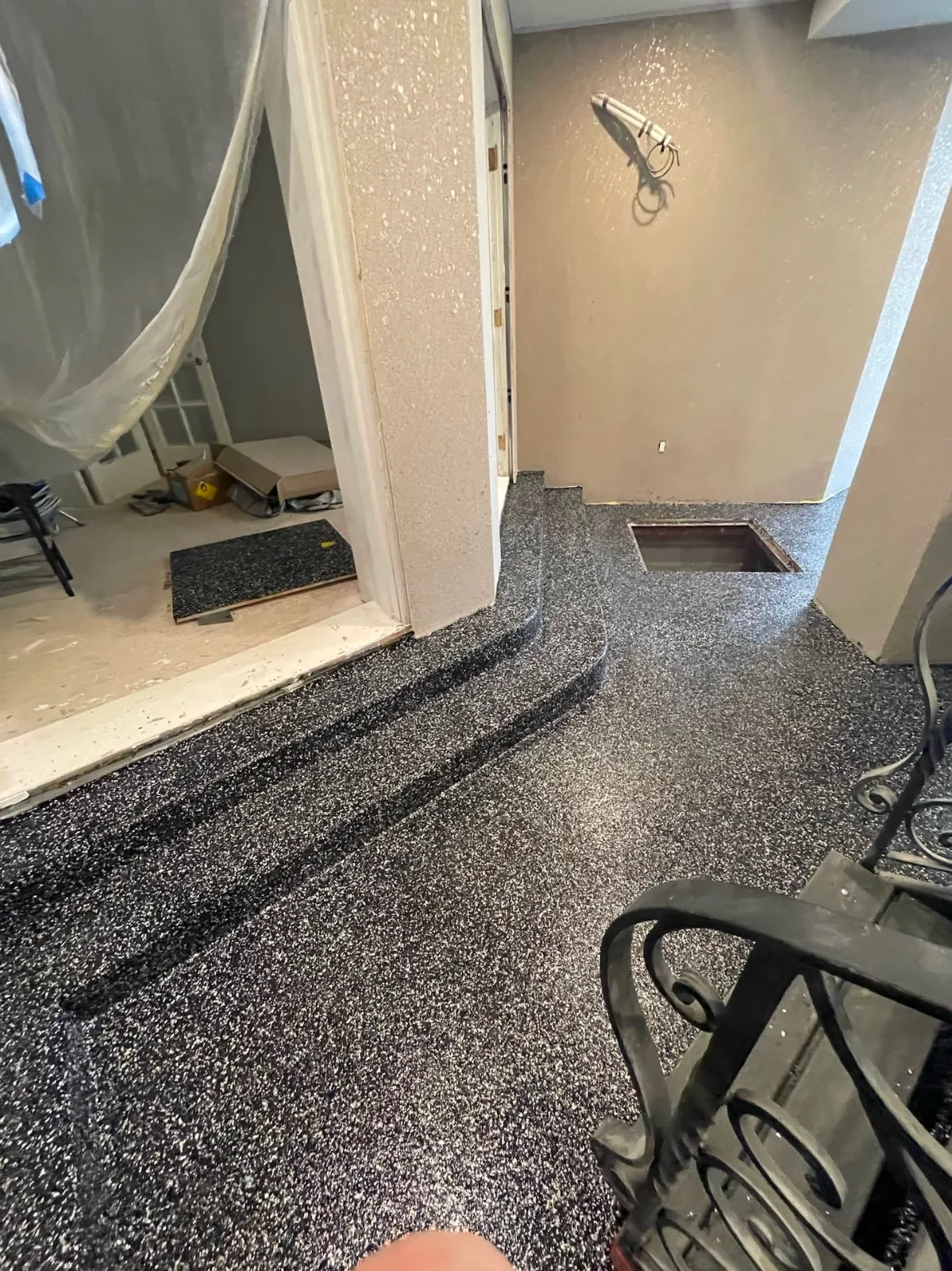
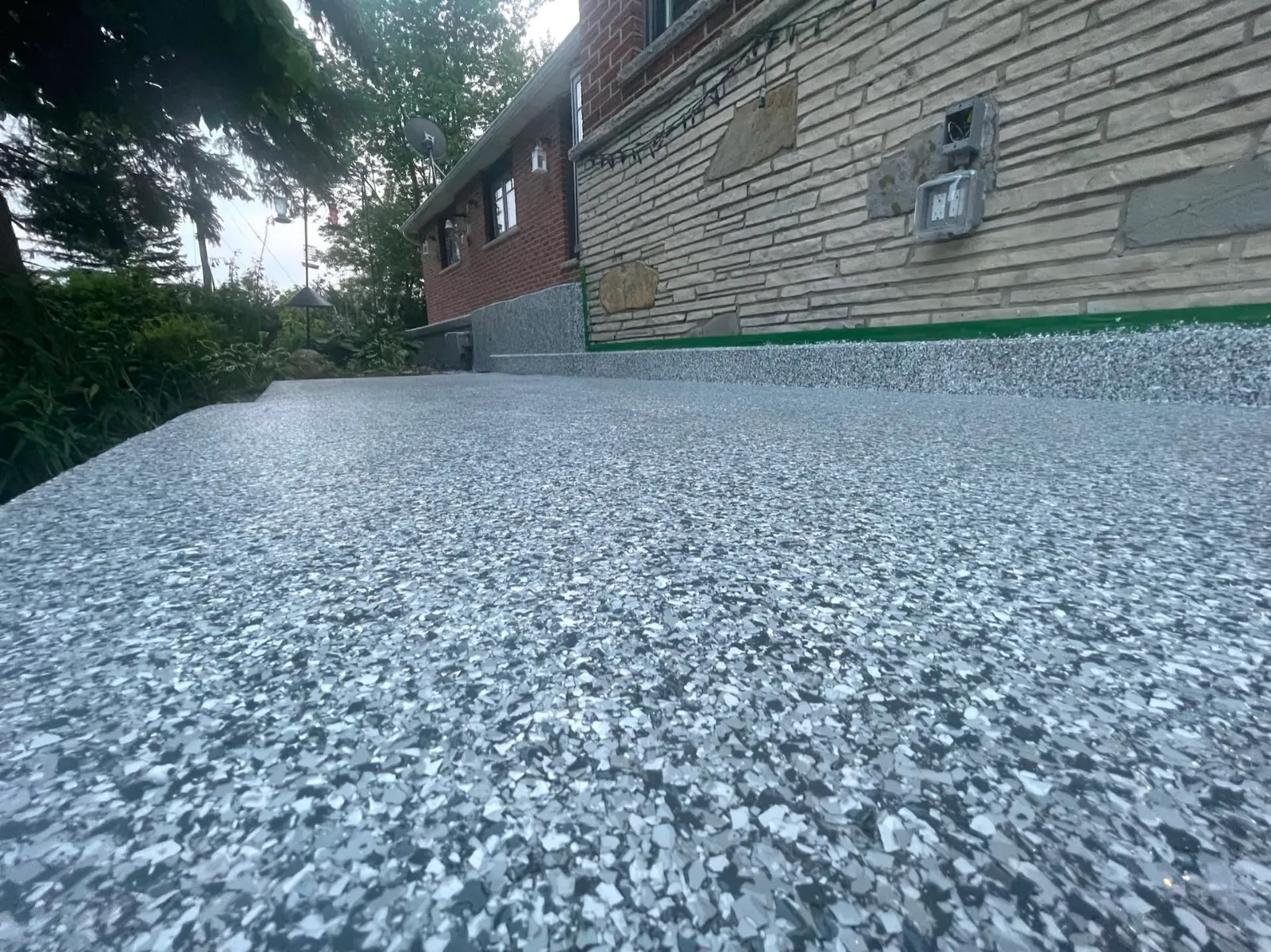
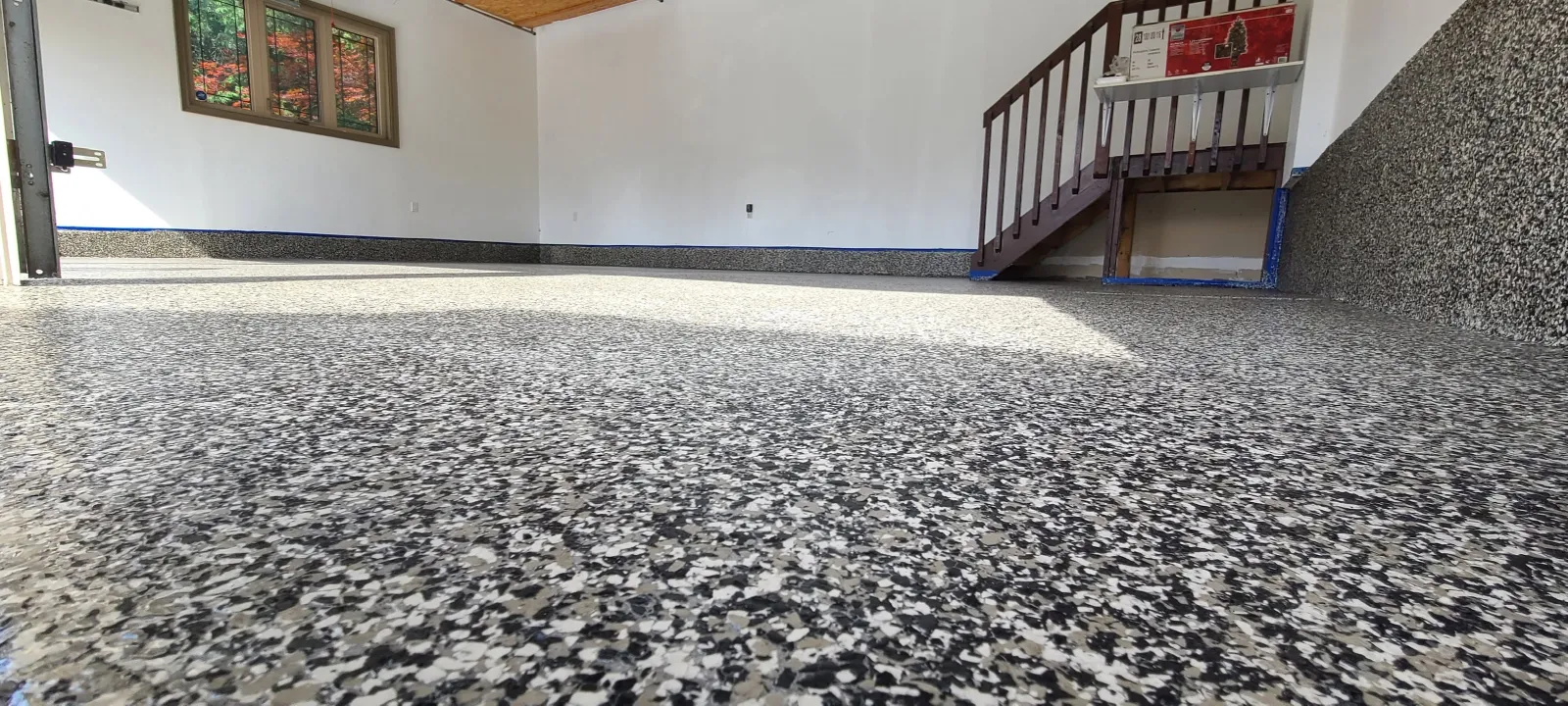
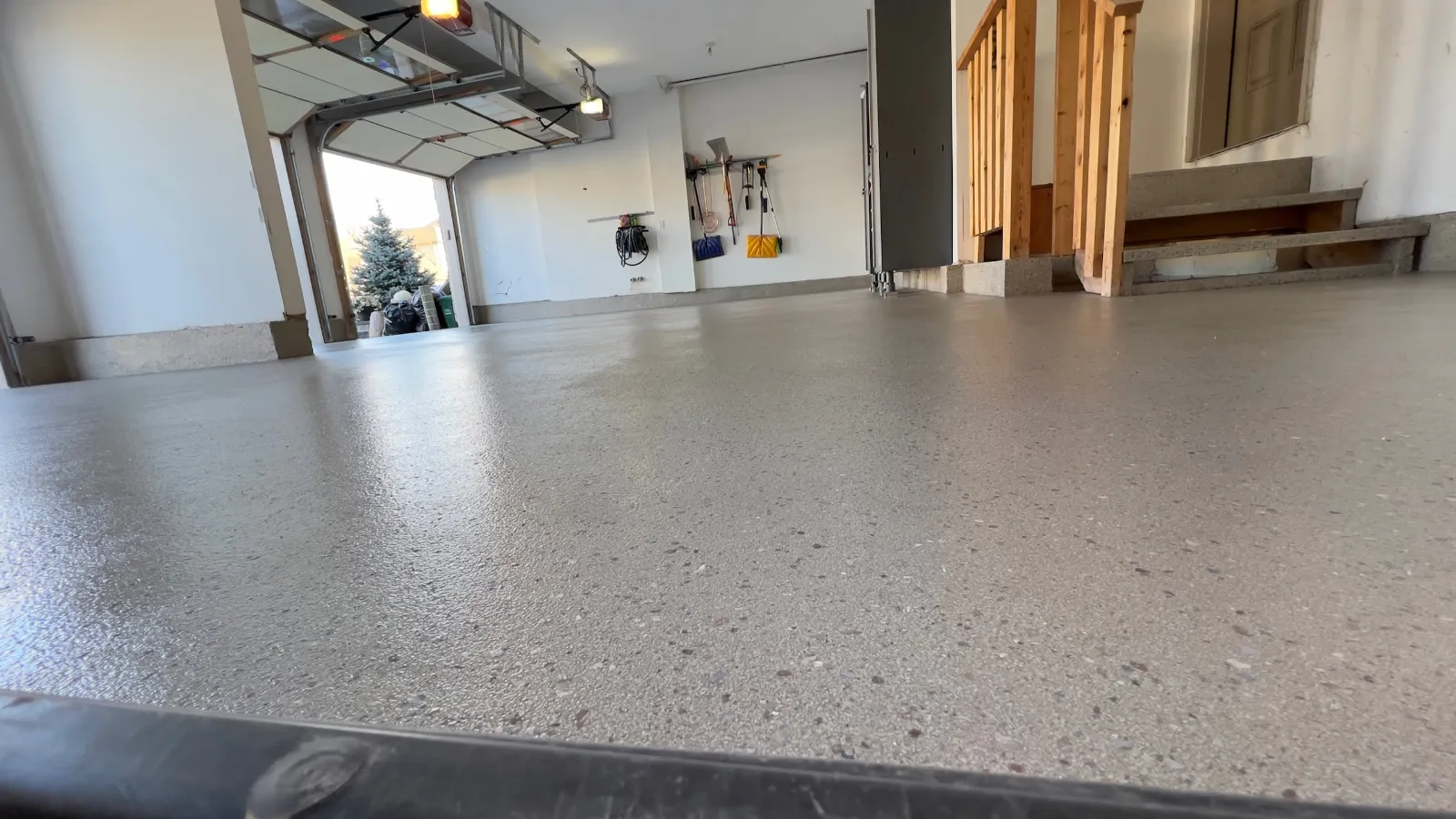
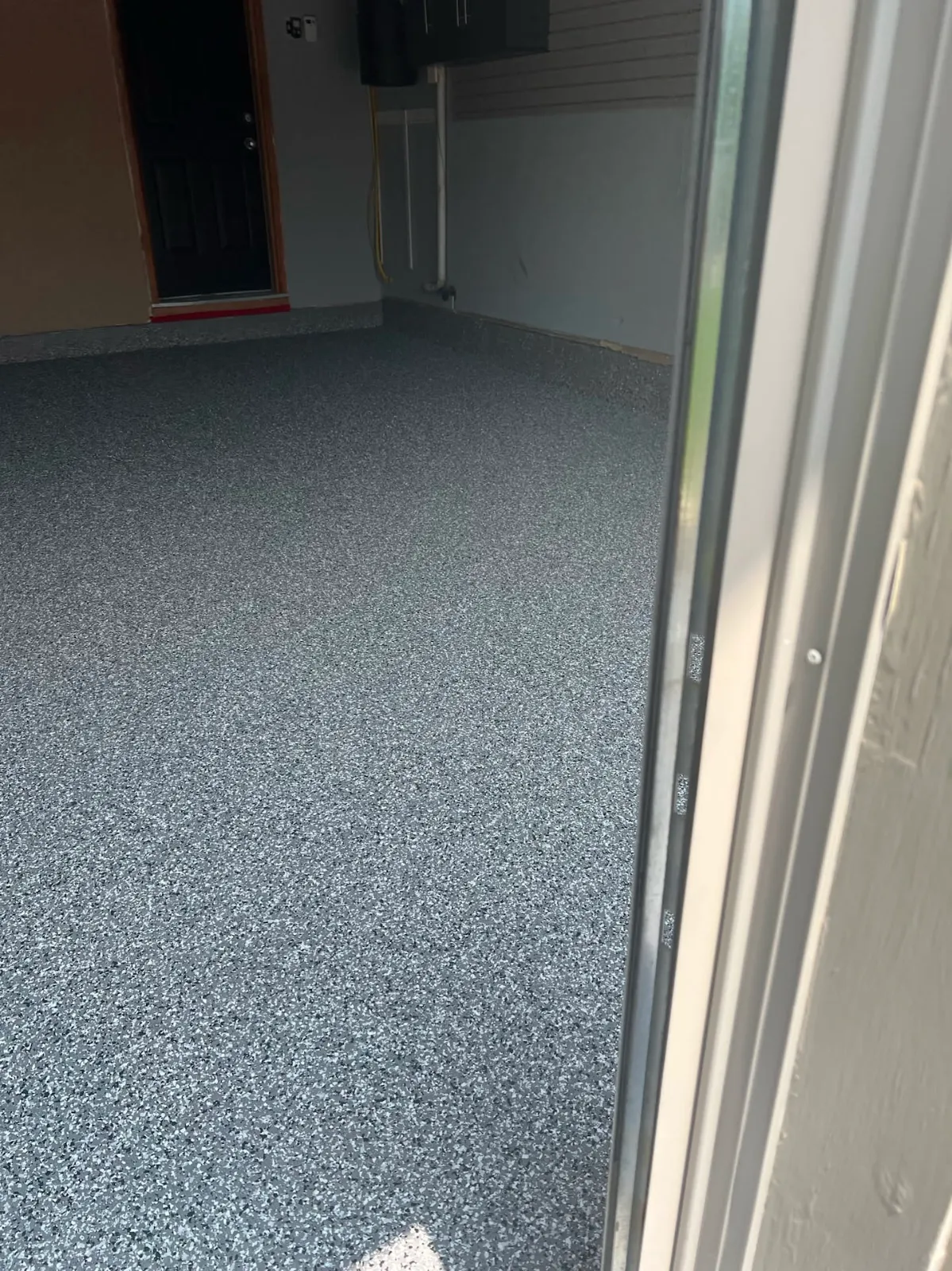
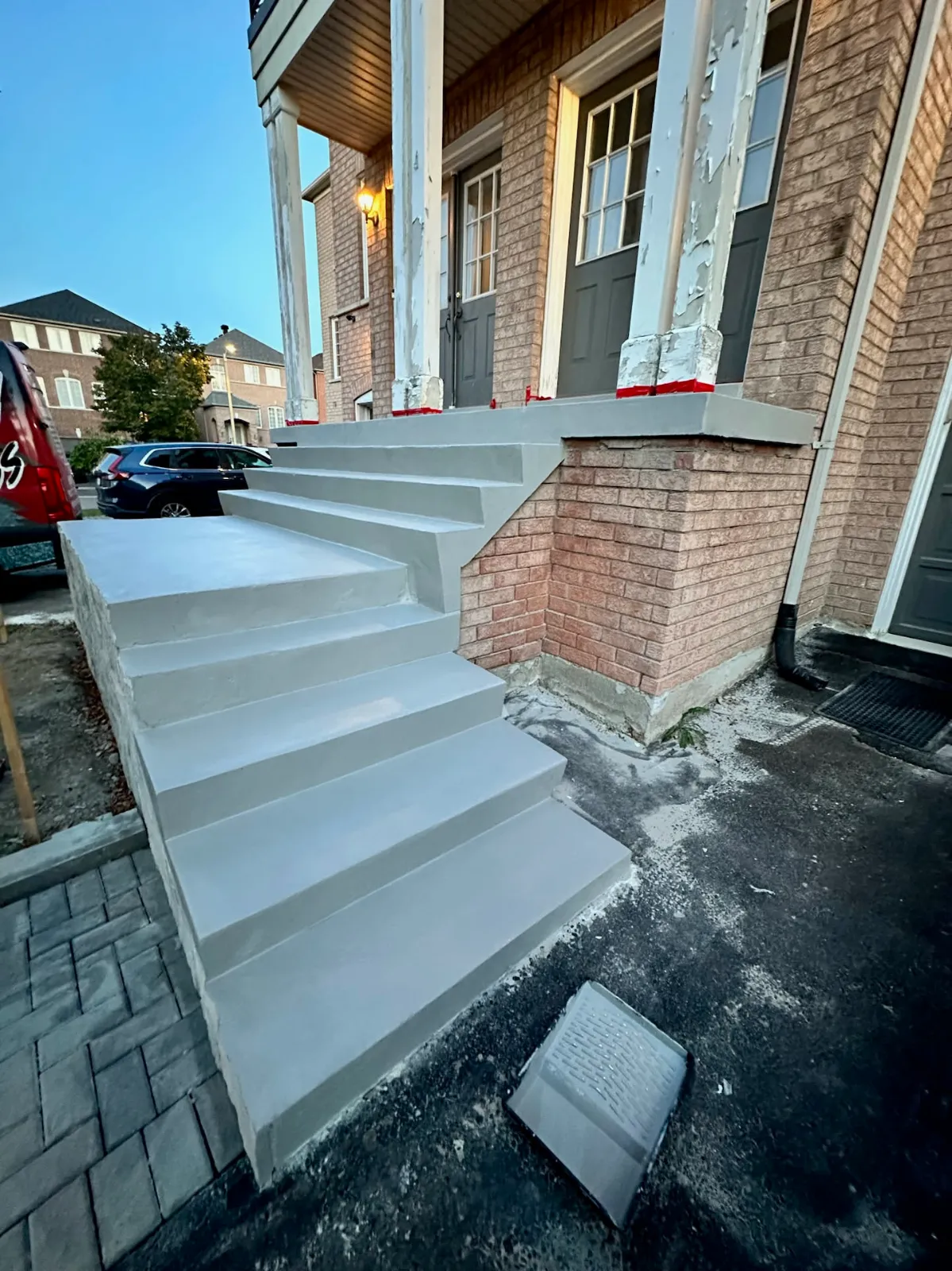
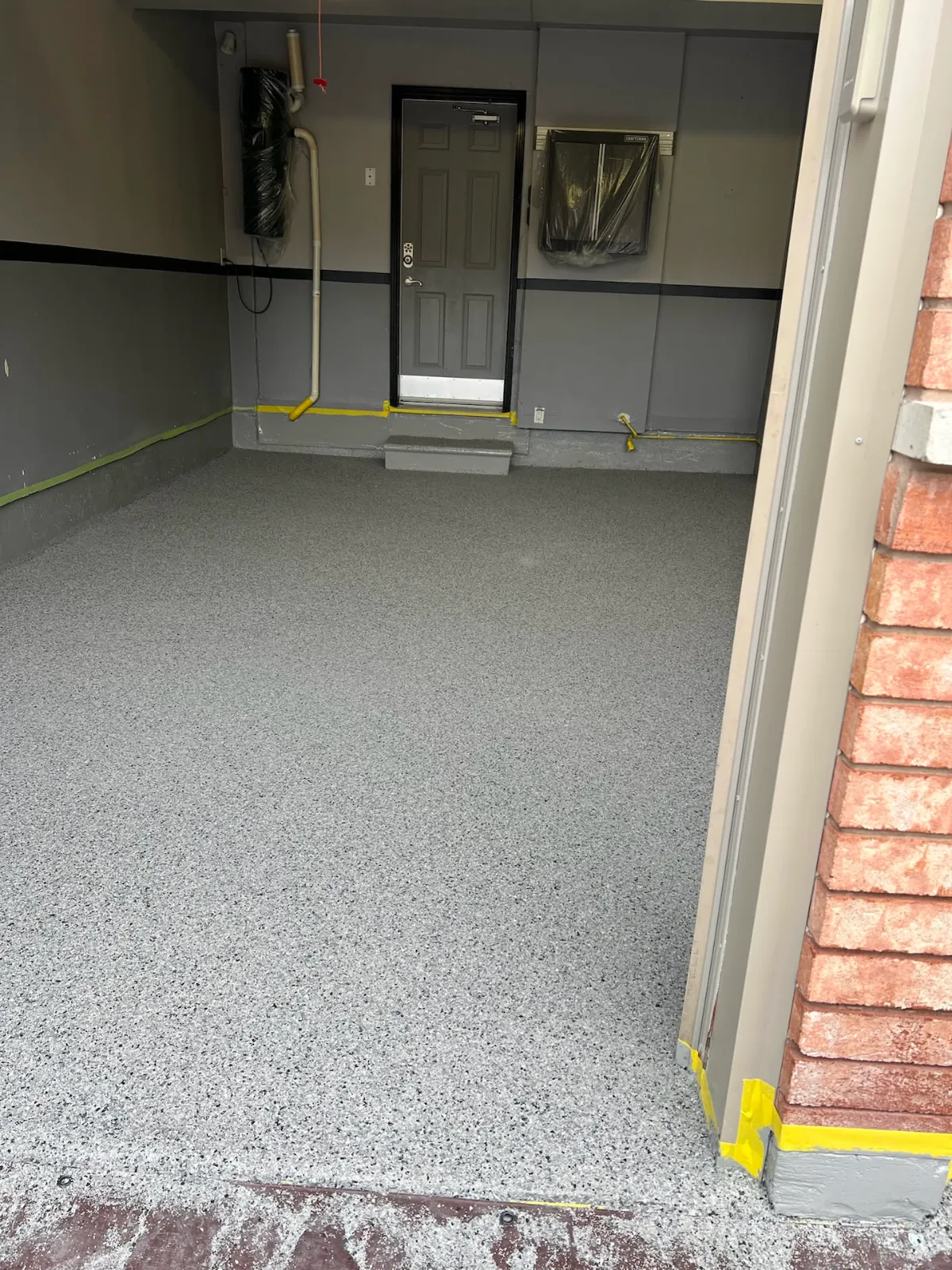
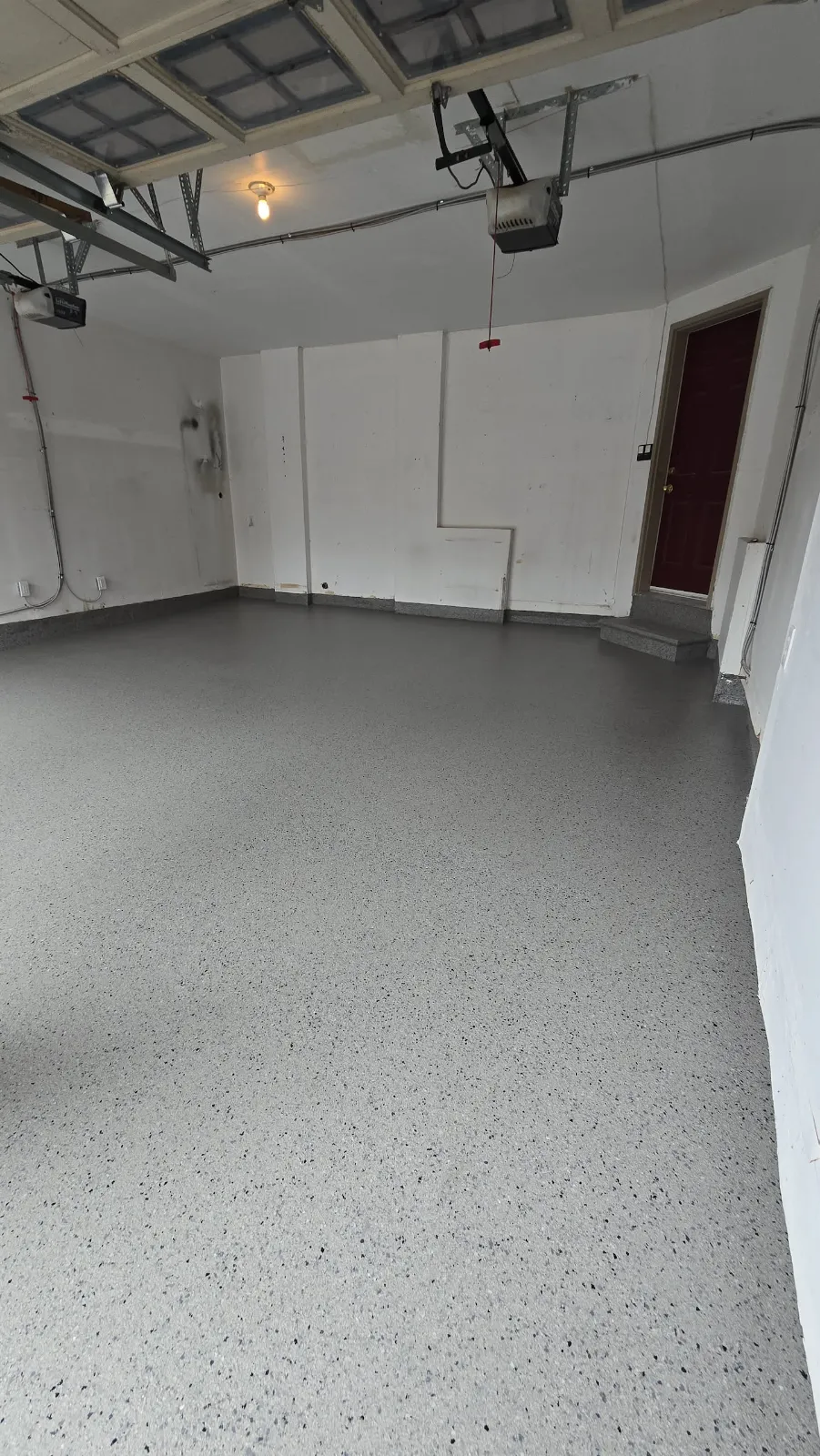
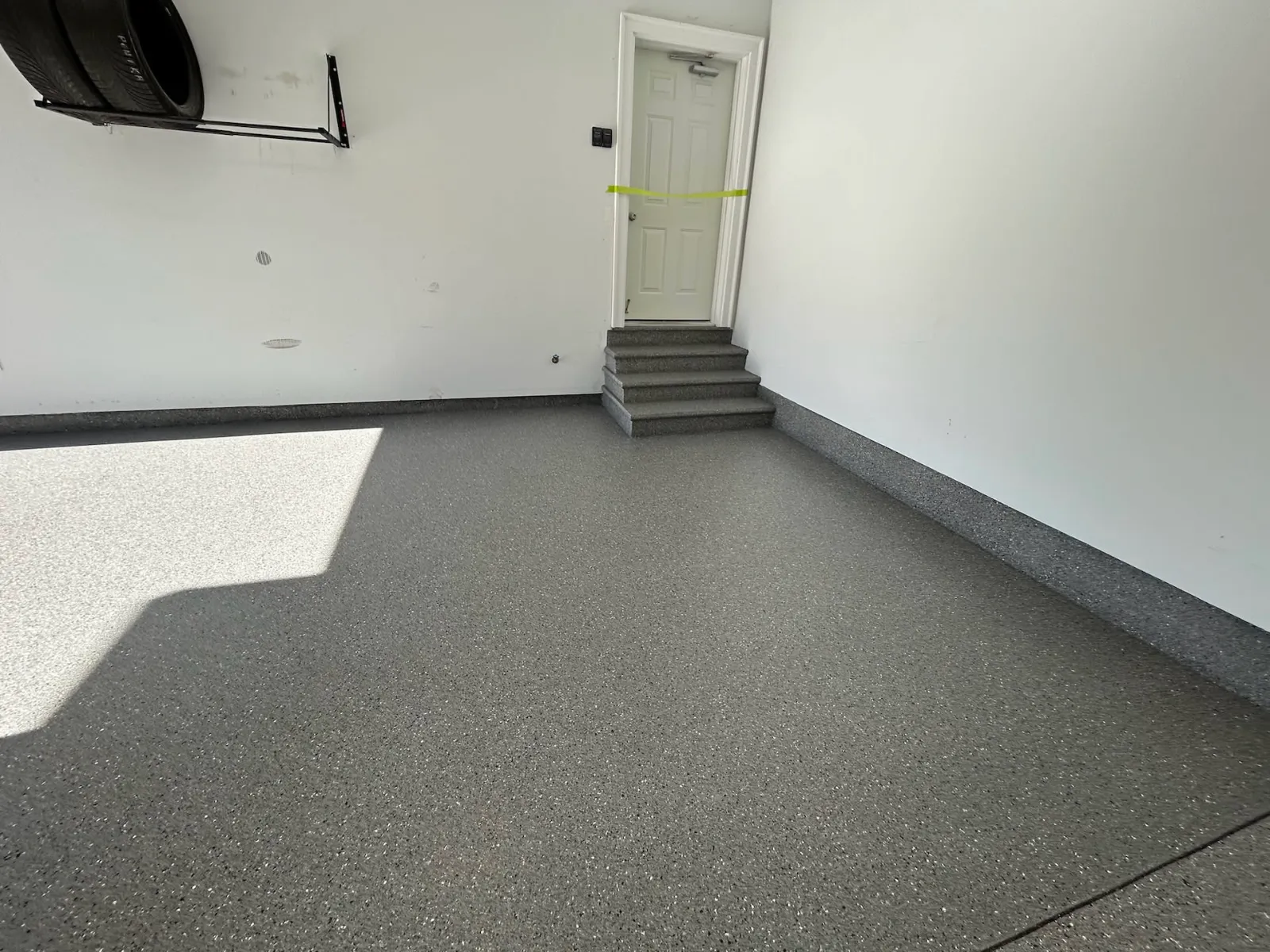
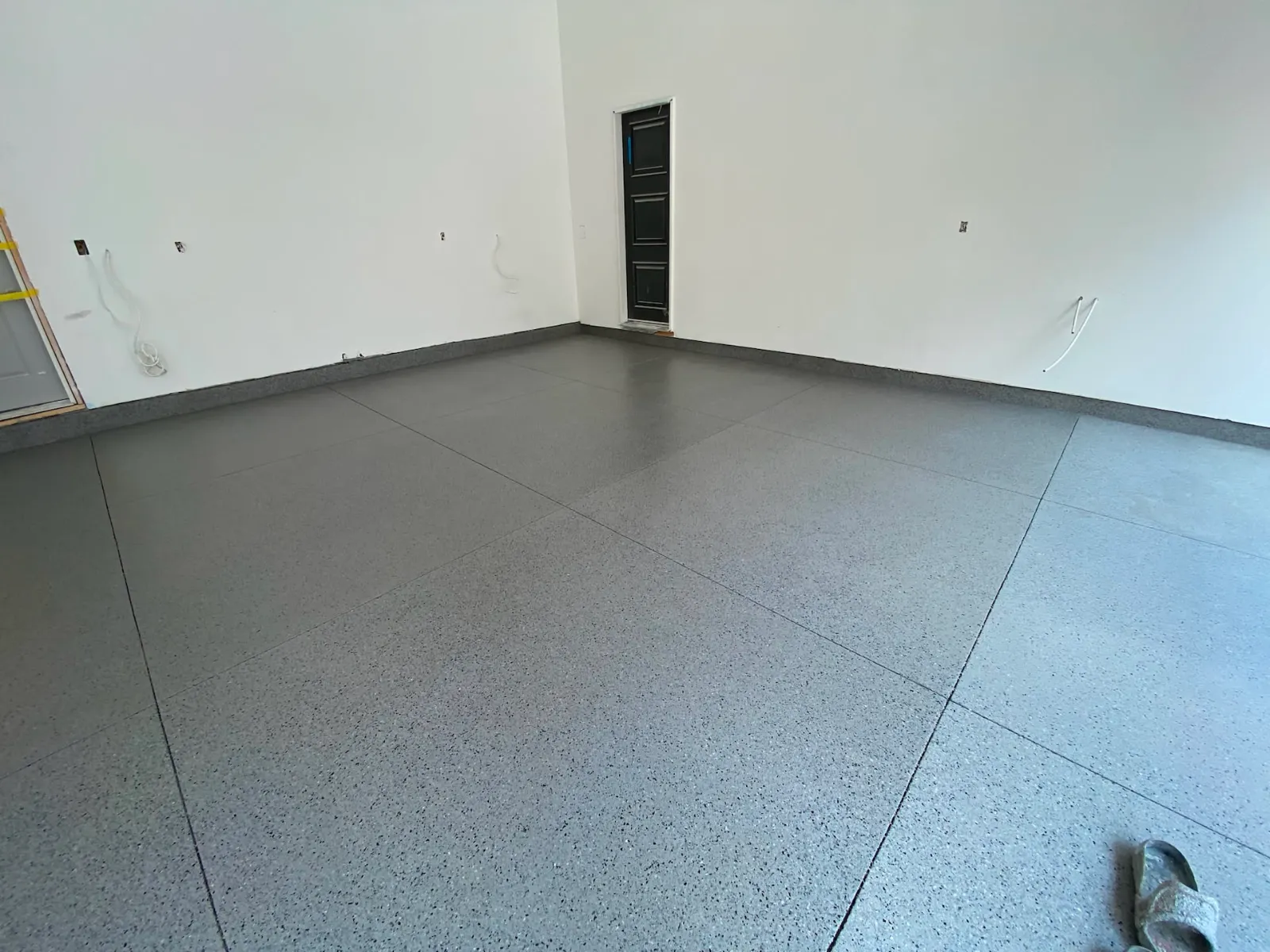
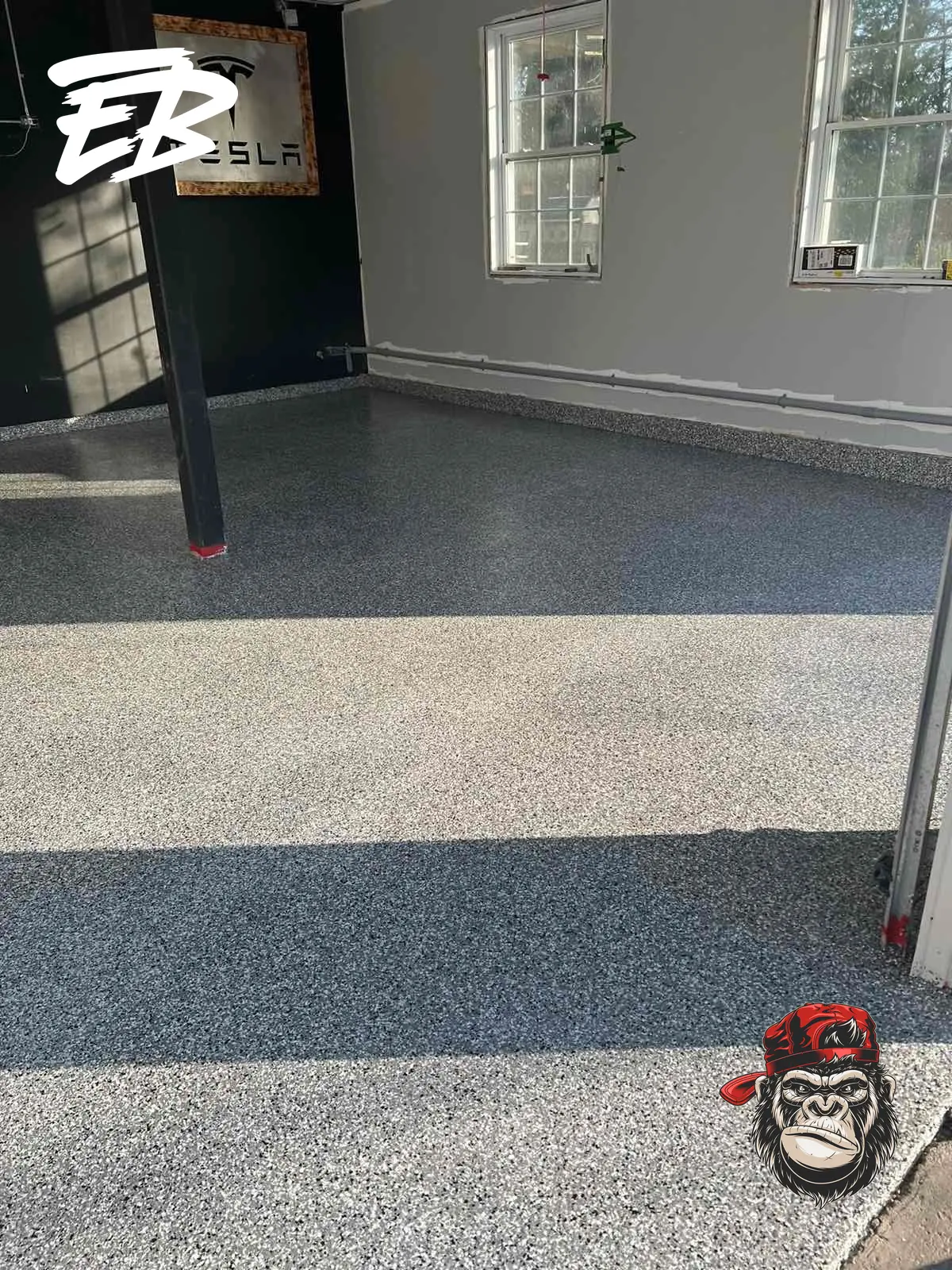
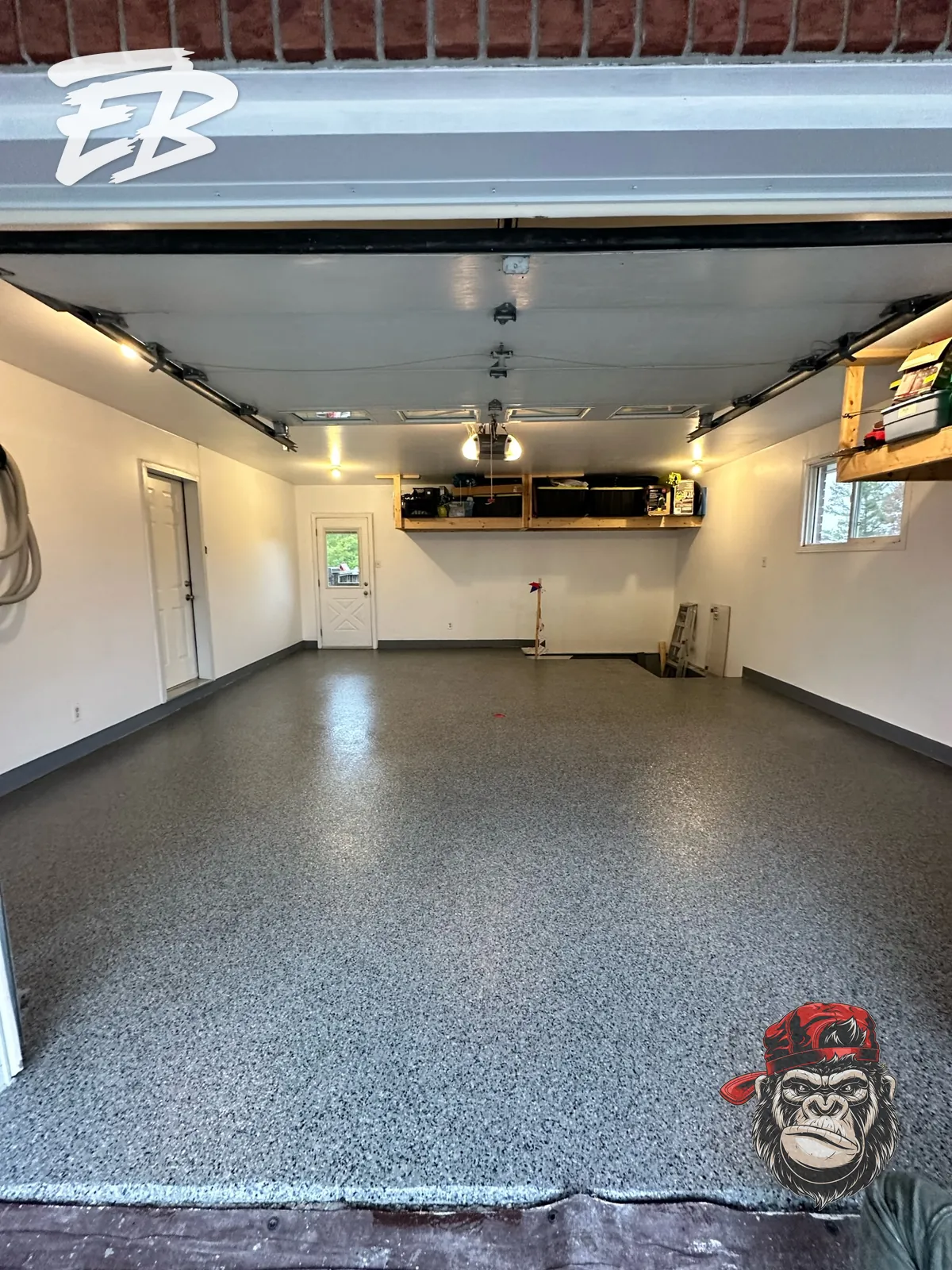
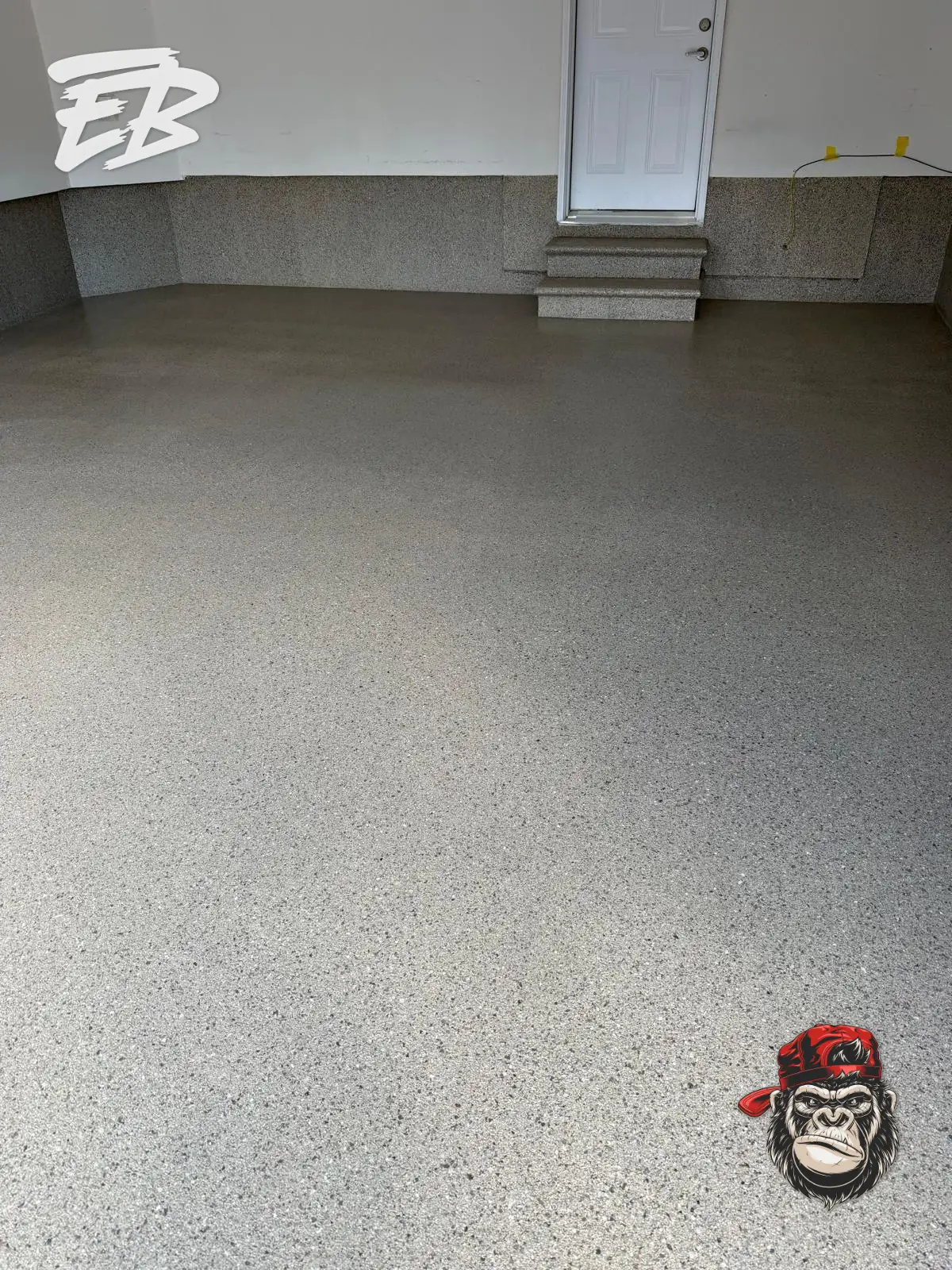
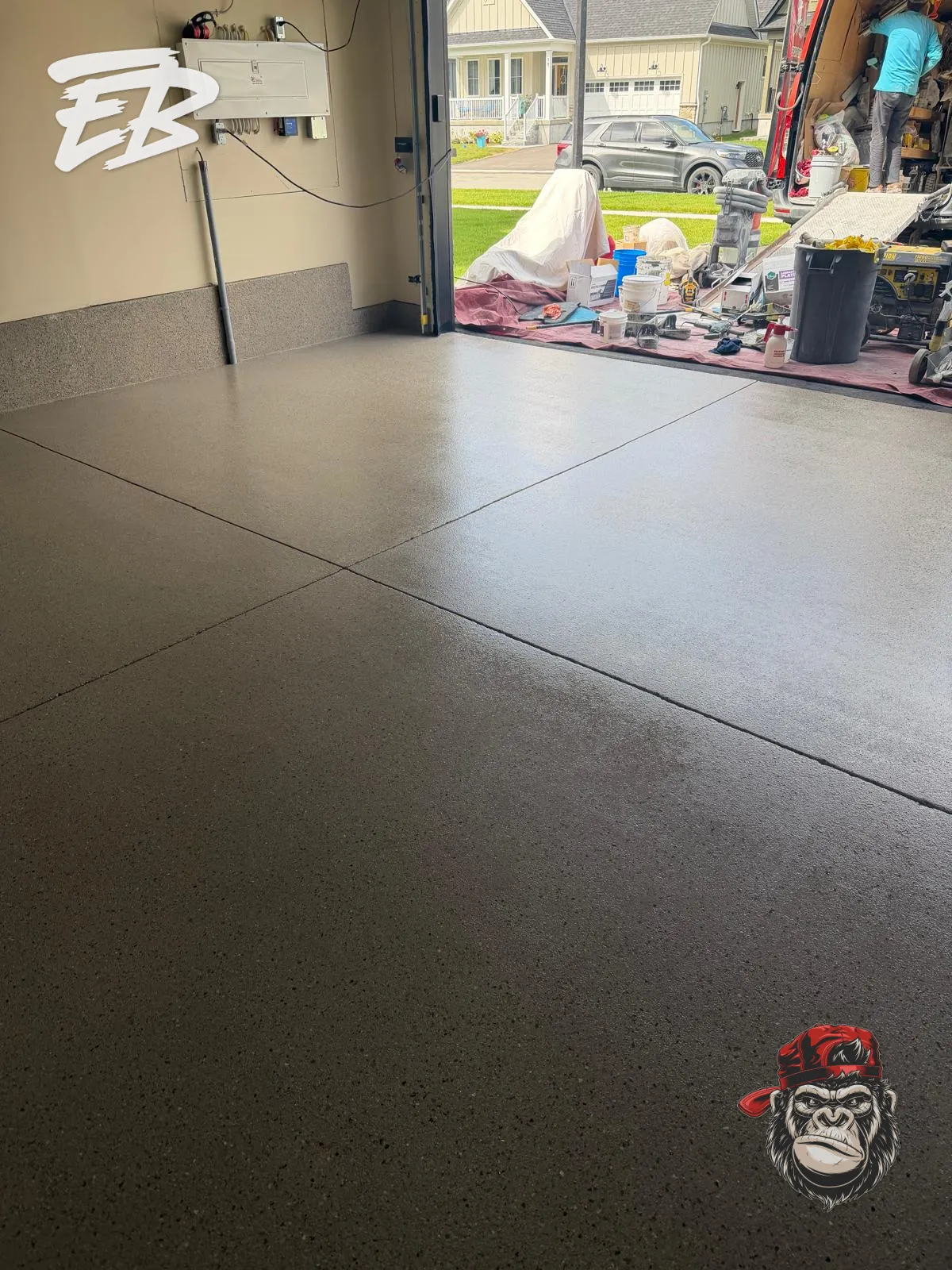
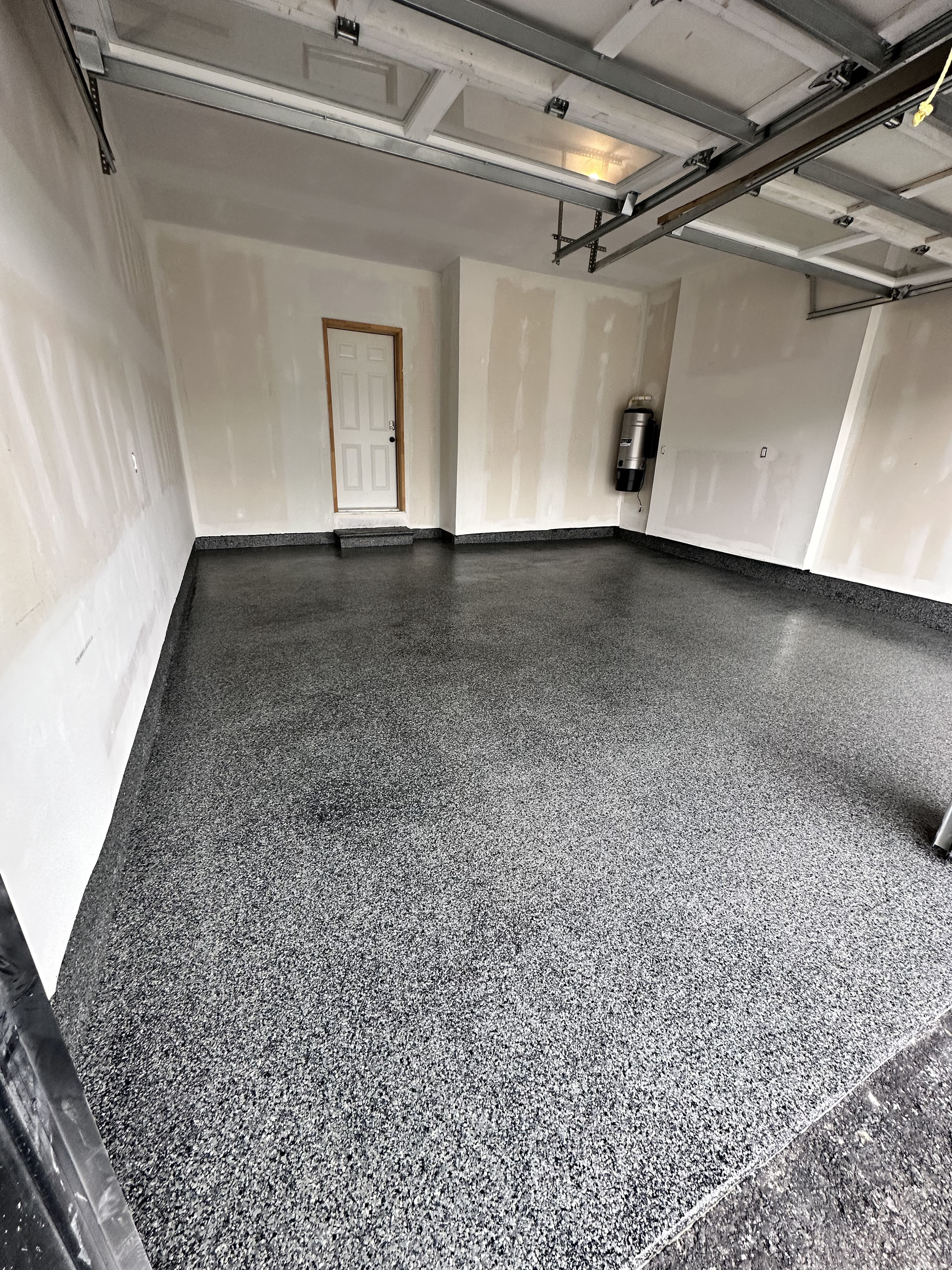
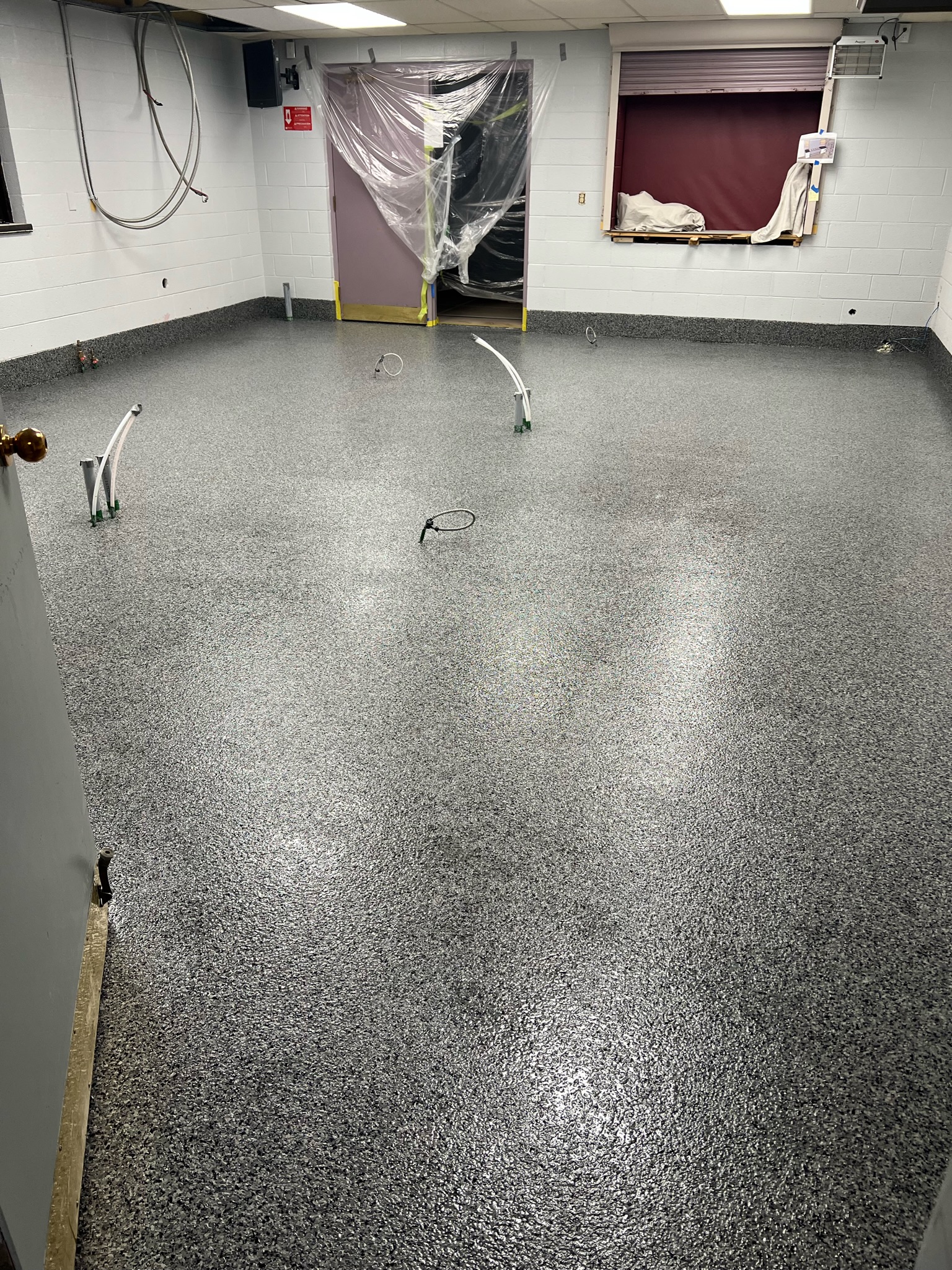
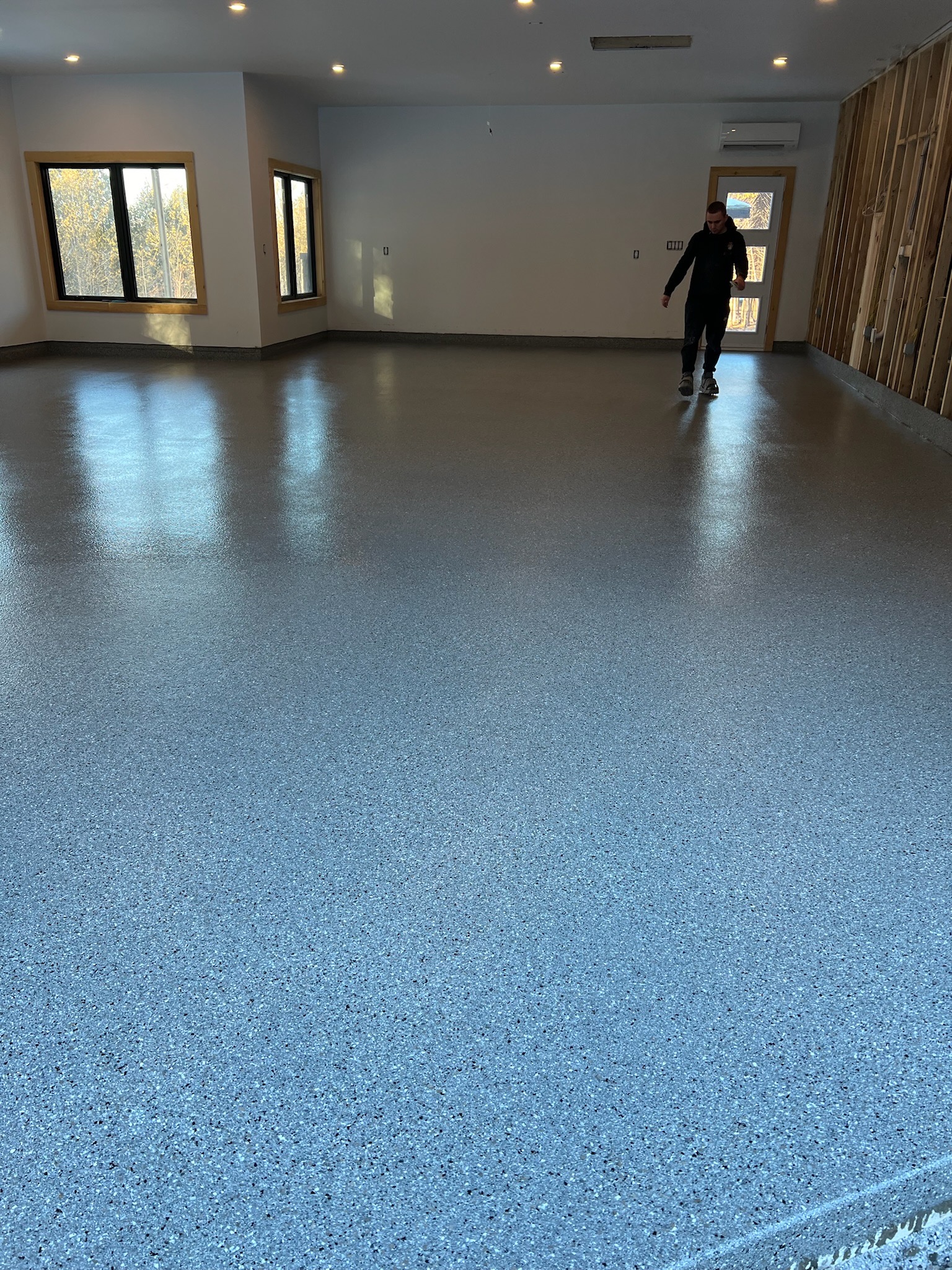
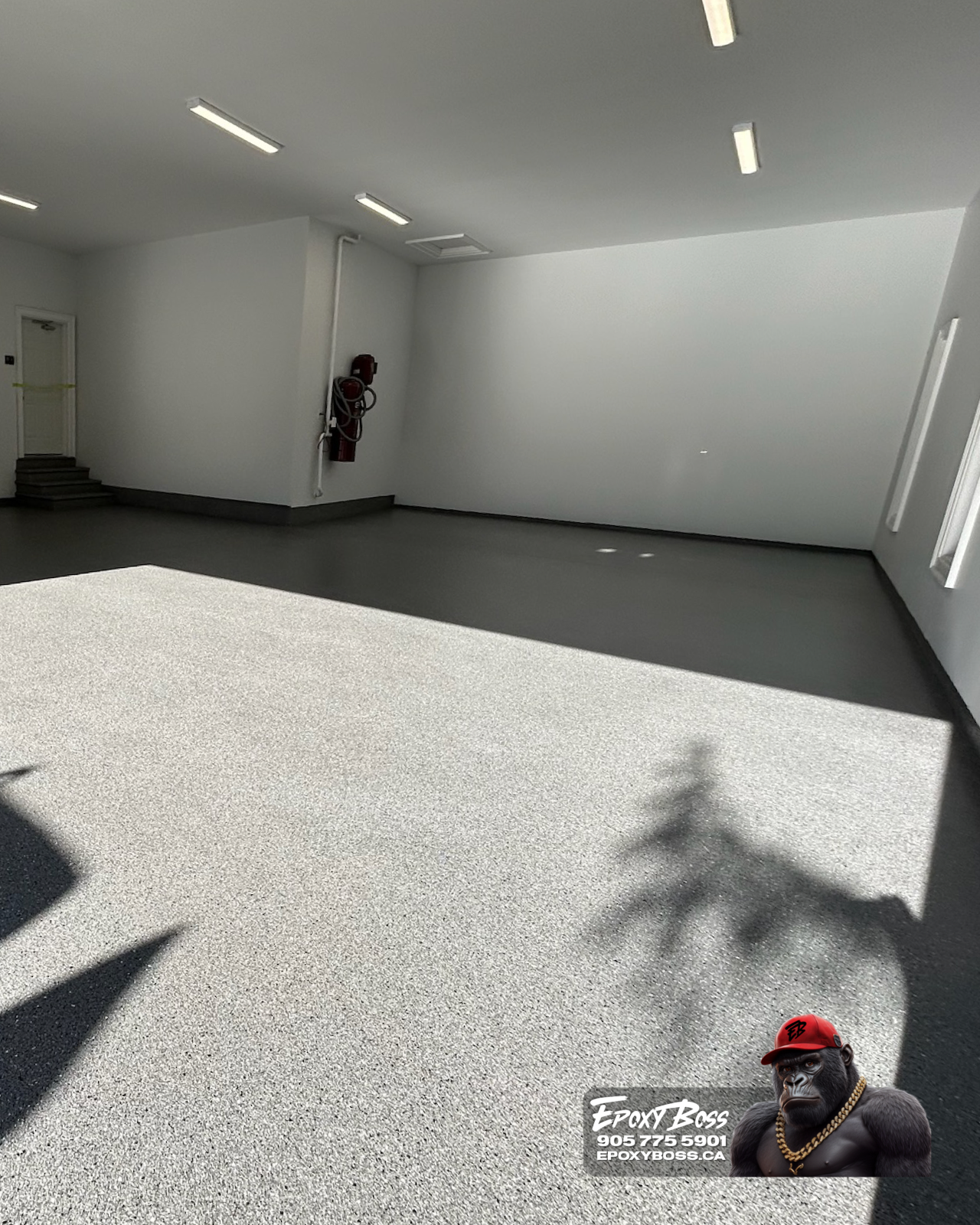
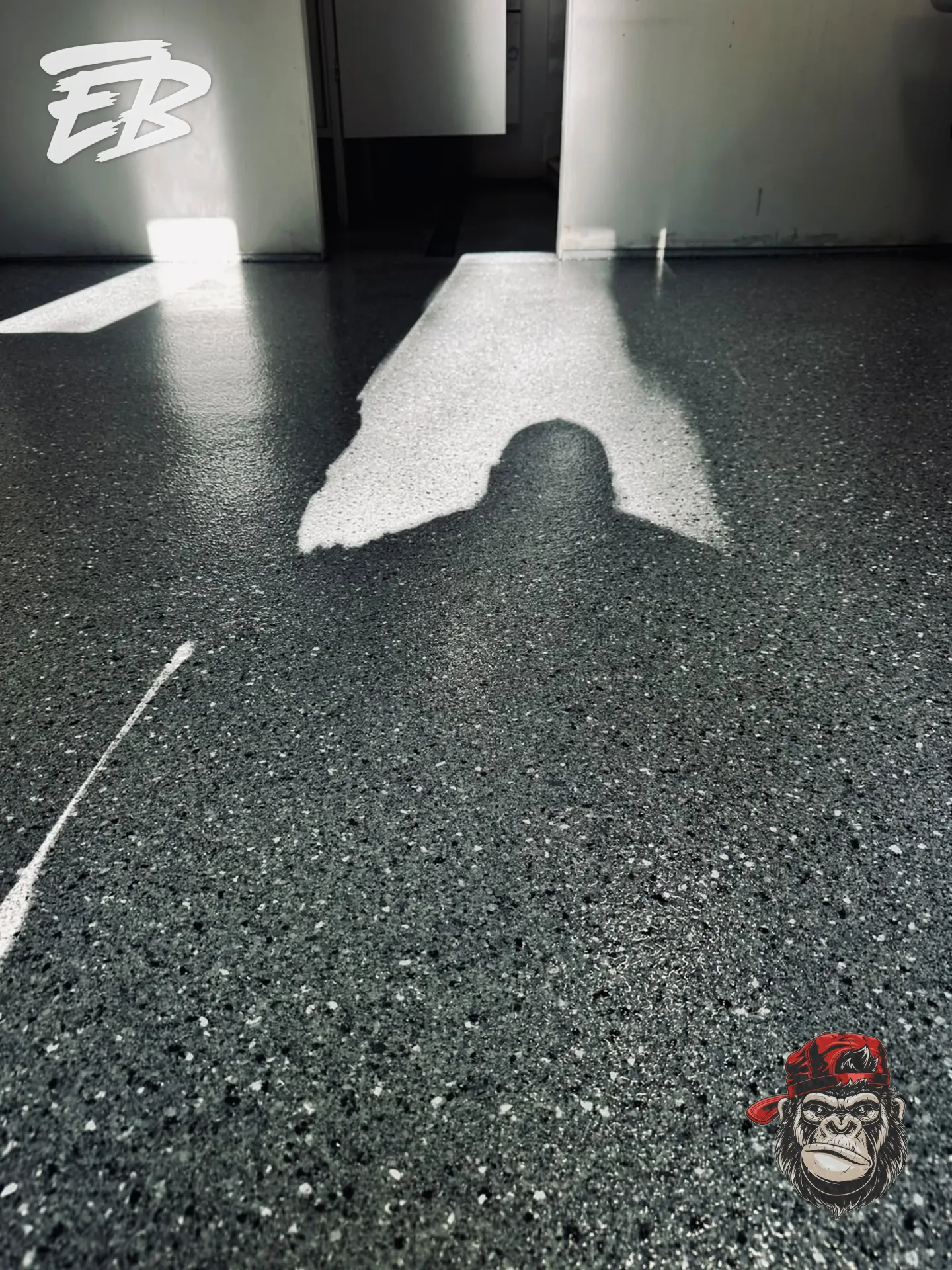
A documented 520 sq ft residential garage in Barrie had peeling coating, cracking and deteriorated concrete at the entrance. The damaged area was ground, compromised material removed and the entrance repaired before the new flake system went down in the Torginol Denali blend. The repair, not the colour, was what made the new floor viable.
How to reduce the chance of the same failure
- Insist on mechanical preparation and ask what profile the system needs.
- Ask how cracks, joints and the garage door edge will be handled.
- Ask whether moisture has been considered, especially on older slabs and basements.
- Choose a topcoat suited to sunlight and tire traffic. See why topcoats matter.
- Follow the care instructions: avoid steel shovels, ice choppers and studded tires on the coating.
Thinking about cost? Our garage floor coating cost guide for Ontario explains how removal and repair change a quote.
Frequently asked questions
Why is my epoxy floor peeling after one winter?
Most often the coating was applied without grinding, over a sealed or contaminated slab, or was a thin product not built for salt and hot tires. Moisture from below is another common cause.
Can you put new epoxy over old epoxy?
Only if the old coating is well bonded, clean and compatible, and is abraded first. If it is peeling anywhere for a systemic reason, it should come off.
How much of the old coating has to be removed?
On a widespread failure, all of it. On a well-bonded floor with a small defect, a local repair may be enough. The assessment decides.
Is a repaired floor covered by warranty?
Qualifying indoor residential systems installed by Epoxy Boss carry a 5-year limited workmanship warranty. Concrete movement, structural cracking and damage from plough blades or studded tires are among the stated exclusions.
Book a free floor assessment
If your garage floor is peeling, cracking or blistering, send us three photos: the whole floor, the worst area and a close-up. Epoxy Boss, based in Innisfil since 2019, serves the GTA, York Region, Simcoe County, Halton, Durham and Muskoka. Call (905) 775-5901 or request a free floor assessment for a written quote in Canadian dollars. Learn more about our concrete repair and restoration work.