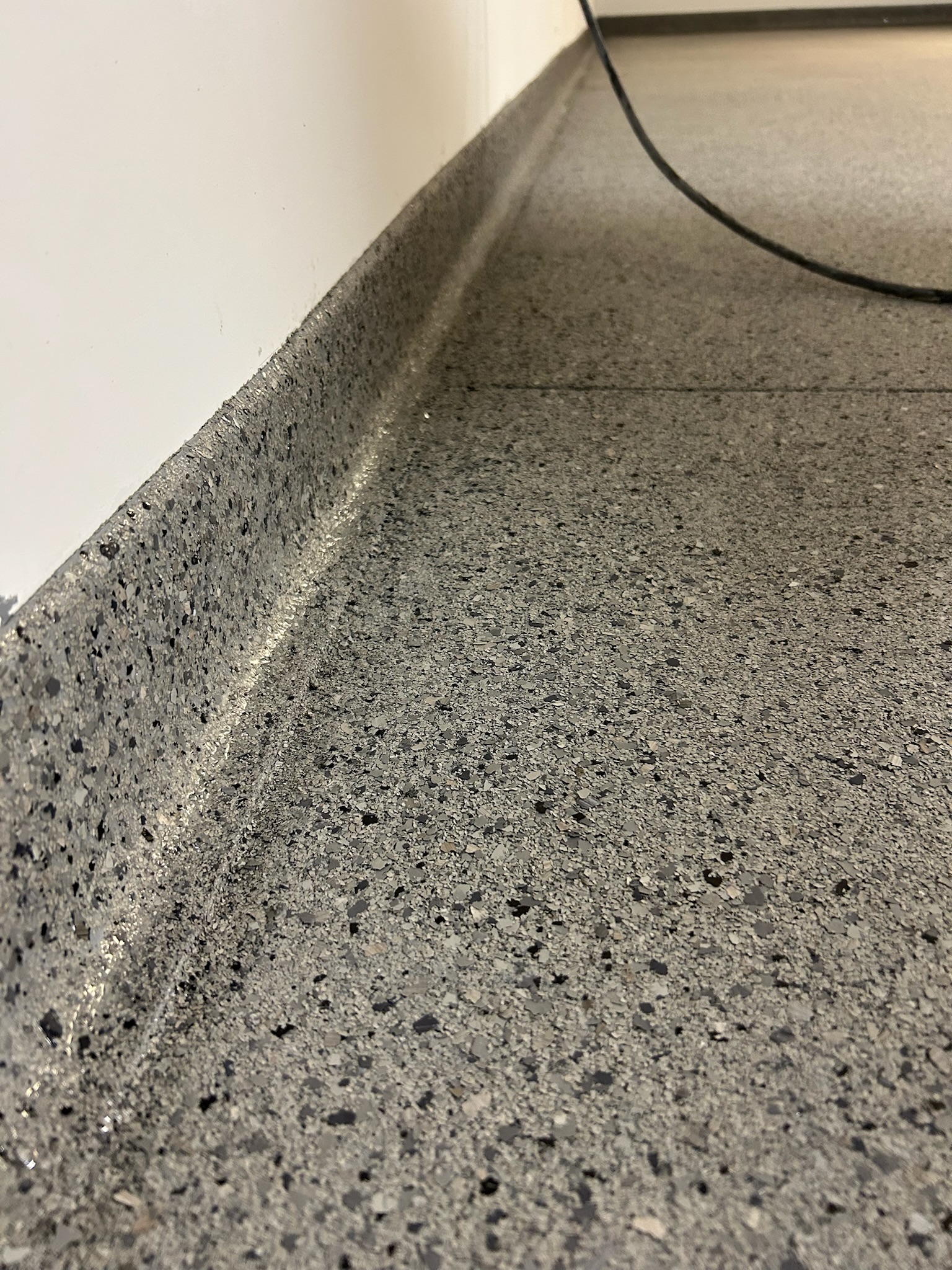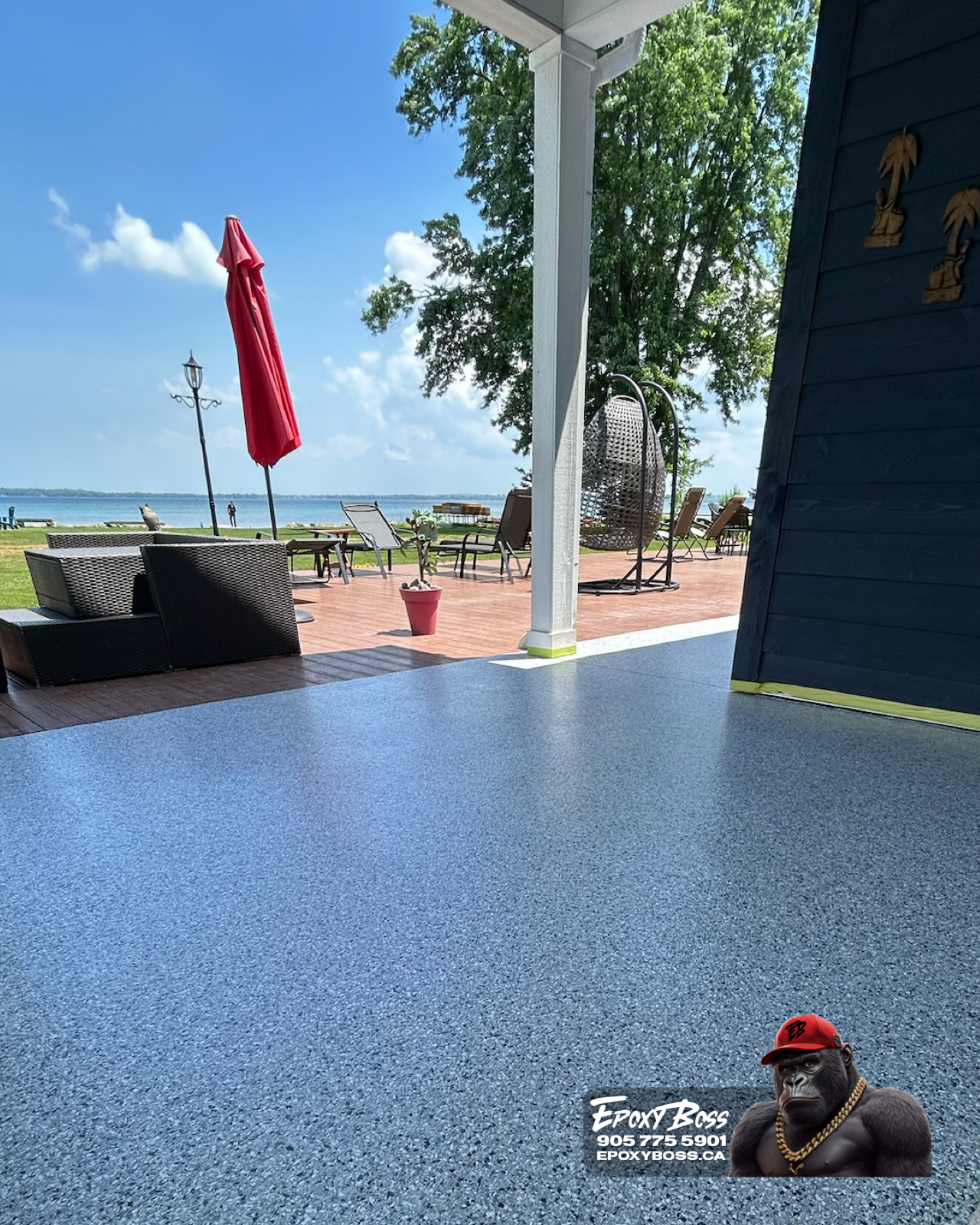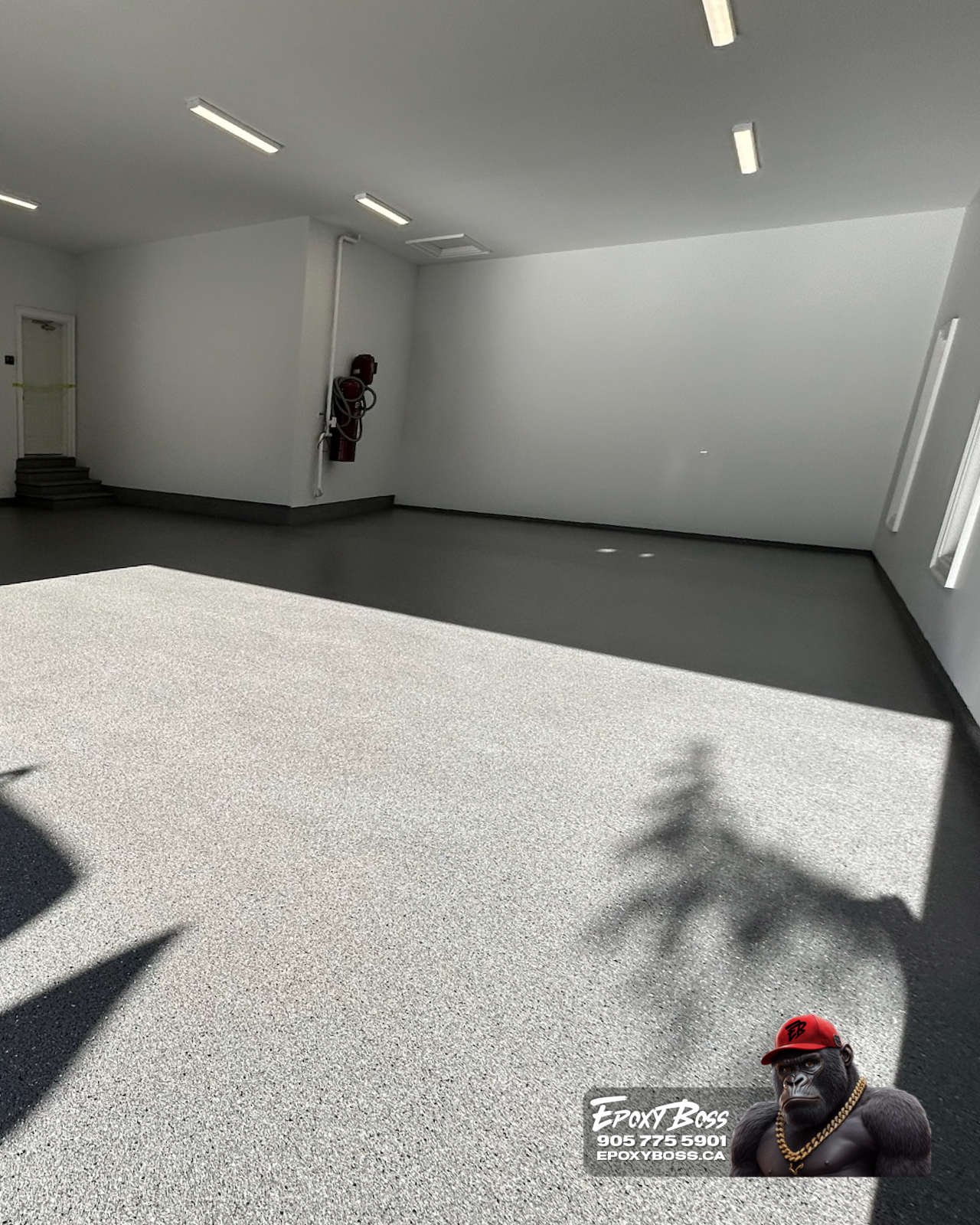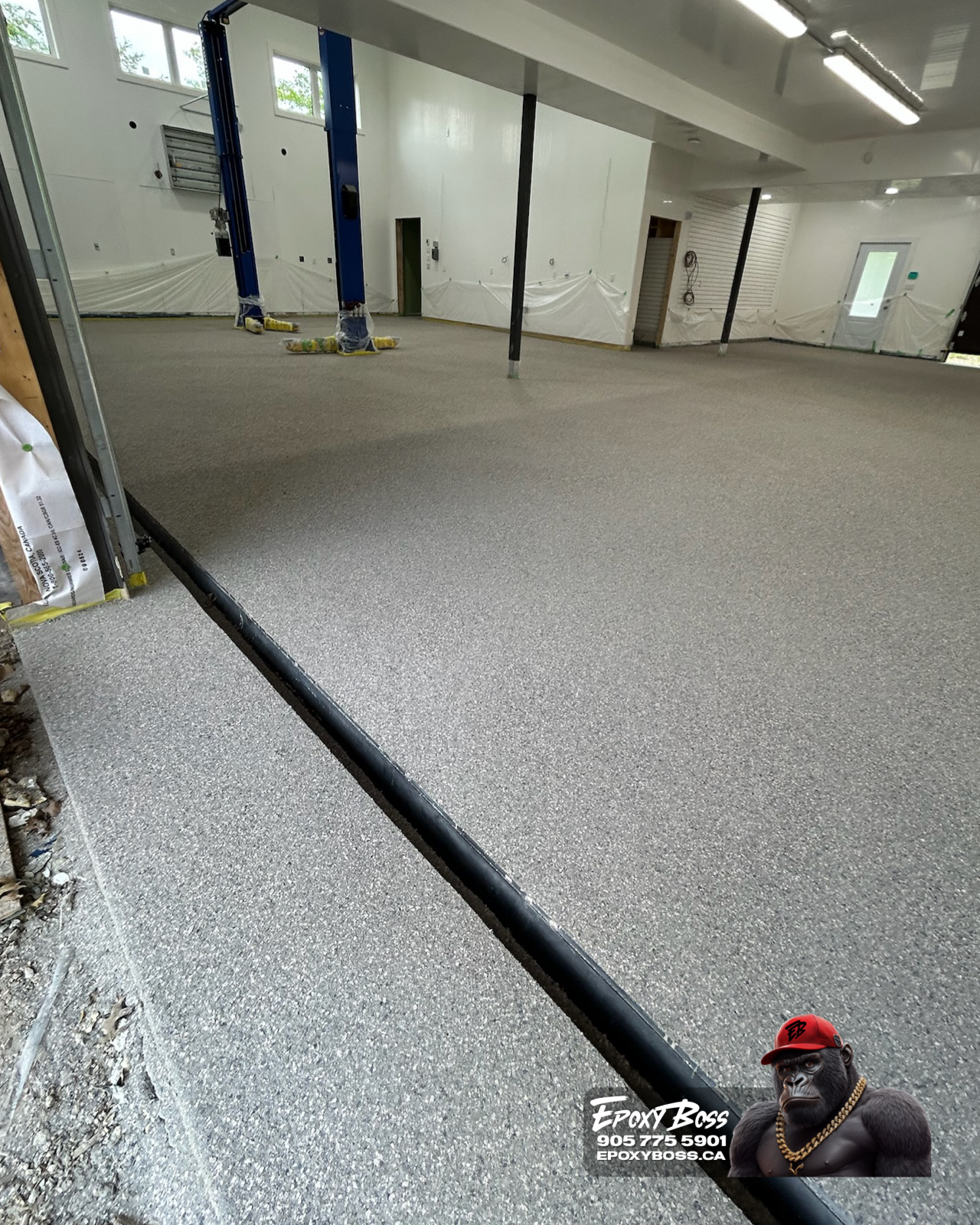

When an epoxy, polyaspartic or polished floor fails, the product is rarely the problem. In most cases the cause is what happened — or did not happen — before the coating went on. Concrete surface preparation is the least visible part of a flooring project and the one that decides whether it lasts.
Why preparation matters
Coatings do not stick to concrete by magic. They grip a clean, sound, properly textured surface. Laitance, old sealers, oil, dust and moisture all act as a barrier between coating and slab. Skip the preparation and the bond is only as strong as the weakest layer under it — which is how peeling, bubbling and delamination start.
What proper preparation includes
- Assessment — slab hardness, flatness, cracks, existing coatings and contamination are checked before any tooling is chosen.
- Moisture evaluation — concrete moisture and vapour transmission are tested where the system requires it.
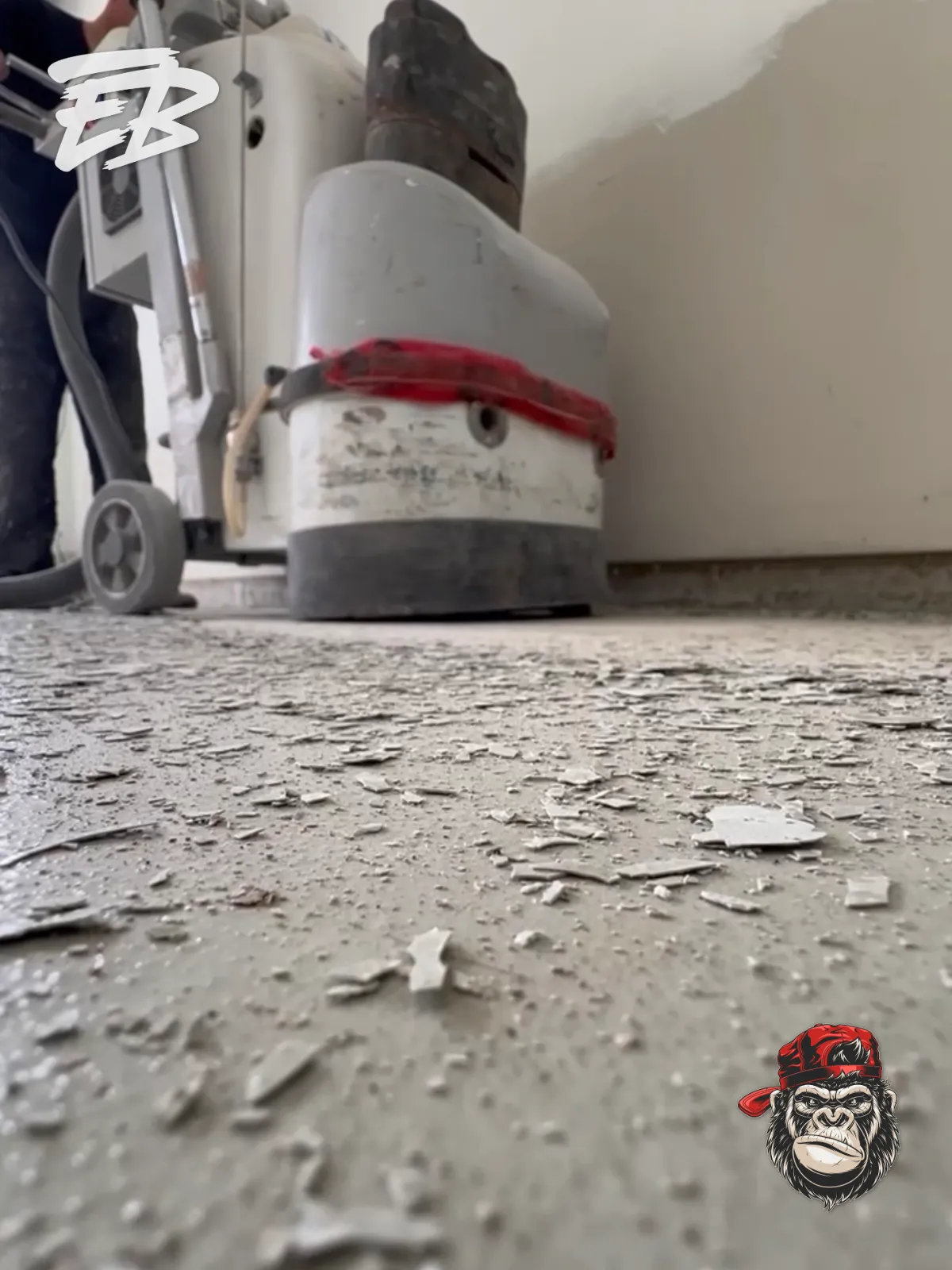
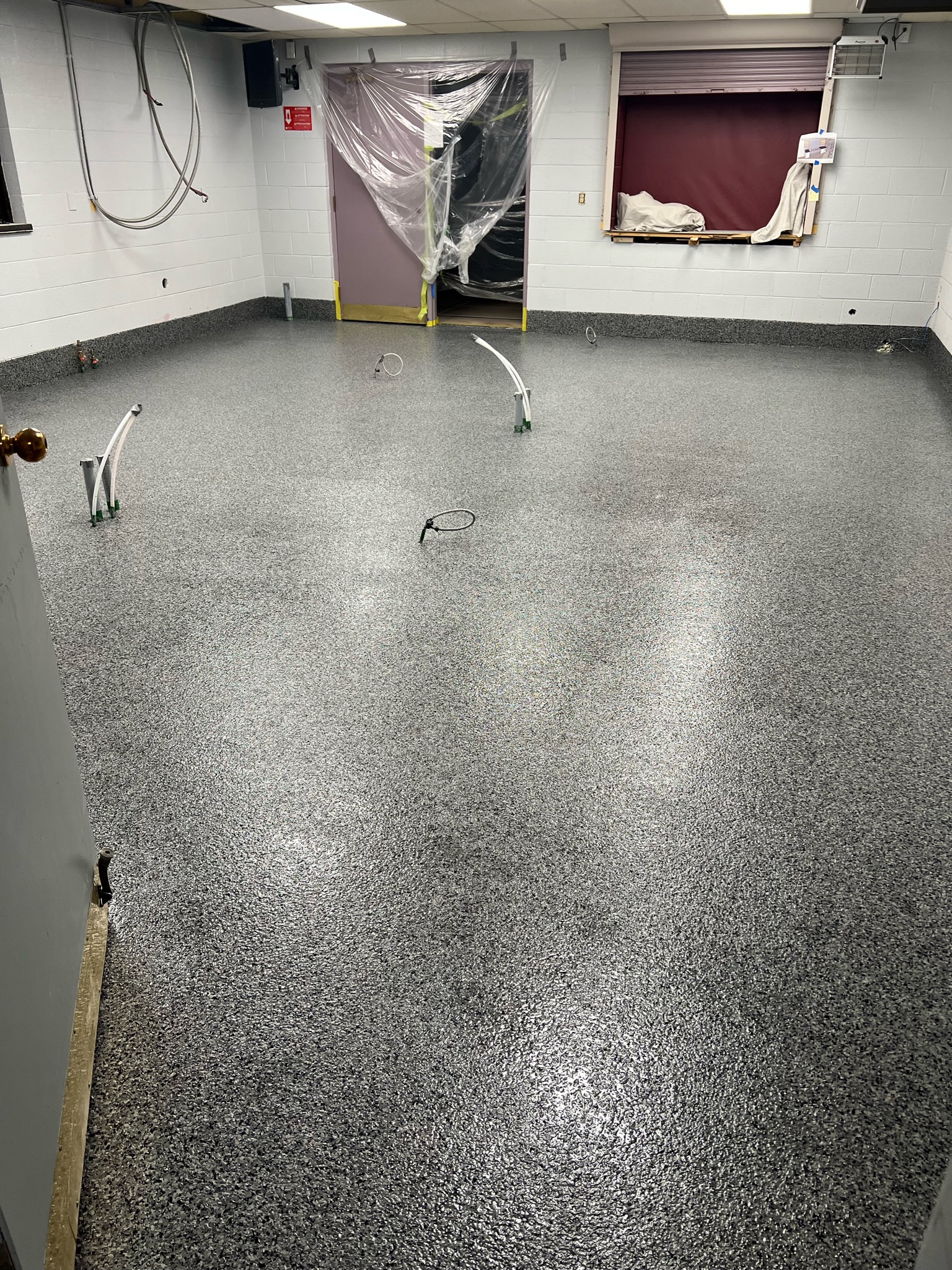
- Mechanical preparation — diamond grinding or shot blasting removes the weak surface and creates the profile the coating needs.
- Repairs — cracks, pits, joints and salt damage are repaired so they do not telegraph through the finished floor.
- Dust removal — the slab is vacuumed so the coating bonds to concrete, not to dust.
- Priming — a primer or moisture-mitigation layer is installed where the system calls for it.
Grinding, shot blasting or scarifying?
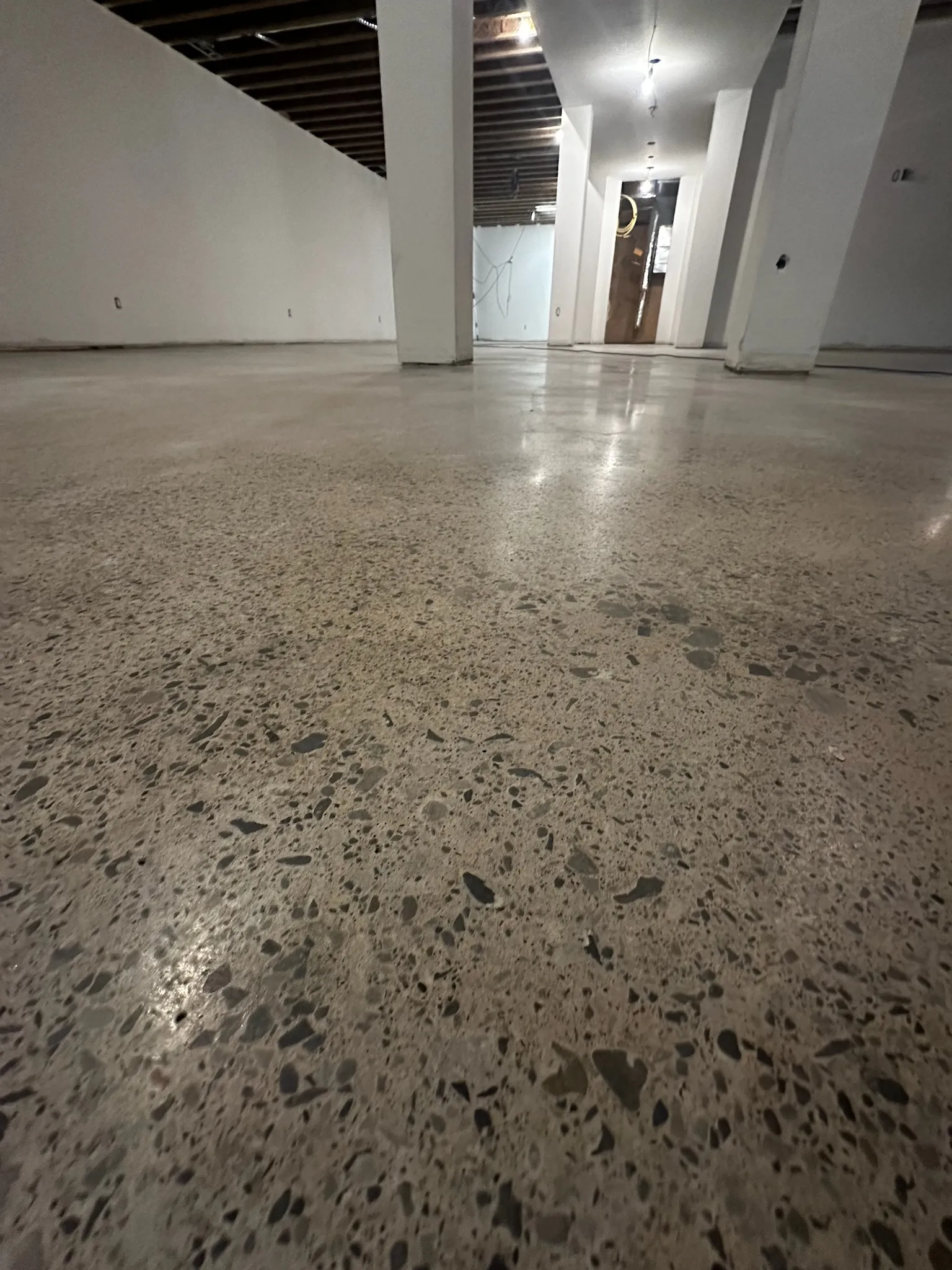
- Diamond grinding — the most versatile method: removes thin coatings, glue and high spots and gives a fine, controlled profile. Ideal for garages, basements and commercial floors.
- Shot blasting — fast and low-dust on large flat slabs; leaves a uniform texture.
- Scarifying — aggressive removal of thick coatings, mastic and heavy contamination.
Often the right answer is a combination: blasting or scarifying the field, grinding the edges and corners.
Concrete surface profile (CSP) in plain language
Surface profile is the “roughness” left on the slab, rated on an industry scale. Thin coatings need a lighter profile; thick broadcast, flake and build systems need a more aggressive one. The manufacturer's data sheet sets the target, and the preparation method is chosen to hit it — which is exactly why one-size-fits-all methods like acid etching fall short.
Contamination and moisture in Ontario
Garages and entrances carry road salt, oil and meltwater into the slab, and many basements have moisture moving through the concrete. These conditions affect which system is suitable and how the slab must be prepared. They are checked and addressed up front, not discovered after the floor has been installed.
Red flags in a flooring quote
- No mention of grinding or shot blasting.
- Acid etching offered as the preparation.
- No moisture test on a basement or slab-on-grade floor.
- No allowance for crack and spall repair.
- A very low price with a very short schedule.
Preparation as a service
We also provide surface preparation and grinding on its own for contractors and property owners, and our cost calculator includes floor preparation as a standalone option. If your slab is damaged, start with concrete repair and restoration.
Ready to get the foundation right? Request an estimate.
%25202.webp)


.webp)

.jpeg)
.jpeg)
.jpeg)
.jpeg)
.webp)

.jpeg)
.png)
.png)