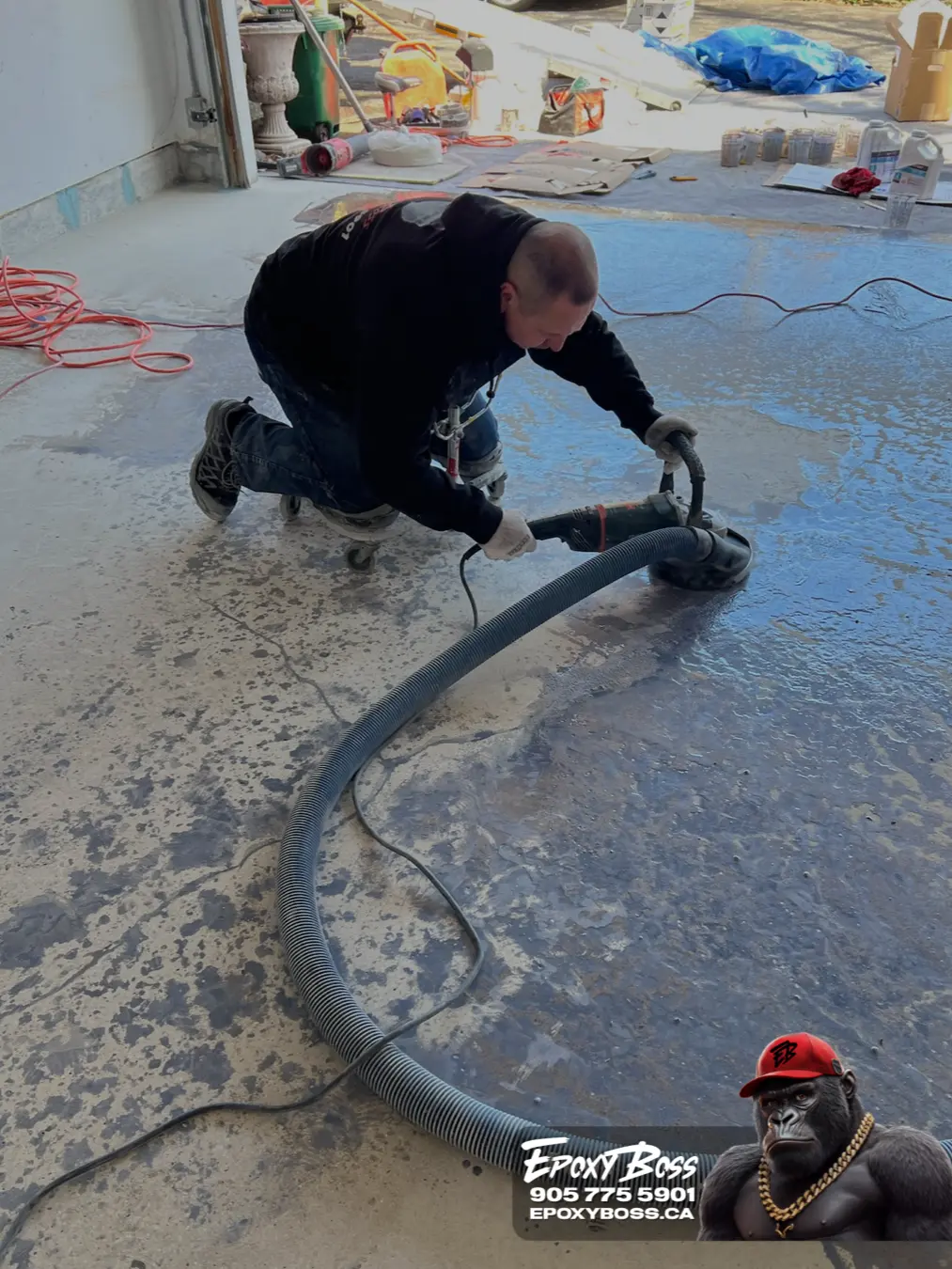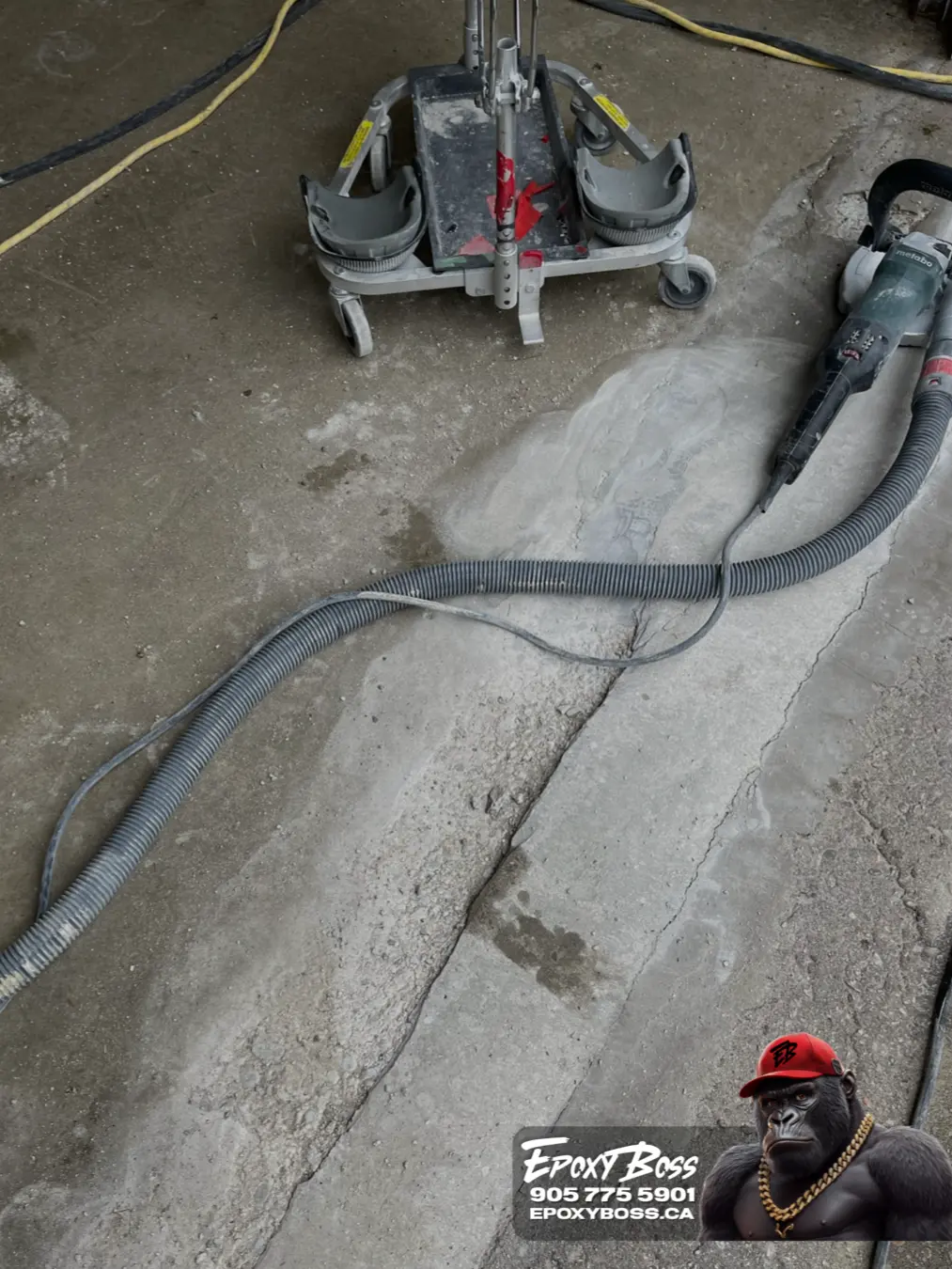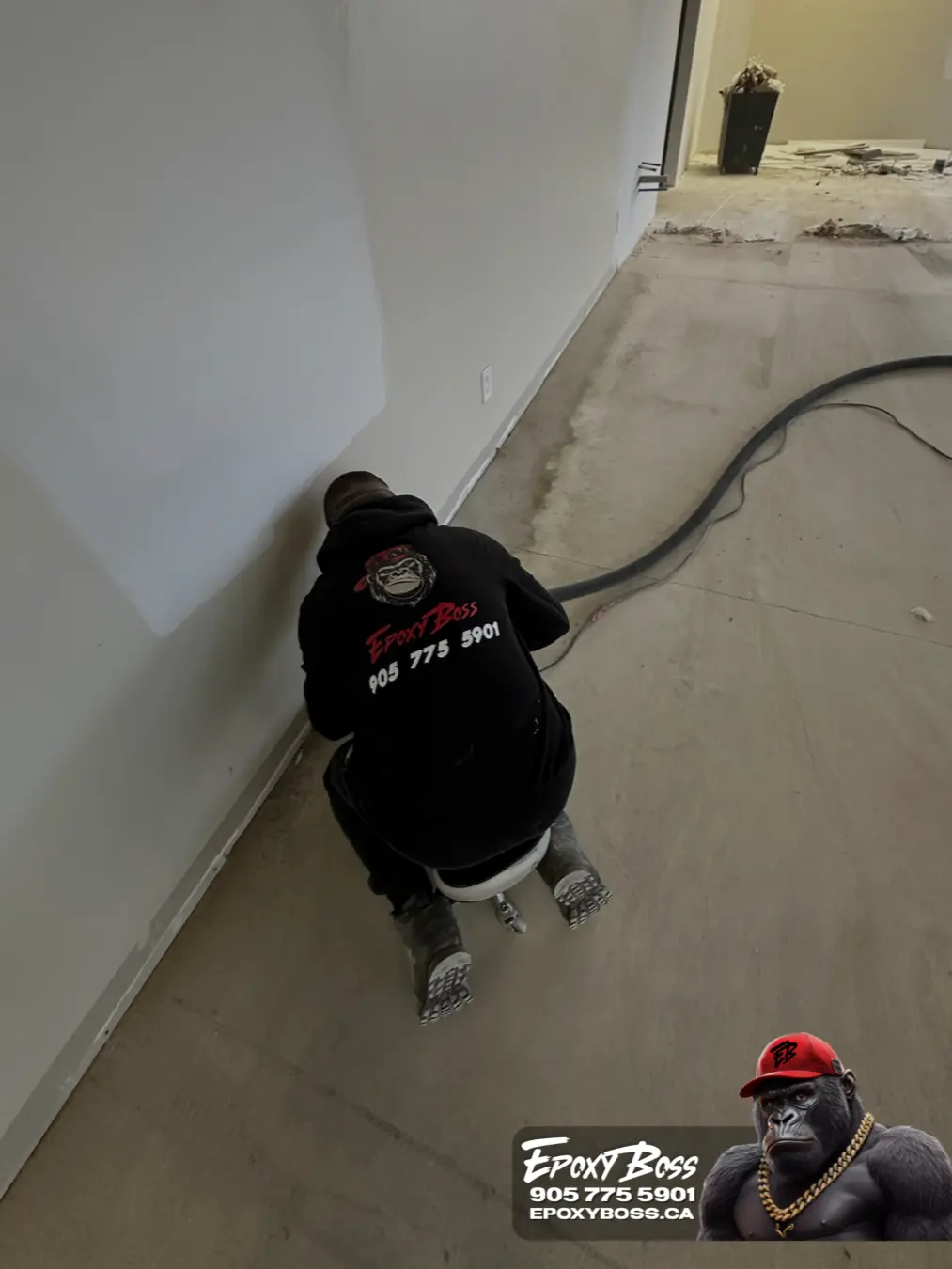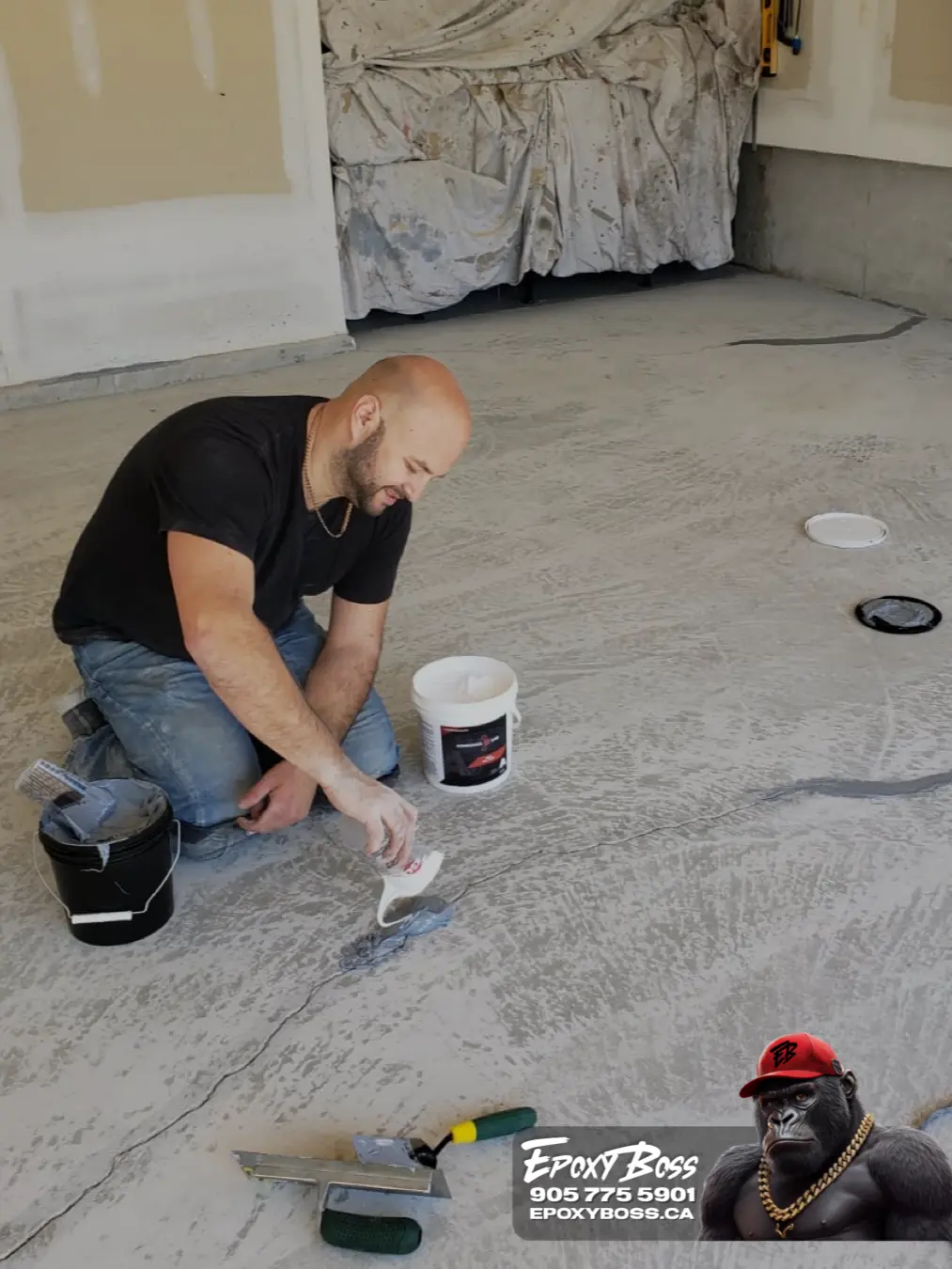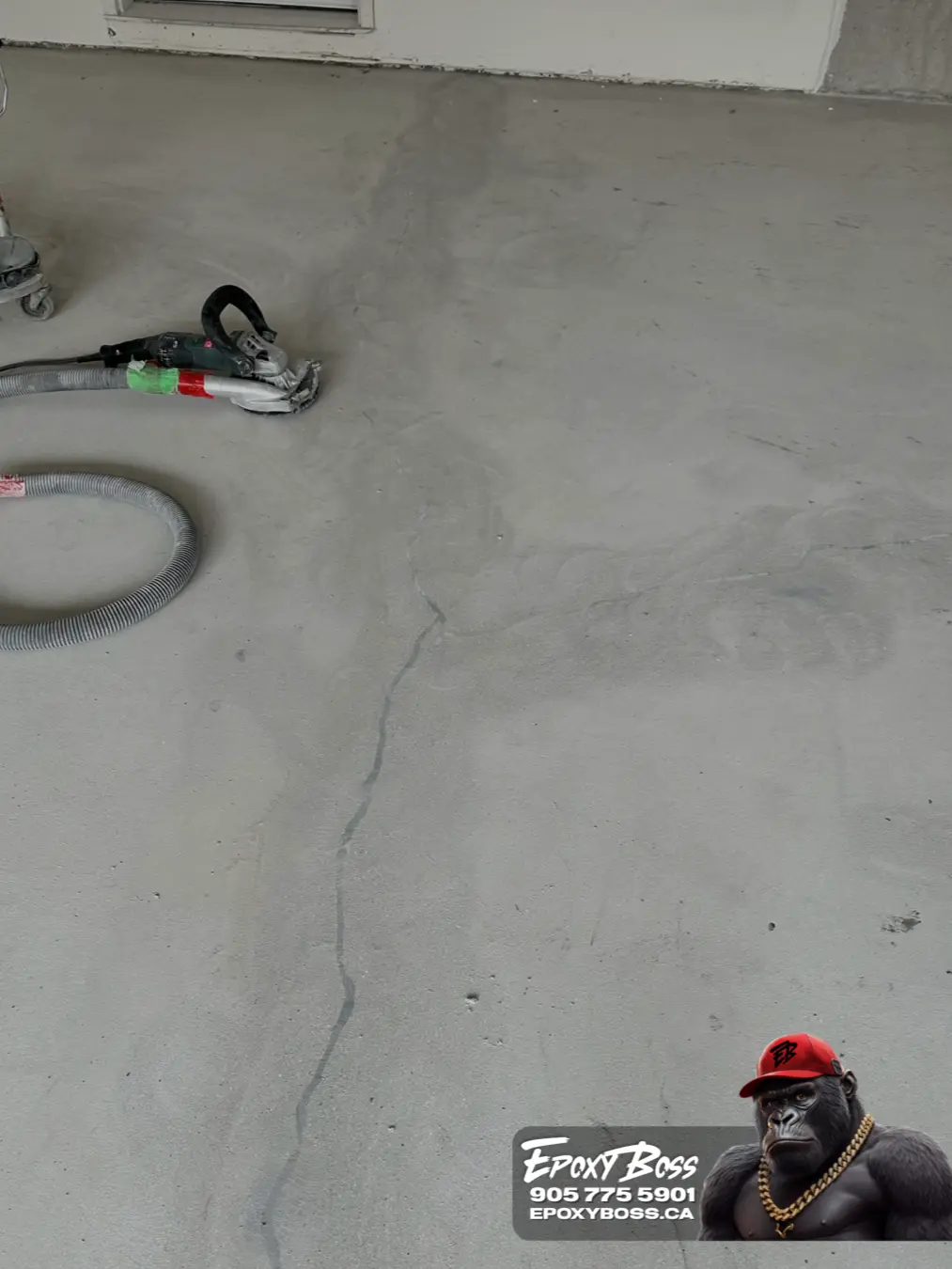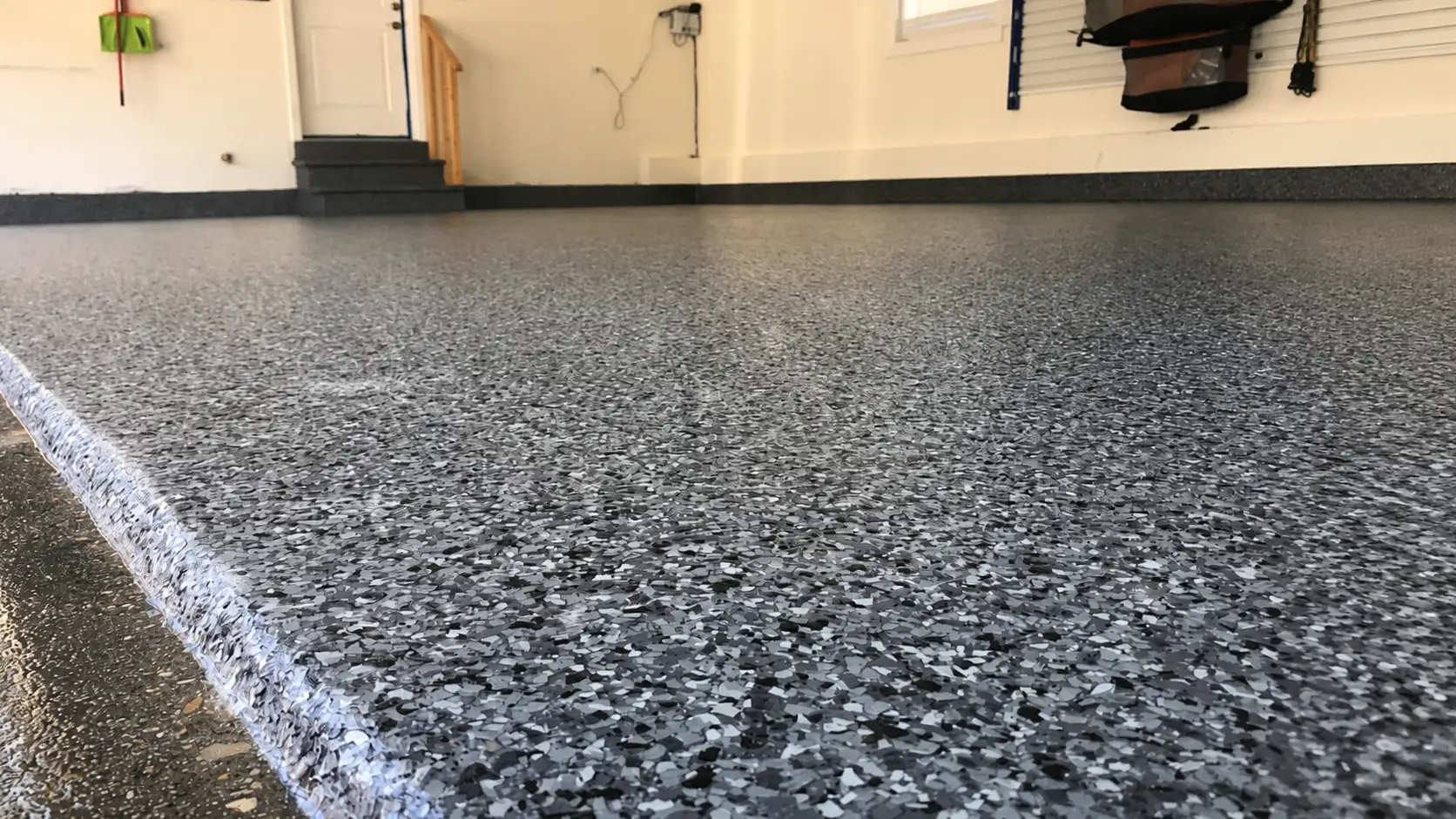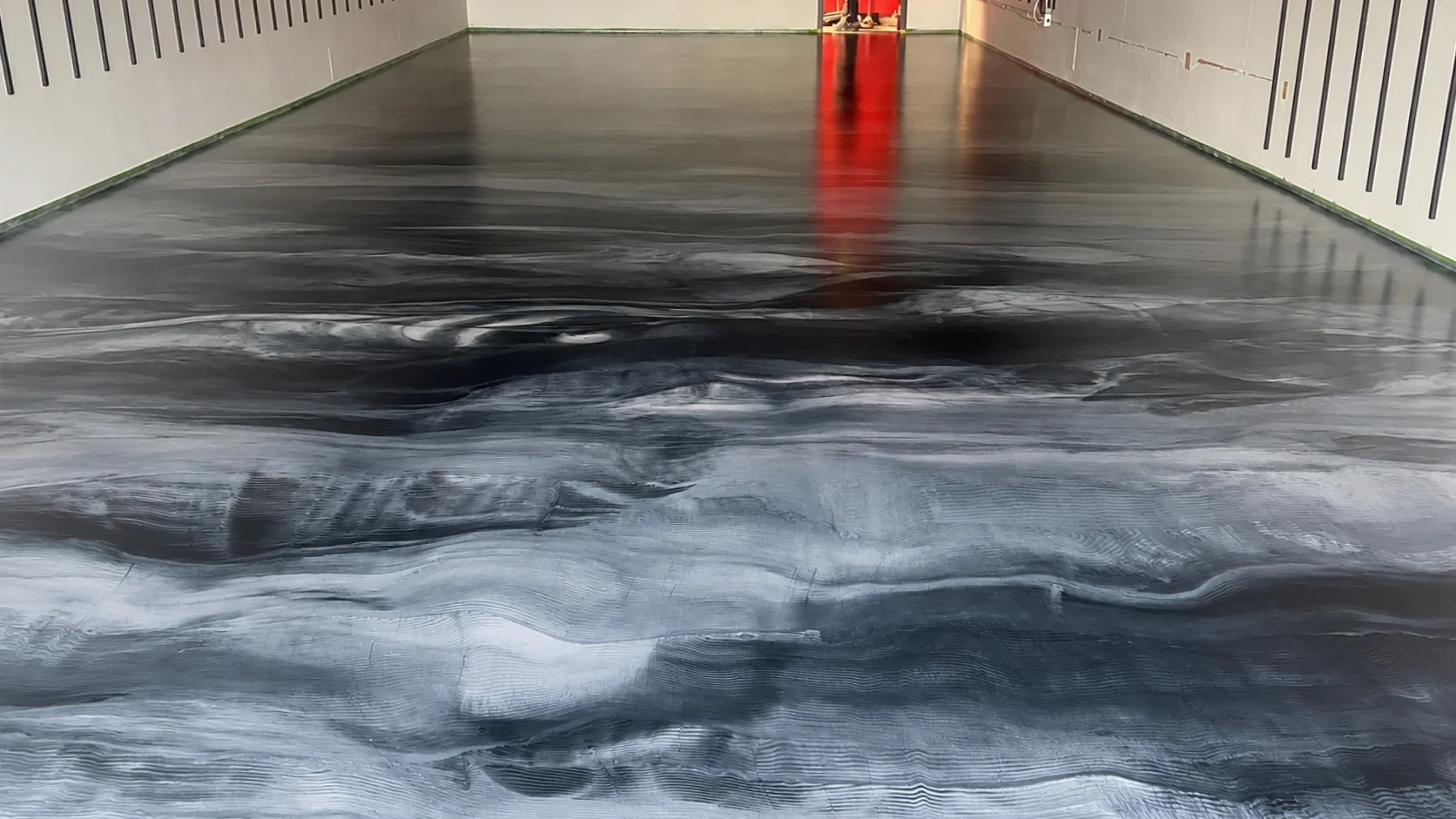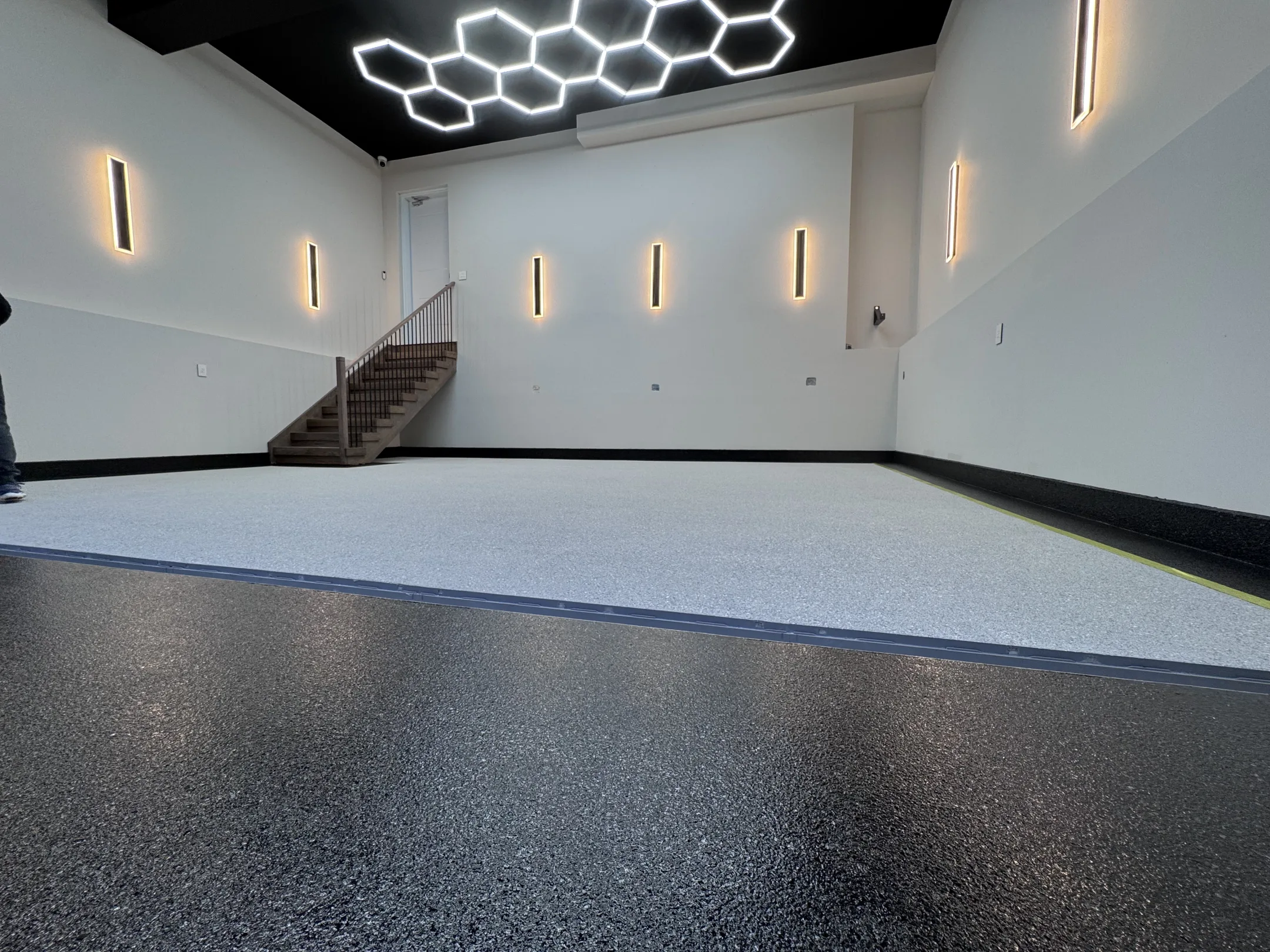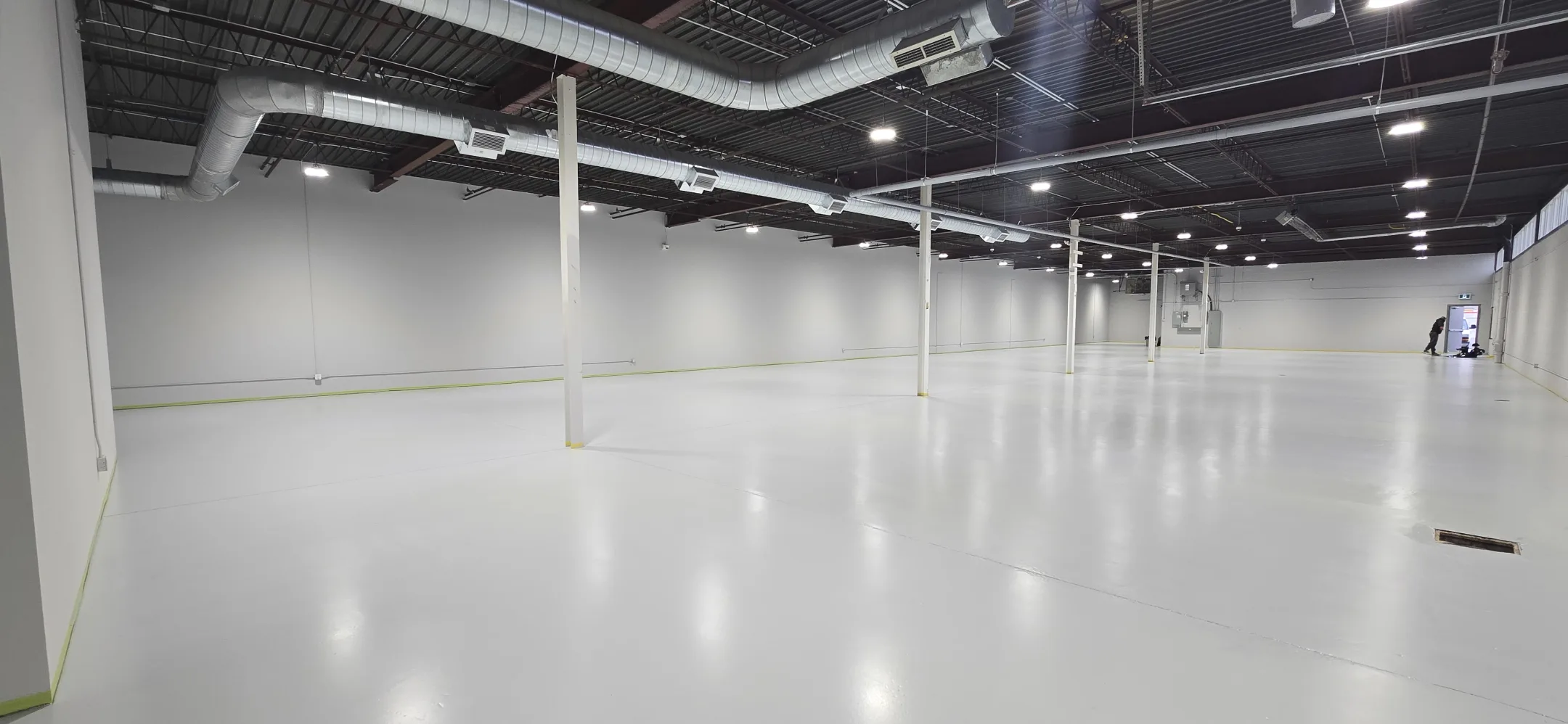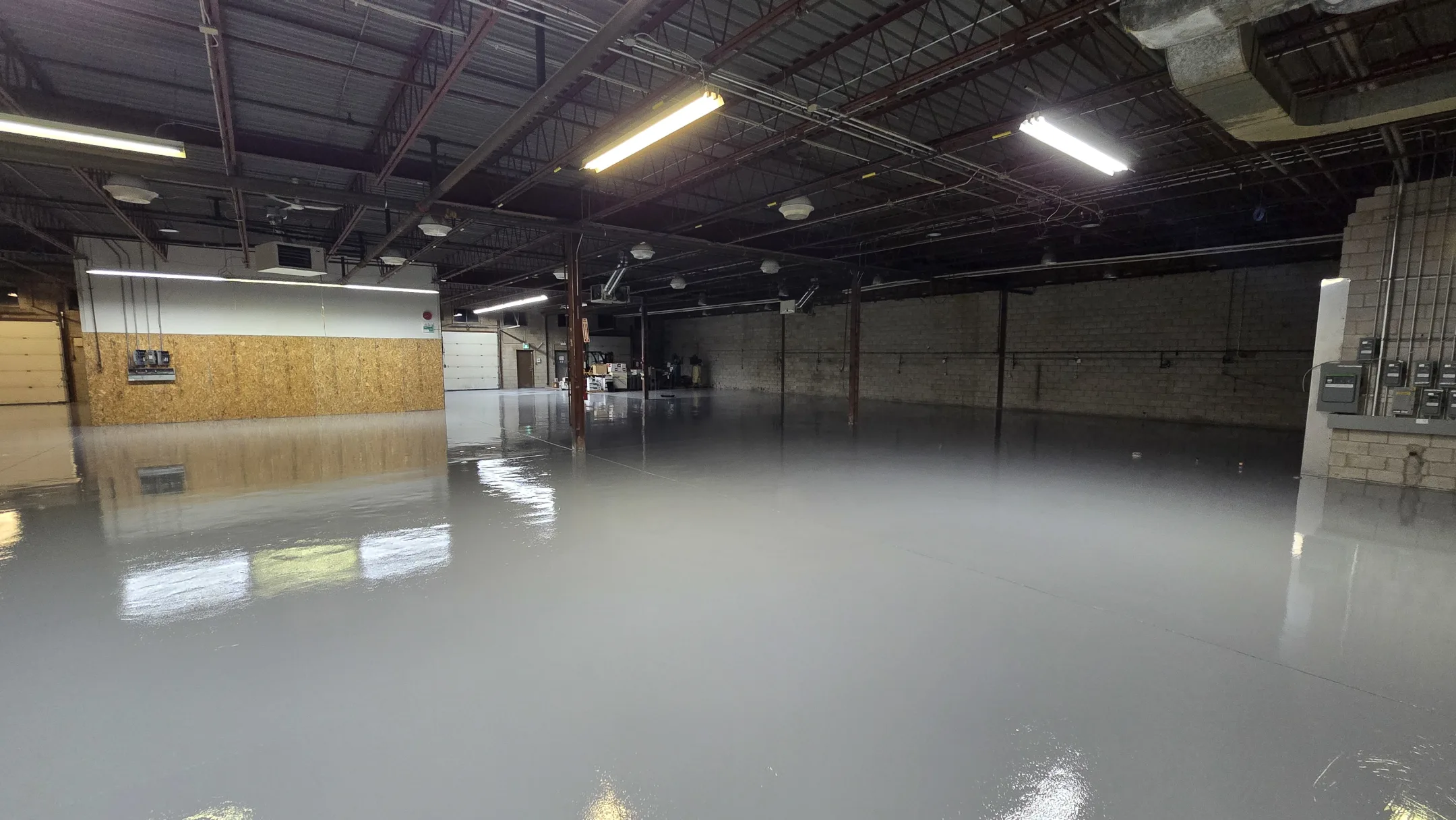
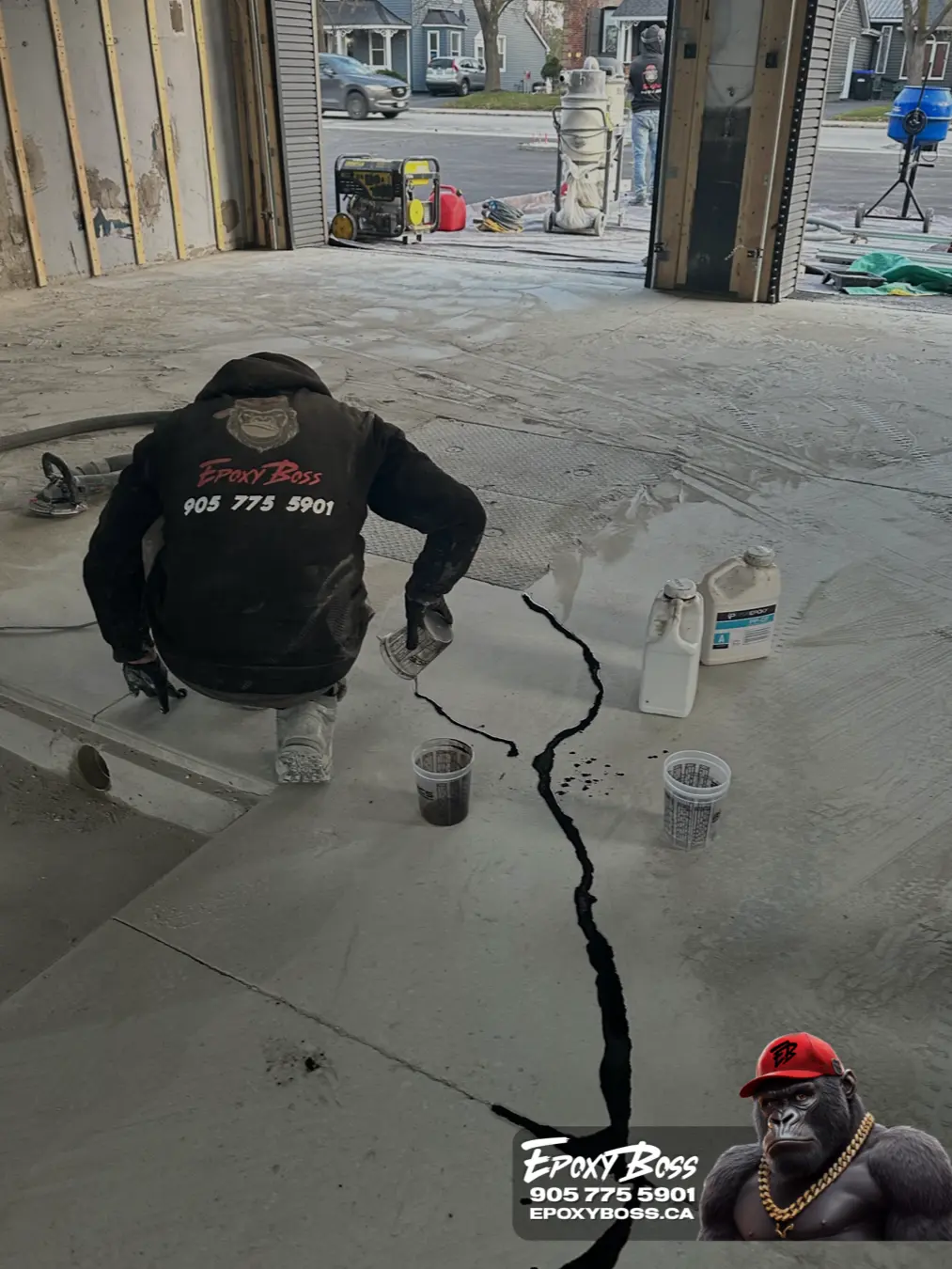

Repair details are planned around how the slab moves, wears, and will be used after installation. Epoxy Boss Inc. takes a preparation-first approach so the selected system is built on a clean, properly prepared surface rather than a shortcut.
Before installation, we confirm access, substrate condition, repair needs, expected use, and the appropriate system. The final scope is communicated clearly so the installation and long-term maintenance expectations are practical for the property.


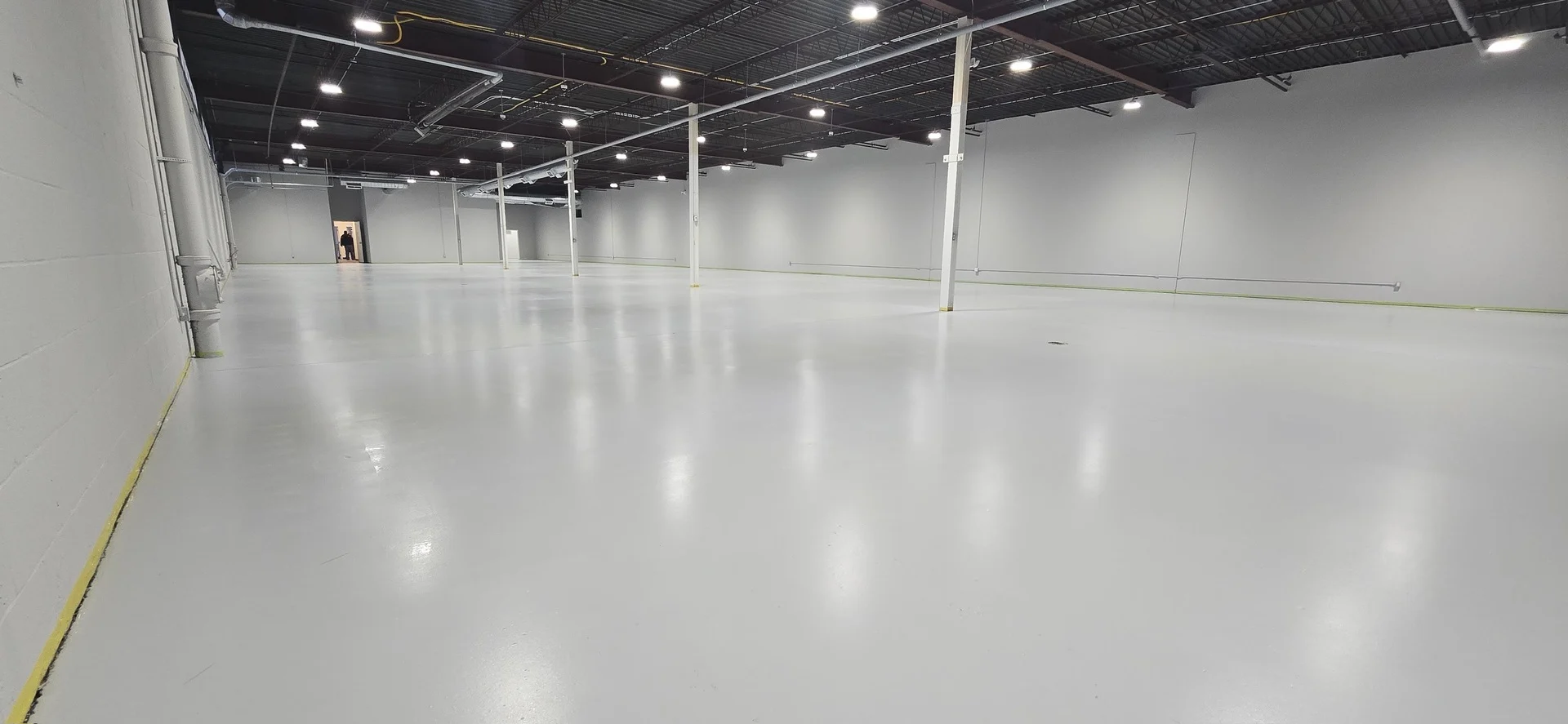
Epoxy Boss has completed projects ranging from residential garage systems to large-volume industrial operations for manufacturing and commercial facilities across multiple sectors.
Because high-performance flooring is not defined byappearance alone. It is defined by how the surface performs under years ofreal operational use.

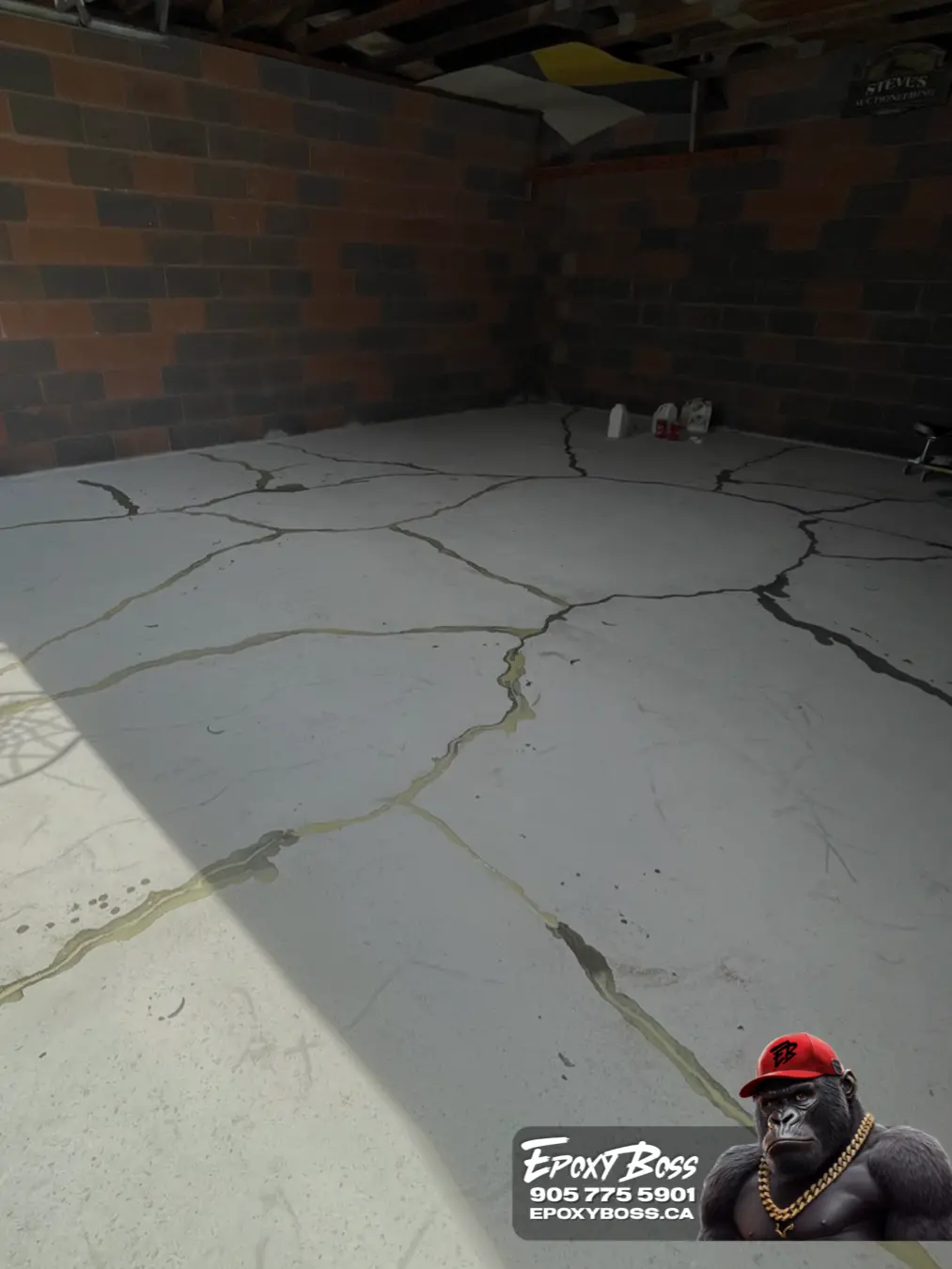
Most garage and basement cracks are shrinkage cracks from the concrete curing, and they're routinely treated before coating. We're a flooring contractor, not engineers, so we won't tell you a crack is structurally safe. Signs worth an engineer's opinion include a crack that's growing, one side sitting higher than the other, doors that have started sticking, or visible settlement.
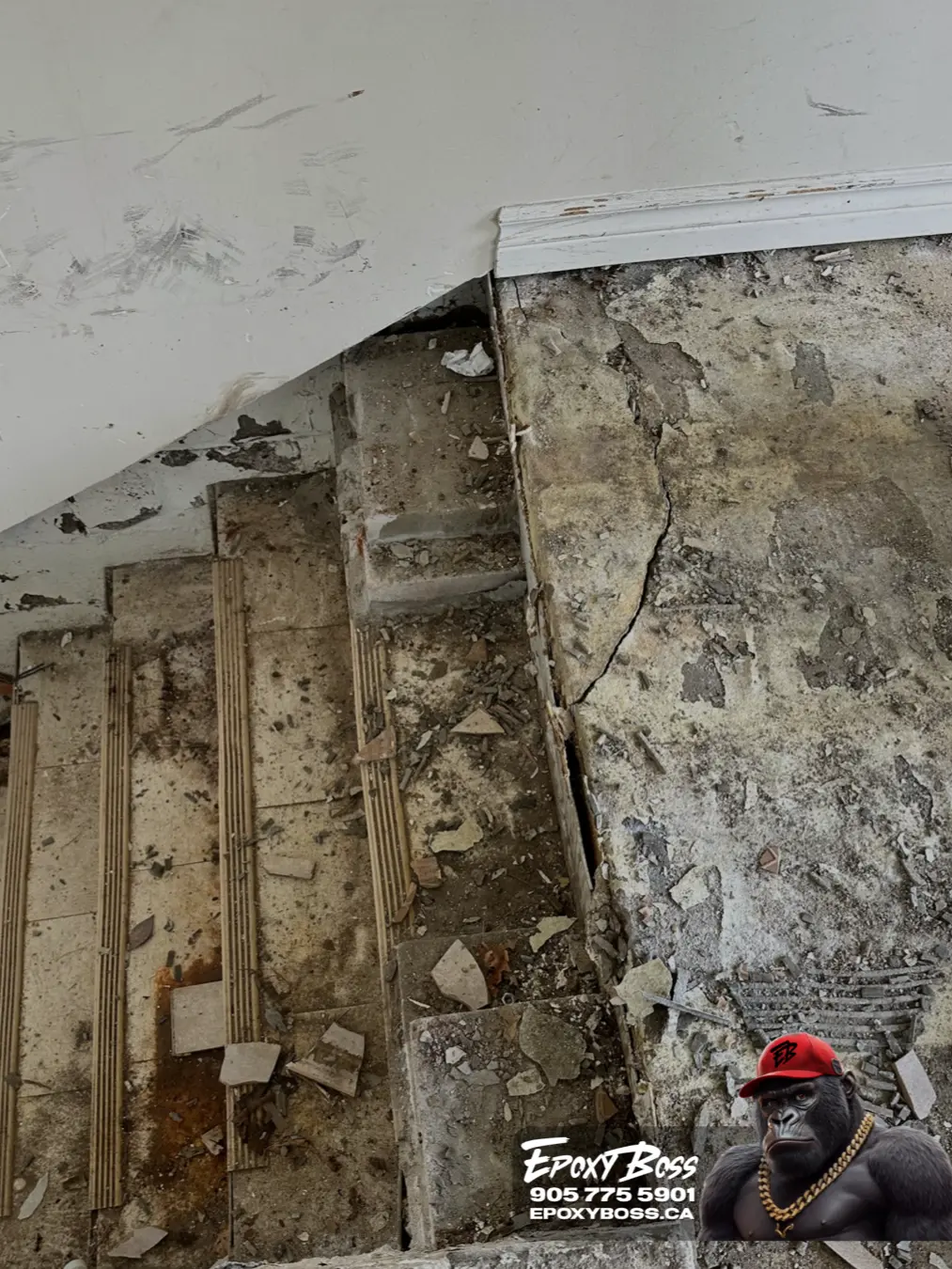
Porches and steps take salt and freeze-thaw directly. Where the damage is at the surface, we remove the weak concrete and rebuild with a repair mortar suited to exterior exposure, then protect it. Where the concrete is deteriorated through its depth or the step has moved, repair may not last, and replacement by a concrete contractor is the honest answer.
After the snow is gone, wash the floor and look closely at the first few feet inside the door and the wheel paths. Flaking and pitting suggest salt and freeze-thaw damage. New or widening cracks are worth noting. White residue is dried salt that should be washed off. If you're considering a coating, photographs of these areas help us give you a better idea of what the repair will involve before we visit.
Scaling is loss of the top layer of concrete, usually in patches, and is commonly linked to freeze-thaw exposure with de-icing salts. Cracking is a break through the slab, which can come from shrinkage as the concrete cured, settlement, or movement. Most garage cracks are shrinkage cracks and can be treated before coating. Cracks that are widening, uneven across the break, or accompanied by settlement are a different matter, and a structural engineer should look at those before any coating decision is made.
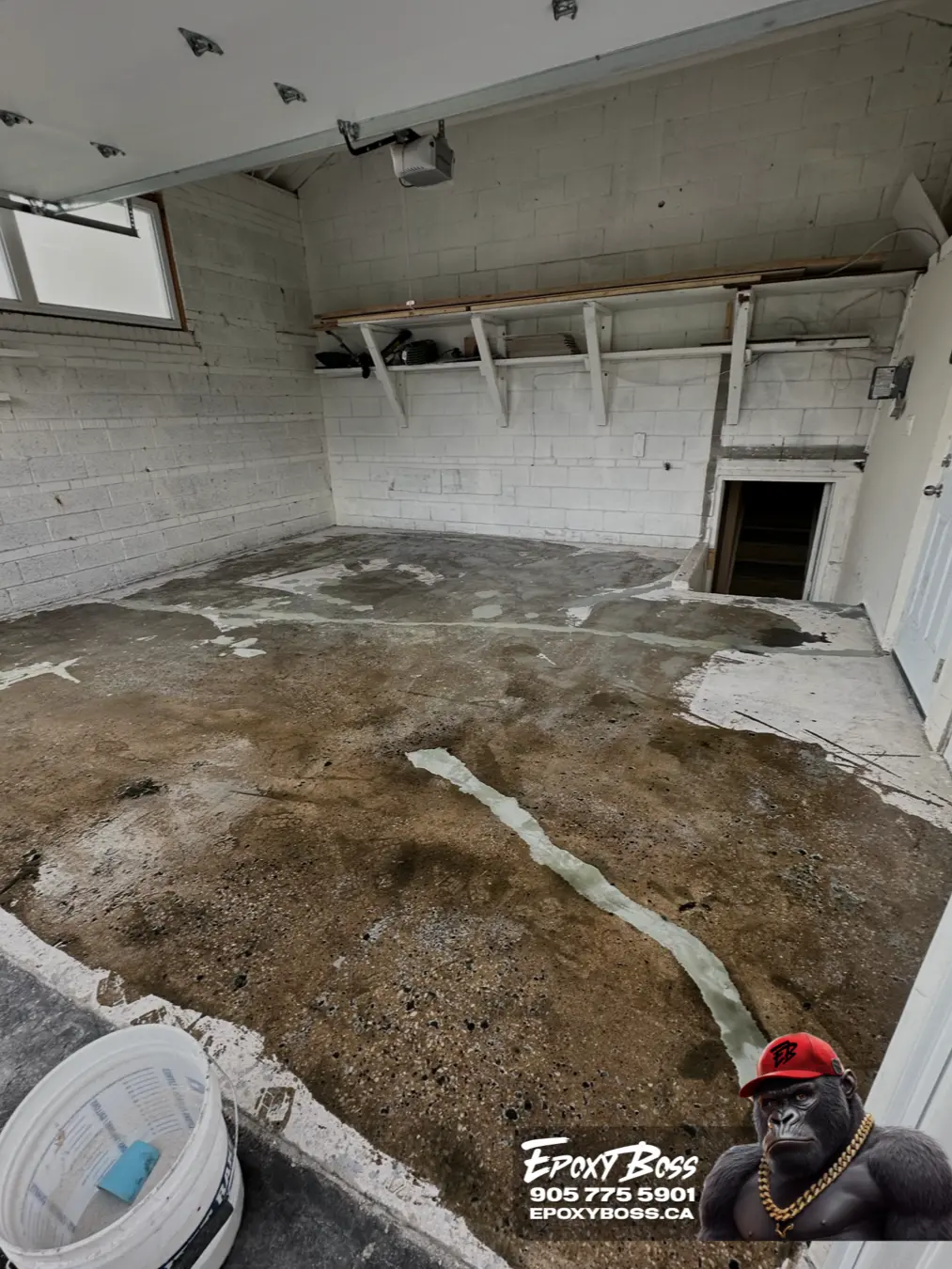
The first few feet inside a garage door take the most punishment in an Ontario winter: snow falls off the car, melts, pools with dissolved salt, and freezes again when the door opens. That zone also has the widest temperature swings. Surface scaling — thin flakes coming away — often starts there, and it can also point to a weaker surface layer from how the slab was originally finished. We assess it before recommending anything, because the fix depends on how deep the damage runs.
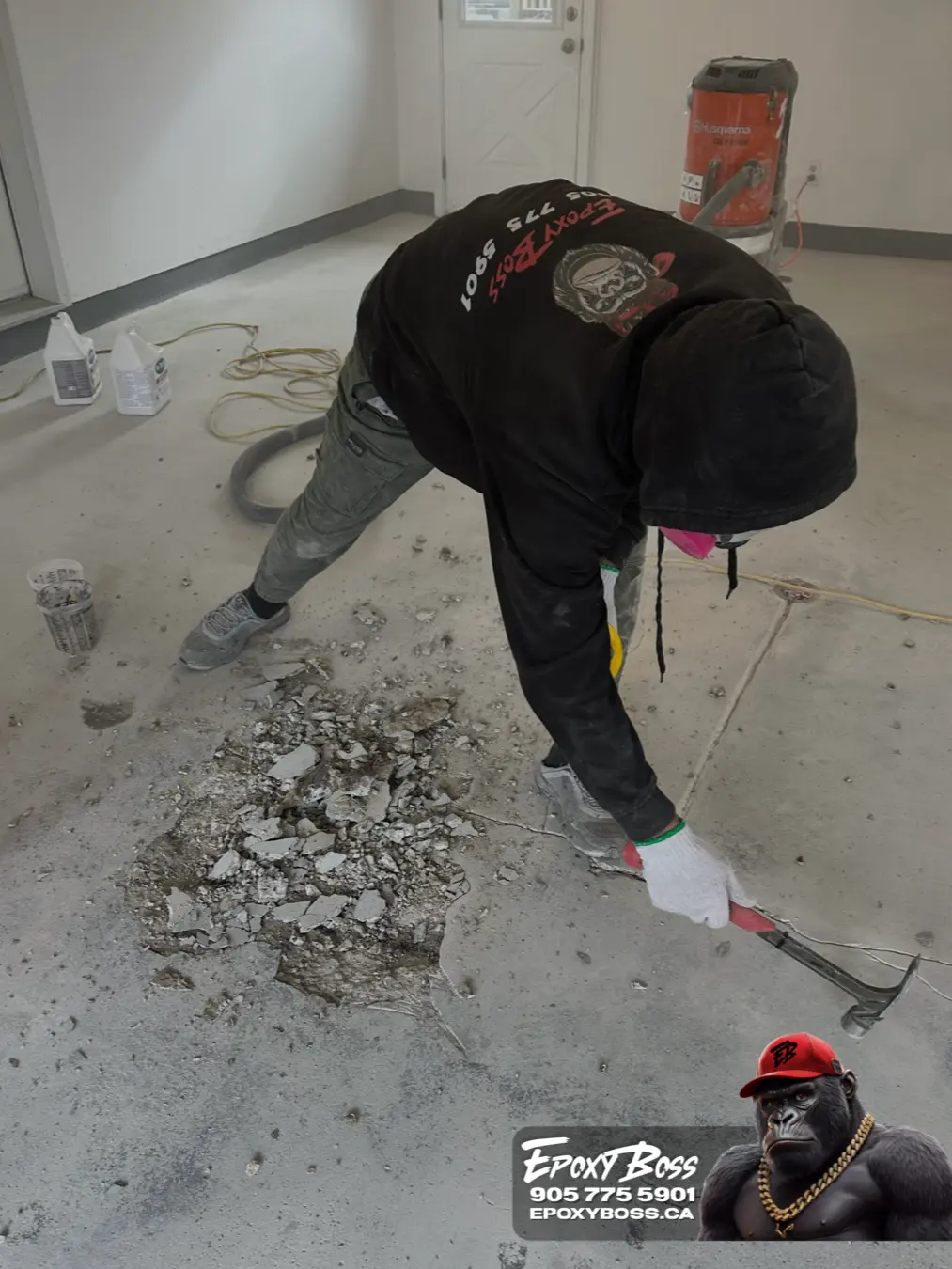
Salt damage typically shows as scaling, pitting and spalled edges, and the first job is to find out how deep it goes. We grind until we reach sound concrete, then rebuild the damaged areas with a compatible repair material and grind them flush before any coating goes down. Coating directly over scaling usually fails, because the coating is only as strong as the layer it's bonded to. If the damage is deep or structural, repair alone may not be the answer, and we'll say so.
No. We never install over damaged concrete. Full surface restoration and crack repair are part of our preparation process, because a coating is only as good as the slab beneath it.
Usually yes. Age by itself is not the problem — moisture coming up through the slab is, and a lot of older houses here were built without a barrier underneath.
We check the slab before quoting. If the reading is high we put a barrier down first; if it is clean, nothing extra is needed.
Yes. Cracks, chipped edges and failed patches are repaired as part of the preparation, not treated as an extra afterwards.
A coating does not bridge a moving crack on its own, so the repair has to happen first if the finish is going to stay flat.
Yes. Crack remediation, joint stabilization, moisture mitigation and substrate correction are commonly performed before flooring installation.
Damaged concrete often requires crack remediation, surface correction, resurfacing or substrate stabilization before flooring installation. Surface condition directly affects long-term system performance.
Yes. Waterproof crack injection and crack remediation procedures may be integrated into waterproofing systems to help prevent moisture infiltration through damaged concrete areas.
Damaged concrete often requires grinding, crack remediation, resurfacing or substrate correction before coating installation. Surface condition directly affects long-term system performance.