Residential Epoxy Flooring & Garage Floor Coatings
Concrete flooring selected for how your space is used. Get a free assessment of your slab, preparation needs and finish options in Ontario.

Concrete flooring selected for how your space is used. Get a free assessment of your slab, preparation needs and finish options in Ontario.
The right system depends on how the space is used, whether it sees sun or standing water, and the condition of the slab. The same house often needs two different builds.
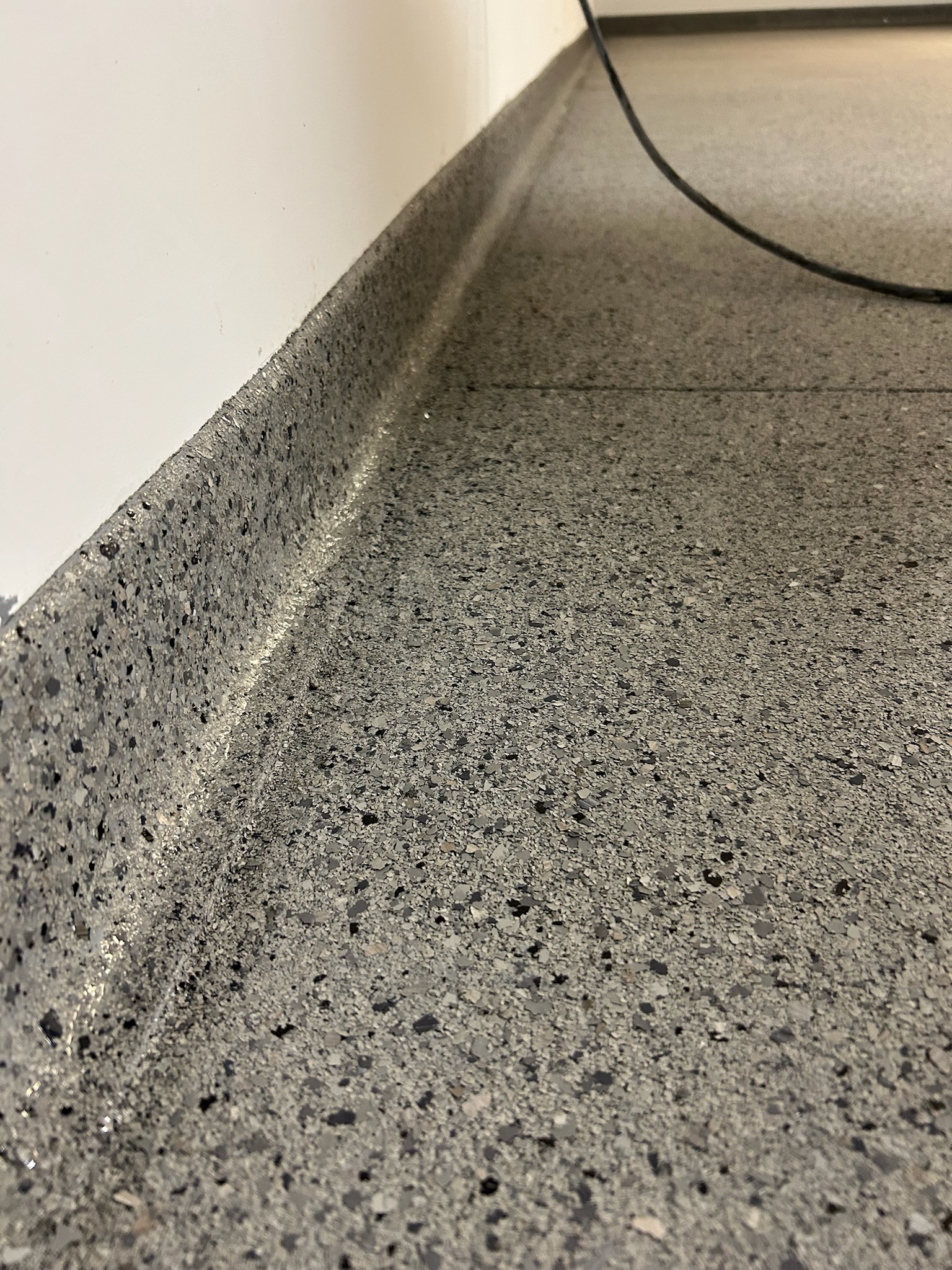
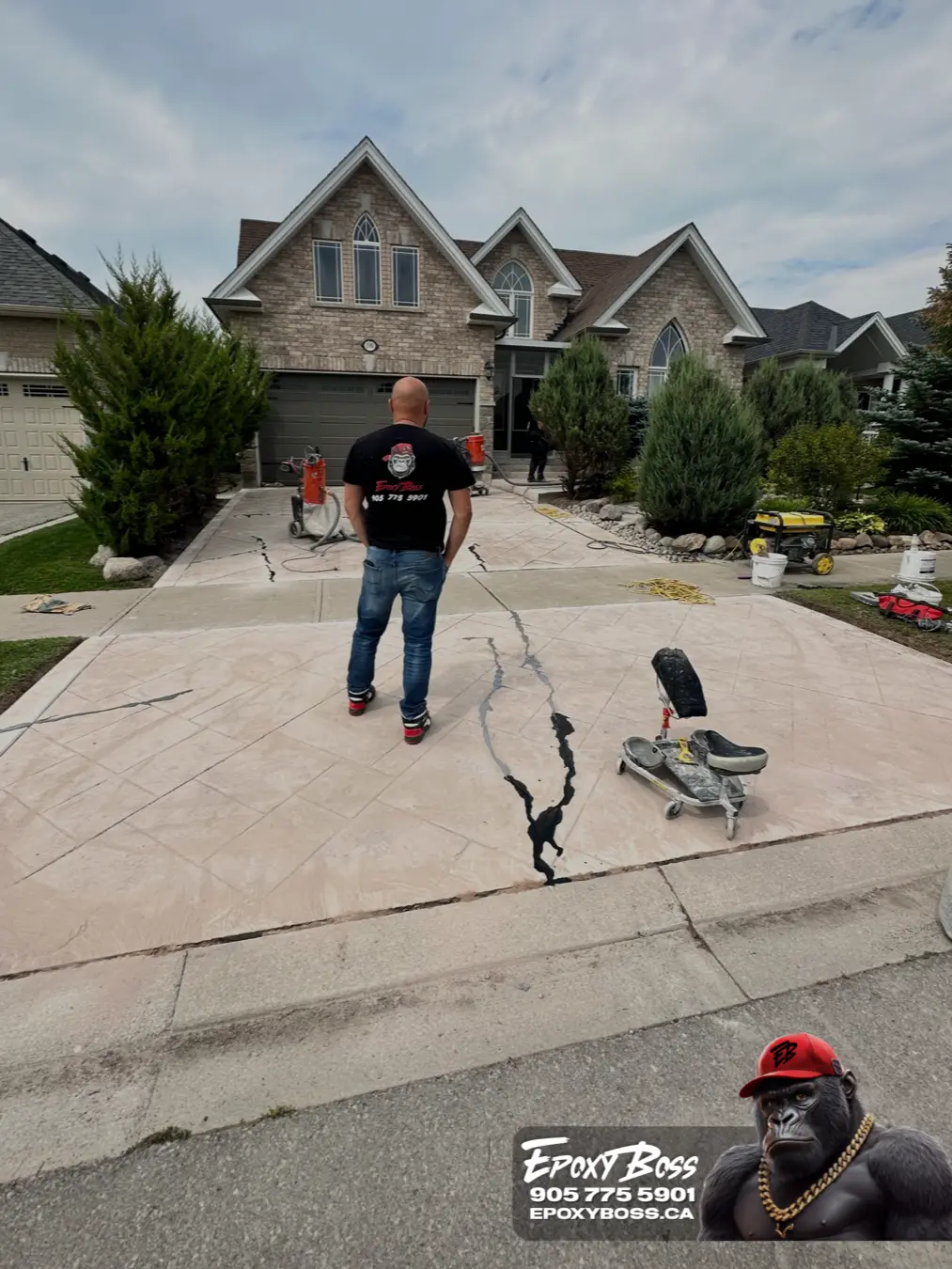
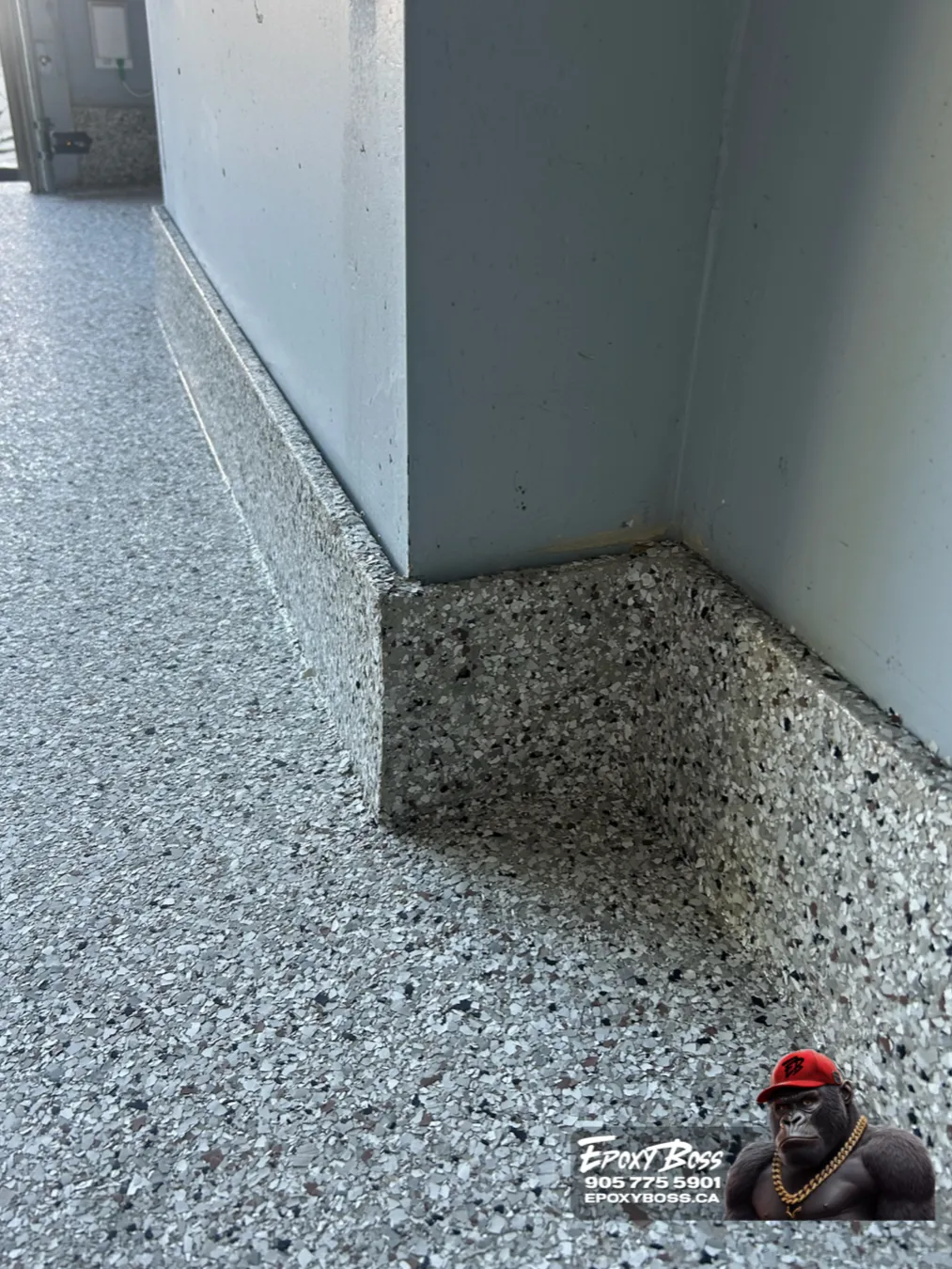
Most residential coating failures start with the concrete, not the product. Before any finish is applied, the slab is mechanically prepared by diamond grinding to remove the weak top layer and open the surface. Cracks, chipped joints and spalled areas are repaired, and any old paint or peeling coating is removed rather than covered over. Edges along walls and steps get the same attention as the centre of the floor.
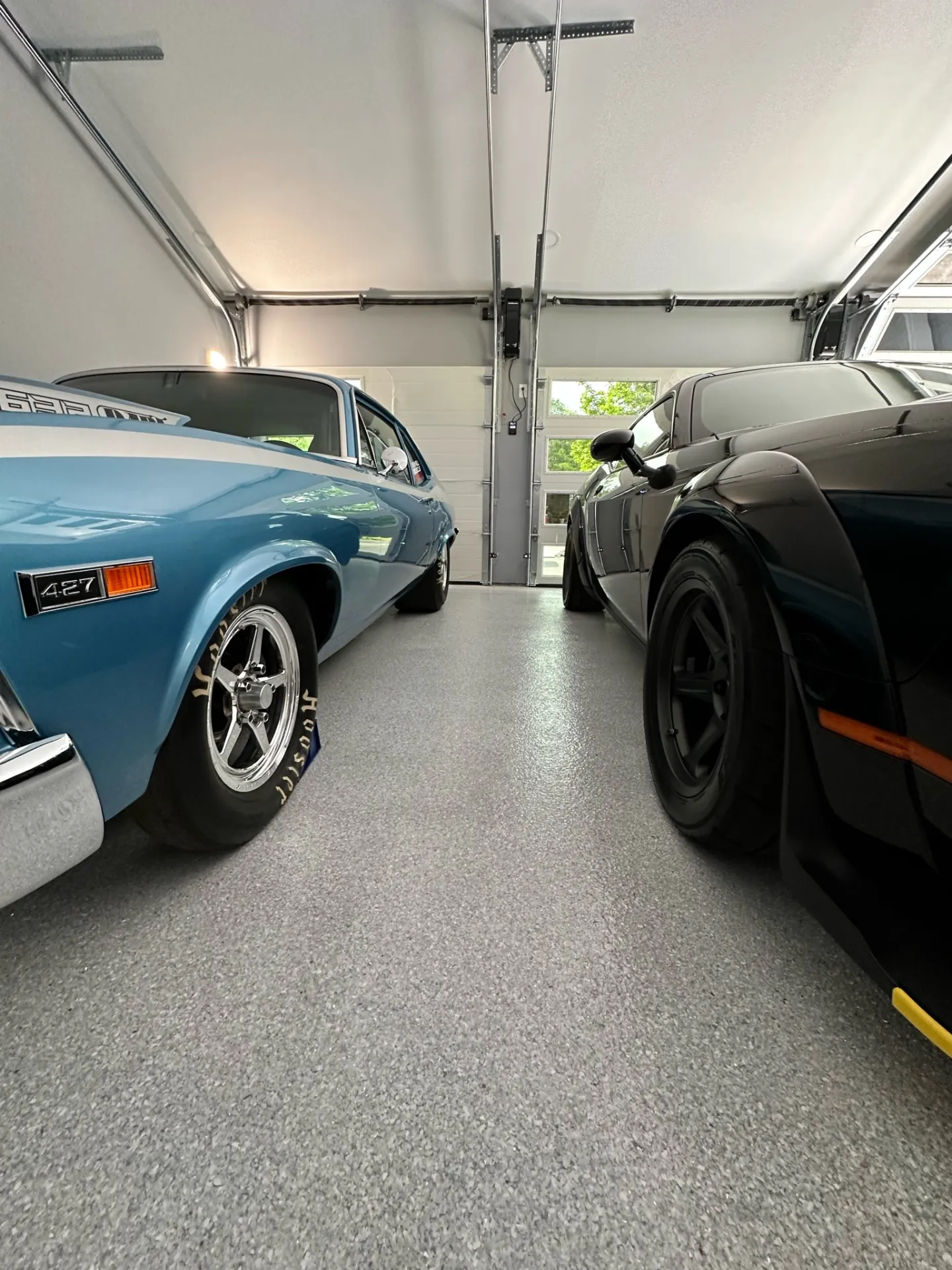
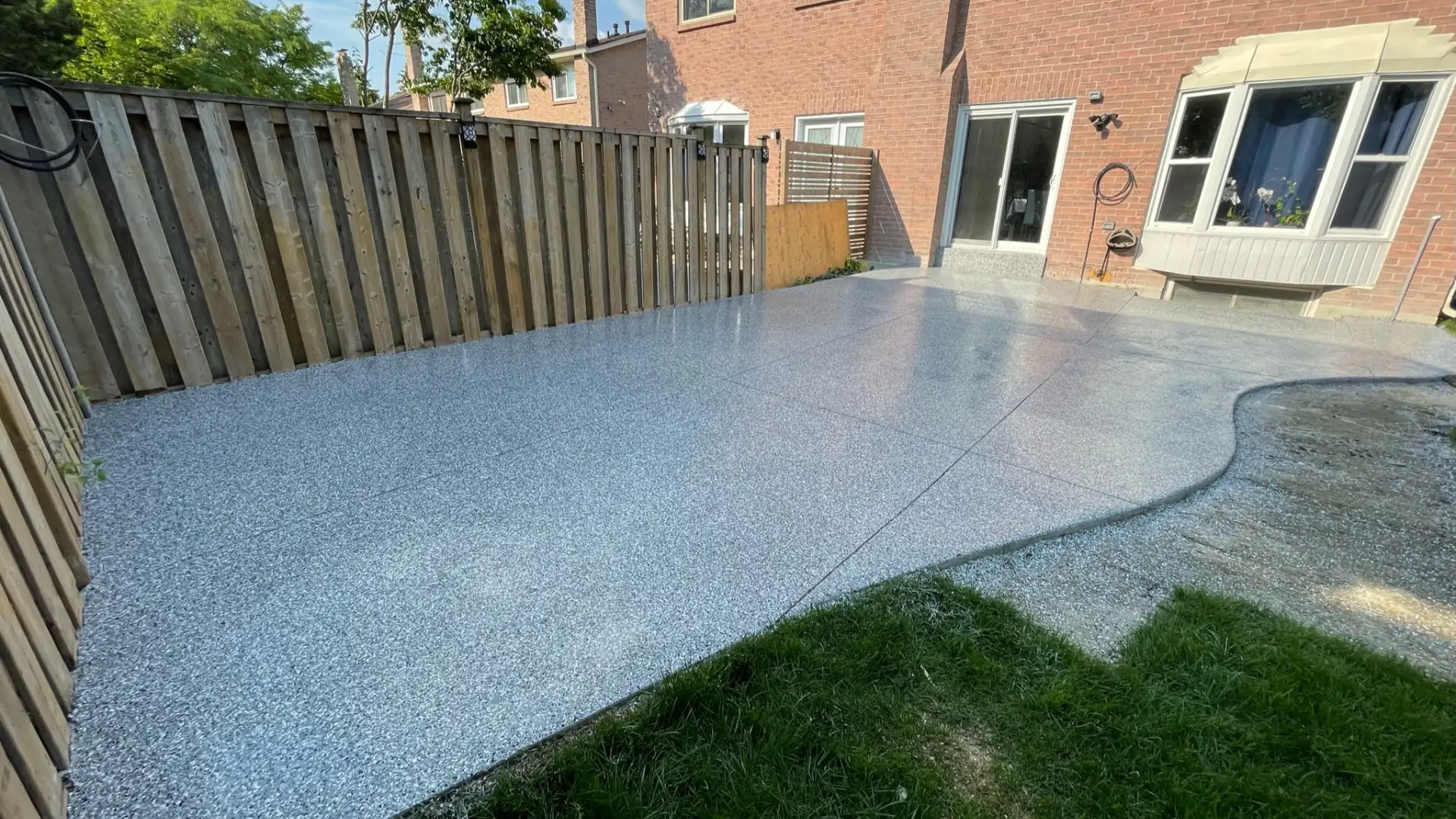
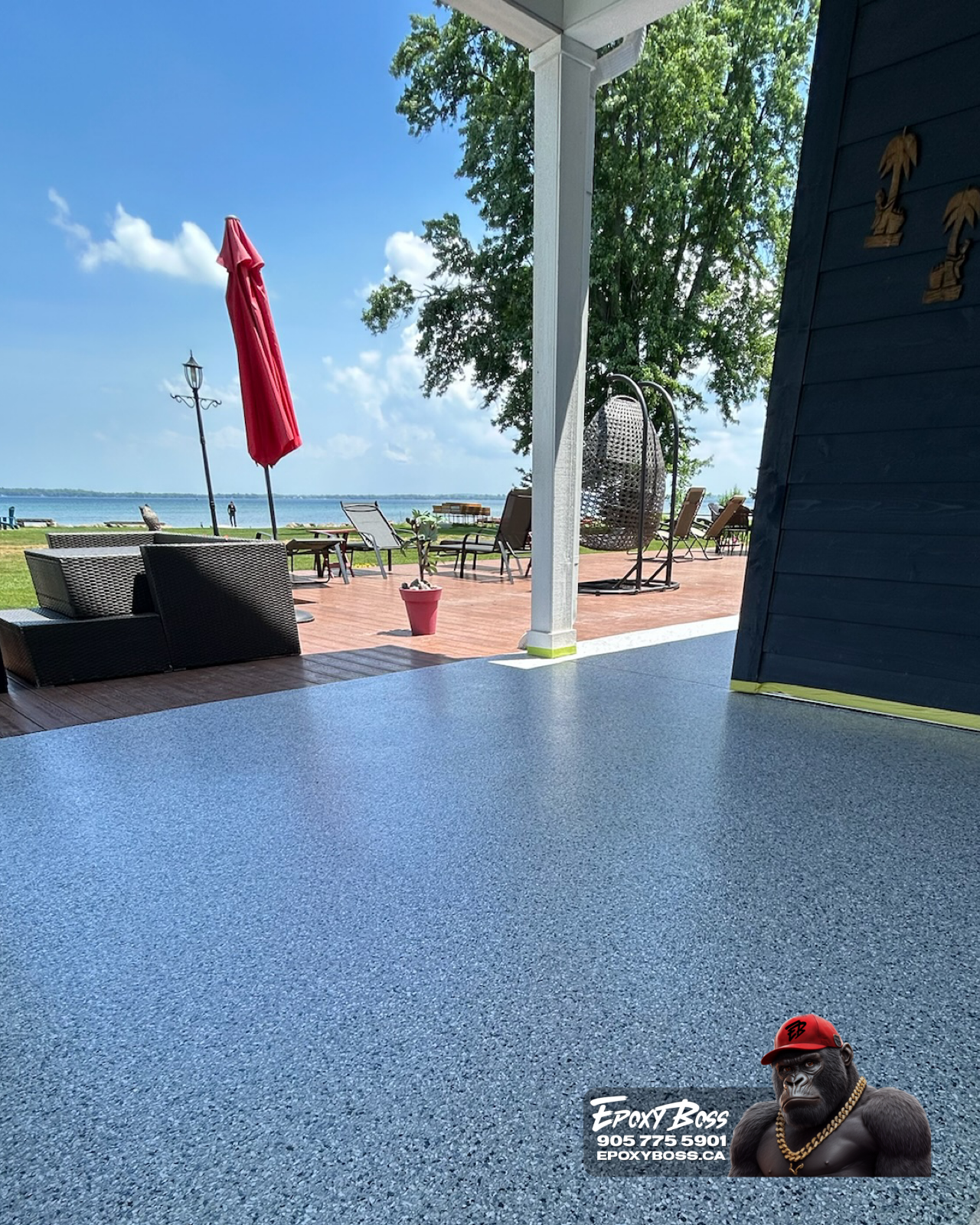
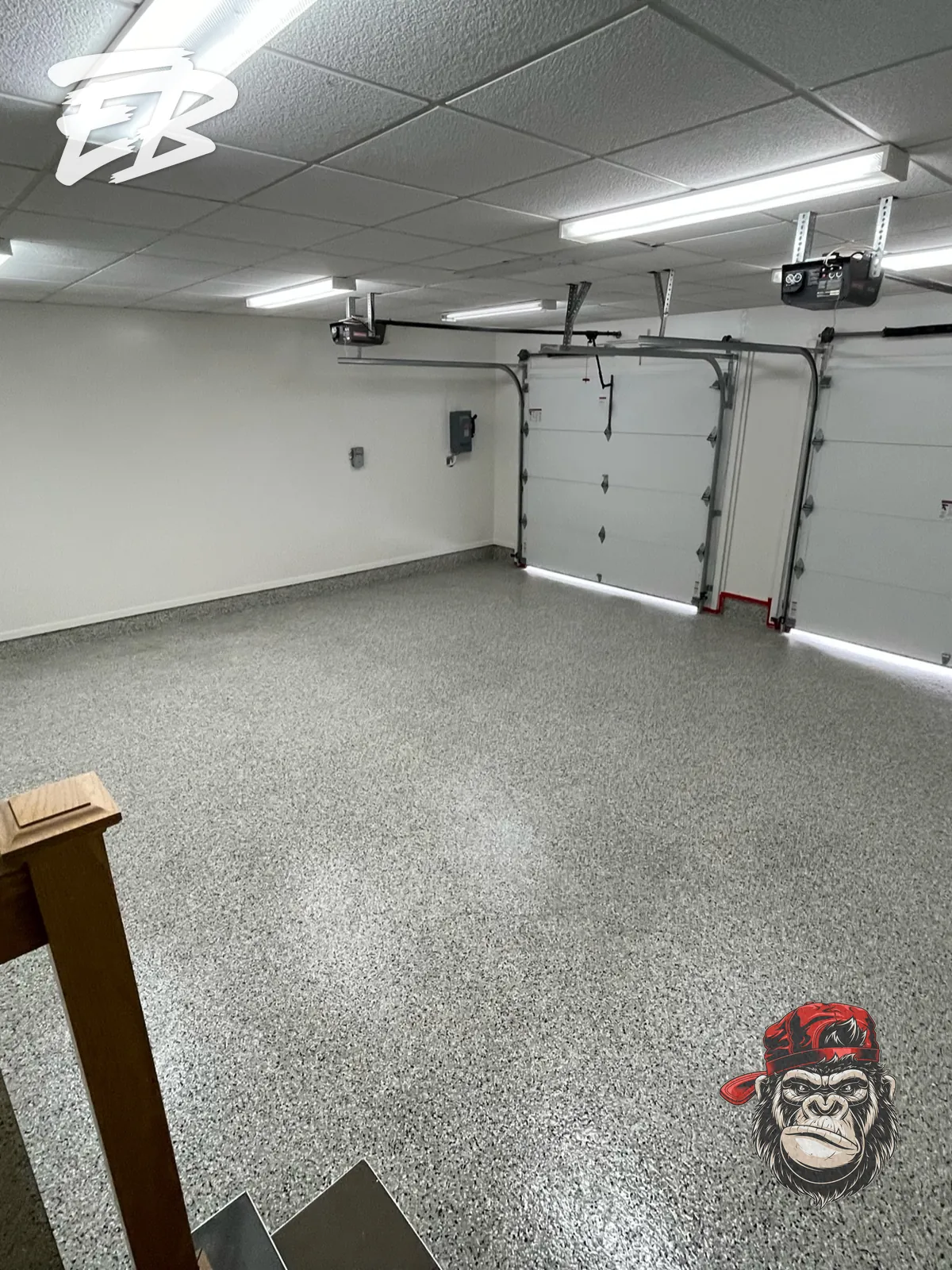
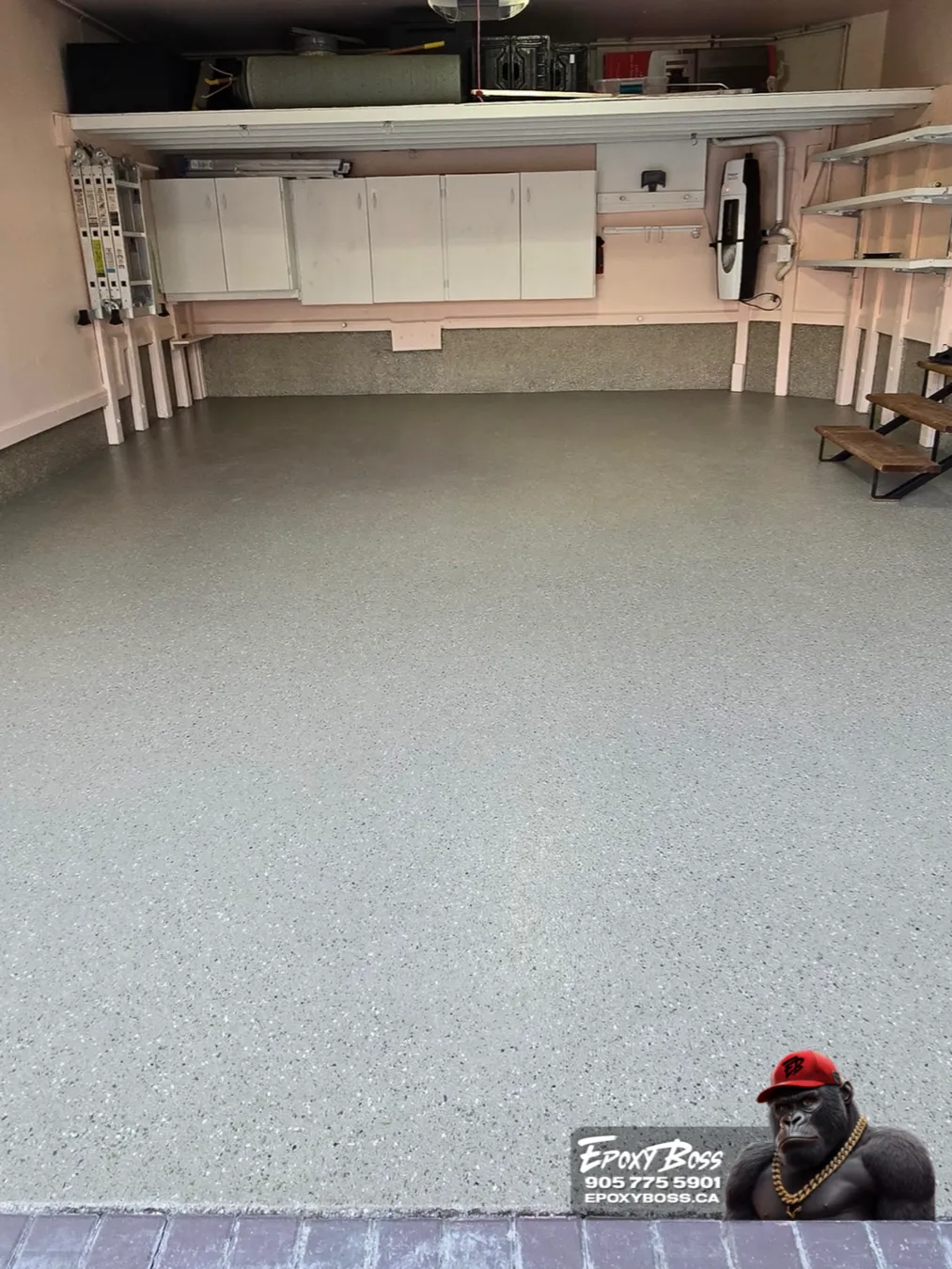
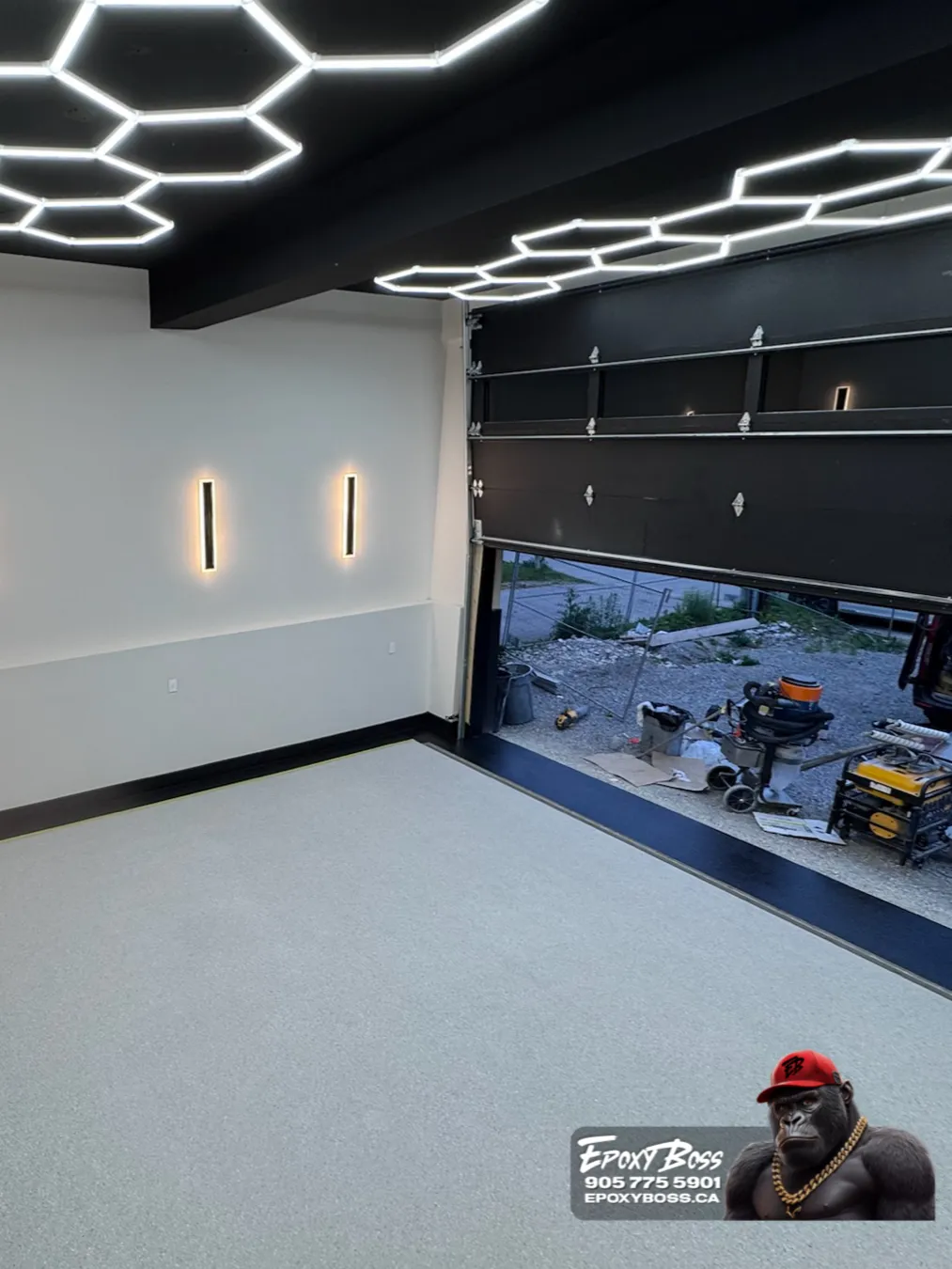
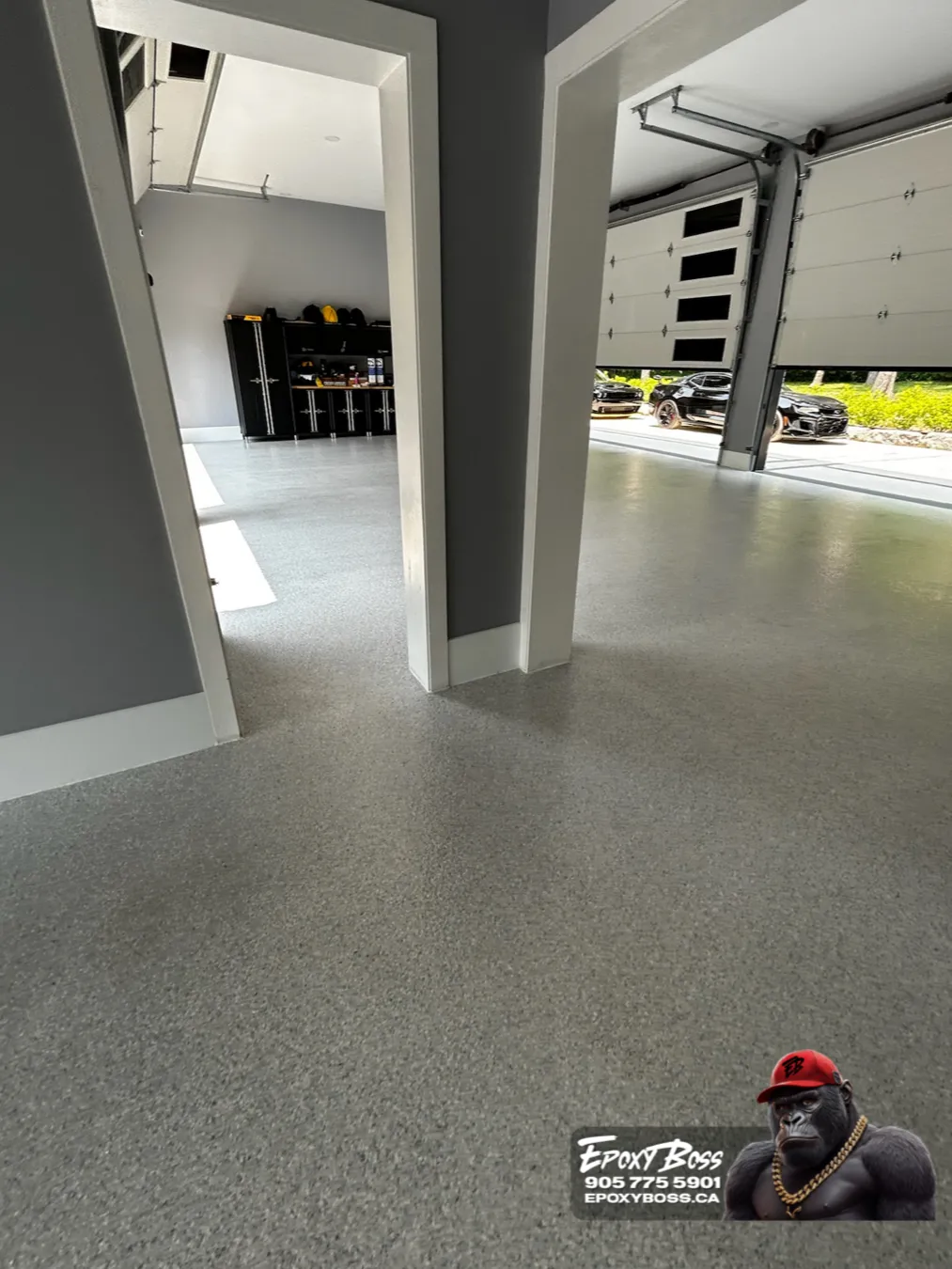
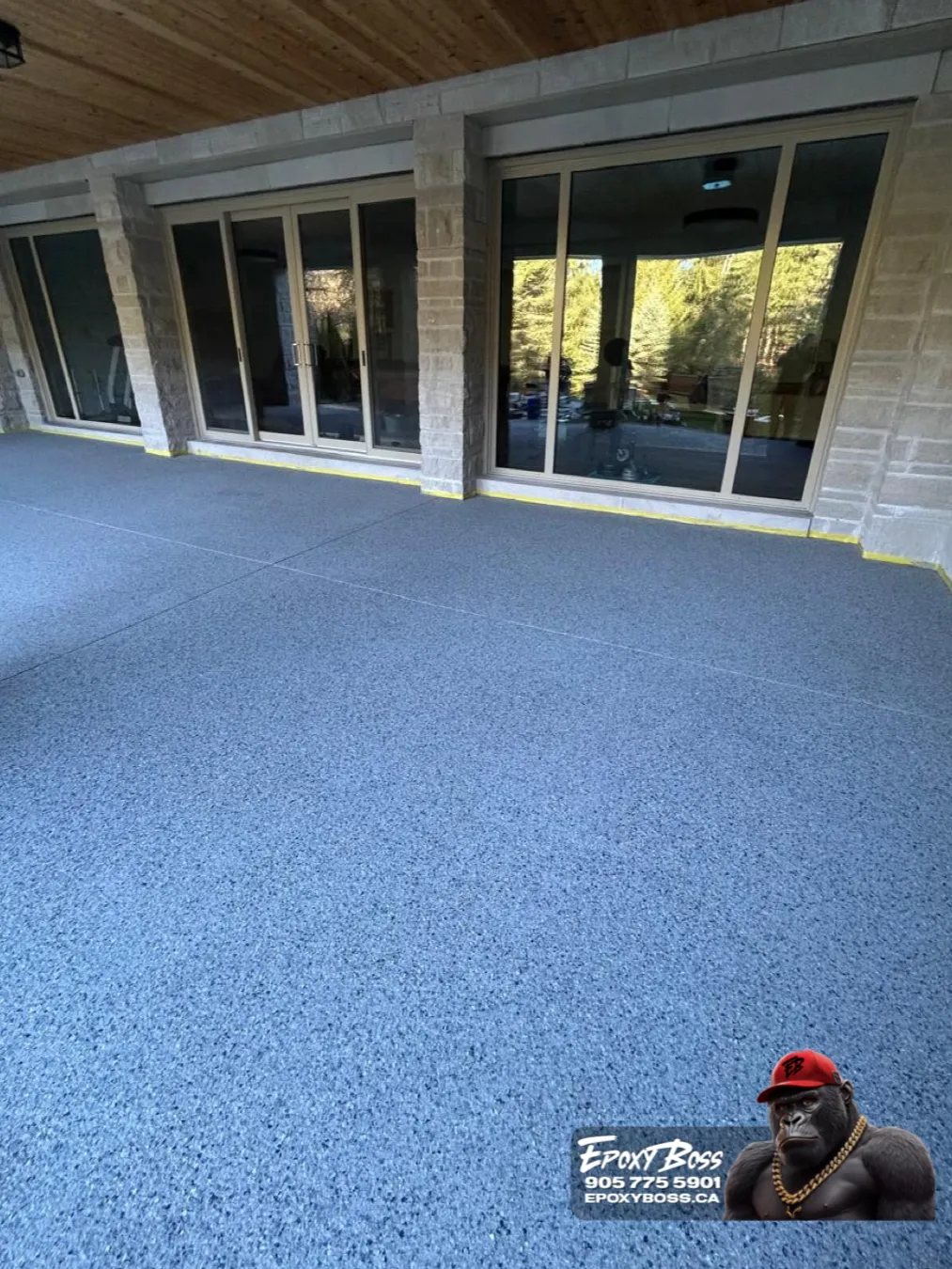
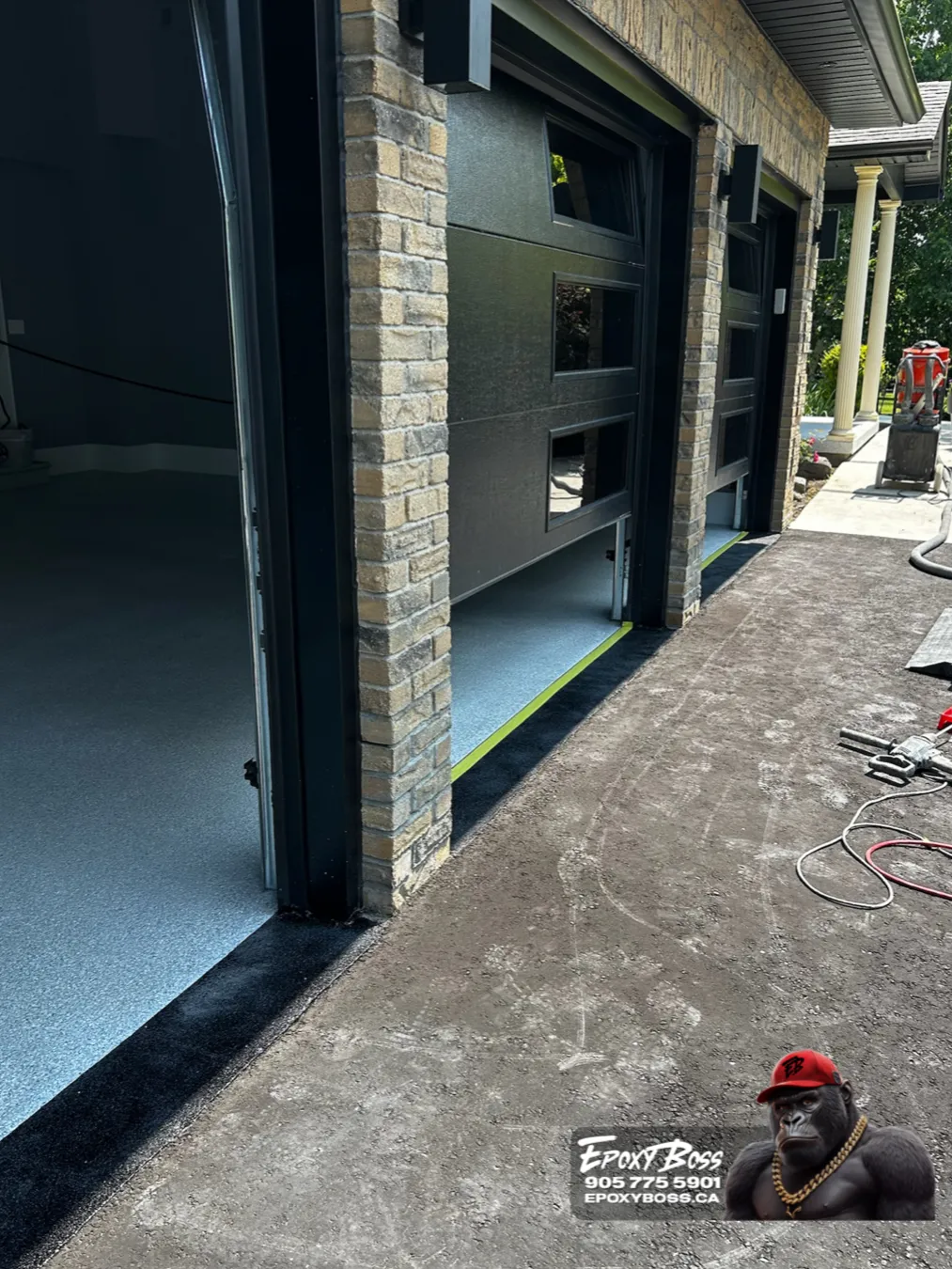
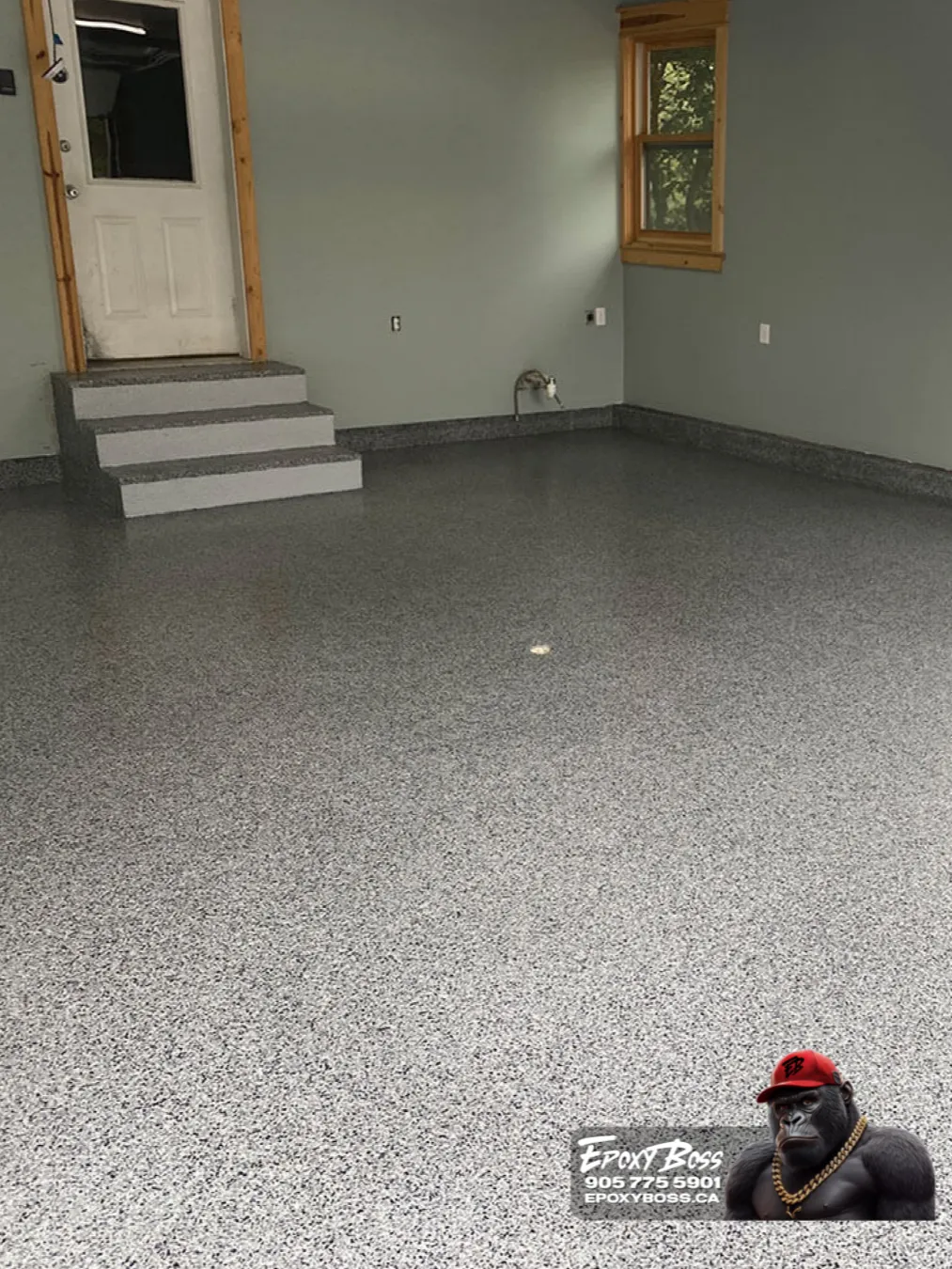
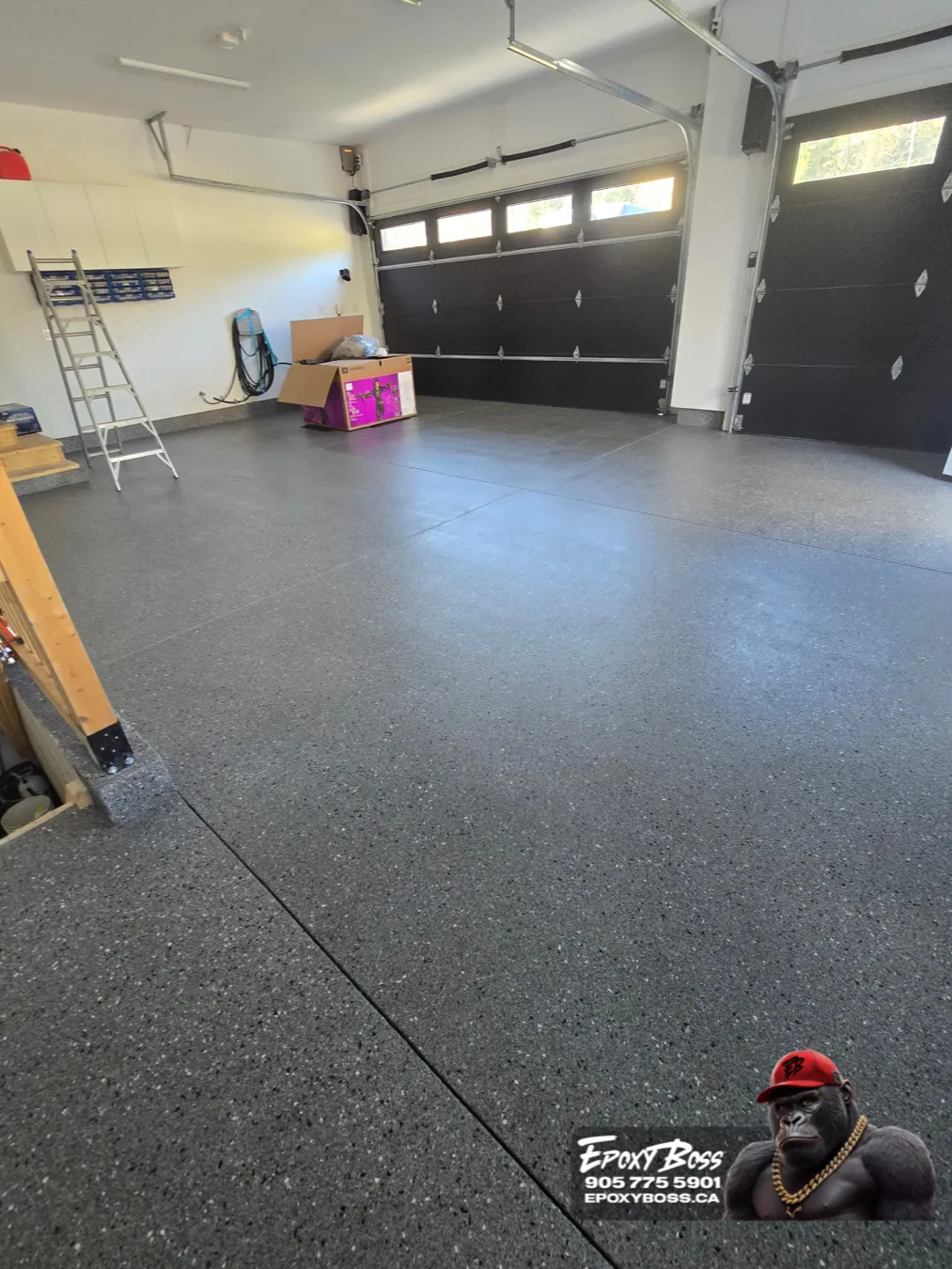
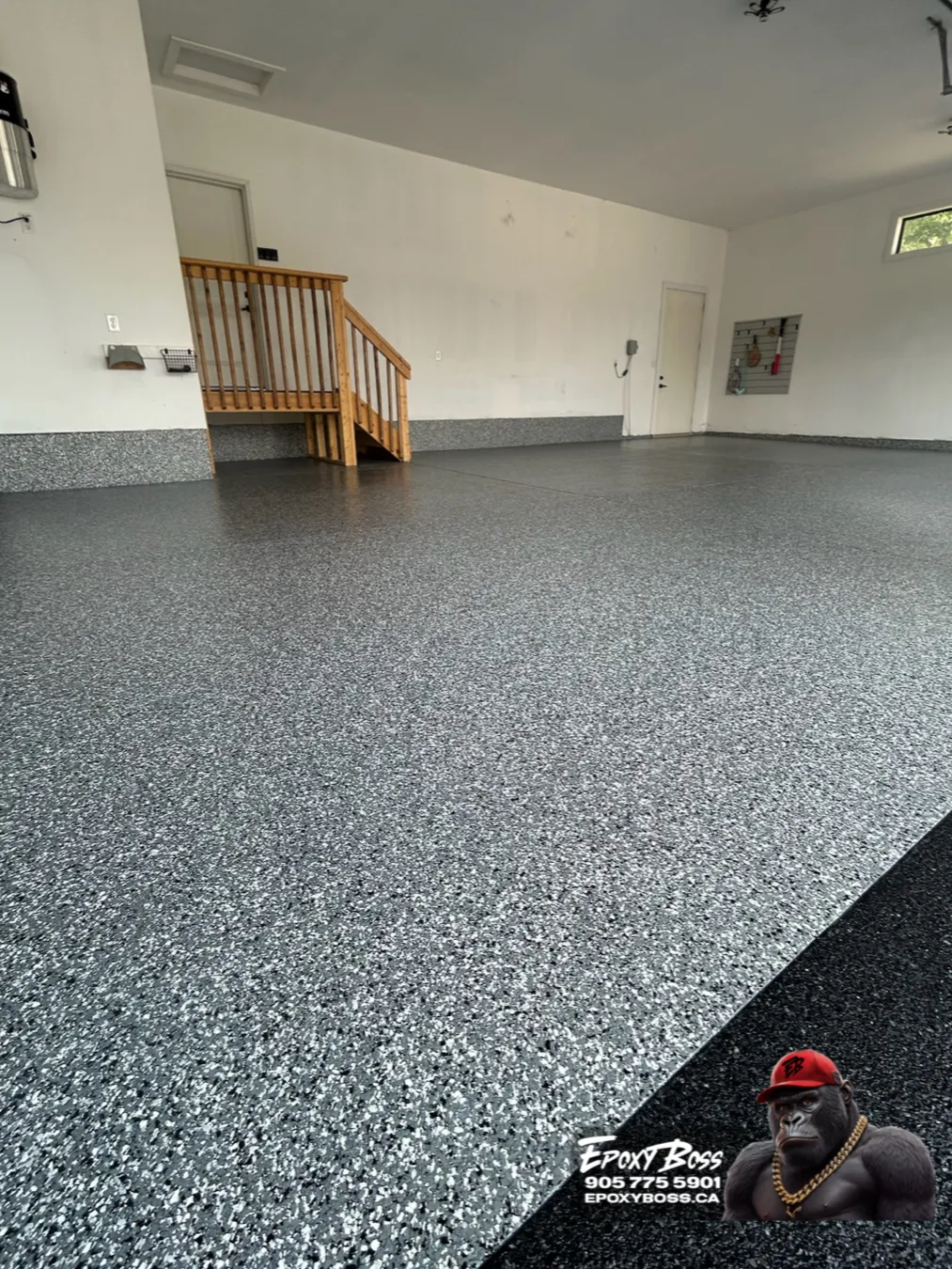
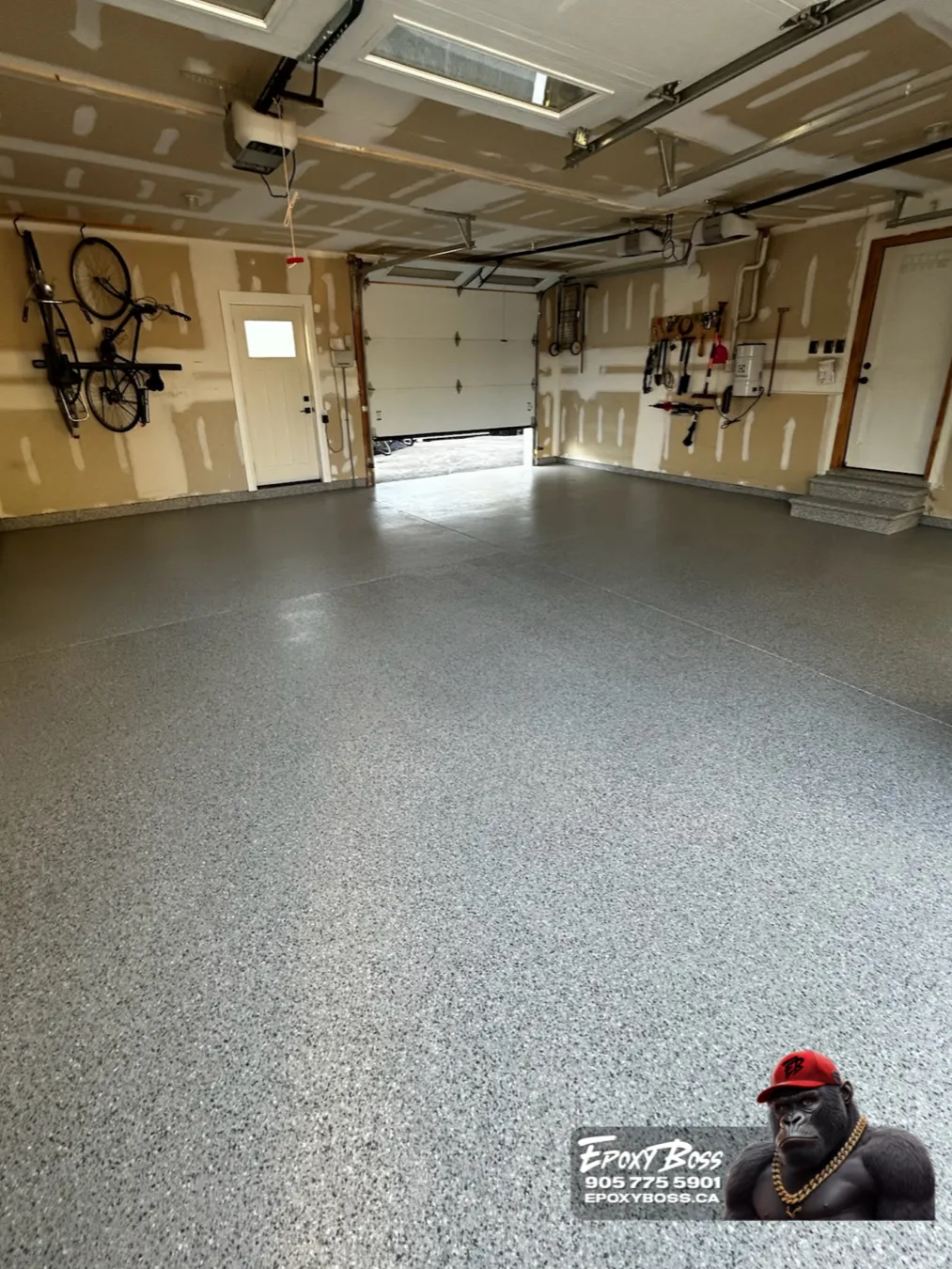
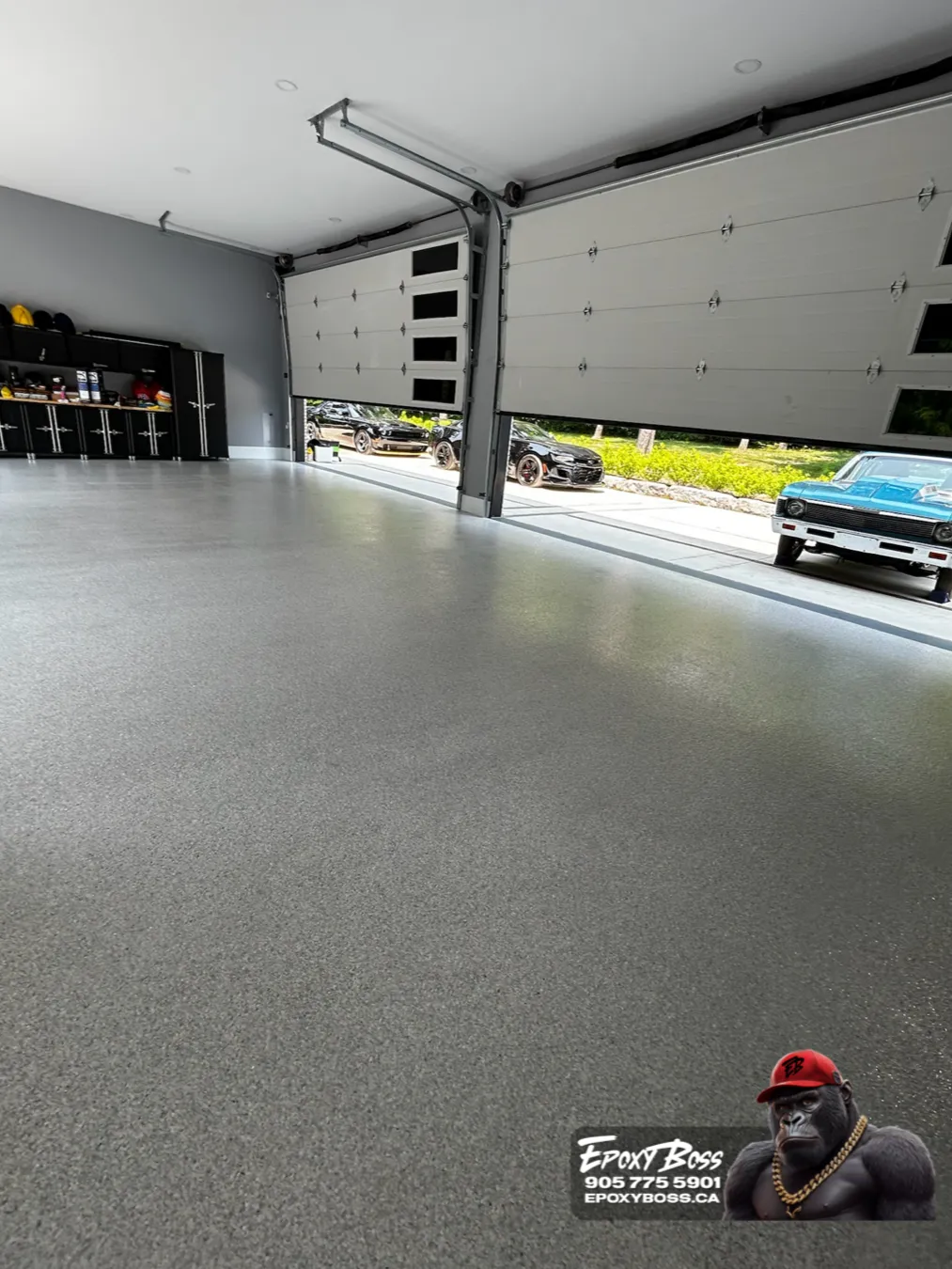
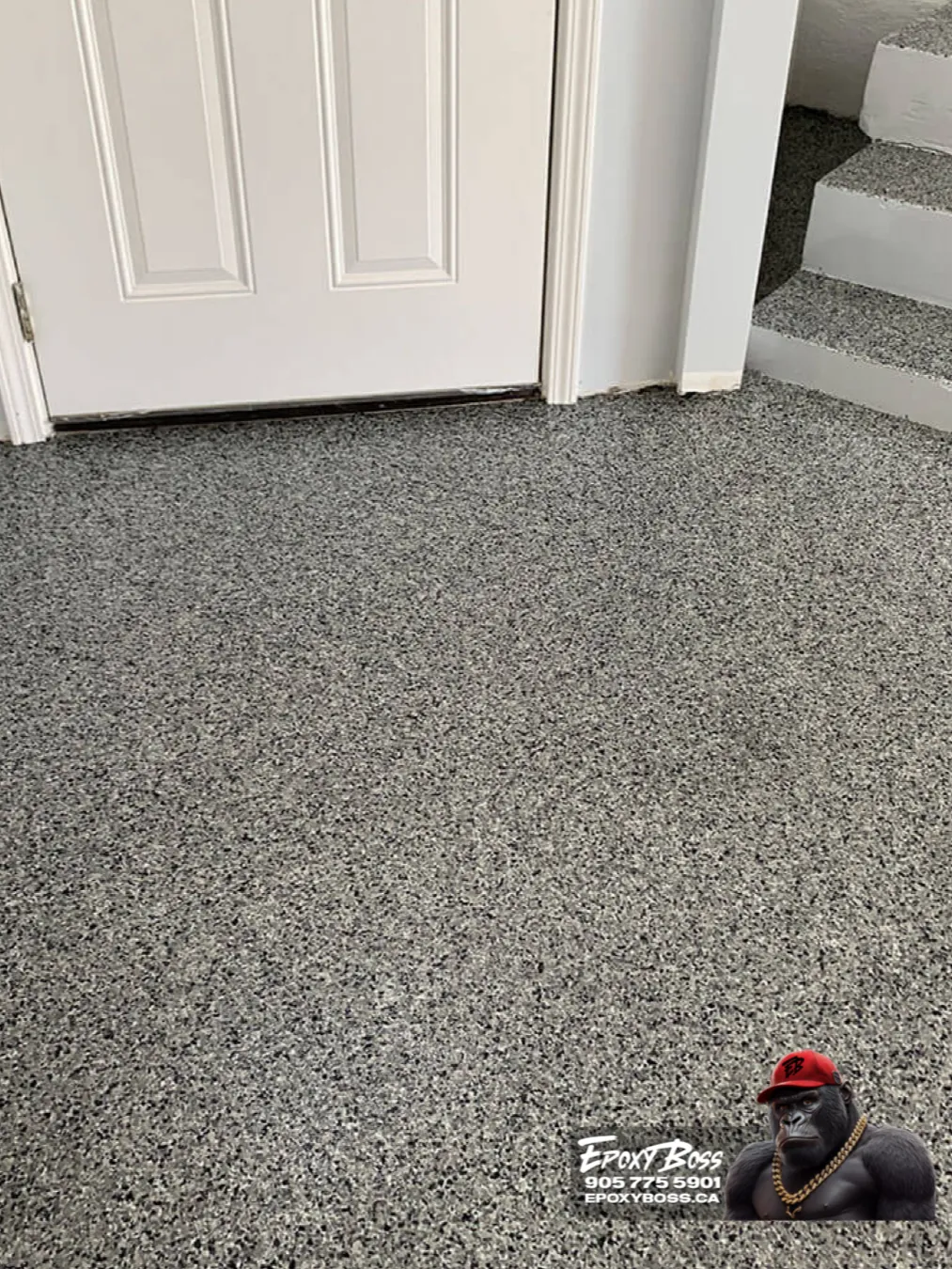
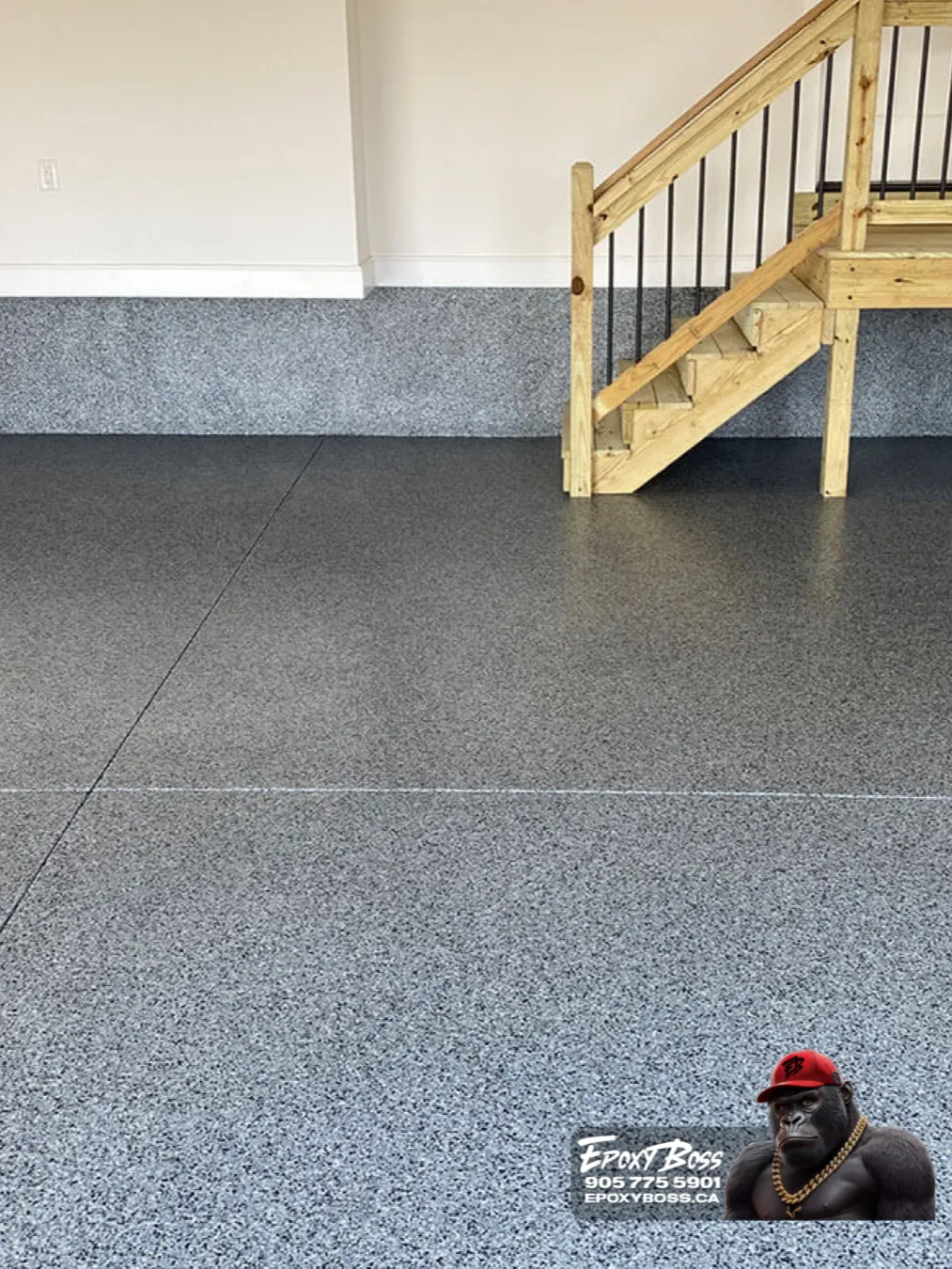
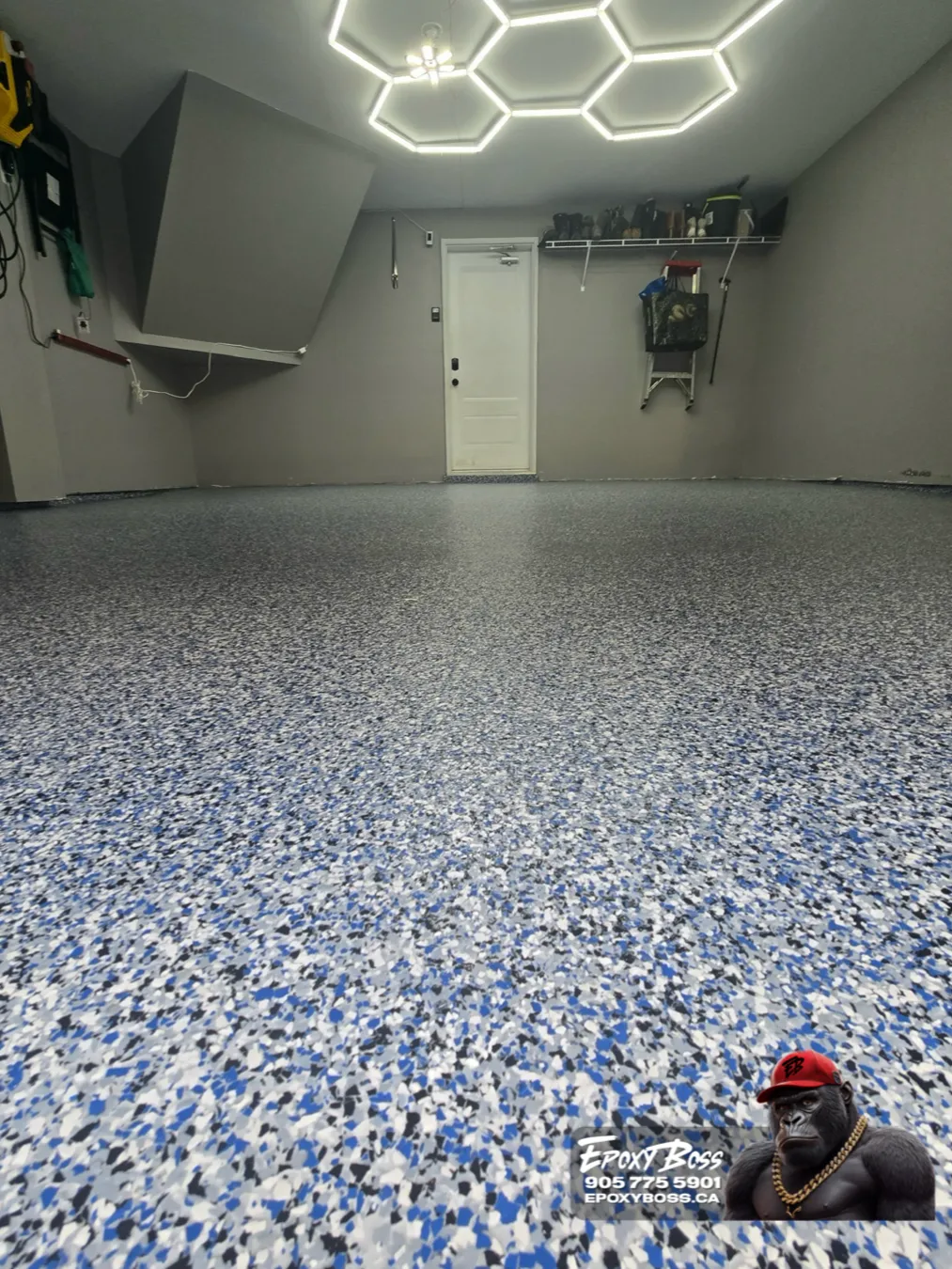
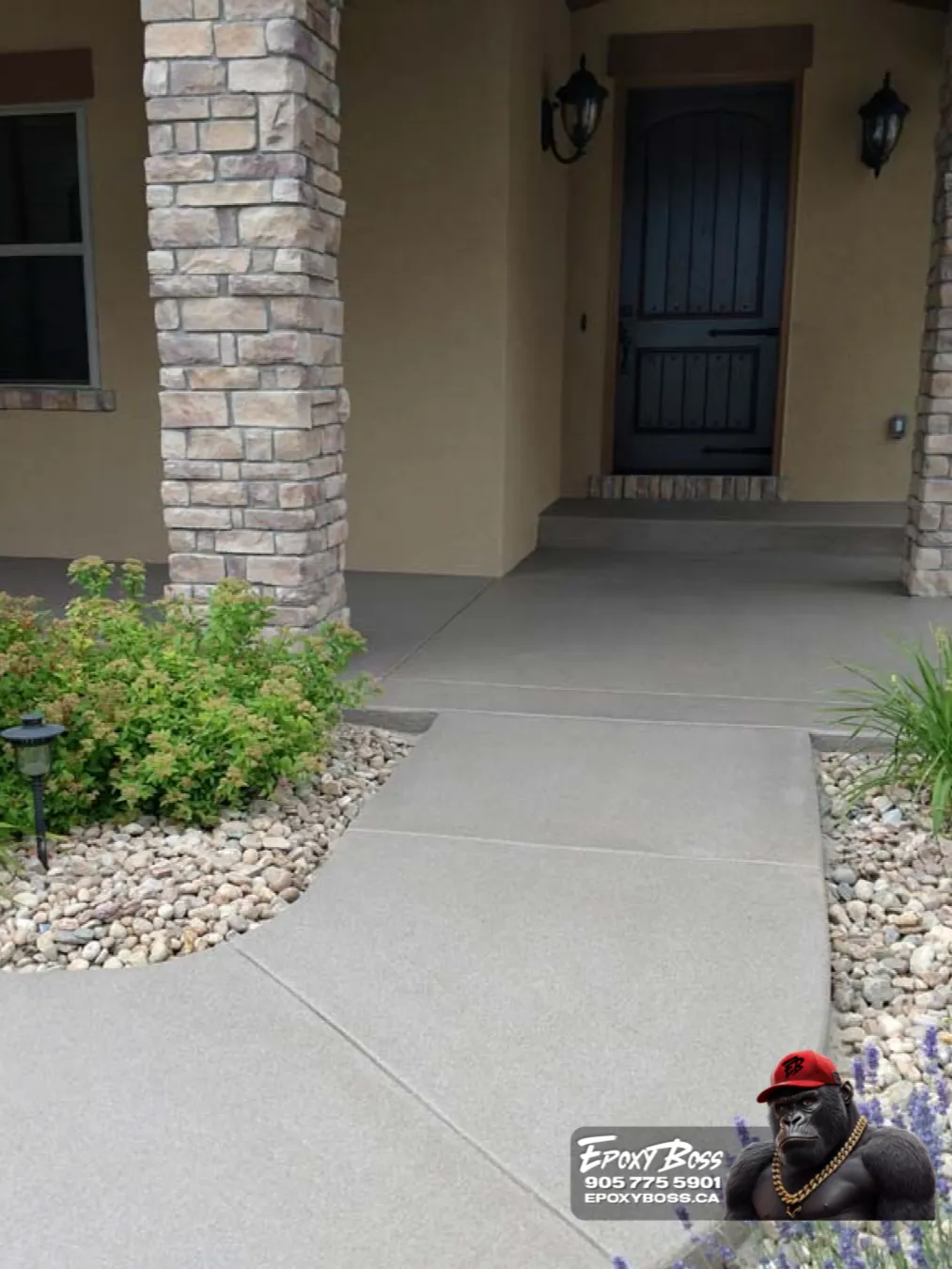
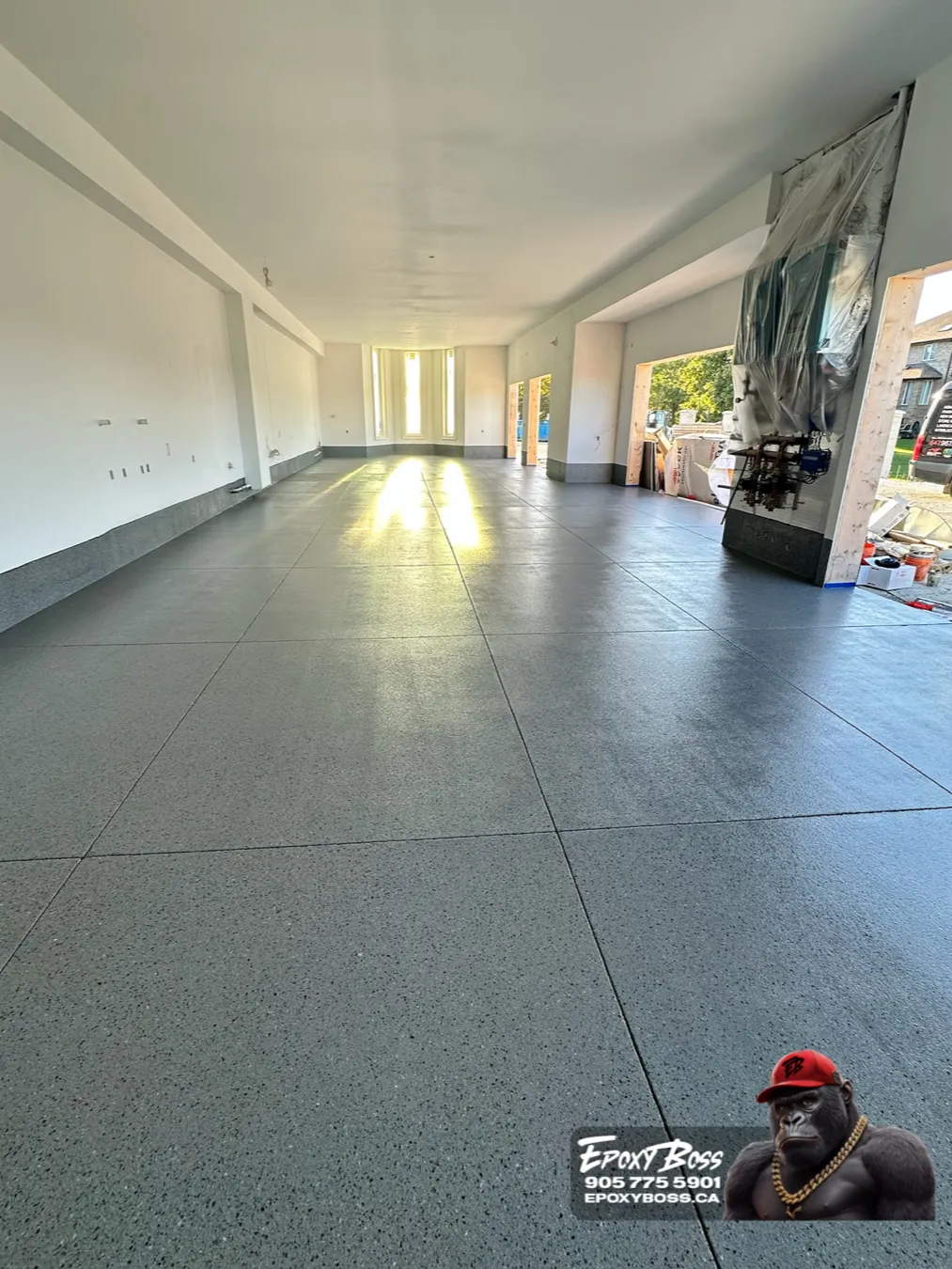
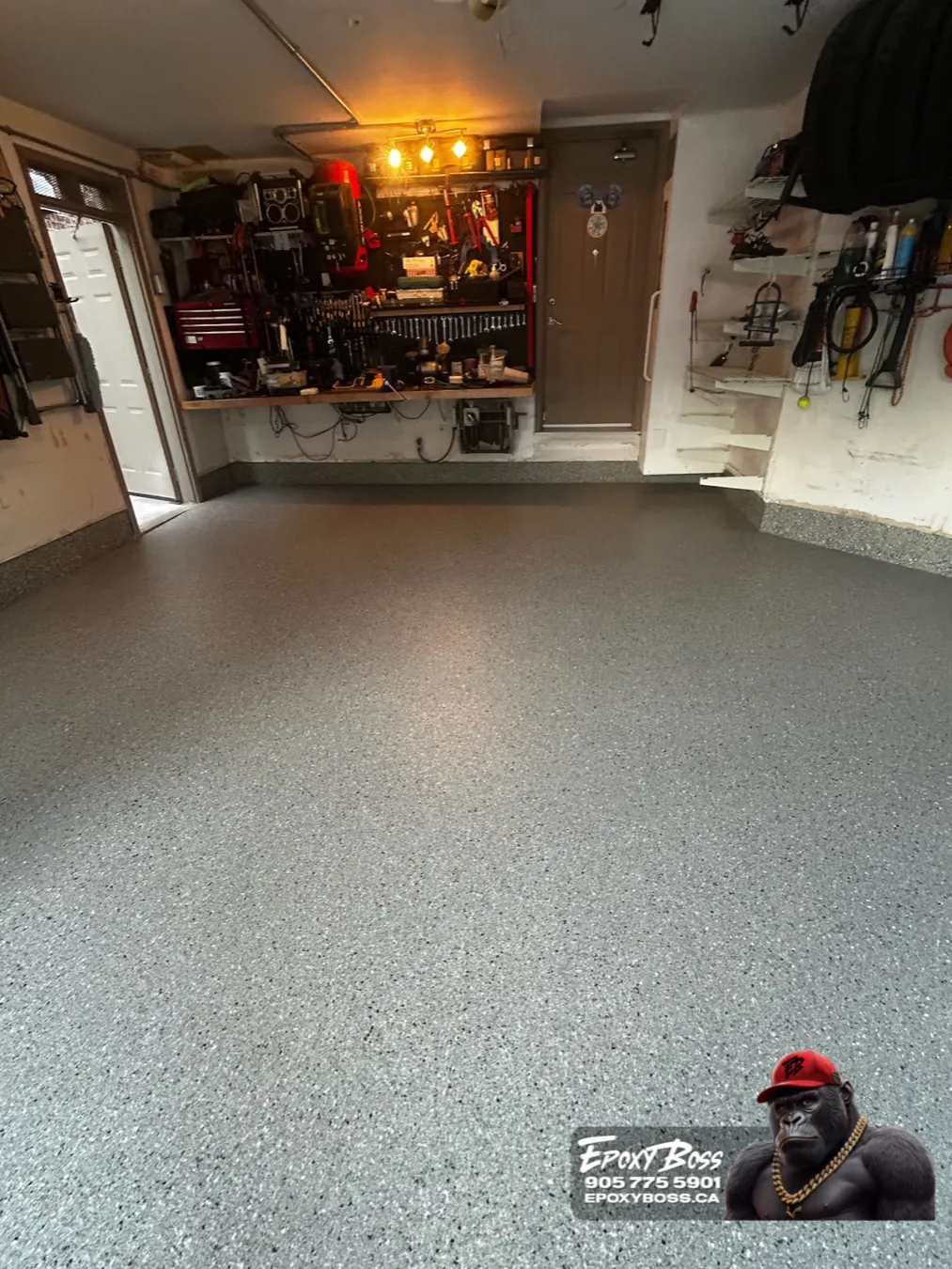
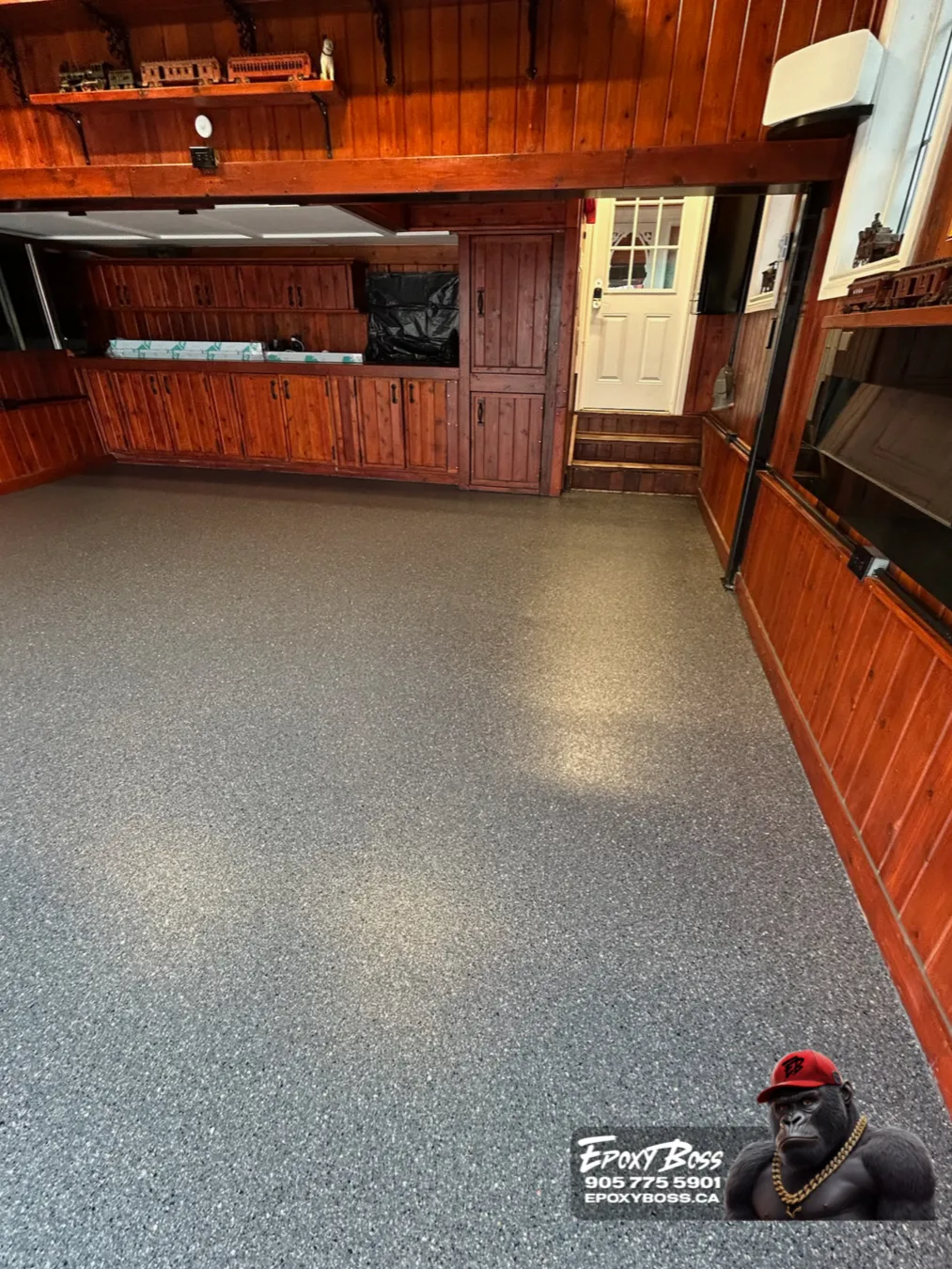
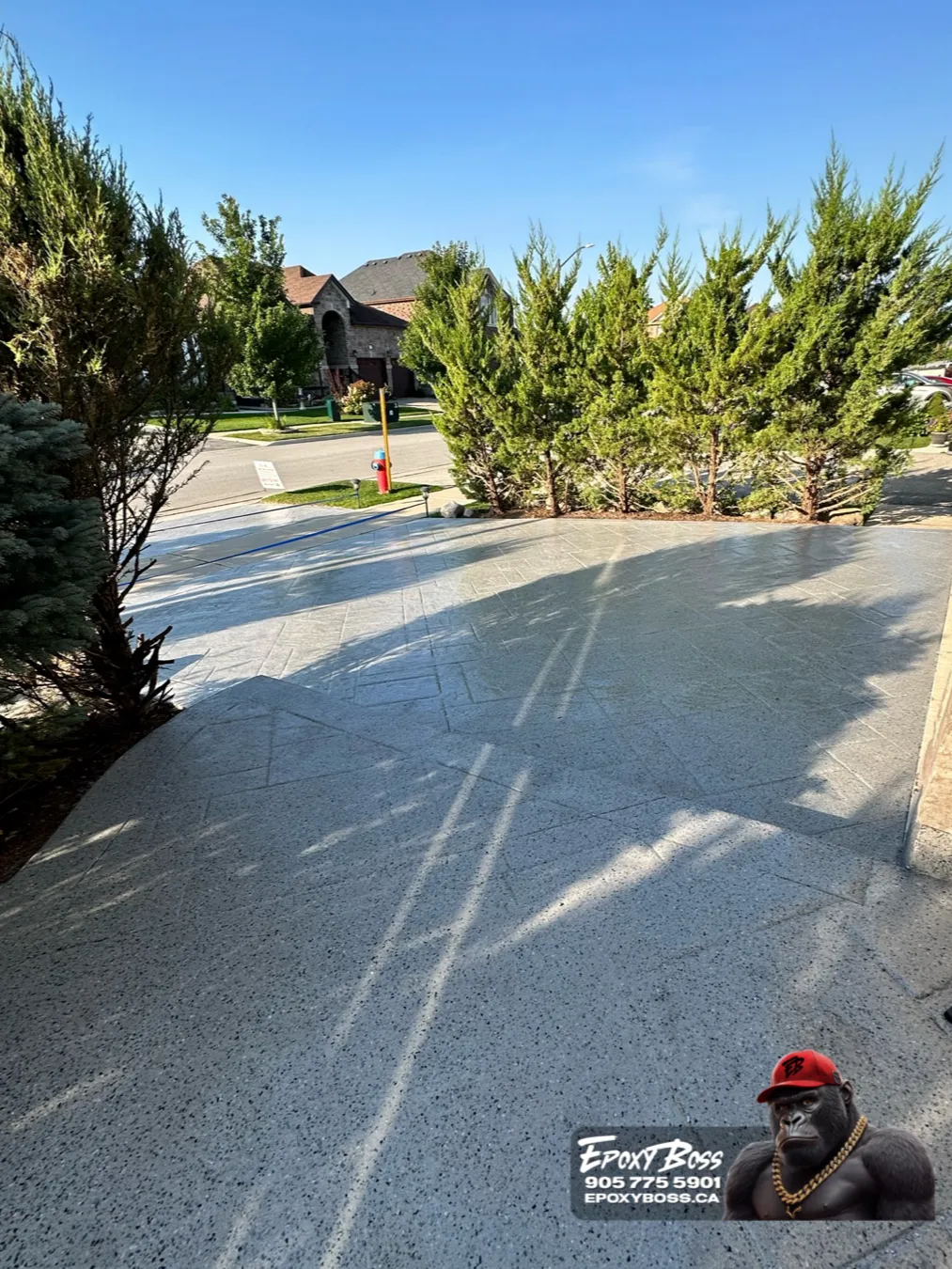
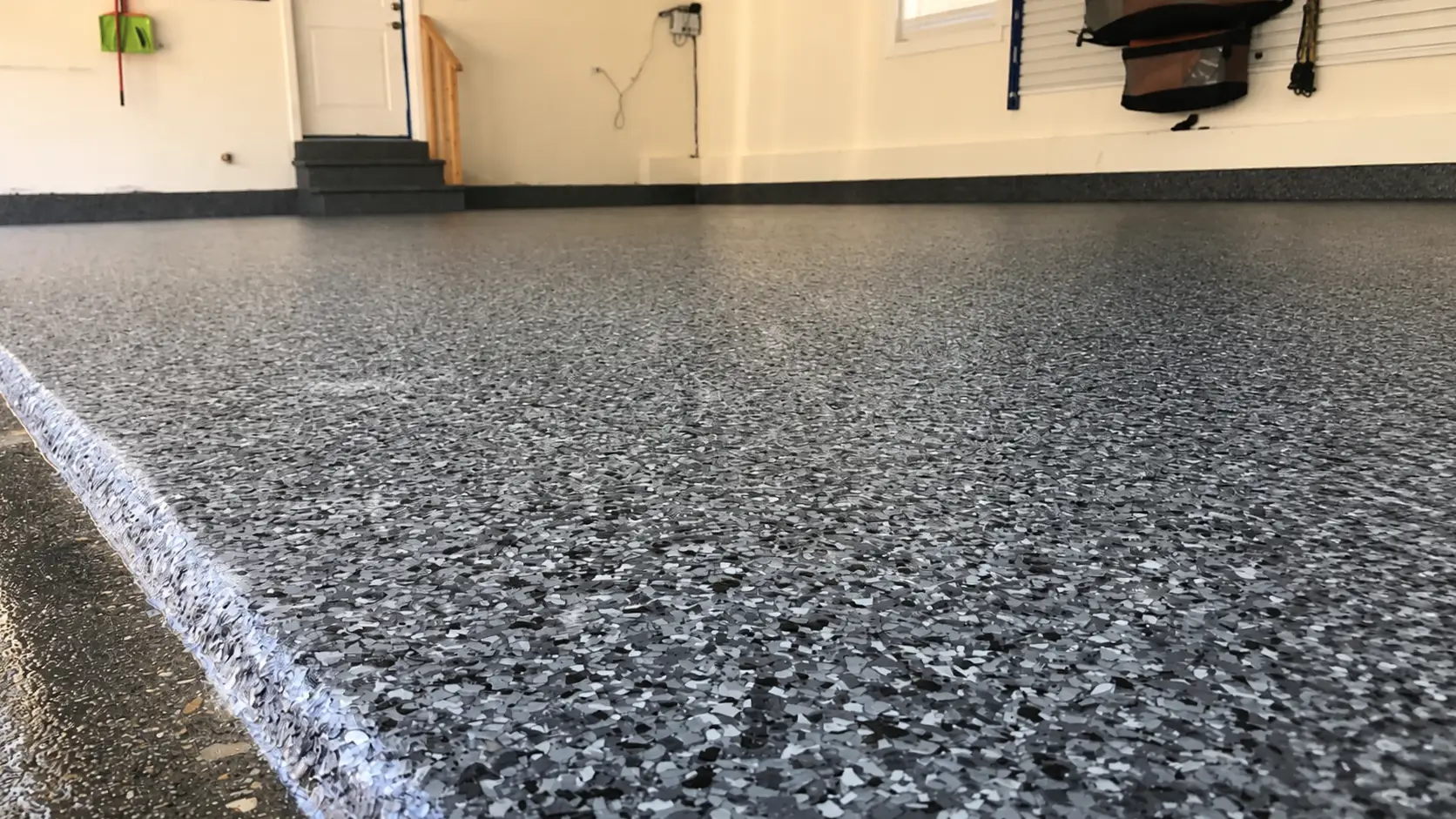
See how these systems come together on real projects: a failed garage coating removed and rebuilt in Vaughan, an Innisfil garage with matching wall and stair coating, a three-car garage in Richmond Hill and a polyaspartic patio and walkway.
Send the approximate size of each area, a few photos of the current floor and anything you already know about cracks, old coatings or moisture. Use the garage floor calculator for a starting range, then book a free floor assessment for a written quote in Canadian dollars.

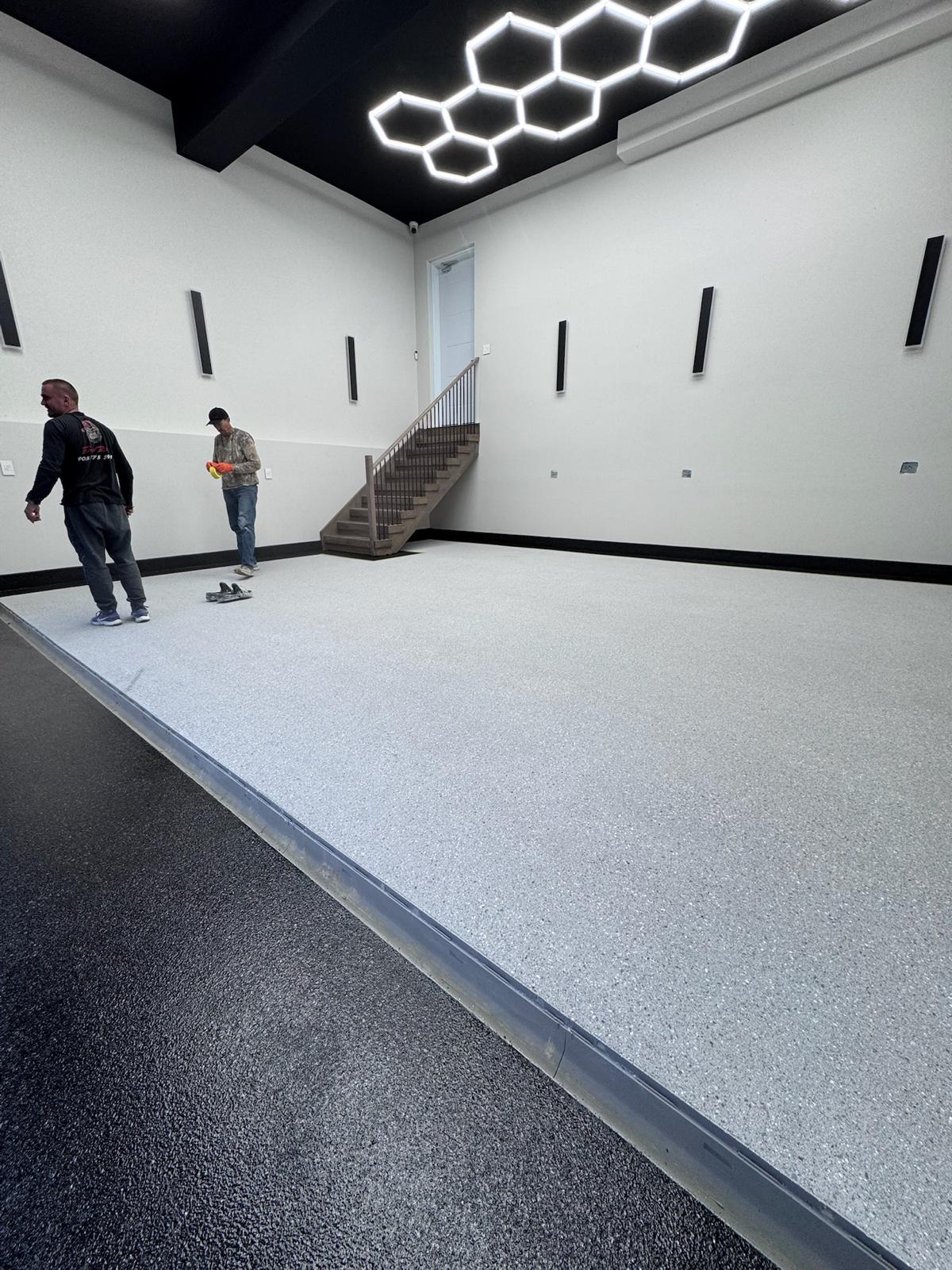
Epoxy bonds well and builds thickness, which makes it a good base layer. Many epoxies can yellow with sunlight exposure, which matters at a garage door. Polyaspartic topcoats are commonly chosen for UV stability and faster return to service, and many can be applied across a wider temperature range. A lot of Ontario garage systems use both. The right combination depends on the product data, your slab and how you use the garage.
Cars carry snow and slush loaded with de-icing salt into the garage, where it melts and pools, often near the door and under the wheels. Bare concrete is porous and absorbs that water. When temperatures swing around freezing, moisture in the surface expands and contracts, and the combination with chlorides is a common cause of scaling — thin layers of the surface flaking away — and pitting. Chlorides that reach reinforcing steel in structural slabs can also contribute to corrosion. A sealed or coated surface limits how much reaches the concrete, which is the main reason Ontario garages are coated at all.

Related: polyaspartic garage flooring and concrete coating services.
A basement slab sits in contact with the ground, and moisture can move up through it even when the surface looks dry. A coating sealed over that moisture can trap it, and the pressure can push the coating off as blisters or peeling. Testing — commonly by in-situ relative humidity under ASTM F2170, or by the calcium chloride method under ASTM F1869 — tells us whether the slab is within the limit the chosen product allows. If it isn't, a moisture-mitigating primer can be specified where the manufacturer supports it.
Related: moisture and substrate systems and concrete coating services.
Odour depends heavily on the chemistry. Some products carry a noticeable smell during application and for a period after; others are formulated to be lower-odour. In an occupied home we look at the product's data for odour and ventilation requirements, plan airflow, and agree timing with you — for example, whether anyone sensitive to odours should be out of the house for part of the day.
Related: solid color epoxy flooring and concrete coating services.
Every product's technical data sheet gives a cure time for light foot traffic and a longer one for vehicle traffic, and both lengthen as temperature drops. Polyaspartic topcoats generally return to service faster than conventional epoxy systems, which is one reason they're used in Ontario garages. Hot tires on a floor that hasn't fully cured can mark it, so we give you a specific time for your floor on the day, based on the product and conditions, rather than a general number.
Related: fast-cure flooring systems.
Outdoor concrete in Ontario goes through repeated freeze-thaw cycles and snow. A rigid coating over a slab that moves or holds water can crack or delaminate. Flexible membrane systems designed for exterior traffic are better suited, and drainage matters as much as the product. We assess slope, cracking and the slab's condition first, and in some cases sealing or leaving it bare is the better recommendation.
Related: exterior polyaspartic coatings and waterproofing systems.
Salt damage typically shows as scaling, pitting and spalled edges, and the first job is to find out how deep it goes. We grind until we reach sound concrete, then rebuild the damaged areas with a compatible repair material and grind them flush before any coating goes down. Coating directly over scaling usually fails, because the coating is only as strong as the layer it's bonded to. If the damage is deep or structural, repair alone may not be the answer, and we'll say so.
Related: concrete crack repair and concrete repair and restoration.
Two garages of the same size can price quite differently. A newer slab in good condition needs grinding and coating; an older one may need salt-damage repair, crack treatment or removal of a previous coating first, and those steps are where most of the variation comes from. The system matters too — a full-flake broadcast with a clear topcoat is a different build from a single solid colour. We assess the slab before quoting, then give a written price in Canadian dollars with HST shown separately and nothing mandatory left out.
Related: flake epoxy flooring and polyaspartic garage flooring.