
Industrial Epoxy Flooring
Industrial epoxy systems need to suit the actual traffic and exposure, from equipment loads to routine cleaning. Existing damage, joints and contamination must be reviewed before the finish is selected.
Facilities that use industrial resinous floors
- Warehousing and logistics: forklift lanes, racking aisles, docks and charging areas.
- Manufacturing and fabrication: production lines, machine areas and maintenance shops exposed to oils, coolants and impact.
- Food and beverage processing: wet and washdown areas, where urethane cement is often more suitable than epoxy.
- Automotive, aviation and equipment service: bays exposed to fuels, fluids and hot tires.
- Pharmaceutical, laboratory and technology spaces: floors where cleanability and seamless detailing matter.
Matching the system to the exposure
Industrial floors are specified area by area. Questions that decide the build-up include:
- What wheels cross the floor — forklifts, pallet jacks, carts — and how often?
- Which chemicals, oils or cleaners reach the surface, and how long do spills sit?
- Is the area dry, wet, or washed down with hot water or steam?
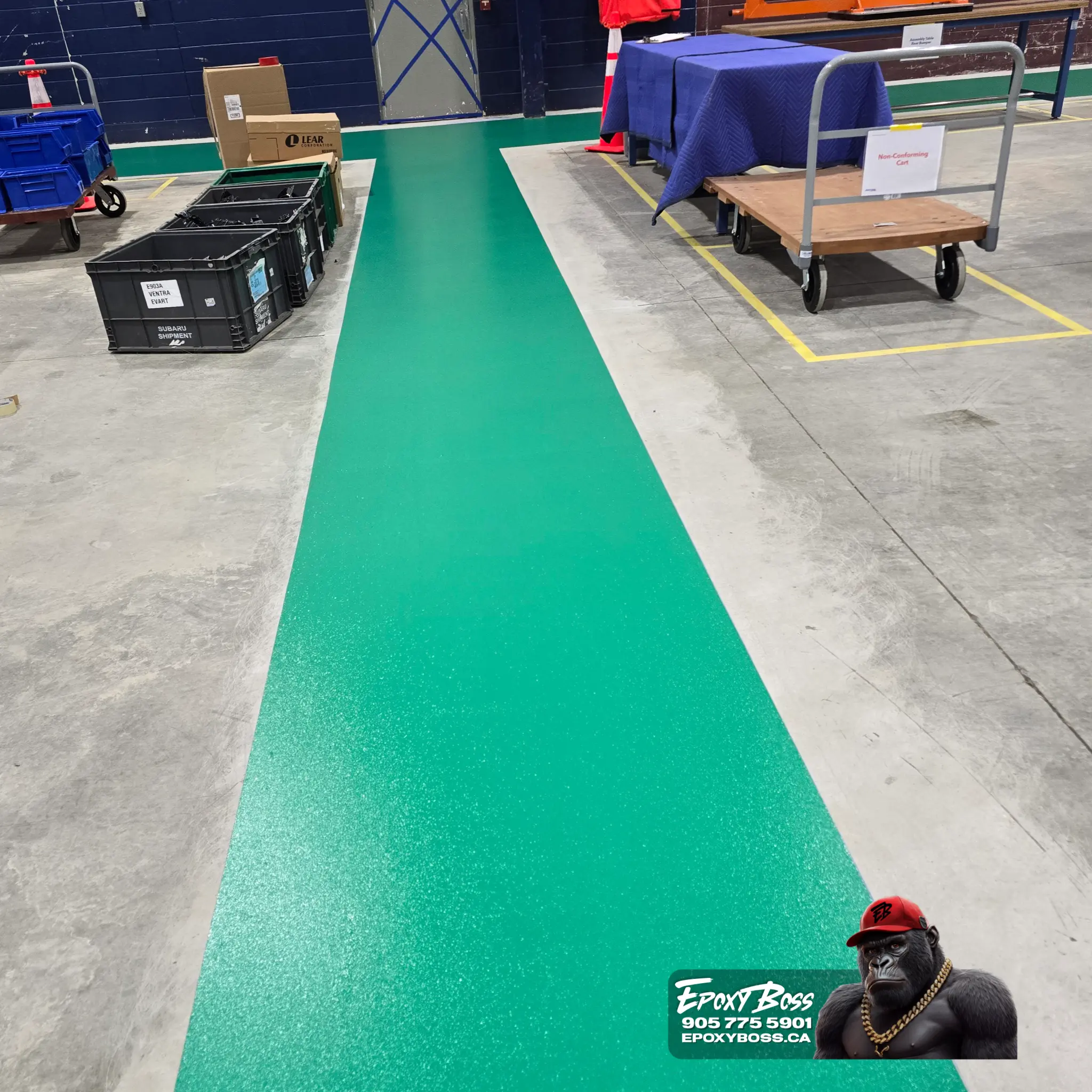
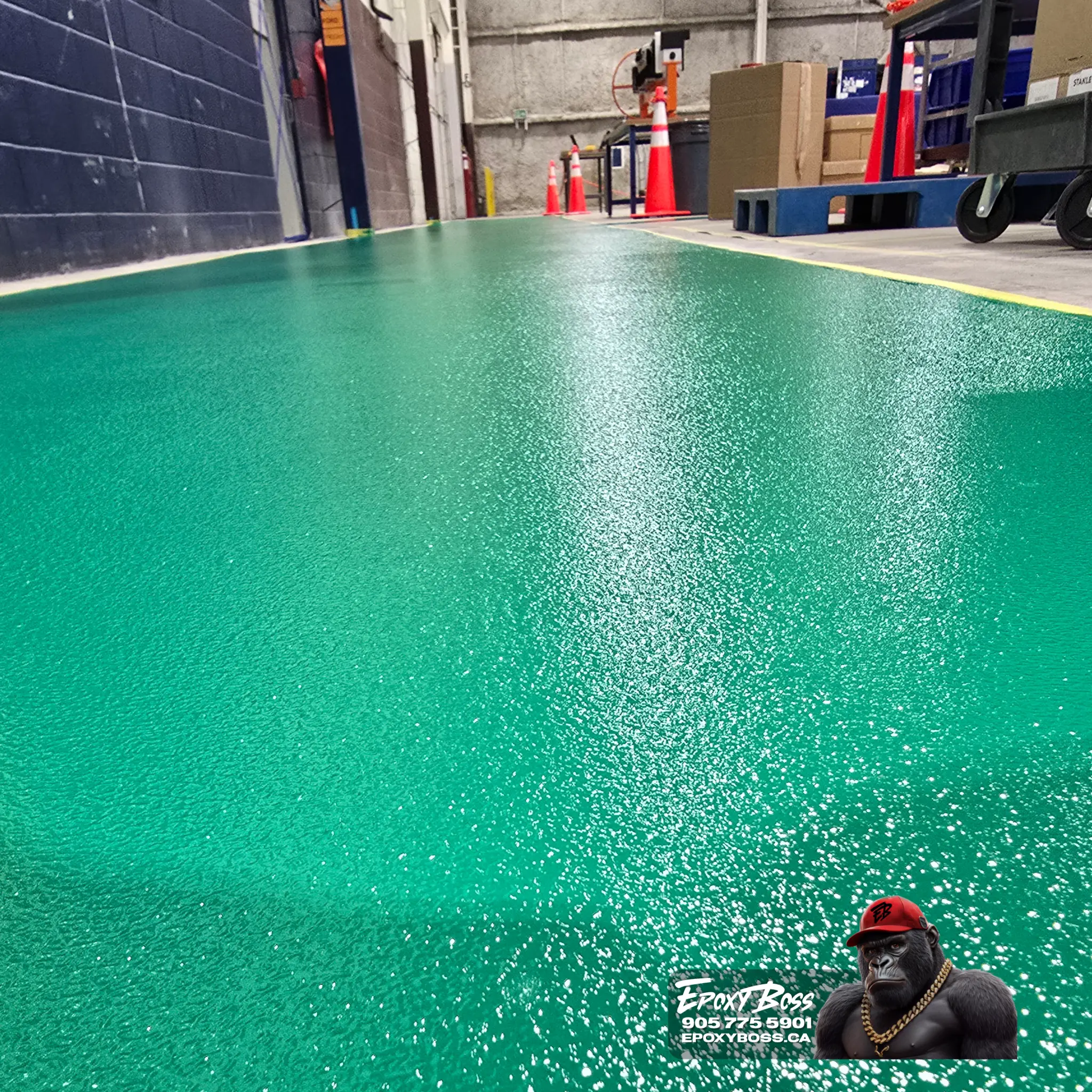
- Does the floor need texture for slip resistance, colour for zoning or line-marking?
- What temperature does the building hold through Ontario winters, especially near dock doors?
Depending on the answers, the specification may be a high-build or self-levelling epoxy, a chemical-resistant epoxy, a textured quartz broadcast system, a heavy-duty build, or a sealed or polished concrete finish such as industrial grind and seal for areas that mainly need dust control.
Joints, cracks and preparation
In industrial buildings, floors usually fail first at the joints. Damaged joint edges are cut back, rebuilt and filled with a filler suited to wheel traffic before coating, and moving joints are detailed so the coating does not crack along them. Industrial surface preparation — diamond grinding or shot blasting — removes contamination and weak concrete and produces the surface profile the selected product requires.
Installation in an operating facility
Most plants and warehouses keep running during the work. Installations are typically phased by zone, coordinated with forklift routes and production schedules, with after-hours work for the noisiest stages discussed where needed. Slab temperature, air temperature and dew point are checked during installation and cure, and each zone is released only when it has reached the cure stated for its traffic.
Planning a project
Share the floor area, a layout or photos, the traffic and chemicals involved, and your available shutdown windows. We will review the slab on site and recommend a system for each area and provide a written quote in Canadian dollars. For a comparison of options, see our guide to warehouse floor options in Ontario.
Provide the equipment layout, traffic routes and any chemical exposure. We will consider phased access and repairs alongside the floor build-up rather than specify a finish from appearance alone.
This is part of our concrete coating service. Related work: commercial epoxy flooring, chemical resistant epoxy flooring and heavy-duty industrial flooring.
Further reading: Warehouse Floor Options in Ontario and Forklift Traffic and Floor Joints.