(905) 775-5901Talk to an estimator
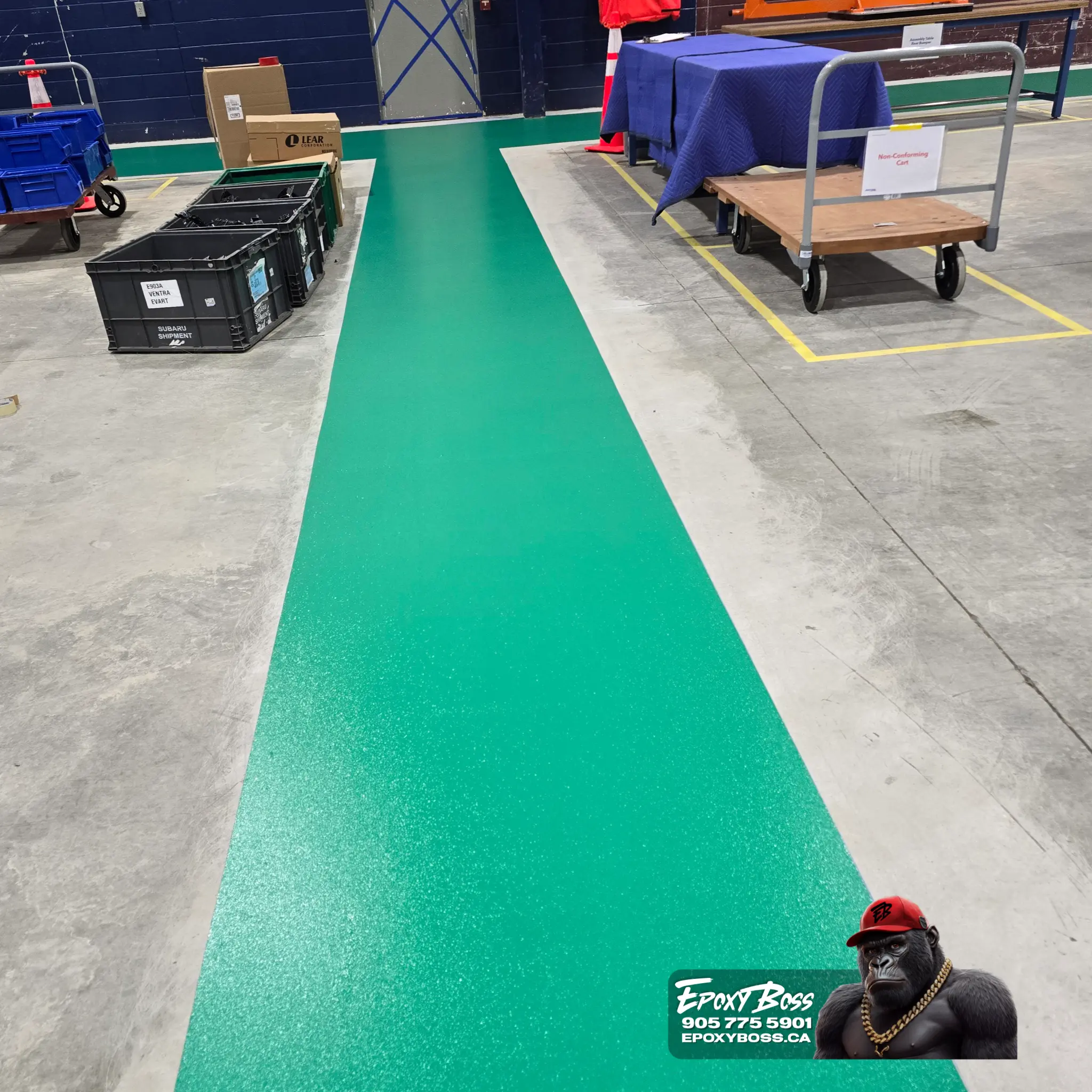
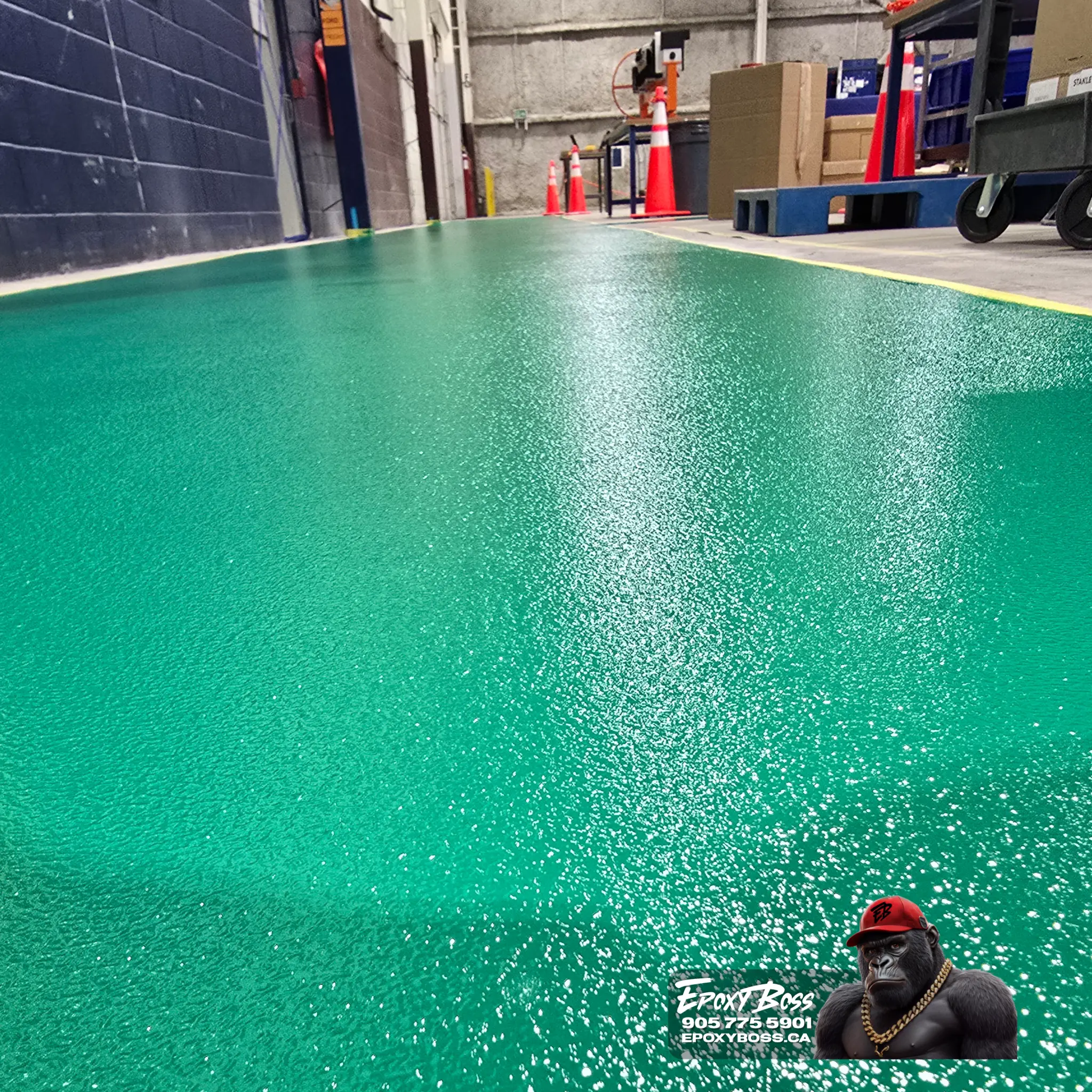
Industrial floor coating at a Mississauga production facility

Industrial Epoxy Flooring in Simcoe County & the GTA

Free Assessment
Industrial epoxy flooring in Simcoe County and the GTA for production, storage and work areas, with preparation matched to the operating demands.

Get a Free Floor Assessment

Tell us what you need, leave your phone number, and add a photo of your floor if you want to. We'll get back to you within one business day.

What do you need?

Max file size 10MB.
Uploading...
fileuploaded.jpg
Upload failed. Max size for files is 10 MB.
Thank you! Your submission has been received!
Oops! Something went wrong while submitting the form.
Industrial floor restoration before and after

Industrial Epoxy Flooring

Industrial epoxy systems need to suit the actual traffic and exposure, from equipment loads to routine cleaning. Existing damage, joints and contamination must be reviewed before the finish is selected.

Facilities that use industrial resinous floors

  • Warehousing and logistics: forklift lanes, racking aisles, docks and charging areas.
  • Manufacturing and fabrication: production lines, machine areas and maintenance shops exposed to oils, coolants and impact.
  • Food and beverage processing: wet and washdown areas, where urethane cement is often more suitable than epoxy.
  • Automotive, aviation and equipment service: bays exposed to fuels, fluids and hot tires.
  • Pharmaceutical, laboratory and technology spaces: floors where cleanability and seamless detailing matter.

Matching the system to the exposure

Industrial floors are specified area by area. Questions that decide the build-up include:

  • What wheels cross the floor — forklifts, pallet jacks, carts — and how often?
  • Which chemicals, oils or cleaners reach the surface, and how long do spills sit?
  • Is the area dry, wet, or washed down with hot water or steam?
  • Does the floor need texture for slip resistance, colour for zoning or line-marking?
  • What temperature does the building hold through Ontario winters, especially near dock doors?

Depending on the answers, the specification may be a high-build or self-levelling epoxy, a chemical-resistant epoxy, a textured quartz broadcast system, a heavy-duty build, or a sealed or polished concrete finish such as industrial grind and seal for areas that mainly need dust control.

Joints, cracks and preparation

In industrial buildings, floors usually fail first at the joints. Damaged joint edges are cut back, rebuilt and filled with a filler suited to wheel traffic before coating, and moving joints are detailed so the coating does not crack along them. Industrial surface preparation — diamond grinding or shot blasting — removes contamination and weak concrete and produces the surface profile the selected product requires.

Installation in an operating facility

Most plants and warehouses keep running during the work. Installations are typically phased by zone, coordinated with forklift routes and production schedules, with after-hours work for the noisiest stages discussed where needed. Slab temperature, air temperature and dew point are checked during installation and cure, and each zone is released only when it has reached the cure stated for its traffic.

Planning a project

Share the floor area, a layout or photos, the traffic and chemicals involved, and your available shutdown windows. We will review the slab on site and recommend a system for each area and provide a written quote in Canadian dollars. For a comparison of options, see our guide to warehouse floor options in Ontario.

Provide the equipment layout, traffic routes and any chemical exposure. We will consider phased access and repairs alongside the floor build-up rather than specify a finish from appearance alone.

This is part of our concrete coating service. Related work: commercial epoxy flooring, chemical resistant epoxy flooring and heavy-duty industrial flooring.

Further reading: Warehouse Floor Options in Ontario and Forklift Traffic and Floor Joints.

Service Inclusive

Every project may include:

Slab Assessment

For industrial epoxy flooring, the floor is checked before the coating is chosen.

  • Moisture and contamination checks
  • Crack and joint survey
  • Traffic and use review

Mechanical Preparation

Grinding opens the concrete so the coating can bond.

  • Diamond grinding to profile
  • Old coatings and sealers removed
  • Dust and debris vacuumed off

Repairs Before Finish

Damage is corrected so it does not telegraph through.

  • Crack and joint repair
  • Spall and pit filling
  • Substrate correction

Industrial Epoxy Installation

The steps carried out on site for this system.

Edges & Transitions

Where floors usually fail first.

  • Door lines and thresholds
  • Wall edges and columns
  • Joints honoured or filled

Industrial Epoxy Handover & Care

Handover with clear timing and cleaning advice.

  • Walk-on and drive-on times
  • Cleaning product guidance
  • Inspection before handover

Surface

Floor Performance Depends On:

Forklift & Pallet Traffic

Point loads, turning tyres and impact.

Production Schedule

Phased work around operating lines.

Moisture Vapour

Moisture rising through the slab.

Substrate Condition

Age and soundness of the concrete.

Traffic Conditions

Foot, vehicle and equipment load.

Chemical Contact

Oils, salts and cleaning products.

Temperature at Install

Slab and air within product range.

Long-Term Durability

Expected service life and upkeep.

Why Epoxy Boss

Epoxy Boss operates as a concrete surface preparation and protection company specializing in technical flooring systems across Ontario.
Our operational structure includes:
  • specialized installation crews
  • industrial-grade preparation equipment
  • project management systems
  • field supervision
  • structured quality-control procedures
  • commercial-scale operational capability
Projects are approached through:
  • substrate analysis
  • preparation-first installation
  • environment-specific system selection
  • moisture management
  • operational workflow planning
  • long-term durability objectives
The company maintains:

Epoxy Boss has completed projects ranging from residential garage systems to large-volume industrial operations for manufacturing and commercial facilities across multiple sectors.

  • WSIB coverage
  • structured operational workflows
  • safety compliance standards
  • commercial project coordination systems
  • large-scale production capability

Because high-performance flooring is not defined byappearance alone. It is defined by how the surface performs under years ofreal operational use.

Coated concrete floor by Epoxy Boss in Ontario

FAQ

Can you install in a cold farm building in February?

An unheated barn or shop in February won't meet a coating's minimum temperature, and a floor applied outside those limits may not cure properly. If the building can be temporarily heated and held stable through application and cure, winter work is possible. If not, we plan it for late spring or summer and use the winter to assess, specify and book.

Related: industrial epoxy flooring and concrete coating services.

What kind of floor works in a farm building near Stayner?

Agricultural floors face acids from manure and silage, frequent wash-down, abrasive grit, and in livestock areas, the need for traction. The system depends on the building's use: some areas suit a textured, chemical-resistant broadcast system; others are better left as sealed concrete. We assess the building and its use before recommending anything, and we'll tell you where a coating isn't the right answer.

Related: industrial epoxy flooring and quartz broadcast flooring.

Grind-and-seal or a full coating for a warehouse?

A grind-and-seal densifies and seals the existing concrete — good for dust control on a sound slab where appearance and chemical exposure aren't the priority. A full resinous coating builds a film on top, which gives more resistance to spills and abrasion, colour for zoning and line marking, and a surface that's easier to clean. The right answer depends on the slab condition, what's spilled on it, and the traffic it carries.

Related: industrial grind and seal.

How does winter affect industrial floor installation?

An industrial building heated to a stable temperature can meet coating requirements through winter. The practical problem is loading docks and overhead doors, which let cold air sweep across the floor. We plan which doors stay closed, measure slab temperature and dew point during installation and cure, and phase areas near doors for times when they can be kept shut.

Related: industrial epoxy flooring and concrete coating services.

Can you coat a warehouse floor while we keep operating?

Most Vaughan warehouses can't close, so the installation is planned around the operation. We section the floor into areas that come out of use in turn, agree forklift and foot traffic routes, and schedule the most disruptive stages — grinding and coating — for nights or weekends where needed. Each section is returned once it has reached the cure stated for the traffic it will carry.

Related: industrial epoxy flooring and fast return-to-service flooring.

Can epoxy flooring handle commercial and industrial traffic?

Yes. Properly specified epoxy systems can withstand forklifts, pallet jacks, industrial equipment, vehicle traffic and continuous operational exposure depending on system thickness and design.

Related: commercial epoxy flooring.

Ready to Upgrade Your Floors?

Custom epoxy systems tailored for garages, basements, showrooms, patios, and industrial environments — combining industrial-grade durability with premium aesthetics.

How we work

Coated concrete floor by Epoxy Boss in Ontario
01

First Contact

Reach out by phone, email or our online form. We'll ask a few questions about your space, how it's used and the finish you have in mind, and review photos if you have them.
02

Quotation

Get a clear and accurate price using our online calculator for instant estimates, or connect with us directly for a detailed quote. For more complex projects, we can schedule an on-site visit to finalize all details.
03

Decision making

We help you choose the right system, finish, and colours based on your goals. From flake to solid or metallic systems, you will have full clarity and confidence in your selection.
04

Scheduling + 50% Deposit

Once everything is confirmed, we lock in your project date. A 50% deposit secures your spot, allowing us to allocate materials and crew accordingly.
05

Day of the project

Our team completes full surface preparation including grinding and crack repair, followed by precise application of your selected multi-layered system based on manufacturer specifications.
06

Project Review

We walk through the finished space with you to ensure satisfaction. After approval, the remaining 50% balance is collected and the project is officially completed.