
Search for garage floor coating and you will find plenty of advice to “etch the concrete with acid” first. It is cheap, it is quick, and it is what many DIY kits recommend. It is also the preparation method we never use. Here is why.
What is acid etching?
Acid etching means spreading a diluted acid, usually muriatic or phosphoric, over the slab to dissolve the very top film of cement paste so a coating has something to grip. The floor is then rinsed and neutralized.
Why acid etching falls short
- Uneven results — the acid works differently across dense, troweled and porous areas, so the profile varies from one patch to the next.
- A light profile — often lighter than thicker flake, broadcast or build systems need.
- Contamination stays — acid does not remove old sealers, oil or grease, and can leave contamination behind the coating.
- Residue risk — if rinsing and neutralizing are not thorough, leftover residue can interfere with adhesion.
- Moisture and mess — a soaked slab must dry fully, and the acidic runoff has to be handled safely.
- No way to level — it does nothing for high spots, lips or old coating edges.
What diamond grinding does differently
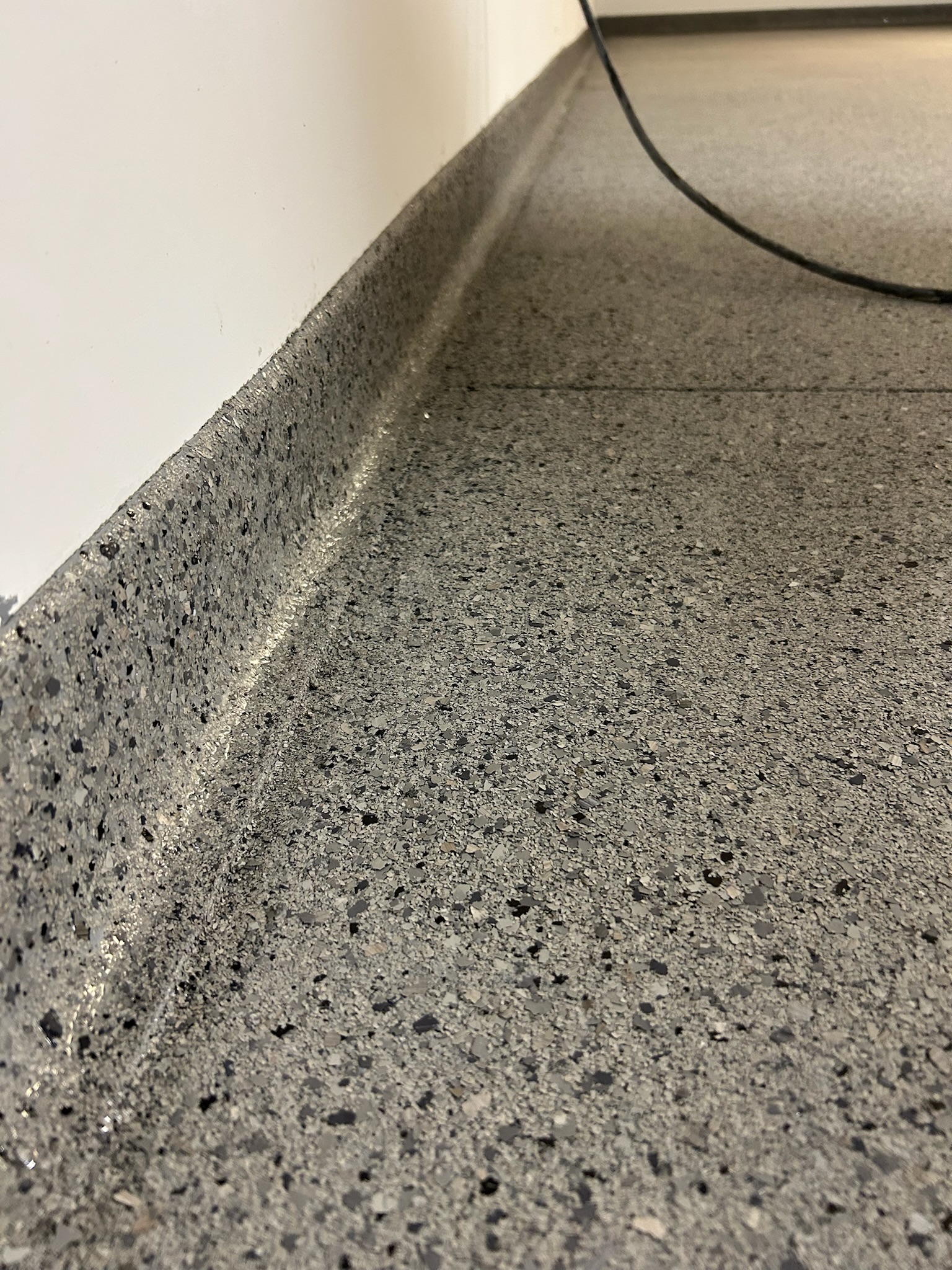
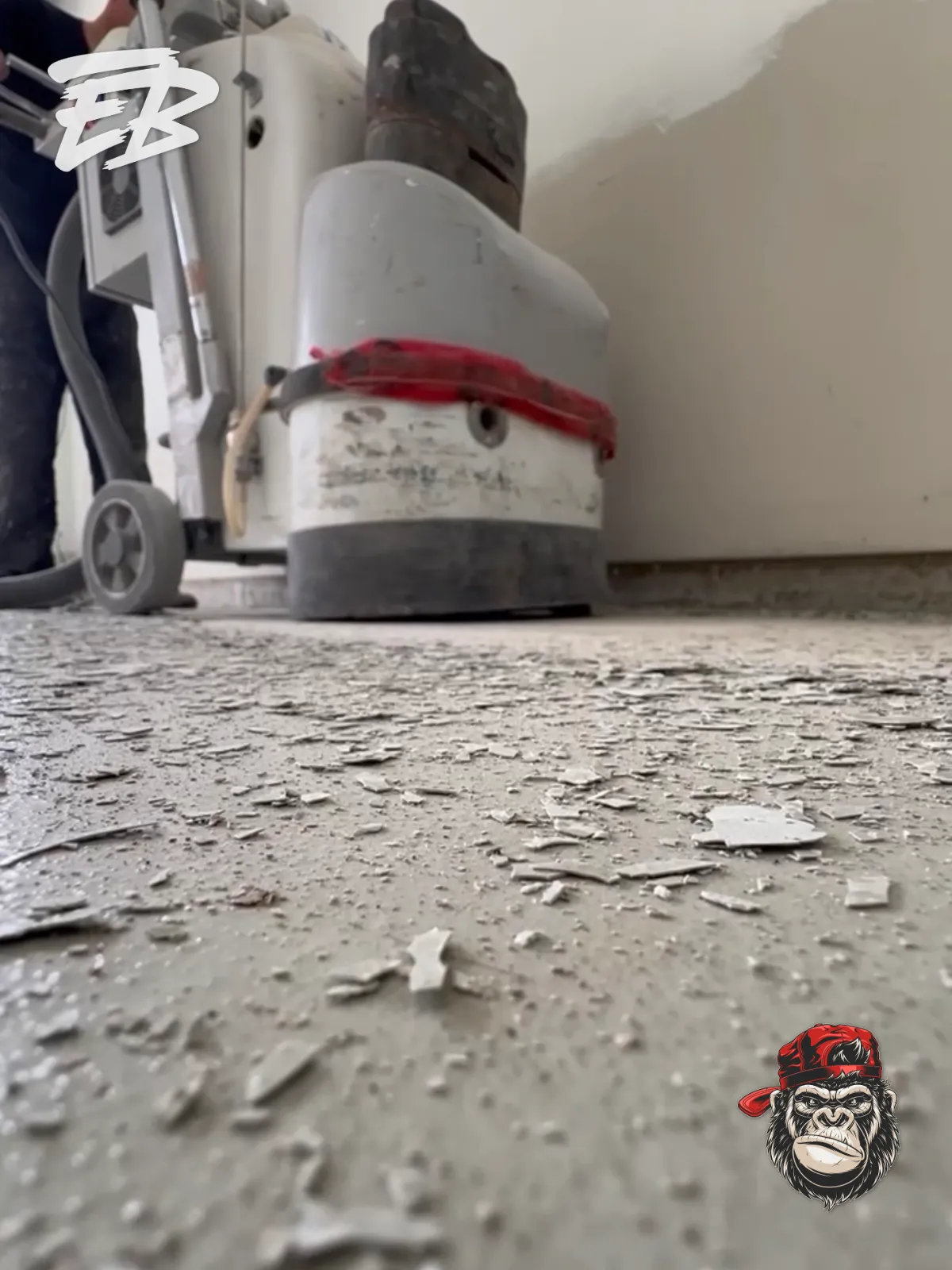
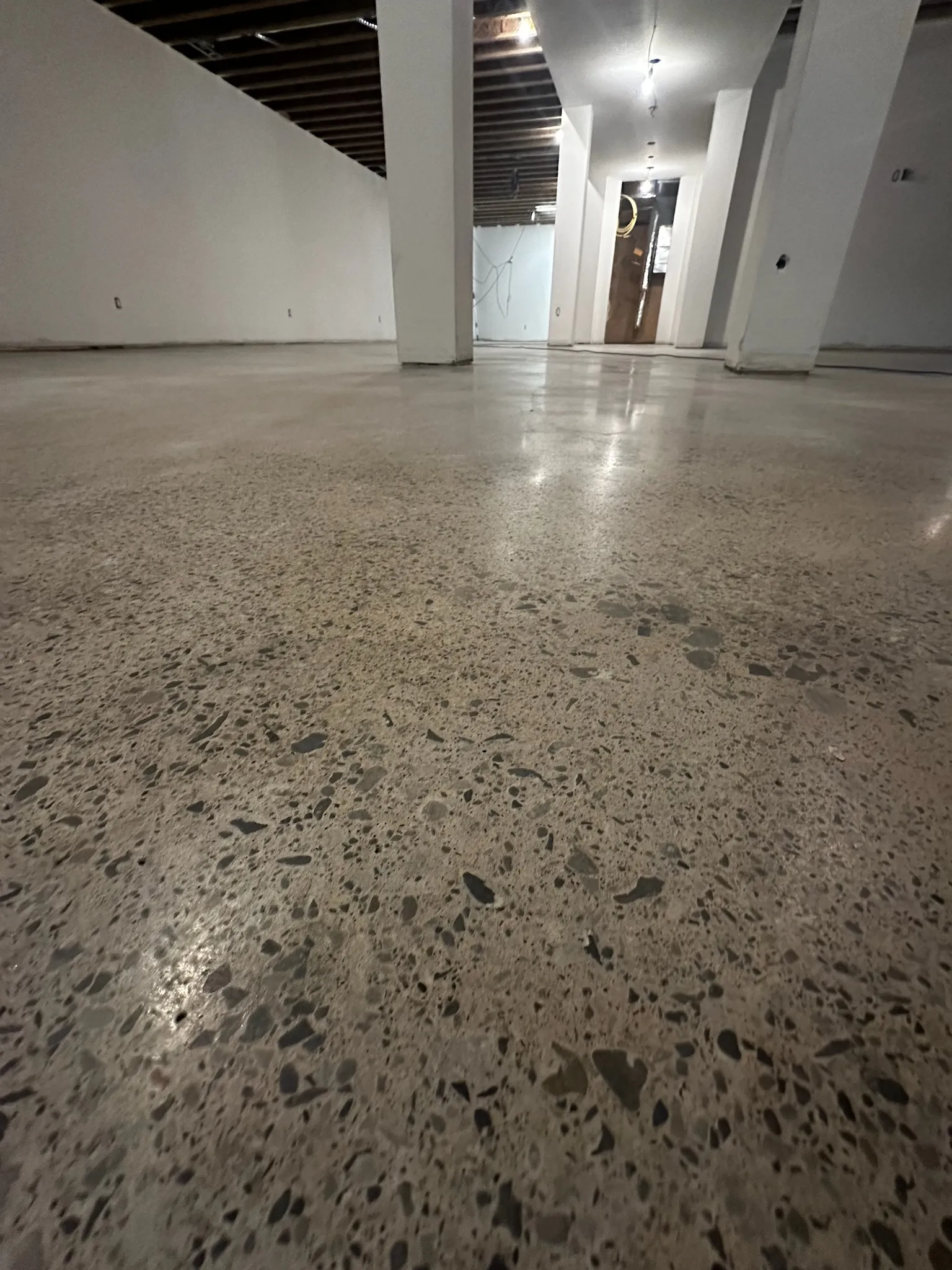
Diamond grinding mechanically removes the weak surface and old coatings, flattens high spots and leaves a consistent, measurable profile across the whole floor. The tooling is chosen for the slab and the coating system, and the machines are connected to dust extraction. It is the method specified for professional concrete coating systems.
Etching vs grinding at a glance
- Consistency — etching varies; grinding is uniform.
- Contaminant removal — etching is limited; grinding removes the surface layer.
- Old coatings and glue — etching cannot remove them; grinding can.
- Profile control — etching has little; grinding is matched to the system.
- Safety and cleanup — etching involves acid and runoff; grinding is dry and vacuum-collected.
“But the kit says to etch”
Consumer kits are designed for people without grinders, so etching is the only method they can offer. Professional systems are specified for a mechanical profile, because that is what delivers a durable bond — especially under the stress of Ontario winters.
Why this matters in Ontario
Garage floors here go through freeze-thaw cycles, road salt and meltwater every winter. A coating that is only lightly keyed to the concrete is far more likely to lift at the door and in wheel paths. That is why every floor we install starts with mechanical surface preparation and, where needed, repair of cracks and salt damage.
How to check your contractor's quote
Ask what preparation method is included and what profile it is expected to produce. Answers like “we wash and etch” are a warning sign. Diamond grinding or shot blasting, plus crack repair and a moisture check, is what a professional proposal should say. For large flat slabs, see our guide to shot blasting concrete driveways.
Want a floor that is prepared properly the first time? Request an estimate or use our cost calculator.
%25202.webp)


.webp)

.jpeg)
.jpeg)
.jpeg)
.jpeg)
.webp)

.jpeg)
.png)
.png)