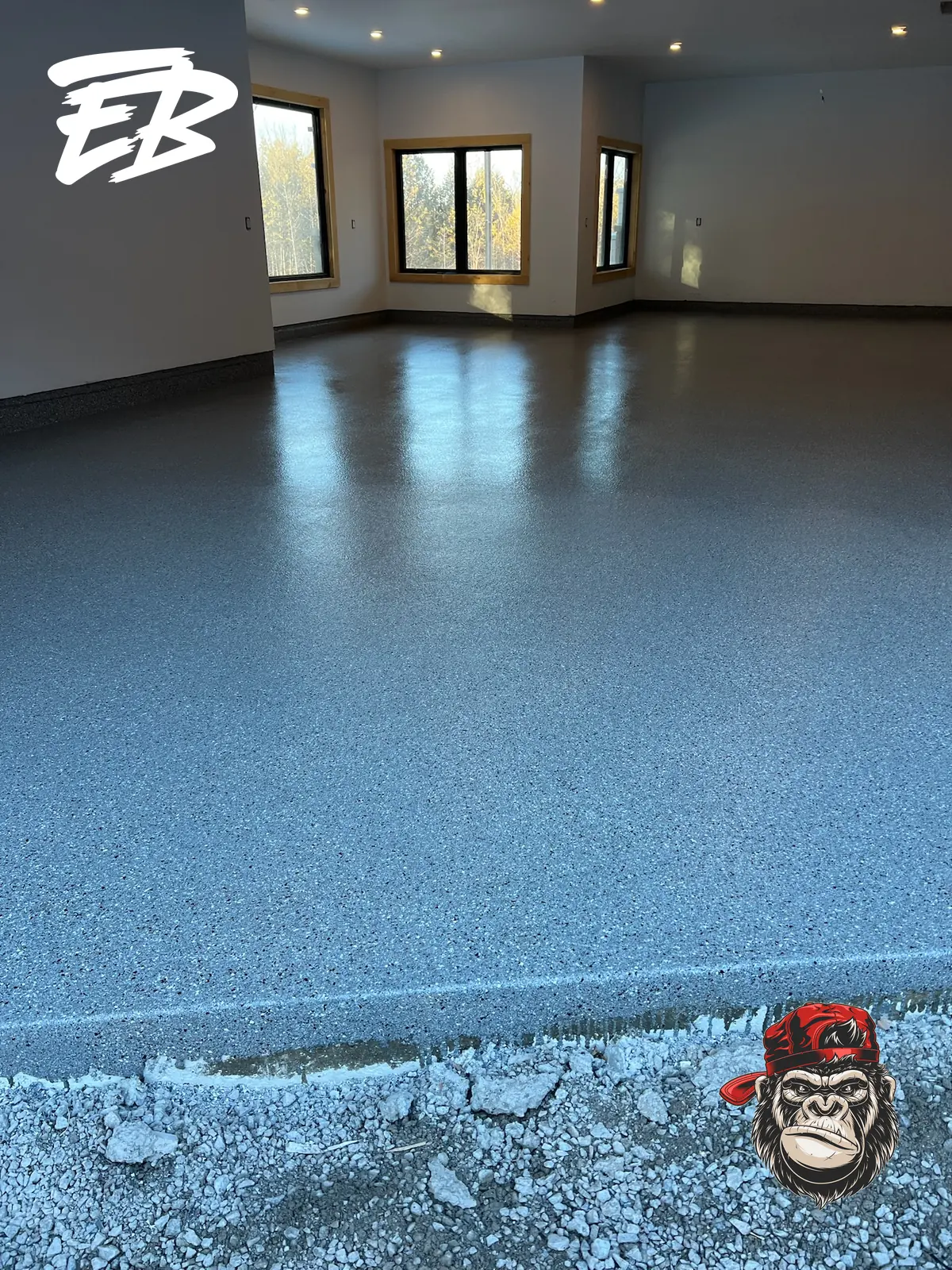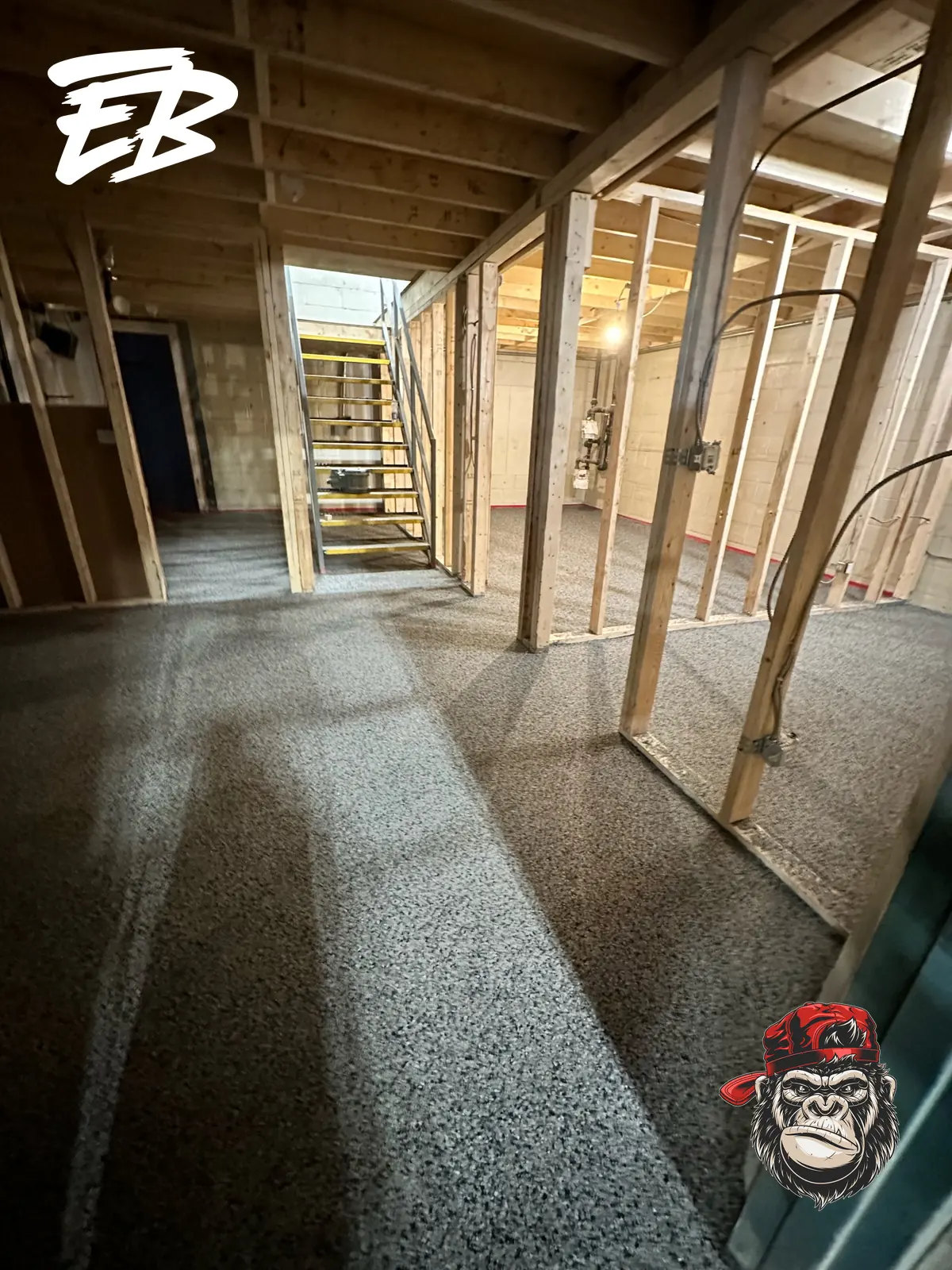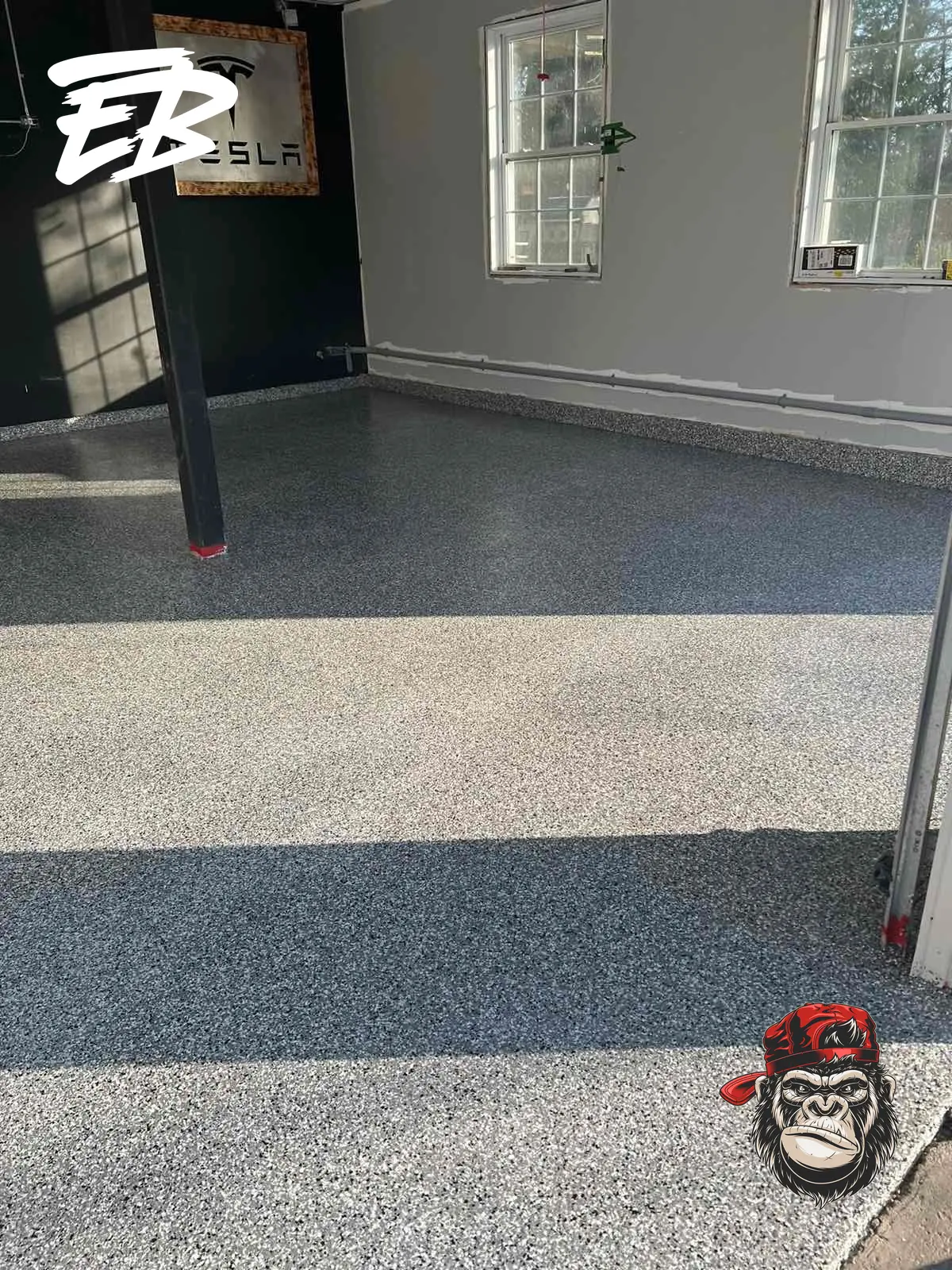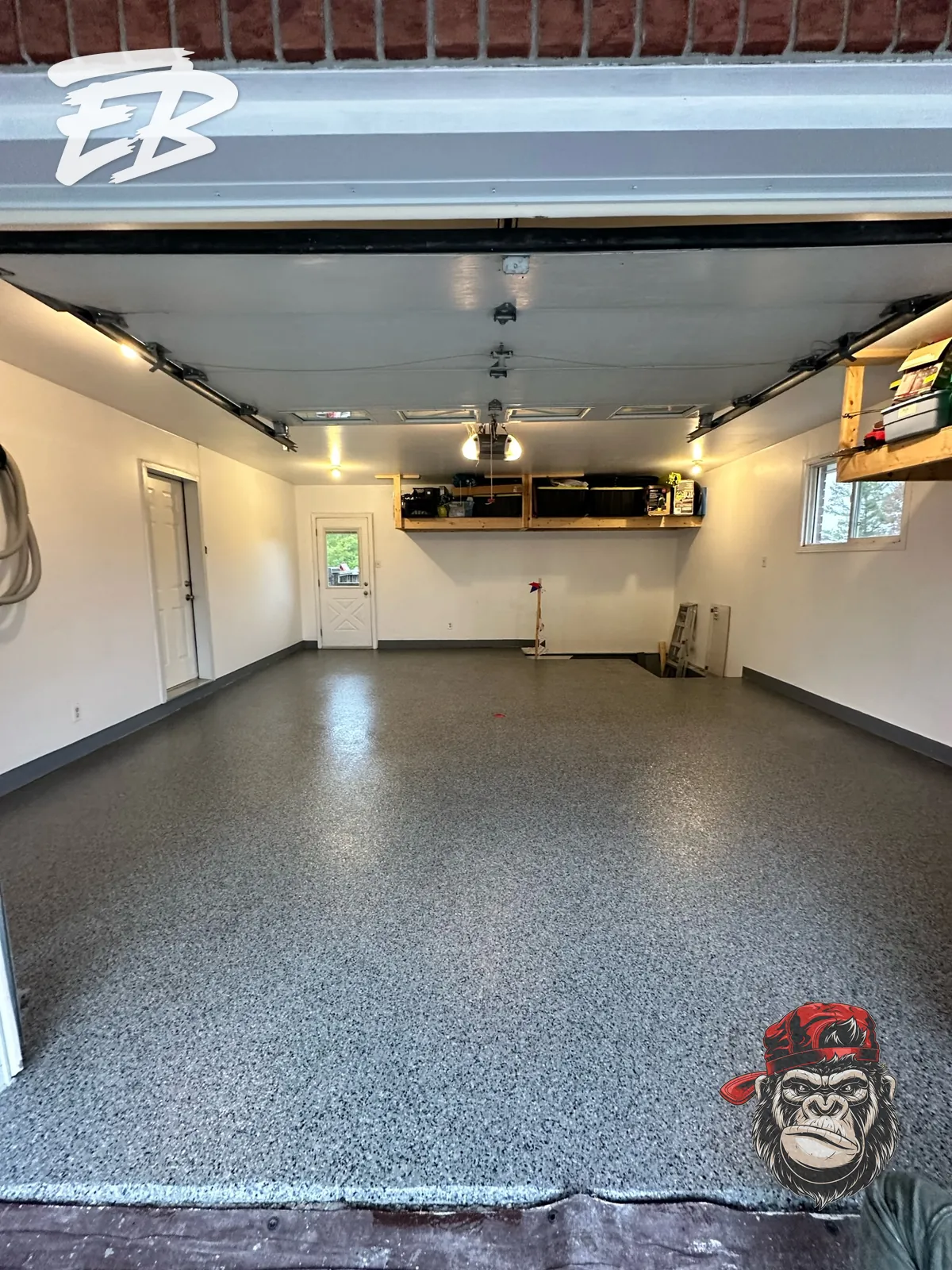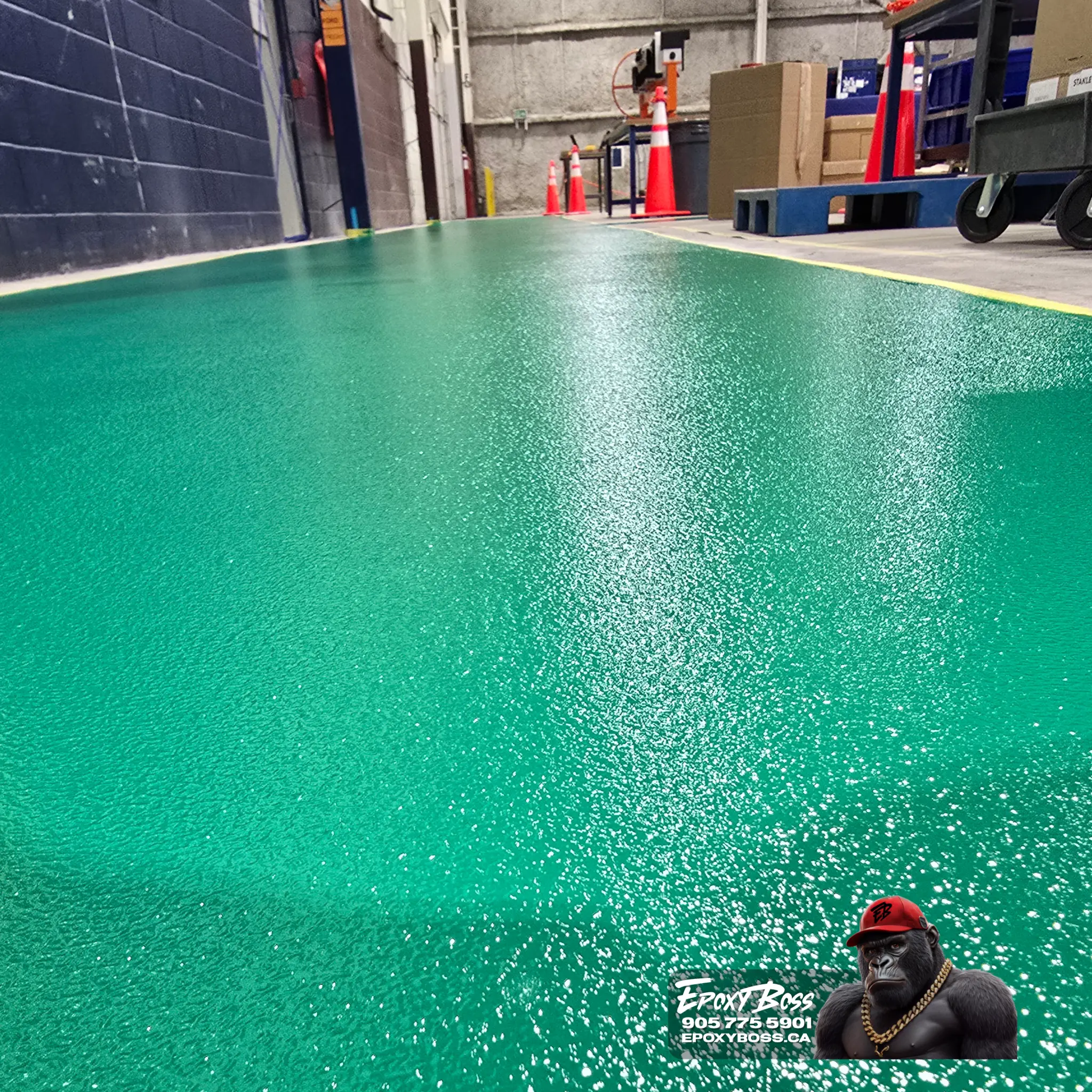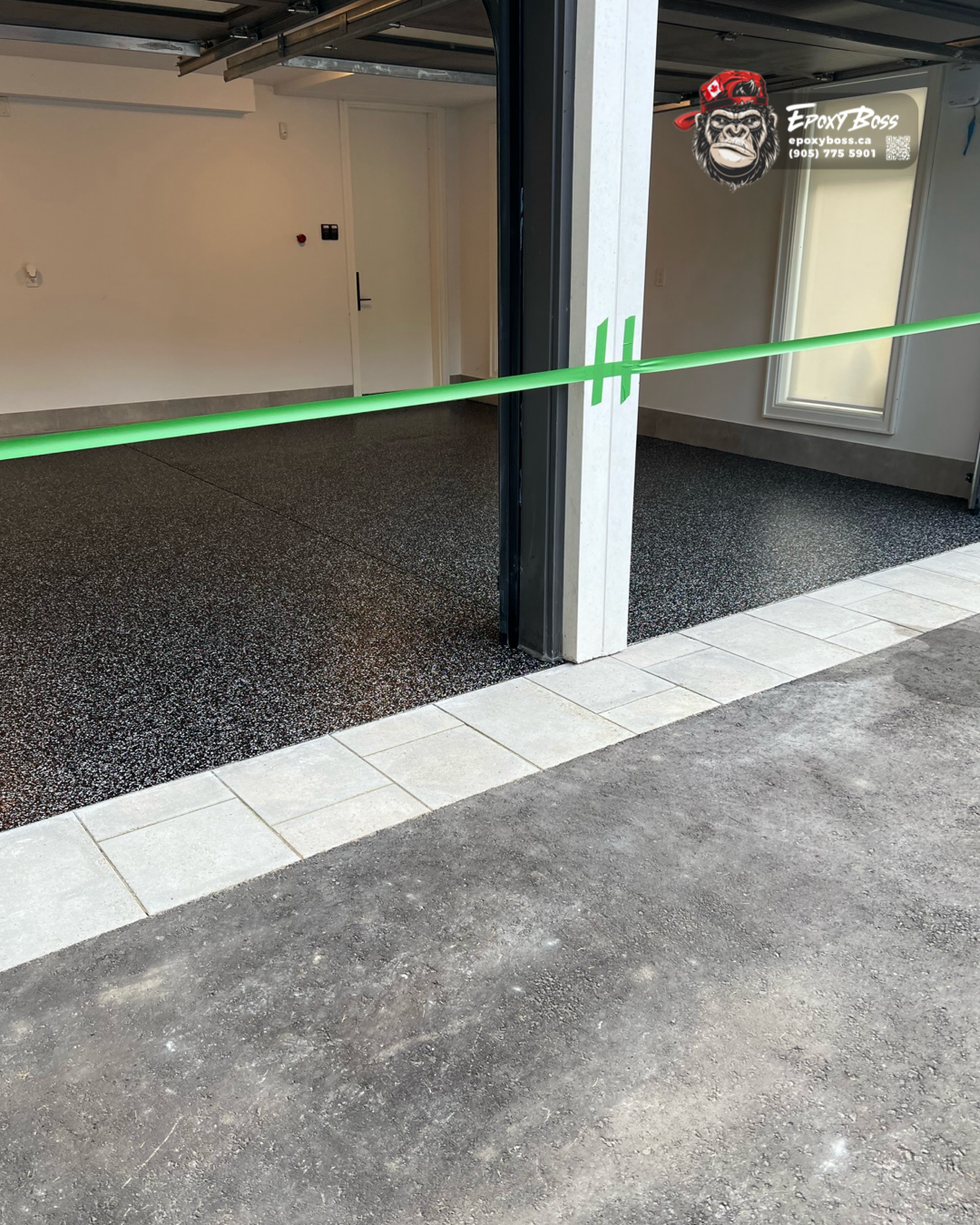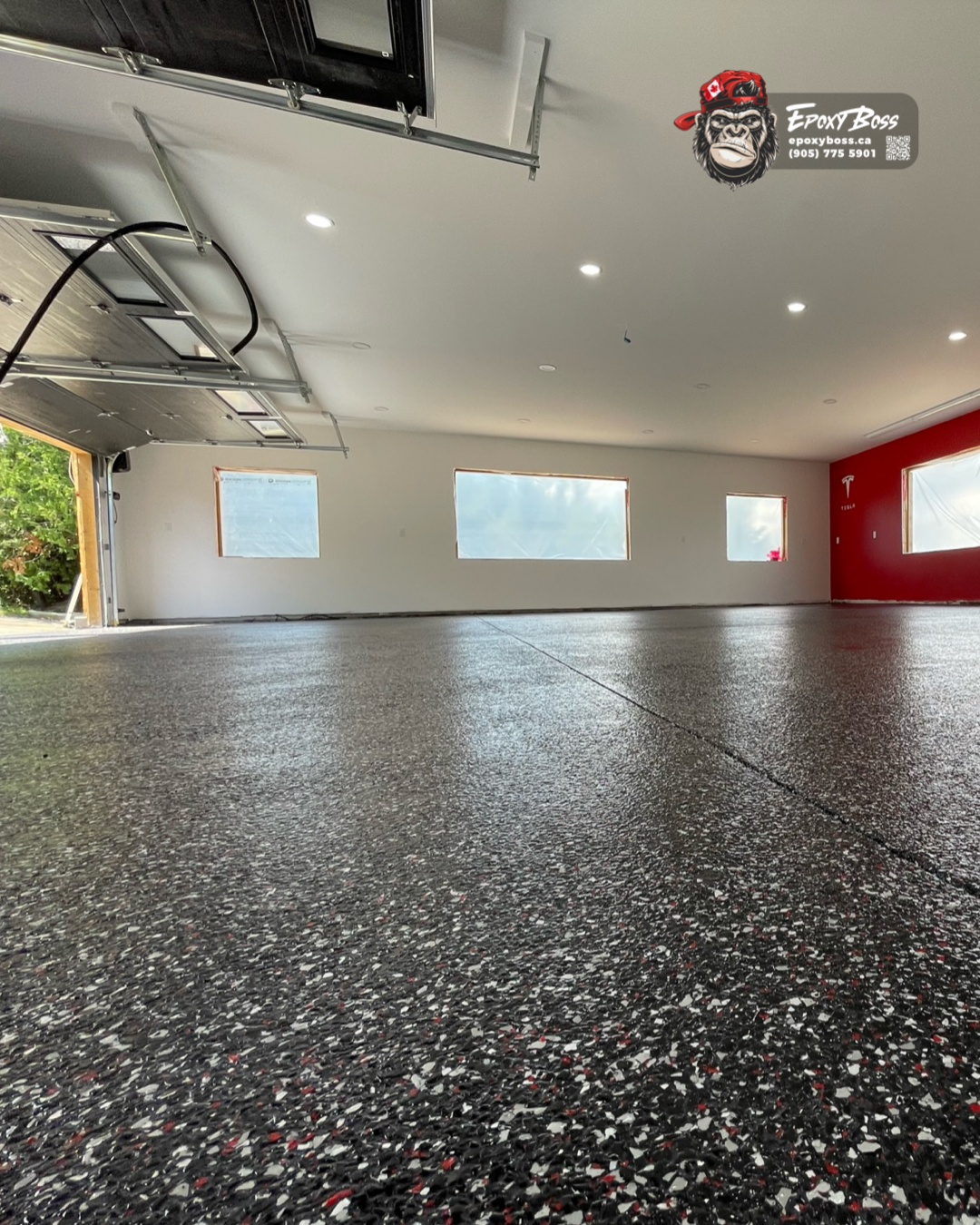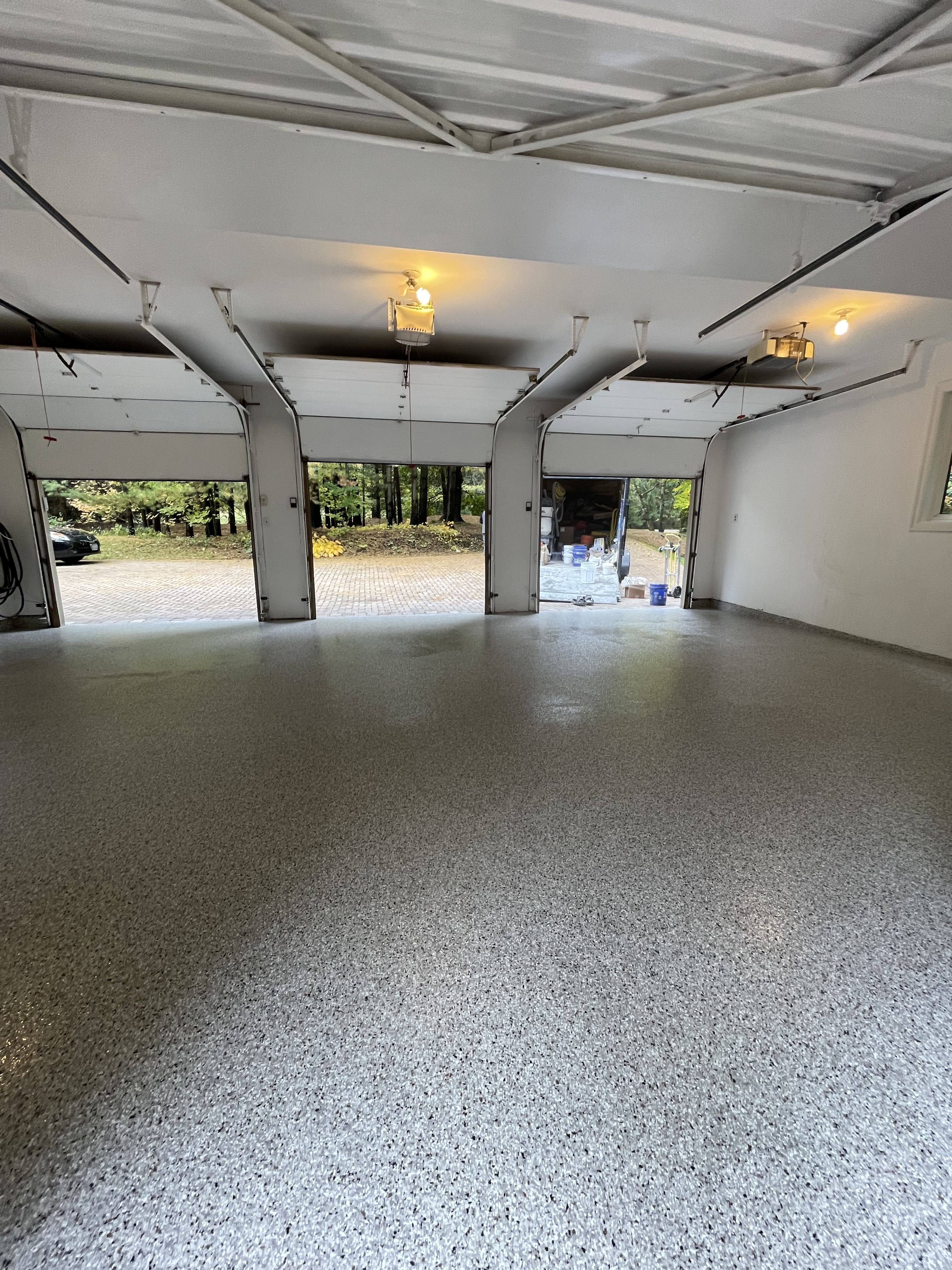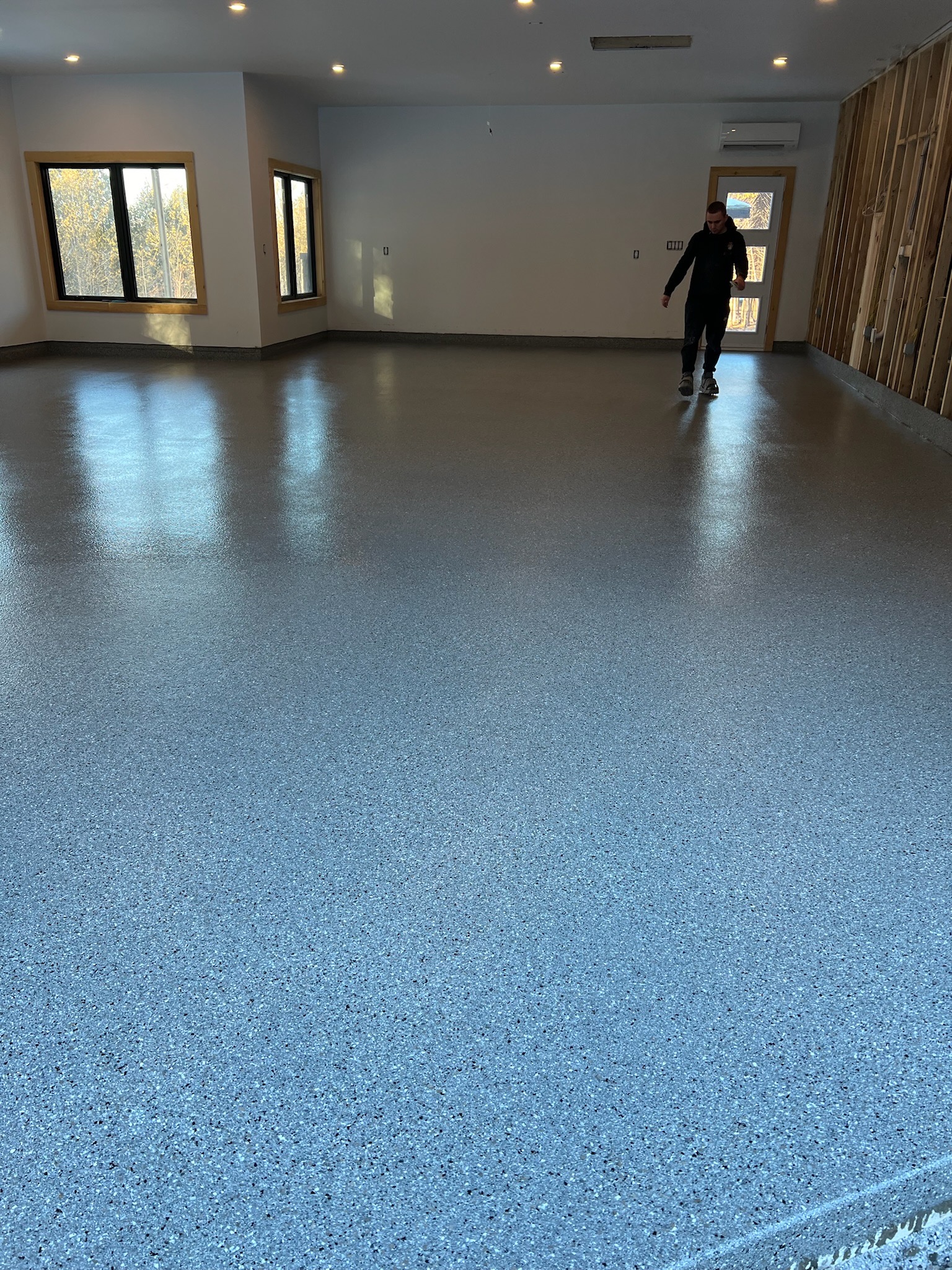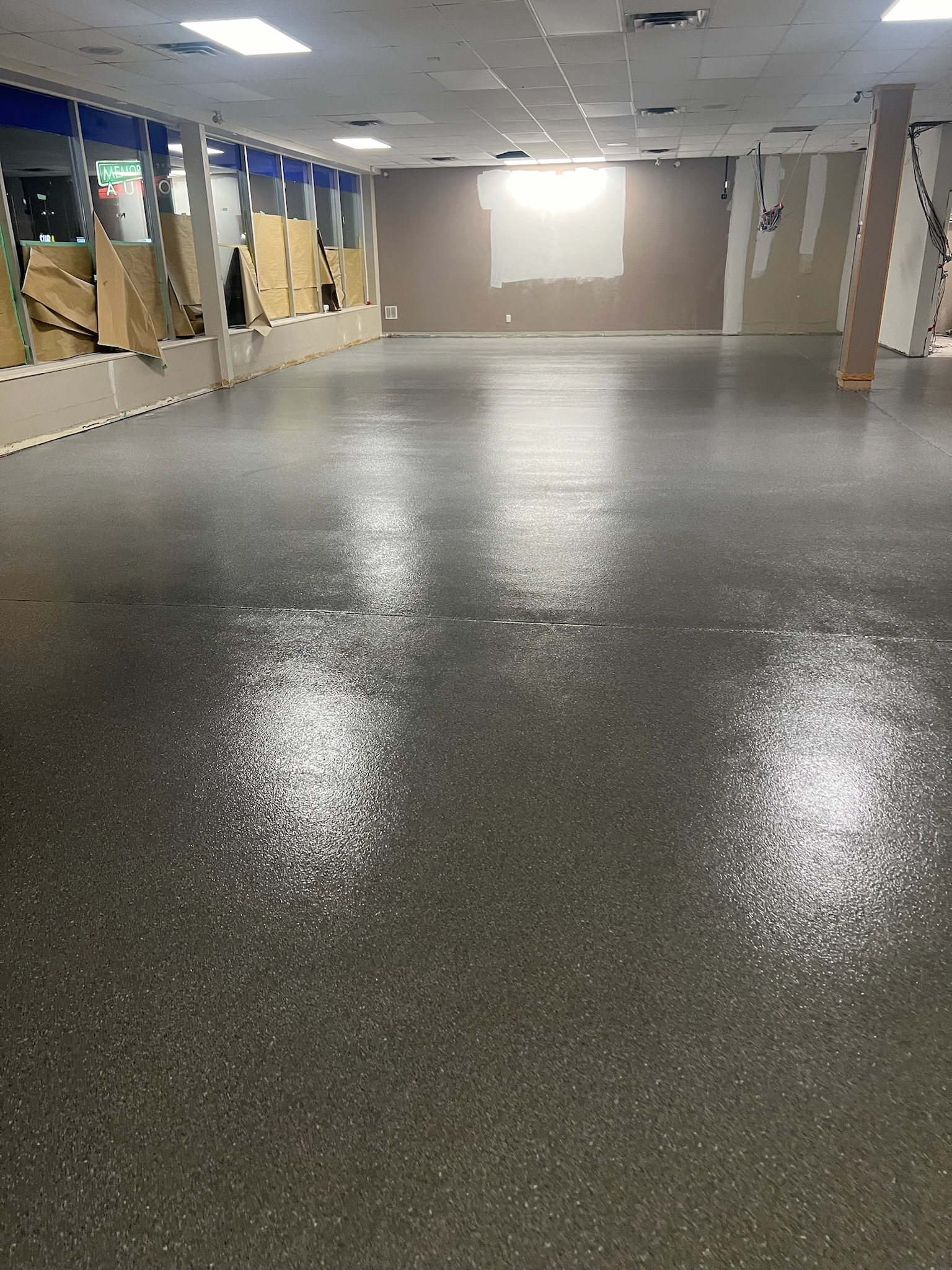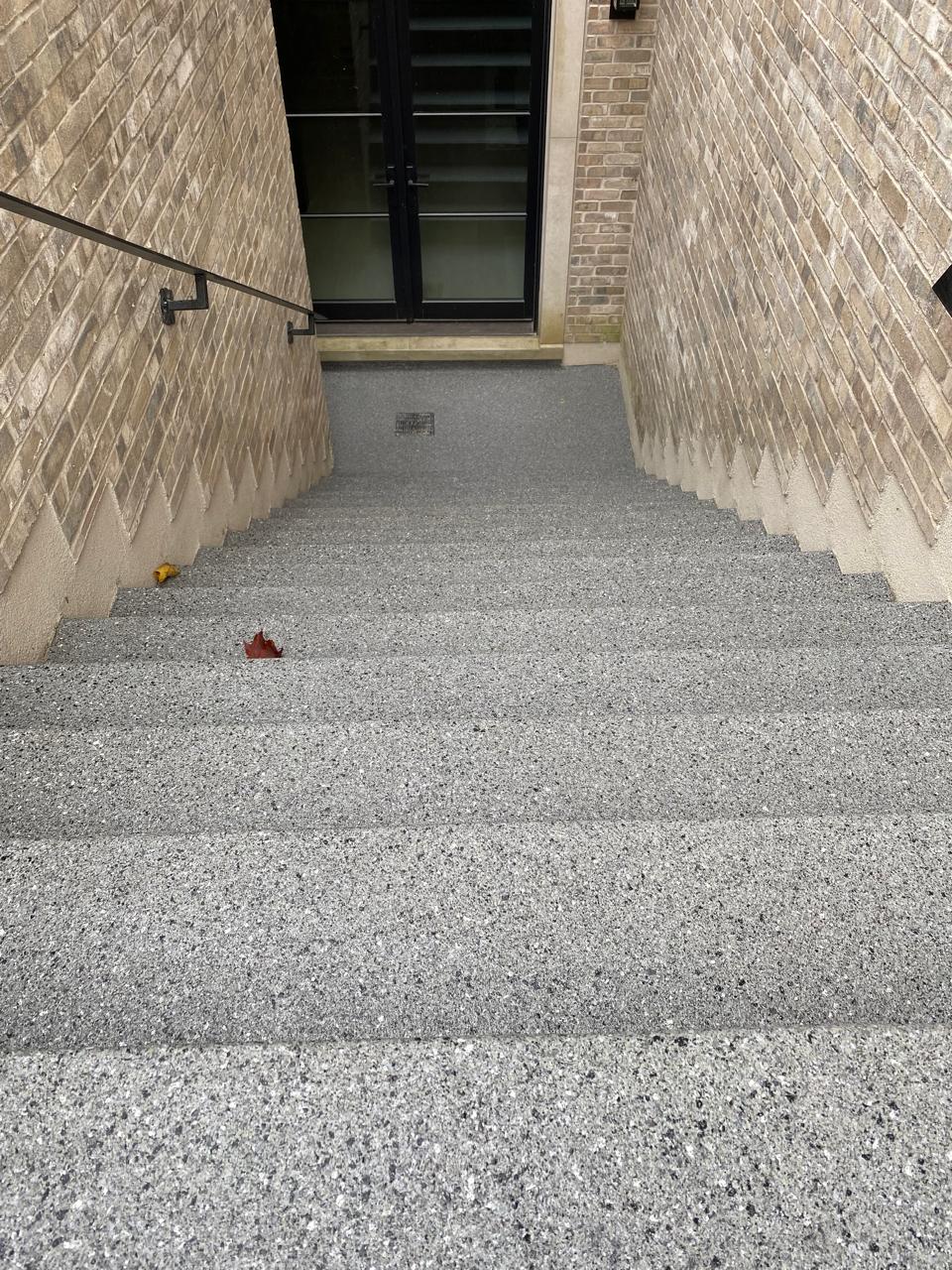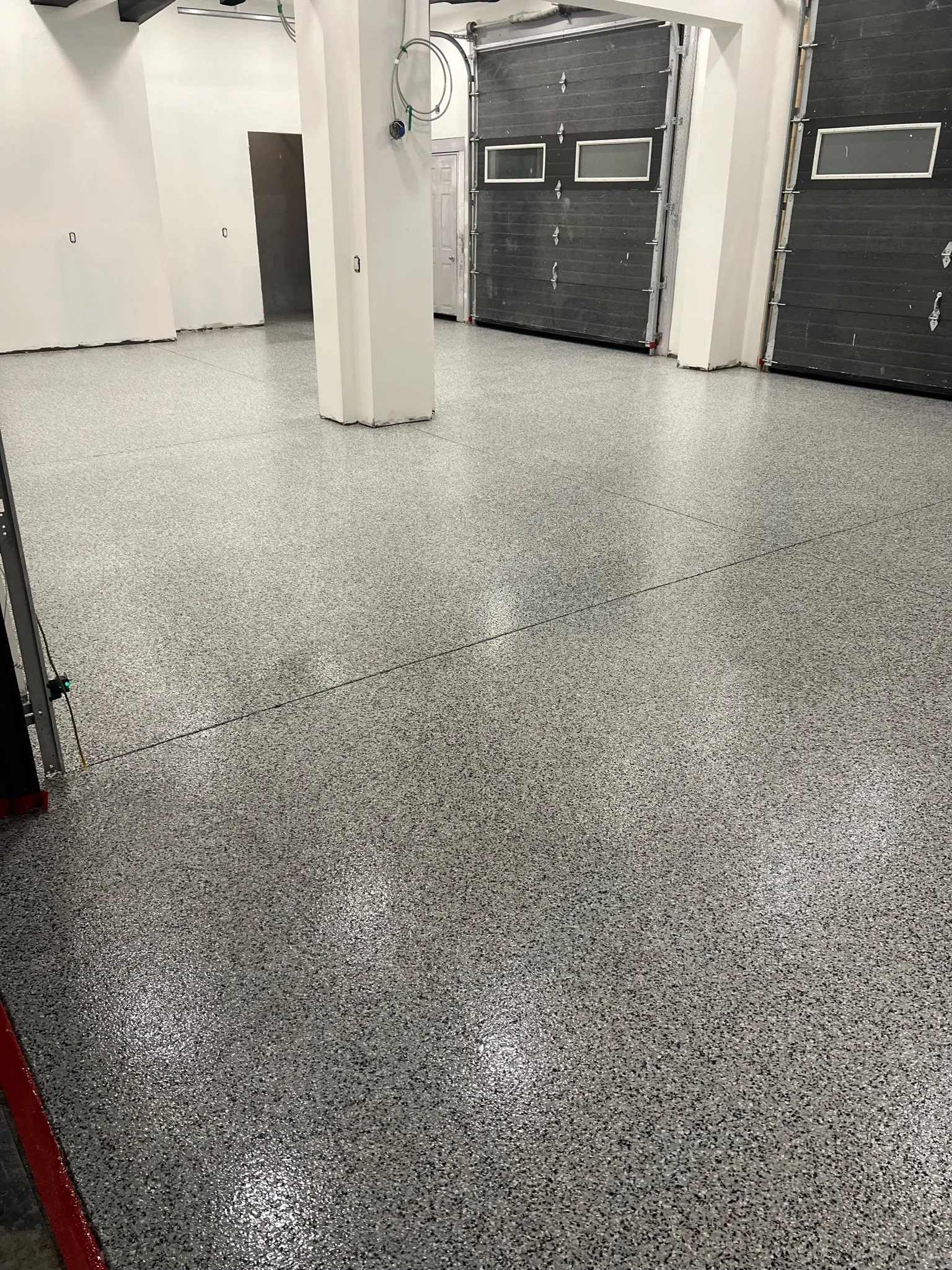

Before a concrete floor is coated, every crack is assessed to decide whether it is dormant (no longer moving) or active (still moving), because the two need different repairs. Dormant cracks are usually routed or chased, cleaned and filled with a rigid epoxy or polyurea-type repair material, then ground flush. Active cracks and control joints need a flexible or semi-rigid detail, or the joint is carried through the coating, so the movement does not crack the new floor. Structural cracks, heaving or settlement are a separate issue that a coating cannot fix.
This guide explains how concrete crack repair is handled before epoxy, polyaspartic and other resin coatings in garages, basements and warehouse floors across Ontario.
Why crack repair comes before coating
A coating is a thin layer bonded to the top of the slab. If a crack beneath it moves, the coating moves with it, and a rigid coating will crack along the same line. Unfilled cracks also leave a groove that collects dirt and lets water reach the slab. Proper repair gives the coating a continuous, sound surface and reduces the chance of a reflective crack later.
Types of cracks you will see
- Hairline shrinkage cracks: fine, random cracks from drying shrinkage. Very common in garages and basements and usually dormant.
- Control (contraction) joints: saw-cut or tooled lines placed on purpose so the slab cracks there. They may still move with temperature and moisture.
- Random cracks that have opened: wider cracks, often where a joint was missing or cut late. May be dormant or active.
- Settlement and heave cracks: with height differences across the crack. Usually a sign of subgrade or structural movement.
- Spalls and broken edges: chipped joint edges, garage door thresholds and impact damage.
- Salt scaling and pitting: surface deterioration rather than cracks, common near garage doors. See scaling, pitting and spalling.
How cracks are assessed
We look at width, length, edges, whether the two sides are level, whether the crack is clean or packed with dirt, and whether it lines up with a joint, a footing or an interior wall. On commercial floors, monitoring over time or reviewing building records may be needed. Our concrete inspection and diagnosis service covers more complex floors. Where a crack suggests structural movement, we recommend an engineer's review before coating.
Repairing dormant cracks
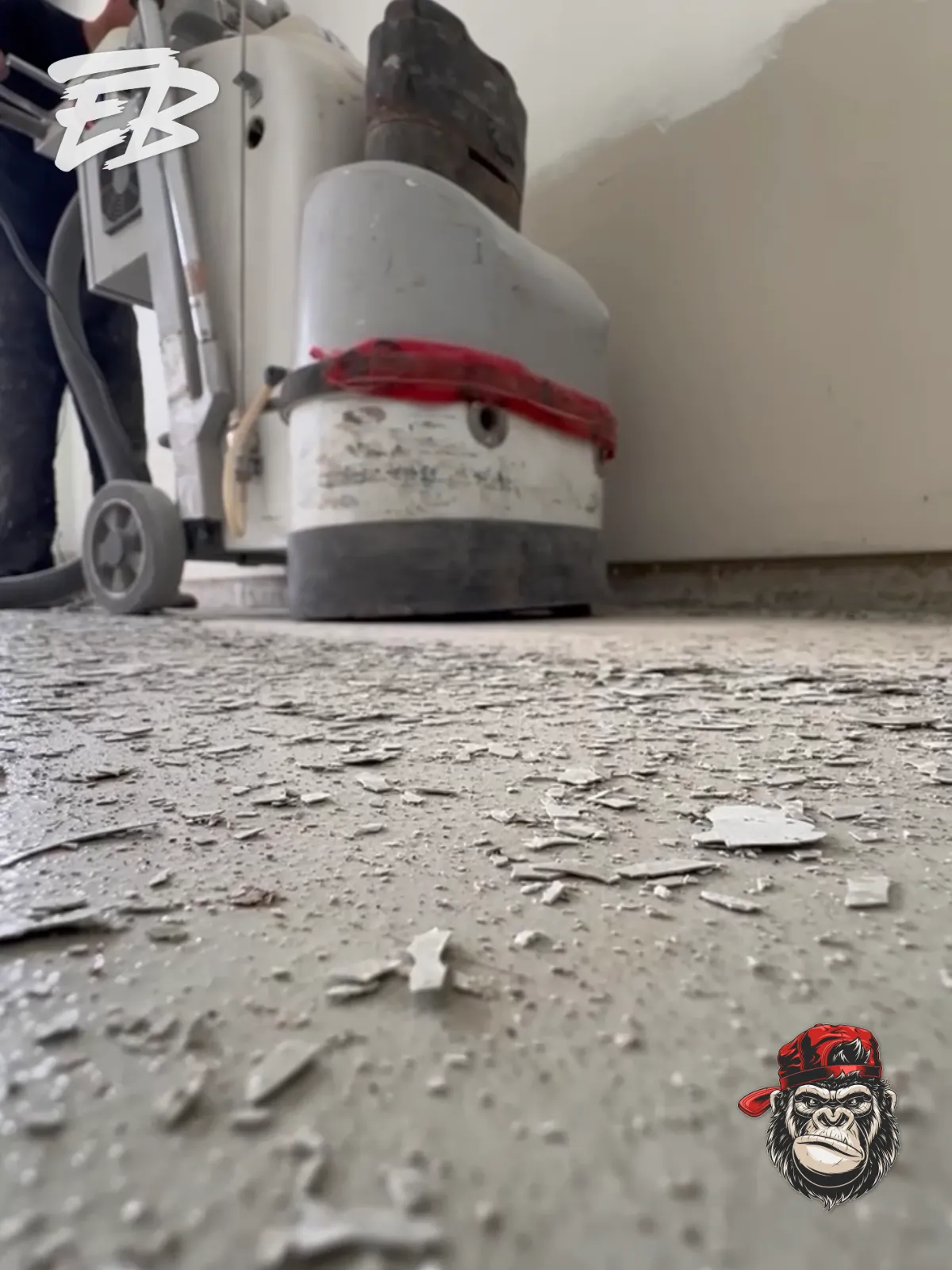
- Open the crack: chase or route it with a diamond blade or crack-chaser so the repair material has a clean, sound channel to fill.
- Clean: vacuum out dust and debris.
- Fill: use a compatible rigid repair material, commonly an epoxy or polyurea-type crack filler, sometimes with sand or a thickener for wider cracks.
- Grind flush: once cured, grind the repair level with the slab as part of overall surface preparation.
Hairline cracks are typically handled as part of a standard installation; wider cracks and damaged areas are scoped separately. See crack repair for how we handle them.
Crack repair materials compared
- Rigid epoxy fillers and pastes: high strength and good bond to sound concrete. Best for dormant cracks and small spalls under a coating. Not suited to joints that still move.
- Fast-setting polyurea and hybrid fillers: cure quickly, which suits same-day coating work. Formulations range from rigid to semi-rigid; the product data sheet explains which movement they tolerate.
- Semi-rigid joint fillers: designed to support joint edges under hard wheels while allowing limited movement. Common in warehouses.
- Flexible sealants: used in honoured joints and perimeter gaps where movement is expected. Softer, so they are not meant to carry wheel loads at the edge.
- Epoxy and polymer repair mortars: used to rebuild spalled edges, thresholds and deeper damaged areas before coating.
The right choice depends on crack width, movement, traffic and the coating going on top. Matching the repair material to the coating system avoids compatibility problems.
Treating control joints and active cracks
Joints exist to move. Options include:
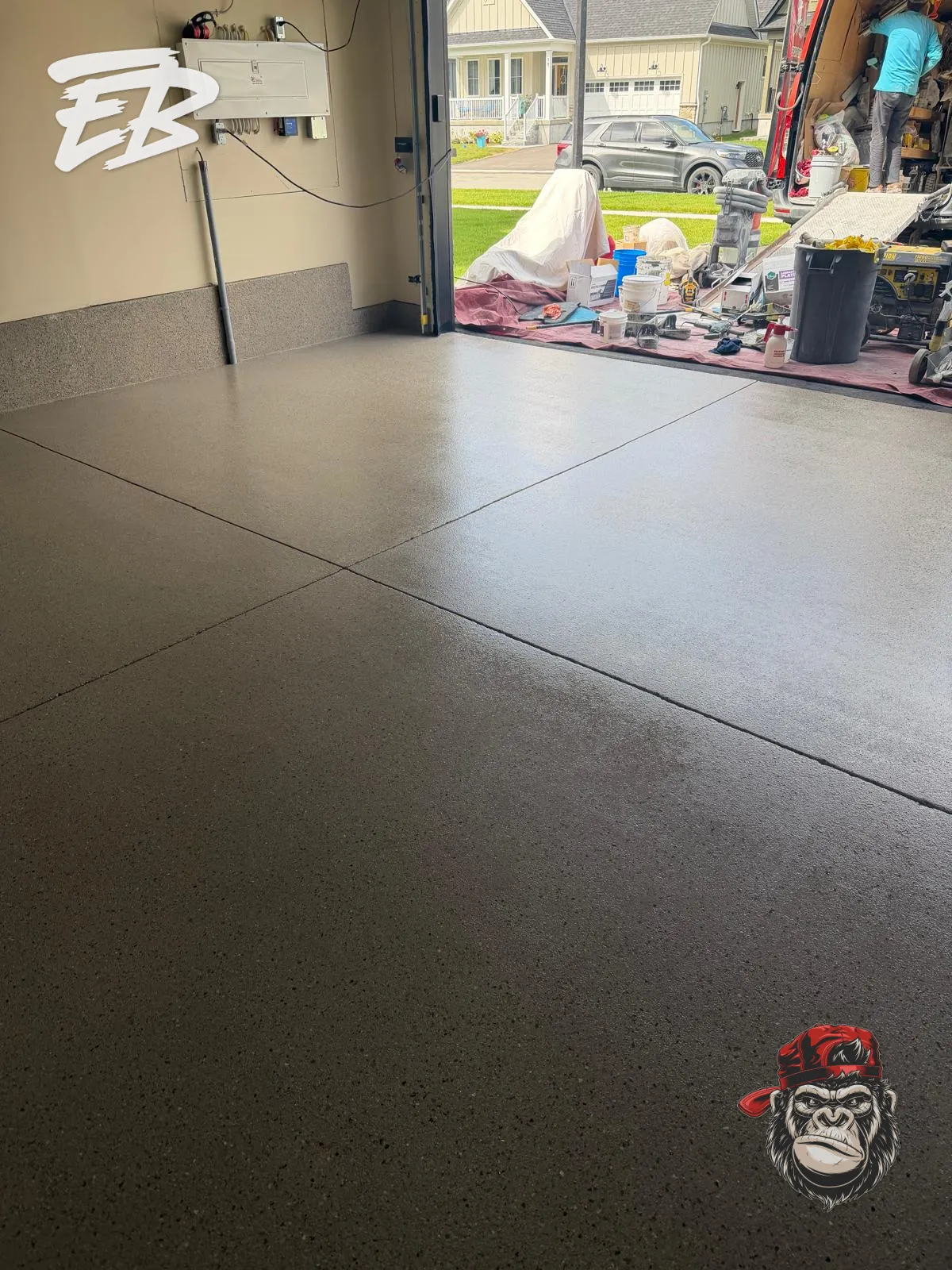
- Honouring the joint: the joint is cleaned and filled, the coating is applied, and the joint line is re-cut through the coating and sealed with a flexible sealant, so movement stays in the joint.
- Filling and coating over: on residential garages with stable joints, joints are sometimes filled and coated over for appearance. The trade-off is a possible hairline crack in the coating if the joint moves later. This should be discussed openly.
- Flexible or semi-rigid fillers: materials chosen to tolerate some movement while supporting edges.
Our joint filling page explains the options.
Warehouse and industrial floors
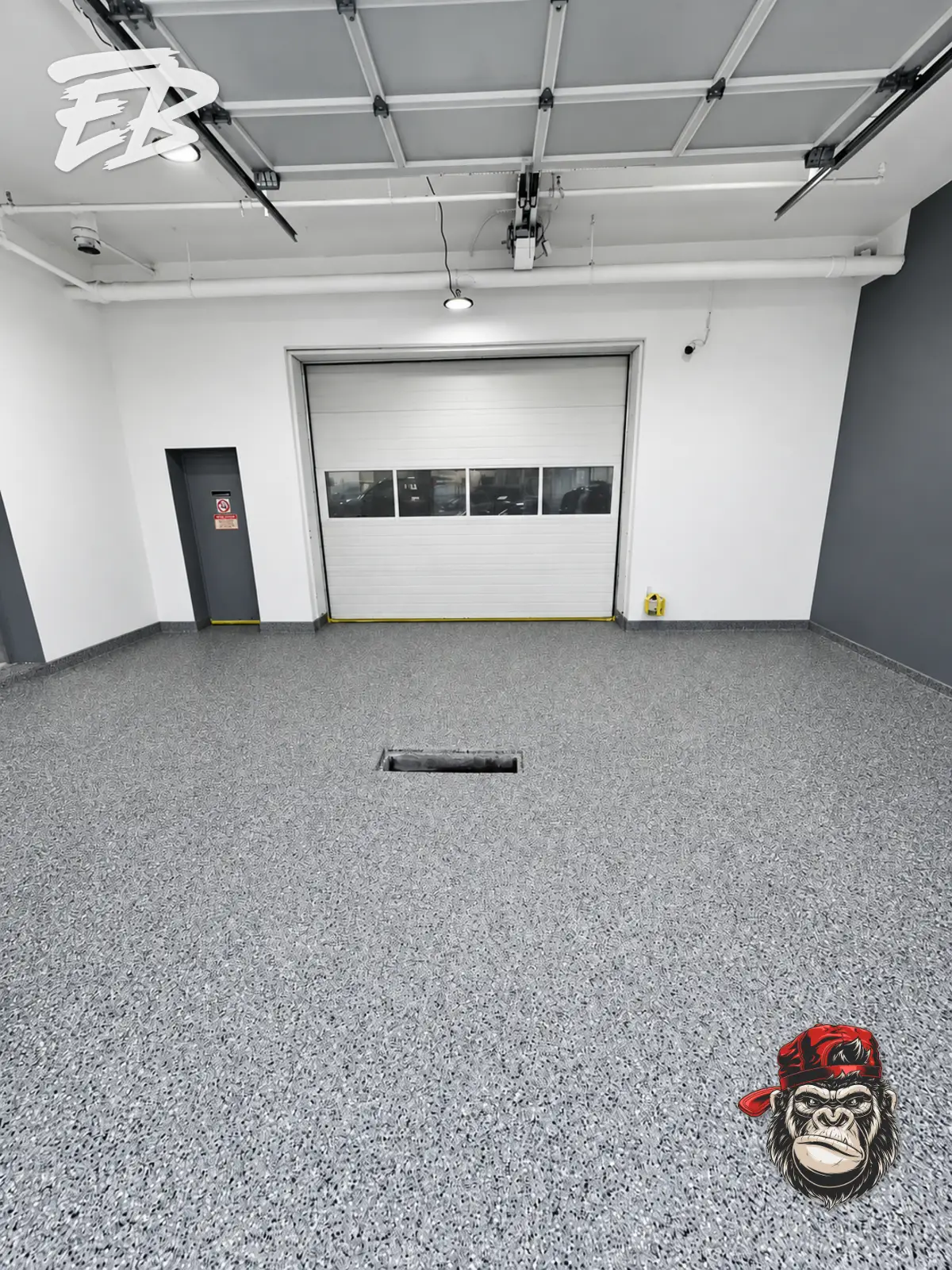
On warehouse floors, the biggest problem is usually not random cracks but joints under forklift and pallet-jack wheels. Hard wheels hitting an unsupported joint edge chip it, the joint widens, and impact grows. Semi-rigid joint fillers that support the edges, spall repair with suitable repair mortars, and in some cases joint rebuilding are used before or instead of coating. Read our guide to forklift damage to floor joints and see warehousing and logistics flooring and industrial applications.
Spalls, thresholds and edges
Broken joint edges, garage door thresholds and impact spalls are cut back to sound concrete and rebuilt with a compatible repair mortar before coating. At garage doors, where salt and meltwater concentrate, the transition often needs particular care. Our article on repairing failed garage coatings includes an entrance repair example, and resurfacing a garage floor with cracks walks through a cracked slab.
Crack repair, surface profile and dust
Crack chasing and grinding produce concrete dust. Ontario's guideline on silica on construction projects identifies grinding and cutting concrete as dust-generating activities, so professional crews use dust extraction. After repairs, the floor is ground to the profile the coating needs; the International Concrete Repair Institute's guidance on surface preparation, covered in its course on Technical Guideline 310.2R, is the industry reference. See our concrete surface preparation guide.
Basement cracks and moisture
Basement slab cracks can also be paths for moisture. Filling them is part of preparation, but if water actively comes through a crack, that is a drainage or waterproofing problem to solve before coating. See basement floor coatings and moisture.
Frequently asked questions
Will repaired cracks show through the new coating?
Well-filled dormant cracks under a flake floor are usually hard to see. Under solid colour or metallic finishes, repairs can sometimes be faintly visible. Joints that move may show a hairline crack over time.
Can you coat over a crack that keeps moving?
Not reliably with a rigid detail. The joint should be honoured or treated with a flexible material.
Is crack repair included in a garage coating?
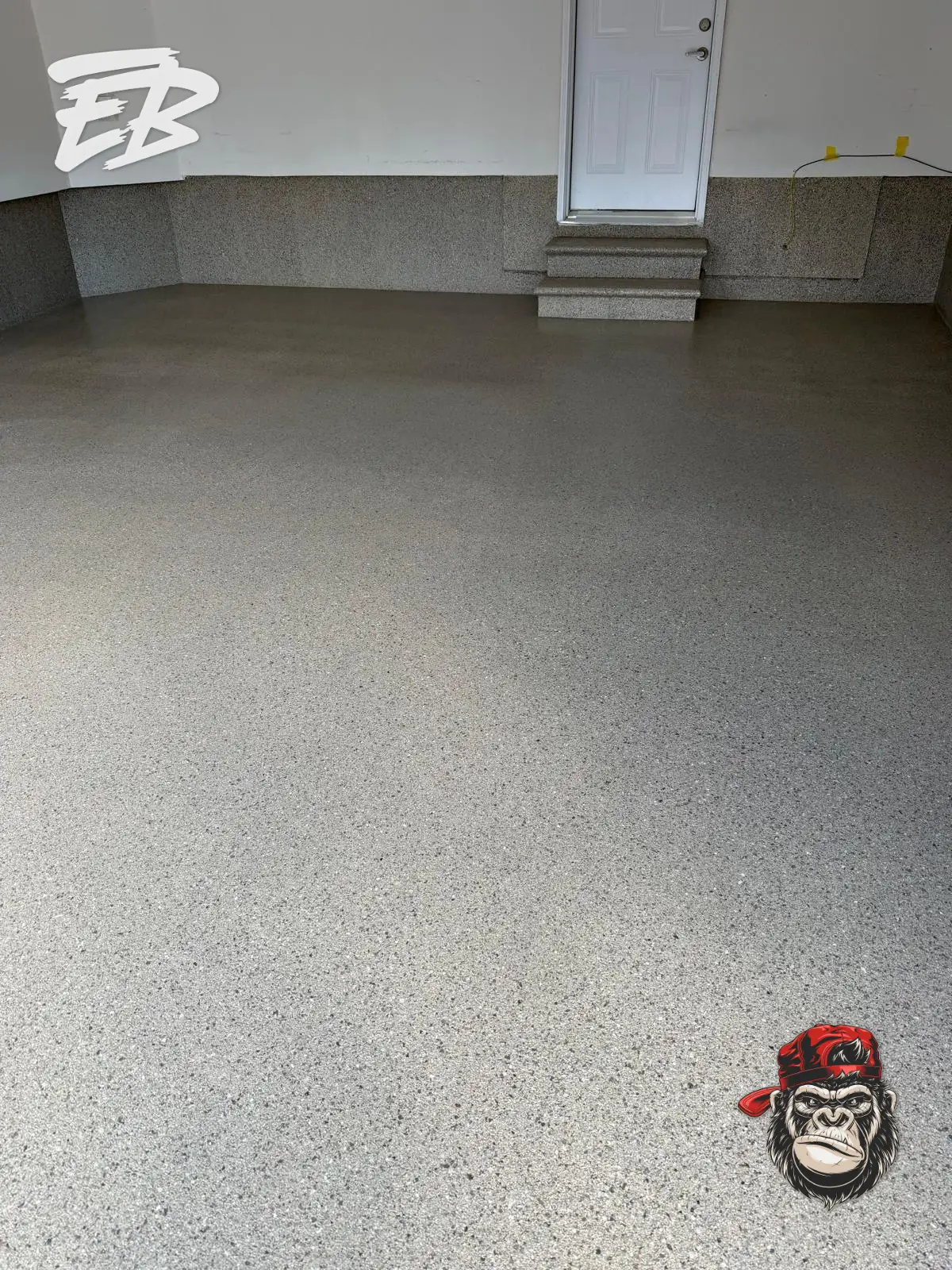
Hairline cracks are included in our standard garage installation. Larger cracks, damaged concrete and salt damage are scoped separately, and our garage floor cost calculator lets you add them to an estimate.
Does the warranty cover cracks?
Our limited workmanship warranty excludes concrete movement, settlement, frost heave and structural cracking, which are outside a coating's control.
Book a free floor assessment
Epoxy Boss is based in Innisfil, has worked since 2019 and provides concrete repair and restoration for homes and businesses across the GTA, York Region, Simcoe County, Halton, Durham and Muskoka. Call (905) 775-5901 or request a free floor assessment for a written quote in Canadian dollars.