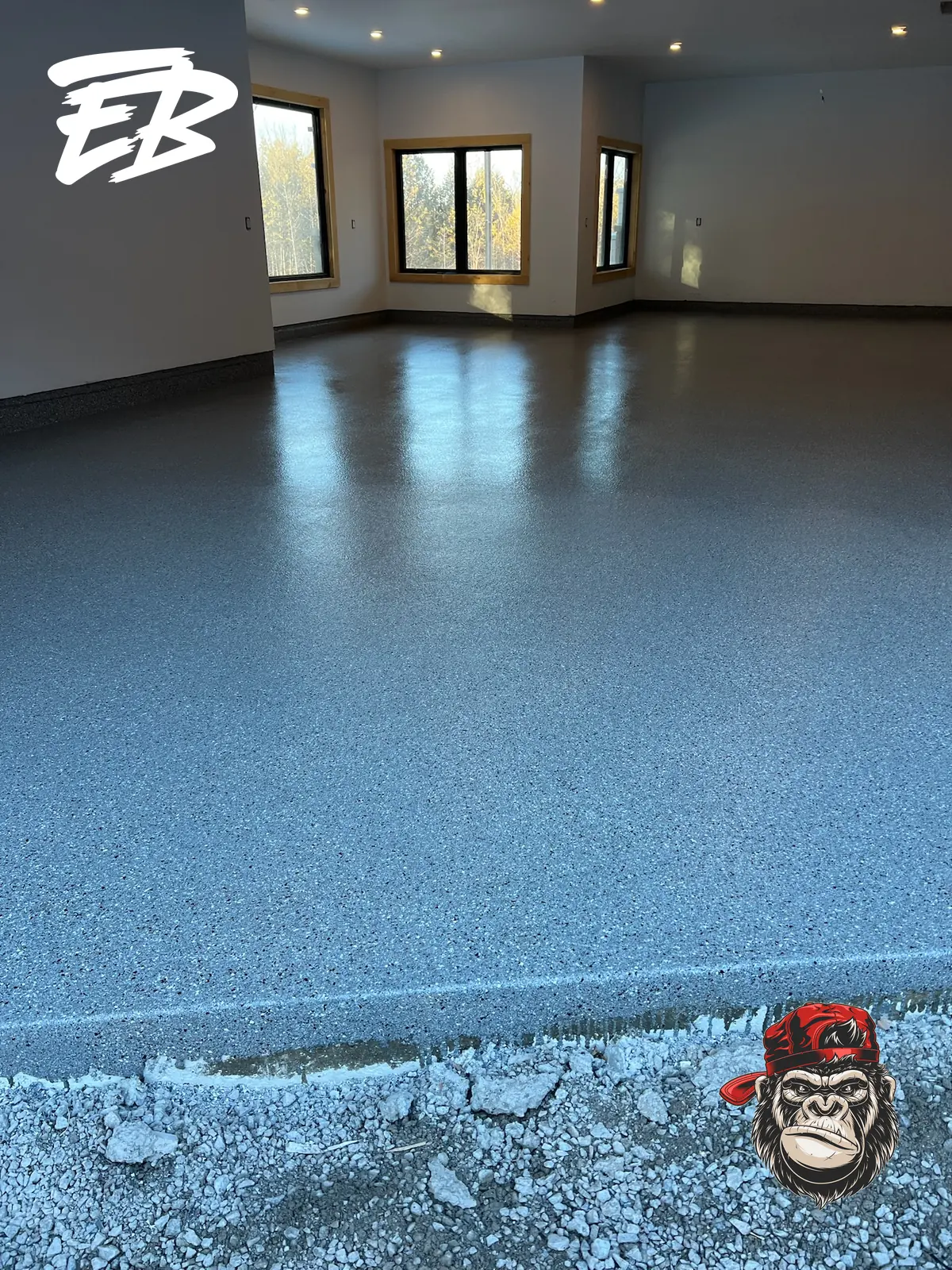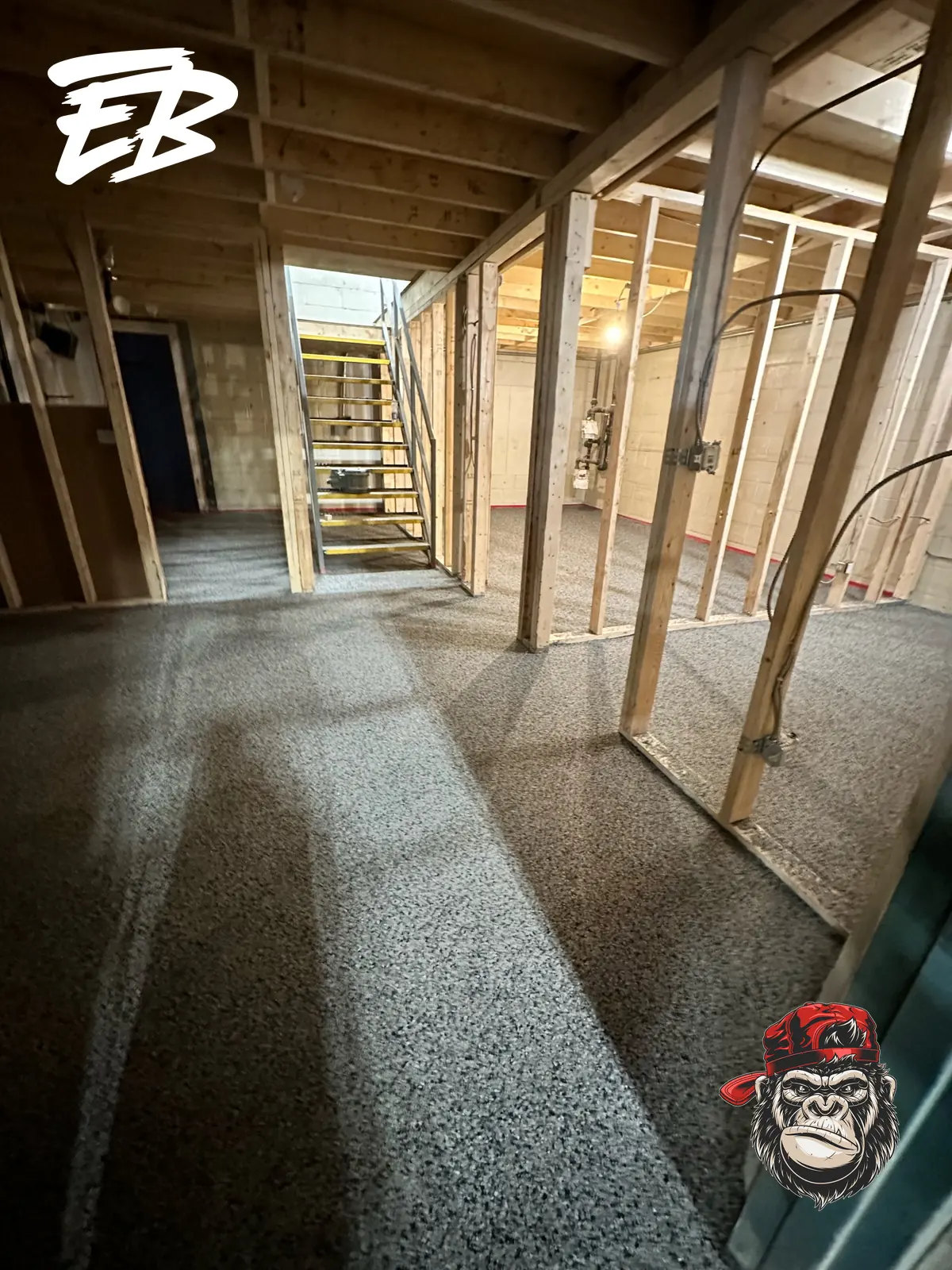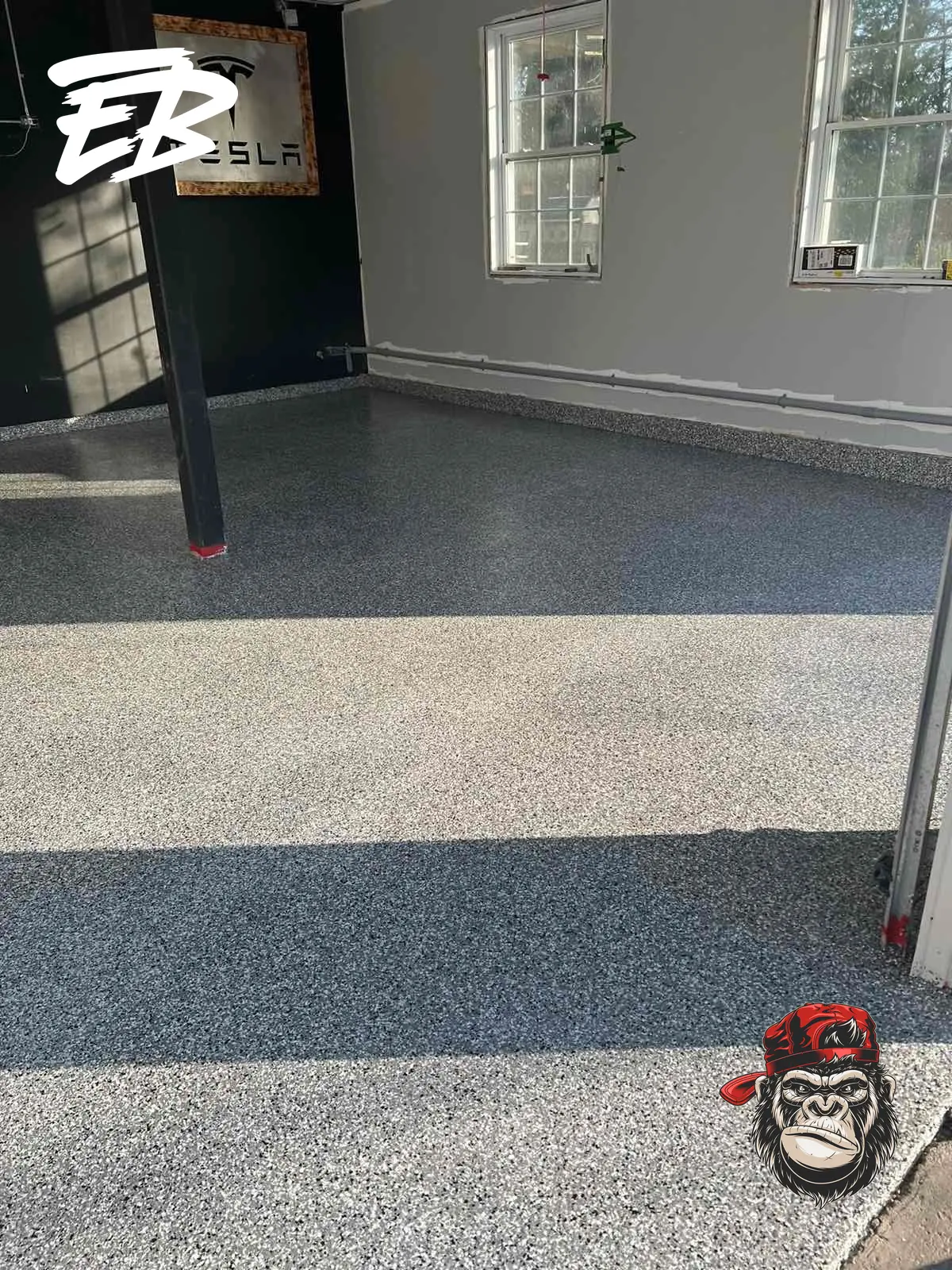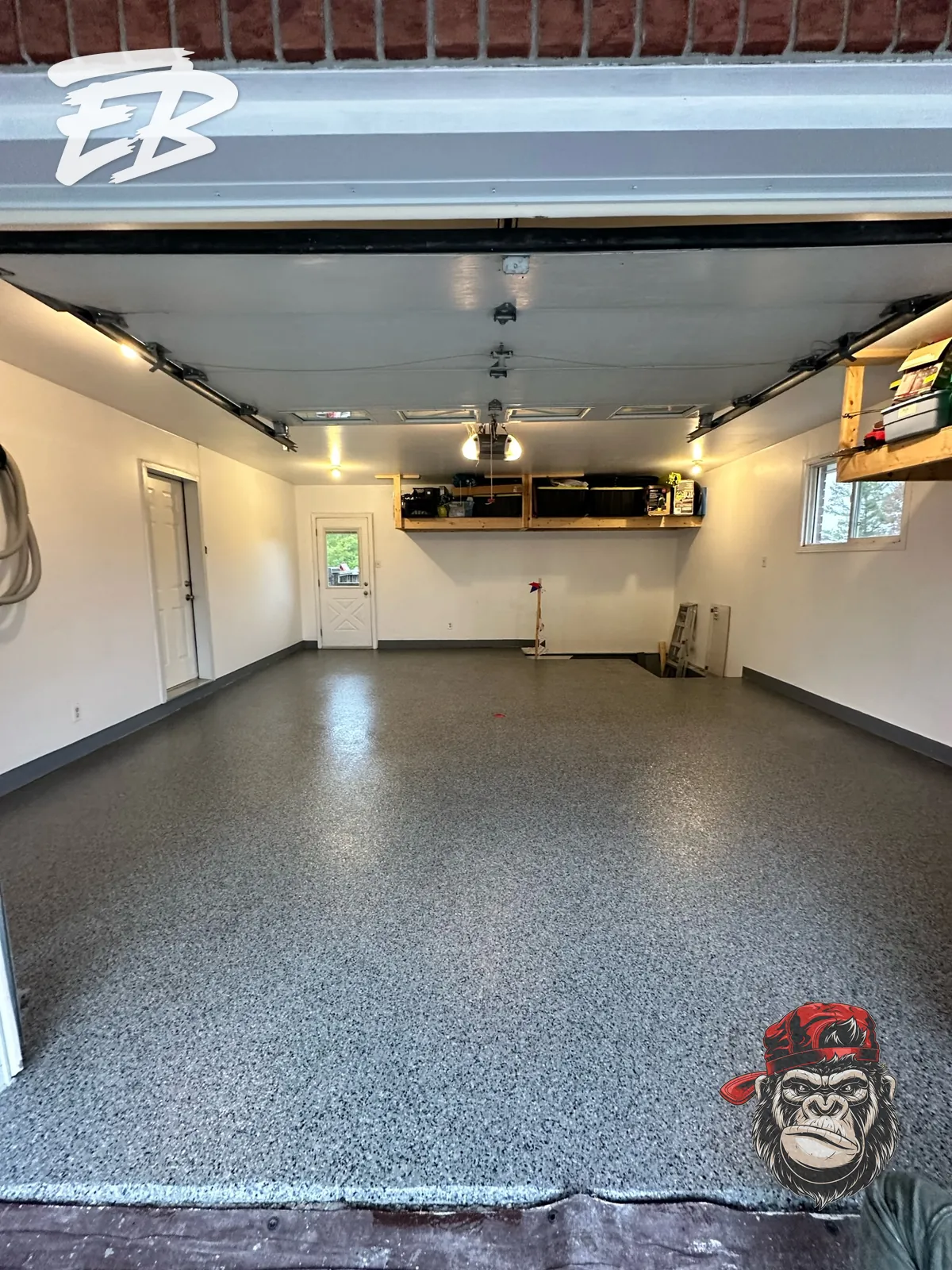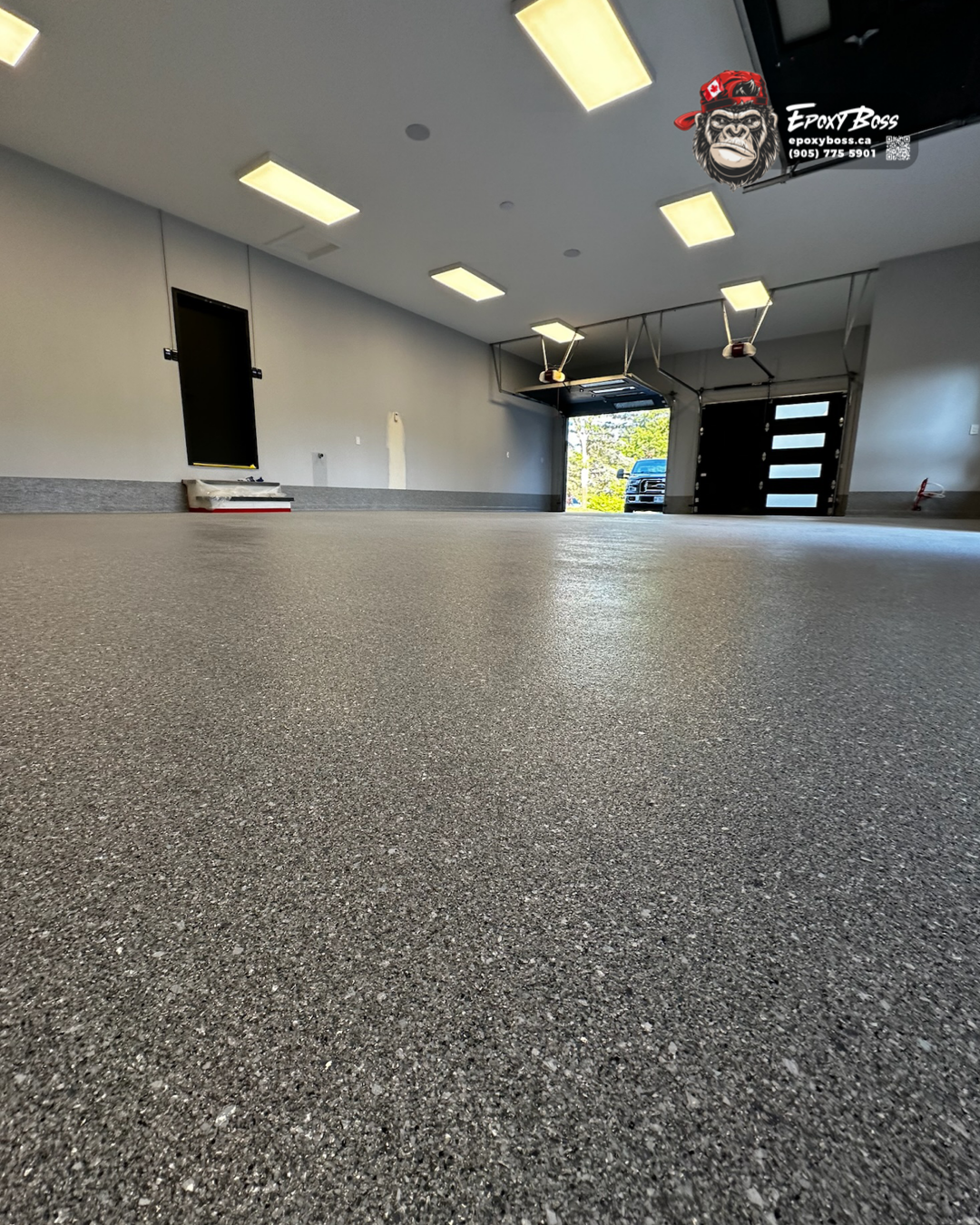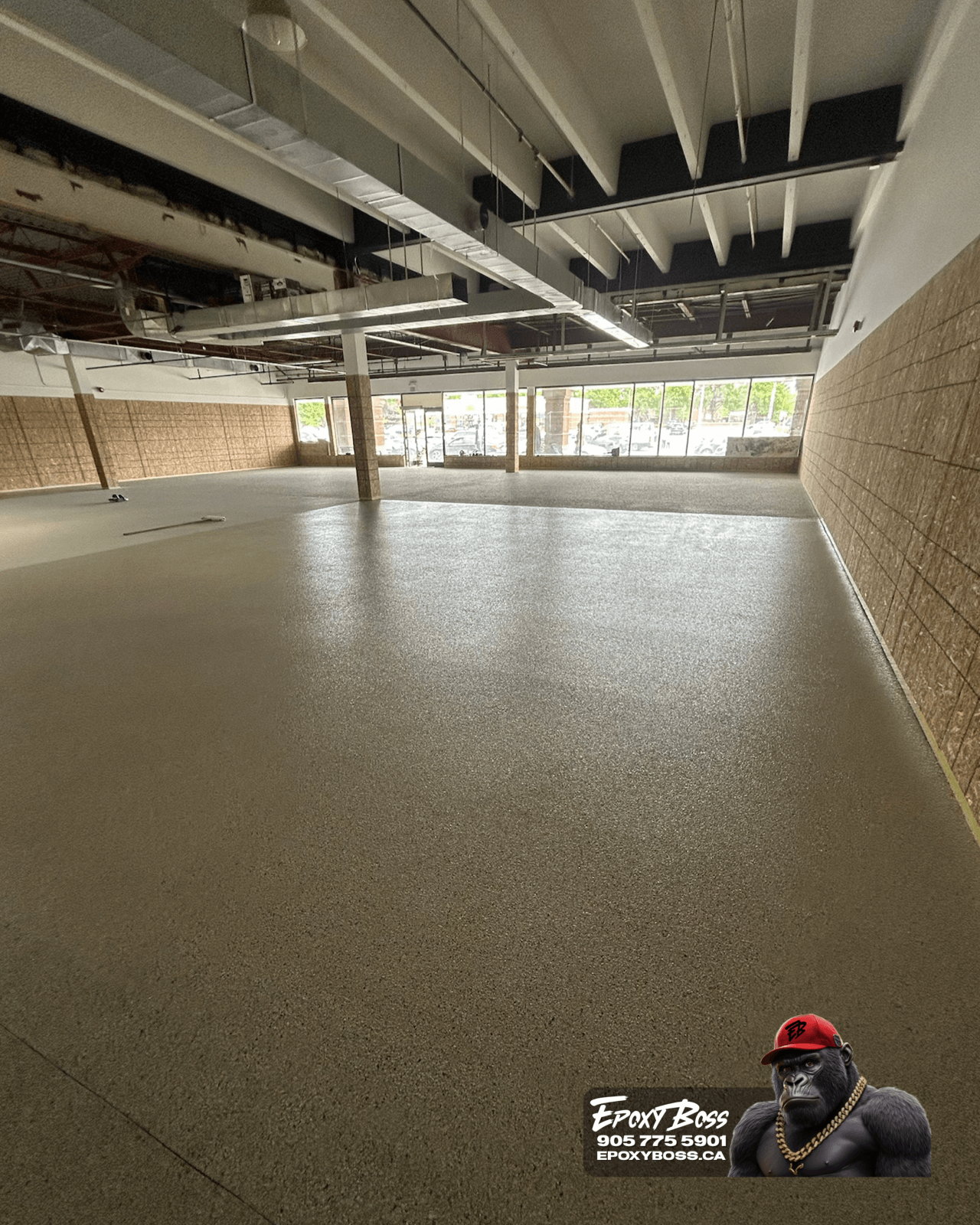

Before a basement floor is coated with epoxy or another resin, the slab's moisture should be measured, because moisture vapour moving up through concrete is the most common reason basement coatings blister or peel. The two widely used tests are in-situ relative humidity probes (ASTM F2170) and the calcium chloride vapour emission test (ASTM F1869). If the results exceed the coating manufacturer's limit, a moisture-mitigating primer can be specified where the manufacturer supports it; active leaks and water under pressure must be solved first, because no coating is a substitute for drainage or waterproofing.
This guide explains how basement moisture affects floor coatings, how testing works, what primers do and which coating systems suit Ontario basements.
Why basements are different from garages
A basement slab sits directly on the ground, below the surrounding grade, where the soil beneath it stays damp for much of the year. Older homes in particular may not have an effective vapour barrier under the slab. Moisture can therefore move upward as vapour even when the floor looks and feels dry. A carpet or open concrete lets that vapour escape. A sealed resin film can trap it, and if the vapour pressure is high enough, the coating can blister or lose bond.
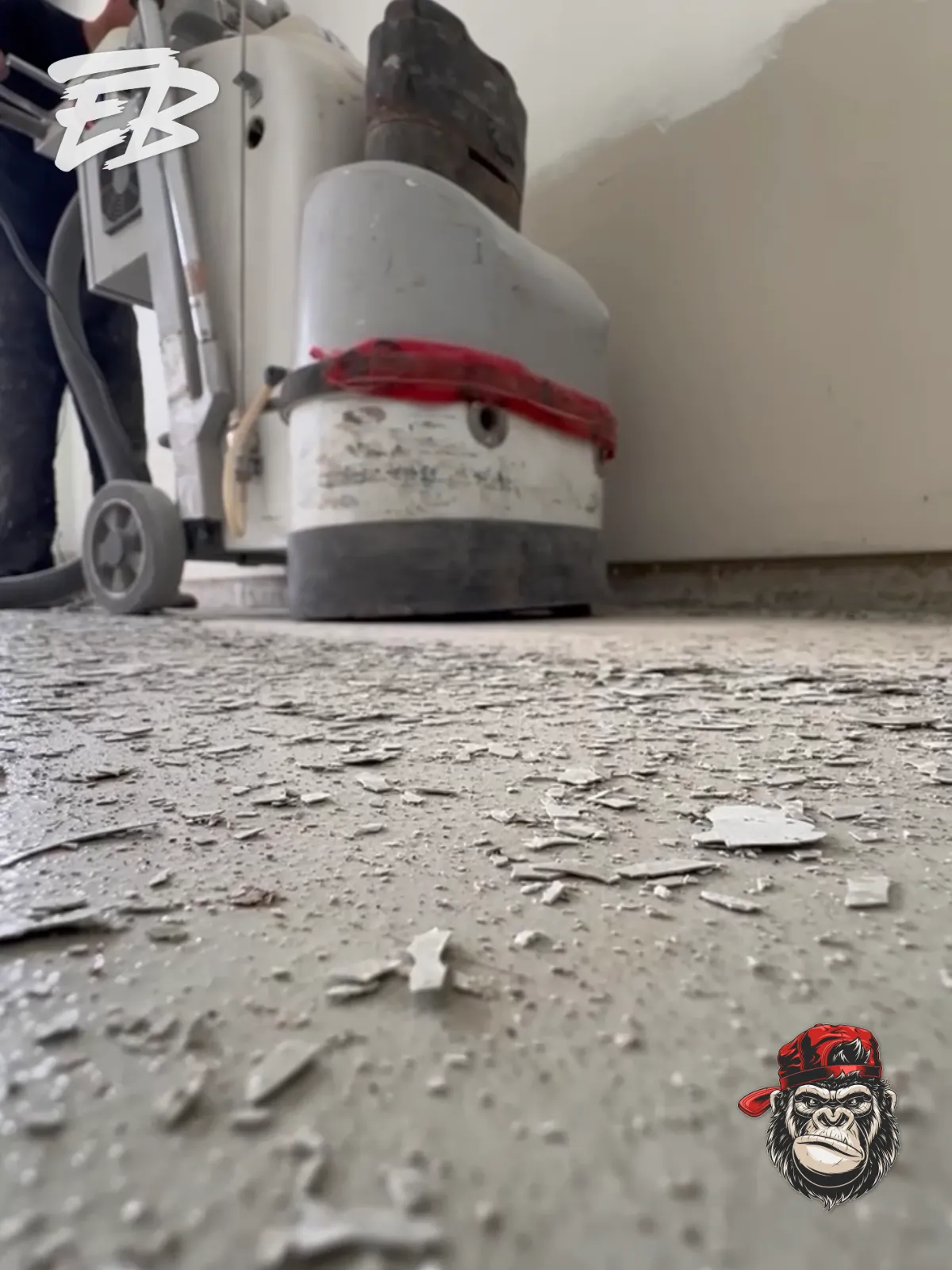
Basements also often have previous paint, glue from carpet or tile, levelling patches and cracks. All of these affect preparation. See our concrete surface preparation guide.
Signs of moisture in a basement slab
- White, powdery efflorescence on the concrete.
- Dark, damp areas, especially along walls or cracks.
- Musty odours or mould on stored items.
- Old paint or coatings peeling or bubbling.
- Tile or vinyl flooring that has lifted or has damp adhesive.
None of these replaces a test, and their absence does not prove the slab is dry.
How slab moisture is tested
In-situ relative humidity (ASTM F2170)
Holes are drilled to a set depth in the slab, sleeves and probes are installed, and the relative humidity inside the concrete is read after an equilibration period. The method is set out in ASTM F2170. Many flooring manufacturers state their limits in terms of this test.
Calcium chloride (ASTM F1869)
A dish of calcium chloride is sealed under a dome on a prepared area of the slab for a set time, and the weight gain is used to calculate a moisture vapour emission rate. The method is described in ASTM F1869.
Quick indicators
A taped plastic sheet left on the slab can show condensation or darkening, but it is a rough indicator rather than a measurement. Surface moisture meters also give relative readings only.
Test conditions matter: the basement should be at normal living temperature and humidity, and tests are placed in representative locations. The coating manufacturer's data sheet tells you which test it uses and the acceptable limit.
What to do if moisture is high
Moisture-mitigating primers
Several manufacturers make epoxy primers designed to be applied to damp or higher-moisture slabs and to reduce vapour transmission into the coating above. They are used within the limits the manufacturer publishes, over properly ground concrete. See our moisture and substrate systems page and the moisture membrane materials page.
Fix water problems first
If water is entering through cracks, along the wall-floor joint or through the slab under pressure, that is a drainage, grading or waterproofing issue. It needs to be resolved before coating. See waterproofing systems.
Consider a breathable finish
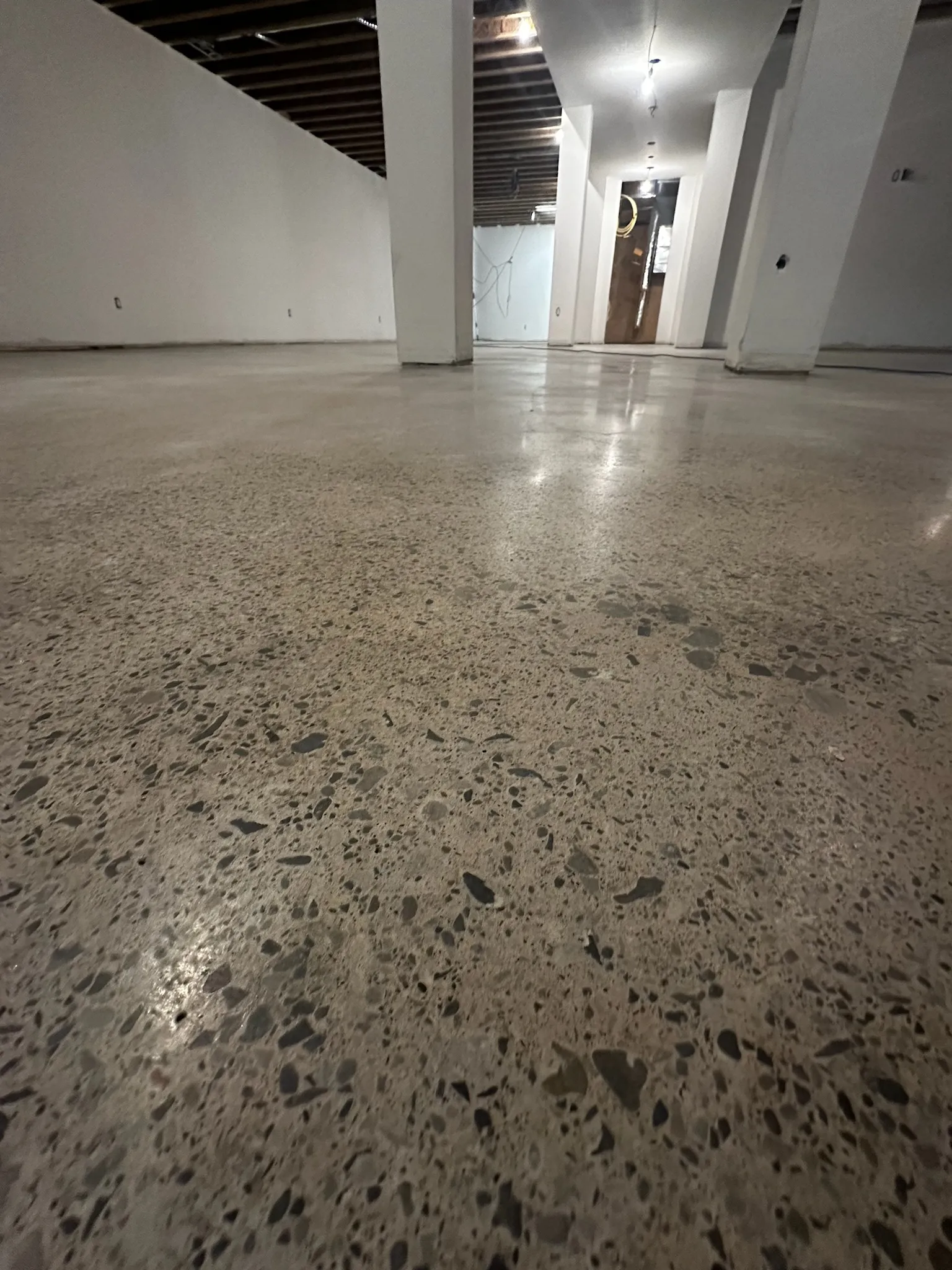
Where moisture is moderate and you like the look of concrete, polished or ground-and-sealed concrete can be an alternative because it does not put a film on the slab. Compare in polished concrete vs epoxy.
Cracks, radon and the slab
Cracks in a basement slab are repaired as part of preparation; see crack repair before coating. Homeowners sometimes ask whether sealing a basement floor helps with radon. Health Canada's Radon Reduction Guide for Canadians notes that sealing openings may help lower levels, but it recommends testing and proper mitigation. A floor coating should not be treated as a radon solution.
Which coating systems suit basements
- Solid colour epoxy: clean, bright and easy to clean for rec rooms, storage, laundry and gyms. See solid colour epoxy flooring.
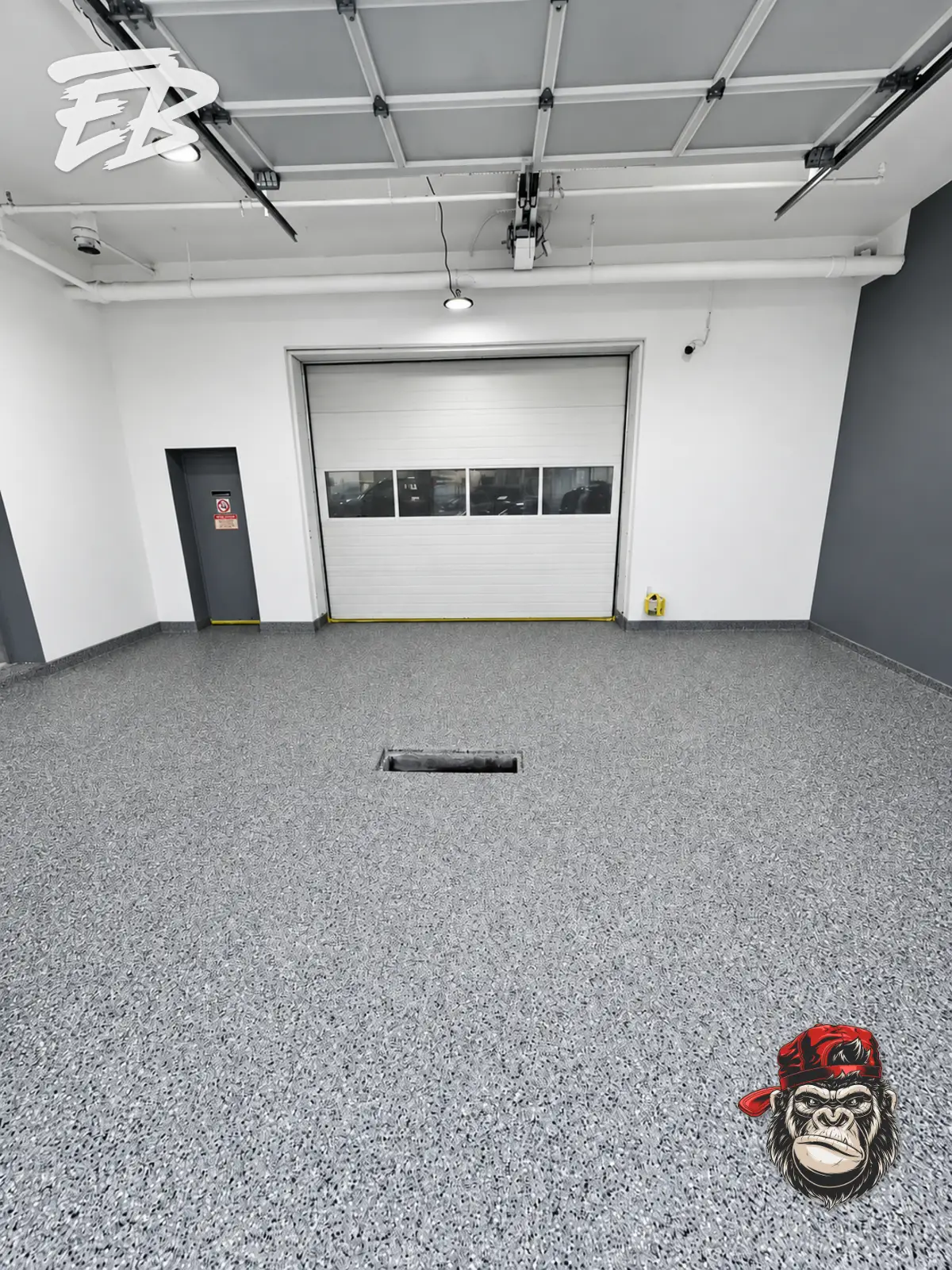
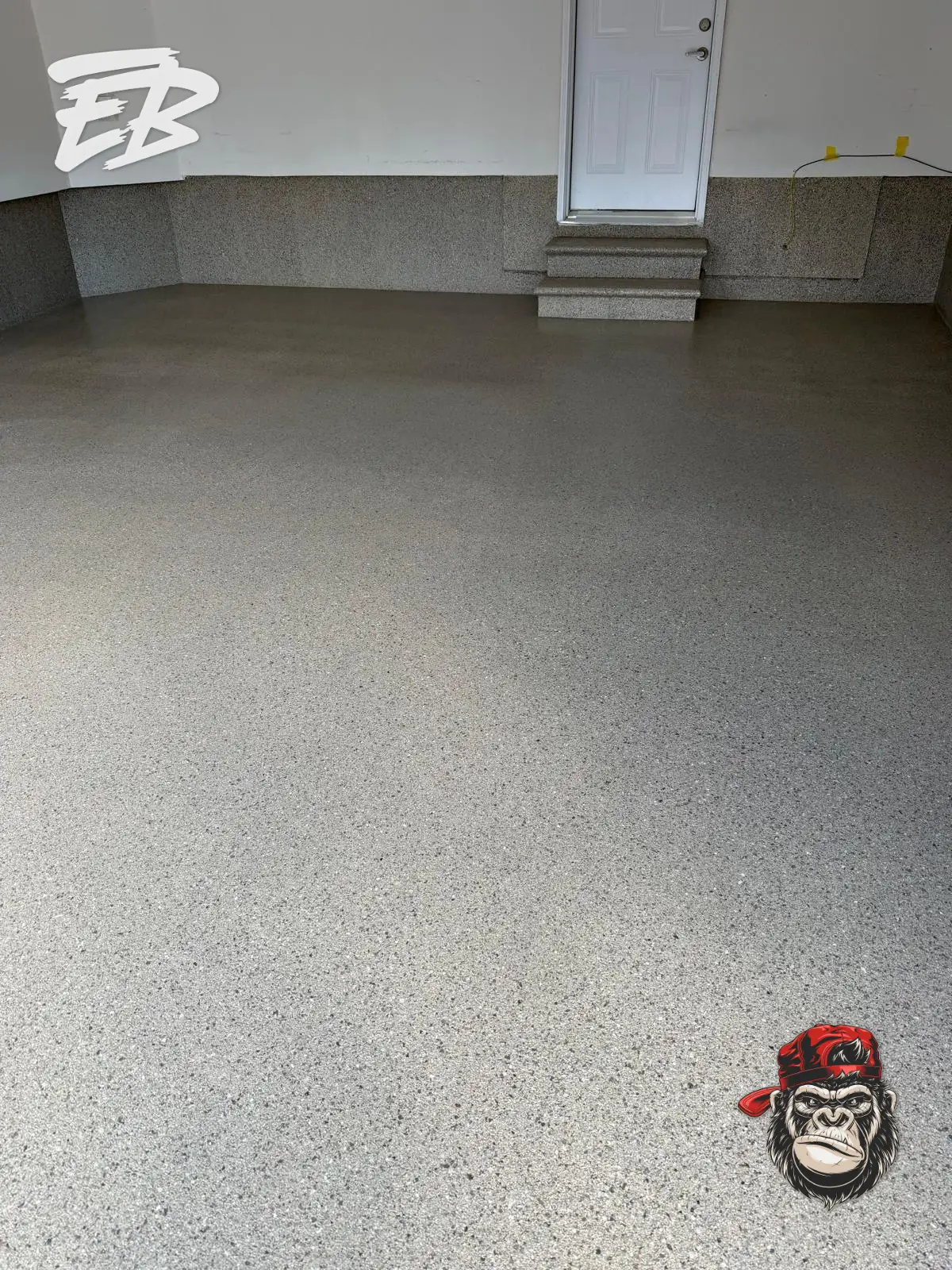
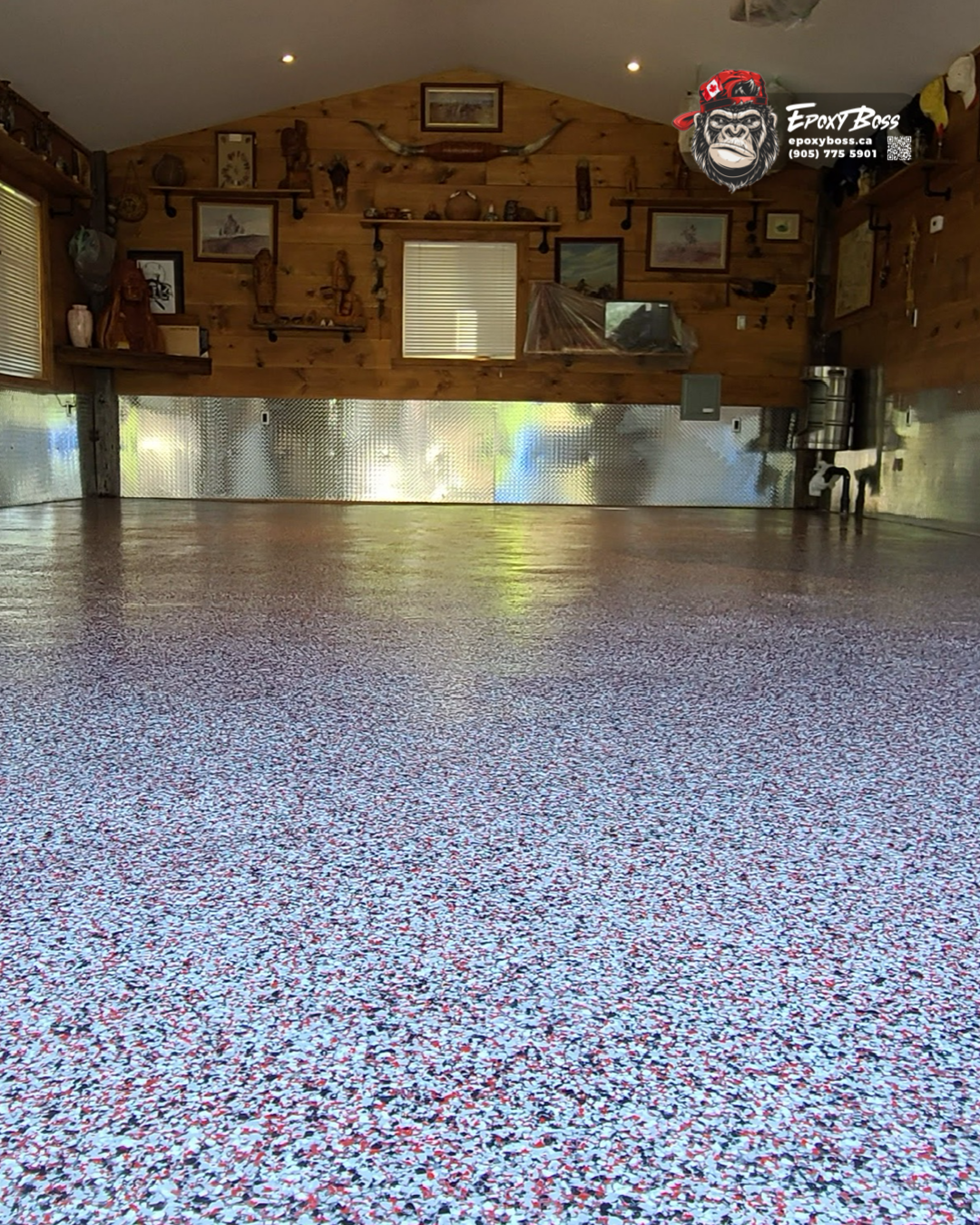
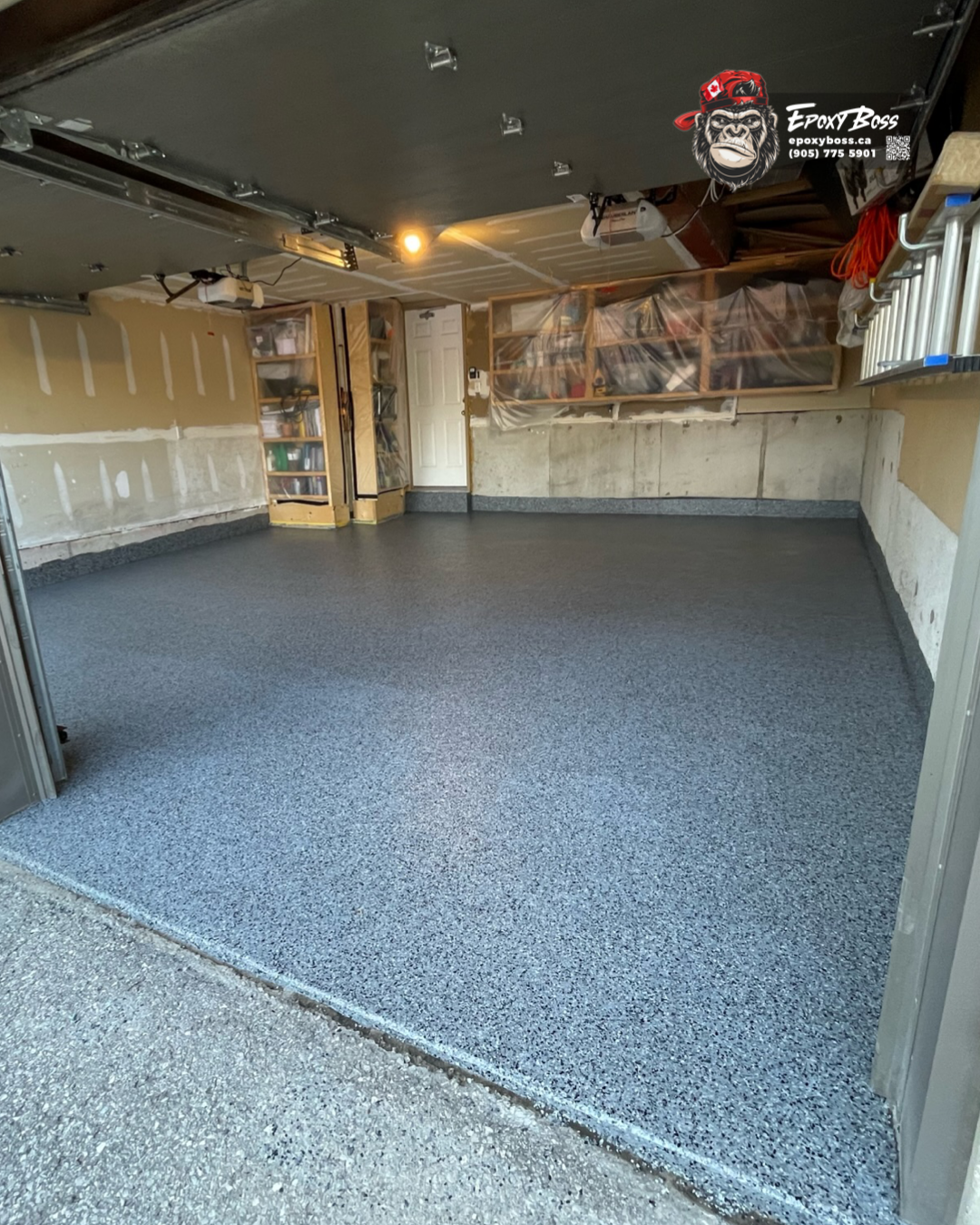
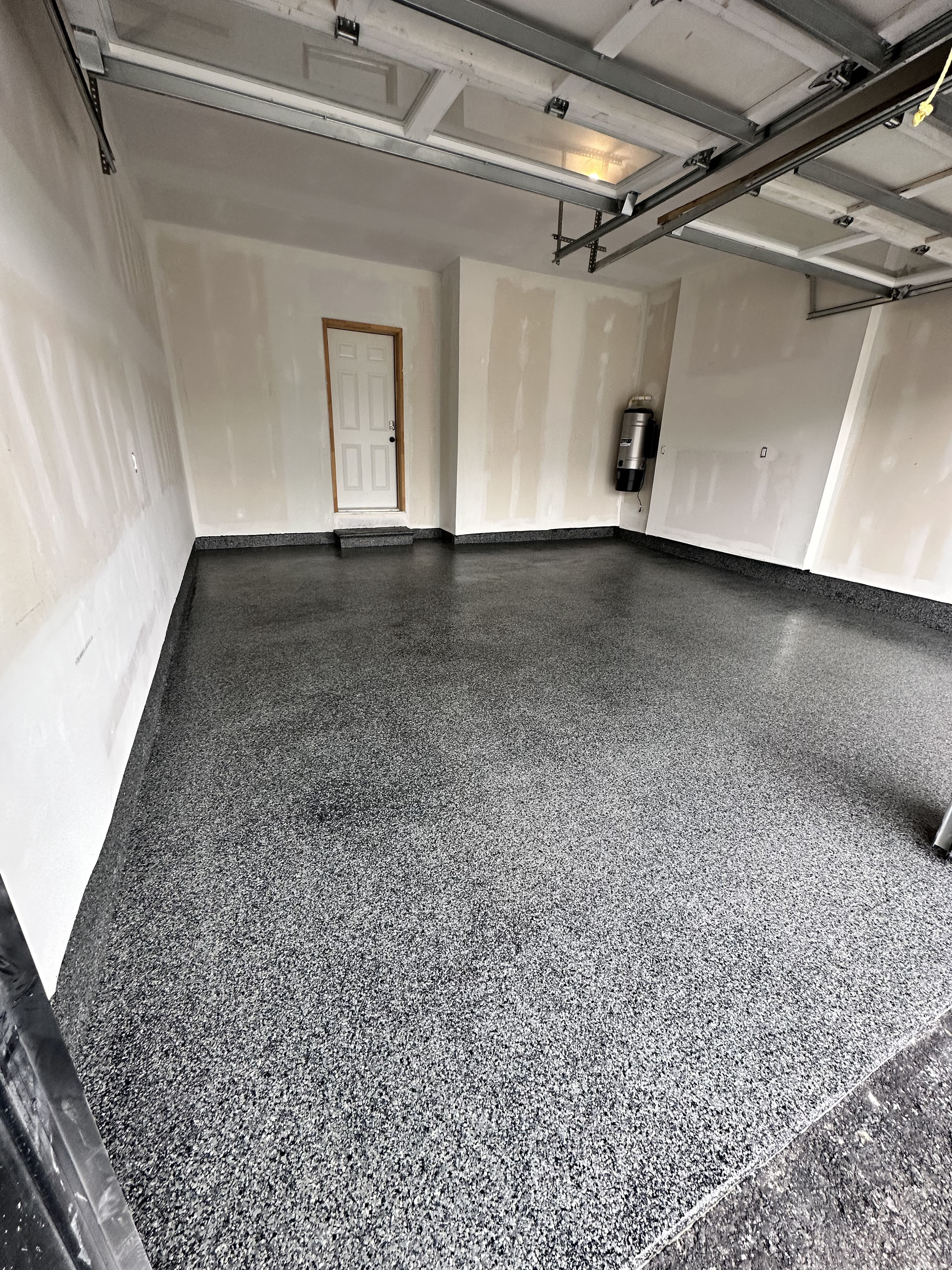
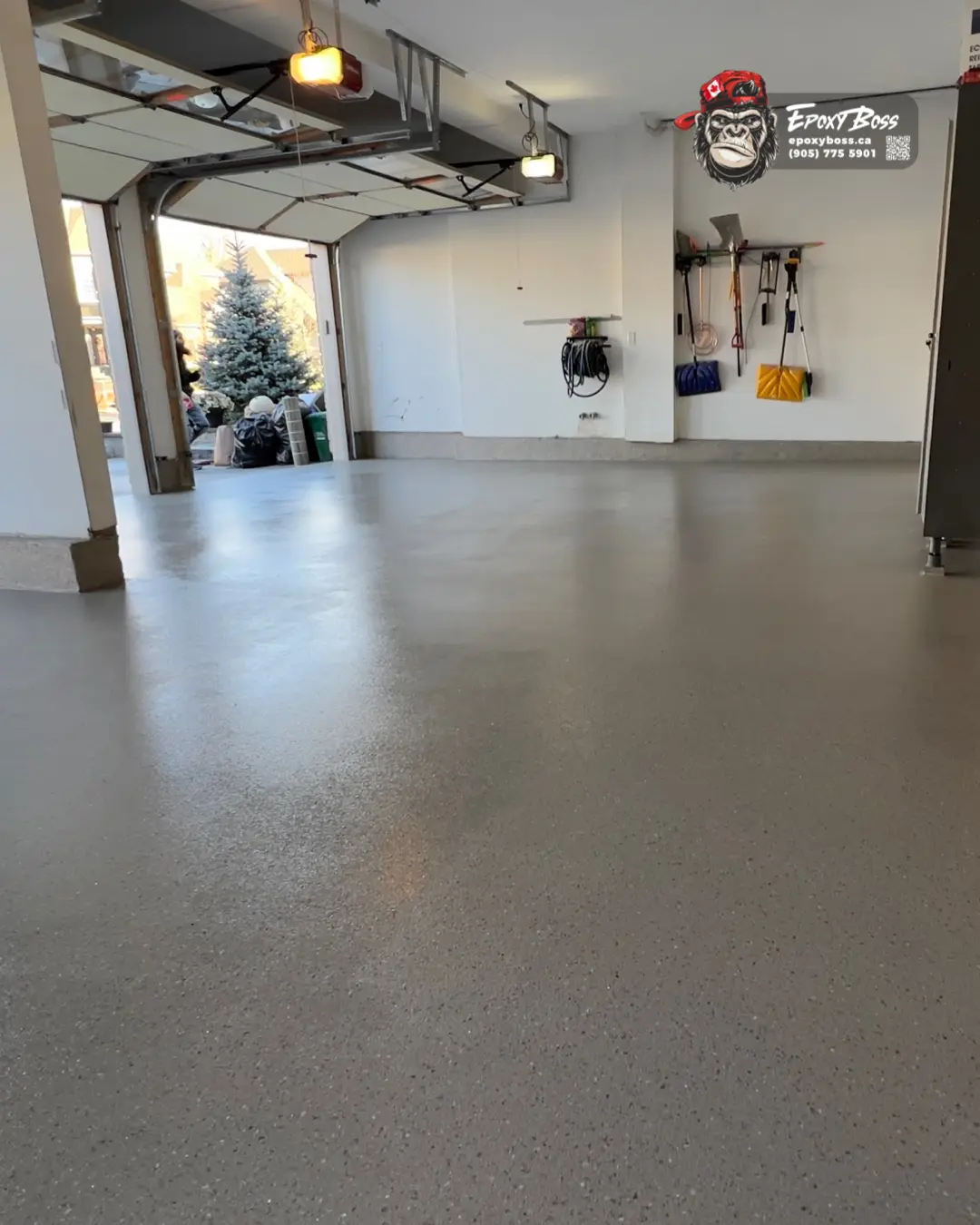
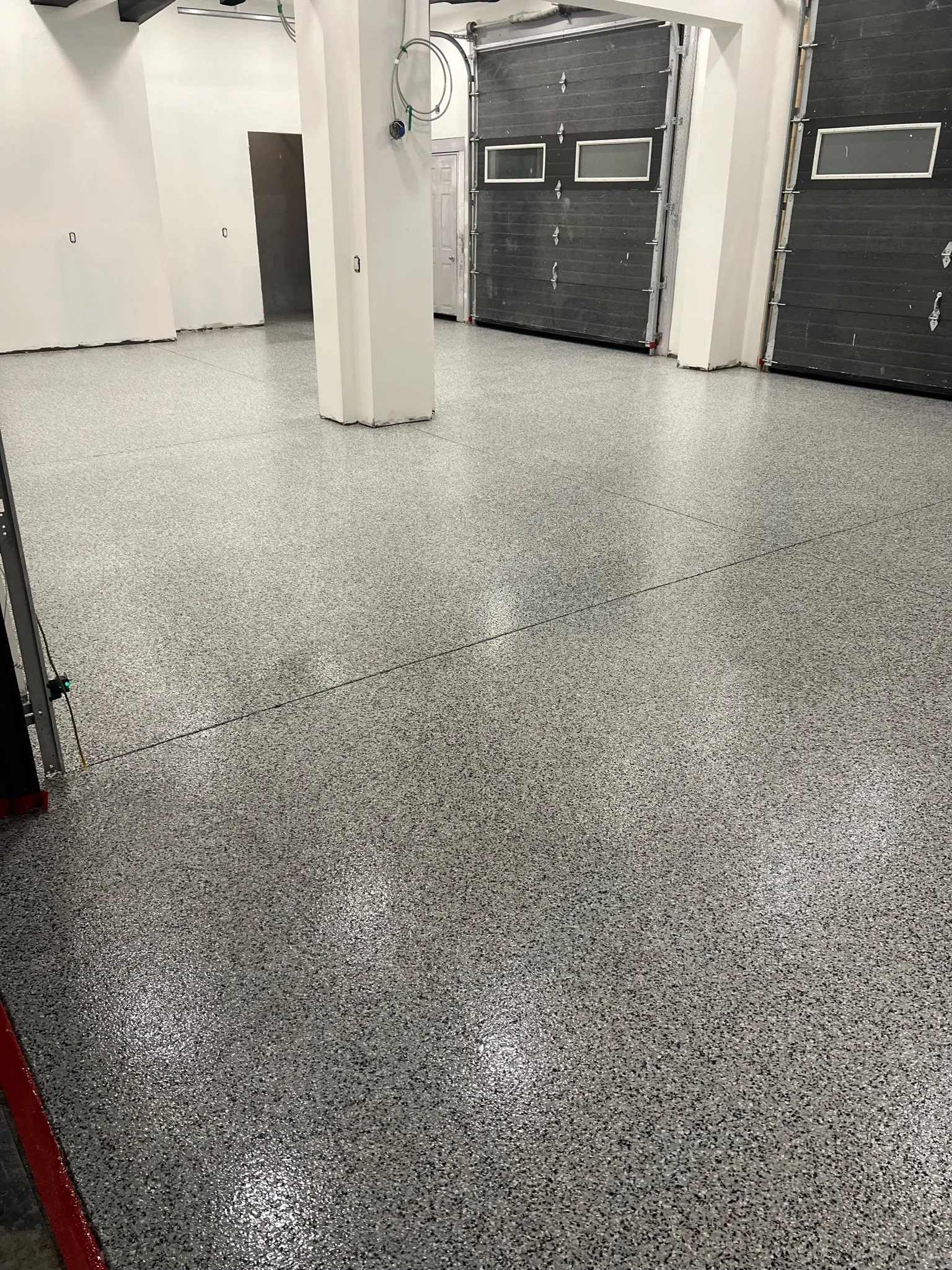
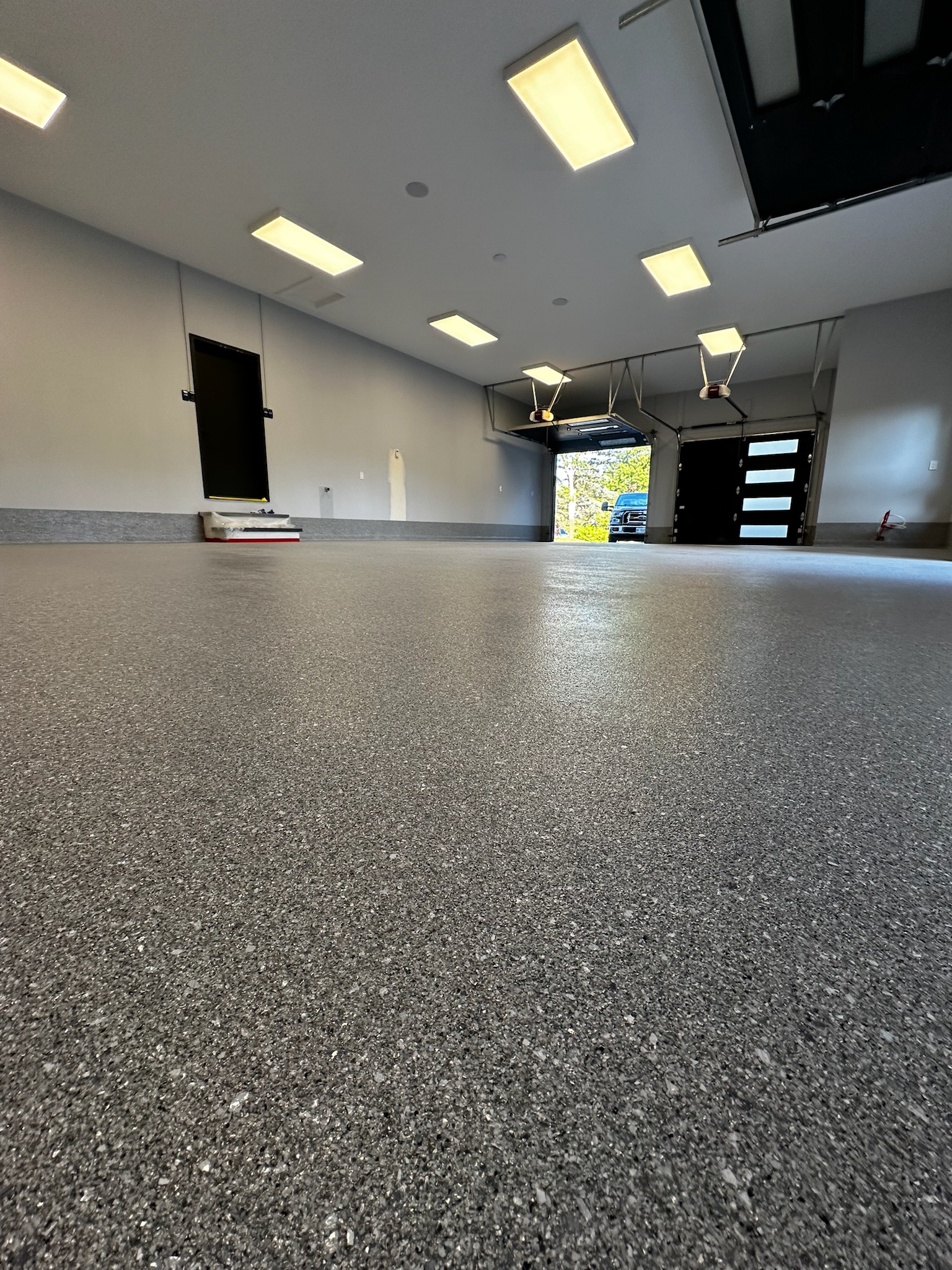
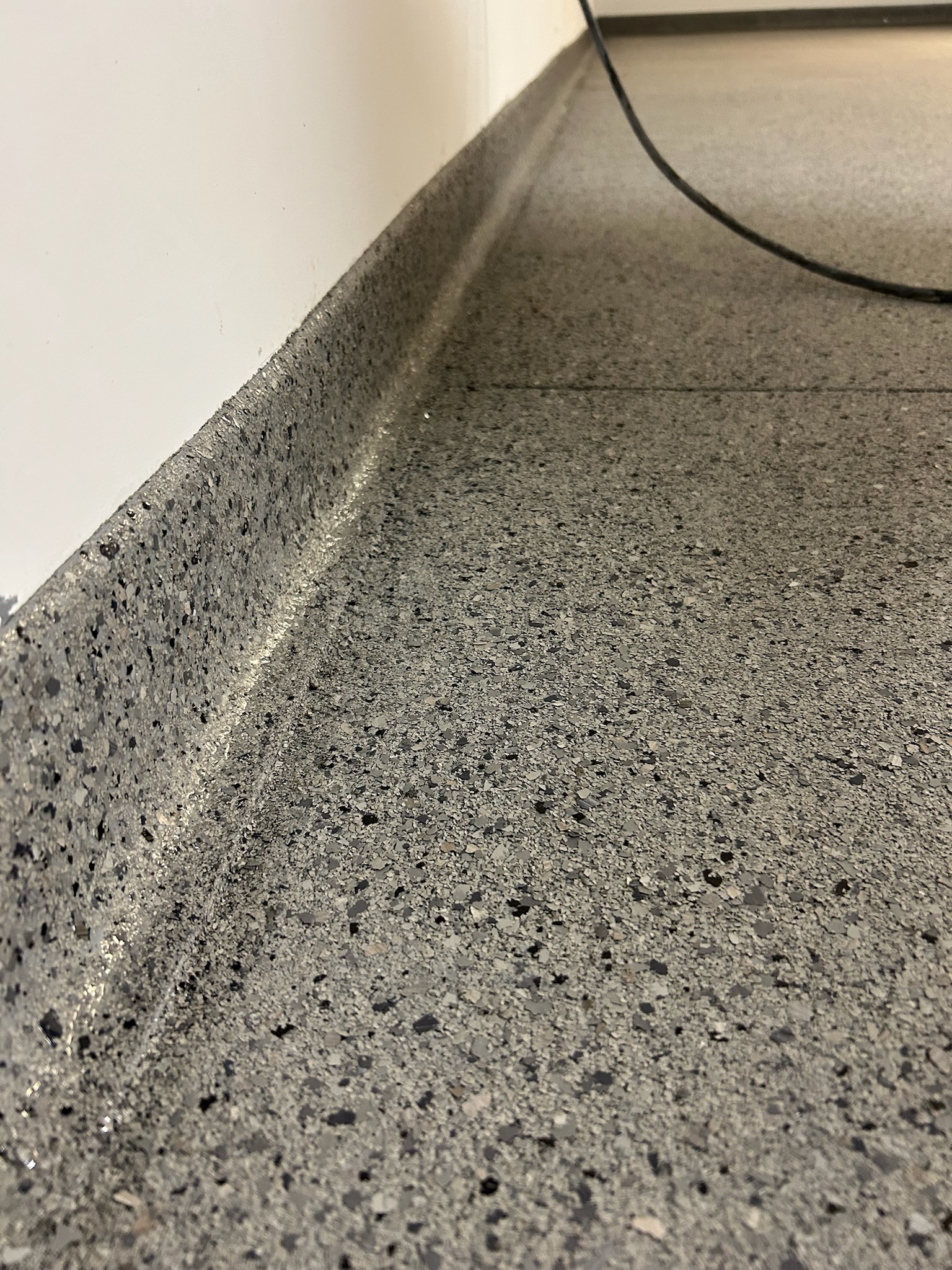
- Flake systems: textured and forgiving, good for workshops, mudrooms and busy family spaces. See the flake system.
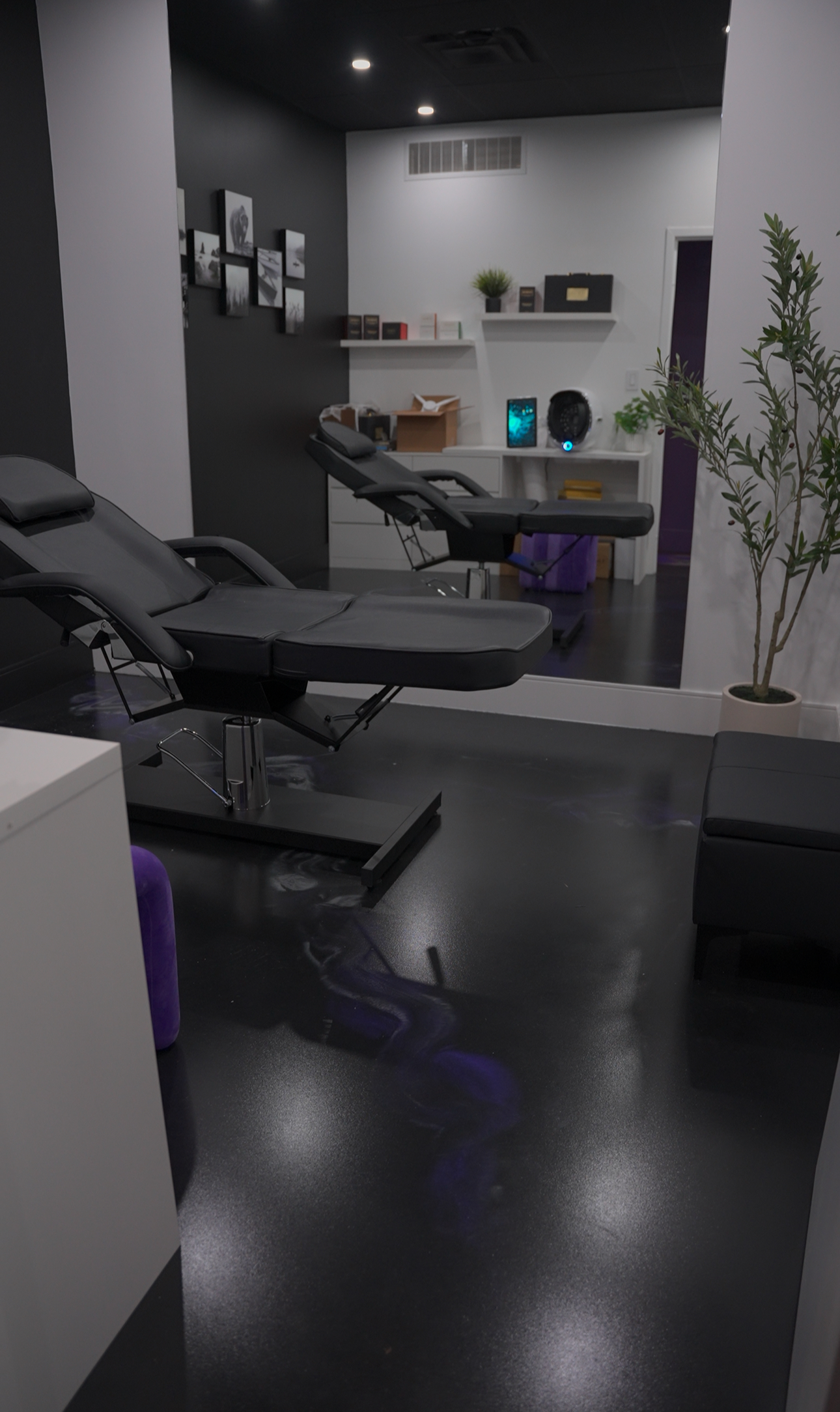
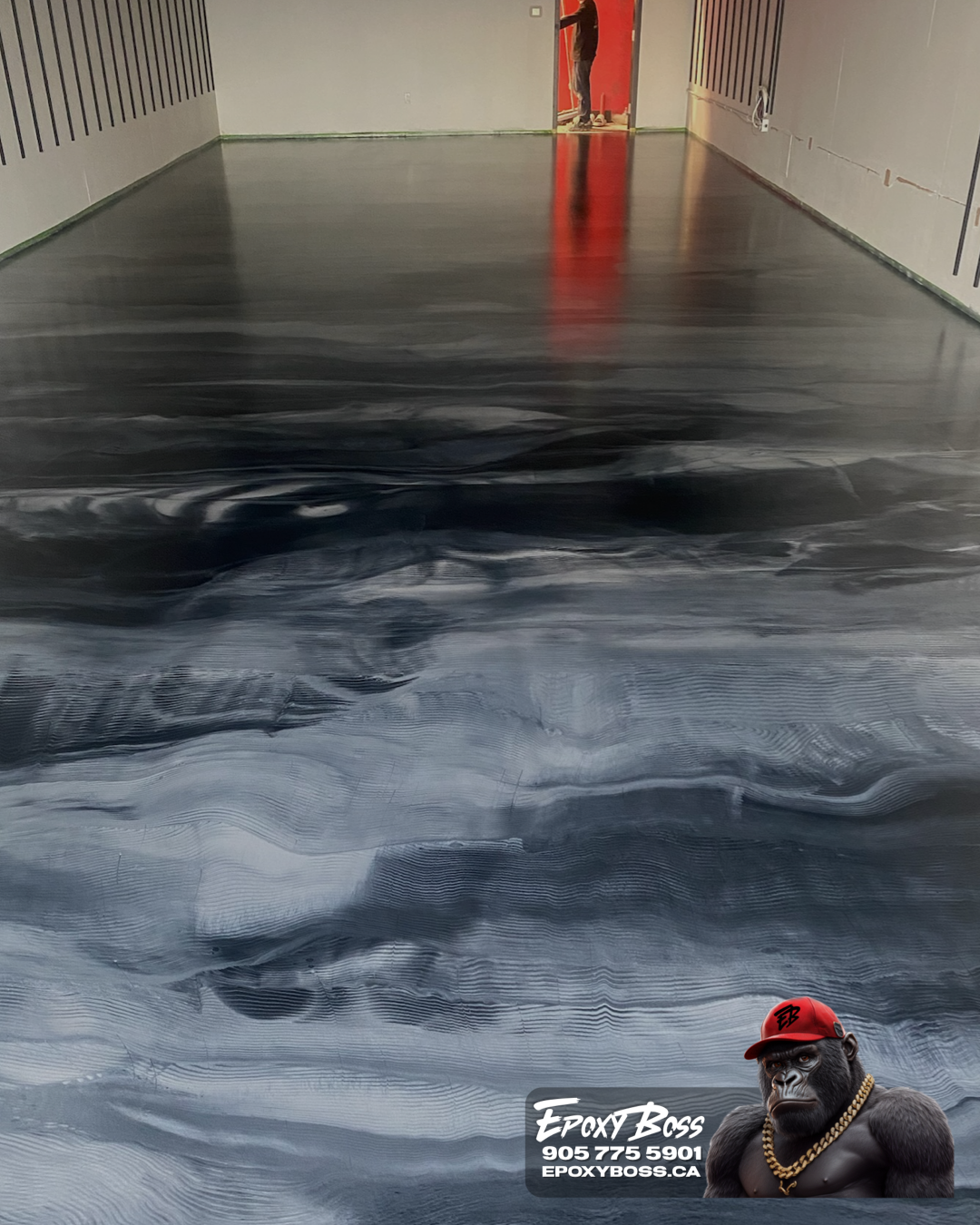
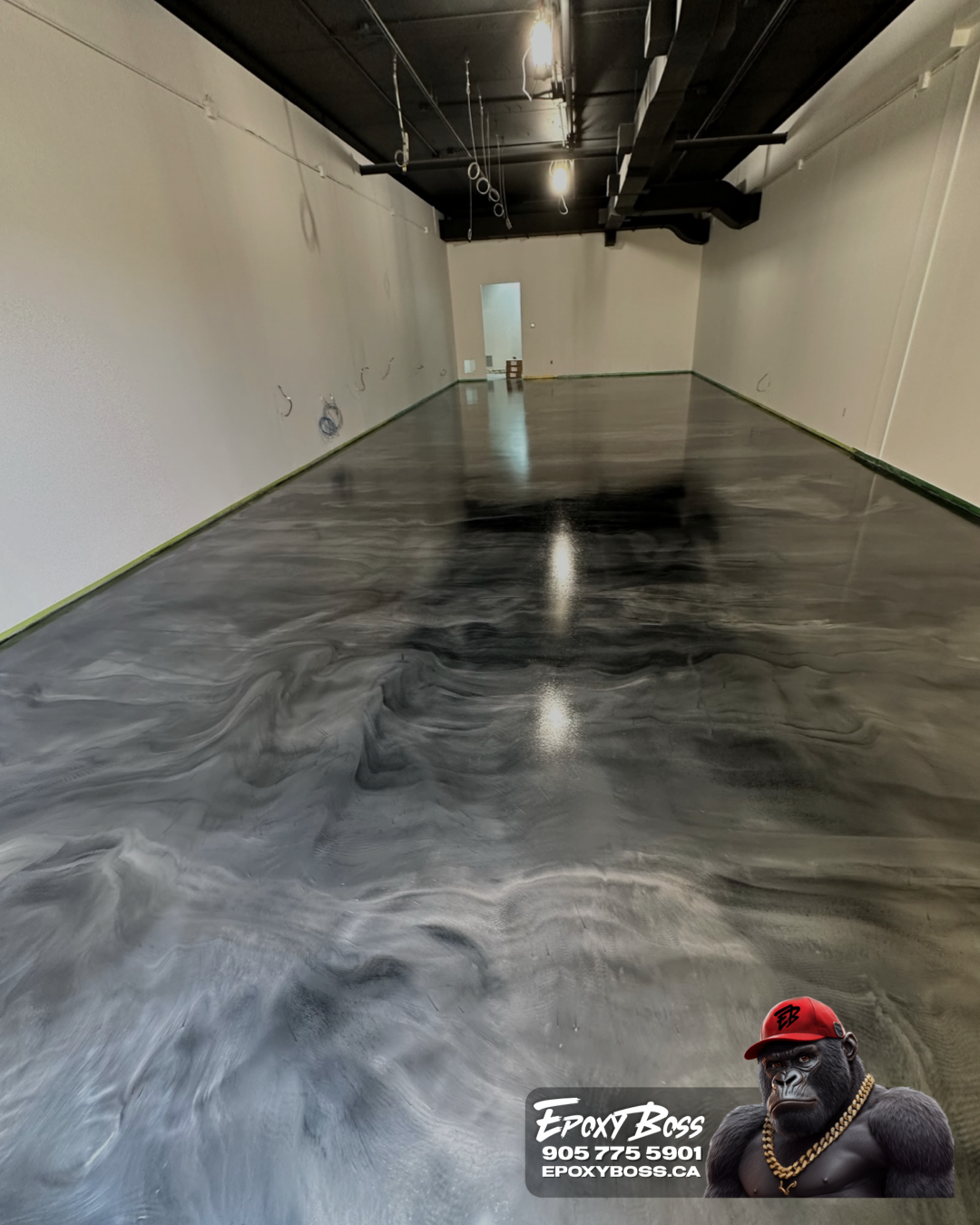
- Metallic epoxy: a decorative feature floor over a dry slab. See metallic epoxy floors.
For a room-by-room view, read where epoxy floors work inside a house, and see our basement and indoor coatings page.
A basement coating project, step by step
- Walk-through: we look at the slab, walls, drains, stairs, transitions to other flooring and any signs of water.
- Moisture testing: tests are placed and read according to the chosen method, with the basement at normal living conditions.
- System choice: based on the readings, the room's use and the look you want, we confirm the primer, body coat and finish.
- Preparation: old paint, glue and sealers are removed and the slab is diamond ground with dust extraction; living areas are sealed off.
- Repairs: cracks, pits and low spots are filled and ground flush.
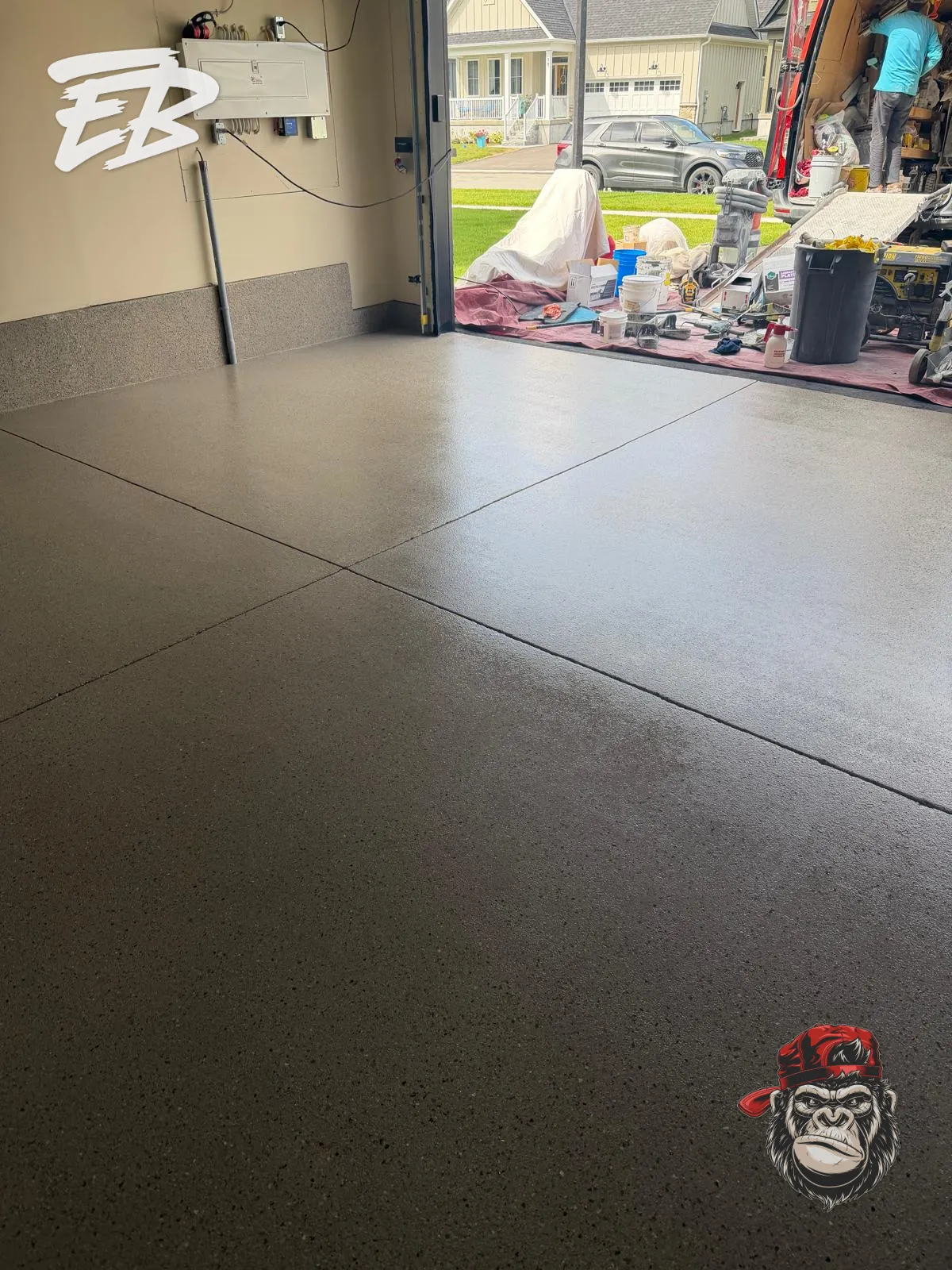
- Coating: primer (moisture-mitigating if needed), base and decorative layers, then topcoat, each within its recoat window.
- Cure and handover: we confirm when you can walk on the floor and when furniture can go back, and go over care instructions.
Planning tips
- Book the assessment before framing or finishing walls if possible; coating first makes edges cleaner.
- Plan ventilation and keep living areas closed off during installation.
- Allow cure time before moving furniture back.
- Keep the basement heated during cooler months so the slab and air stay within product limits.
Frequently asked questions
Can you epoxy a basement floor that gets damp?
Sometimes, with testing and a suitable moisture-mitigating primer, within the manufacturer's limits. Active water must be fixed first.
Do I need a moisture test for a newer home?
It is still recommended. Newer slabs can hold construction moisture for a long time.
What happens if moisture is ignored?
The coating may blister, bubble or peel, often within months. Removing a failed coating adds cost and time.
Is the coating covered by warranty?
Qualifying indoor residential systems carry a 5-year limited workmanship warranty, subject to its stated conditions and exclusions.
Book a free floor assessment
Epoxy Boss is based in Innisfil, has worked since 2019 and coats basement floors across the GTA, York Region, Simcoe County, Halton, Durham and Muskoka. Call (905) 775-5901 or request a free floor assessment for a written quote in Canadian dollars.