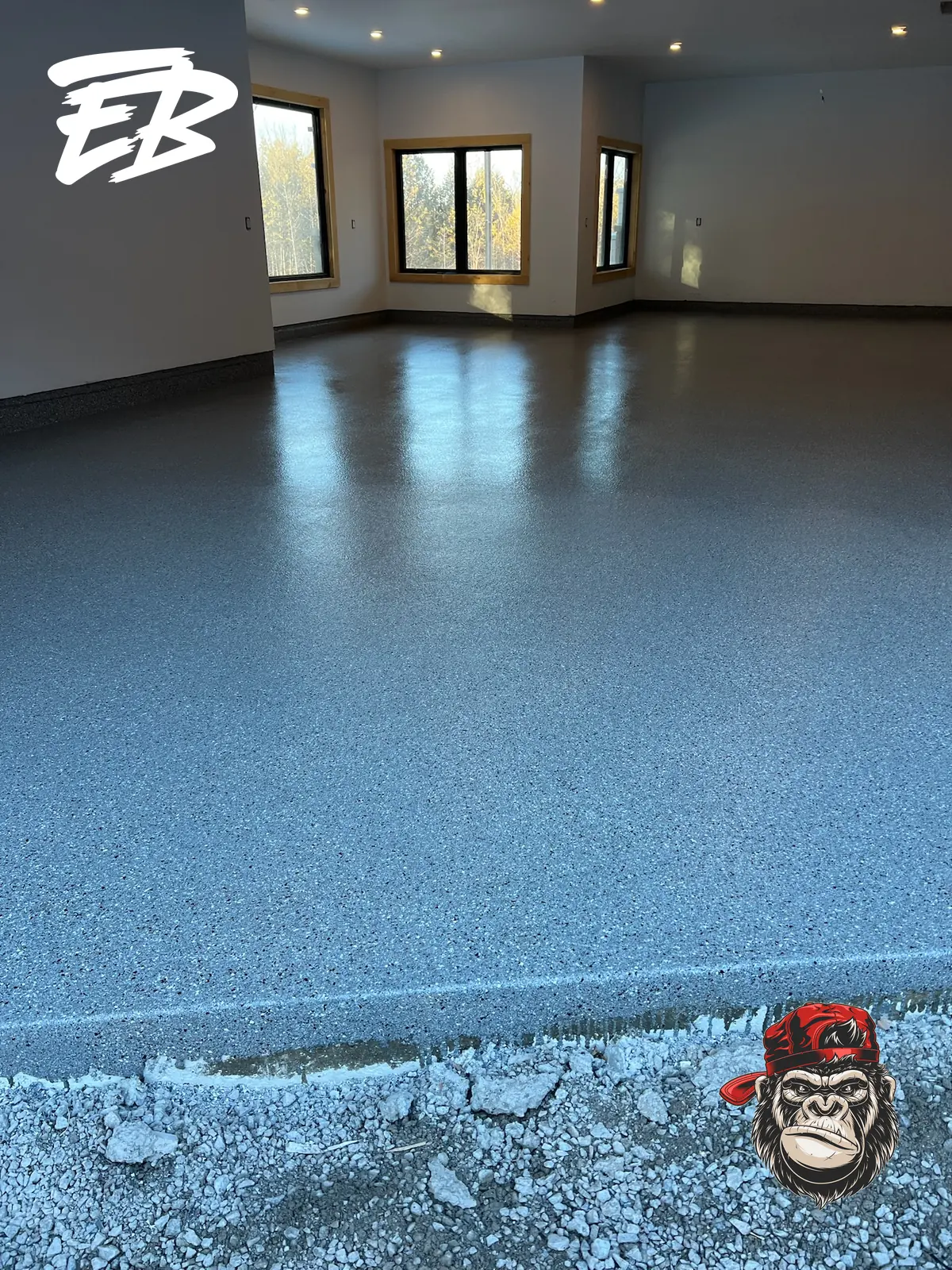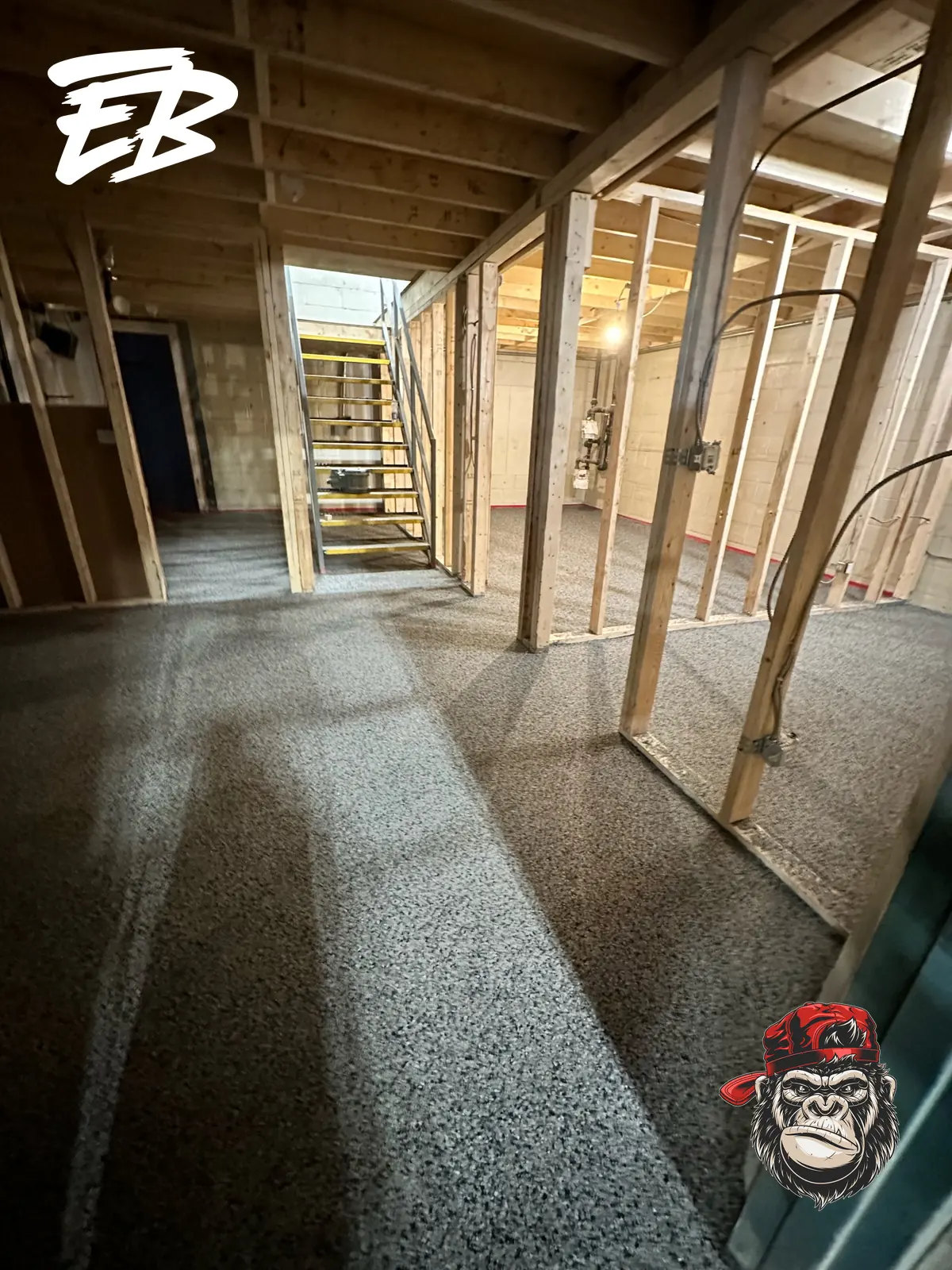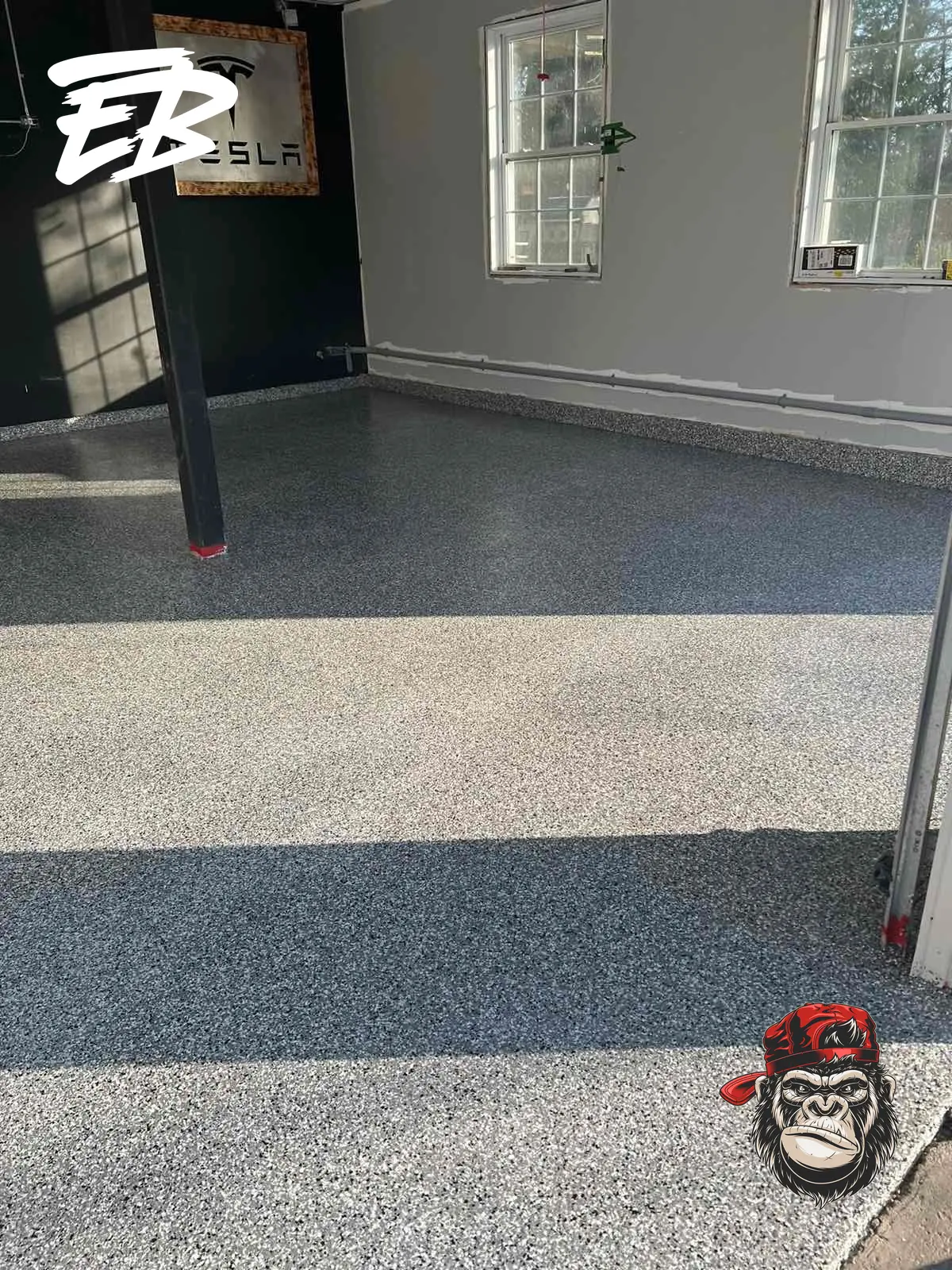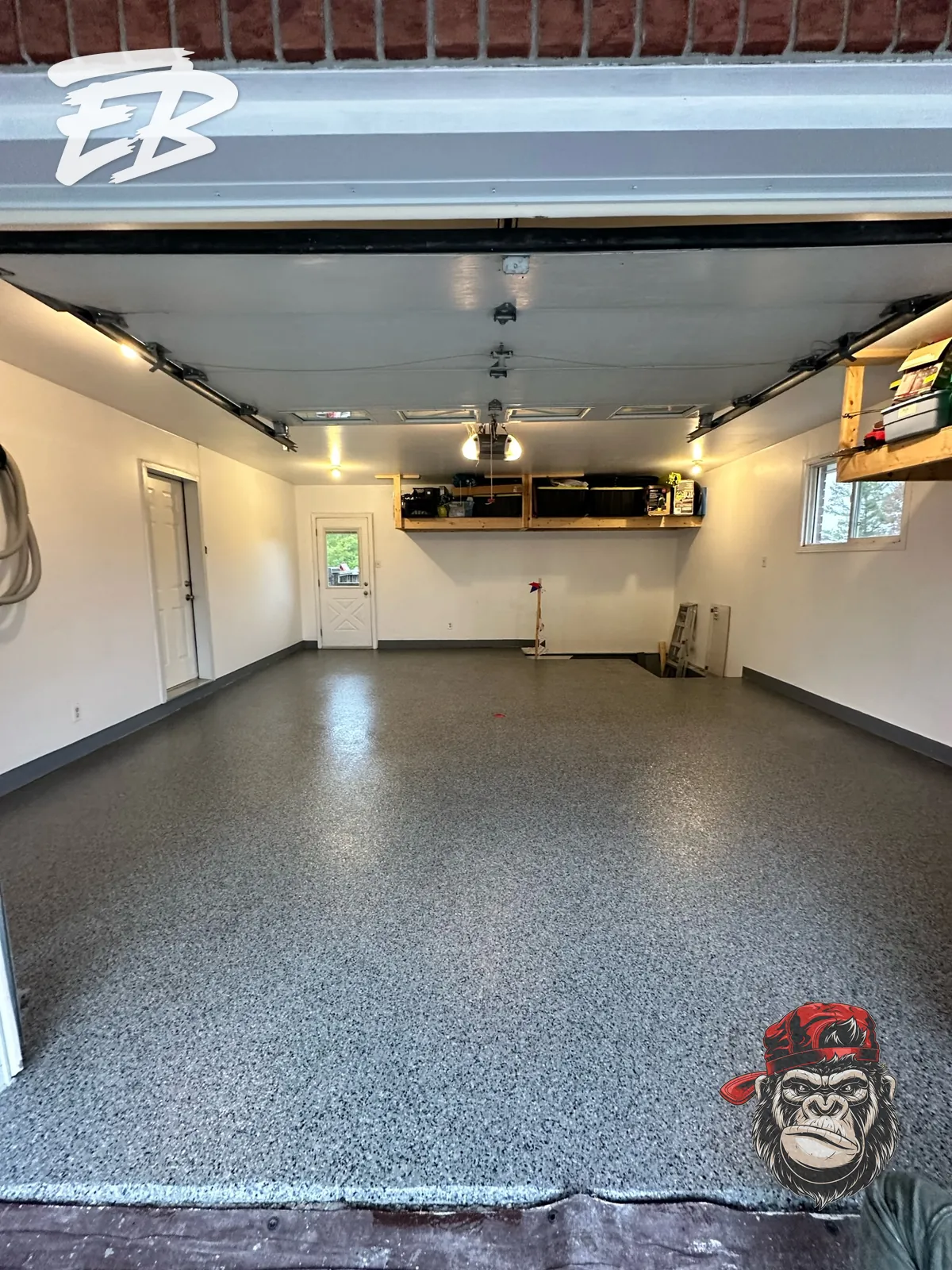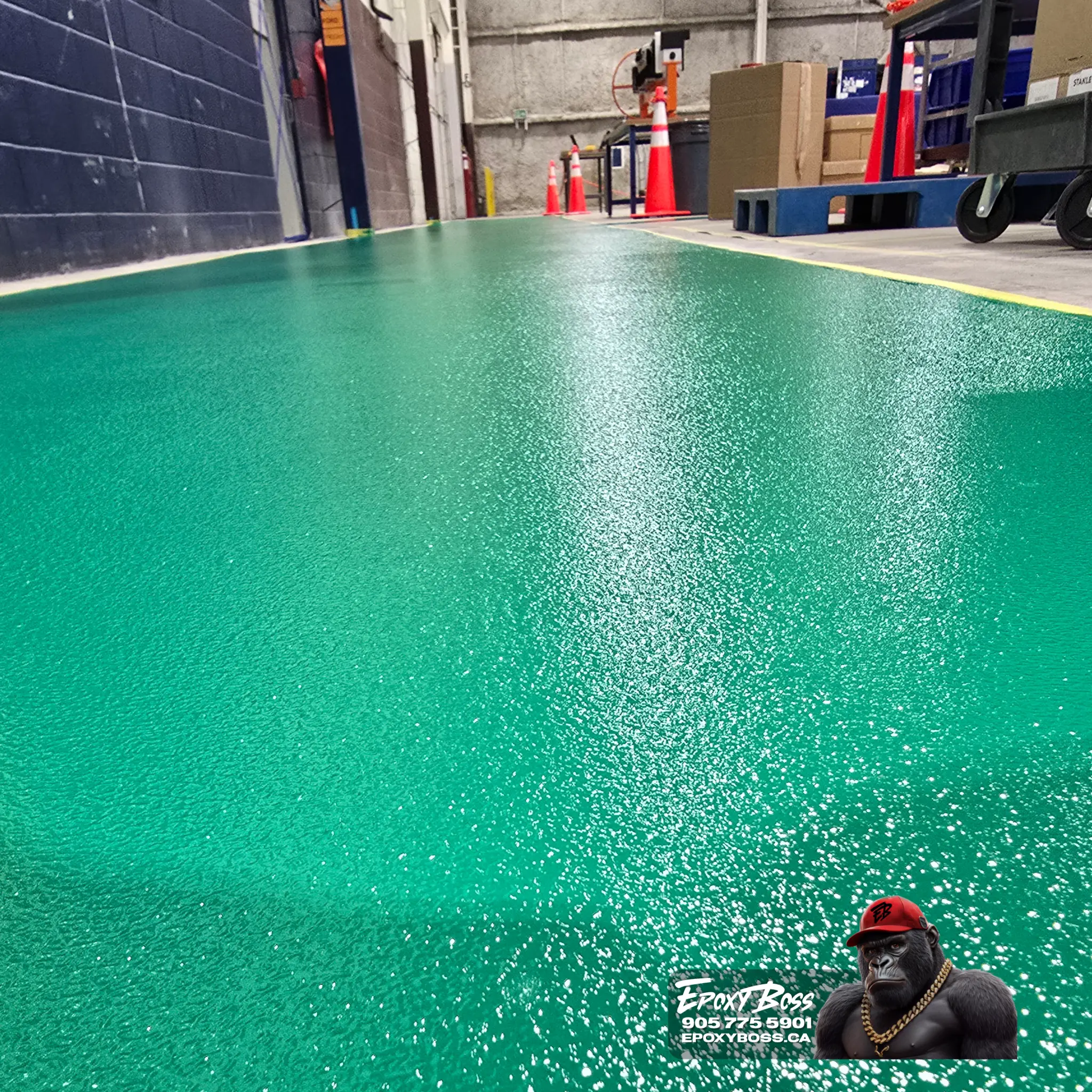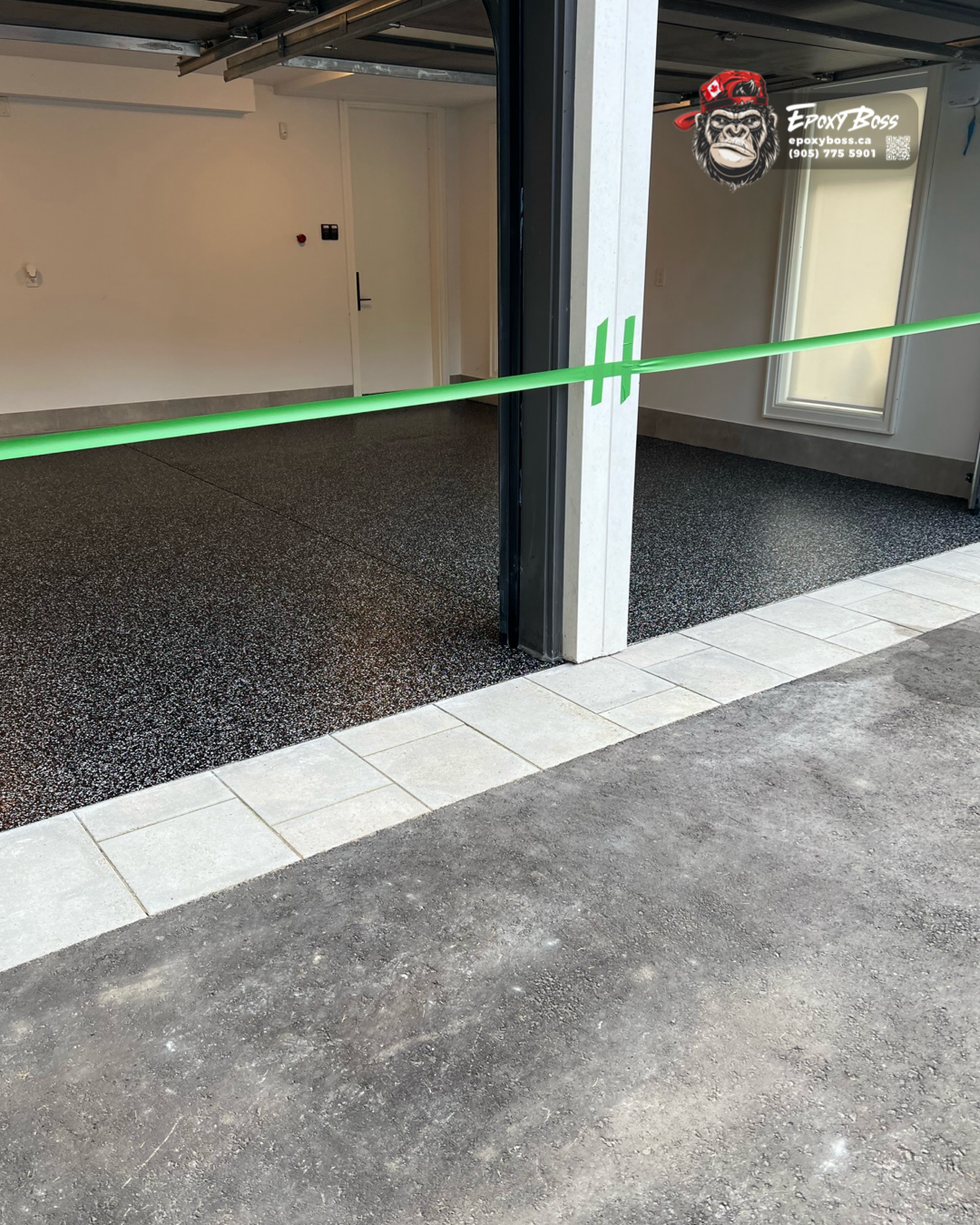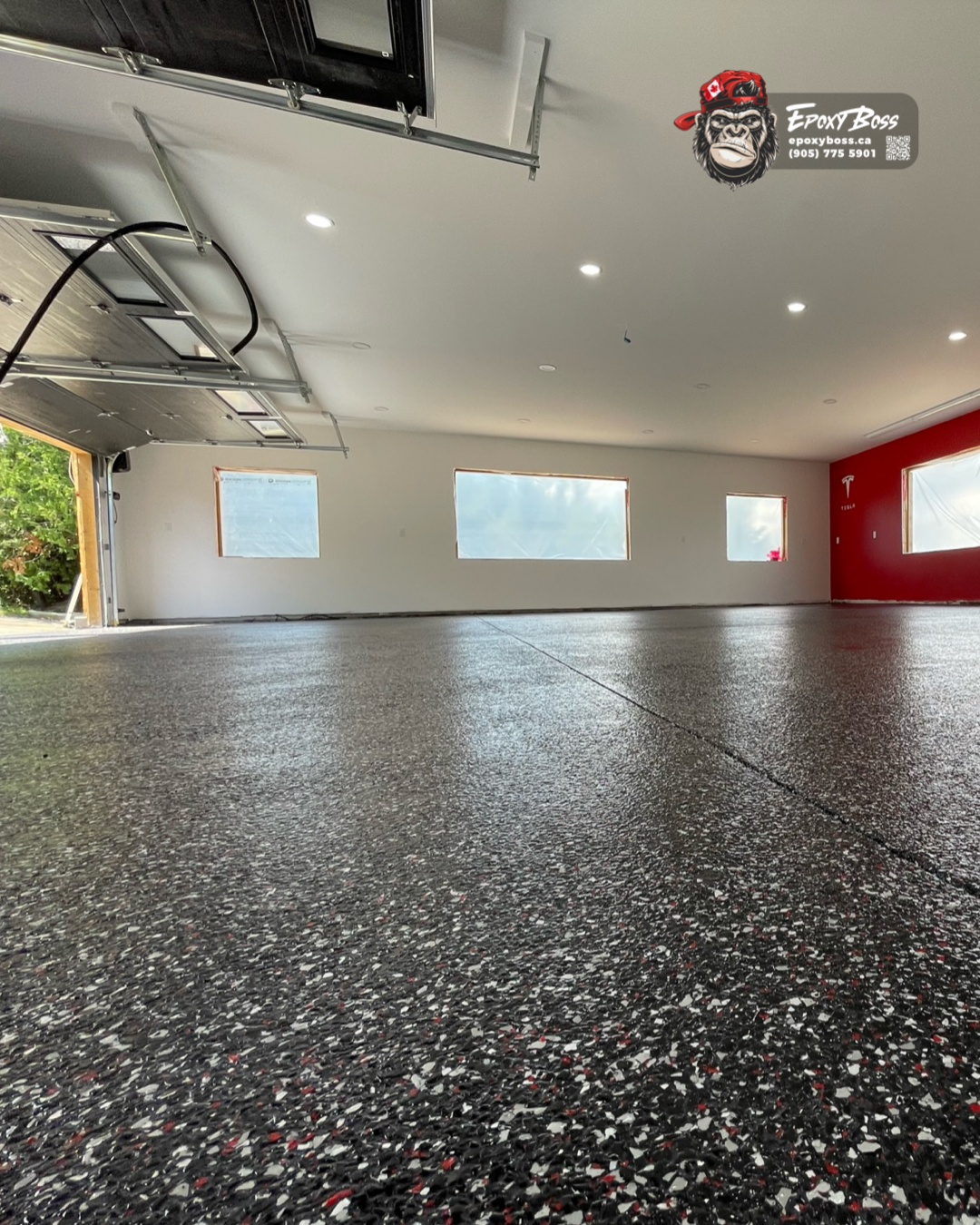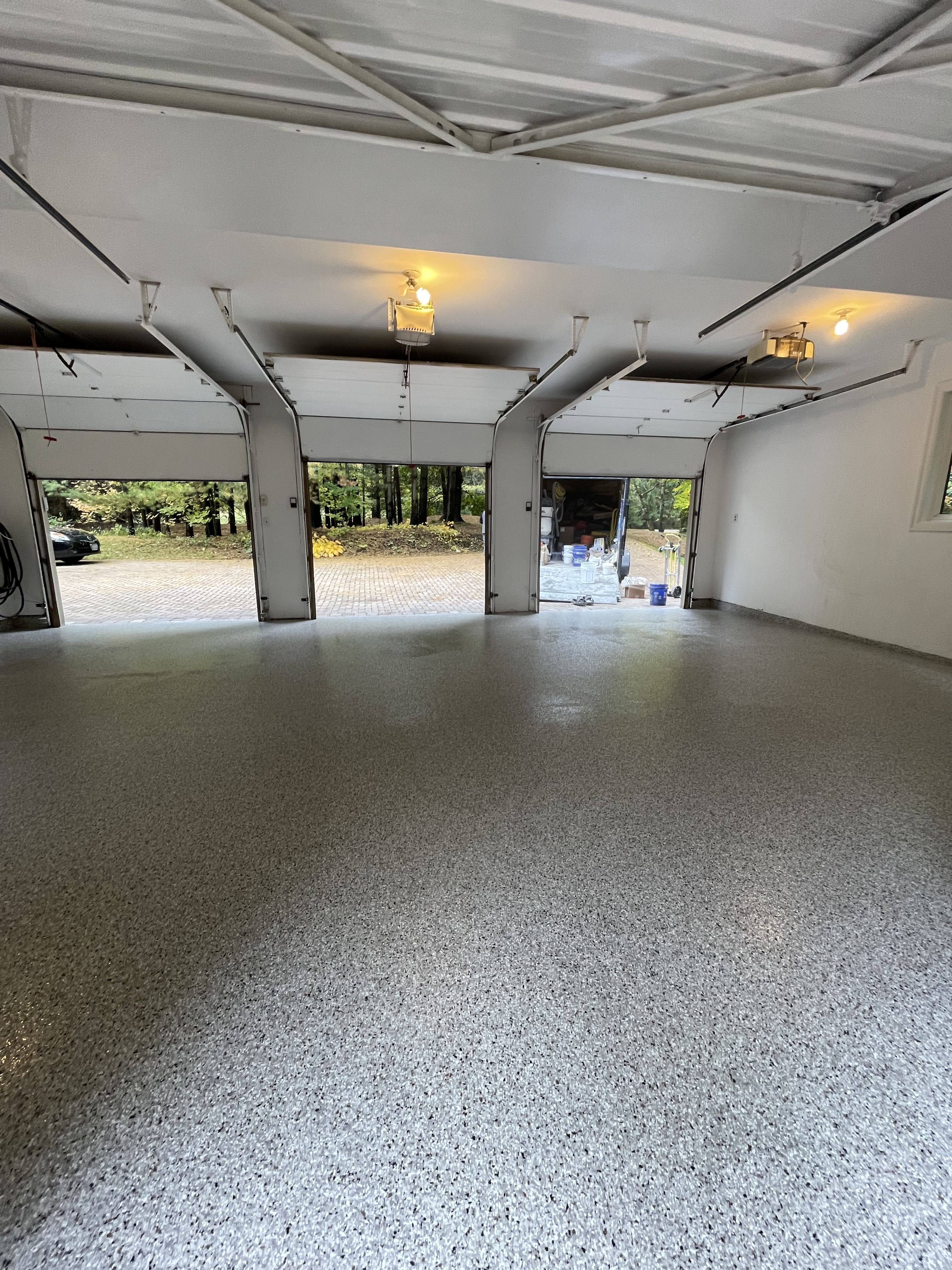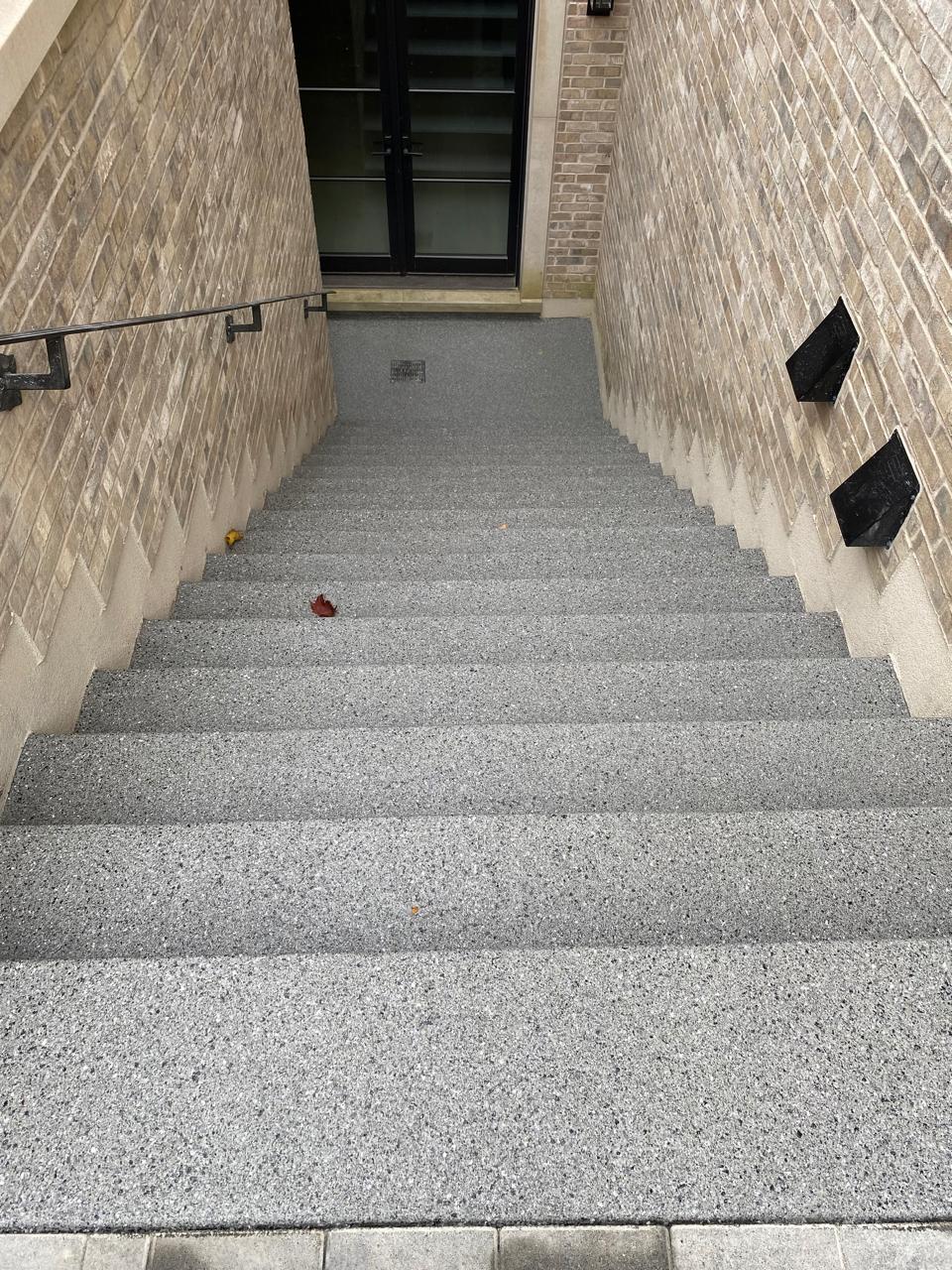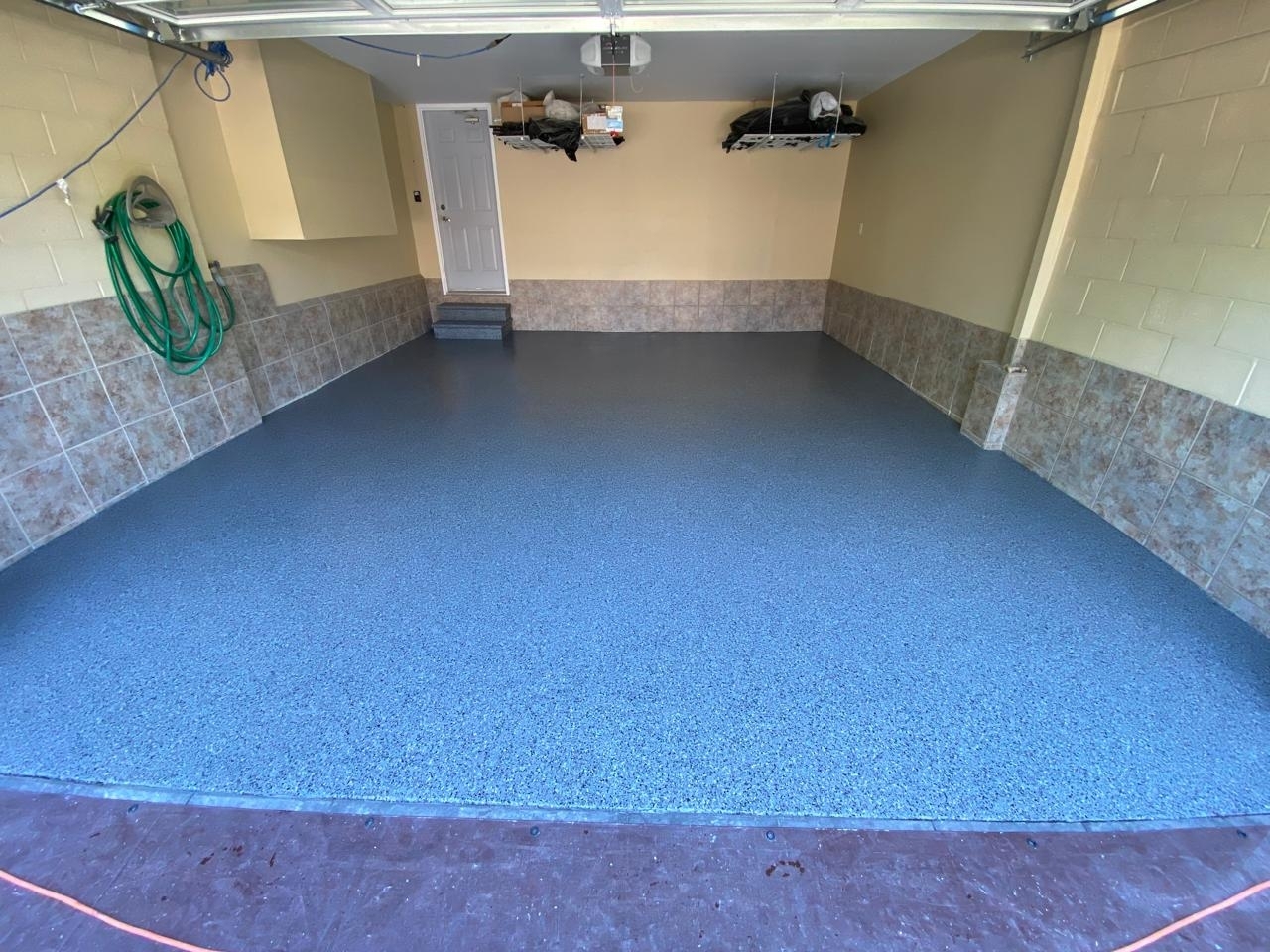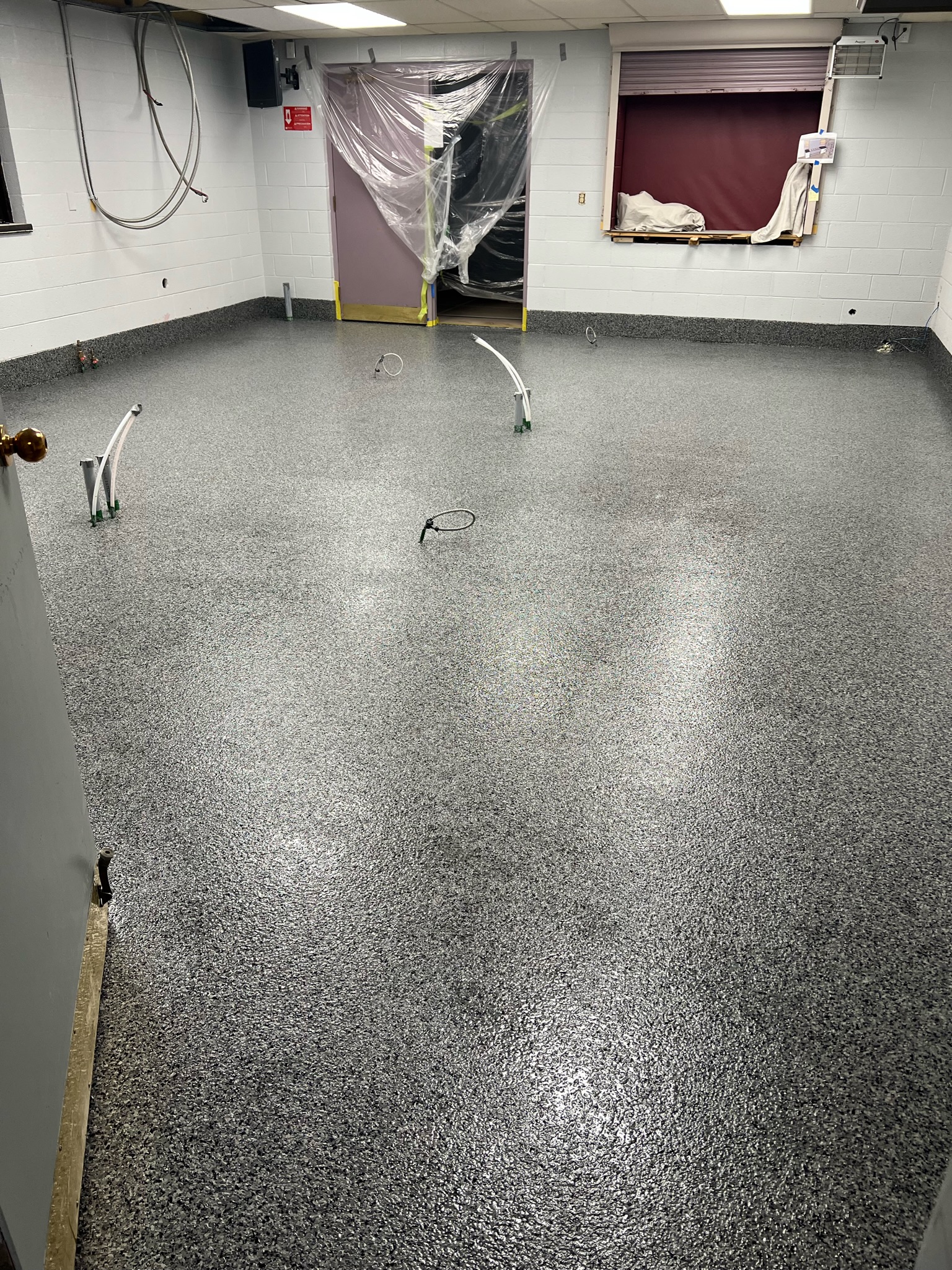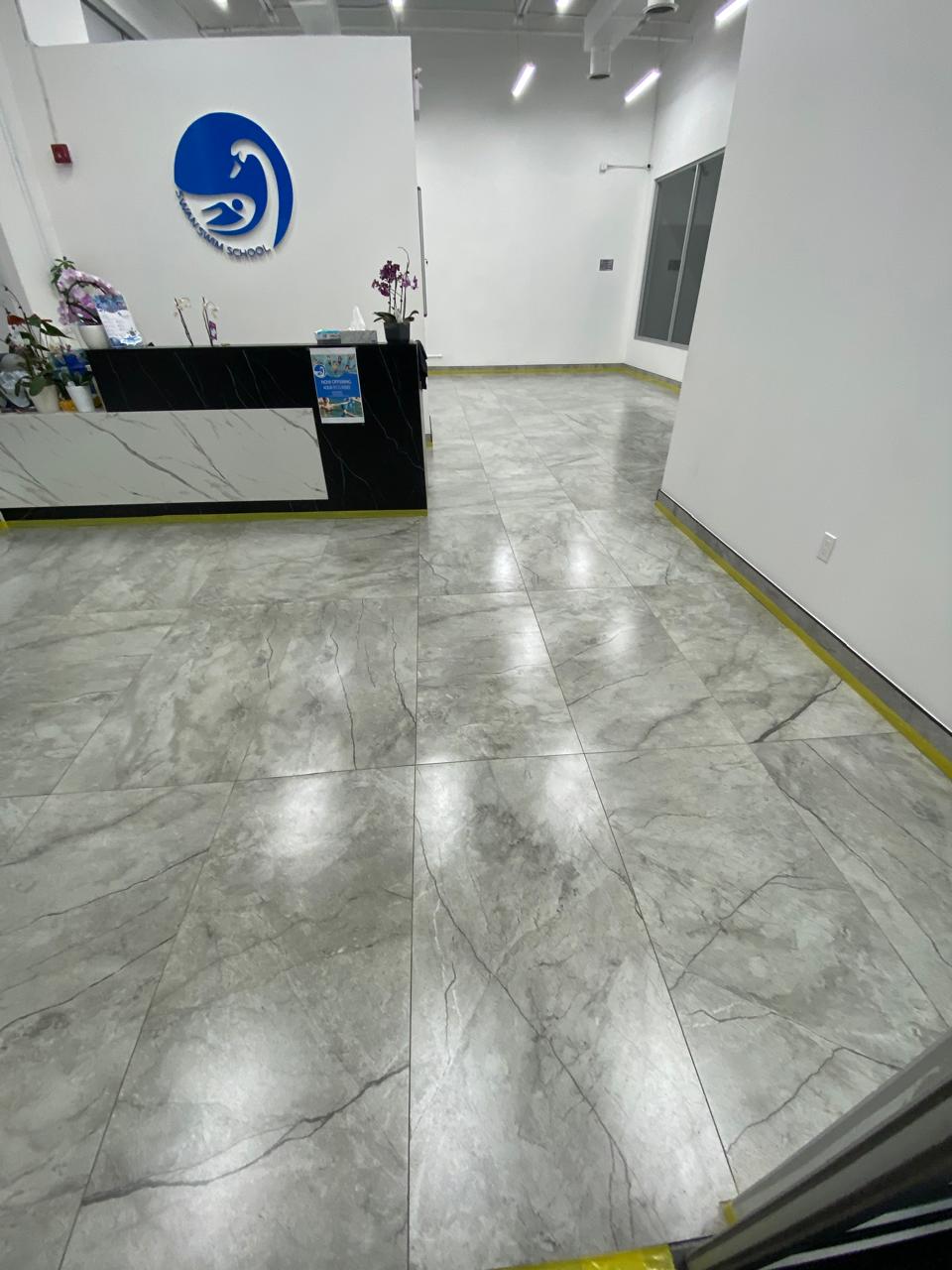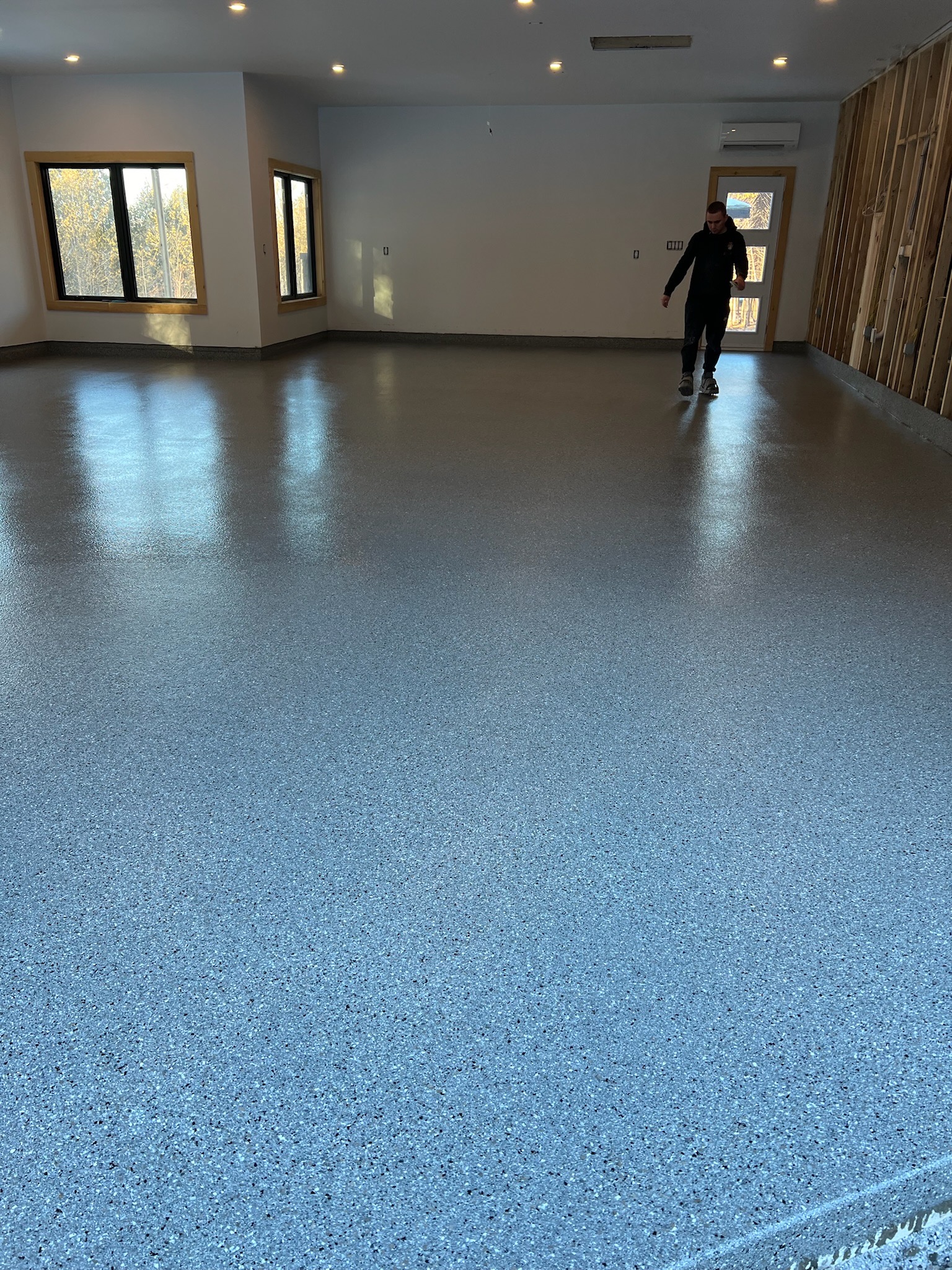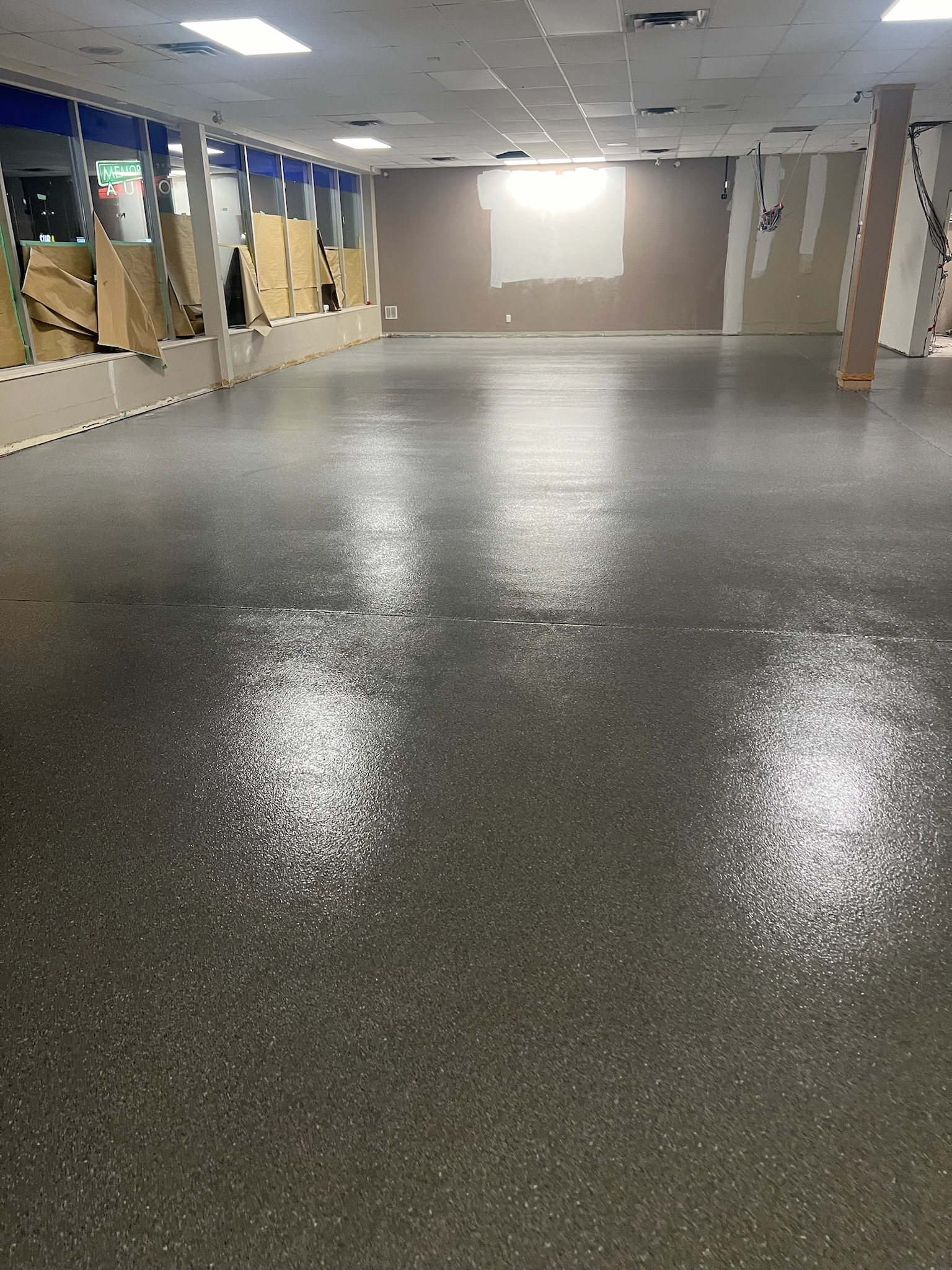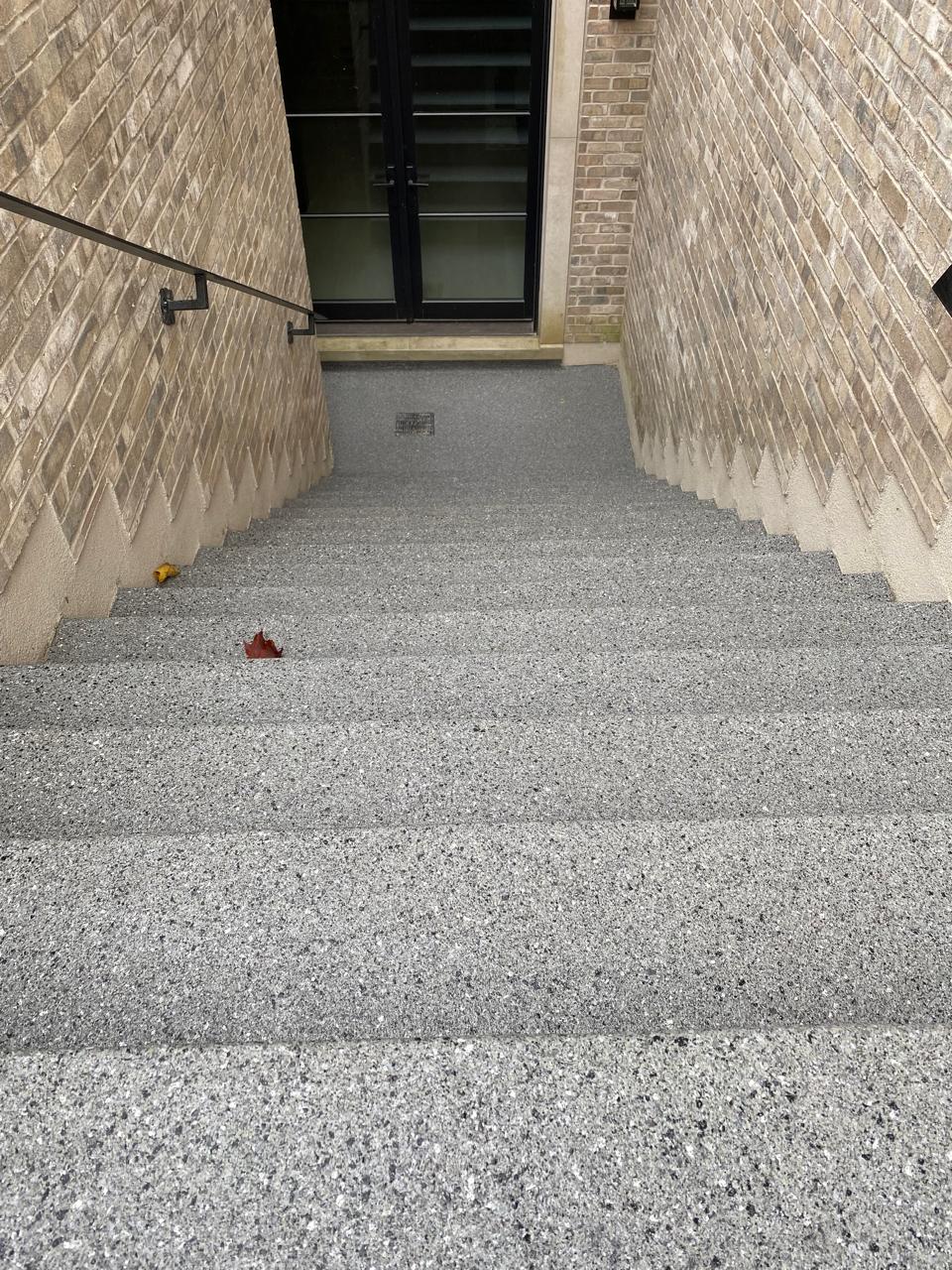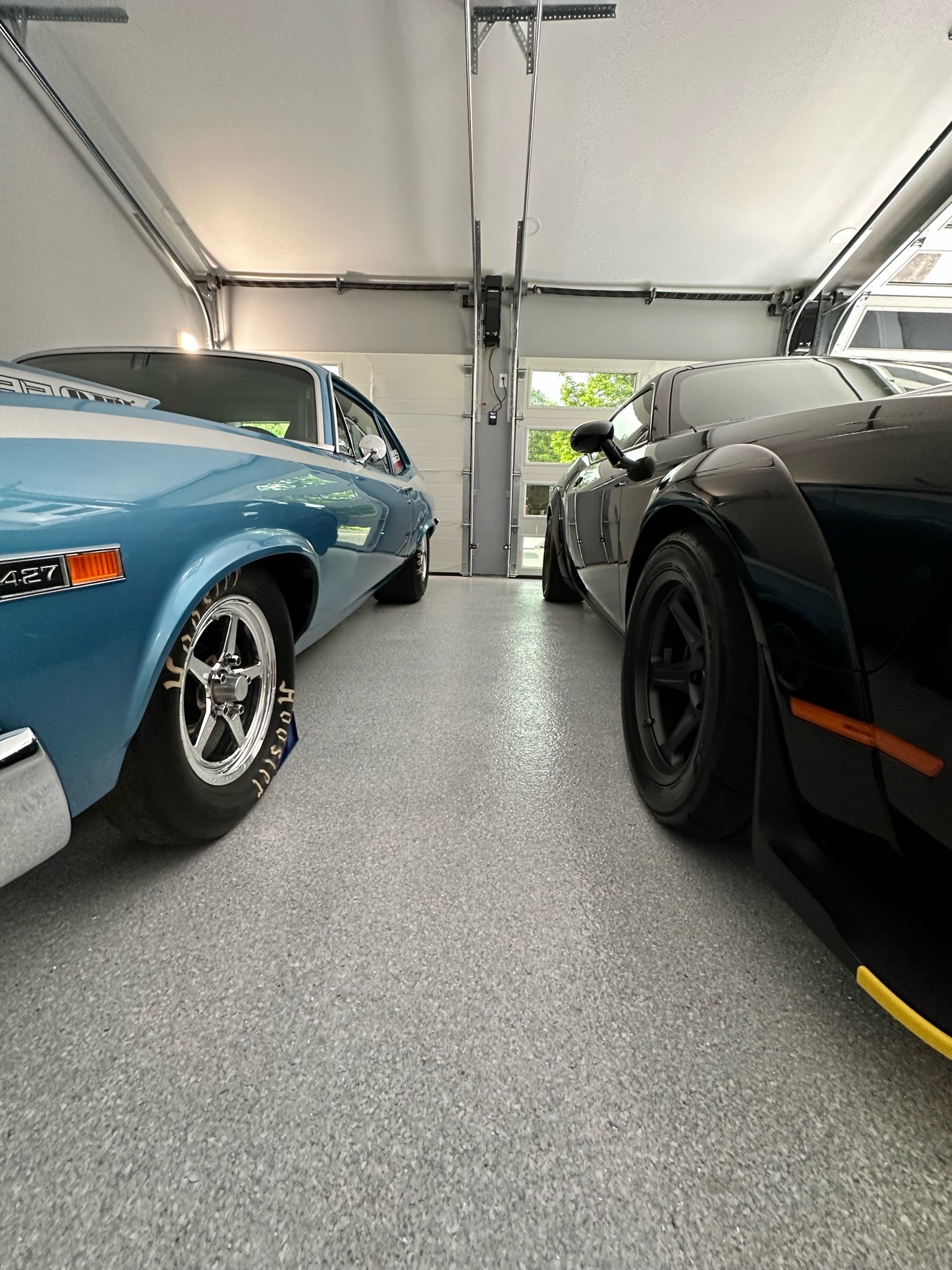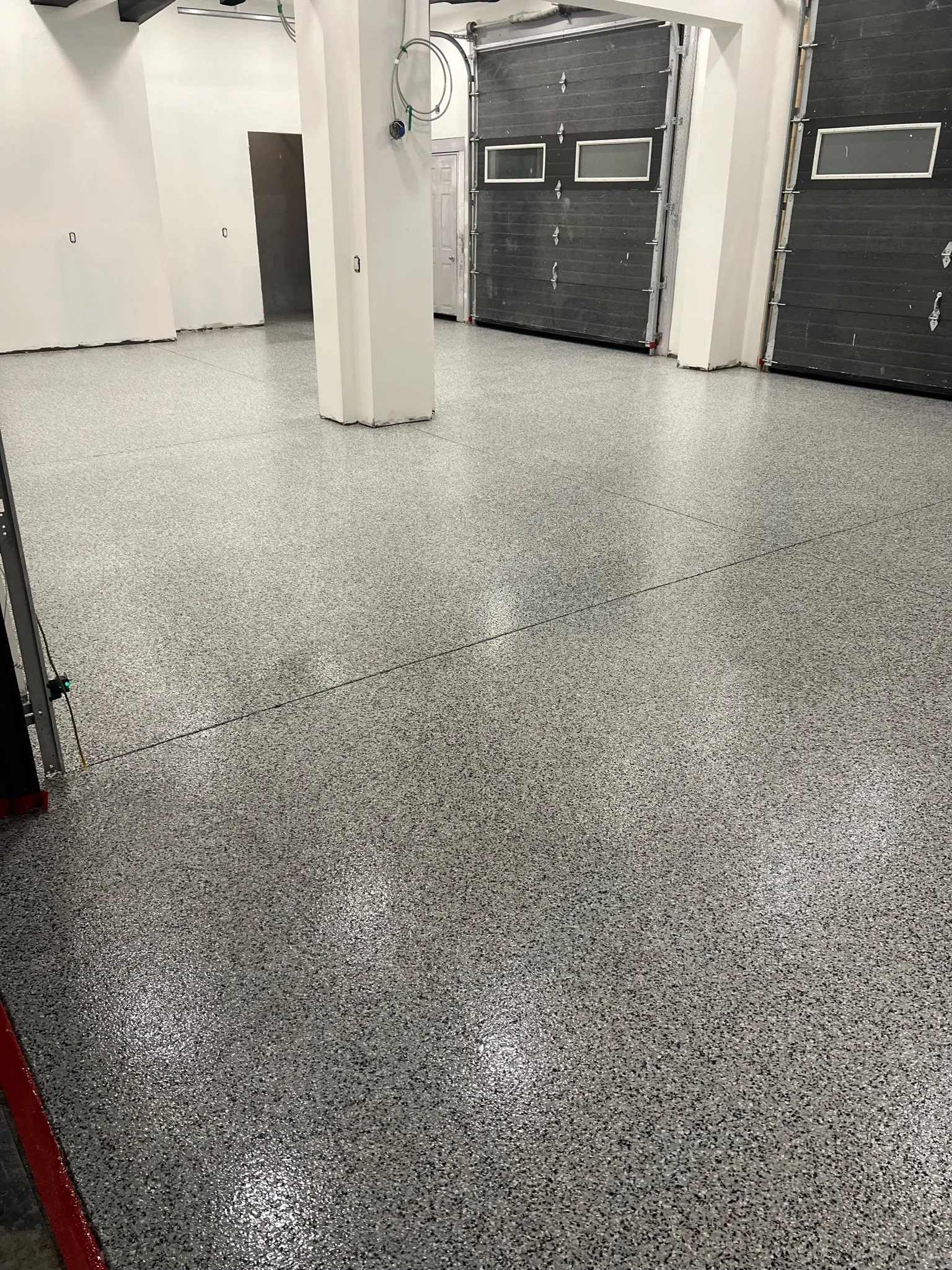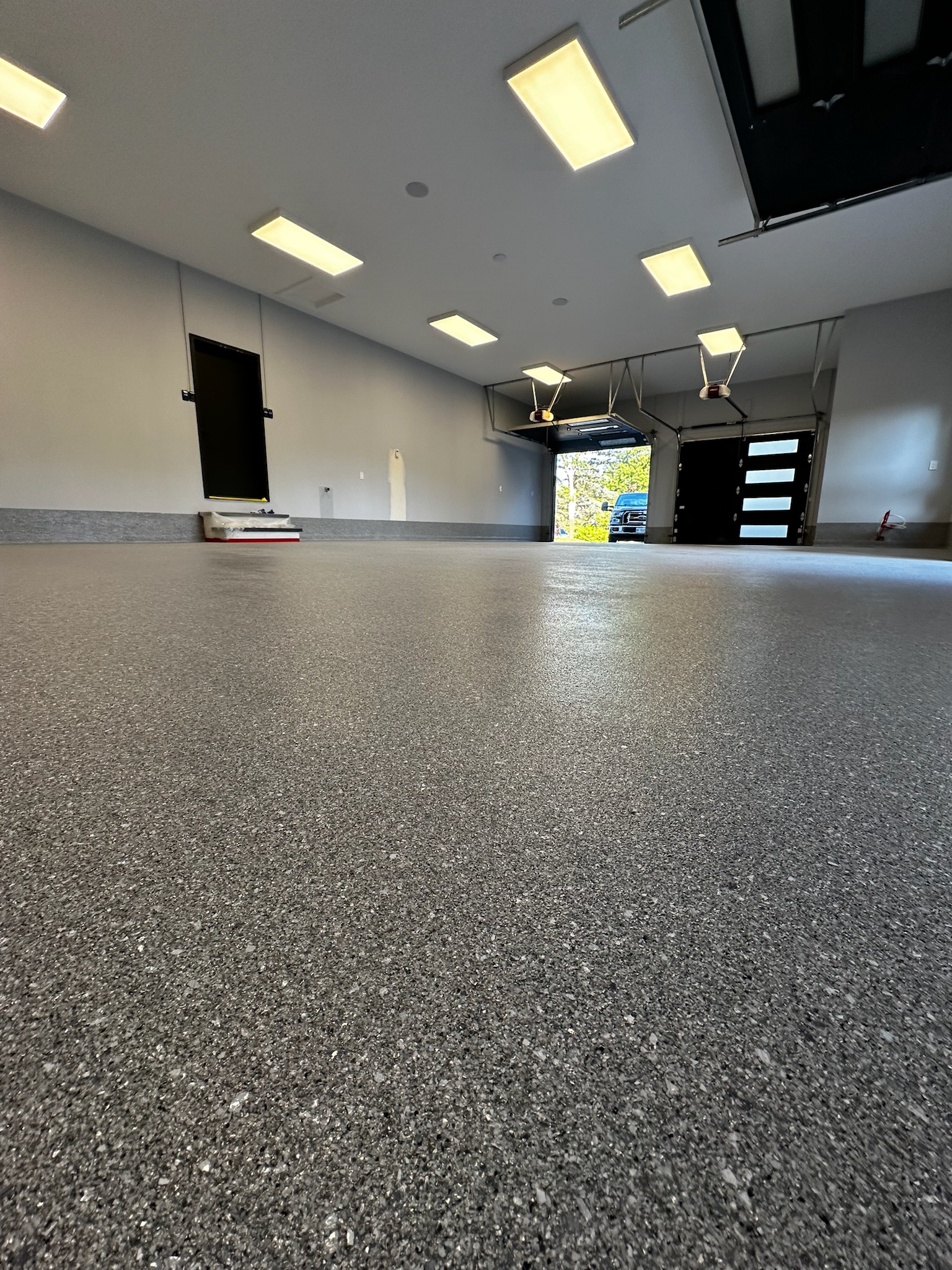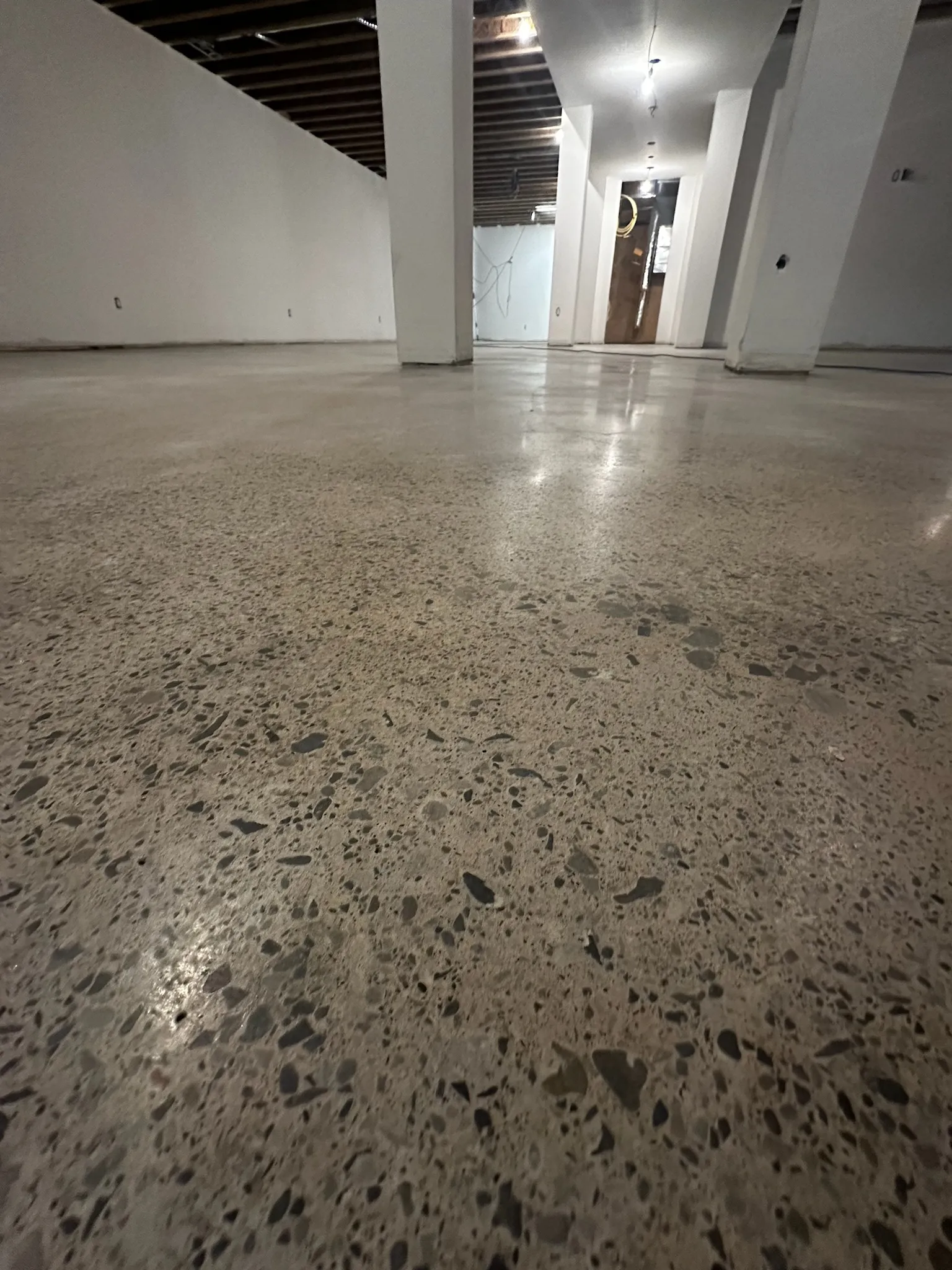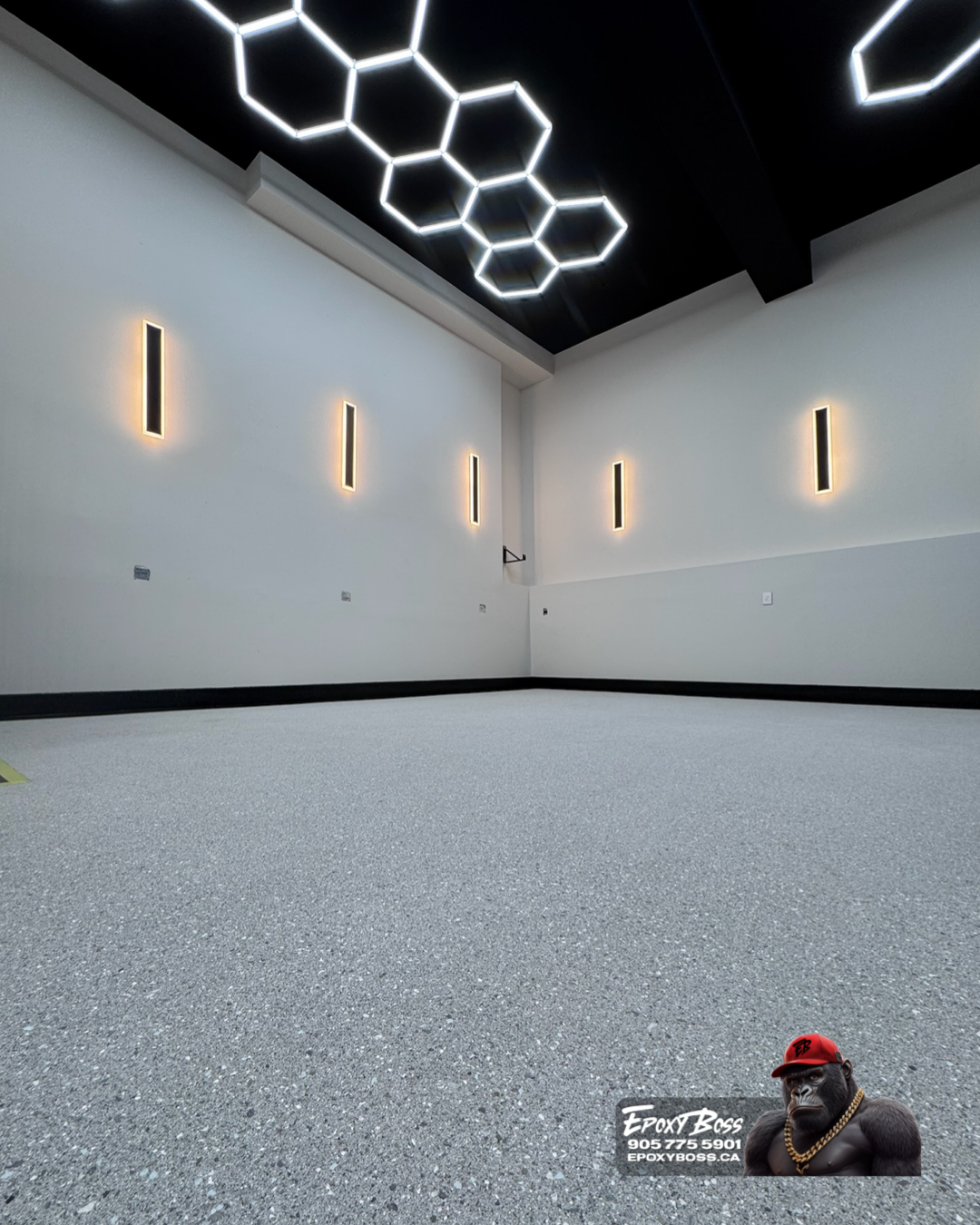

Polished concrete and epoxy solve different problems. Polished concrete grinds and densifies the slab itself into a hard, glossy surface with no coating on top, while epoxy (usually with a flake or solid finish and a clear topcoat) adds a sealed resin layer over the concrete. For most Ontario garages, a coated system usually handles road salt, oil and meltwater better. For basements, polished concrete can be a strong choice where the slab is sound and you like the look of concrete, while epoxy offers more colour and design options but needs closer attention to moisture.
This comparison covers appearance, durability, salt and stain resistance, moisture, slab requirements and maintenance for garages and basements.
How polished concrete works
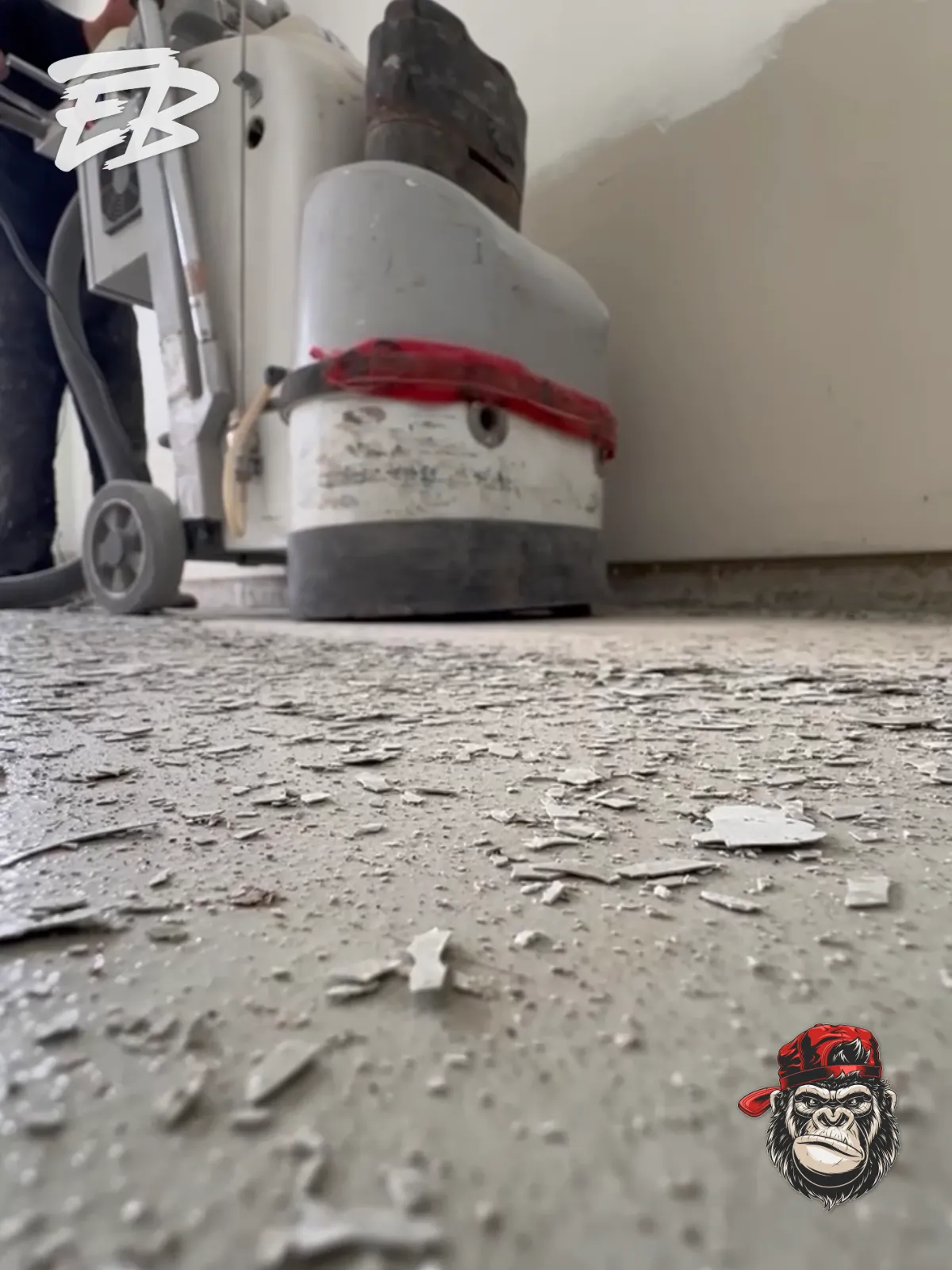
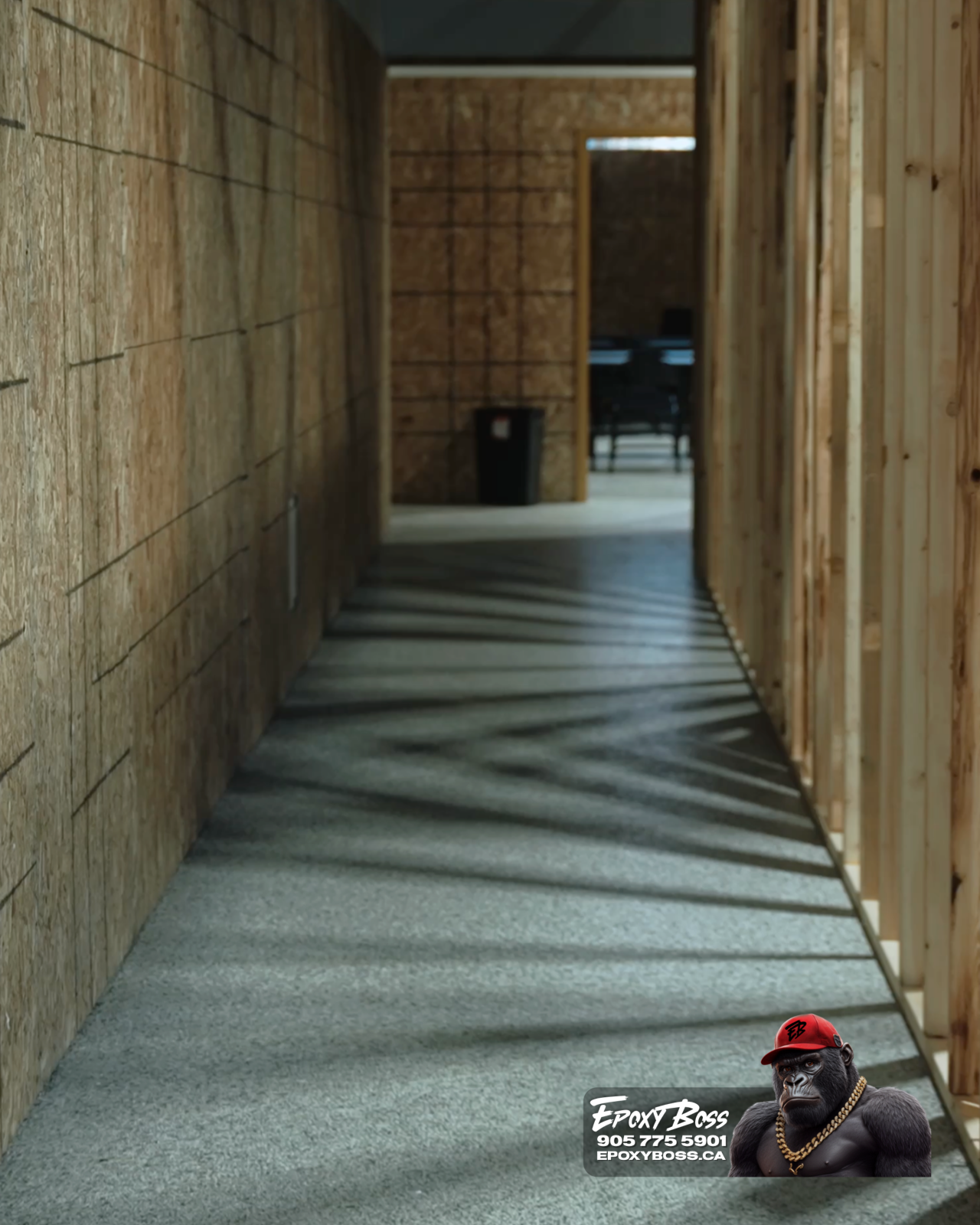
Polishing uses progressively finer diamond tooling to grind the slab, a chemical densifier to harden the surface, and polishing passes to bring up the sheen. A guard or penetrating sealer is often applied to improve stain resistance. Depending on how deep the grind goes, the finish can show the cream (minimal aggregate), a salt-and-pepper look, or exposed aggregate. Our step-by-step guide to polishing concrete walks through the process, and our concrete polishing page shows finishes.
How an epoxy floor works
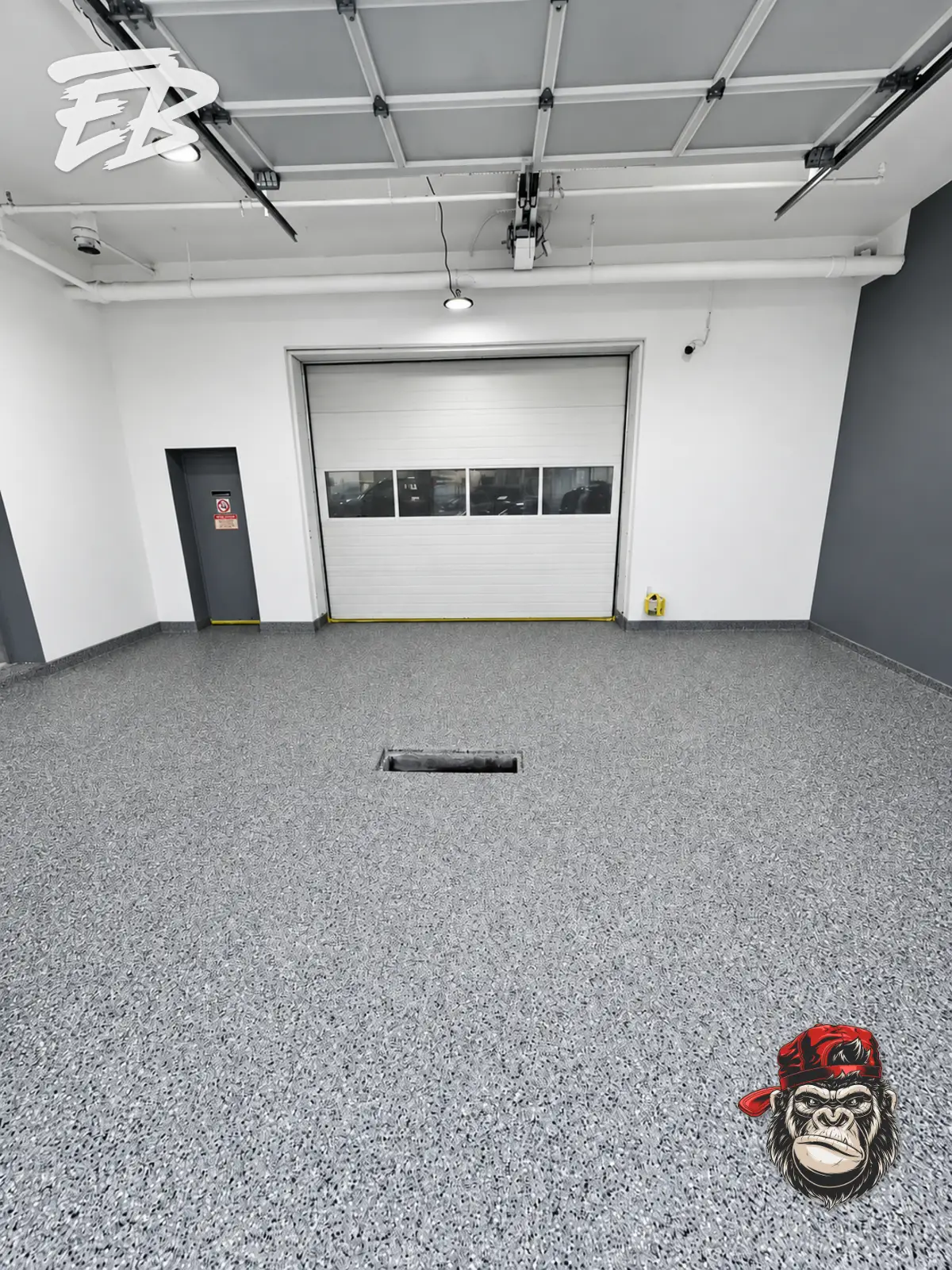
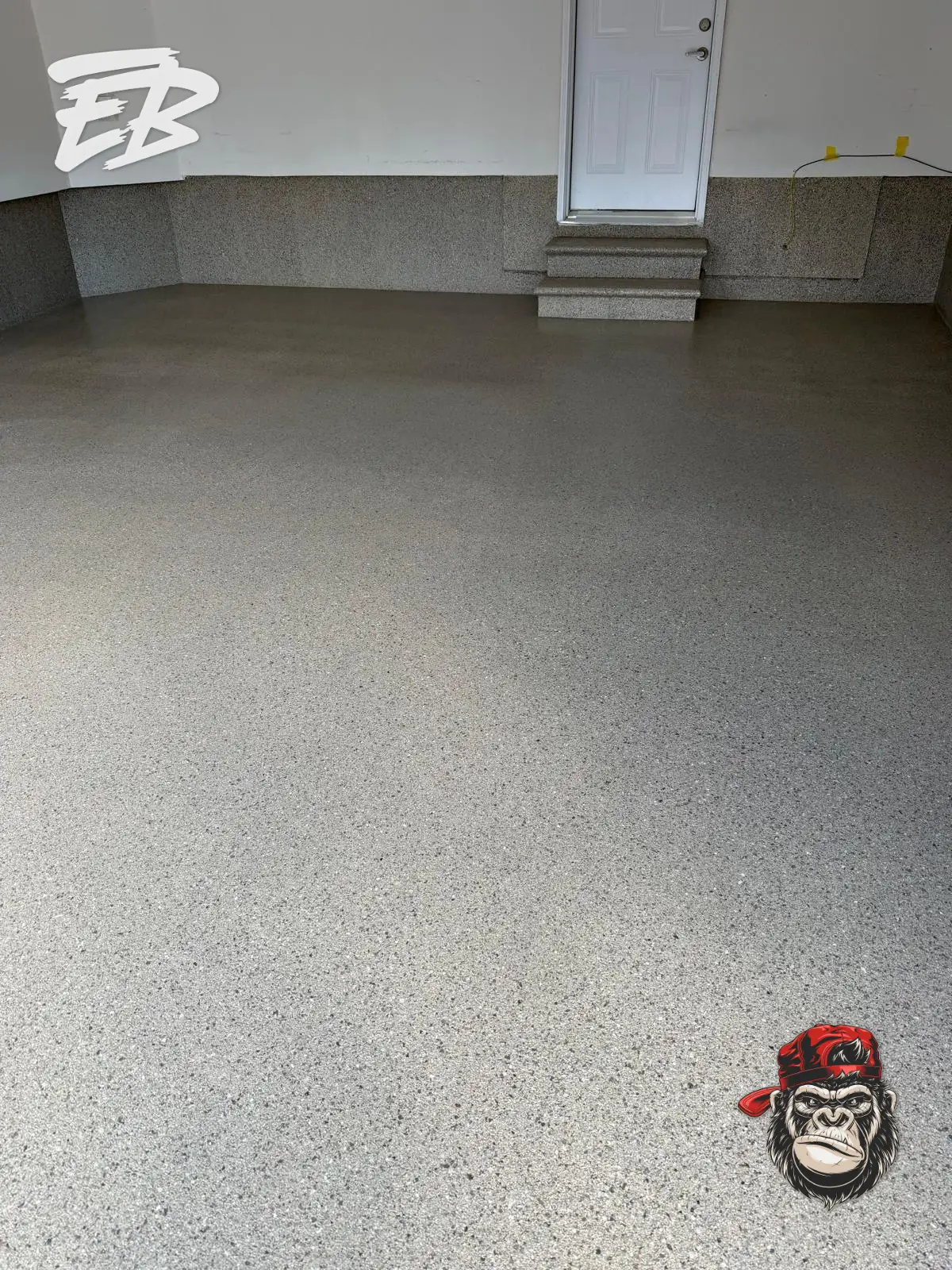
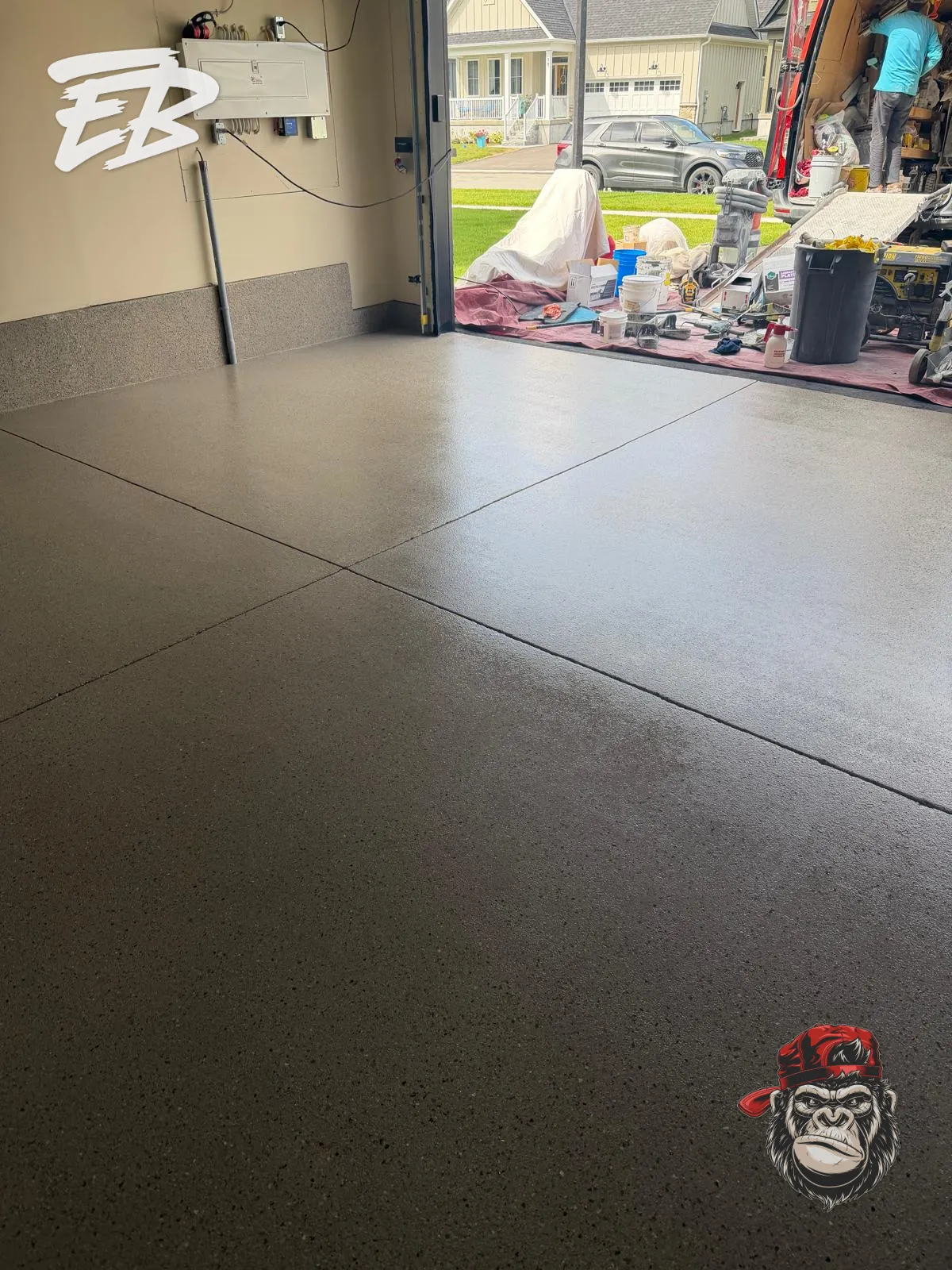
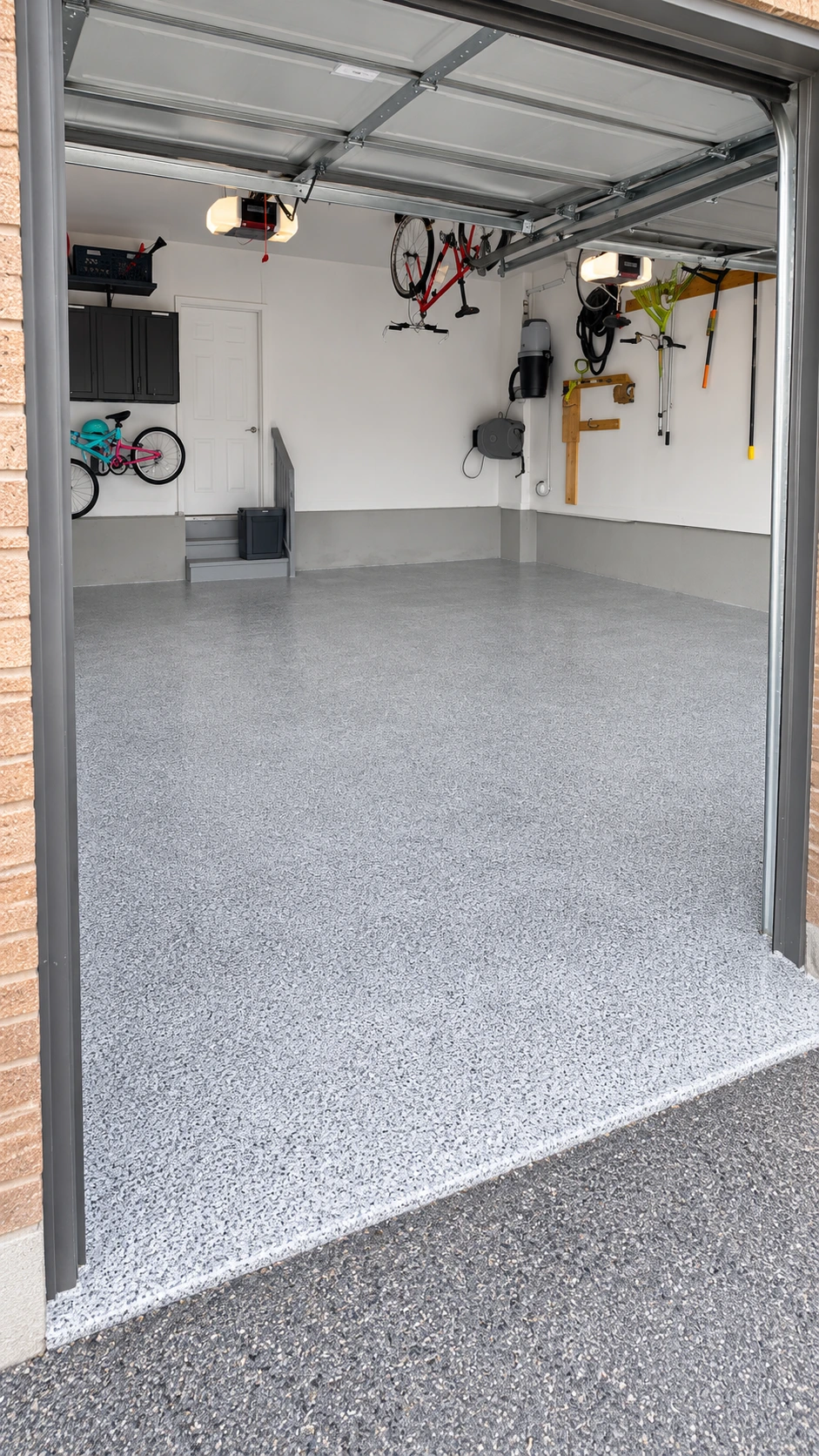
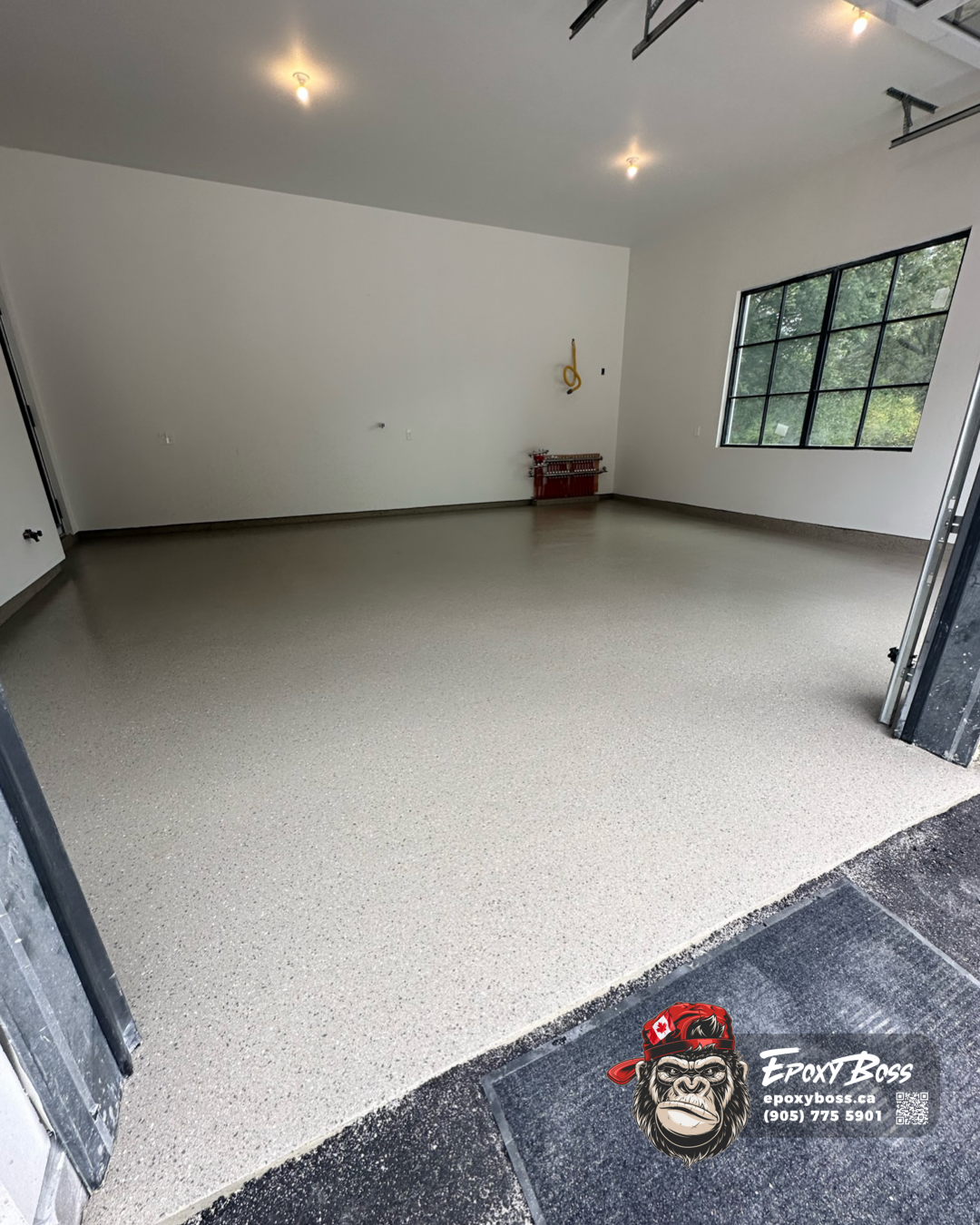
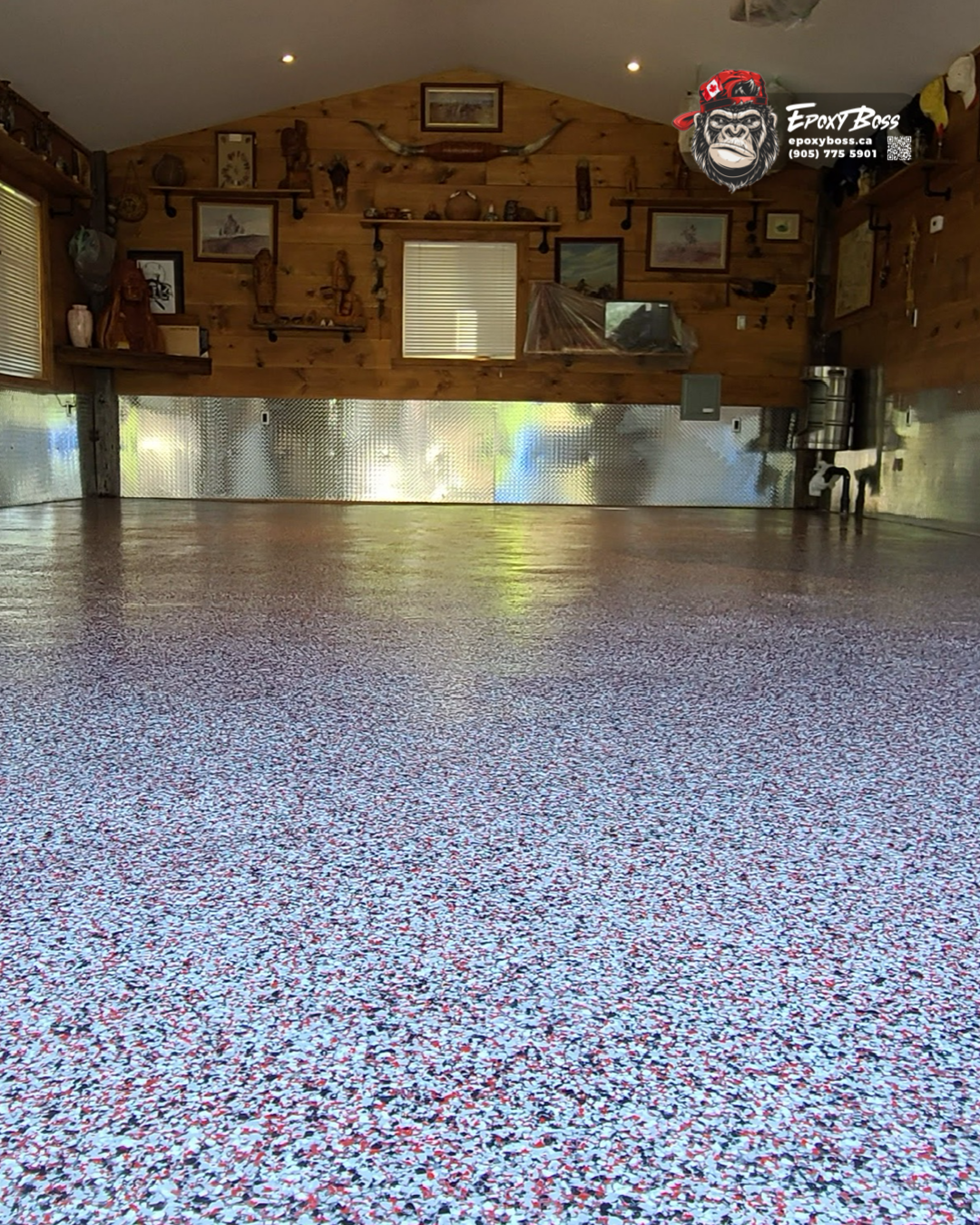
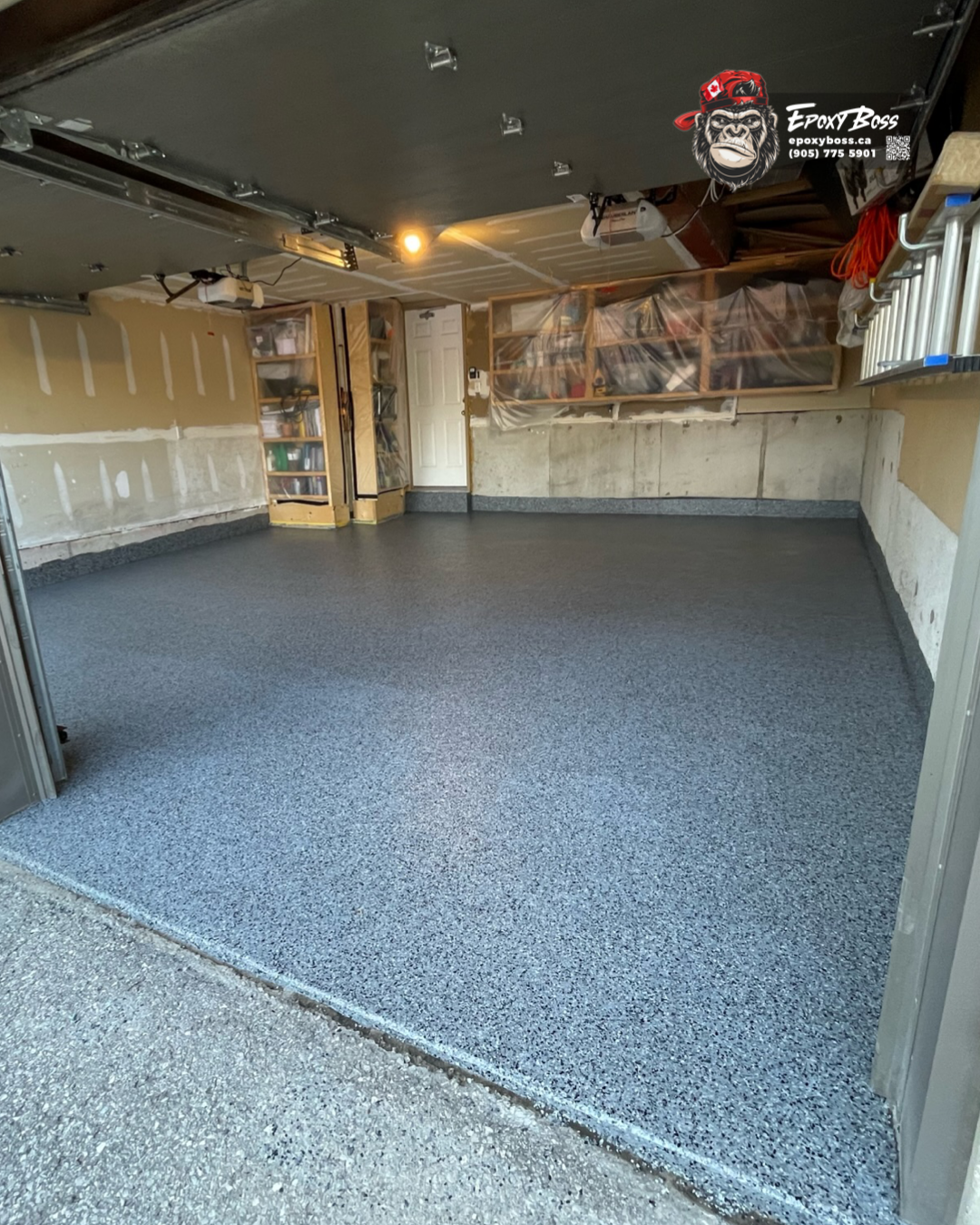
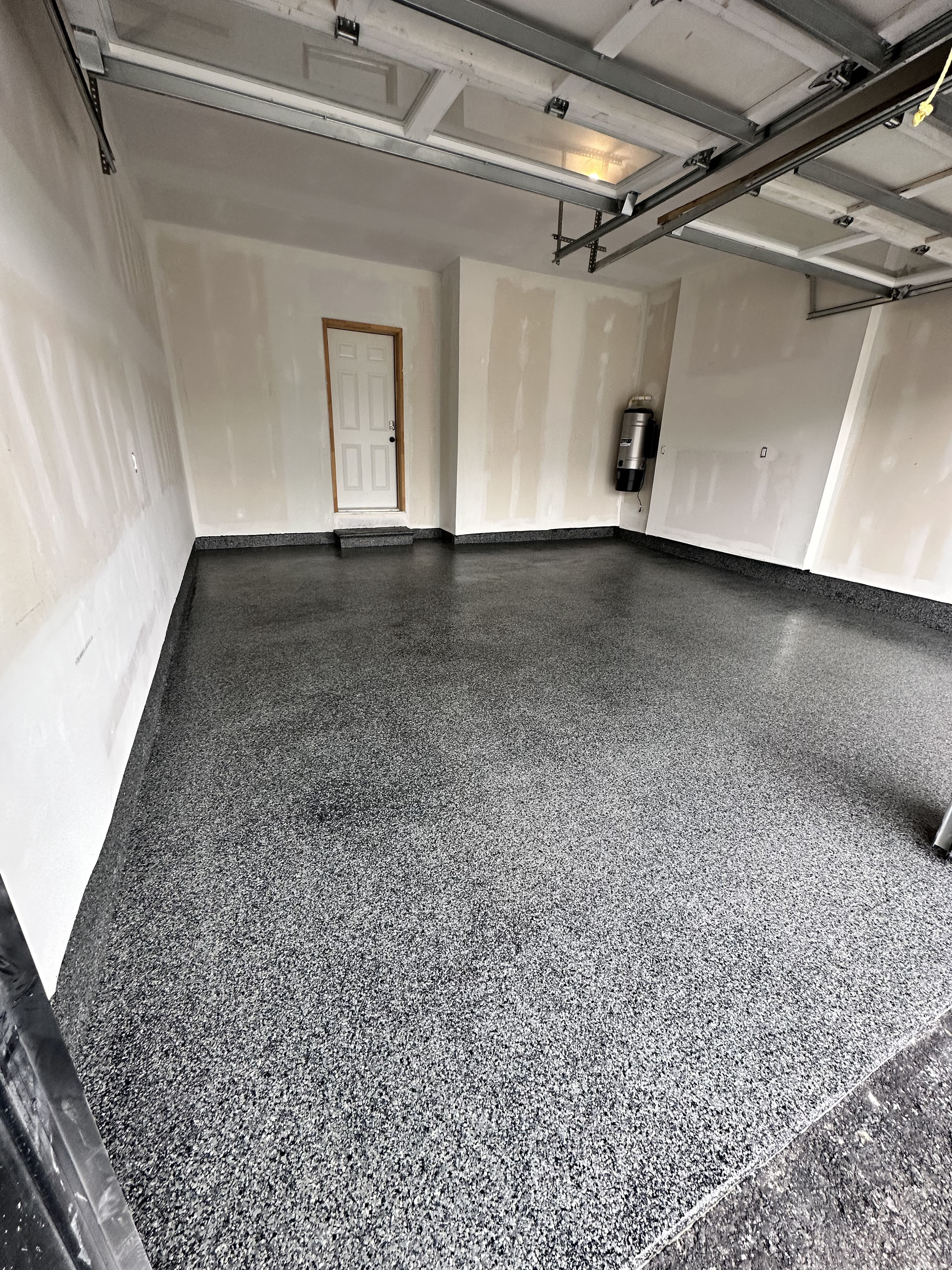
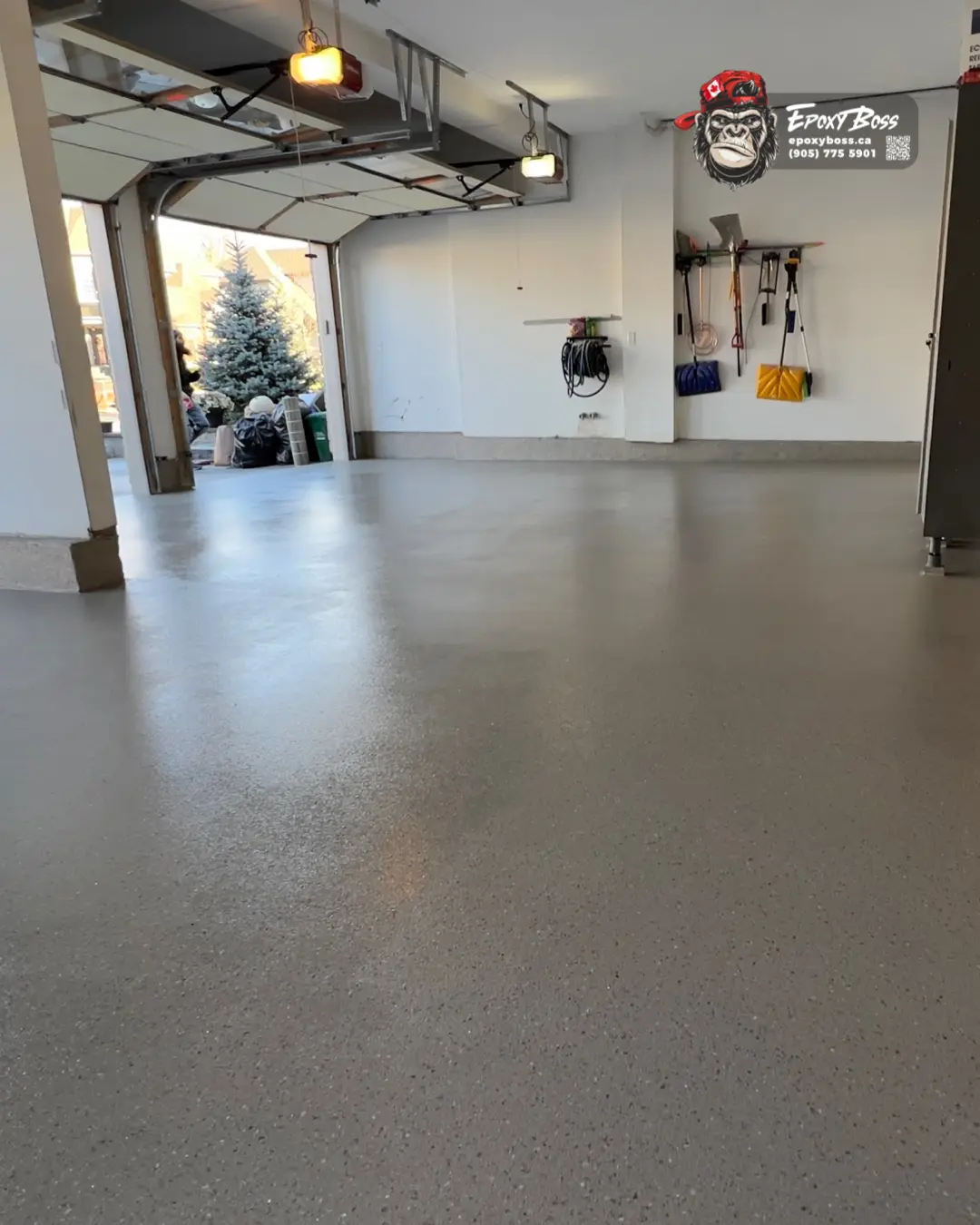
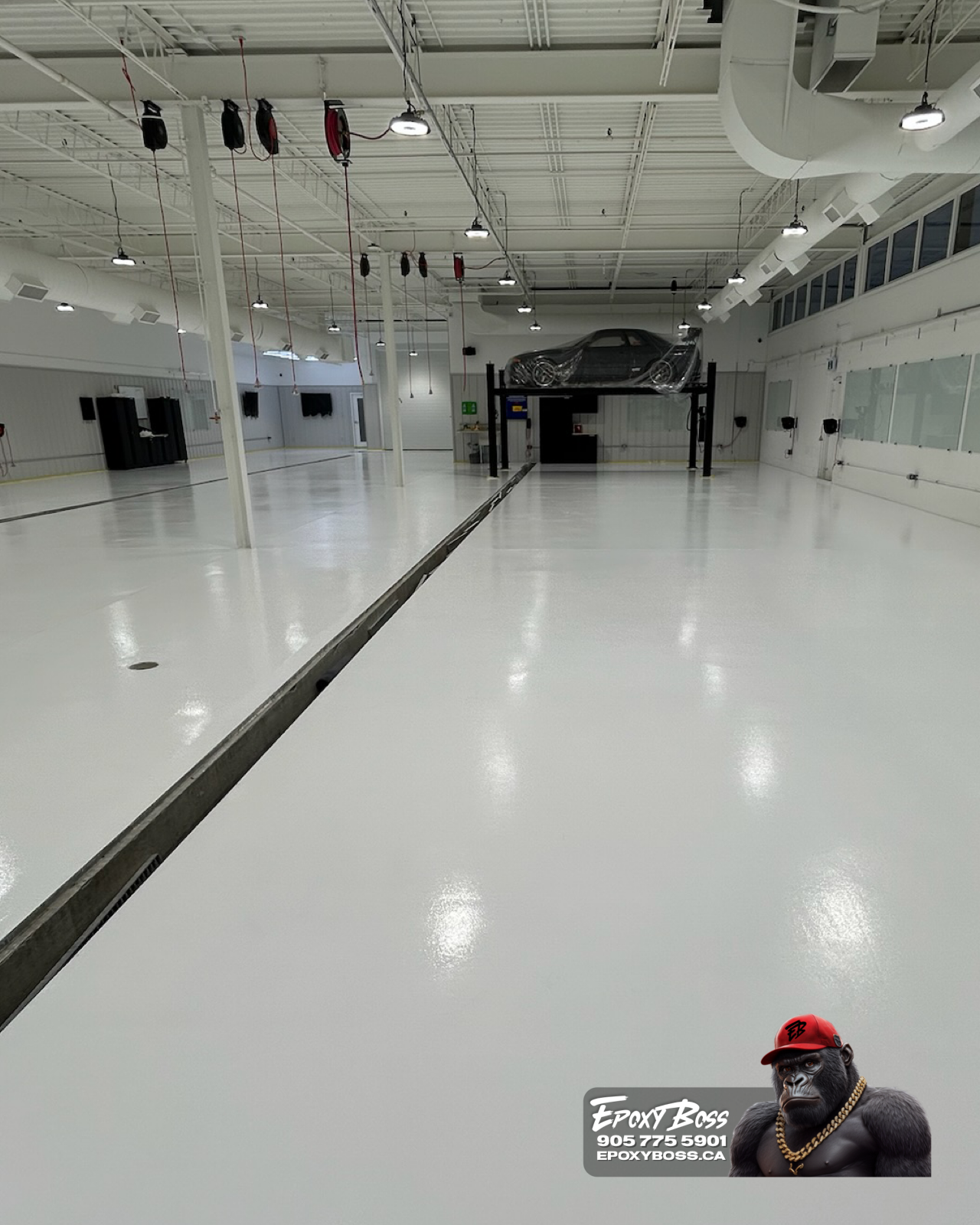
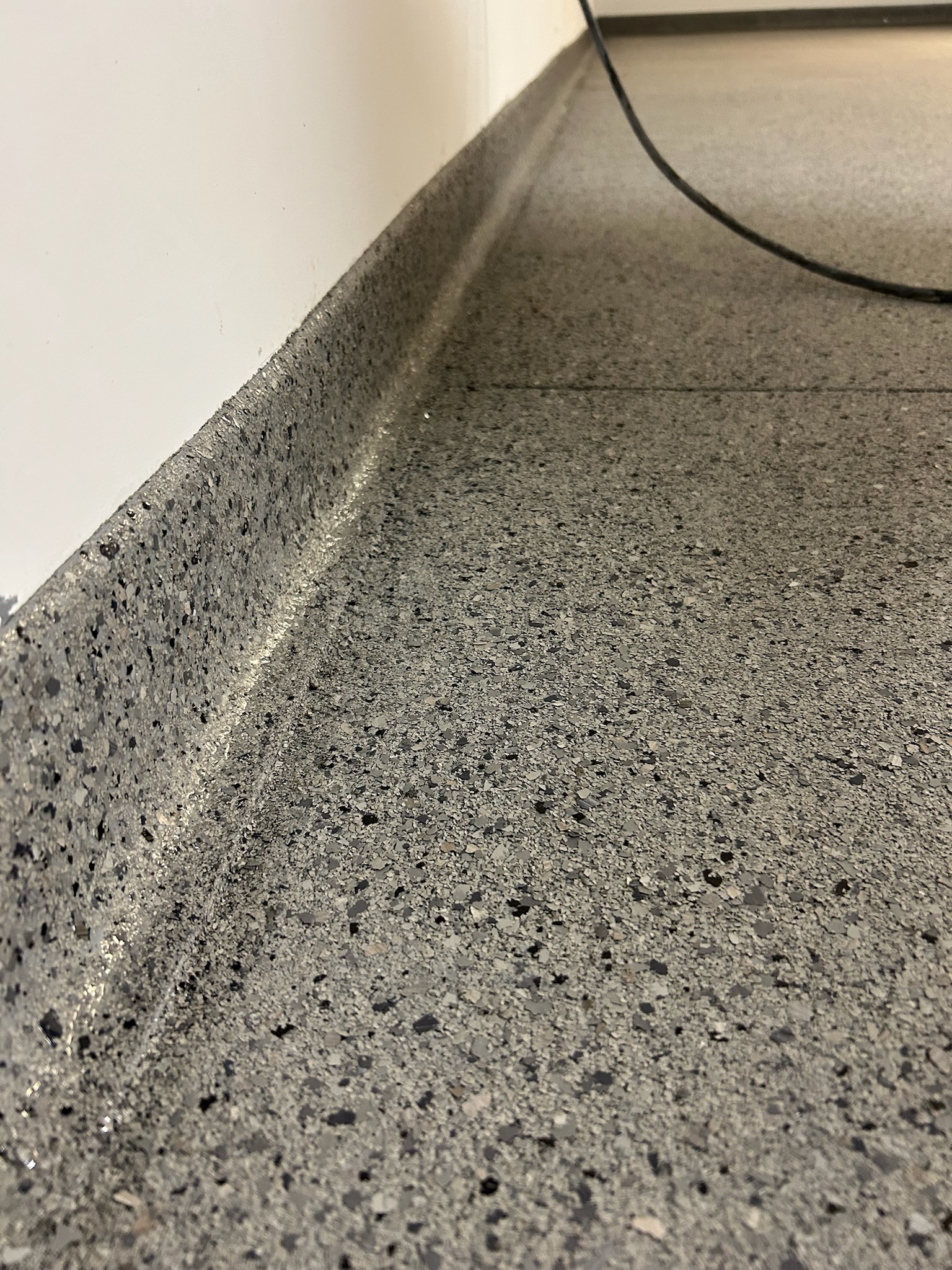
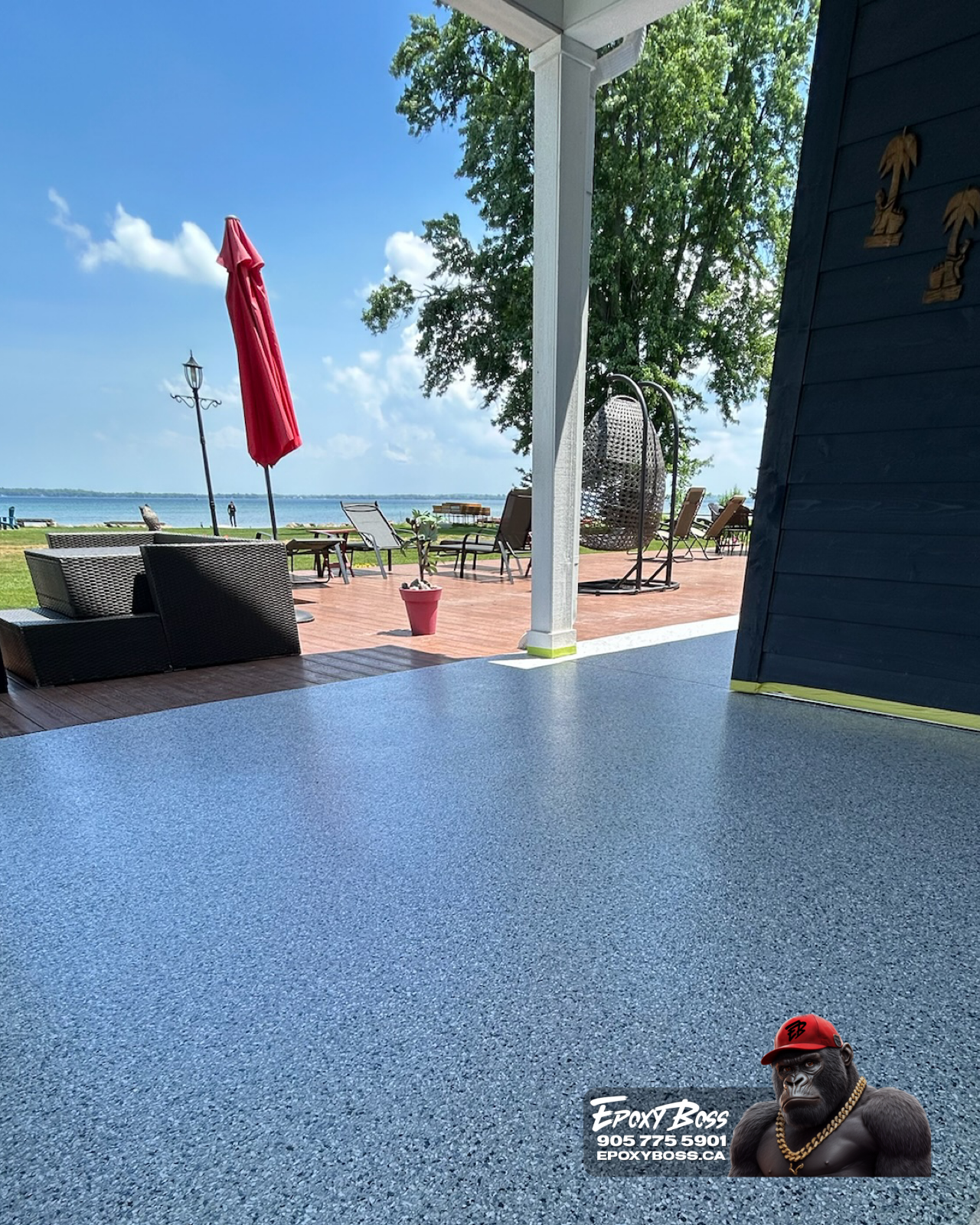
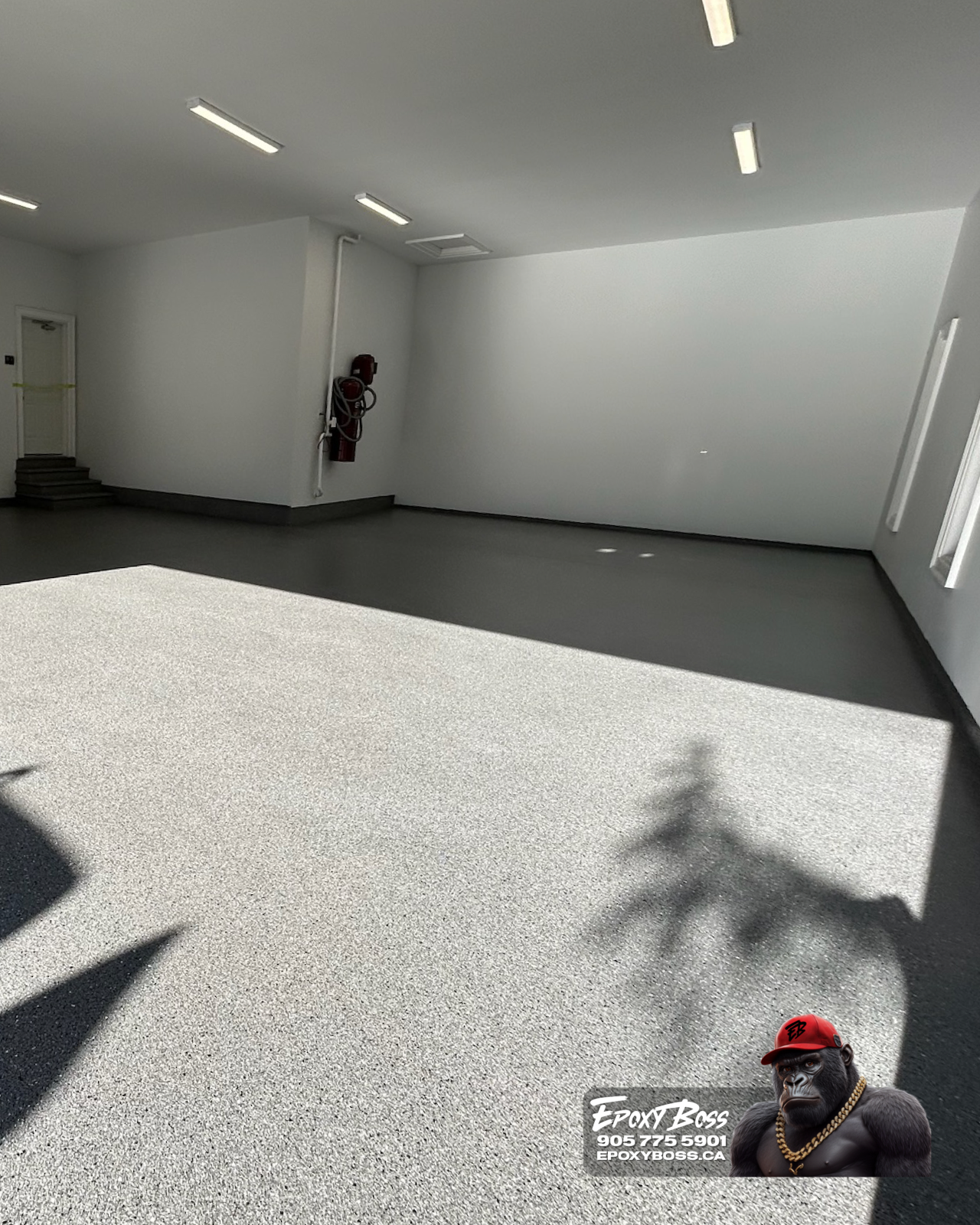
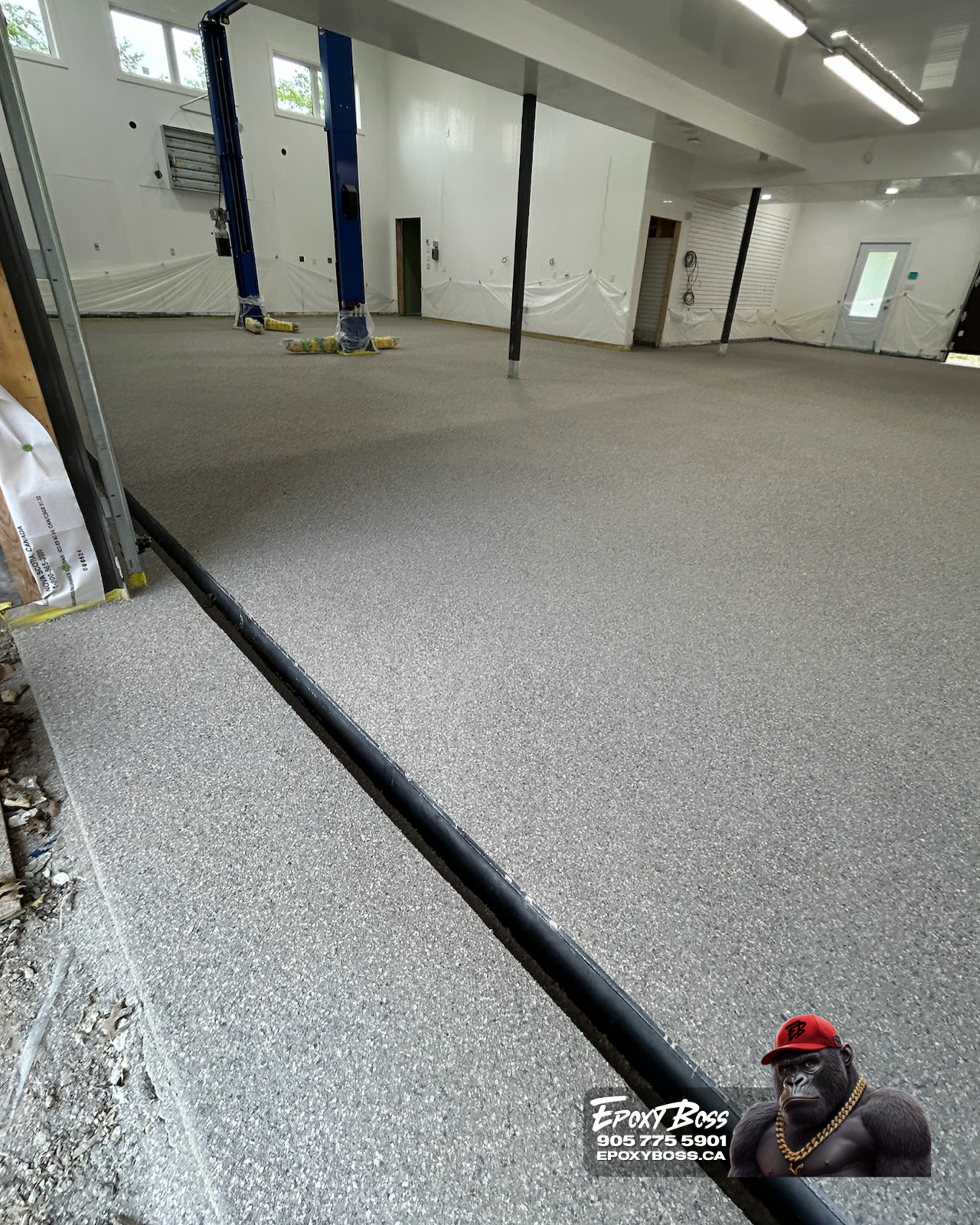
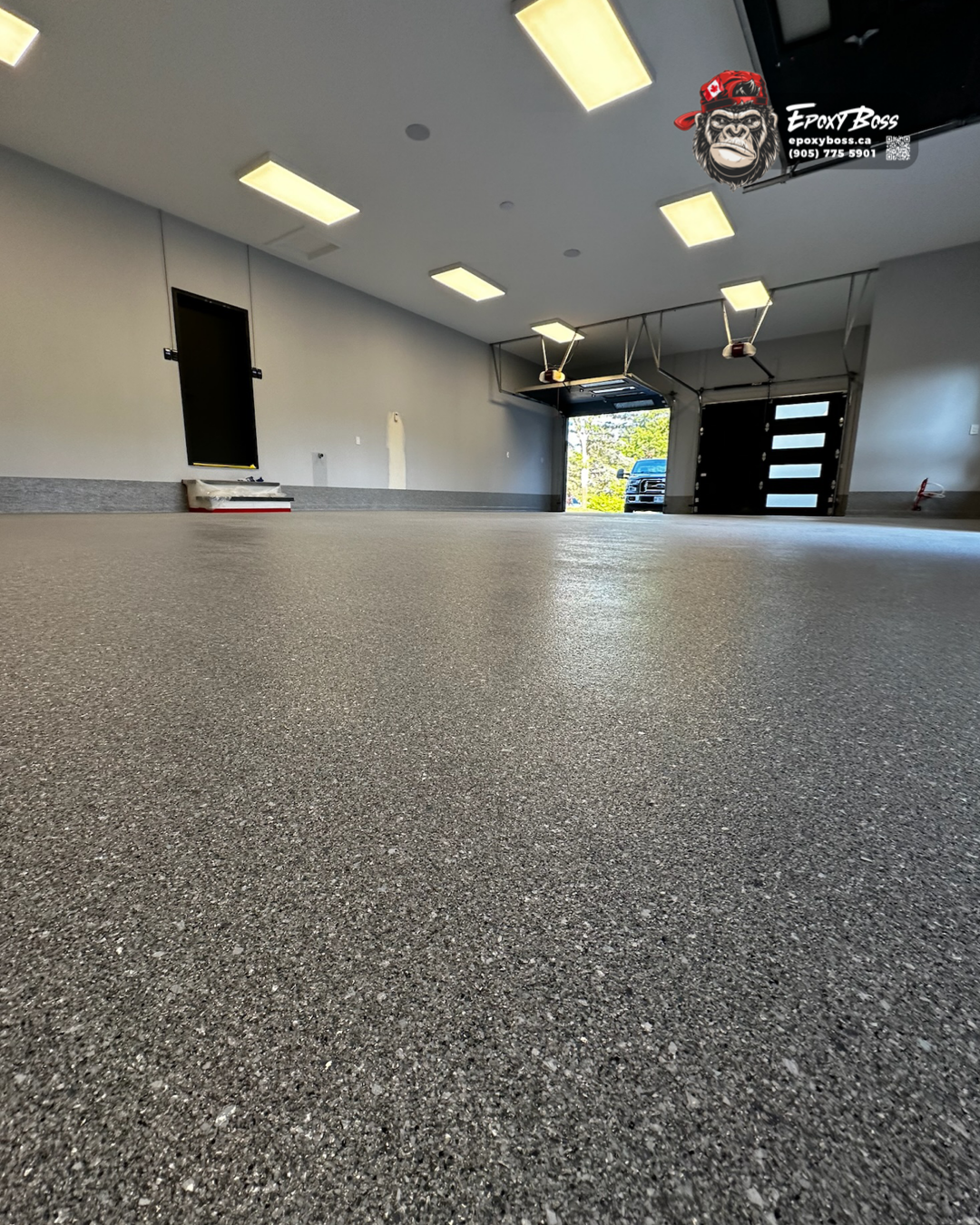
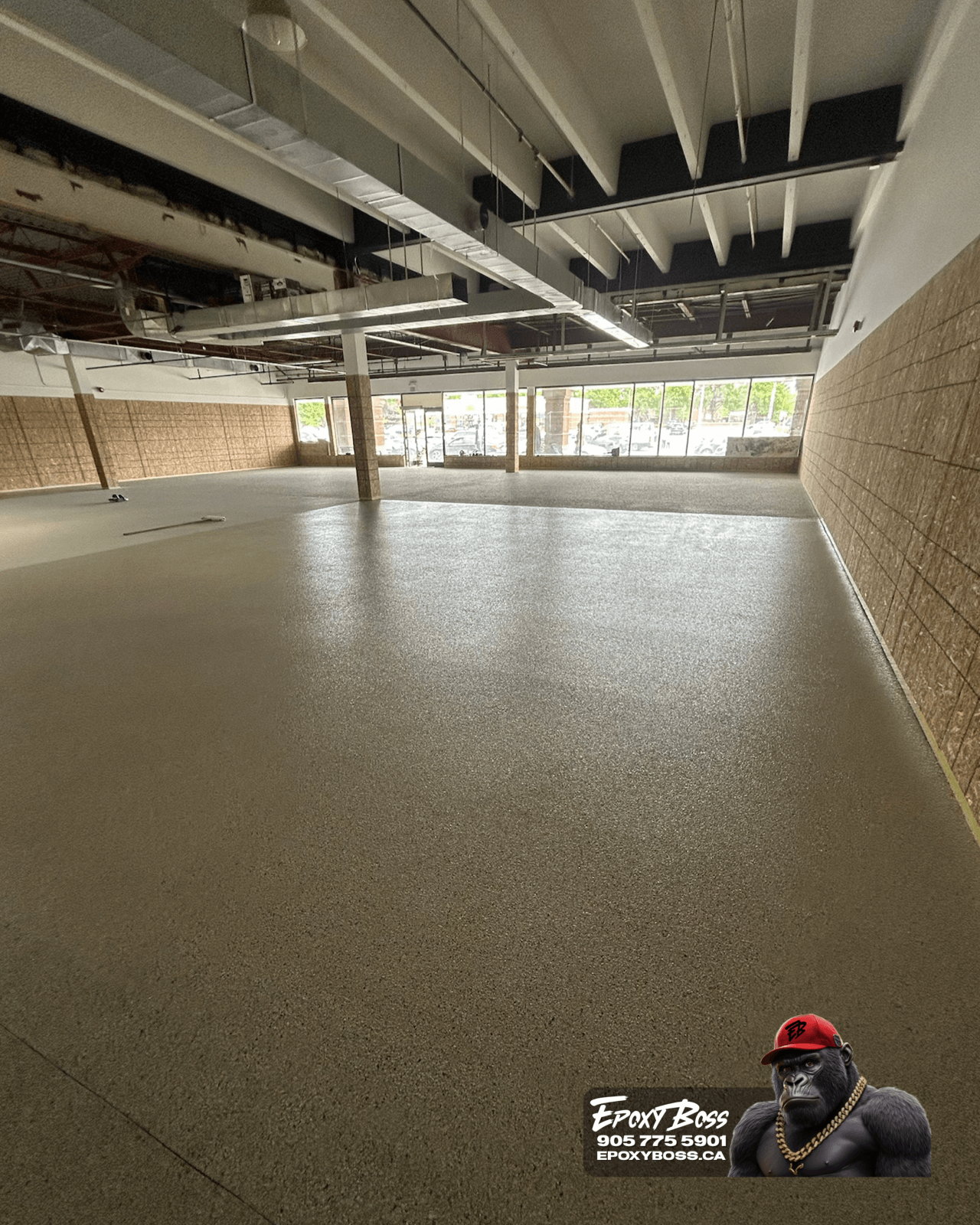
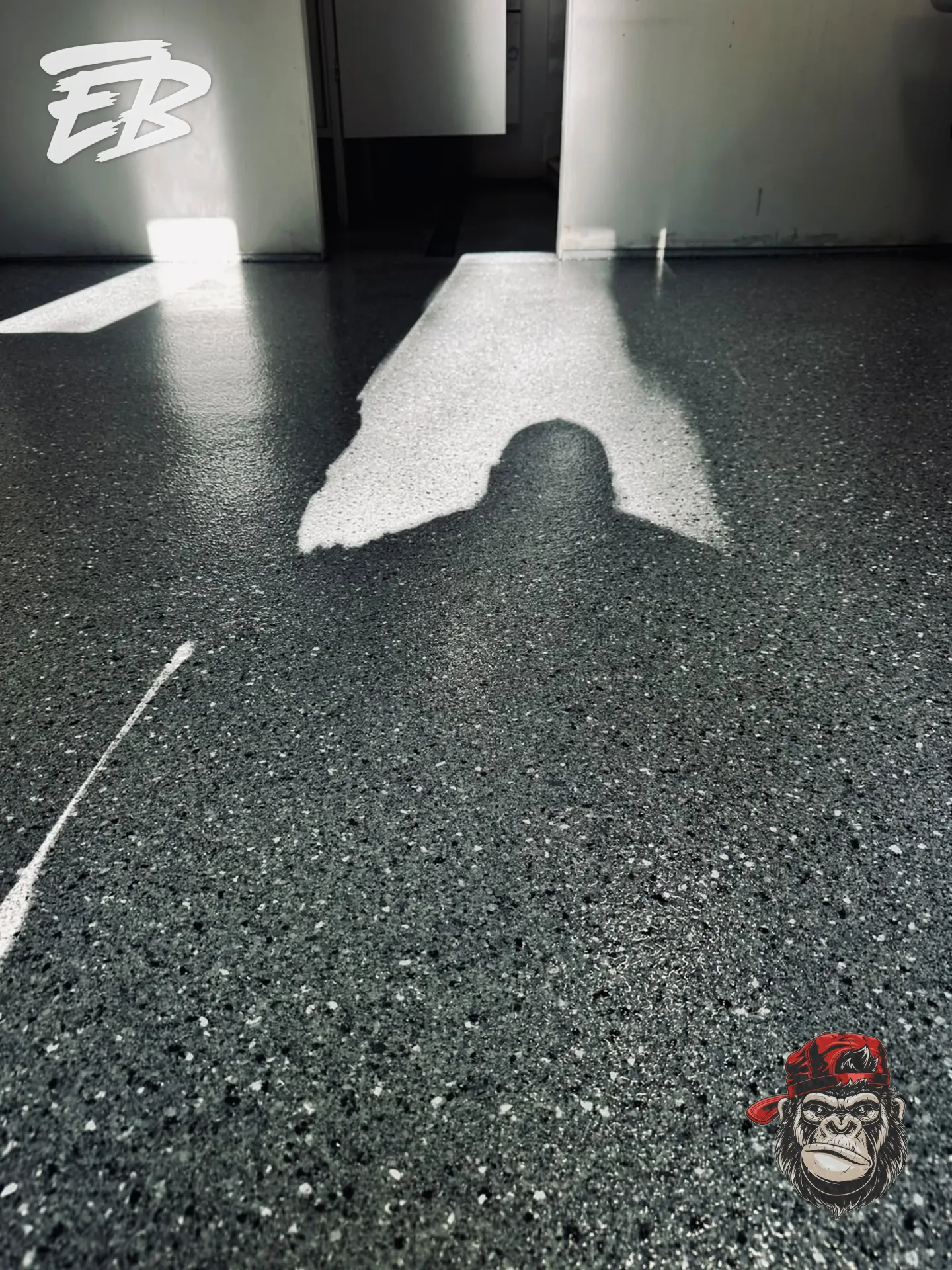
An epoxy floor is a resin system bonded to ground concrete: primer or base coat, optional decorative flake, quartz or metallic, and a clear topcoat. It forms a continuous film over the slab, so the concrete underneath is sealed from spills and salt. See concrete coating and the flake system.
Garage: polished concrete vs epoxy
Salt and meltwater
Ontario garages see brine from road salt every winter. On polished concrete, salt residue and repeated wetting can dull the shine and, over time, contribute to surface deterioration near the door, especially if the slab was already weak. A coated floor separates the concrete from the brine. This is the biggest reason most Ontario homeowners choose a coating for a working garage.
Oil and fluids
Densified and guarded concrete resists many stains if they are cleaned up promptly, but it is still concrete and can absorb oil over time. A resin topcoat keeps oil on the surface for easy wipe-up.
Appearance and texture
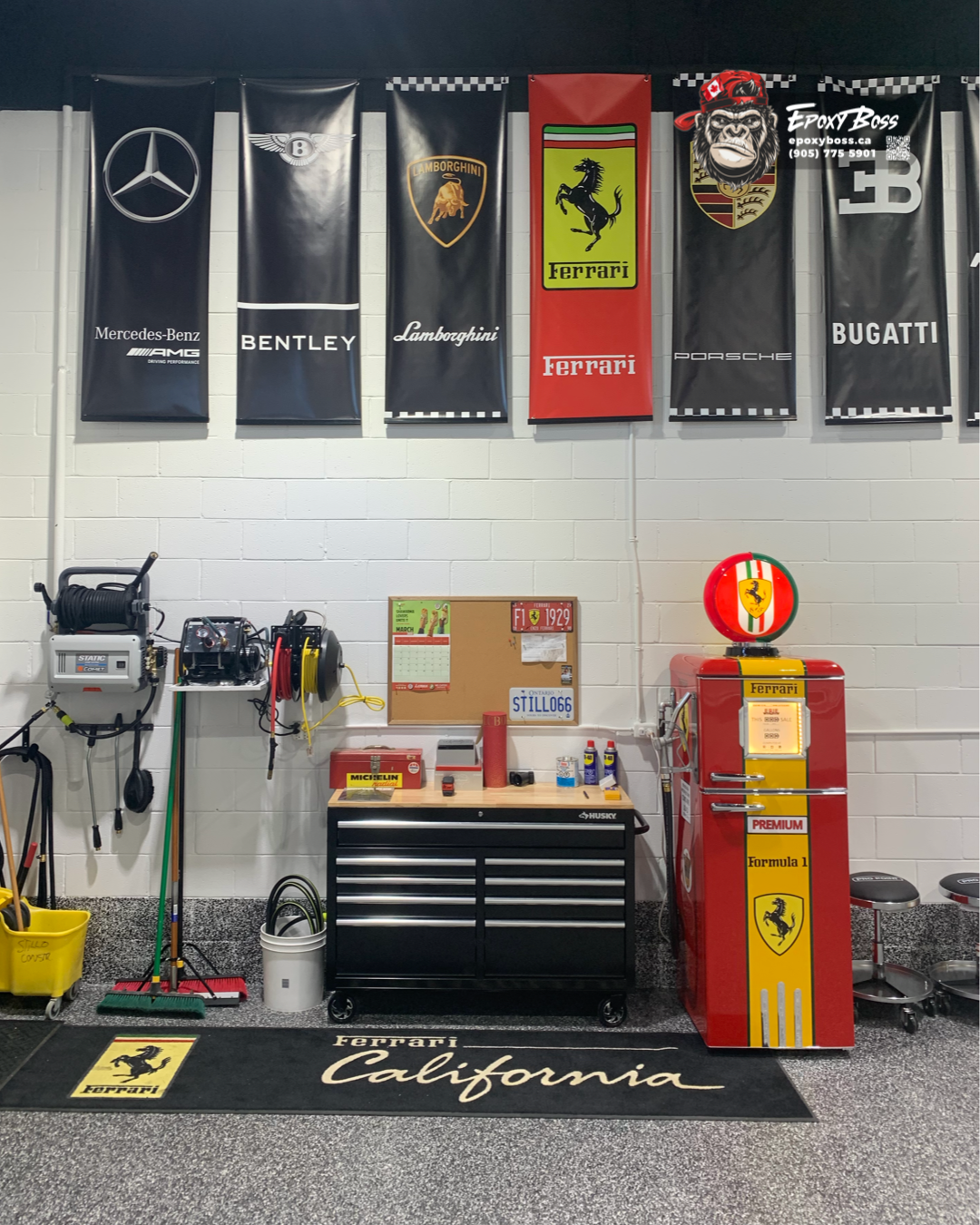
Polished concrete gives a clean, modern, industrial look. Flake floors hide dust and salt film better and add texture for grip. Smooth polished concrete and smooth gloss coatings can both be slippery when wet.
Slab condition
Polishing shows the slab as it is: patches, cracks, colour variation and old stains remain visible. Heavily scaled or patched garage slabs are often better candidates for a coating, which can cover repairs.
Bottom line for garages: a coated system is usually the more practical choice for daily parking in Ontario winters. Polished concrete suits show garages or garages that rarely see salty vehicles.
Basement: polished concrete vs epoxy
Moisture
Basement slabs often move some moisture vapour. Polished concrete does not place a film on the surface, so it is less affected by moderate vapour moving through the slab. A resin coating can blister or lose adhesion if moisture exceeds the product's limit, so moisture is tested first, for example using the in-situ RH method in ASTM F2170. Read more in our basement floor coating and moisture guide.
Design options
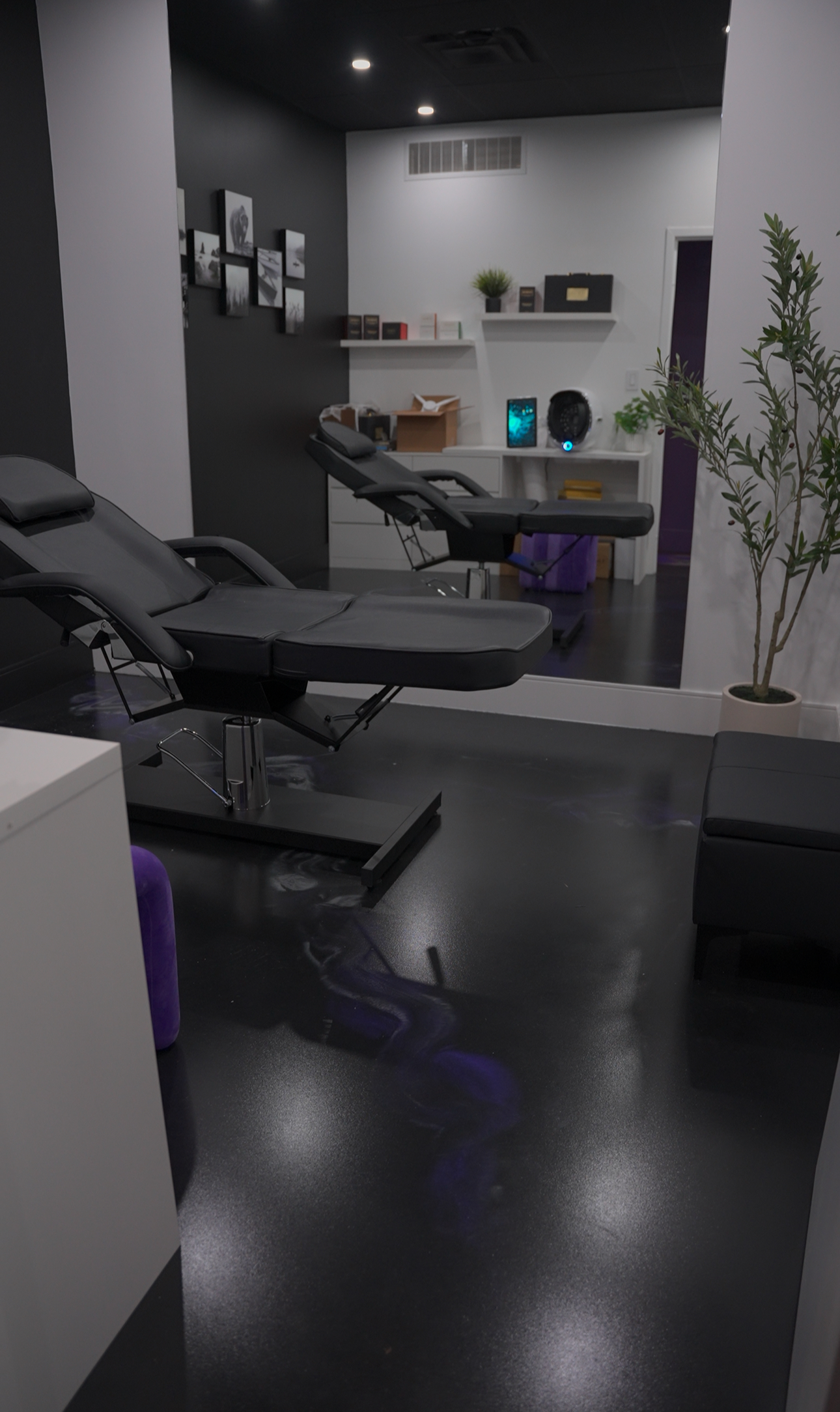
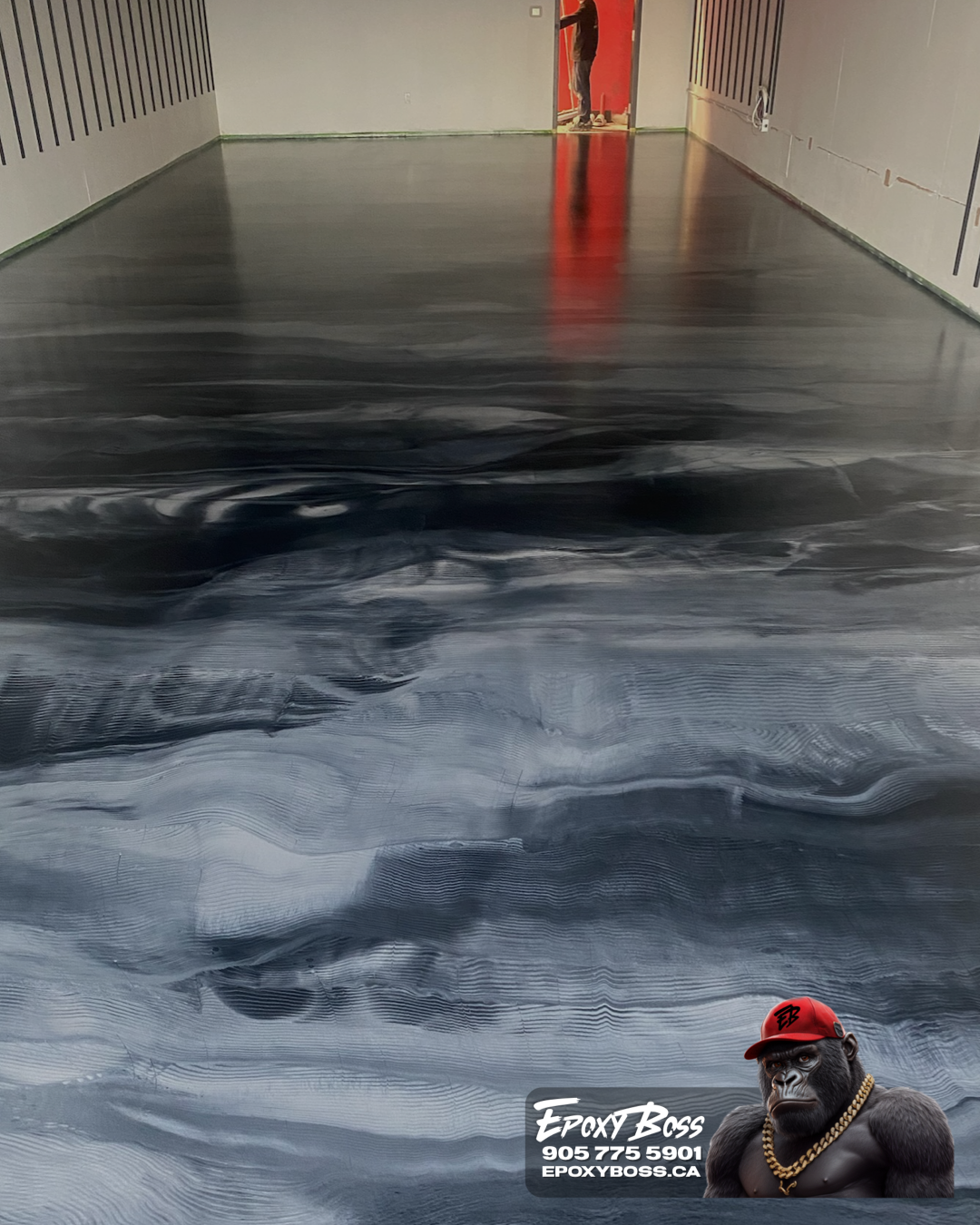
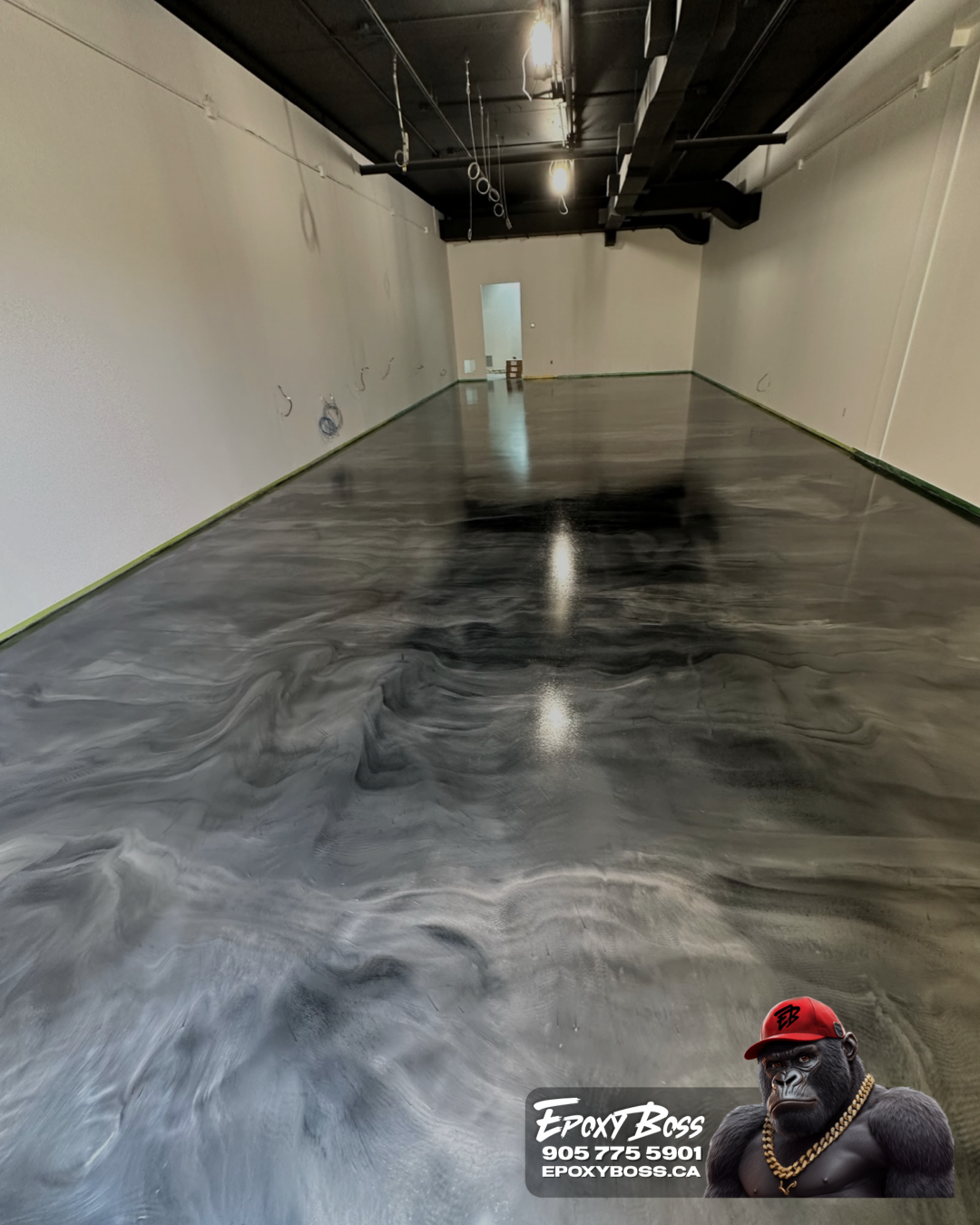
Epoxy gives far more colour and pattern choice, including solid colours, flake and metallic epoxy. Polished concrete is limited to the colour of the slab, unless it is stained or dyed. See concrete staining.
Comfort and noise
Both are hard surfaces. Rugs, mats and in-floor heating help either one.
Existing slab
Basement slabs with old glue, paint or many patches can be polished, but the history may show. Coatings can hide more of it after repair.
Bottom line for basements: polished concrete suits sound slabs where you like the concrete look and want a low-film finish; epoxy suits owners who want colour, pattern and a fully sealed surface over a dry slab. See where epoxy works inside a house and our basement and indoor coatings page.
Quick decision guide
- Daily-use garage with winter parking: a coated flake system is usually the better fit.
- Show garage or hobby space with little salt: either can work; polished concrete if you like the raw look, coating if you want colour or texture.
- Basement with a sound, fairly dry slab and a modern look in mind: polished concrete or grind-and-seal is worth considering.
- Basement where you want colour, pattern or a fully sealed surface: epoxy, after moisture testing.
- Slab with many patches, old adhesive or heavy scaling: a coating usually hides the history better after repair.
- Moisture readings above a coating's limit: polished concrete, or a coating with a suitable moisture-mitigating primer where the manufacturer supports it.
If you are still unsure, an on-site look at the slab usually settles it quickly. The condition of the concrete, more than preference alone, often points to one option.
Grind and seal: the middle option
A grind-and-seal floor is ground to a uniform look and sealed with a clear coating or sealer, without full polishing. It sits between polished concrete and a decorative coating in look and cost. See grind and seal systems and our guide to concrete sealing vs coating.
Dust and safety
Both polishing and coating preparation involve grinding concrete, which produces silica-containing dust. Ontario's guideline on silica on construction projects covers this hazard. Professional crews use dust-extraction equipment and isolate work areas.
Maintenance compared
- Polished concrete: dust-mop, clean with a neutral cleaner, re-apply guard or re-burnish over time in high-traffic areas.
- Epoxy system: sweep, mop with a neutral cleaner, and recoat the topcoat when it wears, if the system allows.
Frequently asked questions
Is polished concrete cheaper than epoxy?
It depends on slab condition, desired finish level and repairs. Our floor coating cost calculator includes both polished concrete and coating systems for a first estimate.
Is polished concrete good for a garage in Ontario?
It can work in garages with little salt exposure, but for daily parking in winter, a coated system usually protects the slab better.
Can you polish a basement floor with cracks?
Yes, but cracks and patches will remain visible unless filled with a matching repair. Coatings hide repairs more completely.
Which is more slippery?
Both can be slippery when wet if smooth. Flake and textured topcoats add grip on coated floors.
Book a free floor assessment
Epoxy Boss, based in Innisfil since 2019, offers both polished and decorative concrete and resin coating systems across the GTA, York Region, Simcoe County, Halton, Durham and Muskoka. Call (905) 775-5901 or request a free floor assessment for an honest recommendation and a written quote in Canadian dollars. Commercial owners can also read our warehouse floor options guide.