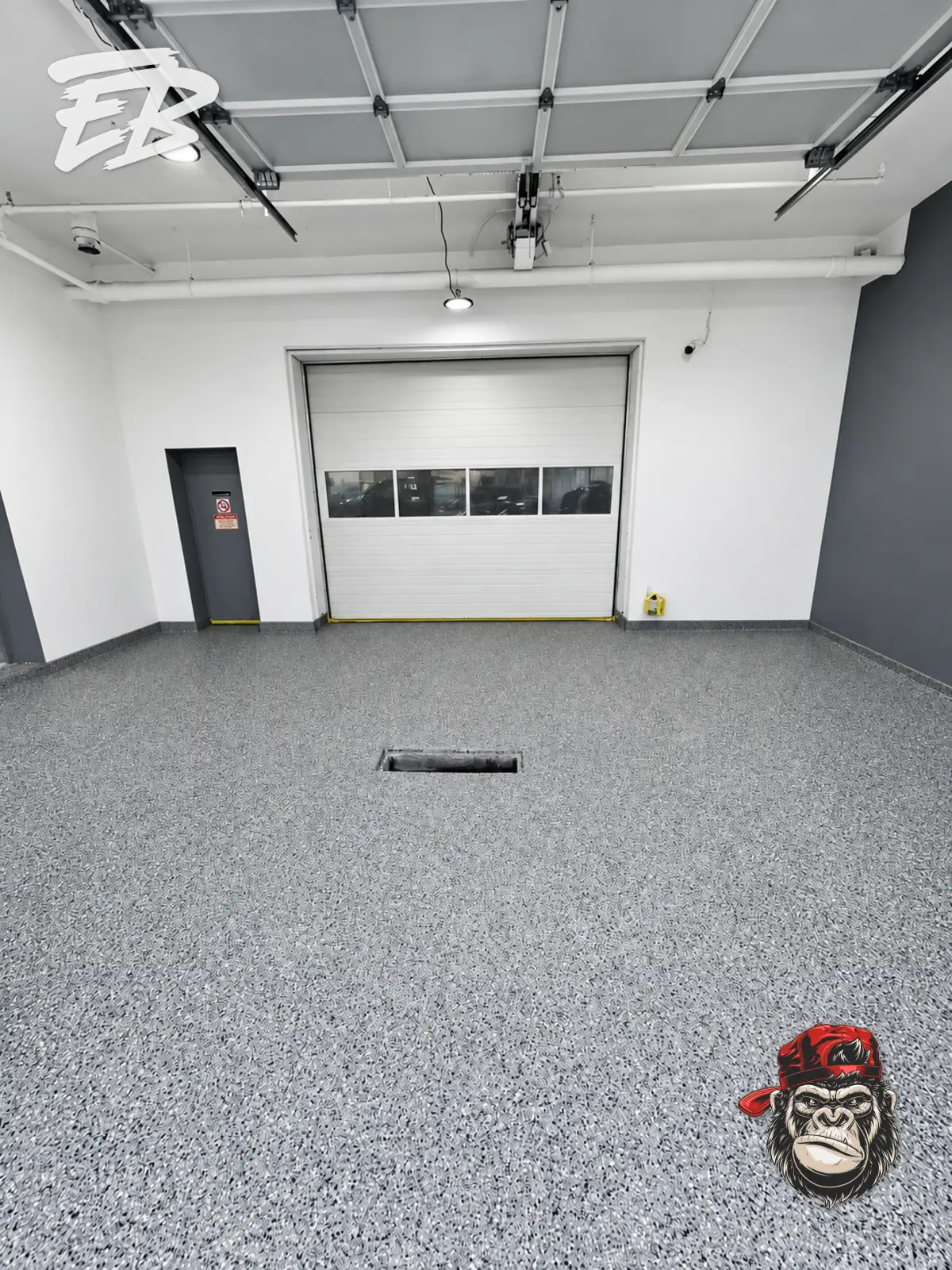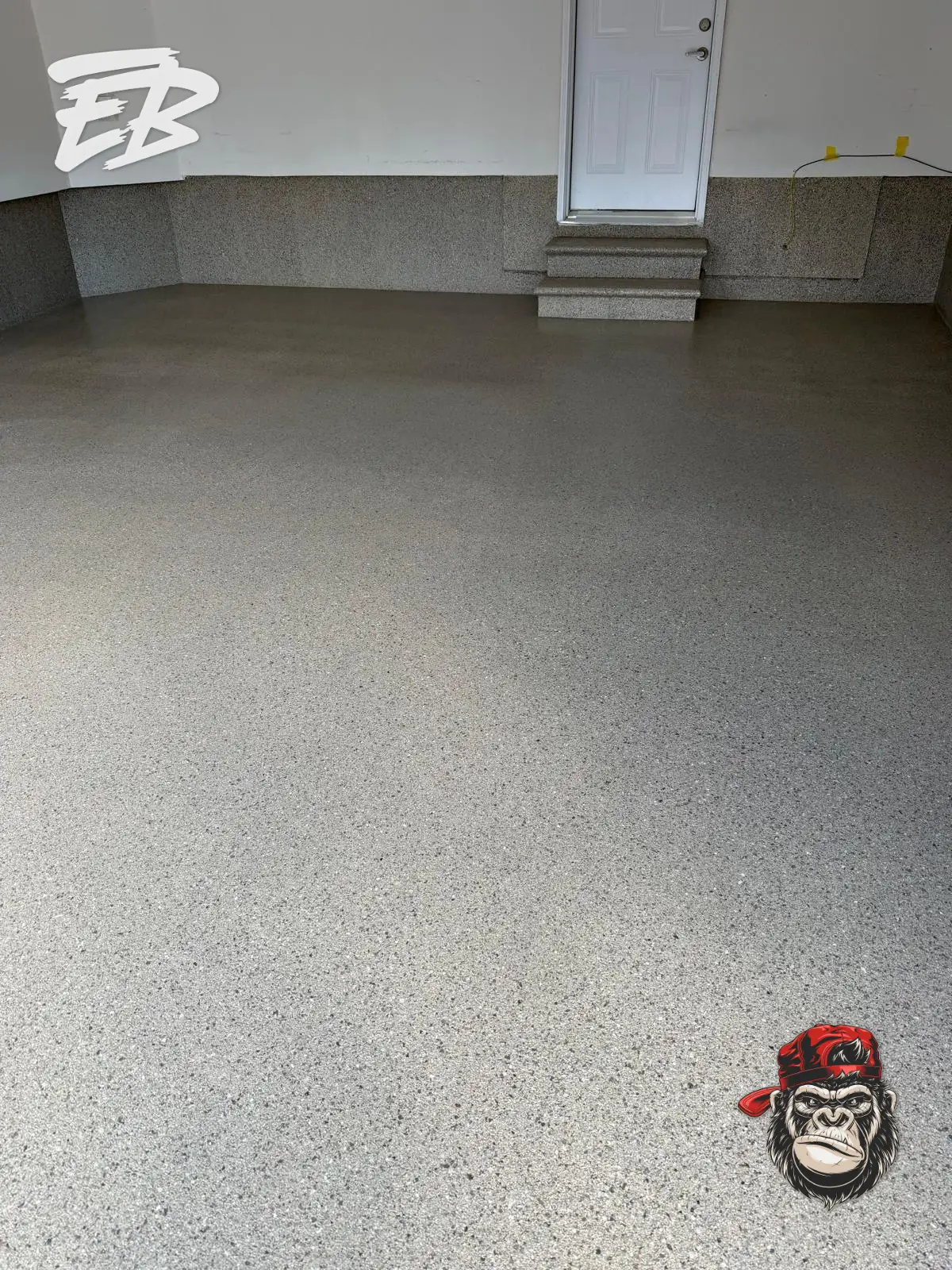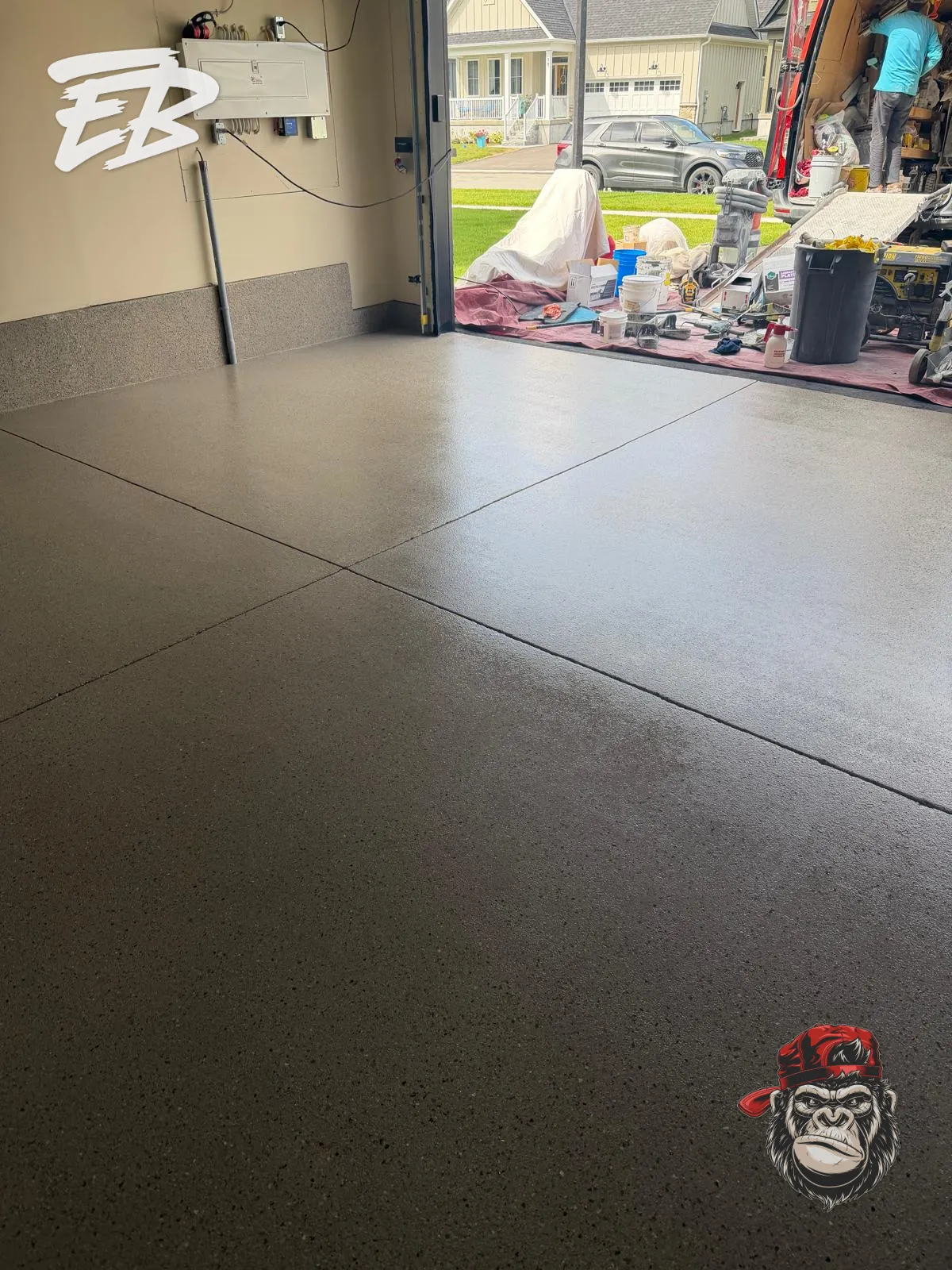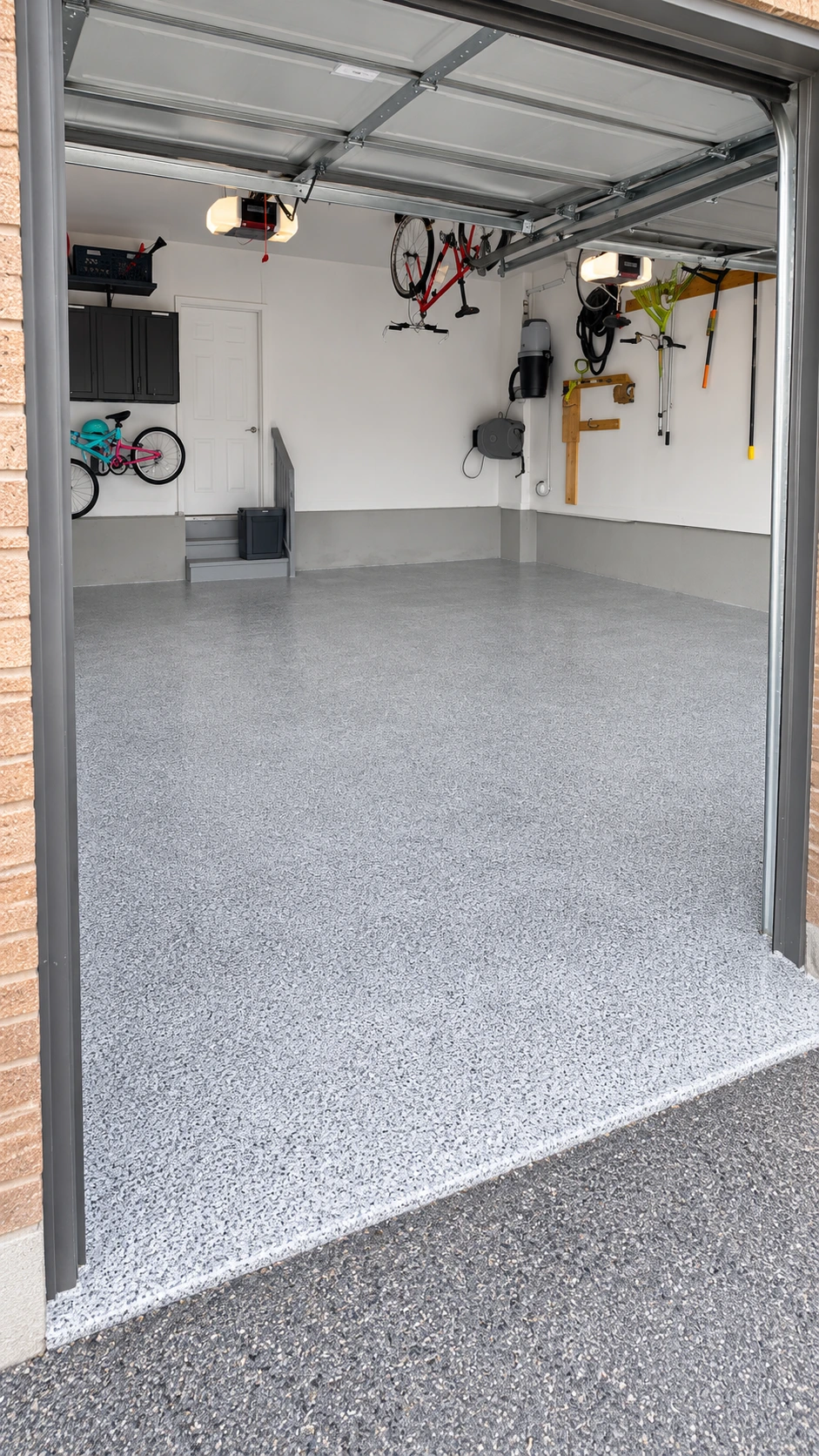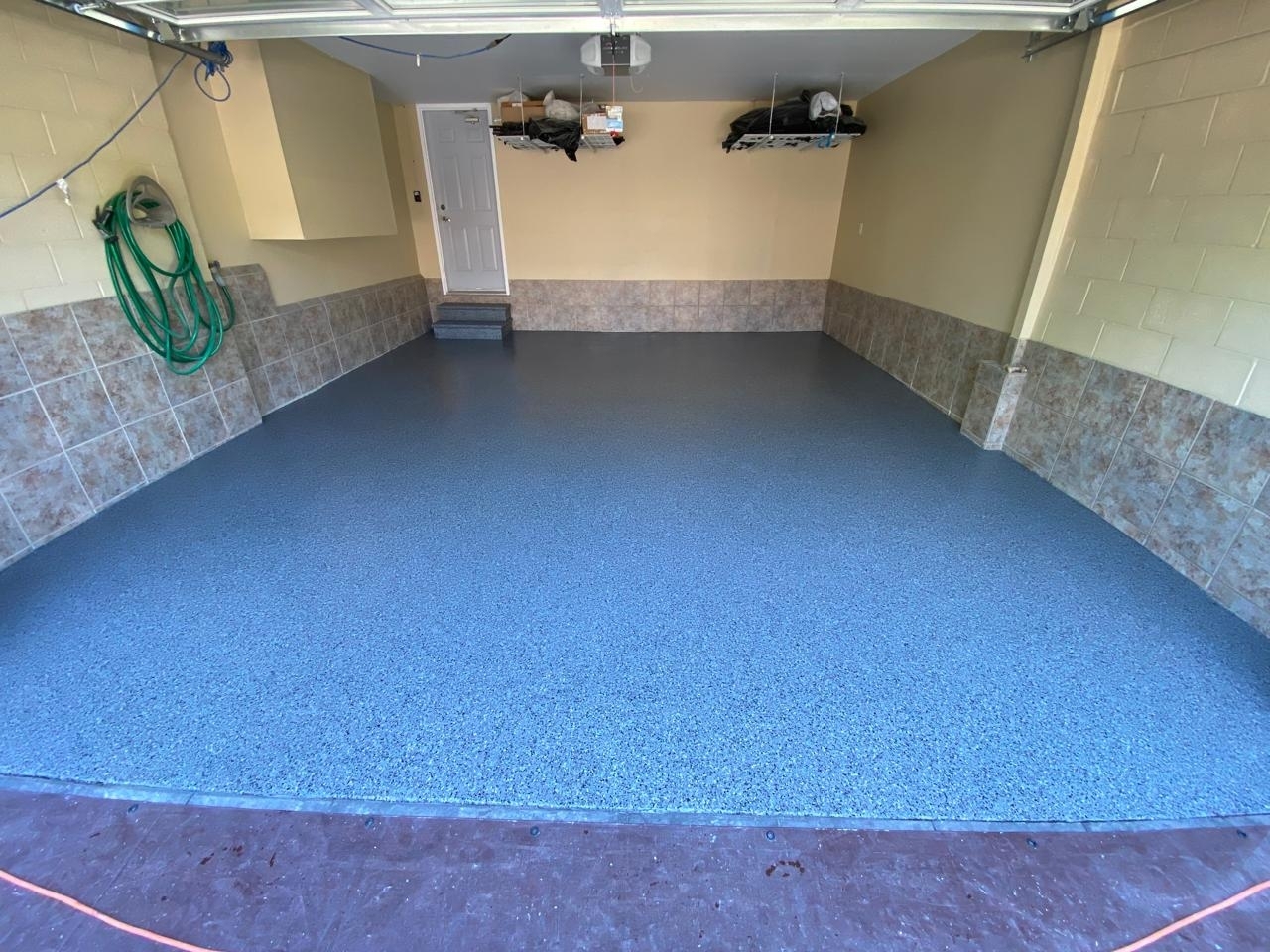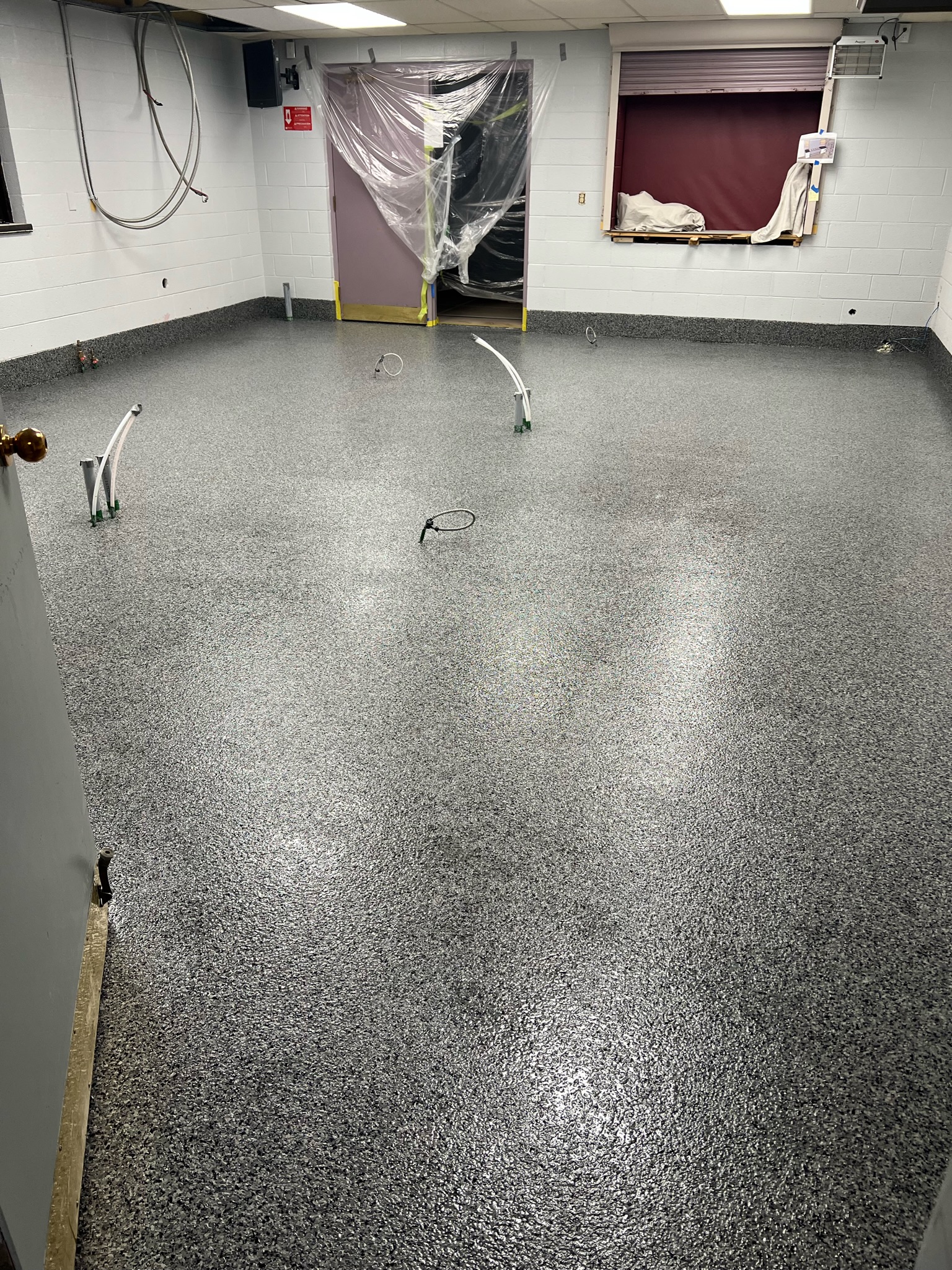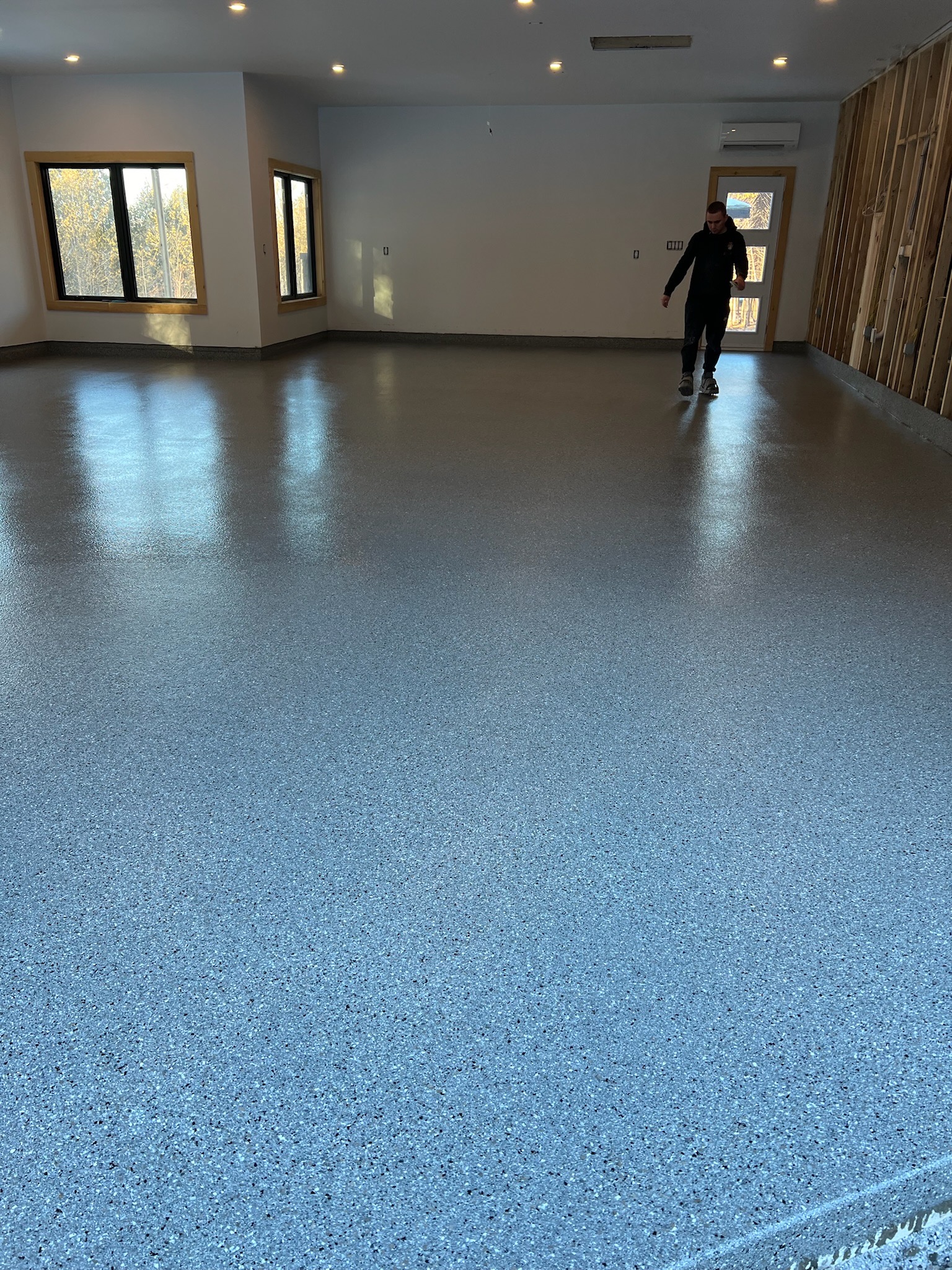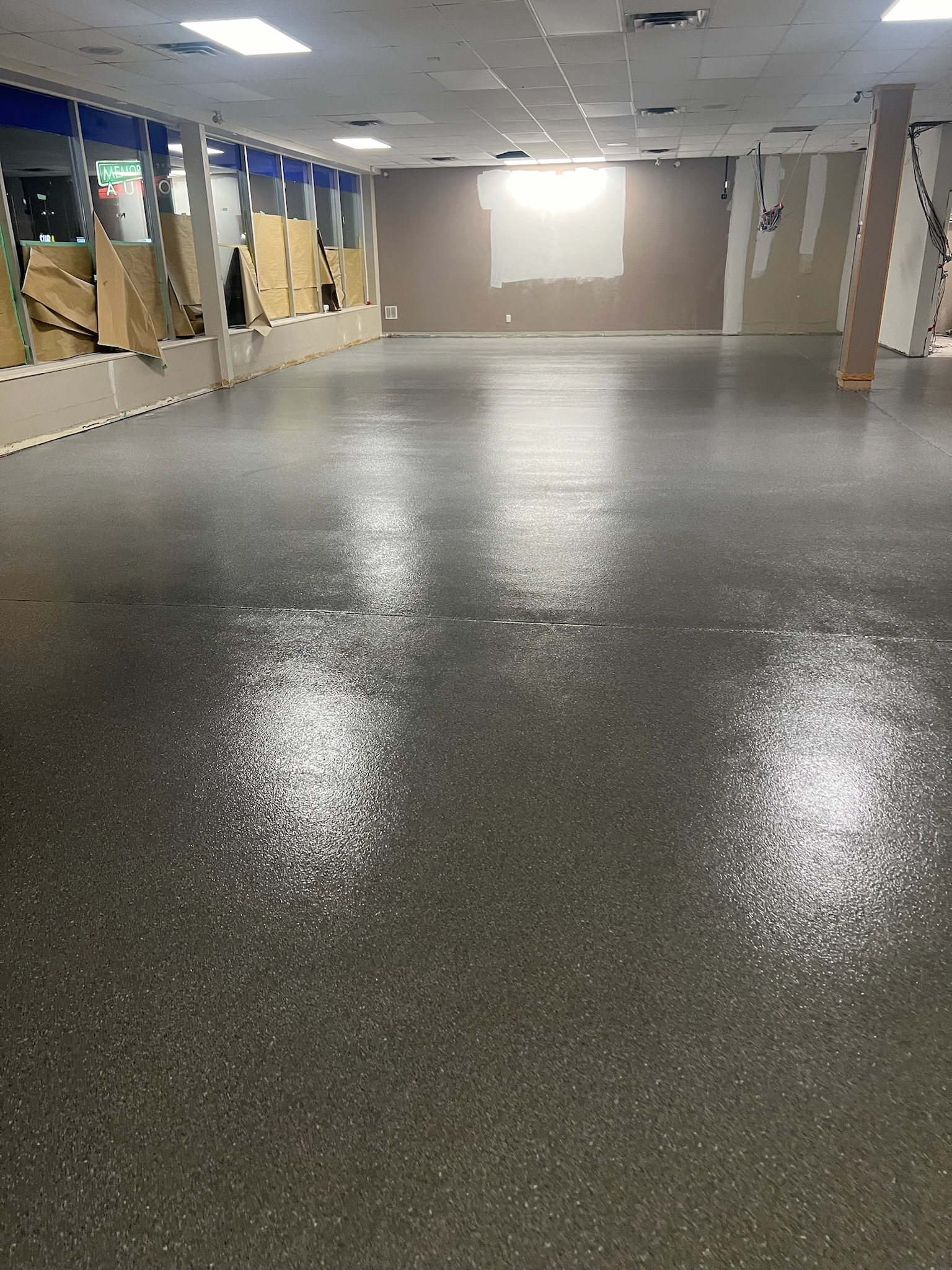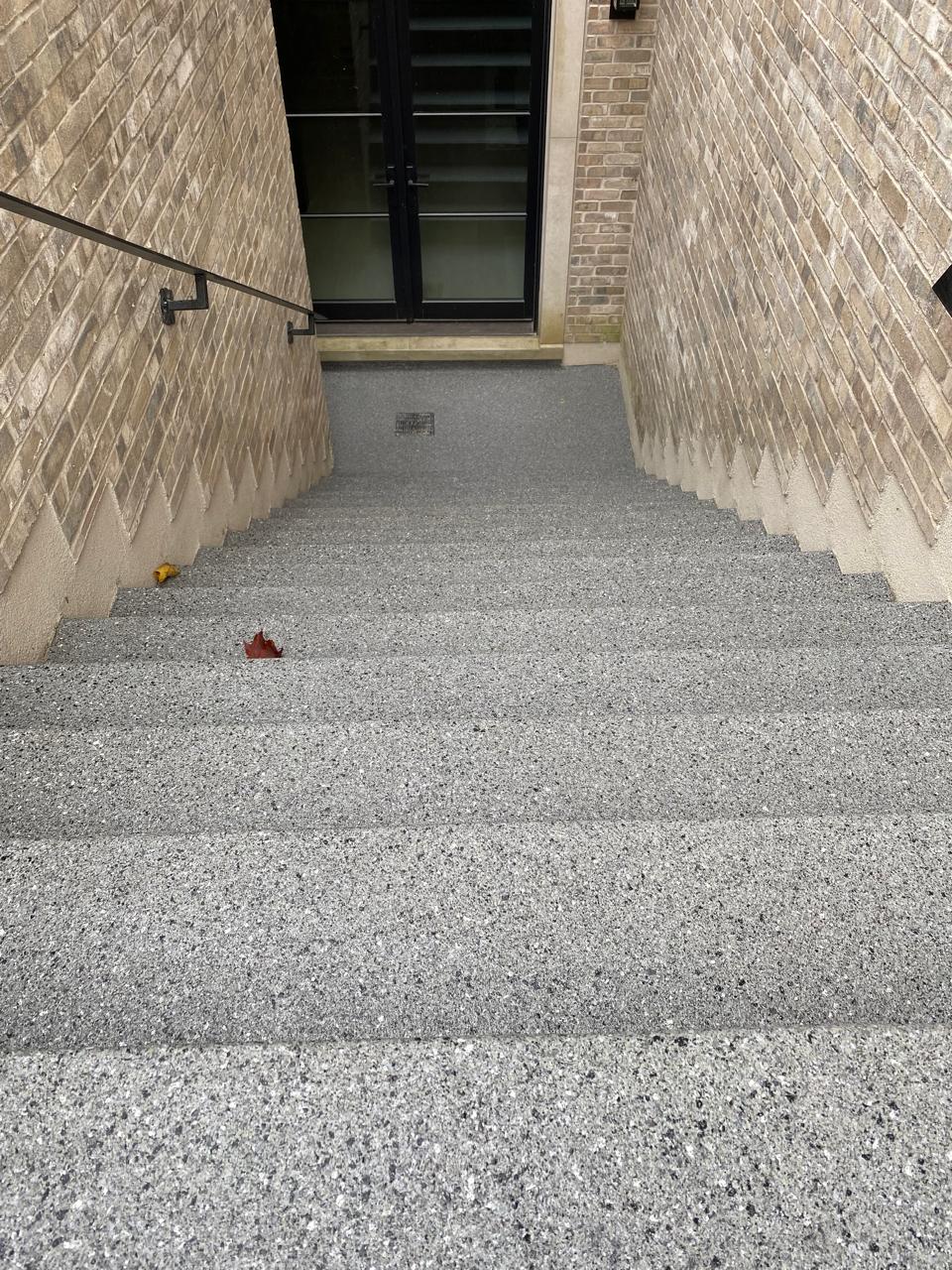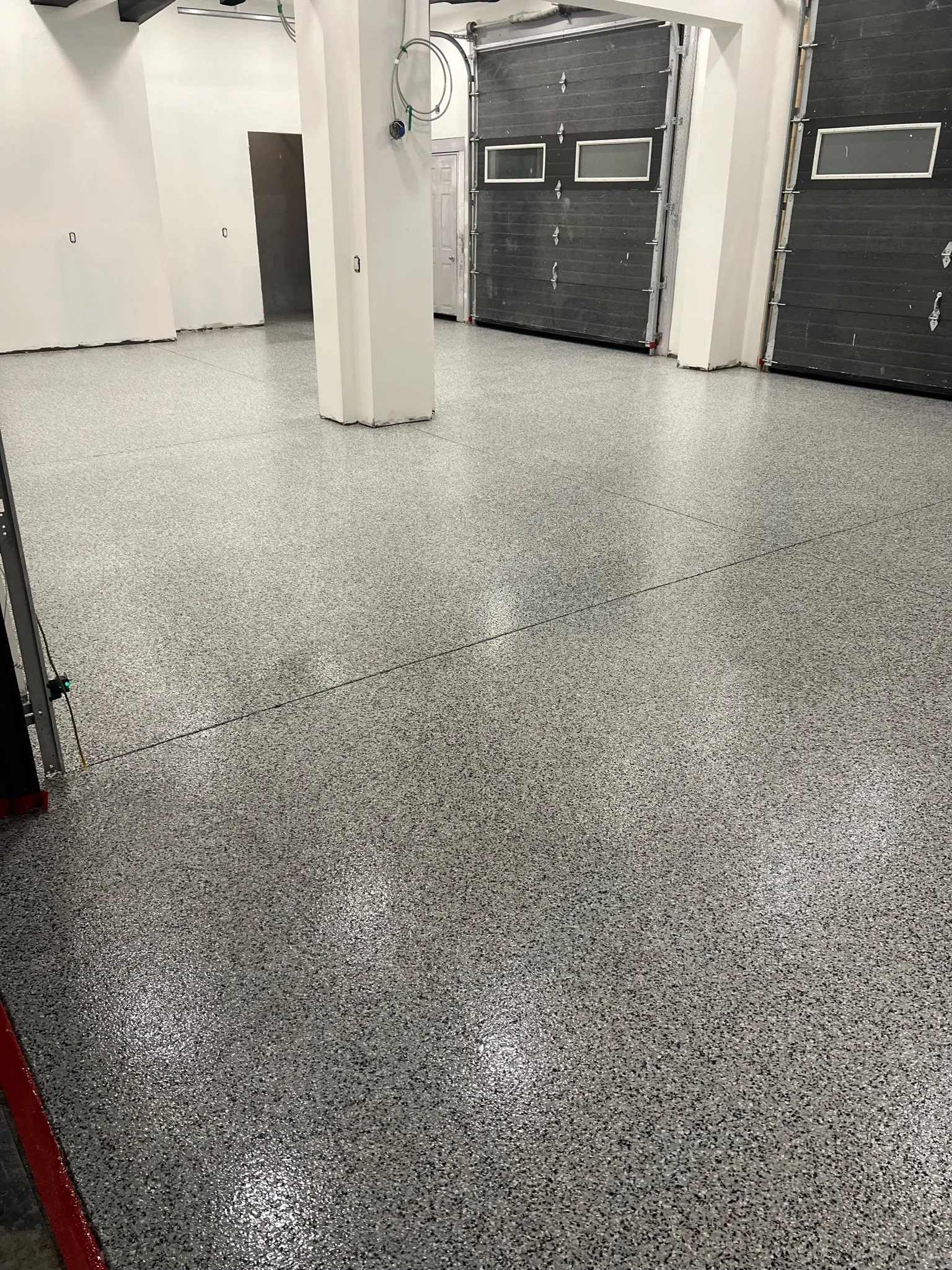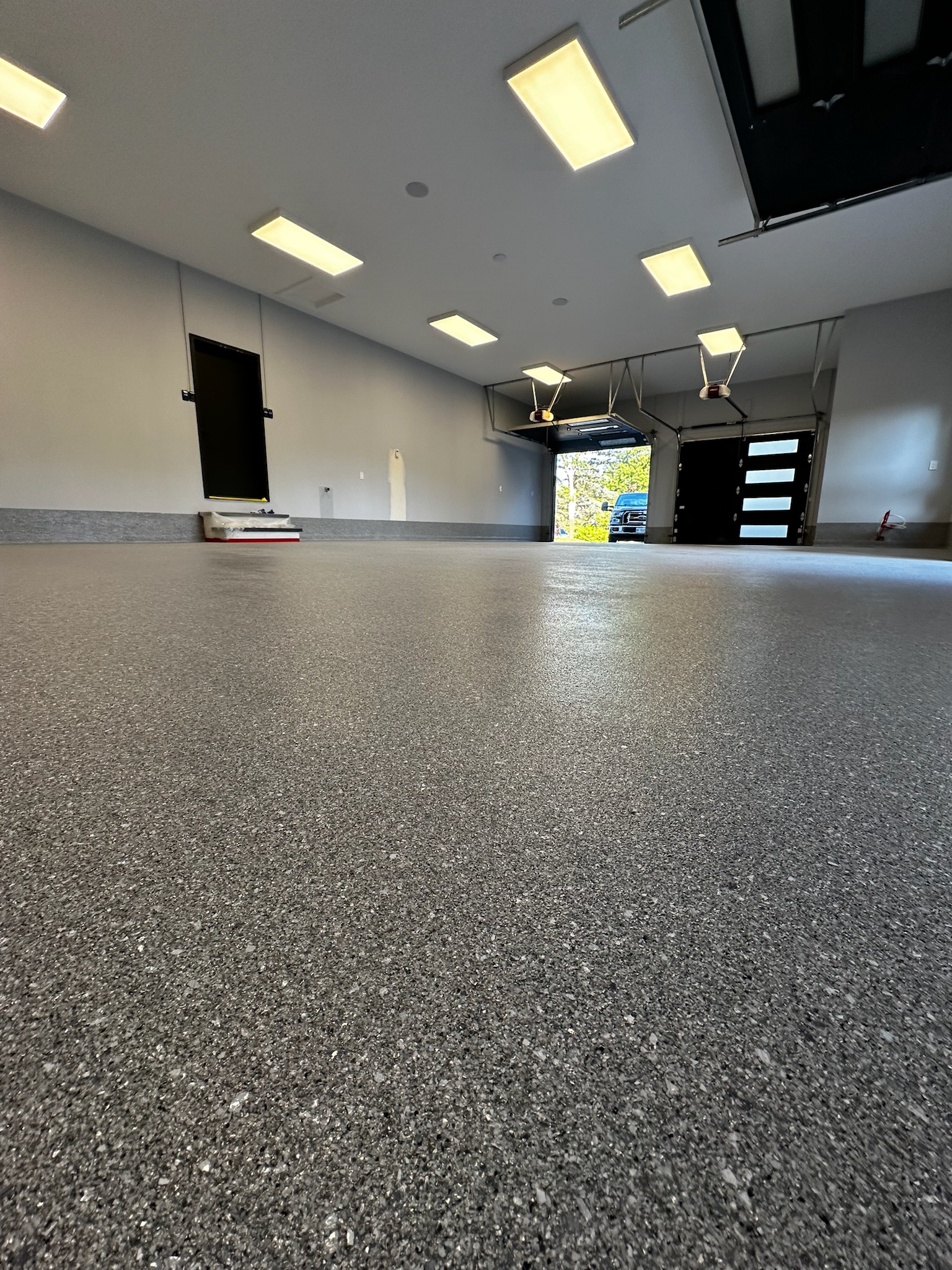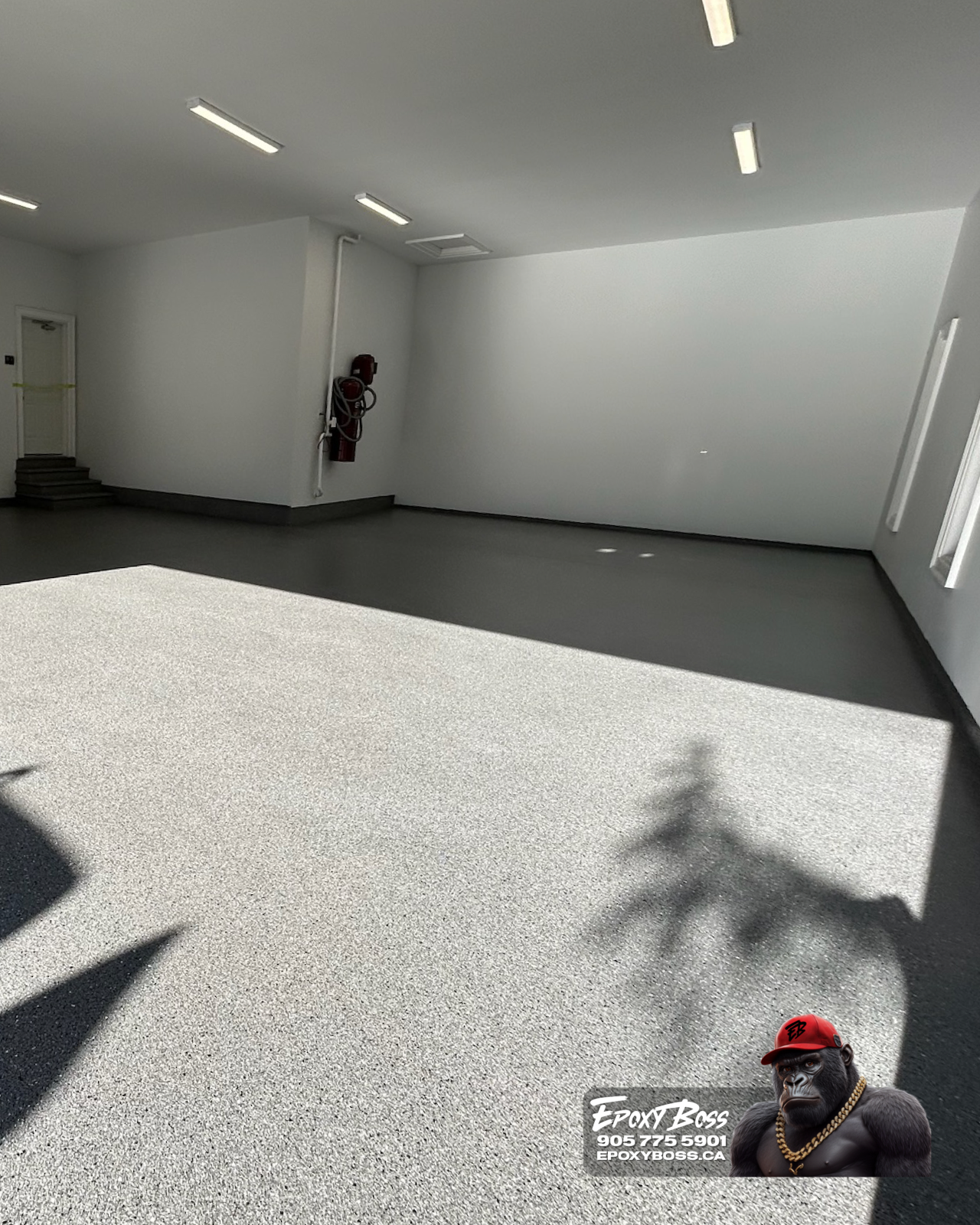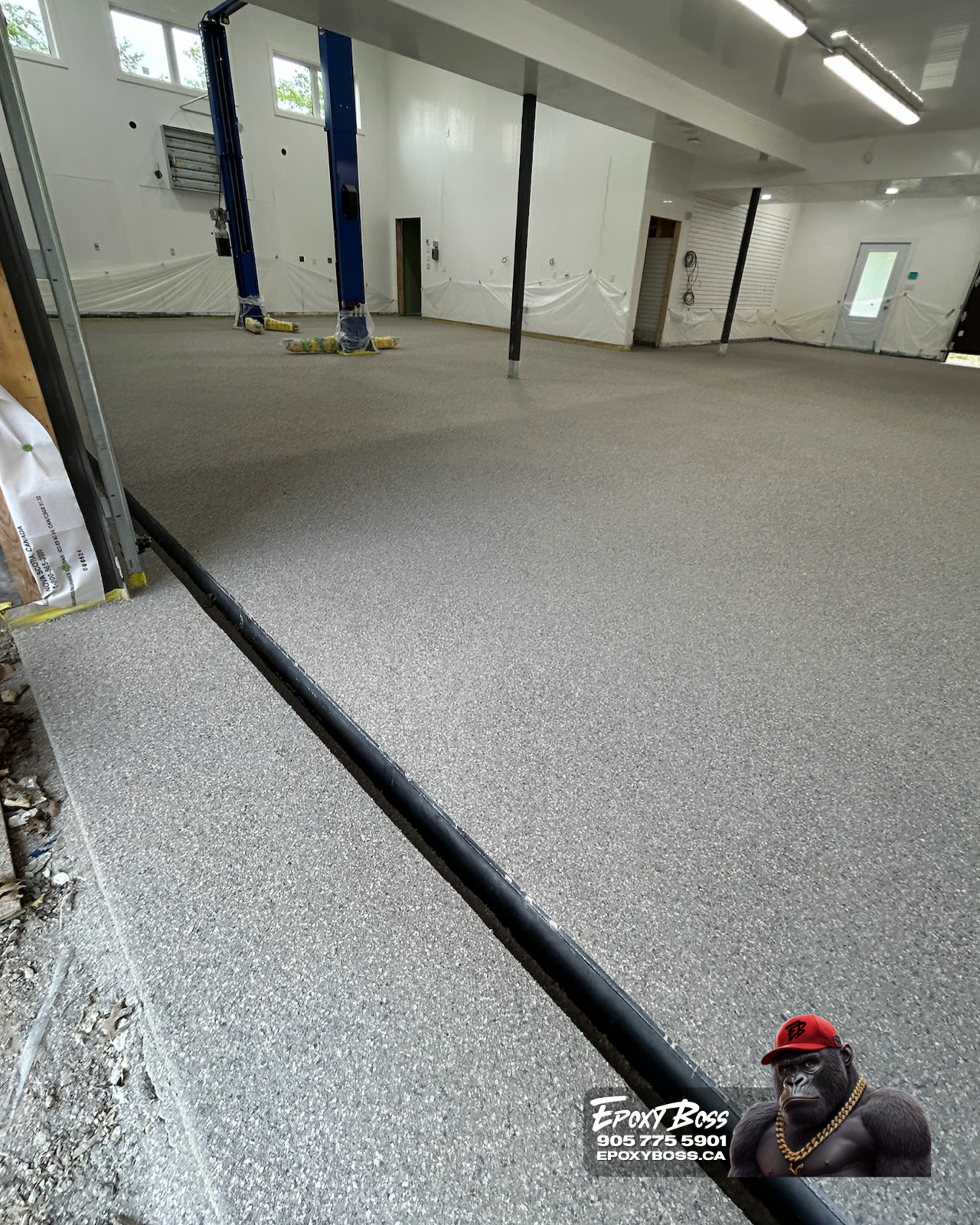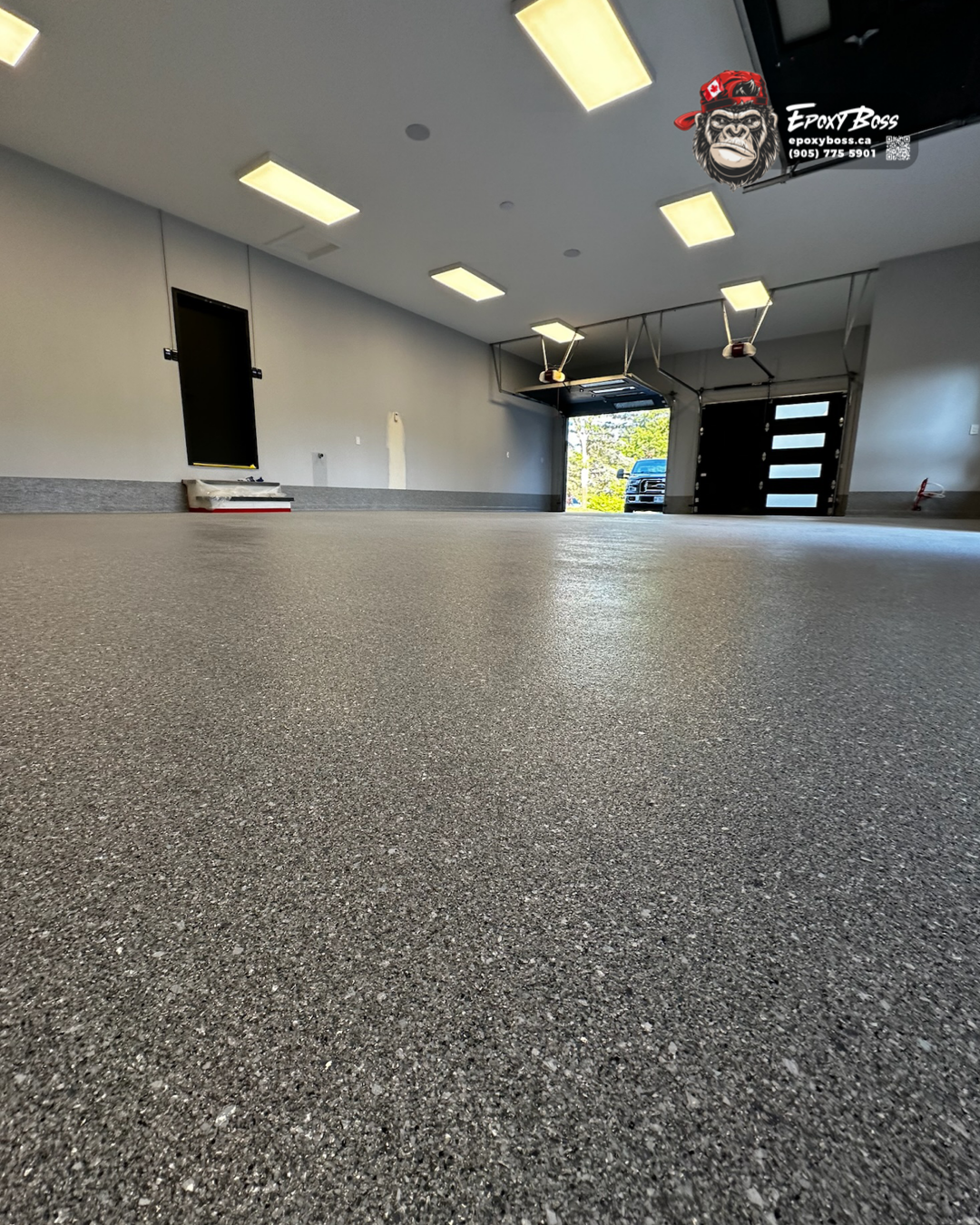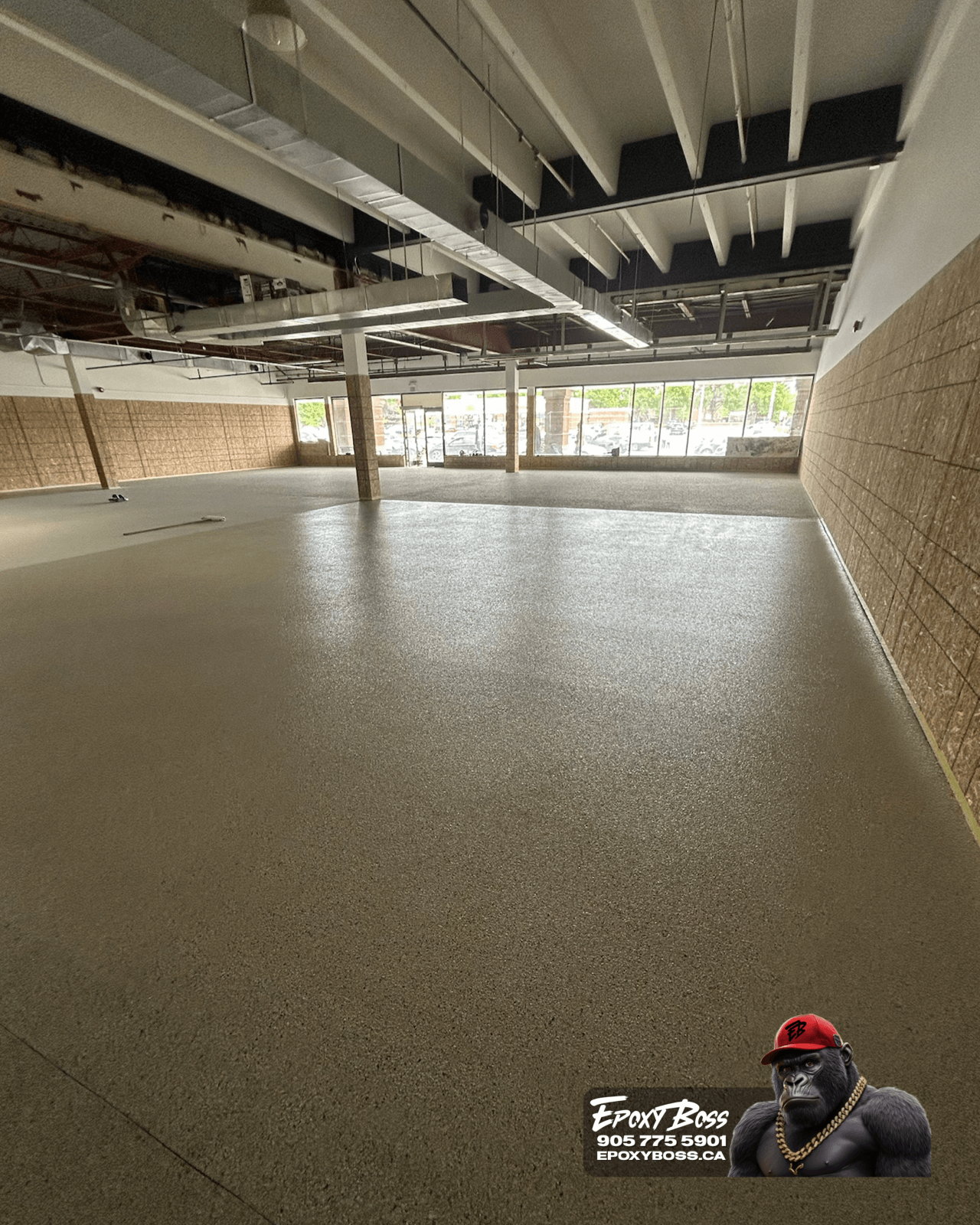
Warehouse owners and facility managers in Ontario usually come to the floor question from one of three directions: the slab is dusting and the racking is covered in grey powder, the joints are breaking up under forklift traffic, or a new tenant or audit is asking for a floor that is easier to clean and mark out. Each of those problems points toward a different floor system, and the cheapest option on paper is rarely the cheapest over the life of the building.
This guide walks through the main options for warehouse and distribution floors — grind and seal, polished concrete, epoxy coatings and urethane cement — and explains what each one is actually good at, where each one struggles, and what has to happen to the concrete before any of them goes down.
Start with the slab, not the product
Every warehouse floor system sits on concrete, and the condition of that concrete decides more about the result than the brand of coating. Before comparing systems, it helps to know:
- whether the surface is dusting, scaling or soft at the top;
- how the saw-cut and construction joints are behaving under wheel traffic;
- whether there are cracks, spalls or old patches that will telegraph through a finish;
- whether moisture is coming up through the slab, especially in older buildings or slabs on grade without a vapour barrier;
- what is already on the floor — old paint, sealer, line-marking or adhesive;
- how the space is used: forklift and pallet-jack traffic, racking layout, chemical exposure, washdowns and temperature.
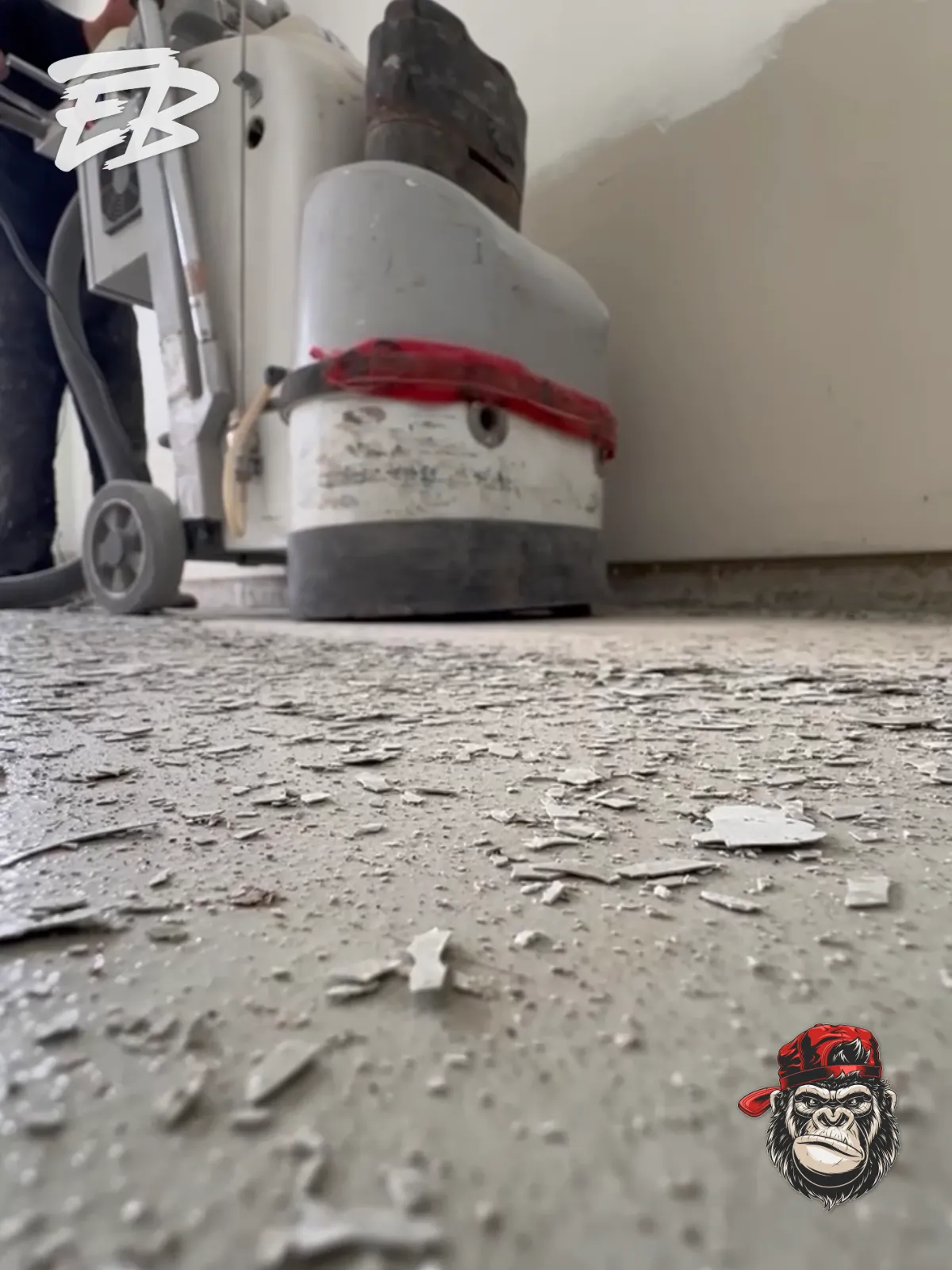
Proper concrete surface preparation — usually diamond grinding or shot blasting — removes the weak top layer and contaminants and gives the new system something sound to bond to or refine. Skipping that step is the most common reason warehouse coatings peel within a few years.
Option 1: Grind and seal
A grind and seal system mechanically grinds the existing concrete and applies a penetrating densifier or sealer. It does not build a thick film on top of the slab.
Where it works well: large areas of sound concrete where the main goals are dust control, a cleaner appearance and easier sweeping, with a modest budget and limited downtime.
Where it struggles: it does not hide heavy staining, it gives limited protection against chemical spills, and it does not repair joints or cracks on its own. If the slab is already breaking down at the surface, a sealer cannot add strength that is not there.
Grind and seal finishes can usually be refreshed rather than removed, which makes them a practical option for distribution space that changes tenants or layout.
Option 2: Polished concrete
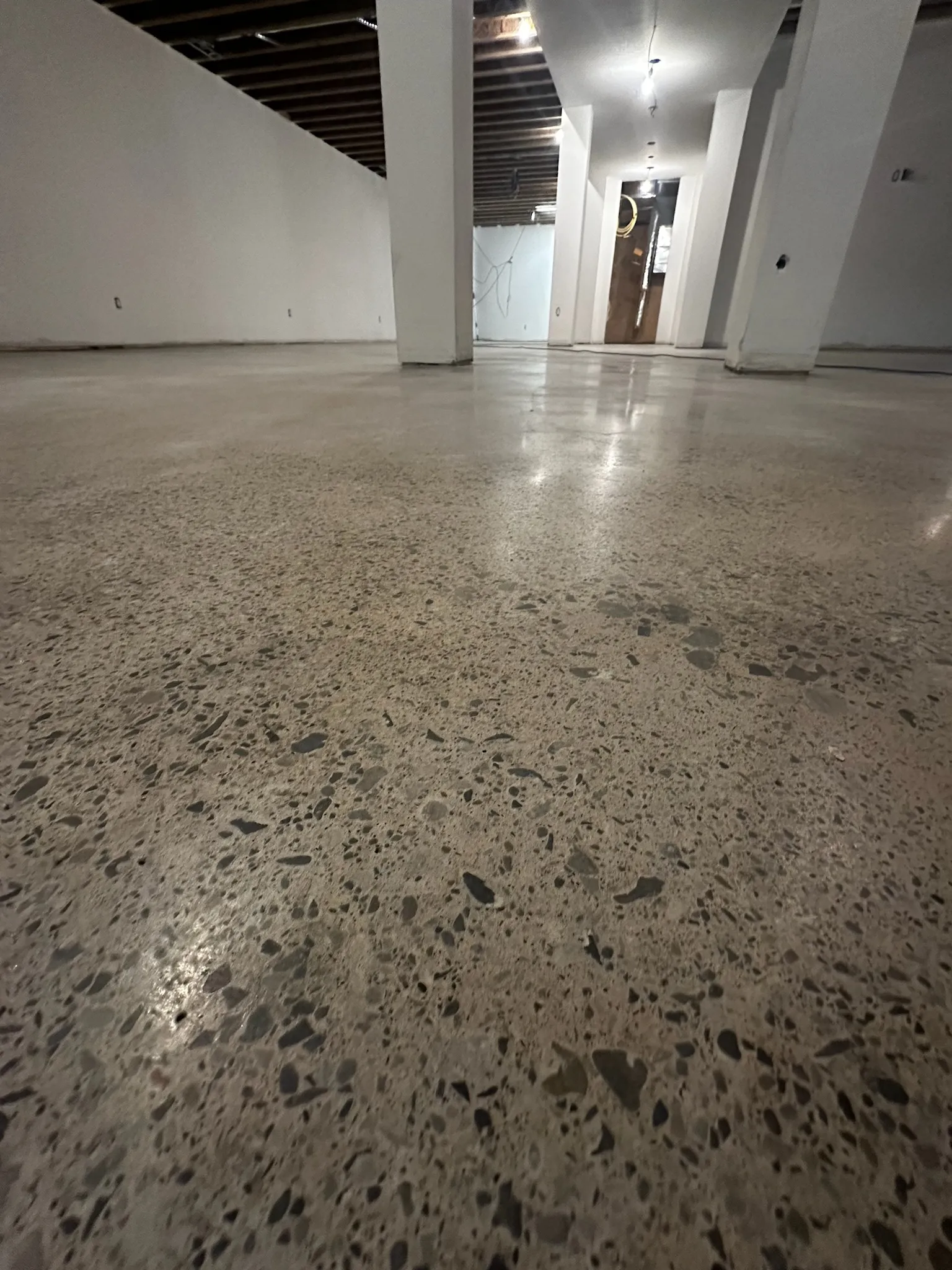
Polished concrete goes further than grind and seal: the slab is ground and refined through progressively finer diamond tooling and densified, producing a harder, more reflective surface without a topical coating.
Where it works well: warehouses and showroom-warehouse combinations where light reflectivity, low maintenance and a durable surface matter, and where the concrete is reasonably consistent.
Where it struggles: the finished look depends on the slab — existing patches, cracks and variation remain visible. Polished concrete is not a barrier against aggressive chemicals, and areas with frequent oil or acid spills may need a coated zone instead.
Option 3: Epoxy coating systems
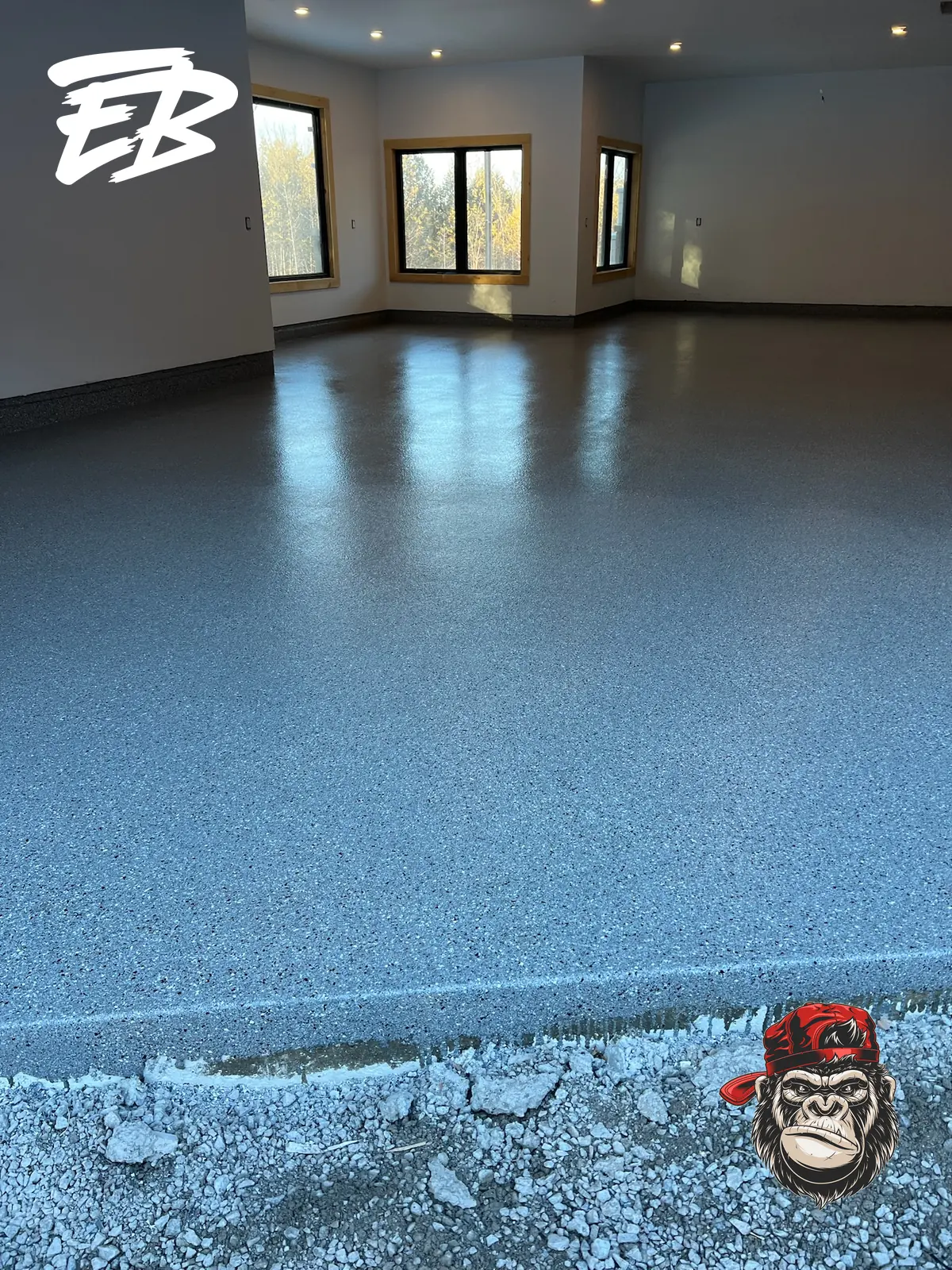
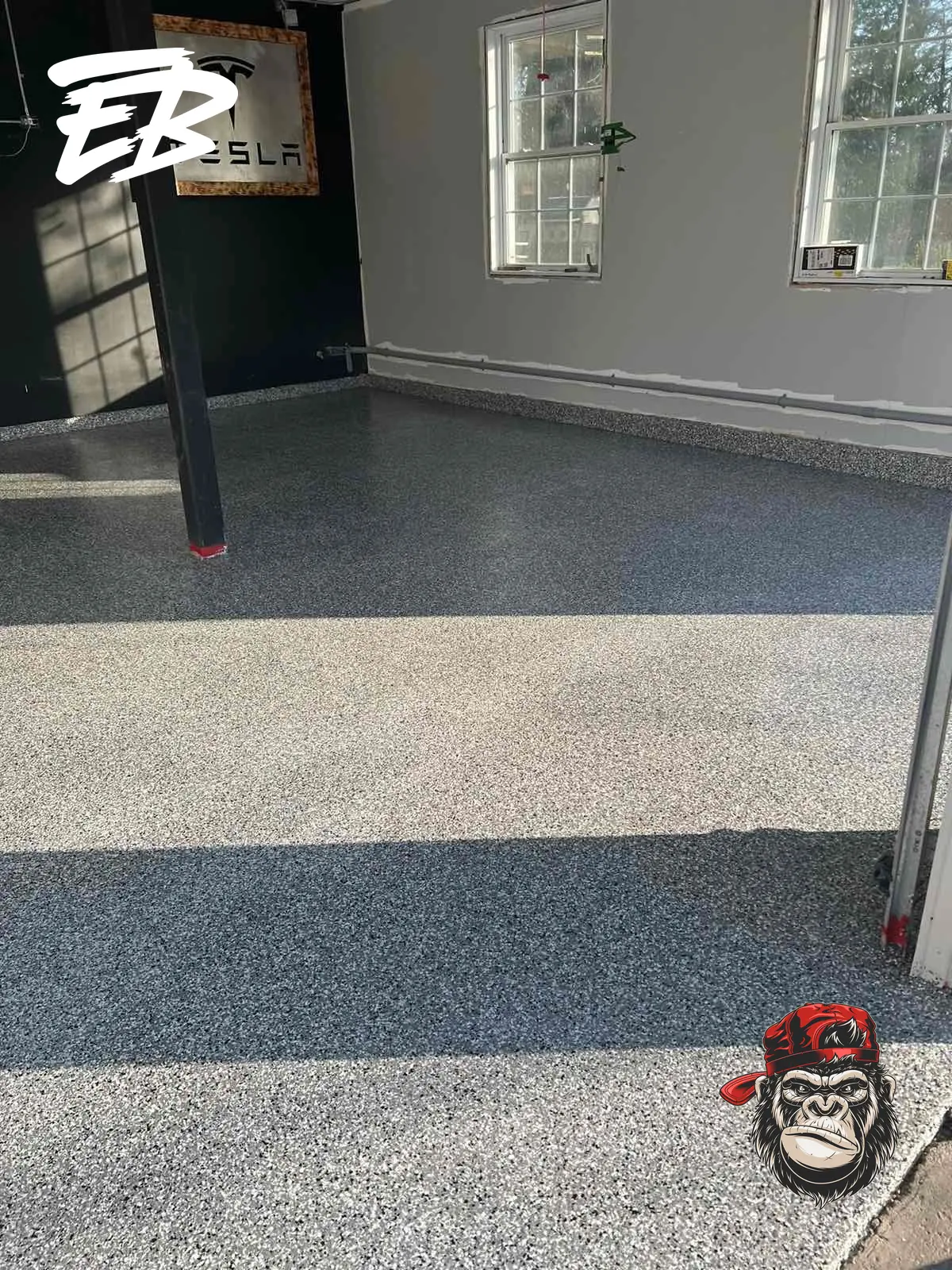
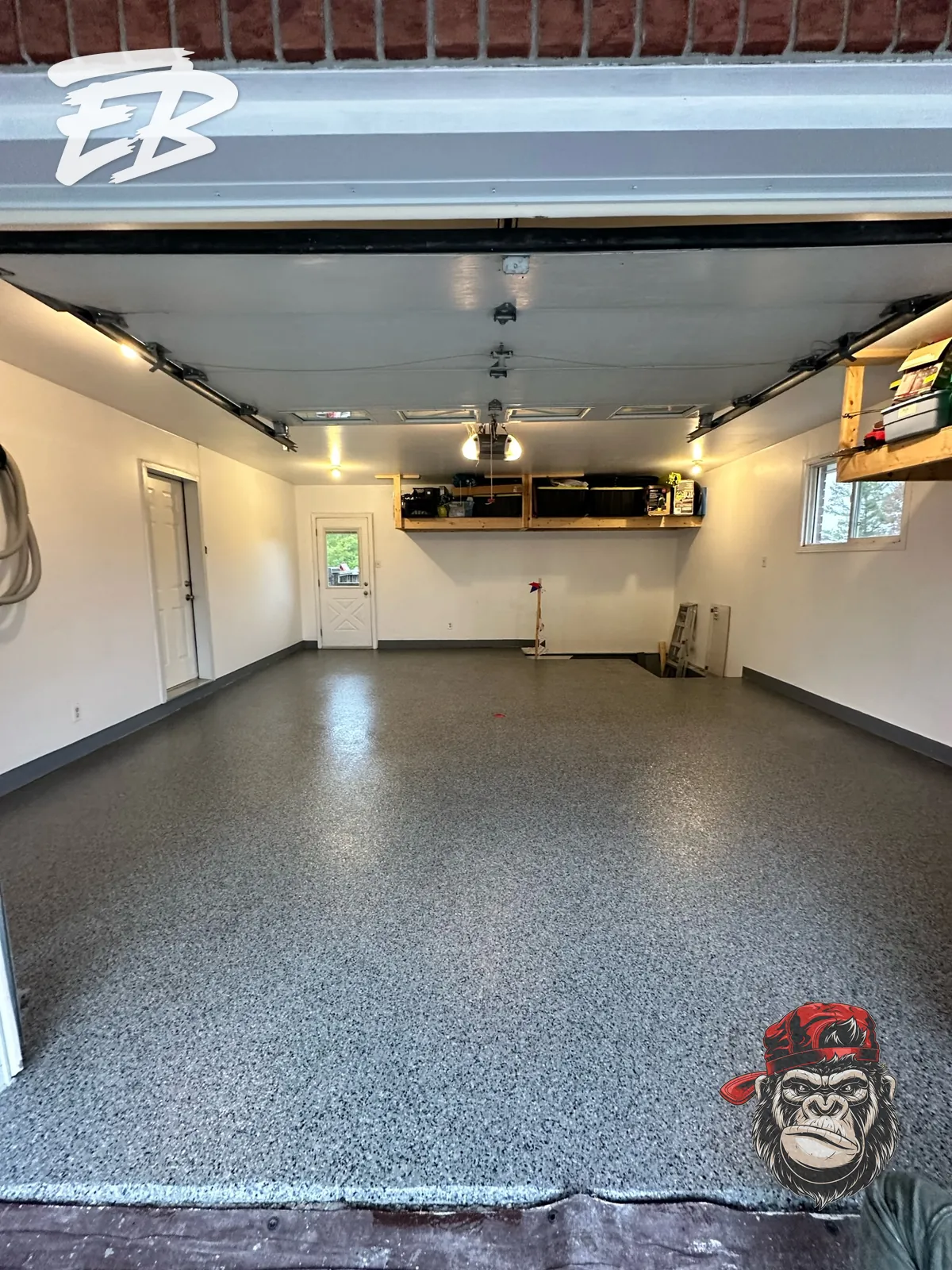
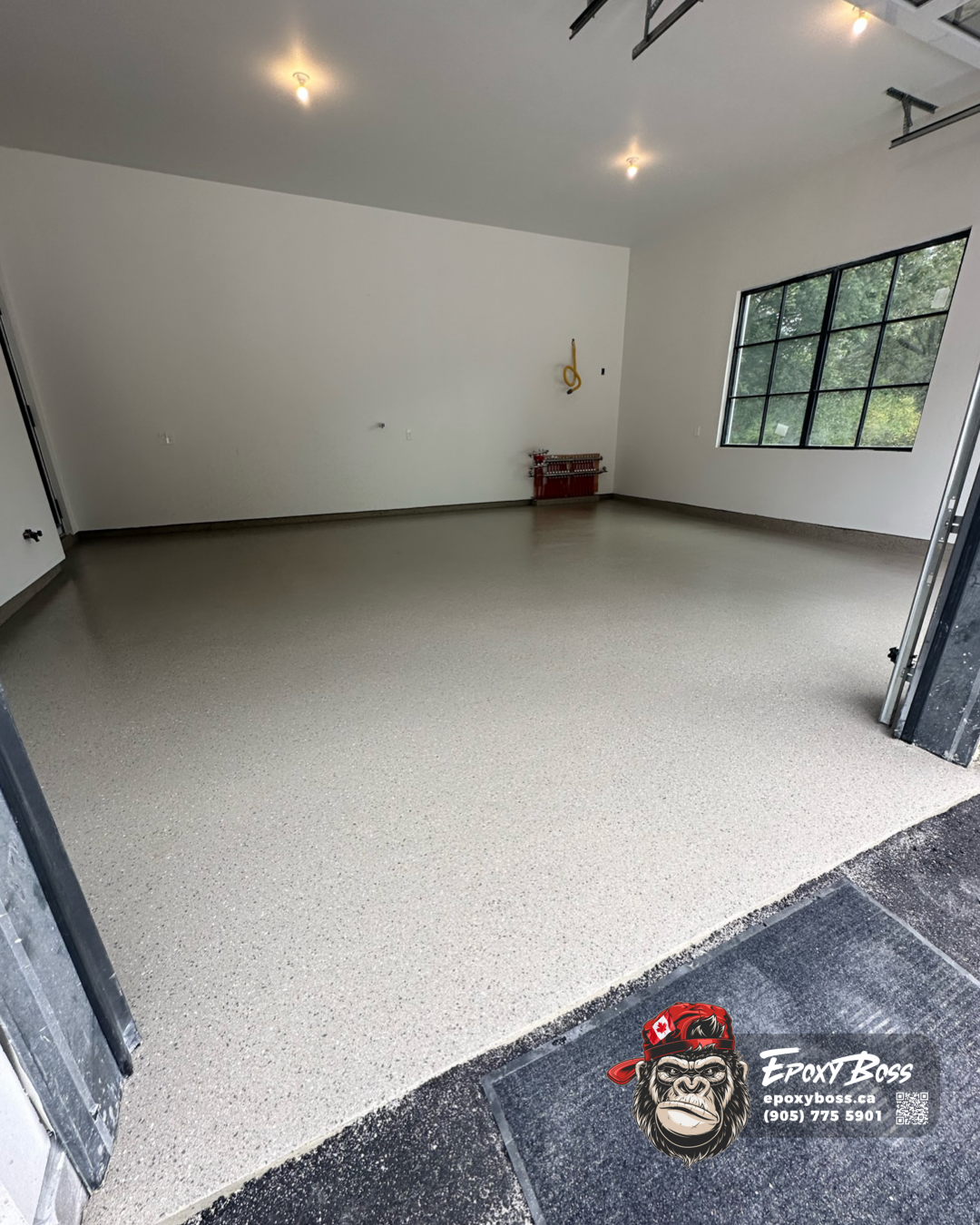
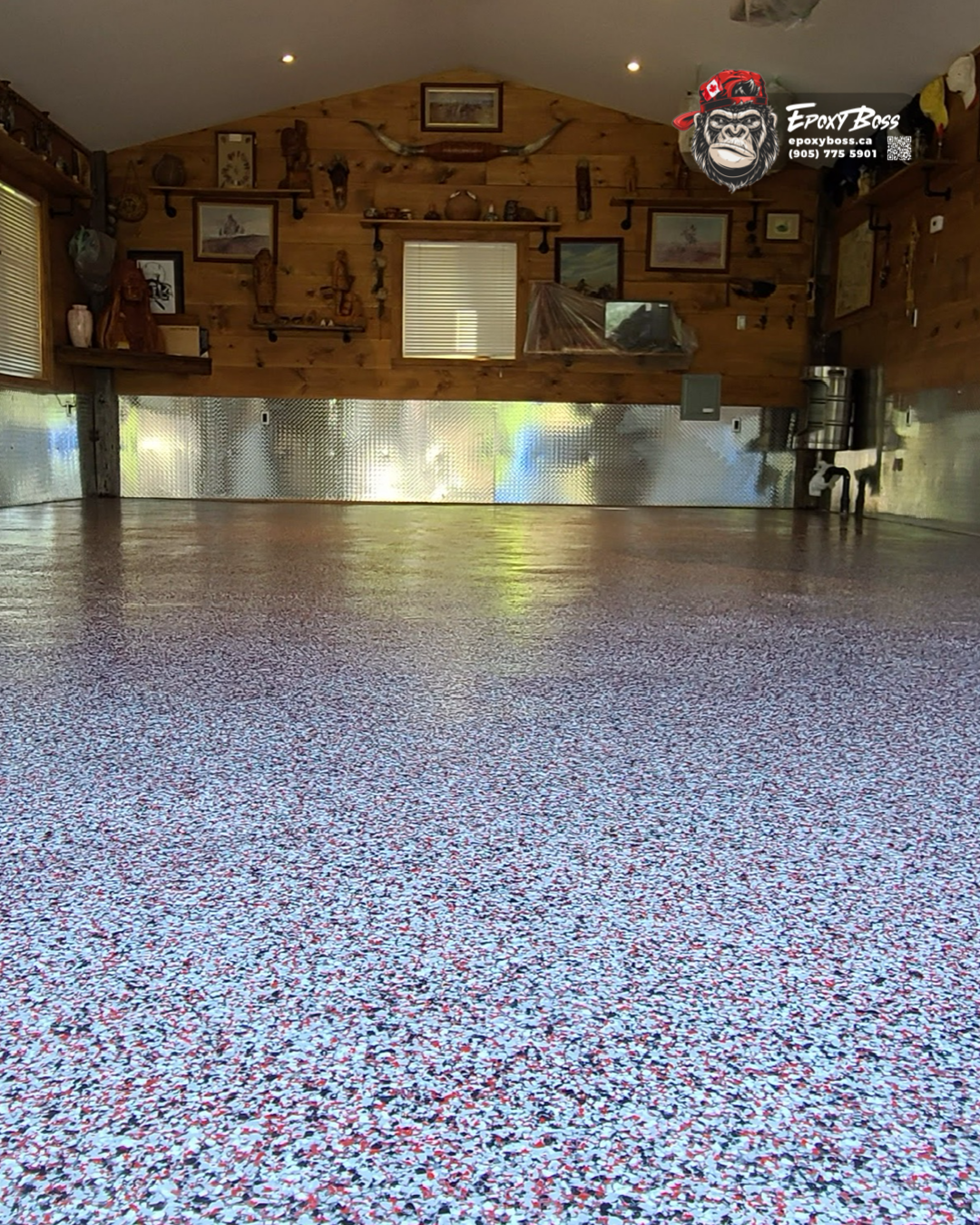
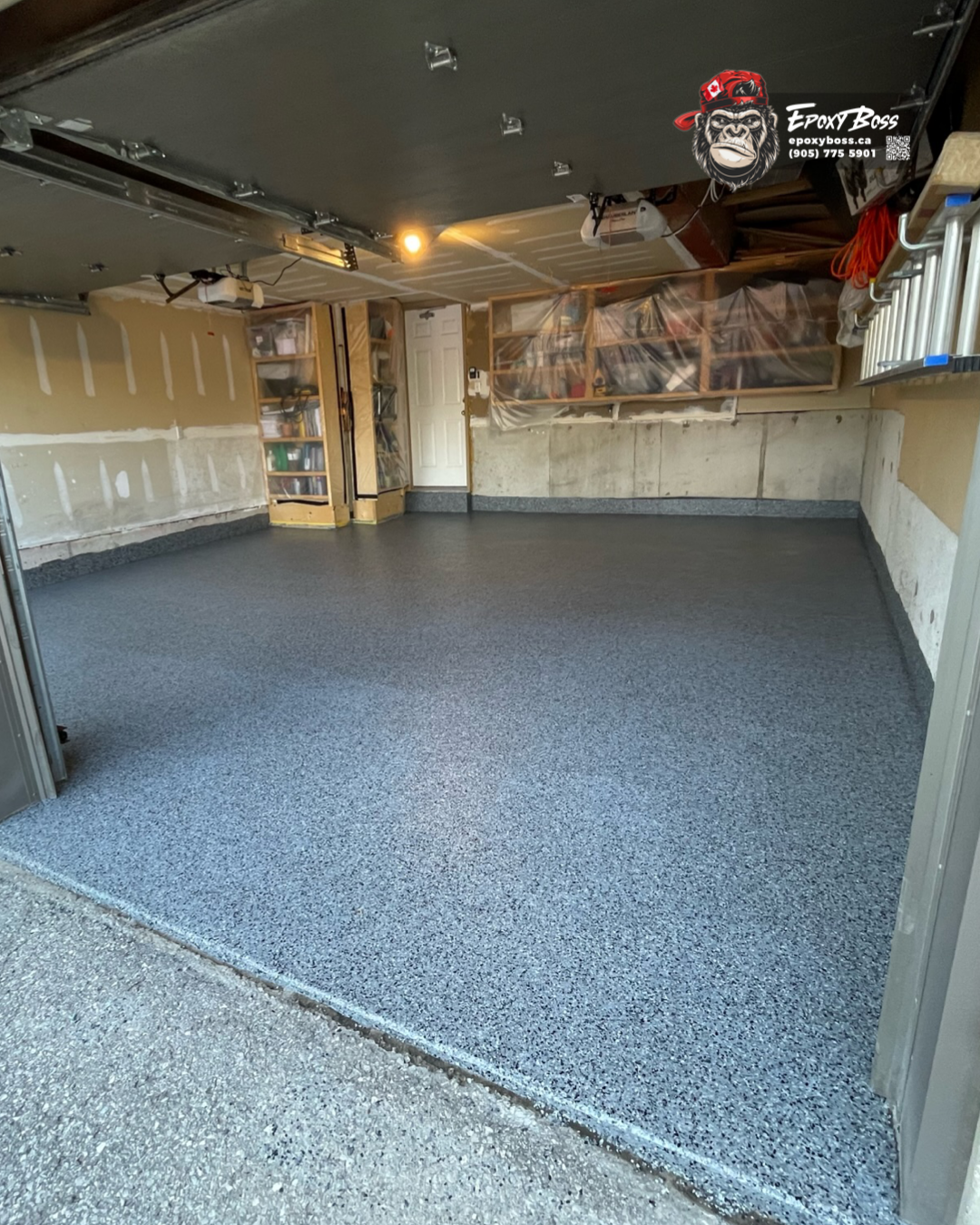
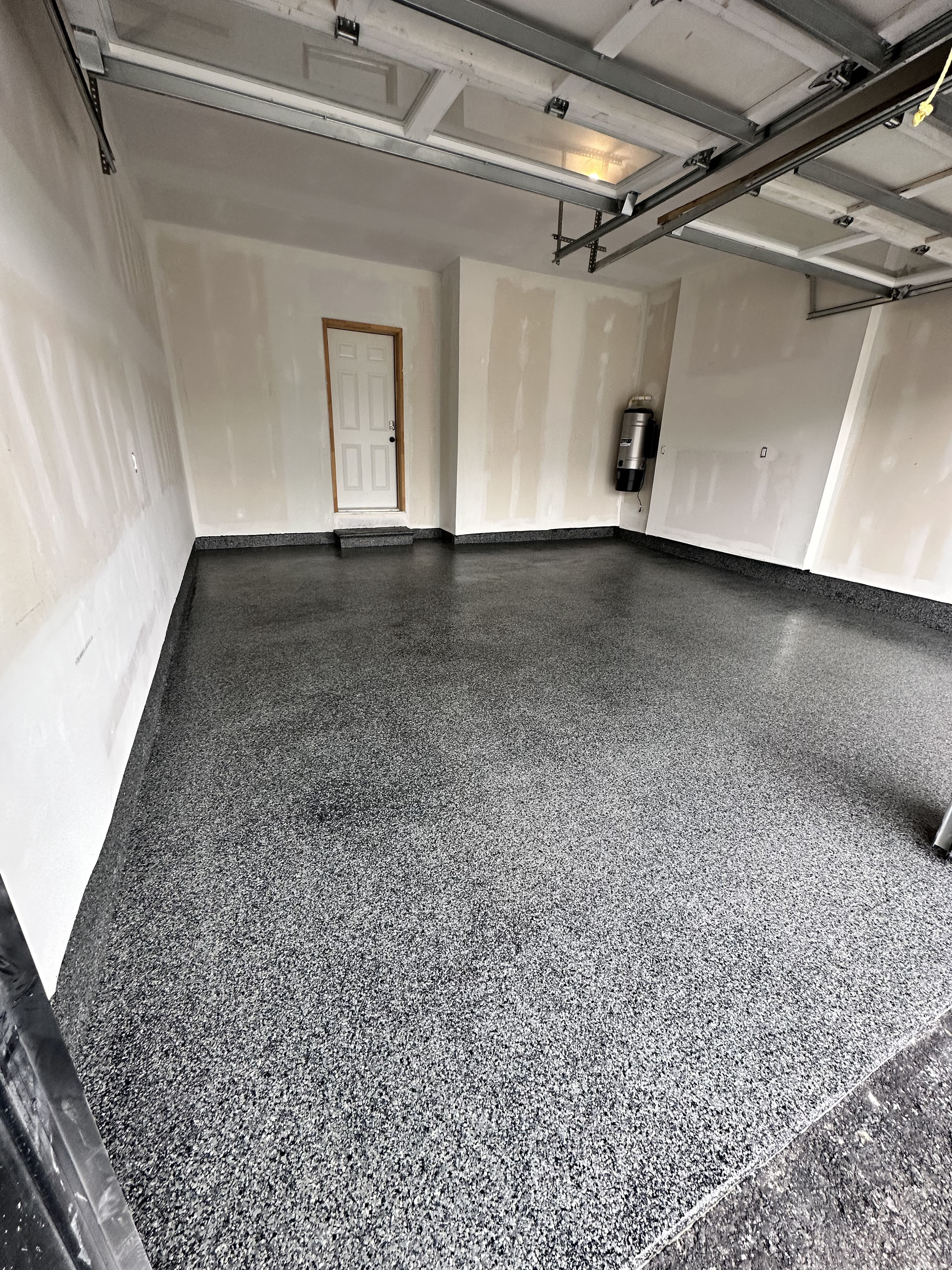
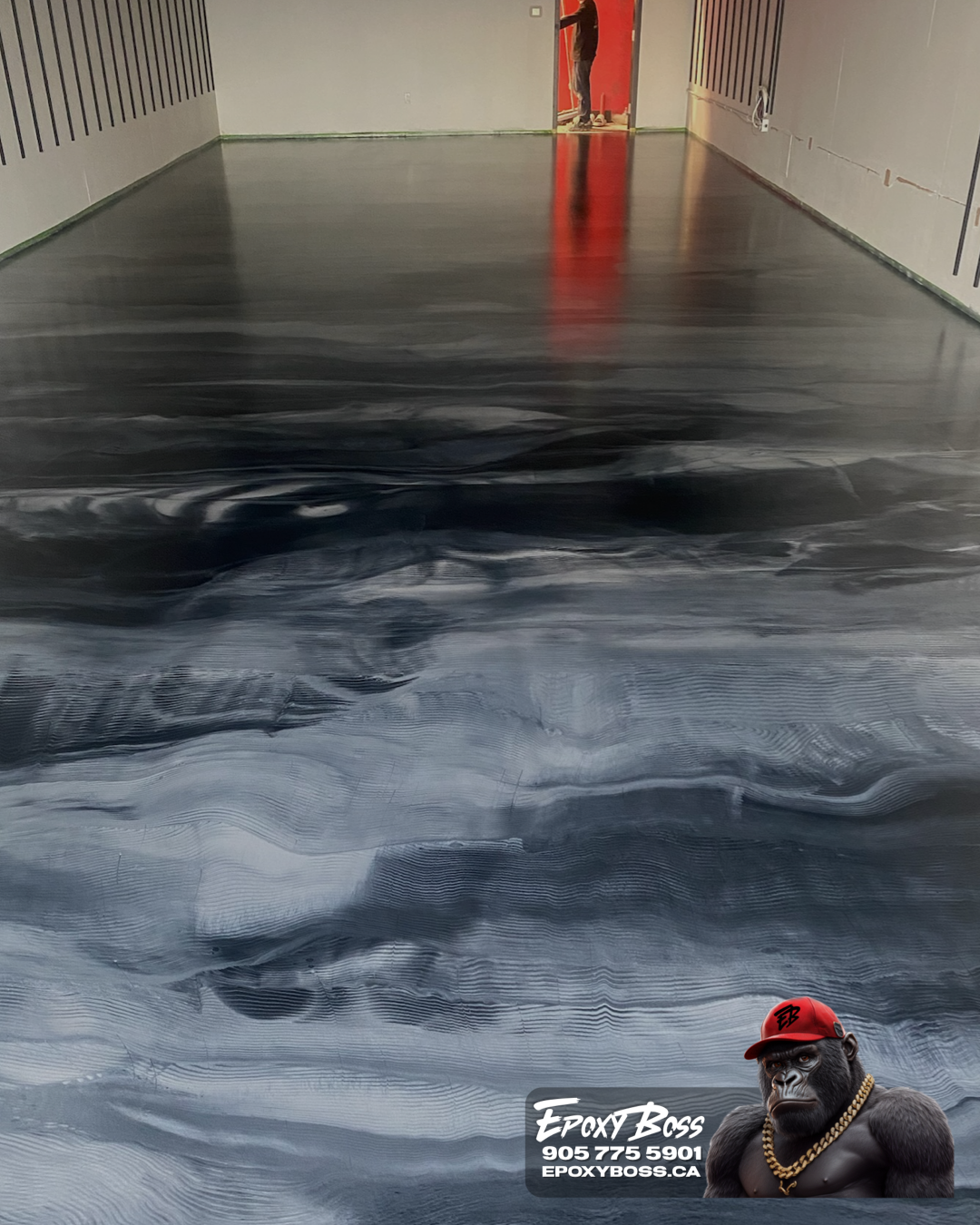
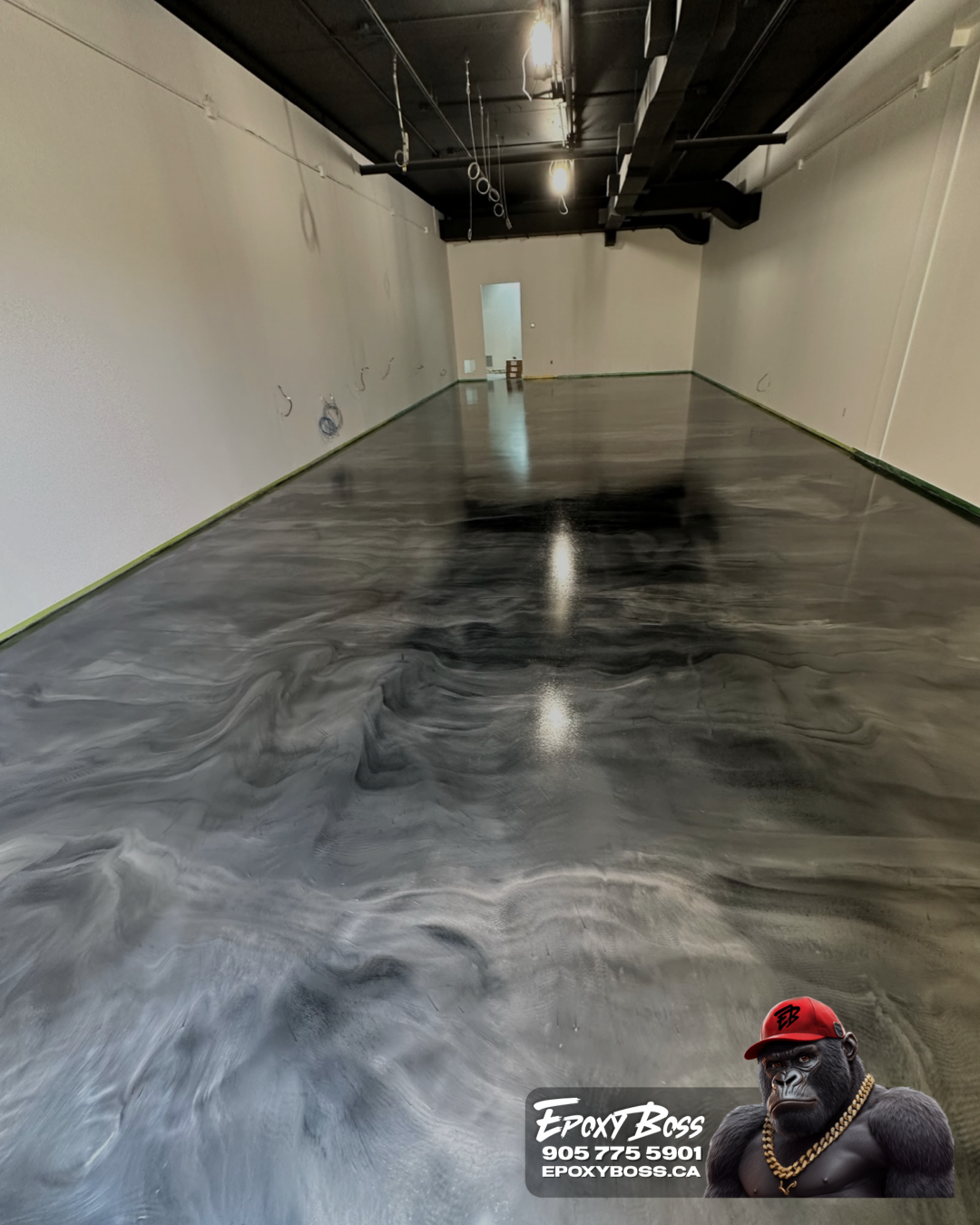
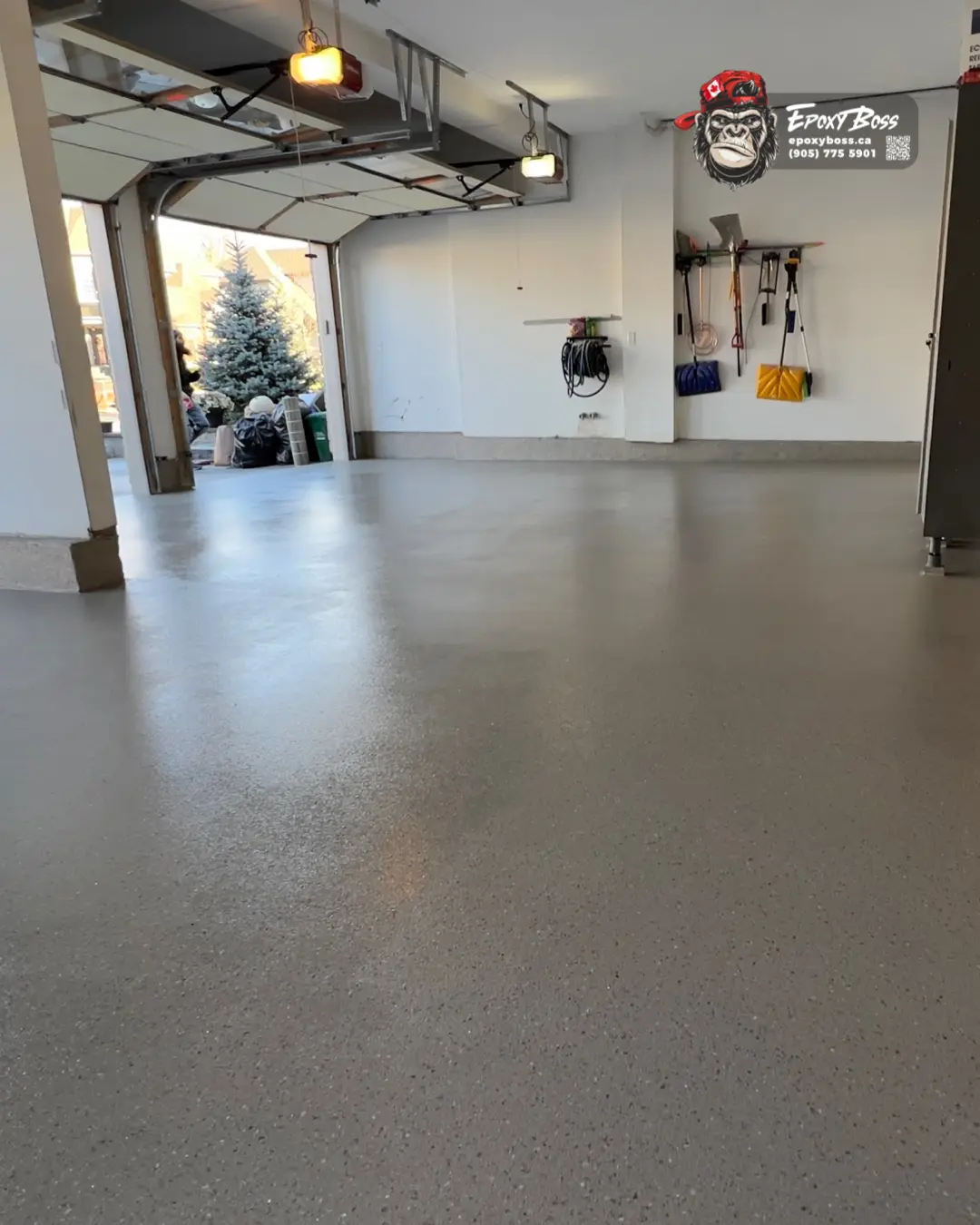
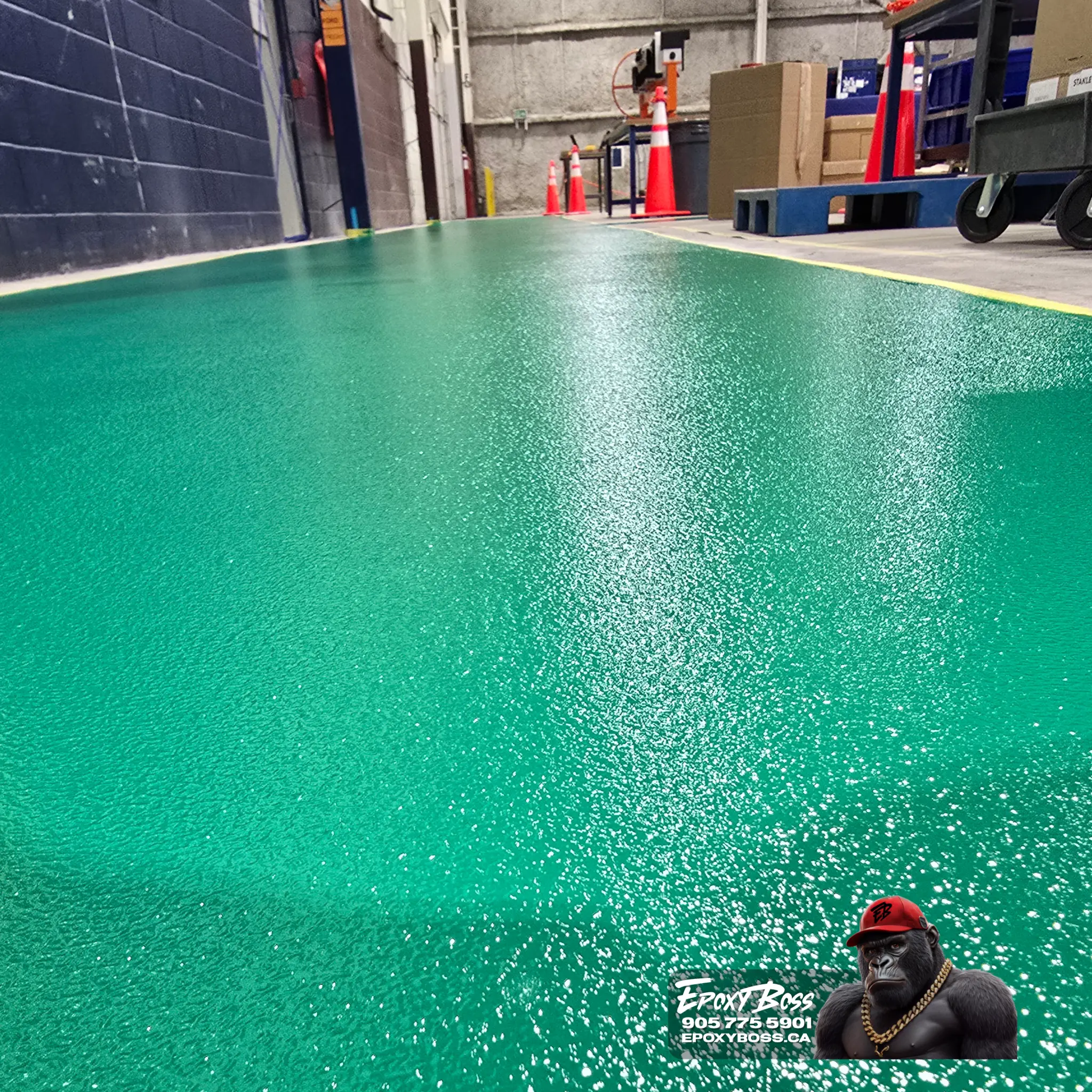
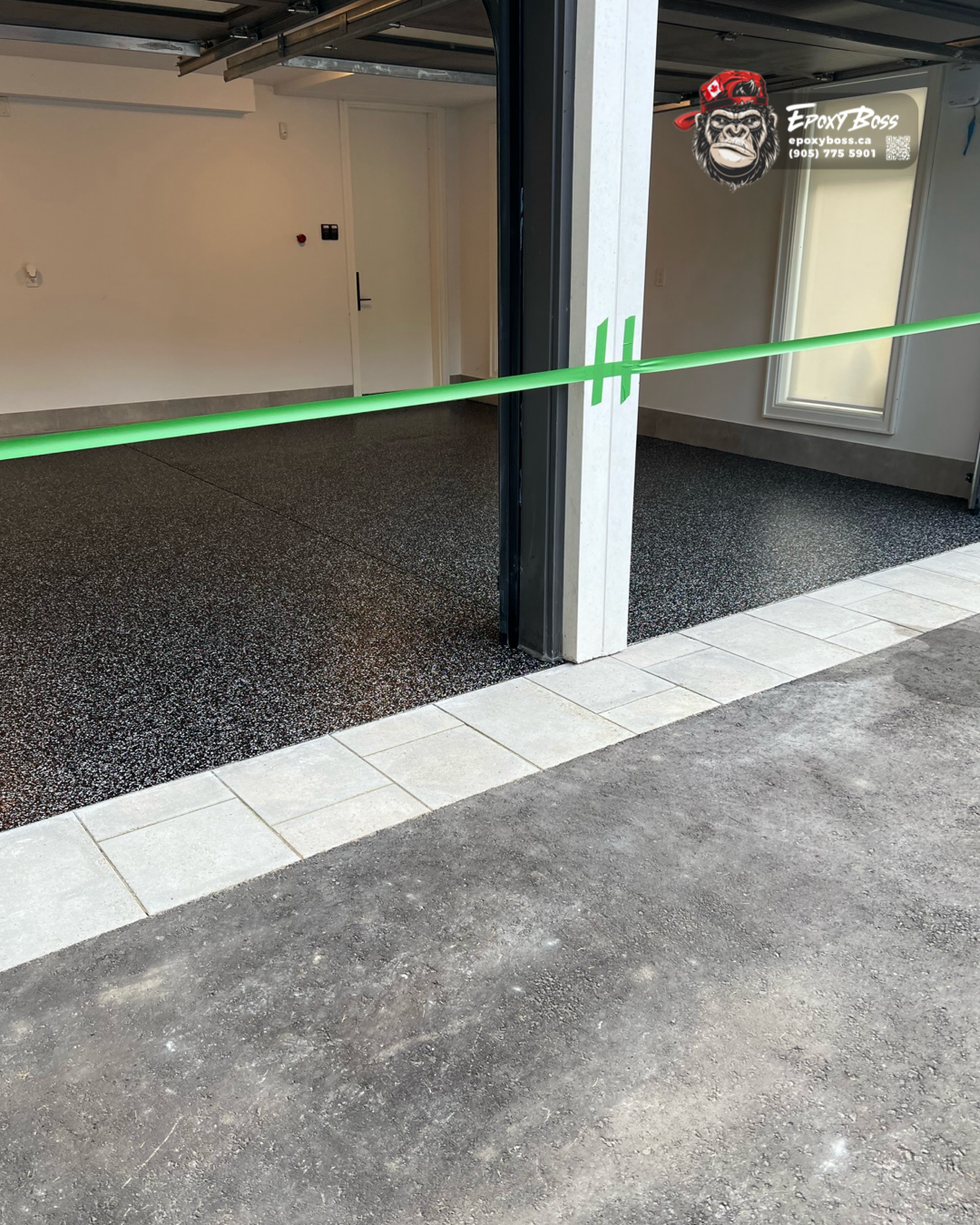
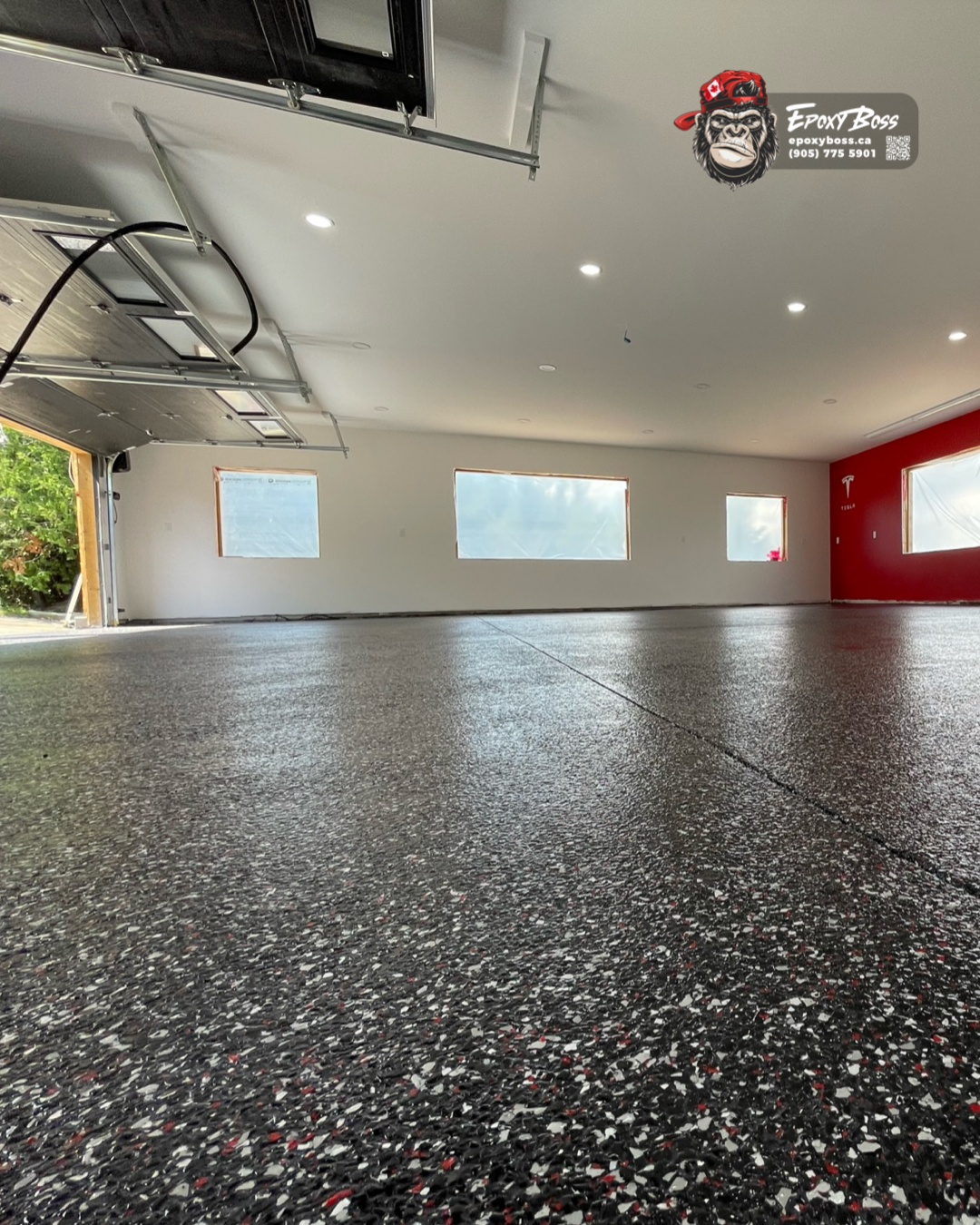
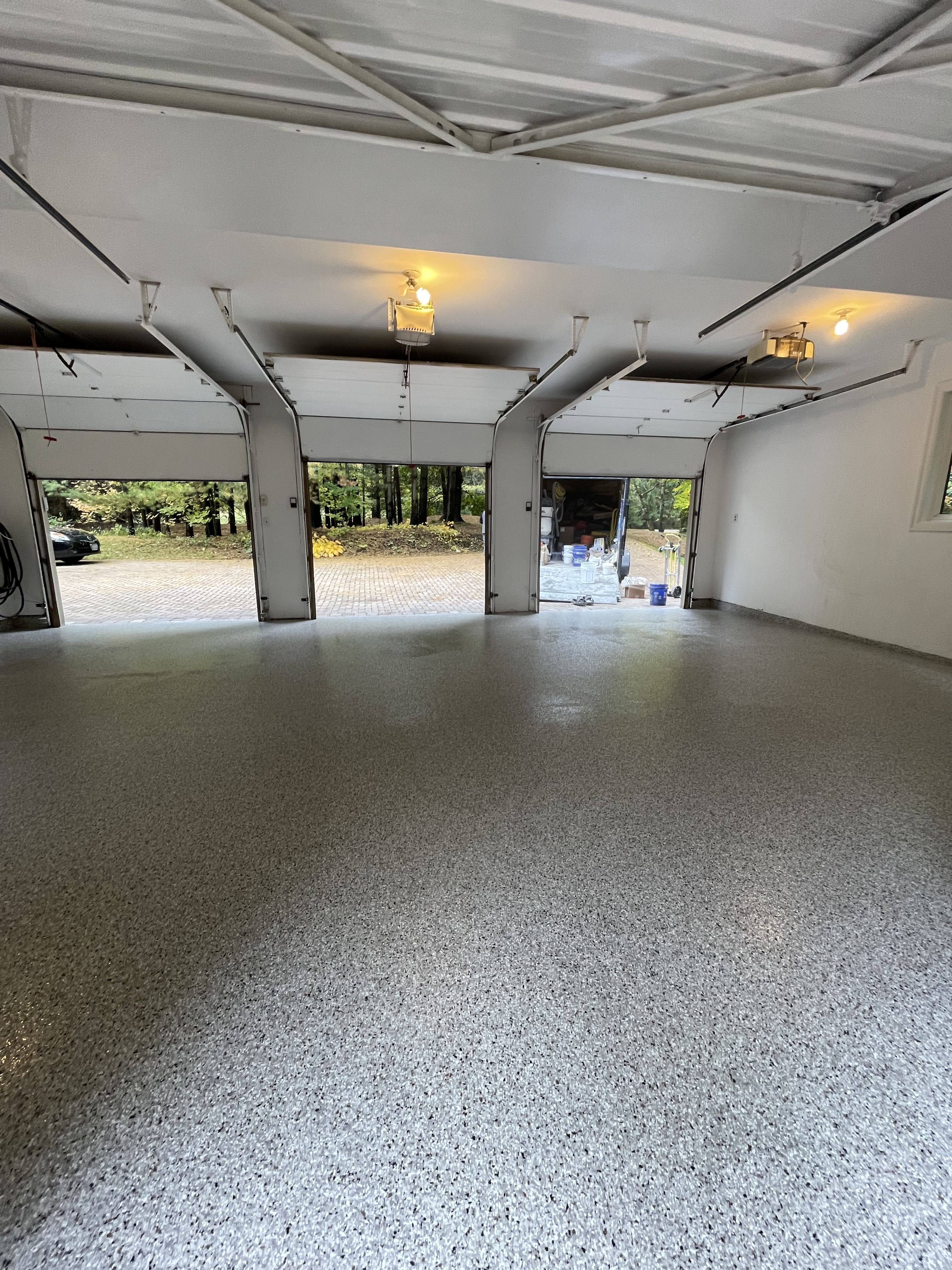
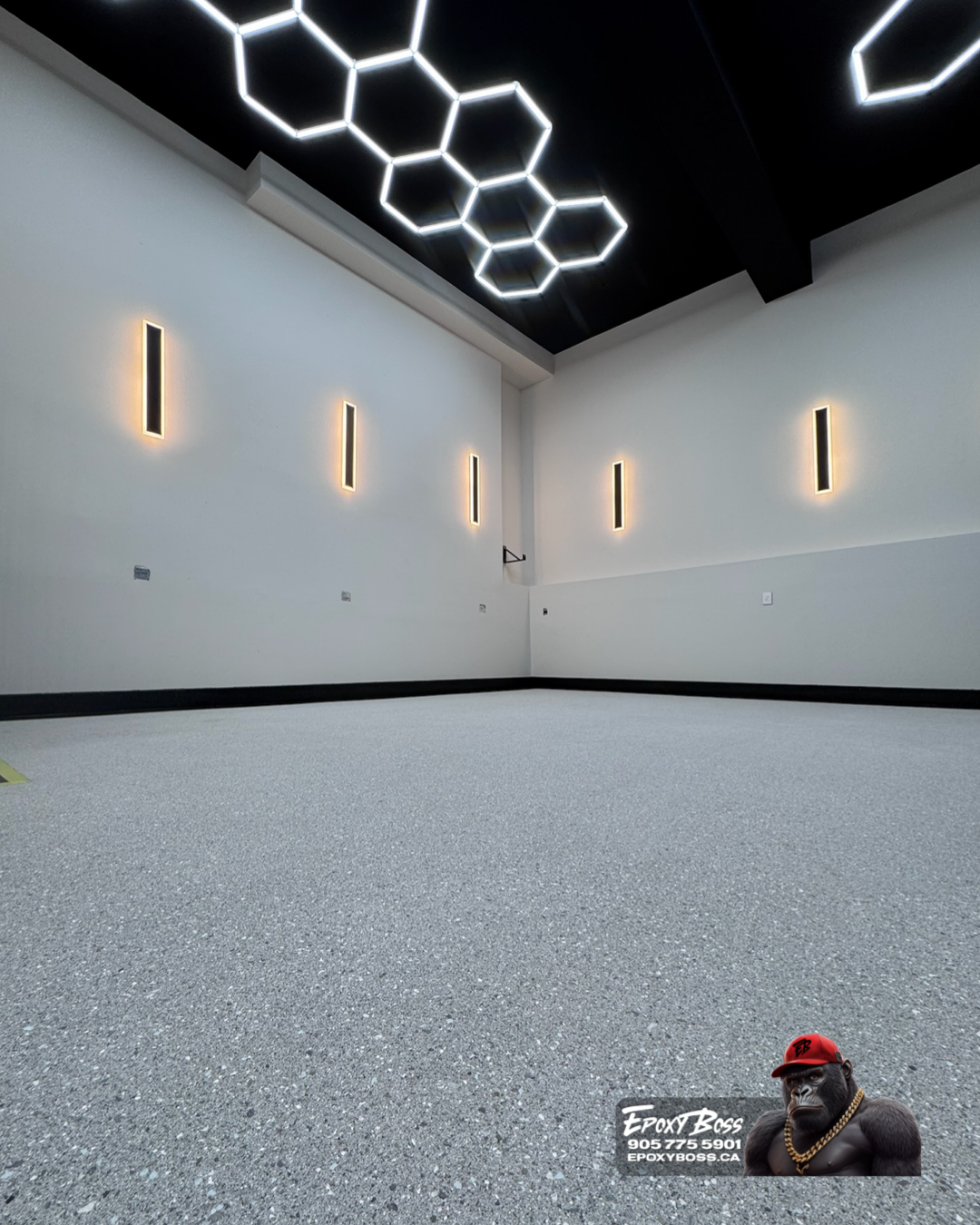
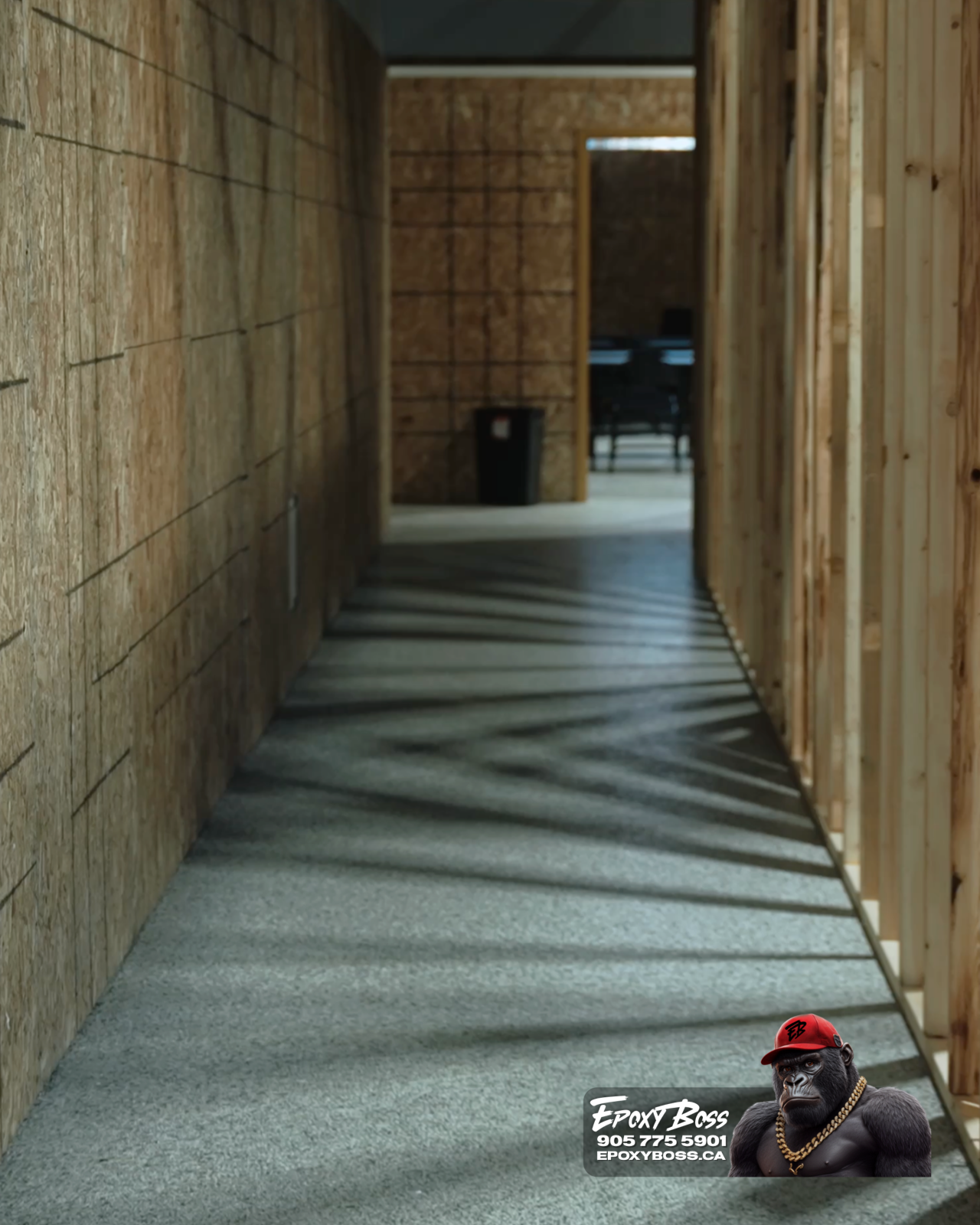
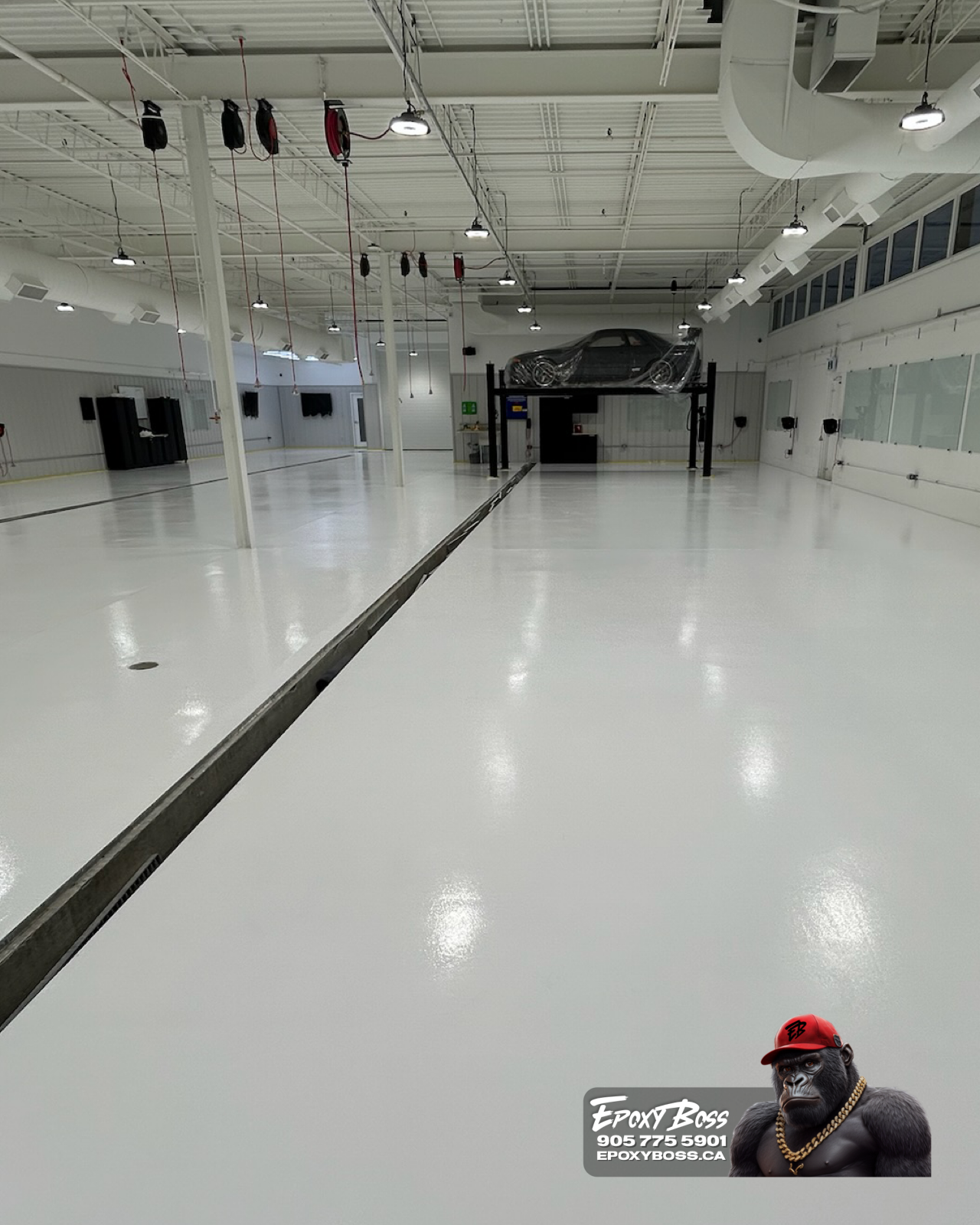
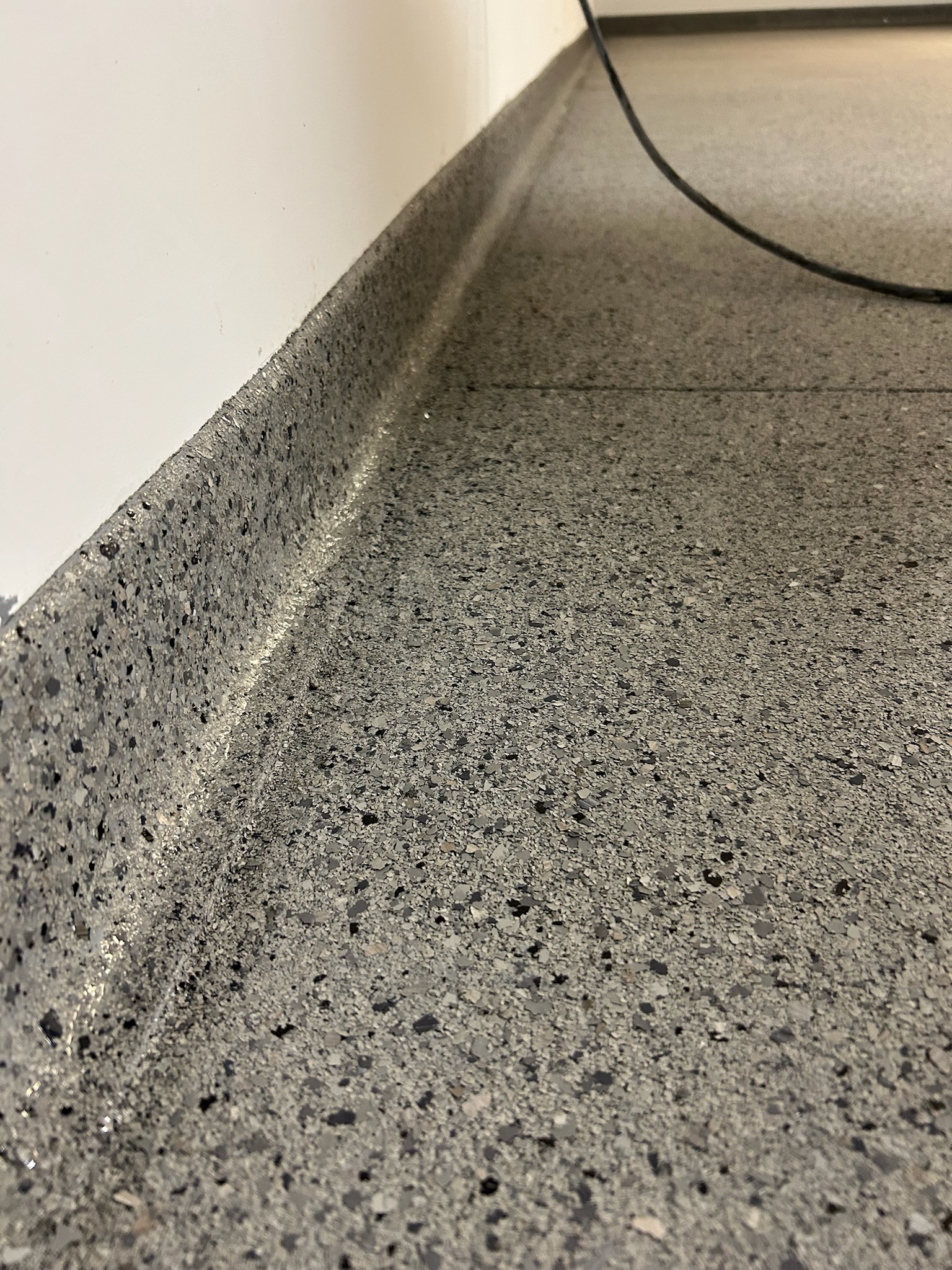
Industrial epoxy flooring builds a continuous resin film over prepared concrete. Depending on the design, it can be a thin roll-coat, a thicker self-levelling layer or a broadcast system with aggregate for texture.
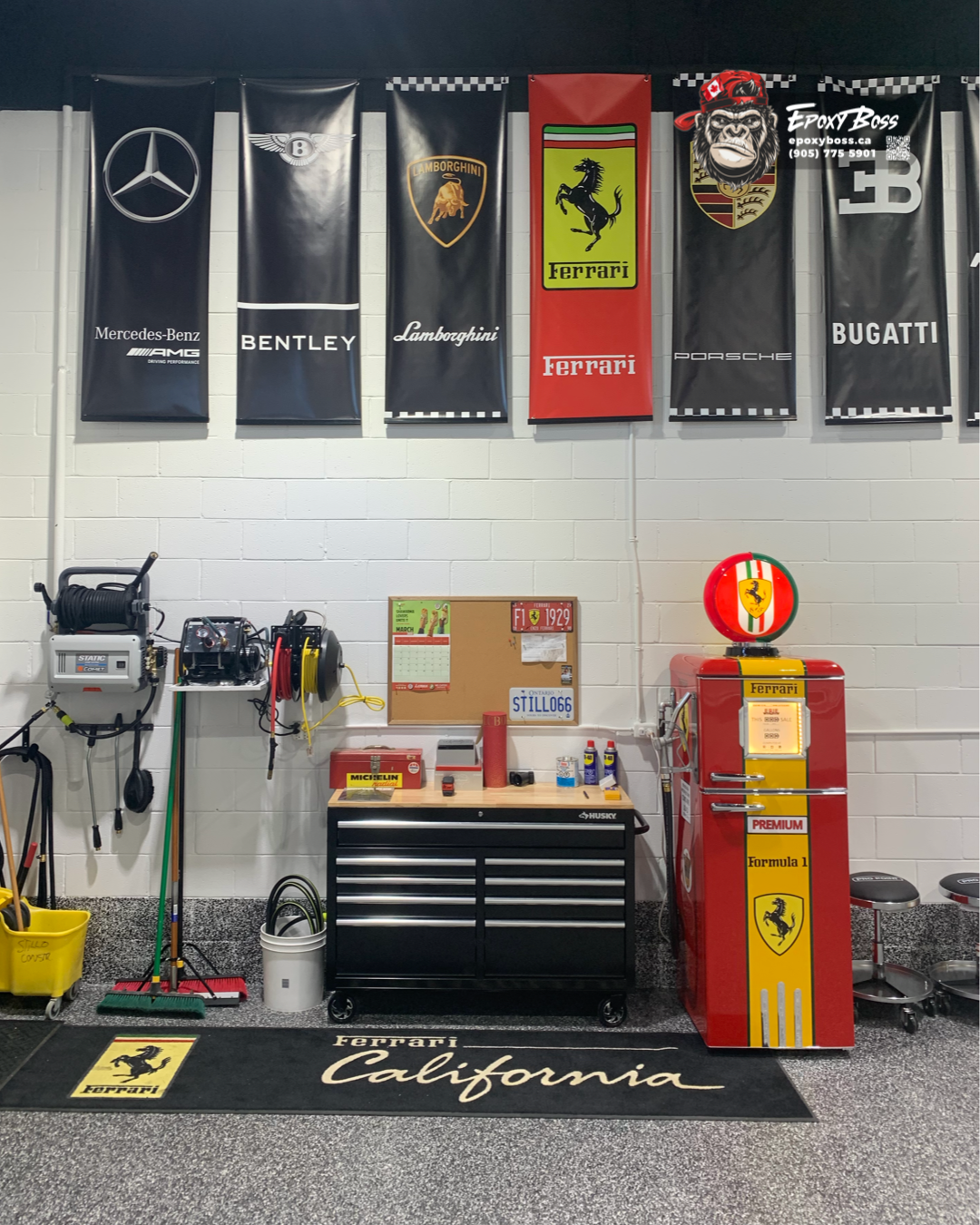
Where it works well: areas that need a sealed, cleanable surface, colour for zoning and safety walkways, line-marking, or protection against oils and many common chemicals. Epoxy is often used for pick zones, maintenance bays, charging areas and packaging lines.
Where it struggles: thin coatings over poorly prepared concrete can peel or wear through in forklift lanes. Many epoxies are not UV-stable and can amber near dock doors and skylights, so a compatible topcoat may be specified. Cure times also need to be planned around operations — see our fast return-to-service flooring options where downtime is limited.
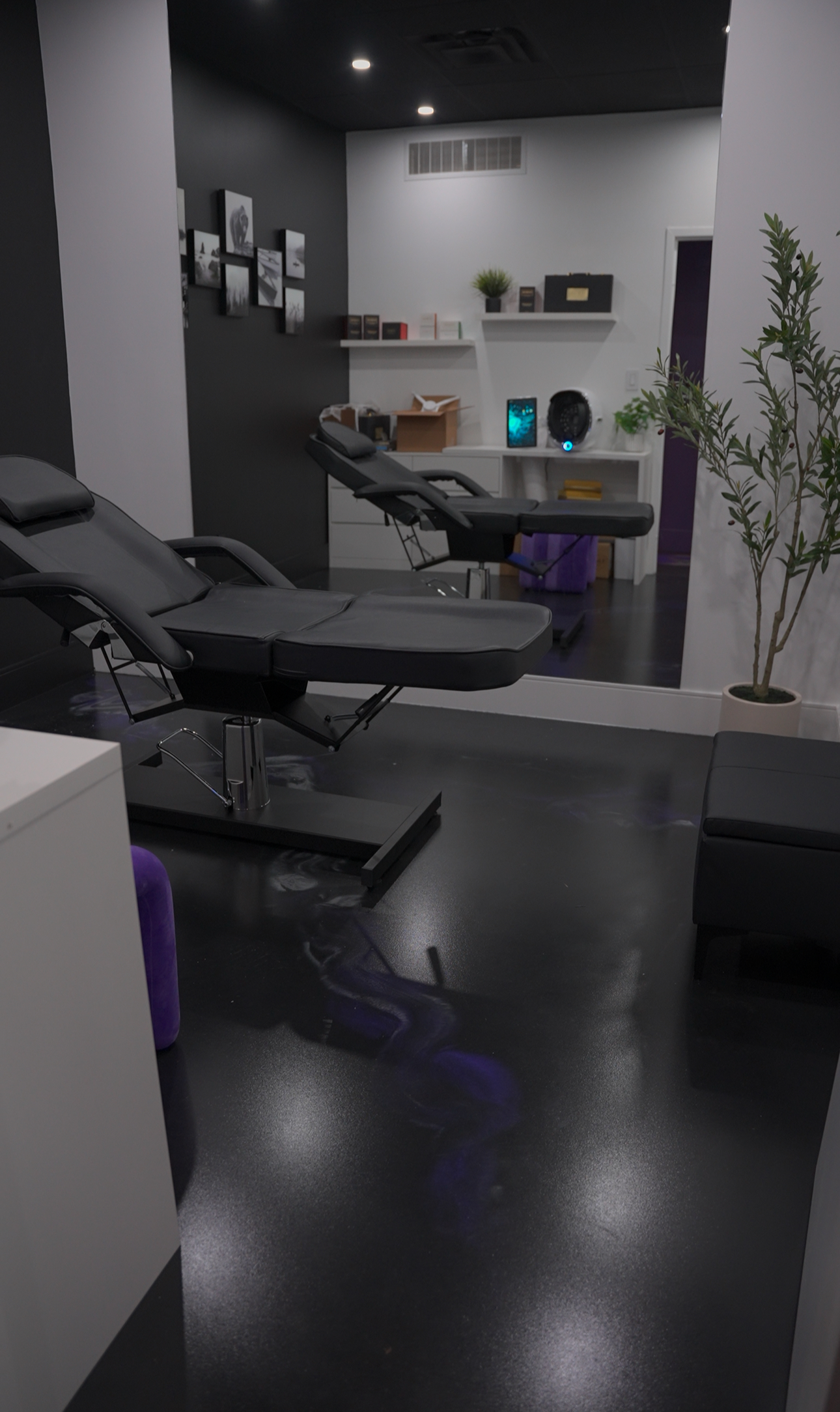
For mixed commercial and warehouse space, our commercial epoxy flooring page explains how systems are adapted for customer-facing areas alongside back-of-house floors.
Option 4: Urethane cement
Urethane cement is a heavy-duty, trowel- or slurry-applied system designed for environments with hot water washdowns, thermal shock, aggressive cleaning and wet processing.
Where it works well: food and beverage warehousing, wet process areas, cold-storage transitions and zones exposed to steam cleaning or temperature swings.
Where it struggles: it is usually more than a dry distribution warehouse needs, its finish is functional rather than decorative, and it costs more than a sealer or a basic coating. It is a problem-solving system, not a default.
Joints, cracks and forklift lanes decide how long any system lasts
Whatever finish is chosen, the joints carry the most punishment. Each time a hard forklift wheel crosses an open joint, the edges take an impact. Once the edges start to chip, the damage accelerates and the joint becomes a trip point and a source of shock loading for equipment.
Joint filling with a semi-rigid filler suited to wheel traffic, and crack repair before the finish goes down, are part of any warehouse floor scope we quote. Some joints must stay functional as movement joints, and those need a different treatment from dormant saw cuts. We cover this in more detail in our guide to forklift traffic and floor joints.
Working around a warehouse that cannot close
Most Ontario warehouses cannot shut down for a week. Practical installations are usually:
- sectioned so areas come out of use in turn;
- sequenced around racking, dock doors and forklift routes agreed in advance;
- scheduled so the noisiest stages — grinding and coating — happen on nights or weekends where needed;
- returned to service only when each section has reached the cure stated for the traffic it will carry.
Winter also matters. A heated building can meet coating requirements year-round, but loading docks and overhead doors let cold air sweep across a curing floor. Slab temperature and dew point need to be checked during installation, not assumed.
Quick comparison
- Main goal is dust control on sound concrete: grind and seal.
- Main goal is a hard, bright, low-maintenance floor: polished concrete.
- Need colour, zoning, line-marking or spill protection: epoxy system, with the right topcoat.
- Hot washdowns, thermal shock or wet processing: urethane cement.
- Joints breaking up: joint repair and filling first, whatever the finish.
Many facilities end up with more than one system: a sealed or polished floor in storage aisles, a coated floor in maintenance and charging areas, and a heavier system where water and heat are involved.
Next step
The right answer comes from the slab and the way the building is used, not from a brochure. If you manage a warehouse or distribution facility in Ontario, see how we approach warehousing and logistics floors, or request an on-site assessment so the condition of the concrete, the joints and the operating schedule can be reviewed before a system is recommended.