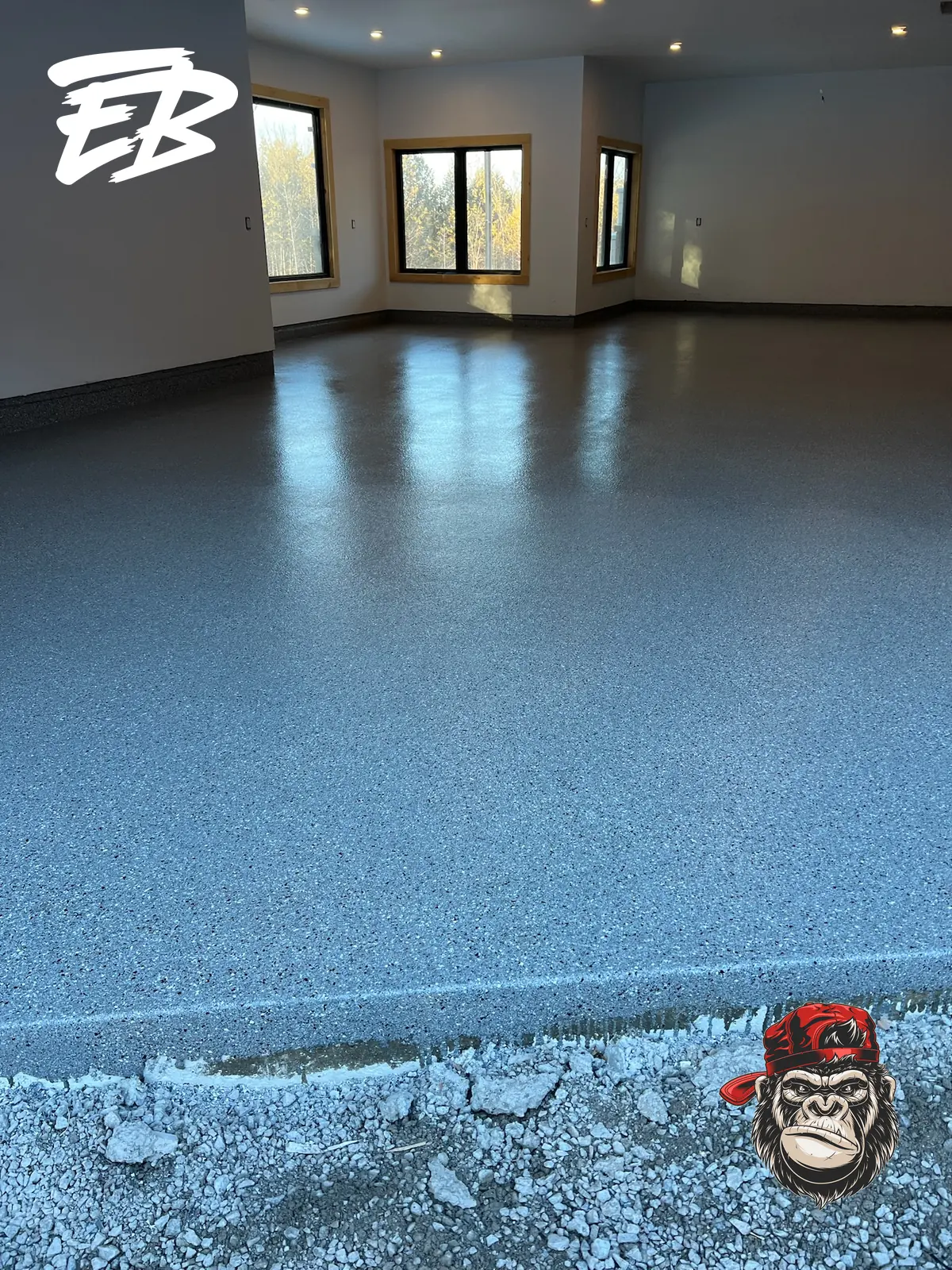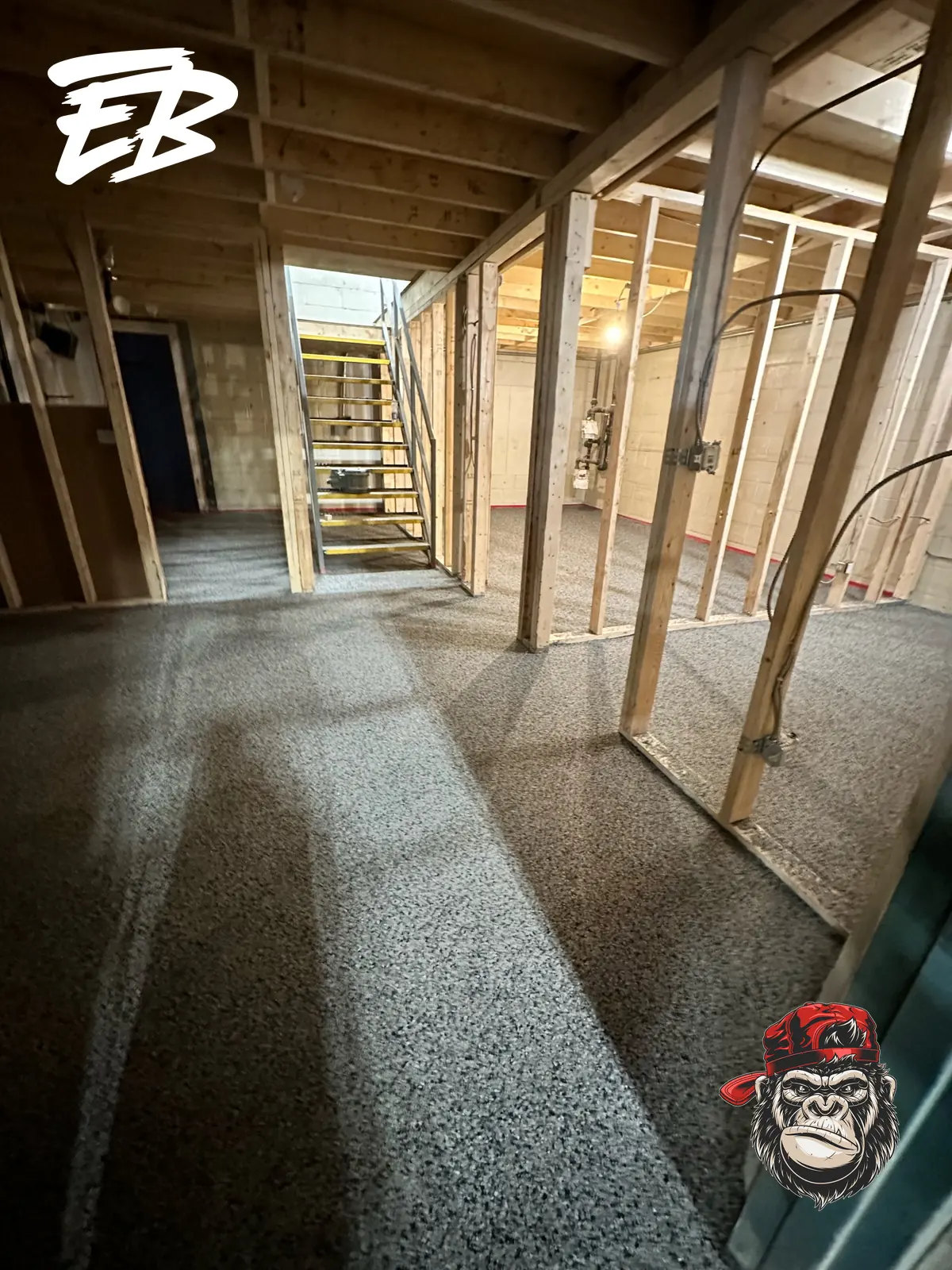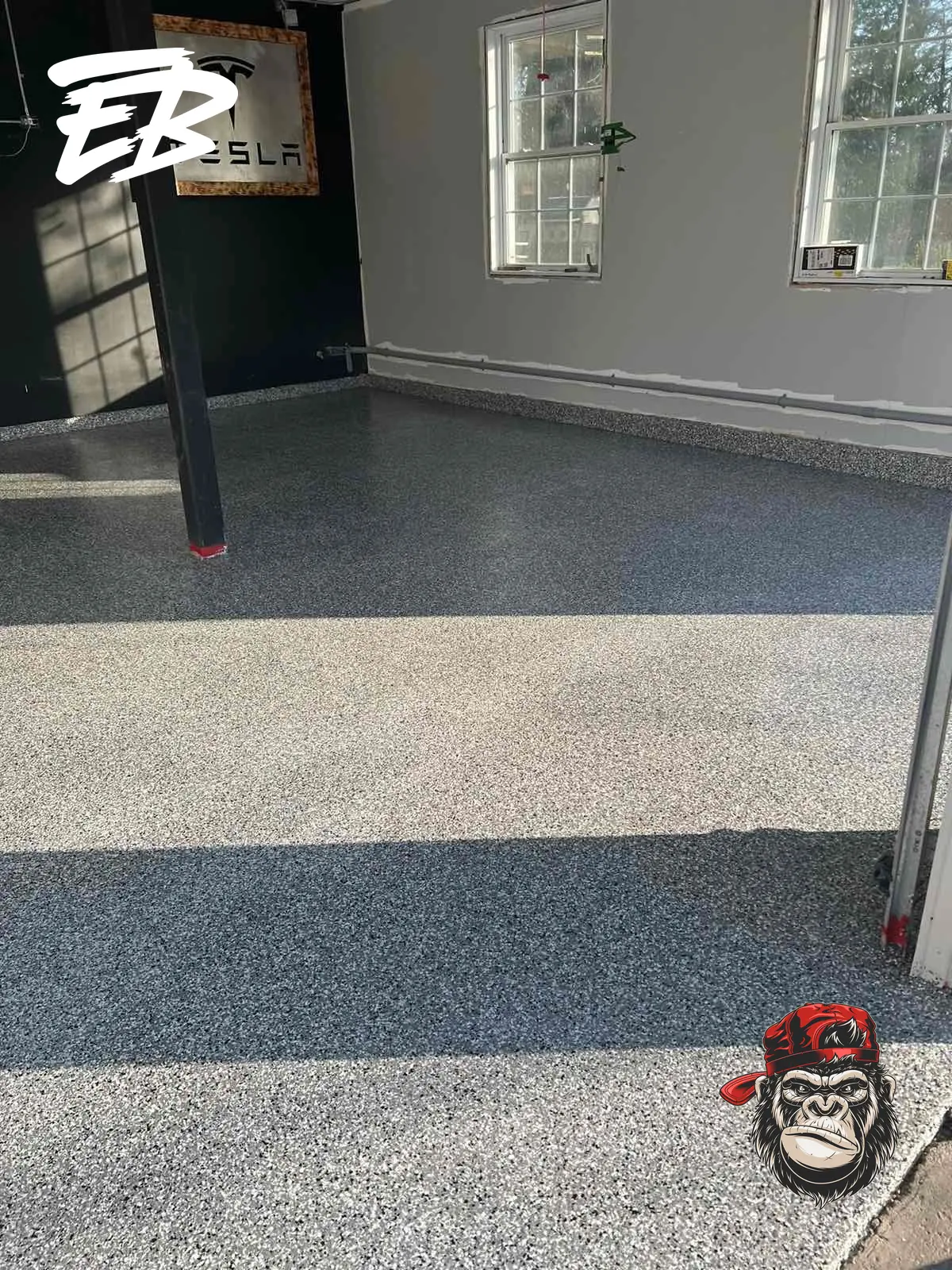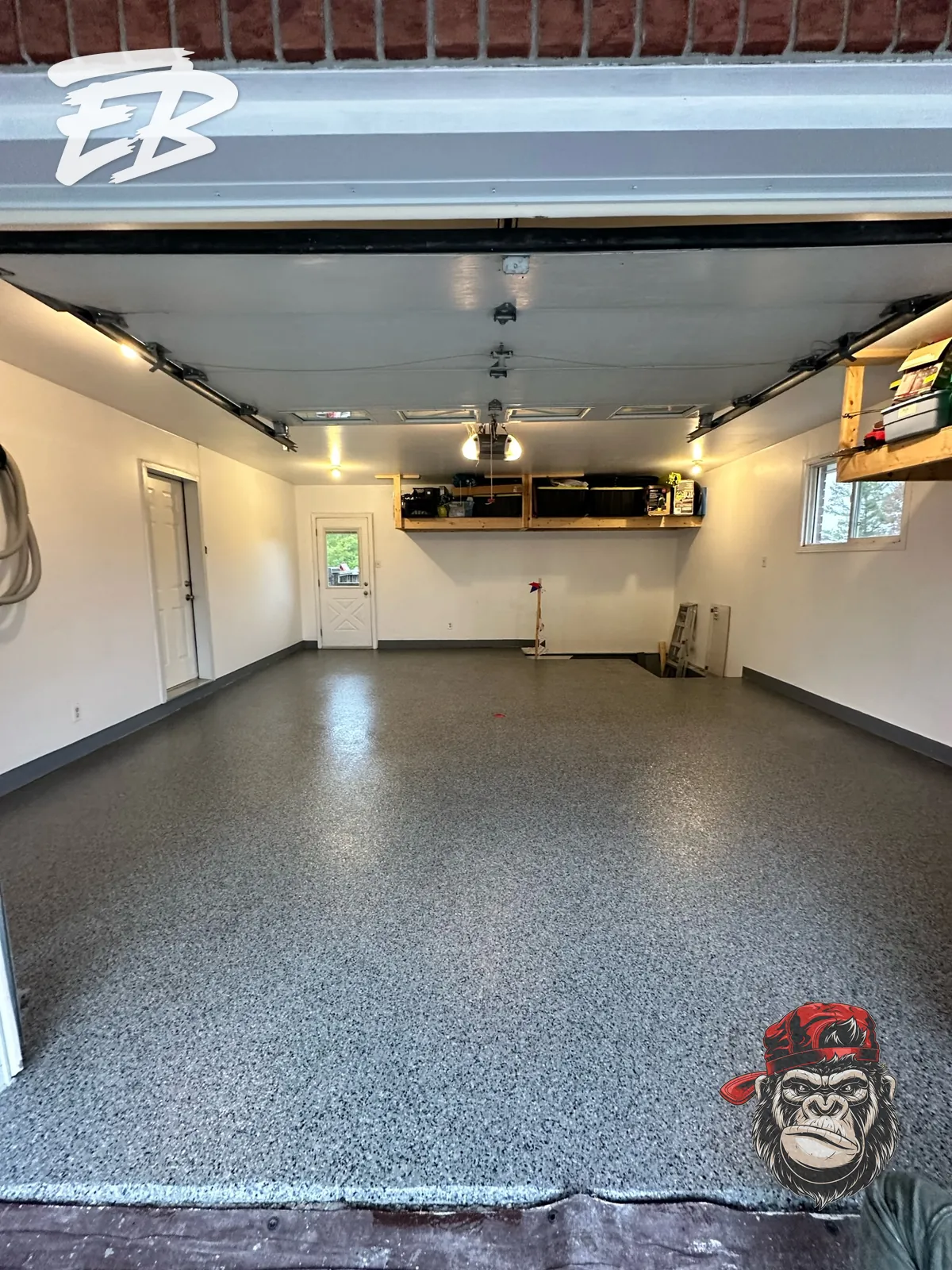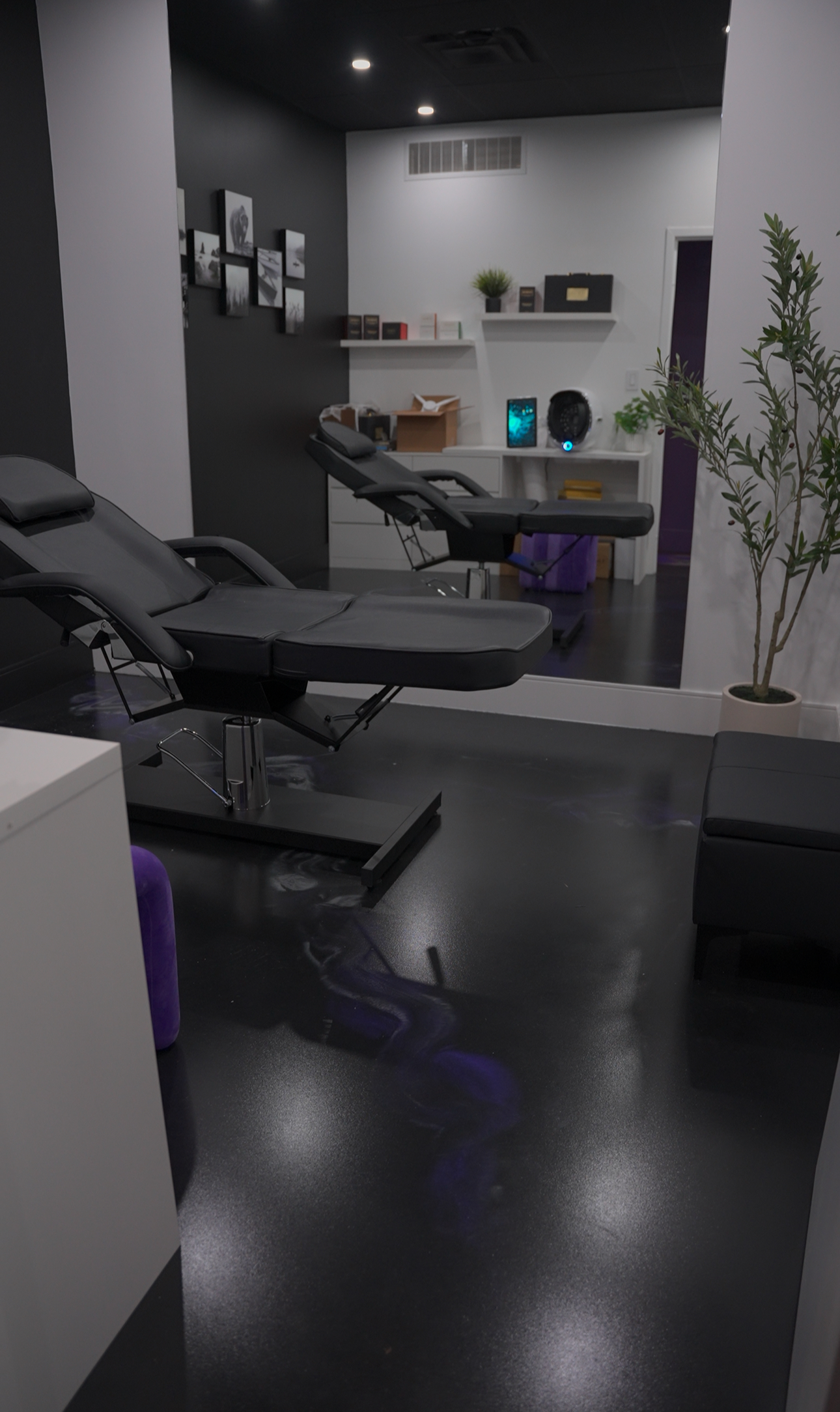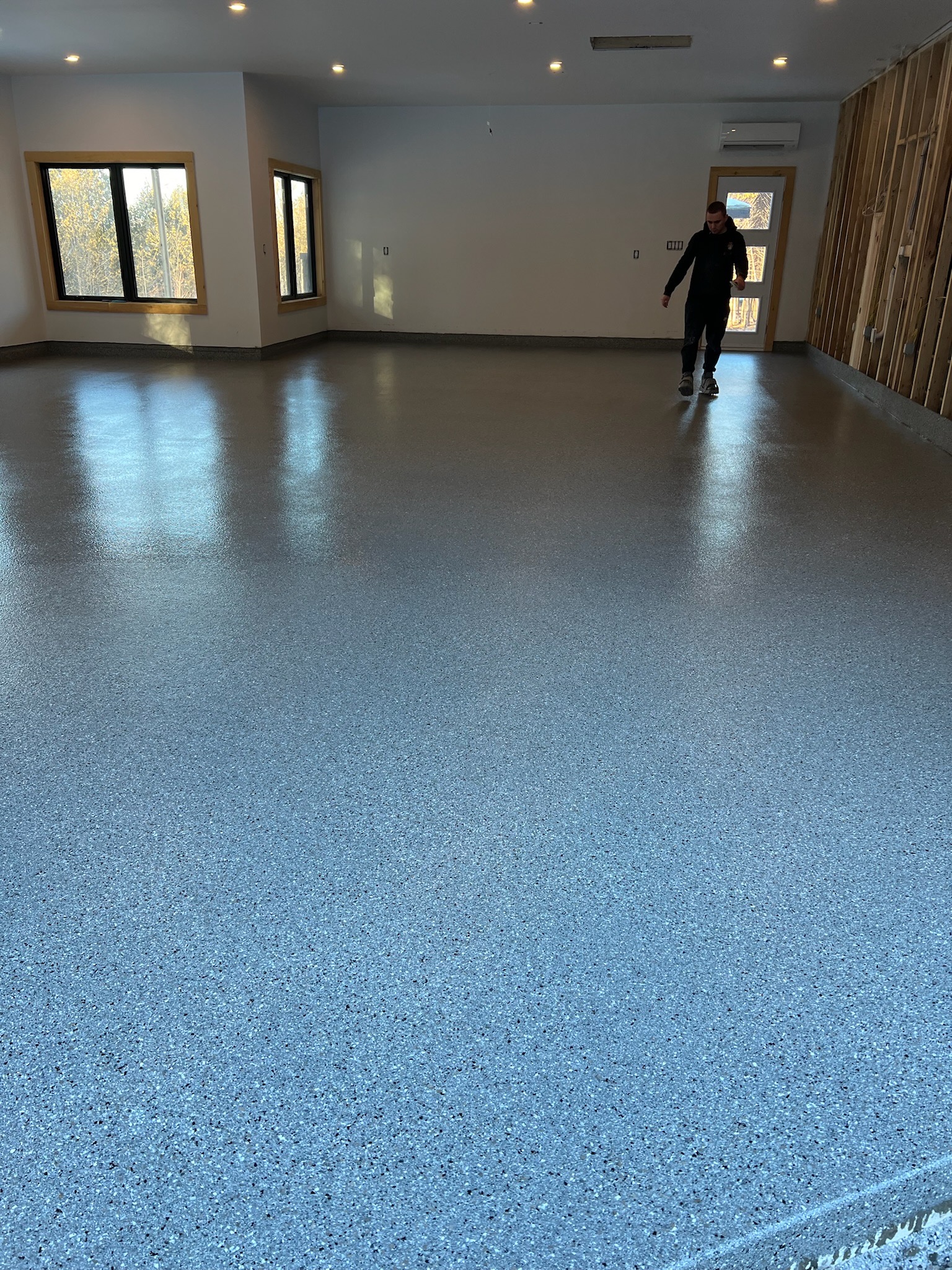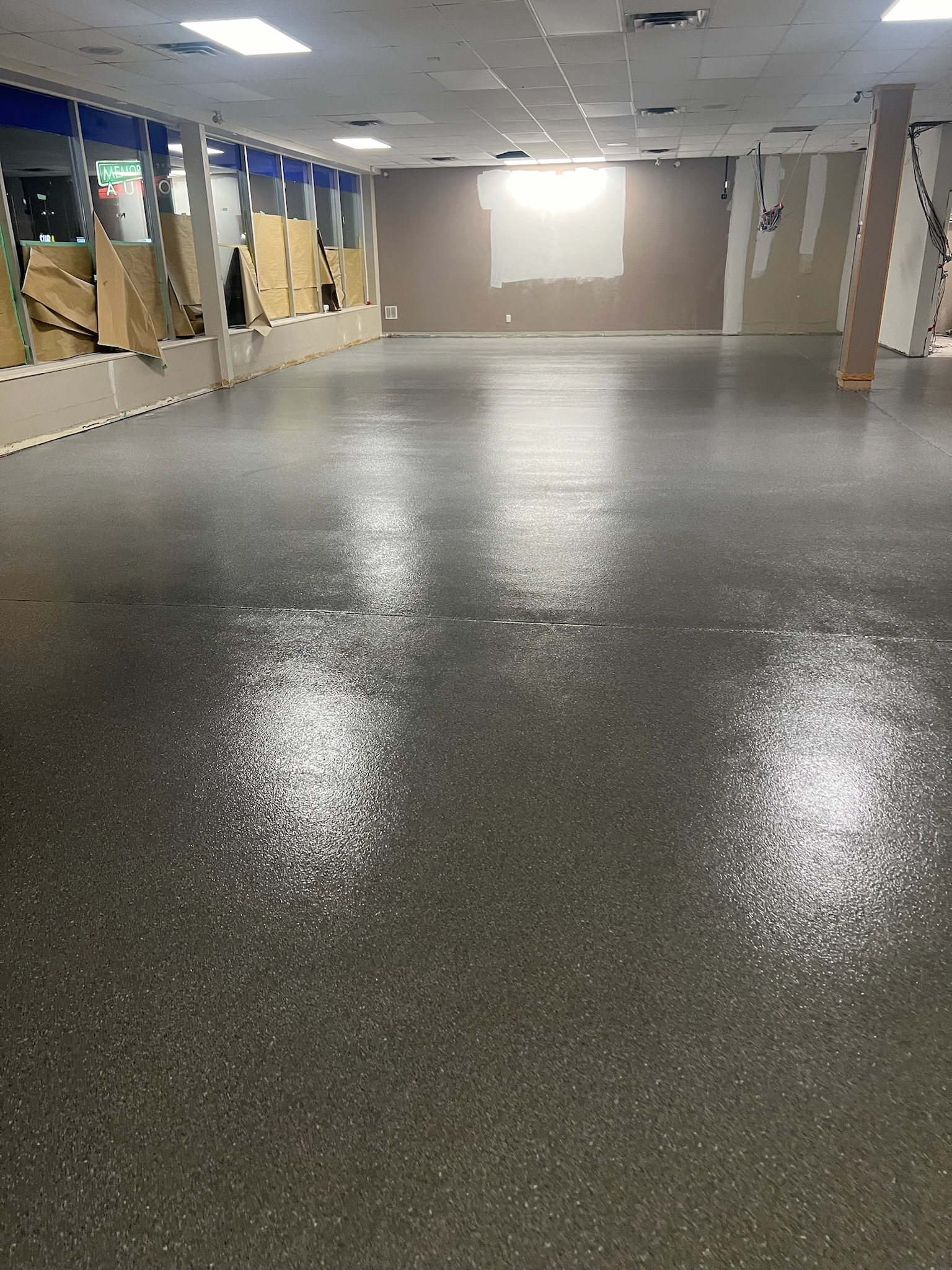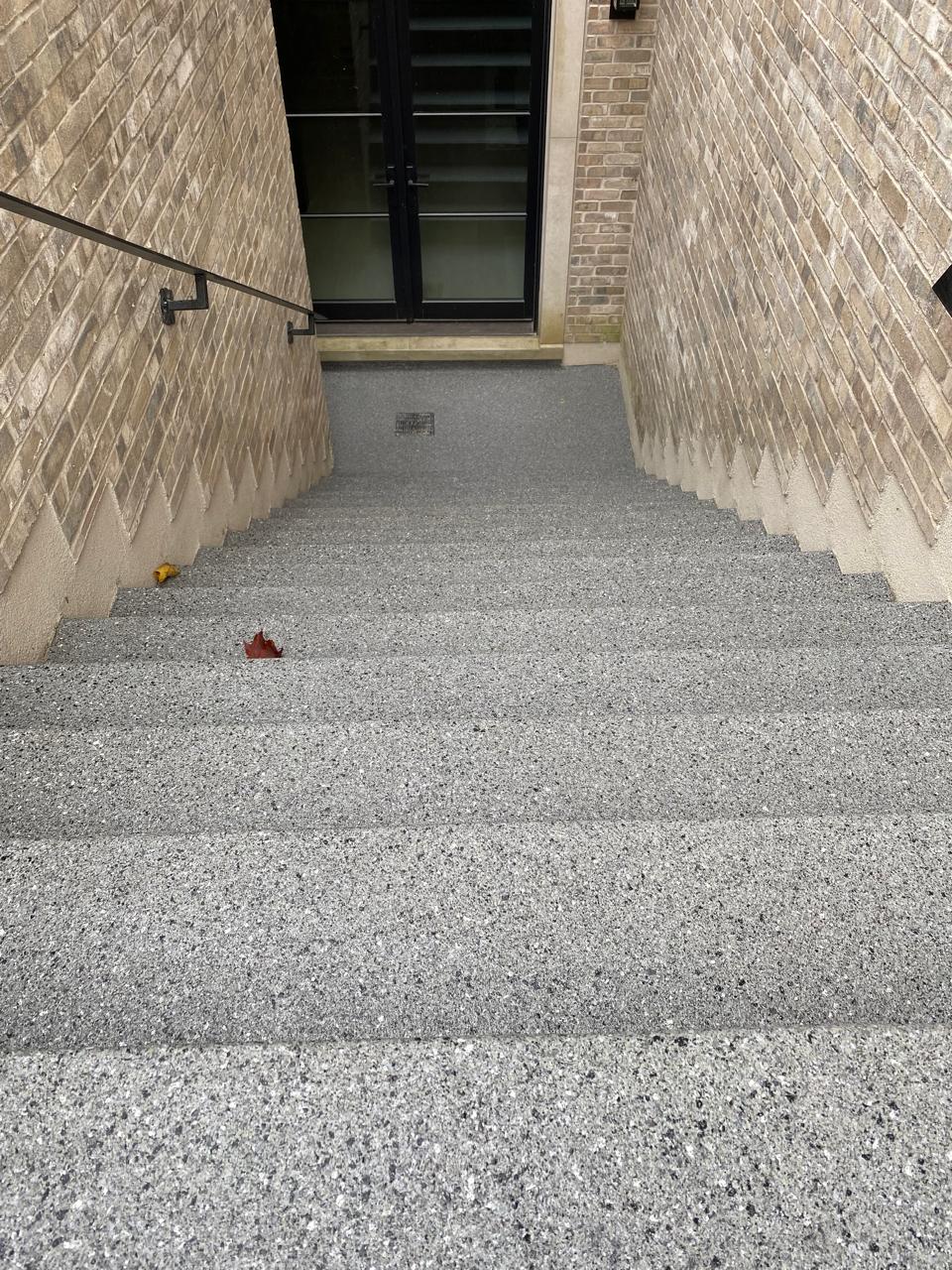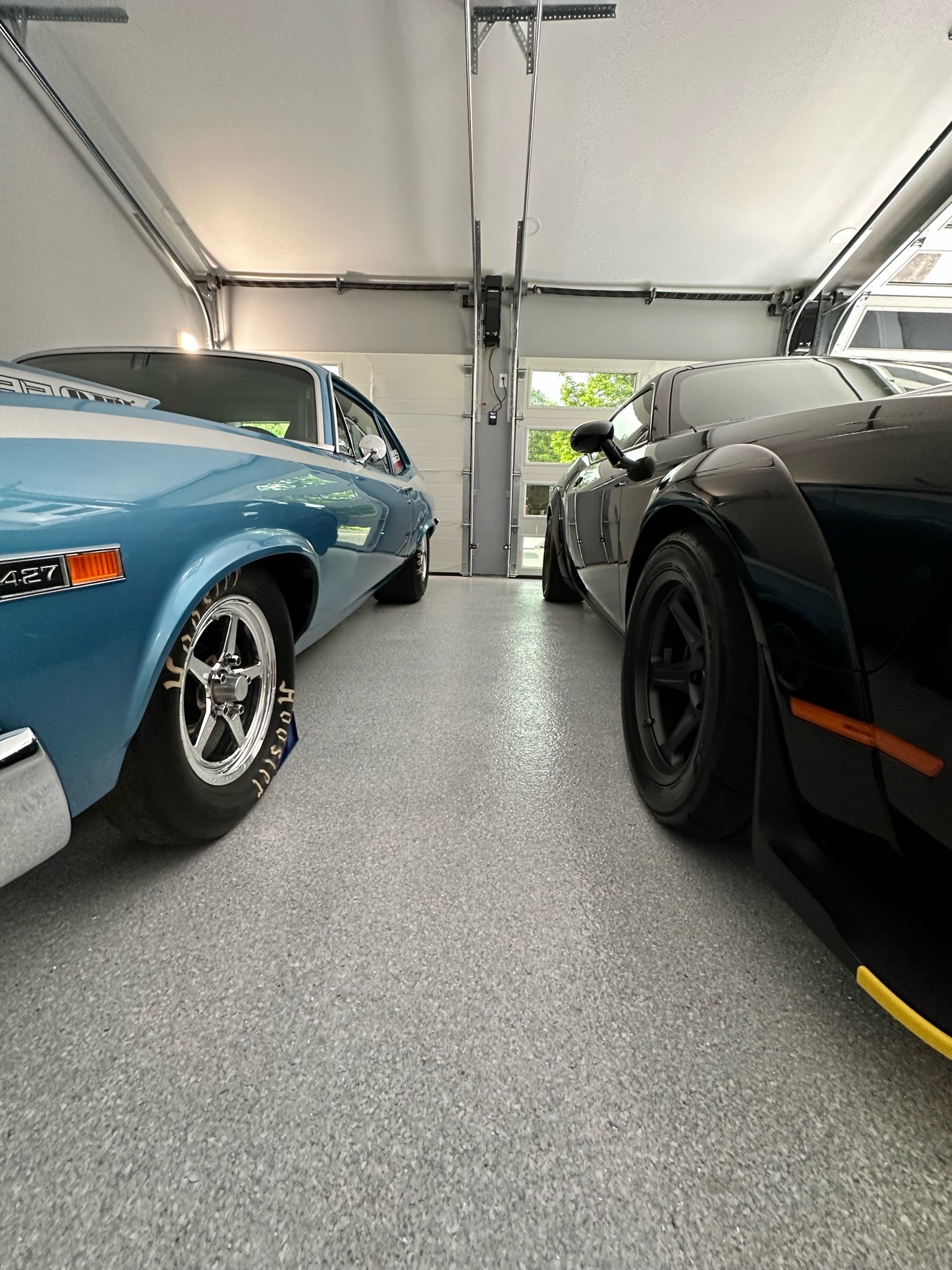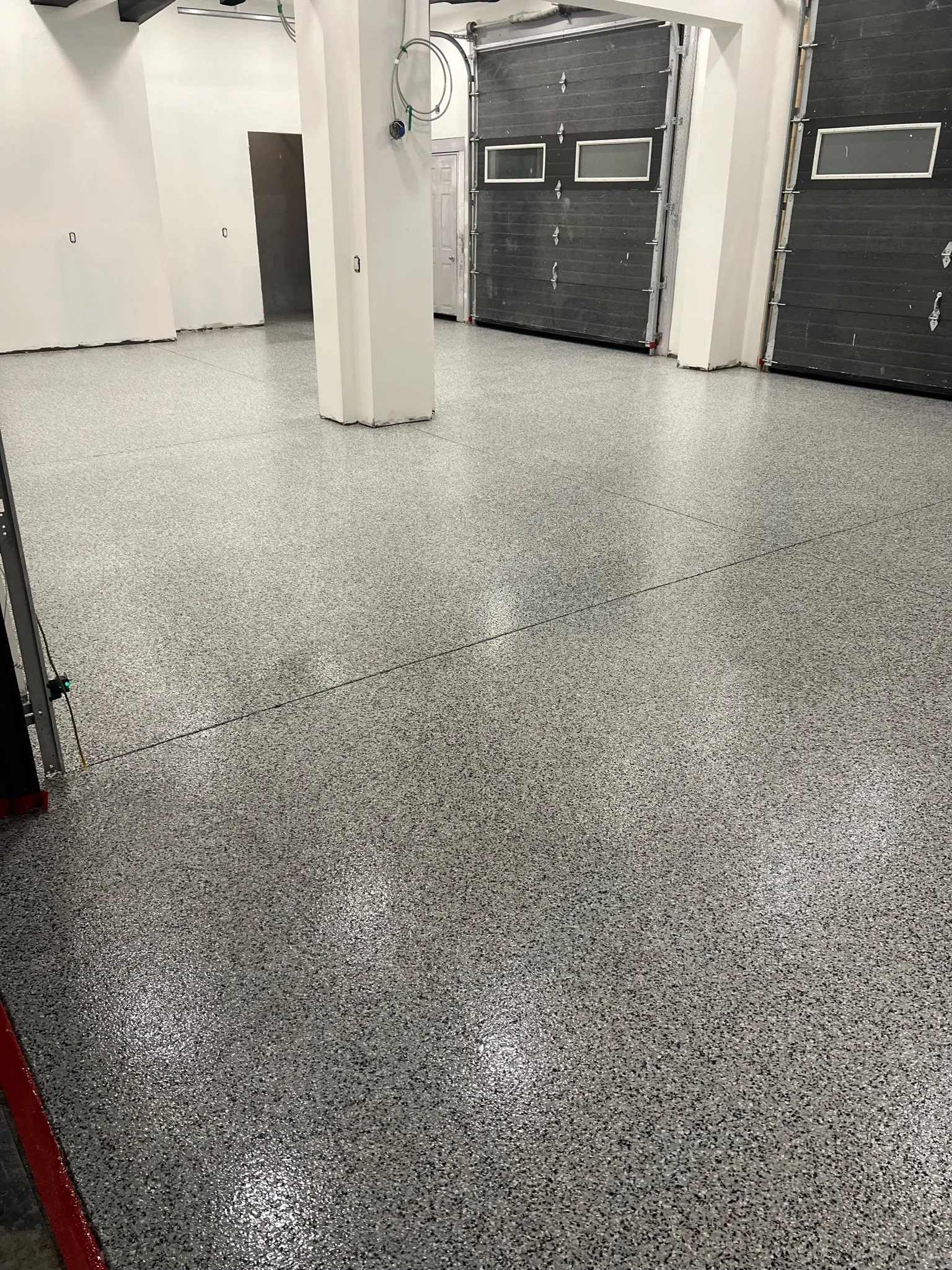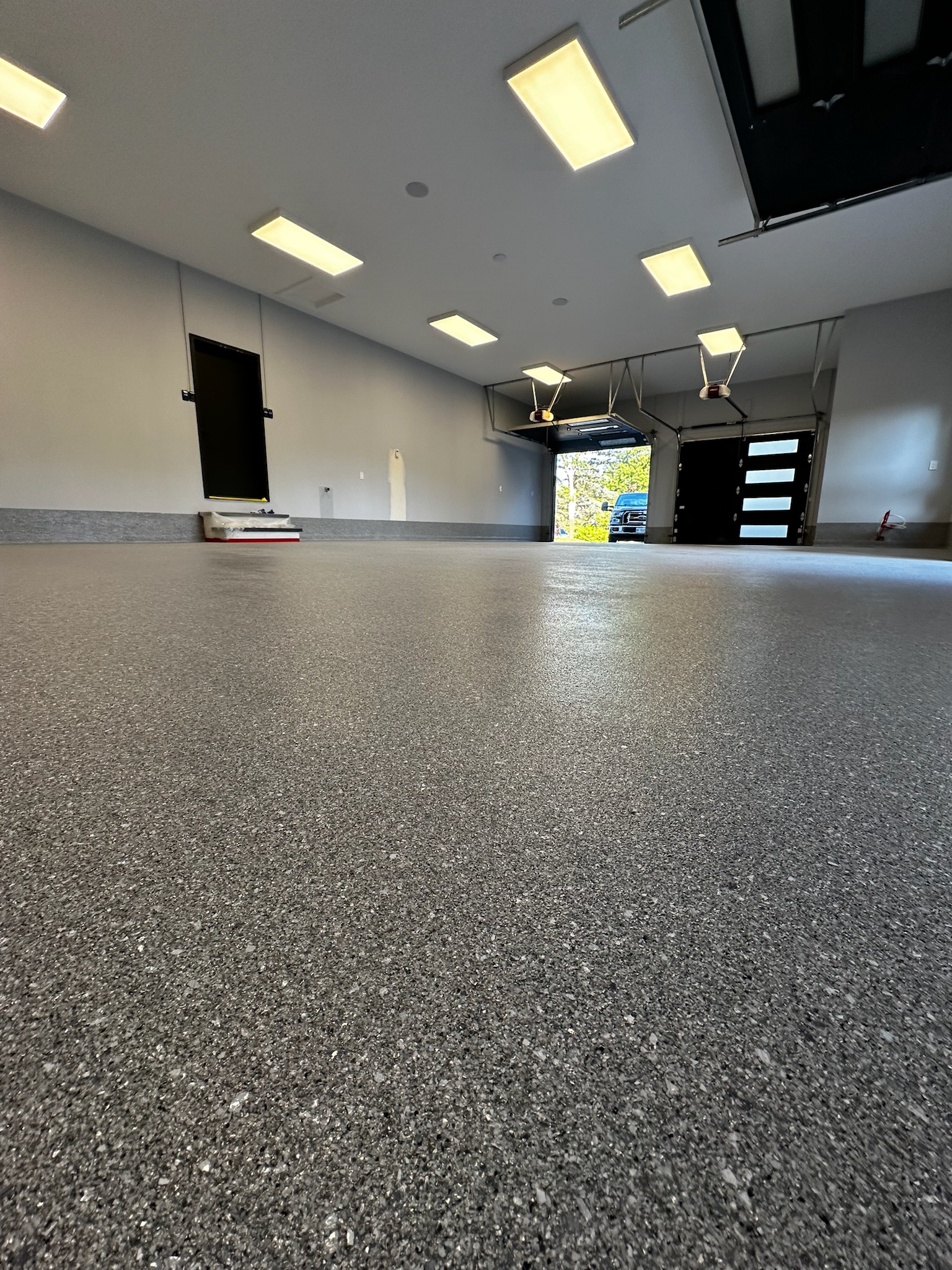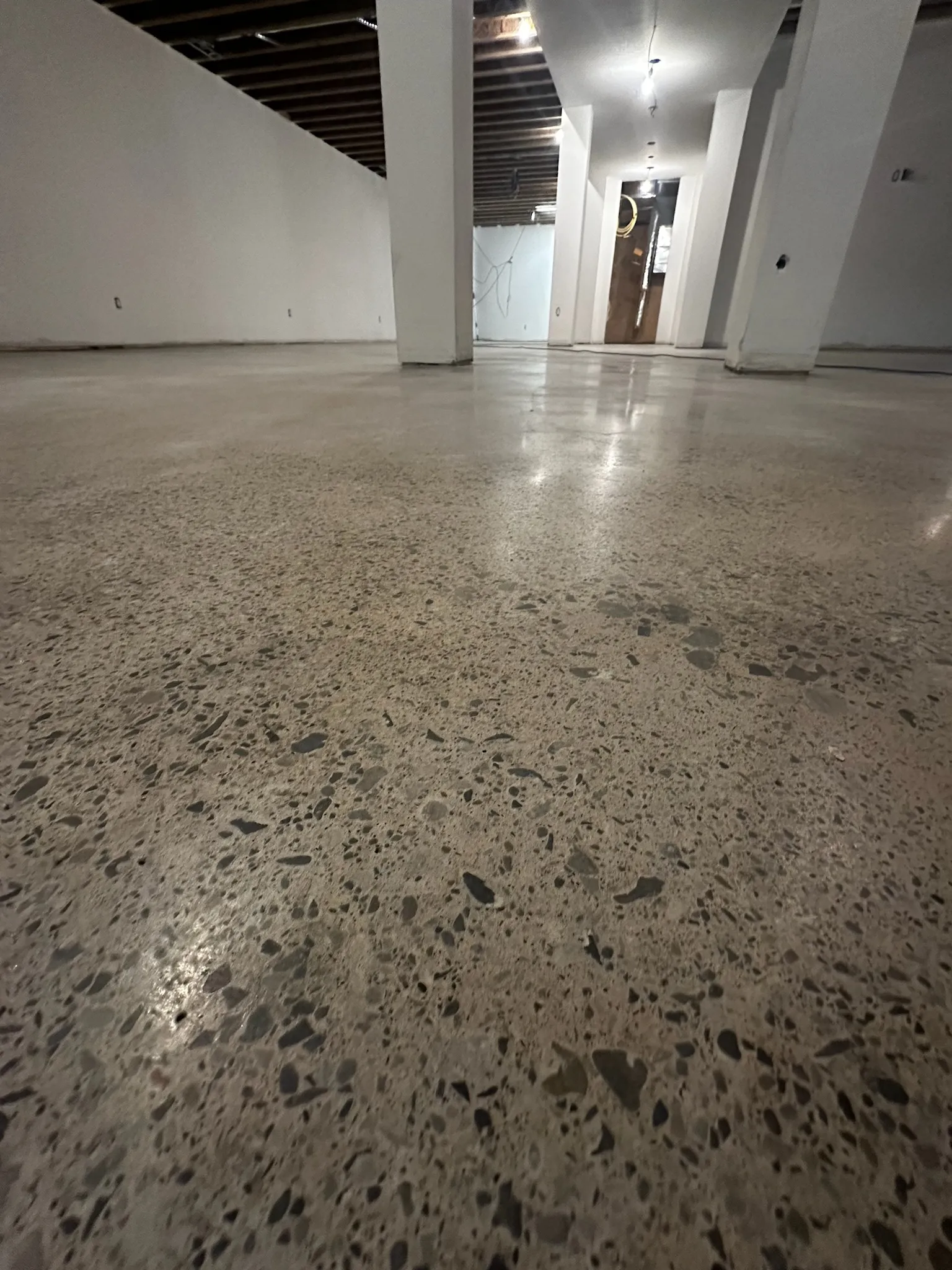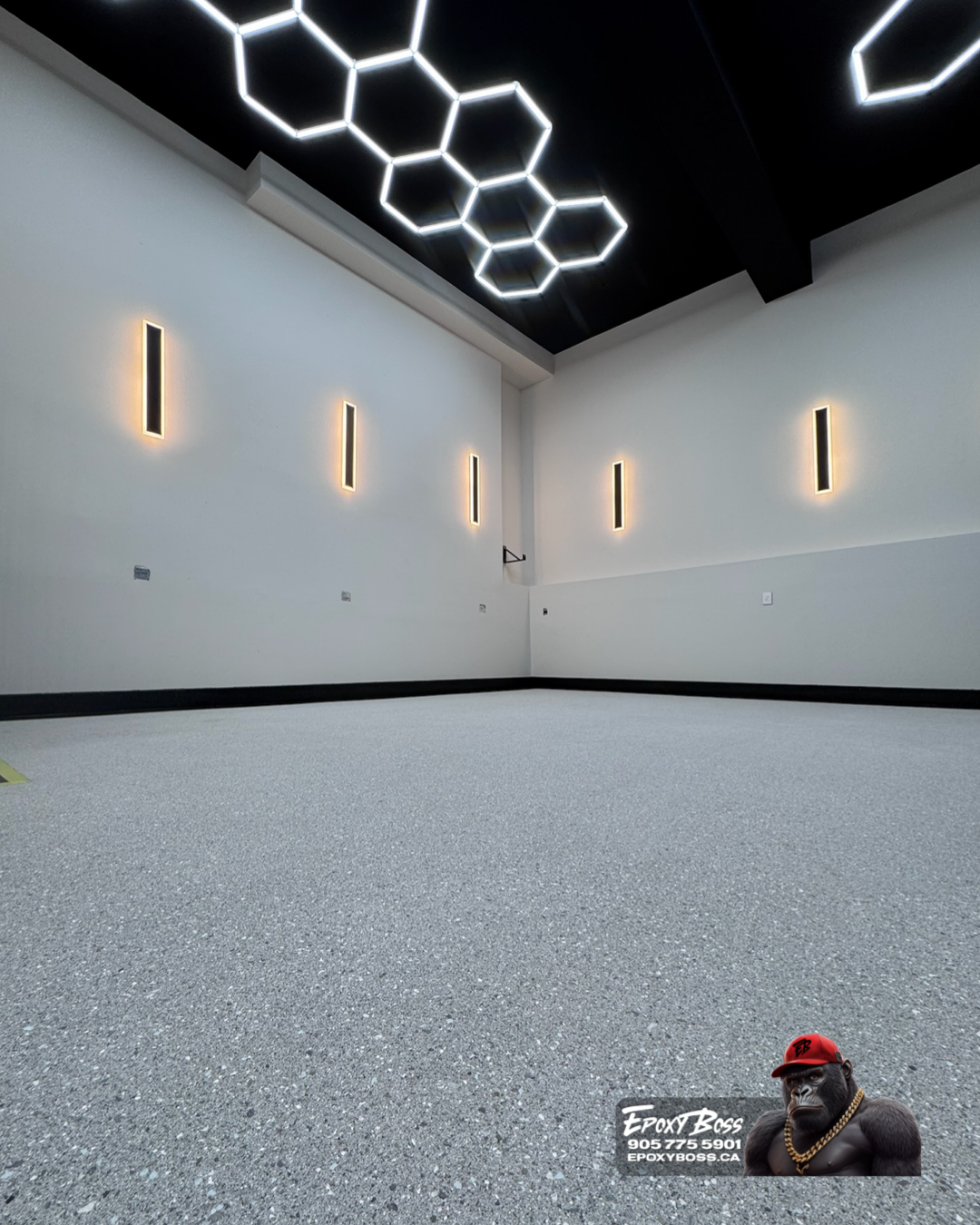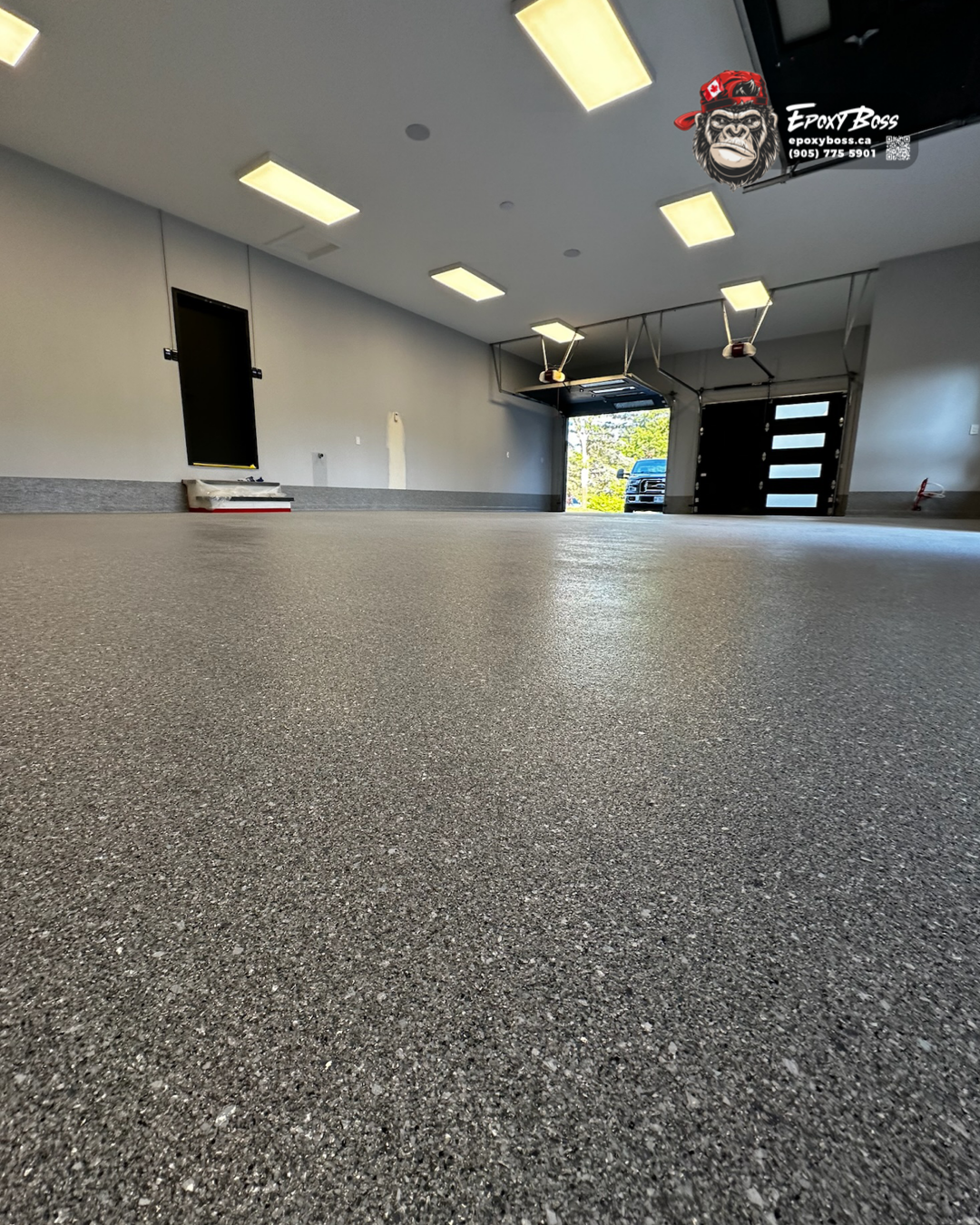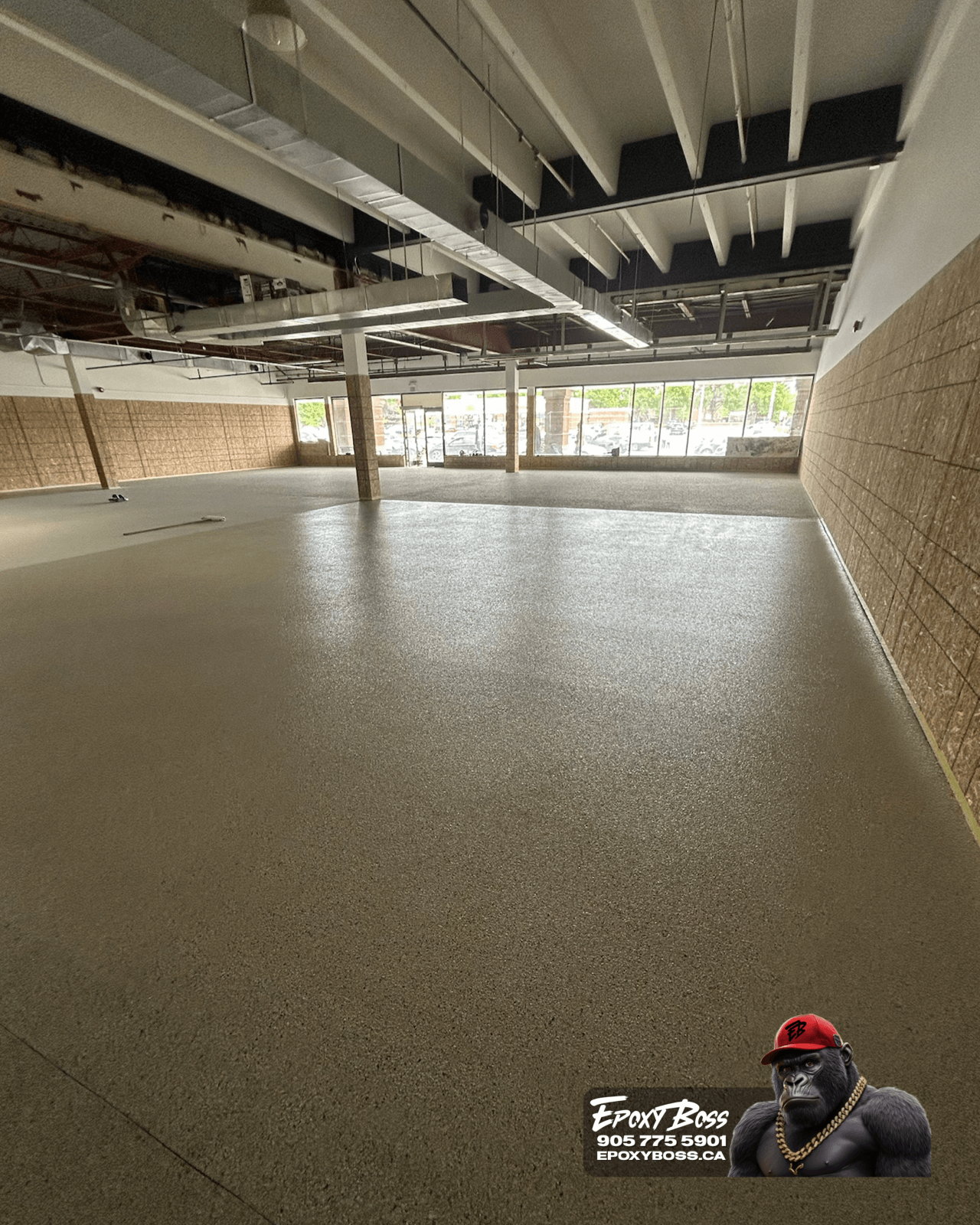

A metallic epoxy floor is a decorative resin floor in which metallic or pearlescent pigments are mixed into a clear or tinted epoxy and manipulated while wet, creating a marbled, three-dimensional look with depth and movement. It is installed over a ground, repaired and primed concrete slab, usually followed by a clear topcoat for wear and UV protection. Metallic epoxy works best indoors in basements, showrooms, retail, offices and feature rooms; it is less practical in salty, high-wear garages.
This guide covers how metallic epoxy flooring is installed, where it suits Ontario homes and businesses, its limits and how to keep it looking good.
What makes a metallic epoxy floor different?
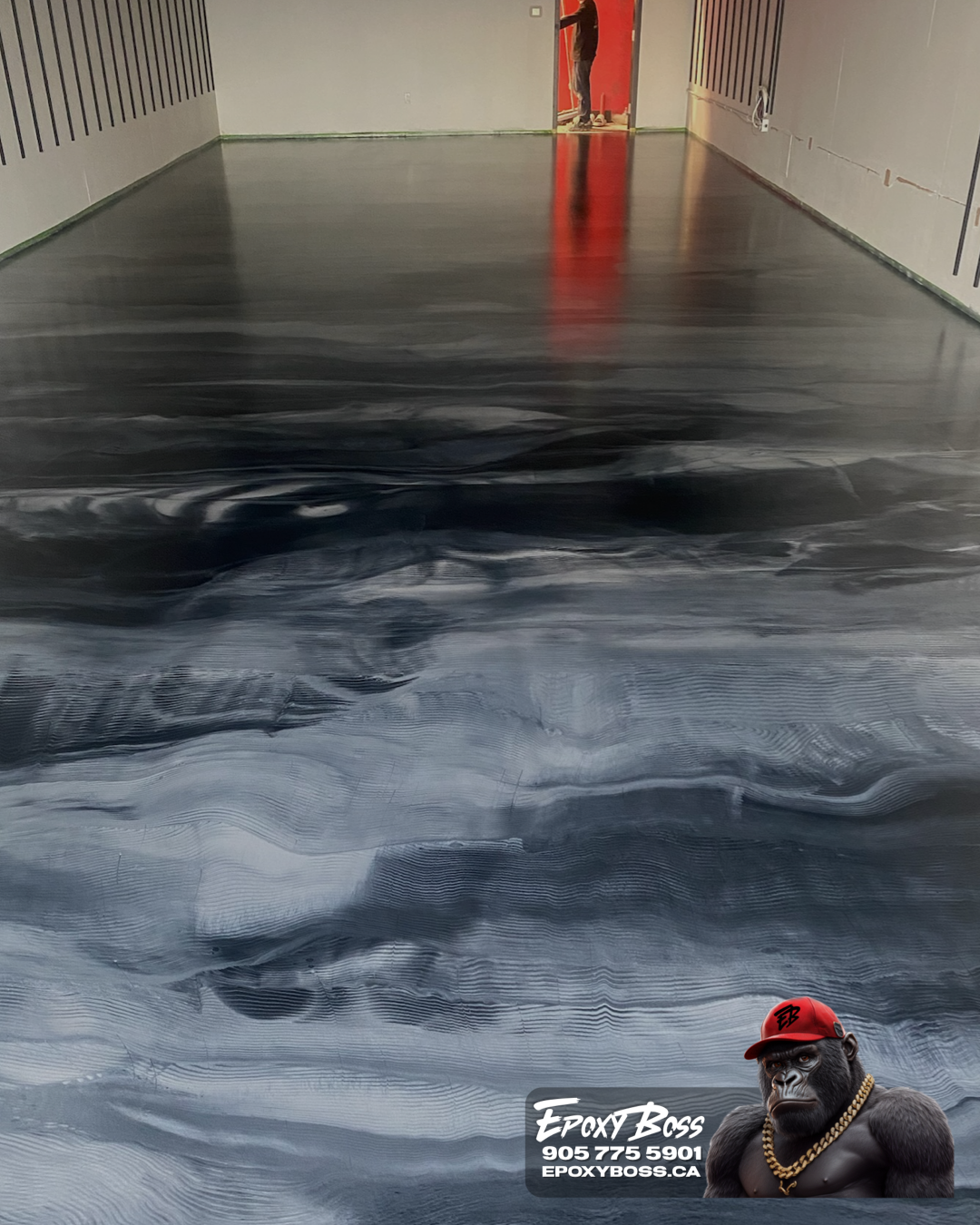
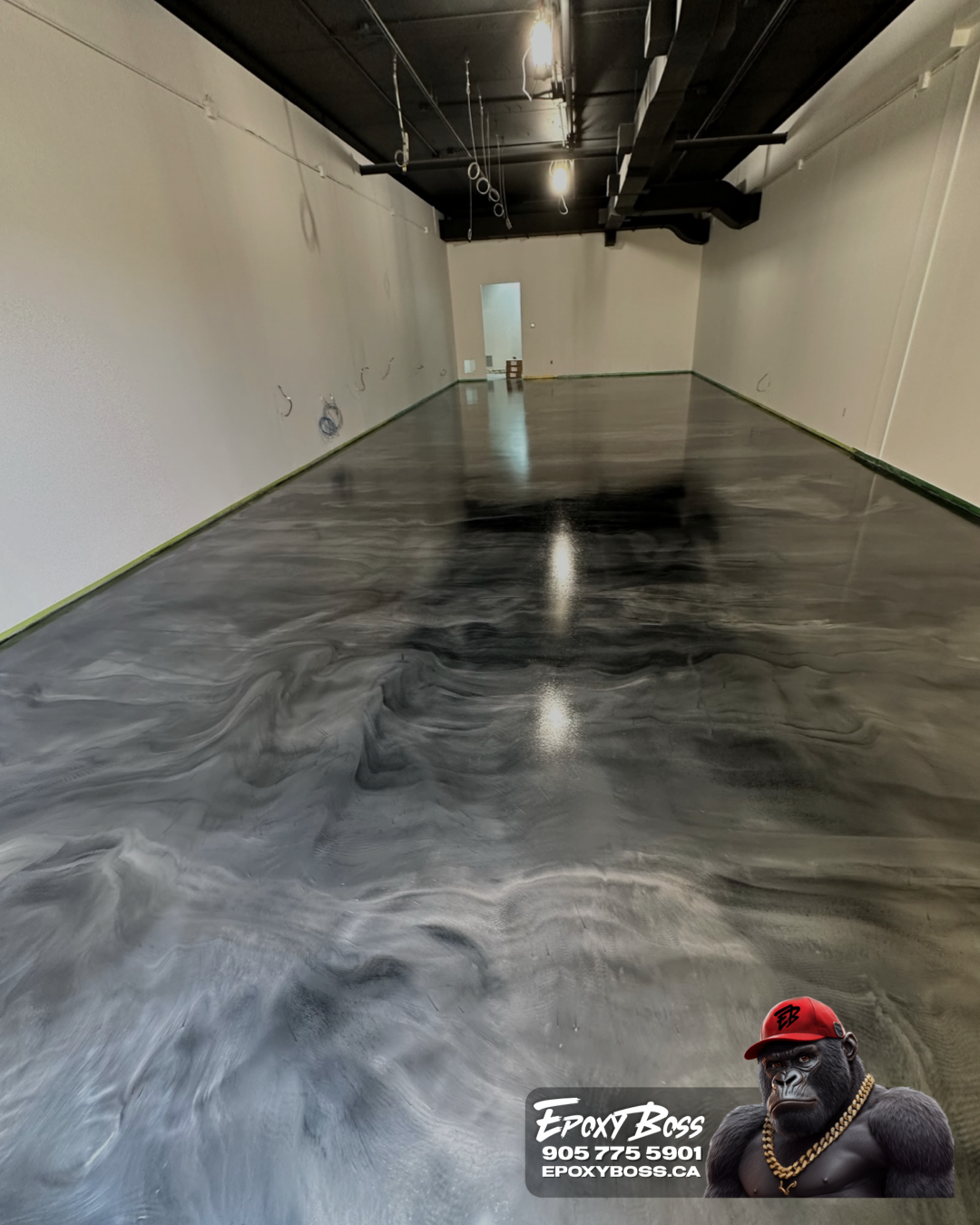
Standard solid-colour coatings aim for a uniform appearance. Metallic systems aim for variation. Fine metallic pigments float and move in the wet resin, and the installer guides that movement with rollers, brushes, sprayed solvent or other techniques to create swirls, veining, cells or a lava-like flow. Because the pattern forms as the material levels and cures, no two metallic floors are exactly alike.
That uniqueness is the appeal, and also the reason you should look at real samples and completed floors before choosing. Browse our metallic epoxy colours and the metallic system page.
How metallic epoxy floors are installed
1. Assessment and moisture testing
Metallic floors are thin, glossy and unforgiving: any bubbles, outgassing or adhesion issue shows. Slab moisture should be assessed, for example with the in-situ relative humidity method in ASTM F2170, especially in basements. See our basement moisture guide.
2. Grinding and repair
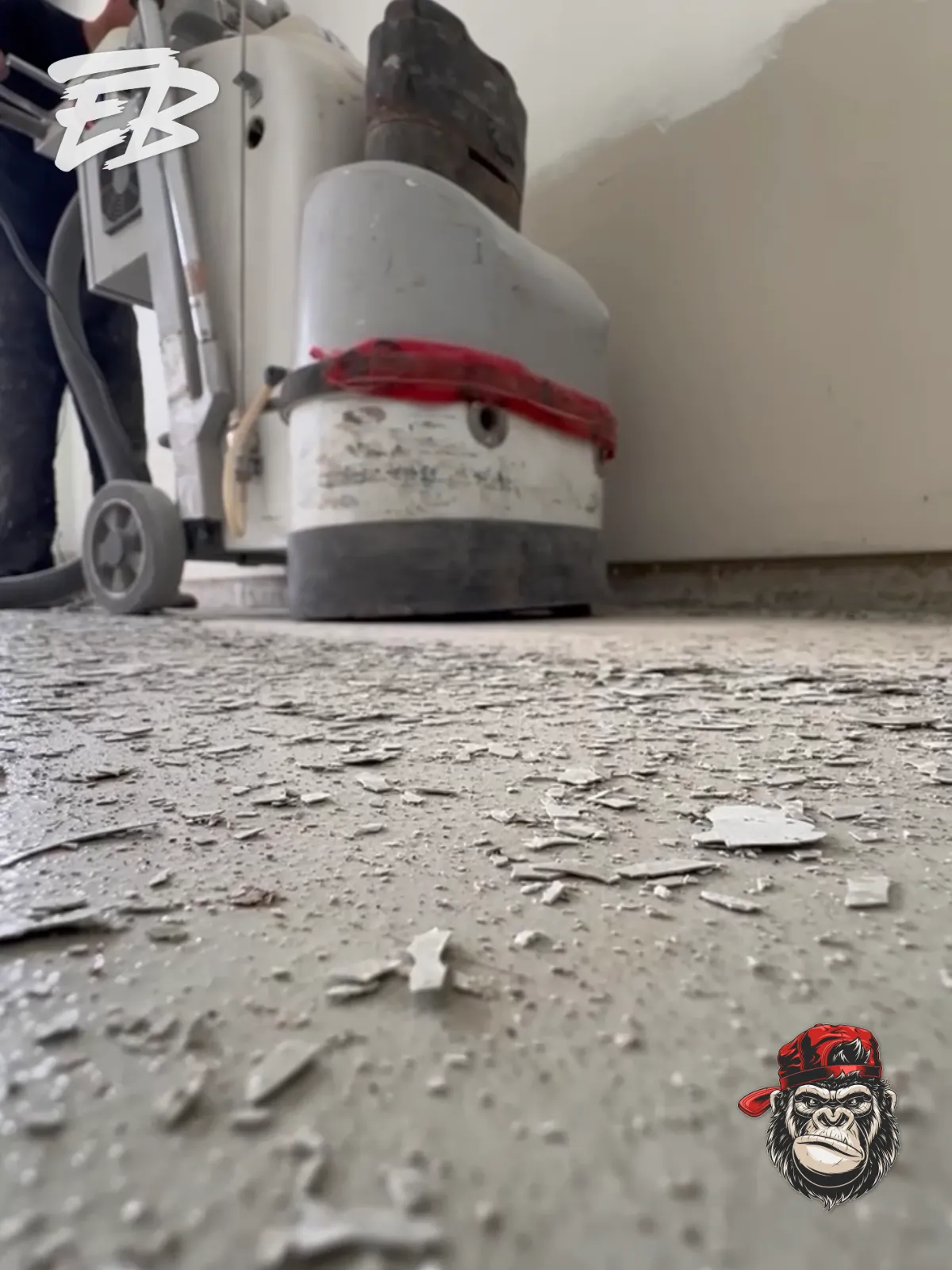
The slab is diamond ground to the required profile. Cracks, pits and joints are repaired and the surface is made as flat as practical, because a self-levelling metallic coat will follow and highlight low spots.
3. Primer
A primer seals the concrete and reduces the chance of outgassing bubbles in the decorative coat.
4. Base coat
A pigmented base coat sets the background tone. Dark bases make metallic effects look deeper; light bases give a brighter, softer look.
5. Metallic coat
The metallic epoxy is mixed, poured and spread to a consistent thickness, then worked by hand while it is still wet. Timing and technique decide the final pattern. This is the stage where installer experience matters most.
6. Clear topcoat
Most metallic floors are finished with a clear topcoat to protect the decorative layer from scratching and, where light reaches the floor, from UV. Aliphatic urethanes and polyaspartics are common choices. See aliphatic urethane topcoats explained. Abrasion resistance of coatings is often compared using the Taber method in ASTM D4060.
Our metallic epoxy flooring page explains our process, and the related self-levelling epoxy page covers the smooth base systems metallic floors are built on.
Design choices: colour, effect and sheen
- Colour palette: single-colour metallics give a calm, pearl-like sheen; two or three blended colours create stronger movement. Neutral greys, bronzes and whites are popular for basements; deeper blues, coppers and blacks are often used as feature floors.
- Effect style: soft clouds, marble veining, lava or "cell" patterns and directional flows are all achieved by technique rather than different products.
- Sheen: high gloss shows the most depth; satin topcoats reduce glare and hide fine scratches better, with a softer look.
- Lighting: metallic floors change with light. Pot lights, daylight and warm or cool bulbs all affect how the pattern reads, so samples should be viewed in the room's real lighting.
Where metallic epoxy works best
- Finished basements and rec rooms: a seamless, high-gloss floor with a custom look, over a dry slab. See where epoxy floors work inside a house.
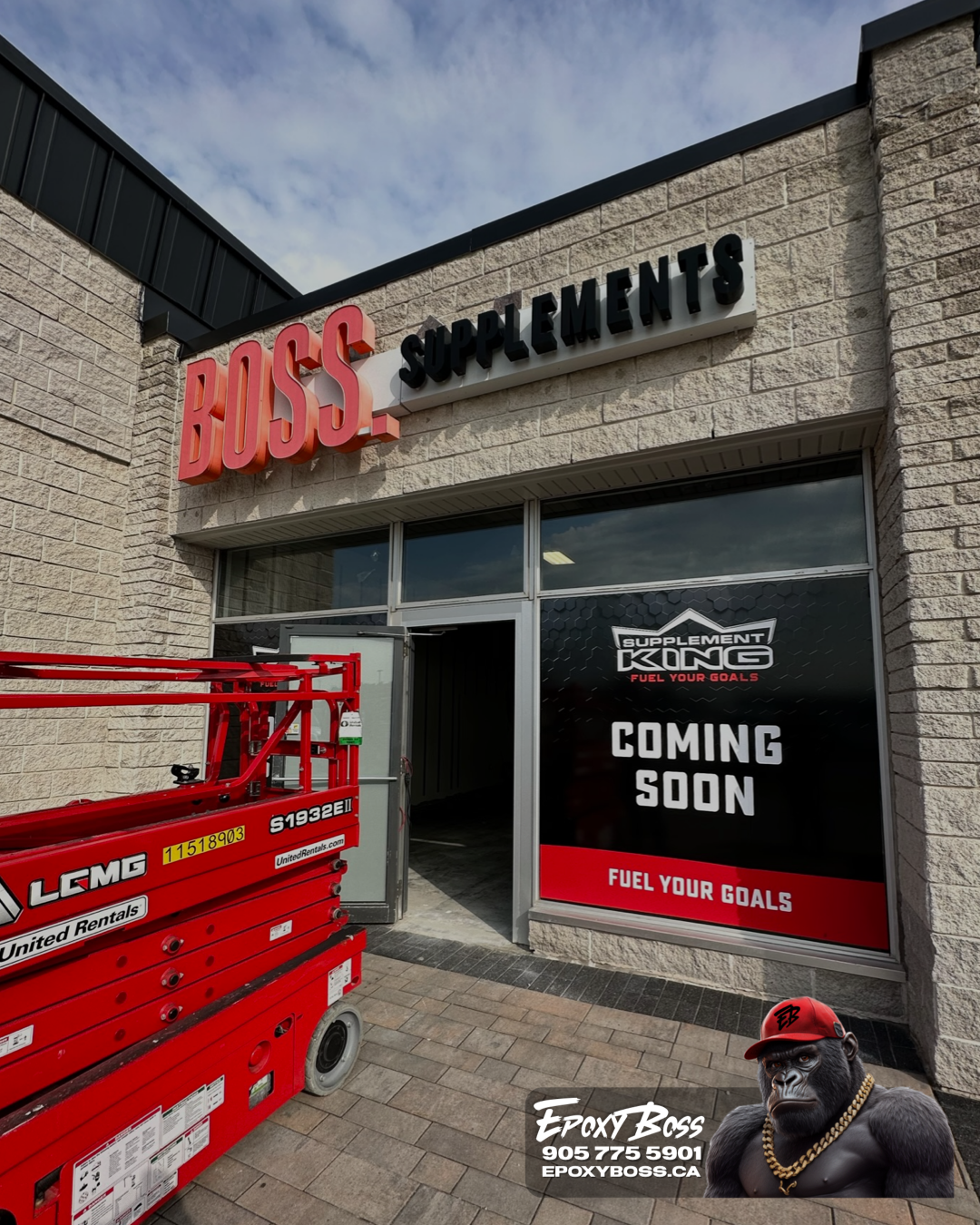
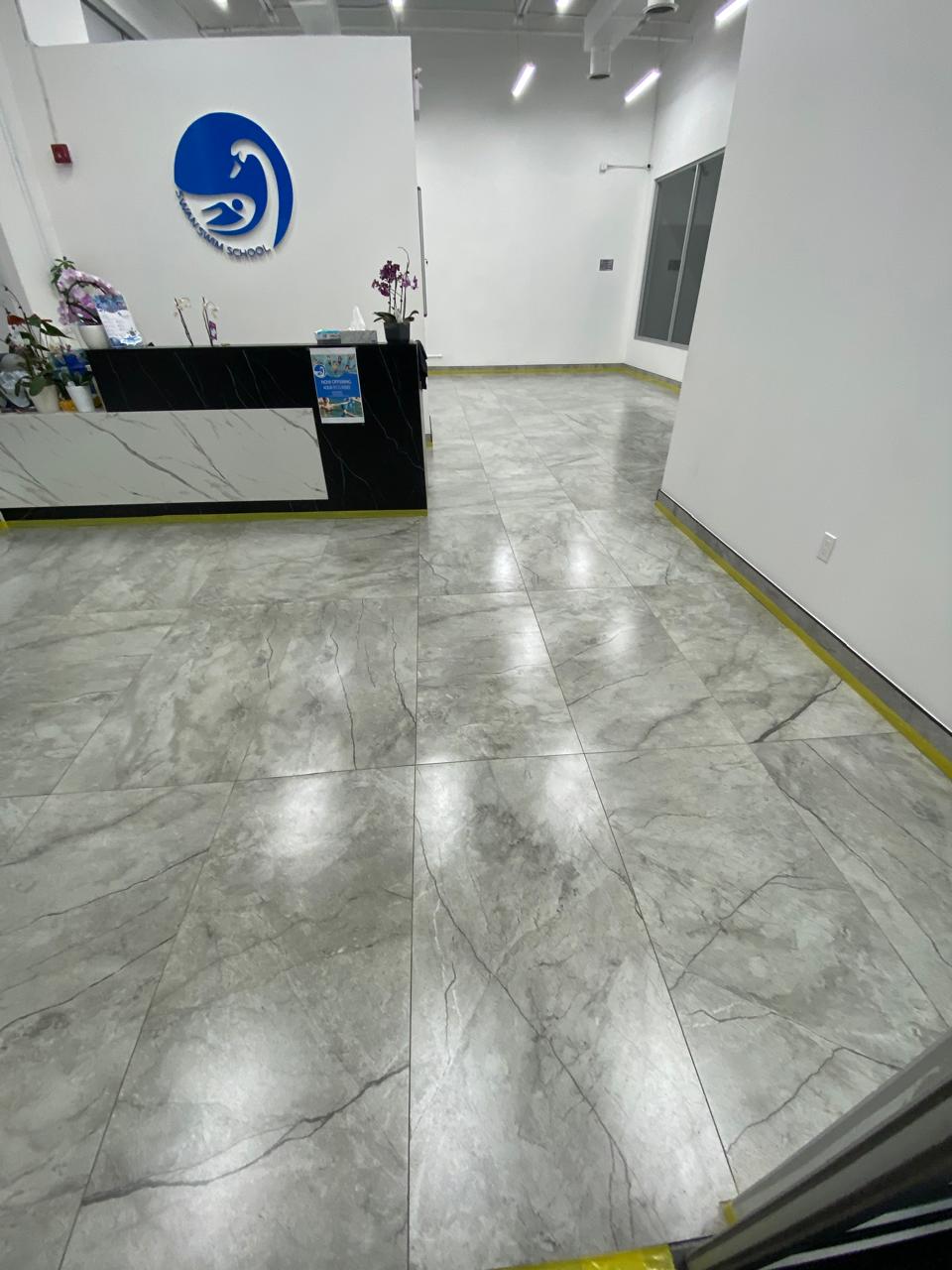
- Retail, showrooms and salons: a feature floor that photographs well and is straightforward to clean. Our case study on a metallic epoxy floor for a North York retailer shows a commercial example.
- Offices, lobbies and studios: where appearance matters and traffic is mostly foot traffic.
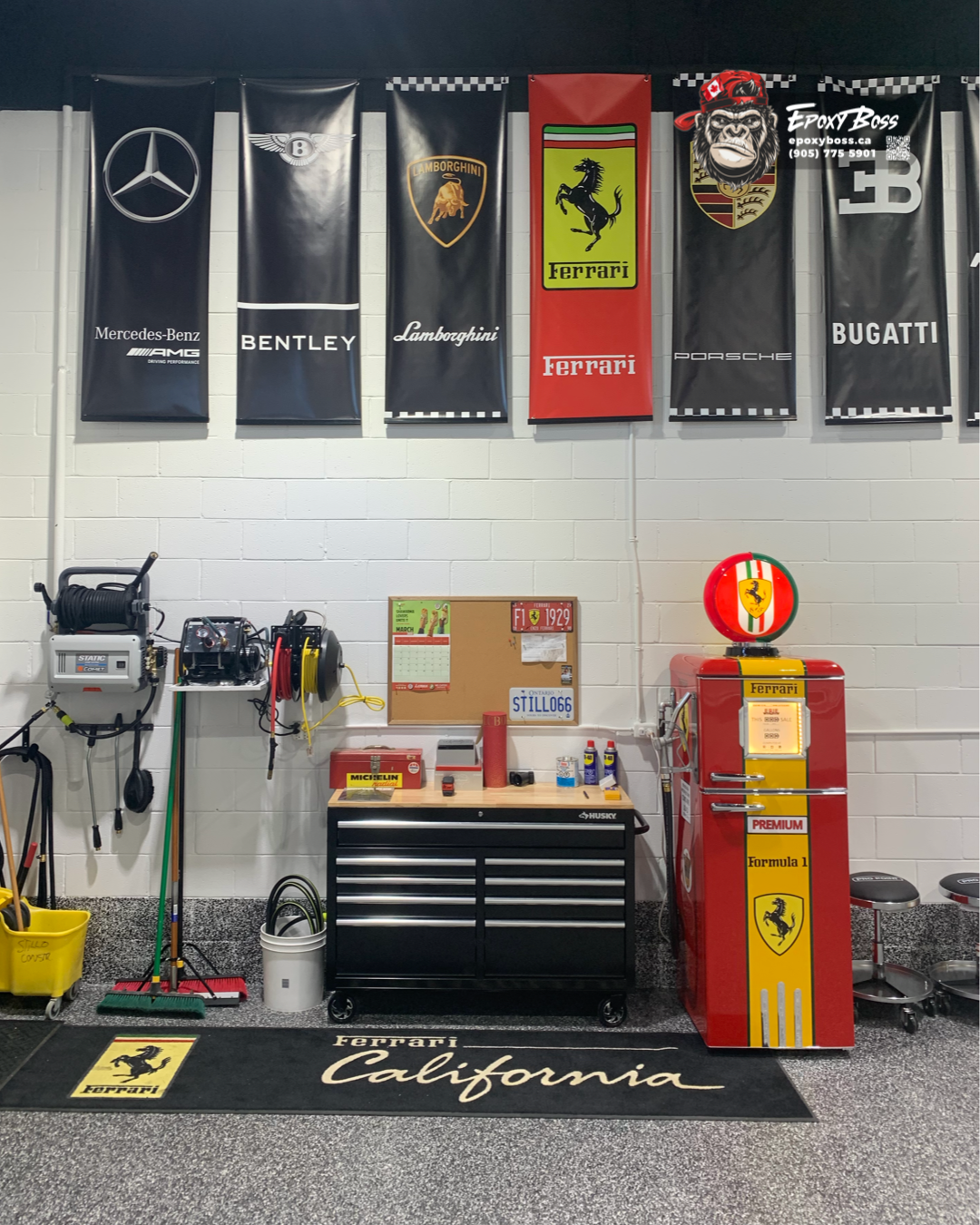
- Show garages: possible, but see the limits below.
Explore commercial floor coating applications for business settings.
Metallic floors in commercial spaces
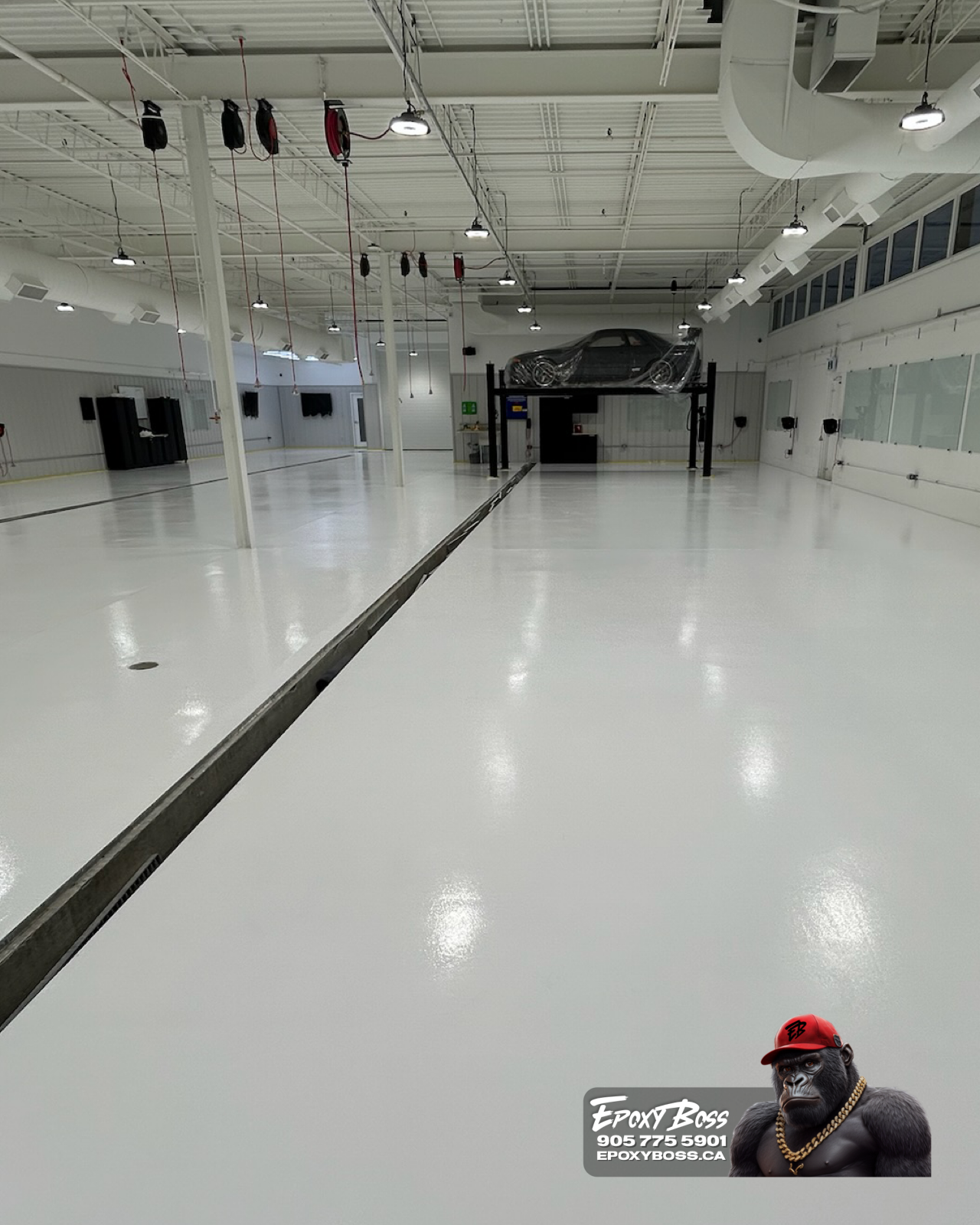
In retail and hospitality, the floor has to look good and keep working while the business runs. Planning usually covers phasing the work around opening hours, odour and ventilation during application, entry matting to keep grit off the floor, and a topcoat chosen for the expected foot traffic and cleaning routine. Rolling loads, chair legs and display fixtures are discussed before installation so the topcoat and maintenance plan suit them.
Limits to know before choosing metallic
- Shows scratches and dust more than flake: a smooth, glossy surface shows grit, scuffs and footprints. Flake and quartz systems hide wear better.
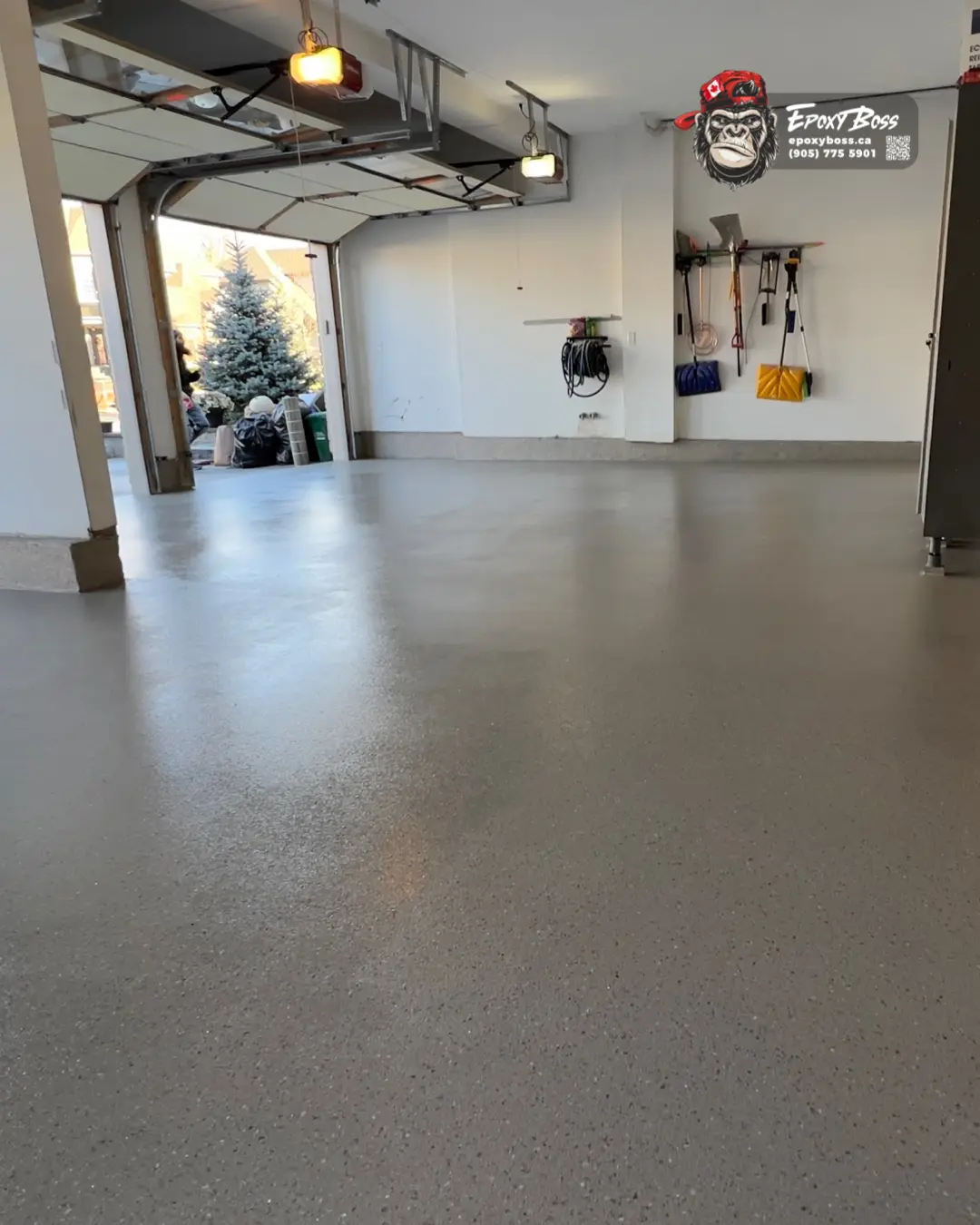
- Slippery when wet: smooth gloss can be slippery. Anti-slip additives in the topcoat help but change the look slightly. In wet entries and working garages, a full-broadcast flake floor is usually more practical.
- Salt and hot tires: working garages in Ontario winters are hard on any glossy finish.
- Unique pattern: exact replication of a sample is not possible, and spot repairs are hard to blend.
- Needs a dry, sound slab: moisture or poor preparation shows quickly in a thin decorative layer.
Metallic epoxy vs polished concrete
Both give a glossy interior floor. Polished concrete shows the concrete itself; metallic epoxy adds colour and movement on top. Compare them in polished concrete vs epoxy.
Caring for a metallic epoxy floor
- Dust-mop or sweep often; grit is the main cause of fine scratches.
- Use walk-off mats at entries, especially in winter.
- Clean with a neutral pH cleaner and a microfibre mop; avoid harsh solvents and abrasive pads.
- Put felt pads under furniture and avoid dragging heavy items.
- Wipe spills promptly.
- Commercial floors may benefit from periodic maintenance or a fresh topcoat over time.
Frequently asked questions
Is a metallic epoxy floor durable?
It is a durable resin floor when installed over a prepared slab and protected with a suitable topcoat, but its glossy surface shows wear more than textured systems. It suits foot-traffic interiors best.
Can you put metallic epoxy in a garage?
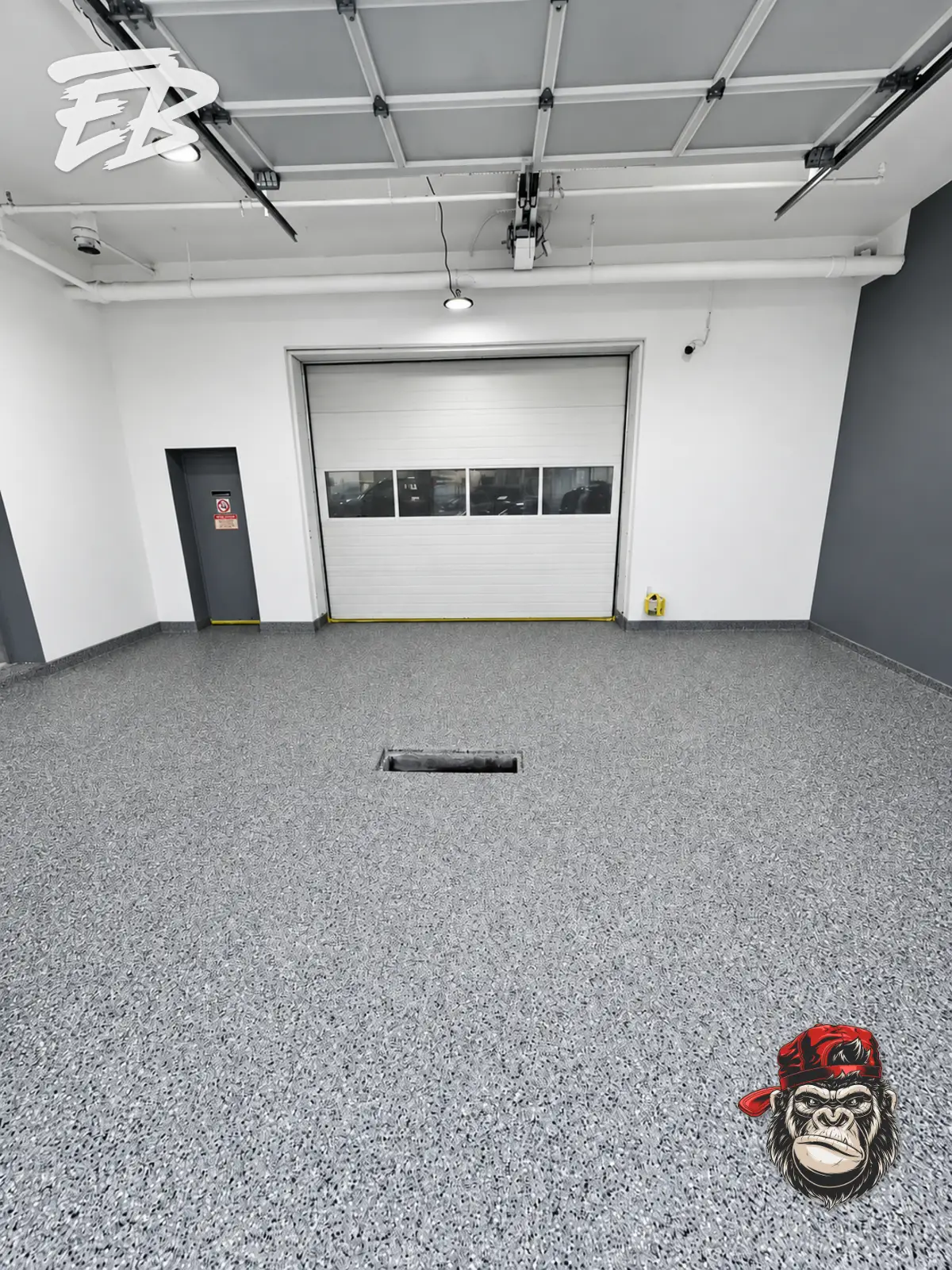
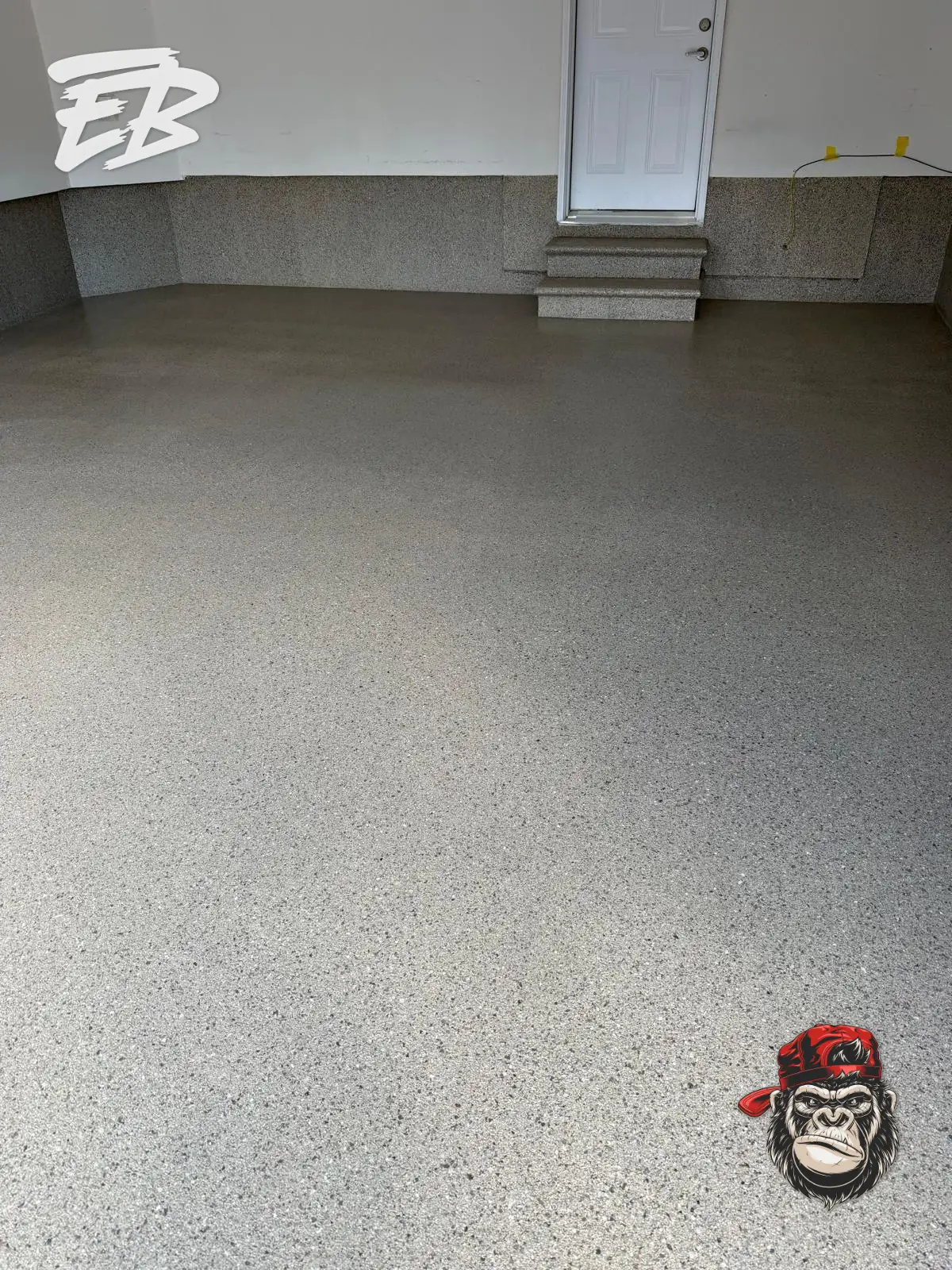
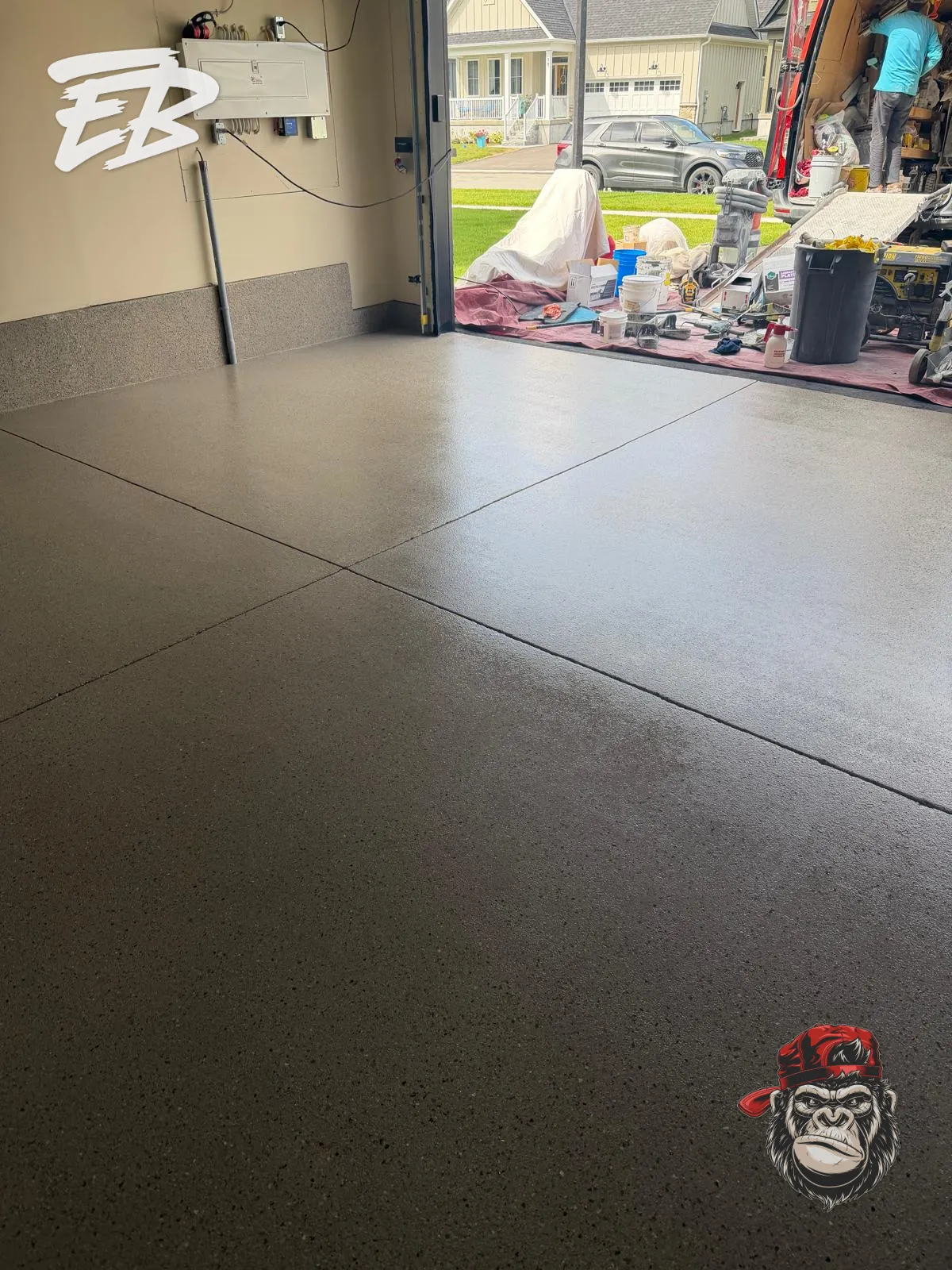
You can, and some show garages use it. In a daily-use Ontario garage with salt and grit, a flake system is usually more practical.
How long does installation take?
Usually several days, because of grinding, repairs, primer, base, metallic coat and topcoat, each with cure time. We confirm timing in your quote.
Can I choose my own colours?
Yes. Base colour, metallic pigments and effect style can be combined. We review samples and photos before installation.
Book a free floor assessment
Epoxy Boss is based in Innisfil, has worked since 2019 and installs metallic and other decorative floors across the GTA, York Region, Simcoe County, Halton, Durham and Muskoka. Call (905) 775-5901 or request a free floor assessment for a written quote in Canadian dollars. For a first estimate, try our floor coating cost calculator.