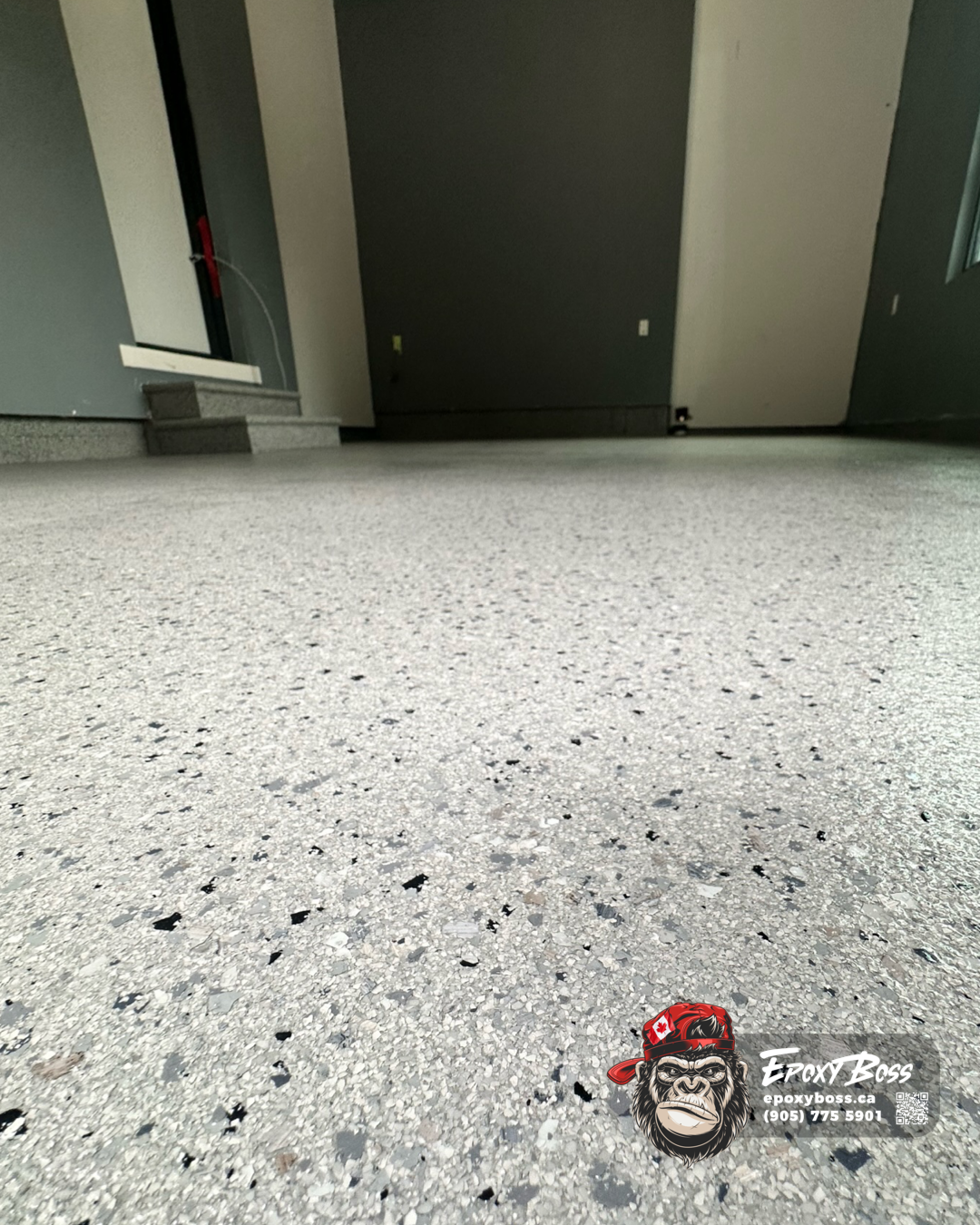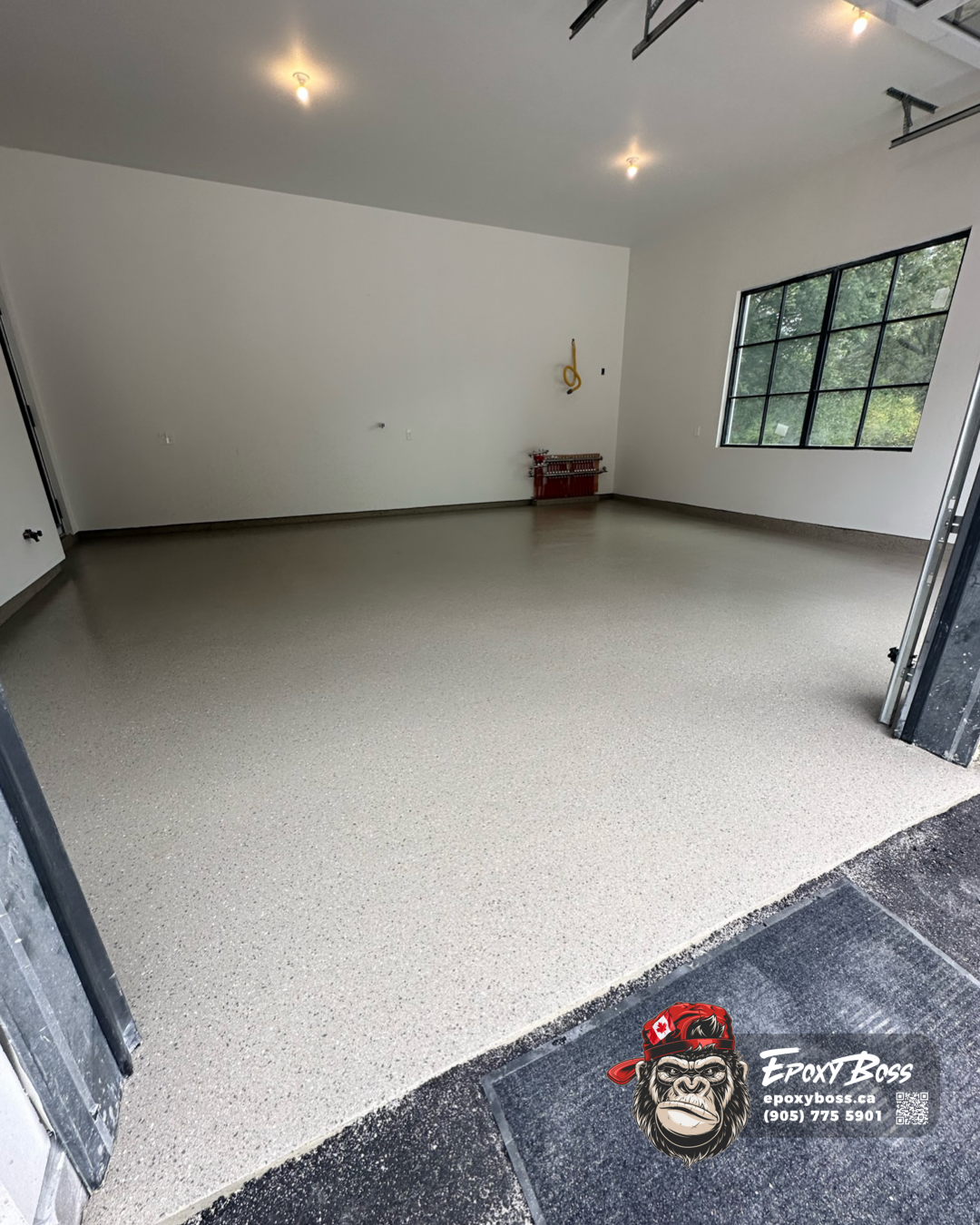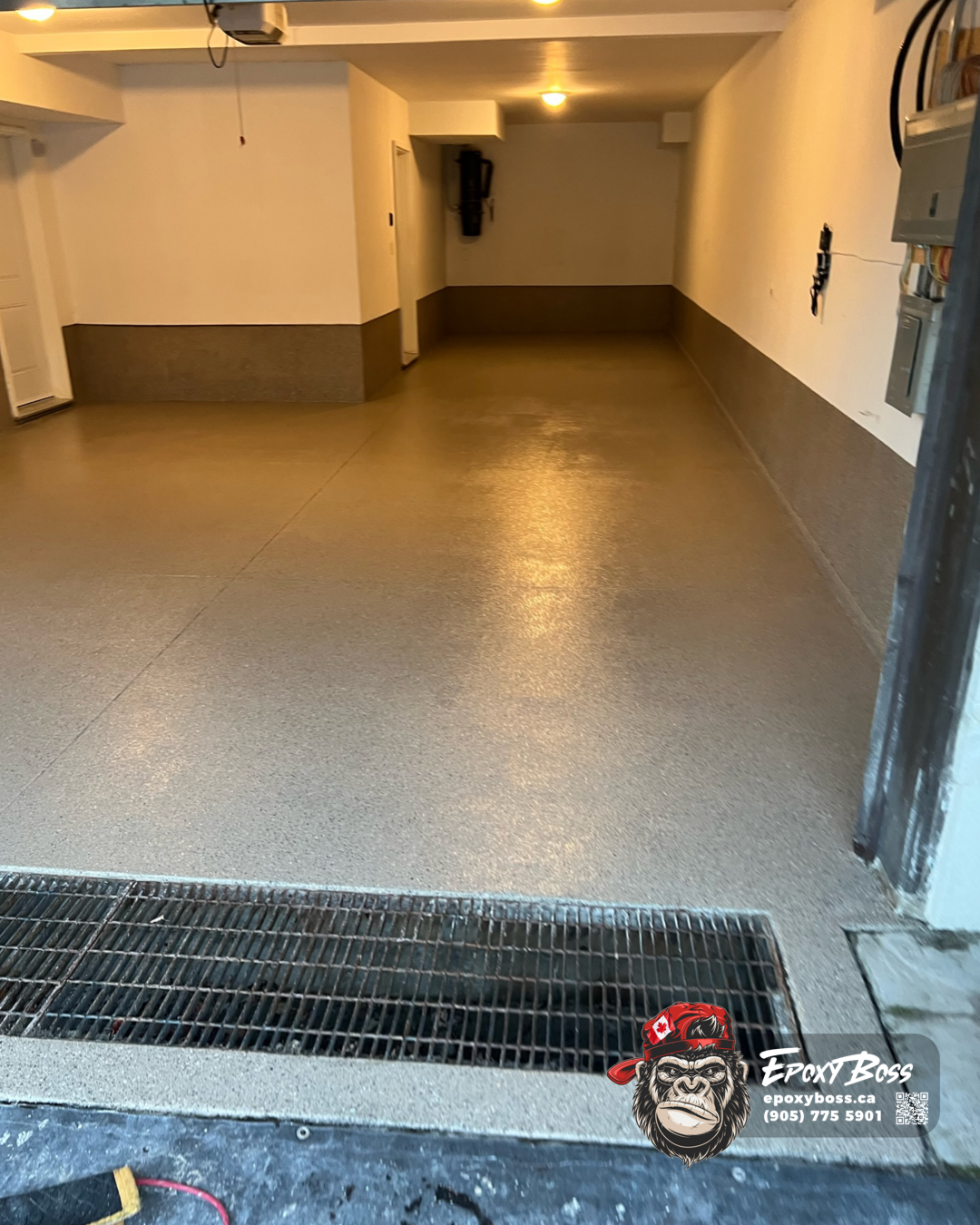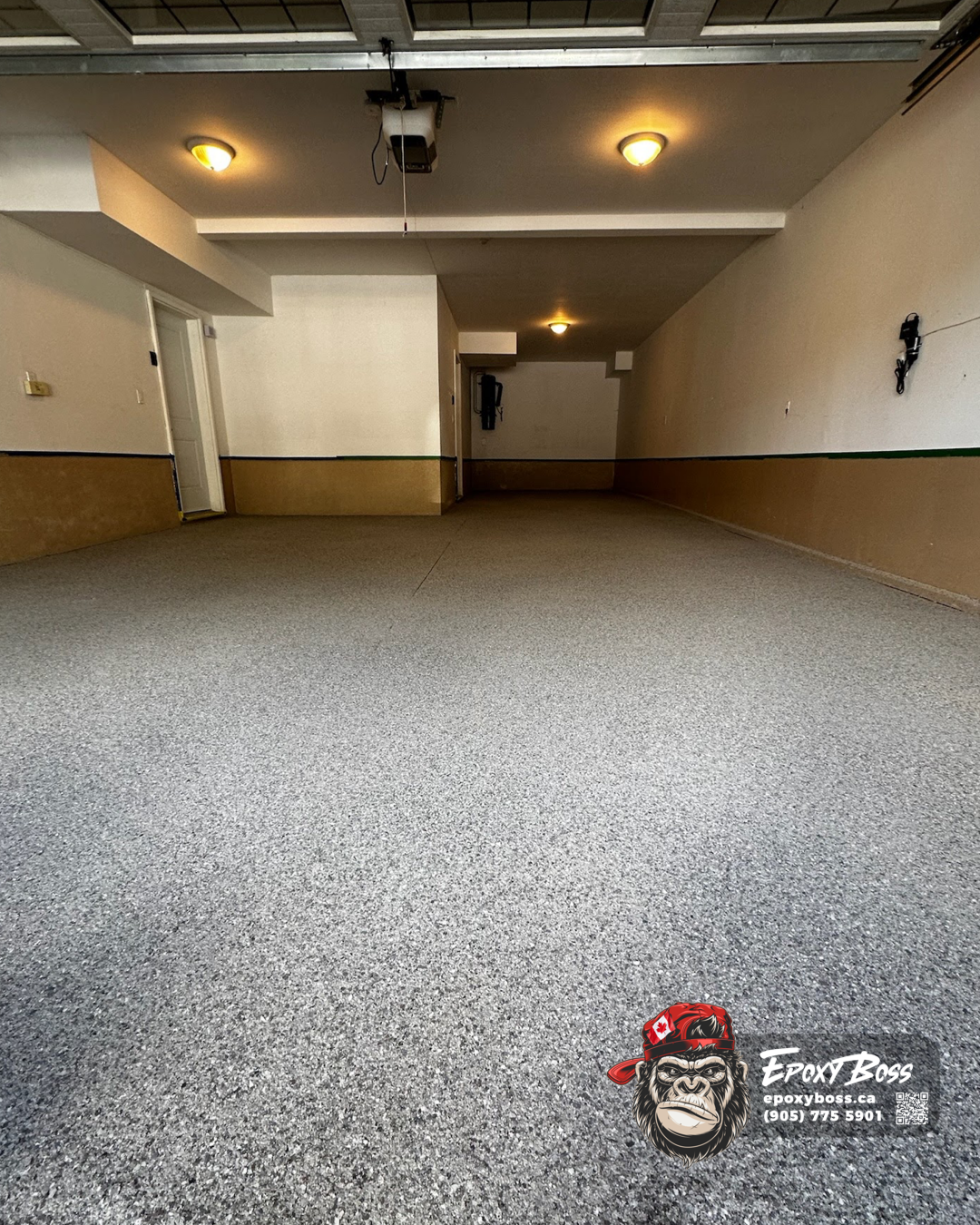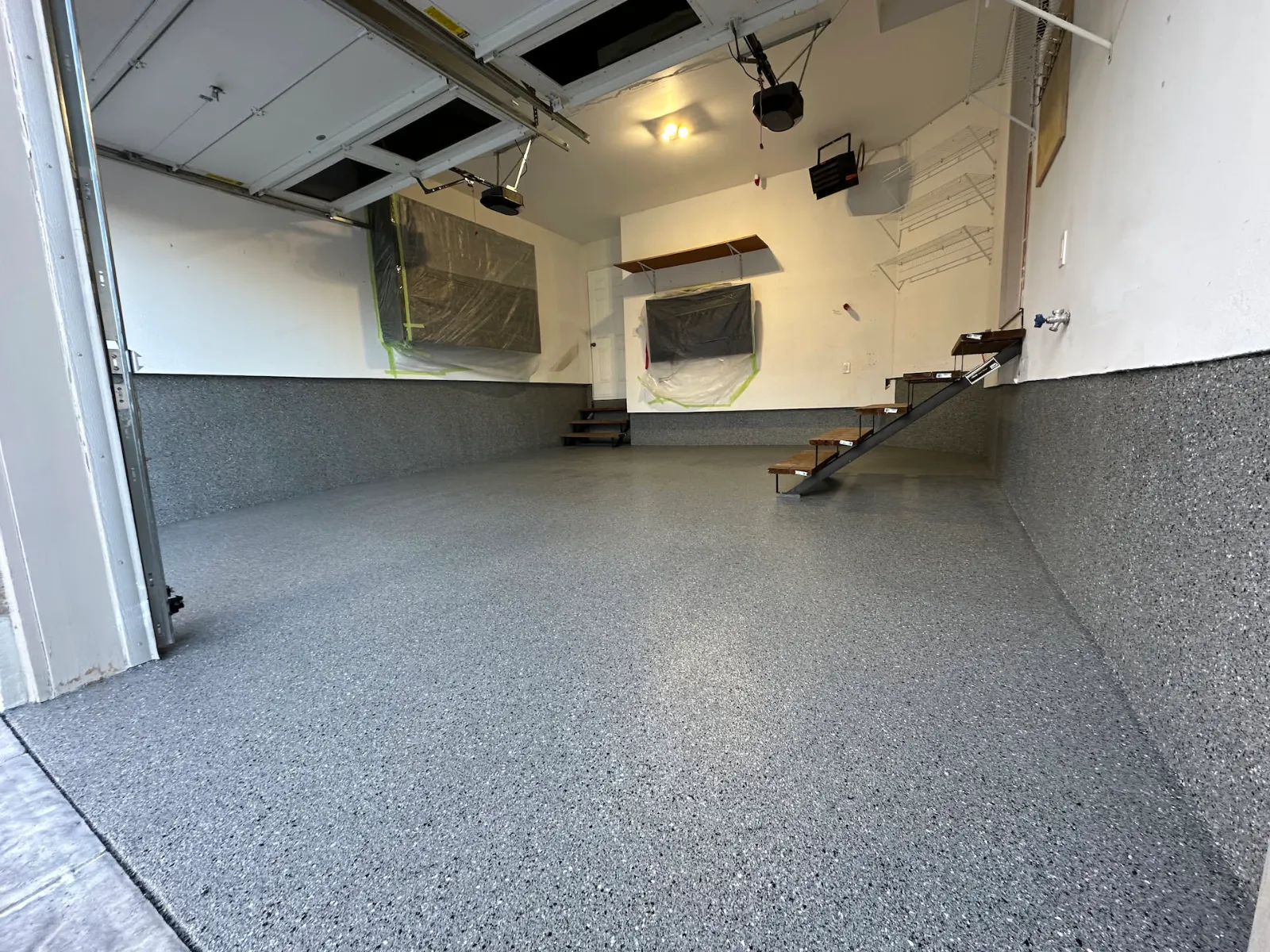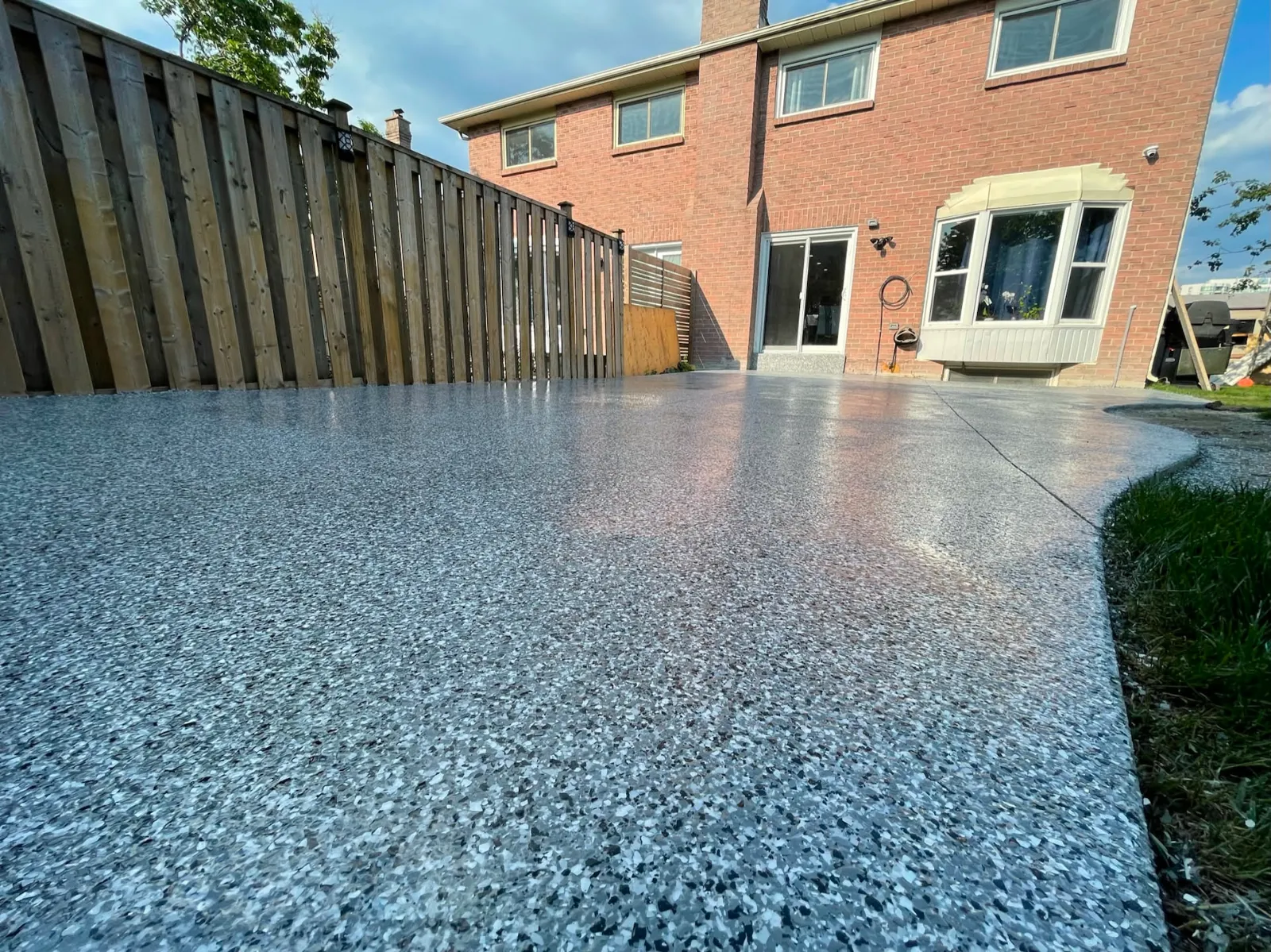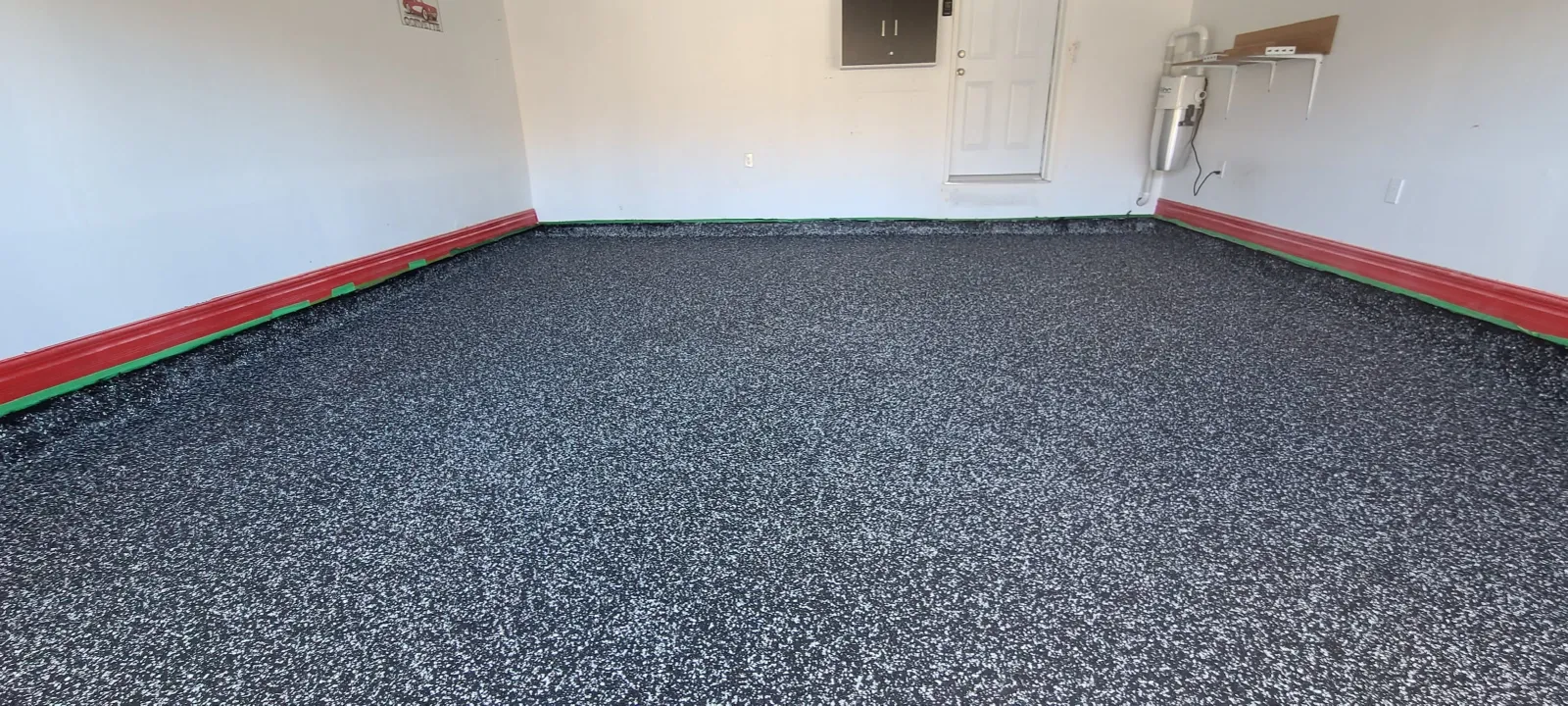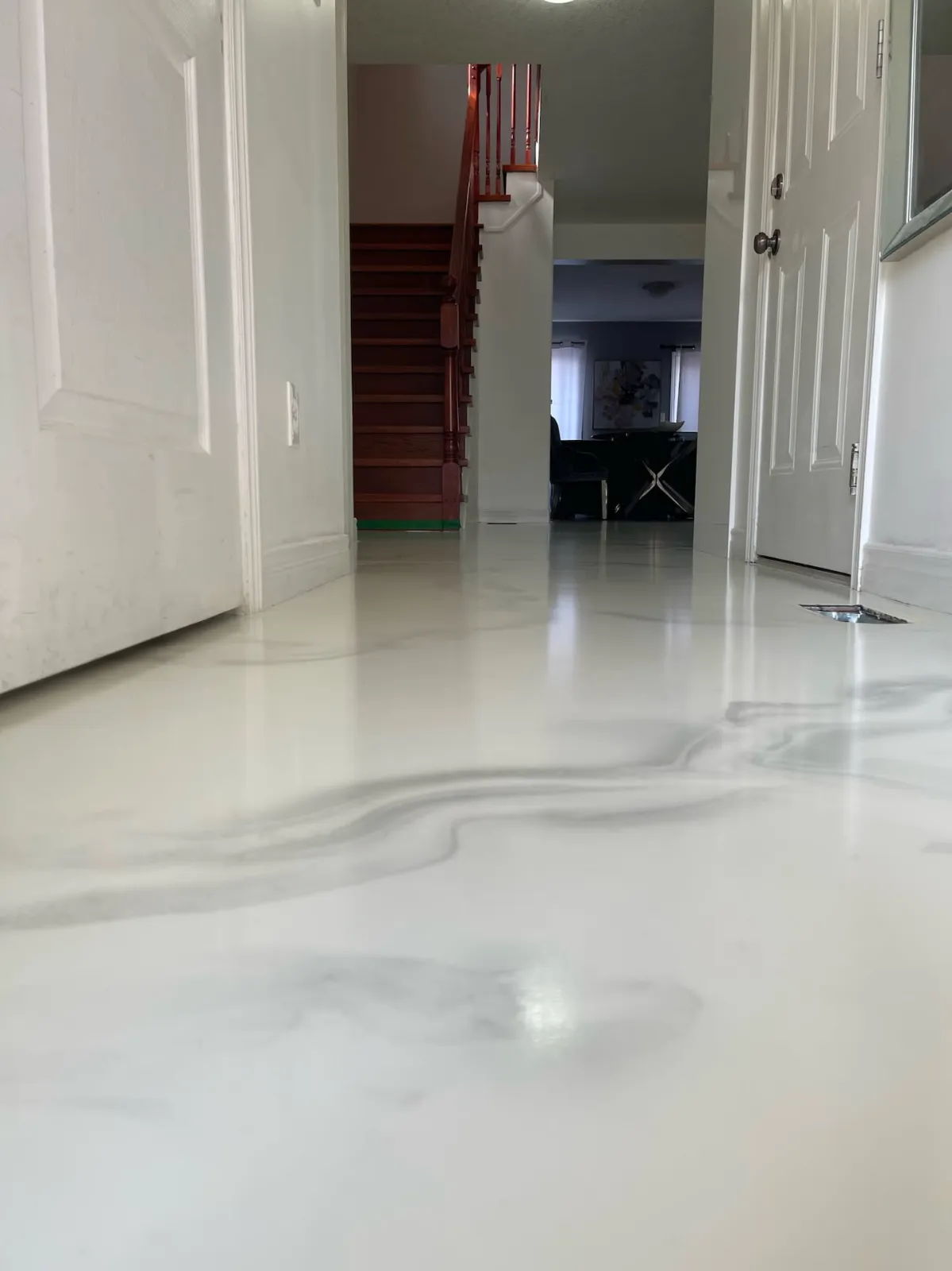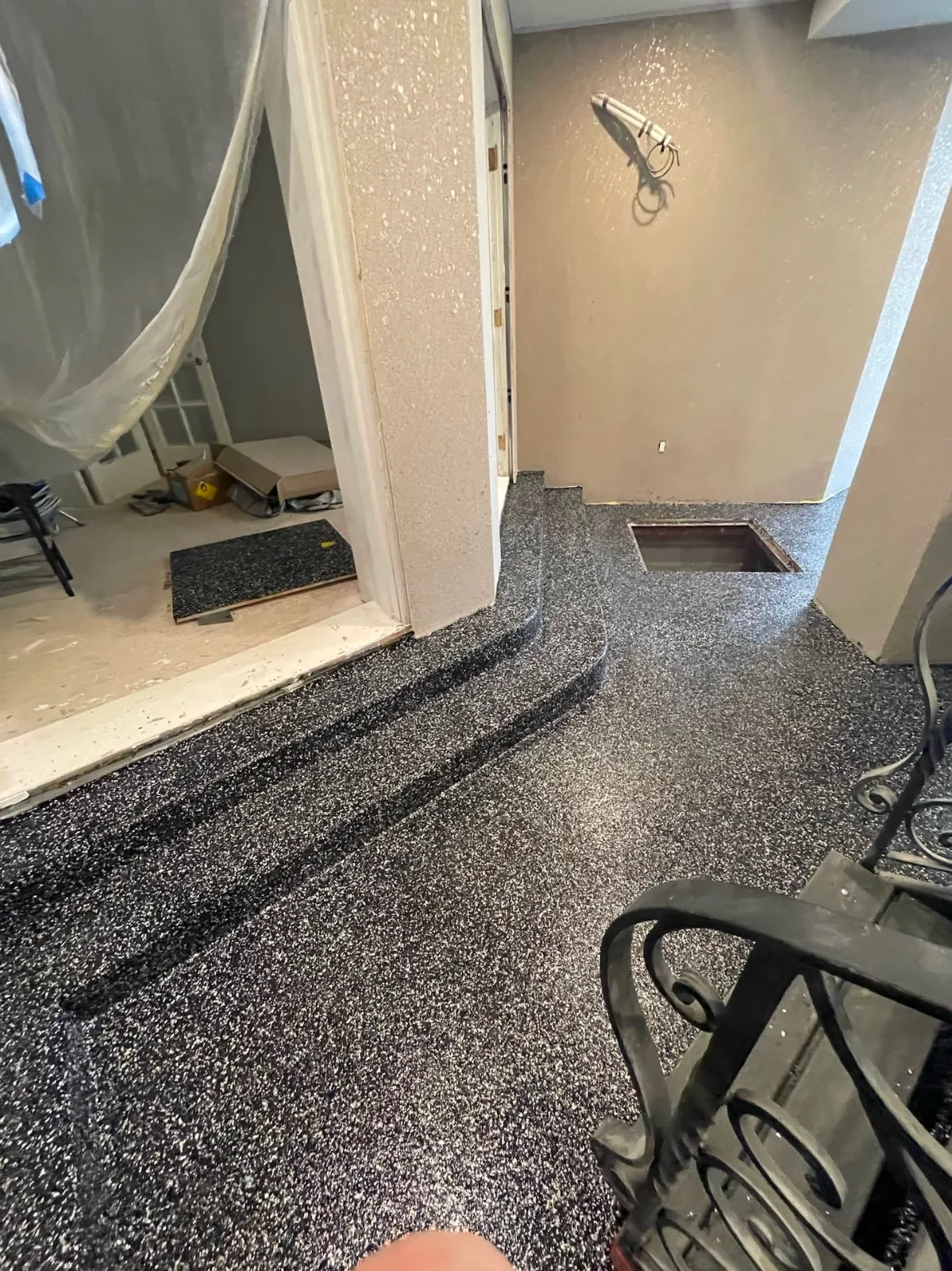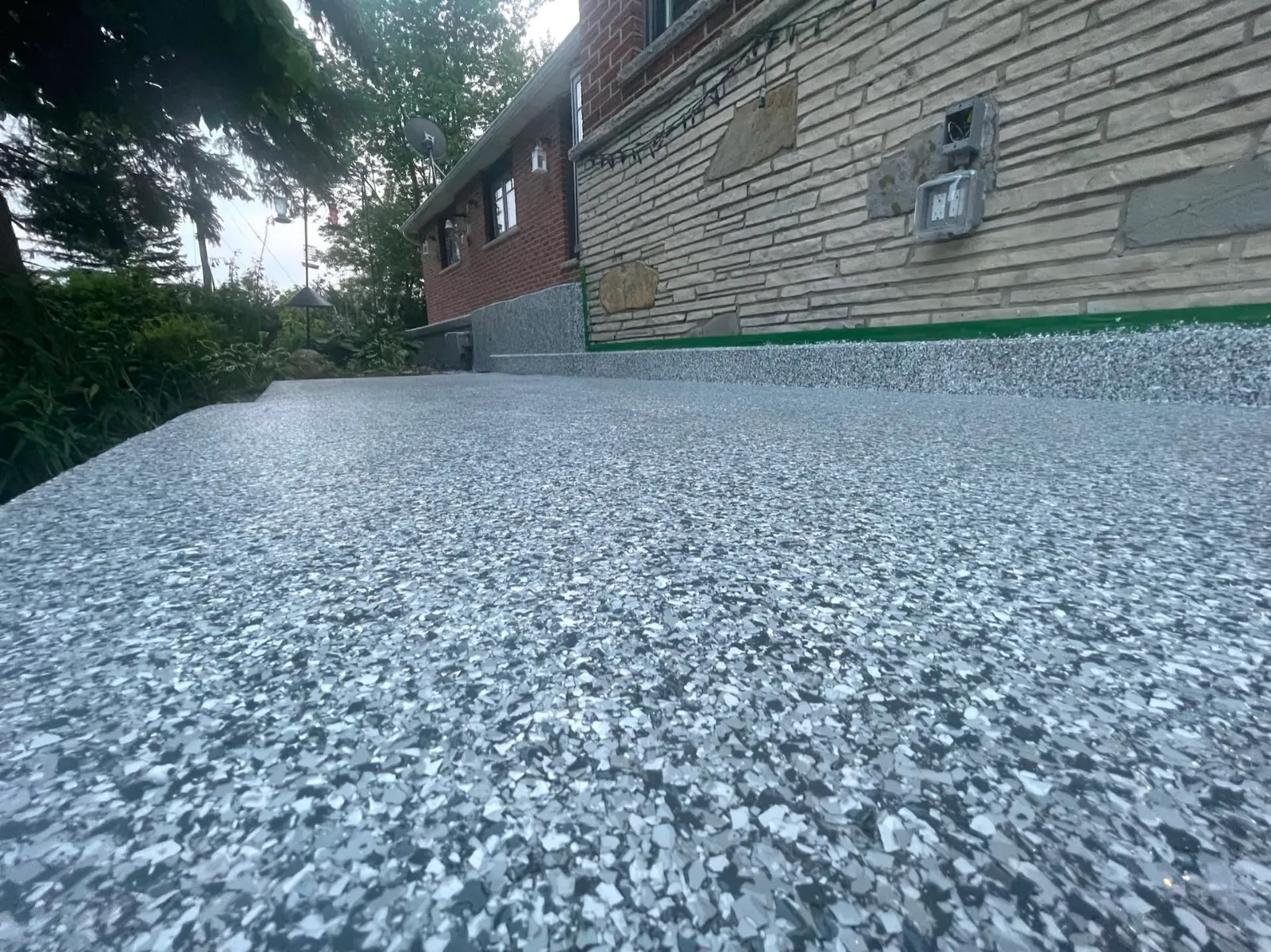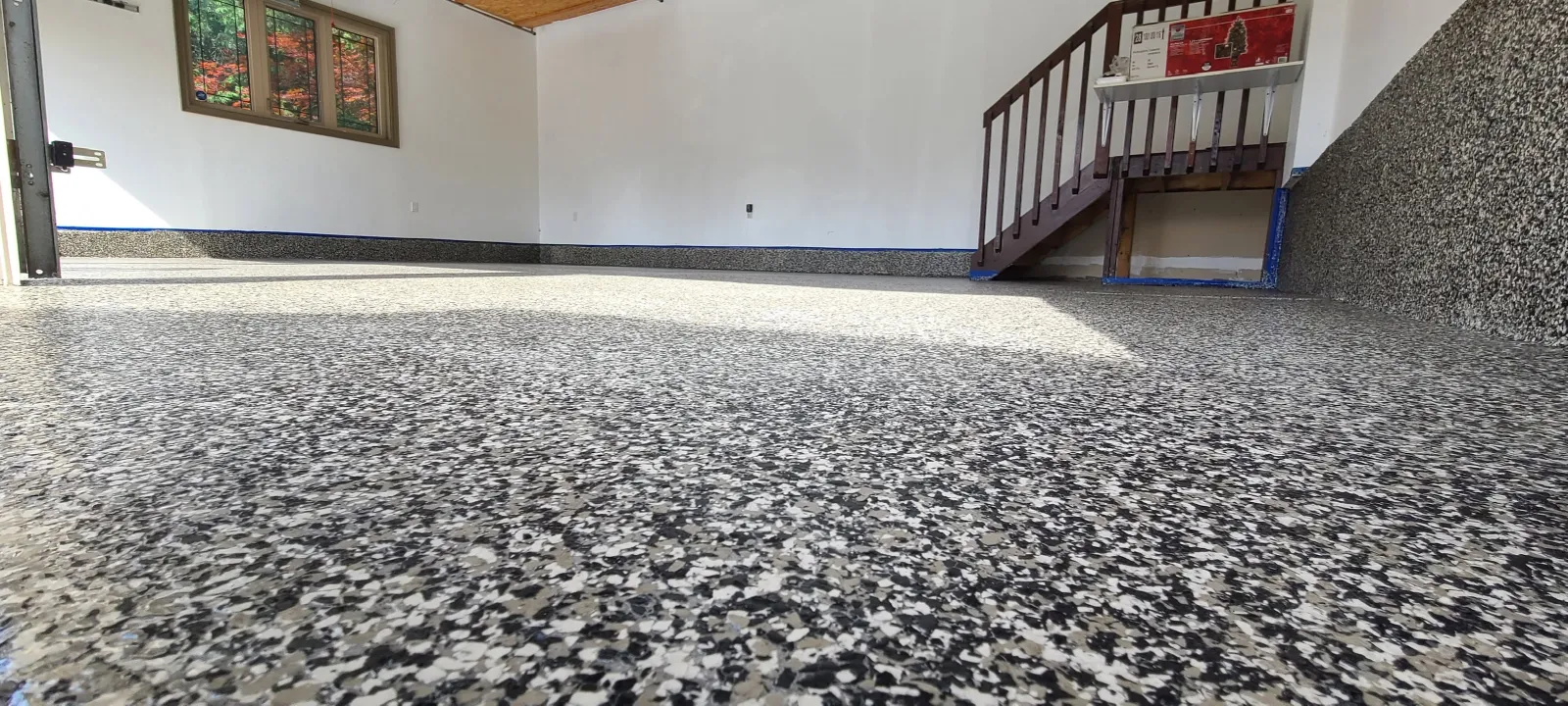
A full-broadcast flake garage floor is a multi-layer resin system in which decorative vinyl flakes are thrown into a wet base coat until the surface is completely covered ("broadcast to rejection"), then the loose flake is scraped off and the floor is sealed with one or more clear topcoats. Full coverage gives a uniform, textured, multi-tone finish that hides dust, salt film and minor wear far better than a solid colour, and the flake layer adds body to the system. Like any coating, it relies on ground and repaired concrete underneath.
This guide explains how a full-broadcast flake floor is built layer by layer, how flake size and colour are chosen, and why the texture works so well in Ontario garages.
Full broadcast vs partial broadcast
- Full broadcast: flake is applied until no base coat is visible. The floor looks like stone or terrazzo, with consistent colour and texture.
- Partial (light) broadcast: flake is scattered over a solid base, so the base colour shows between chips. It uses less flake and has a different look, but shows dirt and wear more and adds less texture.
Most garage floors we install are full broadcast. See the flake system and flake epoxy flooring pages.
The layers of a full-broadcast flake floor
1. Surface preparation
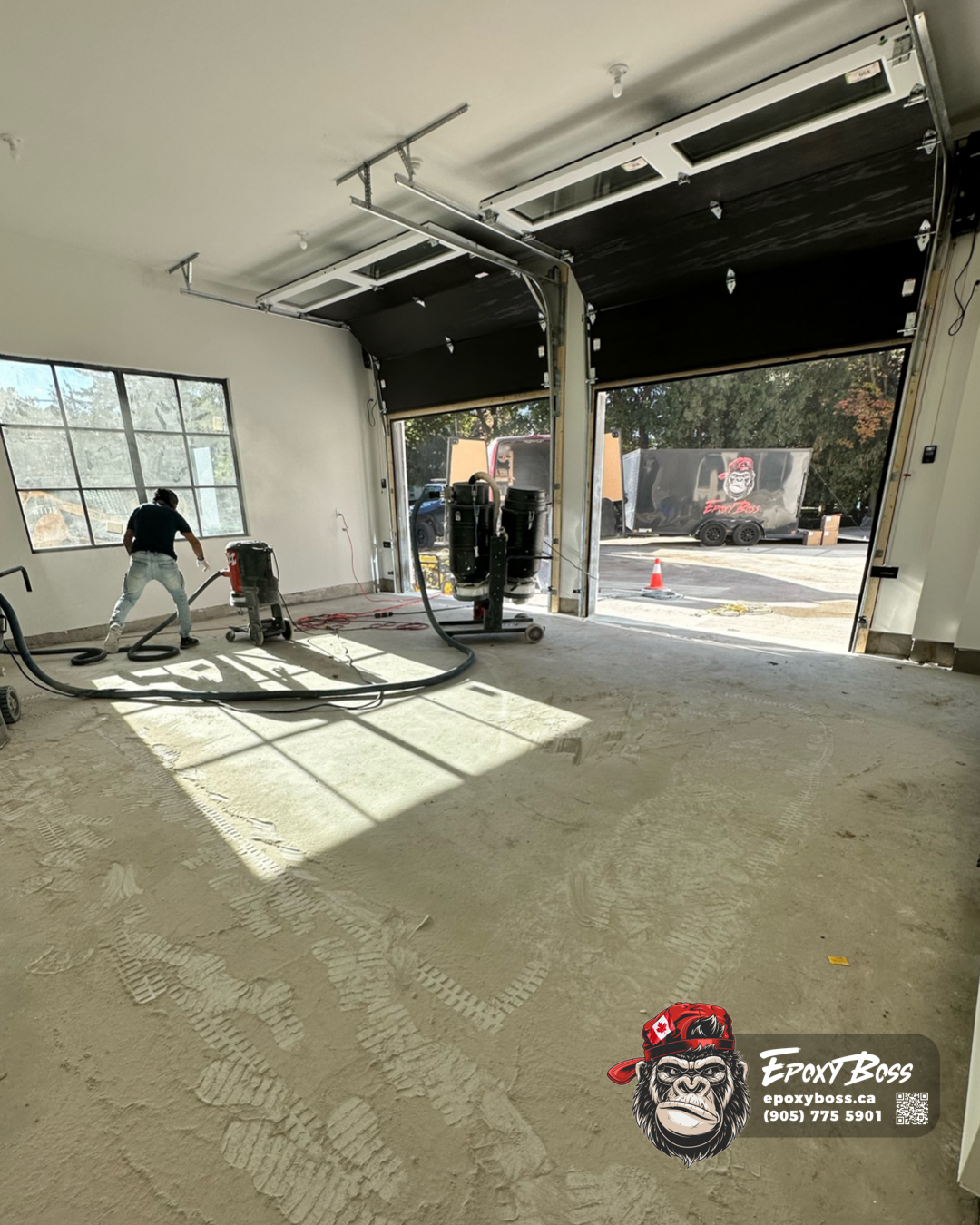
The slab is diamond ground with dust extraction to remove weak paste, sealers and contaminants and create the profile the base coat needs. Read concrete surface preparation for epoxy.
2. Repairs
Cracks, pits, spalls and the garage door edge are repaired with compatible materials. See our crack repair page.
3. Base coat
A pigmented base coat, often epoxy, is rolled out. Its colour is usually matched to the flake blend so any small gaps blend in.
4. Flake broadcast
While the base coat is wet, flake is thrown upward and allowed to fall evenly until the base coat cannot accept any more. Broadcasting to rejection is what gives full coverage and a consistent pattern.
5. Scrape and vacuum
Once the base has cured, loose and standing flakes are scraped down and vacuumed. This step decides how smooth or textured the finished floor feels.
6. Clear topcoat
One or more clear topcoats, commonly polyaspartic or aliphatic urethane, lock in the flake and form the wearing surface. Flake manufacturers call for this step: the Torginol flake technical data sheet recommends a clear topcoat to fully encapsulate the flake. Compare topcoats in our polyaspartic guide and aliphatic urethane topcoats explained.
For the step-by-step on a real installation, see how a full-flake garage floor is built in Innisfil.
Why texture hides wear
A solid, glossy floor shows every tire mark, footprint, dust layer and fine scratch because light reflects evenly off it. A full-flake floor breaks up that reflection. The multi-coloured pattern camouflages grit, dried salt film and small scuffs between cleanings, and the slight texture adds grip compared with a smooth gloss surface. No floor is slip-proof, but texture can be adjusted with the scrape, the topcoat thickness and anti-slip additives.
Choosing flake size
Flake comes in several sizes. The Torginol product range, for example, includes standard flake, hybrid blends and outdoor-oriented lines, and its data sheet lists sizes from 1 inch down to 1/16 inch.
- Larger flake gives a bolder pattern and is common in garages.
- Smaller and hybrid flake gives a finer, granite- or terrazzo-like look and slightly smoother feel.
Choosing flake colours
- Blends with mid-tone greys and browns are the most forgiving for salt film and dust.
- Dark blends look rich but can show white salt residue more in winter.
- Light blends brighten a garage but show dark tire marks more.
- Match the house: many owners pick blends that tie in with exterior stone, brick or interior cabinetry.
Browse our flake colours, and look at the full floor photos on our projects page rather than small chips alone.
Common mistakes with flake floors
- Skipping grinding: flake hides the surface, but it cannot hide a weak bond. Most early failures start with poor preparation.
- Light broadcast sold as full broadcast: ask whether the flake goes to full coverage.
- Leaving out the clear topcoat: exposed flake edges wear and collect dirt without encapsulation.
- Ignoring the door edge: the threshold takes the most salt and meltwater; it needs repair and a clean termination.
- Choosing colour from a tiny chip: blends look different across a whole floor and in garage lighting.
- Coating outside product limits: cold slabs, high humidity or meltwater during installation can affect cure and bond.
Flake beyond the garage
The same system works in basements, mudrooms, laundry rooms, workshops and some commercial spaces such as break rooms and back-of-house corridors. Indoors, finer flake and satin topcoats are popular. Outdoors, porches and patios need UV-stable materials and attention to drainage and texture.
Full-broadcast flake in Ontario conditions
Salt, meltwater, freeze-thaw near the door and hot tires all test a garage floor. A full-broadcast system with a UV-stable topcoat is a common choice because it seals the slab, handles regular cleaning well and hides wear. Its performance still depends on preparation, moisture conditions and installation within the products' temperature limits. For the base and topcoat choice, see polyaspartic vs epoxy.
Caring for a flake garage floor
- Rinse or squeegee salt brine regularly in winter.
- Sweep grit with a soft broom; clean with a neutral cleaner.
- Avoid steel shovels, ice choppers, tire chains and studded tires on the coating.
- Use mats under kickstands, jack stands and heavy equipment.
Frequently asked questions
Is a full-broadcast flake floor worth it over a solid colour?
For most garages, yes, because it hides dirt and wear better and adds texture. Solid colour is the budget option and suits workshops where a clean, uniform look is preferred.
Is a flake floor epoxy or polyaspartic?
Often both: an epoxy base coat holding the flake and a polyaspartic topcoat.
How much does a flake garage floor cost?
See our garage floor coating cost guide or get an instant estimate with the garage floor cost calculator.
Is there a warranty?
Qualifying indoor residential systems carry a 5-year limited workmanship warranty, subject to stated conditions and exclusions.
Book a free floor assessment
Epoxy Boss is based in Innisfil, has installed flake floors since 2019 and serves the GTA, York Region, Simcoe County, Halton, Durham and Muskoka. Call (905) 775-5901 or request a free floor assessment for a written quote in Canadian dollars.