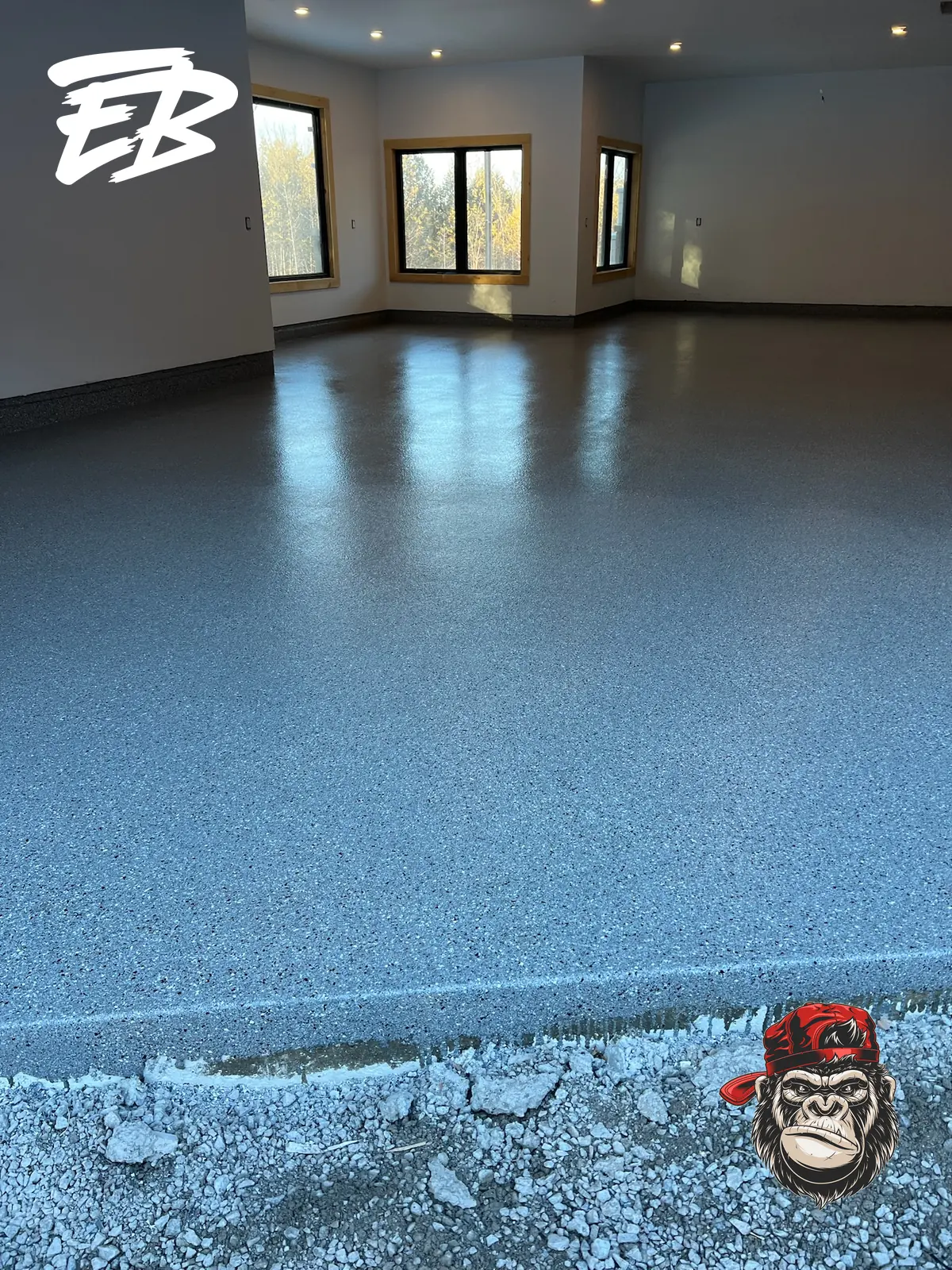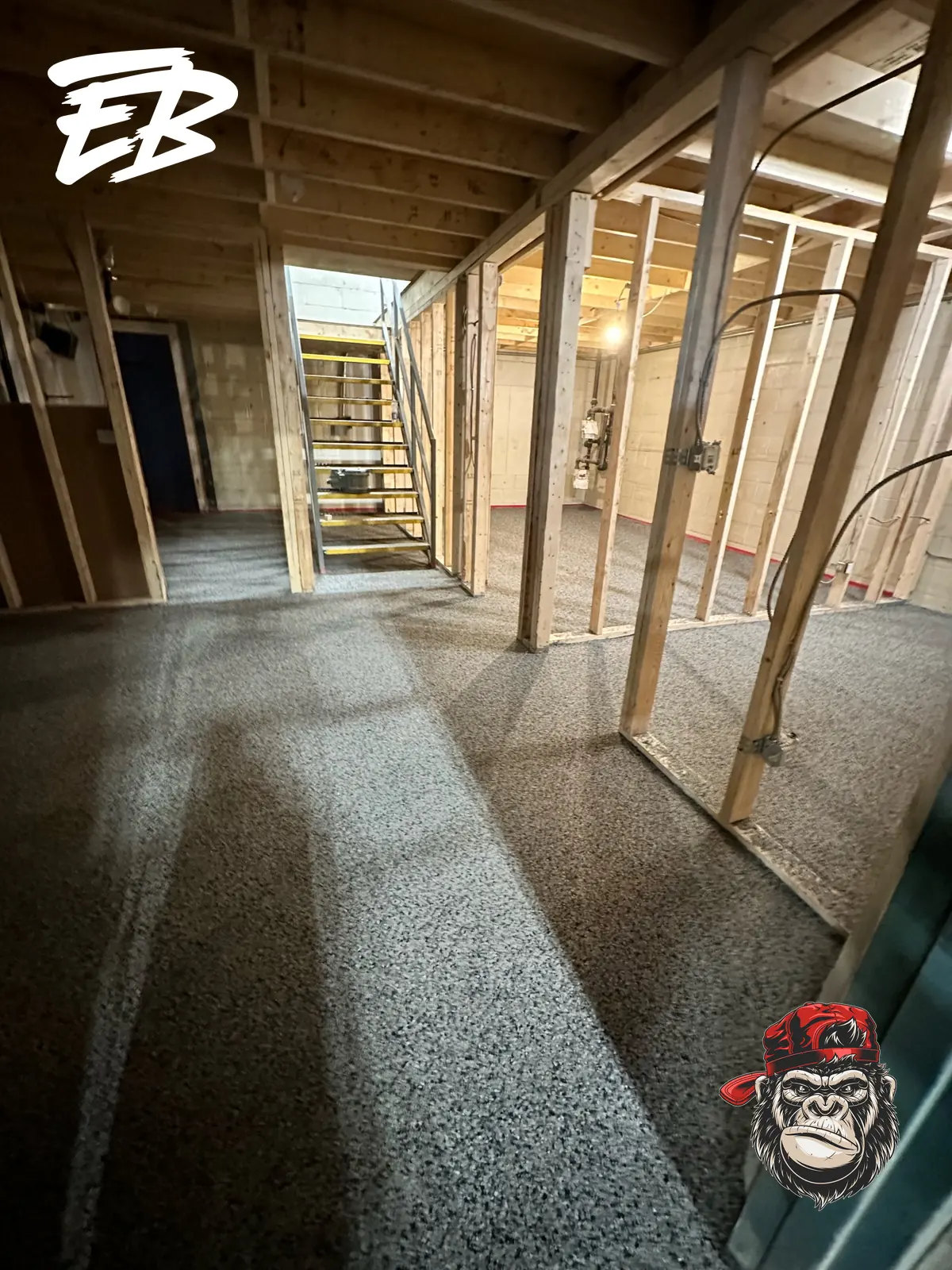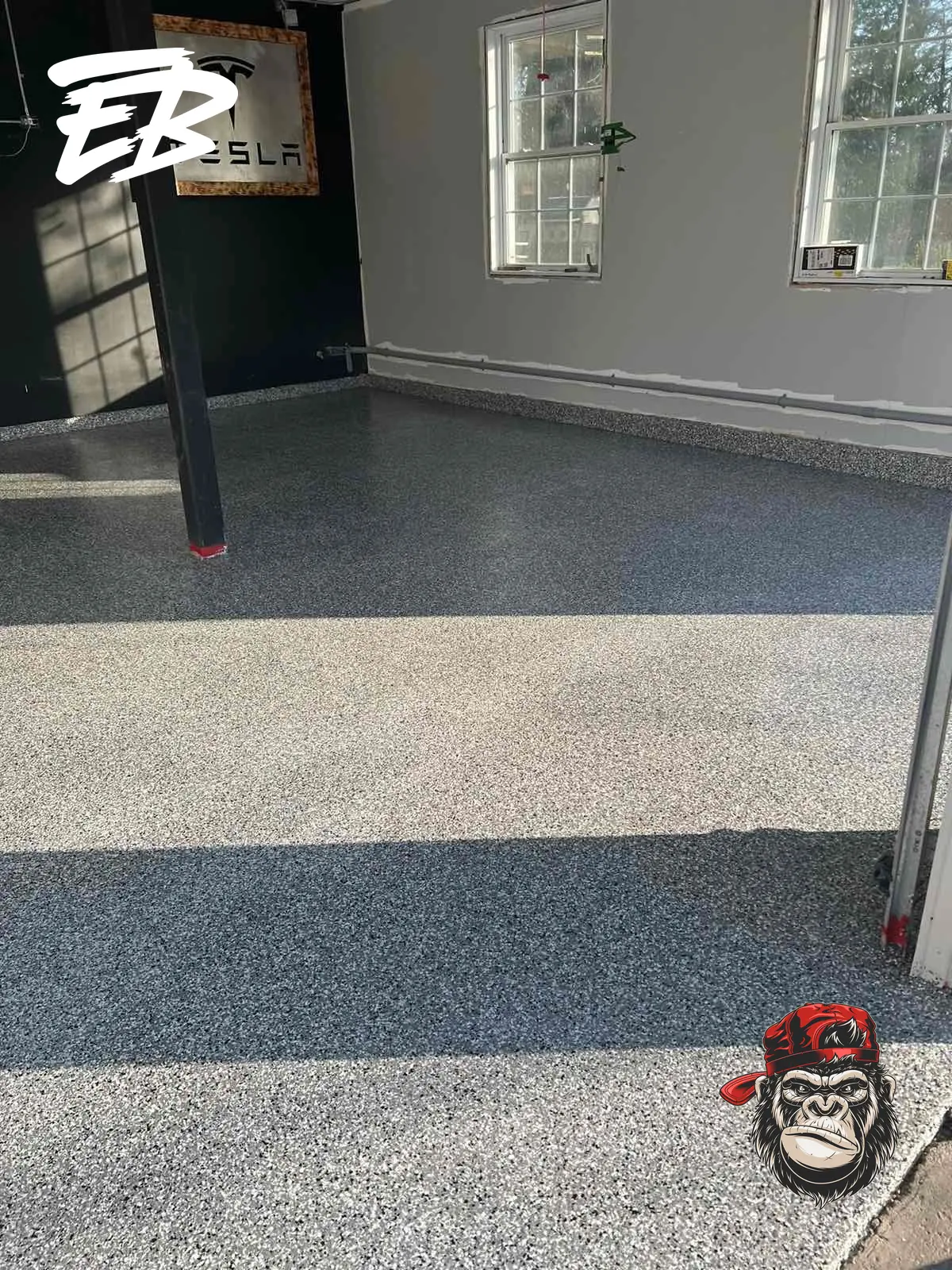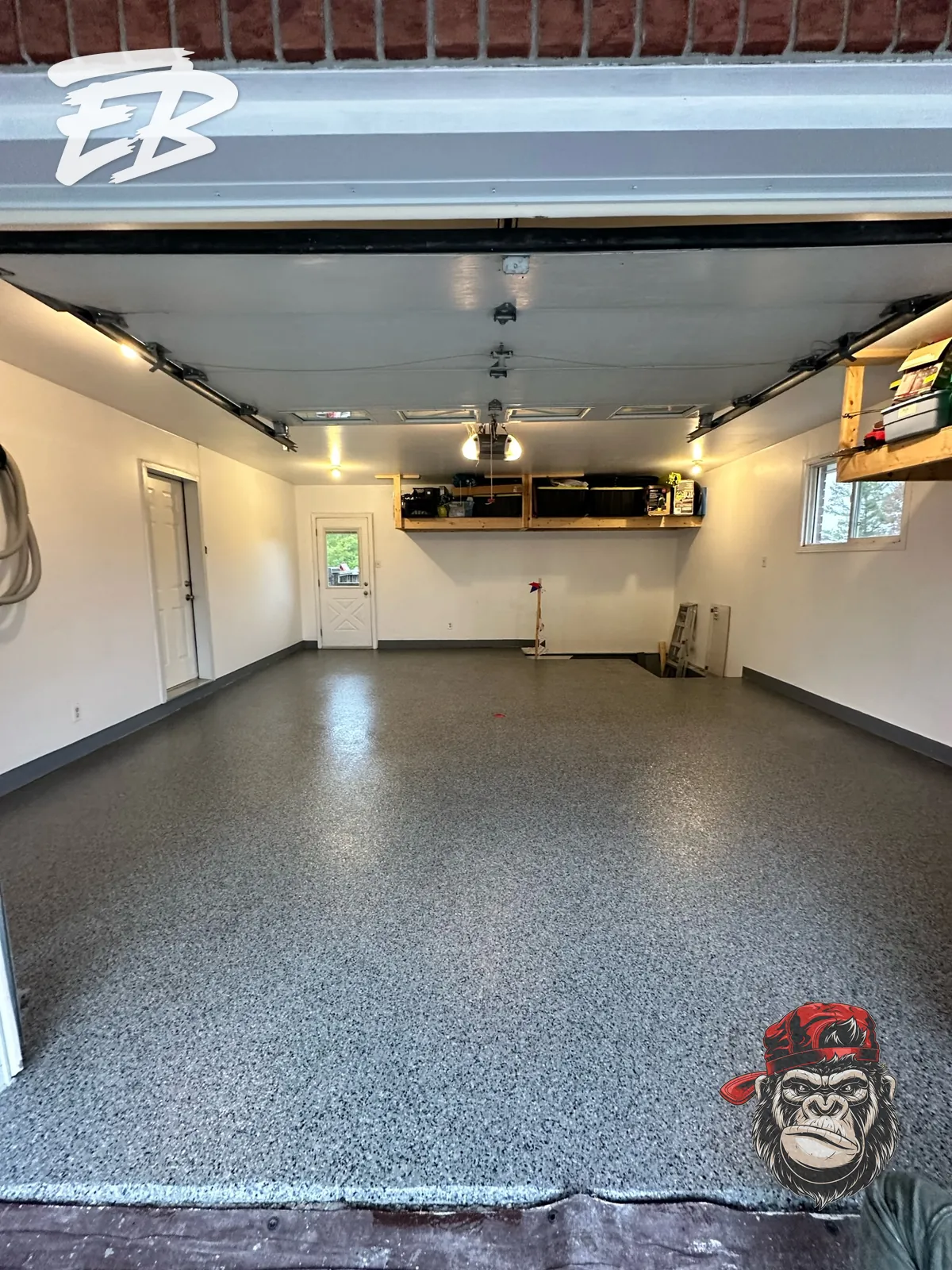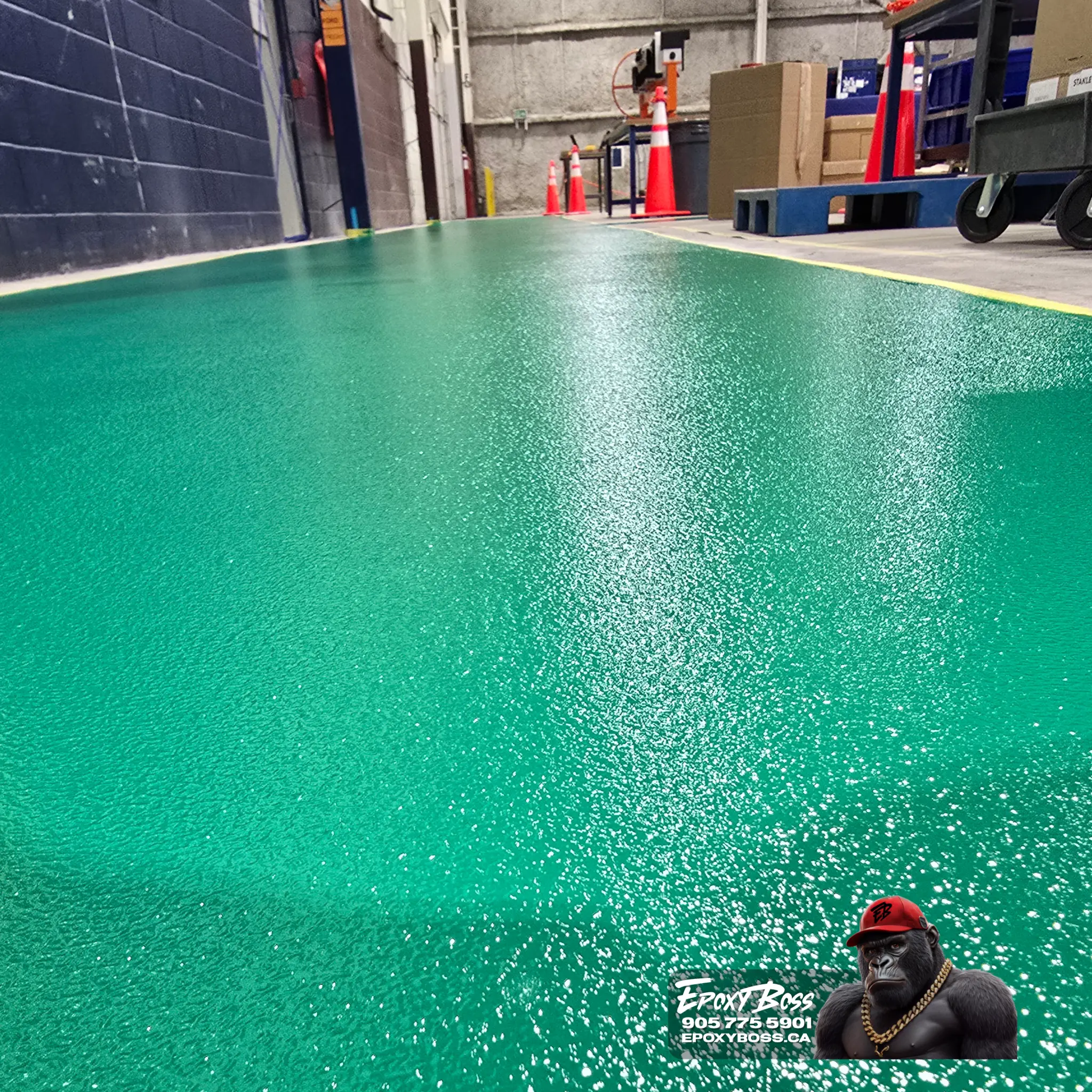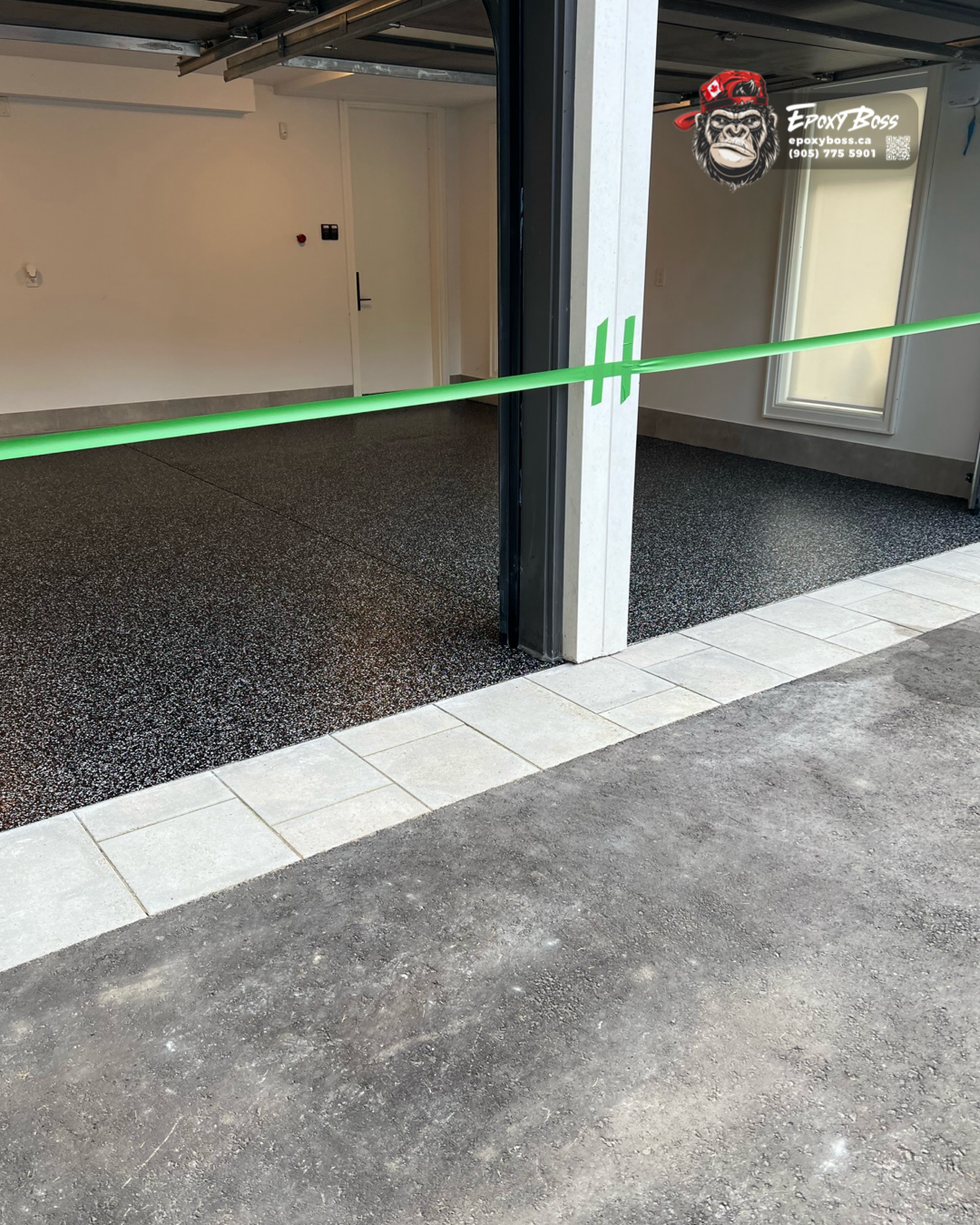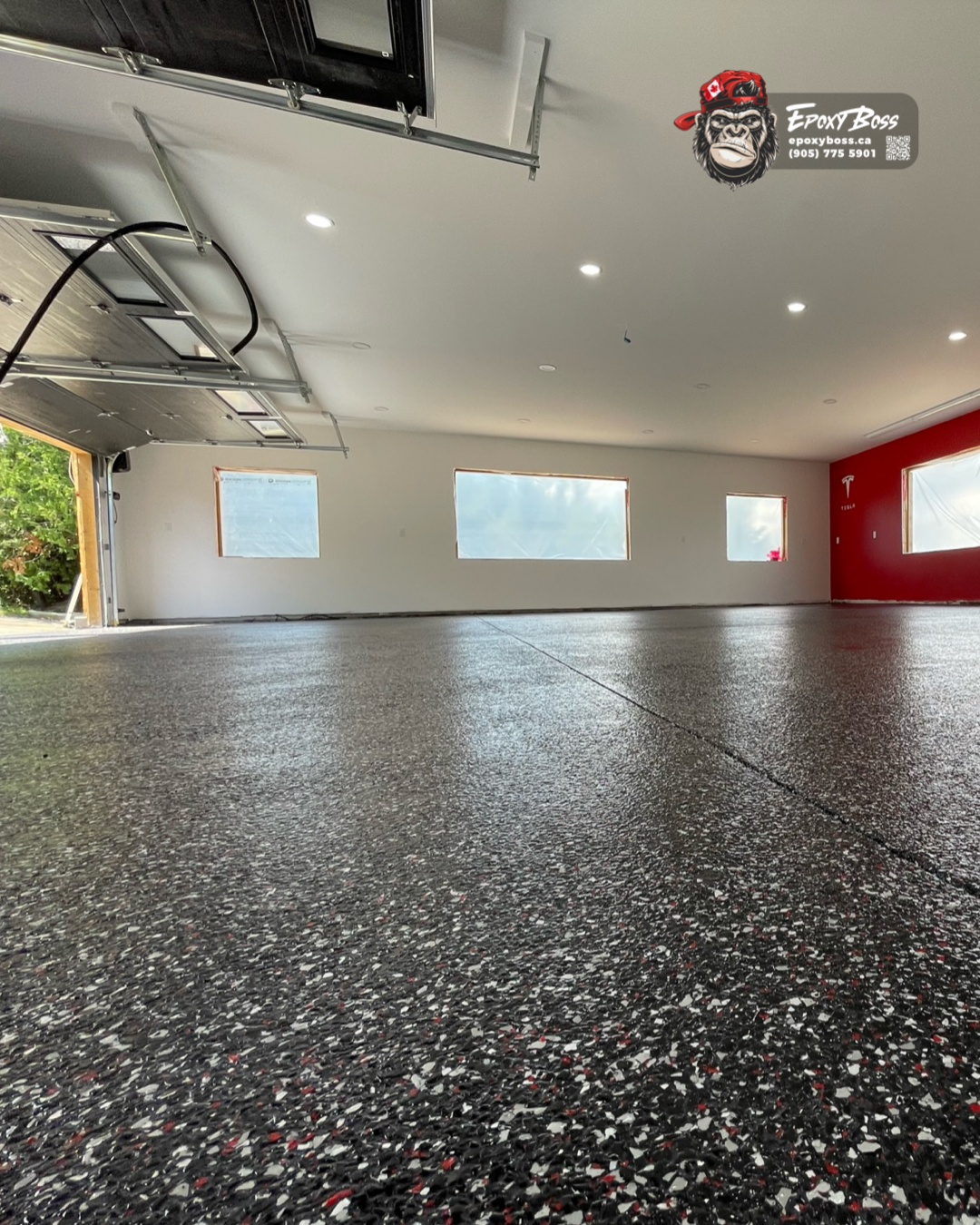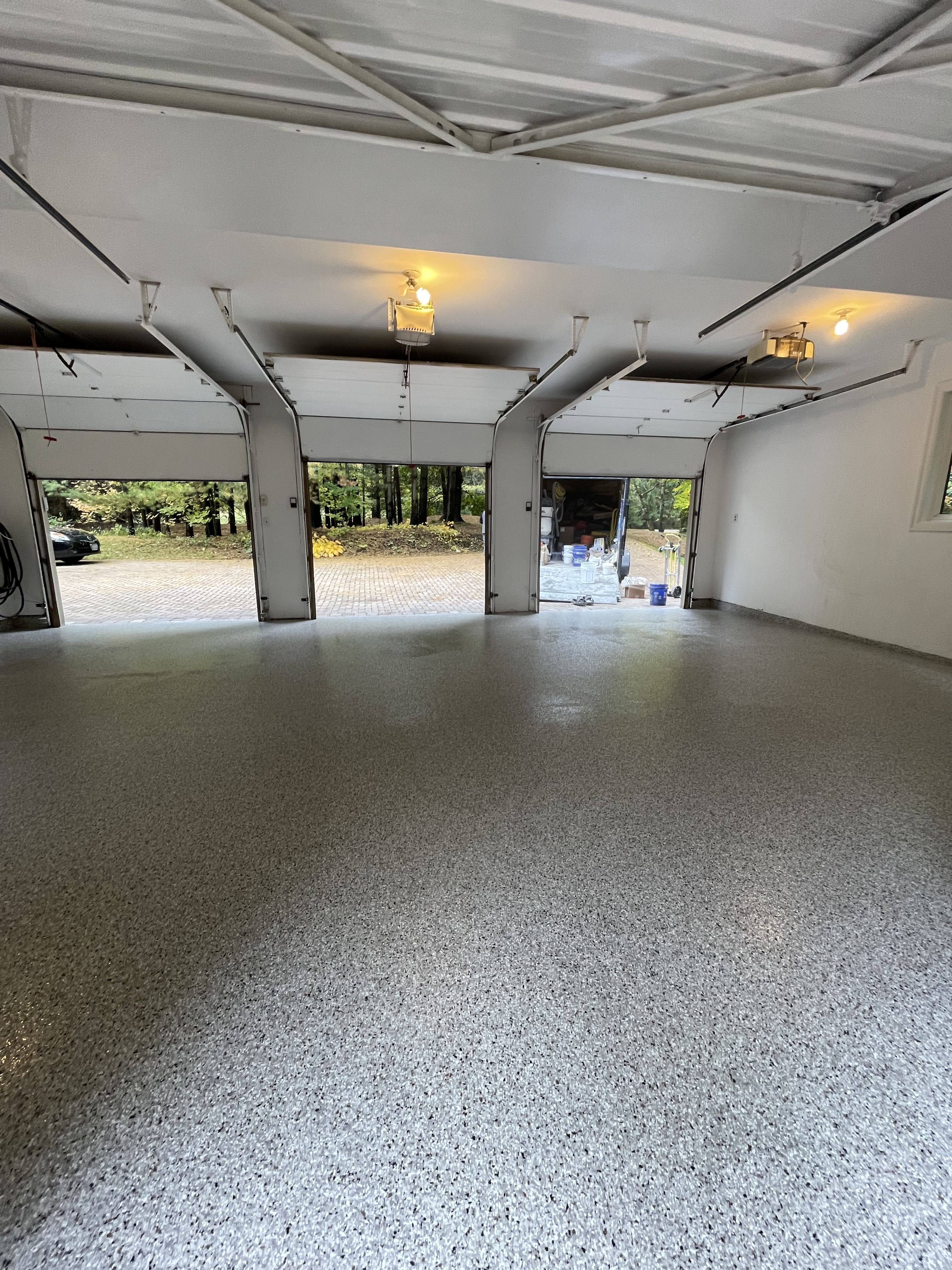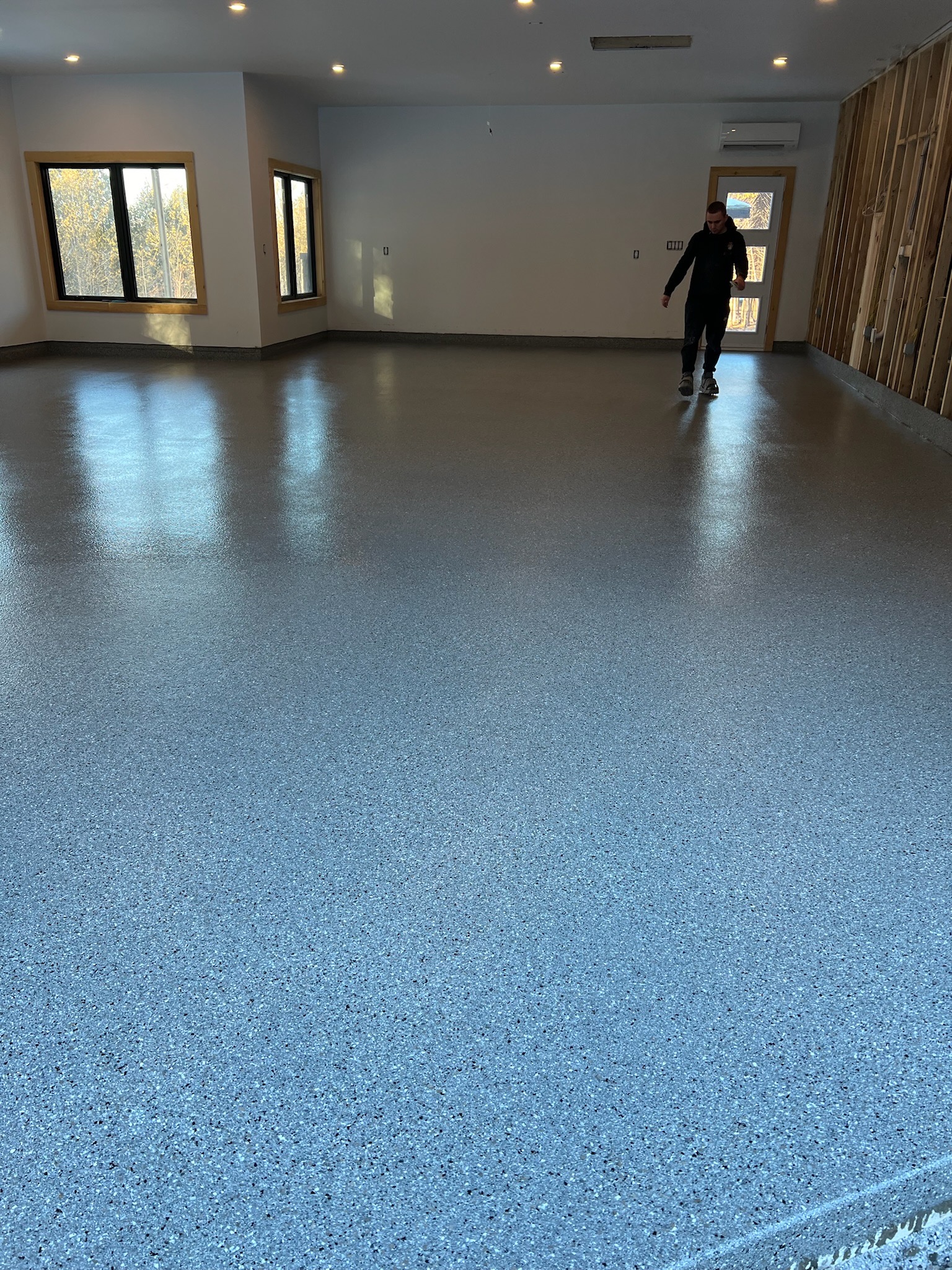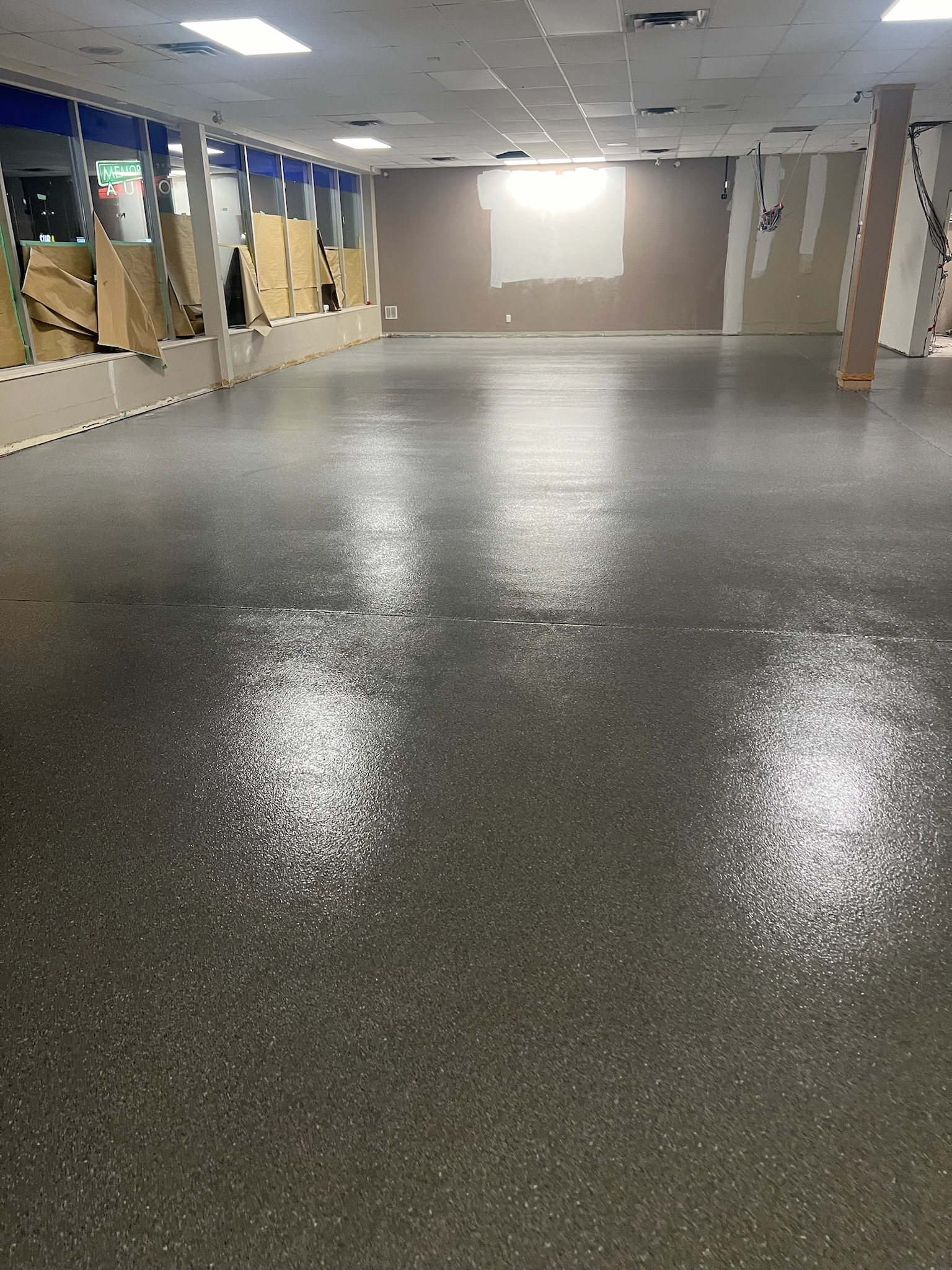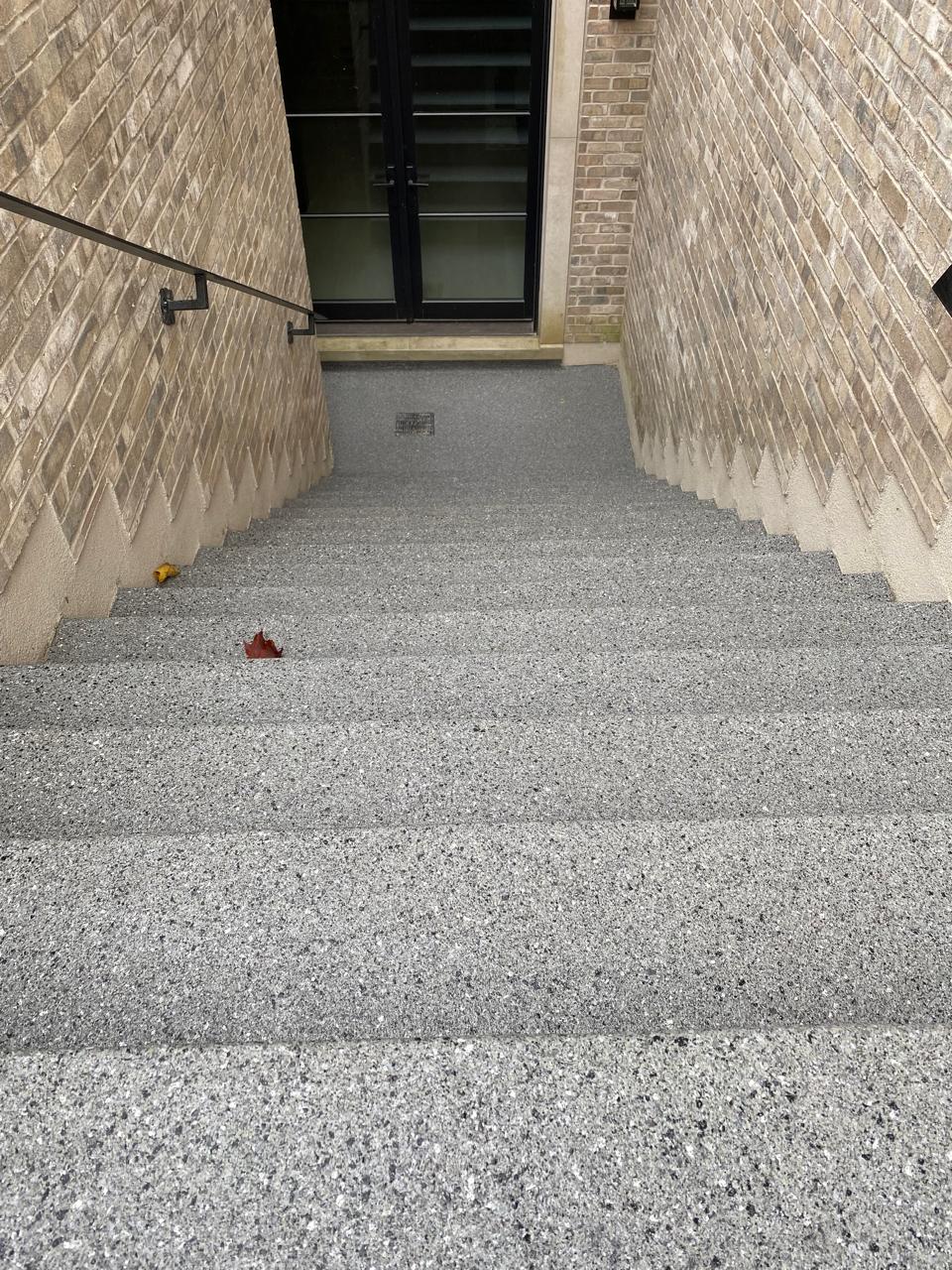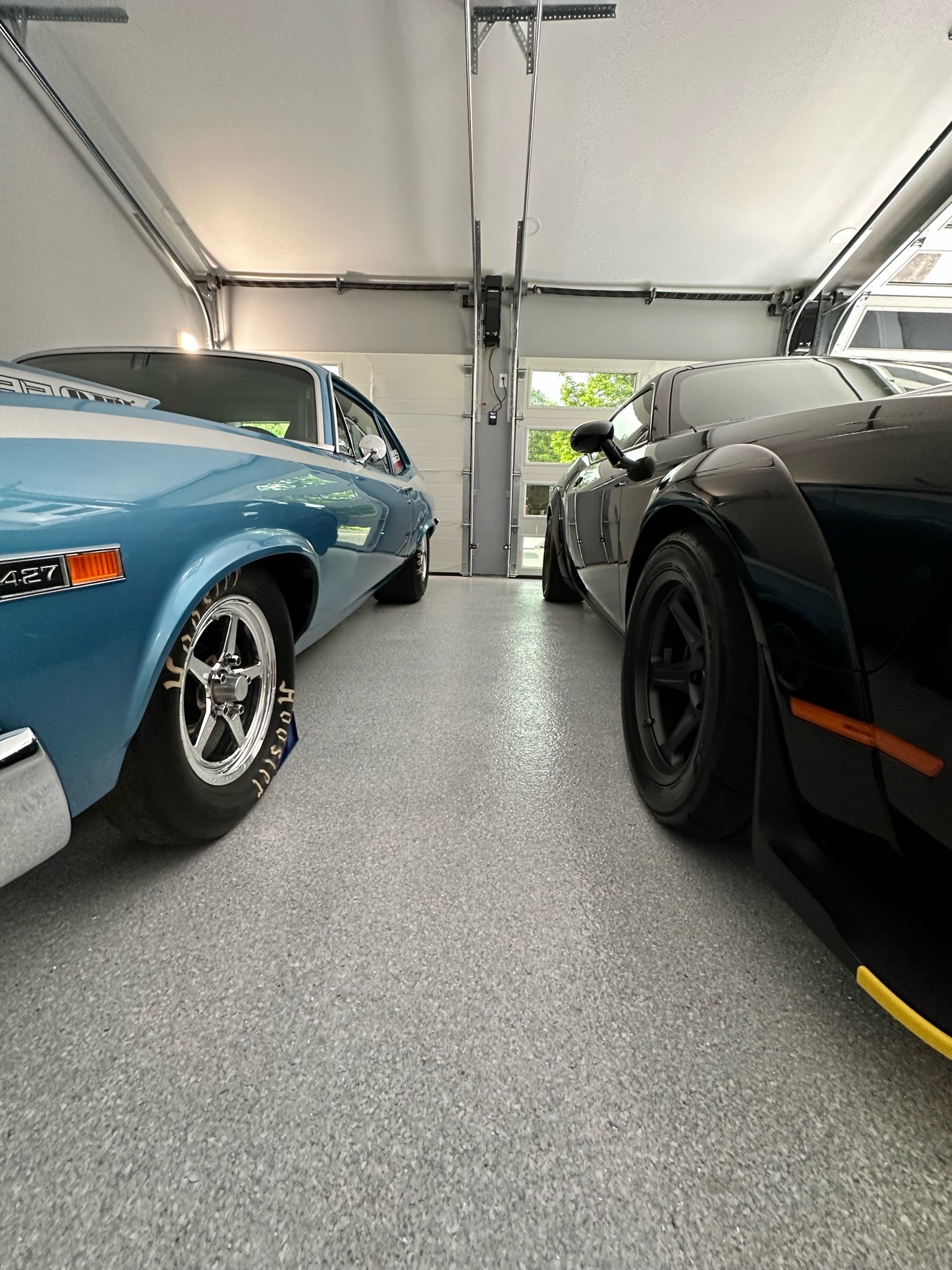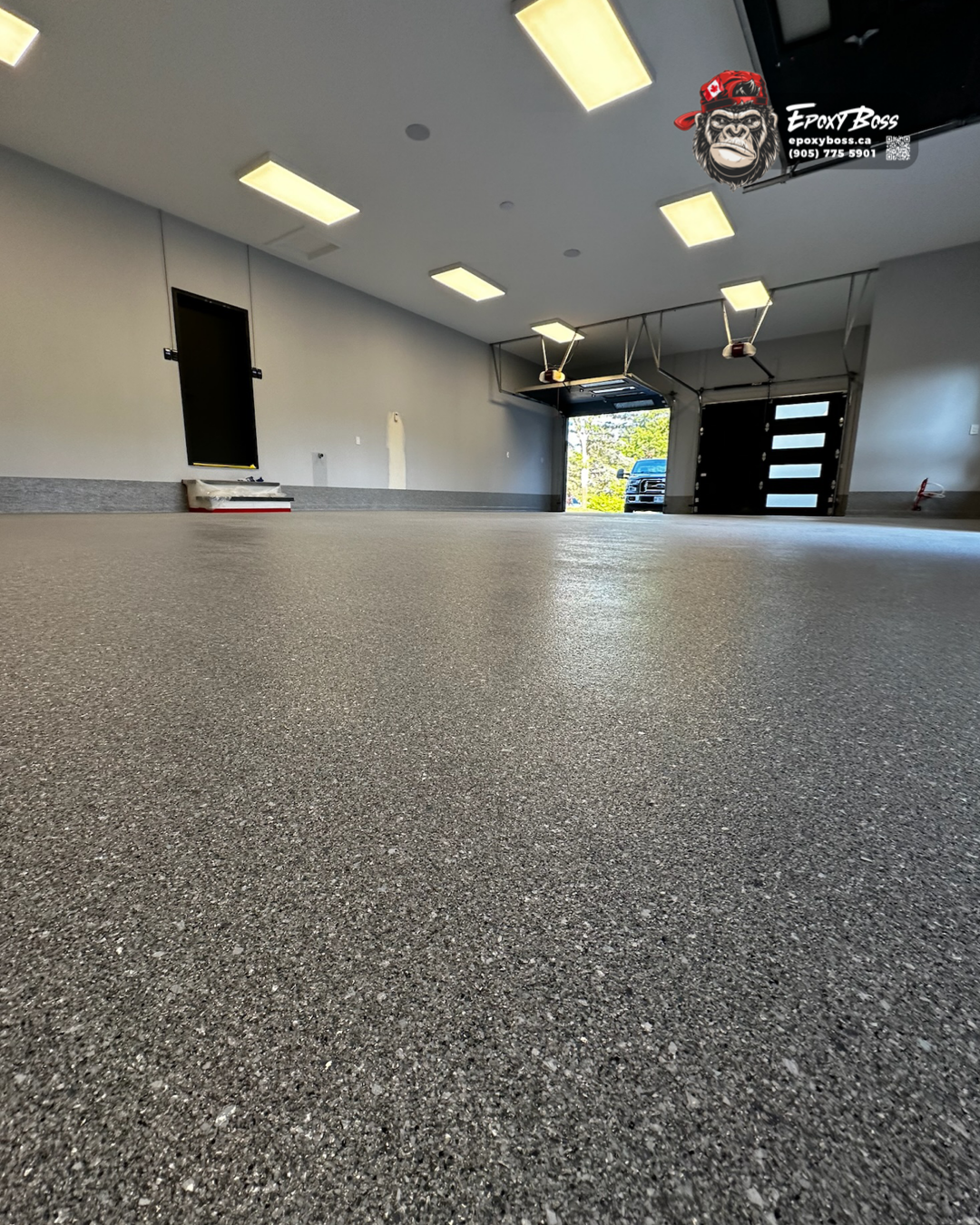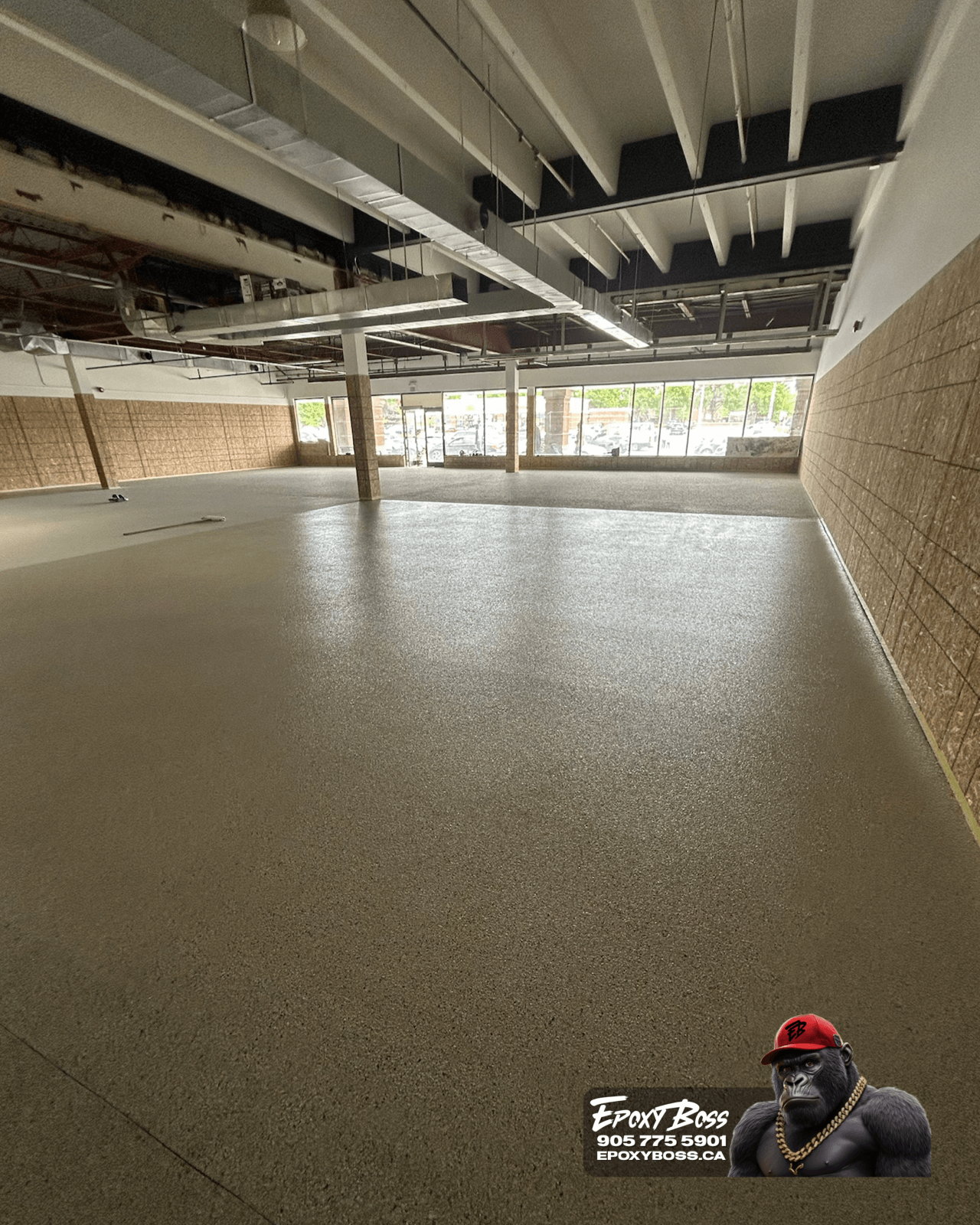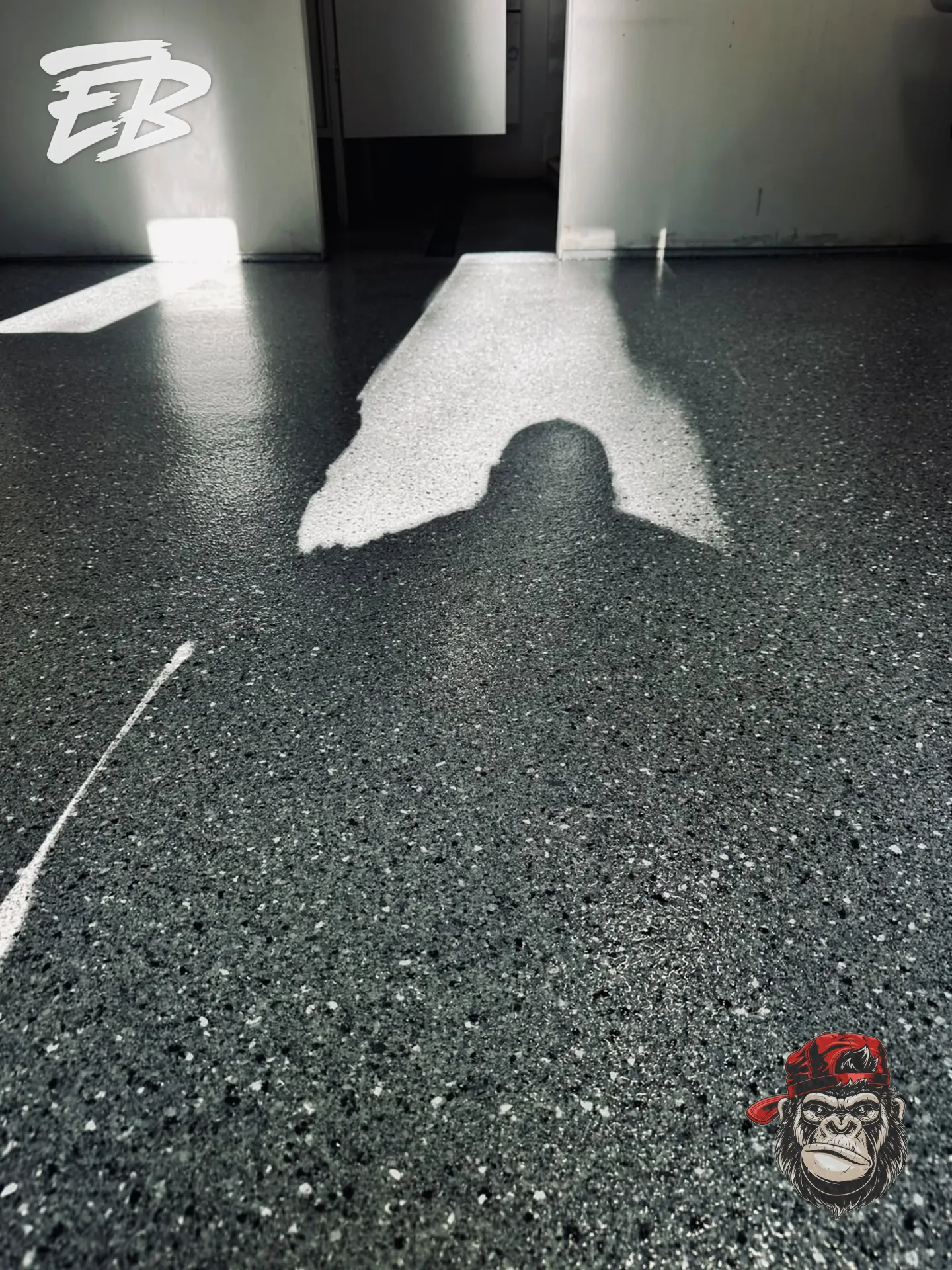

Polyaspartic floor coating is a fast-curing, aliphatic resin from the polyurea family, used on concrete floors mainly as a UV-stable clear topcoat and, in some systems, as the base coat as well. Its main advantages are speed (floors can often be completed and returned to use sooner than all-epoxy systems), colour stability in sunlight and the ability to work in a wider temperature range. Its main limits are short working time and sensitivity to slab moisture and humidity, which makes installer experience and preparation critical.
This guide explains what polyaspartic flooring is, where it works in Ontario homes and businesses, how it compares with epoxy and what to ask before choosing it.
What is polyaspartic floor coating?
Polyaspartics are two-part coatings made by reacting a polyaspartic ester with an aliphatic isocyanate. Chemically, they are a modified branch of the polyurea family. Pure polyureas react in seconds and are usually spray-applied; polyaspartics were developed to slow that reaction enough to be mixed, rolled and squeegeed on a floor while keeping much of the speed.
Because they are aliphatic, polyaspartics are generally chosen where colour stability under UV light matters. That is why they are so common as the clear topcoat on garage floors that get sunlight through an open overhead door. Our polyaspartic materials page has more technical detail.
Where polyaspartic flooring is used
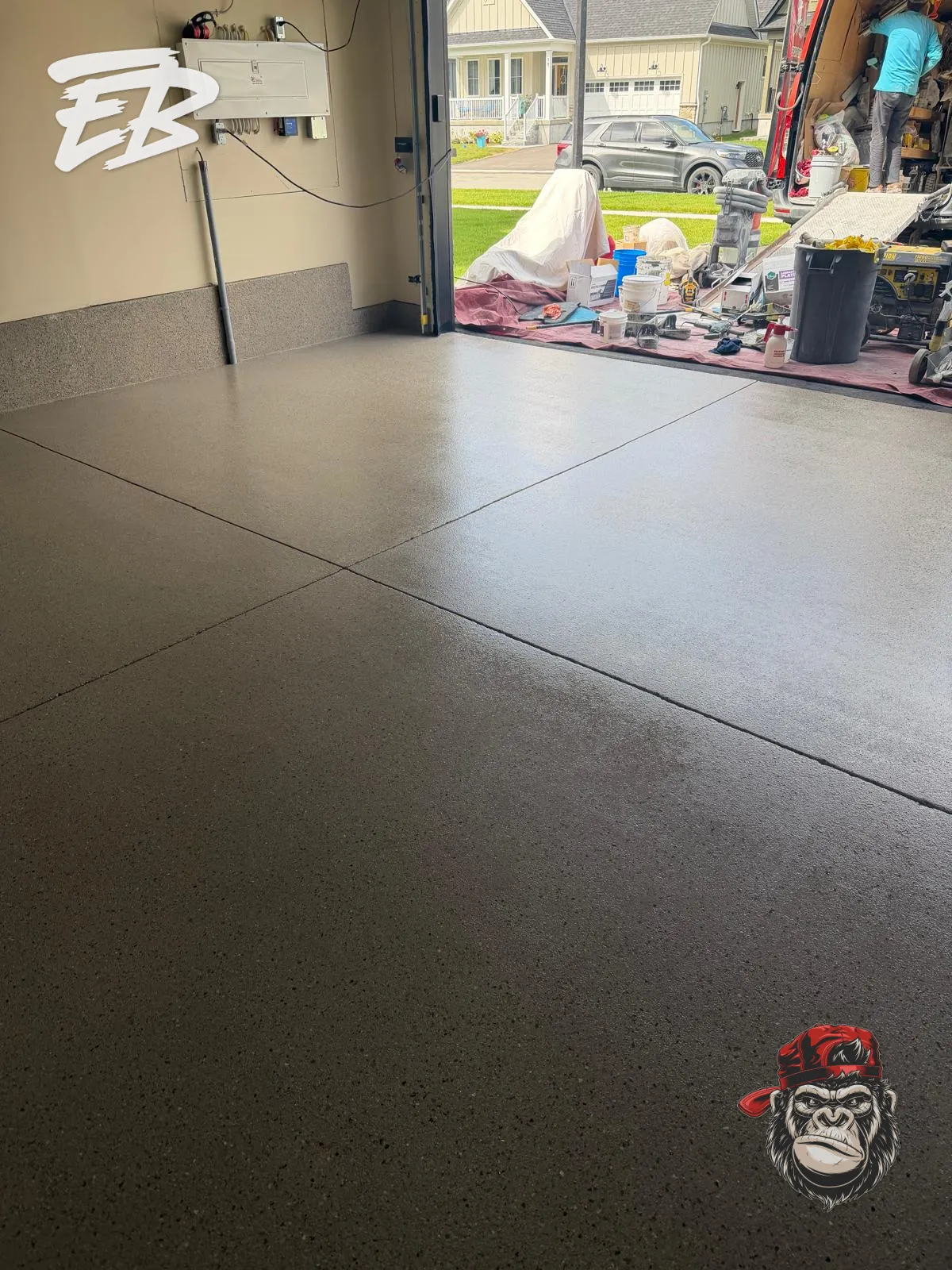
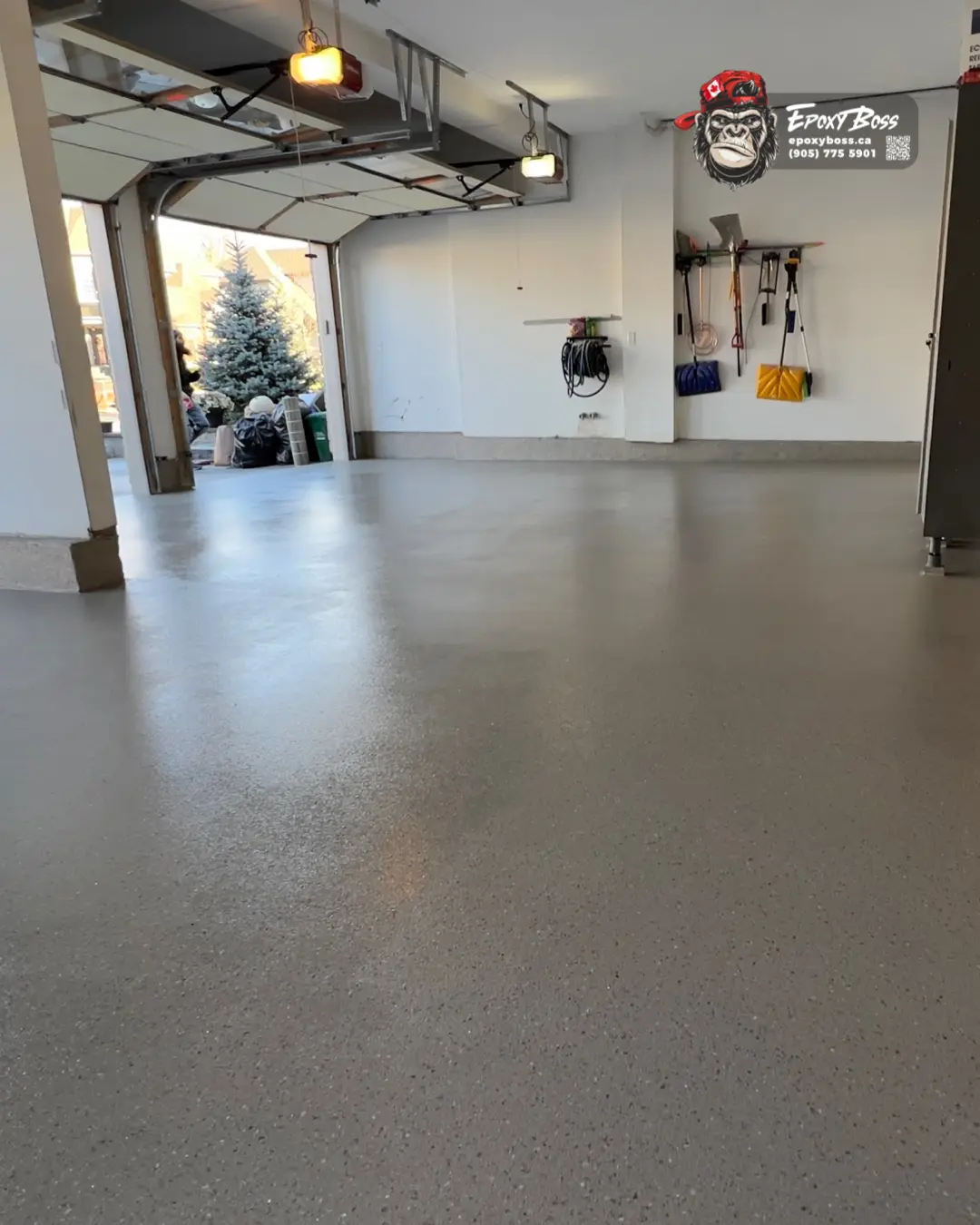
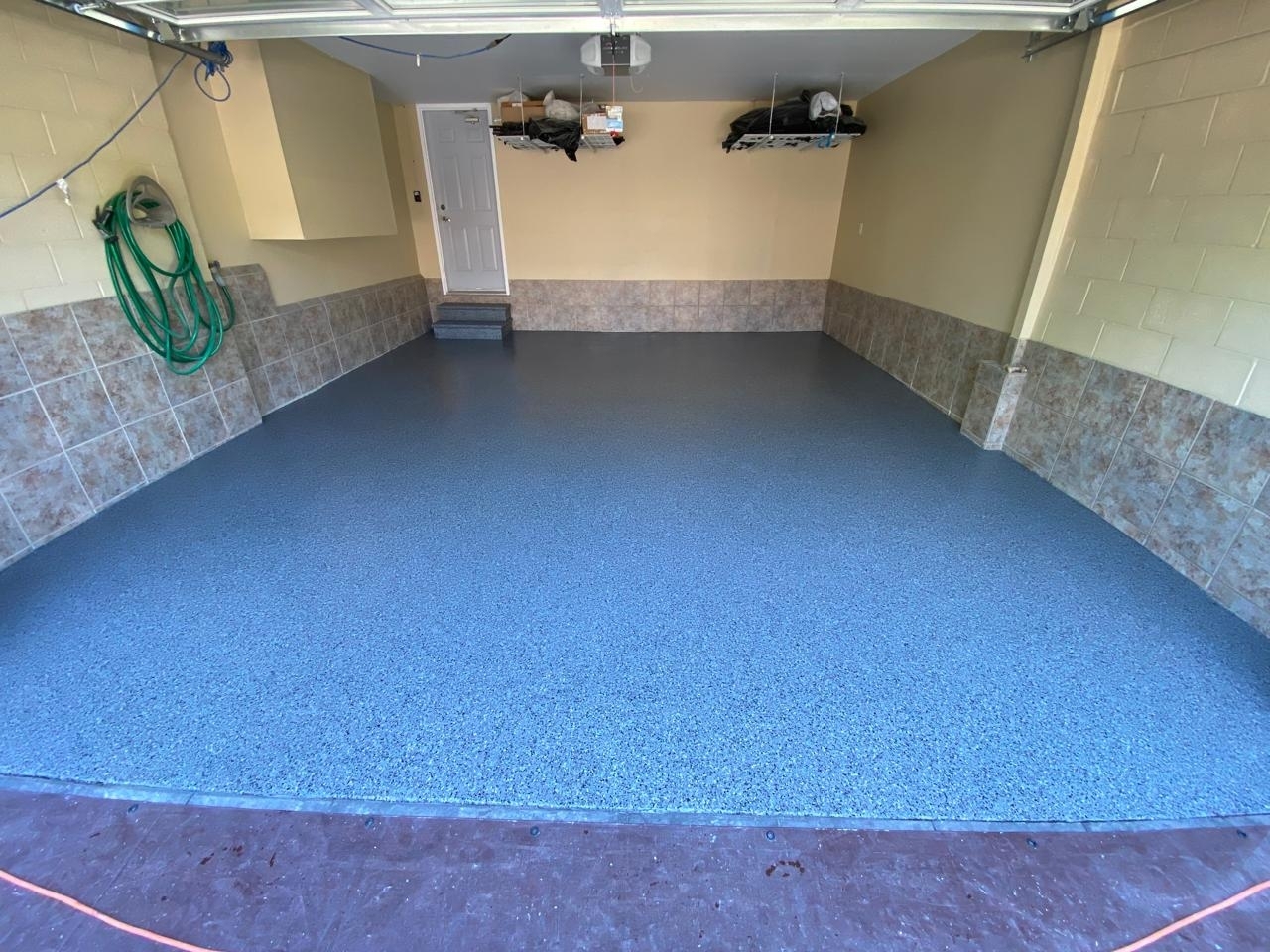
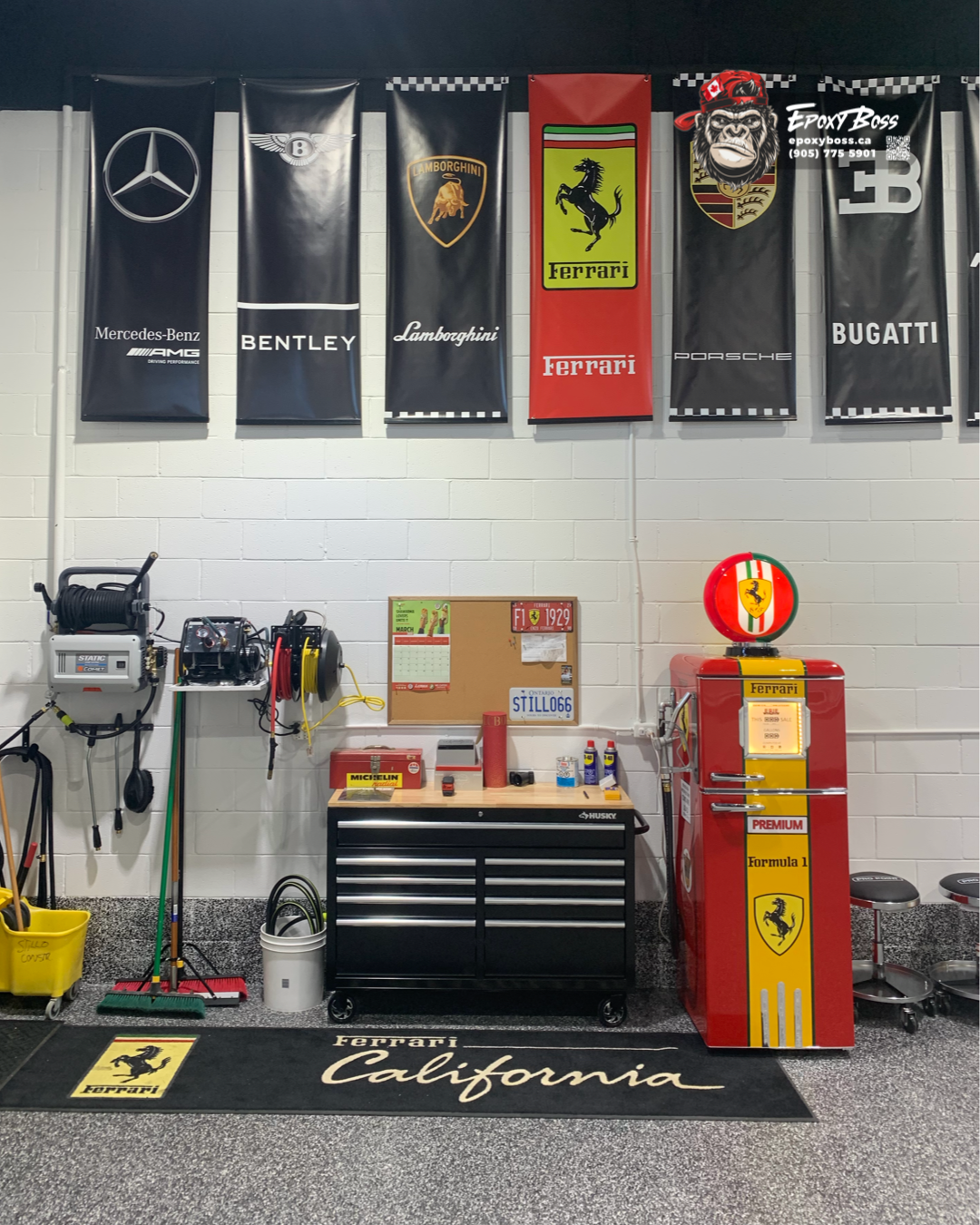
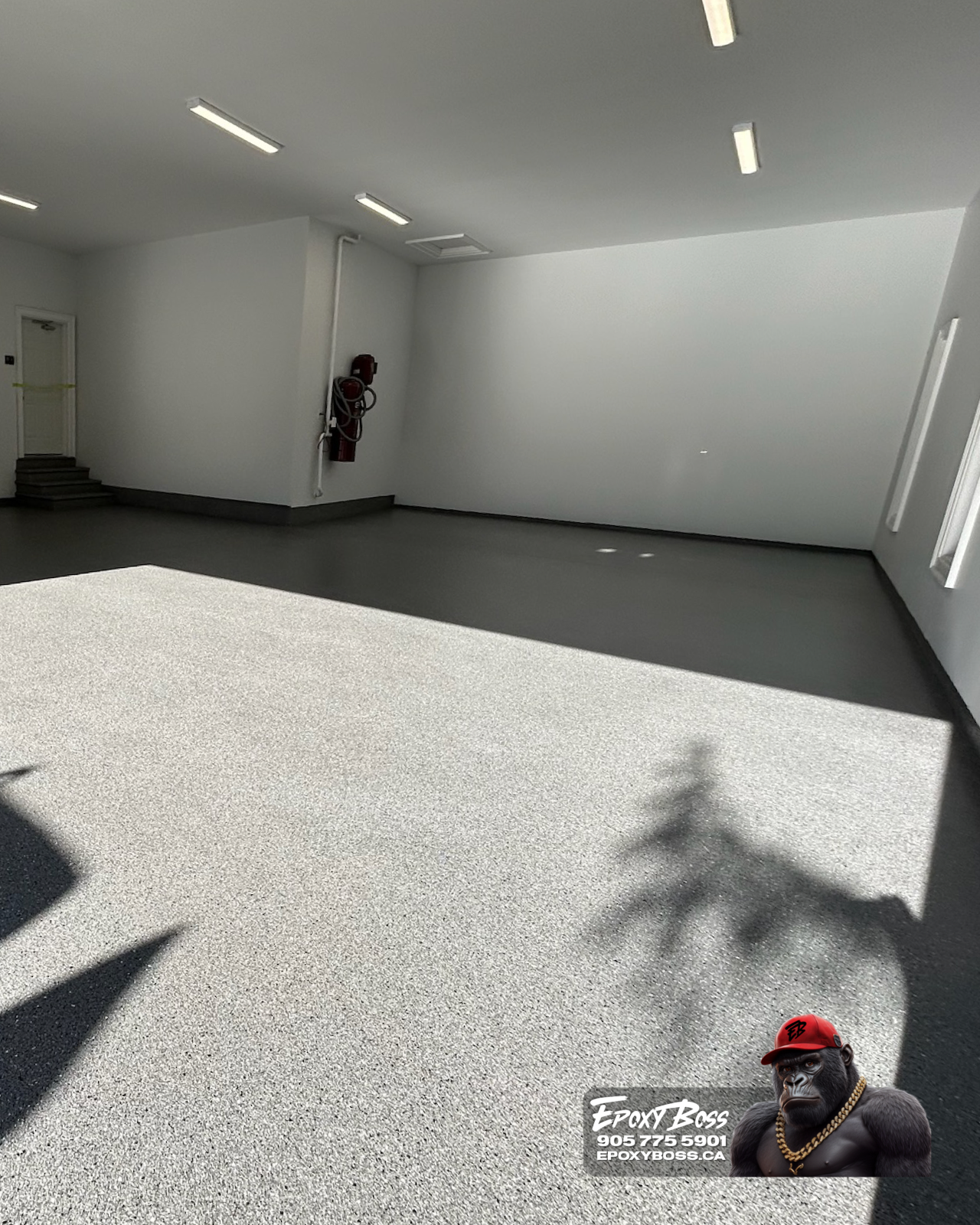
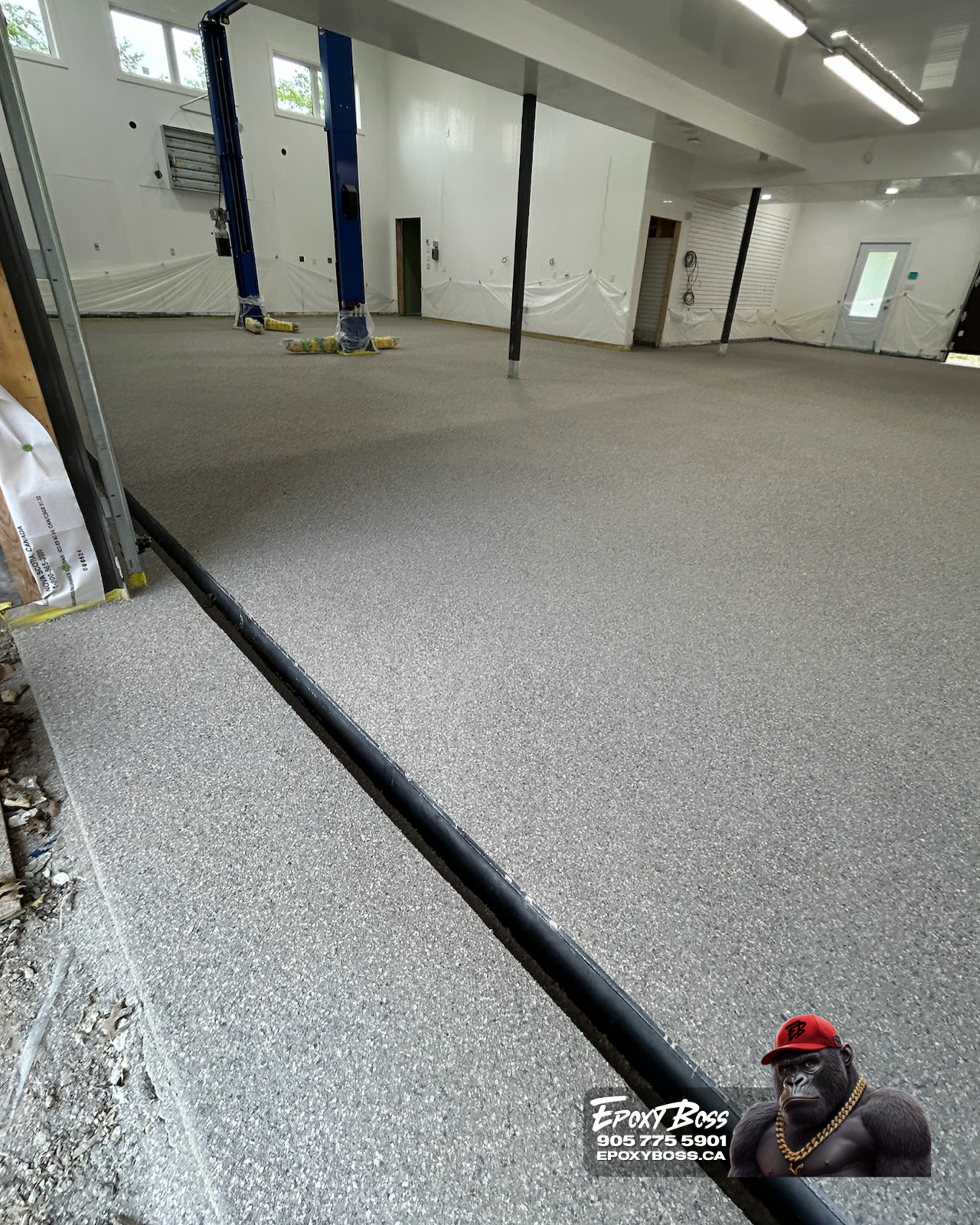
- Garage floors: as the clear topcoat over a flake or solid base, or as a full system. See polyaspartic garage flooring and our comparison of polyaspartic vs epoxy for a garage.
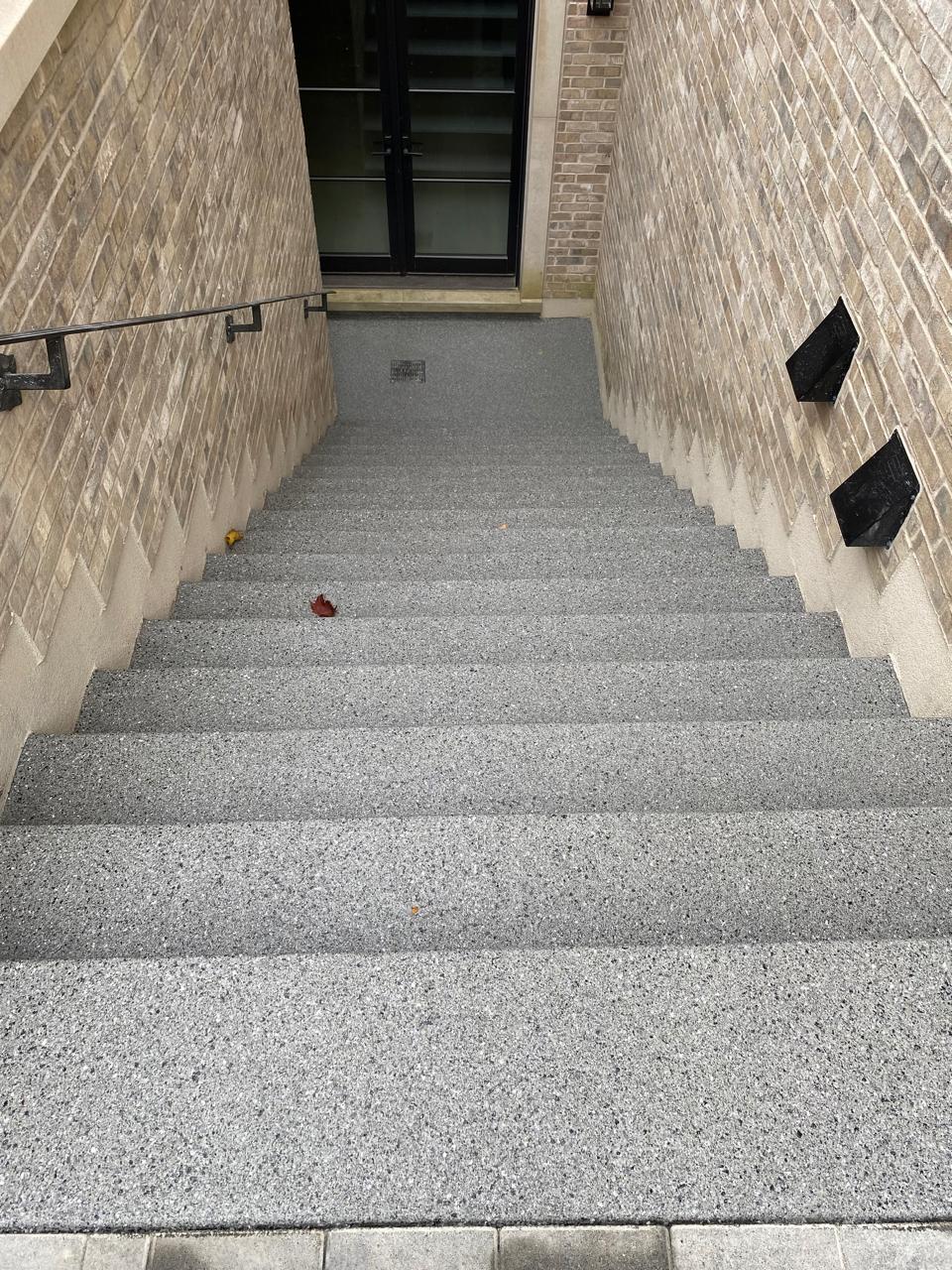
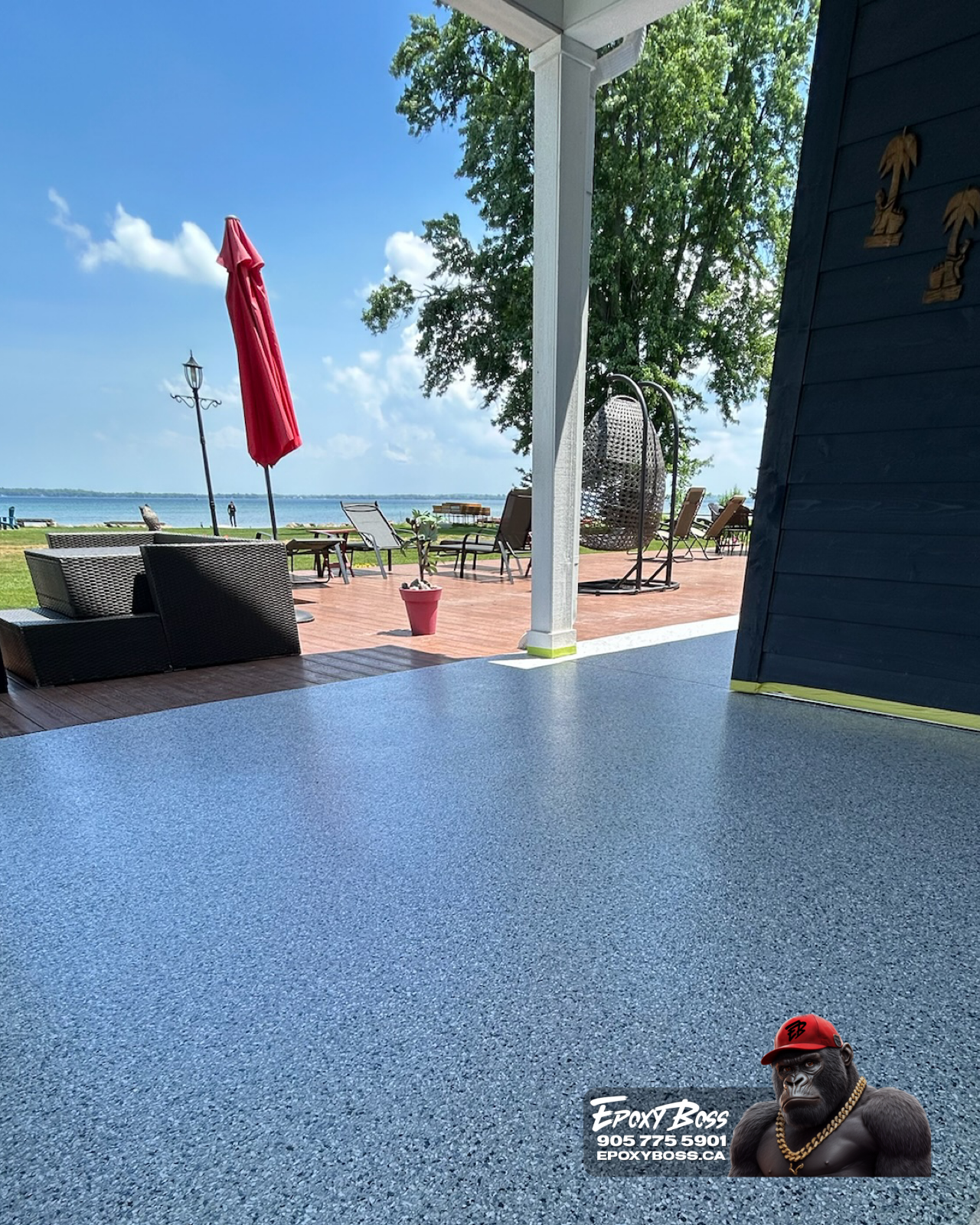
- Exterior and semi-exterior concrete: porches, patios and covered entries, where UV and weather exposure rule out many epoxies. See exterior polyaspartic coatings.
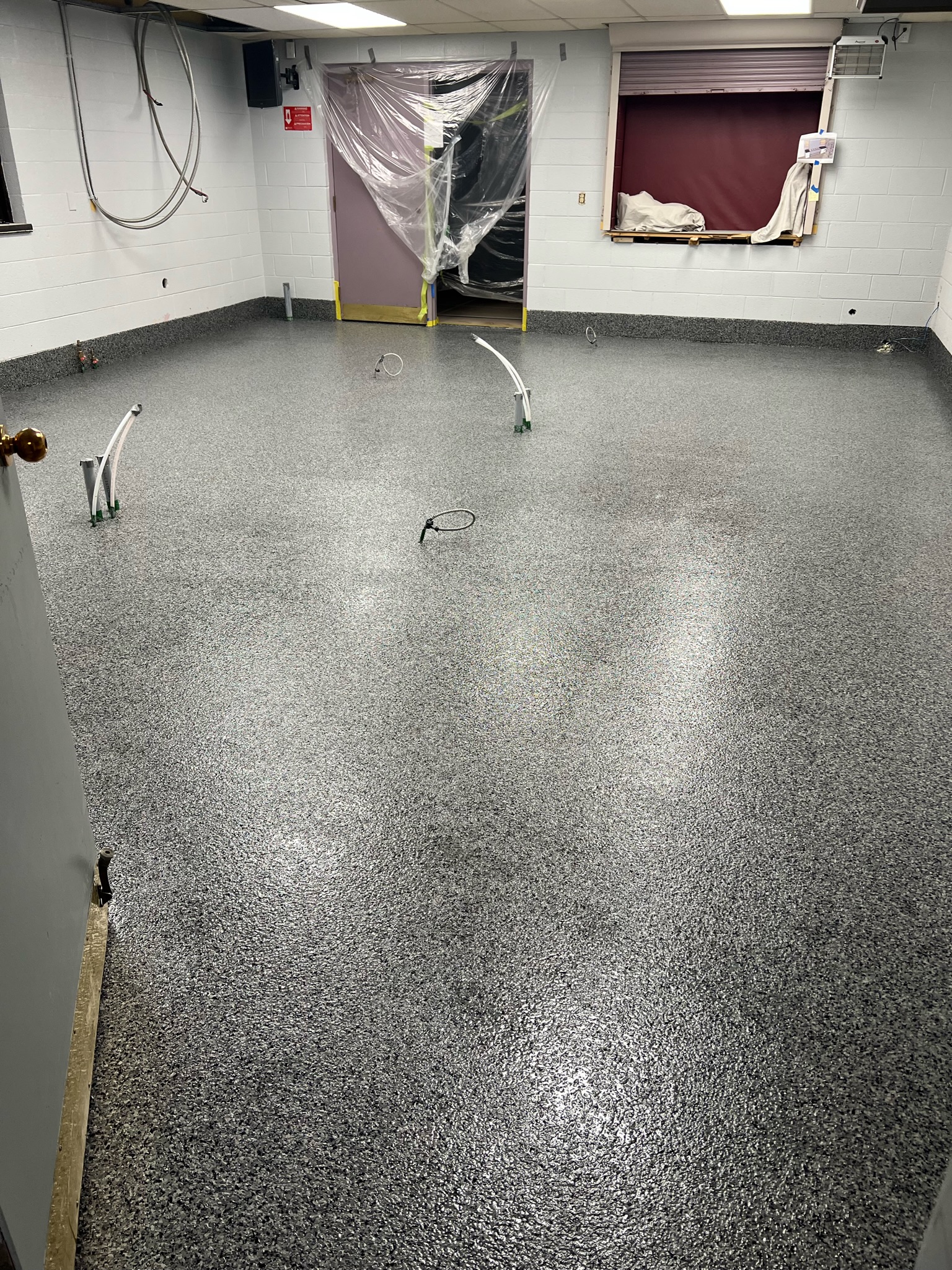
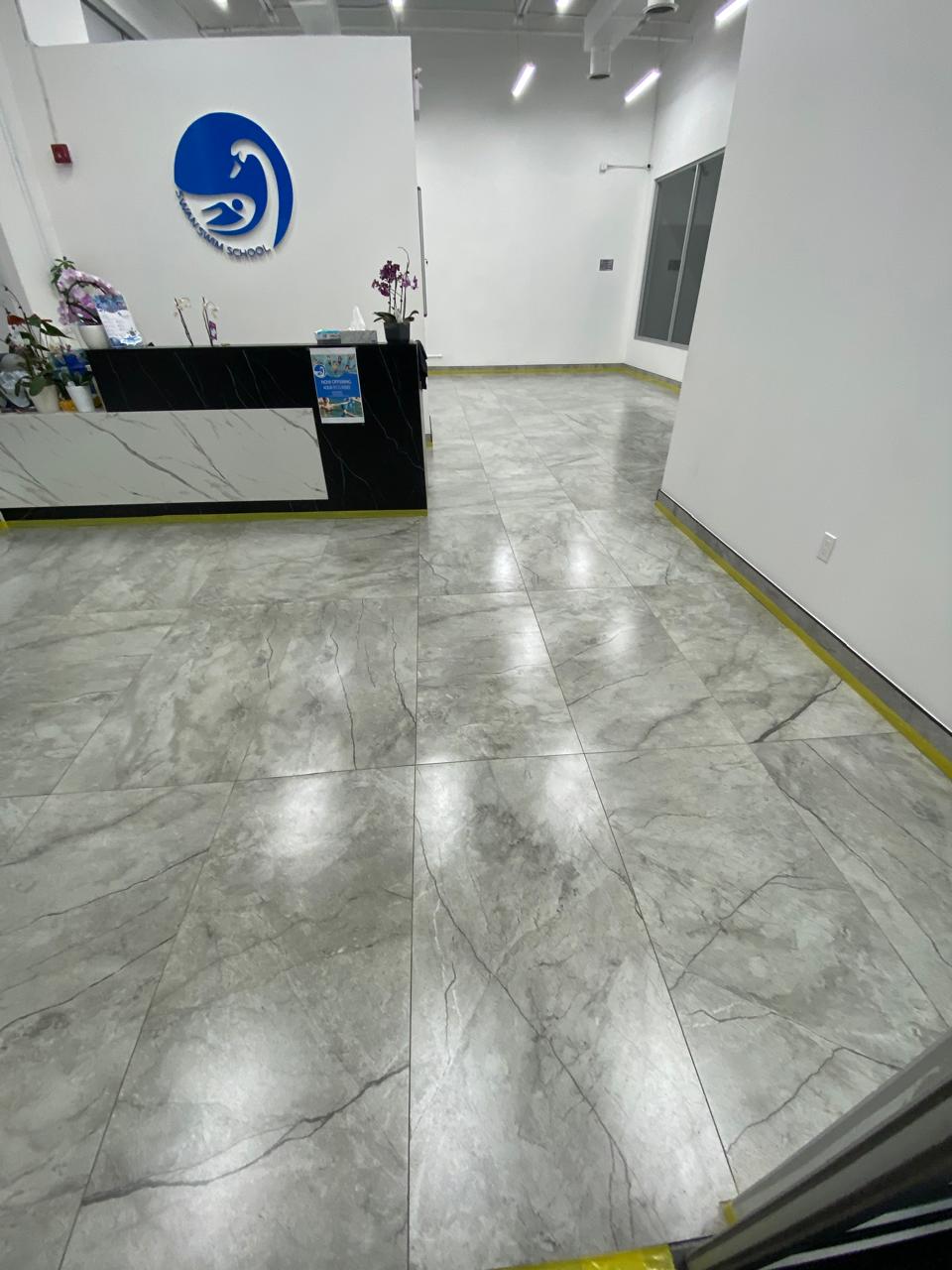
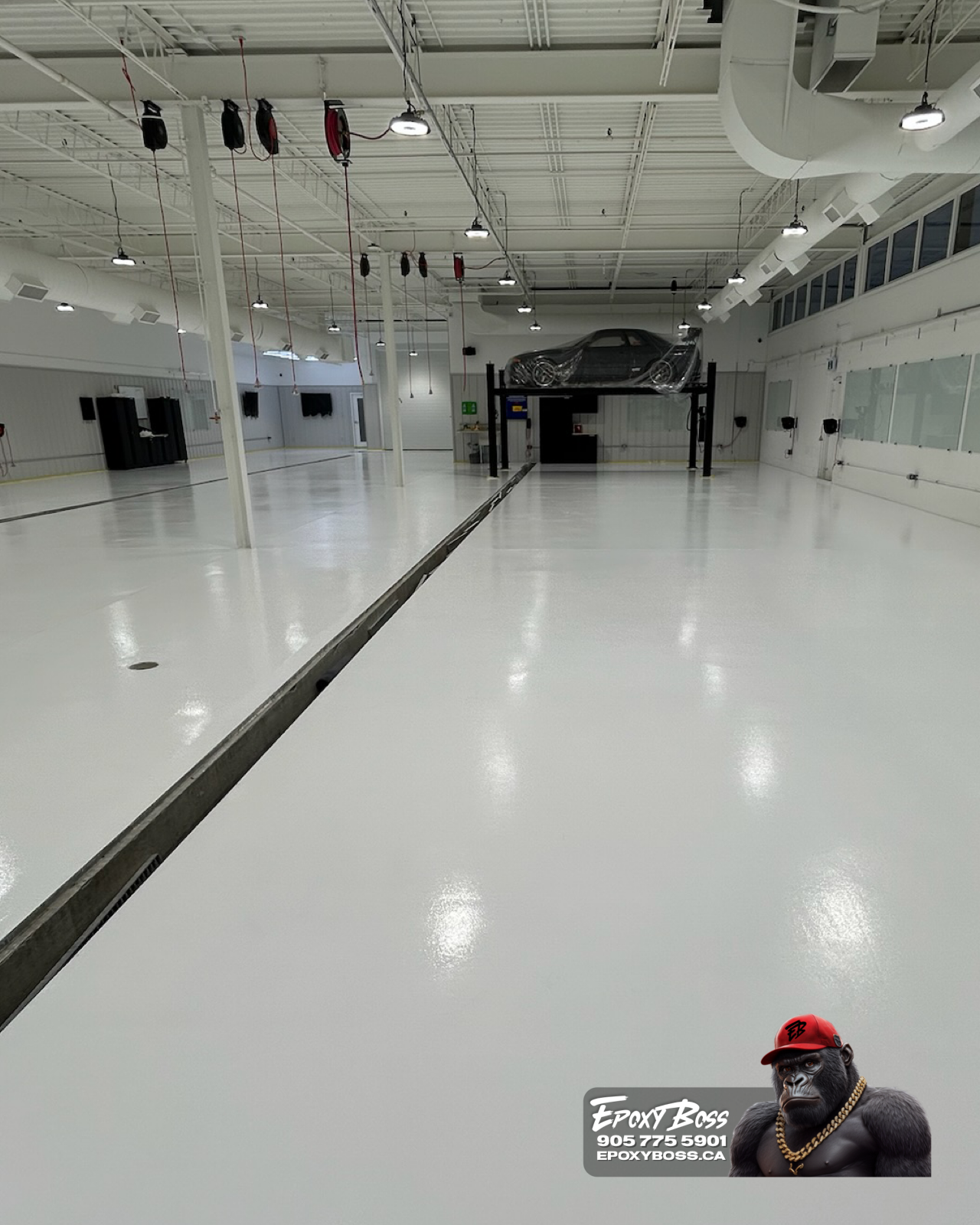
- Commercial spaces that need a fast return to service: retail, showrooms, clinics and offices that cannot close for several days. See fast-cure flooring systems.
- Topcoats over decorative systems: flake, quartz and some solid colour floors. See polyaspartic flooring systems.
Benefits of a polyaspartic coating
Faster cure
Polyaspartics cure much faster than conventional epoxies. Depending on the product and conditions, multiple coats can often be applied in one day, and foot traffic can resume sooner. Vehicle traffic still waits for the cure time stated by the manufacturer, which changes with temperature and humidity.
UV stability
Aliphatic chemistry resists yellowing and chalking better than most epoxies. Manufacturers often compare colour retention using accelerated weathering methods such as ASTM G154 fluorescent UV exposure. Read more in UV-stable floor coatings.
Wider application temperature range
Many polyaspartics can be applied at cooler temperatures than typical epoxies, which helps in Ontario's shoulder seasons and in heated garages in winter. Every product still has minimum air and slab temperatures, and the slab must stay above the dew point.
Abrasion and chemical resistance
Polyaspartic topcoats generally hold up well to tire traffic, grit and common garage fluids, which is why they are a popular wearing layer.
Limits and trade-offs
- Short working time: fast cure means the material must be mixed in manageable batches and applied quickly. Lap marks and roller marks are a risk without an experienced crew.
- Moisture and humidity sensitivity: high slab moisture can cause bubbling or adhesion problems, and humidity affects cure. Moisture is assessed before coating, for example with the in-situ RH test in ASTM F2170.
- Thinner films: polyaspartics are usually applied thinner than high-build epoxies, so they are less able to fill an uneven surface on their own.
- Preparation still decides adhesion: fast cure does not make up for poor grinding or contamination.
- Odour during application: some products have noticeable odour while curing; ventilation is part of planning.
Polyaspartic vs epoxy: which for your floor?
The simplest way to think about it:
- Epoxy is often the better primer and base coat: strong adhesion, good build, longer working time.
- Polyaspartic is often the better topcoat: UV stability, speed, wear resistance.
That is why many Ontario garage floors use an epoxy base with a polyaspartic topcoat. Some installers use polyaspartic for every layer to shorten the job. For the wider family picture, read polyurea vs polyaspartic vs epoxy, and for topcoat options beyond polyaspartic, see aliphatic urethane topcoats explained.
Polyaspartic in a full-flake garage system
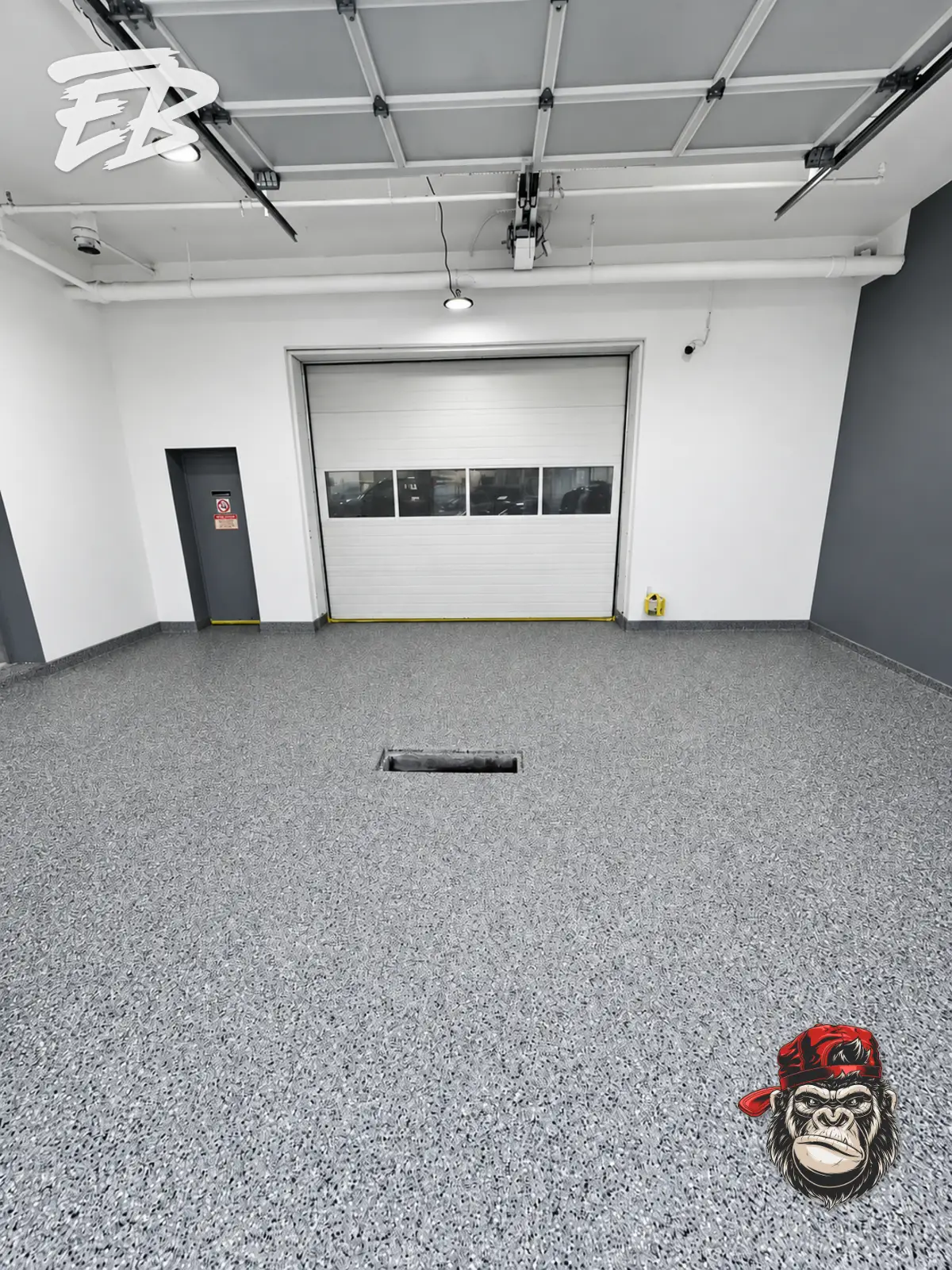
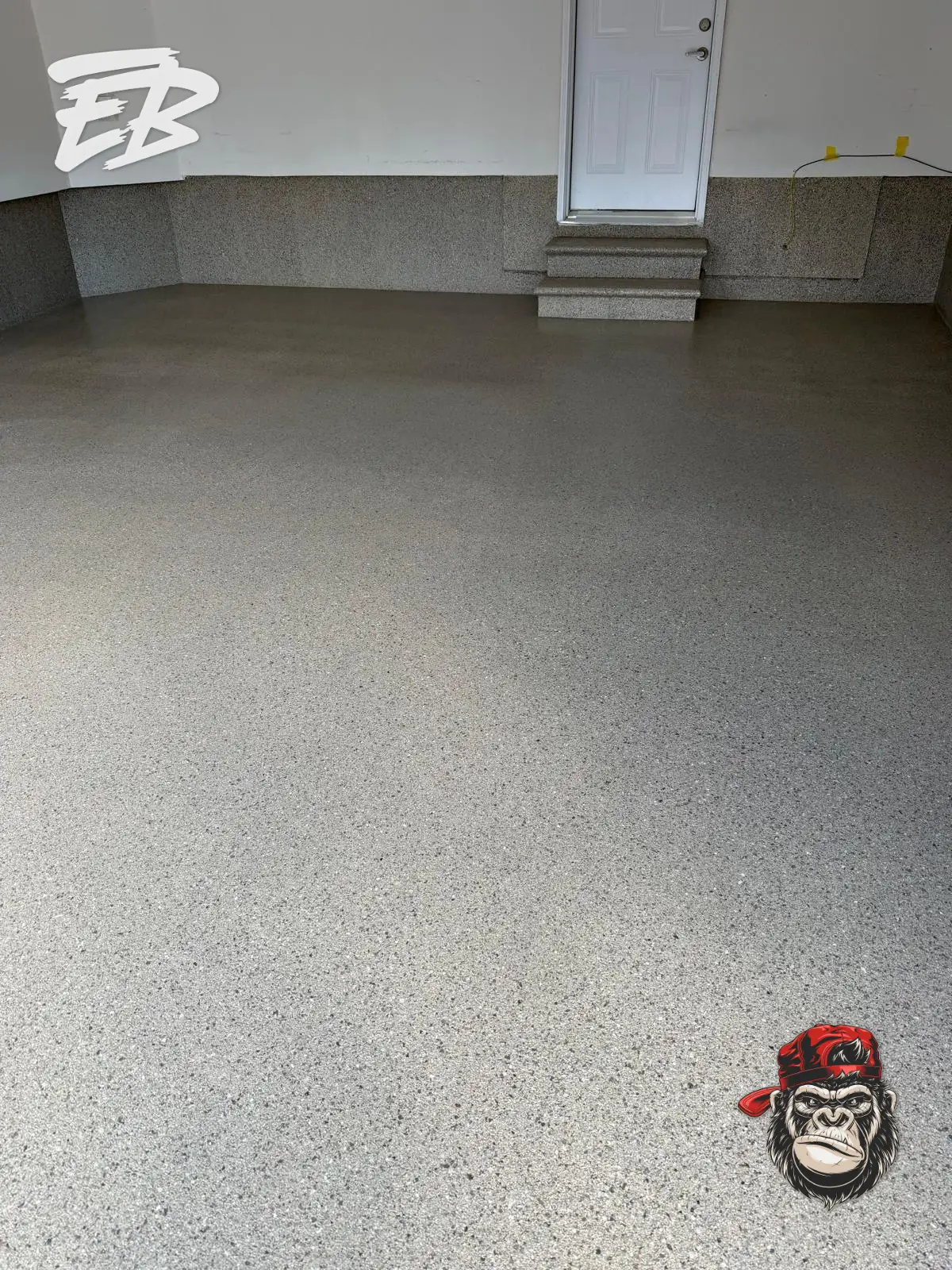
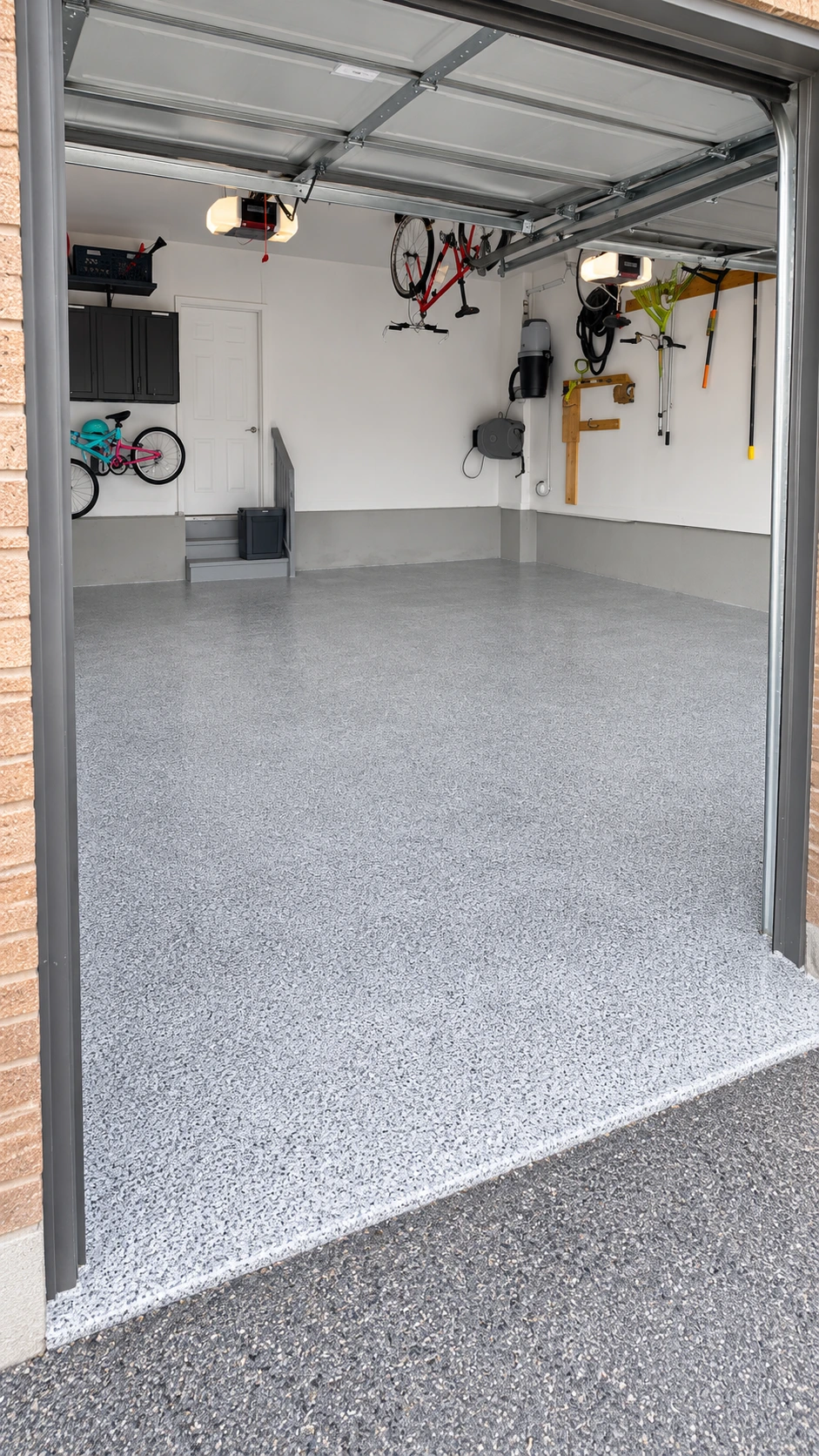
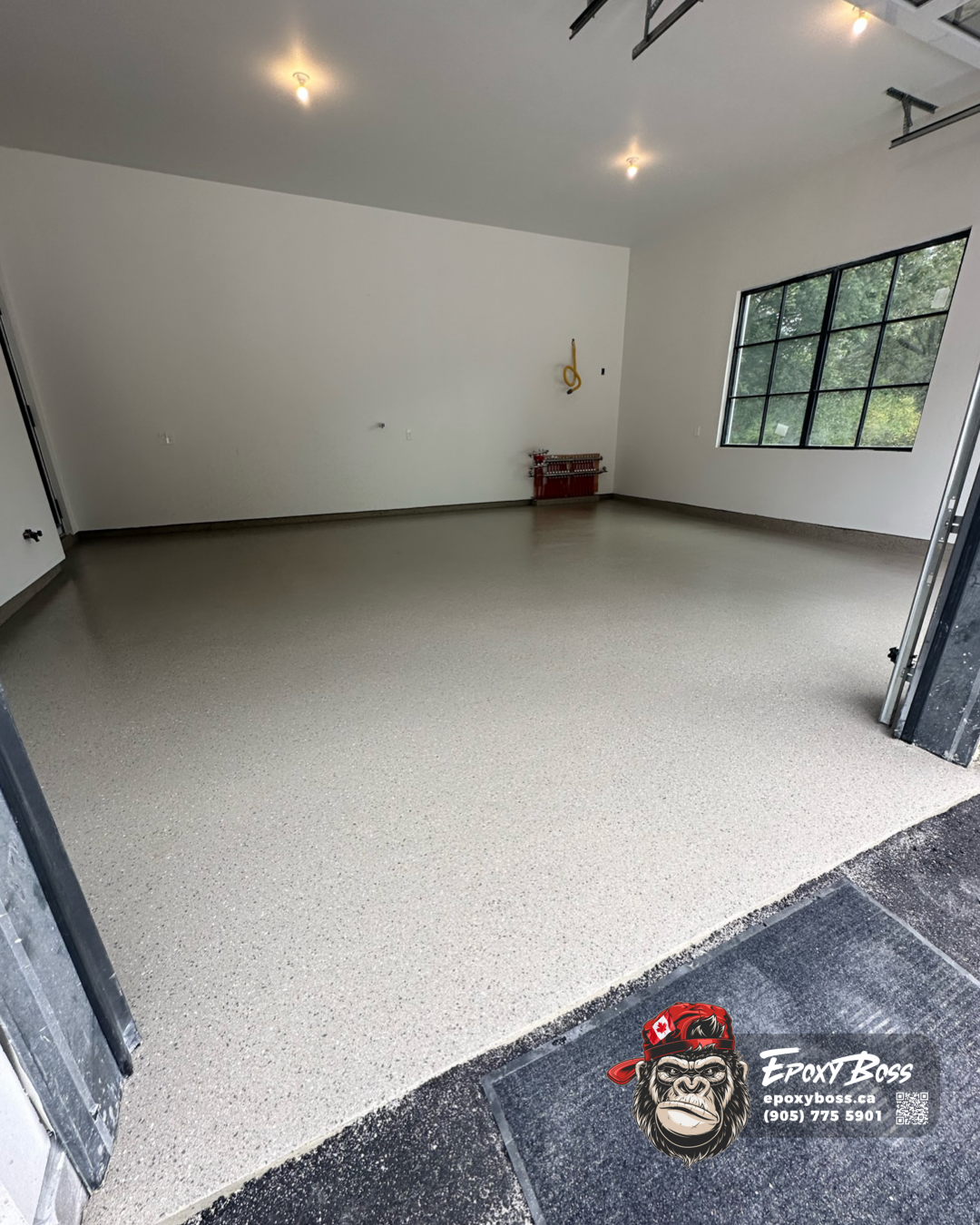
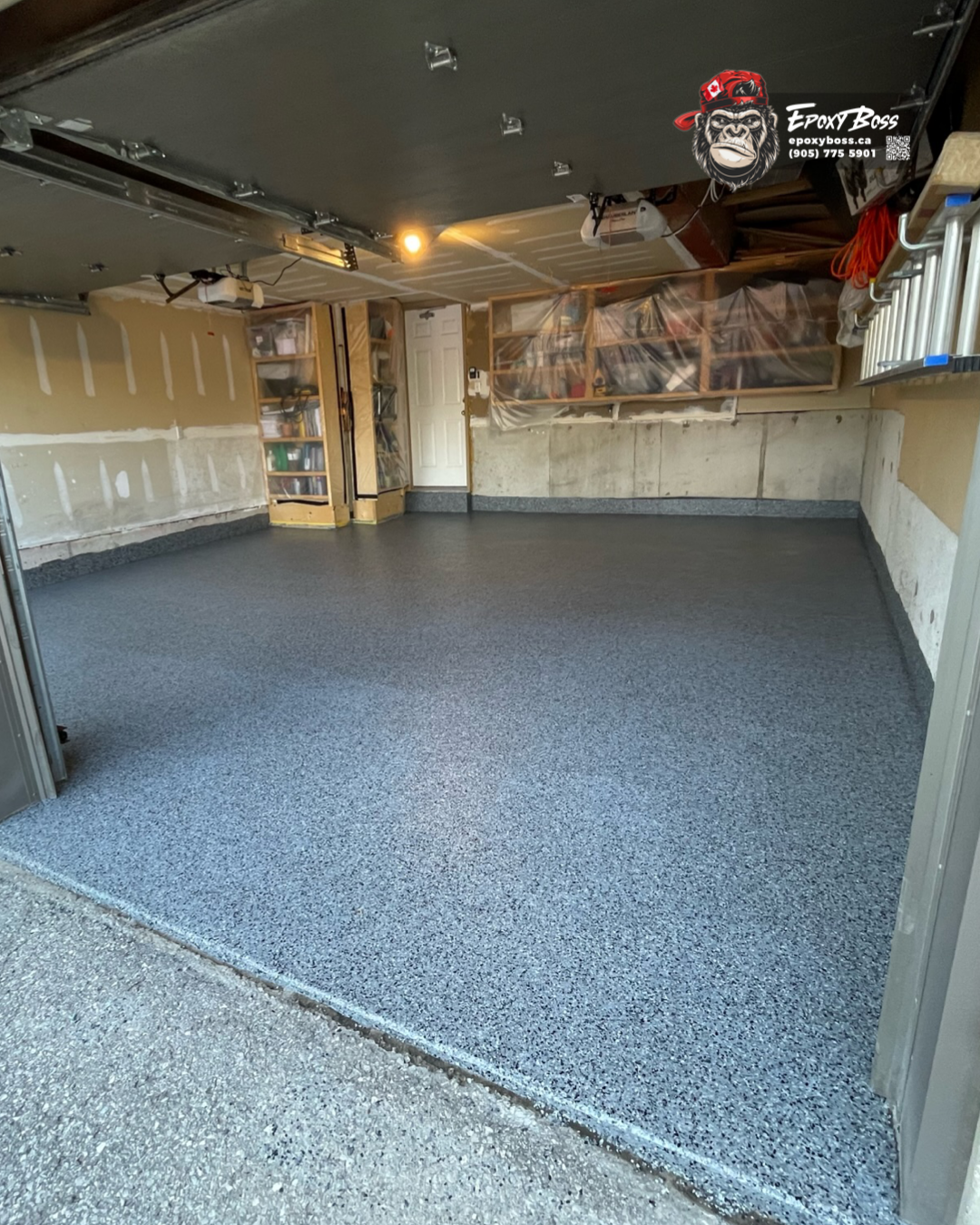
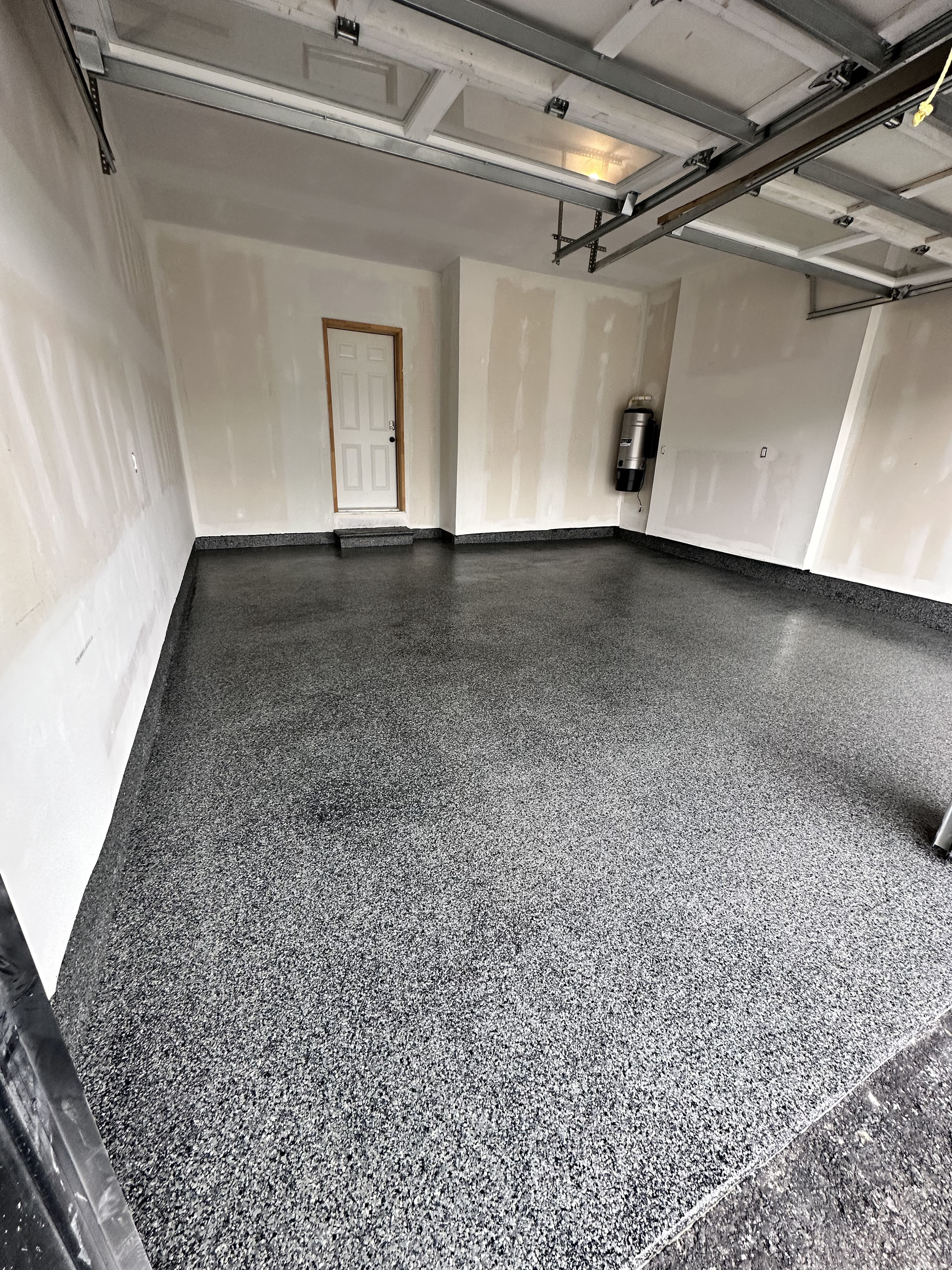
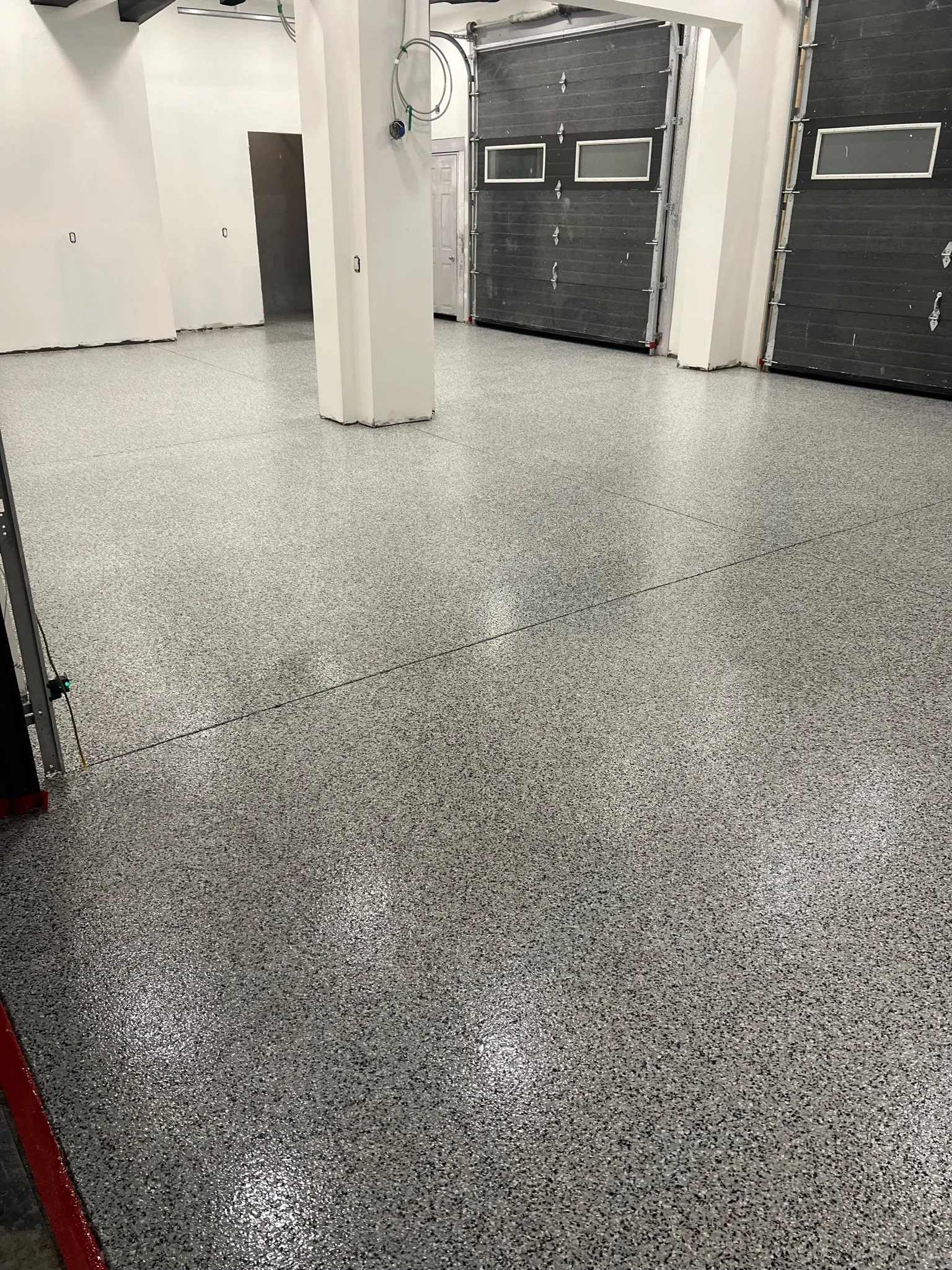
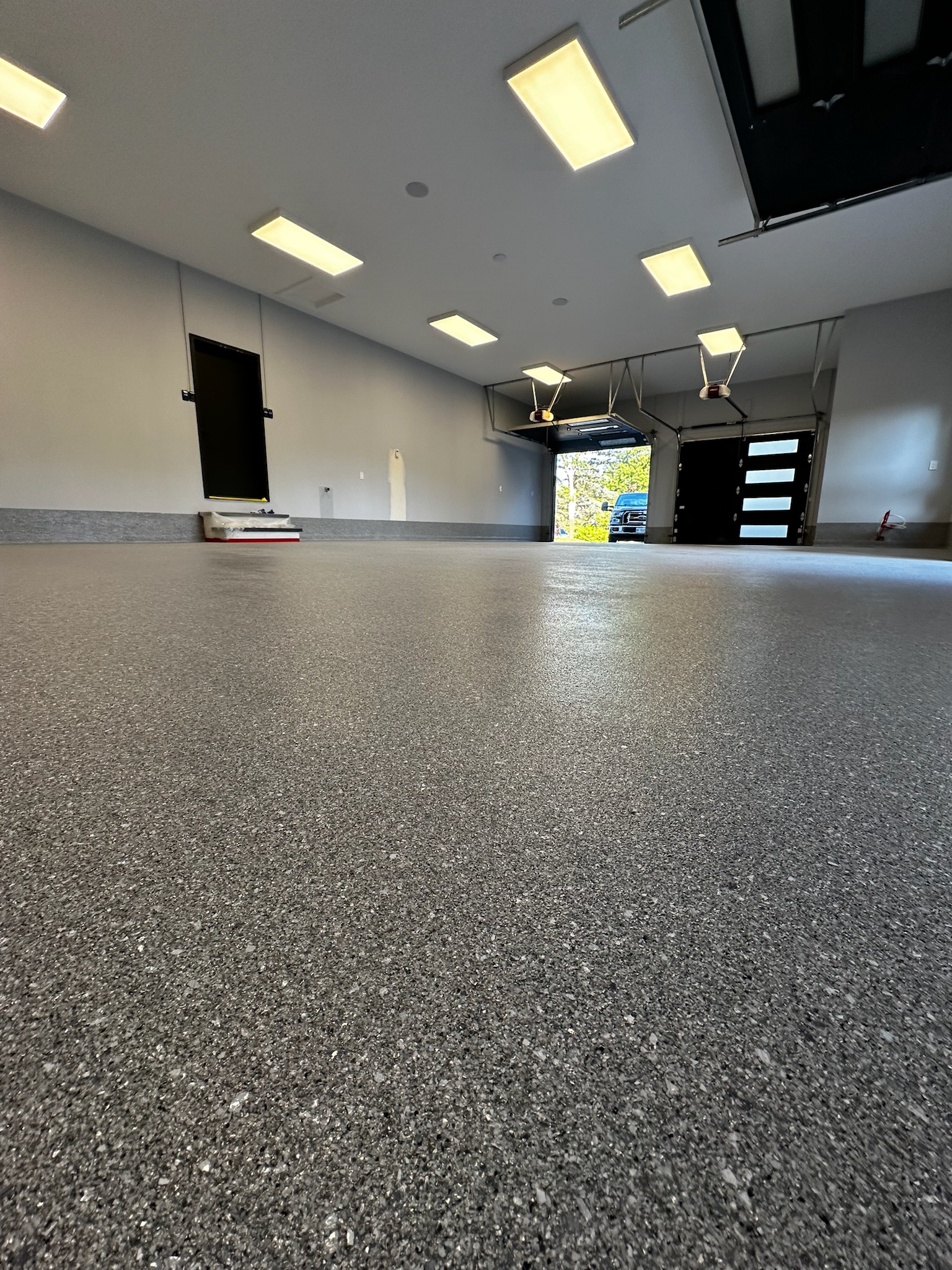
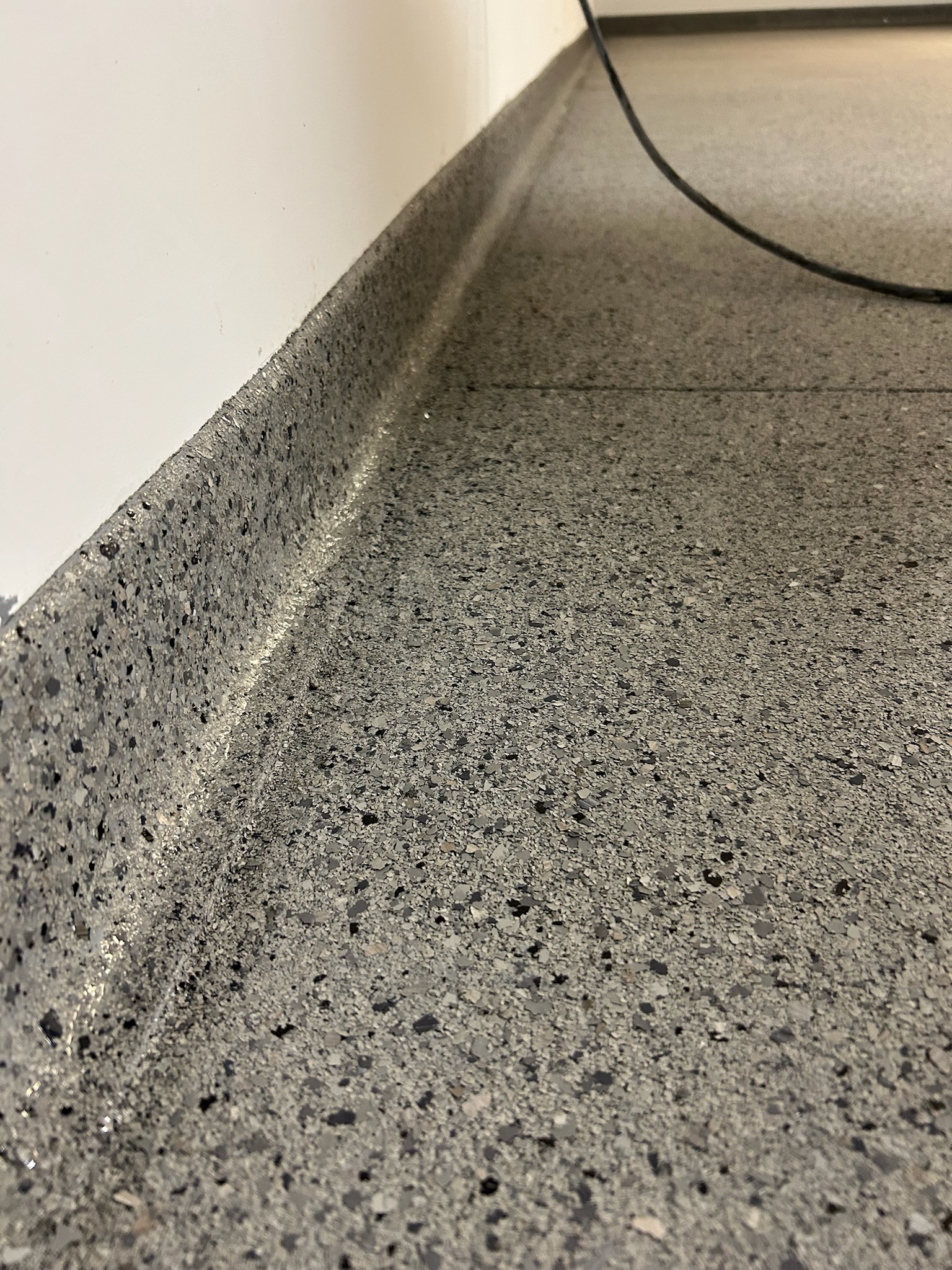
In a typical full-broadcast flake garage floor, the slab is diamond ground and repaired, a pigmented base coat is applied, flake is broadcast to full coverage, and a clear polyaspartic topcoat seals the surface. The topcoat locks in the flake and becomes the surface you drive and walk on. See full-broadcast flake garage floors explained and the flake system.
What a polyaspartic installation looks like
Because the material moves quickly from liquid to cured, a polyaspartic job is planned in more detail than a slow epoxy job:
- Conditions are checked first: air and slab temperature, relative humidity and dew point are measured, and the garage door is usually kept closed to control drafts.
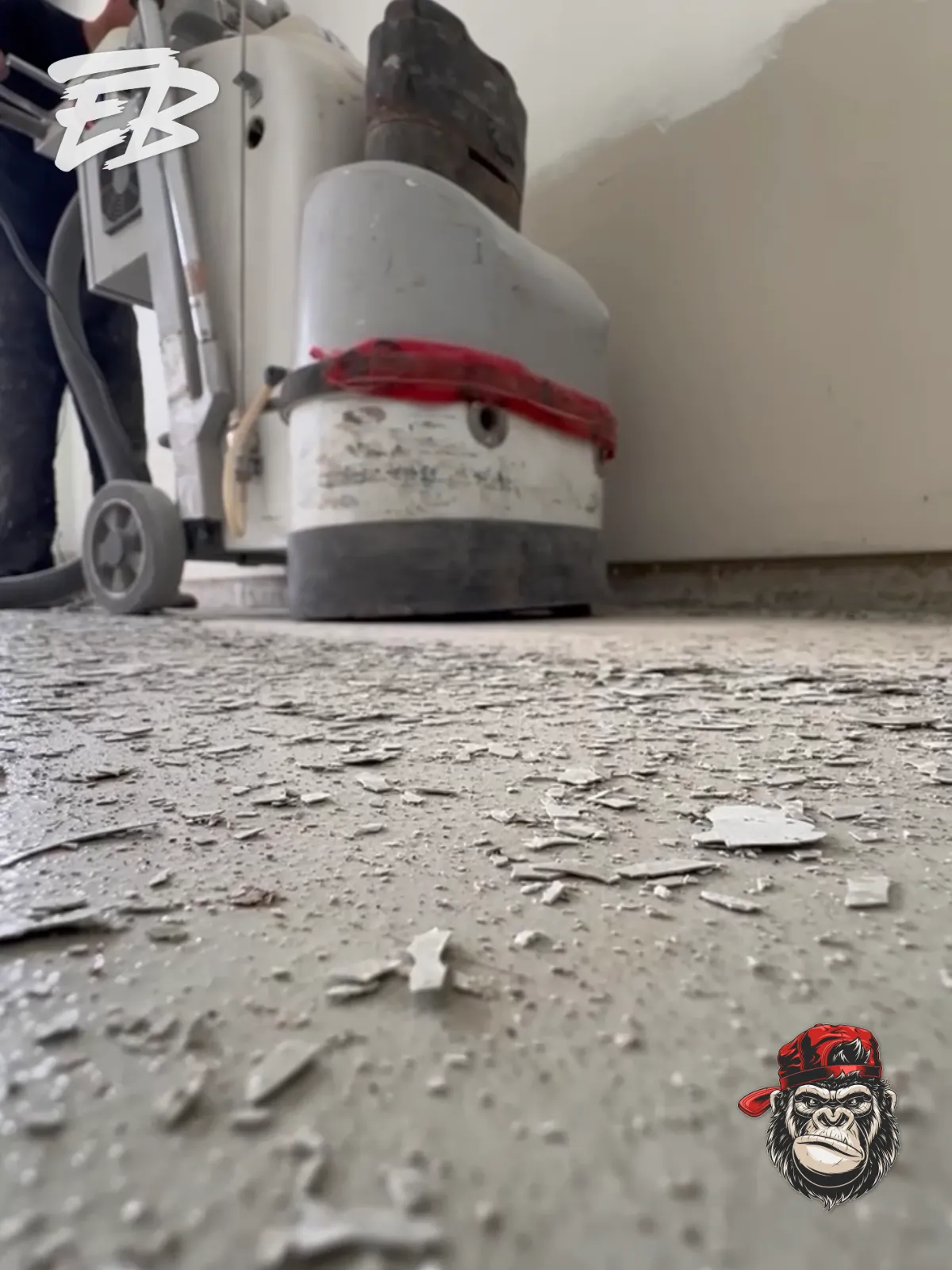
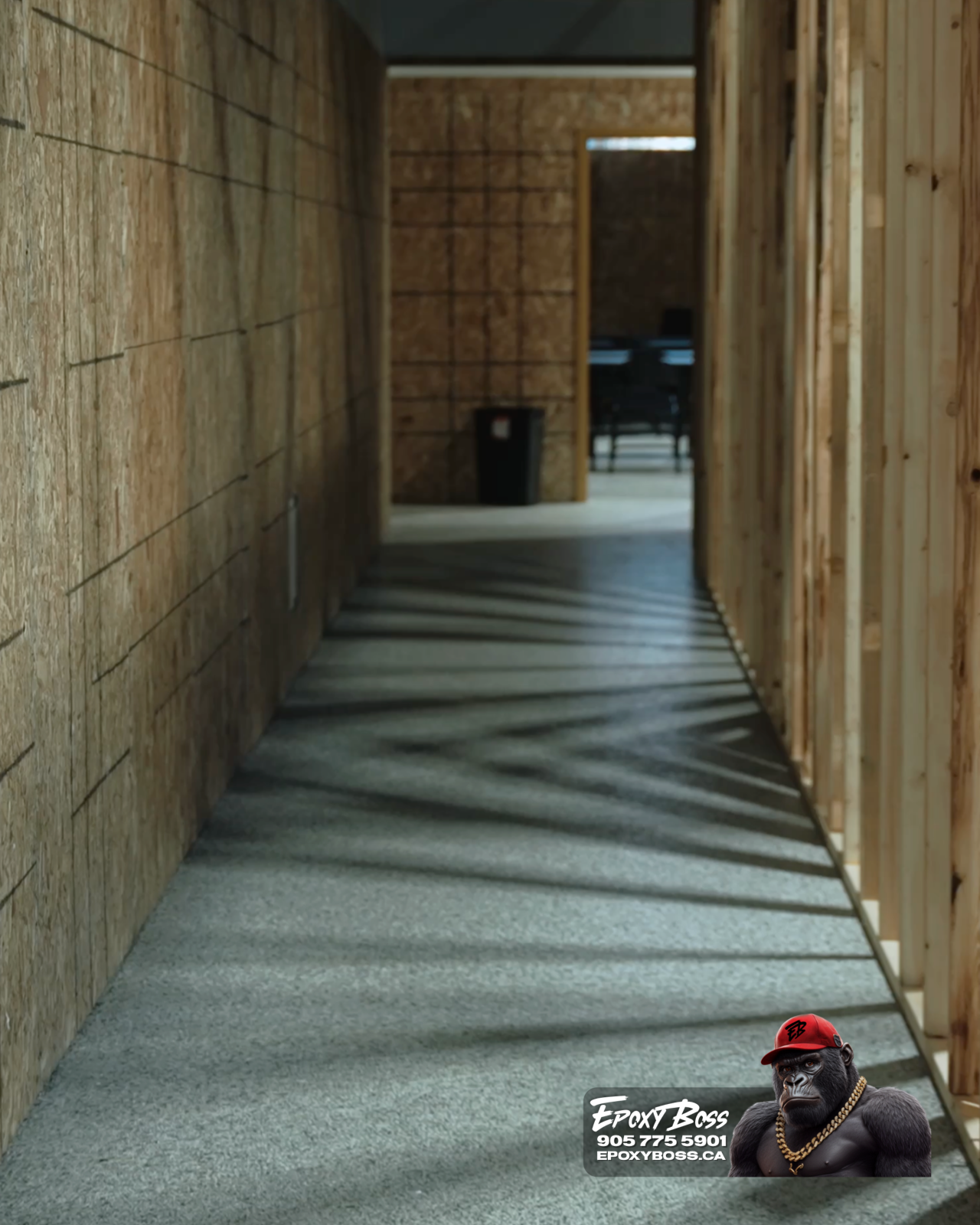
- The floor is prepared and repaired: grinding, crack and edge repair, and thorough vacuuming happen before any material is mixed.
- Small batches are mixed: crews mix only what can be applied within the working time, often using a squeegee to spread and a roller to back-roll.
- Coats follow in sequence: base, broadcast and topcoat may all happen in one long day, depending on the system and conditions.
- Return to service is confirmed: foot traffic and vehicle traffic times are set by the product data sheet and the day's conditions.
Questions to ask about a polyaspartic product
- Is this a true polyaspartic, and can I see the product data sheet?
- What are the minimum air and slab temperatures and humidity limits?
- Is it used as a topcoat only, or for every layer?
- What primer or base coat does the system call for over bare concrete?
- How many topcoats are included, and at what thickness?
- When can I walk on it, and when can I park on it?
Clear answers to these questions are a good sign the installer is working to the manufacturer's system rather than improvising.
Polyaspartic coatings in Ontario weather
Cooler-weather capability makes polyaspartic useful when a project cannot wait for summer. Practical checks still apply: the garage or room must be held within the product's temperature limits, the slab must be dry and free of meltwater, and humidity must be managed. Our article on coating a garage in winter explains the details.
Frequently asked questions
Is polyaspartic better than epoxy?
Not across the board. Polyaspartic is usually better as a UV-stable, fast topcoat; epoxy is often better as a base and primer. The best systems use each where it performs best.
How long does a polyaspartic floor take to cure?
Many systems allow foot traffic within hours and are completed faster than all-epoxy floors. Vehicle return-to-service depends on the product, temperature and humidity and is stated on the data sheet; we confirm it in your quote.
Can polyaspartic be used outdoors?
Yes, for many porches, patios and entries, because of its UV stability. The concrete must be suitable and properly prepared, and drainage and texture need attention.
Is polyaspartic the same as polyurea?
It is part of the polyurea family but is formulated to react more slowly so it can be rolled. Pure polyurea is typically spray-applied.
How much does a polyaspartic garage floor cost?
It depends on size, slab condition and the full system. See our garage floor coating cost guide and the garage floor calculator.
Book a free floor assessment
Epoxy Boss is based in Innisfil, has worked since 2019 and installs polyaspartic and epoxy floor systems across the GTA, York Region, Simcoe County, Halton, Durham and Muskoka. Call (905) 775-5901 or request a free floor assessment for a written quote in Canadian dollars.