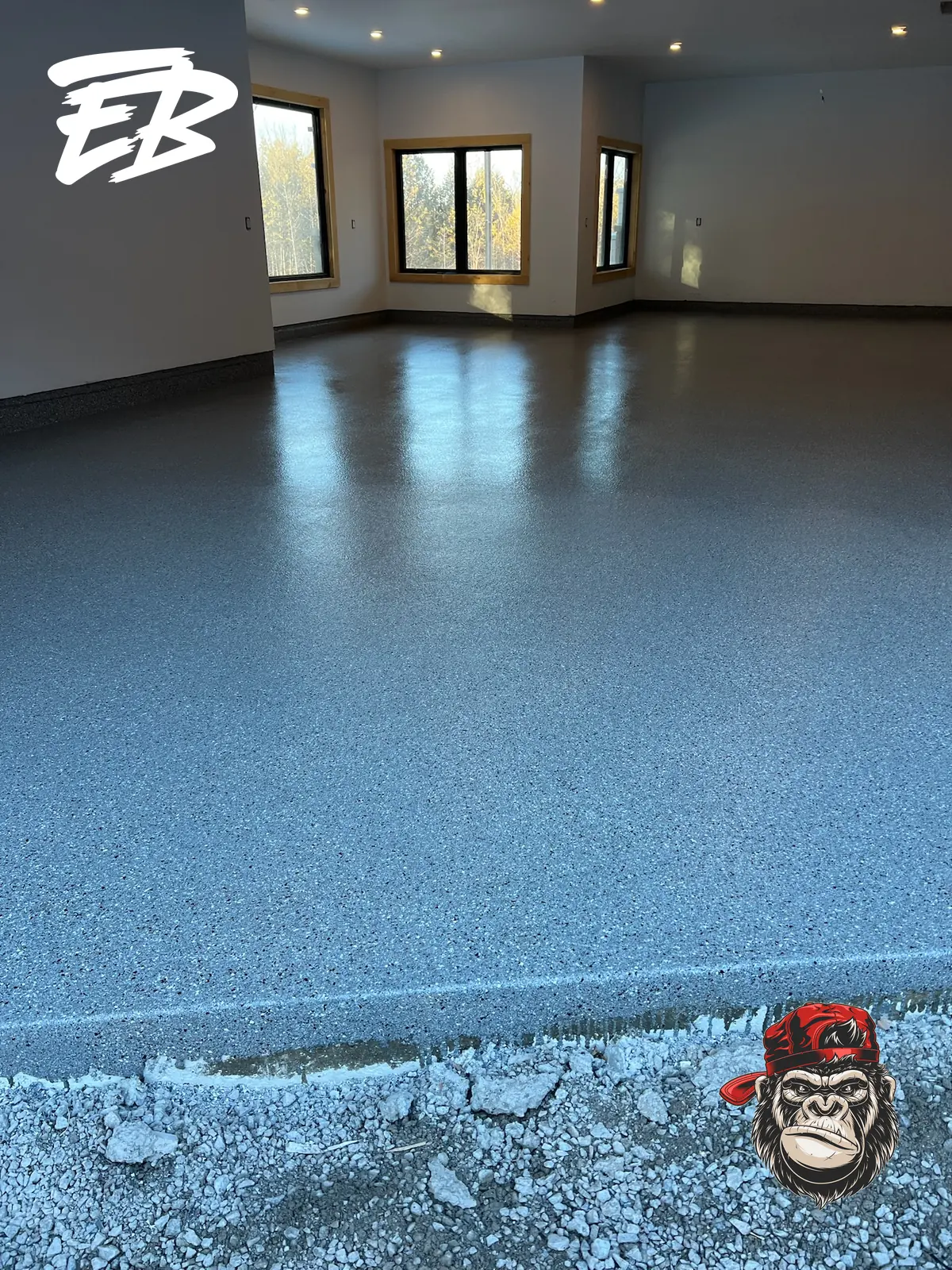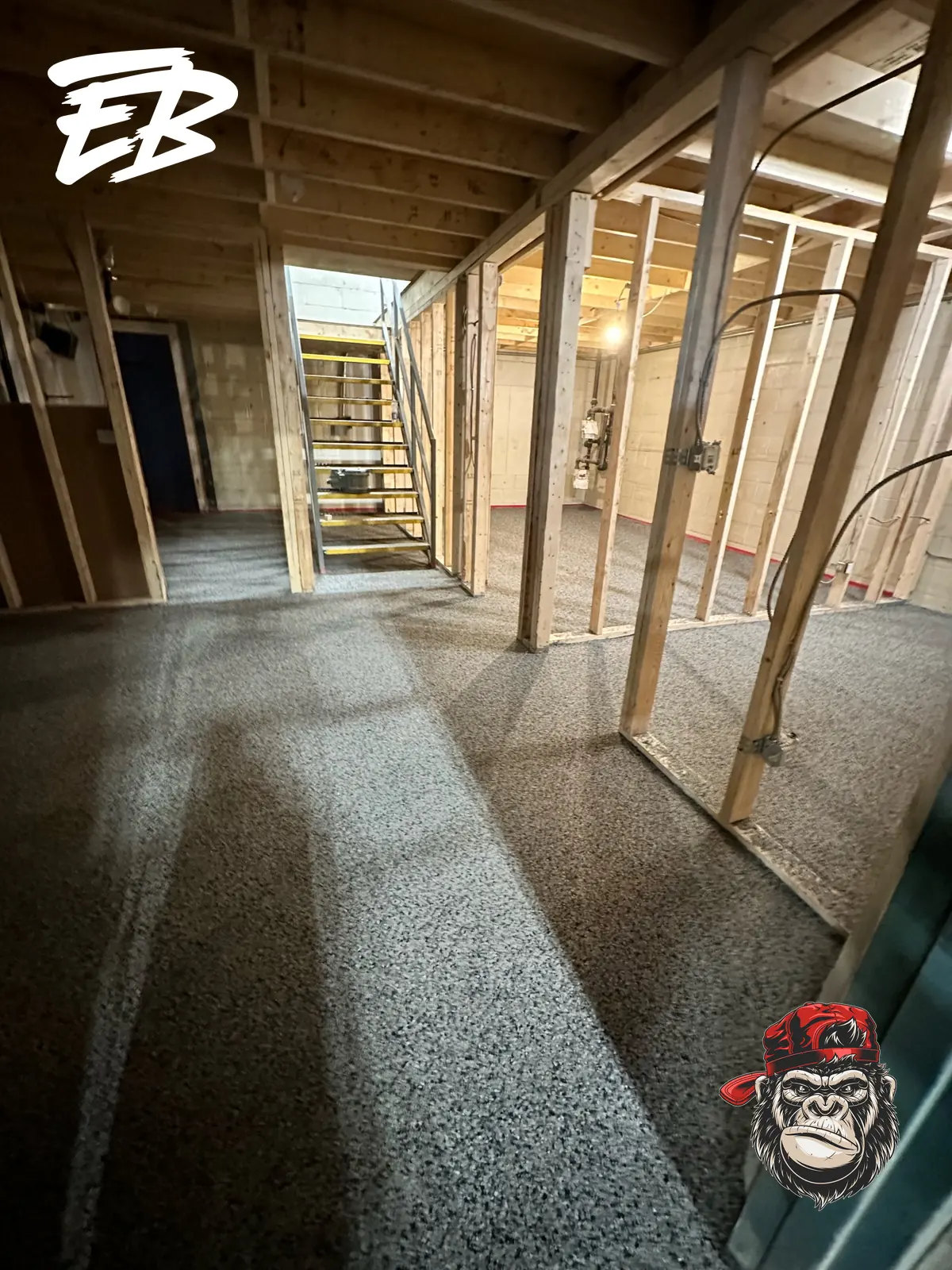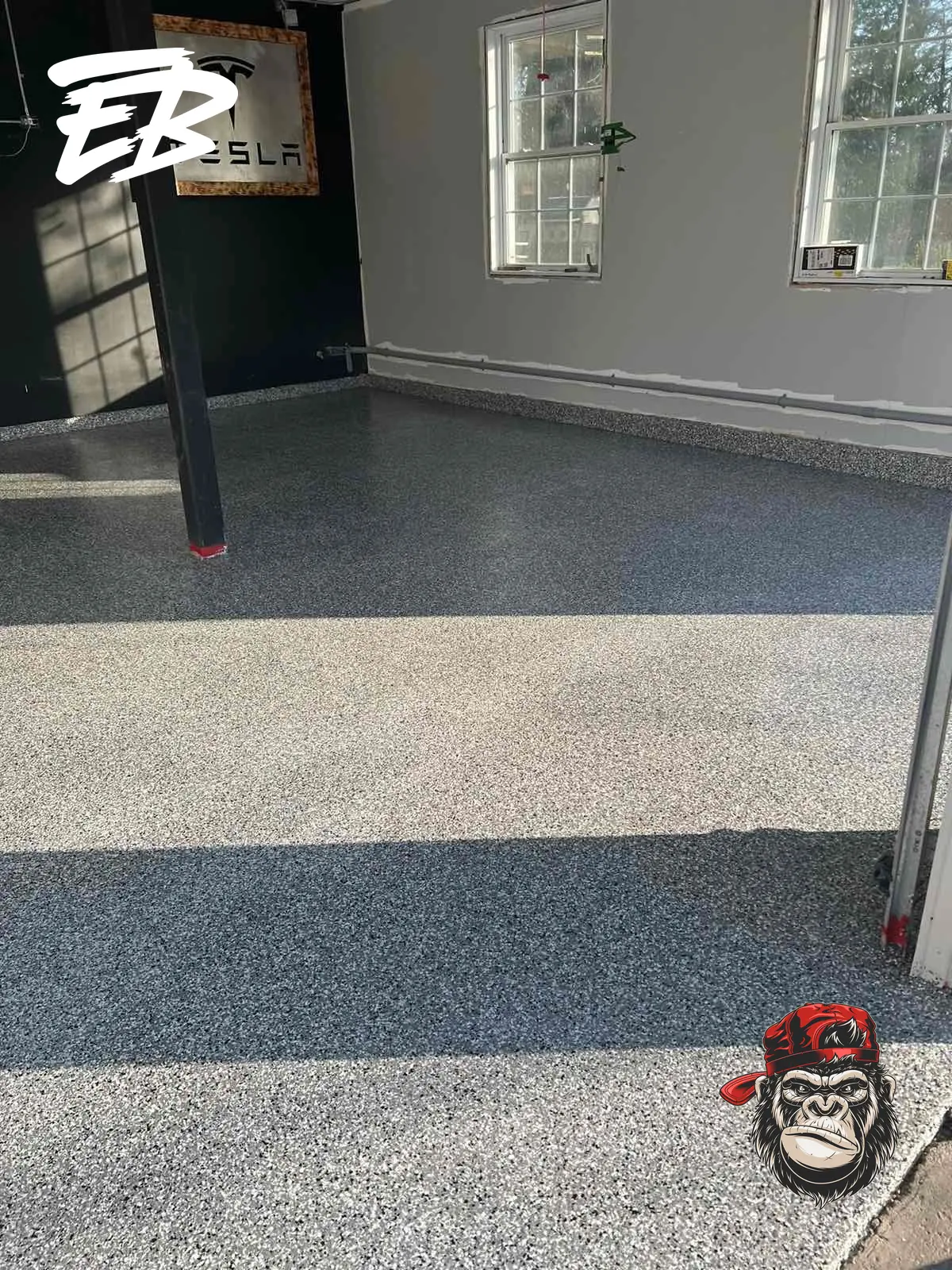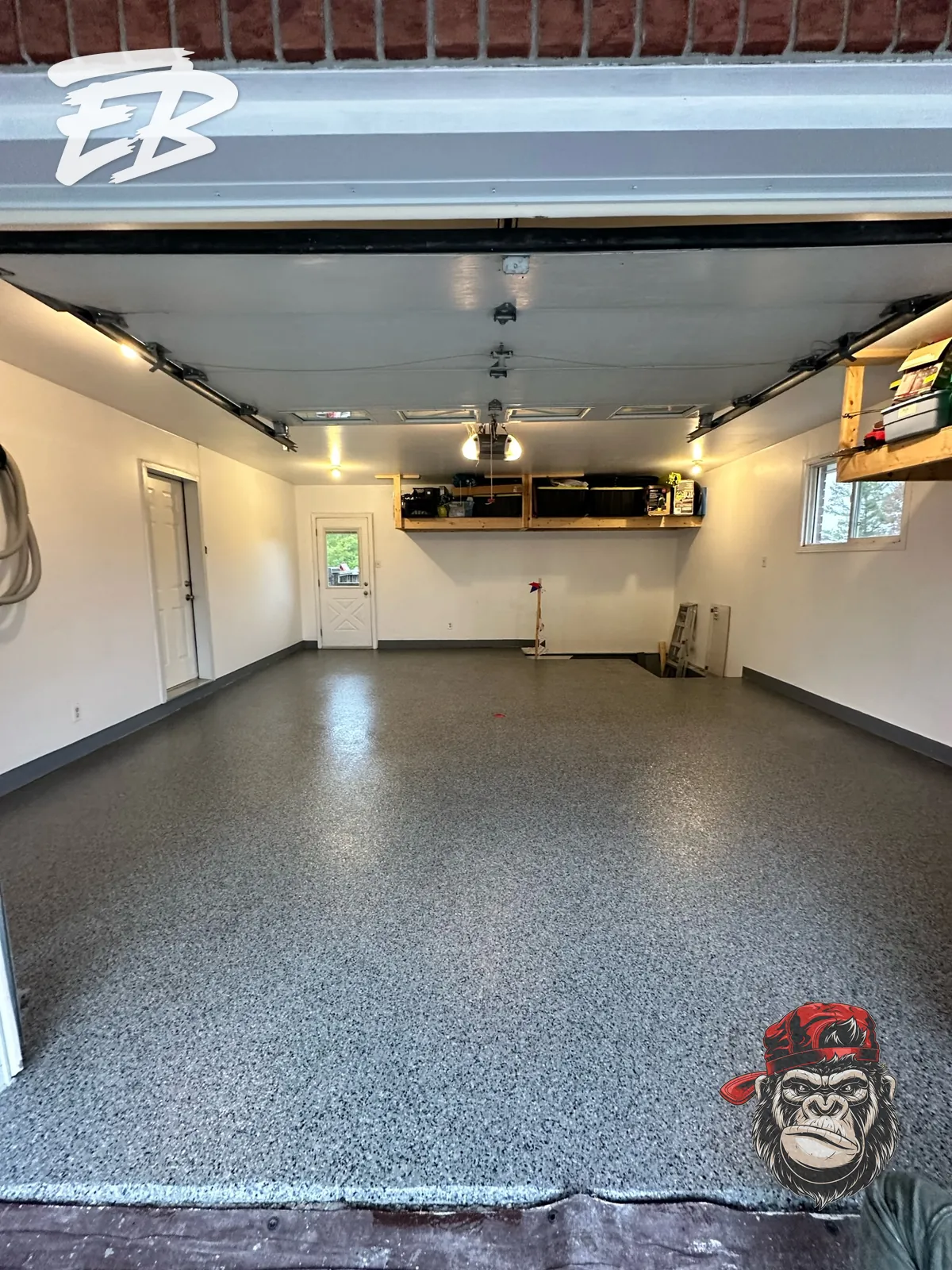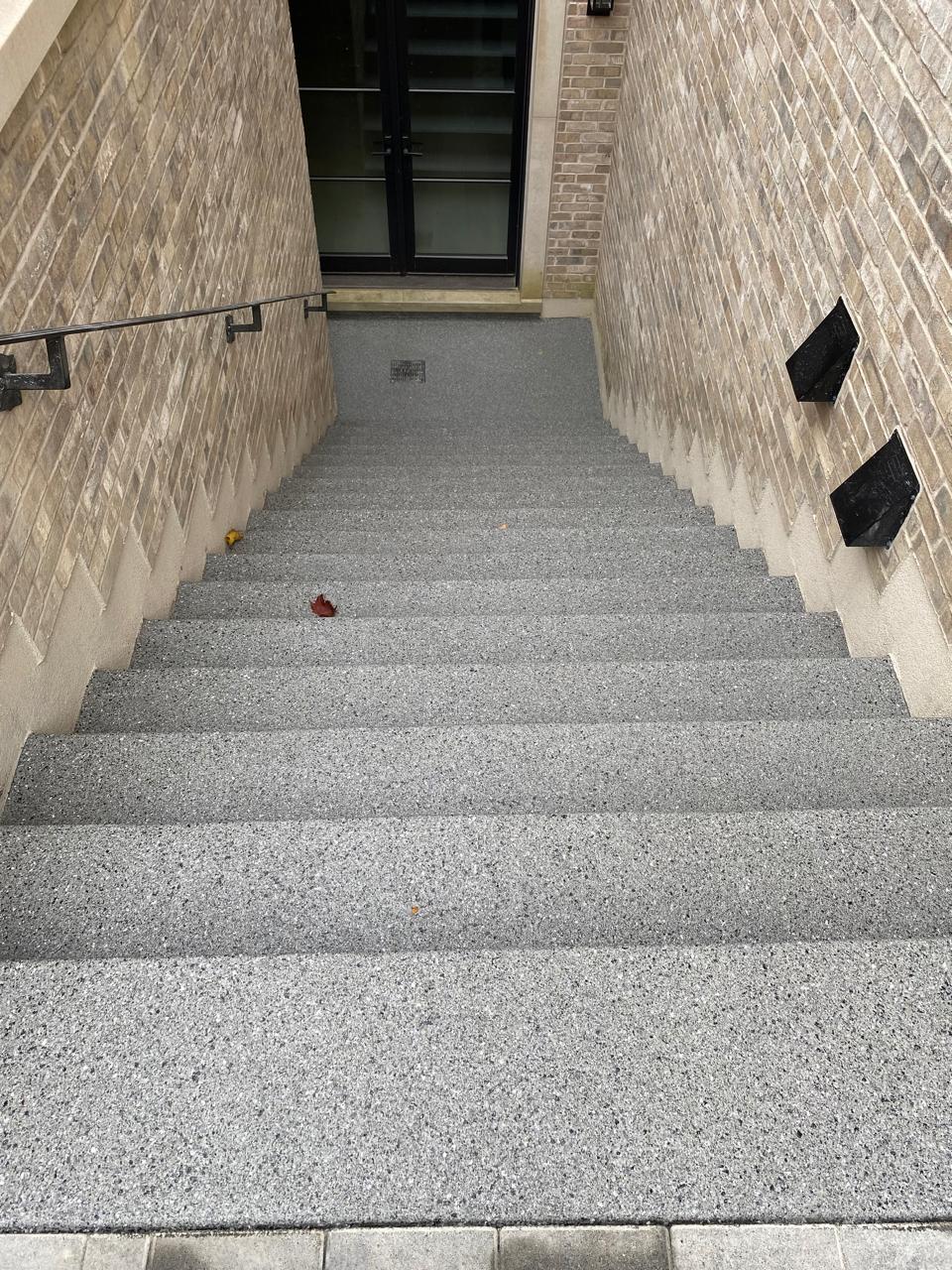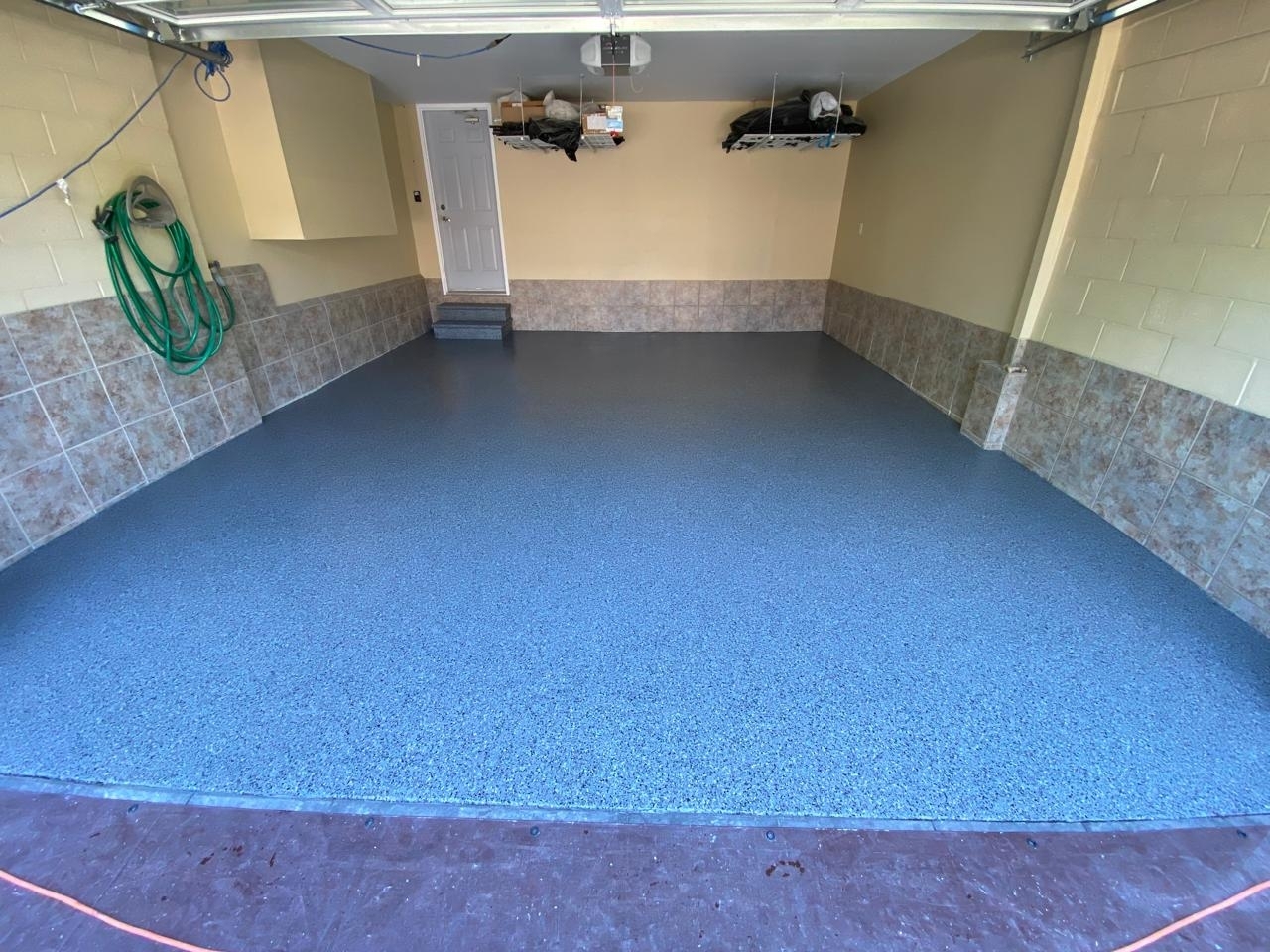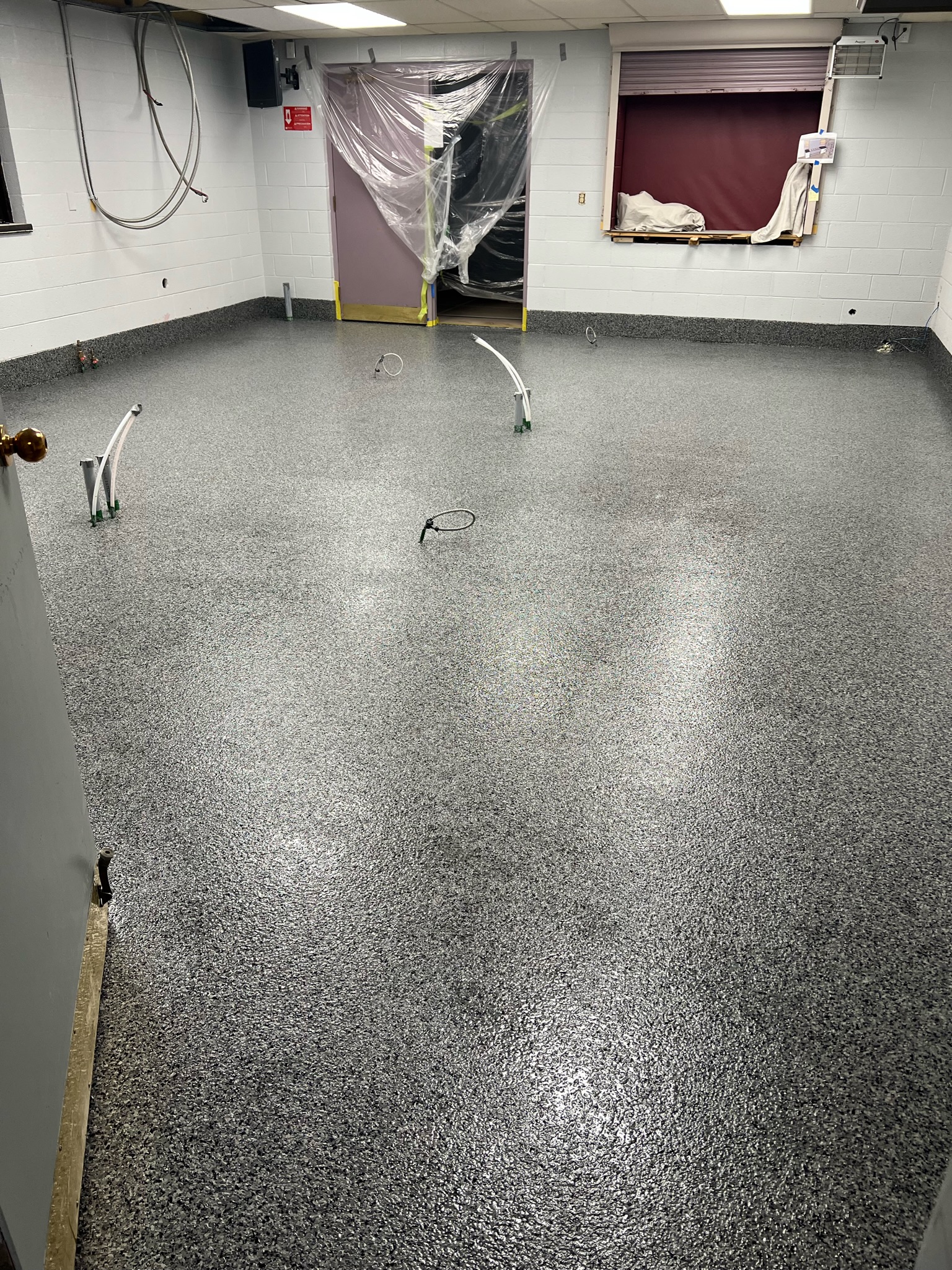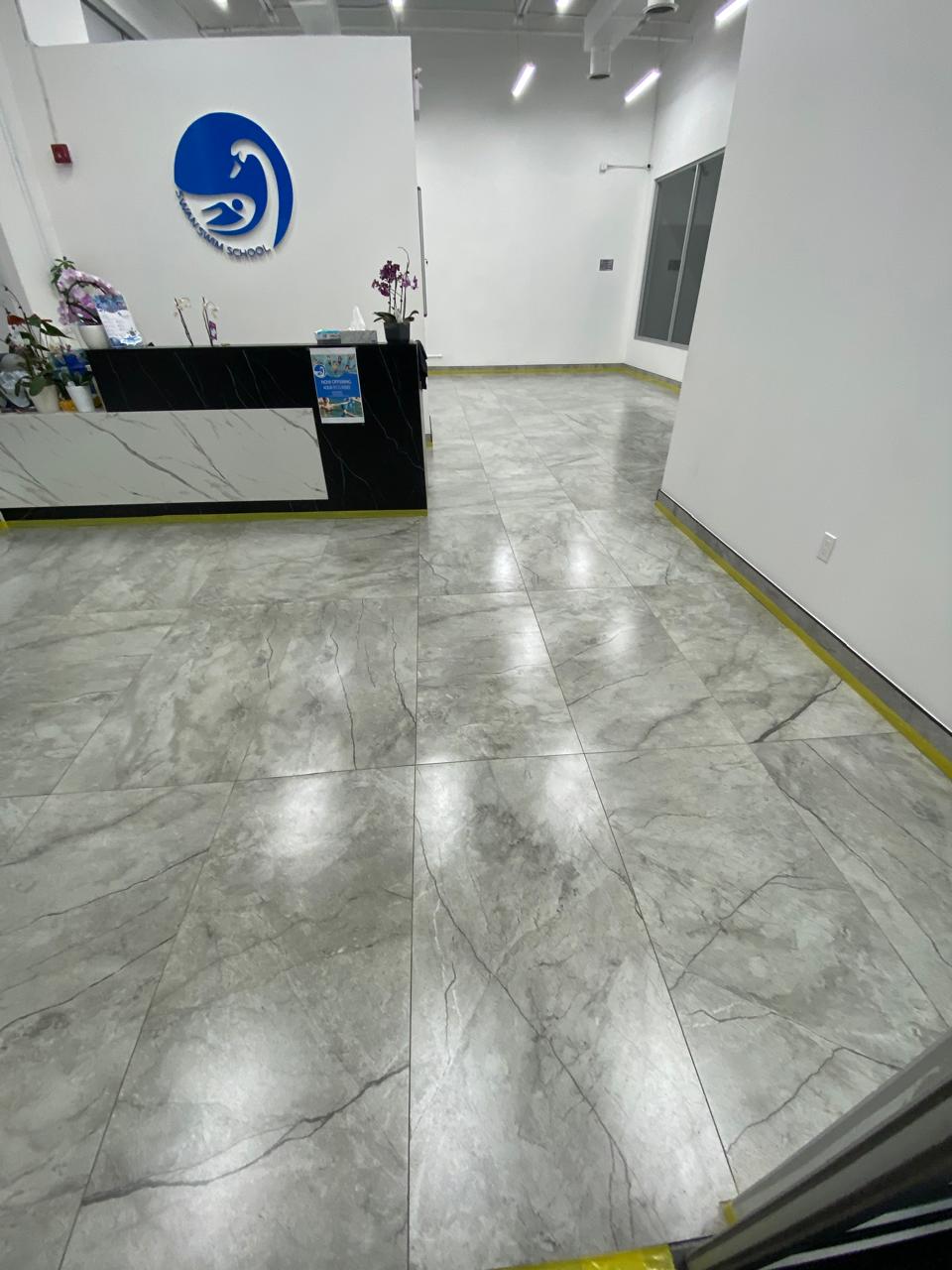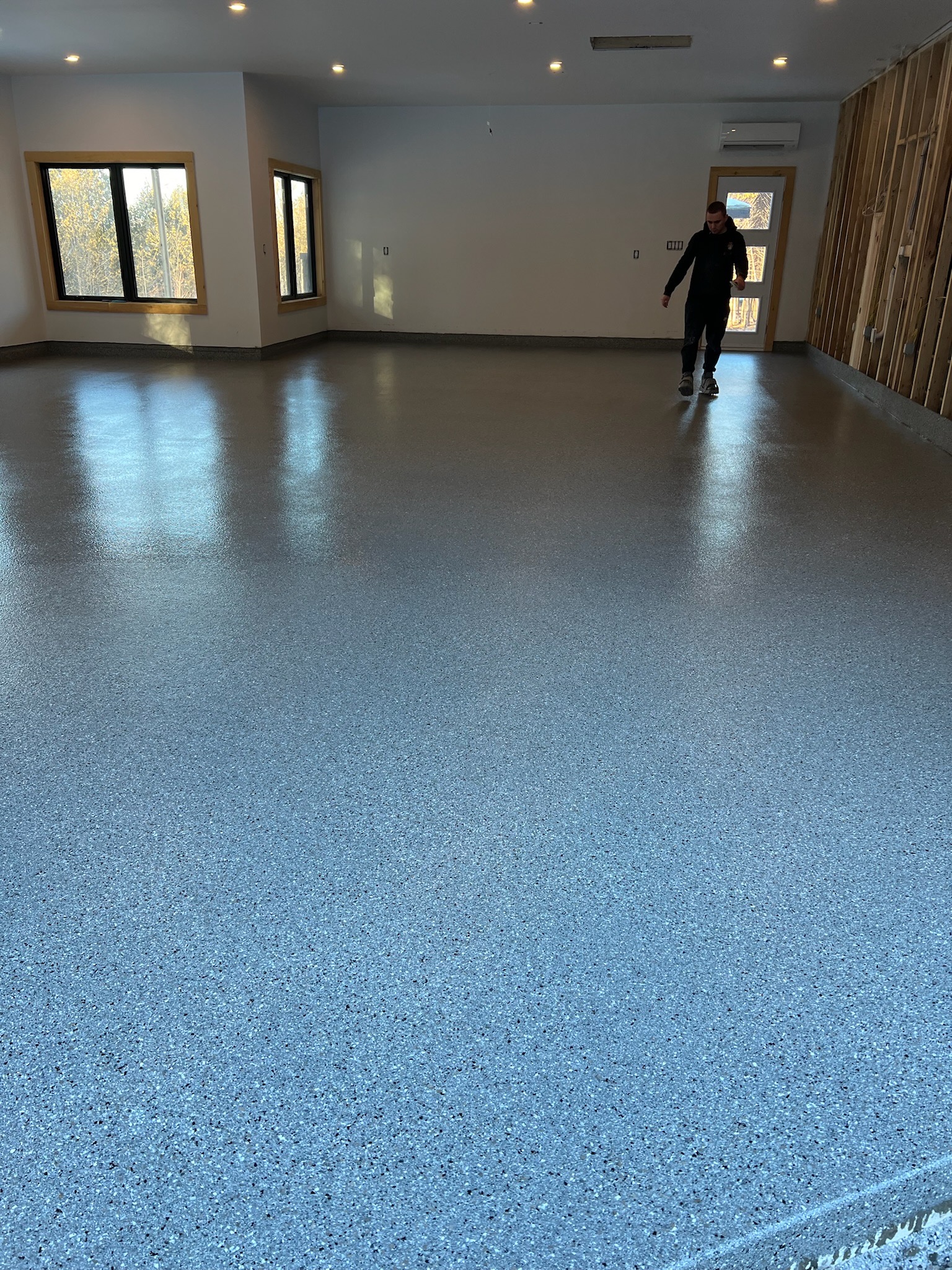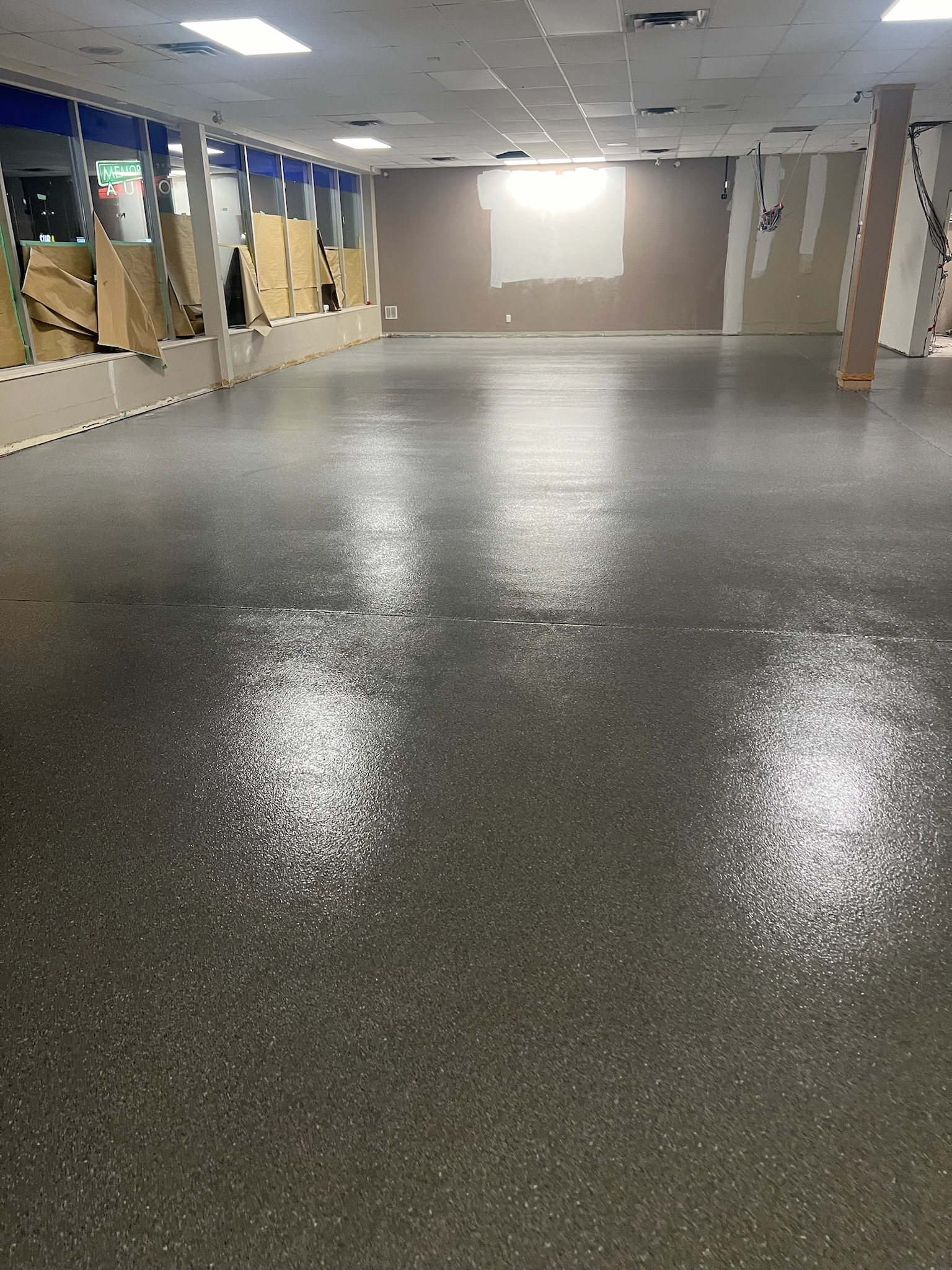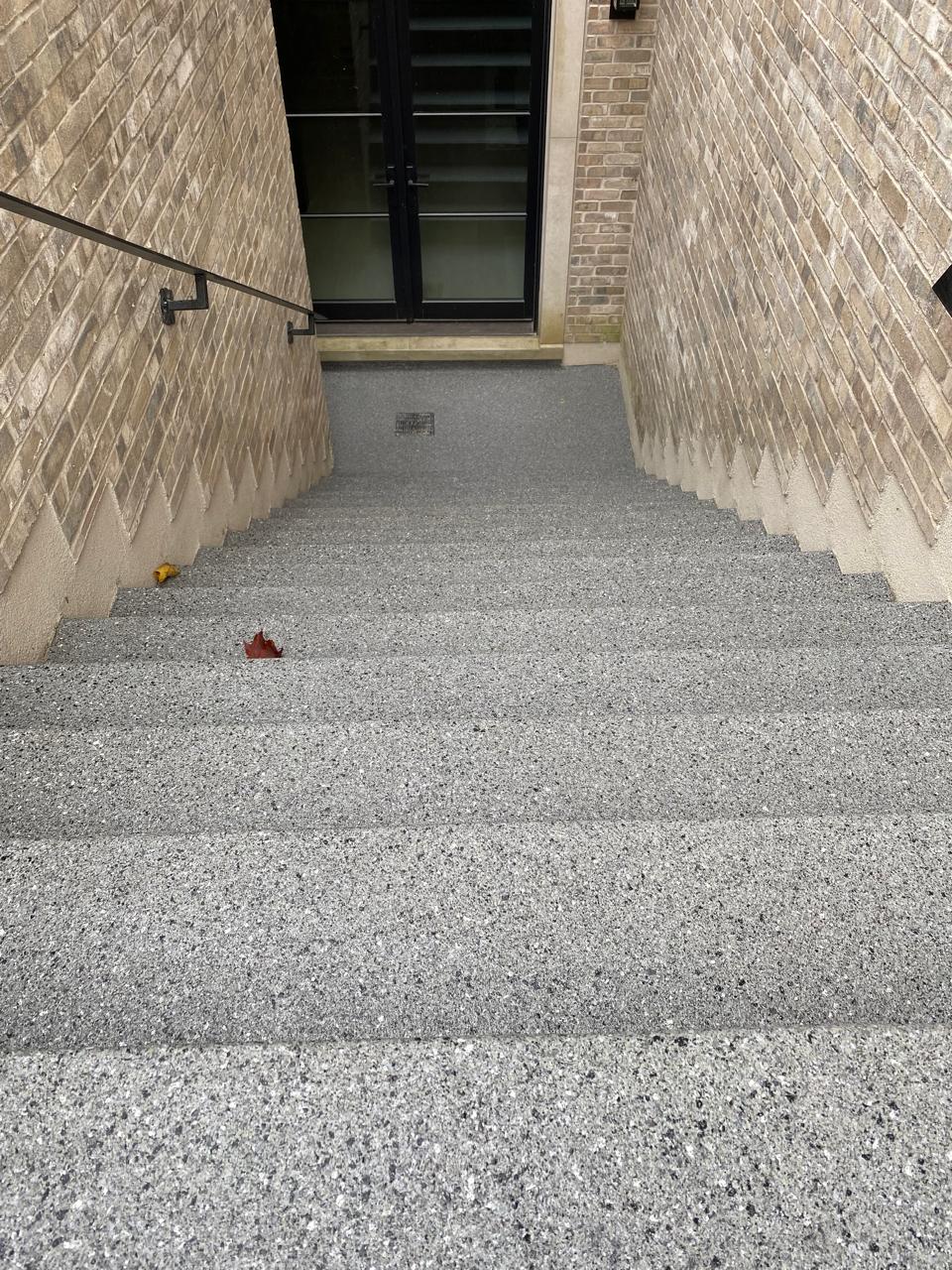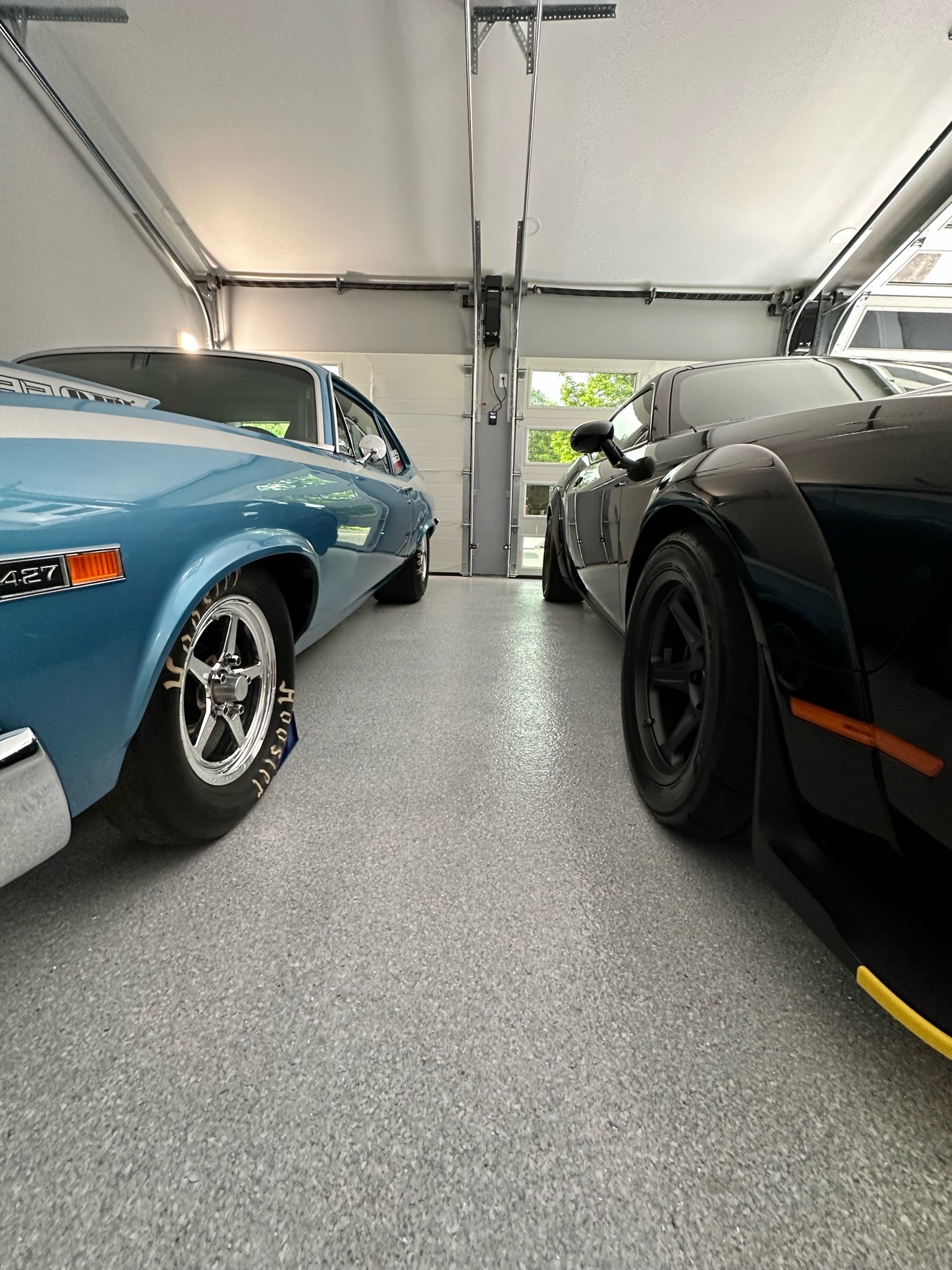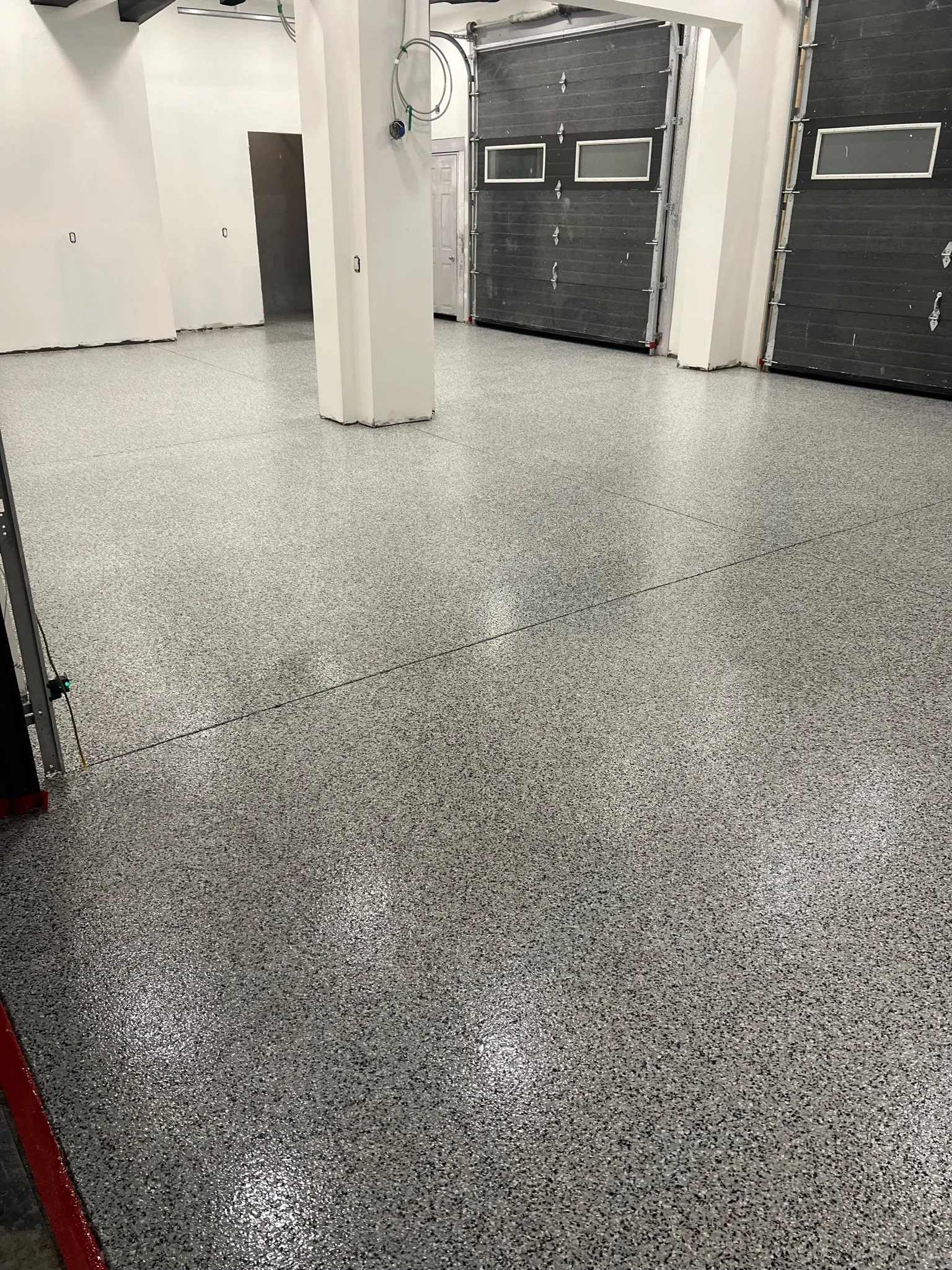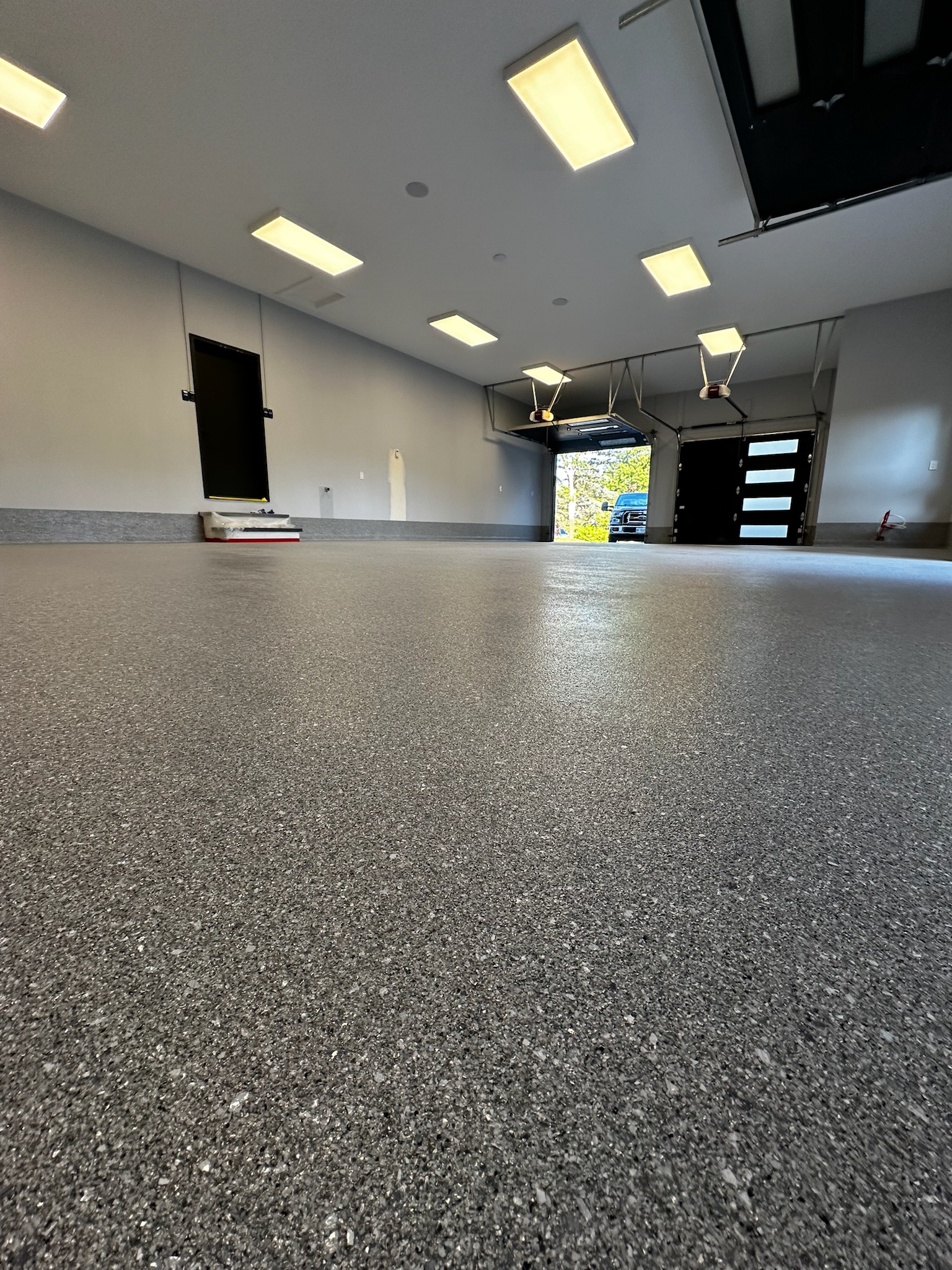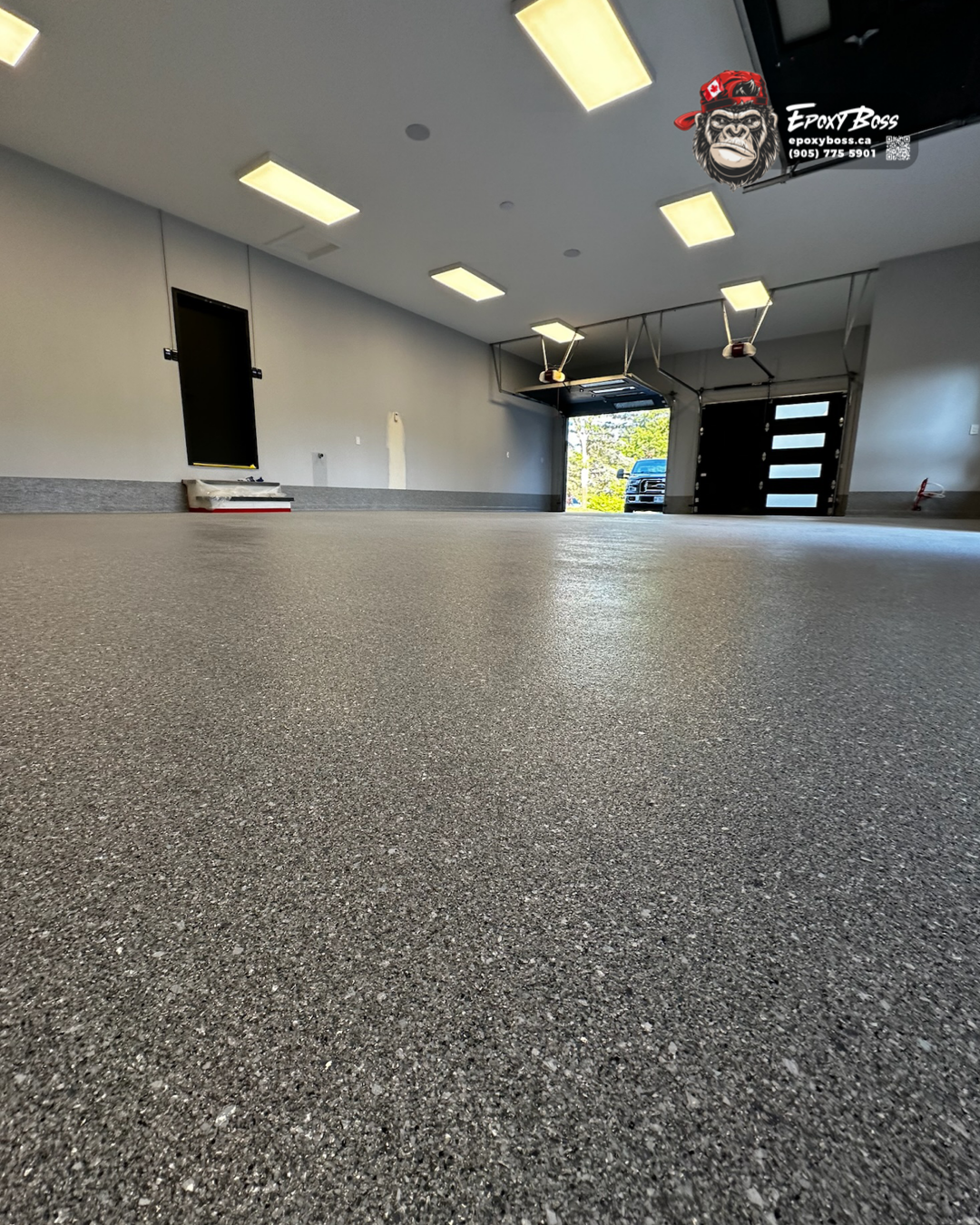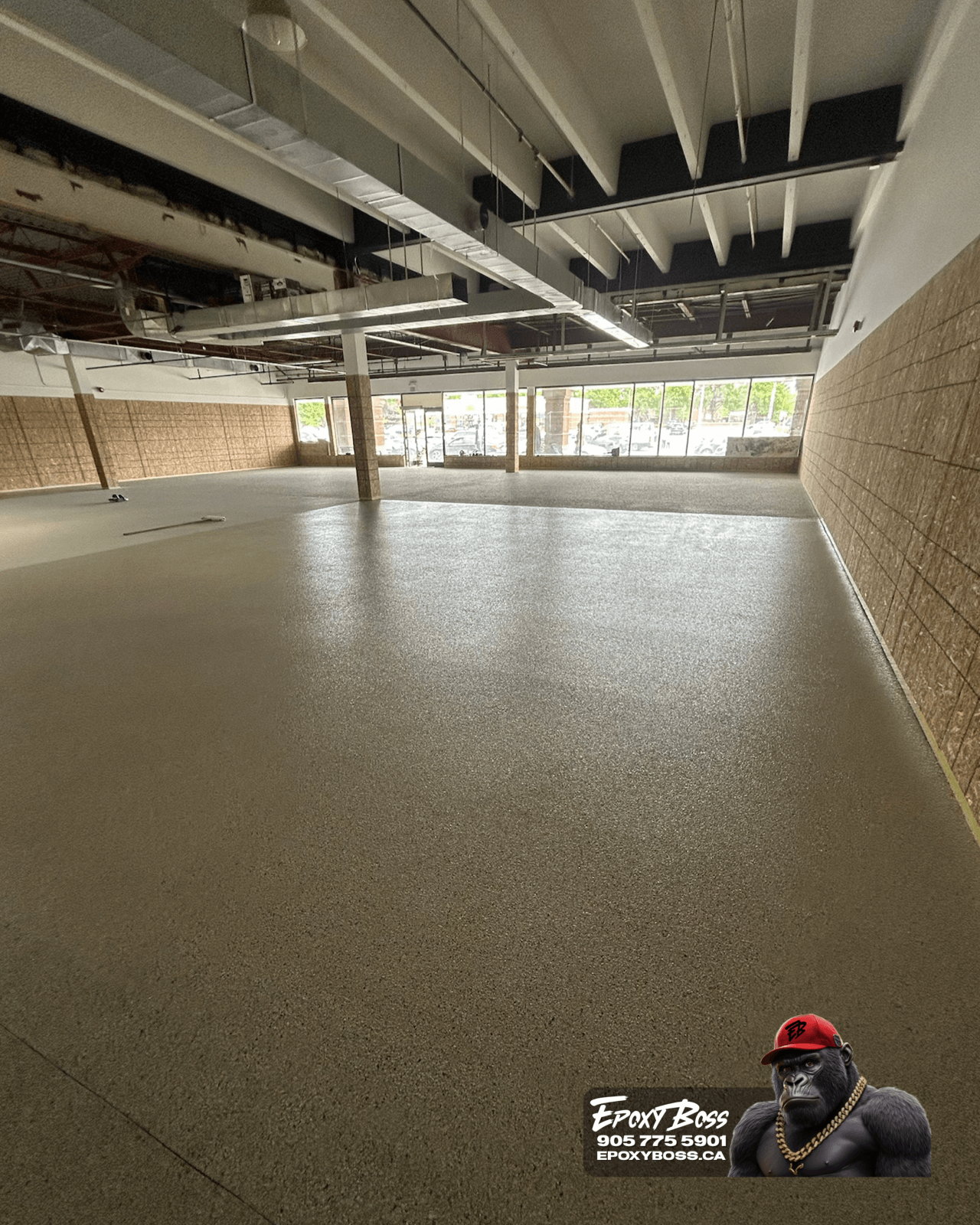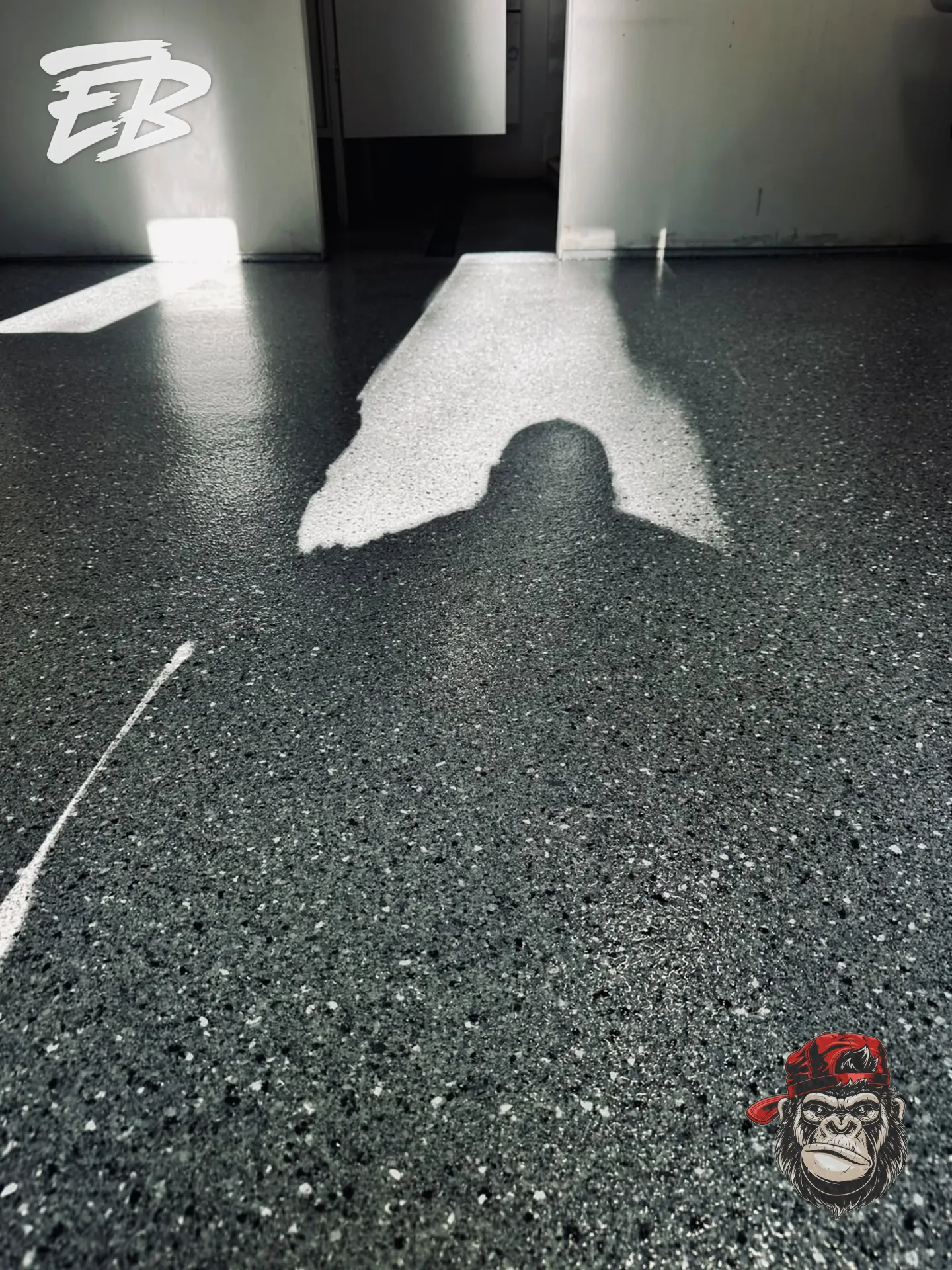

Epoxy, polyaspartic and polyurea are three different resin chemistries used in concrete floor coatings. Epoxy cures more slowly and bonds and builds well, so it is often the primer or base coat; polyaspartic is a slower, rollable member of the polyurea family that cures fast and resists UV, so it is often the topcoat; pure polyurea reacts in seconds and is usually spray-applied. In garage marketing the names overlap, so the useful question is what each layer in a quoted system actually is and what job it does.
This comparison explains each chemistry in plain language, where each one fits and how to read a quote that uses these terms.
The short version
- Epoxy: longer working time, strong adhesion to prepared concrete, builds thickness, many formulas amber in UV. Common as primer, base coat, broadcast binder, self-levelling and metallic layers.
- Polyaspartic: aliphatic, fast cure, good UV and colour stability, shorter working time than epoxy, rollable. Common as clear topcoat and in fast-cure systems.
- Polyurea (pure): extremely fast reaction, flexible and tough, typically spray-applied with plural-component equipment. Common in waterproofing, liners and some industrial uses more than in typical residential garage floors.
What is epoxy?
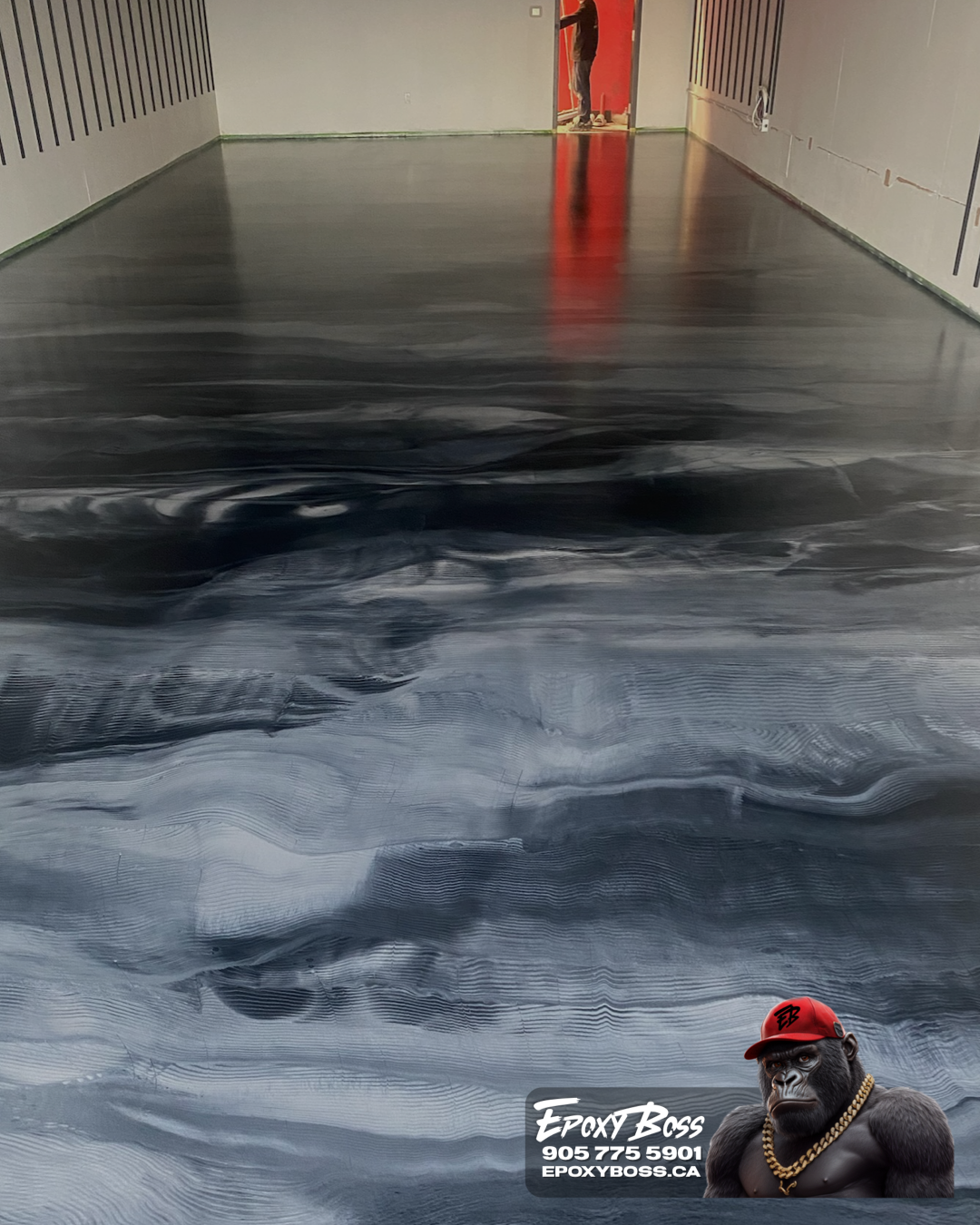
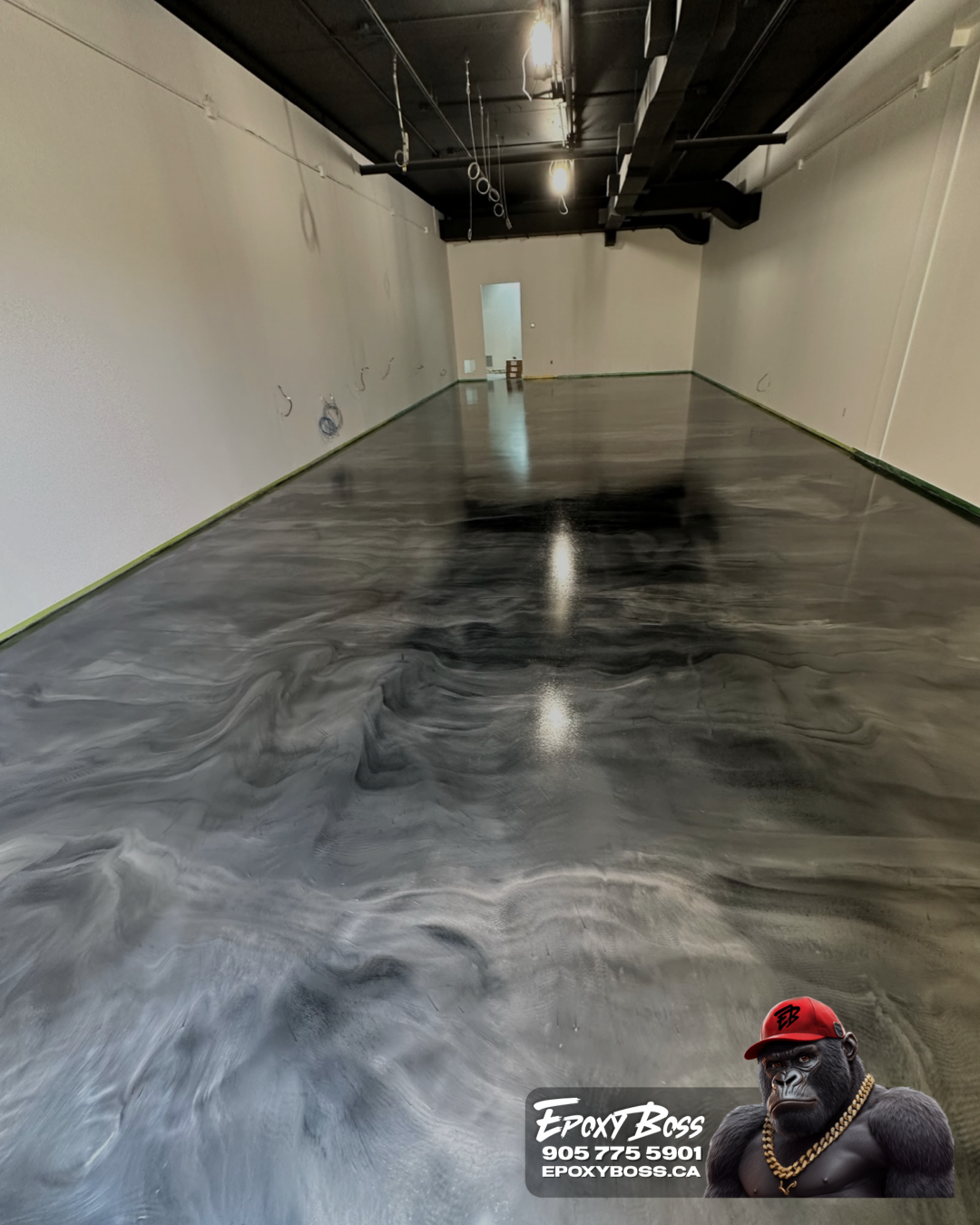
Epoxy floor coatings are made by mixing an epoxy resin with a hardener. The reaction is relatively slow, which gives installers time to spread, level and broadcast. That working time is what makes epoxy so useful for primers, body coats, self-levelling floors and metallic epoxy floors. The trade-off is UV: many epoxies amber or chalk in sunlight, so they are often top-coated with something else. See epoxy materials.
What is polyurea?
Polyurea forms when an isocyanate reacts with an amine. In pure form the reaction is so fast that the material is applied with heated, high-pressure spray equipment and can set in seconds. That speed and flexibility make it valuable for waterproofing membranes, tank and truck-bed linings and some protective coatings. On a typical garage floor, pure spray polyurea is less common than rollable products. See polyurea materials.
You will also see "polyurea" used loosely in the garage coating market to describe one-day floor systems. Often these are polyaspartic-based. Ask for the product data sheet if a quote uses the word.
What is polyaspartic?
Polyaspartic coatings use polyaspartic esters, a modified amine that slows the polyurea reaction enough to be mixed and rolled. They keep much of the speed of polyurea and are aliphatic, so they hold colour well in sunlight. That makes them a common clear topcoat over epoxy base coats, and the basis of some fast, all-in-one-day systems. Our polyaspartic floor coating guide covers them in depth, and the polyaspartic page has product notes.
Side-by-side comparison
Cure speed and working time
Epoxy is slowest and gives the most working time. Polyaspartic is fast with limited working time. Pure polyurea is fastest and generally needs spray equipment. Faster cure shortens the project but leaves less room for error during application.
UV and colour stability
Aliphatic polyaspartics and aliphatic polyureas hold colour better than most epoxies under sunlight. Coating makers commonly compare this with accelerated UV exposure such as ASTM G154. Aromatic polyureas, like many epoxies, can discolour.
Adhesion and build
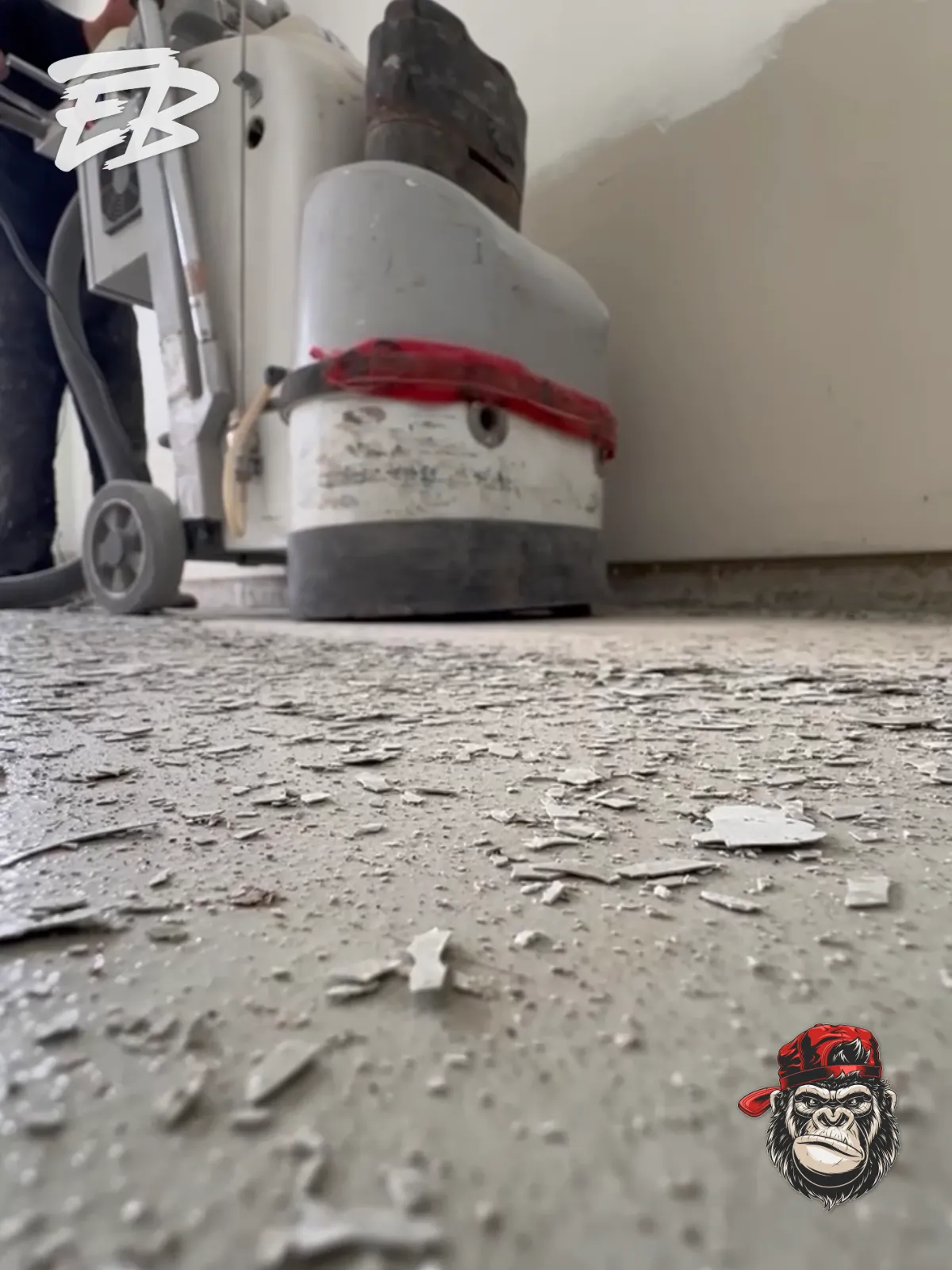
Epoxy is valued for adhesion to properly ground concrete and for building thickness. Polyaspartics are usually applied thinner. All three depend on proper concrete surface preparation, usually diamond grinding.
Flexibility
Polyureas are typically more flexible than epoxies, which matters for membranes and substrates that move. No coating should be expected to bridge a moving structural crack without the right joint or crack detail.
Temperature range
Polyaspartics and polyureas can generally be applied in cooler conditions than many epoxies, which helps in Ontario shoulder seasons. Each product still has stated limits for air, slab and dew point.
Moisture sensitivity
Fast-reacting chemistries can be more sensitive to slab moisture and humidity during application. Moisture assessment and, where needed, a suitable primer protect the system.
Which chemistry fits which floor?
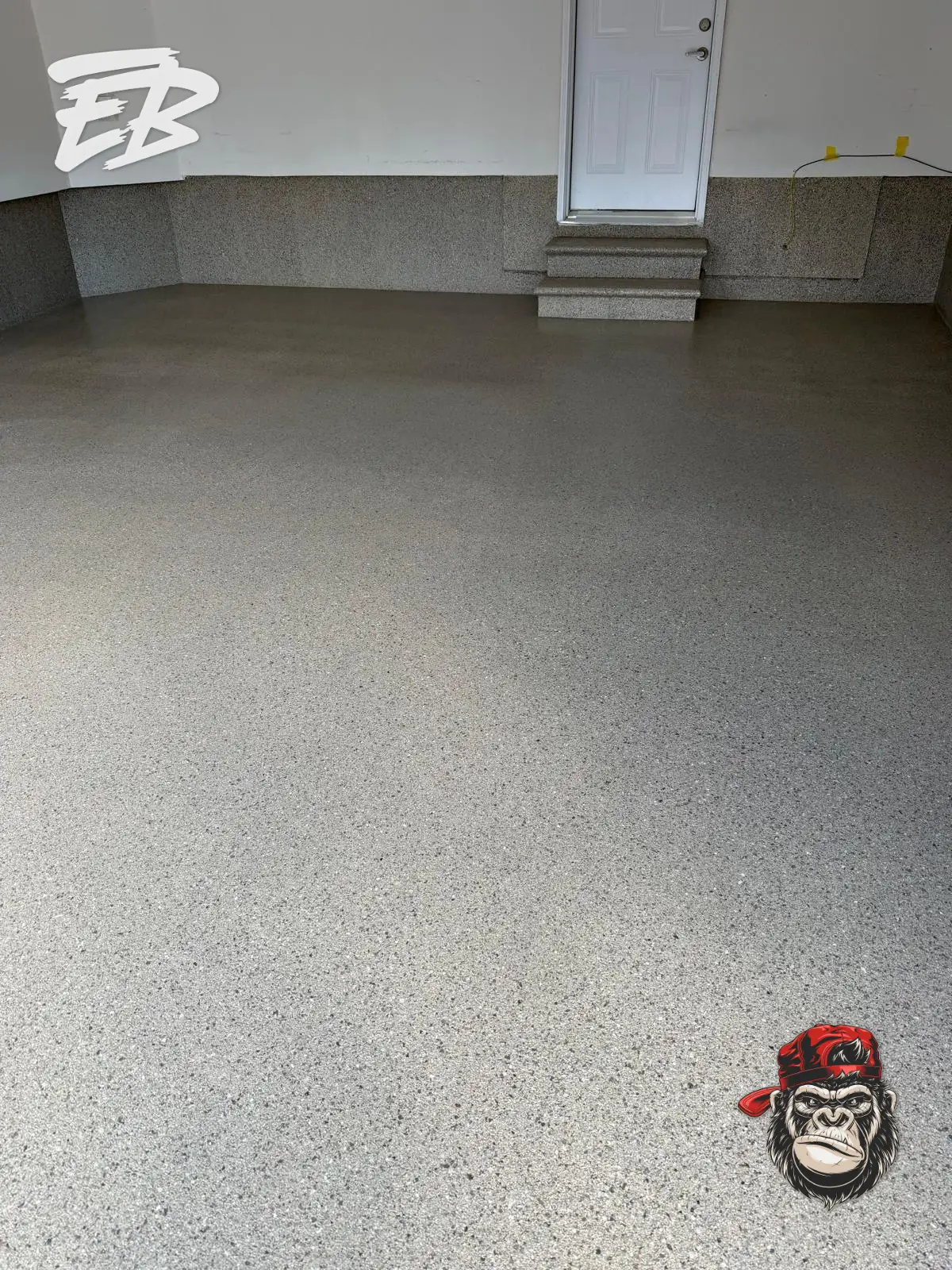
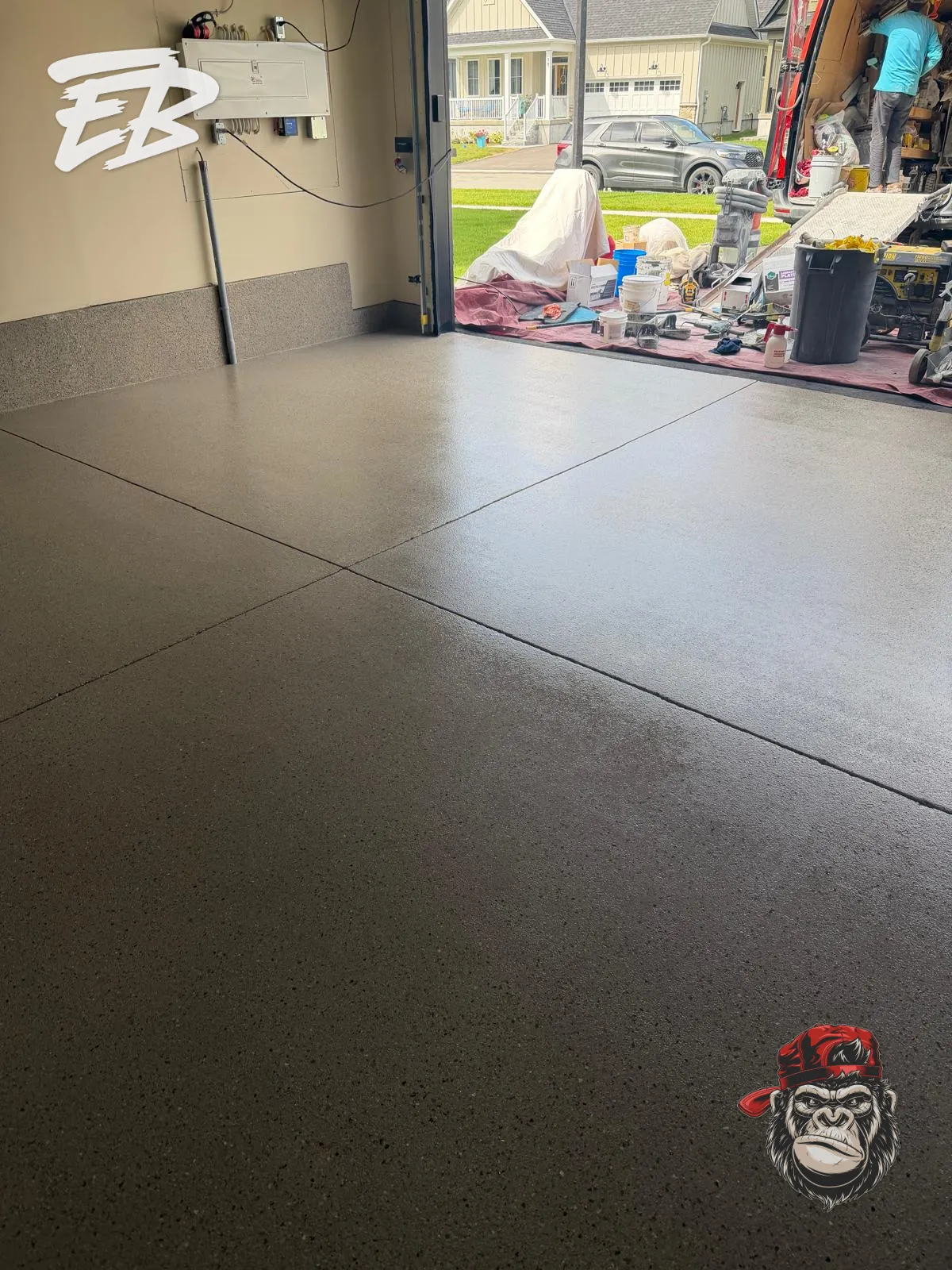
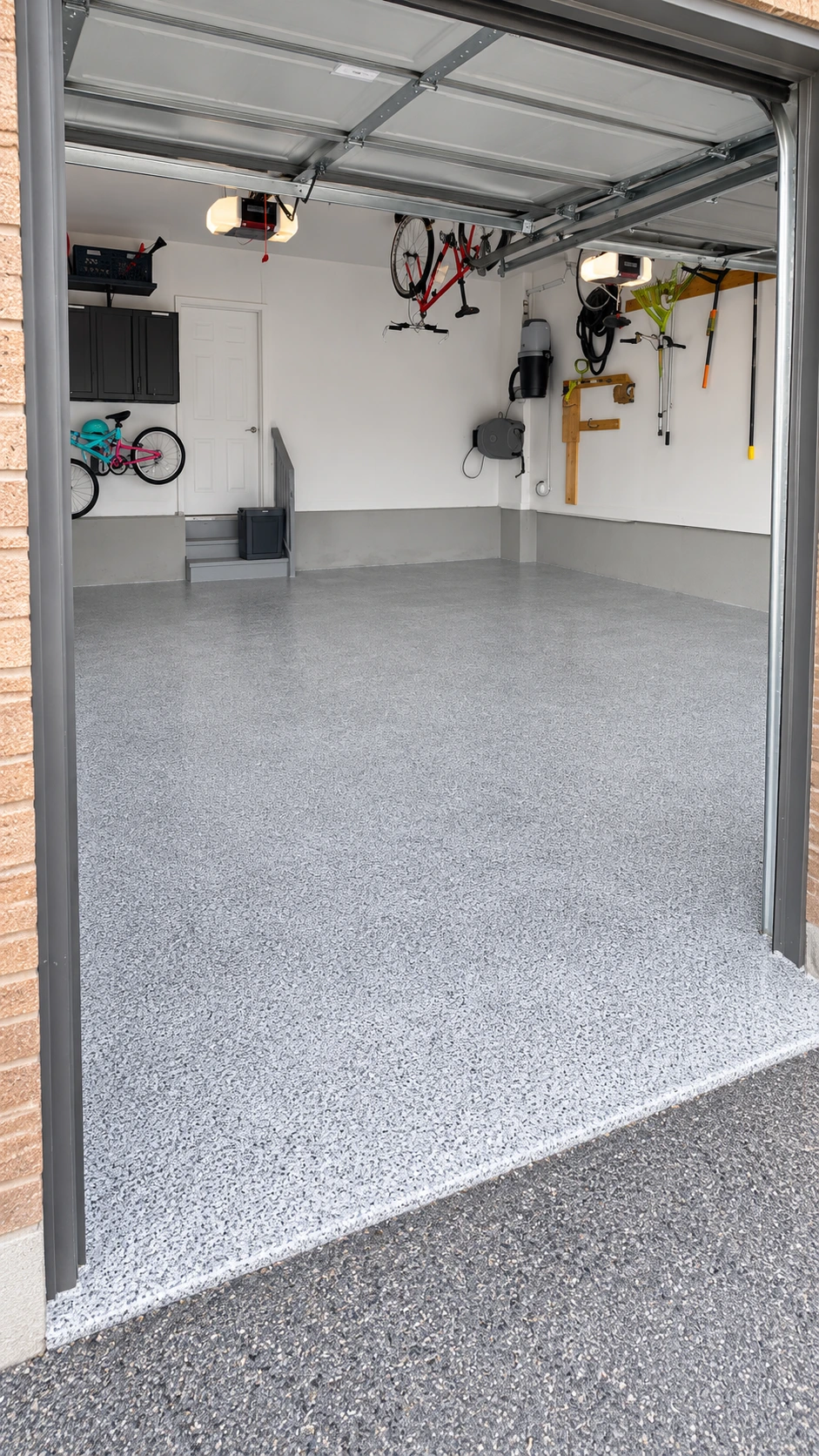
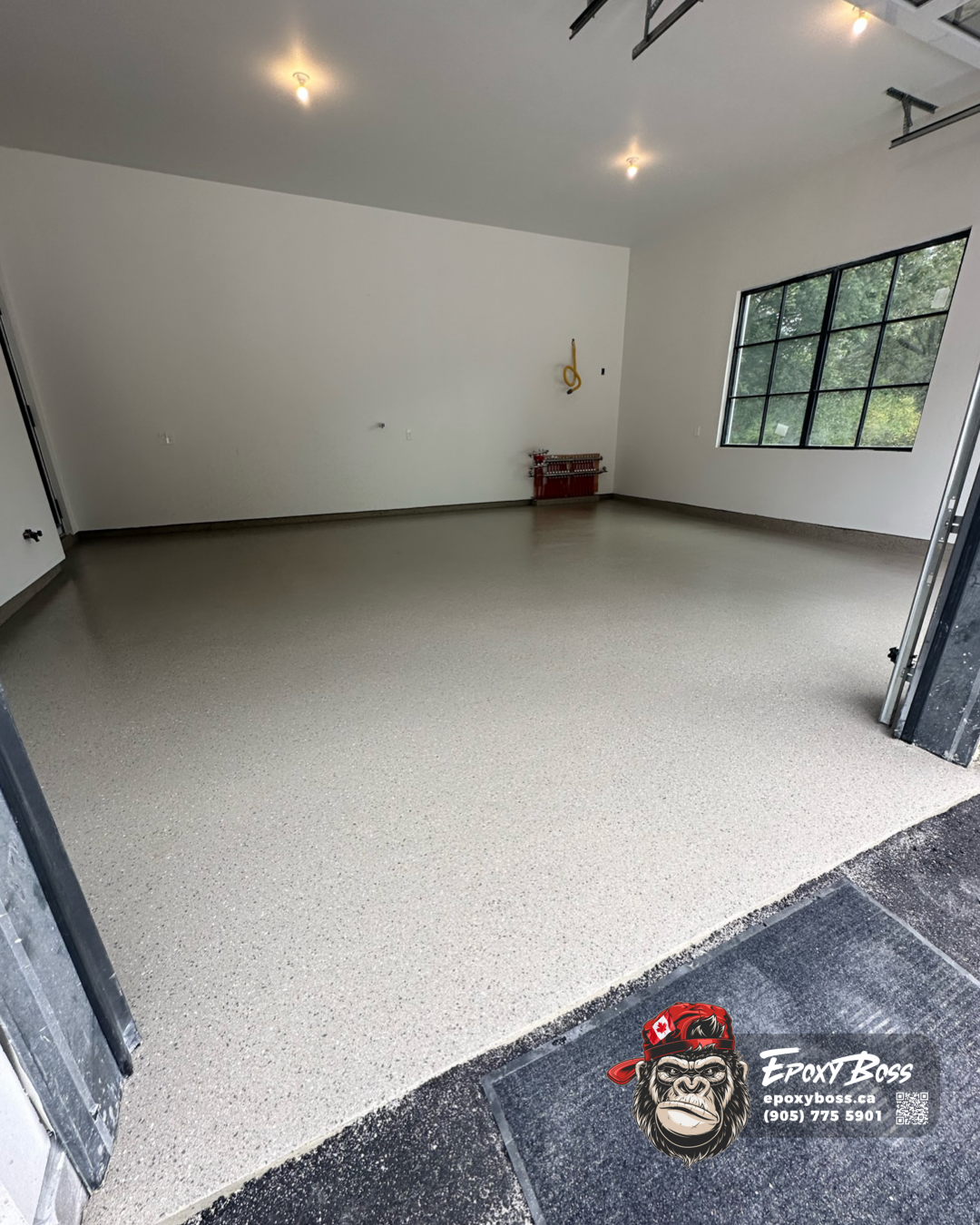
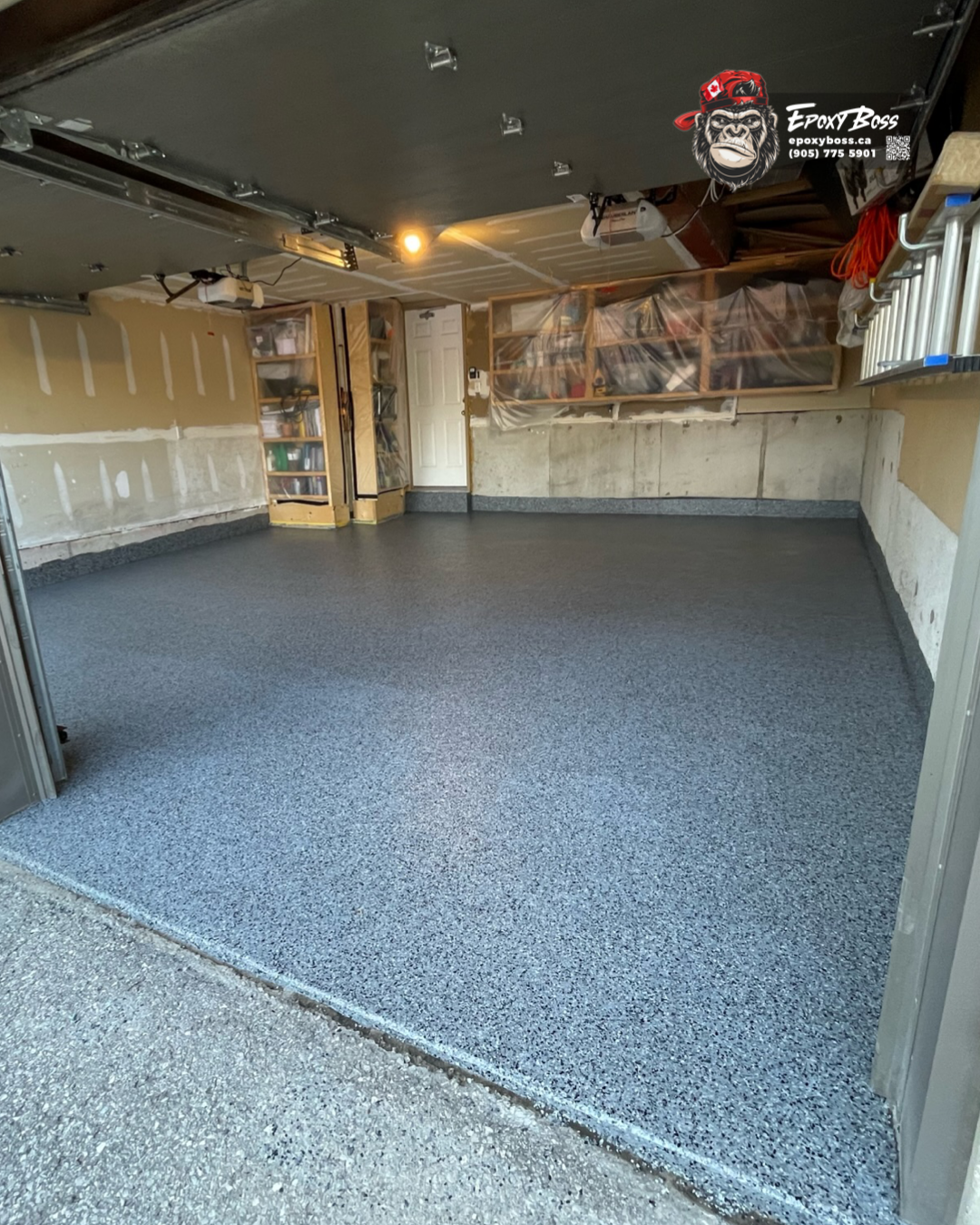
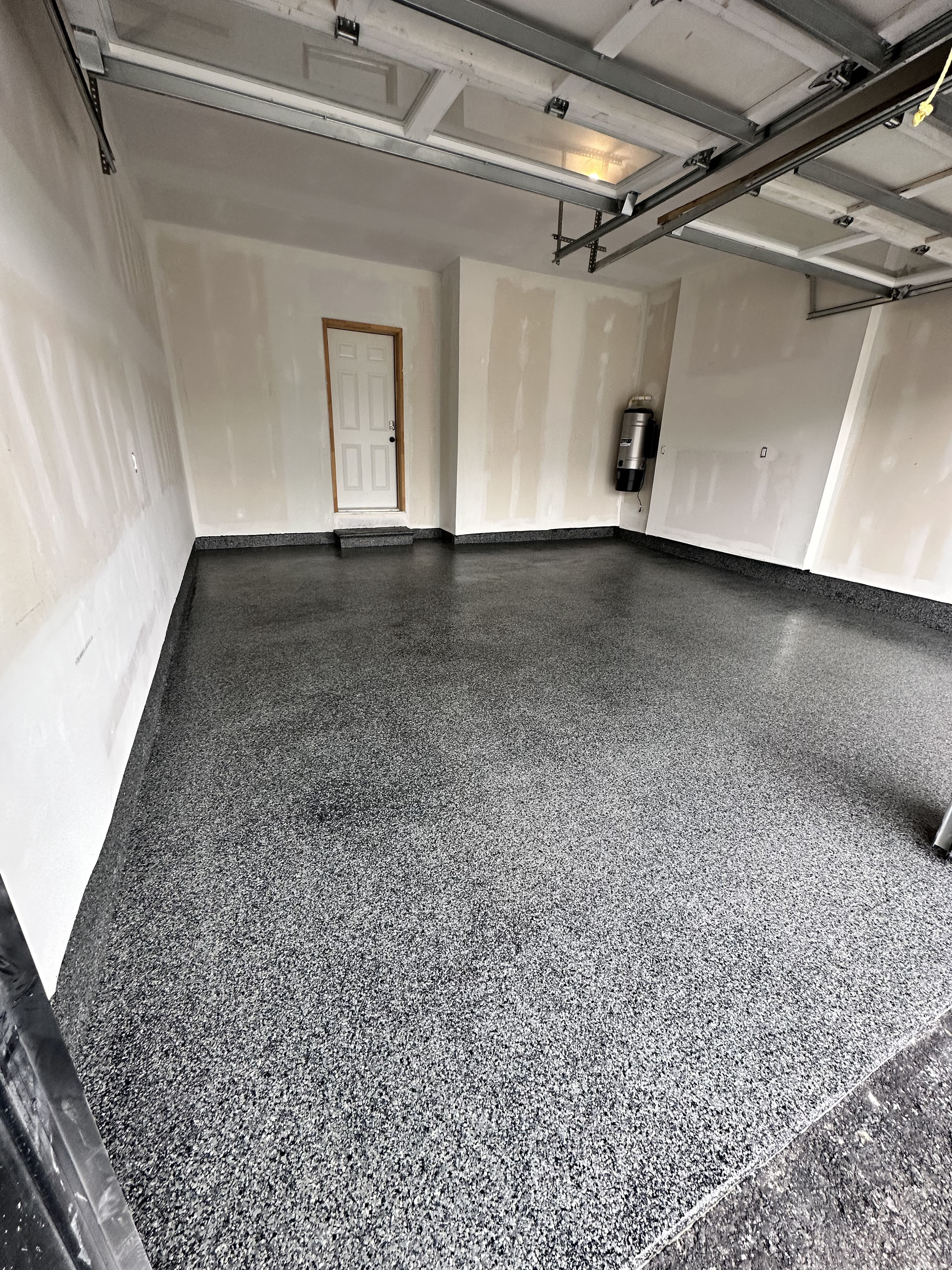
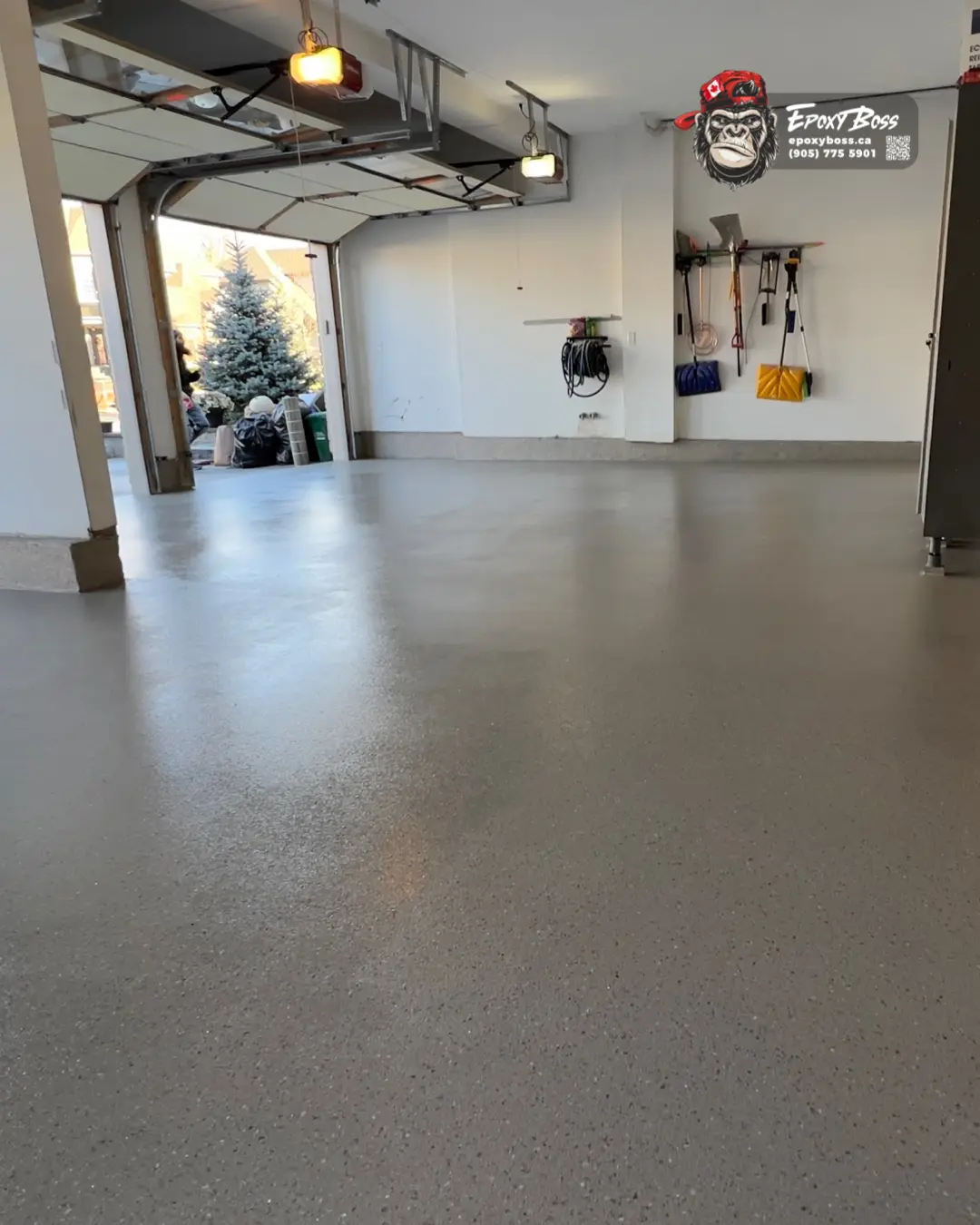
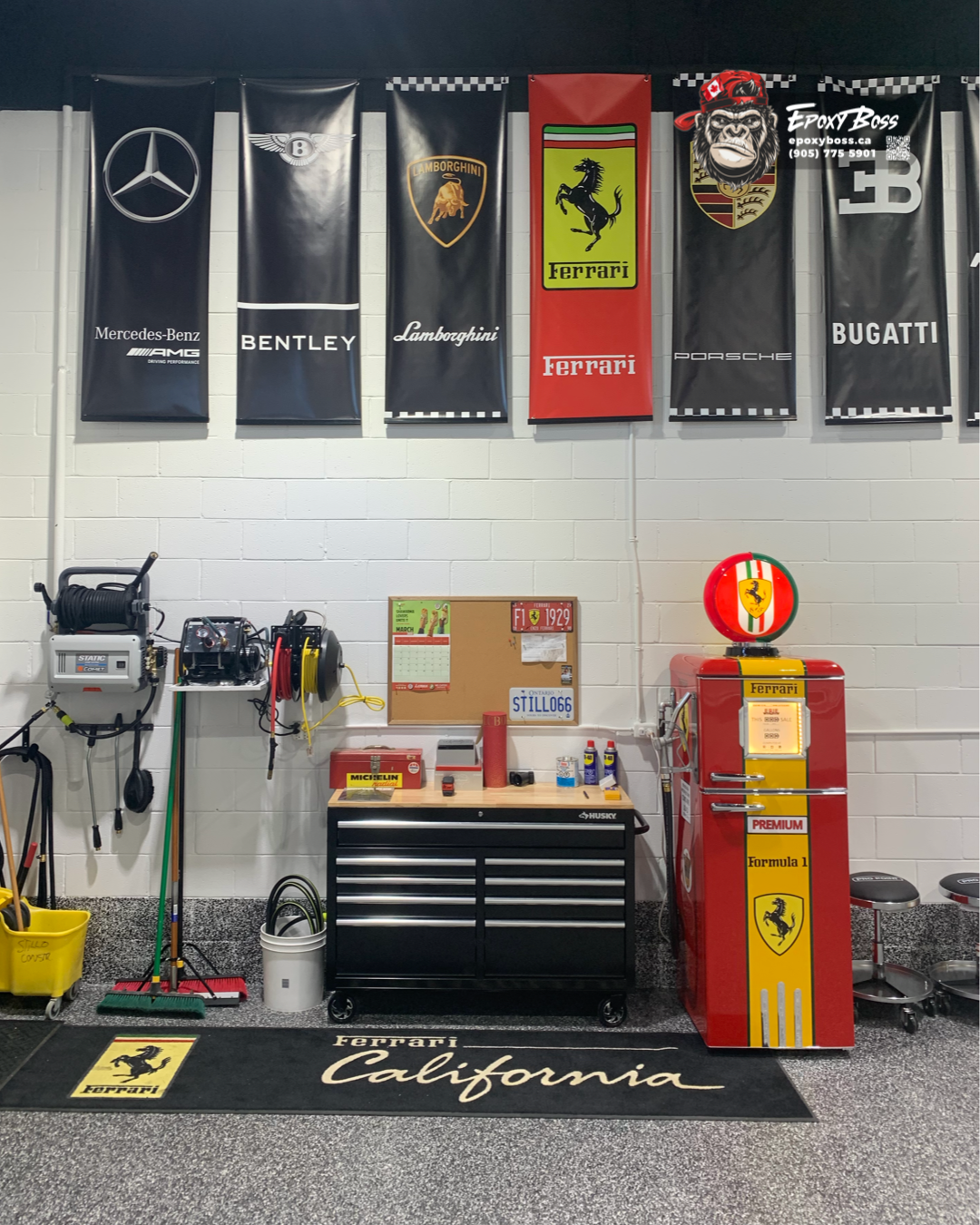
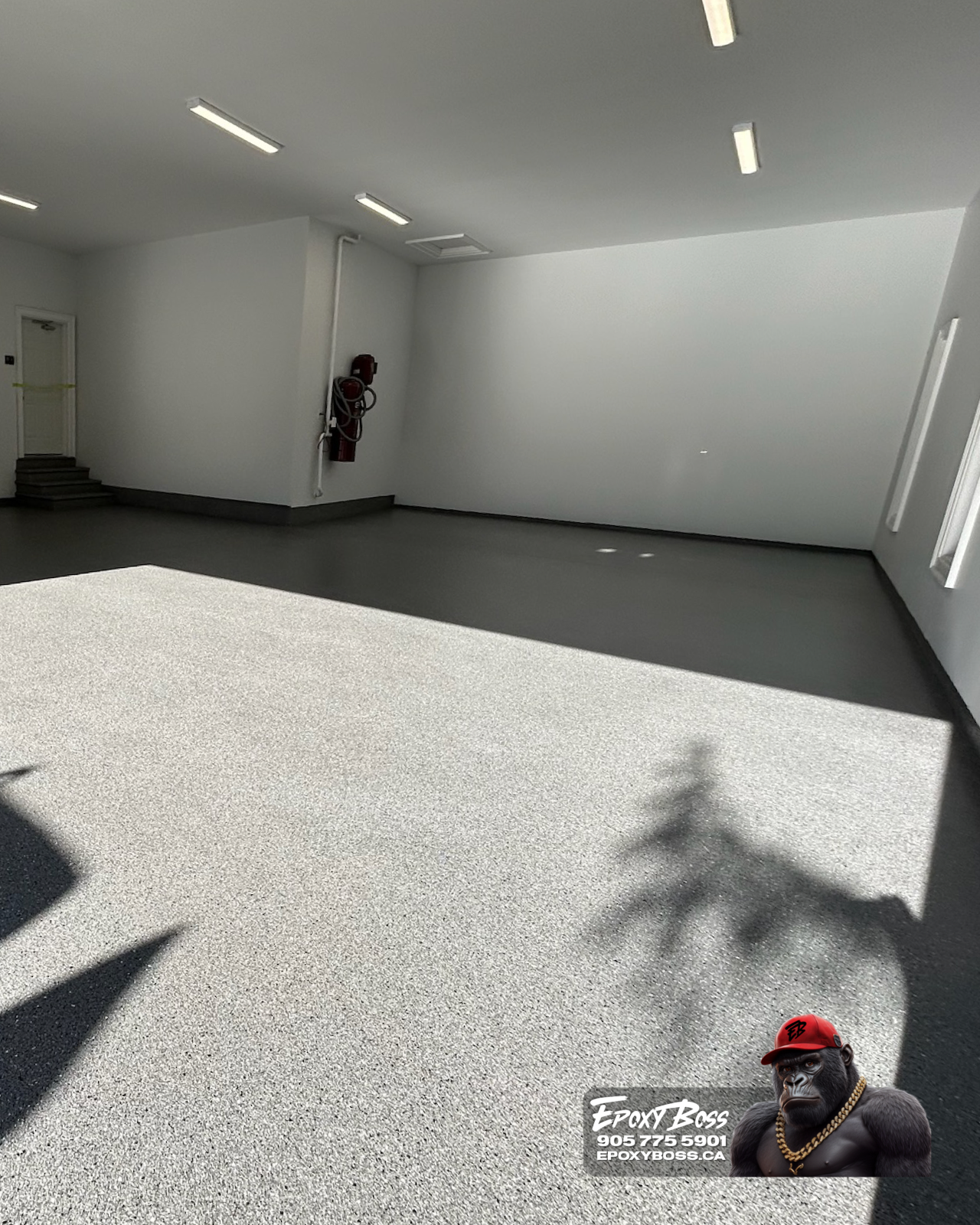
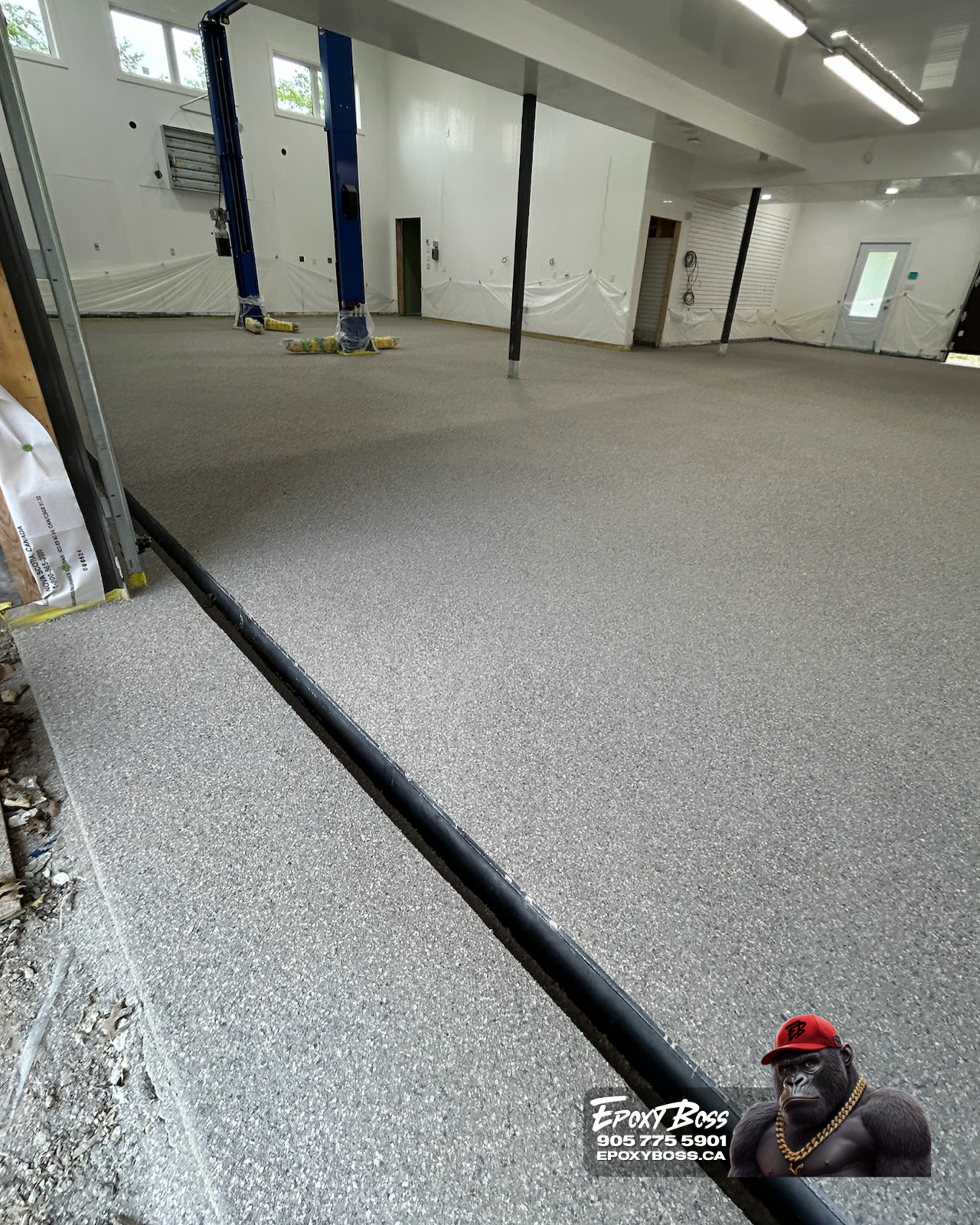
- Residential garage: commonly an epoxy base with flake and a polyaspartic topcoat, or a polyaspartic-based system where speed matters. Sunlight through the door is the main reason the top layer is usually aliphatic.
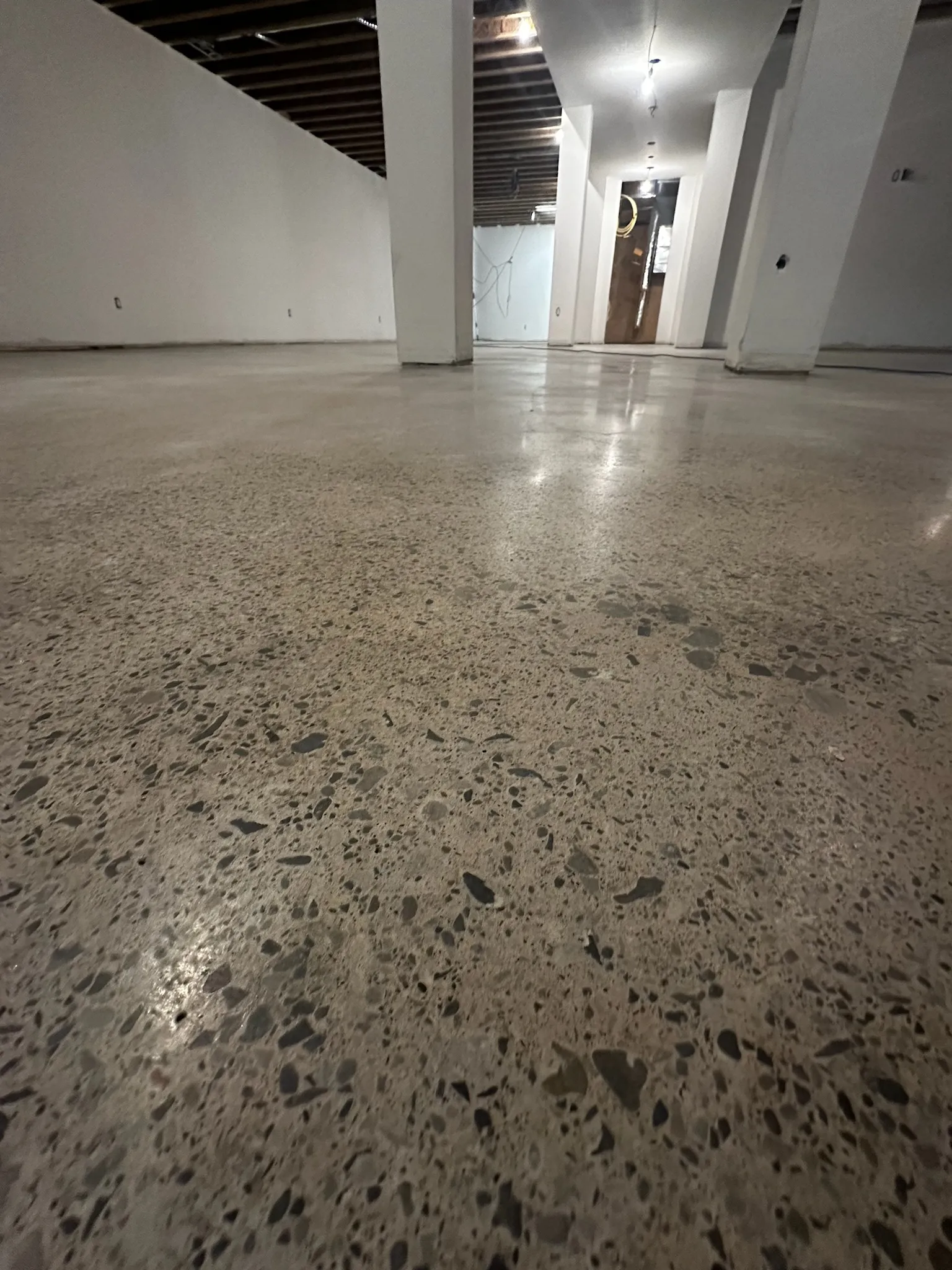
- Finished basement: epoxy is often the main material, because UV exposure is low and working time helps with solid colour and metallic finishes. Moisture testing comes first.
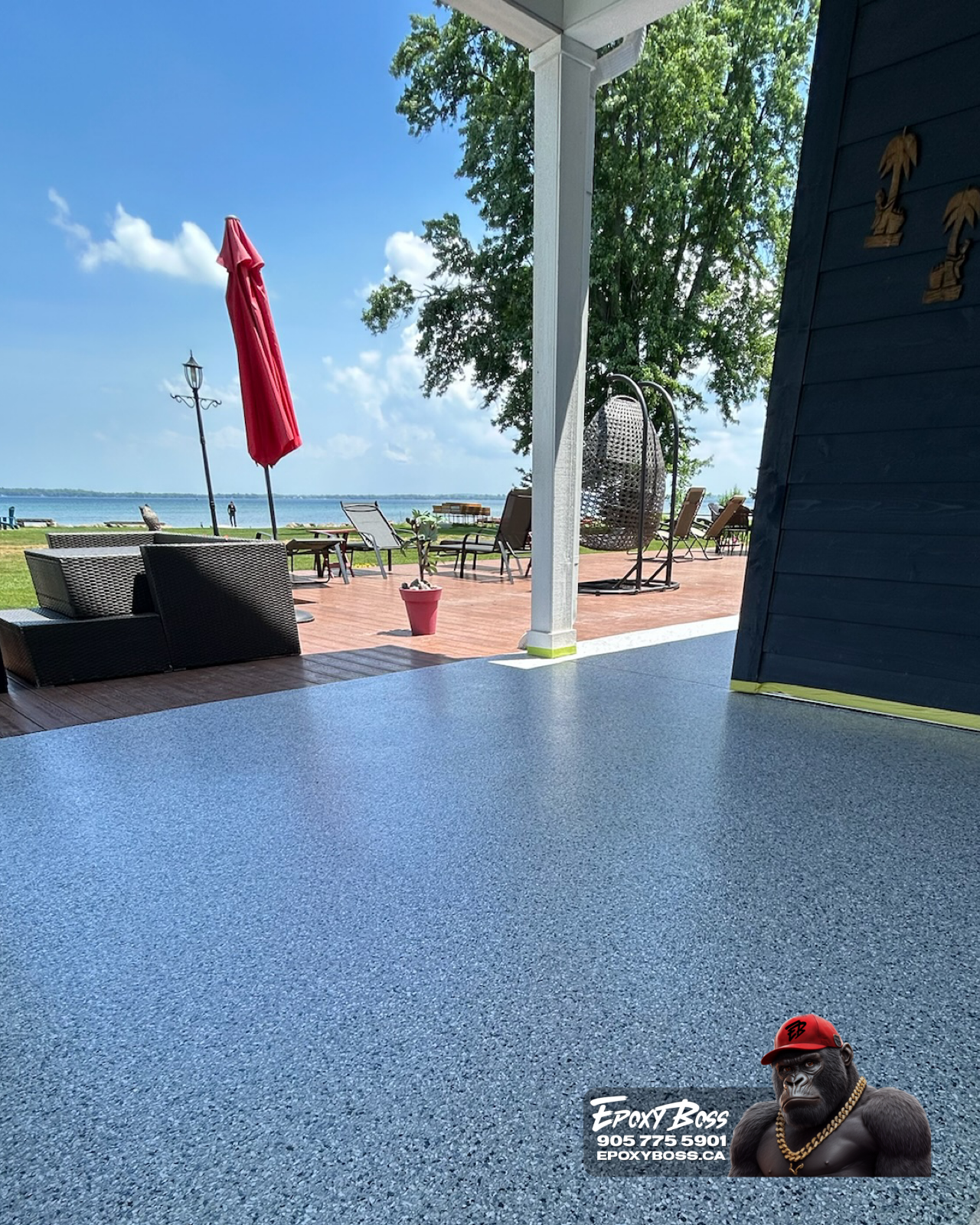
- Porch, patio or exterior entry: UV-stable chemistries such as polyaspartic are generally preferred over standard epoxy.
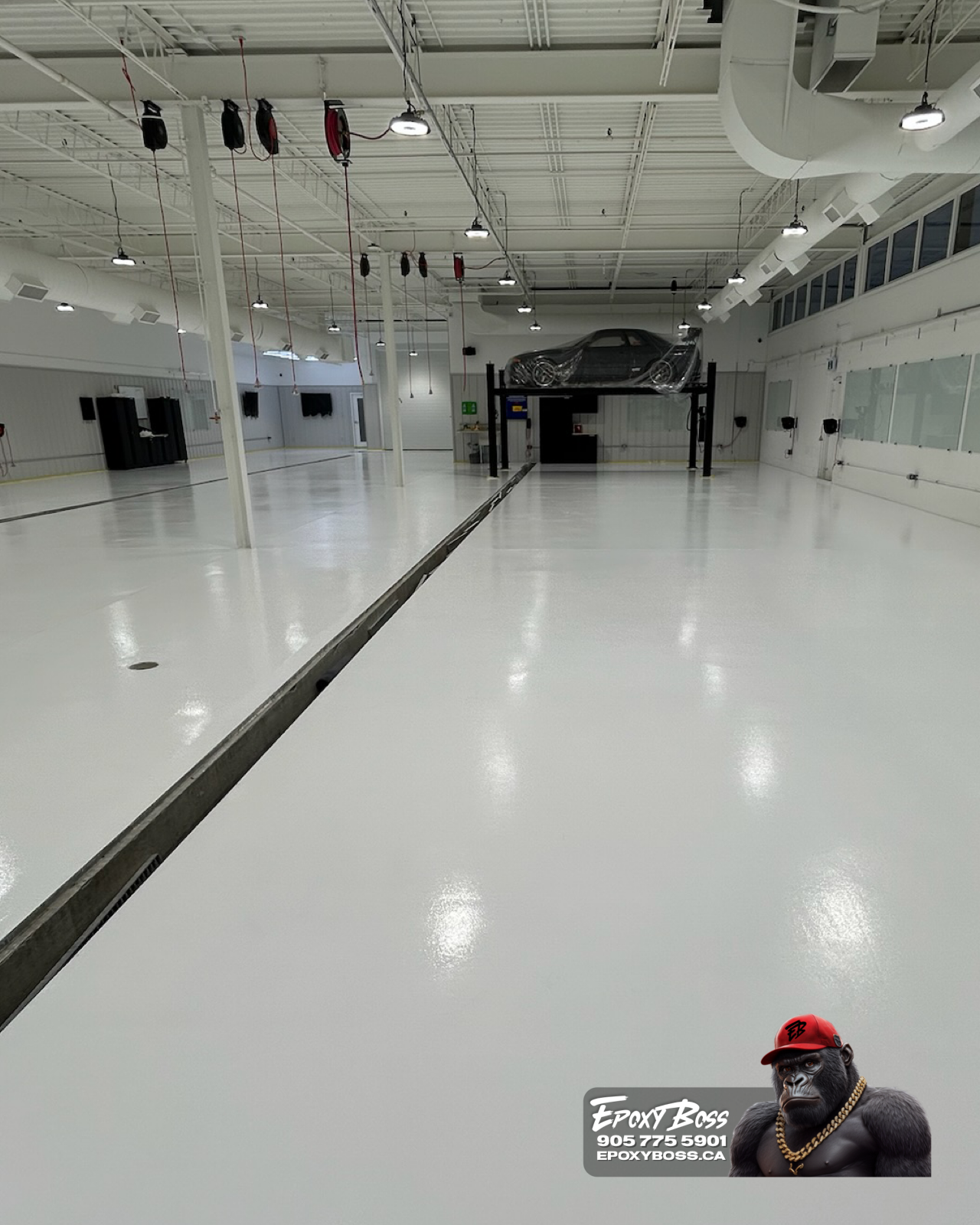
- Commercial interior that must reopen quickly: fast-cure systems based on polyaspartic or similar chemistries, or MMA in some settings.
- Waterproofing membranes and liners: spray polyurea and other membrane systems, which are a different category from decorative floor coatings. See waterproofing and traffic systems.
- Food plants and harsh industrial areas: often urethane cement rather than any of the three.
How they work together in a garage floor
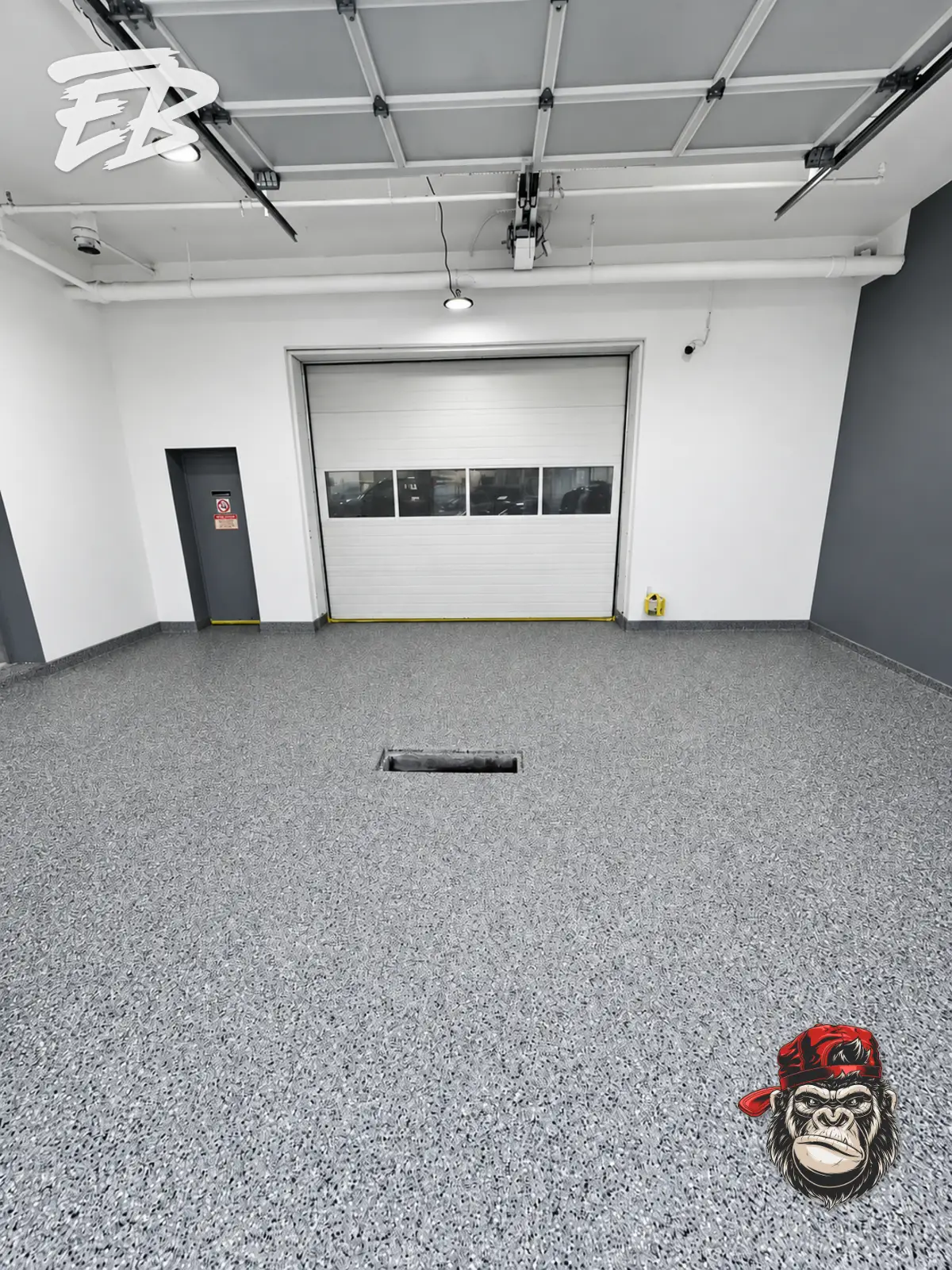
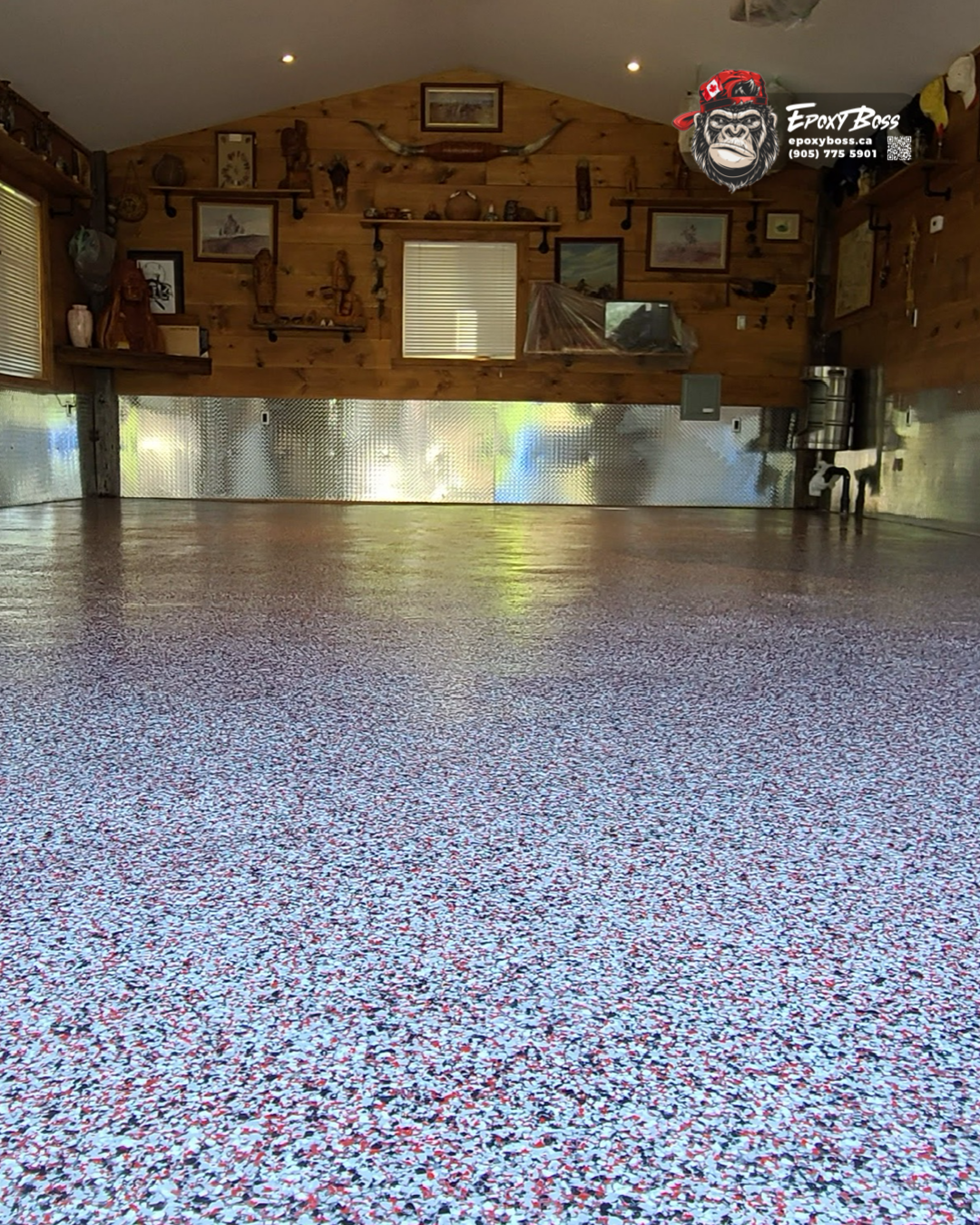
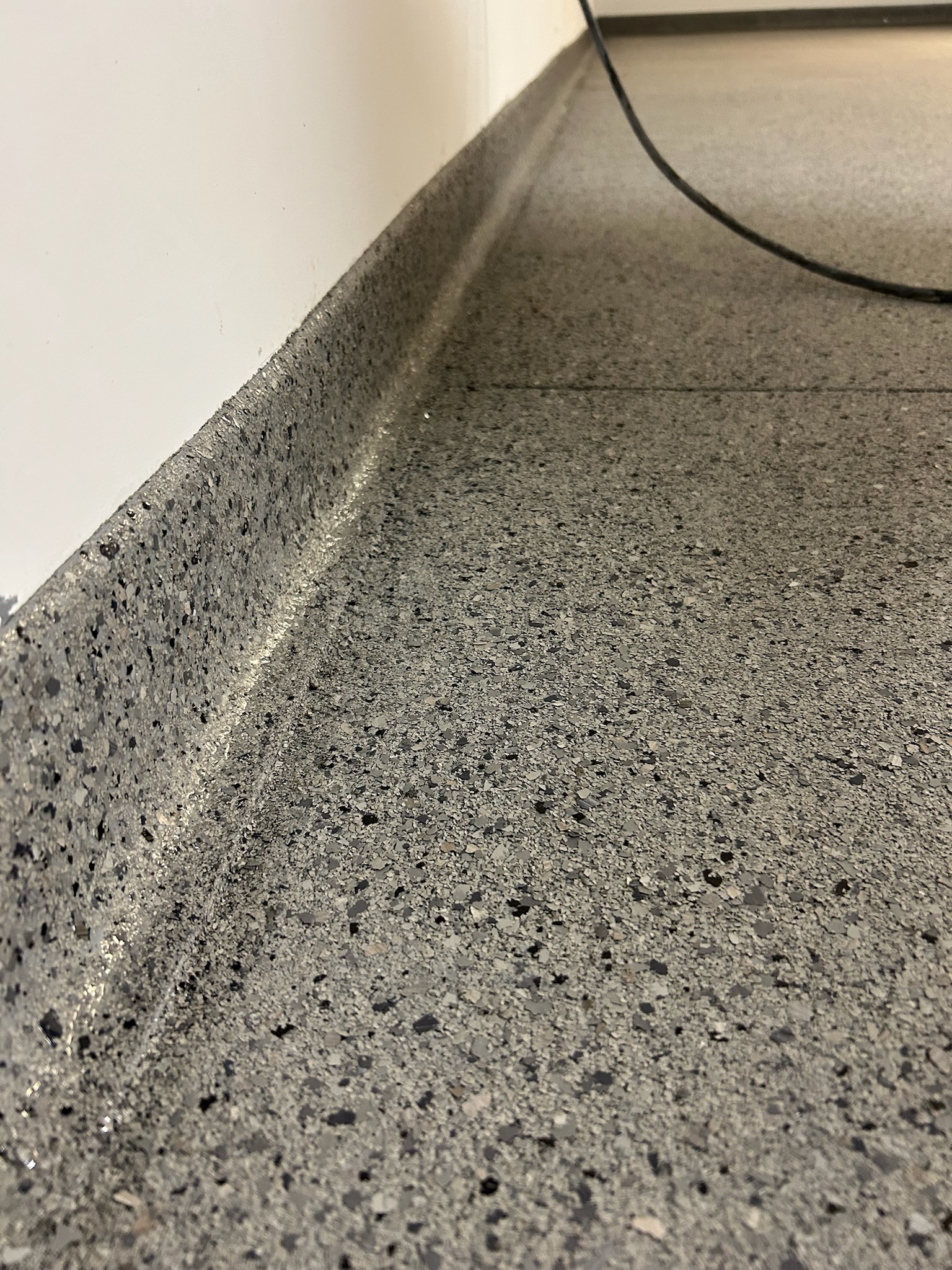
Most professional garage floors are hybrids. A common build is an epoxy base coat, decorative flake broadcast to full coverage and a polyaspartic clear topcoat. Flake makers design products for this; the Torginol flake data sheet lists compatibility with epoxies, polyaspartics, polyureas and polyurethanes. See full-broadcast flake garage floors explained and our epoxy vs polyaspartic garage comparison.
Where urethanes fit
Aliphatic polyurethane topcoats are another common choice for the wearing layer, especially on commercial and decorative floors. They are compared in aliphatic urethane and polyurethane topcoats explained. For the wider definitions of resin flooring, see epoxy vs resin flooring.
Reading a quote that uses these words
- Ask what each layer is: primer, base, broadcast, topcoat.
- Ask for product data sheets for any branded or trademarked product name.
- Ask how the slab will be prepared and to what profile.
- Ask about temperature and humidity limits if work is planned for cold months.
- Ask about return-to-service times for foot and vehicle traffic.
A quote that names only one chemistry for the whole floor is not necessarily wrong, but it should explain why that product suits your slab, your season and your use.
Frequently asked questions
Is polyurea better than epoxy for a garage floor?
Pure spray polyurea is uncommon on residential garage floors. What many people call a "polyurea garage floor" is often a polyaspartic system. Whether it suits your floor depends on the slab, the season and the full system, not the label alone.
Is polyaspartic a type of polyurea?
Yes. It is a modified polyurea designed to react more slowly so it can be rolled.
Which lasts longest?
Longevity depends far more on preparation, system design, film thickness and use than on chemistry name. A well-prepared hybrid system is a common professional choice.
Can you put polyaspartic over epoxy?
Yes, when the products are compatible and applied within the recoat window, this is a very common combination.
Book a free floor assessment
Epoxy Boss is based in Innisfil, has worked since 2019 and designs concrete coating systems across the GTA, York Region, Simcoe County, Halton, Durham and Muskoka. Call (905) 775-5901 or request a free floor assessment, and we'll explain each layer in plain language with a written quote in Canadian dollars.