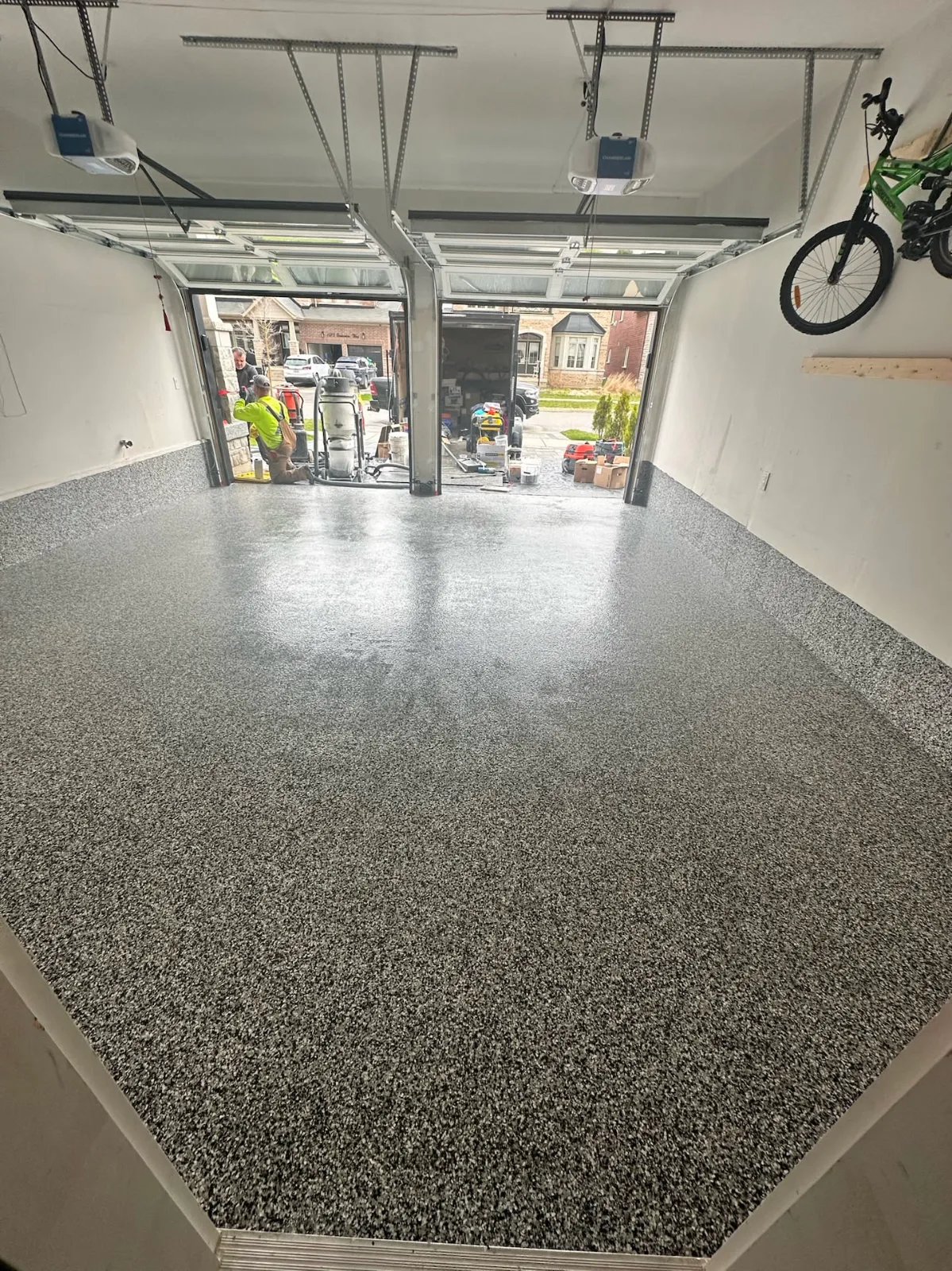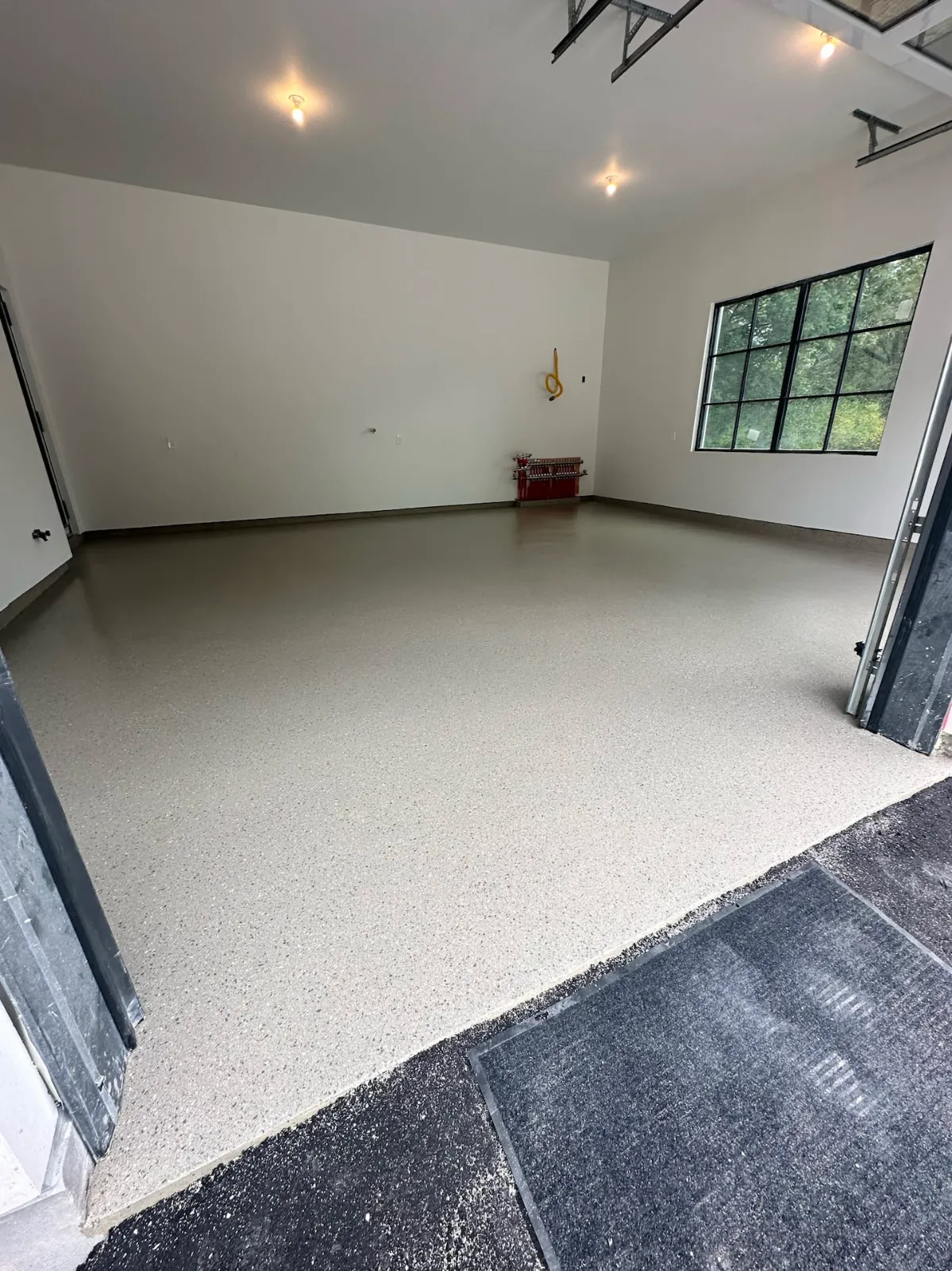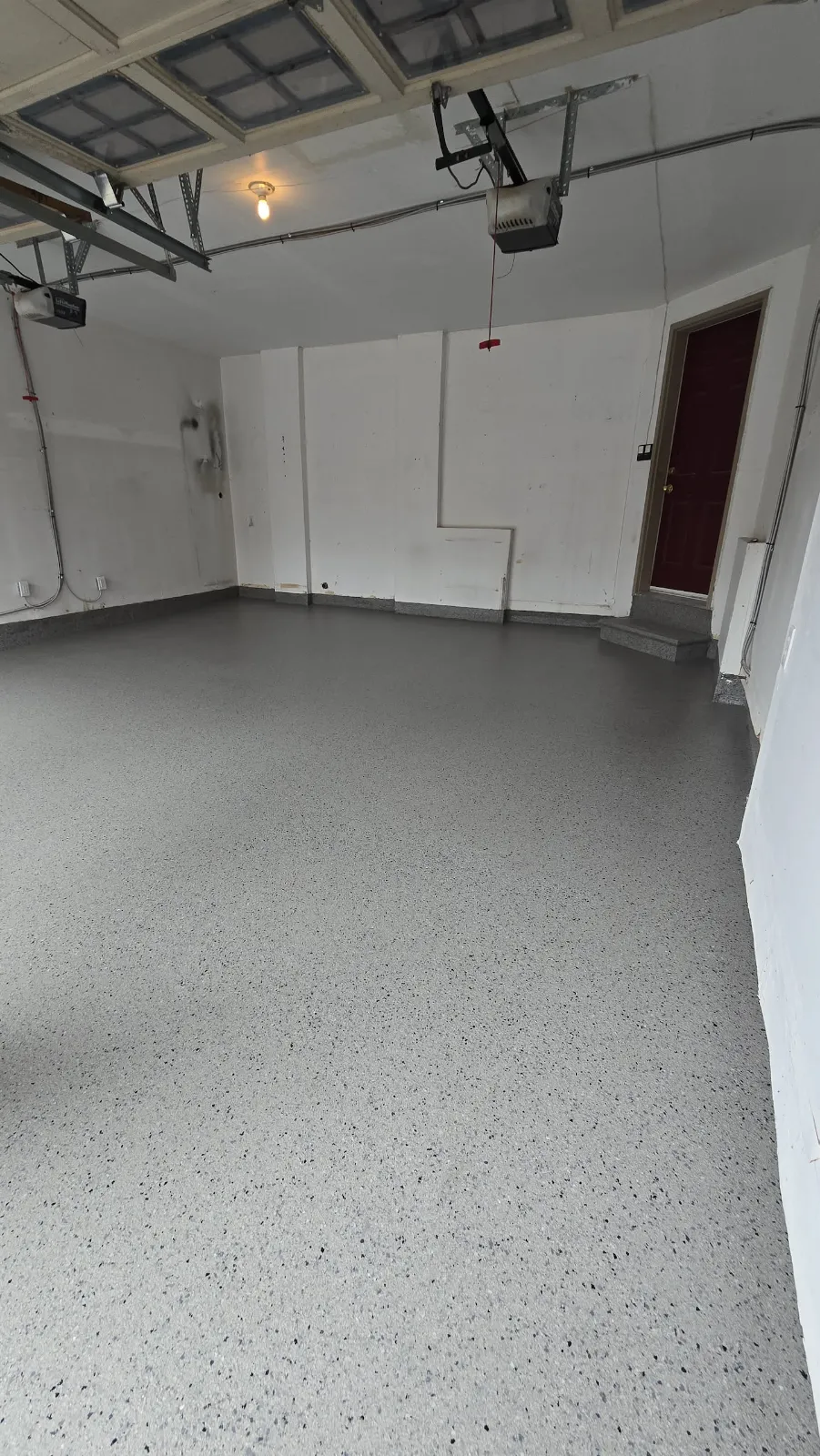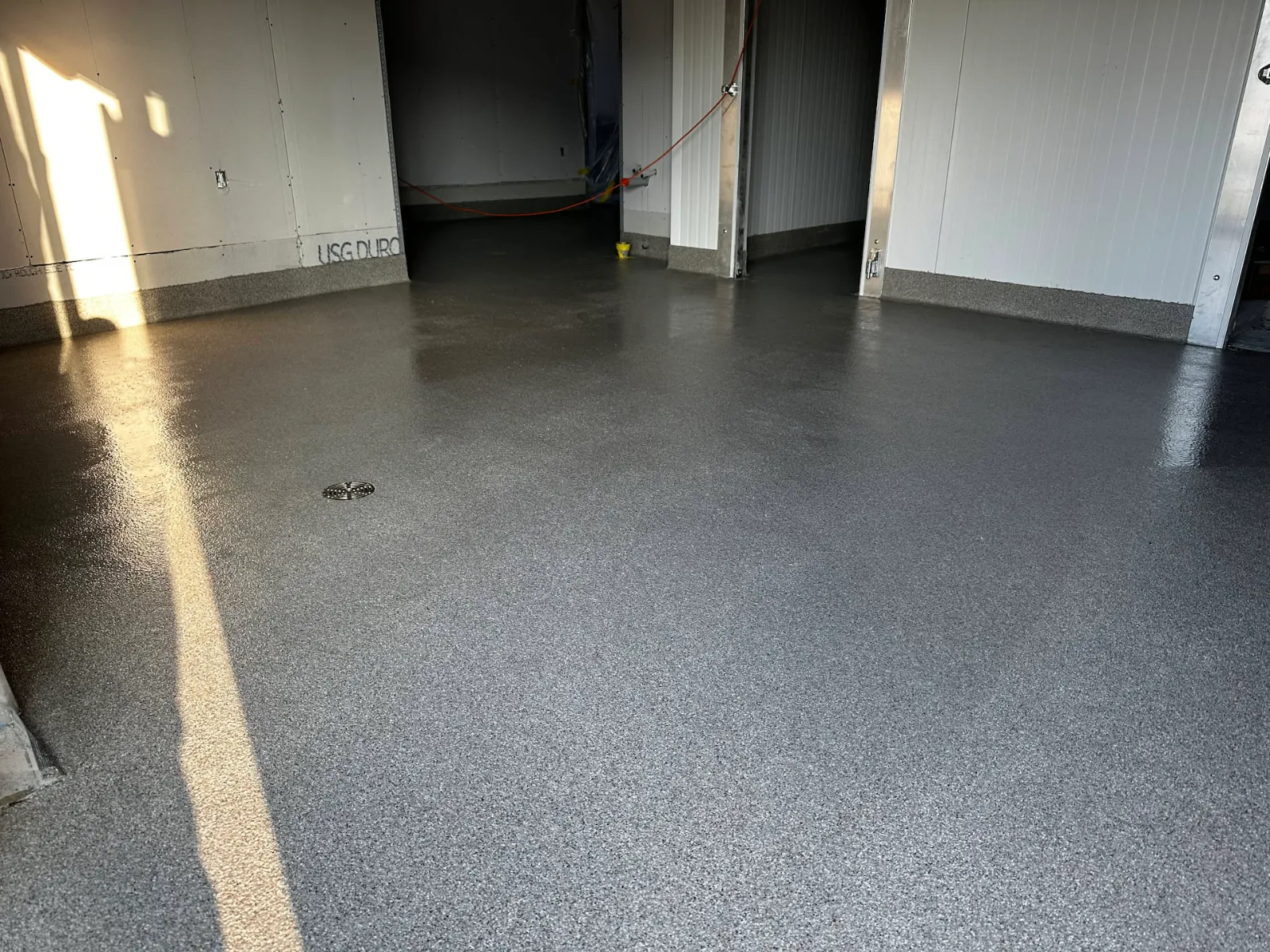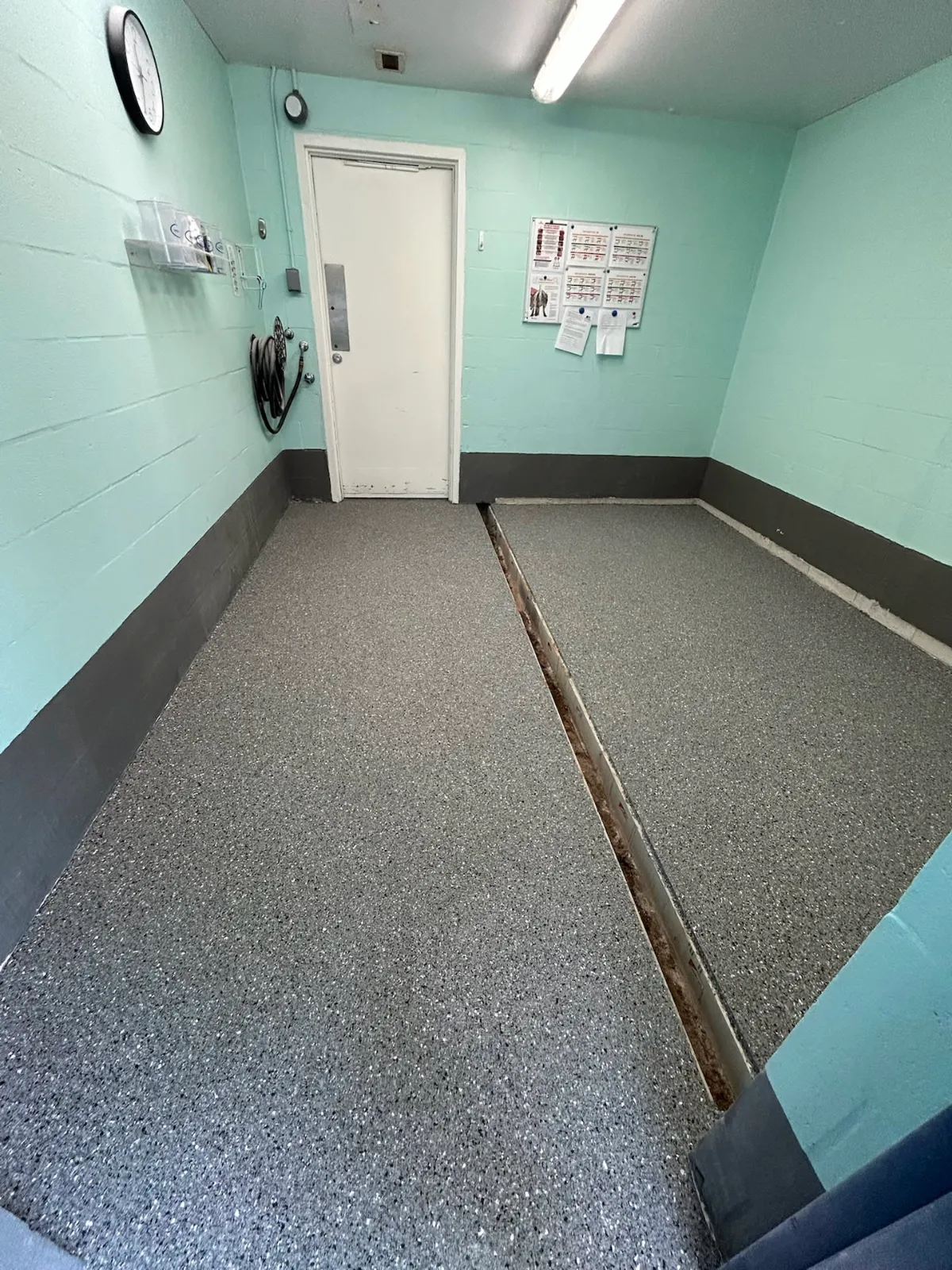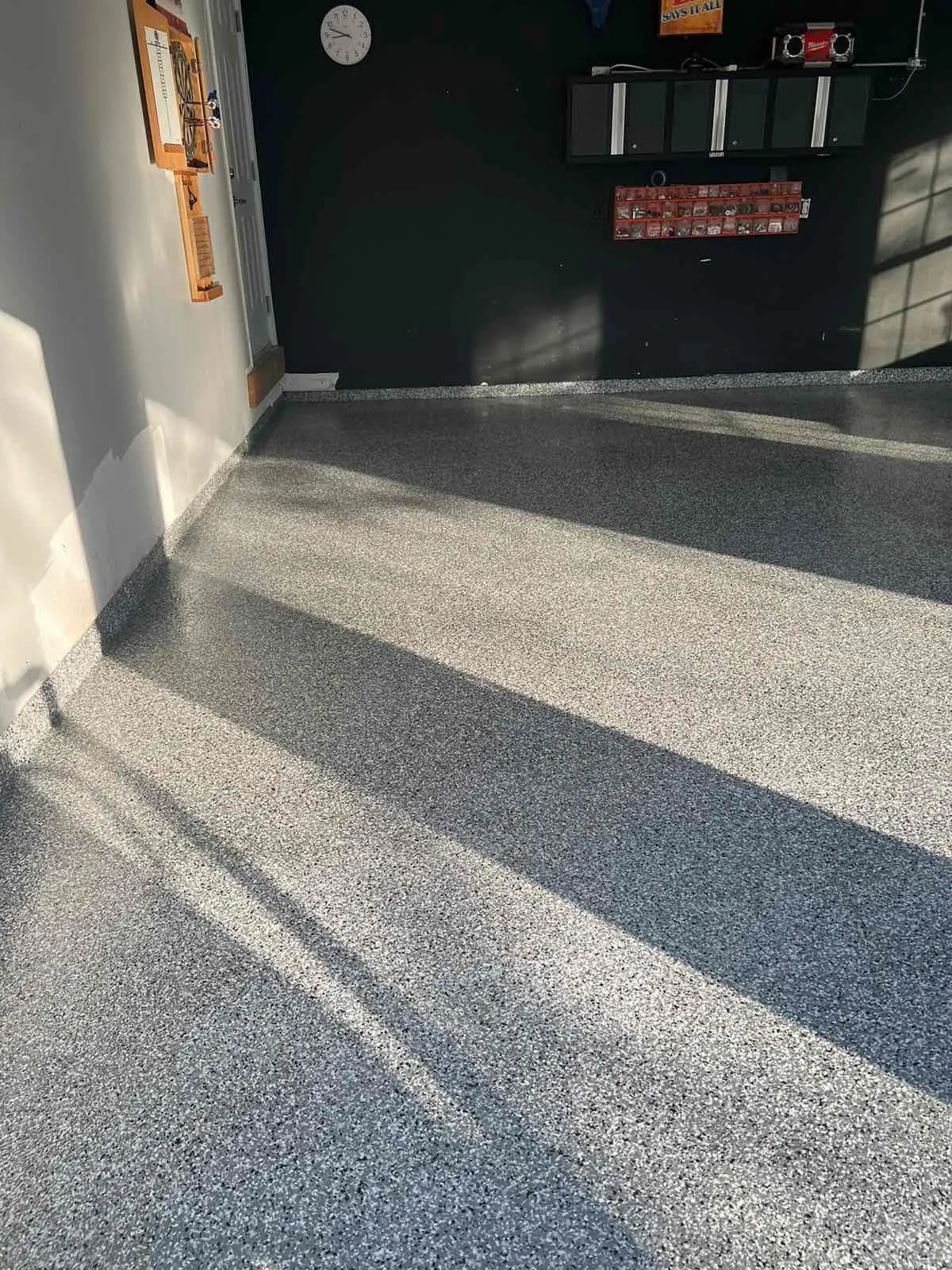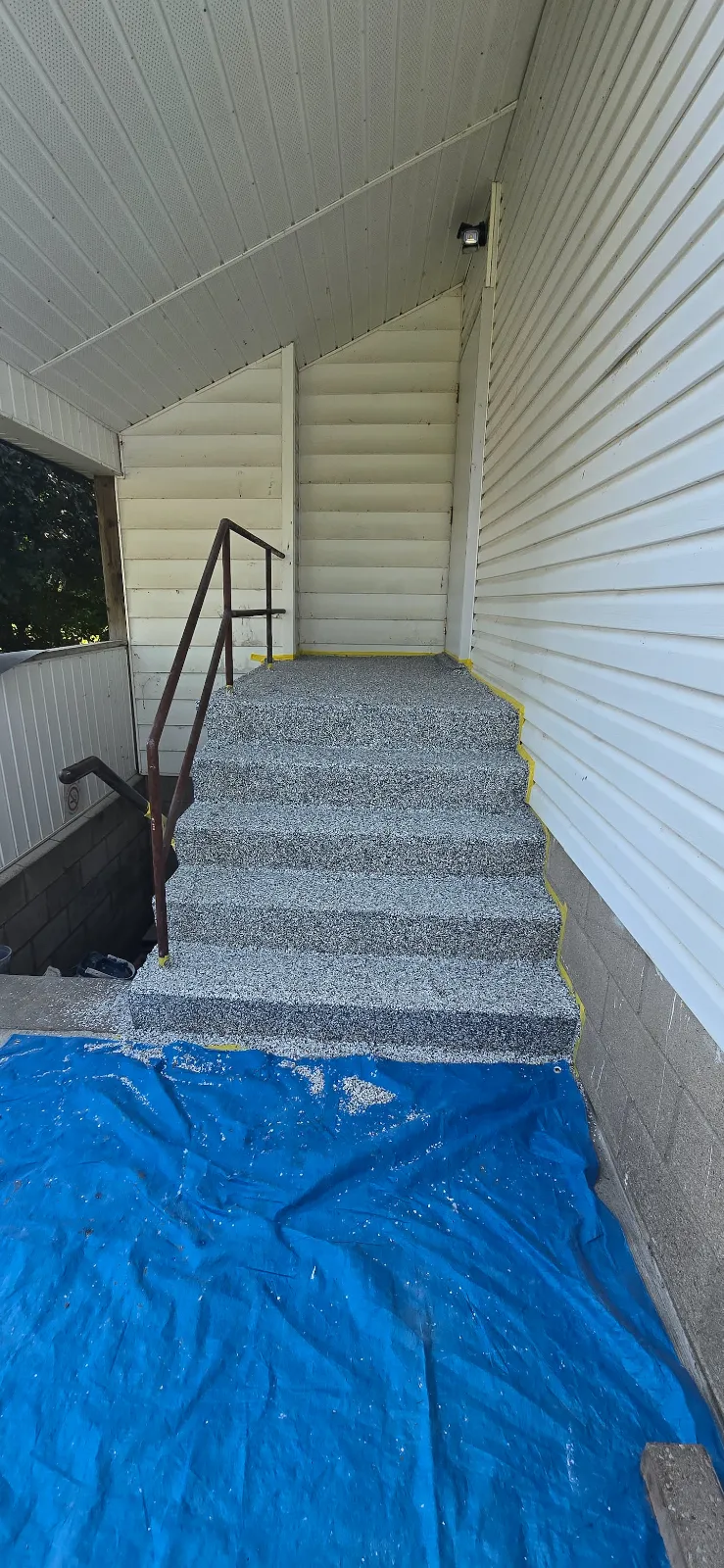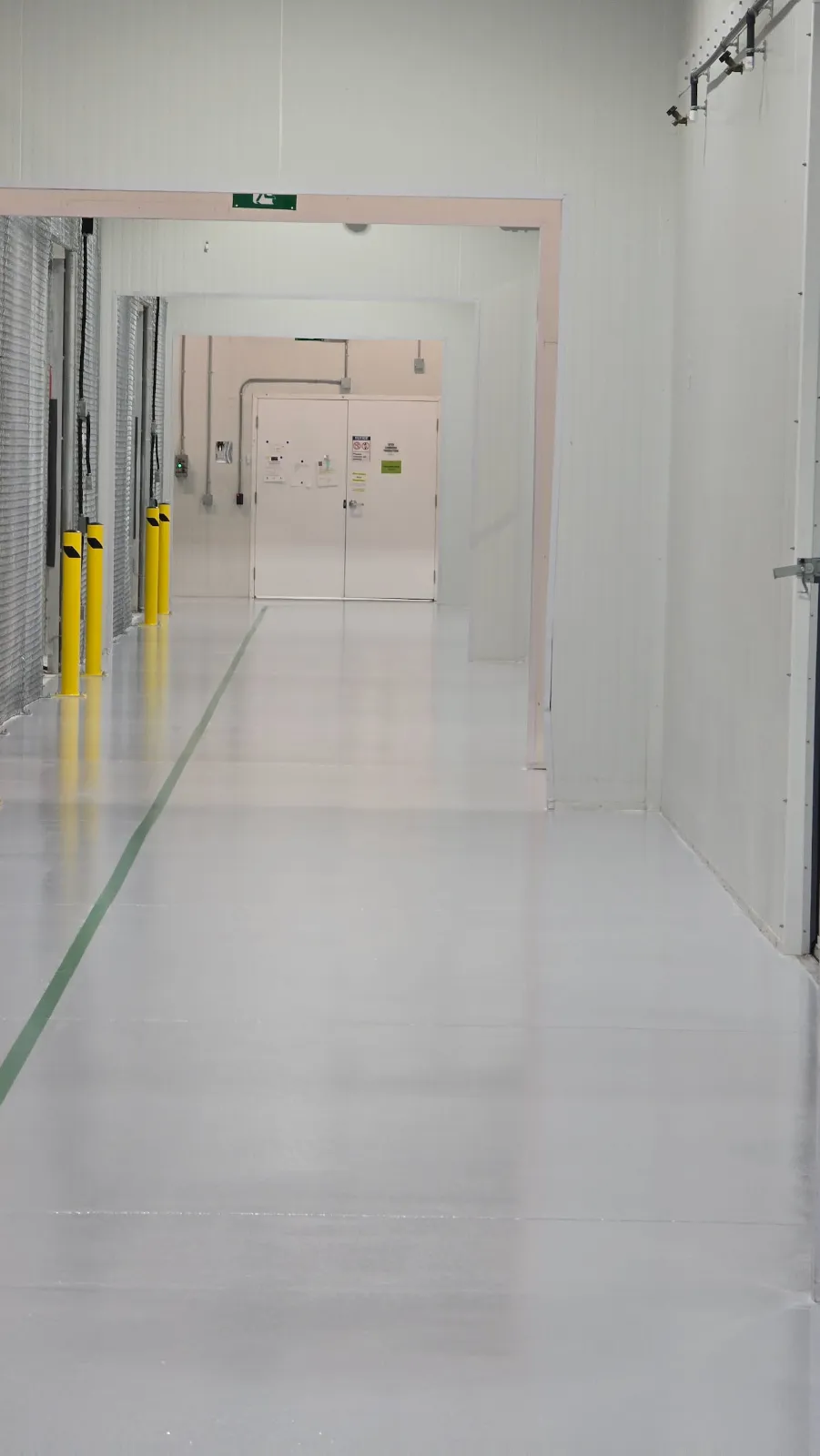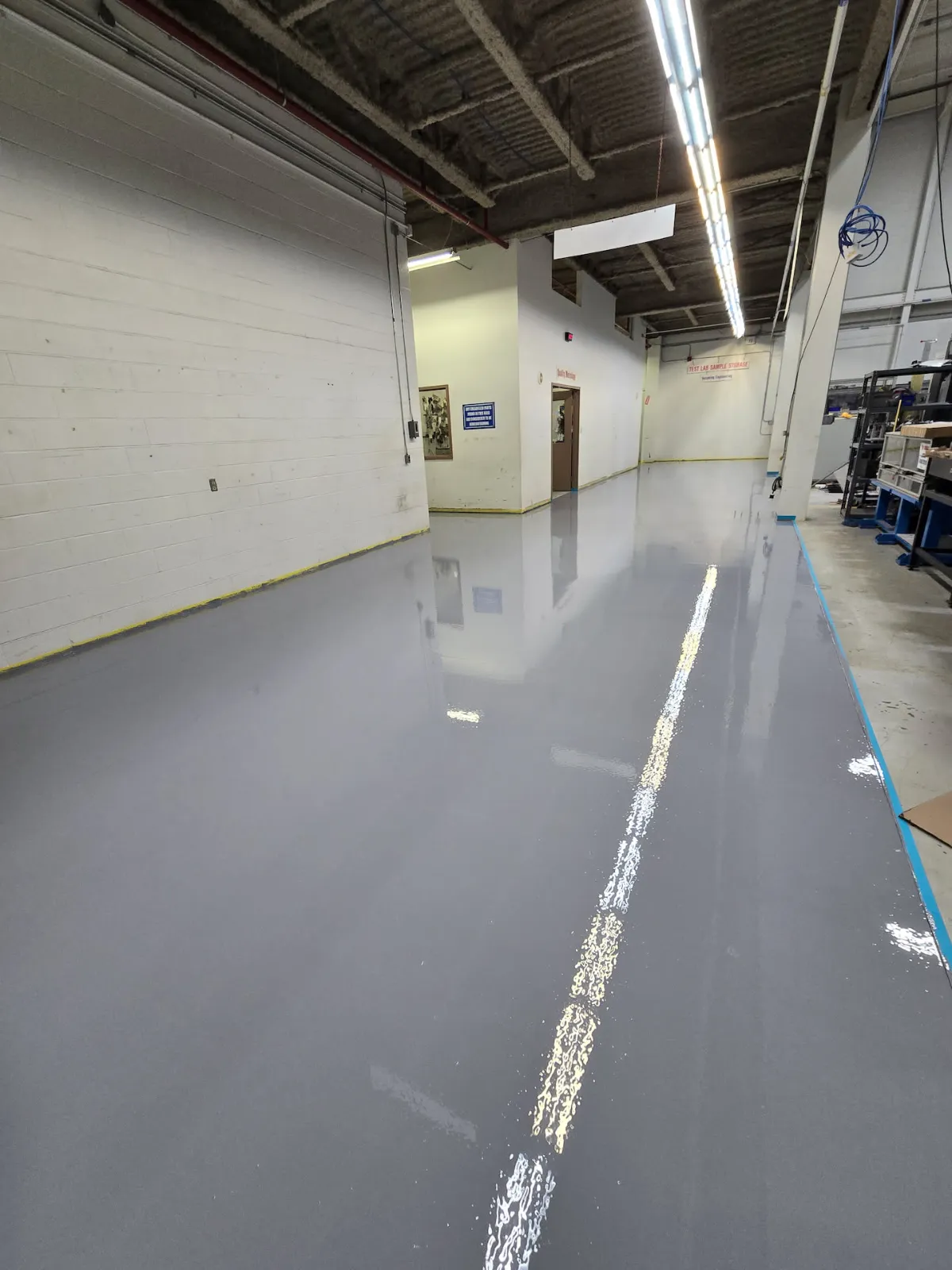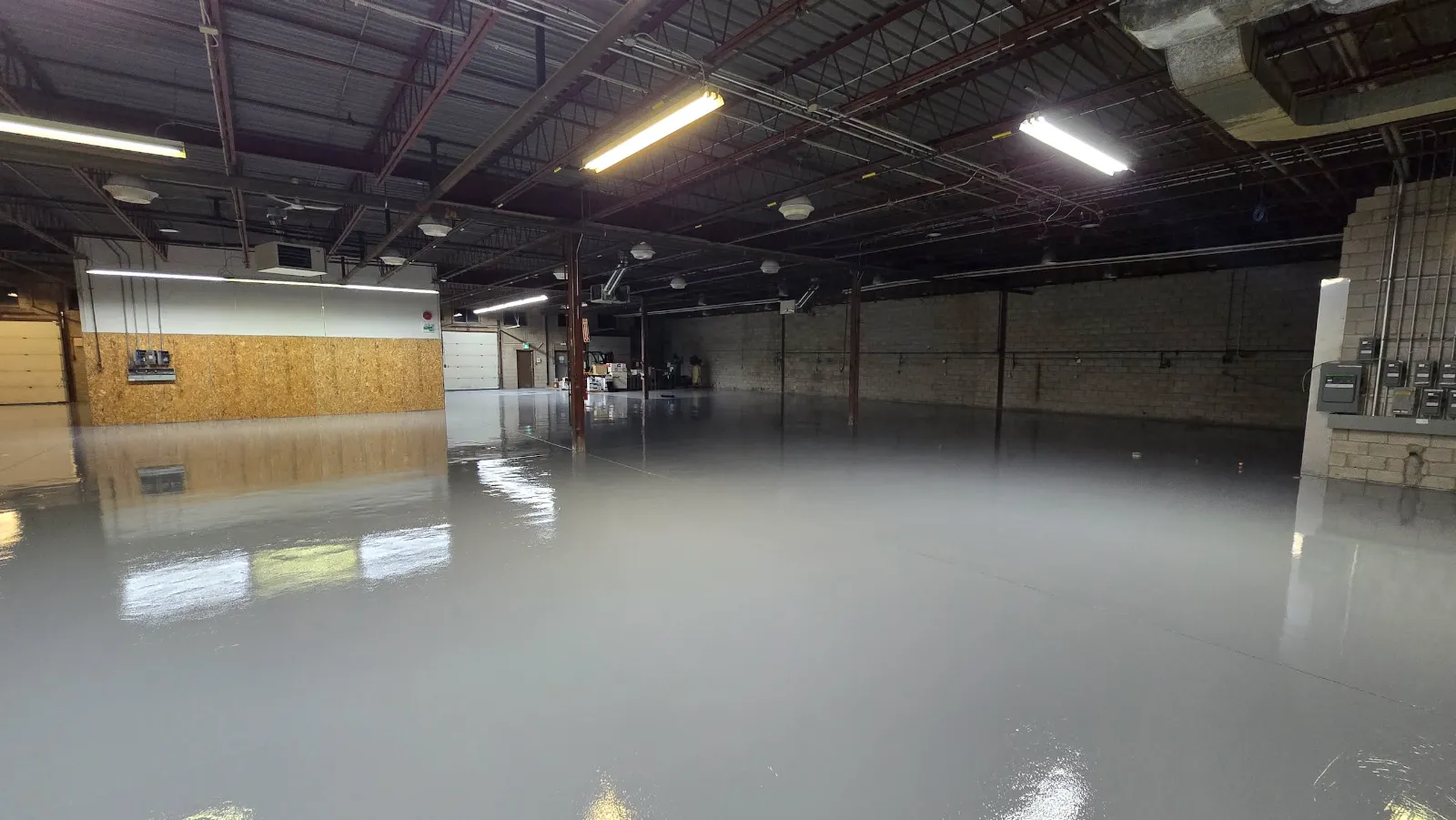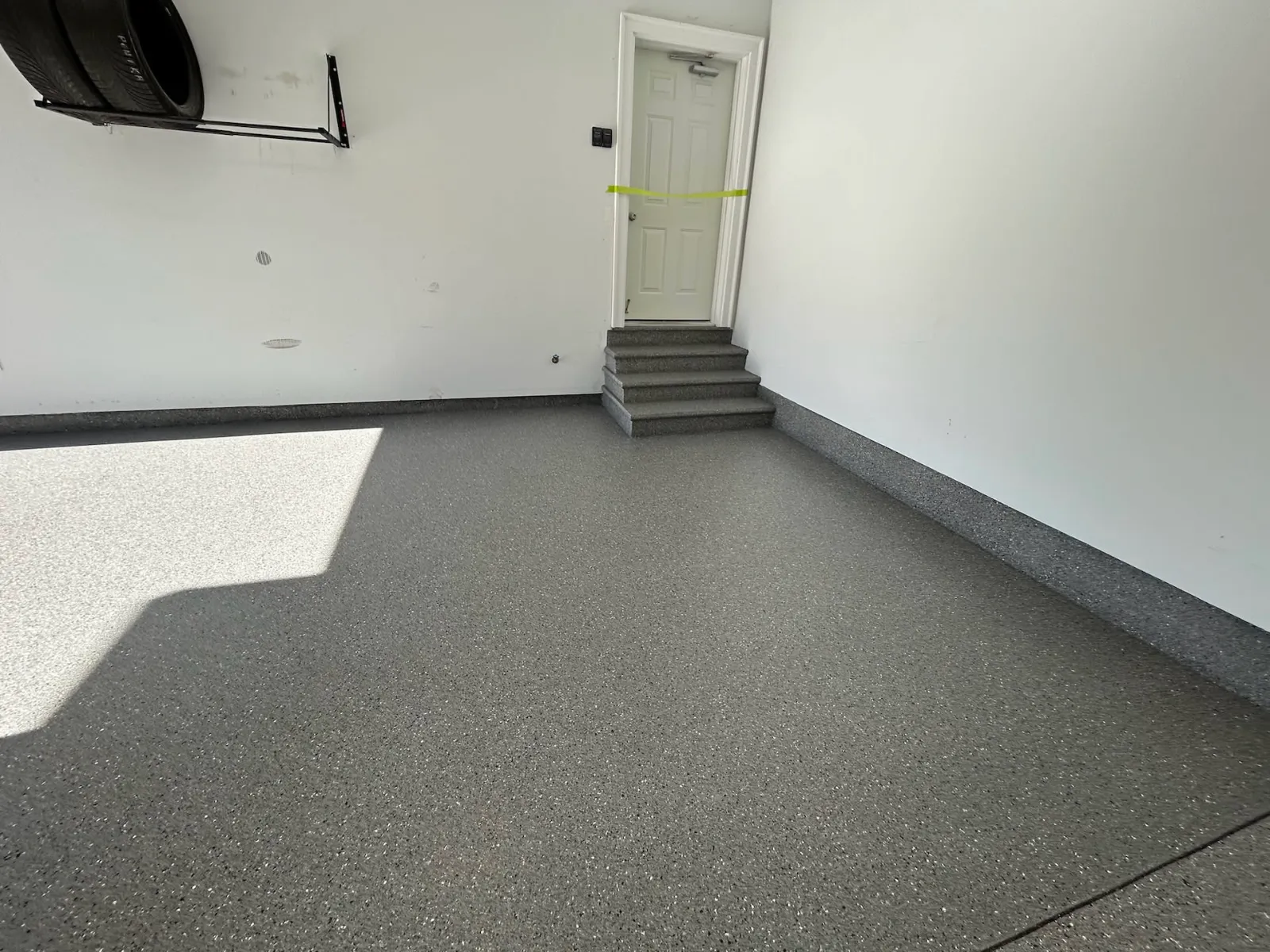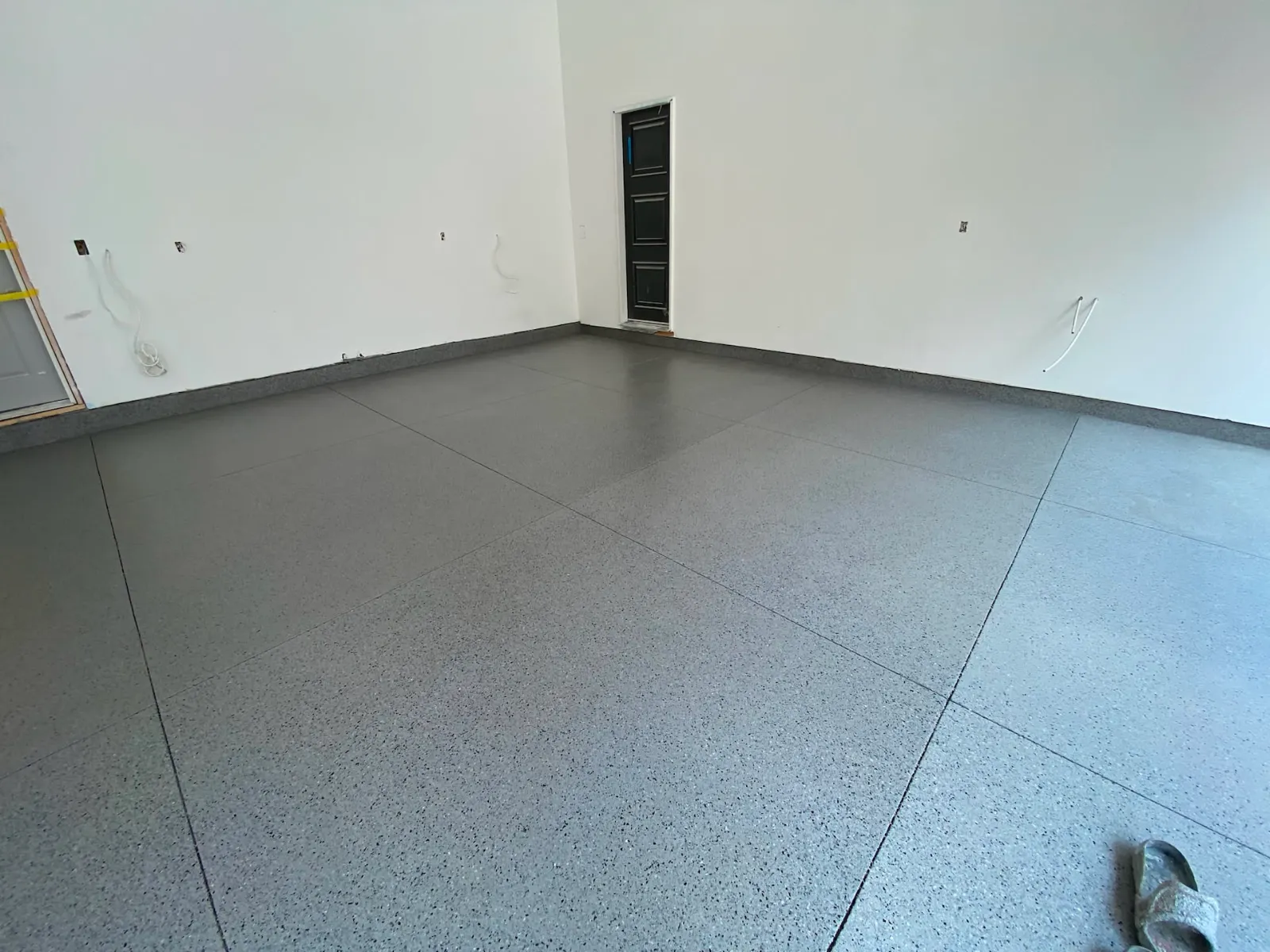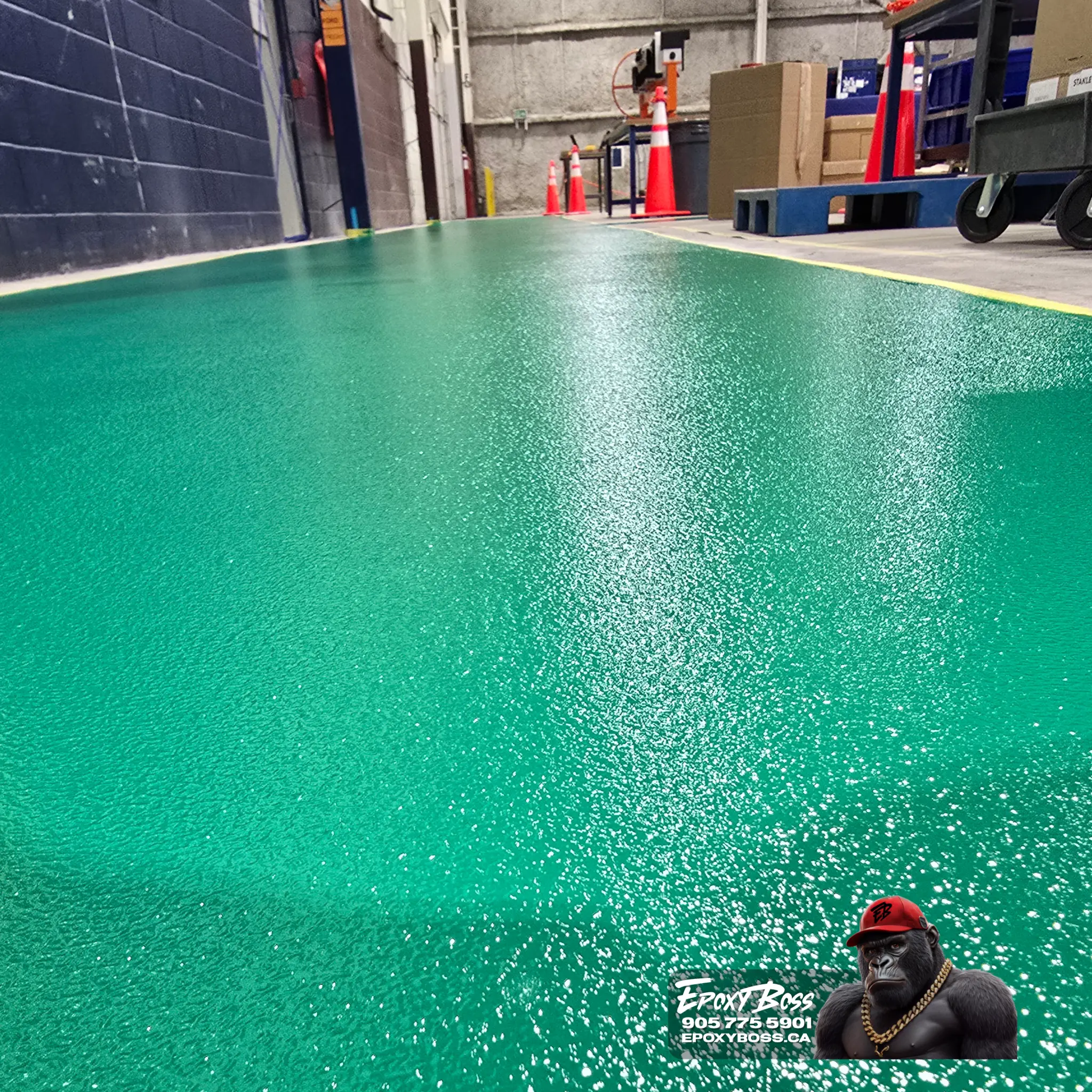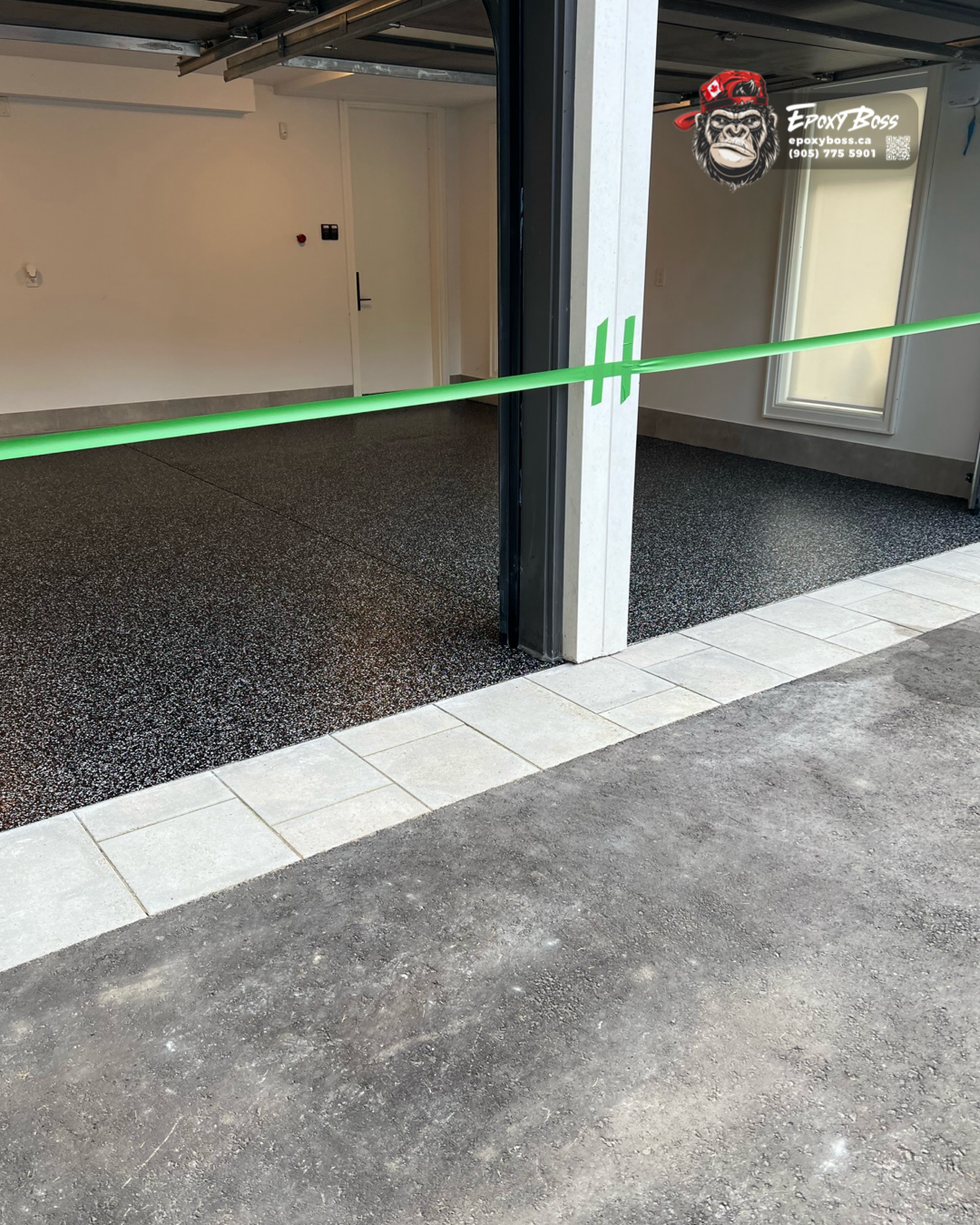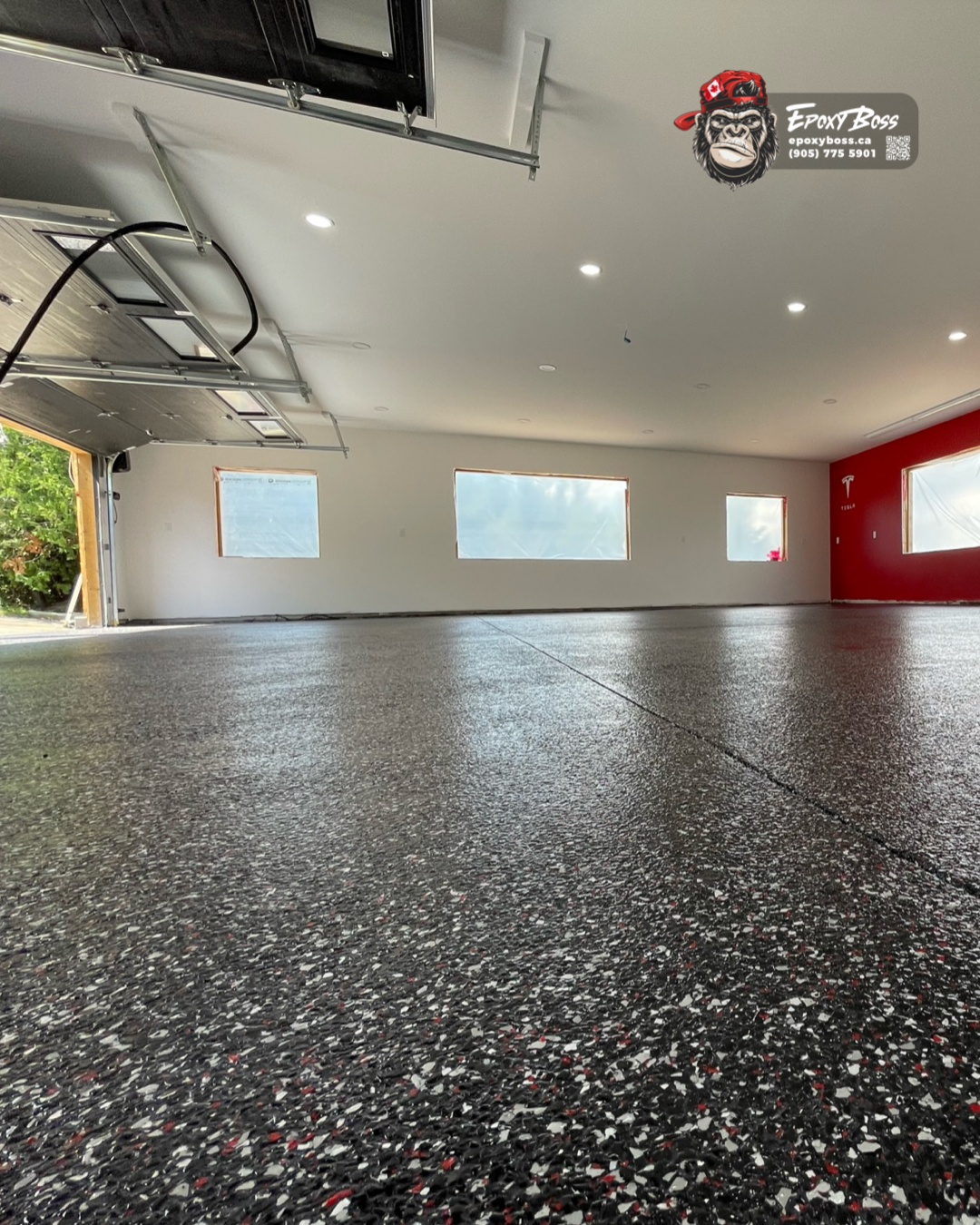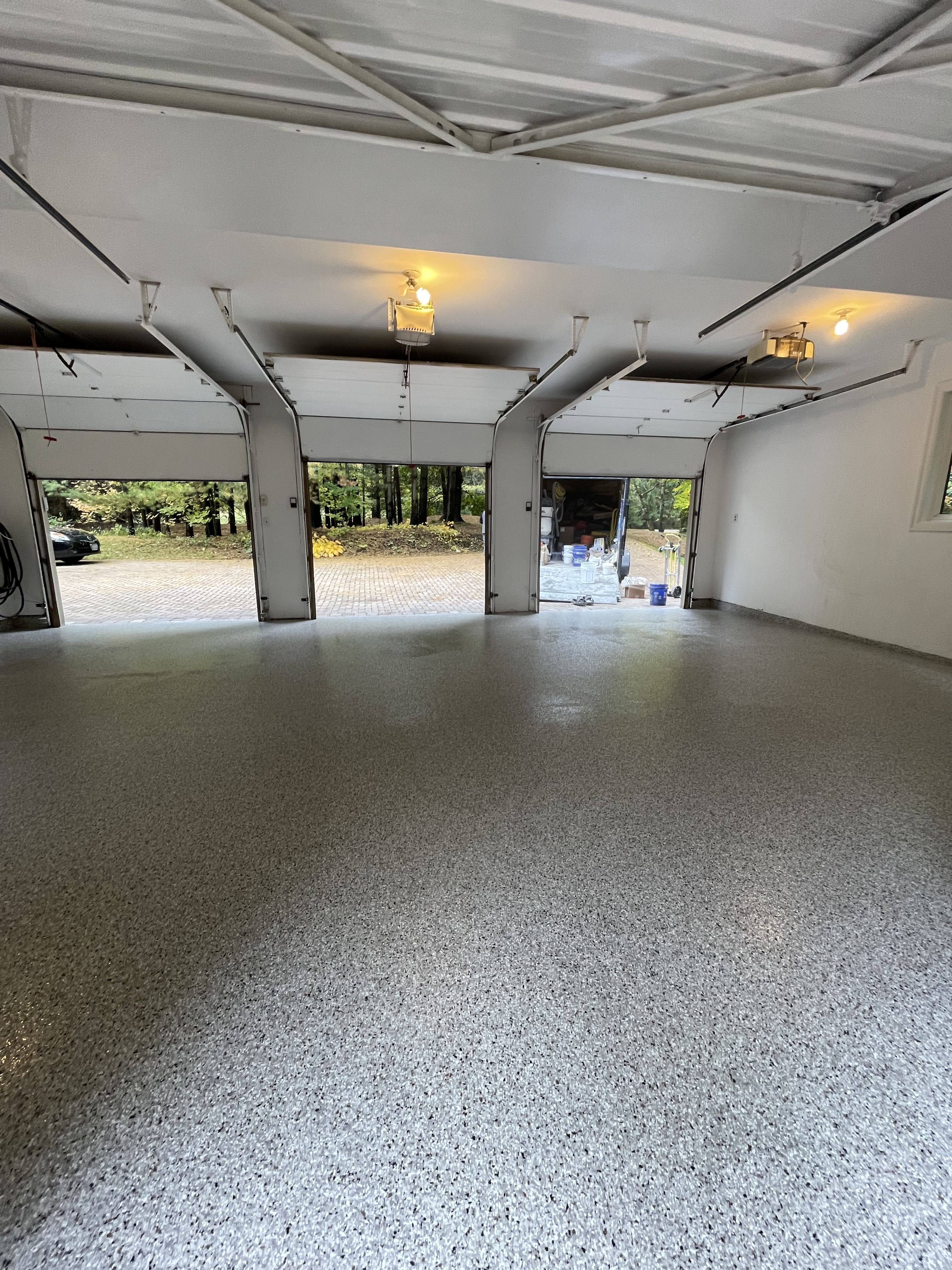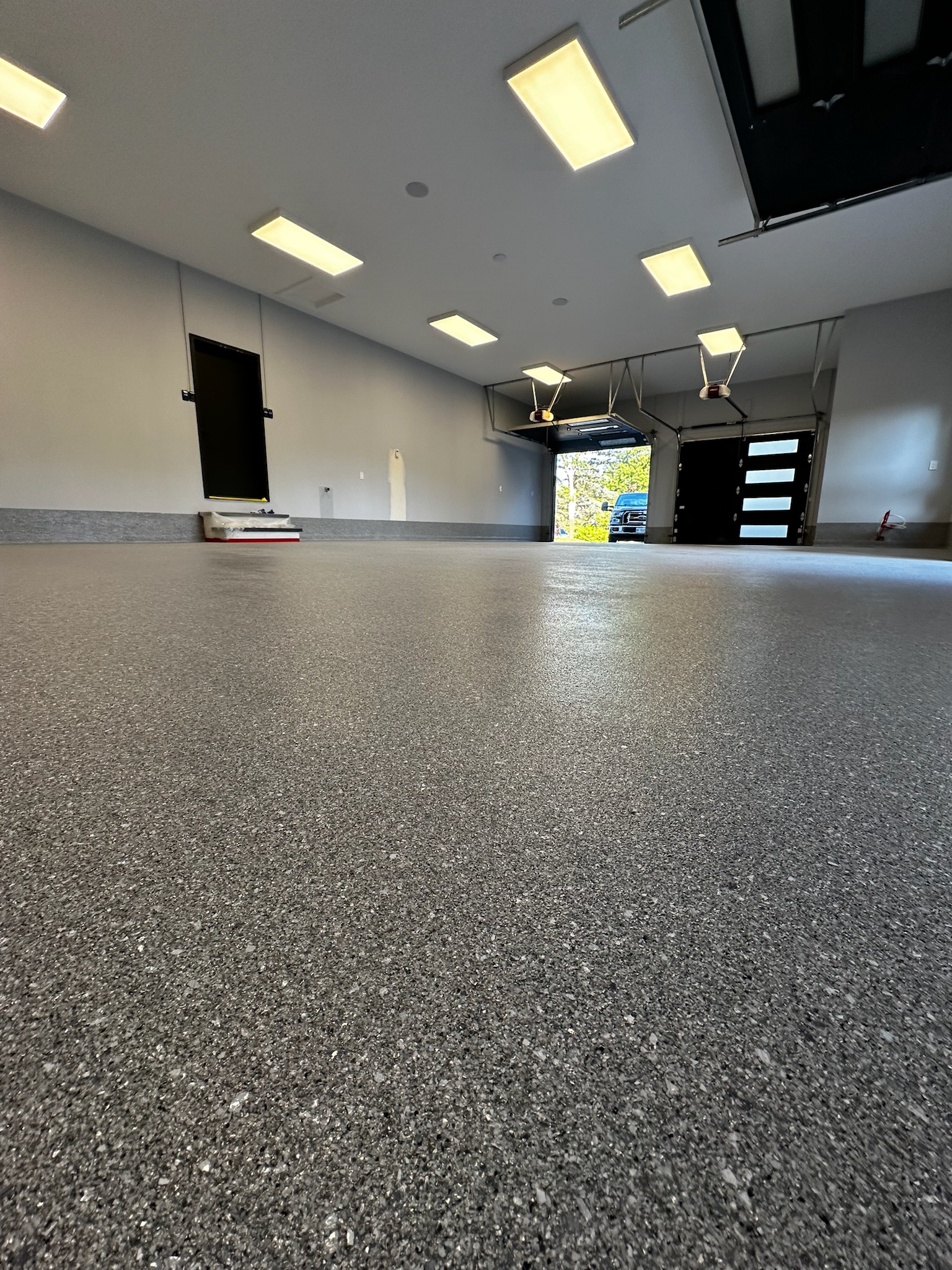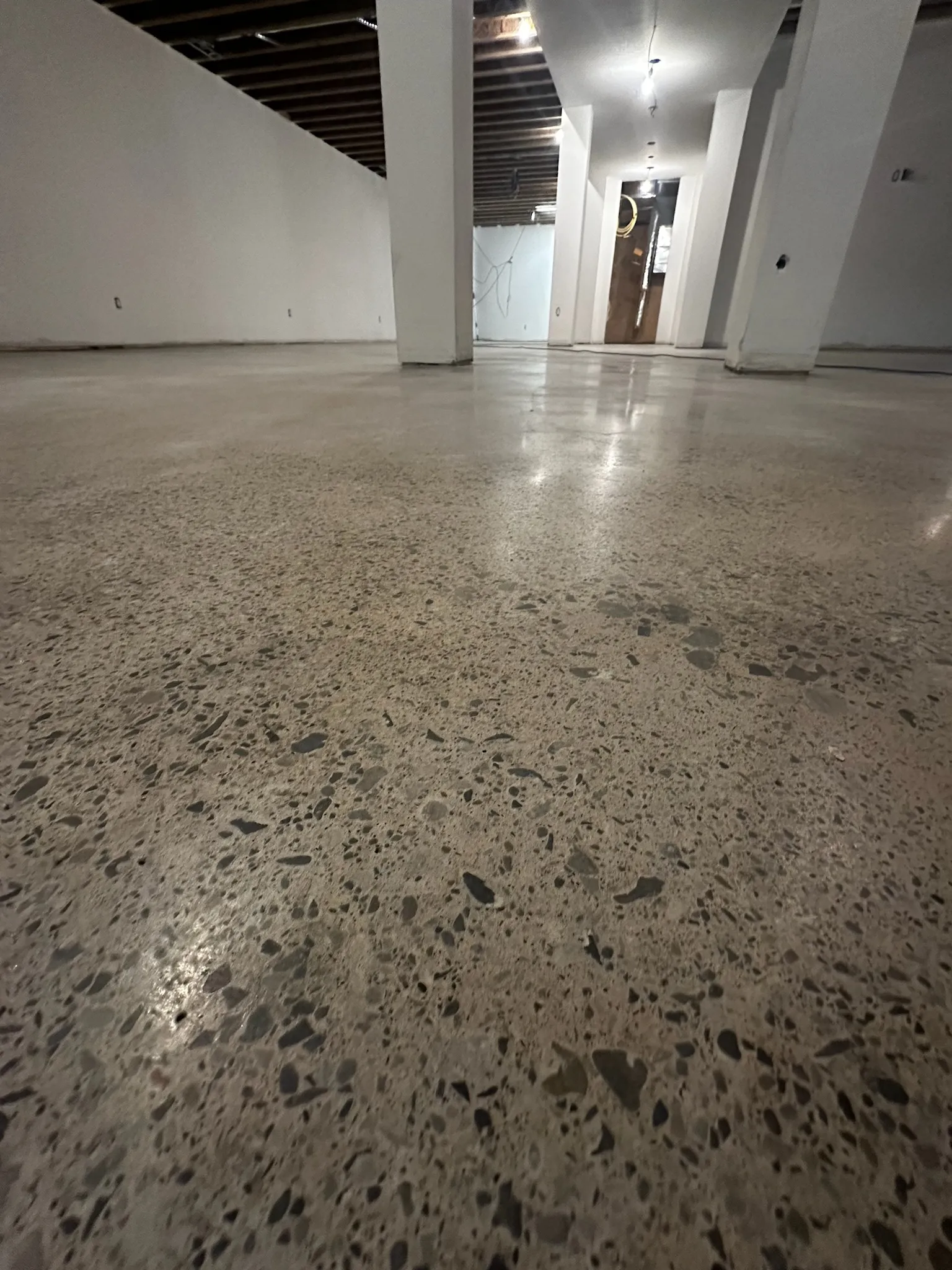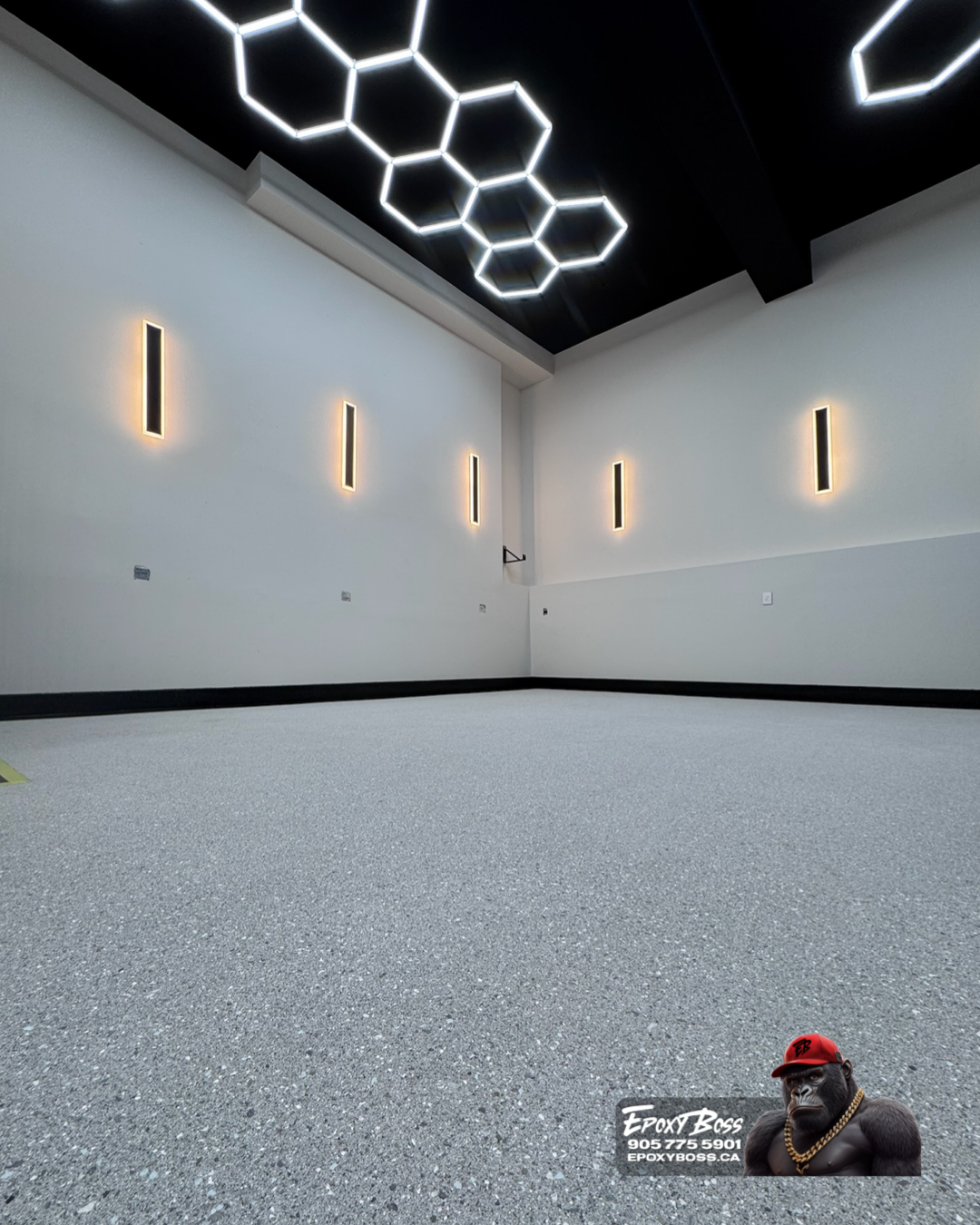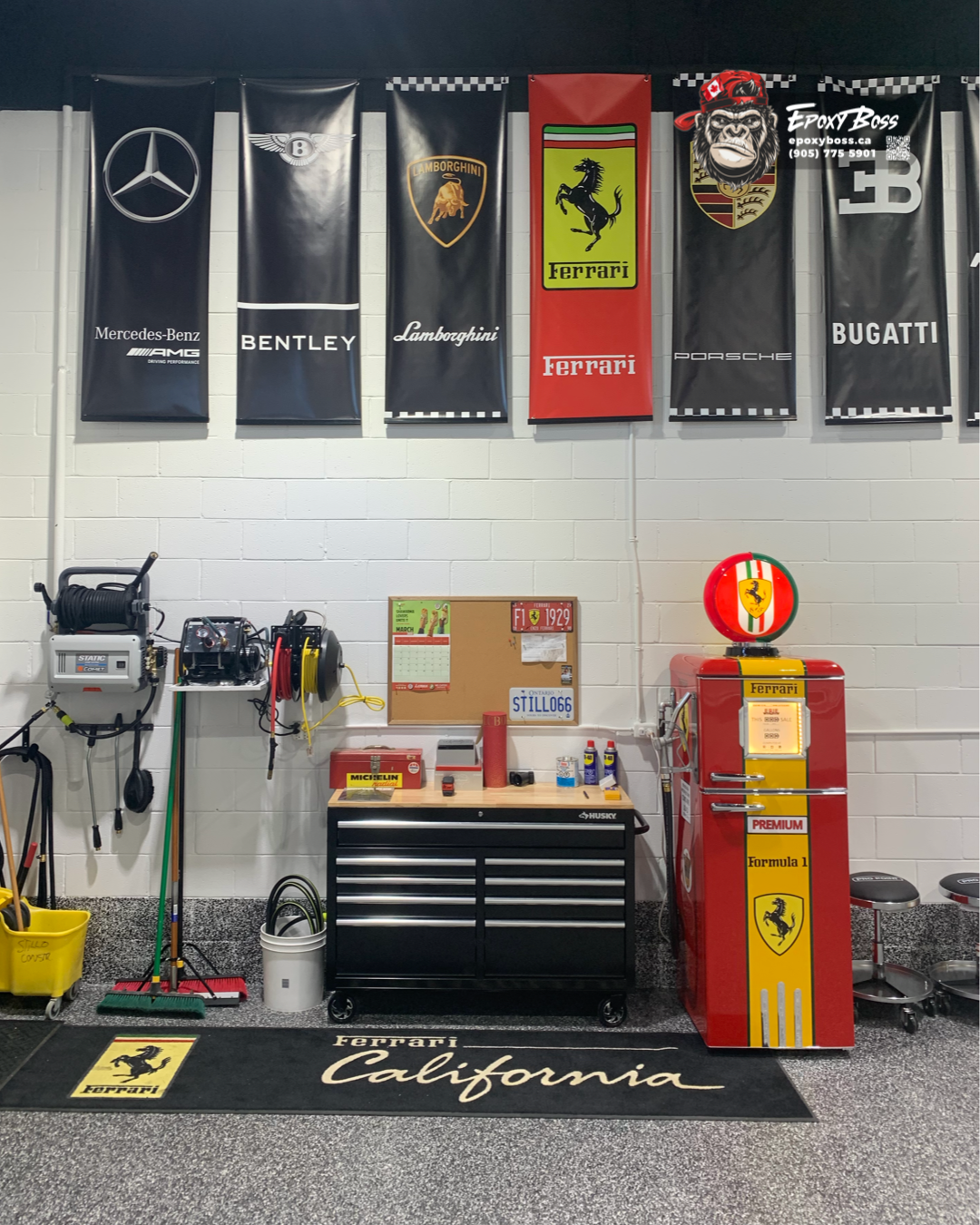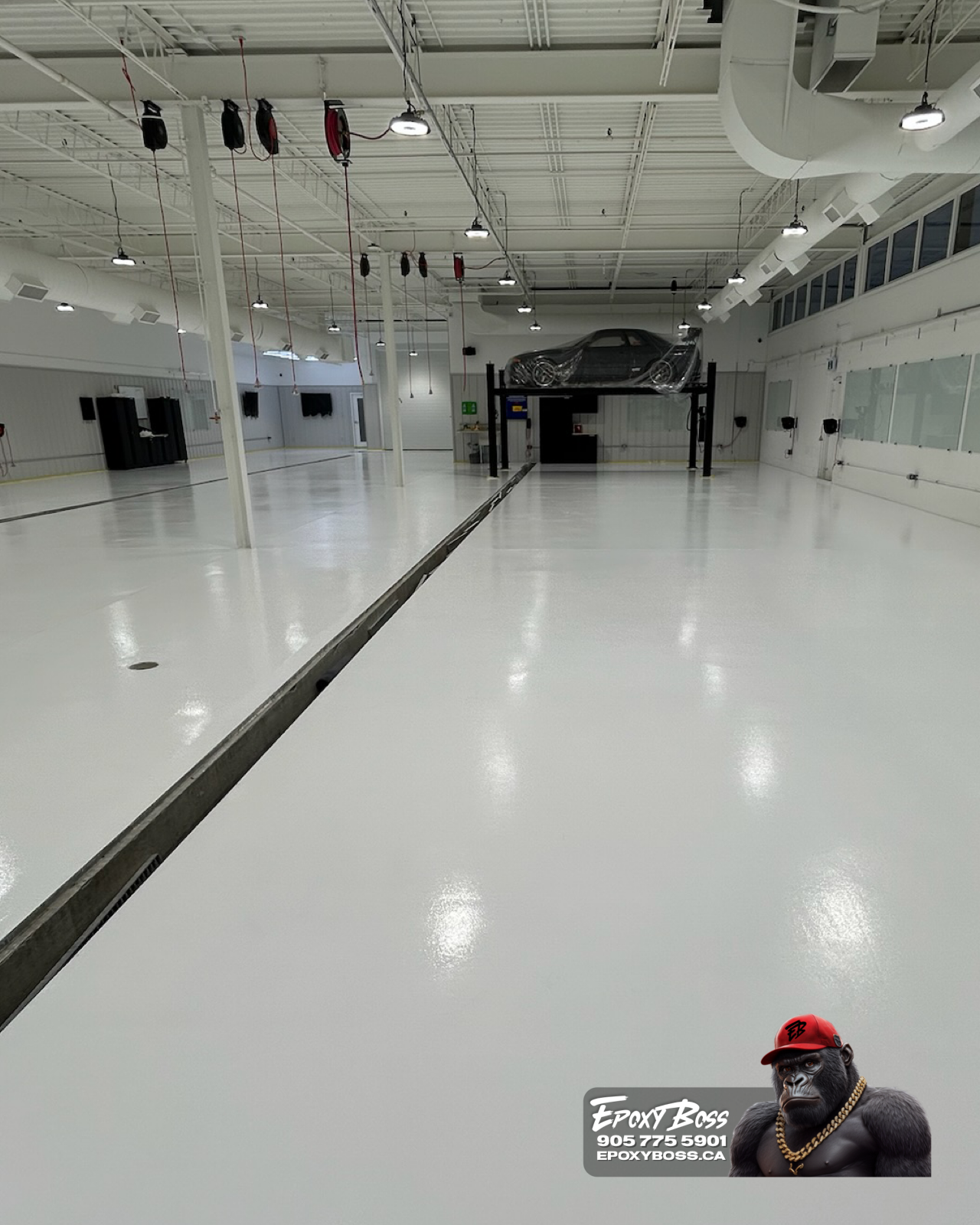
Epoxy and resin flooring are not competing products. Epoxy is one type of resin, and "resin flooring" is the wider category that also includes polyaspartic, polyurethane, polyurea and methyl methacrylate (MMA) systems. An epoxy resin floor uses epoxy in one or more layers, while many professional garage floors combine an epoxy base with a different resin as the clear topcoat. The real question is which combination of layers suits your concrete and how you use the space.
This article explains the difference between resin and epoxy flooring, what each layer in a typical system does, and what to ask before choosing a garage or basement floor in Ontario.
Is epoxy the same as resin flooring?
Epoxy is a resin, but not every resin floor is epoxy. In flooring, "resin" describes liquid materials that are mixed, applied to prepared concrete and cure into a continuous, seamless surface. The main families are:
- Epoxy: a two-part resin known for strong adhesion to prepared concrete and good build. Commonly used as primer, body coat, broadcast binder and in self-levelling and metallic floors. See epoxy flooring materials.
- Polyaspartic: a fast-curing aliphatic resin often used as a UV-stable clear topcoat, and in some systems as a base coat. See polyaspartic.
- Polyurethane and aliphatic urethane: tough, flexible topcoats valued for abrasion and chemical resistance. Urethane cement is a separate heavy-duty industrial family.
- Polyurea: a very fast-reacting family; pure polyurea is often spray-applied, and the name is also used loosely in the garage market.
- MMA: methyl methacrylate, a very fast-curing system used mostly in commercial settings.
So when someone compares an "epoxy floor" with a "resin floor", they are often comparing one material with a category that includes it. For a deeper side-by-side of the three chemistries most often discussed for garages, see polyurea vs polyaspartic vs epoxy.
What is an epoxy resin floor?
An epoxy resin floor is a concrete floor system in which epoxy forms one or more of the layers. Depending on the design, epoxy can be the:
- Primer that penetrates and bonds to mechanically prepared concrete.
- Body or base coat that builds thickness and carries pigment.
- Broadcast binder that holds decorative flake or quartz.
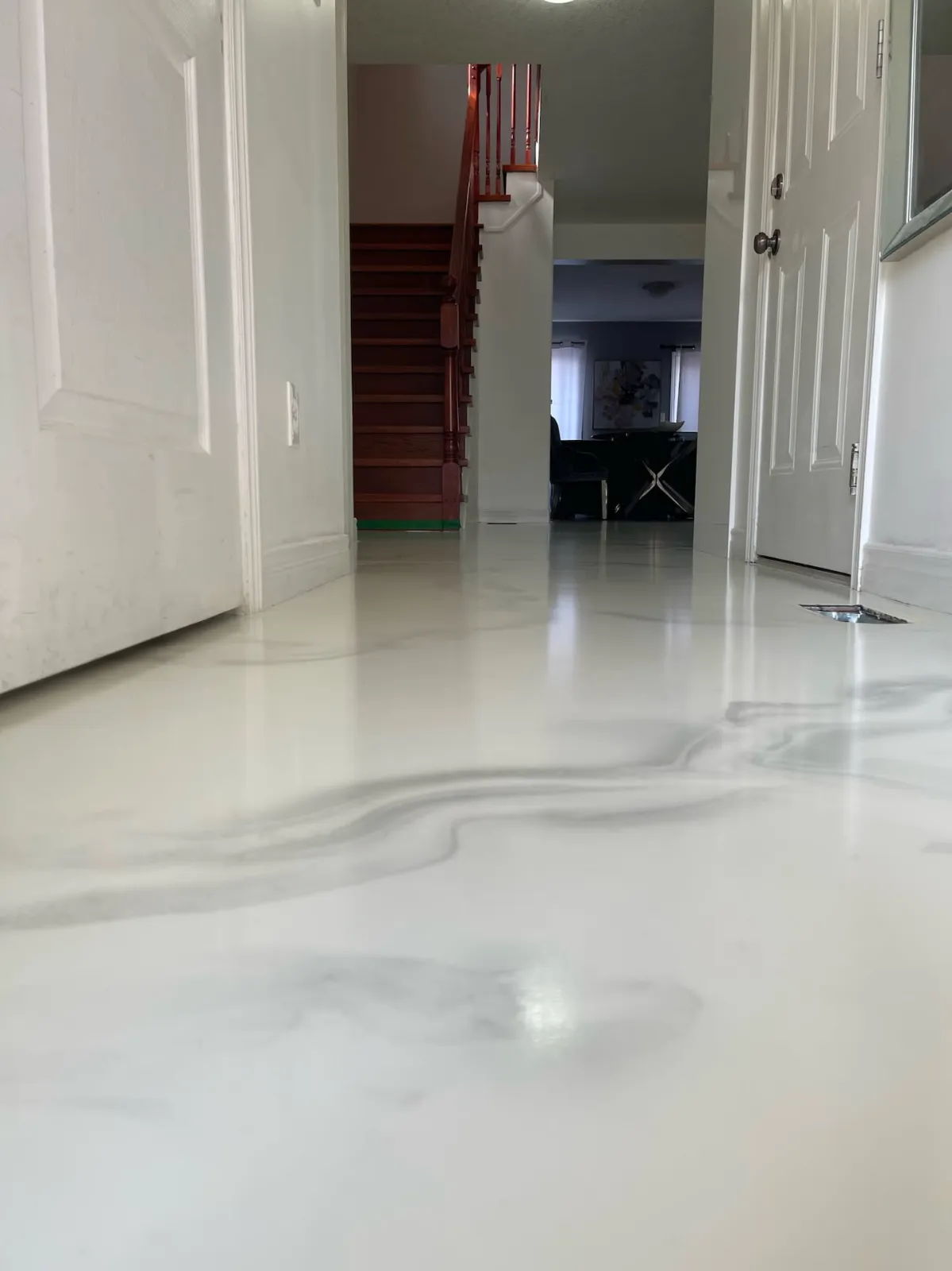
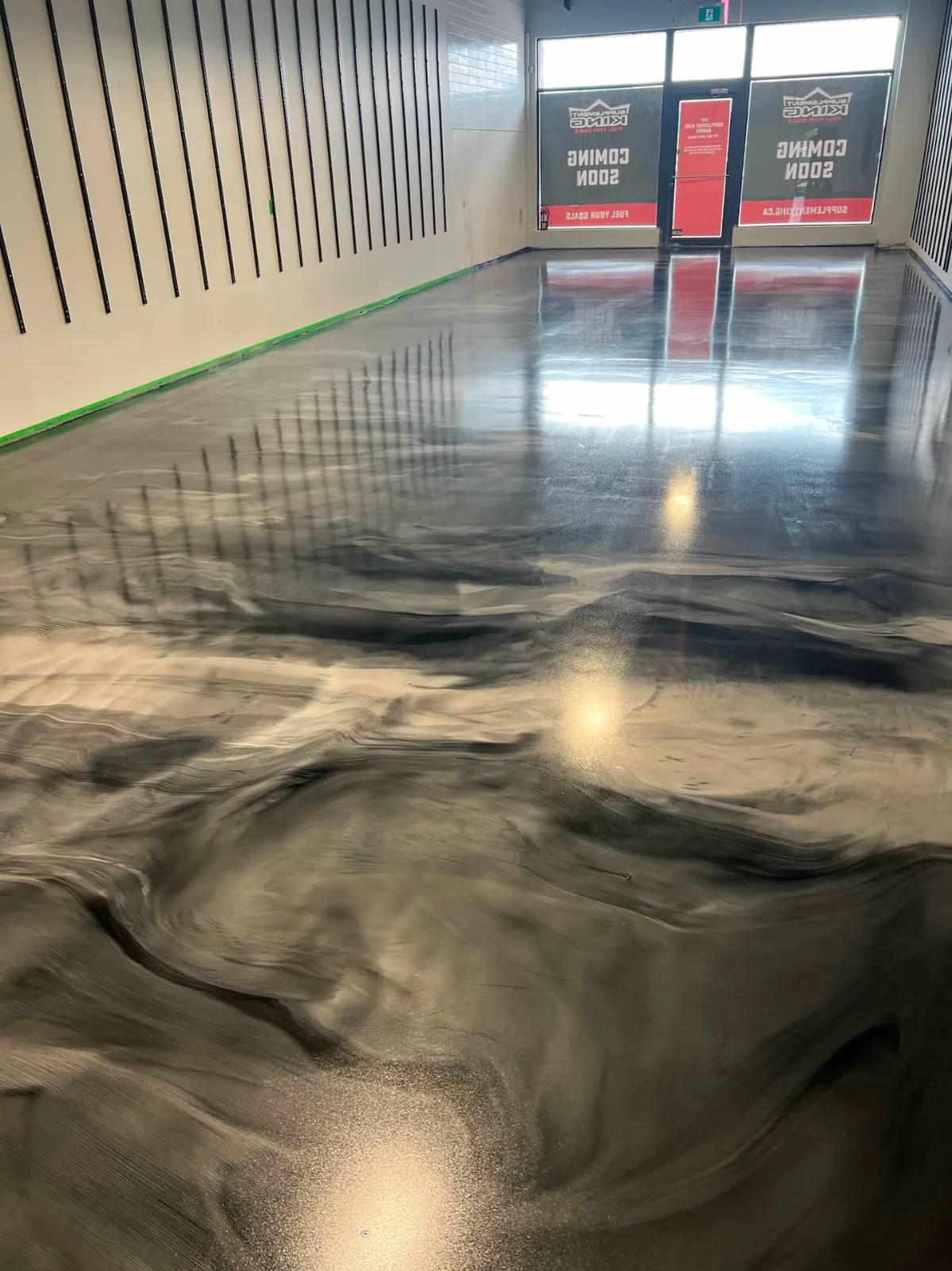
- Self-levelling or metallic layer that creates a smooth, decorative surface.
Epoxy is popular because it bonds well and builds thickness. Its main limitation is ultraviolet light: many epoxies can yellow or chalk with sun exposure, which is why a UV-stable topcoat is often specified over them in garages with open doors or windows.
What does resin floor coating mean in practice?
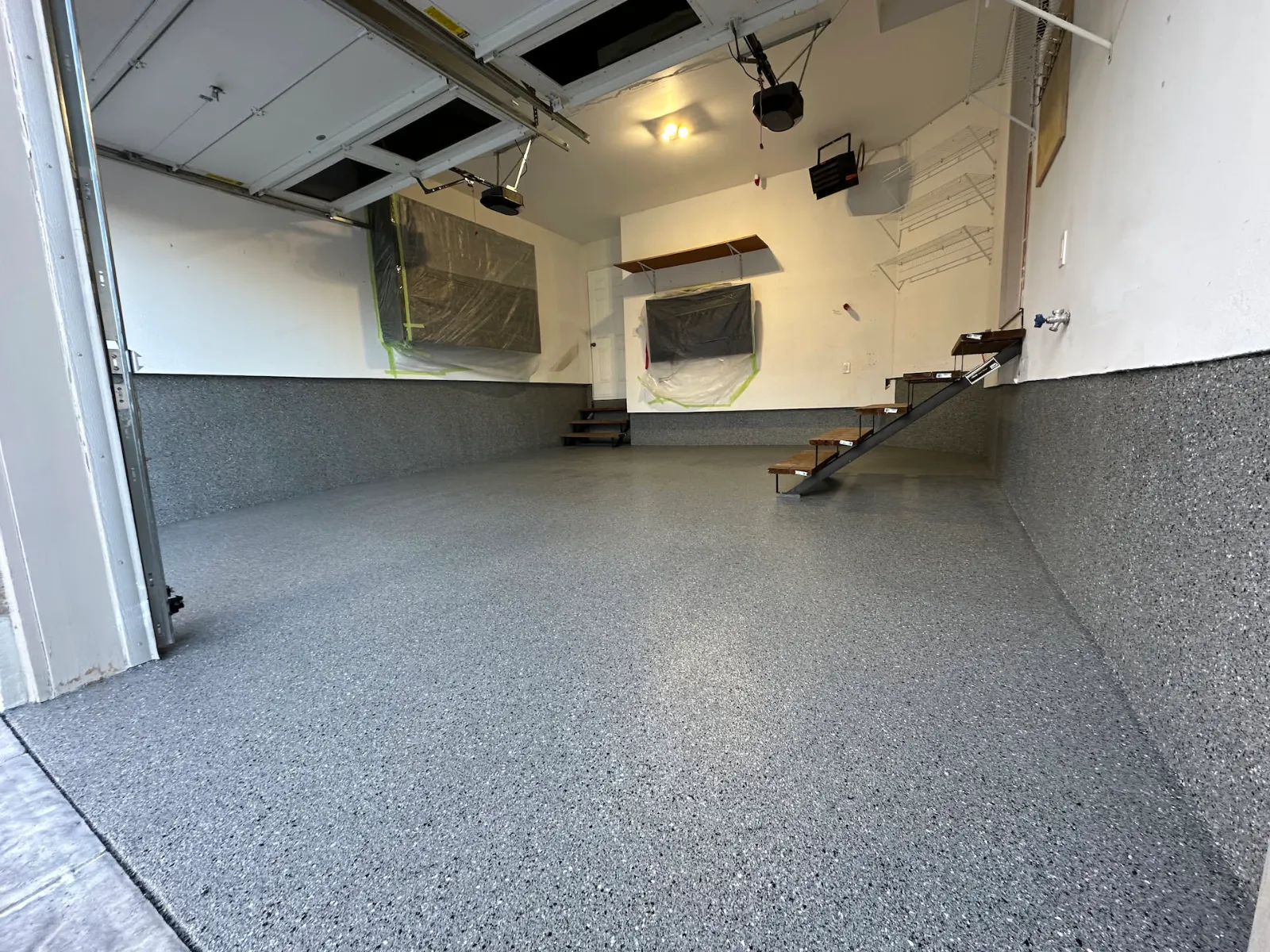
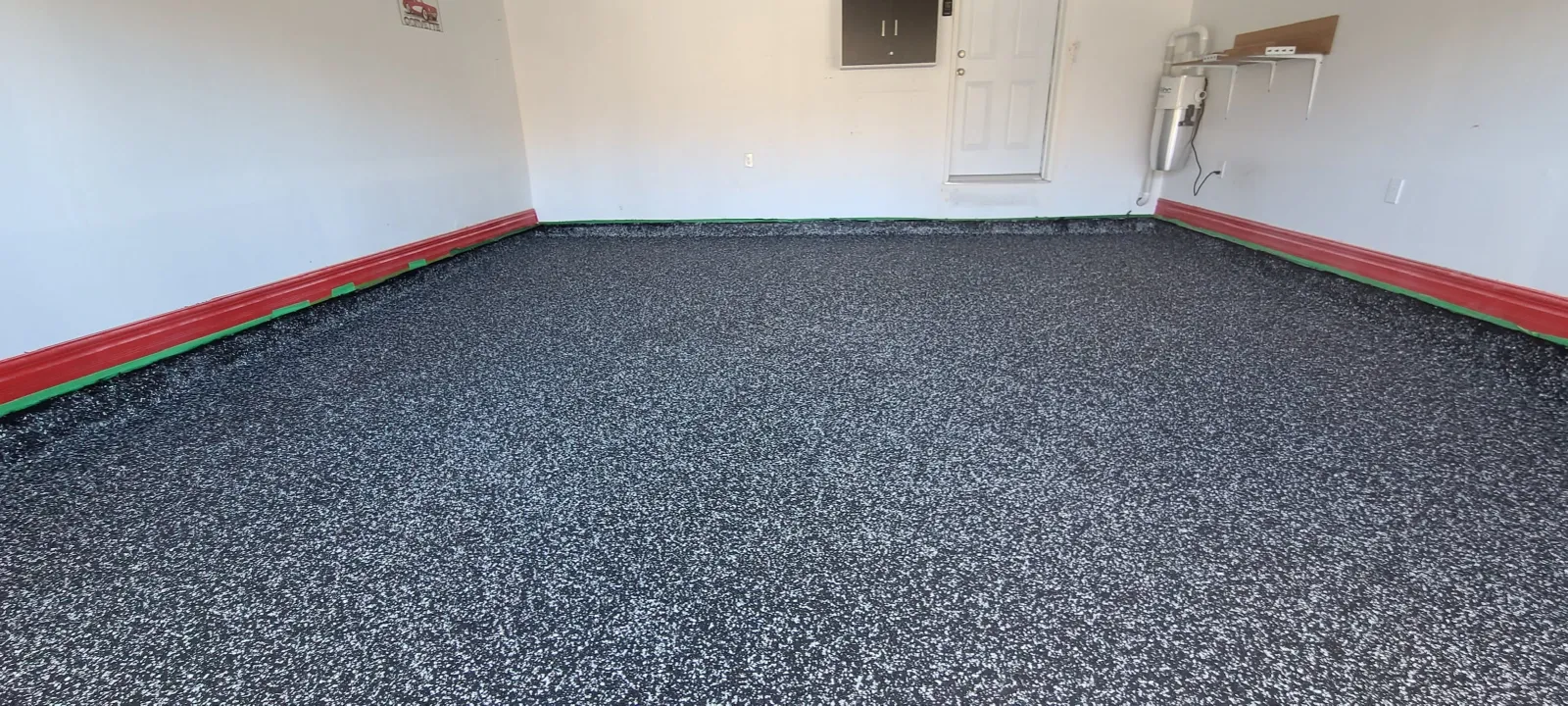
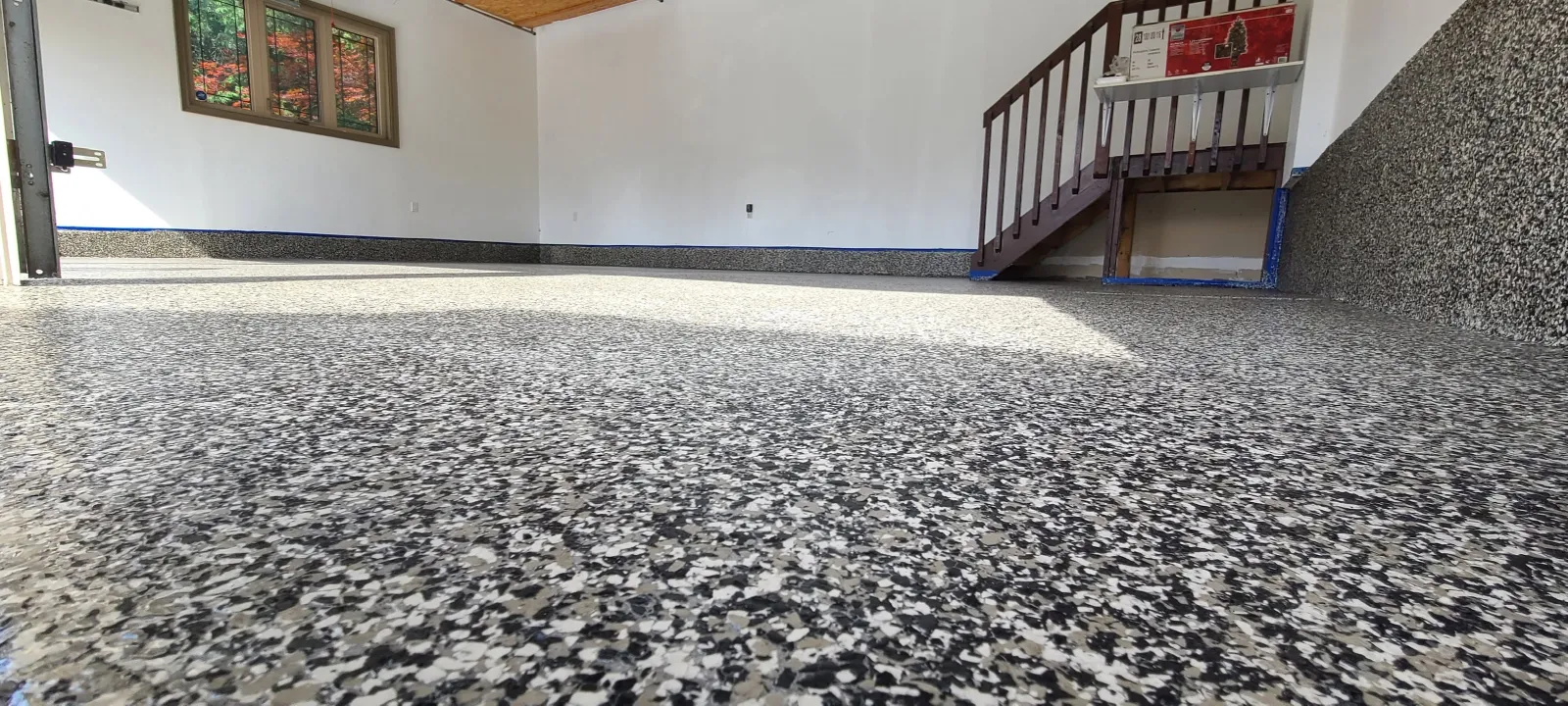
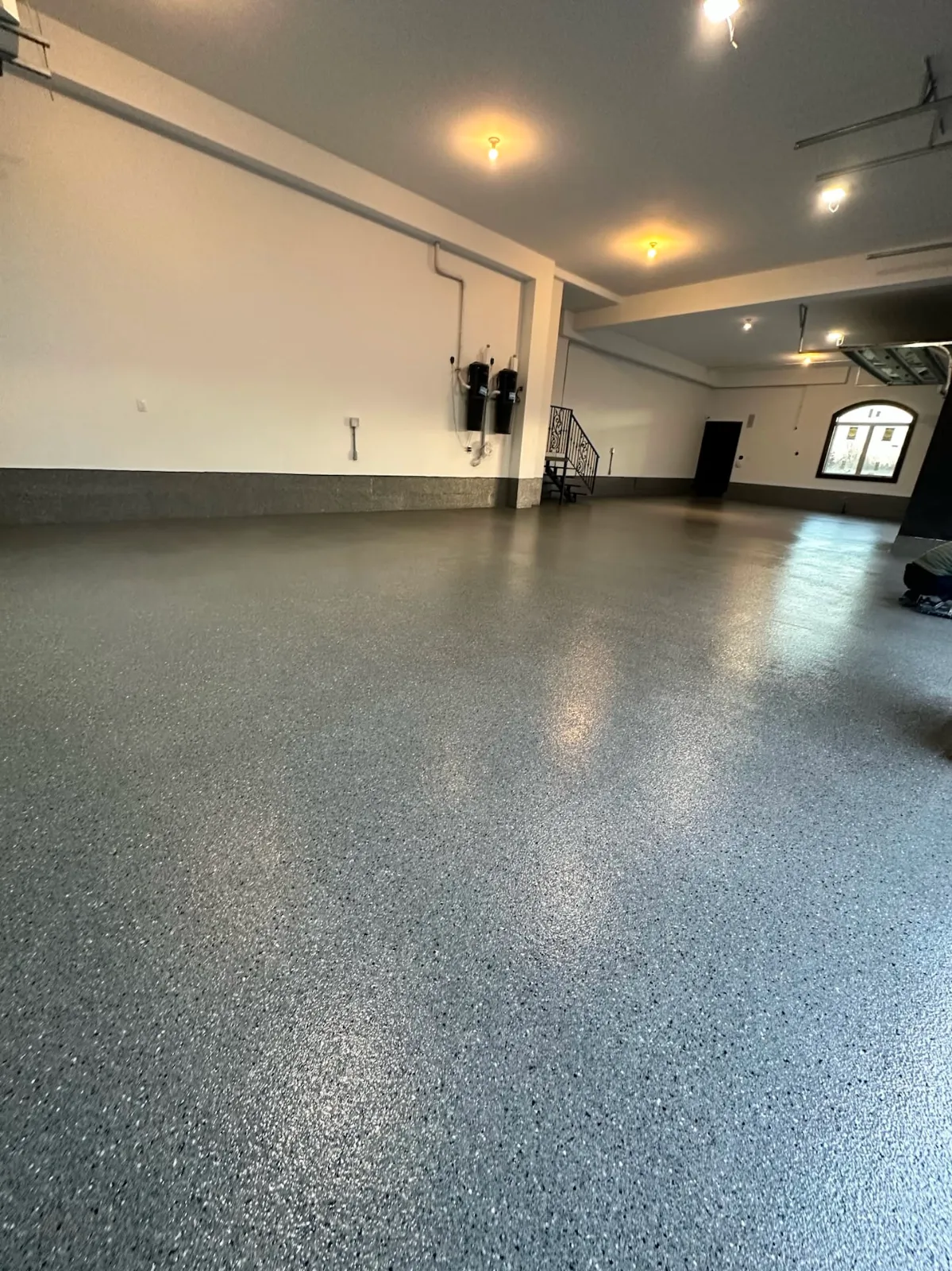
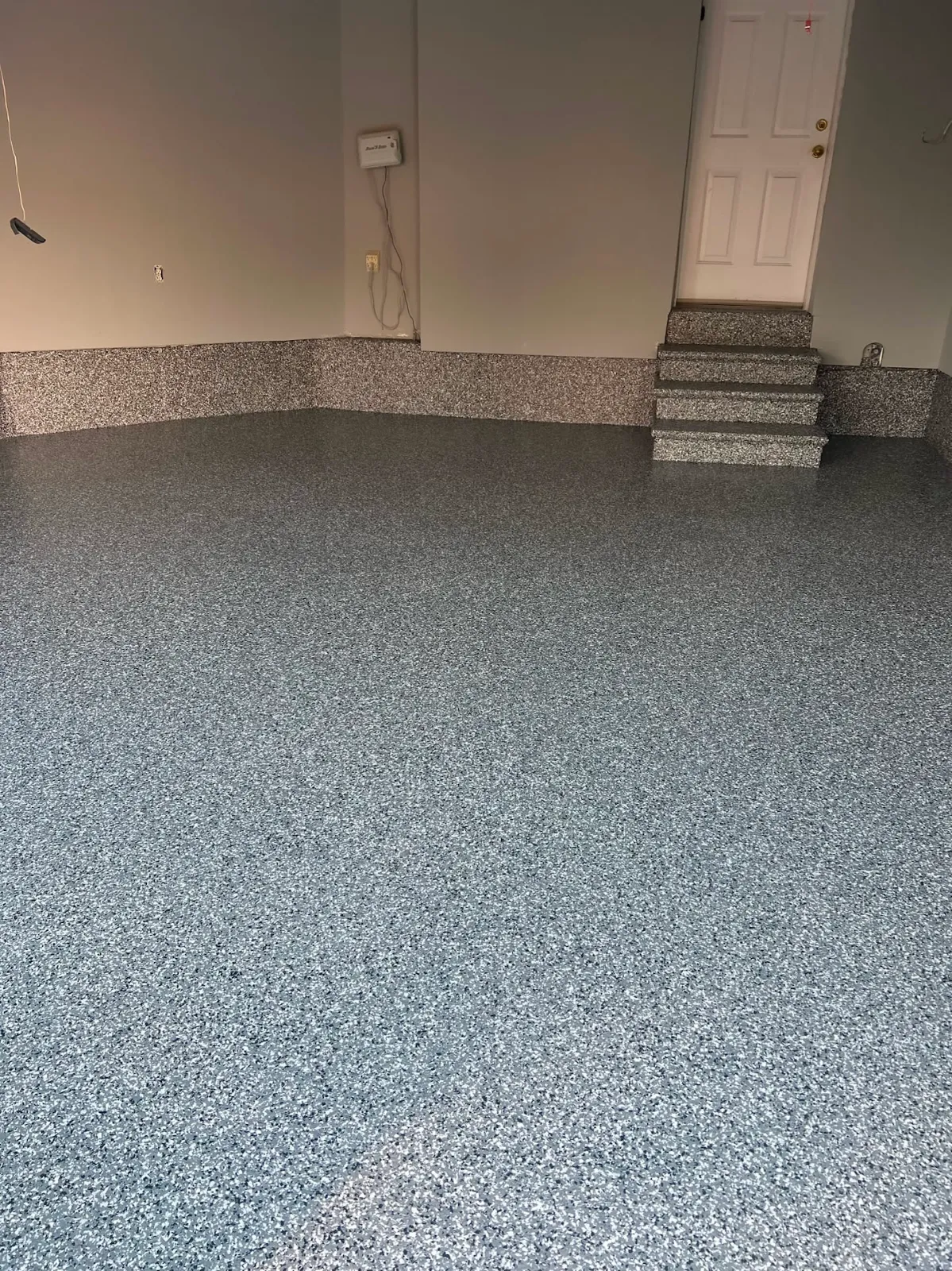
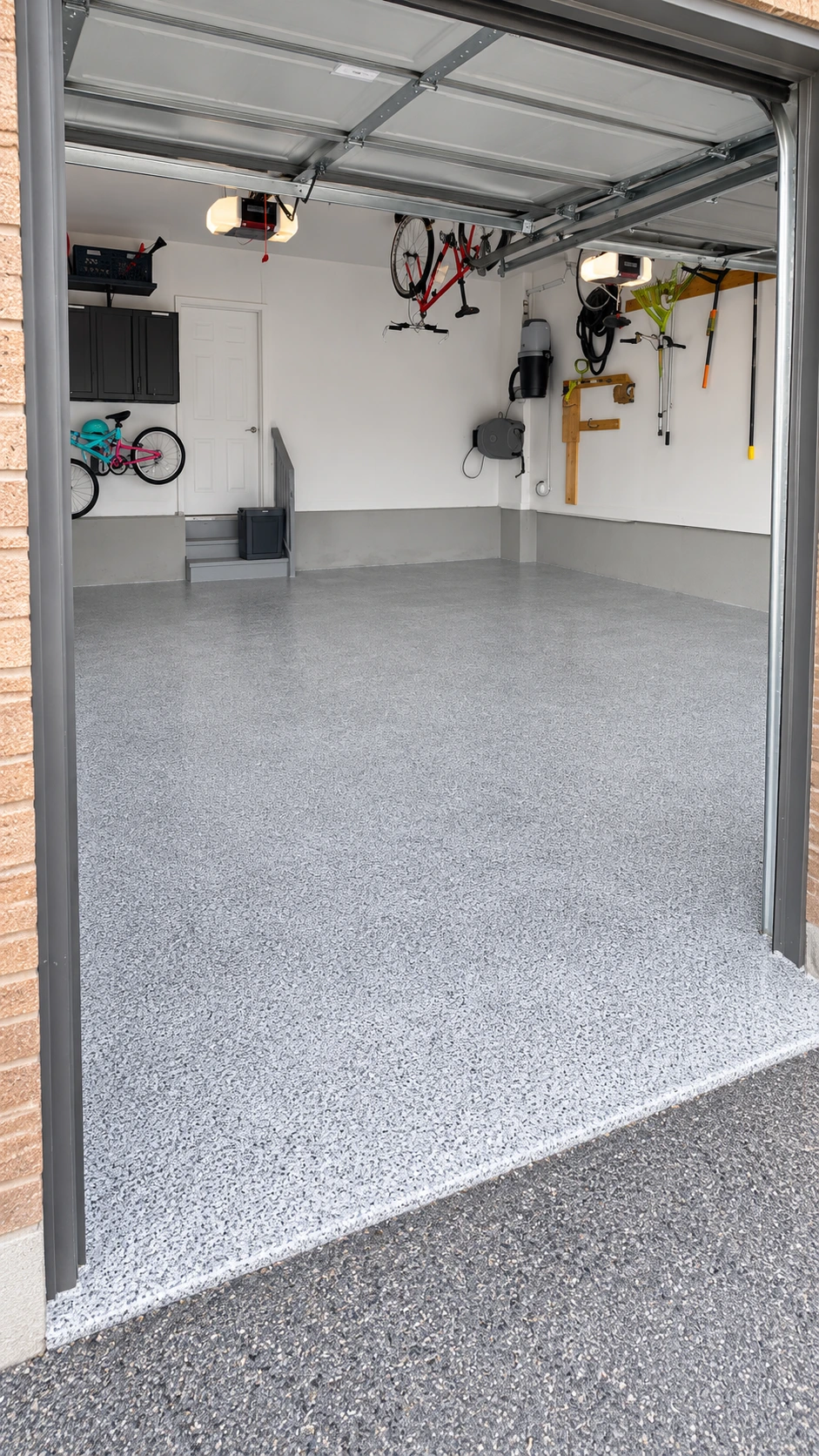
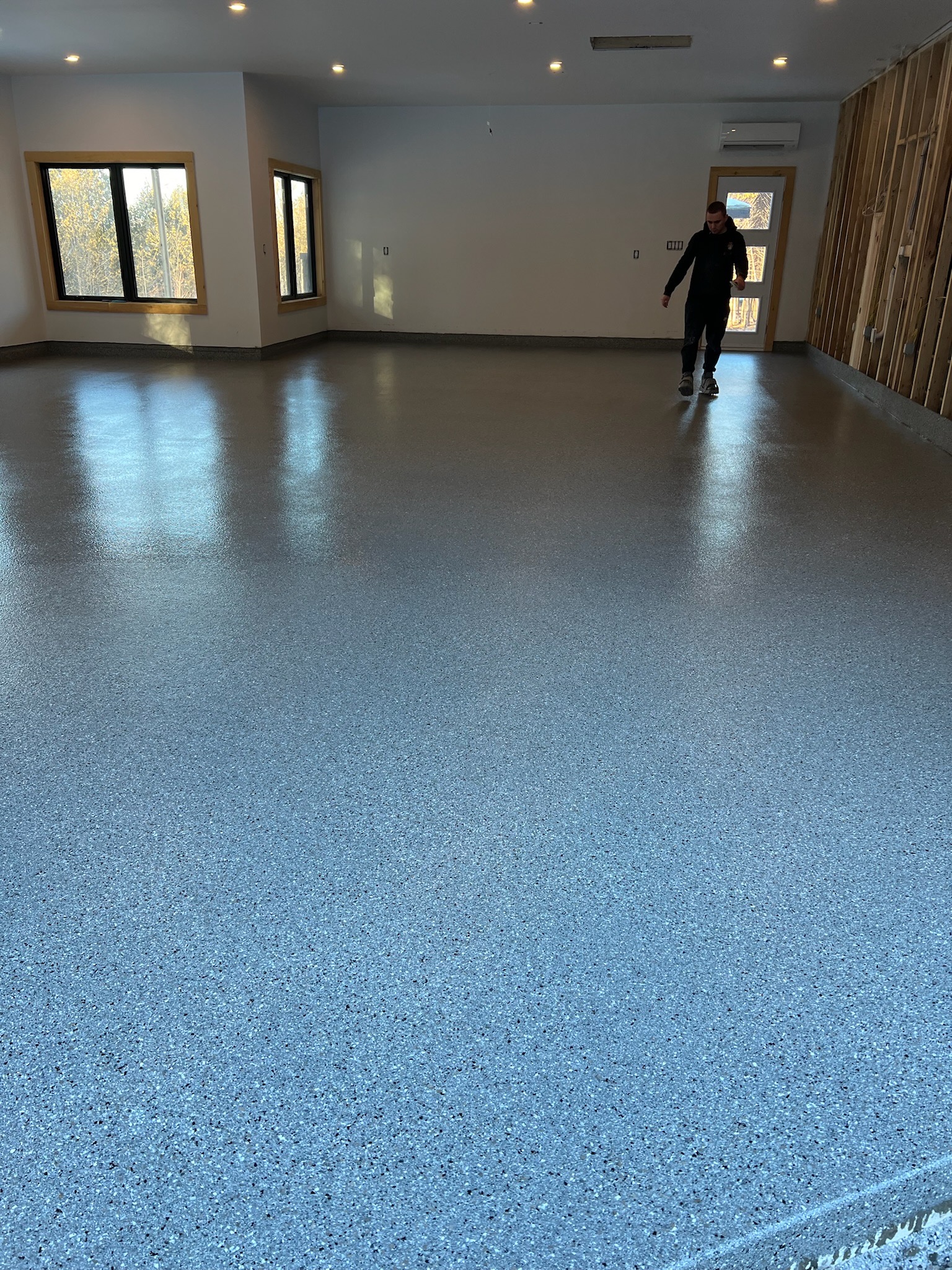
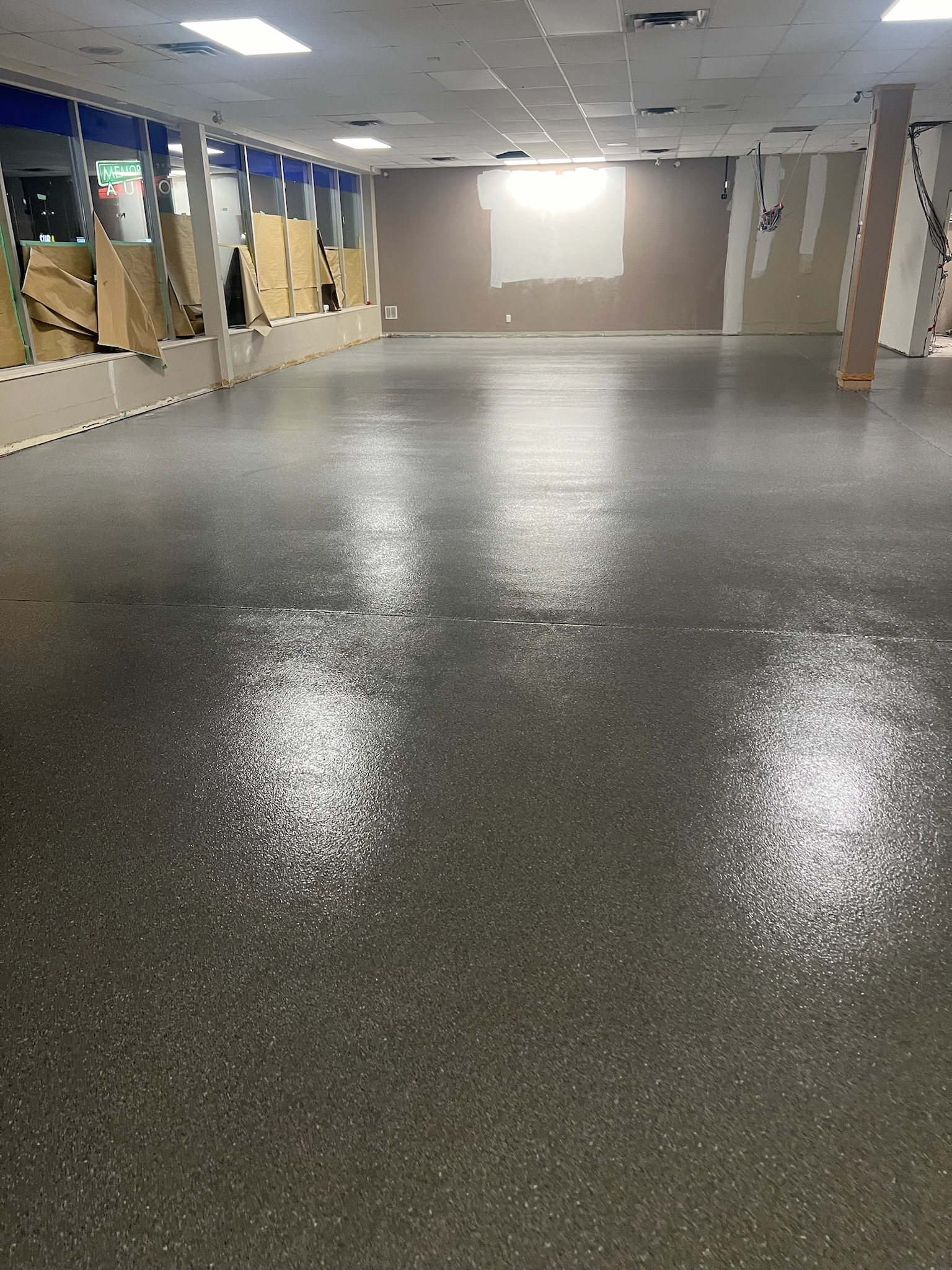
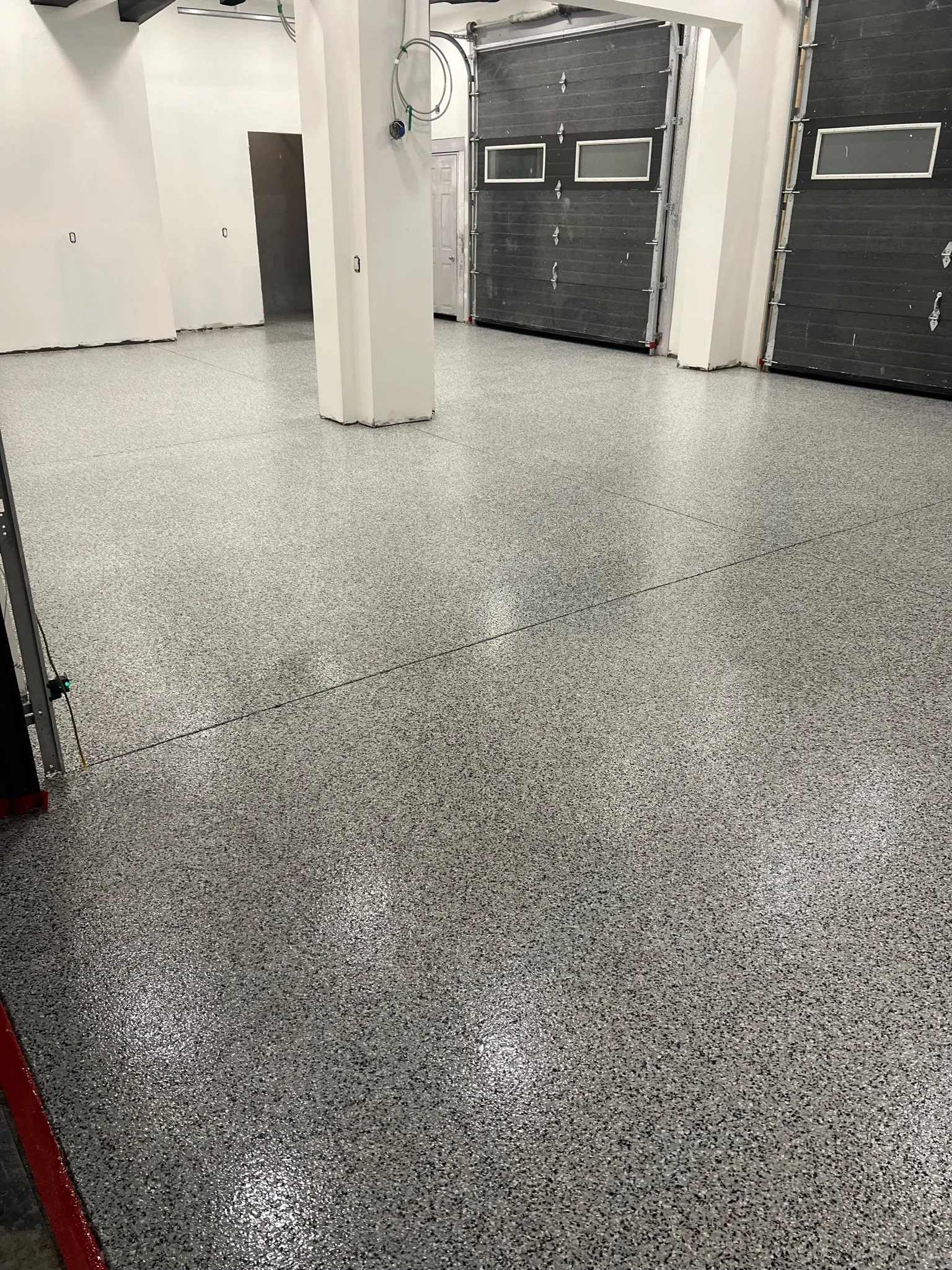
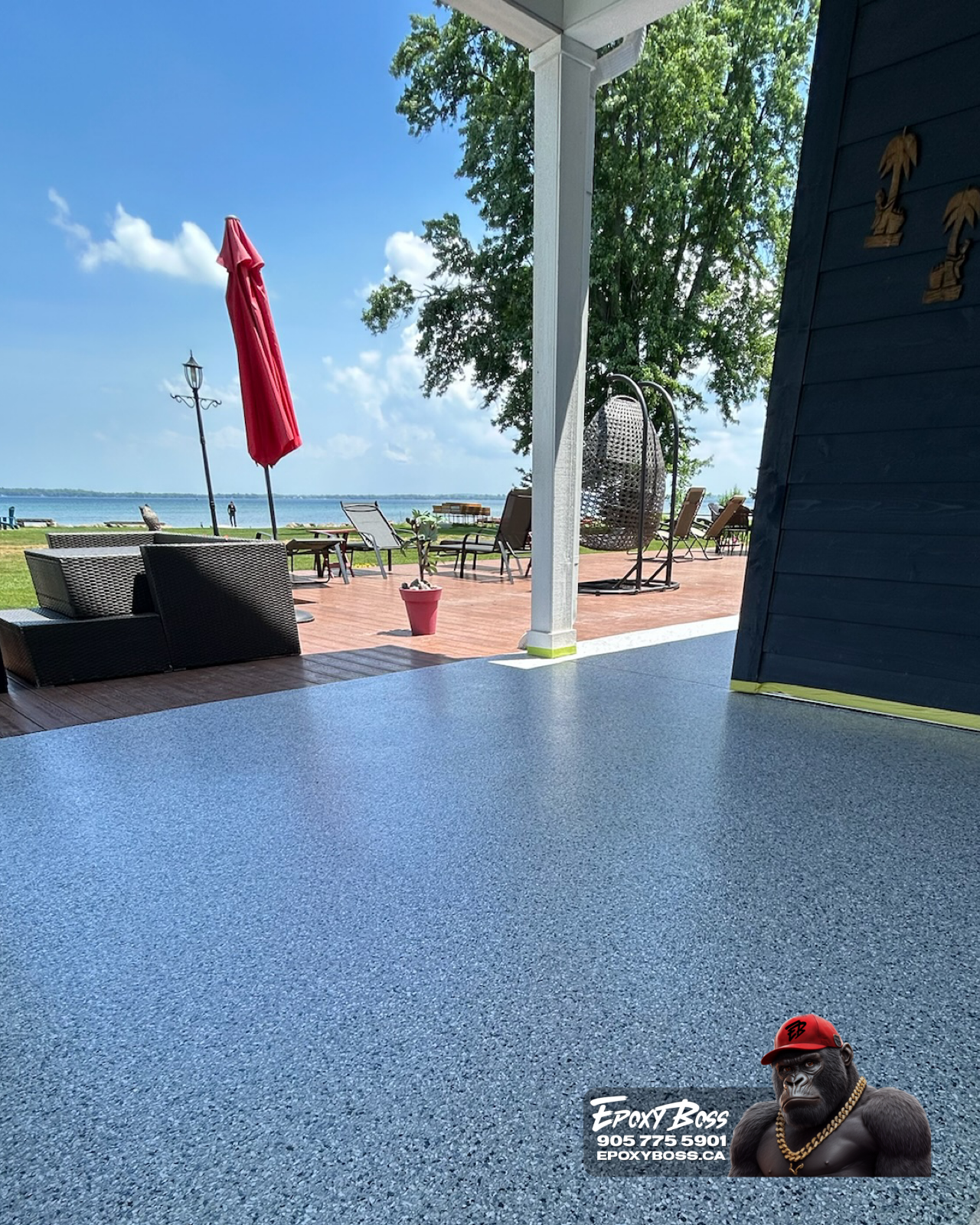
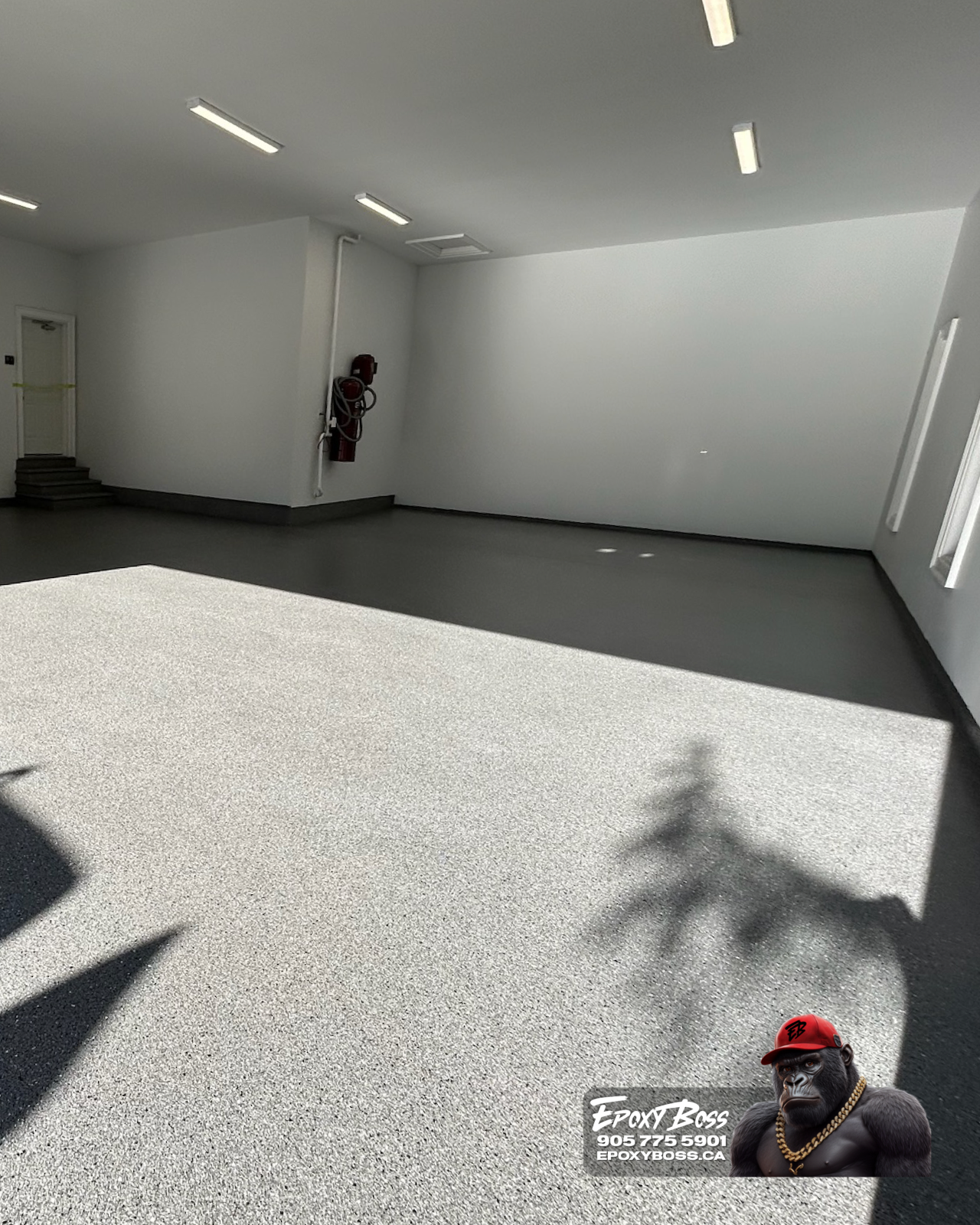
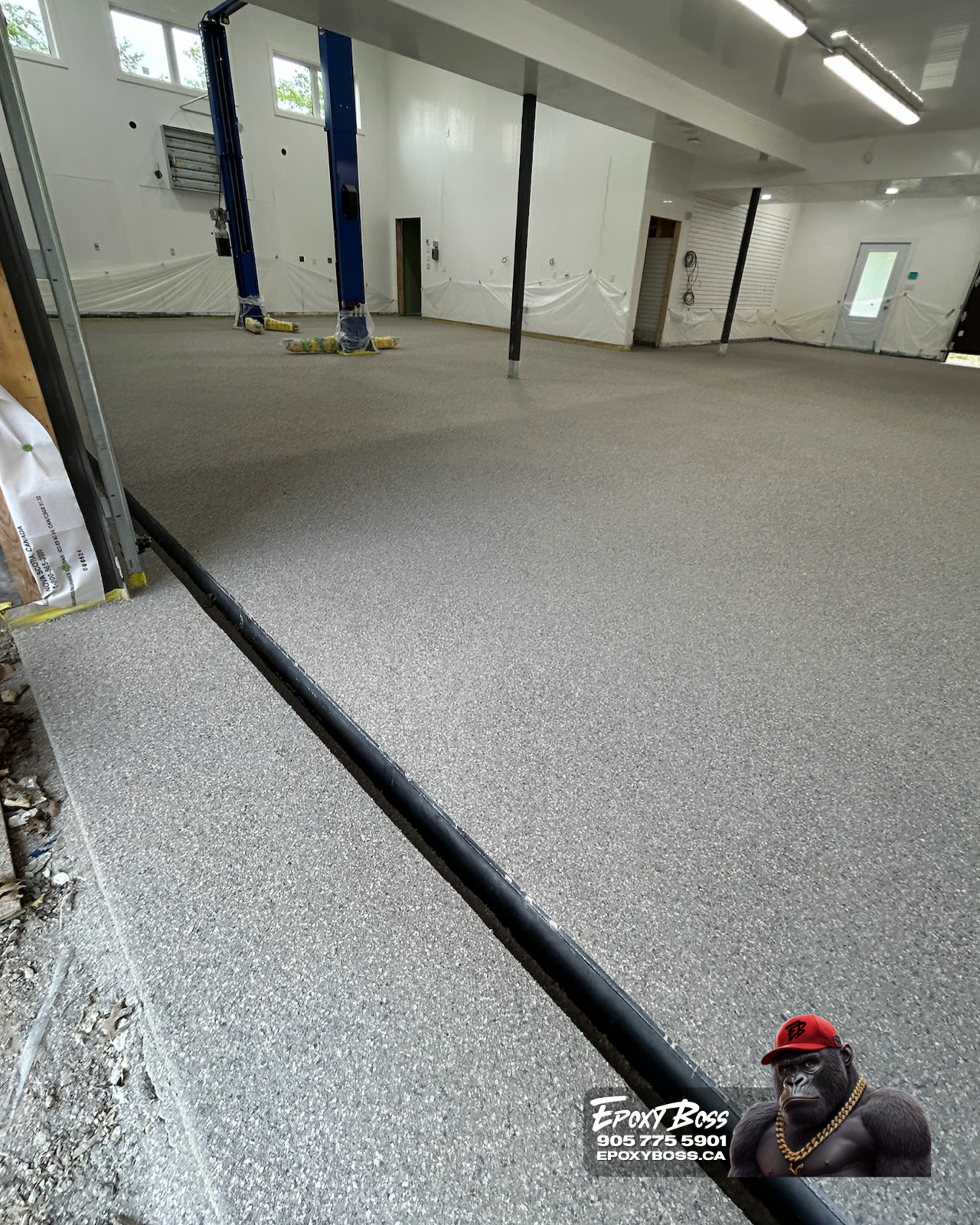
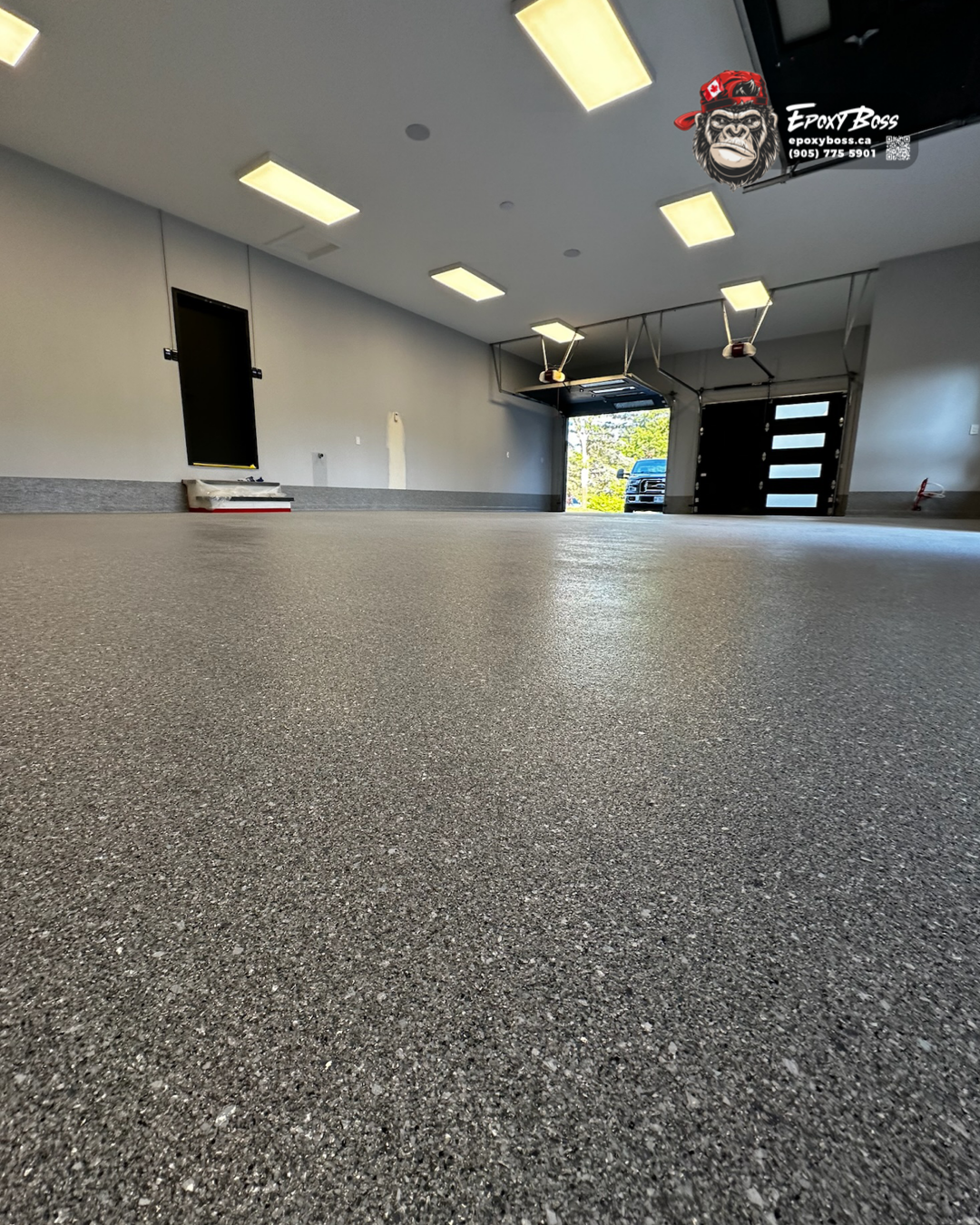
A resin floor coating is the whole system, not a single can. A typical full-broadcast flake garage floor, for example, includes:
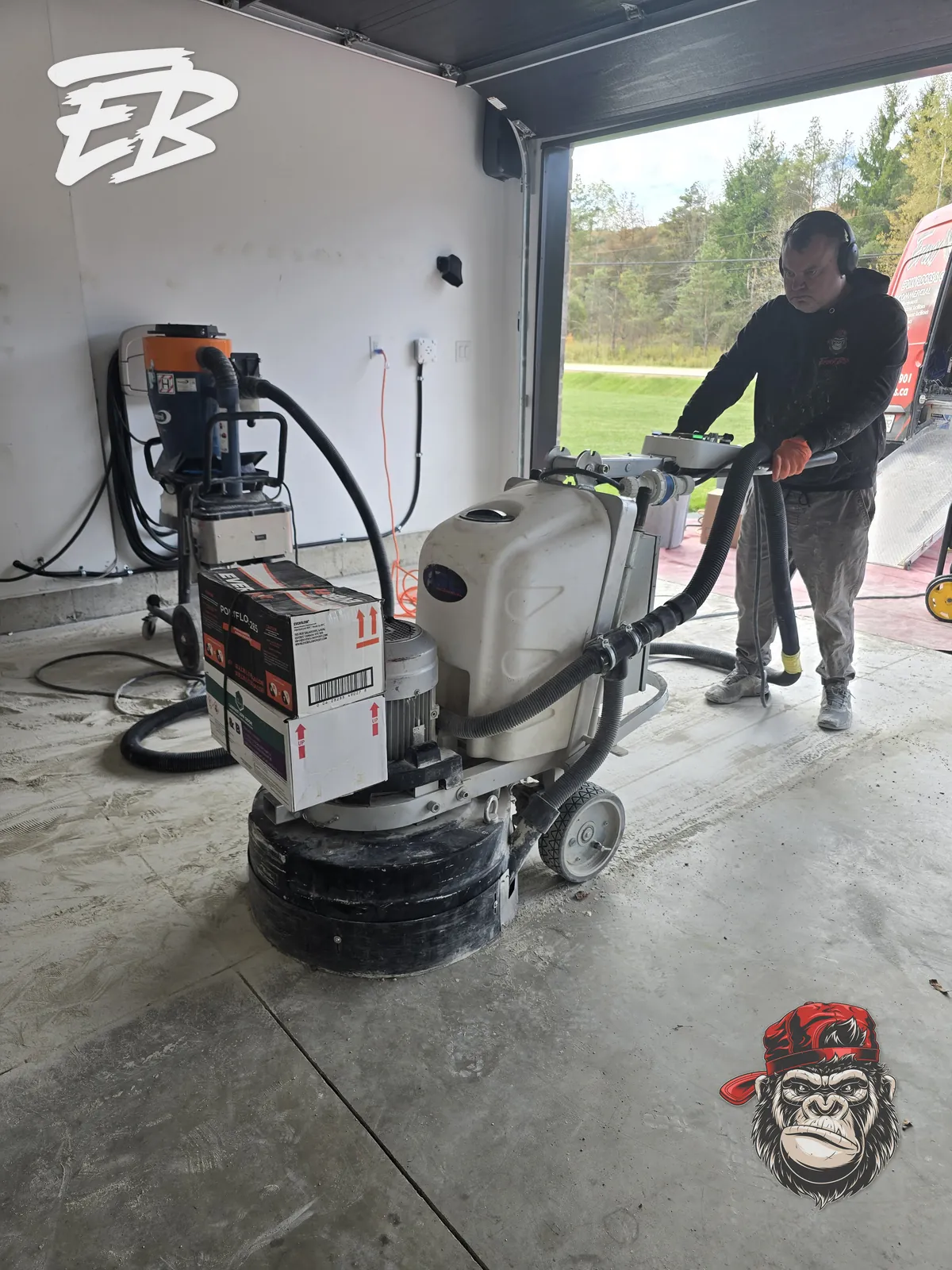
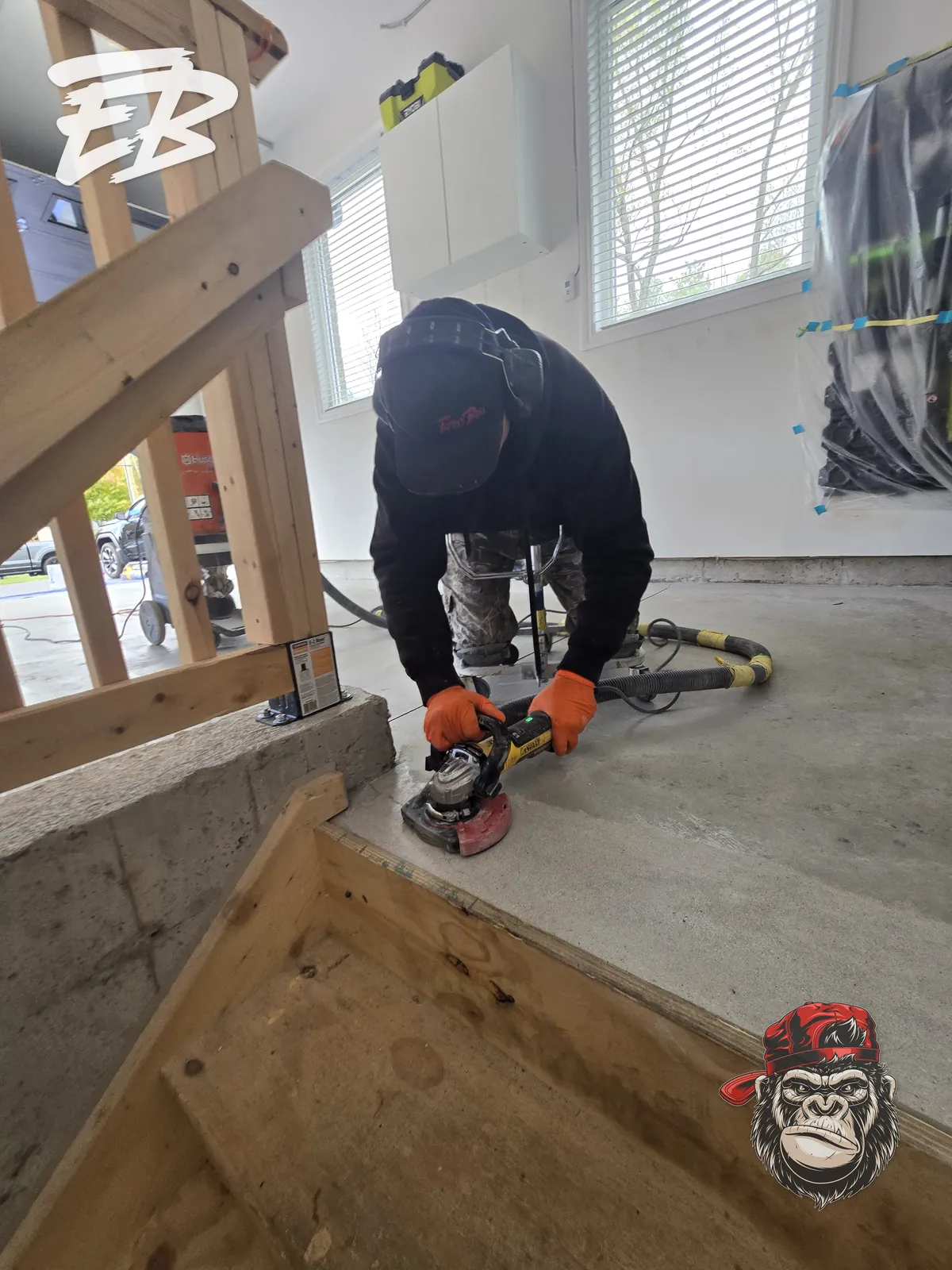
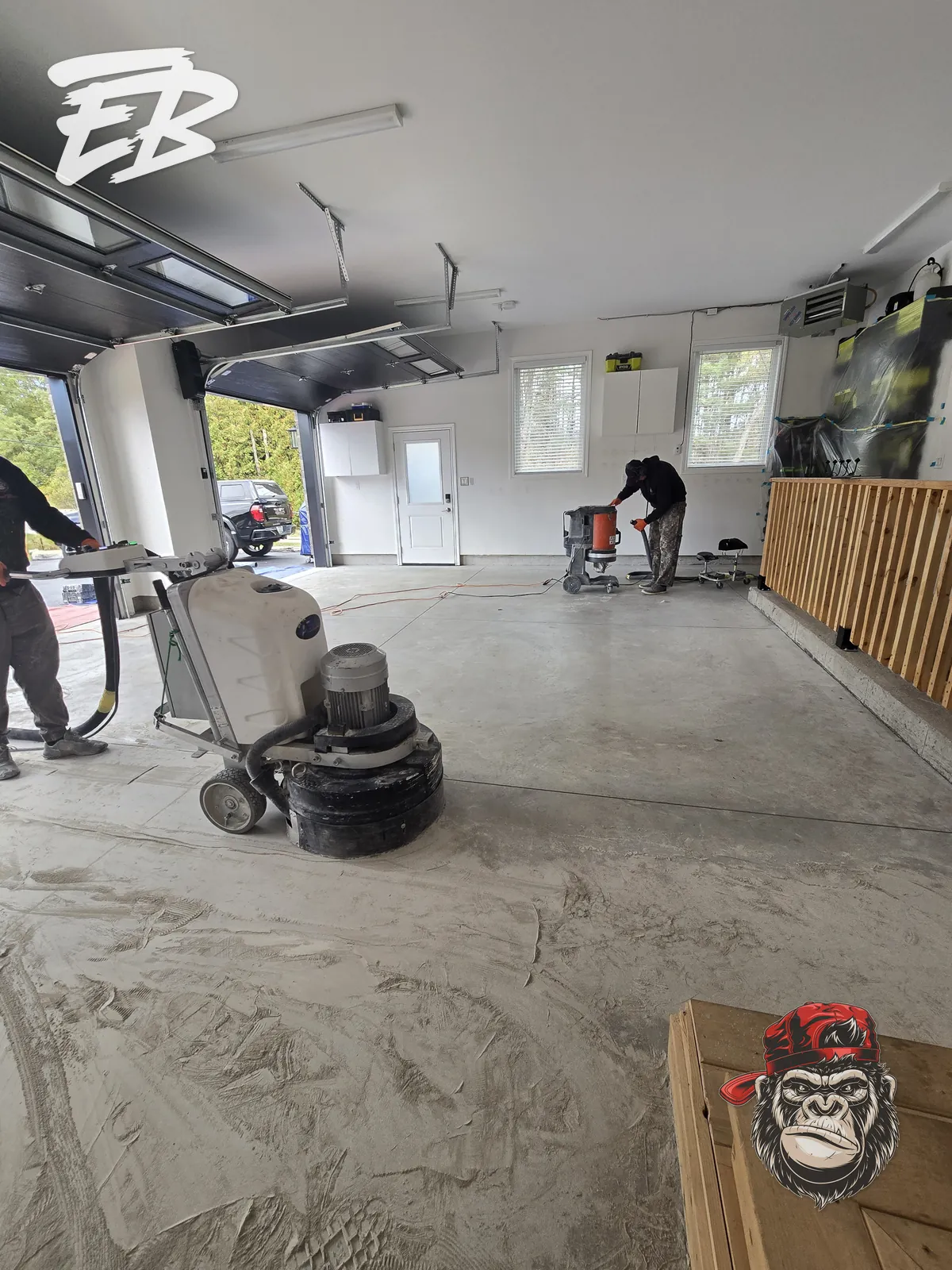
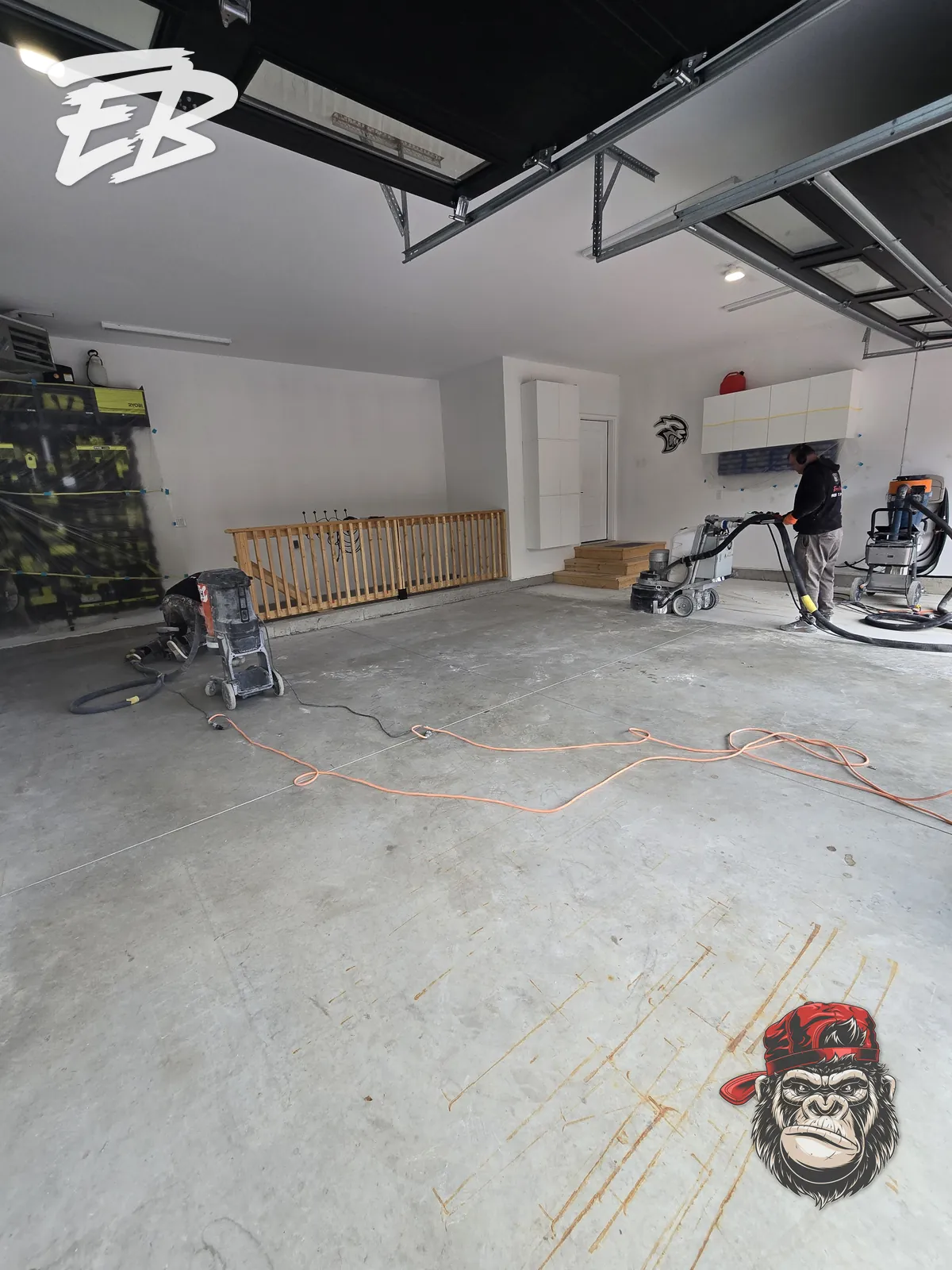
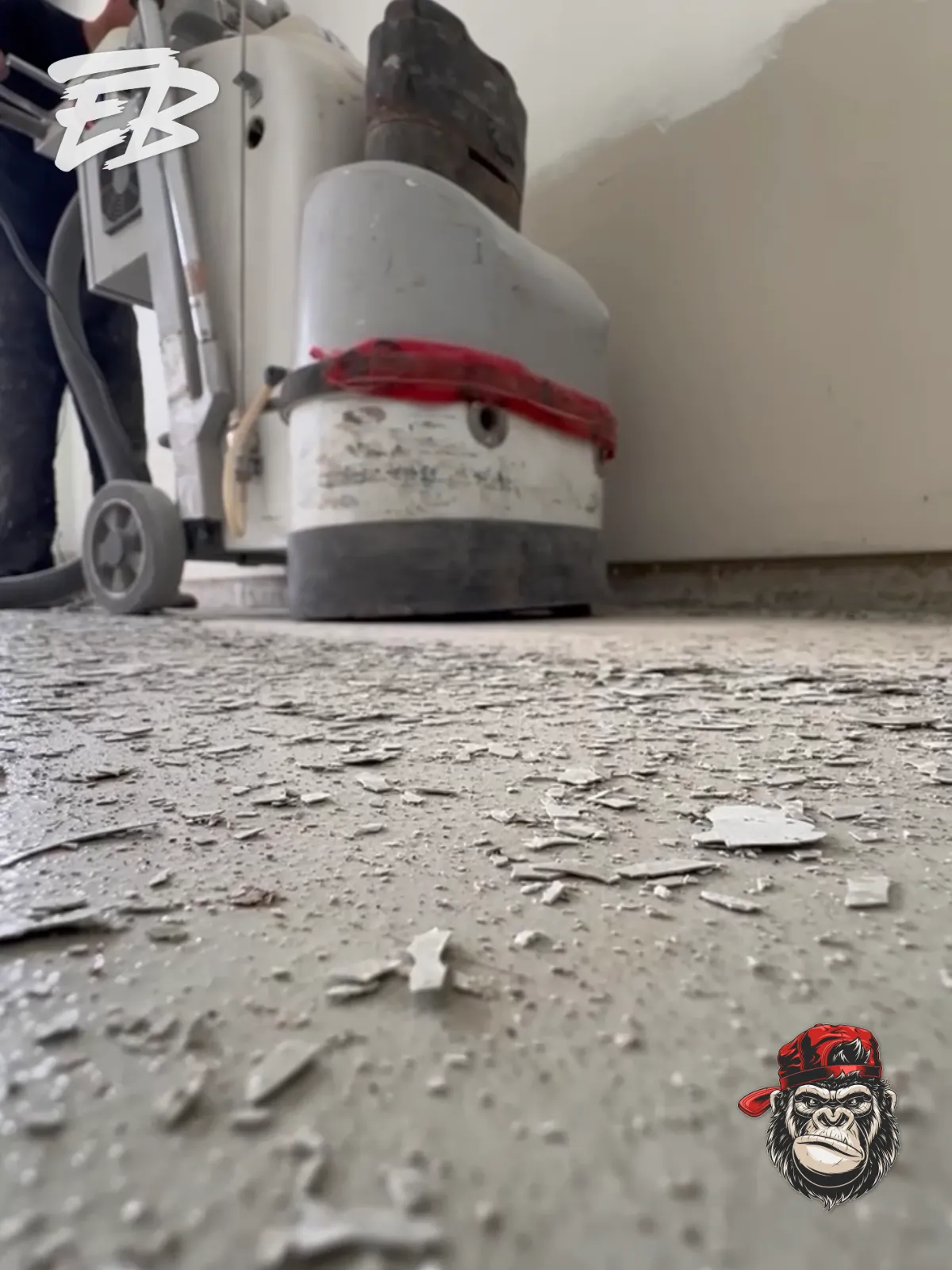
- Mechanical surface preparation by diamond grinding.
- Crack, pit and edge repair with compatible fillers.
- A pigmented base coat, often epoxy.
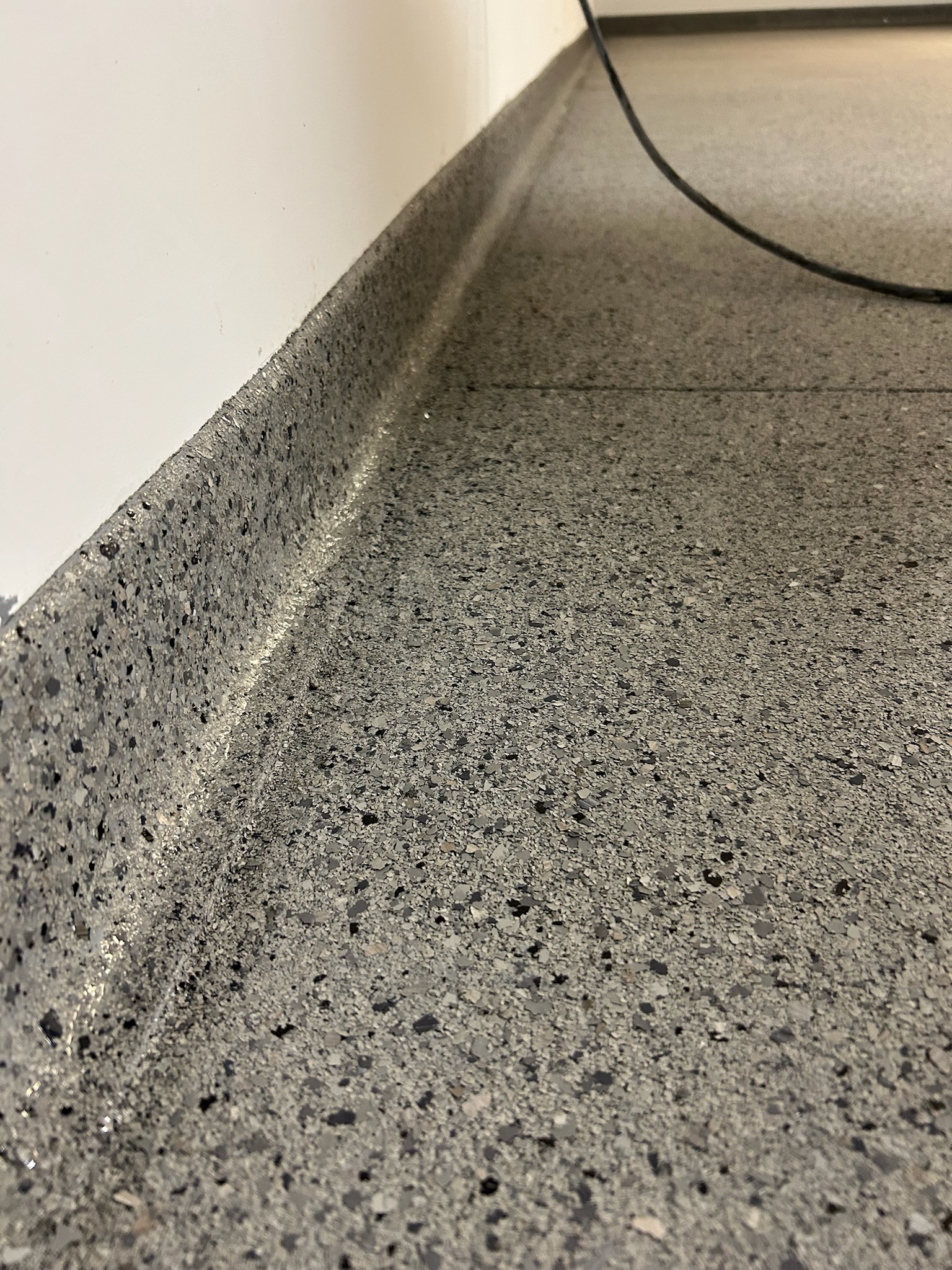
- Decorative flake broadcast to full coverage.
- Scraping and vacuuming of loose flake.
- One or more clear topcoats, often polyaspartic or aliphatic urethane.
Each layer has a job. That is why two quotes that both say "epoxy floor" can describe very different floors. Flake manufacturers design their products to work inside these systems; the Torginol flake technical data sheet, for example, lists compatibility with epoxies, polyaspartics, polyureas and polyurethanes and recommends a clear topcoat to encapsulate the flake.
Resin flooring vs epoxy flooring: a practical comparison
All-epoxy system
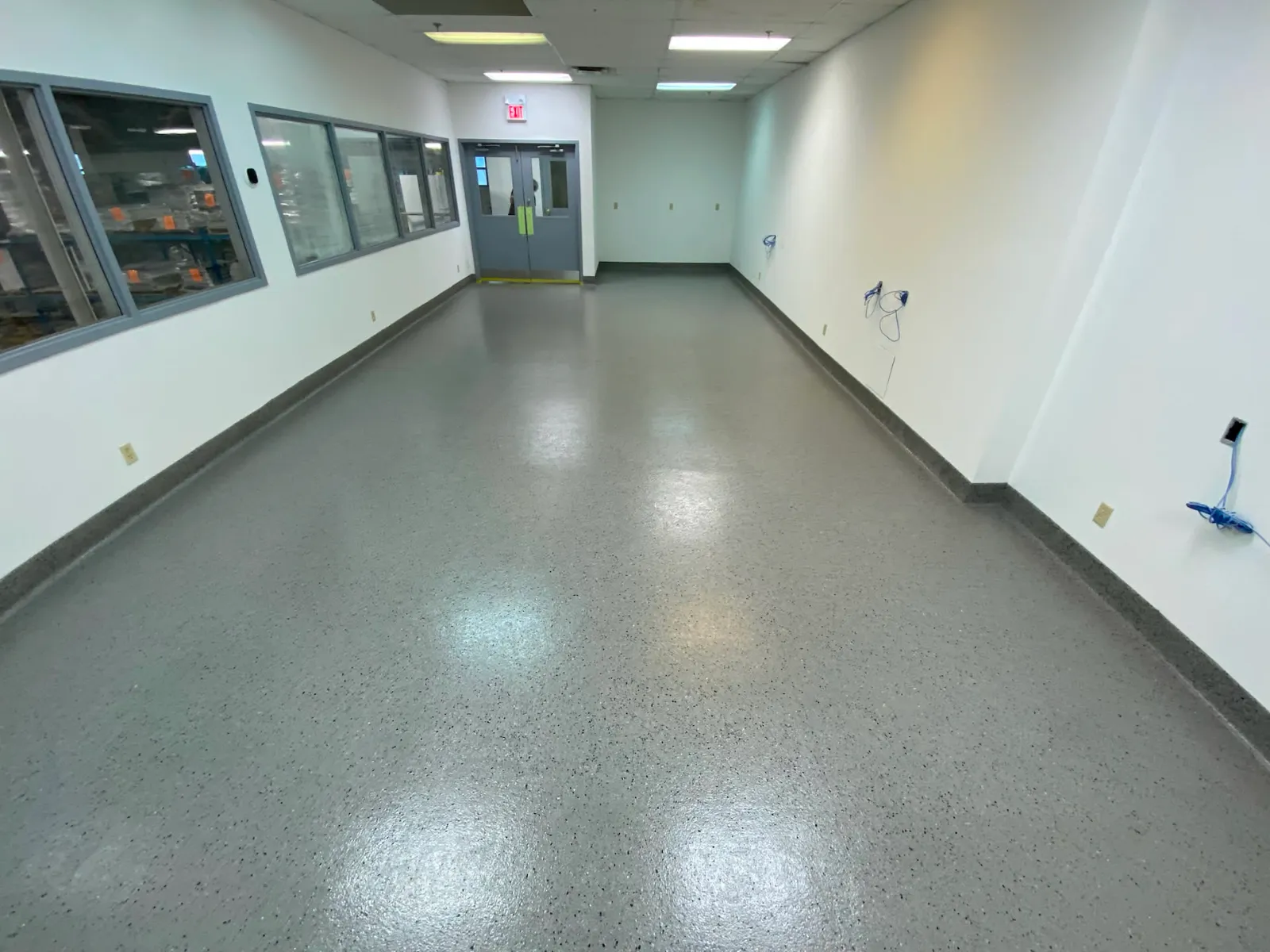
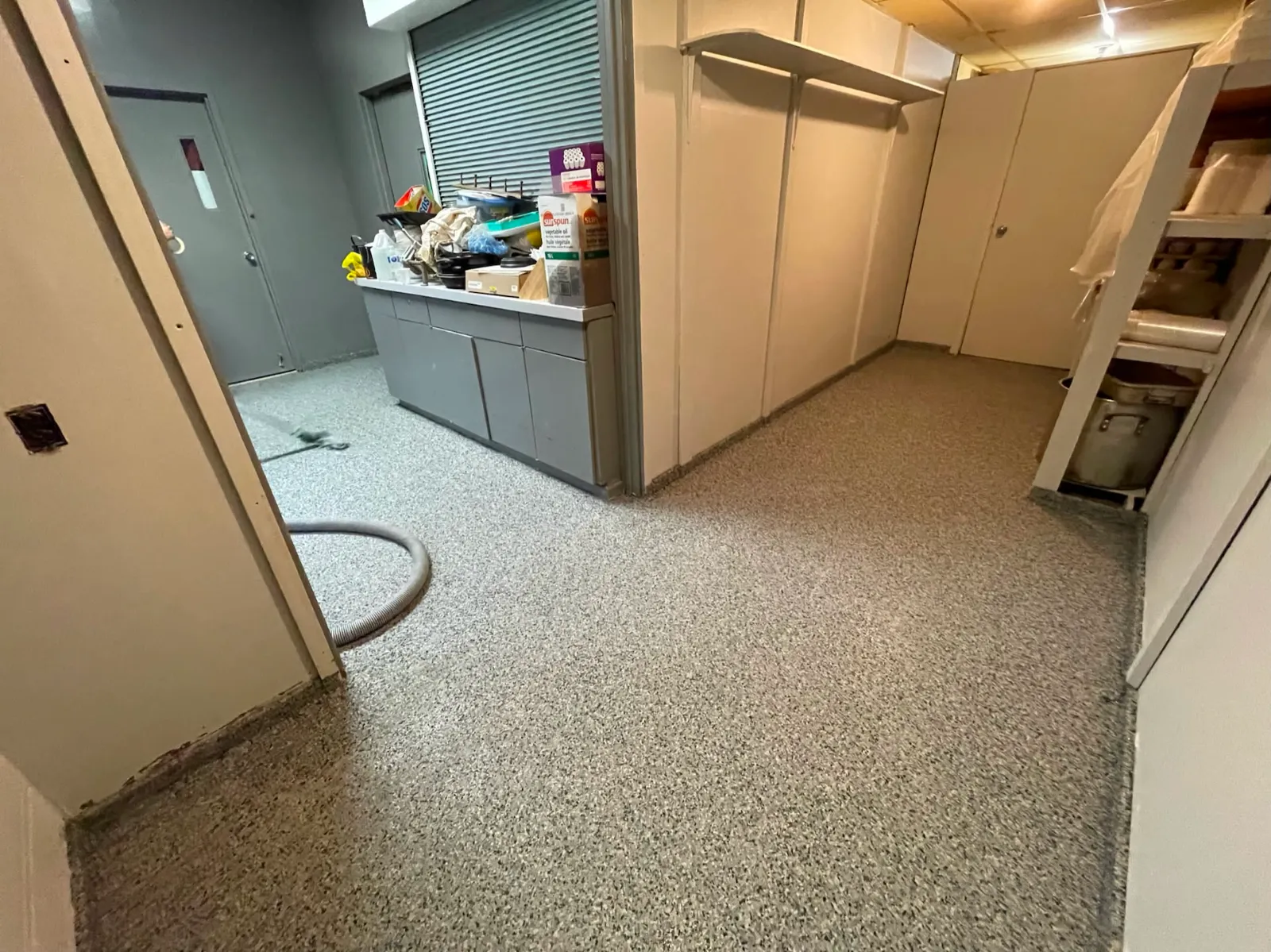
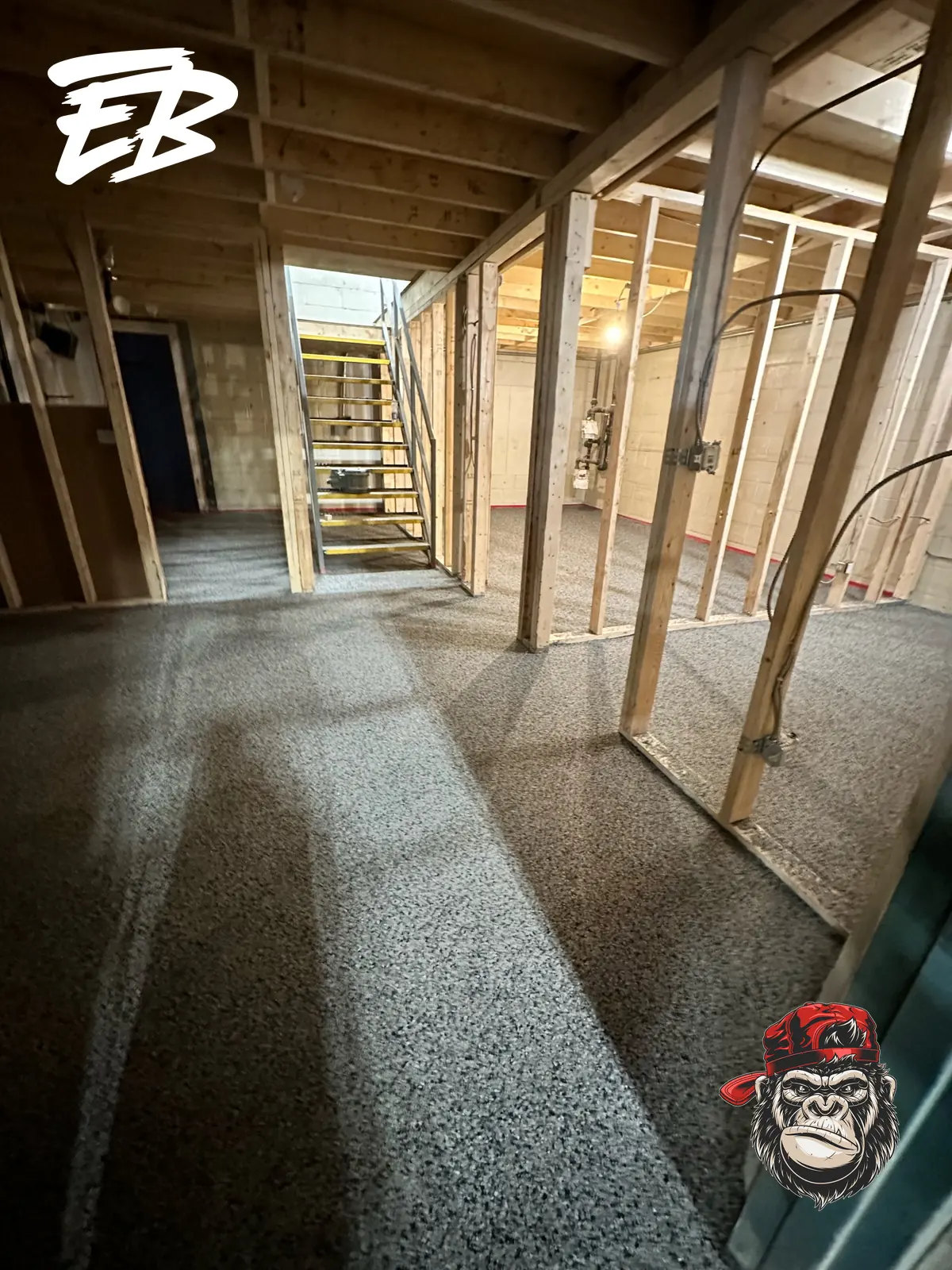
Primer, body coat and topcoat are all epoxy. This can work well indoors where there is little sunlight, such as interior commercial rooms or some basements. In a garage, an all-epoxy topcoat may show more ambering over time where sunlight reaches the floor.
Hybrid resin system
An epoxy base with a polyaspartic or aliphatic urethane topcoat. This is the most common professional approach for Ontario garages because it combines epoxy's adhesion and build with a topcoat chosen for UV stability and wear. We compare these two in detail in epoxy vs polyaspartic for a garage.
Single-chemistry fast systems
Some systems use polyaspartic or polyurea-type products for most layers to shorten installation time. Fast cure brings benefits and limits, including shorter working time and a greater need for tight control of slab and air conditions. See our polyaspartic floor coating guide.
Does a flake garage floor use epoxy or resin?
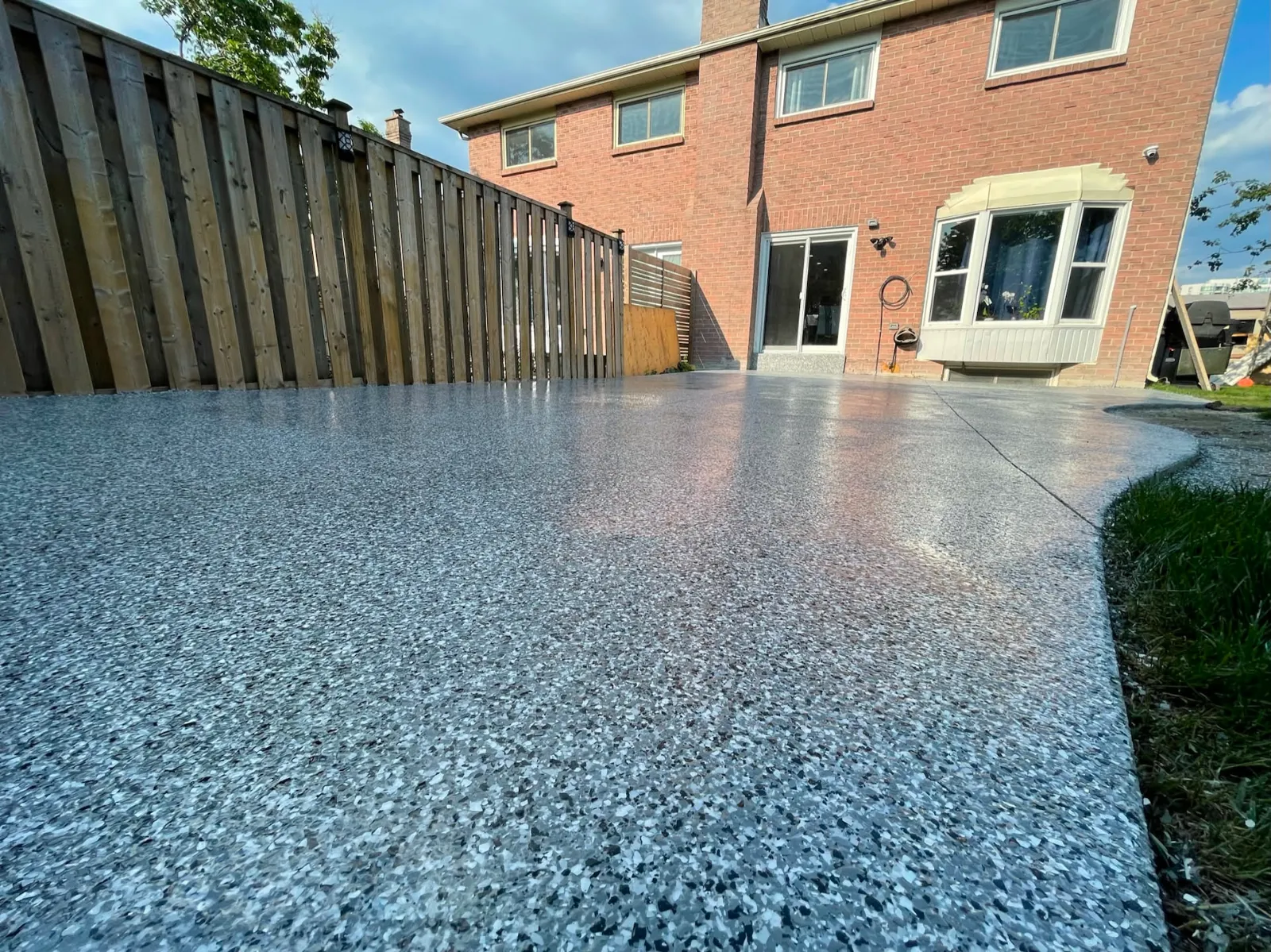
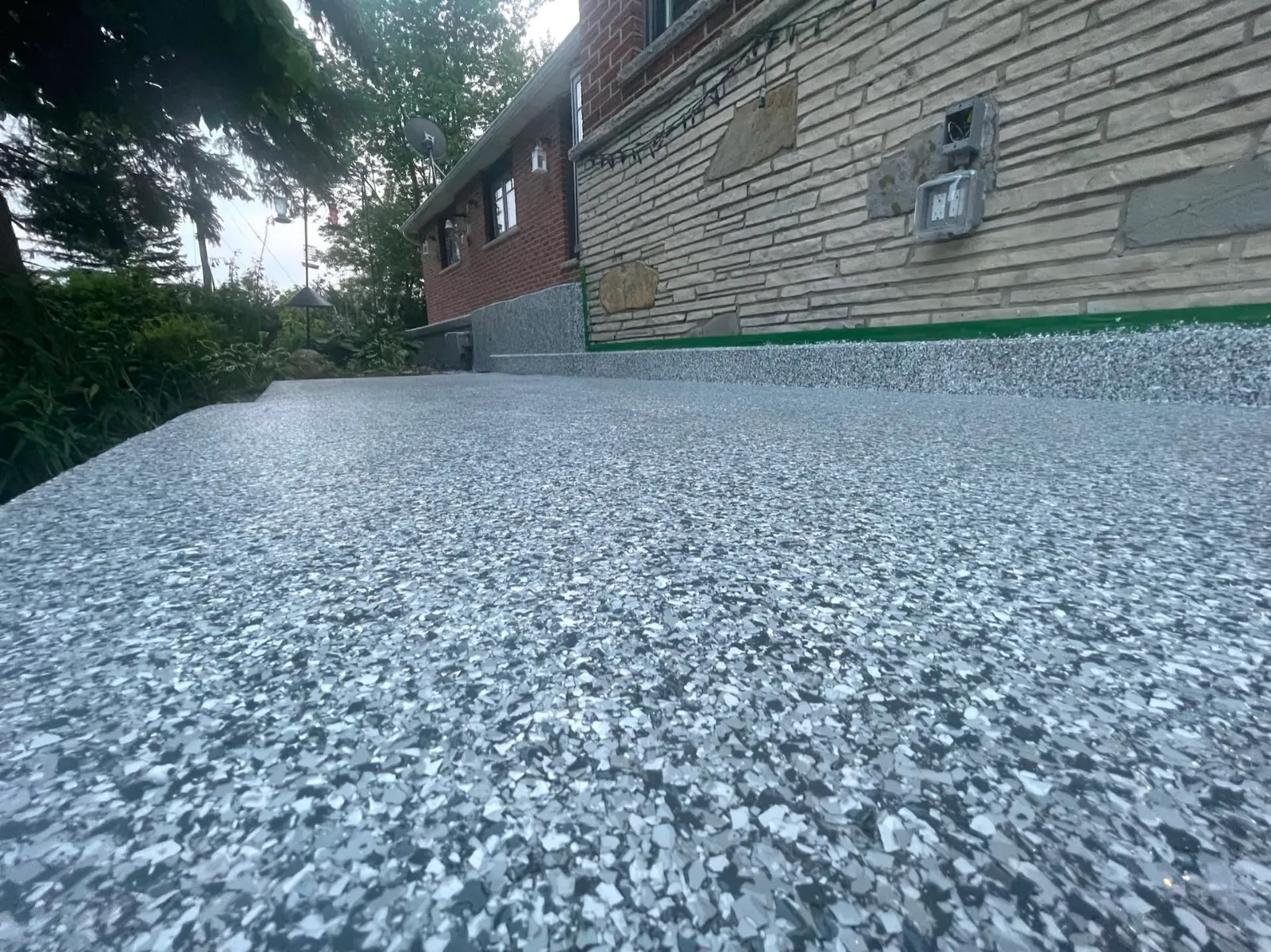
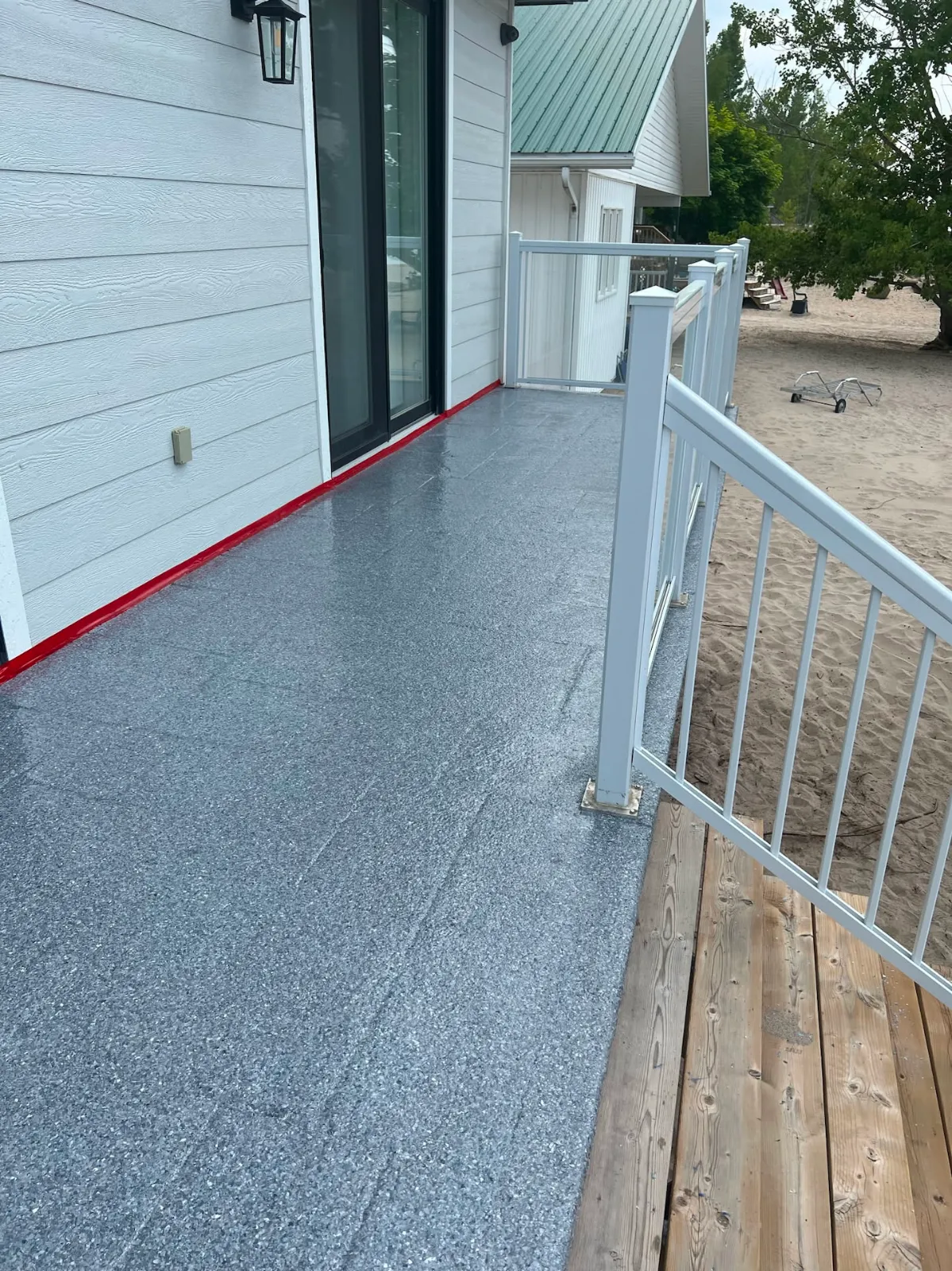
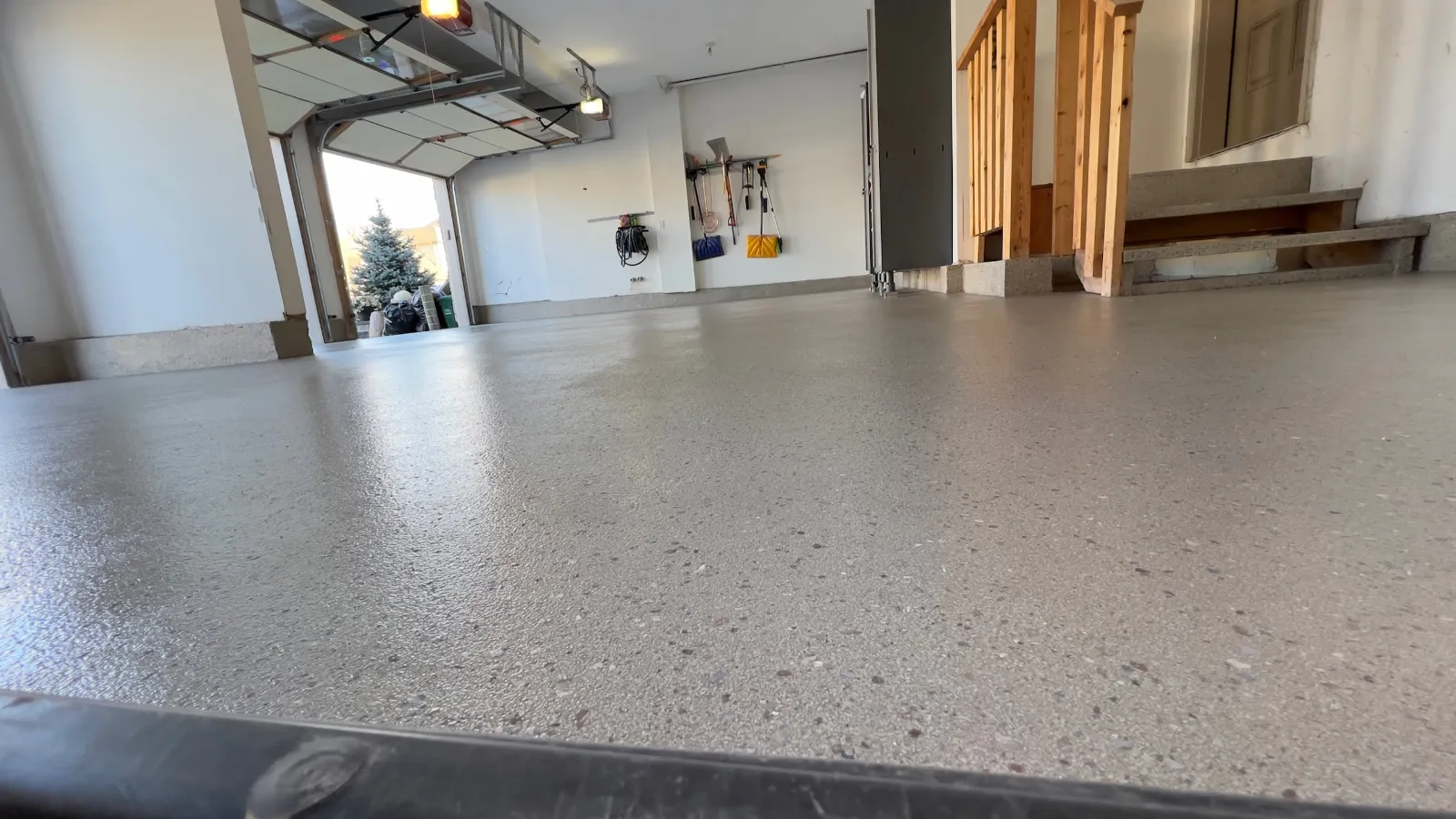
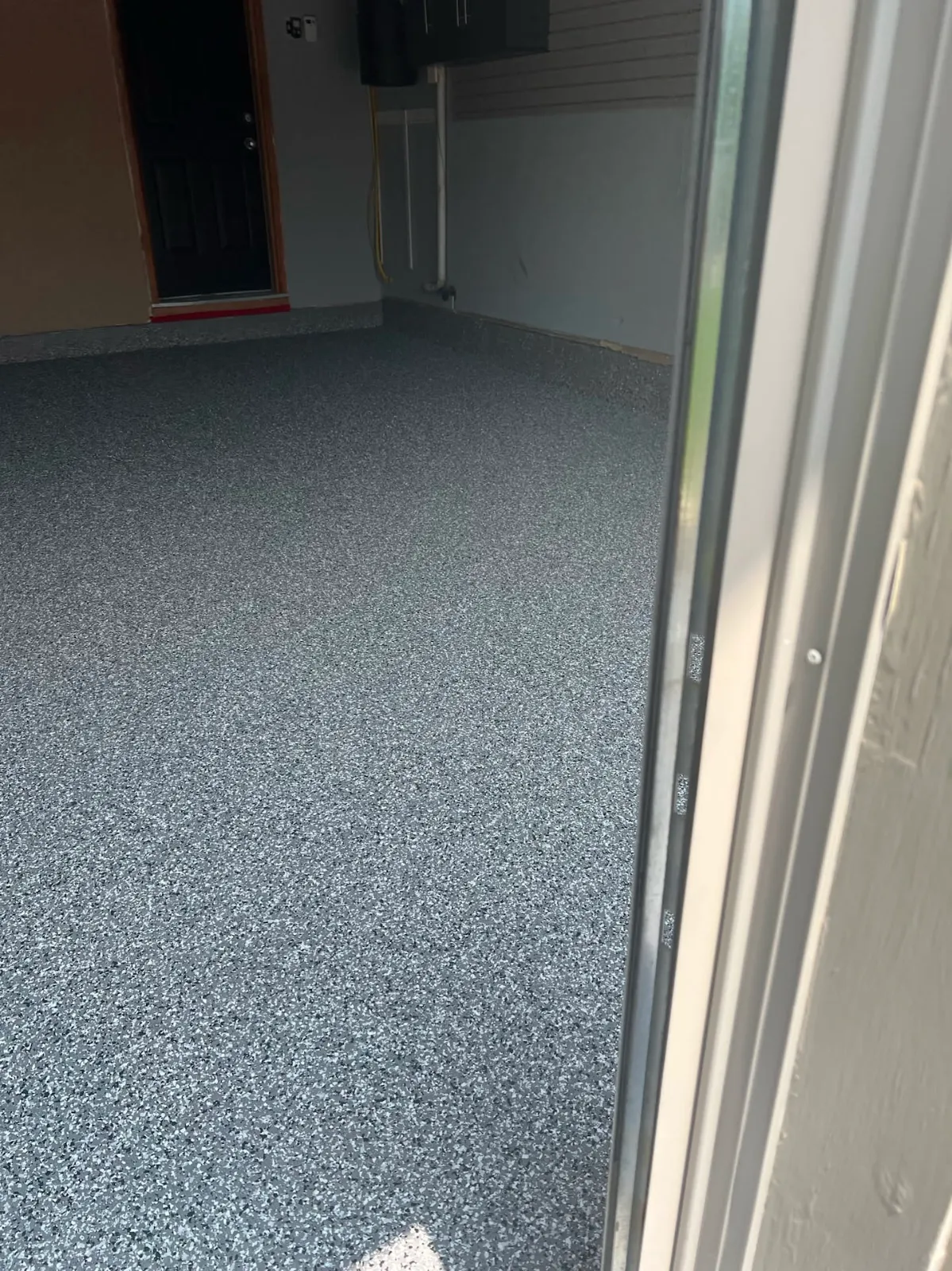
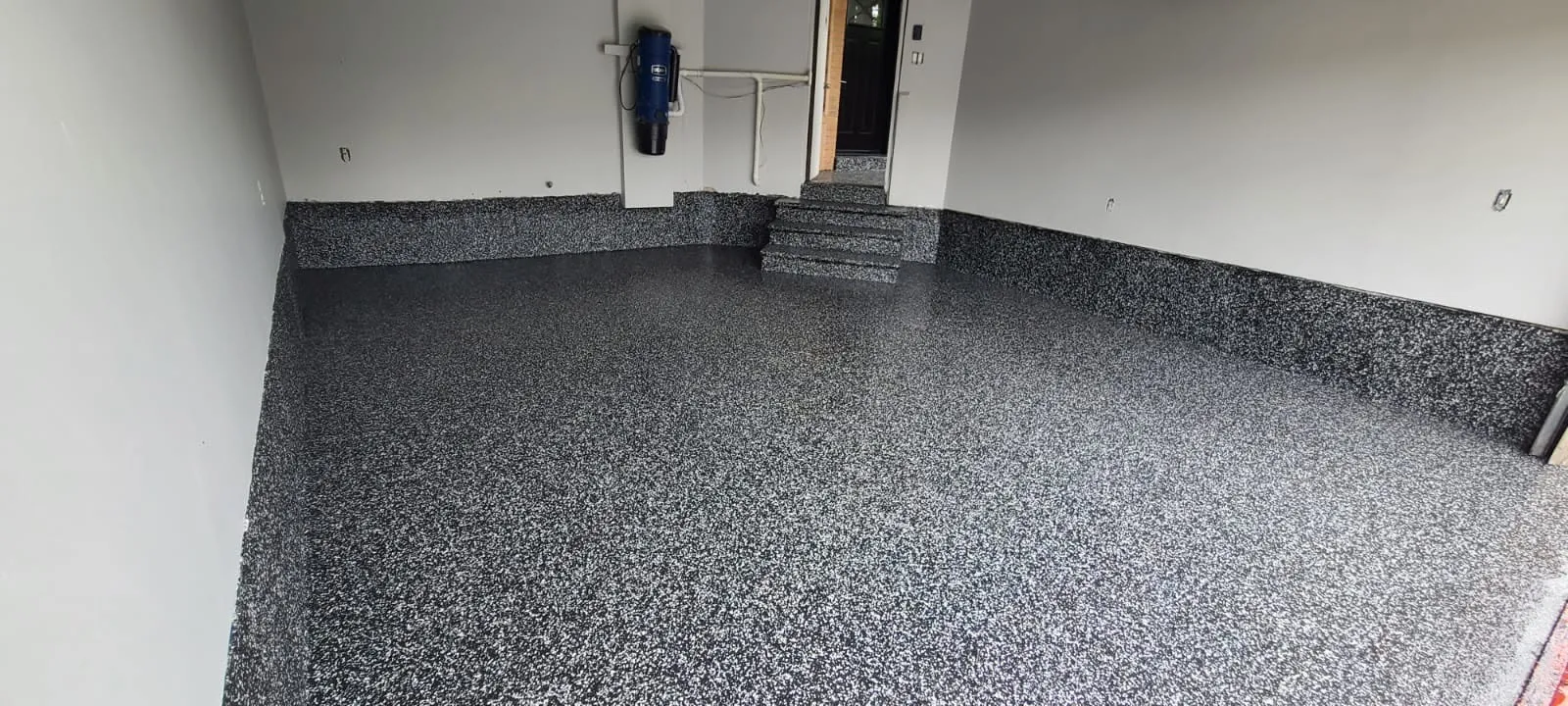
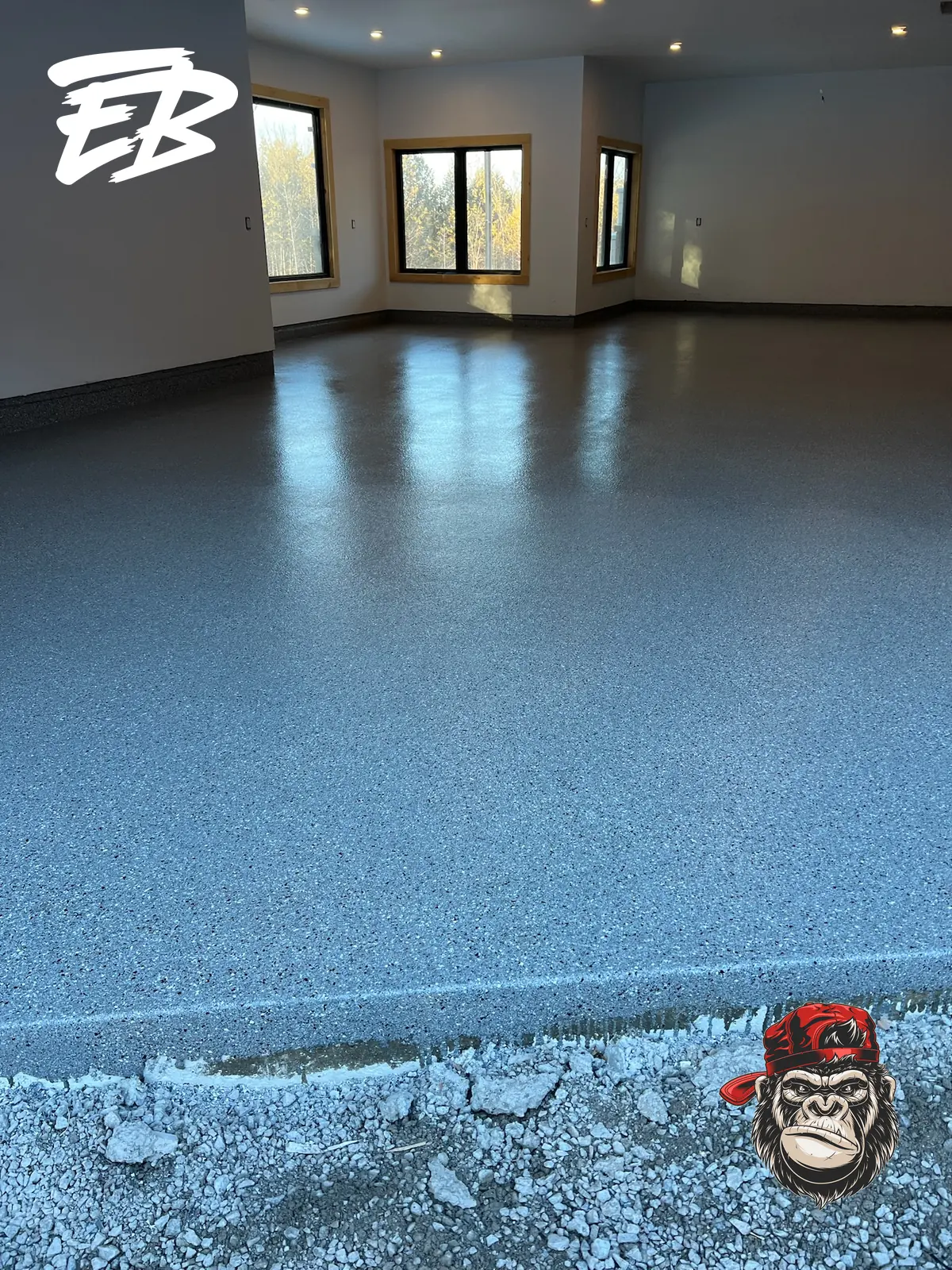
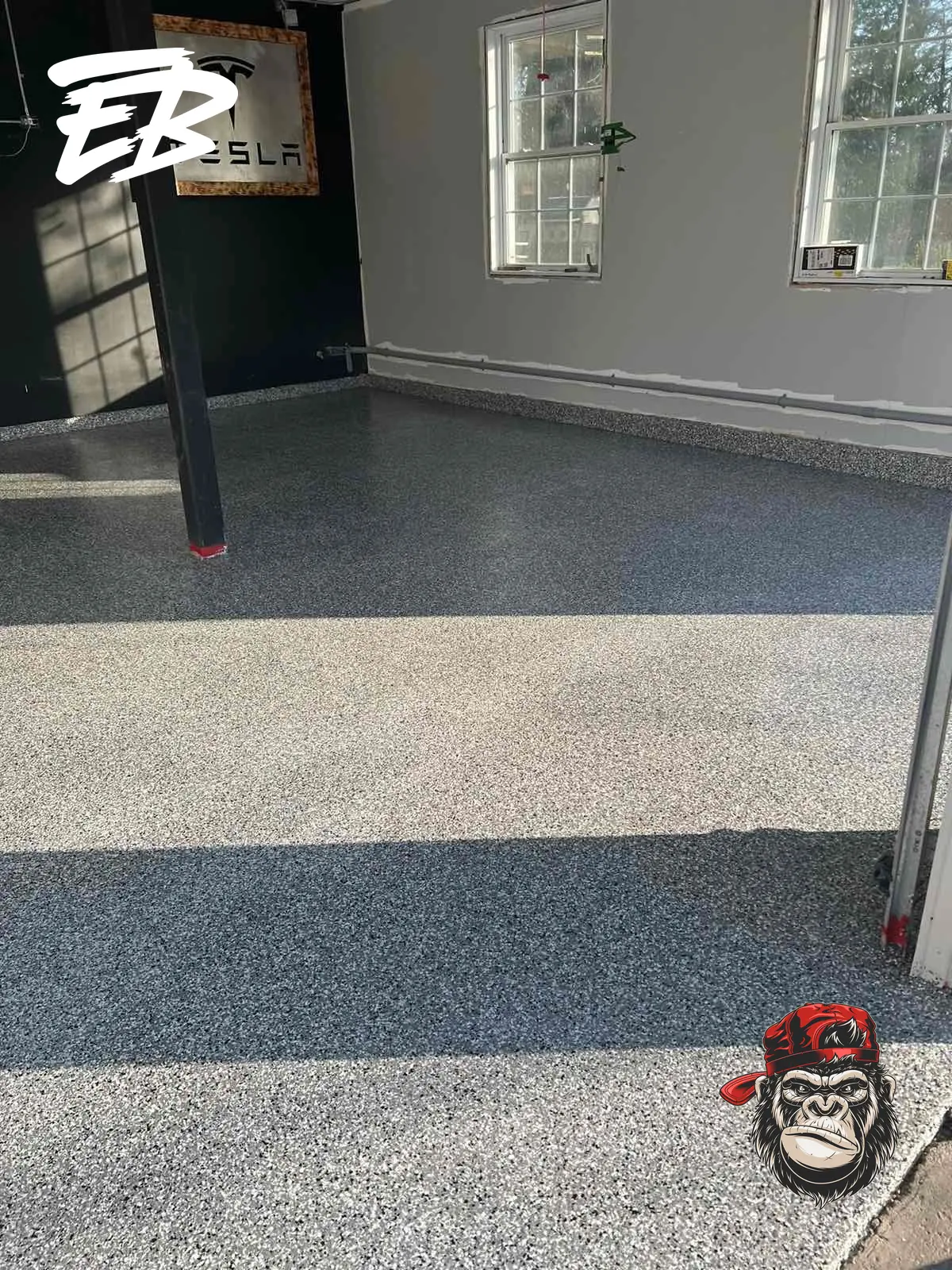
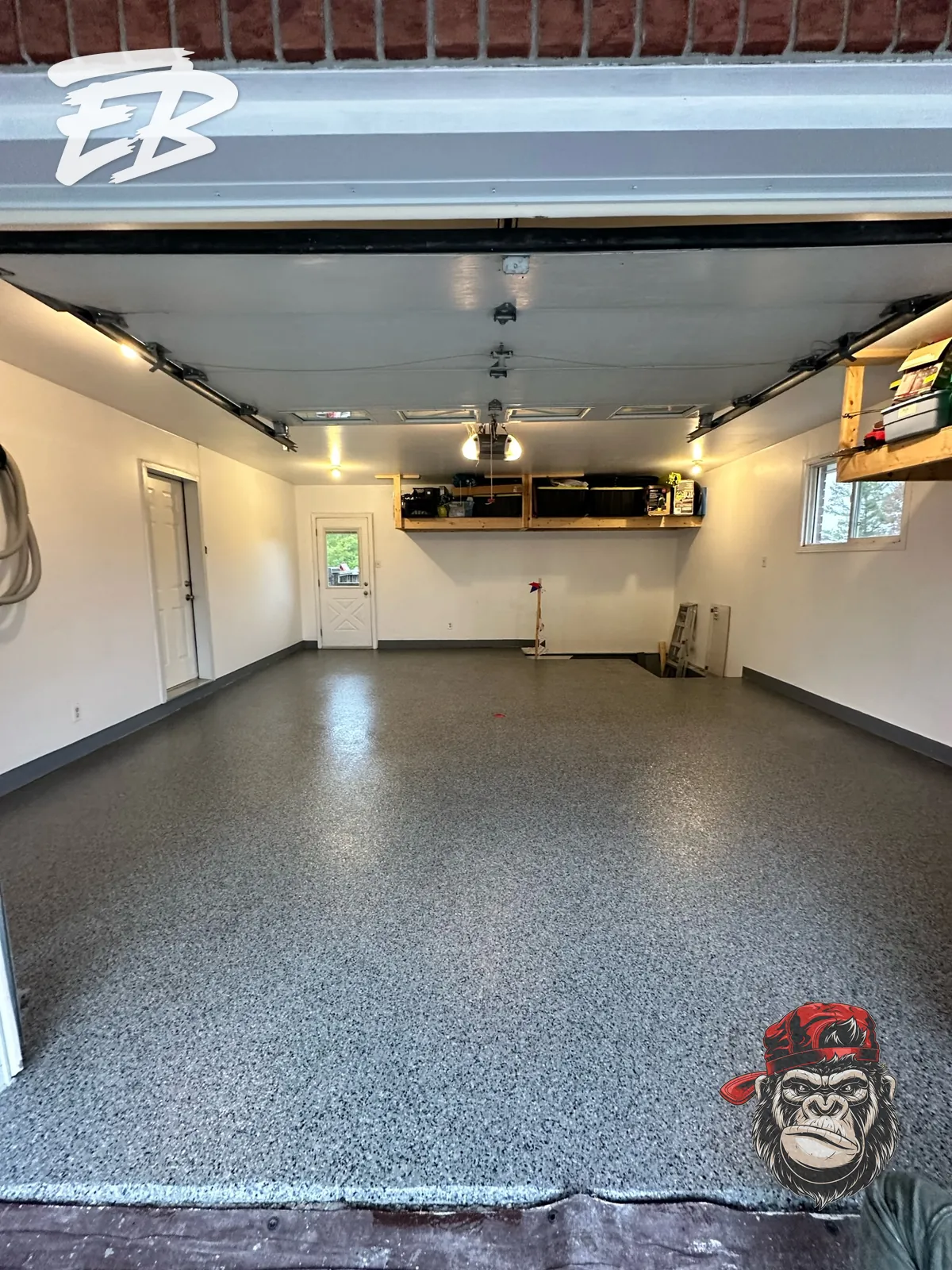
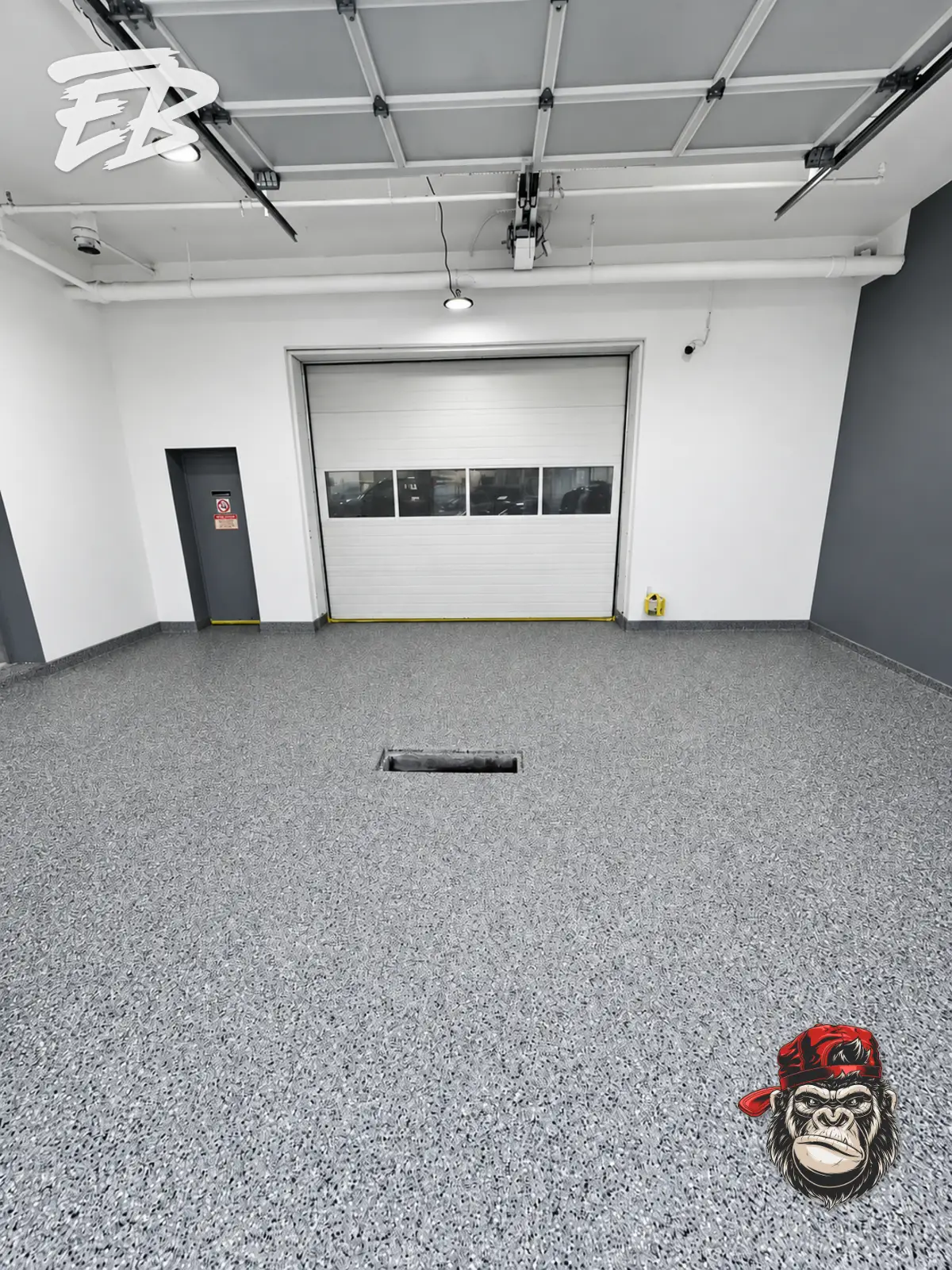
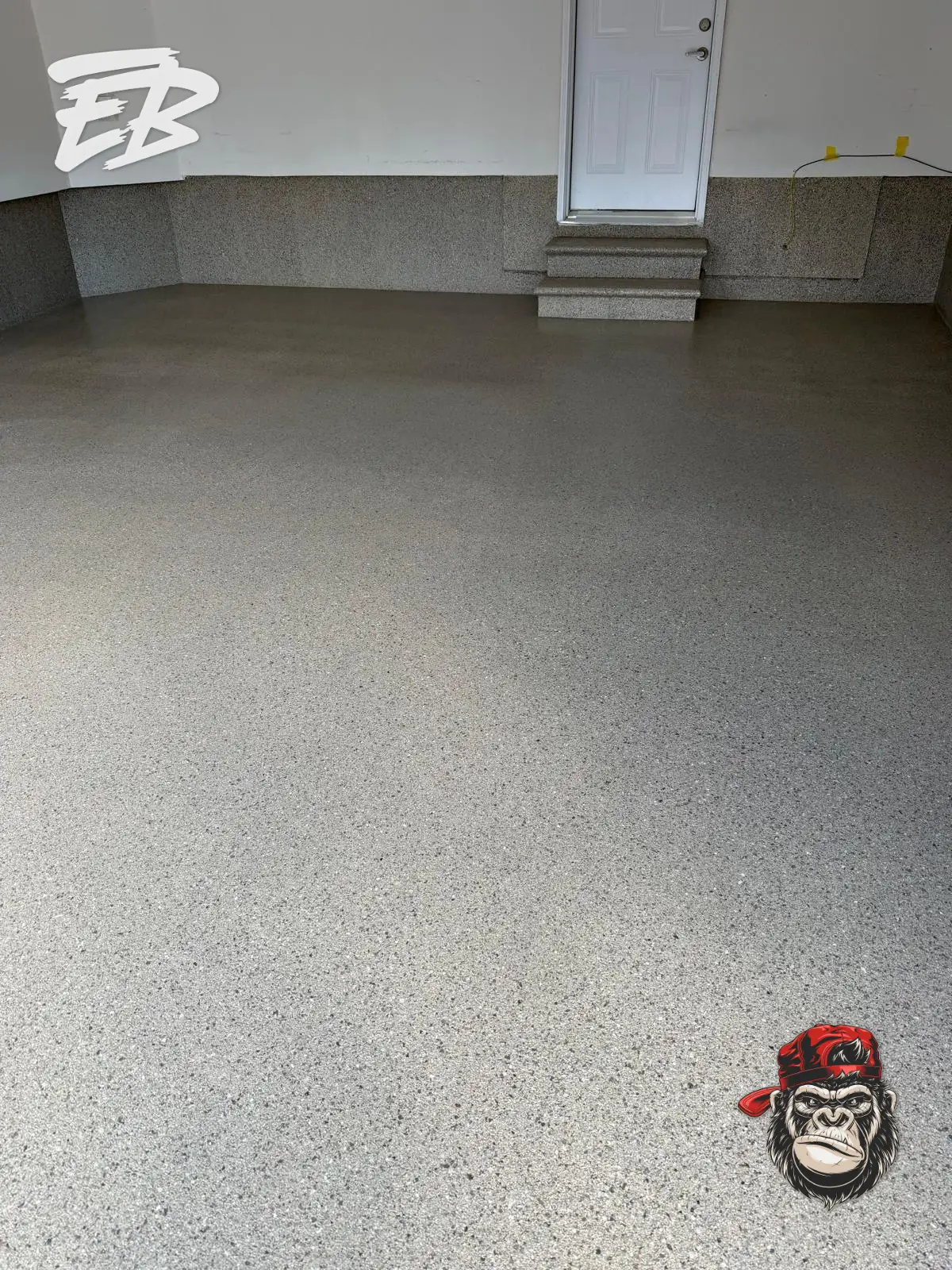
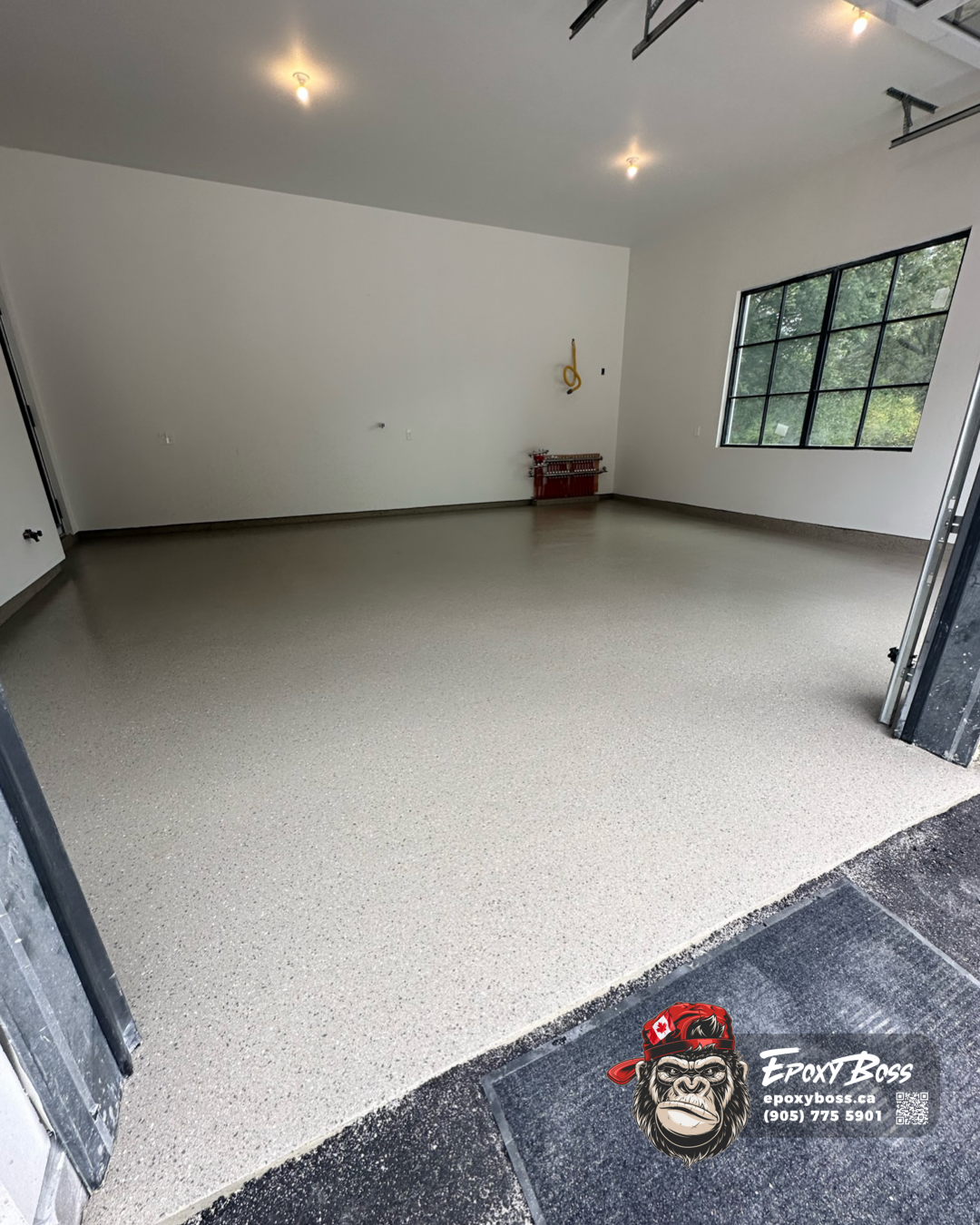
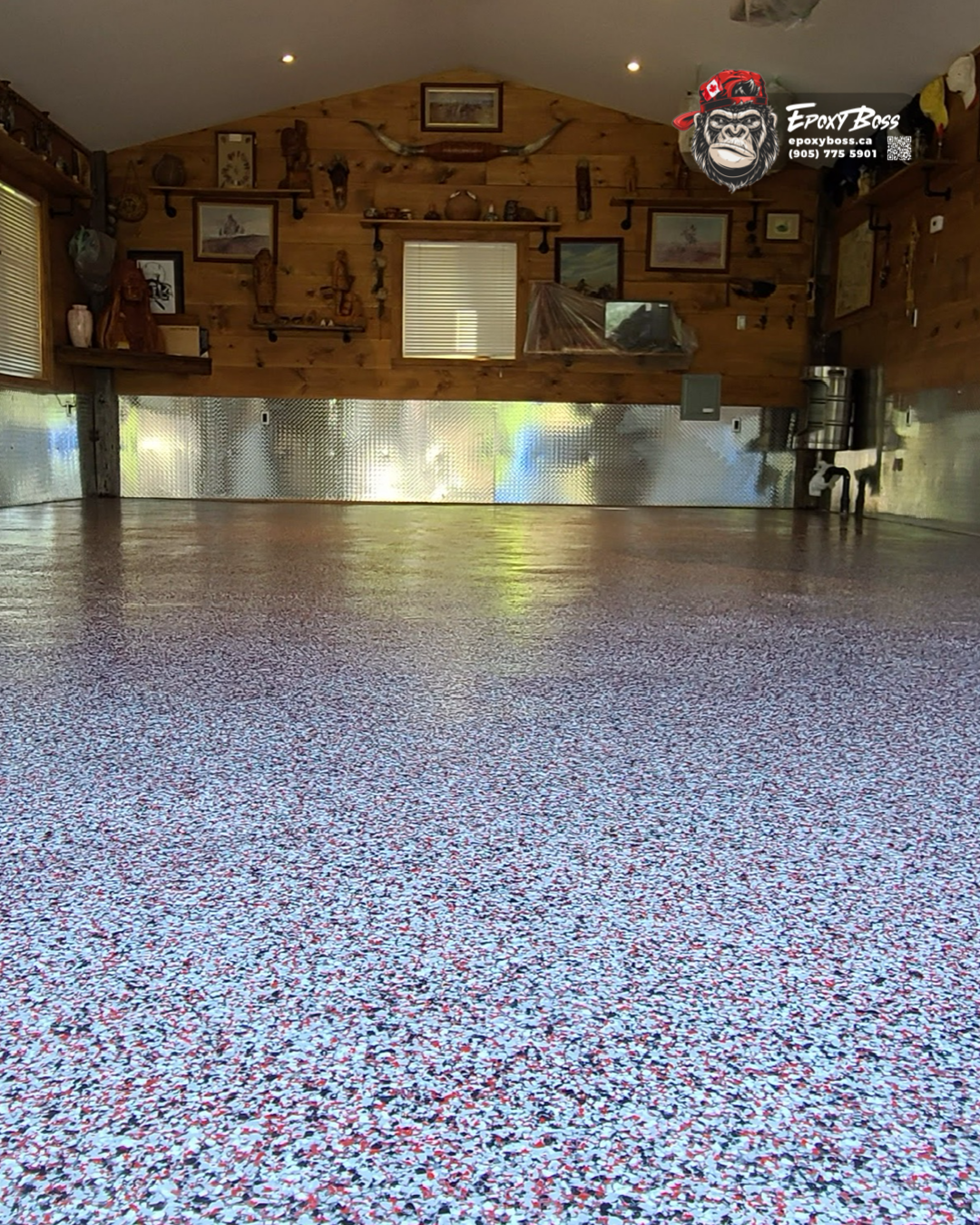
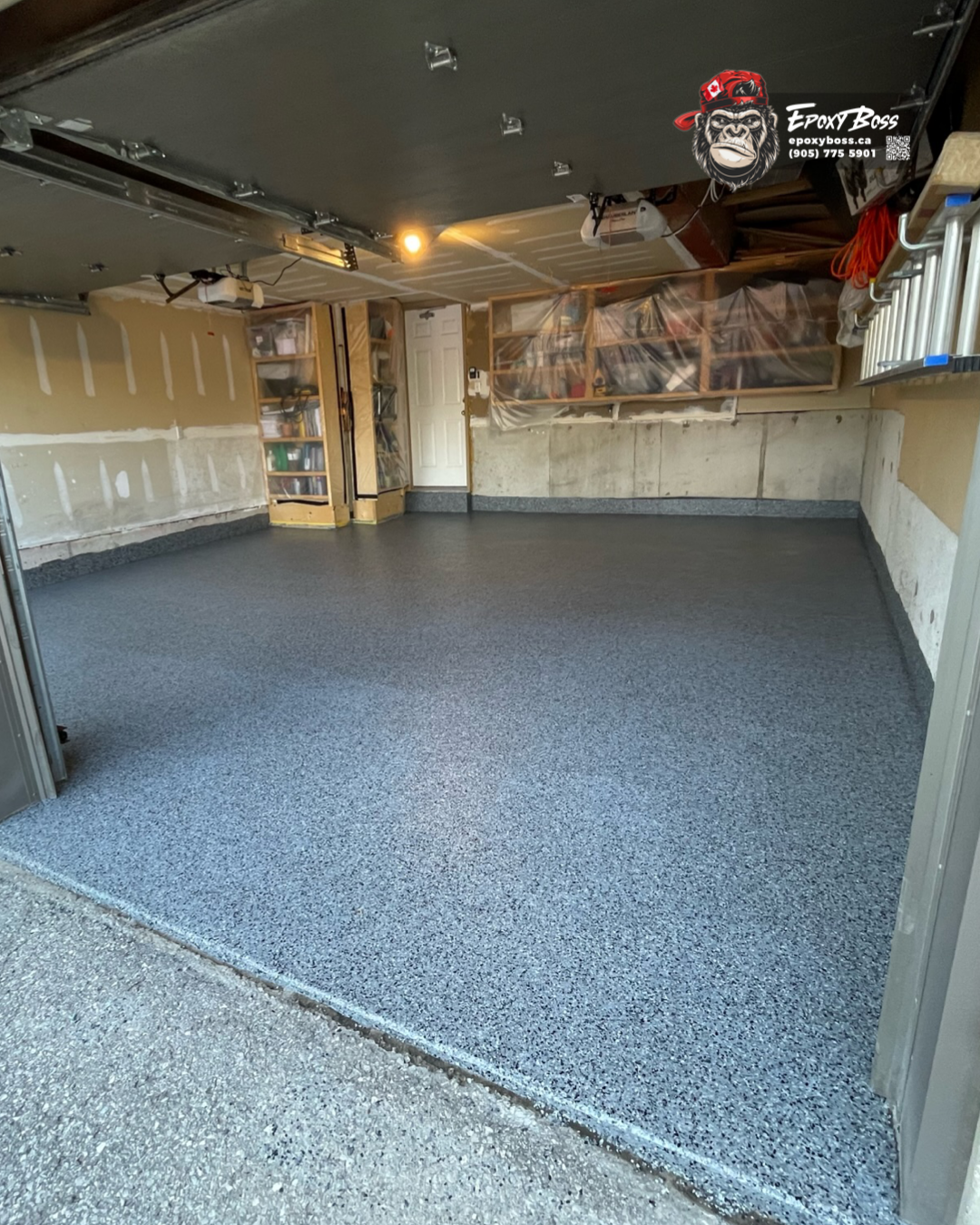
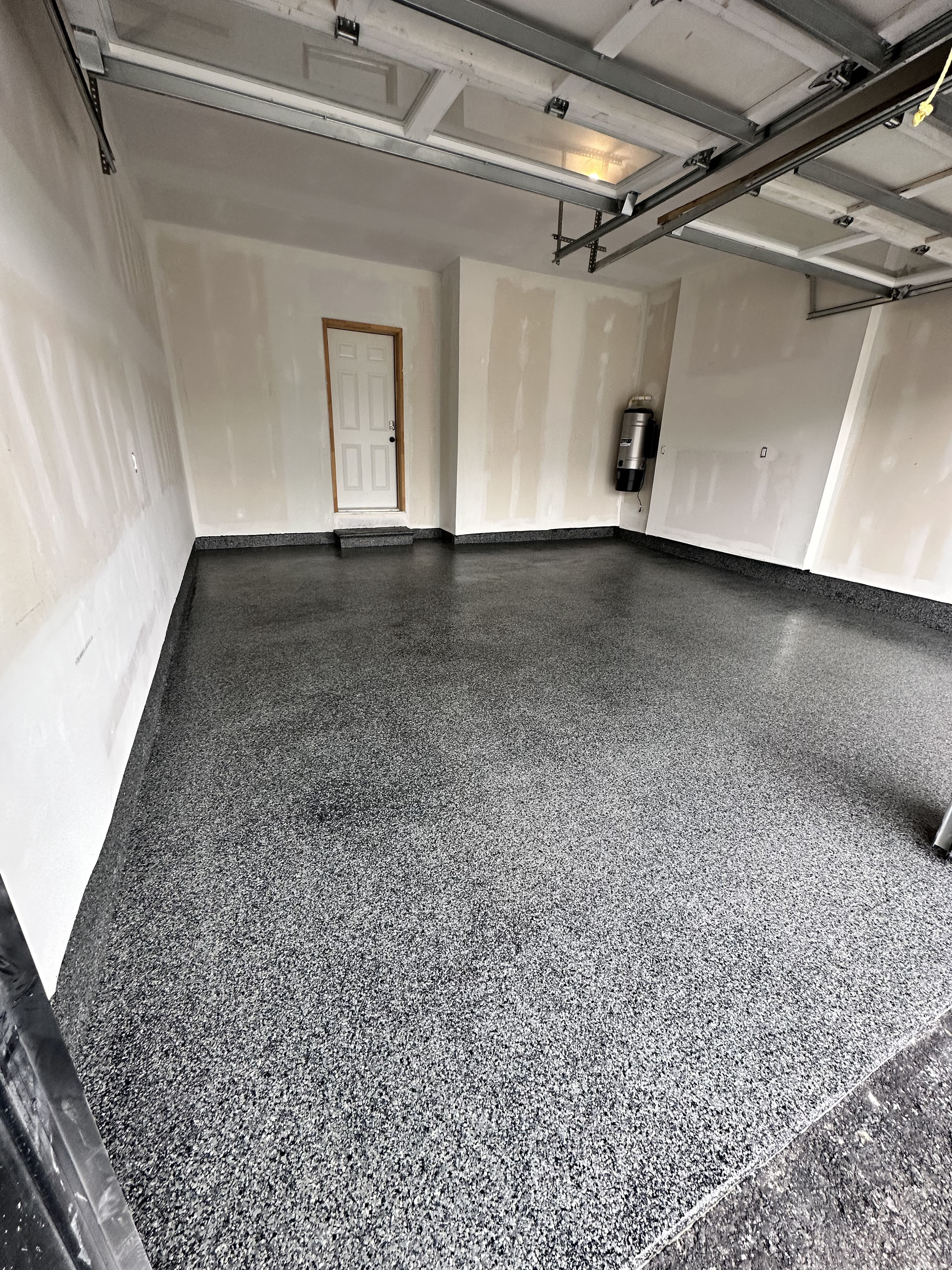
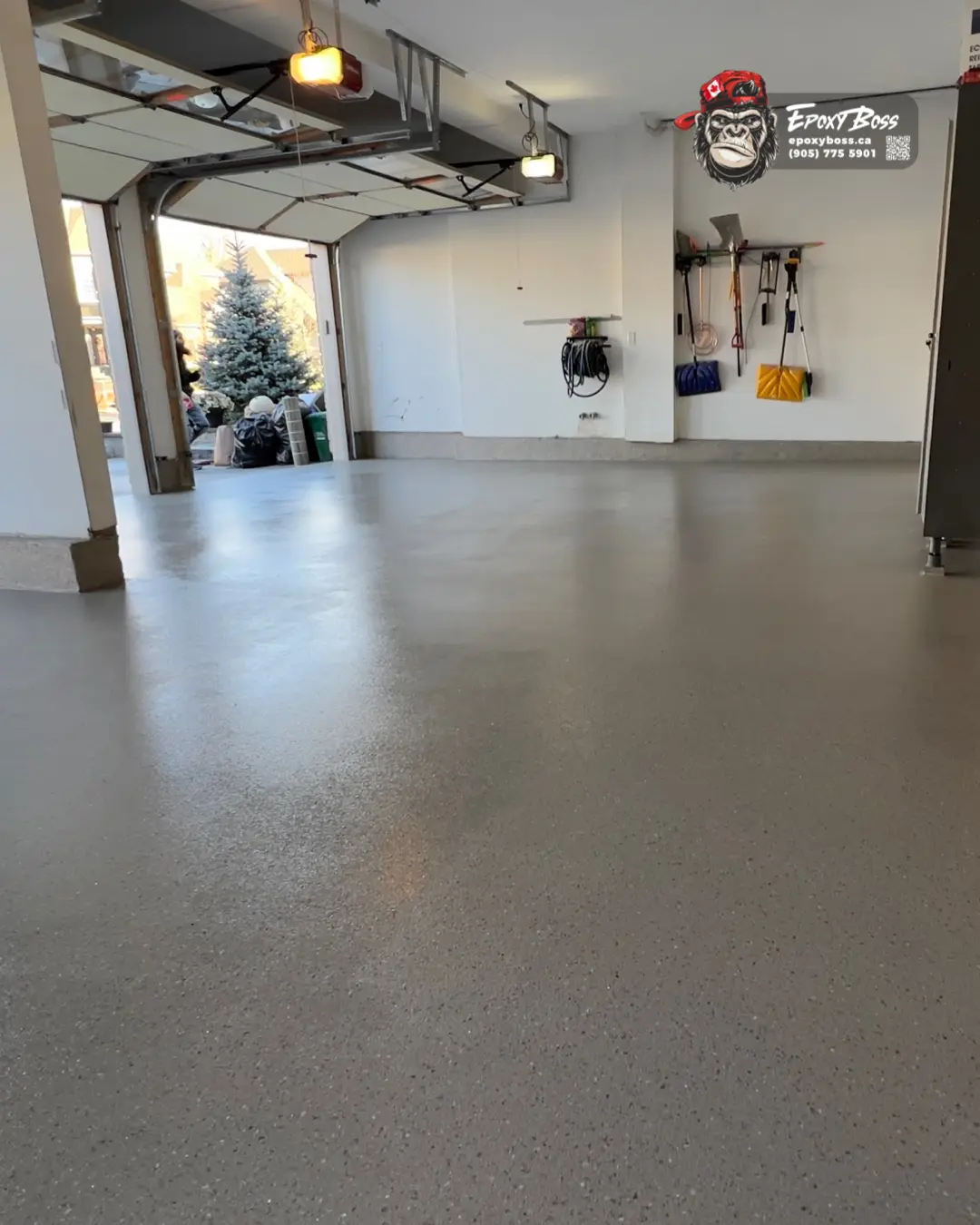
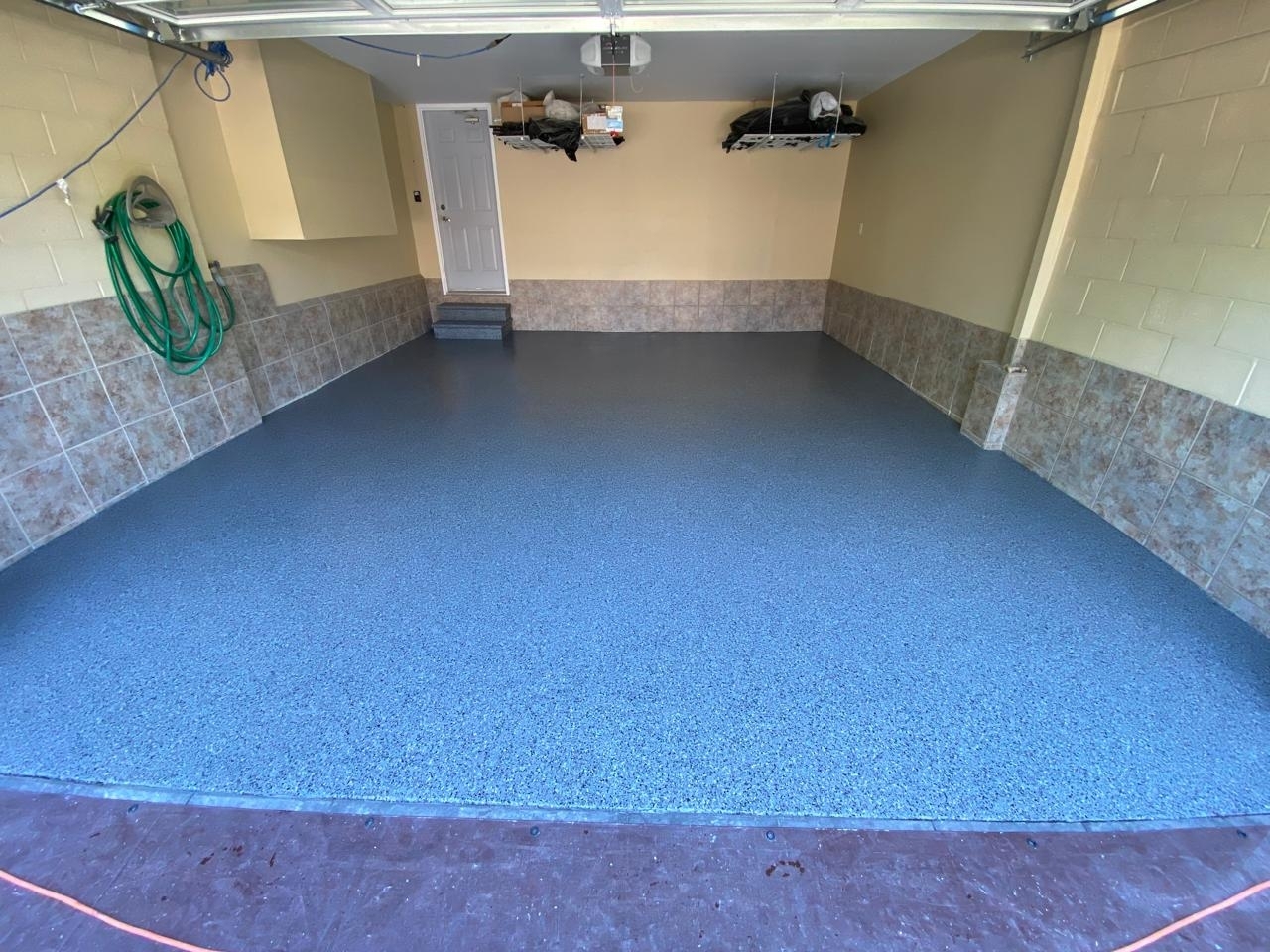
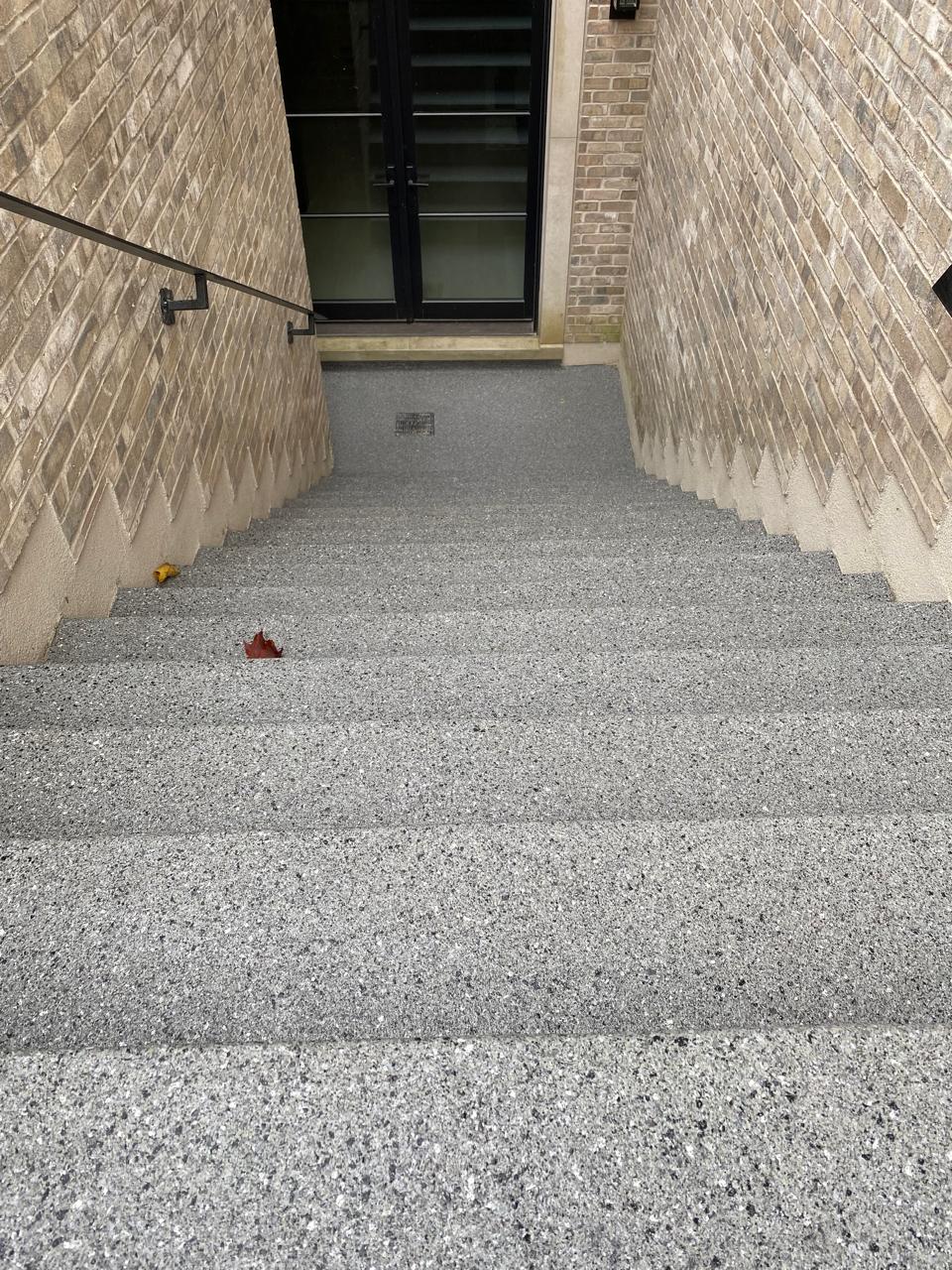
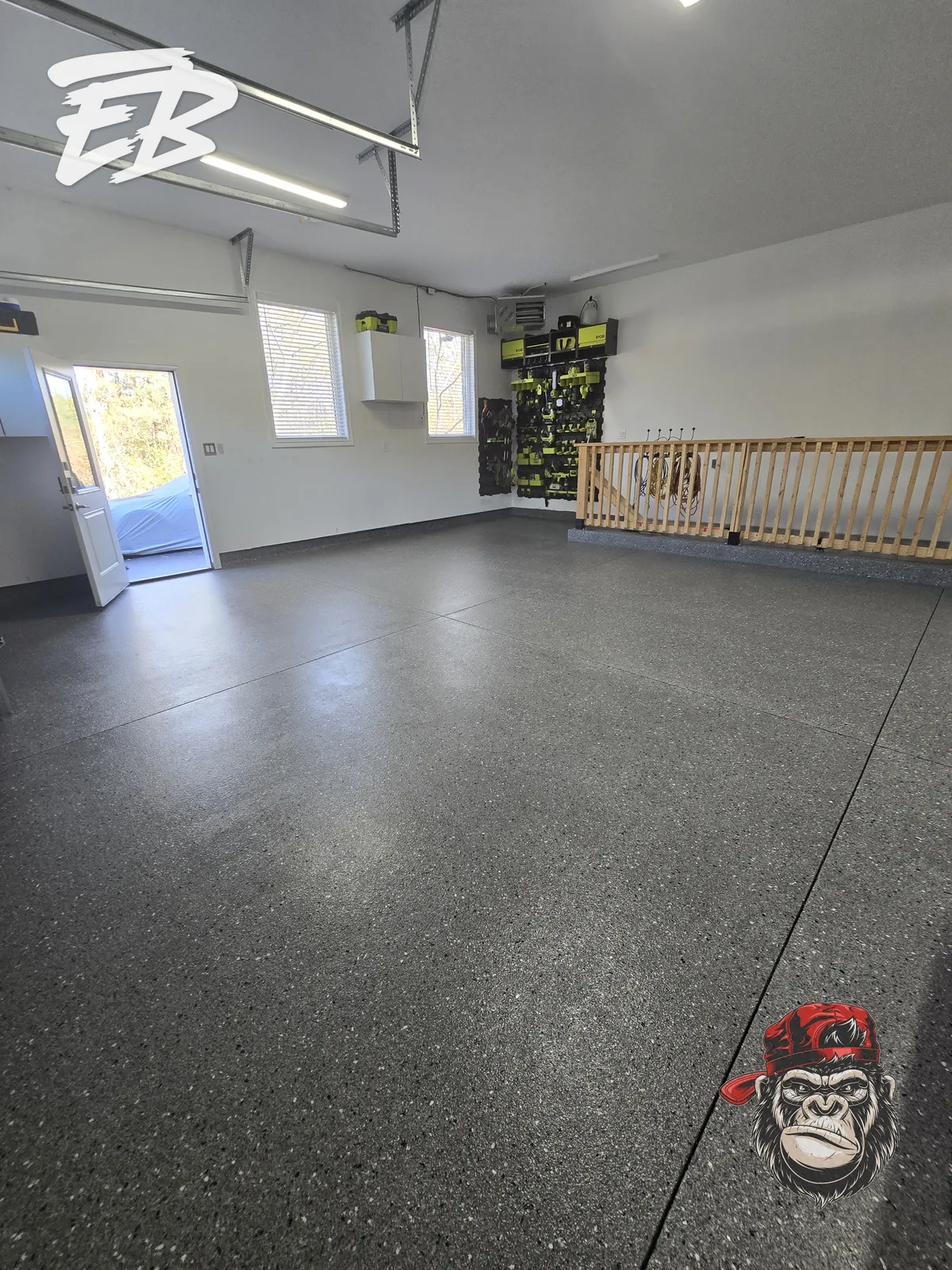
Usually both, in the sense that it is a resin system that often includes epoxy. The flakes themselves are vinyl chips, not epoxy. They are broadcast into a wet resin base coat until the surface is fully covered, then sealed with clear topcoat. Our full-broadcast flake garage floor guide explains the layers, and the flake system page shows the finish.
A Barrie example: why repair came before the resin layers
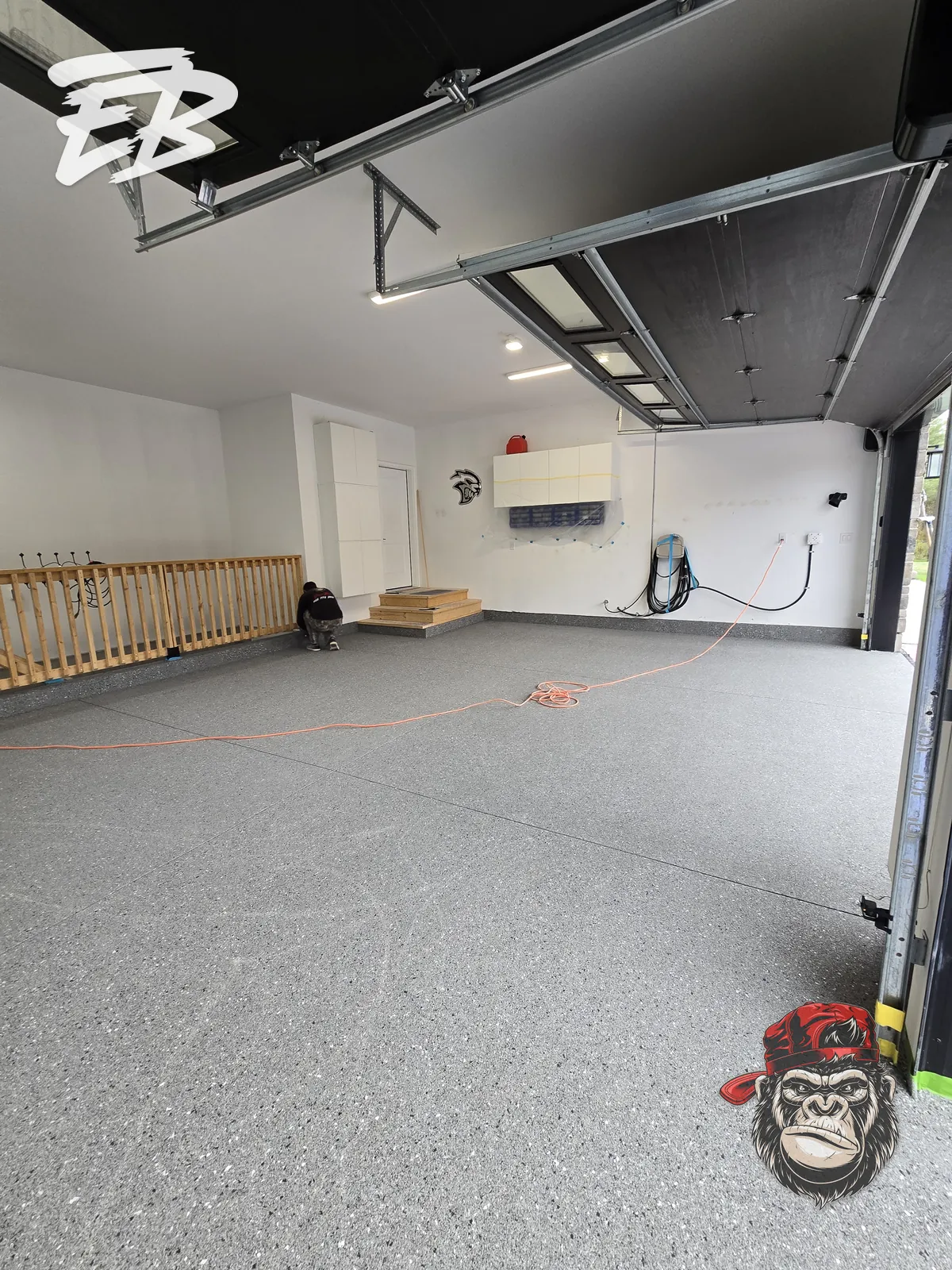
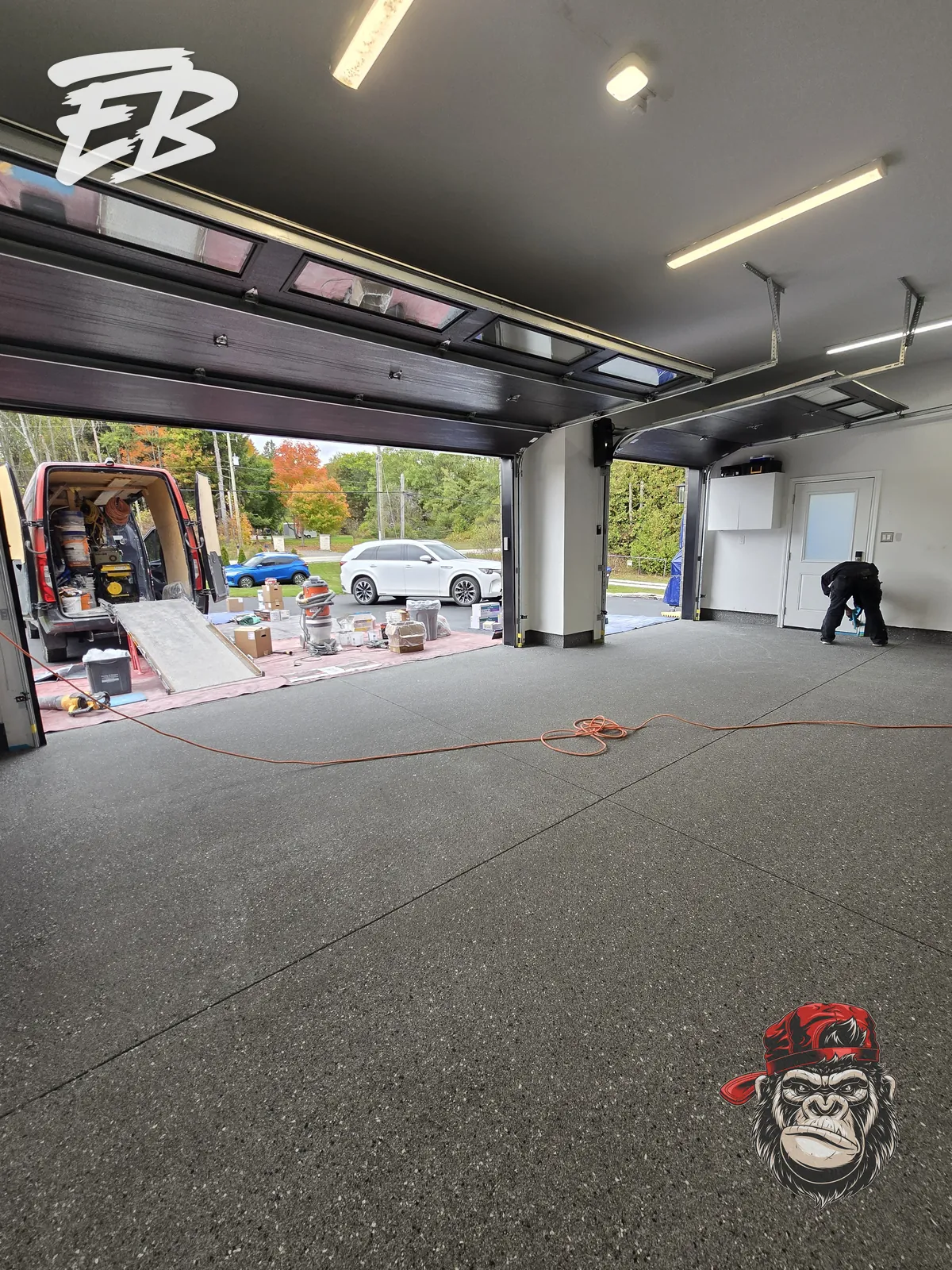
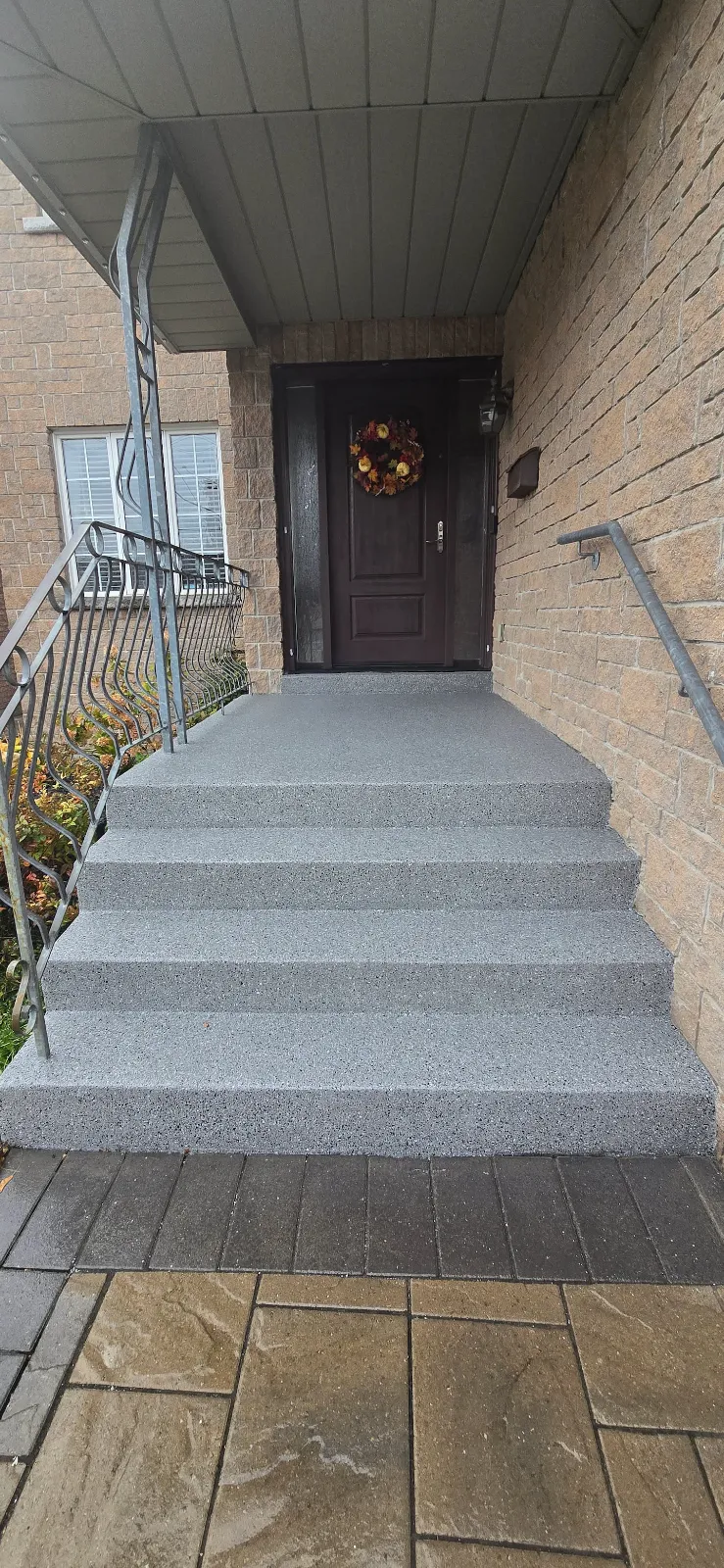
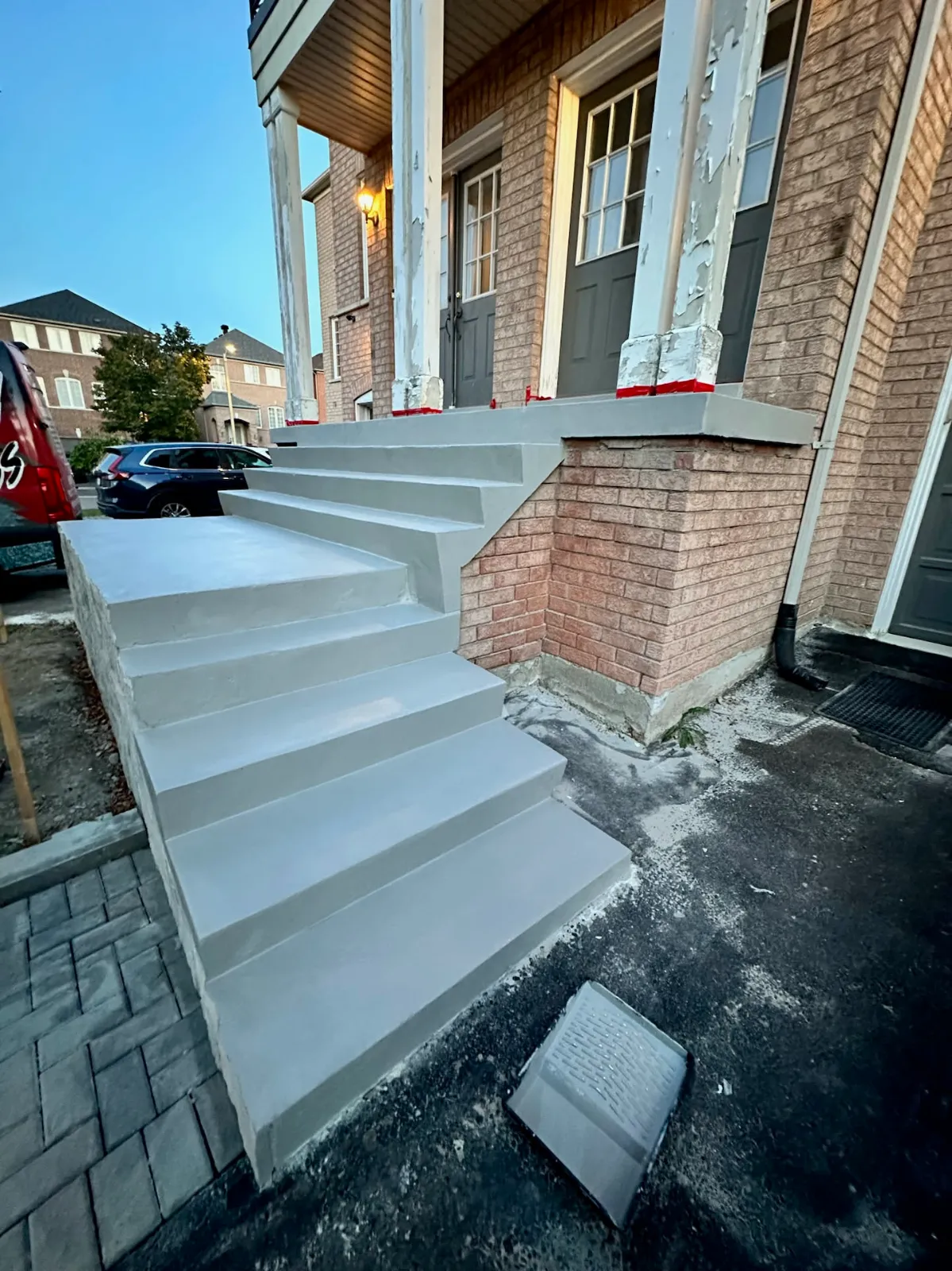
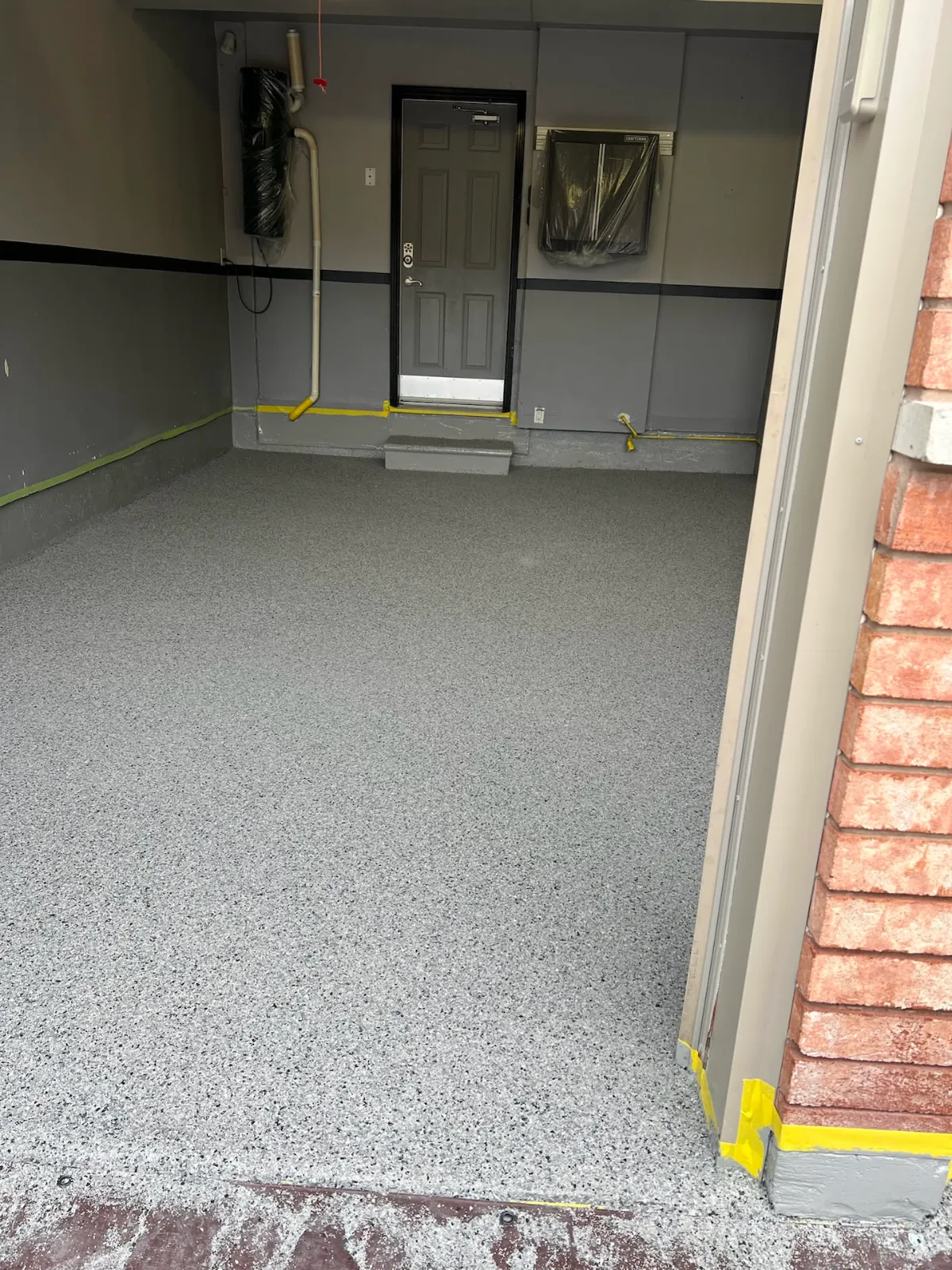
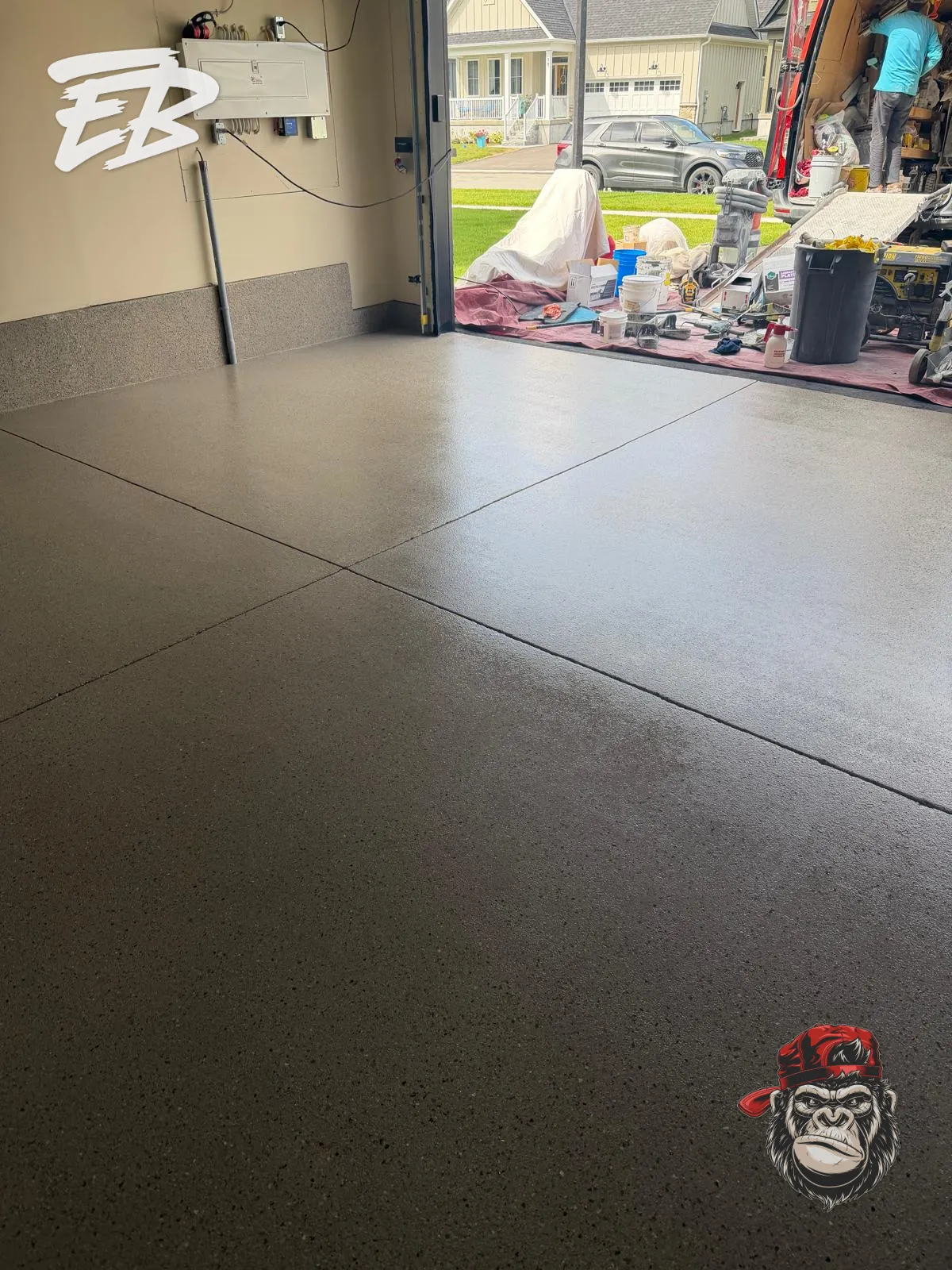
On a documented 520 sq ft residential garage in Barrie, the entrance had peeling coating, cracking, exposed aggregate and deteriorated concrete near the door. Before any decorative layer went down, the damaged area was mechanically prepared, compromised material was removed and the entrance was repaired. Only then was the flake system installed, using the Torginol Denali blend.
The lesson applies to any resin floor: the material label matters less than whether the slab beneath has been prepared and repaired. If your floor is already failing, read how peeling and failed coatings are repaired.
Why the topcoat is the layer people forget
The topcoat takes the tire traffic, grit, salt and cleaning. In many systems it is not epoxy at all. Aliphatic urethanes and polyaspartics are chosen for this layer because they hold colour under UV better than most epoxies. Read more in aliphatic urethane and polyurethane topcoats explained.
What to ask before choosing a garage or basement floor
- What preparation is included, and will the slab be ground?
- How will cracks, joints and the garage entrance be repaired?
- What is each layer made of, and what does each one do?
- Is the topcoat UV-stable if sunlight reaches the floor?
- Has moisture been considered, especially in a basement?
- What warranty applies, and what does it exclude?
Frequently asked questions
Is resin flooring better than epoxy flooring?
Neither is better as a label. Epoxy is a type of resin. What matters is whether the system's layers suit the concrete, the exposure and how the floor is used.
Does an epoxy resin floor turn yellow?
Many epoxies can amber with UV exposure. A UV-stable topcoat such as aliphatic urethane or polyaspartic is commonly used over epoxy where sunlight reaches the floor.
Is resin flooring suitable for a house?
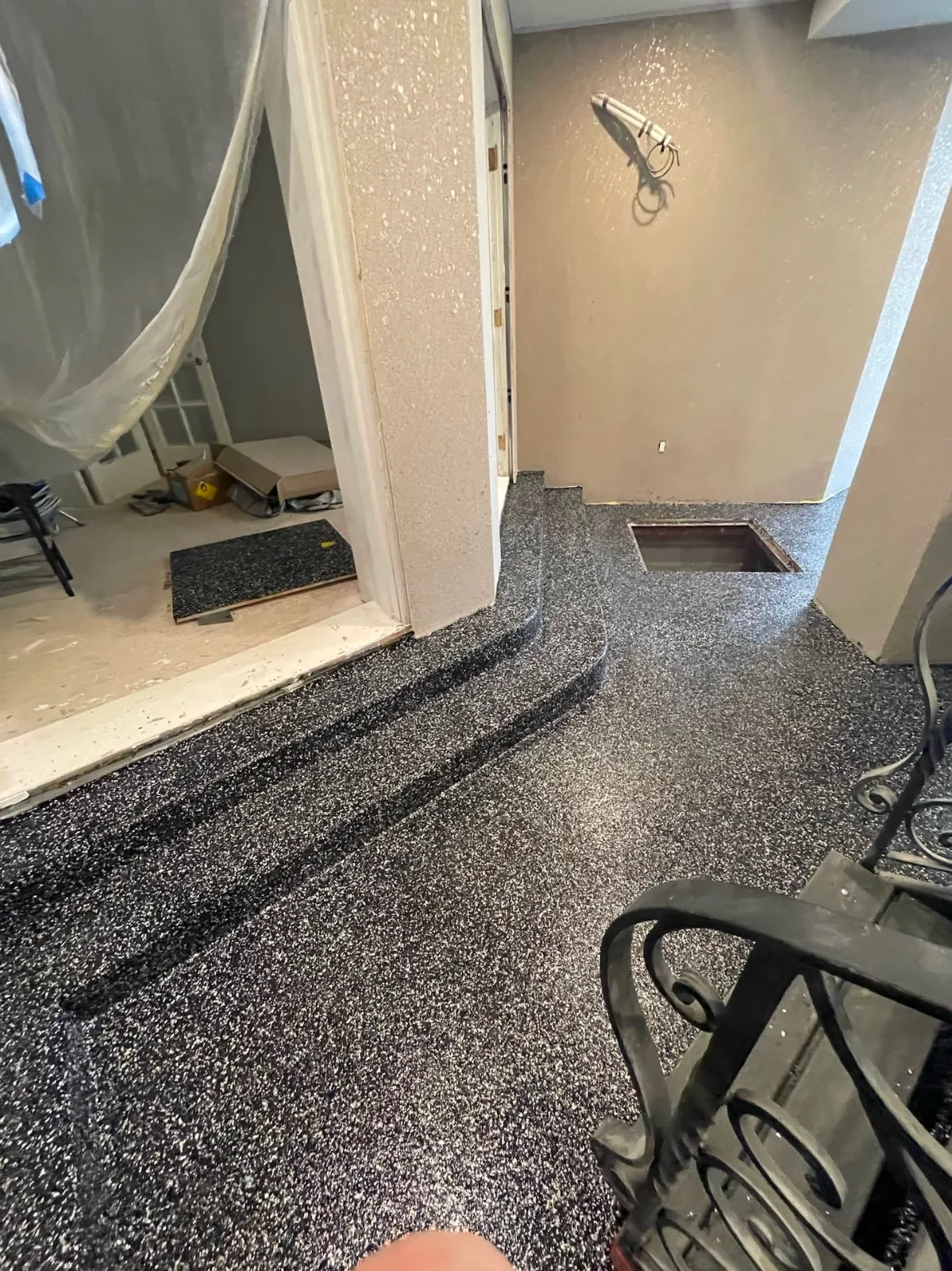
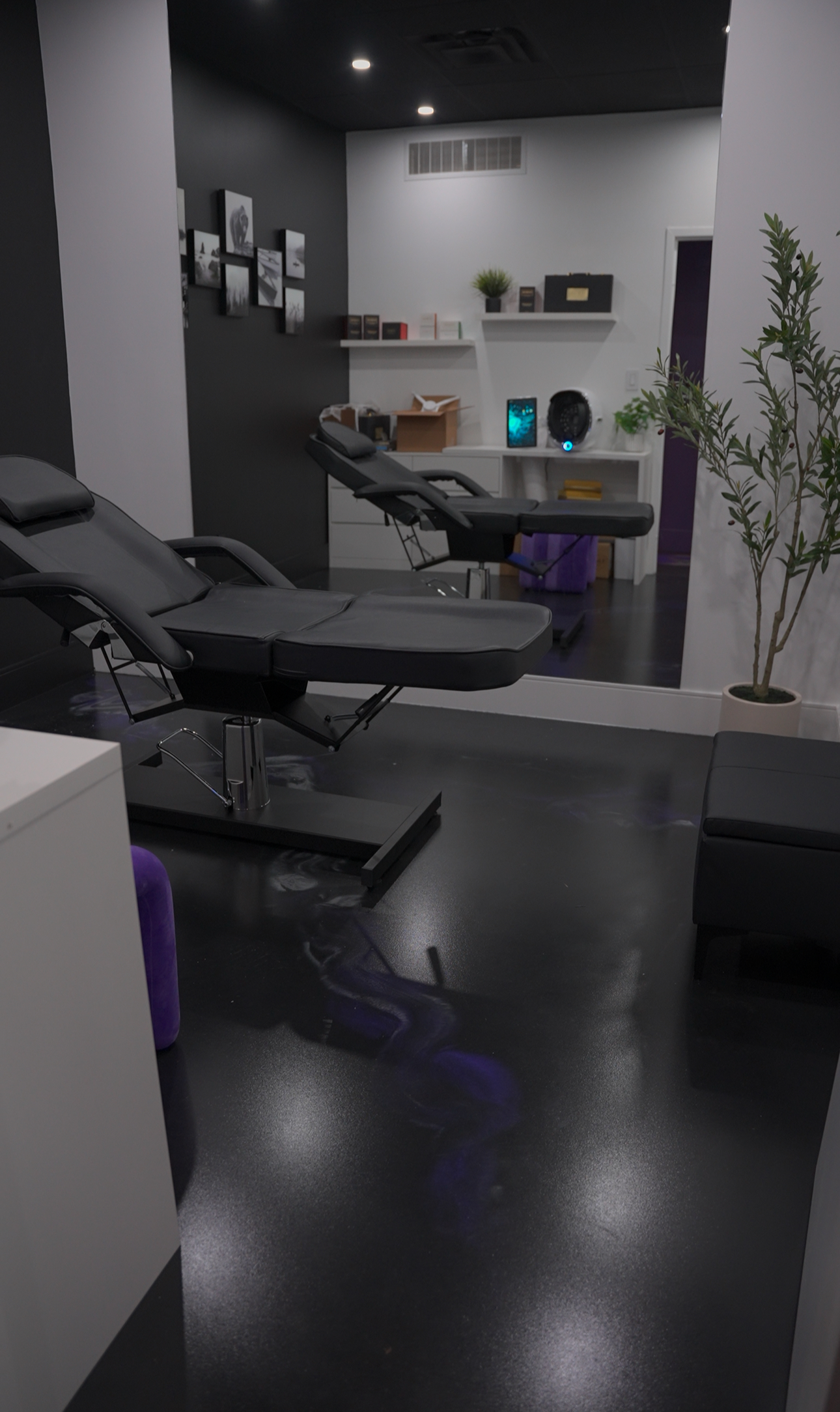
Yes, in the right rooms and over a prepared slab. Basements, laundry rooms, mudrooms and workshops are common. See where epoxy floors work inside a house.
Book a free floor assessment
Epoxy Boss is based in Innisfil and has installed preparation-first concrete coating systems since 2019 across the GTA, York Region, Simcoe County, Halton, Durham and Muskoka, including Barrie. Call (905) 775-5901 or request a free floor assessment, and we'll explain which layers your floor needs and send a written quote in Canadian dollars.