Epoxy and polyaspartic are not interchangeable names for the same thing. They are different resin technologies with different working characteristics and different roles in a garage floor system. In many professionally specified Vaughan garage floors, they are used together: an epoxy layer can provide the body or receiving coat, while a compatible polyaspartic layer can provide the final clear protective topcoat.
The right question is not, “Which one is best in every garage?” The useful question is, “What does this concrete slab need, and which system layers suit its condition, use and installation environment?”
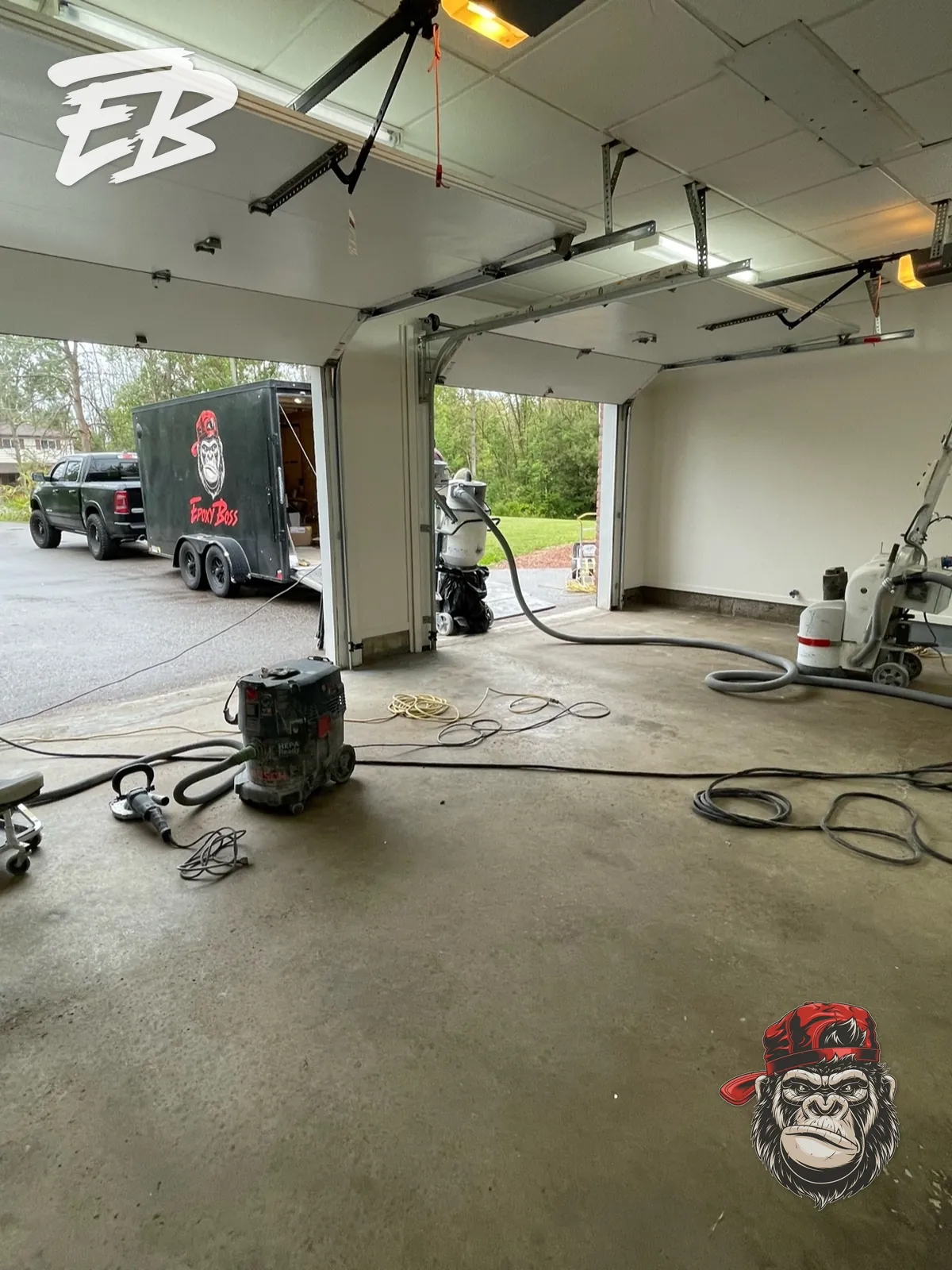
For Epoxy Boss, the system begins with the concrete. Diamond grinding, crack repair, moisture assessment and clean installation come before the choice of a clear topcoat or decorative flake blend. The resin layers need to be compatible with each other and with the prepared substrate beneath them.
What epoxy actually does in a garage floor system
Epoxy is a two-component resin commonly used in concrete-floor systems as a primer, body coat, pigmented base coat, broadcast binder or high-build coating. Depending on the product and system design, it can help create a strong, continuous resin layer over mechanically prepared concrete.
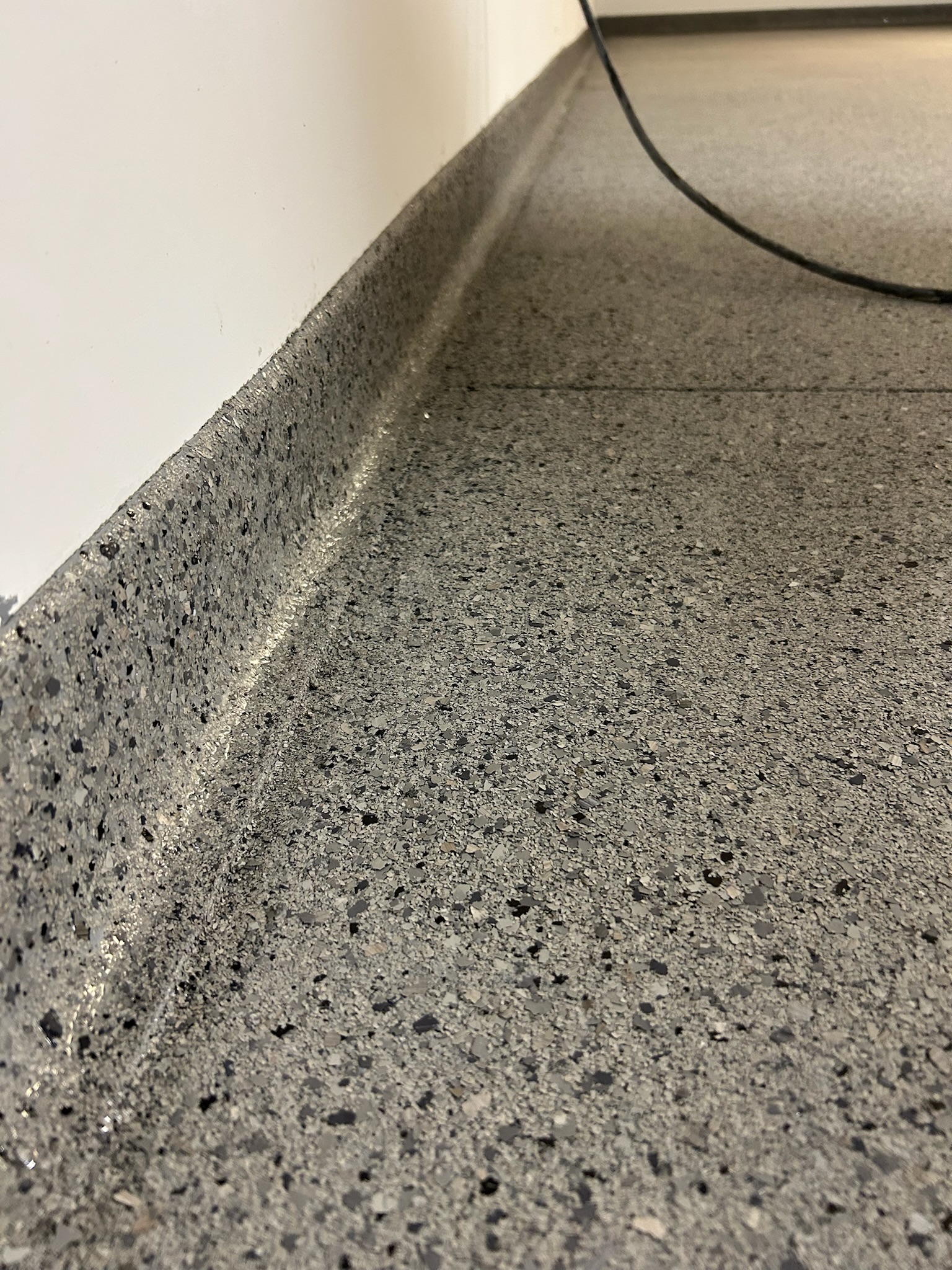
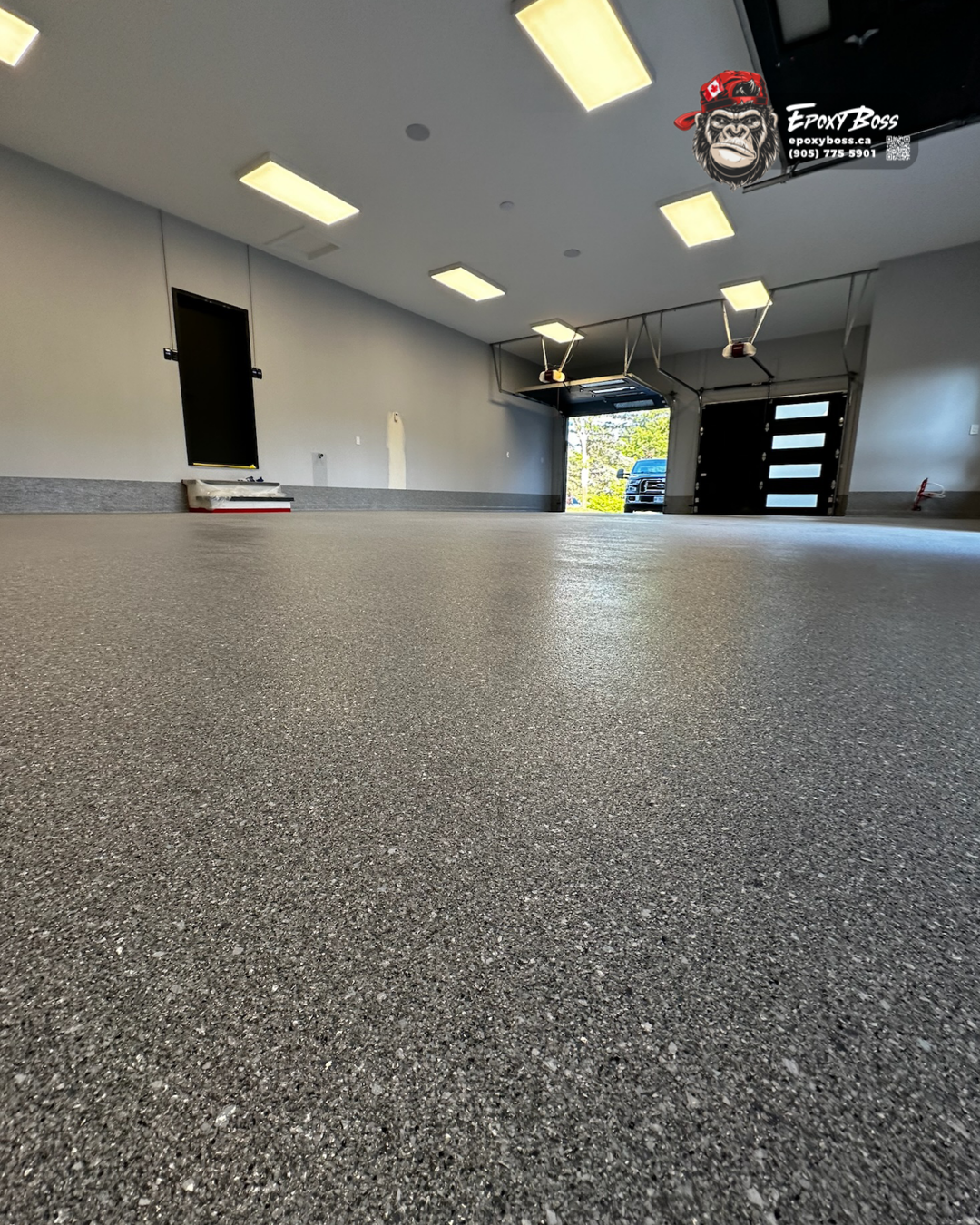
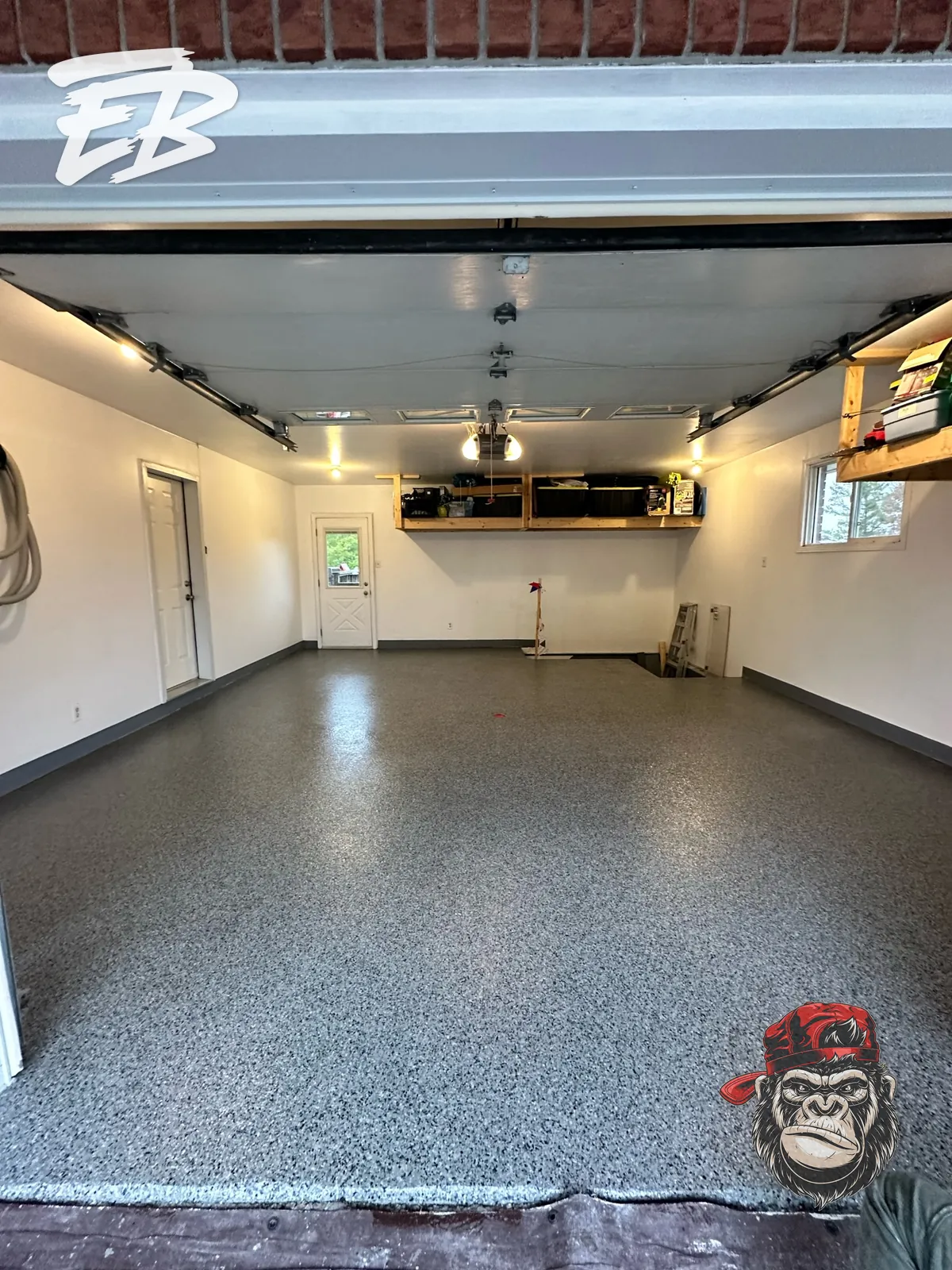
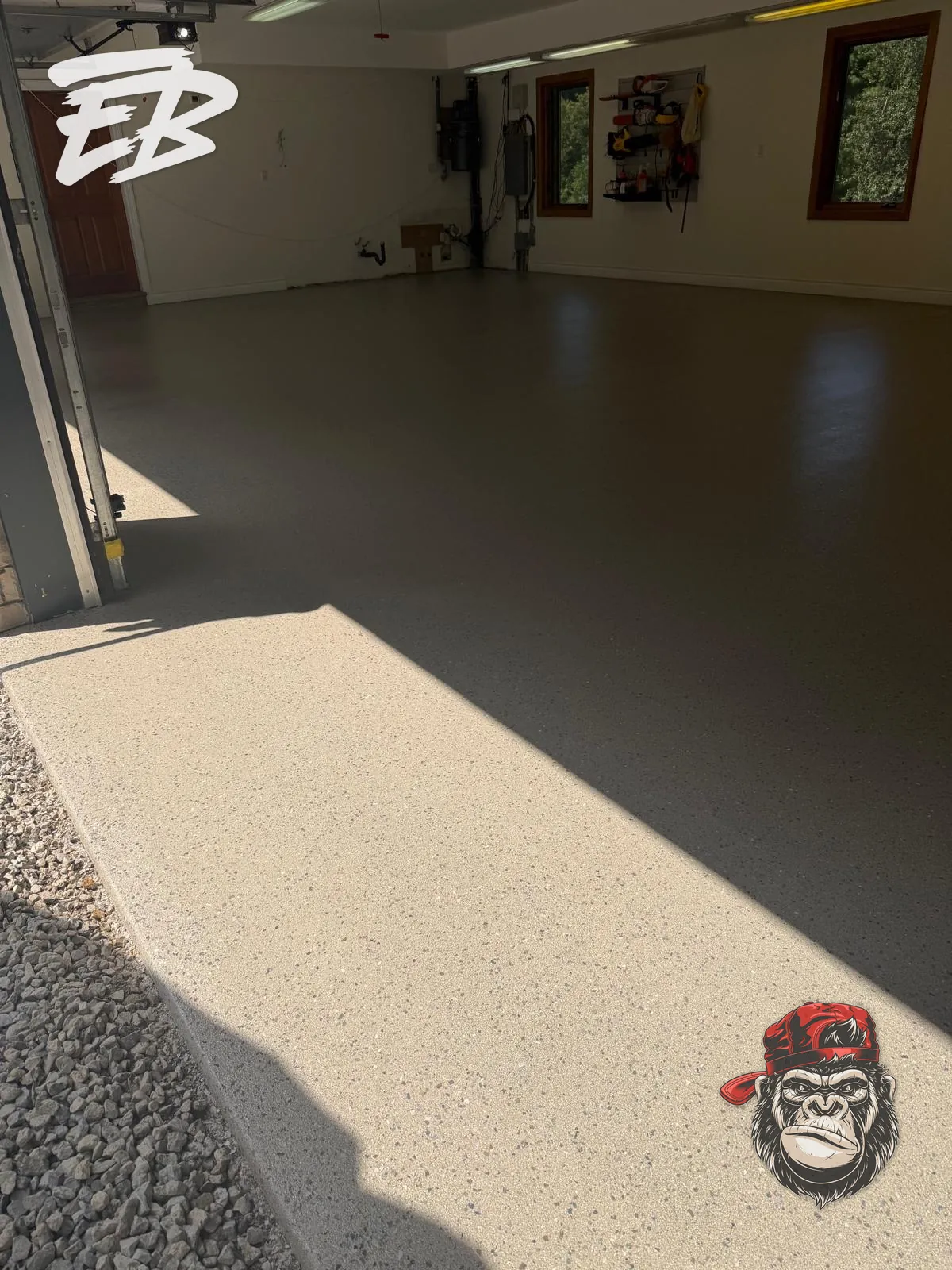
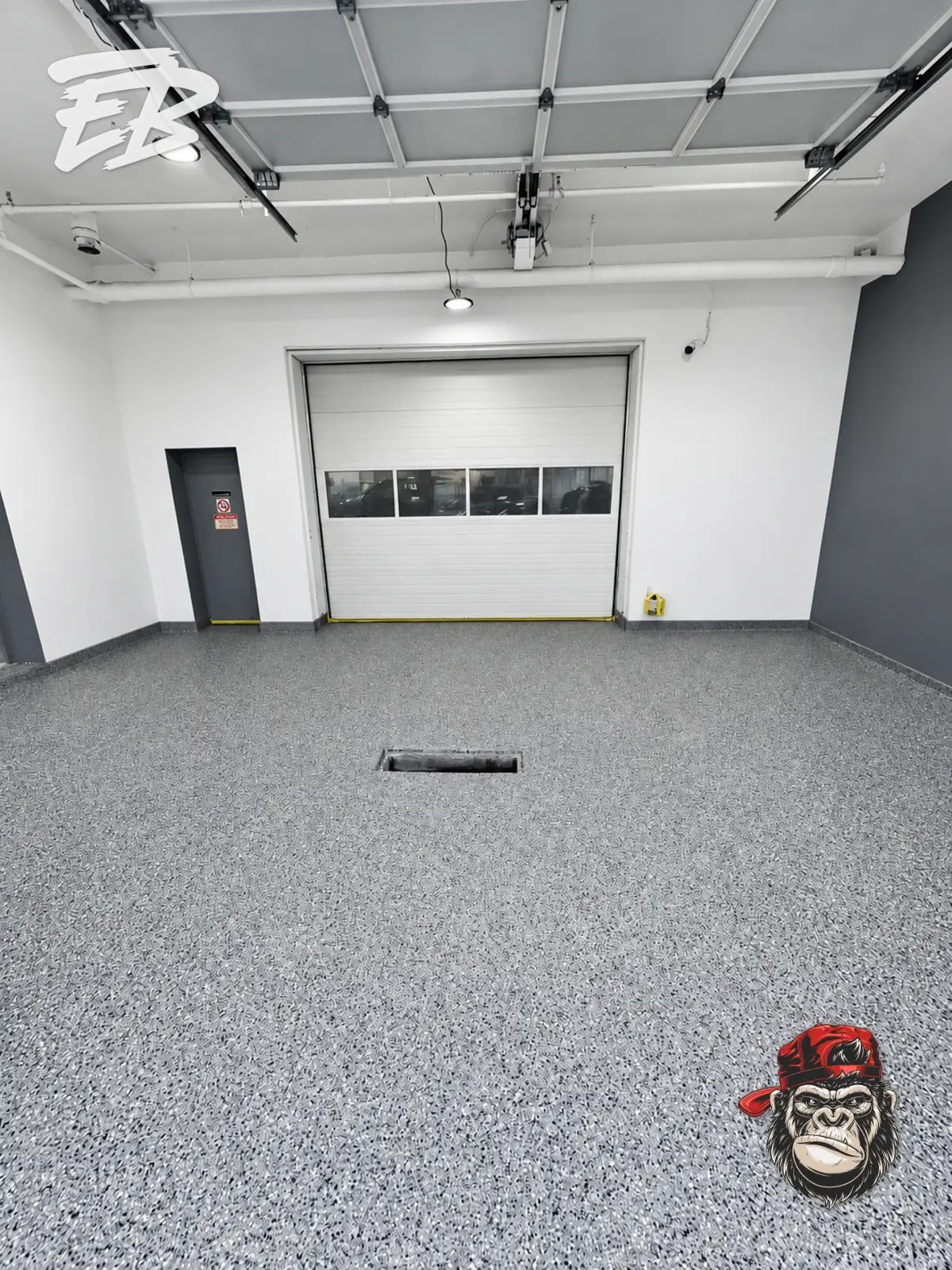
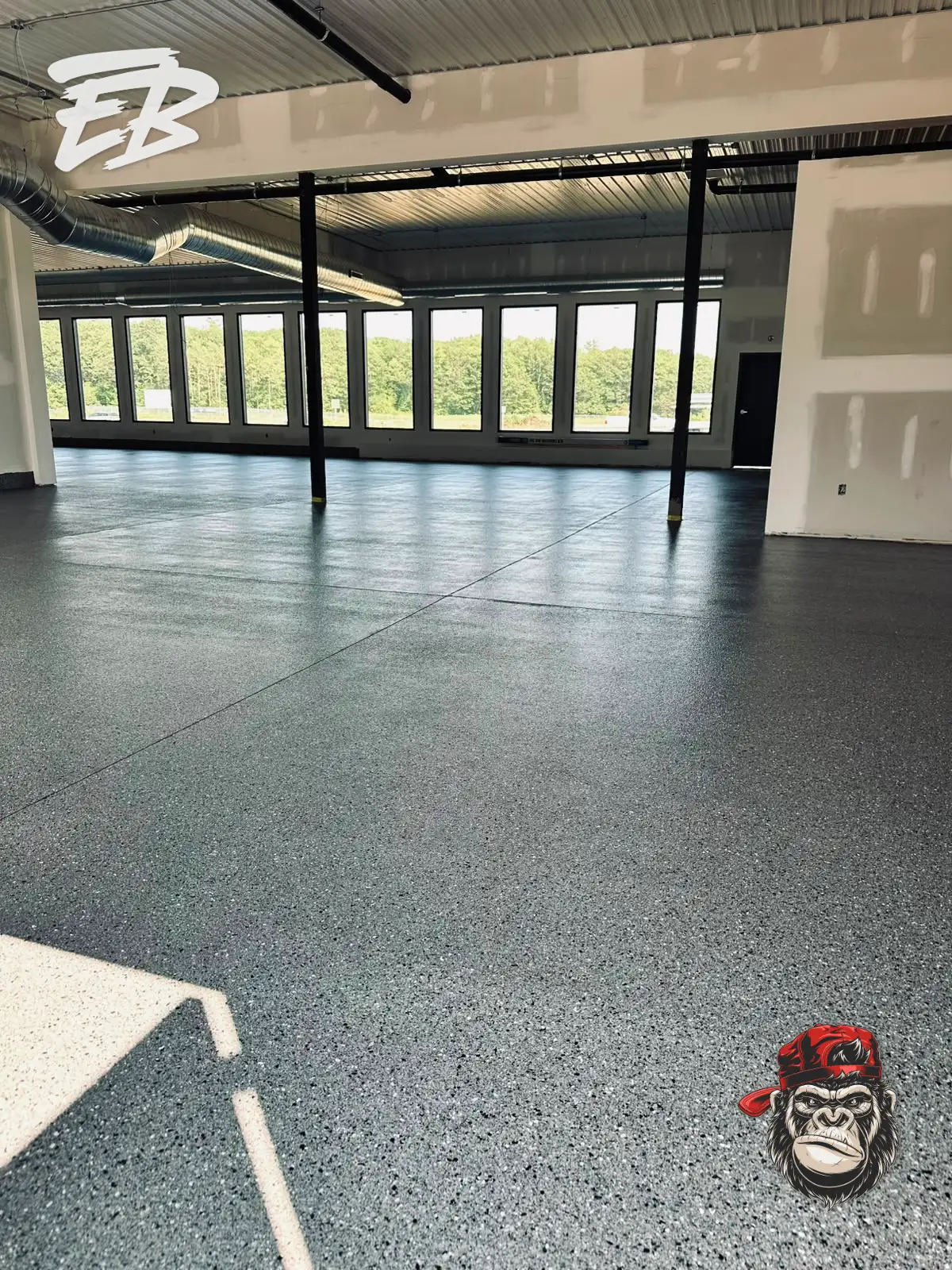
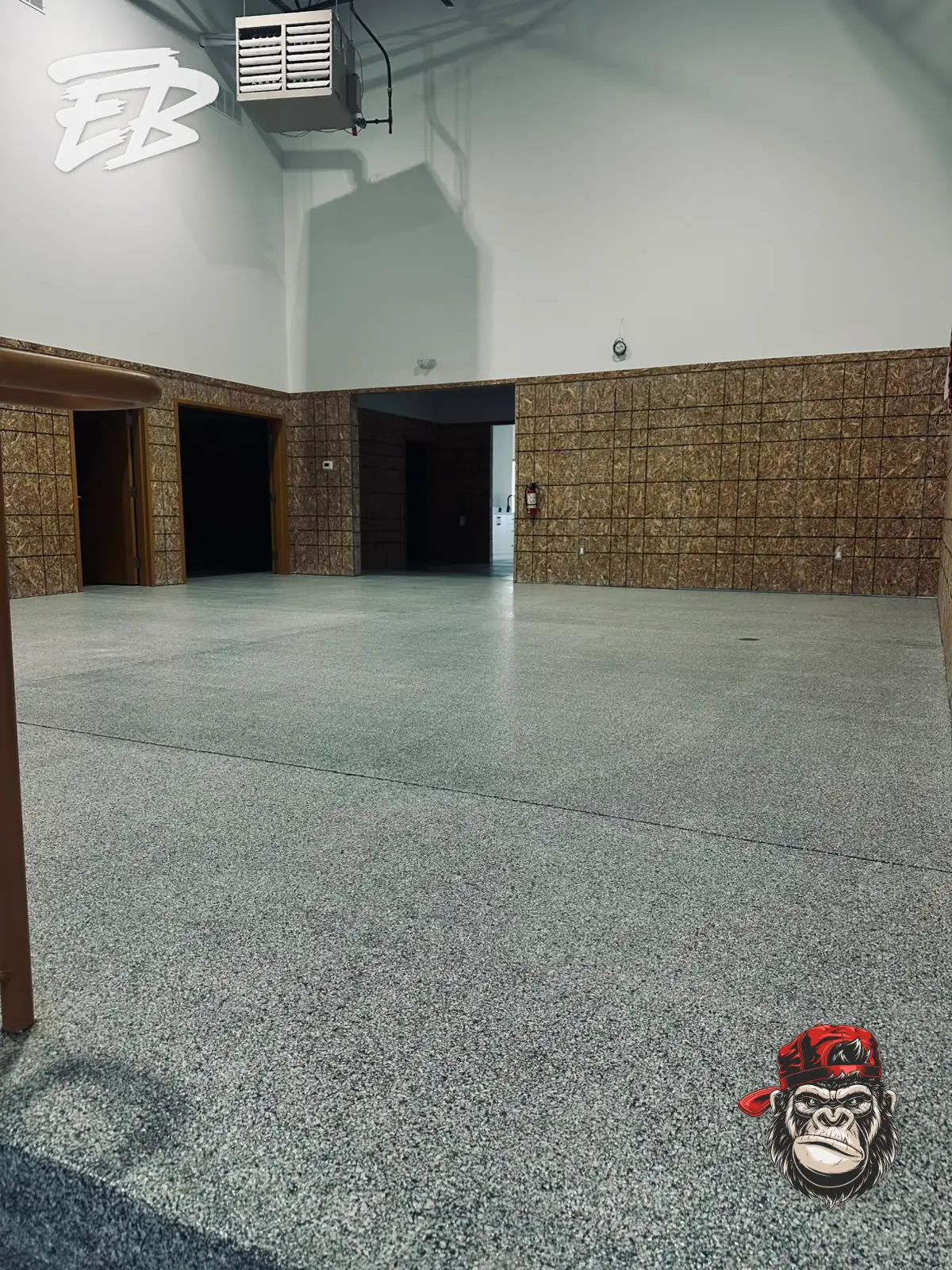
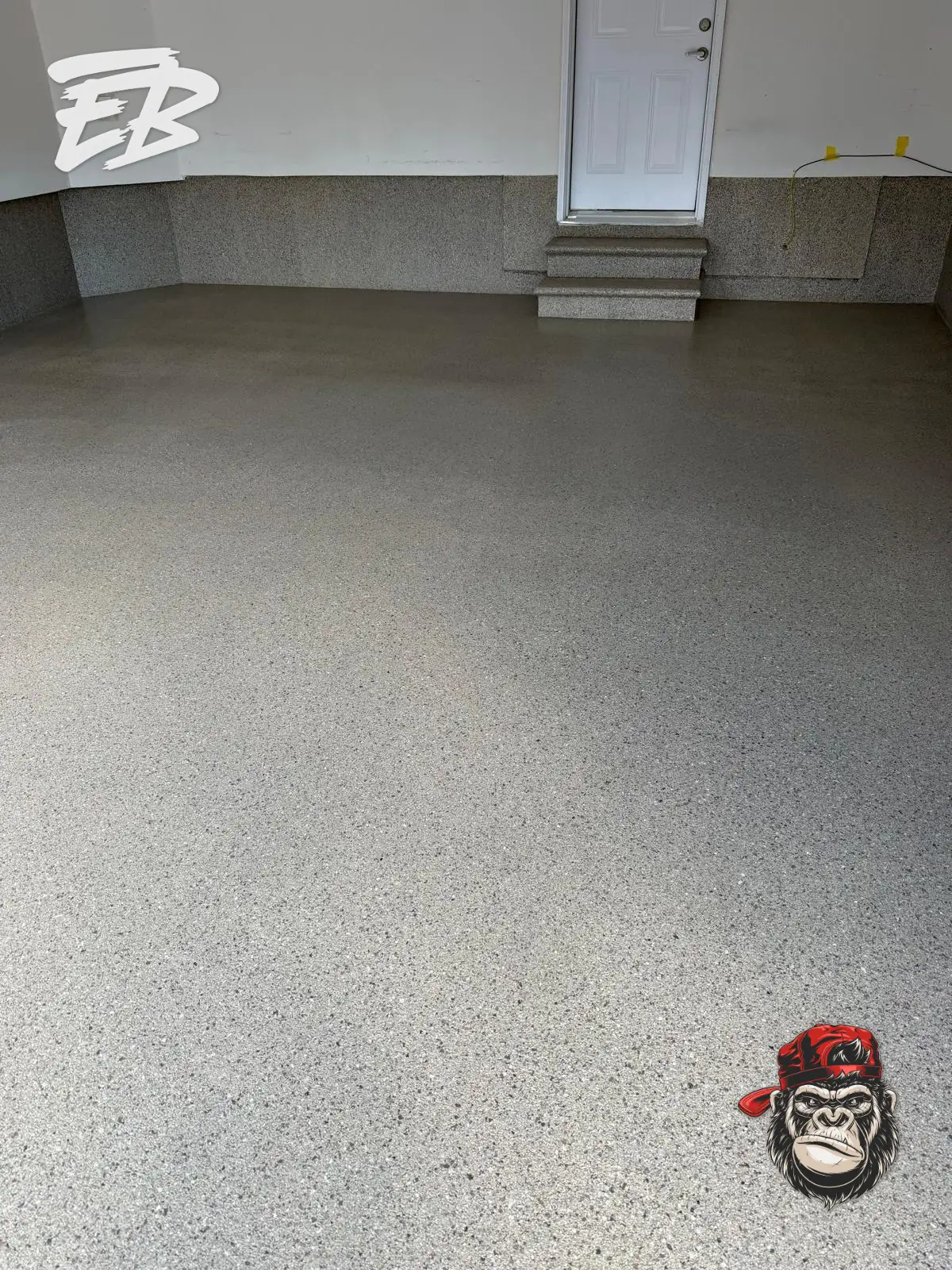
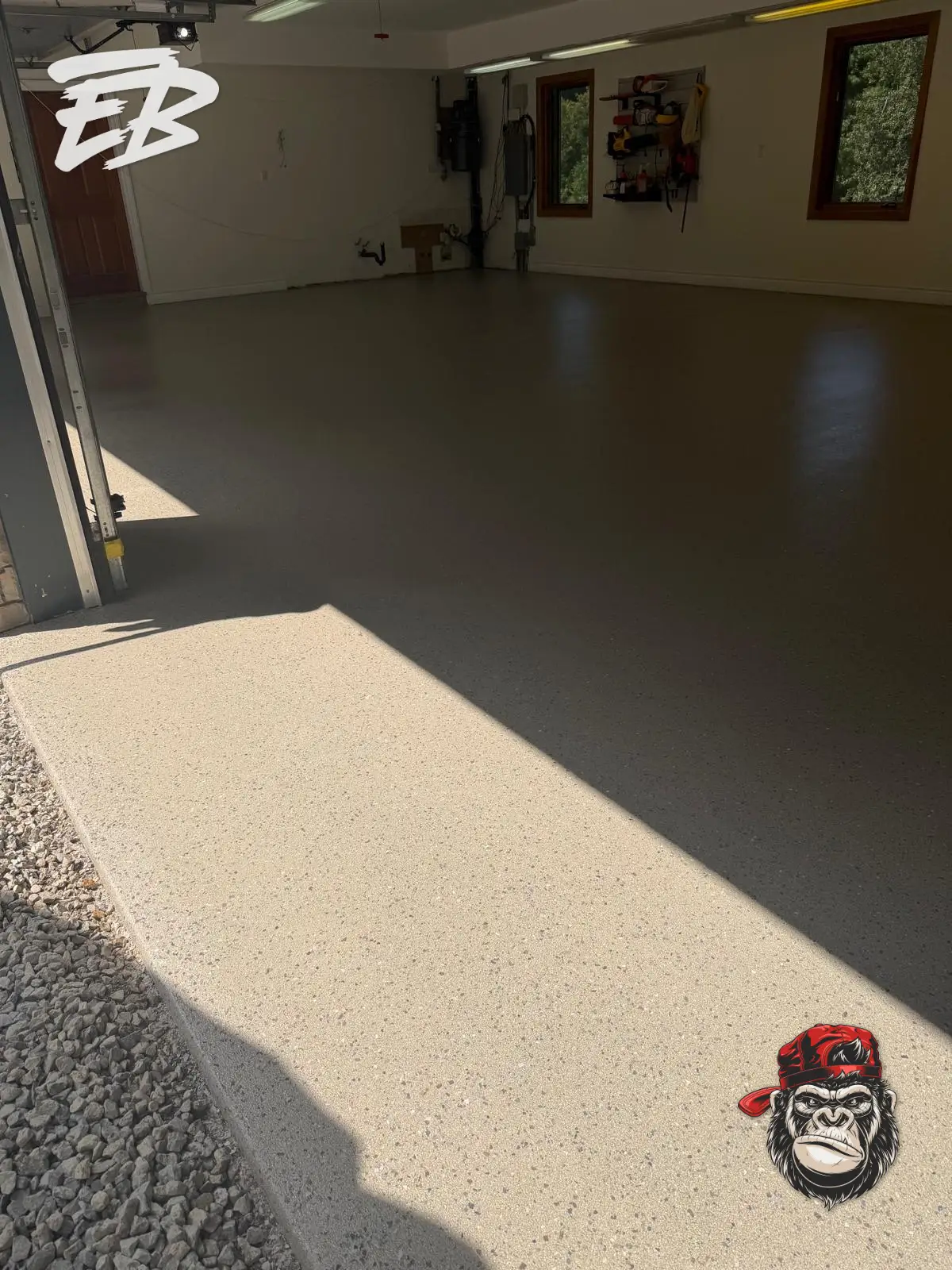
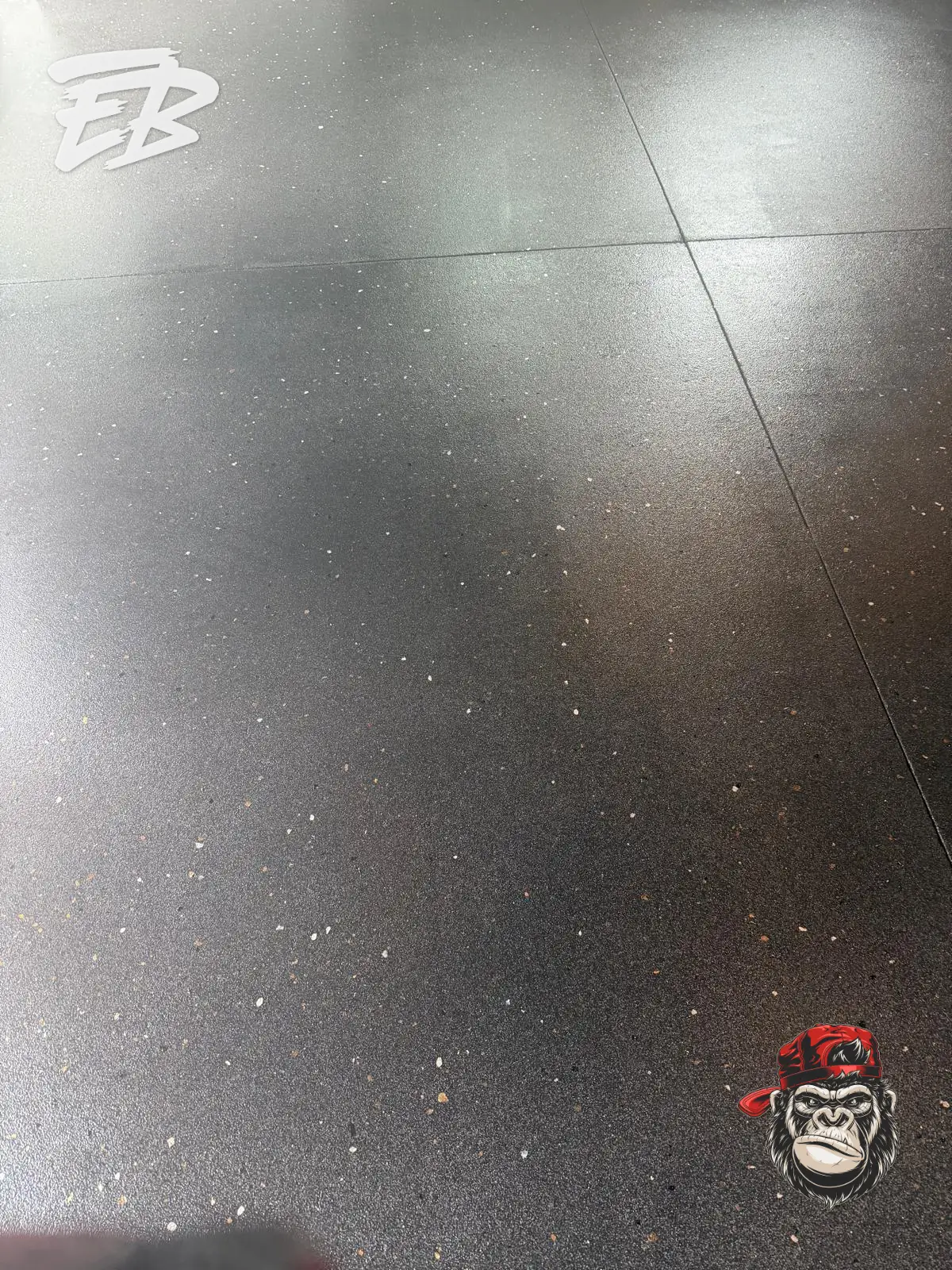
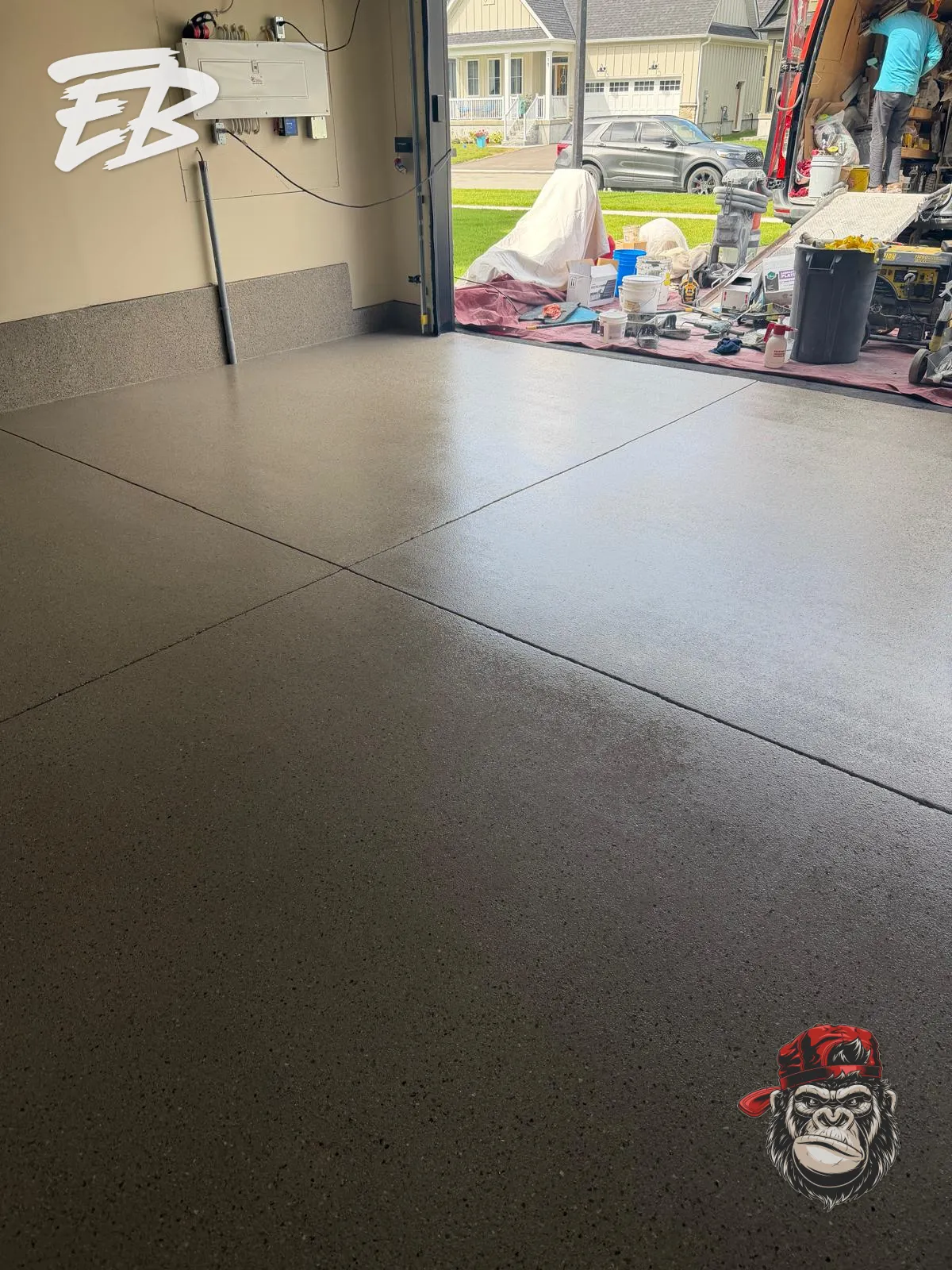
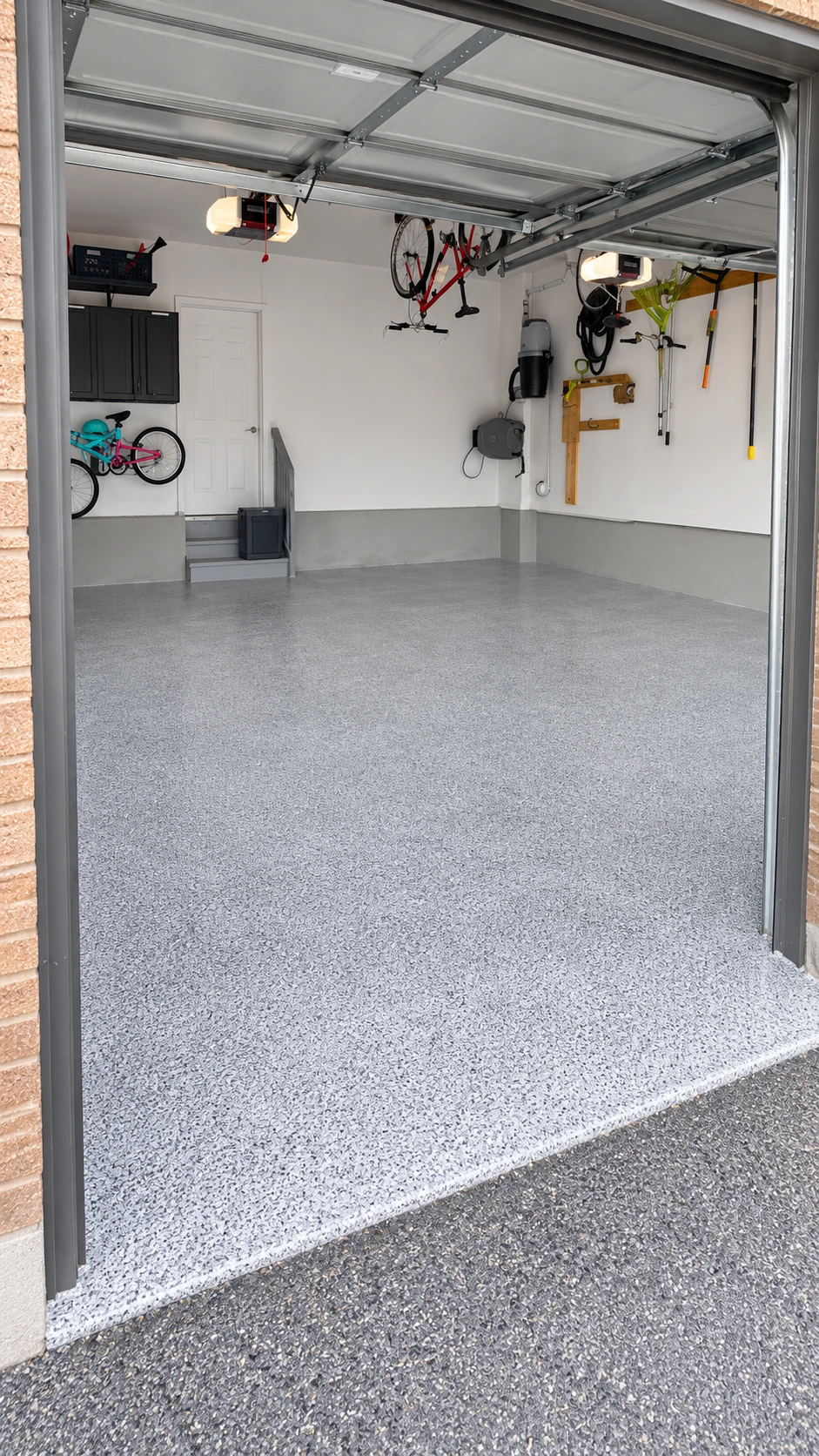
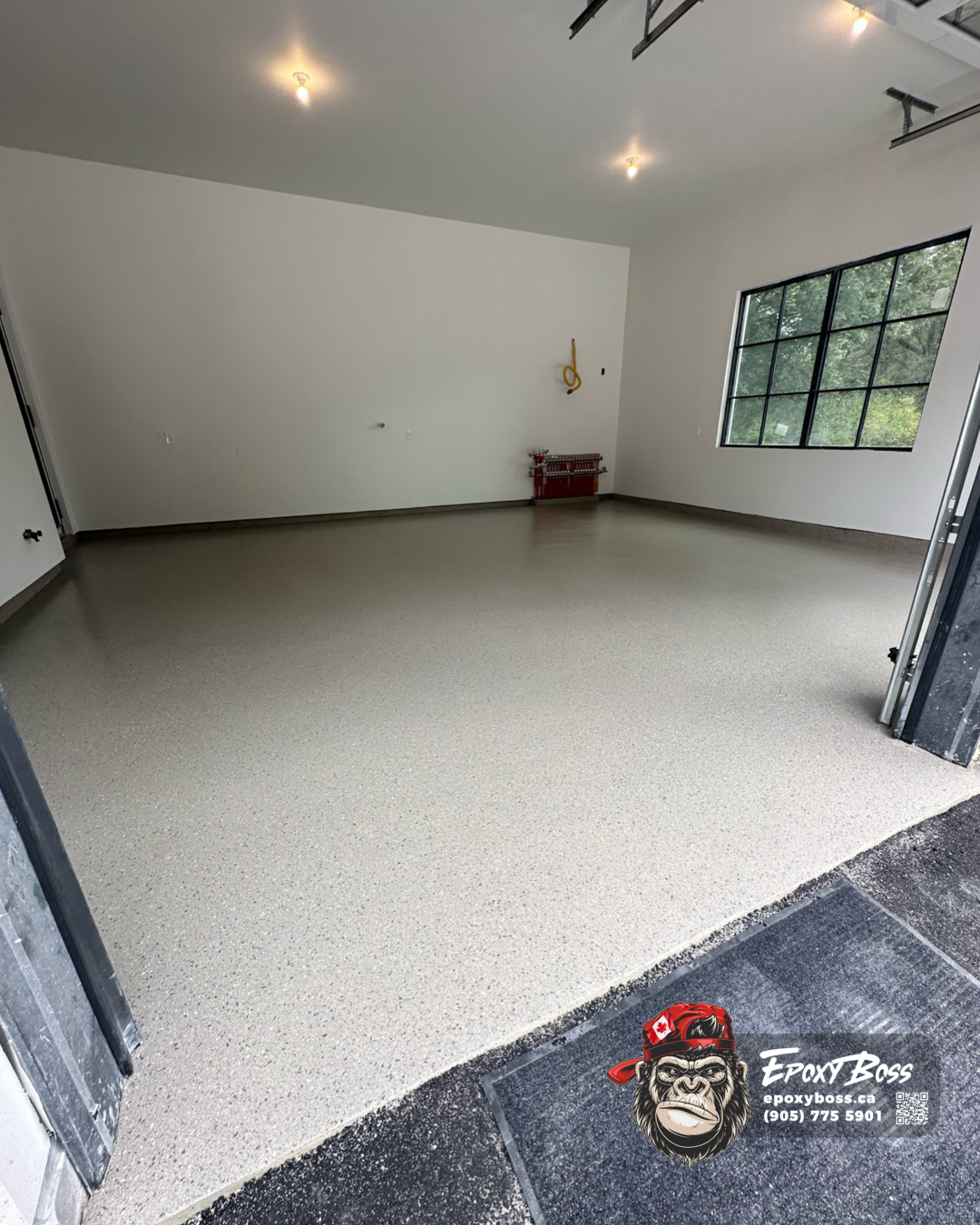
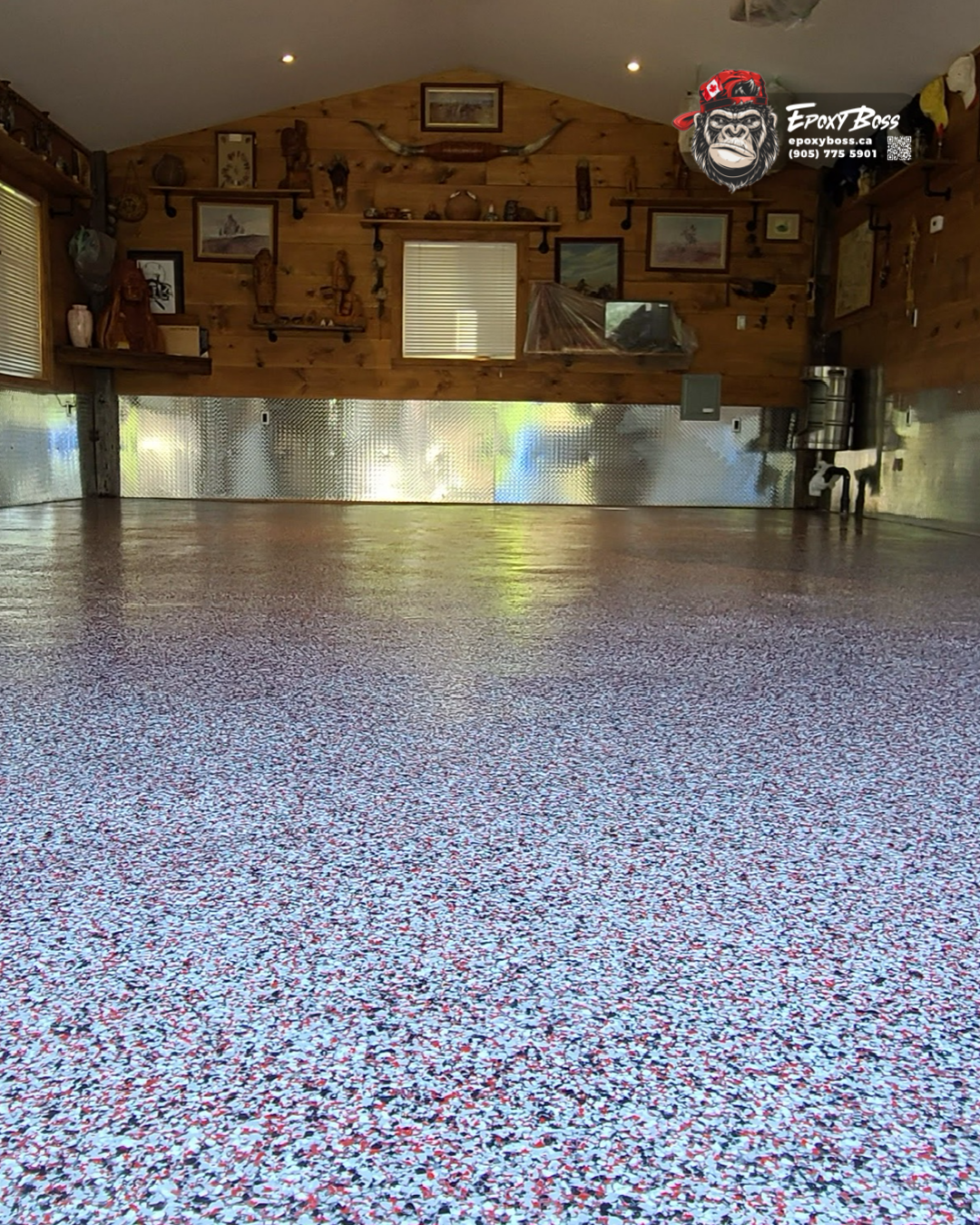
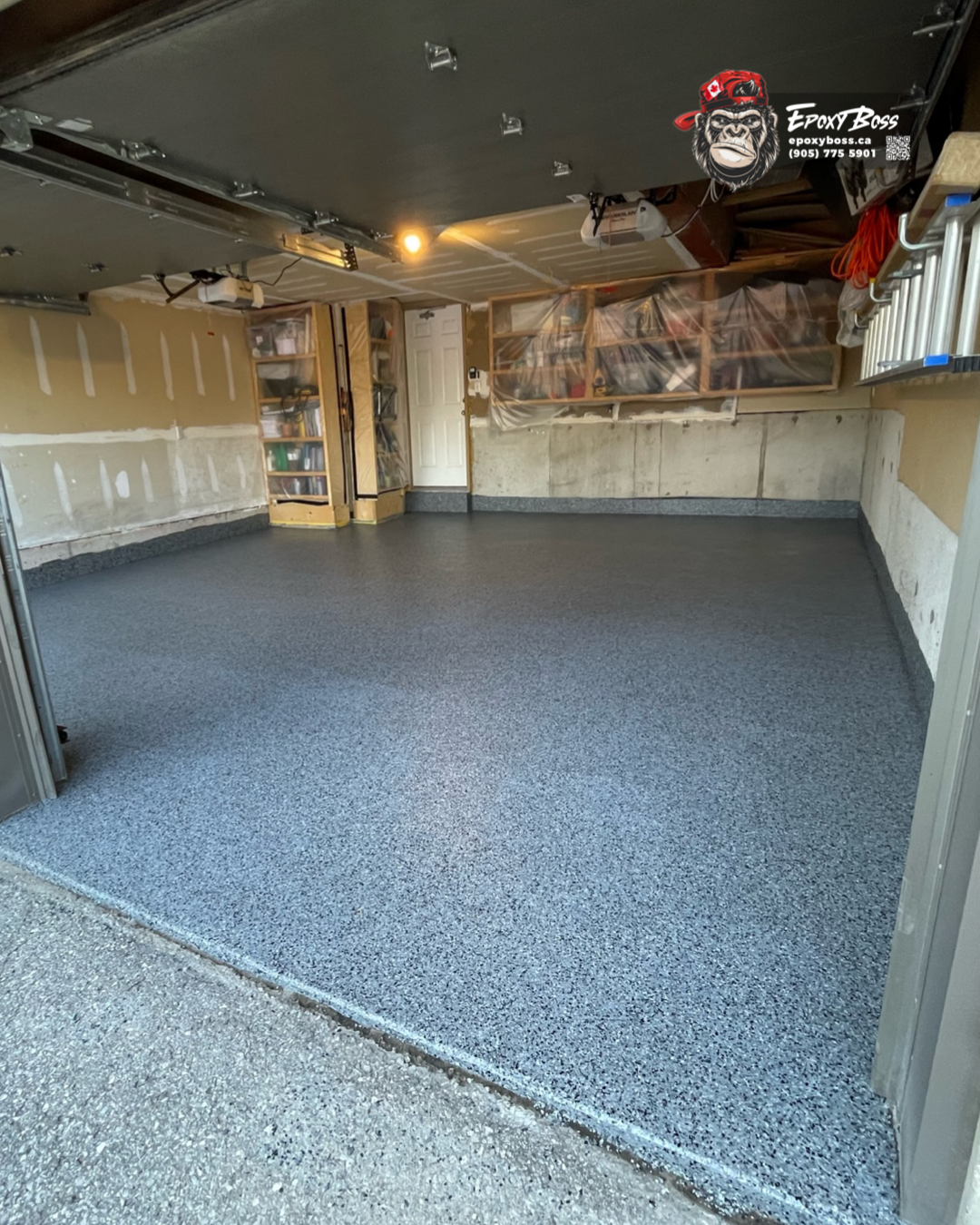
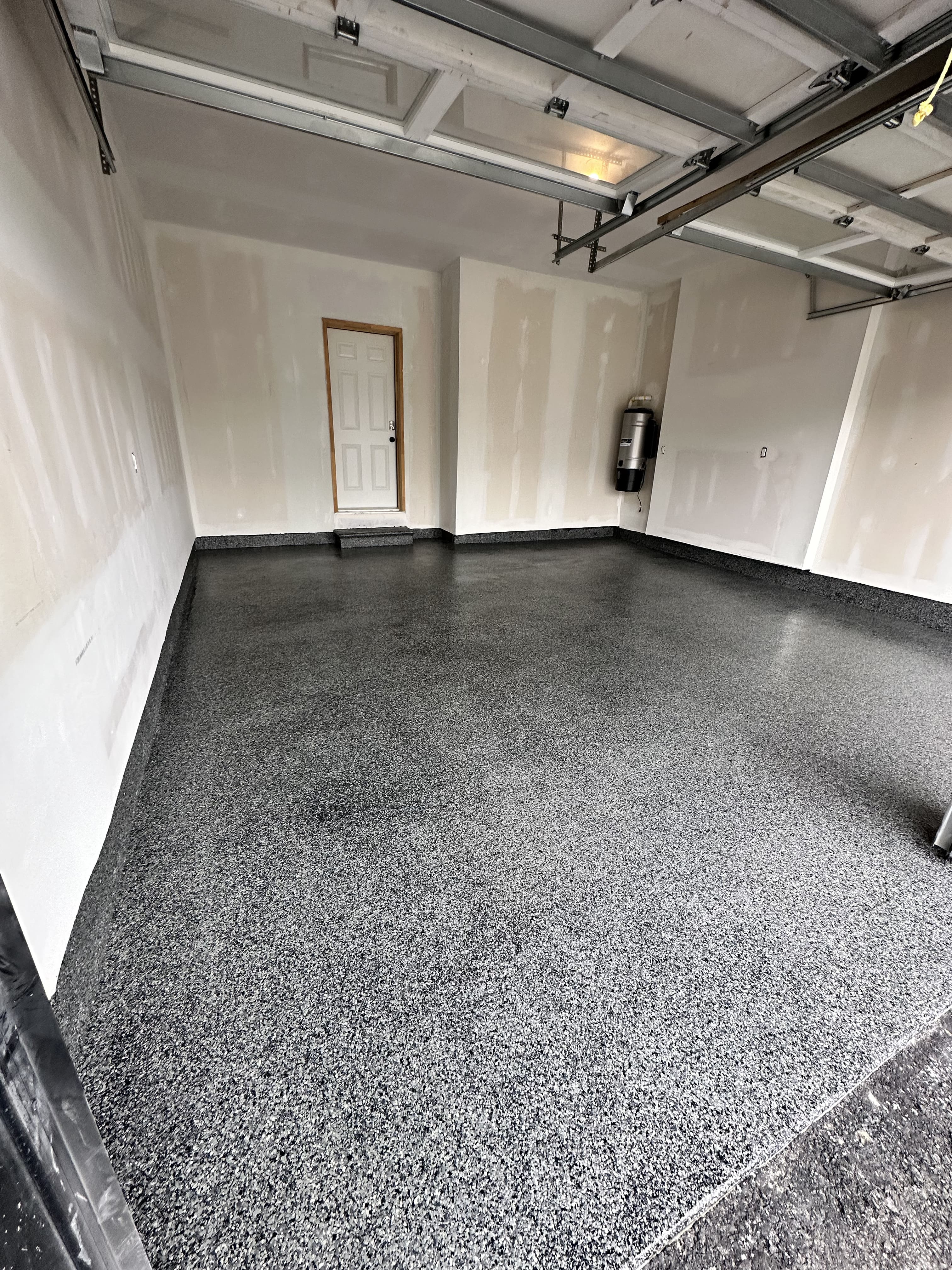
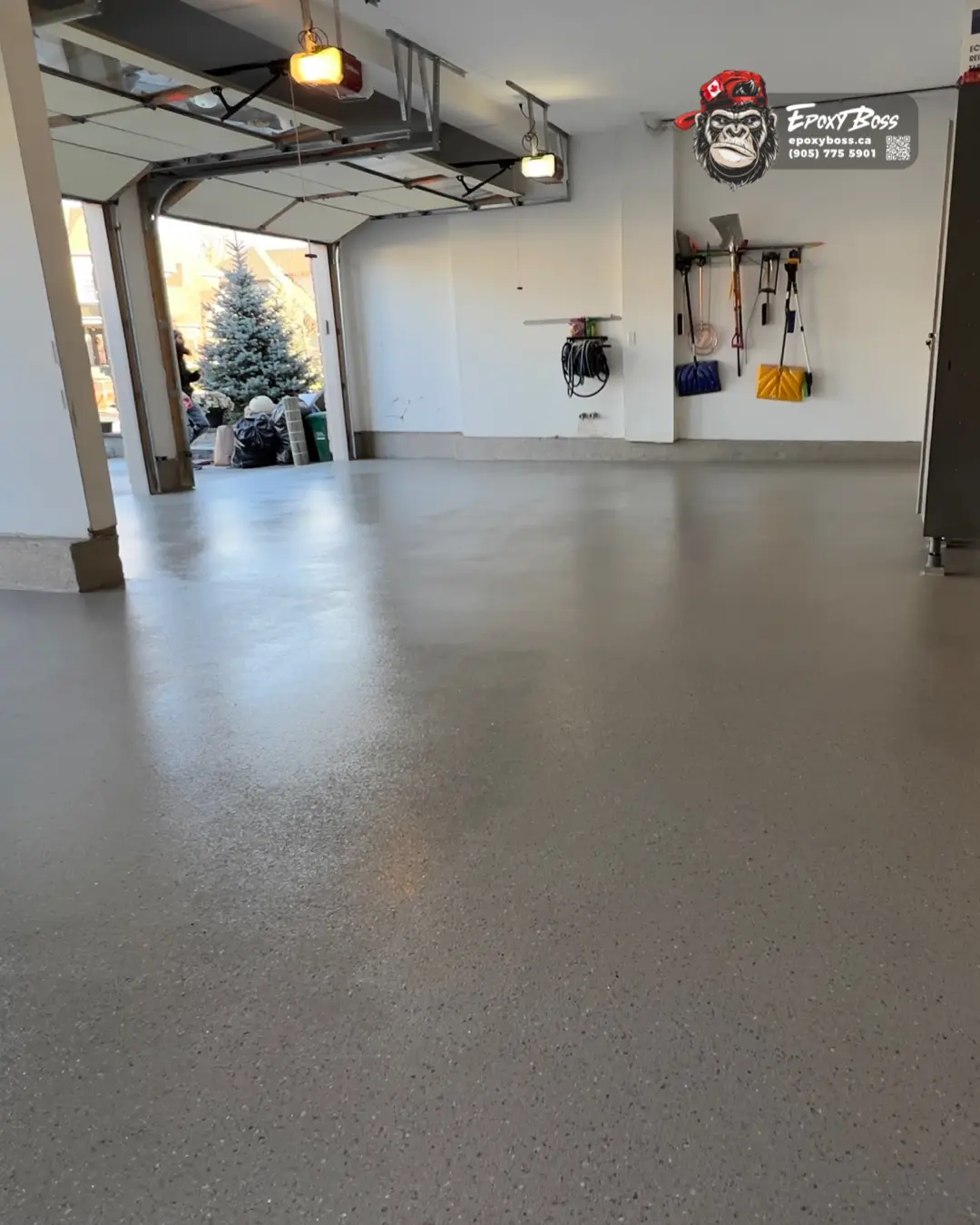
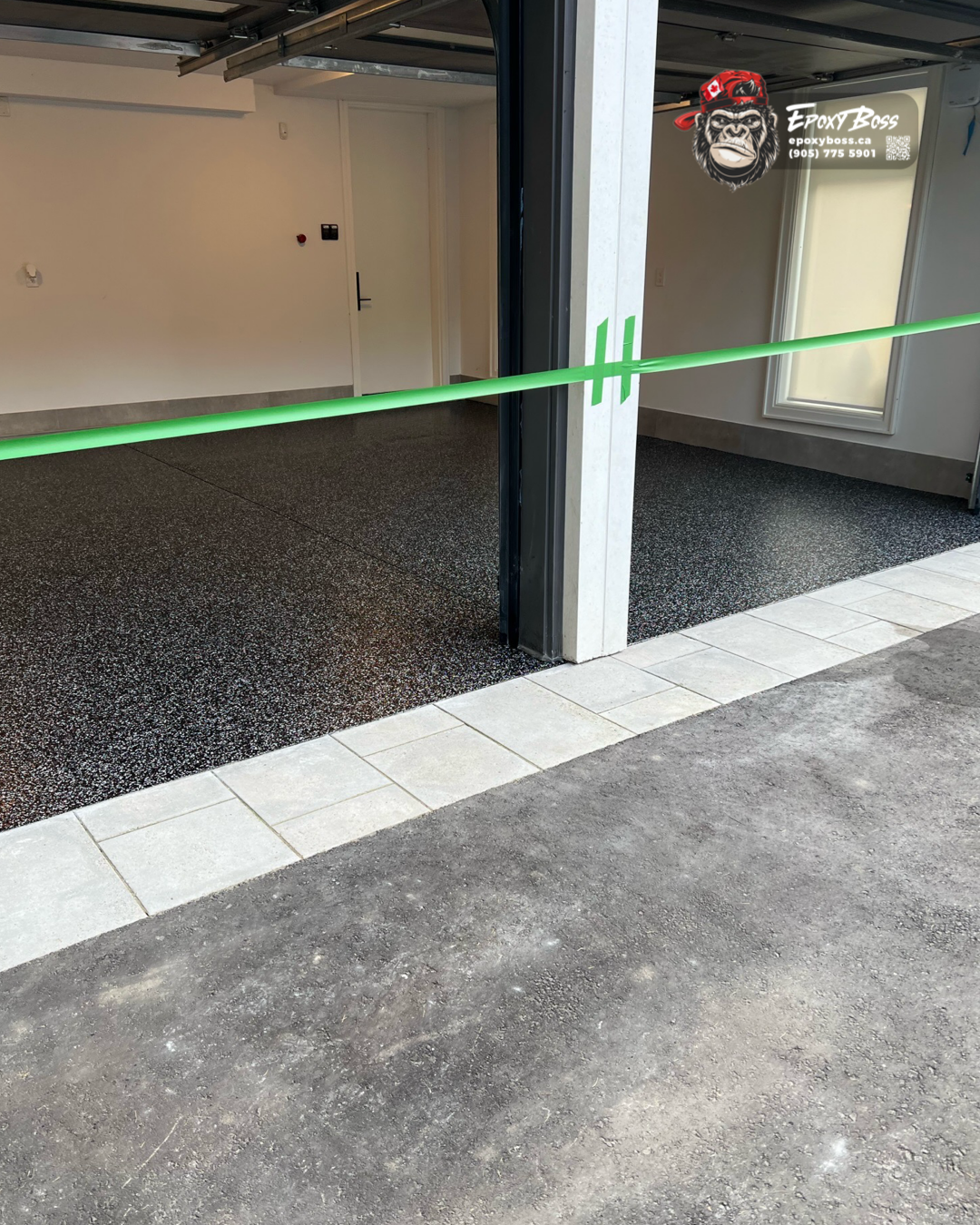
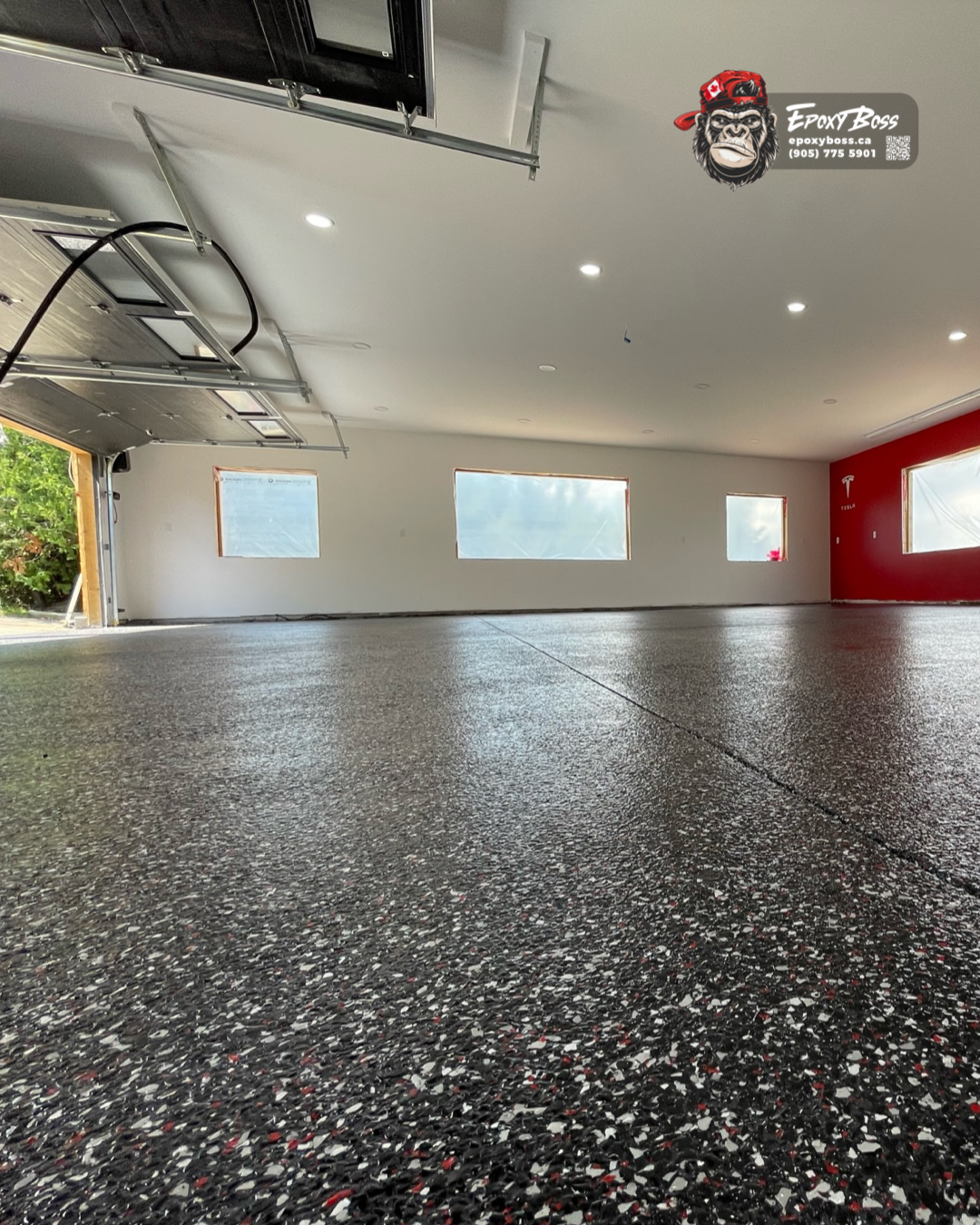
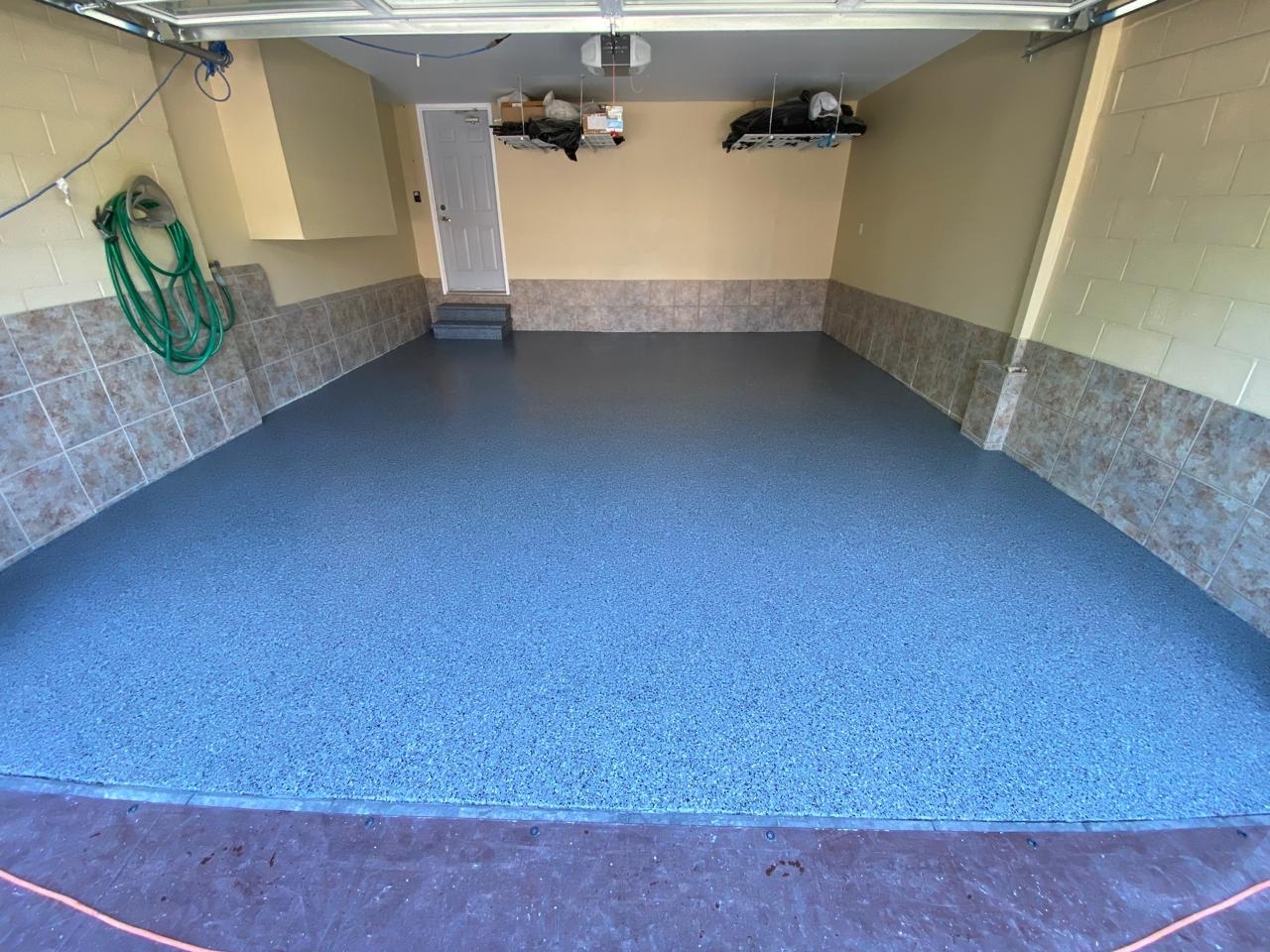
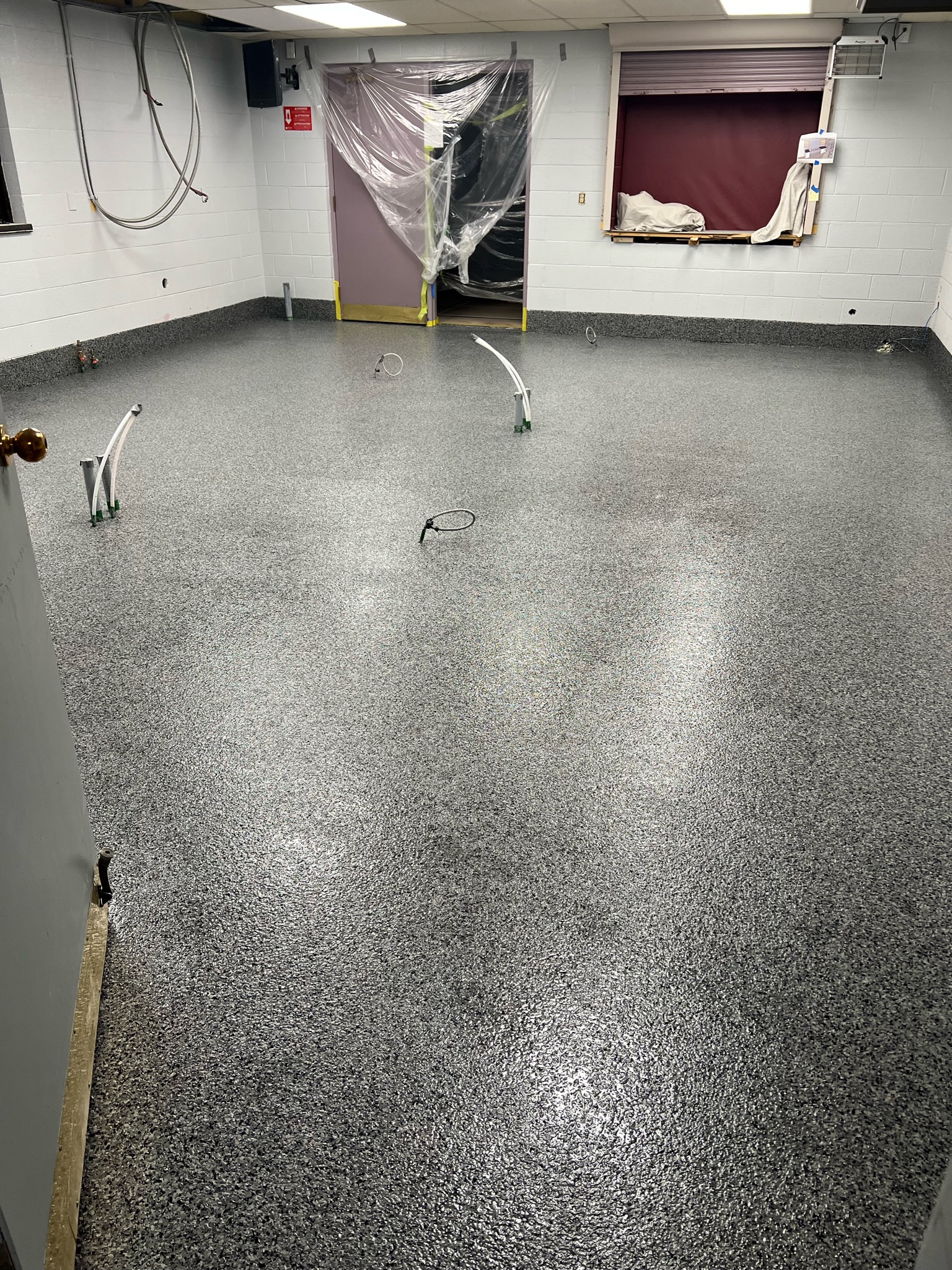
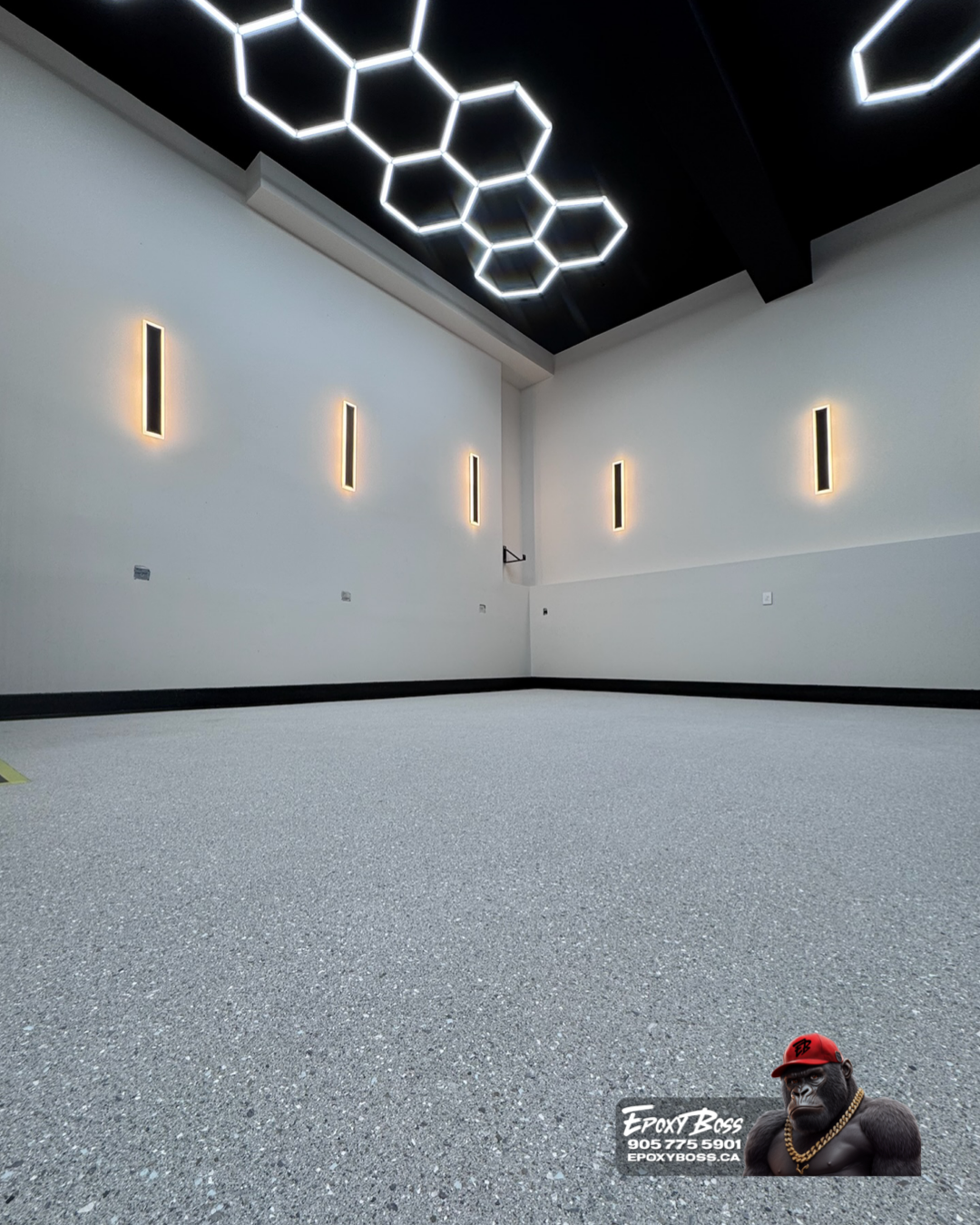
In a full-broadcast flake garage floor, a pigmented epoxy layer can be used as the receiving coat for decorative flake. The flake is broadcast into the wet resin until the floor has full coverage. After the resin has cured, the excess flake is scraped and vacuumed before a compatible clear topcoat is applied.
Epoxy is not a coating category that can be specified without context. Product data sheets set conditions for mixing, application, thickness, substrate preparation, temperature, humidity, cure and recoat timing. Those requirements can differ between a primer, a body coat and a clear finish.
The practical advantages of an epoxy body layer are often its build, film thickness and ability to support a decorative broadcast system. The final suitability still depends on the slab, the selected product system and the garage's actual use.
What polyaspartic actually does in a garage floor system
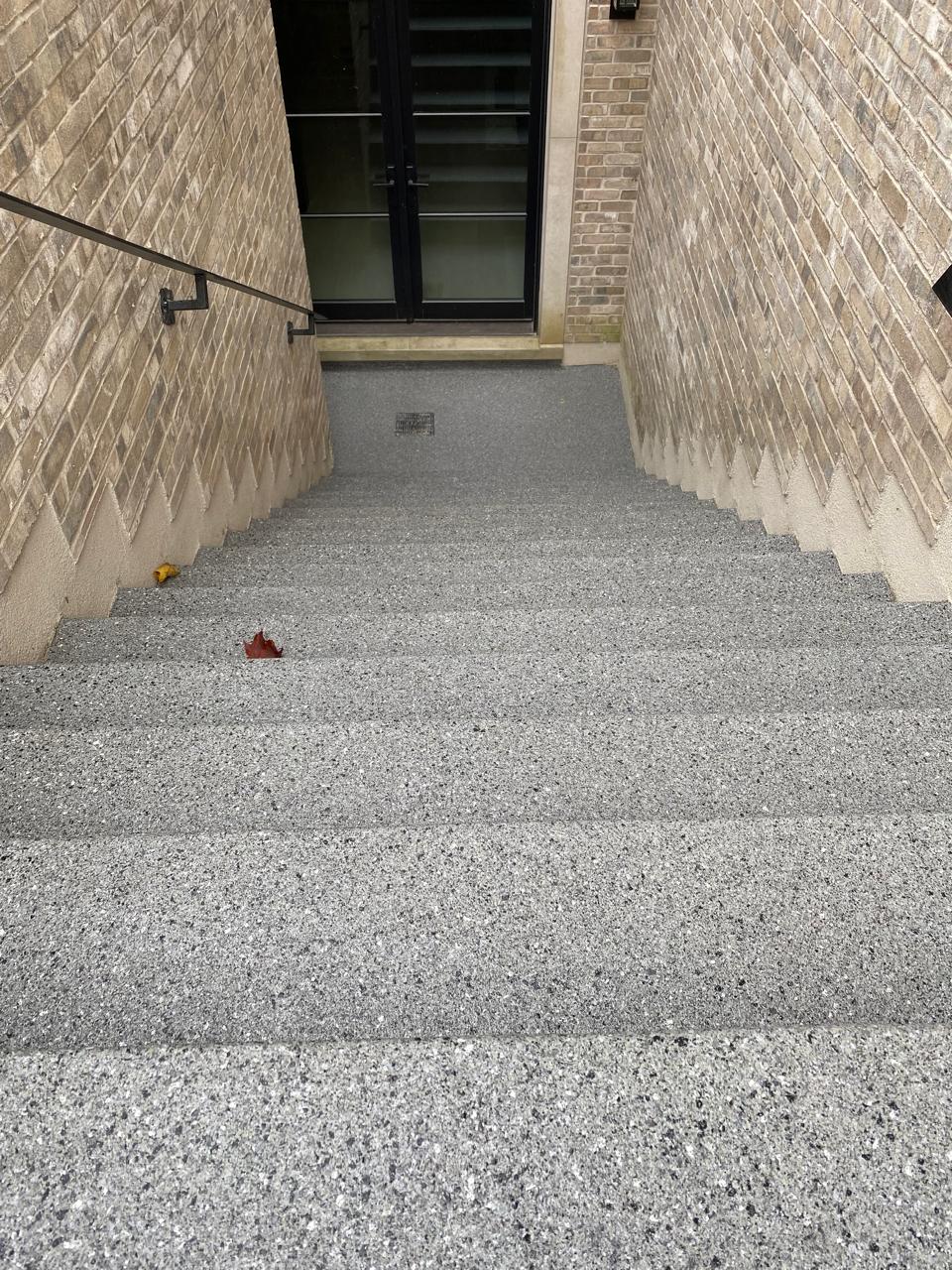
Polyaspartic is a fast-curing resin technology often used as a clear or pigmented protective coat. In a garage floor assembly, it is commonly selected as the final topcoat over a flake, quartz or other compatible resin layer.
The topcoat is not simply a shine layer. It helps complete the surface that will see tires, storage, grit, cleaning and regular garage use. Polyaspartic products can offer UV resistance and different cure characteristics, but the final layer still needs to be selected around the entire system rather than as a stand-alone marketing label.
Temperature and humidity matter here too. A polyaspartic product may cure more quickly than a conventional epoxy, but its working time and cure time still change with material, ambient and substrate conditions. That is especially relevant in a Vaughan winter, when a cold slab, open overhead door, snowmelt or changing garage temperature can affect the installation plan.
Why a good garage floor may use both
A durable floor is not defined by a single product name. It is defined by the complete assembly and the condition of the concrete it is bonded to.
A preparation-first full-flake garage system can include:
- Concrete assessment. The slab is reviewed for dusting, scaling, cracks, spalls, old coatings, sealer, oil, salt contamination, low areas and signs of moisture concern.
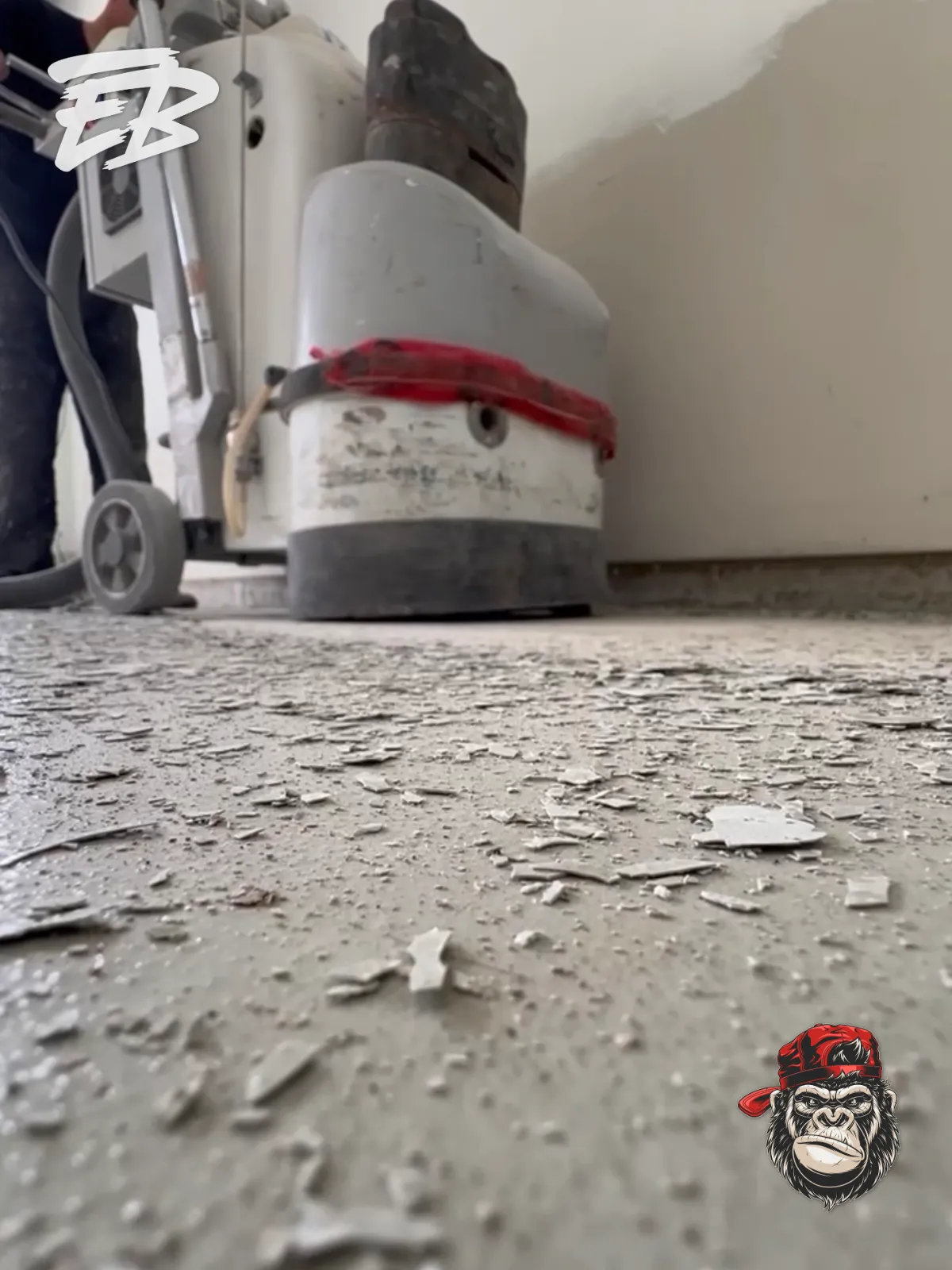
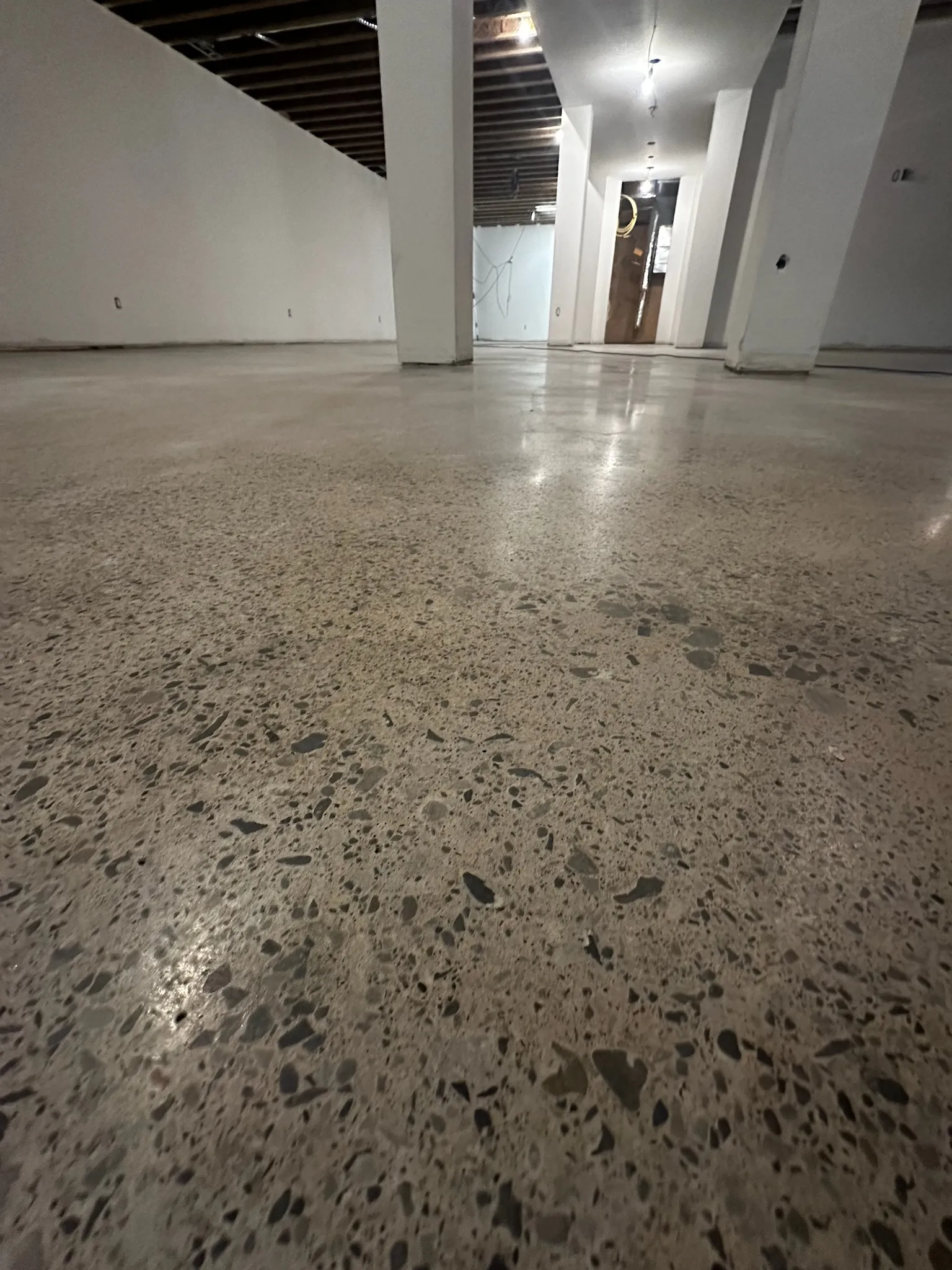
- Diamond grinding. The concrete is mechanically prepared to remove weak surface material and create the required profile for the specified resin system.
- Repair work. Stable cracks, small surface defects and transitions are addressed using compatible repair materials within the agreed scope.
- Primer or body layer. A compatible epoxy or other specified resin layer is applied to the prepared slab.
- Decorative broadcast. Full decorative flake is broadcast across the wet receiving layer for a consistent, multi-tone finish.
- Clear protective topcoat. A compatible polyaspartic or urethane finish seals the system and is selected around the desired appearance, traffic, cleaning routine and exposure.
This is why “epoxy versus polyaspartic” can be the wrong comparison. A Vaughan garage may benefit from an epoxy body layer and a polyaspartic clear topcoat because the products perform different jobs in the same system. The exact system is confirmed only after the concrete and site conditions are assessed.
What matters more than the resin label
The condition of the concrete
No resin type can compensate for unsound concrete. A garage floor with surface scaling, dusty paste, failed old coating, contamination or unresolved cracks needs preparation and, where appropriate, repair before a new system is installed.
Two Vaughan garages with the same square footage can therefore need different scopes. One slab may need straightforward grinding and a flake system. Another may need more extensive removal, crack repair, moisture review or restoration of deteriorated areas first.
Mechanical preparation and bonding
The top layer of bare concrete is where bonding is won or lost. Diamond grinding is used to remove weak material and create an appropriate surface profile. It also allows the crew to inspect the real slab condition rather than coating over surface residue or an unknown previous finish.
Preparation is particularly important where winter salt and meltwater have repeatedly entered the garage. Salt residue can often be cleaned, but weak concrete, moisture concerns and surface deterioration need to be identified before resin is applied.
Moisture and winter conditions
Concrete can hold or transmit moisture. A garage that is dry on the surface may still have a history of dampness, water entry, salt exposure or prior coating failure that changes the system decision. Moisture is assessed where the slab condition or project history indicates a concern.
In winter, the garage needs stable conditions for the chosen materials. The concrete temperature, air temperature, humidity and cure window must meet the selected product system's documented requirements. Heating the air for a short period does not automatically confirm that the concrete slab is ready.
The way the garage is used
Vehicle parking, workshop activity, storage, frequent cleaning, open-door sunlight and the homeowner's preferred appearance all influence the finish selection. A full-flake system can make ordinary dust and visual variation less noticeable than a single solid colour. A traction additive can be considered where the project and intended use call for it.
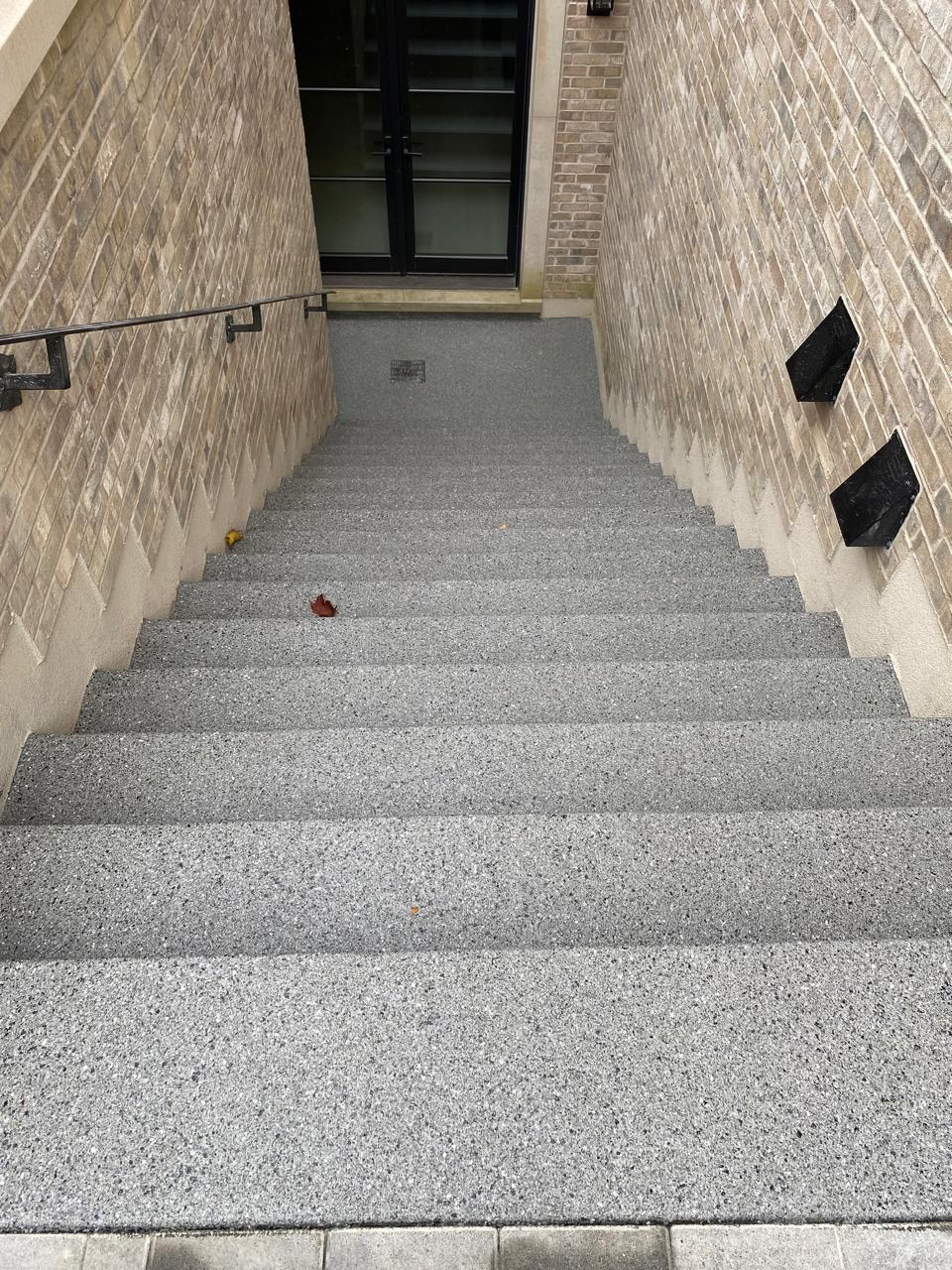
These decisions belong in the scope before installation, alongside access, stairs, vertical details, thresholds and expected maintenance.
Epoxy and polyaspartic during a Vaughan winter
Winter installations can be possible when the site conditions and selected system allow them. The decision is not based on the outdoor forecast alone. It requires a realistic plan for the actual concrete temperature, a clean and dry substrate, stable controlled conditions and the full cure period.
This is one reason product data sheets matter. A Canadian epoxy data sheet can specify separate requirements for product temperature, ambient air temperature, relative humidity and the concrete's relationship to the dew point. A polyaspartic data sheet can show different pot-life and cure behaviour at different temperatures. Those are installation controls, not details to skip in favour of an advertised turnaround time.
If the garage cannot maintain the required conditions, snowmelt is entering the work area, the concrete is wet or the cure period cannot be protected, rescheduling may be the practical choice. Clear communication protects the floor system and the homeowner's expectations.
How to compare quotations intelligently
When reviewing a garage floor coating scope, ask what work is included before the decorative finish:
- Is mechanical diamond grinding included?
- How are cracks, small spalls and transitions assessed and repaired?
- Is old coating removal included when required?
- How are salt residue and moisture concerns addressed?
- What are the primer, body coat, flake and topcoat layers?
- Which layer is epoxy and which layer is polyaspartic, if both are used?
- What are the stated site conditions, access requirements and return-to-service expectations?
These answers show what the system is designed to do. They are more useful than choosing a contractor based only on whether the word “epoxy” or “polyaspartic” appears in a headline.
Maintenance after installation
Once the floor is installed and has reached its stated service condition, routine care is straightforward: remove winter grit, clean slush and salt residue rather than allowing it to sit, and use cleaning products appropriate for the installed topcoat.
Maintenance does not replace good preparation, but it helps protect the intended finish and makes it easier to notice a developing concern around joints, transitions or areas of recurring moisture. Epoxy Boss provides practical care guidance at handover based on the system that was installed.
Frequently asked questions
Is polyaspartic always better than epoxy for a garage floor?
No. They have different characteristics and may have different roles in the same floor system. A compatible epoxy body layer with a polyaspartic topcoat can be an appropriate assembly for many garages, but the slab condition and selected system determine the scope.
Does epoxy turn yellow in a garage?
Appearance and UV behaviour depend on the exact resin, colour, exposure and system design. Where open-door light exposure and final-finish requirements are relevant, a compatible UV-resistant topcoat may be selected as part of the system.
Can polyaspartic go directly over bare concrete?
It depends on the specified product system and the condition of the slab. Bare concrete must first be assessed and mechanically prepared. Cracks, contamination, moisture concerns and weak surface material need to be addressed before coating.
Is a full-flake garage floor epoxy or polyaspartic?
It can include both. A compatible epoxy or other resin can serve as the receiving coat for the flake, while a polyaspartic or urethane layer can provide the final clear protective finish. The exact assembly is project-specific.
How do I choose the right system for my Vaughan garage?
Start with a concrete assessment. Send Epoxy Boss three to five clear photos, the approximate square footage, your Vaughan location and details about cracks, old coating, salt exposure, water or the way the garage is used. We will discuss the preparation needs and compatible system options.
Request a Vaughan garage floor assessment
Epoxy Boss provides preparation-first garage floor coating systems in Vaughan and across York Region. We assess the concrete, explain the repair and preparation scope, then recommend a compatible resin system for the garage's actual use and conditions.
The best starting point is not choosing between two labels. It is understanding what the floor needs underneath the finished surface.
Technical reference notes
- Sika Canada, Sikafloor-219 UTE product data sheet: example of a decorative epoxy system with explicit material, air, humidity and dew-point requirements.
- Sika, Sikafloor-521 product data sheet: example of a polyaspartic coating with temperature-dependent working and cure times.

.webp)


.jpeg)
.jpeg)
.jpeg)
.jpeg)
.webp)

.jpeg)
.png)
.png)