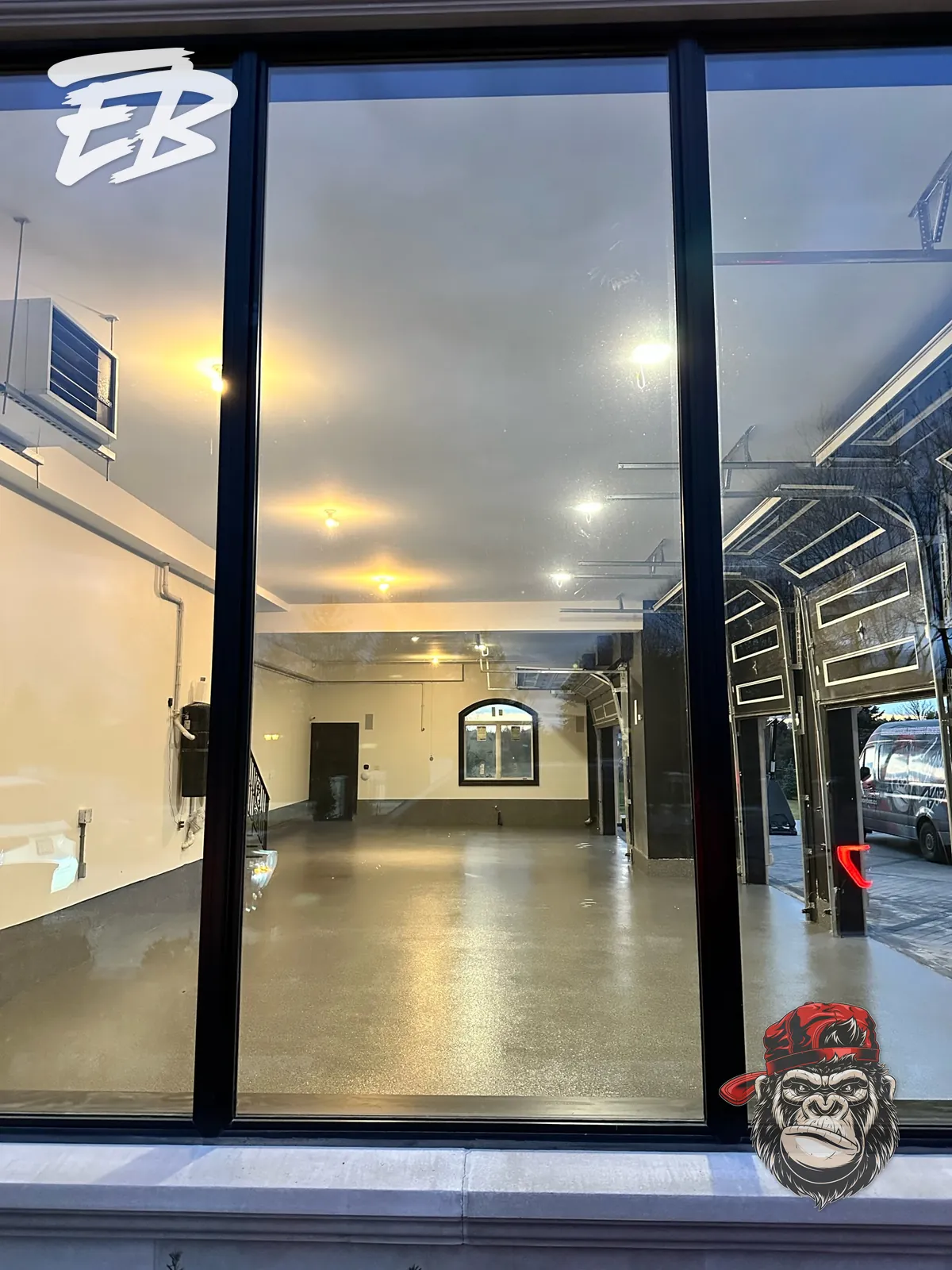
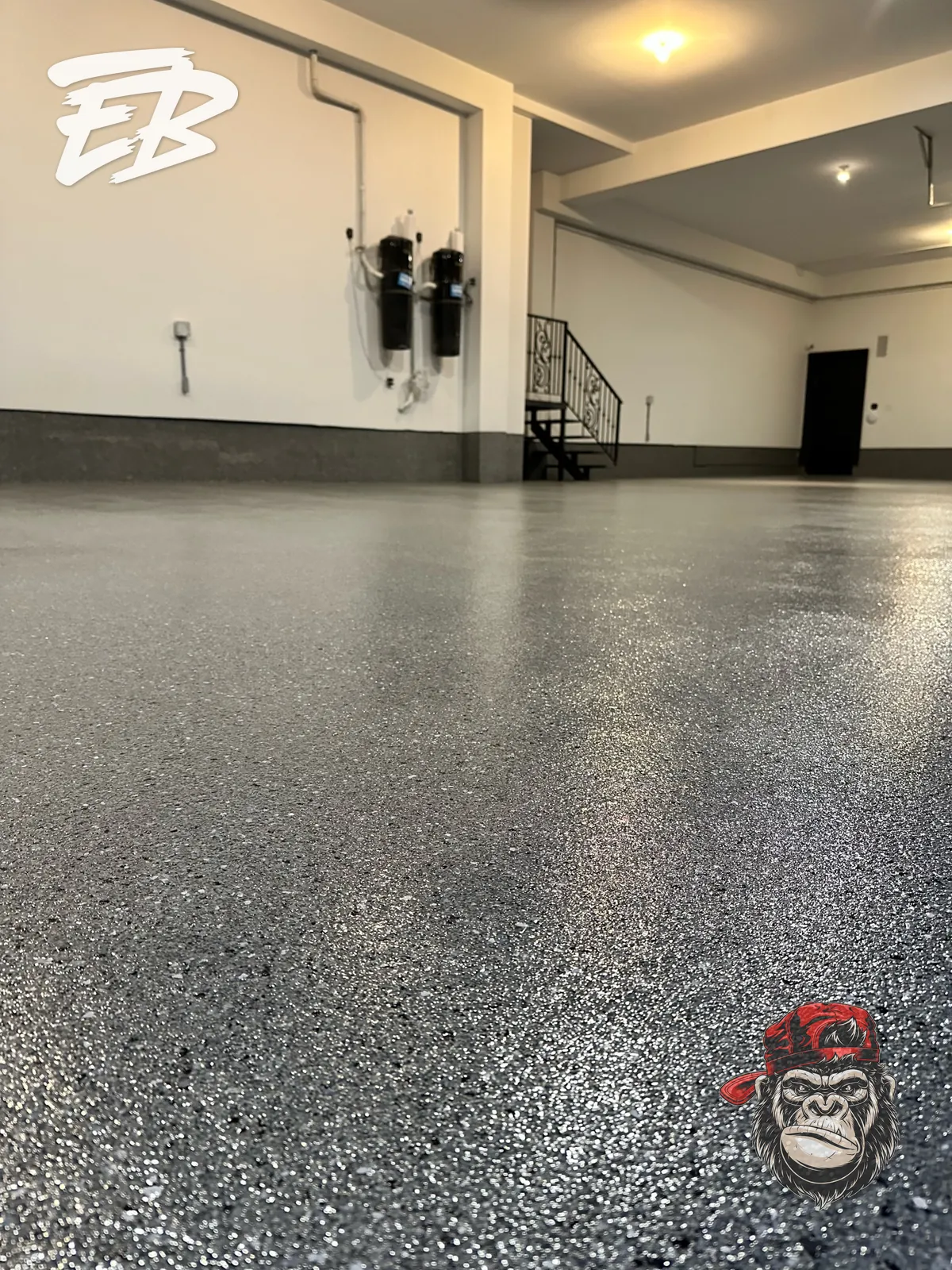
Yes, a garage floor can sometimes be coated during a Vaughan winter. The deciding factor is not the date on the calendar or a quick look at an outdoor weather app. It is whether the concrete, the air inside the garage, the moisture condition of the slab and the full cure period meet the documented requirements of the specified coating system.
That distinction matters. A garage may feel comfortable for a few hours while the concrete slab remains cold. A space can be heated during application but lose temperature overnight. Snowmelt and road salt can leave the slab damp even when the surface looks dry. A proper winter installation is planned around those conditions before diamond grinding or coating begins.
For homeowners looking for garage floor coating in Vaughan, winter is not an automatic reason to delay a project. It is a reason to assess the environment carefully and select a realistic installation window.
Temperature is more than the number on a thermostat
Resinous garage floor systems cure through a chemical reaction. The specific primer, epoxy body coat, repair material and polyaspartic or urethane topcoat each have their own product-data-sheet requirements. Those requirements can include the acceptable substrate temperature, air temperature, relative humidity, moisture condition, working time, recoat window and return-to-service period.
There is no responsible universal answer such as, “Every garage can be coated at one exact temperature.” A product that is suitable for one range or system build may not be appropriate for another. The system supplier’s current technical documentation controls the installation conditions.
At Epoxy Boss, we look beyond the room thermostat. The practical questions are:
- What is the actual concrete temperature, including colder edges and areas near the overhead door?
- Can the garage hold stable conditions before, during and after the installation?
- Is the slab dry and free of snowmelt, condensation, salt residue or surface contamination?
- Does the selected system have an appropriate cure and recoat sequence for those conditions?
- Can the garage remain unavailable until the floor reaches the stated return-to-service condition?
The goal is not to push a coating into a winter day. The goal is to create the conditions the system requires so the bond and cure process can proceed as intended.
Why the concrete can be colder than the room
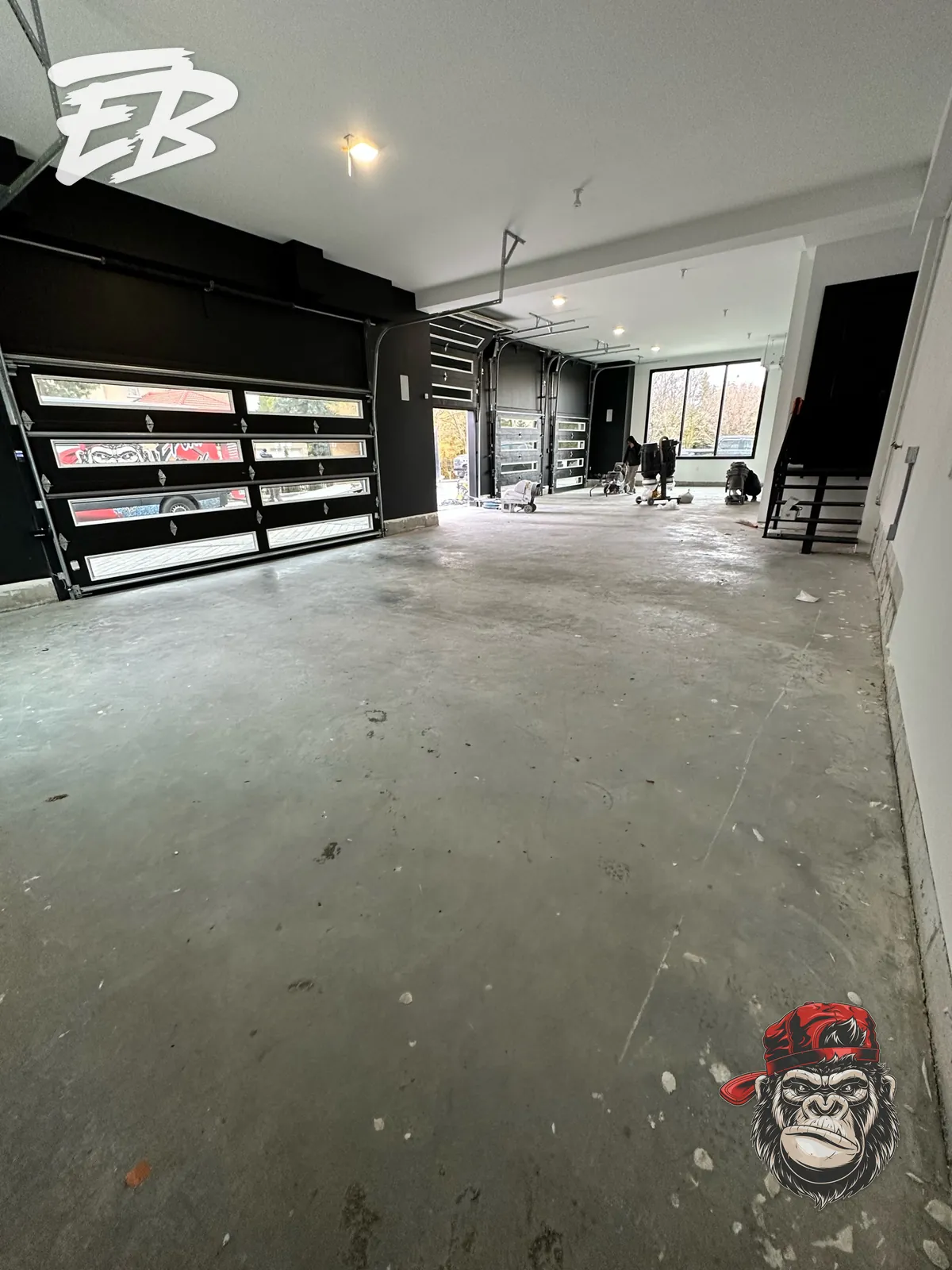
Concrete has thermal mass. In an attached or detached garage, the slab may have been exposed to cold ground conditions for days or weeks. Turning on a heater can change the air temperature more quickly than the concrete temperature. This is especially relevant around exterior walls, the overhead door, perimeter edges and low areas where snowmelt has collected.
That is why an installer should evaluate the slab itself, not only the temperature near the ceiling or a wall-mounted thermostat. A cold concrete surface can affect resin flow, working time, cure development and the way a coating bonds to the prepared substrate.
Stable conditions matter after application as well. The coating is still in its curing period after the crew leaves. A garage should not be treated as ready simply because the surface has changed colour or no longer looks wet. The specified system determines when it can be walked on, when items can be returned and when vehicle traffic can resume.
Winter moisture is often the bigger issue
In Vaughan, winter garages receive snow, slush, road salt and wet tires. That makes moisture assessment a central part of the scope.
Visible water is an obvious stop signal, but it is not the only concern. Meltwater can sit in tire paths, collect along a door opening or move into cracks and shallow surface defects. Salt residue, de-icing chemicals, oil, old sealer and prior coatings can also affect the condition that must be prepared before coating.
A floor is not ready because it has been swept or pressure-washed. The slab needs to be assessed, mechanically prepared and reviewed for repair or moisture considerations. Where the concrete history or measured condition raises a concern, the appropriate response may be additional drying time, a compatible moisture-control approach, a different system build or rescheduling the installation.
The correct decision depends on the slab. A coating should not be used to cover an unresolved moisture condition.
Preparation still comes first in winter
Cold weather does not reduce the need for preparation. In fact, it makes planning more important.
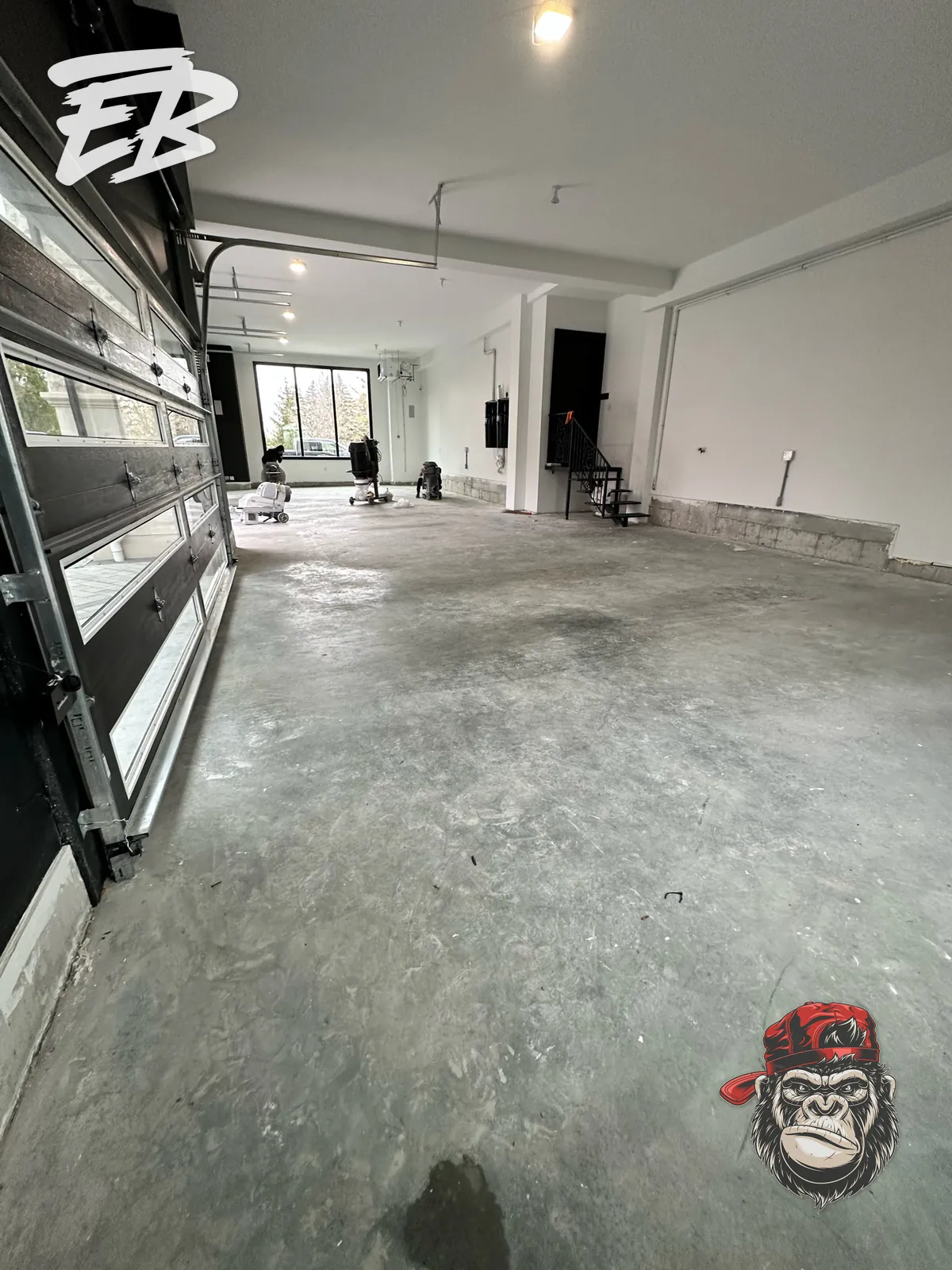
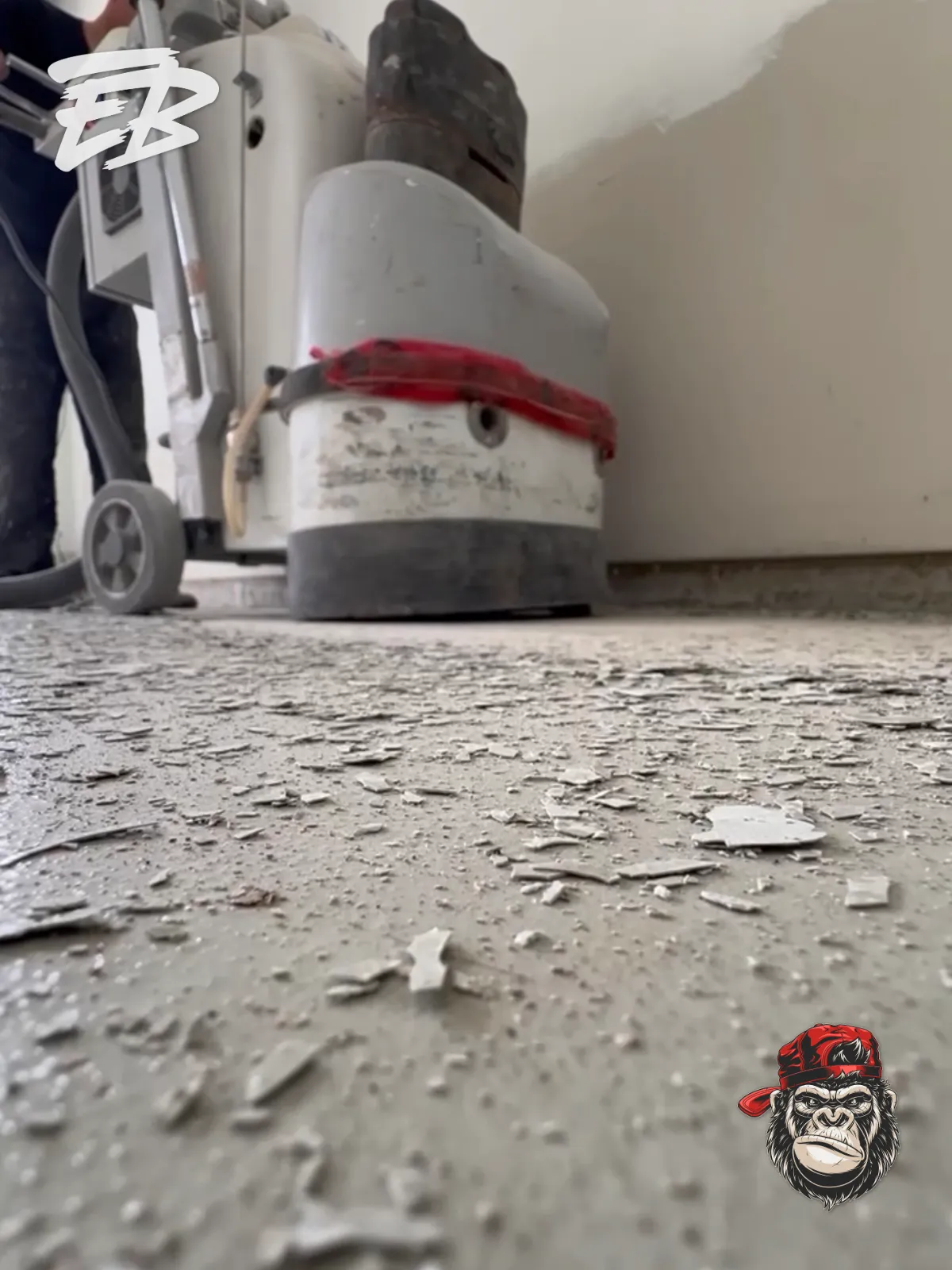
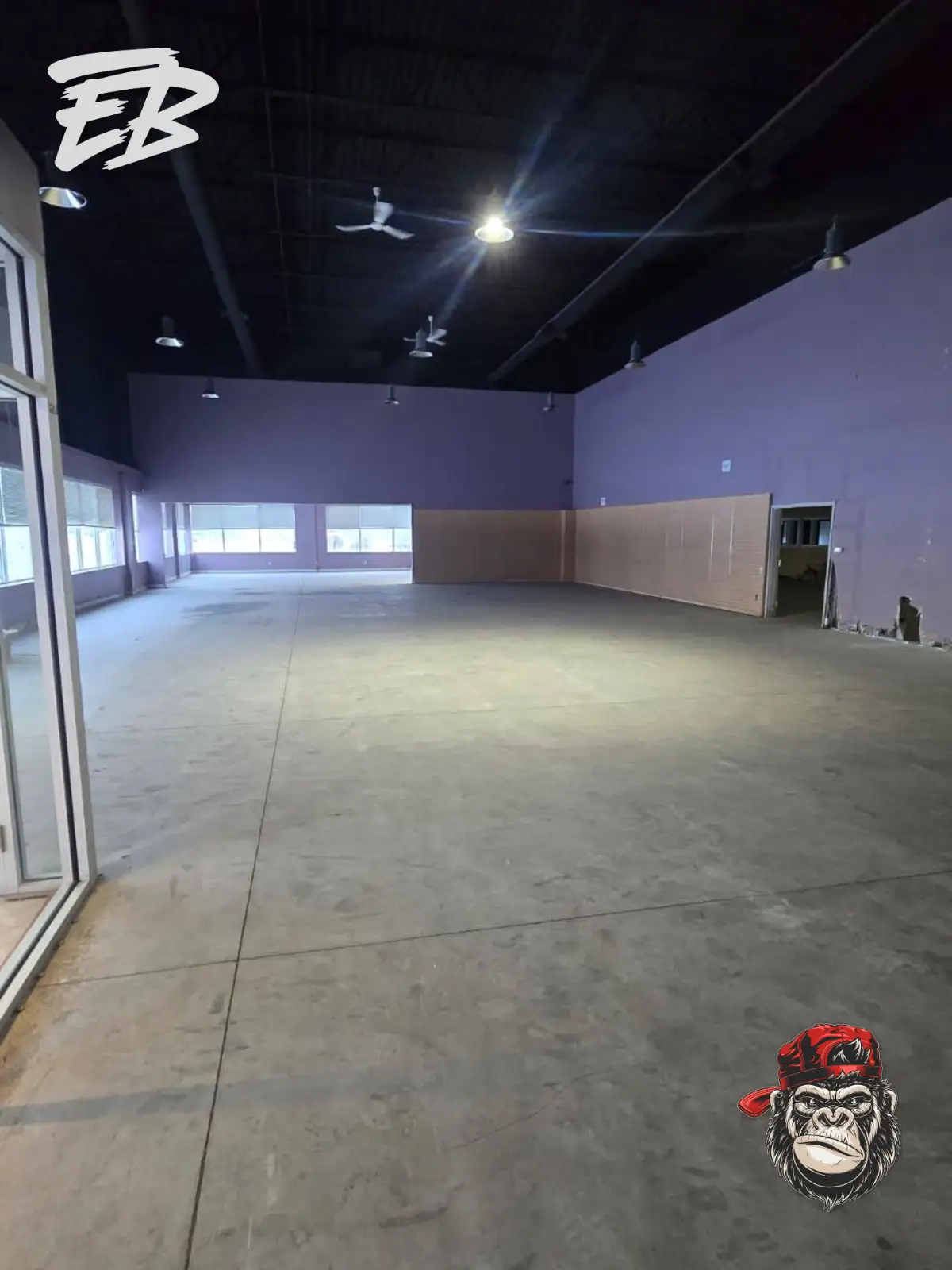
Epoxy Boss begins with a visual and practical assessment of the garage: surface dusting, scaling, cracks, spalls, old coatings, paint, sealer, adhesive, oil, salt contamination, low spots, door transitions and access. We then mechanically diamond grind the concrete to remove weak surface material and create the profile required for the selected resin system to bond.
Diamond grinding is not a cosmetic step. It establishes the working concrete surface beneath the coating. Professional controlled-dust practices are part of preparing that surface cleanly. If grinding reveals deteriorated areas, cracks or failed material, the repair scope is confirmed before the system is built.
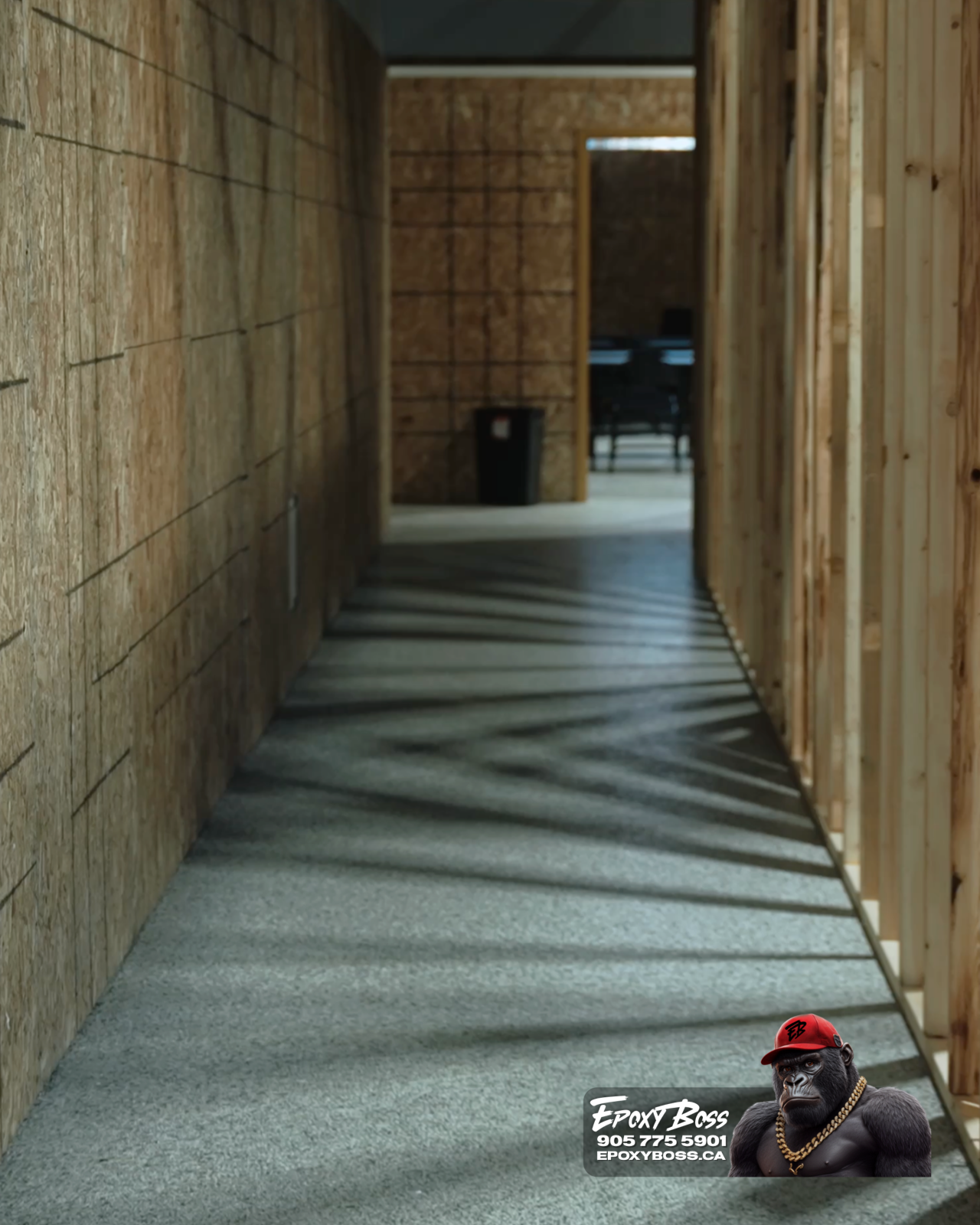
Winter access must be planned too. Vehicles, boxes and storage should be moved from the garage. The overhead door and entry points need to be managed so snow, cold air and debris do not enter the work area during critical preparation or coating stages. The space also needs enough time to stabilize before the installation begins.
A typical winter-ready garage floor system
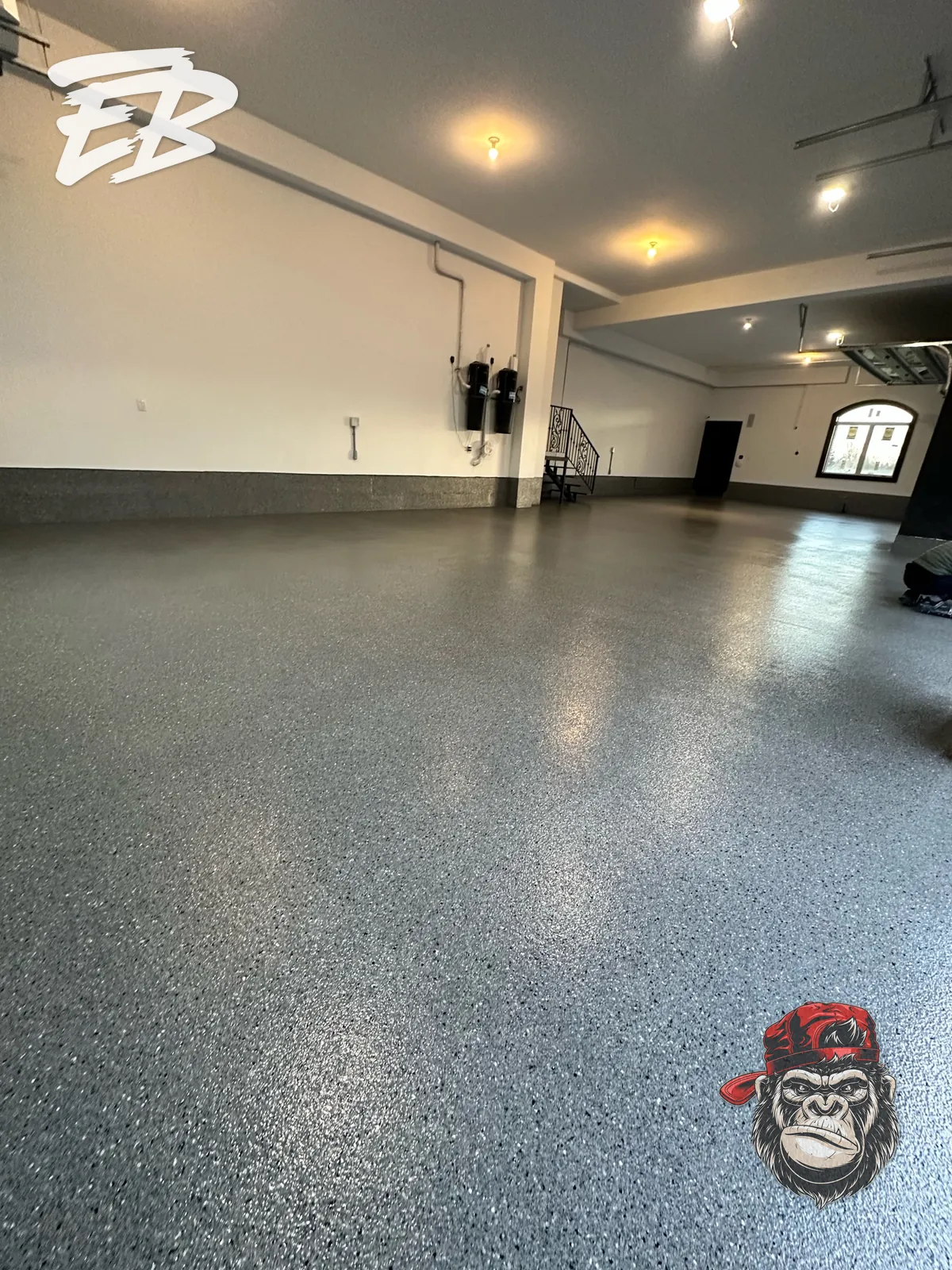
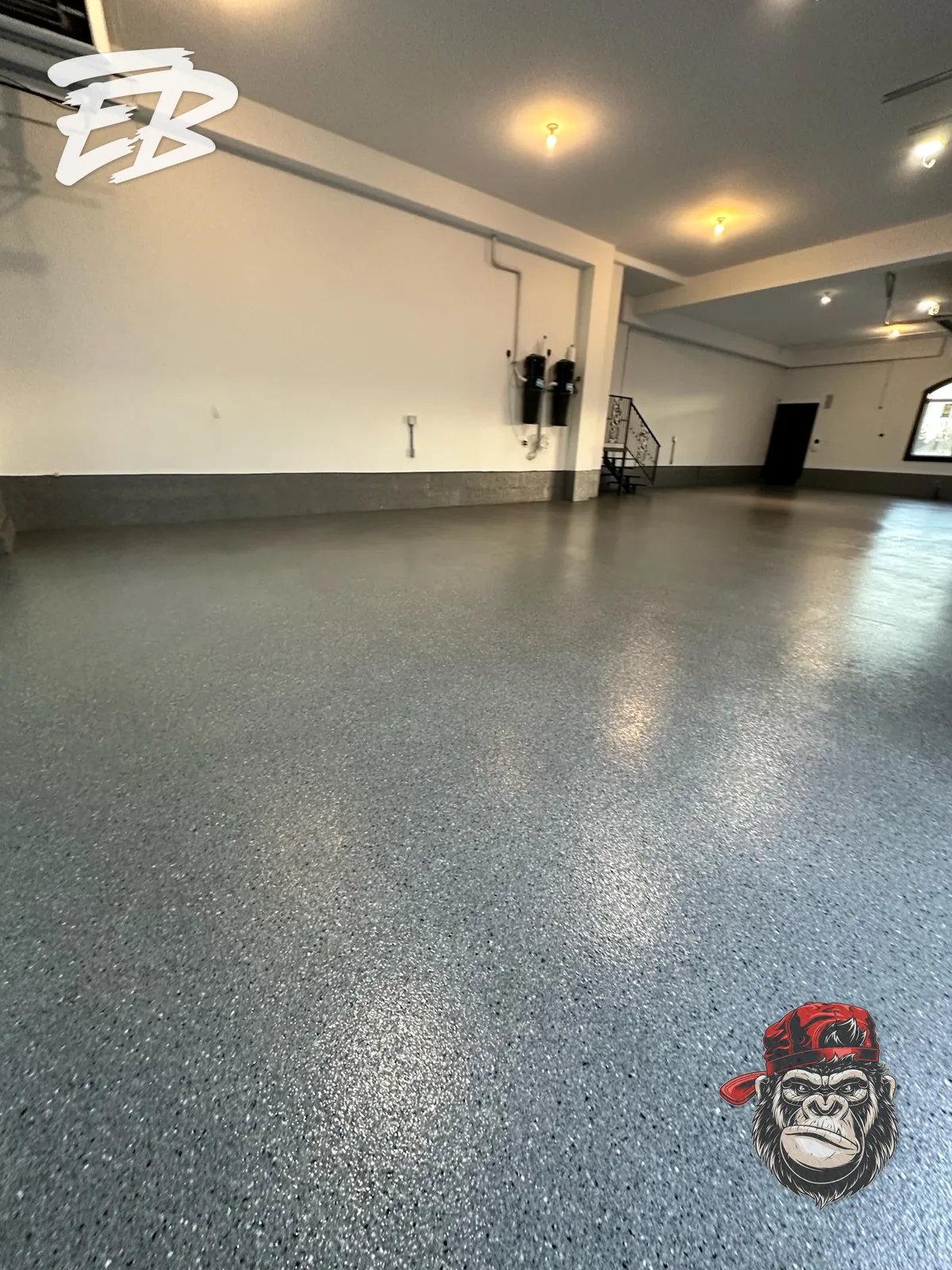
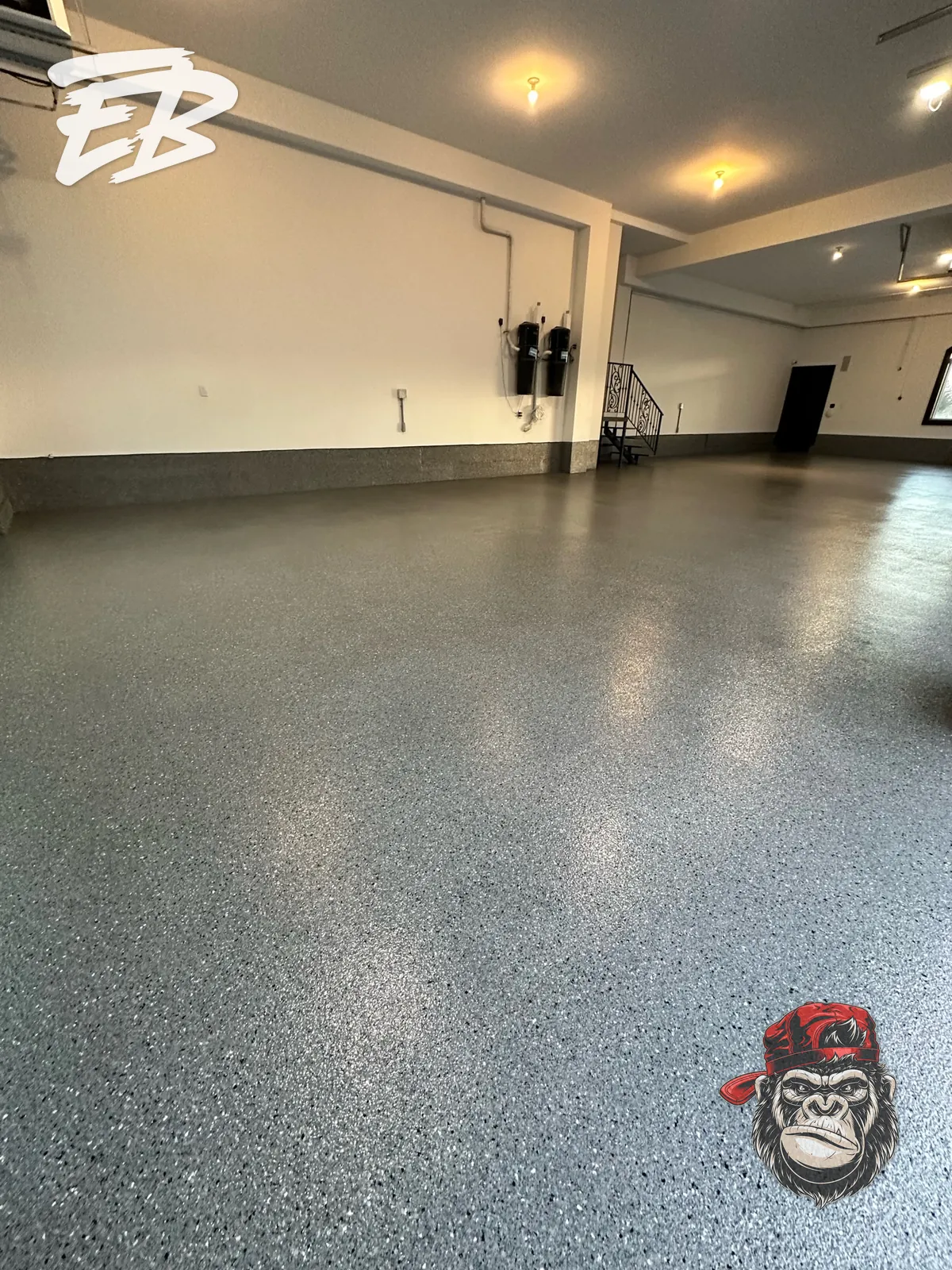
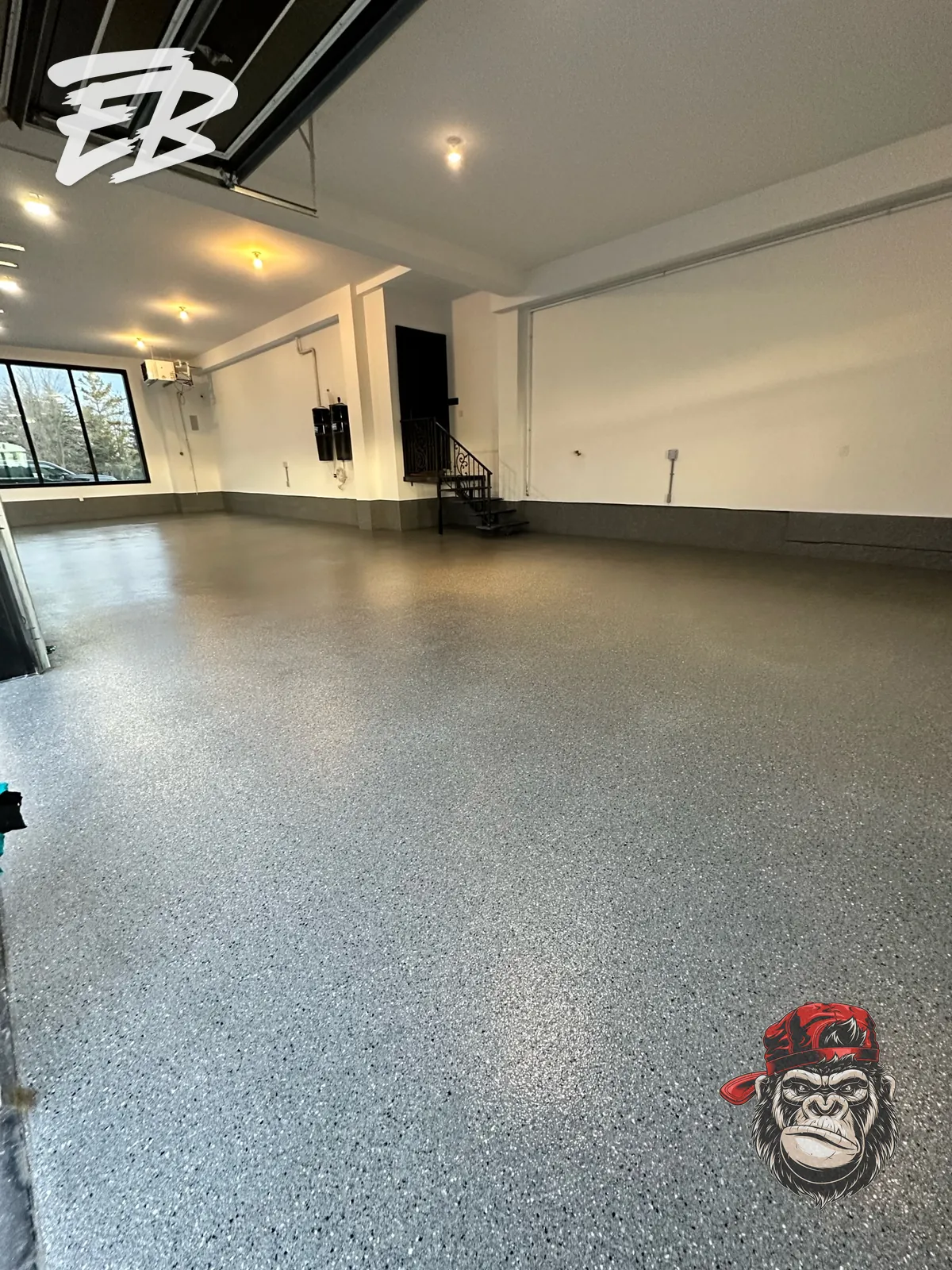
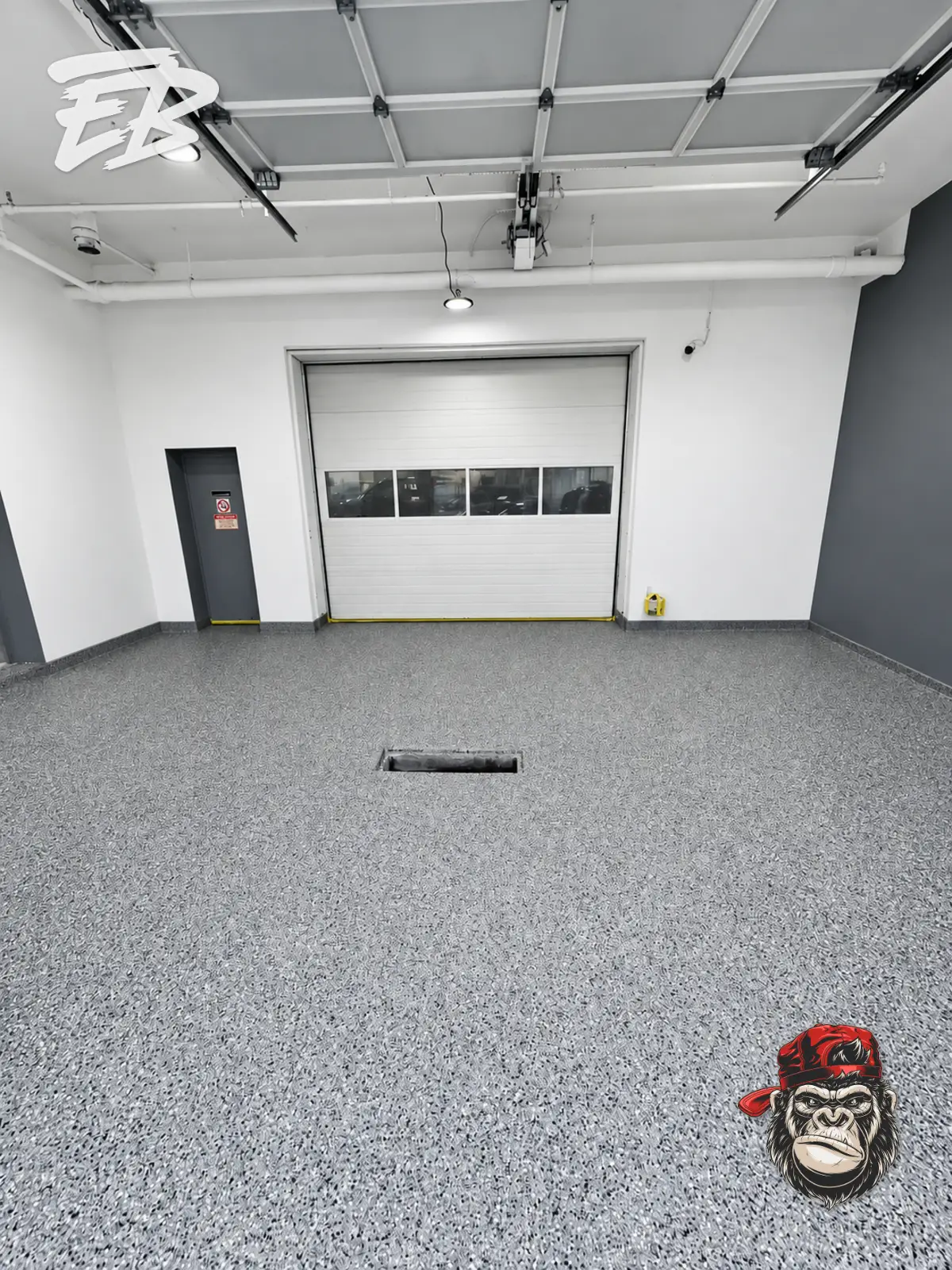
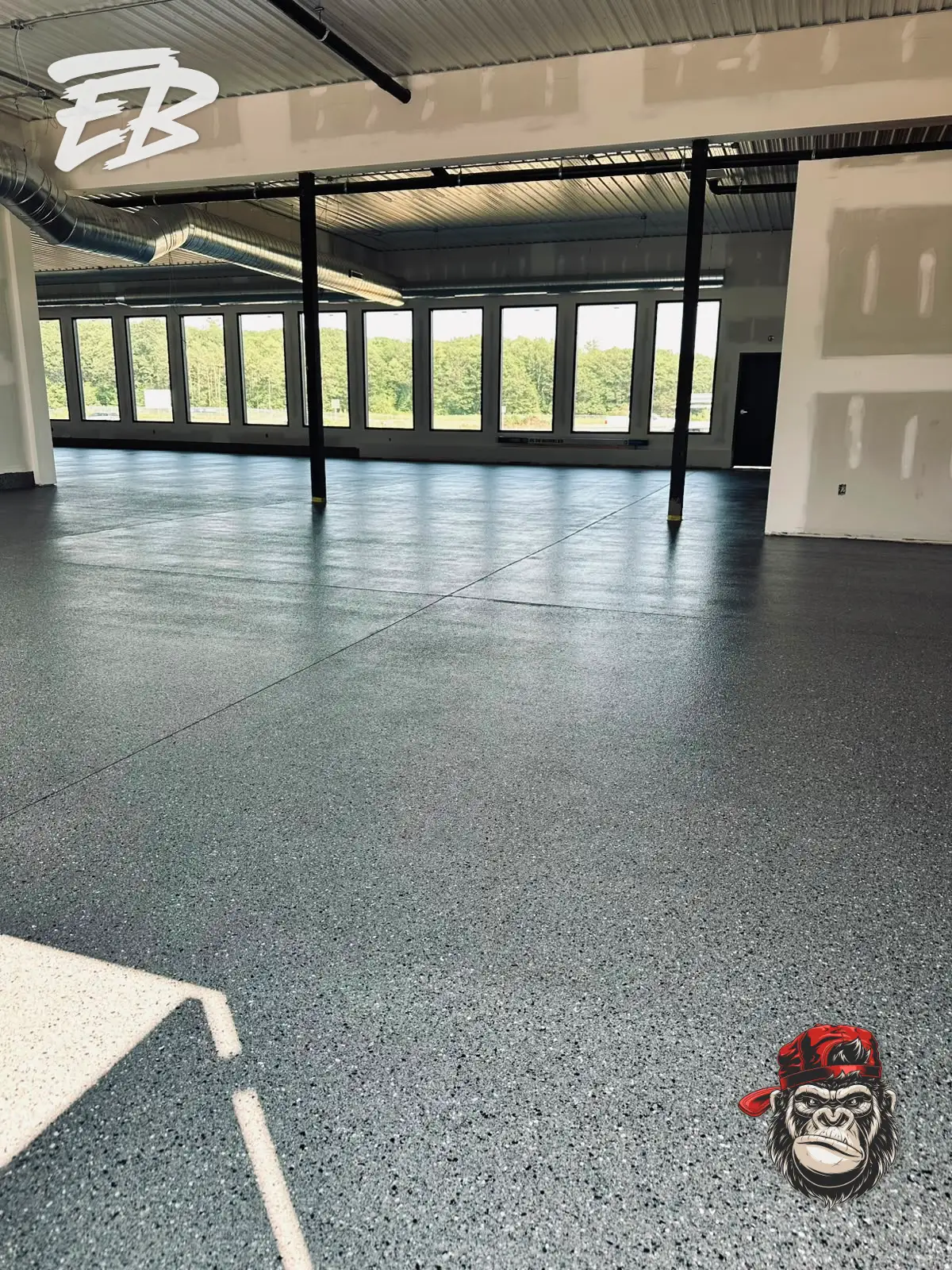
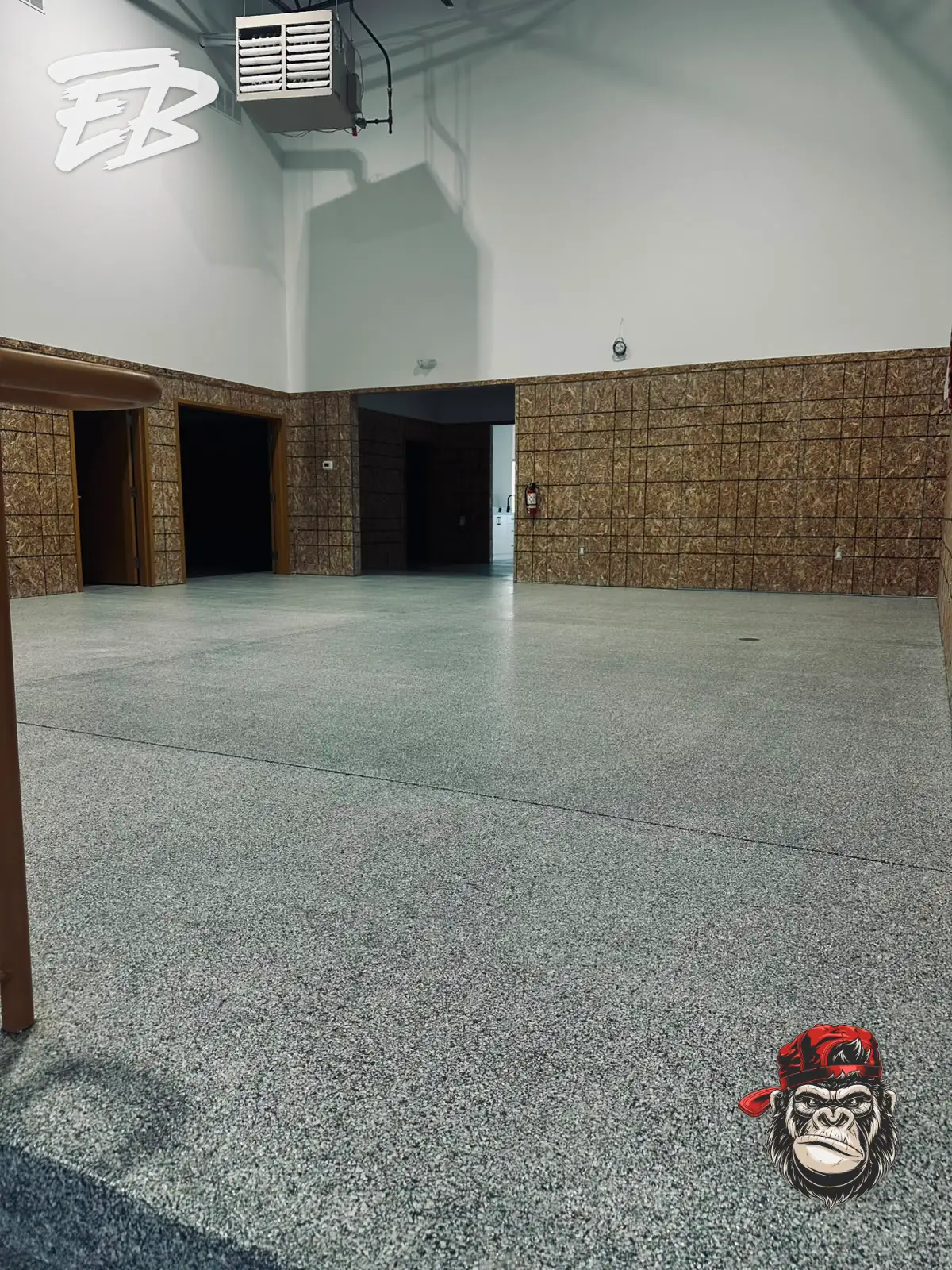
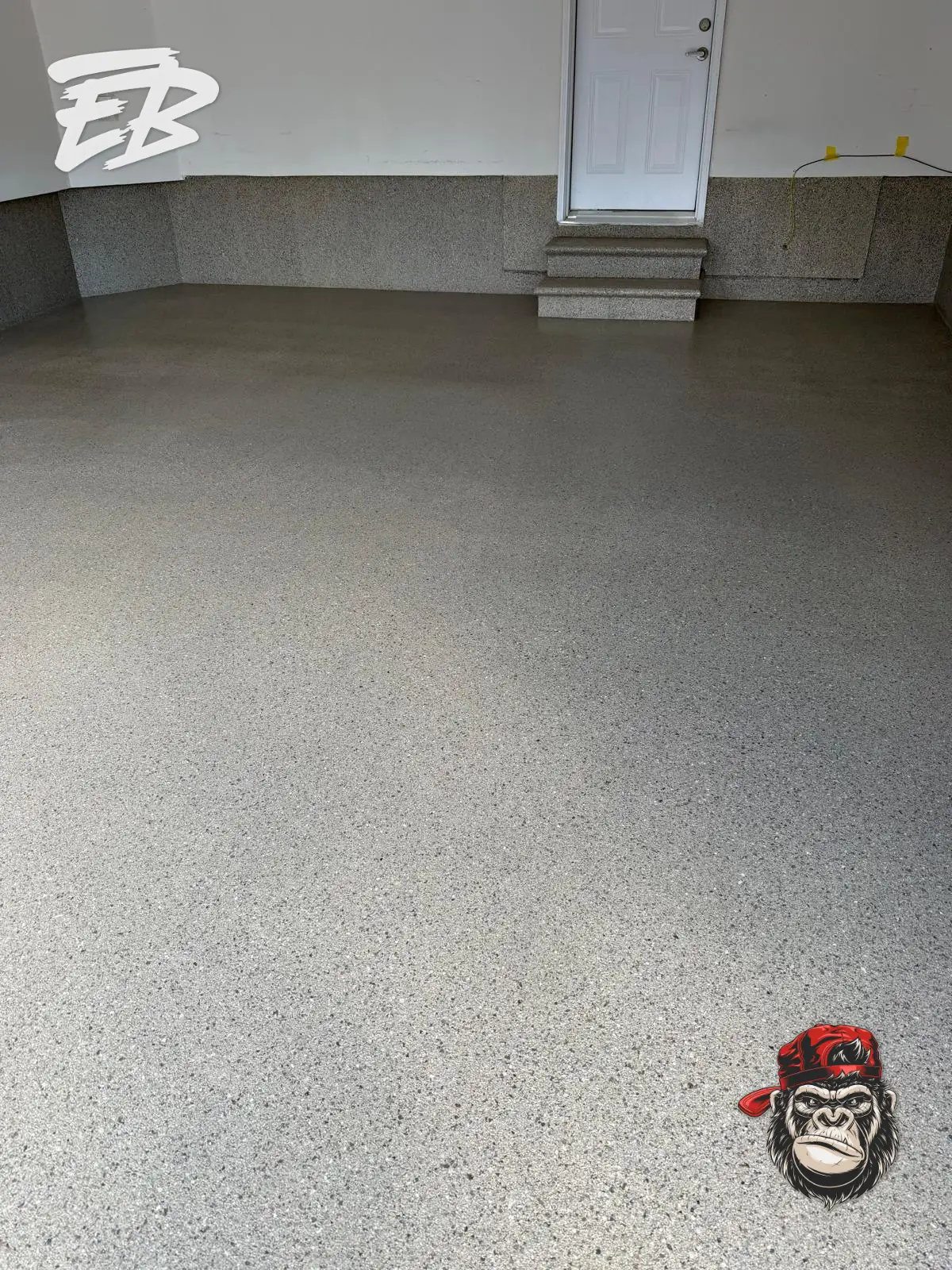
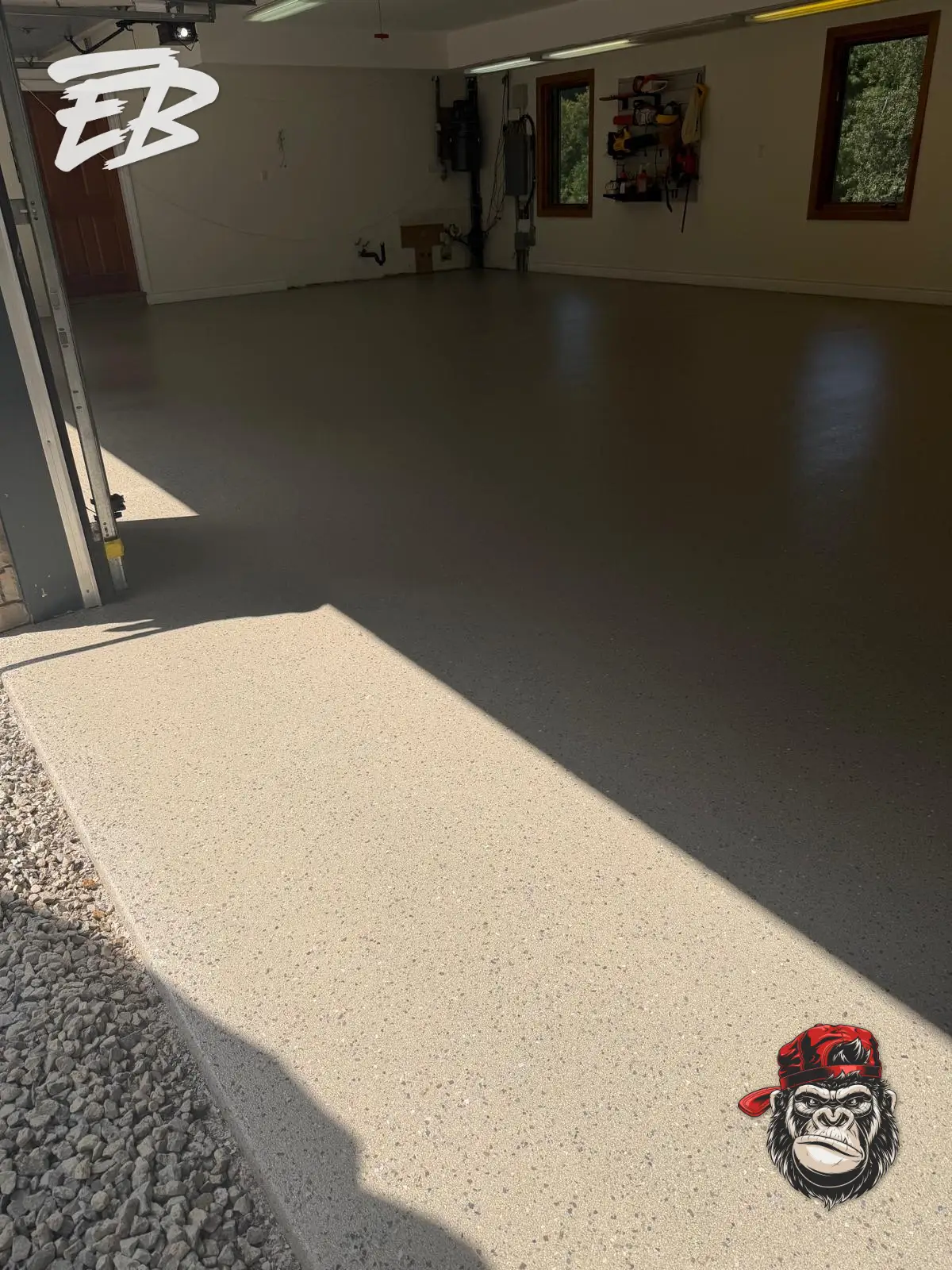
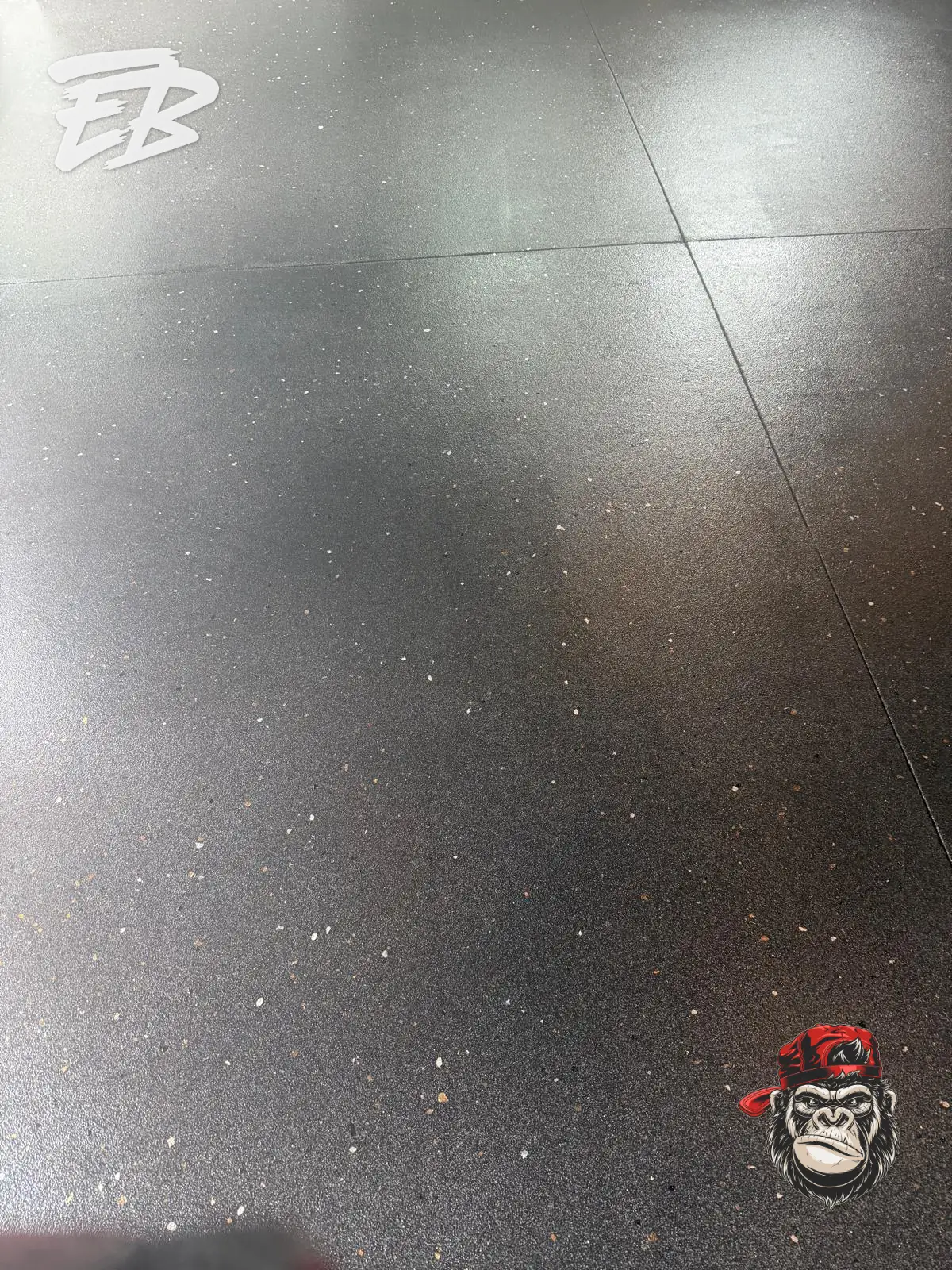
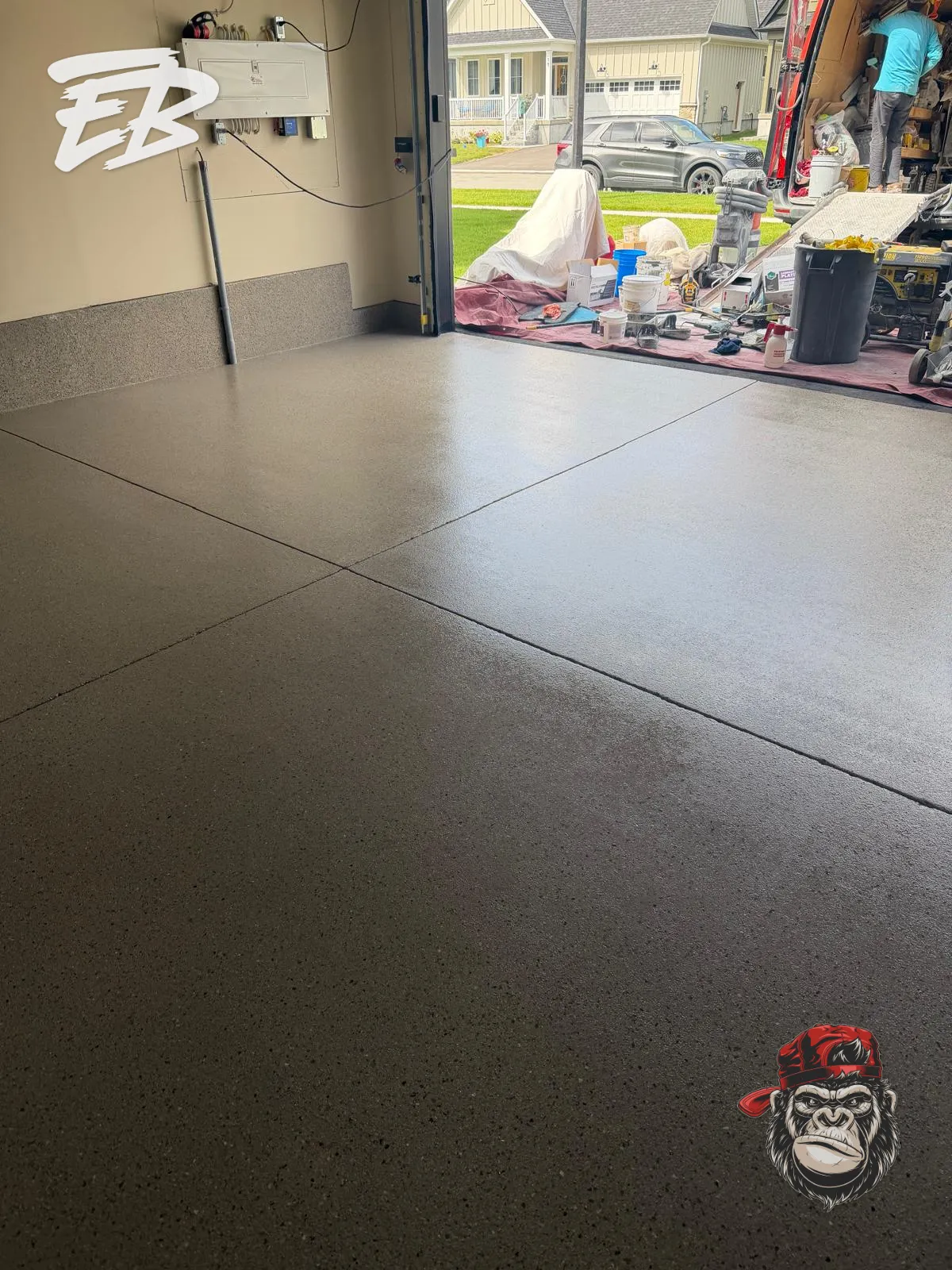
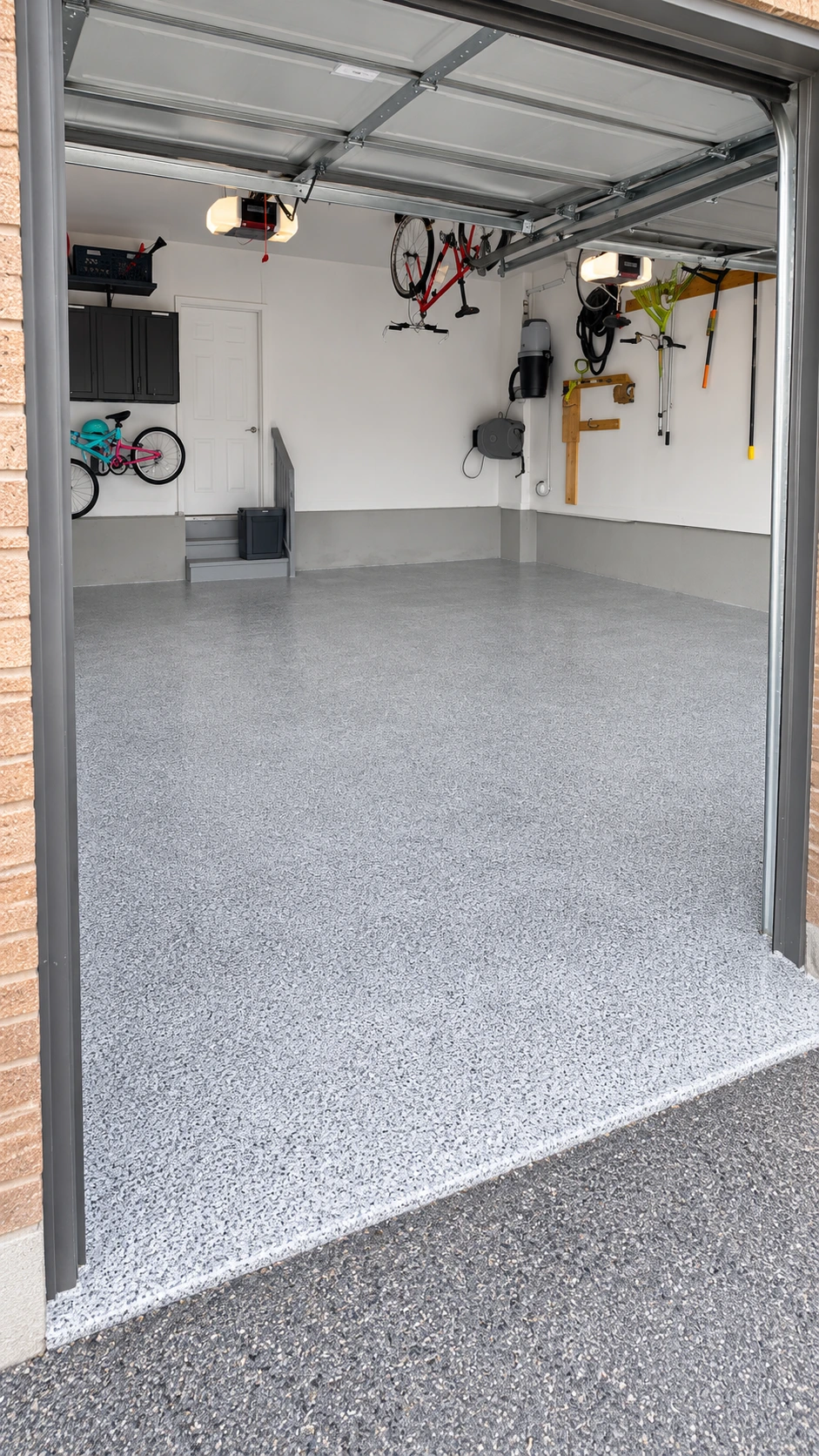
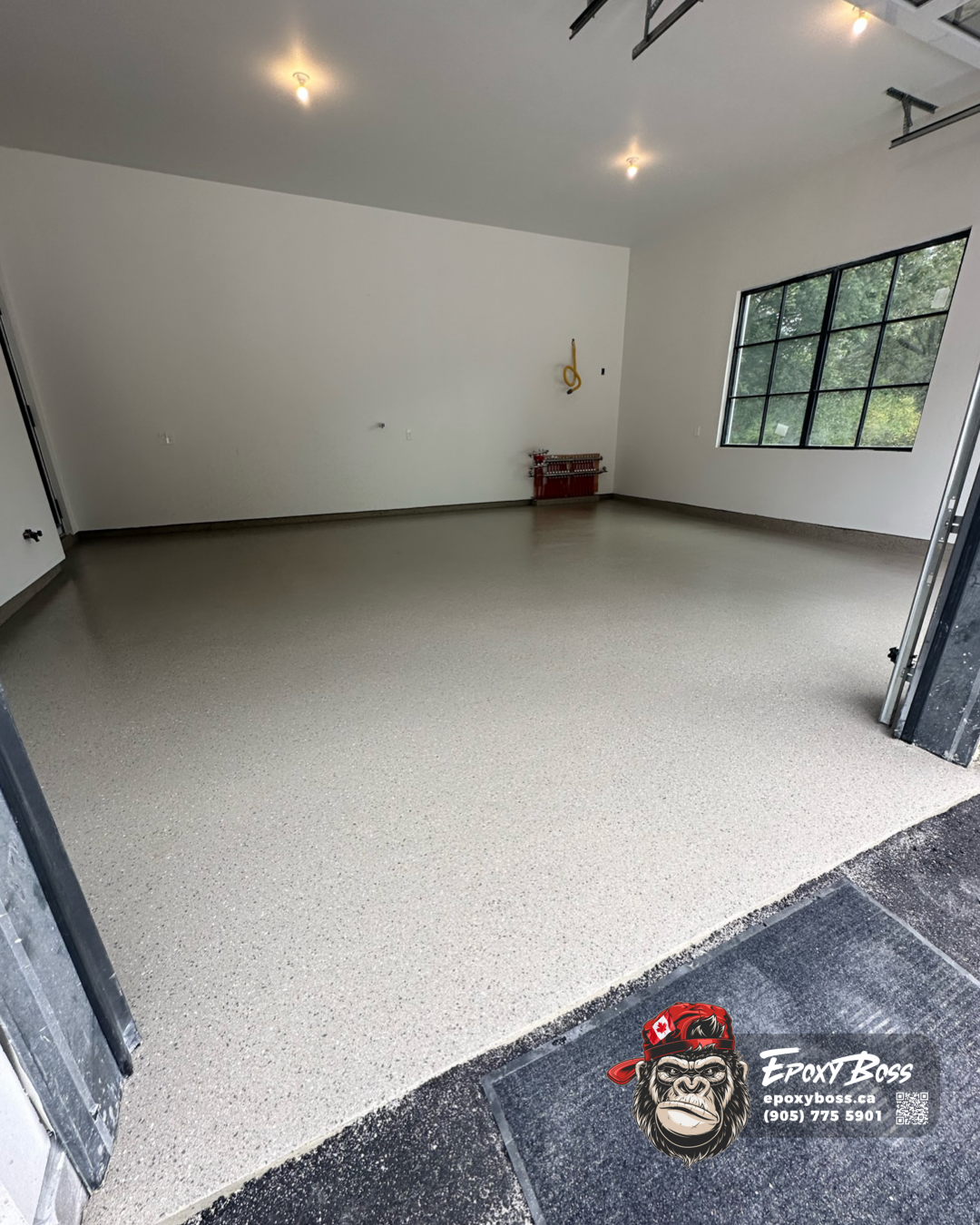
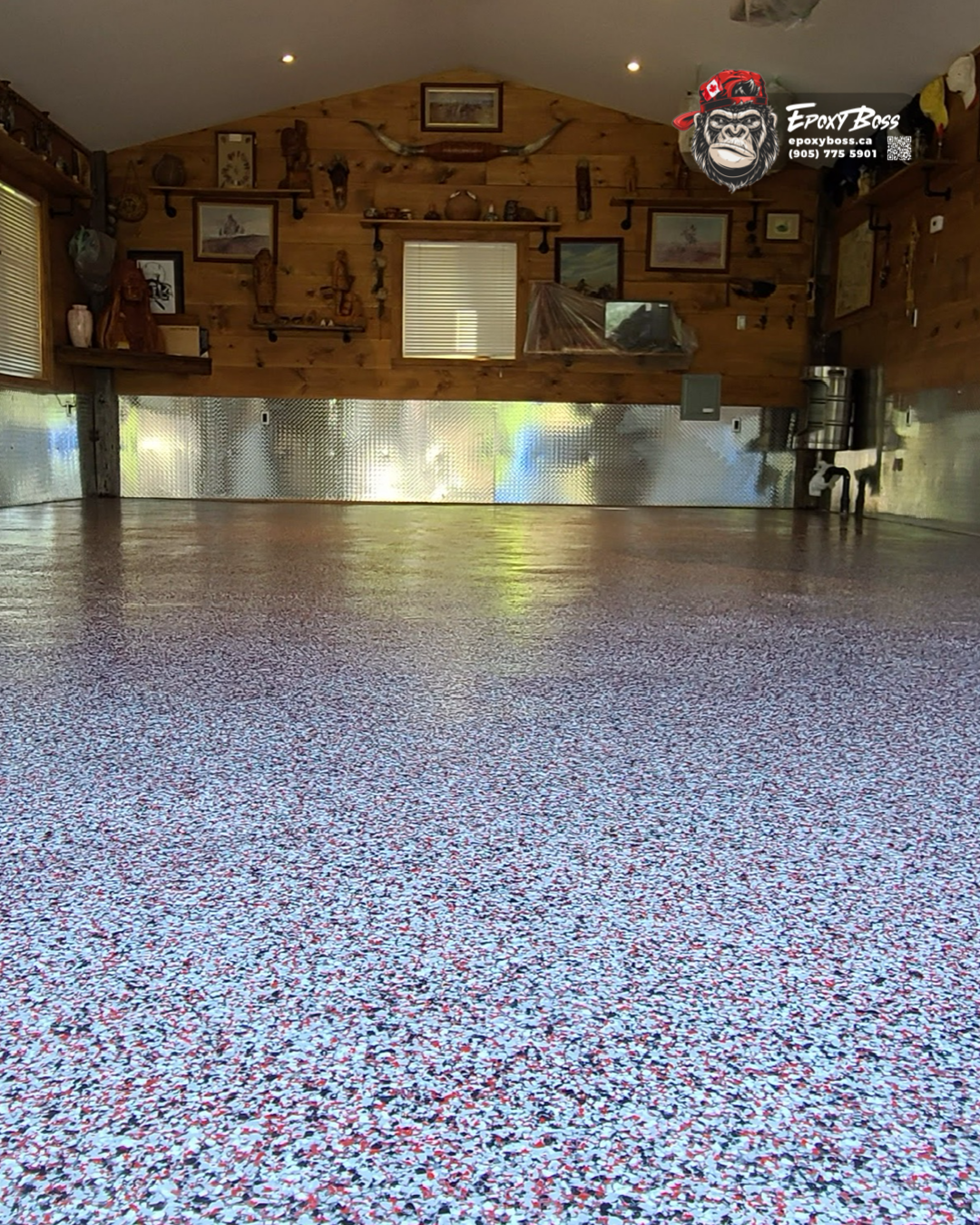
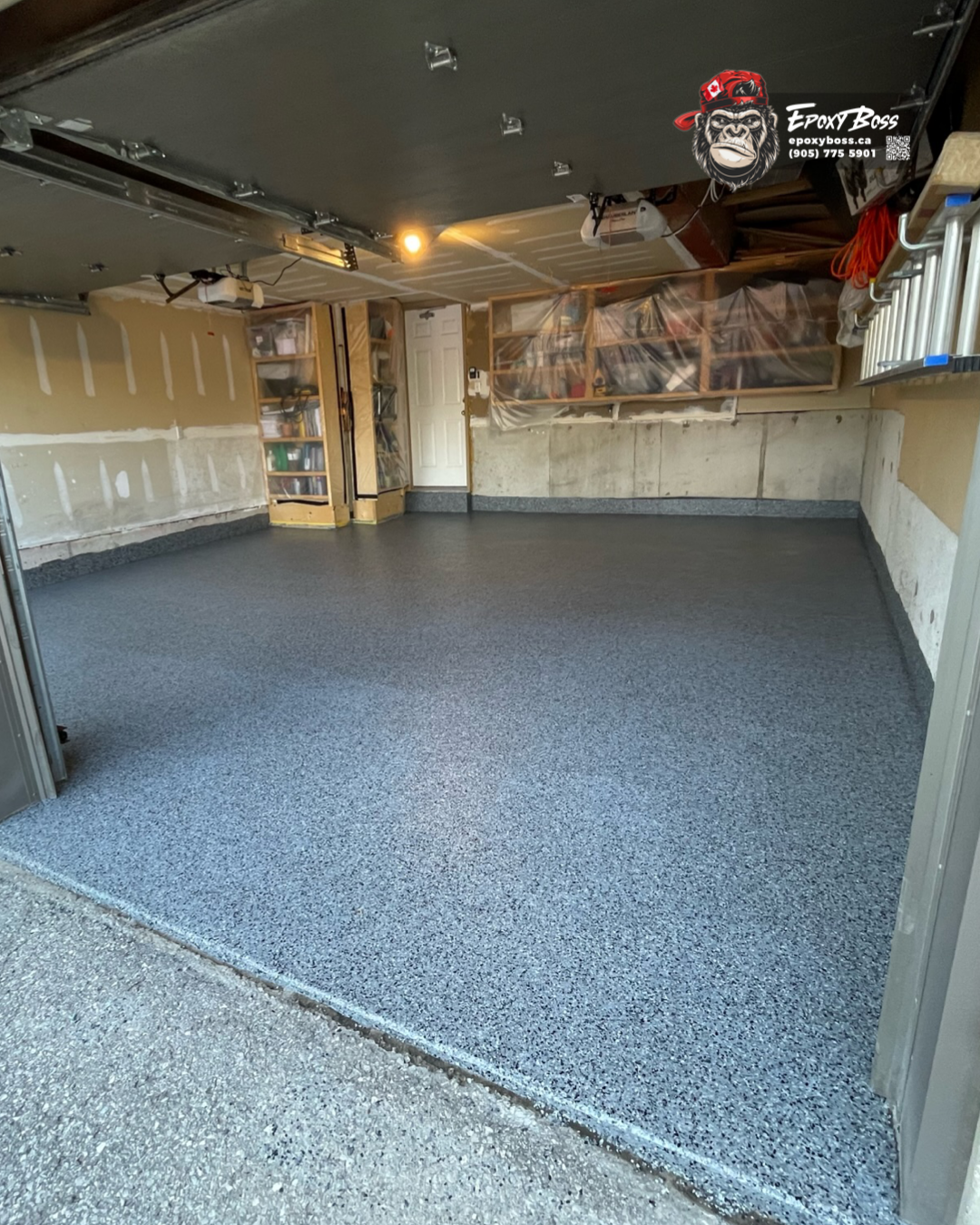
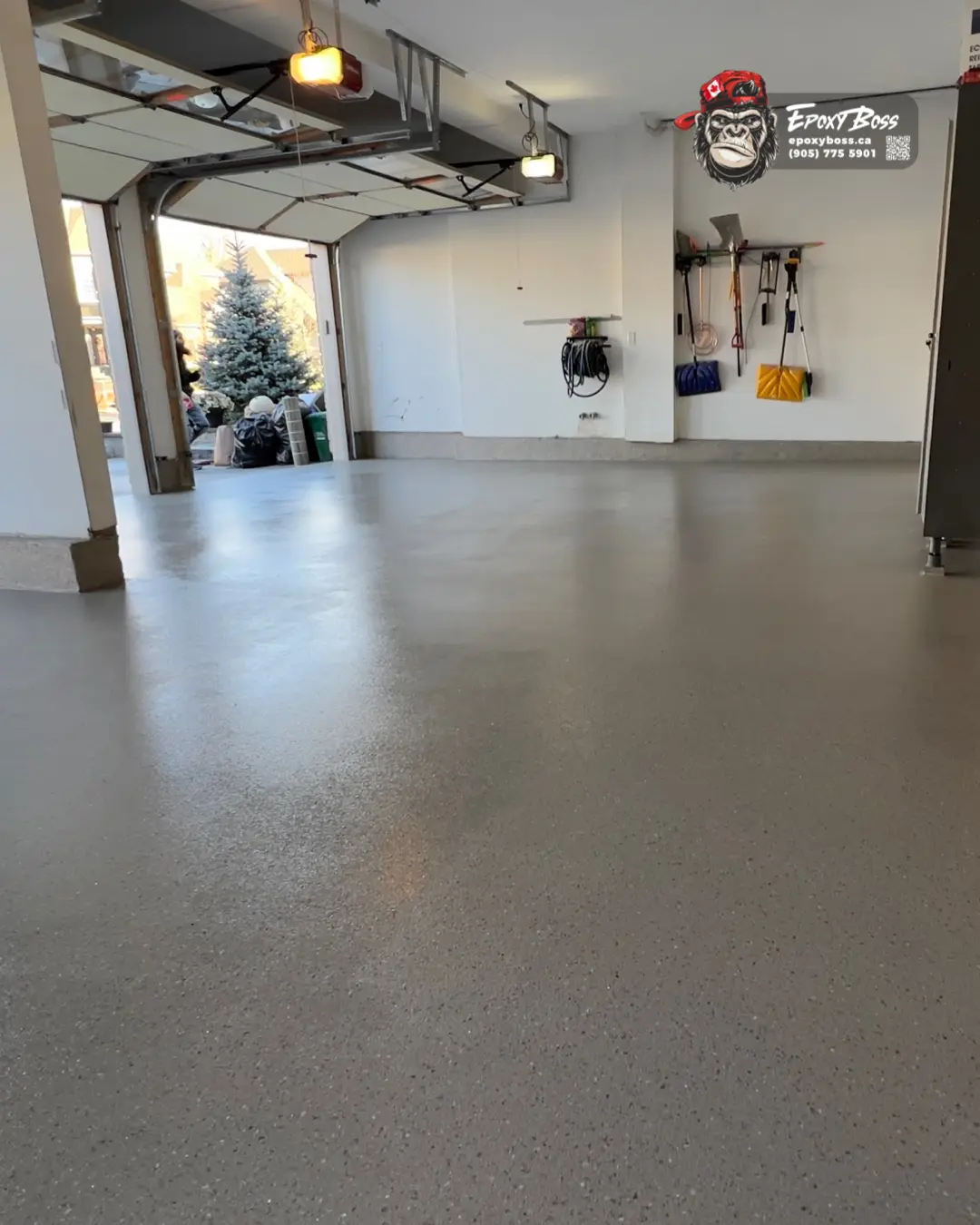
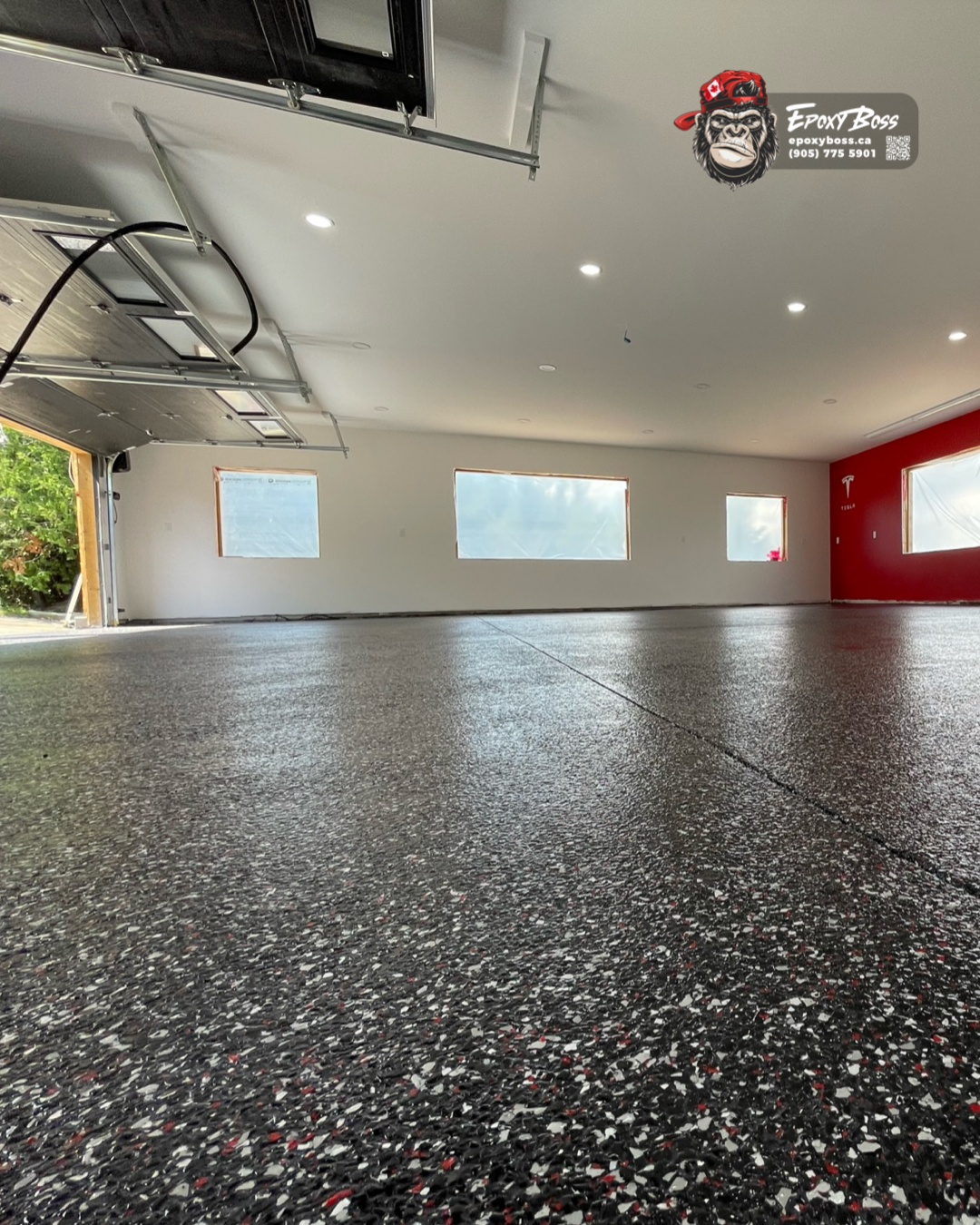
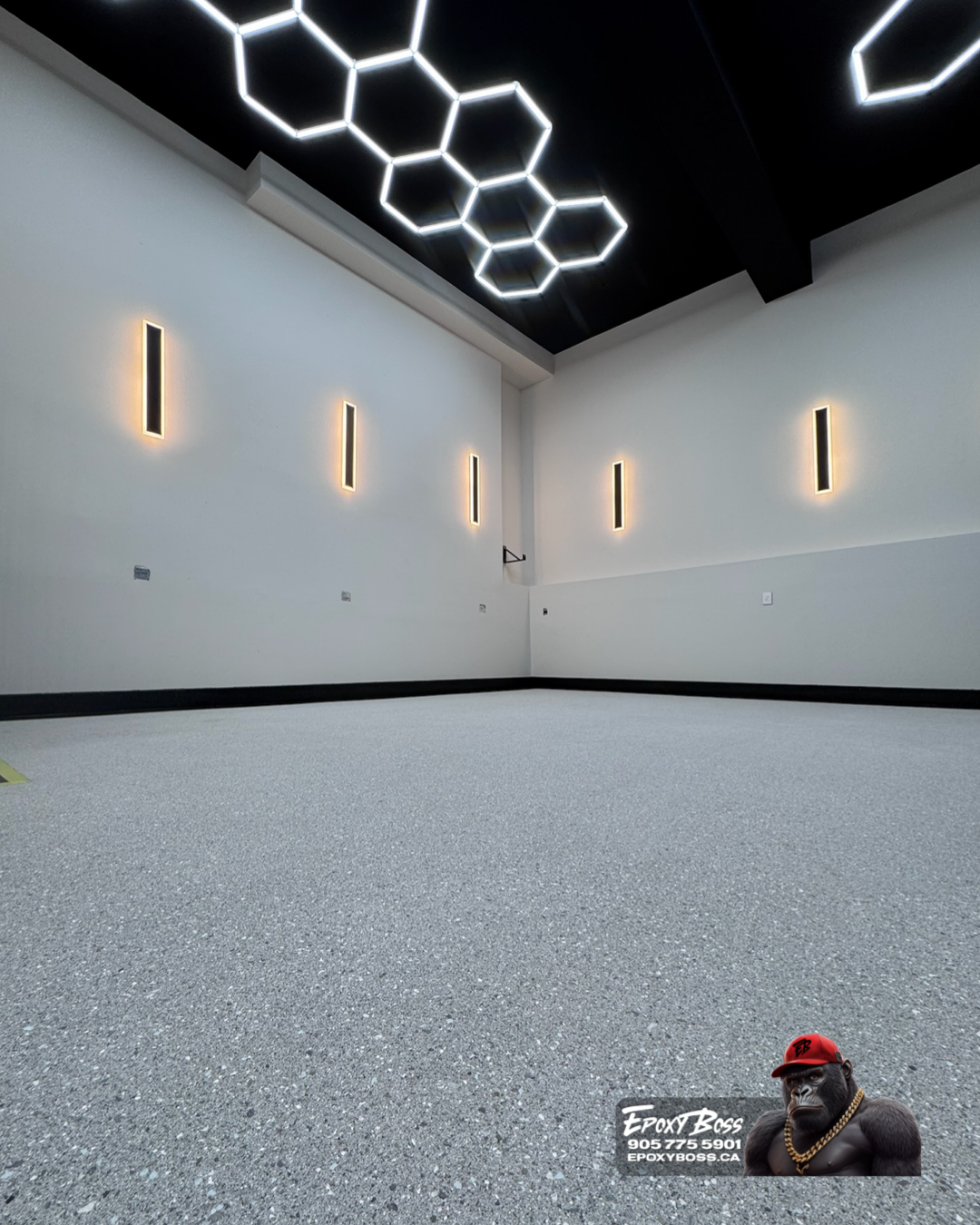
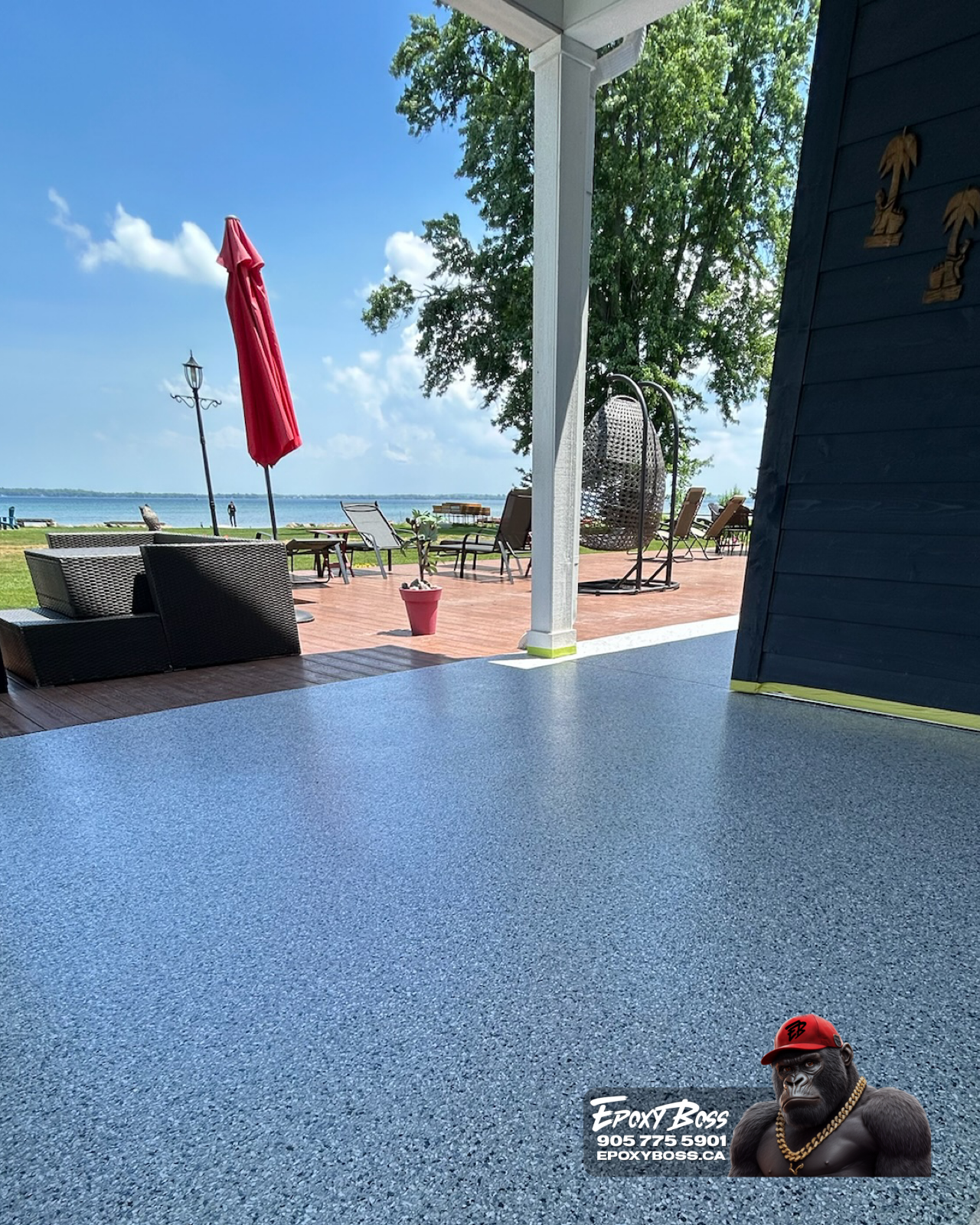
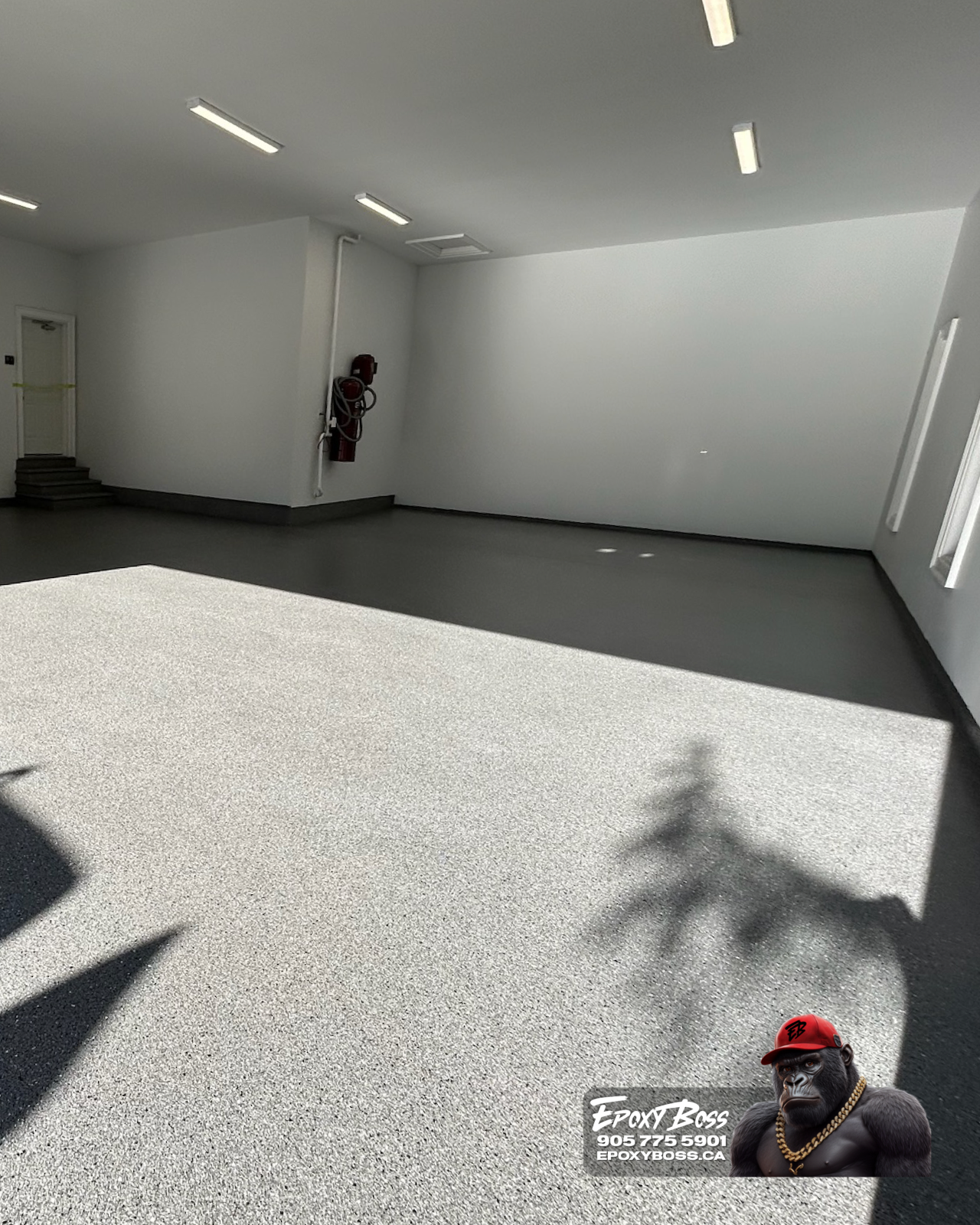
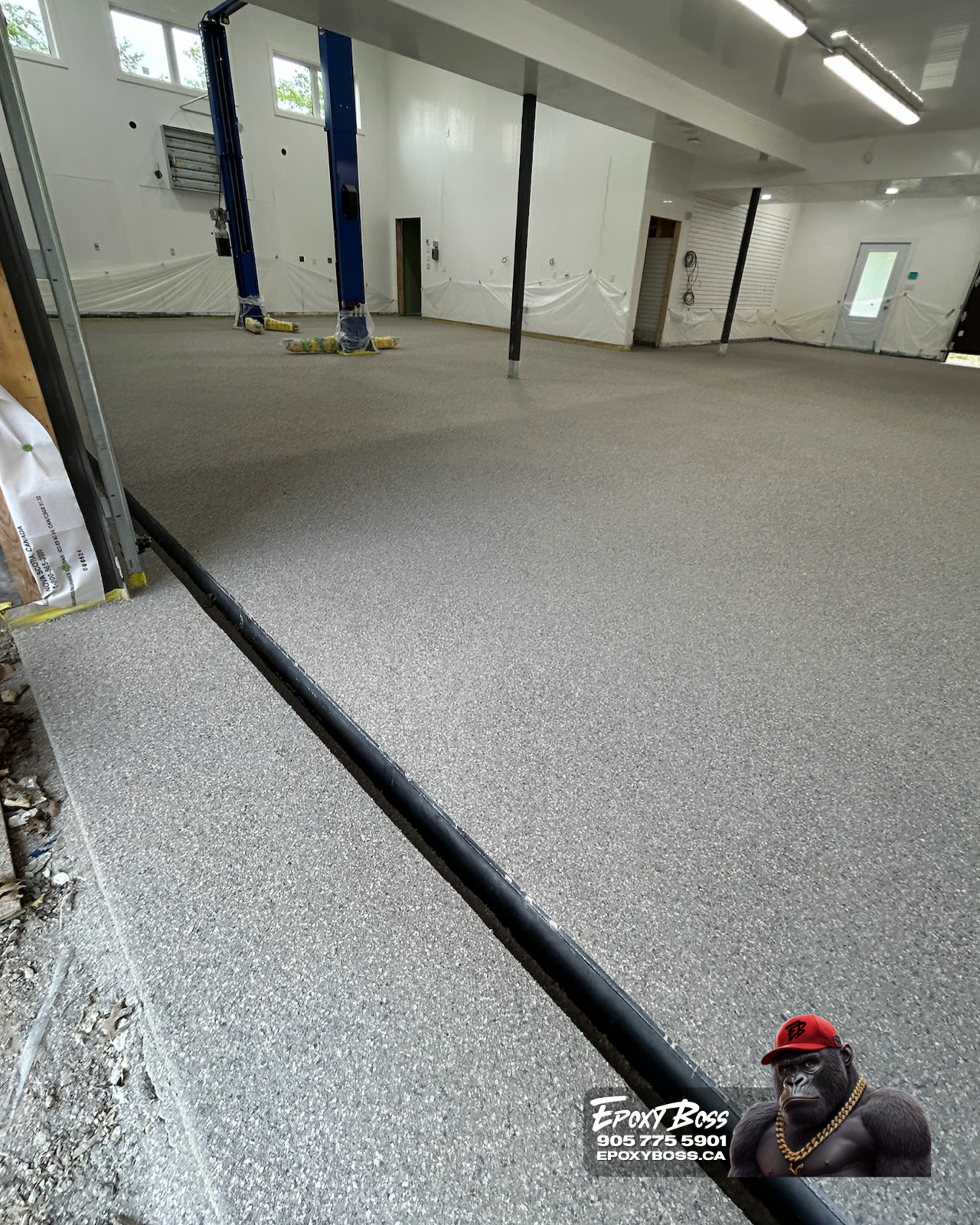
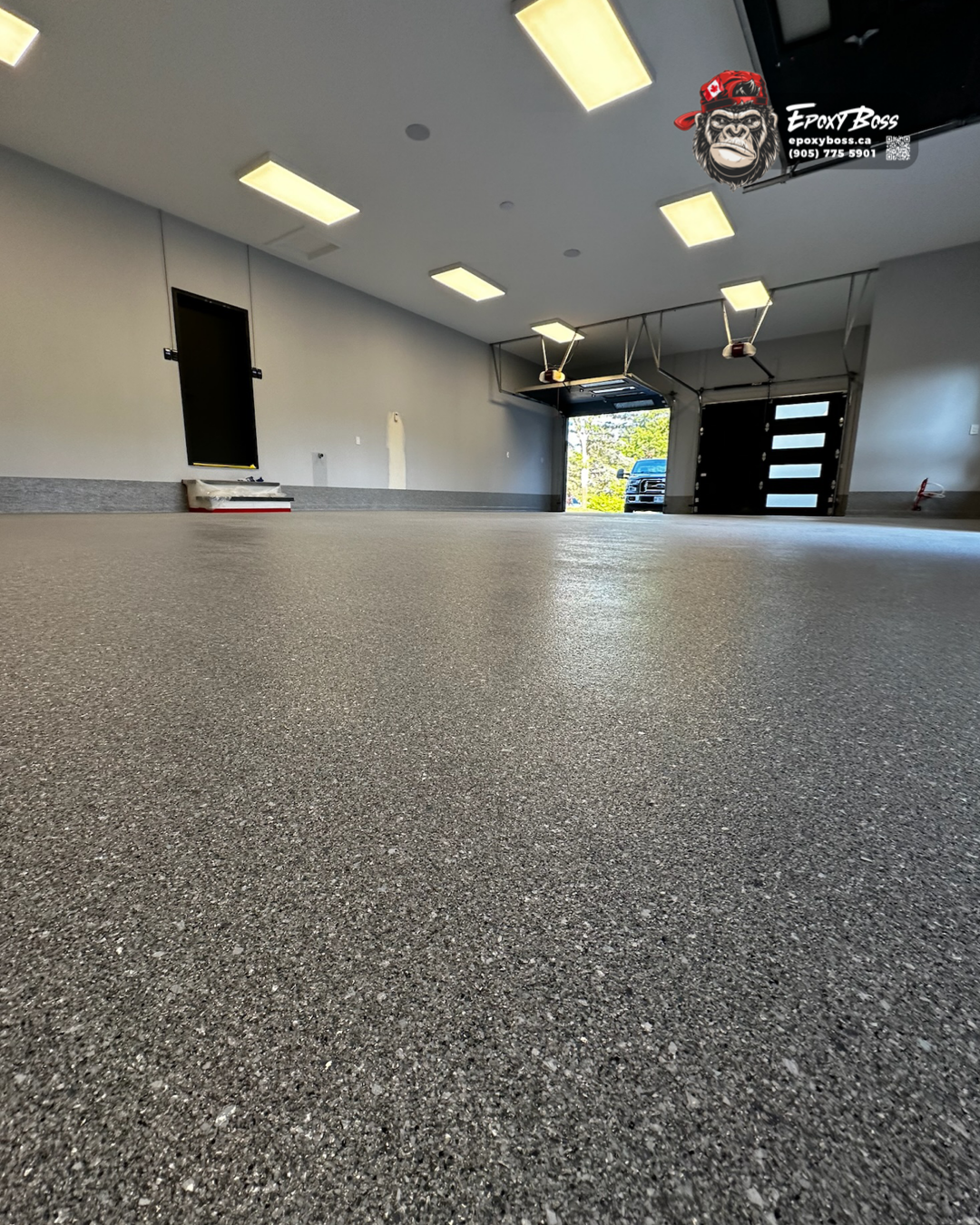
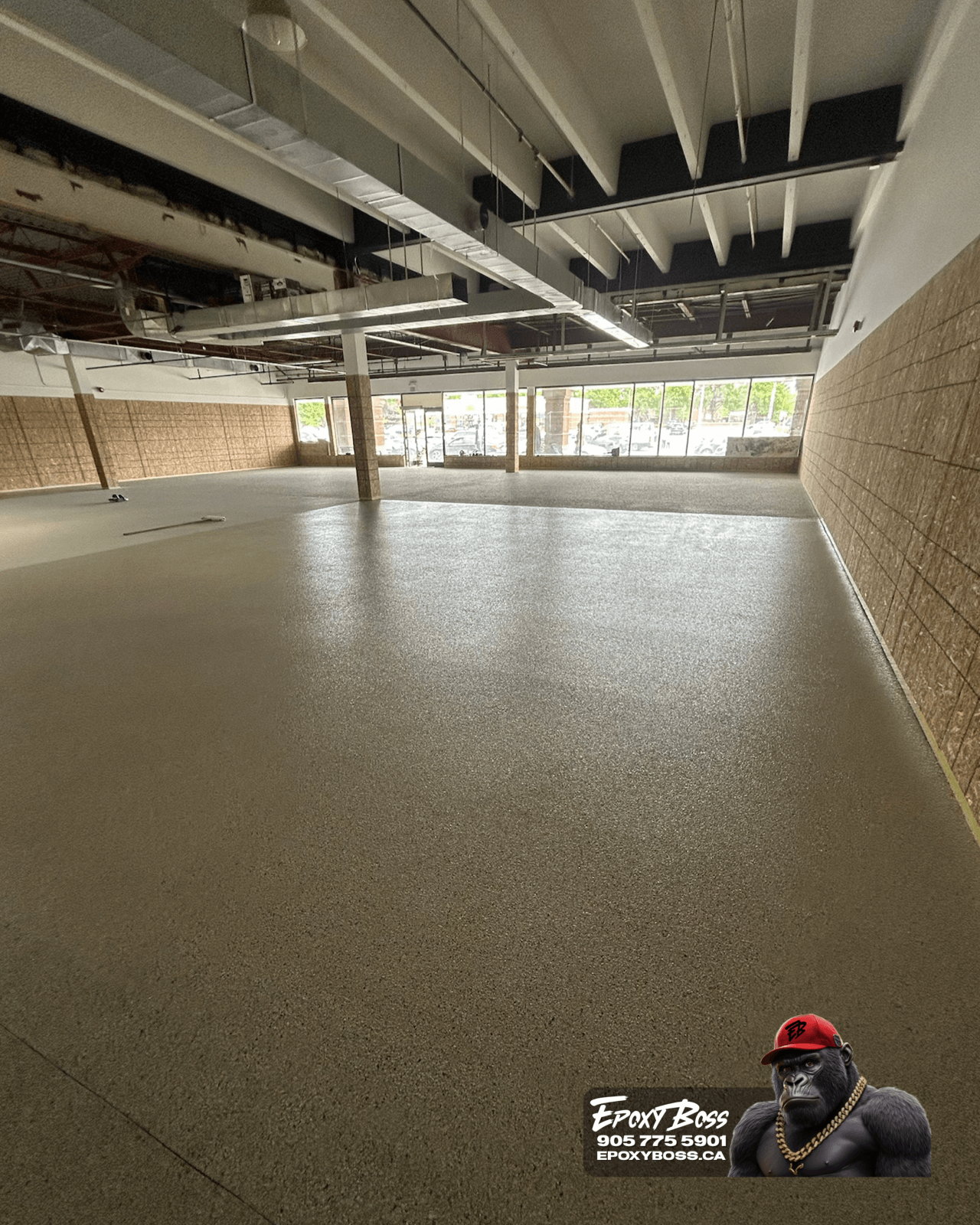
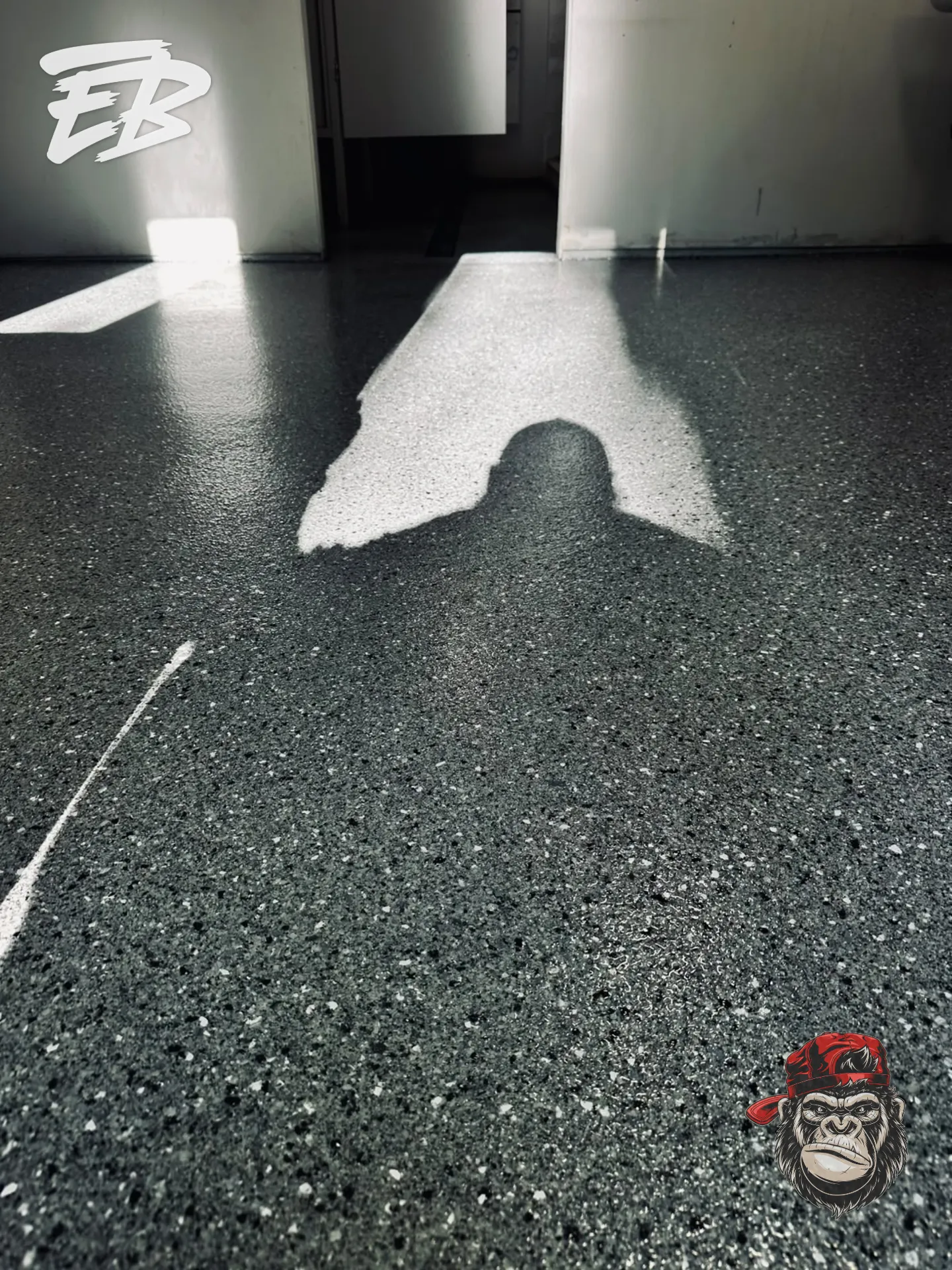
The final system is selected around the slab and its intended use. A full-broadcast flake system is a practical choice for many Vaughan garages because it creates a decorative, textured and maintainable surface after the concrete has been properly prepared.
A typical scope may include:
- Condition review and site planning. We confirm the concrete condition, the garage environment, access, repair needs and system selection.
- Diamond-ground preparation. The surface is mechanically prepared to remove weak material and create the specified concrete profile.
- Crack and surface repair. Appropriate repairs are completed for stable cracks, minor spalls and other defects within the agreed scope.
- Compatible primer or base coat. The first resin layer is chosen around the slab and the approved system build.
- Full-broadcast decorative flake. Flake is broadcast into the receiving coat for complete, even coverage.
- Protective clear topcoat. A compatible polyaspartic or urethane topcoat completes the system, selected around traffic, cleaning, UV exposure at open doors and finish requirements.
Epoxy can provide a strong body layer in many garage systems. A compatible polyaspartic topcoat can provide the final protective finish. These layers work as one assembly; the preparation, repair, primer or base layer, decorative layer and topcoat all need to suit the job conditions.
When it makes sense to postpone a winter installation
Postponing can be the professional decision when the garage cannot maintain the required conditions, the slab is wet, snowmelt is entering the work area, a moisture concern needs further review or the required cure period cannot be protected.
This is not a failure of the project. It is a way to protect the scope and avoid creating an expectation that a coating can perform independently of the concrete and environment beneath it.
An assessment may also show that the floor first needs more extensive repair, removal of an old coating or a moisture-management plan. In those cases, the installation sequence is adjusted around the condition of the actual garage rather than a fixed calendar date.
How to prepare your Vaughan garage for a winter coating assessment
You can make the first review more useful by sending three to five clear photos of the whole garage and close-ups of cracks, pits, peeling material, salt residue or damp areas. Include the approximate square footage, whether the garage is heated, any history of water entry or previous coating failure, and how the garage is used.
Before a scheduled installation, remove vehicles and stored items, clear the floor of snow and standing meltwater, and make the garage available for the agreed preparation, coating and curing window. Epoxy Boss will confirm the site-specific access and climate plan before the work starts.
Frequently asked questions
Can epoxy cure in a cold Vaughan garage?
It depends on the exact epoxy system, the temperature of the concrete and air, the moisture condition and the protected cure period. The product data sheet for the selected system determines acceptable conditions. A quick temperature reading at the thermostat is not enough to approve a winter installation.
Is a heated garage always ready for coating?
Not automatically. The concrete may still be colder than the air, and the garage needs stable conditions for the full installation and curing sequence. The slab also needs to be clean, dry and properly prepared.
Can you coat a garage floor after snow and slush have been inside?
Possibly, after the floor has been assessed and prepared. Standing meltwater, salt residue and moisture concerns need to be addressed first. The appropriate scope depends on the condition of the concrete and the selected system.
Does a polyaspartic topcoat solve every winter-temperature issue?
No. Polyaspartic products can offer different cure characteristics, but they still must be installed within their documented conditions and as part of a compatible system. Preparation, substrate condition and the full cure window remain important.
How long must the garage stay empty?
The answer depends on the specified materials, the project conditions and the system's return-to-service guidance. Epoxy Boss confirms the expected access schedule for the actual installation rather than making a generic speed promise.
Request a Vaughan winter garage floor assessment
If you are considering a garage floor coating in Vaughan this winter, start with an assessment of the concrete and the garage environment. Epoxy Boss evaluates preparation needs, crack repair, moisture considerations, site conditions and the appropriate coating system before work is scheduled.
Send clear photos, approximate square footage and details about heat, salt exposure, water, cracks or old coating. We will use that information to discuss whether the garage is ready for a winter installation and what the practical scope should include.
Technical reference notes
- American Concrete Institute, Cold Weather Concrete: cold-weather protection is based on actual temperature conditions and the protection period, not the calendar alone.
- Sika Canada and Sika product data sheets: resinous-floor materials have product-specific application, cure and substrate requirements. The selected system documentation governs the final installation plan.