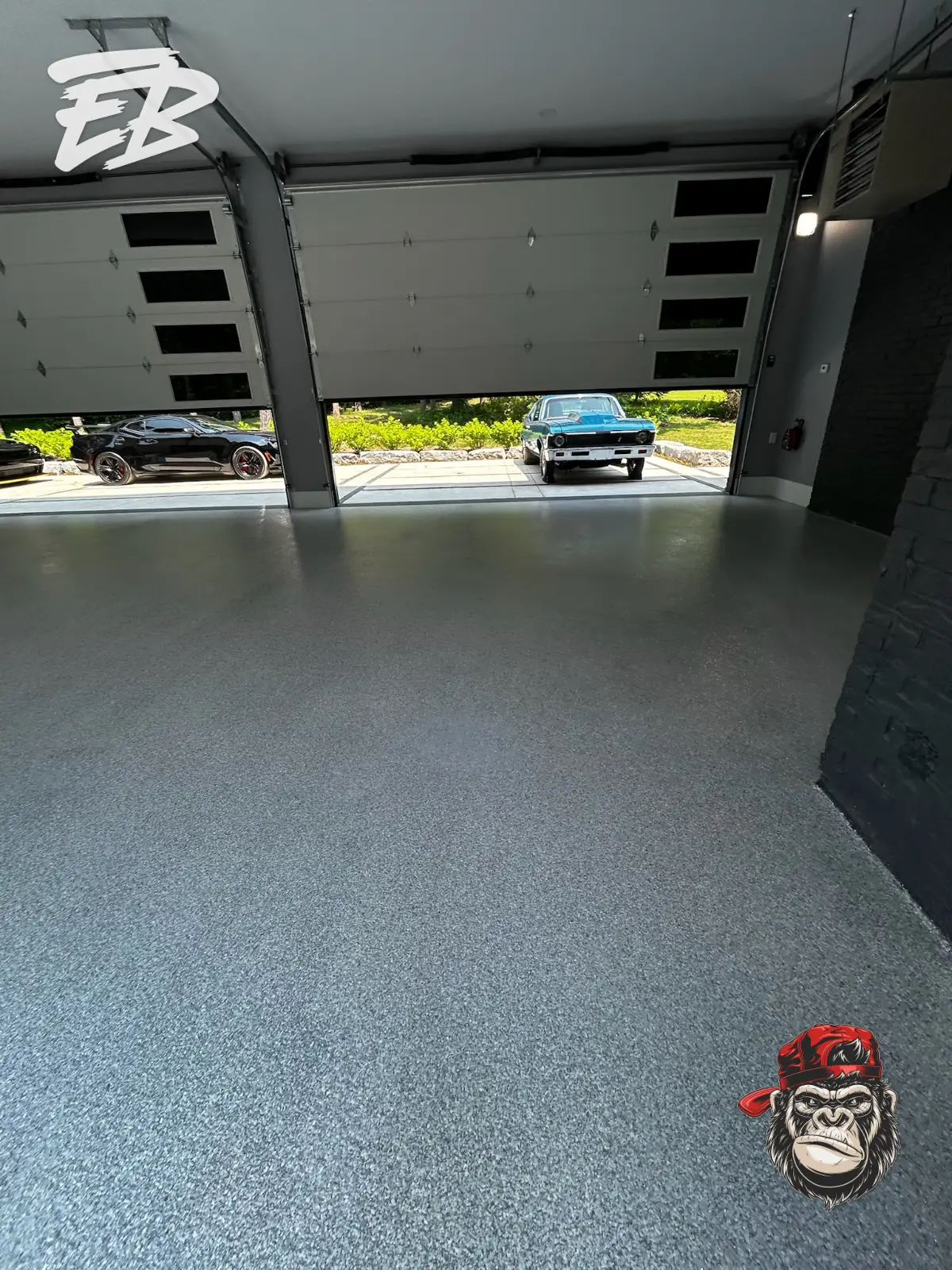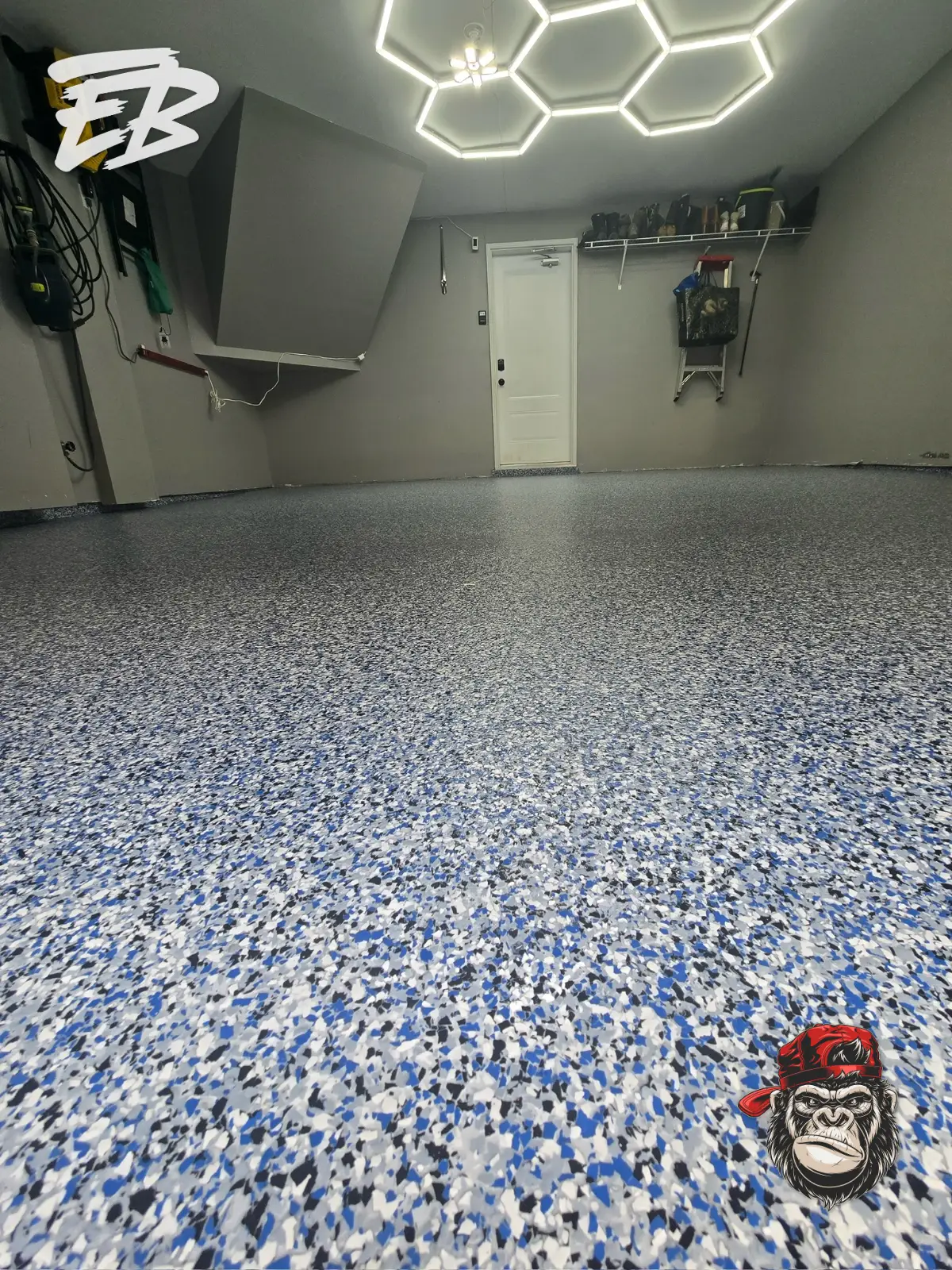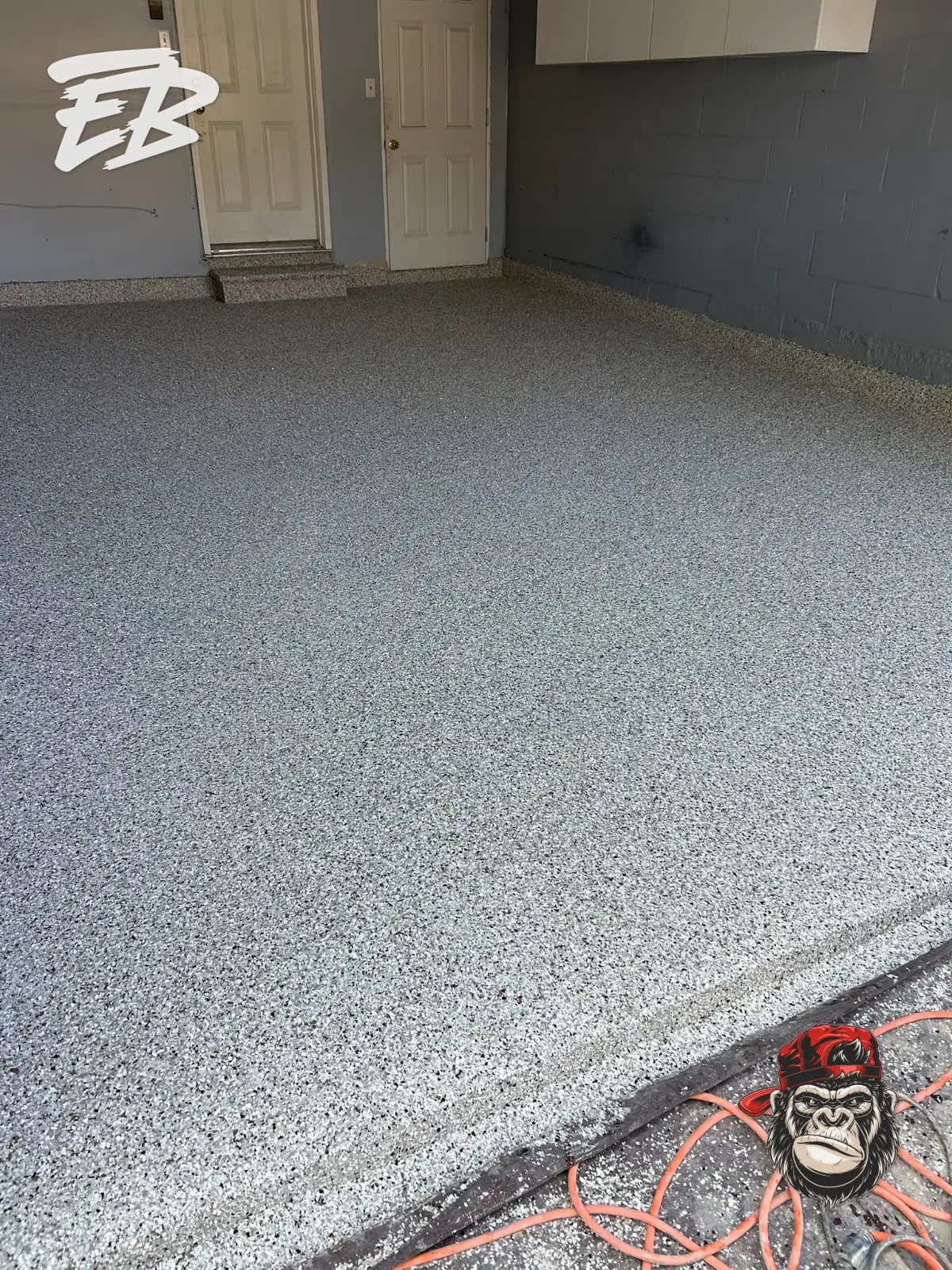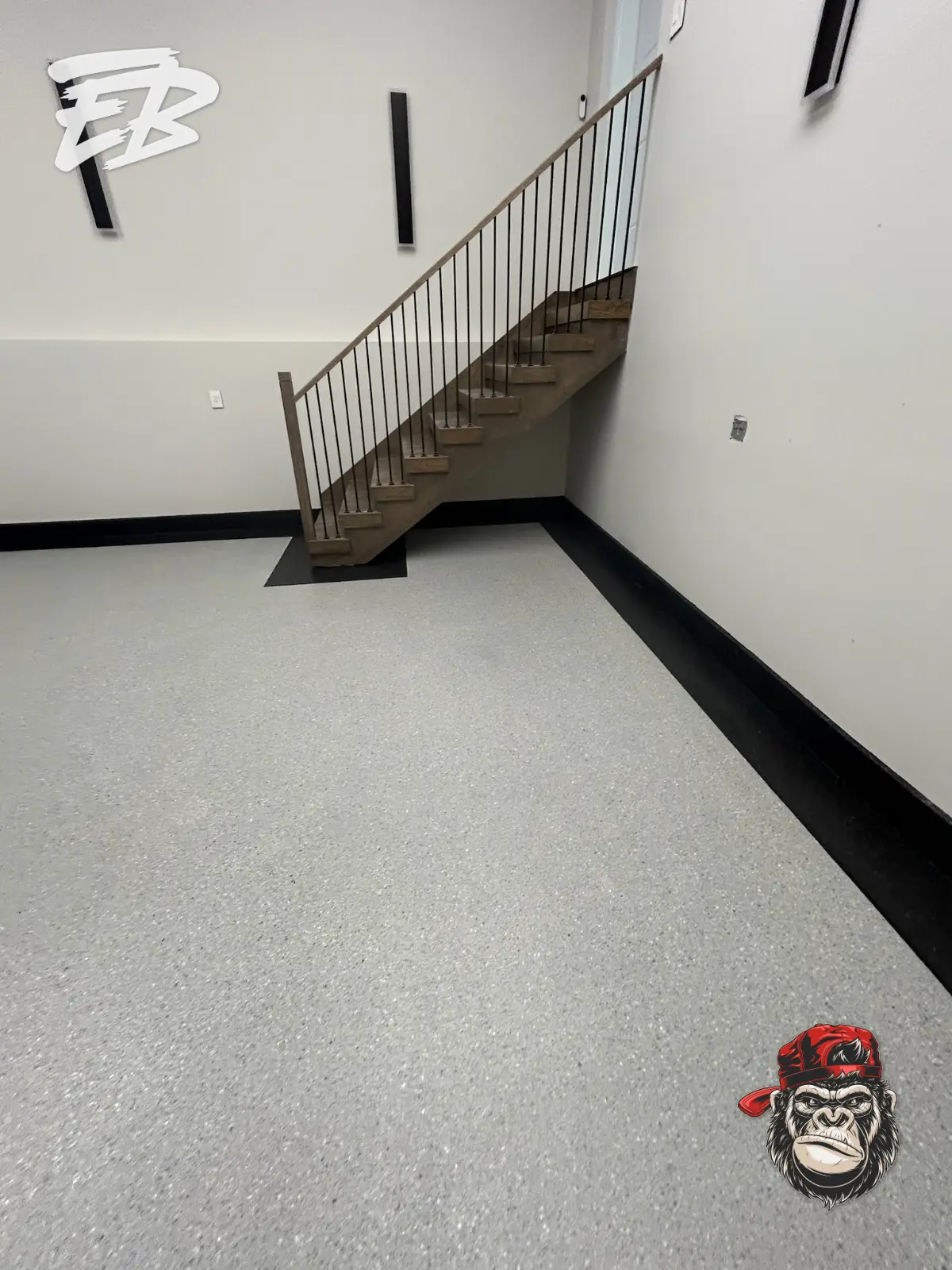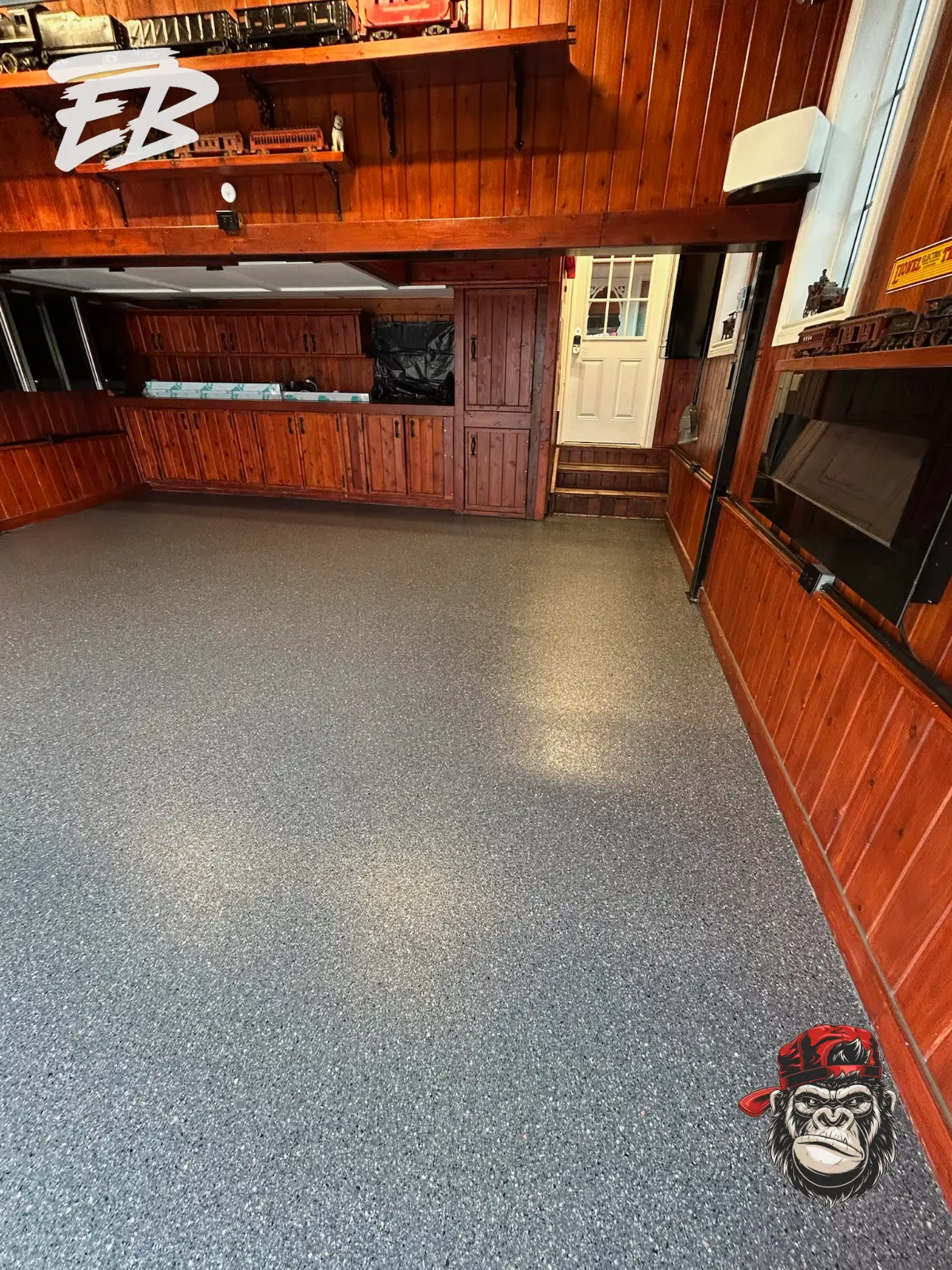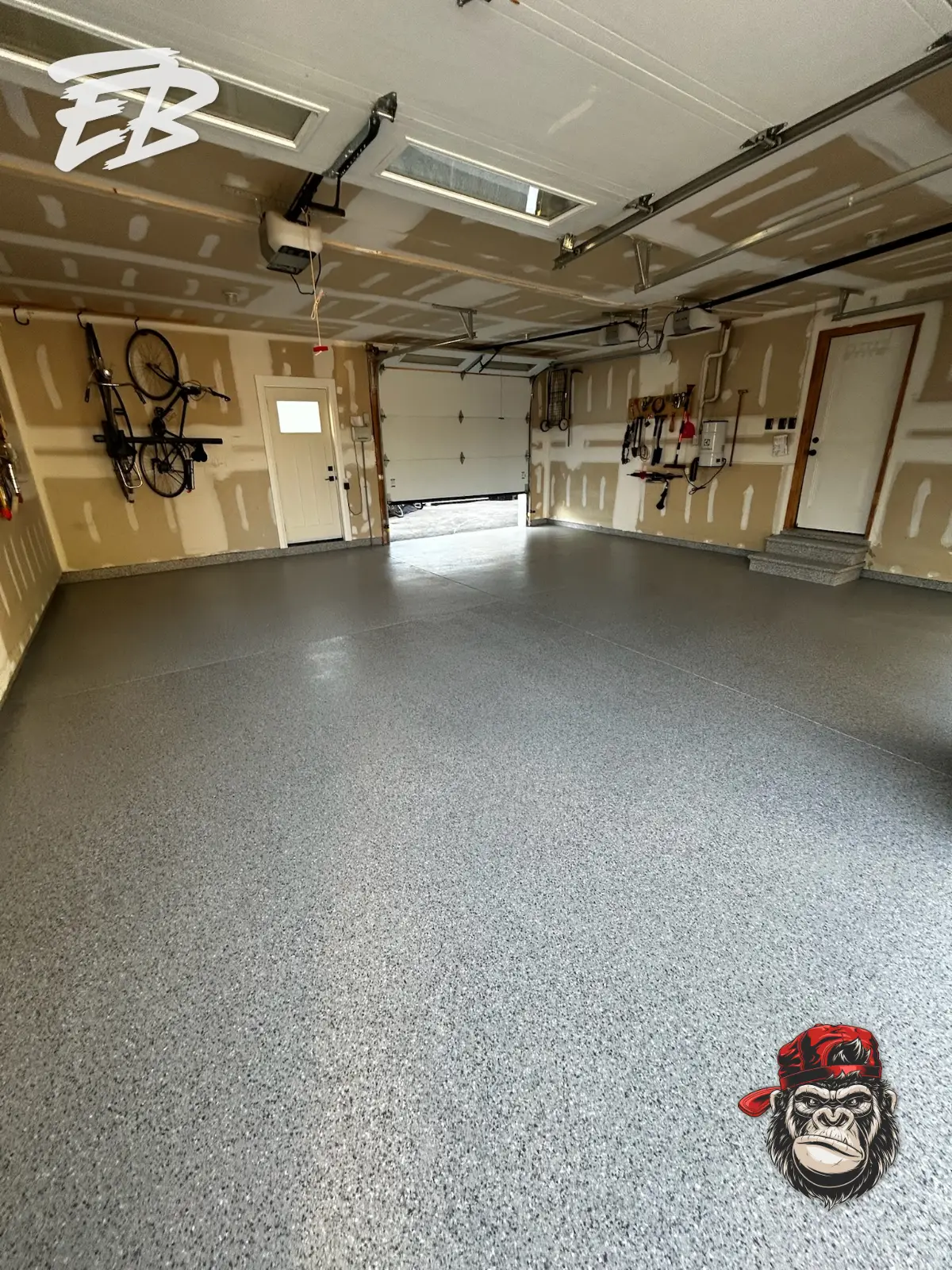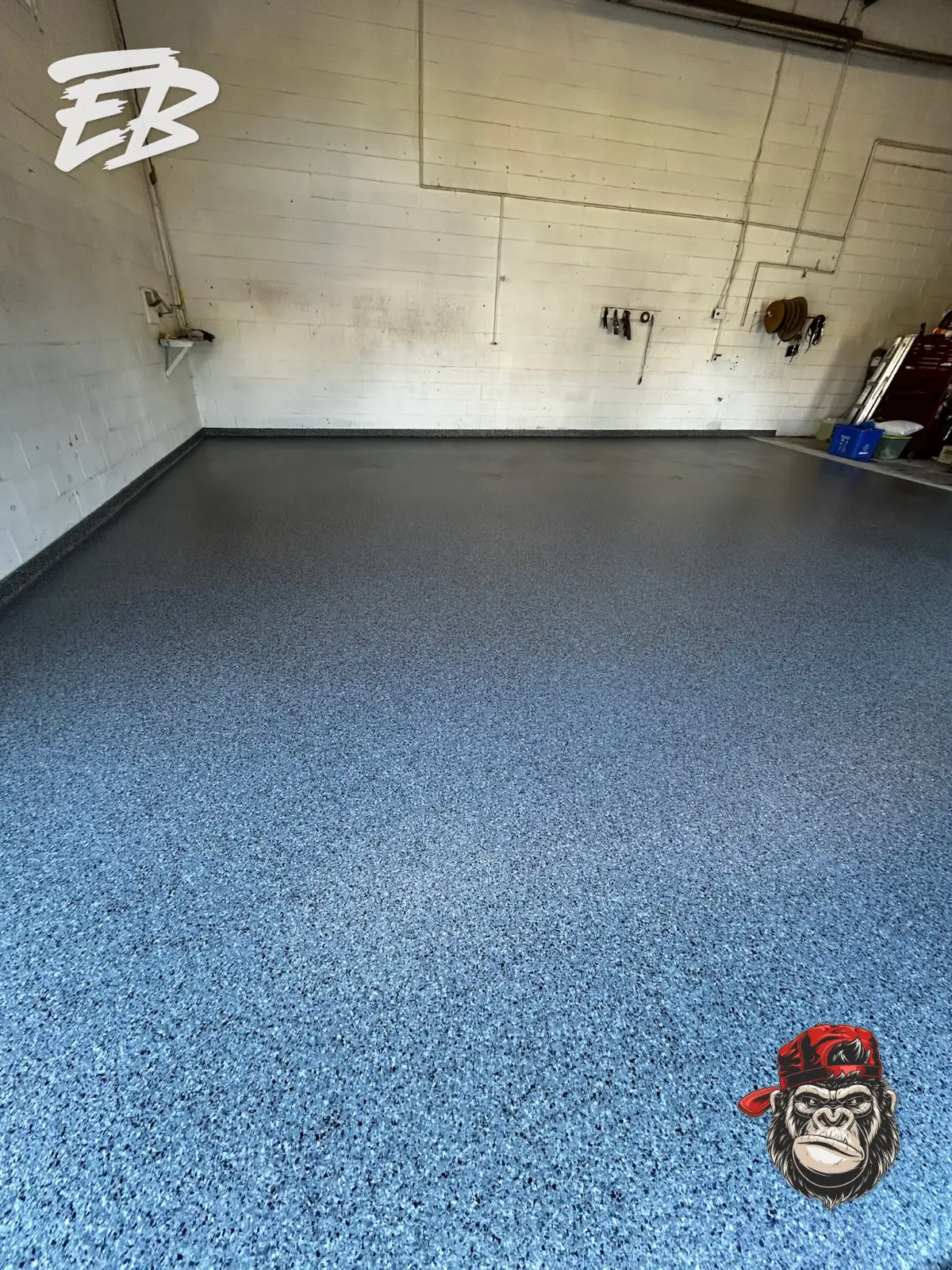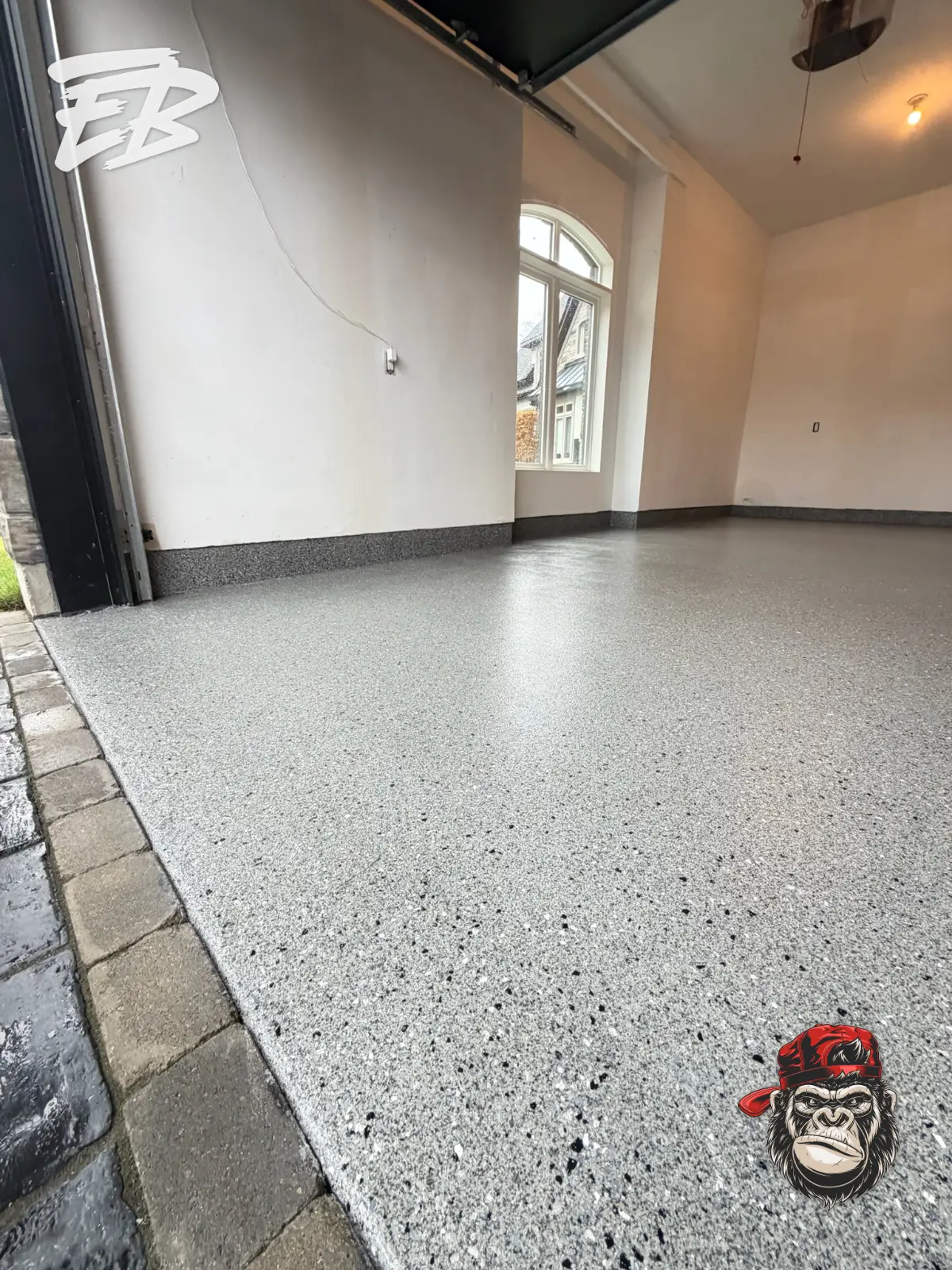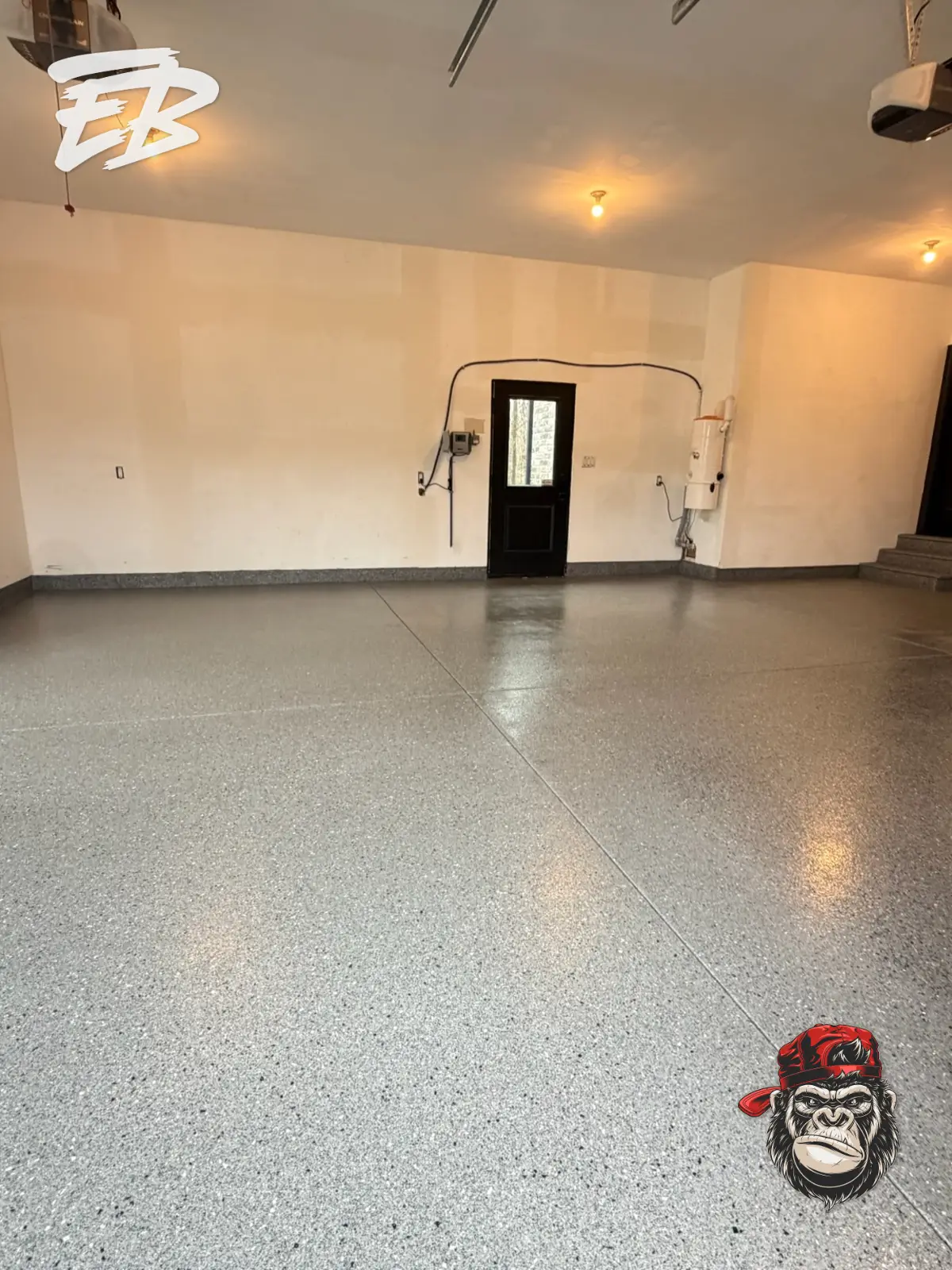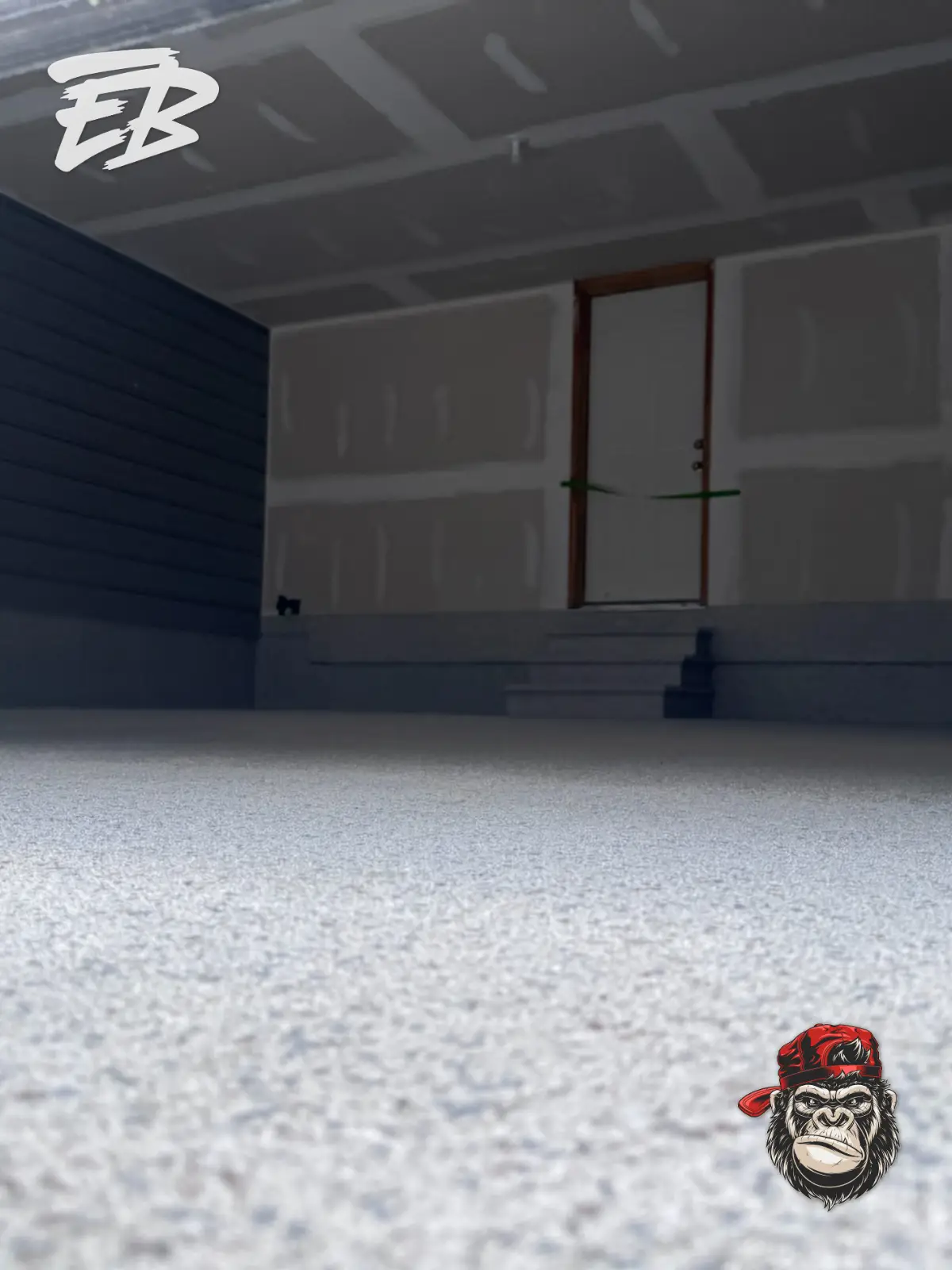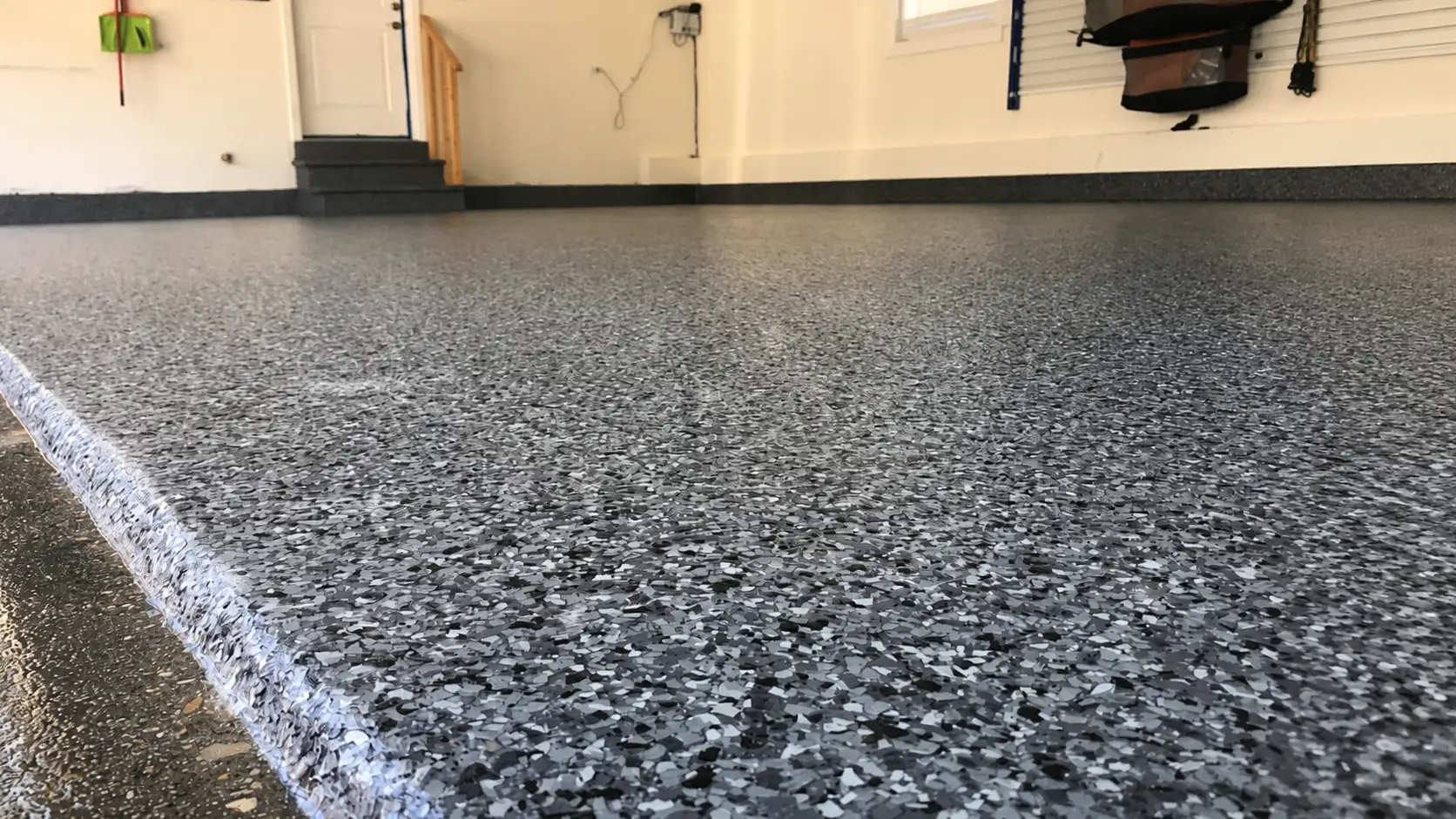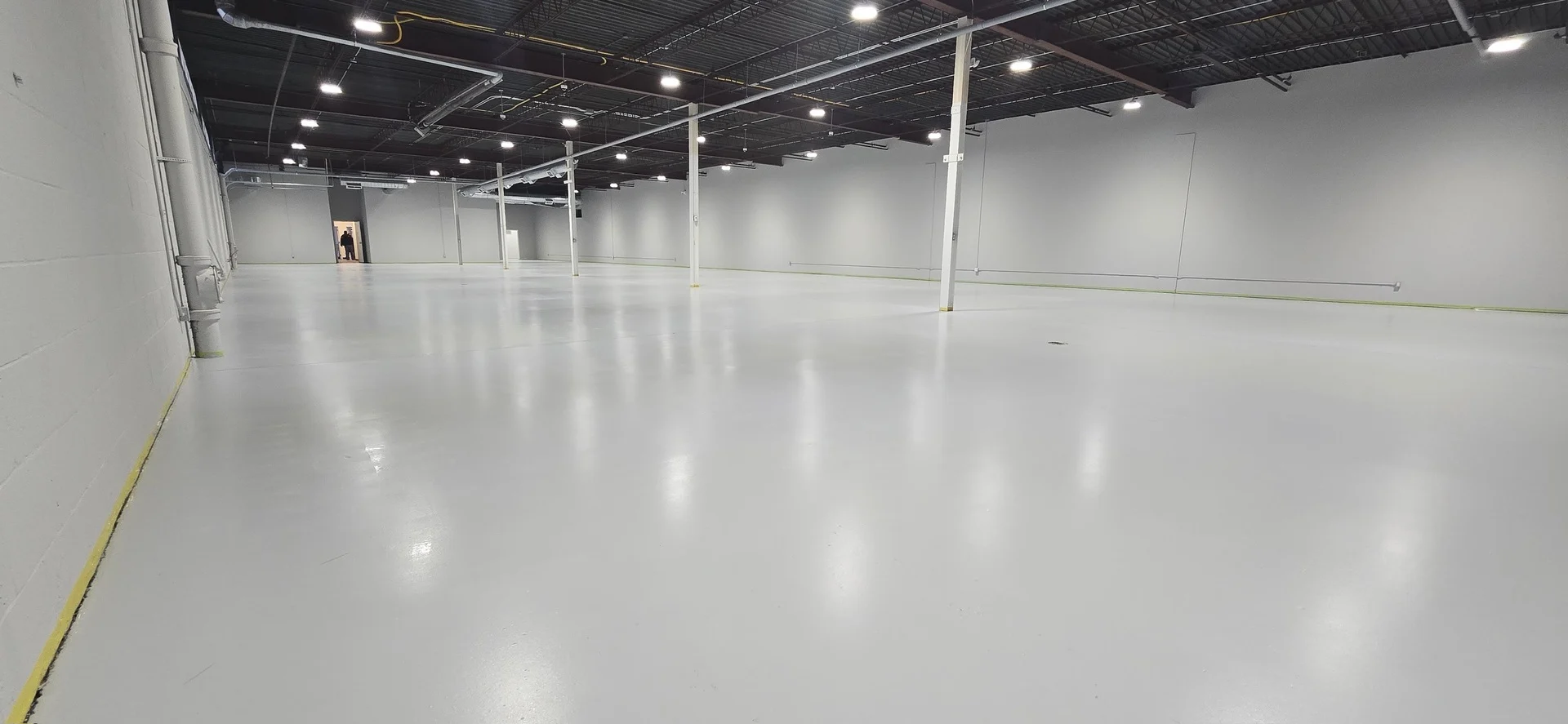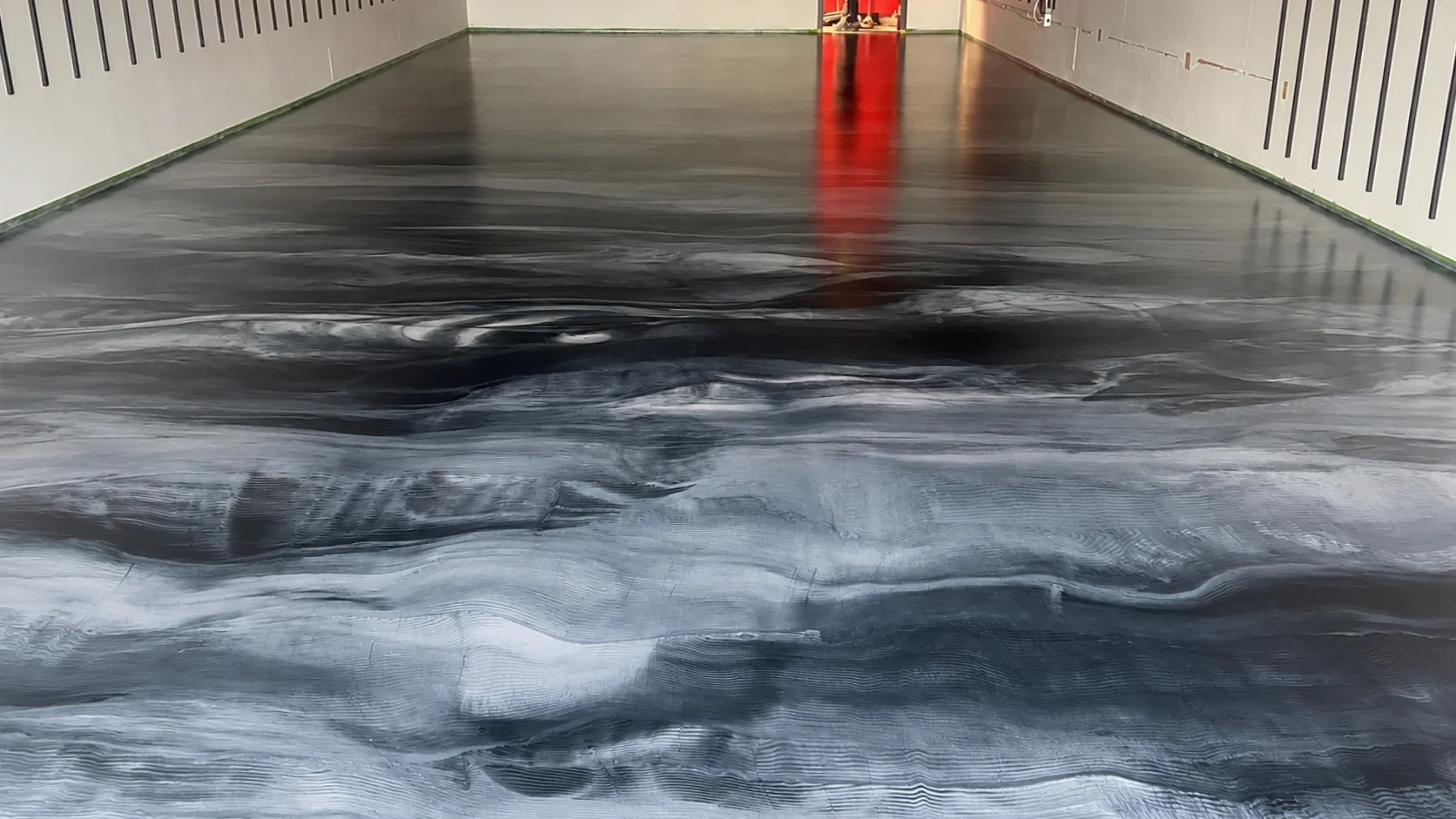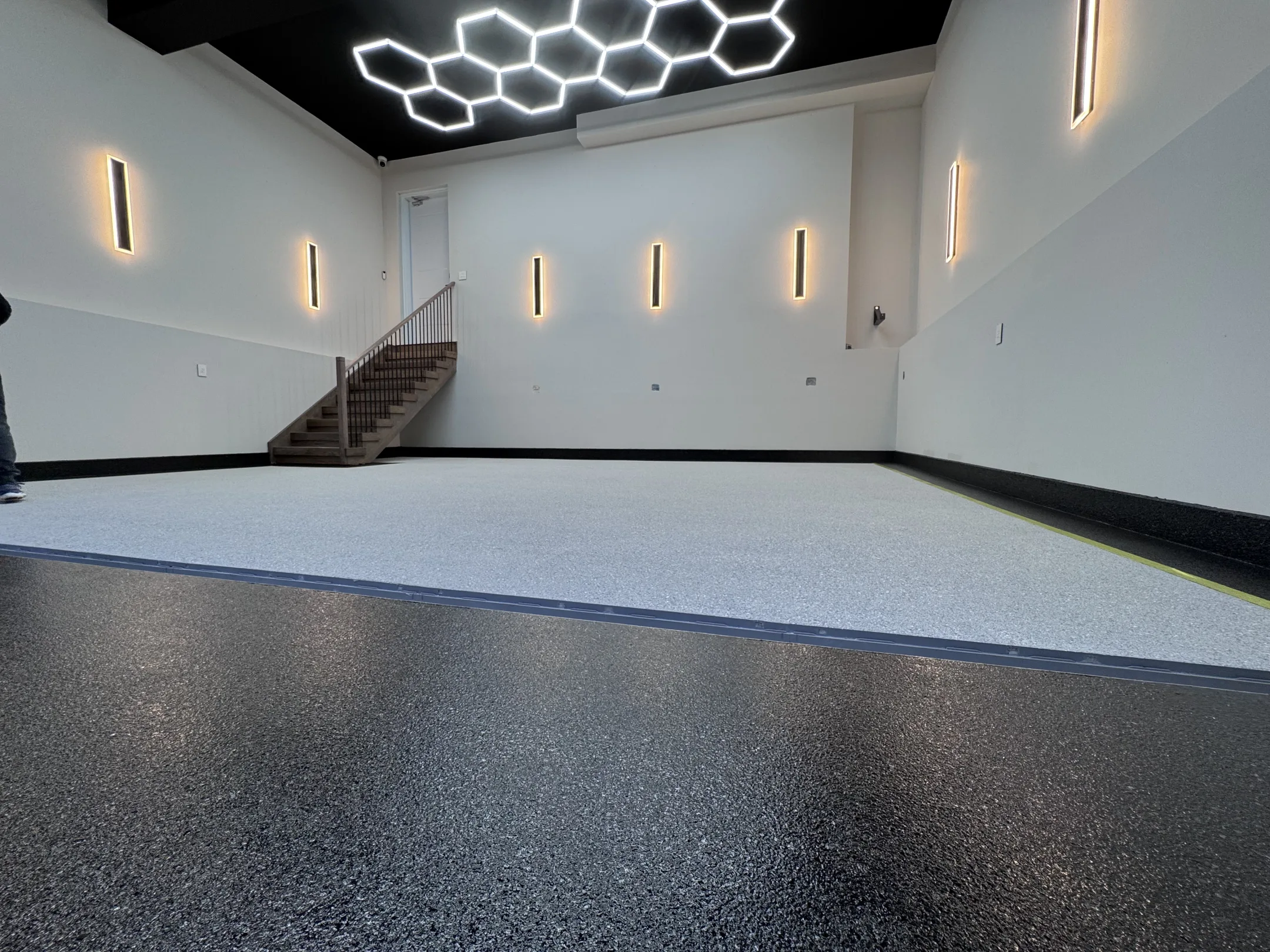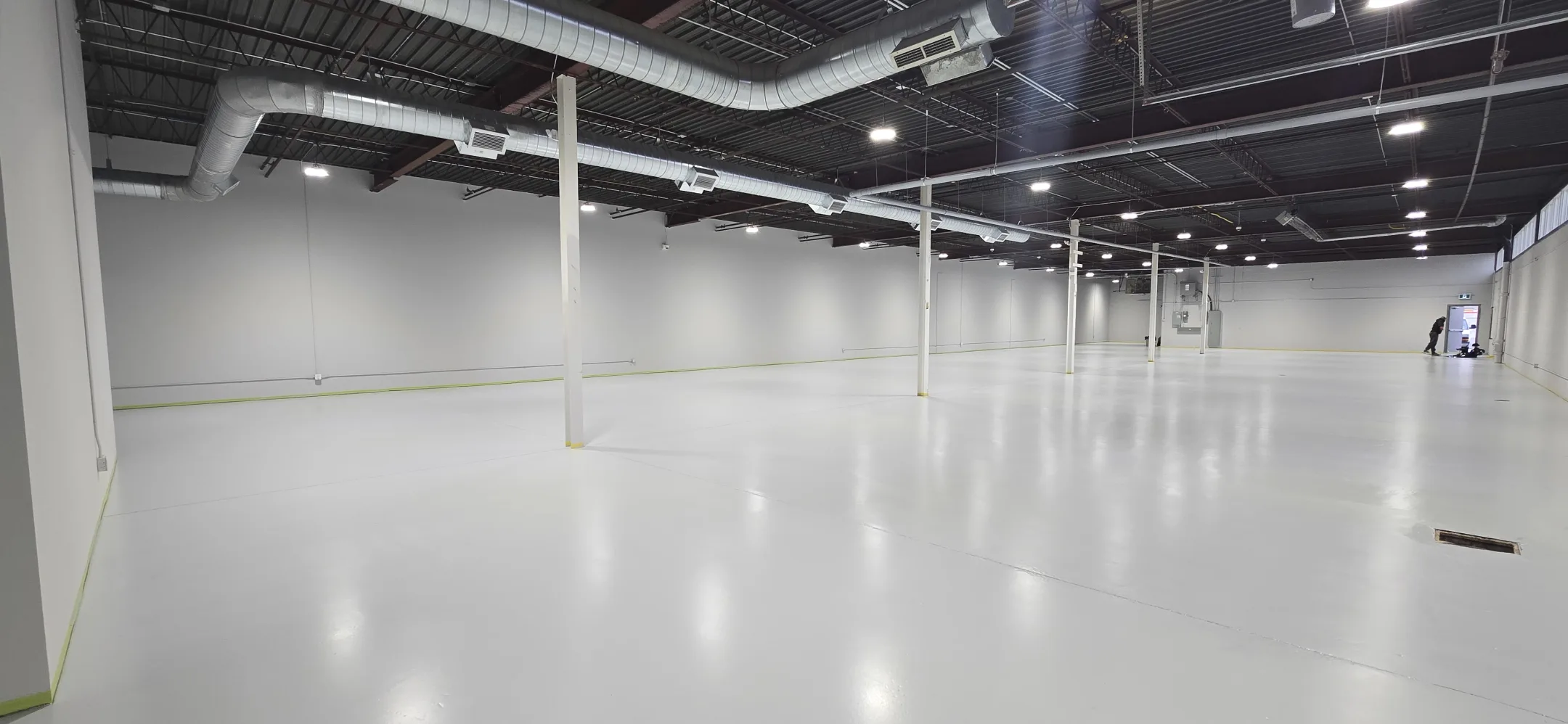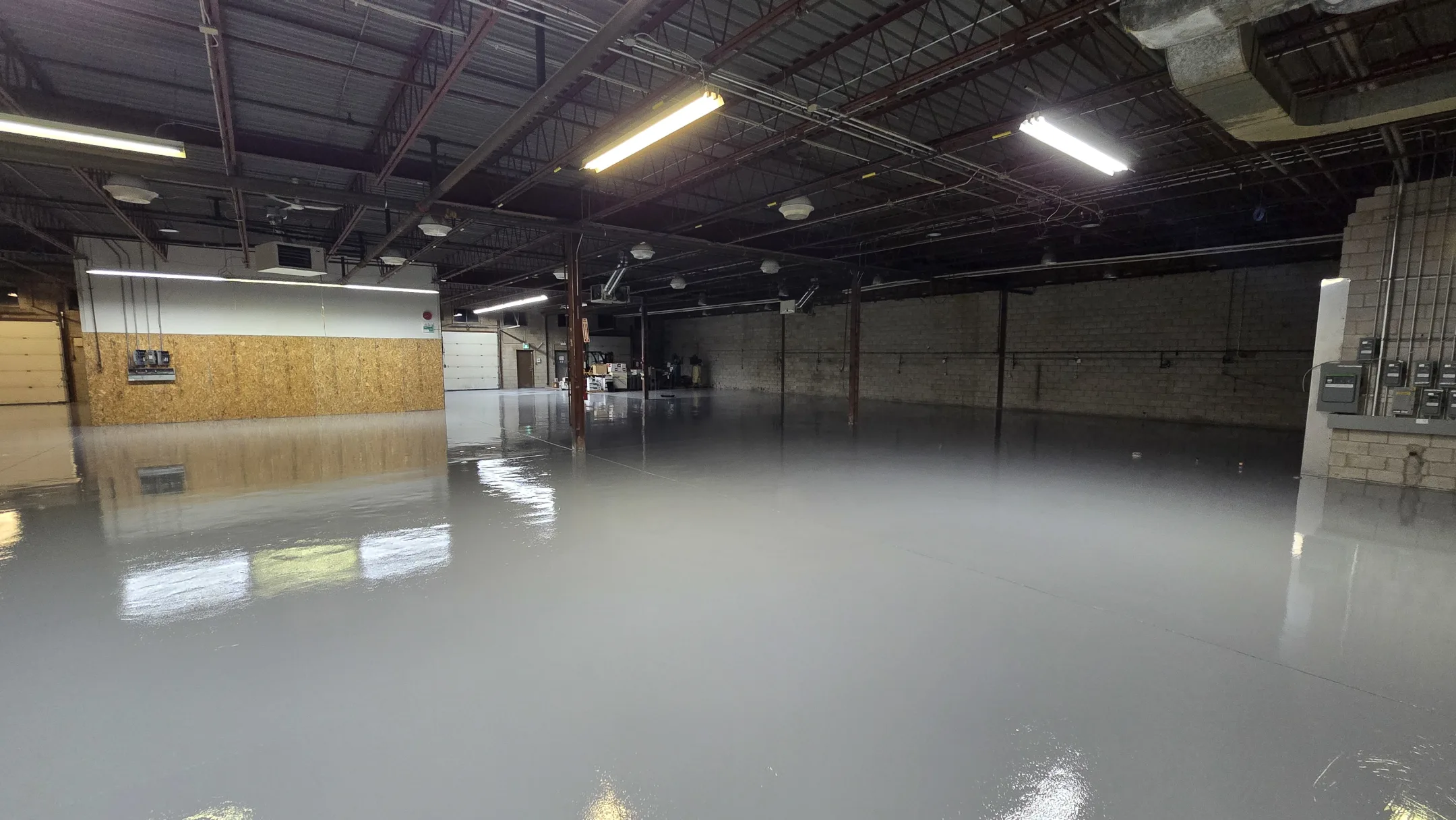
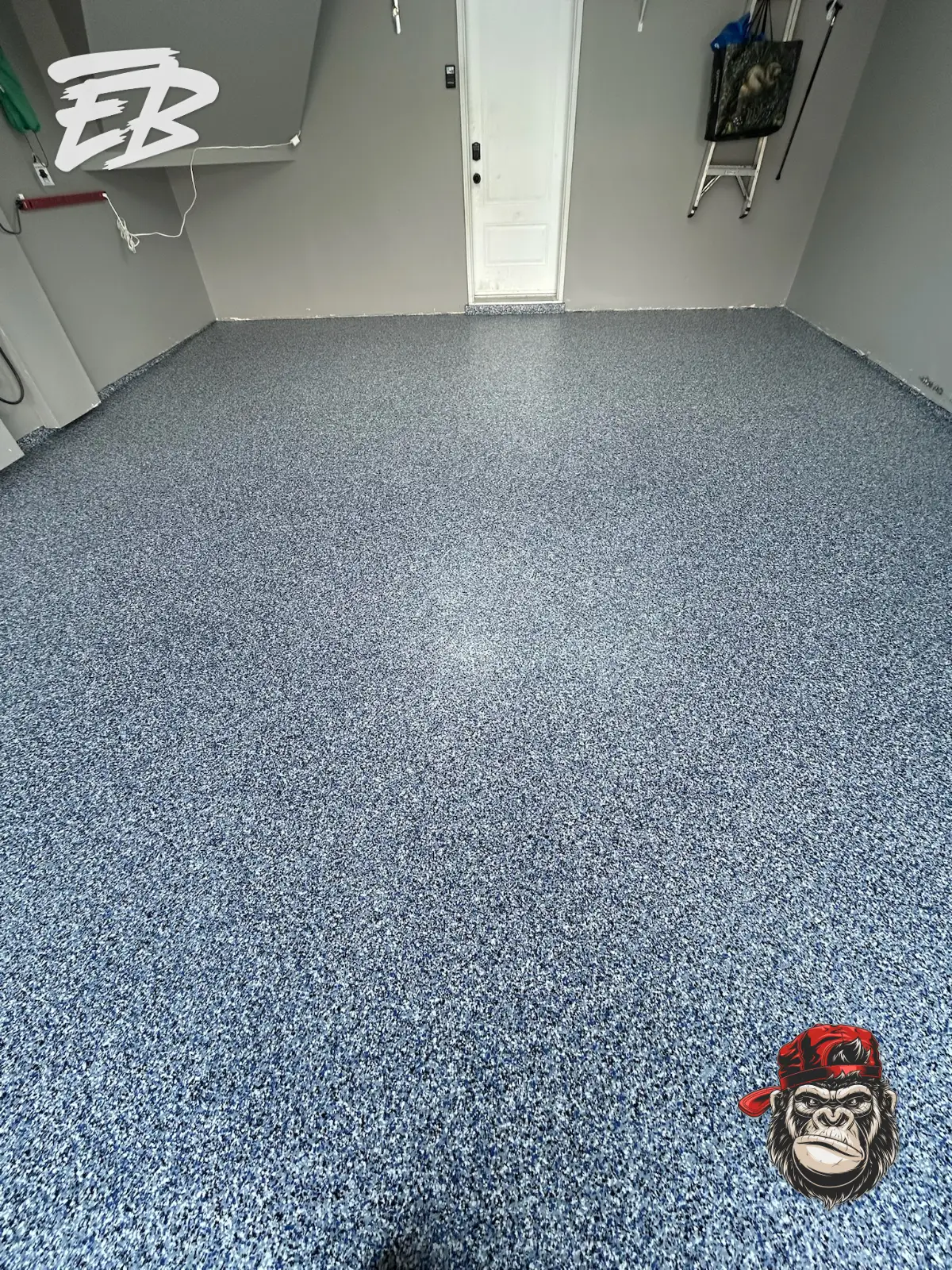

Polyaspartic flooring is selected when curing schedule, UV exposure, appearance, and service conditions support that system. Epoxy Boss Inc. takes a preparation-first approach so the selected system is built on a clean, properly prepared surface rather than a shortcut.
Before installation, we confirm access, substrate condition, repair needs, expected use, and the appropriate system. The final scope is communicated clearly so the installation and long-term maintenance expectations are practical for the property.


Epoxy Boss has completed projects ranging from residential garage systems to large-volume industrial operations for manufacturing and commercial facilities across multiple sectors.
Because high-performance flooring is not defined byappearance alone. It is defined by how the surface performs under years ofreal operational use.

Cottage garages and boathouses near Georgian Bay and Lake Simcoe tend to sit cold and damp through winter and get heavy use in summer. Moisture and condensation are bigger factors than in a heated home, so testing matters. We schedule installation in the months when conditions allow and specify a system for the humidity and use, including traction where floors are often wet.
Through winter, salt dries into a white film. In spring, sweep, rinse with water, and wash with a neutral cleaner or one recommended for your coating, then rinse again. Avoid acidic cleaners and abrasive scrubbing pads that can dull the finish. Doing a quick rinse during winter thaws, where practical, stops the build-up. We hand over care instructions with every floor.
Hot tire pickup happens when a warm tire softens and grips a coating, then pulls it away as it cools and the car moves. It's most common on thin coatings over poorly prepared concrete, or on floors driven on before they've fully cured. Mechanical preparation for a proper bond, a coating system with suitable thickness, and waiting for the stated vehicle cure time are the main defences.
The main variables are how much repair the slab needs, how many layers the system has, and how long each layer takes to cure at the conditions on the day. A garage in good condition with a fast-curing system is quicker than one needing salt-damage repair first. We give you a written schedule with the quote, including when you can walk on it and when you can park on it.
Unheated garage work can't start until conditions meet the product's requirements, which in Clearview and the surrounding area usually means mid-to-late spring. Because every contractor starts at the same time, the first weeks book up early. Booking in March or April gets your slab assessed and your job scheduled, so it's installed as soon as conditions allow.
A garage heated to a steady temperature can meet a product's requirements in the middle of winter. What trips it up is the door: opening it lets cold air across a curing floor and can pull the slab temperature down quickly. We confirm the space can hold temperature before booking, check readings on the day, and agree when the door stays shut. Ventilation still has to be managed during application.
Every product's technical data sheet gives a cure time for light foot traffic and a longer one for vehicle traffic, and both lengthen as temperature drops. Polyaspartic topcoats generally return to service faster than conventional epoxy systems, which is one reason they're used in Ontario garages. Hot tires on a floor that hasn't fully cured can mark it, so we give you a specific time for your floor on the day, based on the product and conditions, rather than a general number.
Two garages of the same size can price quite differently. A newer slab in good condition needs grinding and coating; an older one may need salt-damage repair, crack treatment or removal of a previous coating first, and those steps are where most of the variation comes from. The system matters too — a full-flake broadcast with a clear topcoat is a different build from a single solid colour. We assess the slab before quoting, then give a written price in Canadian dollars with HST shown separately and nothing mandatory left out.
Every coating system has a technical data sheet that sets a minimum surface and air temperature and a required margin above the dew point, during application and through the cure. In an unheated Innisfil garage, those conditions usually stop being reliable as fall nights cool, and a floor applied outside them may not bond or cure properly. We schedule against the readings on the day rather than the calendar. A heated garage that can hold stable conditions before, during and after installation can be done through winter.
Epoxy bonds well and builds thickness, which makes it a good base layer. Many epoxies can yellow with sunlight exposure, which matters at a garage door. Polyaspartic topcoats are commonly chosen for UV stability and faster return to service, and many can be applied across a wider temperature range. A lot of Ontario garage systems use both. The right combination depends on the product data, your slab and how you use the garage.
Cars carry snow and slush loaded with de-icing salt into the garage, where it melts and pools, often near the door and under the wheels. Bare concrete is porous and absorbs that water. When temperatures swing around freezing, moisture in the surface expands and contracts, and the combination with chlorides is a common cause of scaling — thin layers of the surface flaking away — and pitting. Chlorides that reach reinforcing steel in structural slabs can also contribute to corrosion. A sealed or coated surface limits how much reaches the concrete, which is the main reason Ontario garages are coated at all.
Not with a properly bonded system. Hot-tire pickup happens when a coating is thin, poorly bonded or rolled on over unprepared concrete.
We grind rather than acid-etch, so the coating anchors into the slab instead of resting on top of it.
Yes. Polyaspartic systems are commonly installed in residential and commercial garages due to their resistance to hot tire transfer, vehicle traffic, humidity, abrasion and long-term UV exposure.