Every winter, an Innisfil garage receives more than vehicles. It receives road salt, snow, slush, grit, and repeated temperature changes carried in on tires and boots. On a bare concrete floor, that exposure can leave white residue, dark damp-looking areas, surface dust, small pits, and eventually a rougher, harder-to-clean garage floor. Not every white mark means the slab is failing. Some salt residue is simply left behind as snow and slush dry. The concern is the repeated cycle: chlorides and moisture reach the concrete surface, the slab stays damp longer, and freeze-thaw exposure can work on a surface that may already have weak, porous, or poorly finished areas. The result is often gradual surface scaling or dusting rather than one dramatic event. The American Concrete Institute identifies surface scaling as the most common form of frost damage associated with de-icing salt use For homeowners searching for garage floor coating Innisfil, the right starting point is not choosing a colour. It is understanding the condition of the concrete underneath.
What road salt does - and does not - do to bare garage concrete
Road salt does not automatically destroy sound concrete after one winter. A well-made, properly cured slab can tolerate normal garage use for years. The risk increases when the concrete has an open, weak, or already damaged surface and is repeatedly exposed to salt-contaminated meltwater and freezing temperatures. Concrete is not fully waterproof. Its pore structure can absorb moisture and dissolved salts. When the surface remains wet, then freezes and thaws repeatedly, pressure can develop within the near-surface concrete. De-icing salt exposure is also associated with chemical deterioration mechanisms in certain conditions, particularly with concentrated calcium chloride solutions. In an Innisfil garage, this exposure is concentrated in a few predictable areas:
- Tire paths where slush settles after a drive home.
- The area immediately inside the overhead door.
- Perimeter edges where moisture collects.
- Low spots and old surface repairs.
- Cracks, joints, and spalled areas that allow contamination to travel deeper.
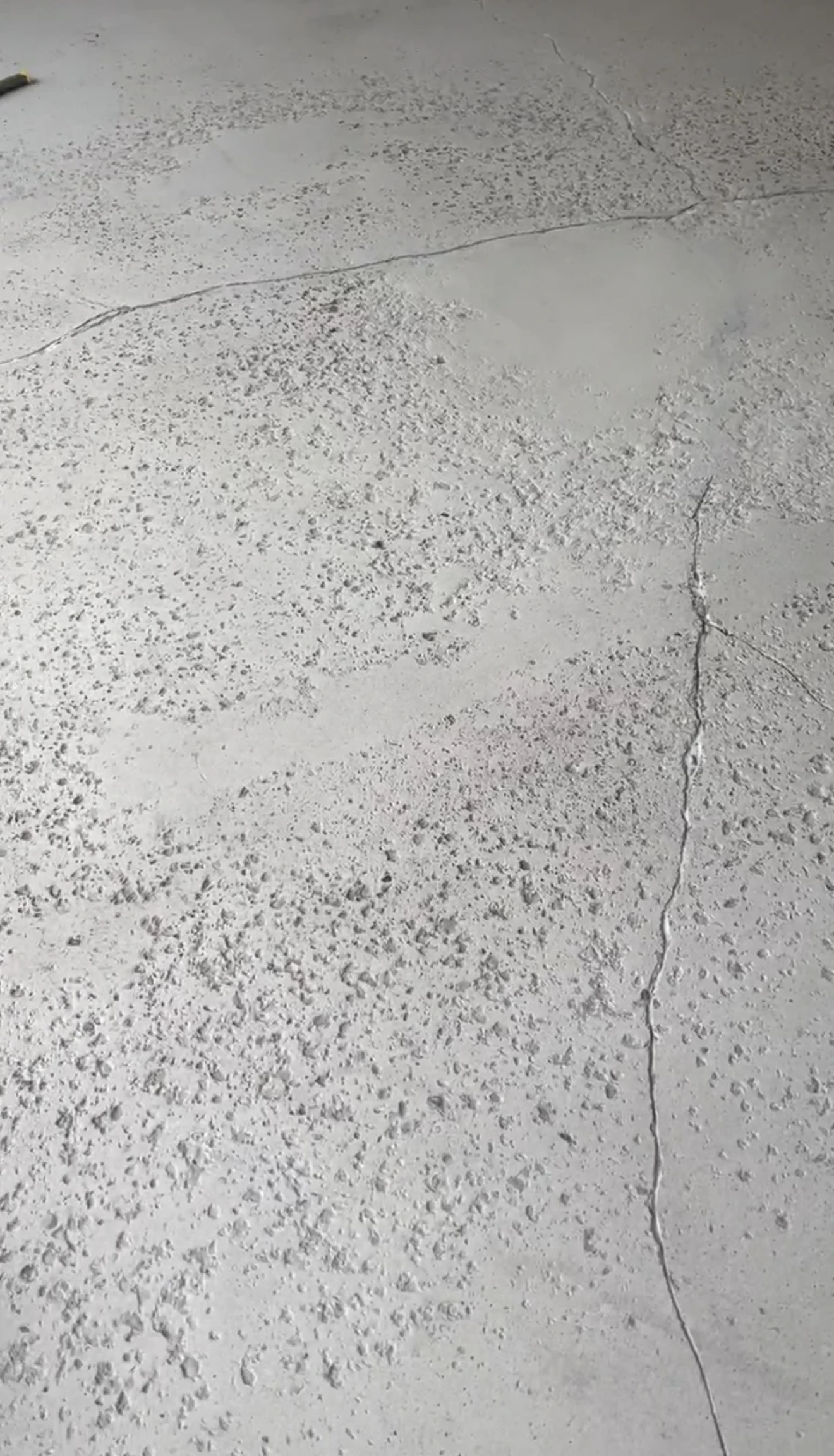
The first signs are often subtle. The concrete may look duller in certain paths, feel sandy when swept, or show small flakes of surface paste lifting away. Homeowners sometimes call this “salt eating the concrete.” The more accurate explanation is that salt, moisture, and winter cycling expose weaknesses in the concrete surface and accelerate deterioration where the slab is already vulnerable.
Salt residue versus actual concrete damage
A white powder on the garage floor is not enough to diagnose damage. It may be dried salt residue transferred from the road. It may also be efflorescence, which occurs when moisture moves through concrete and leaves mineral deposits at the surface. The distinction matters because a coating should not be used to hide an unresolved condition. A professional assessment looks for more than colour changes:
- Does the surface dust when rubbed or swept?
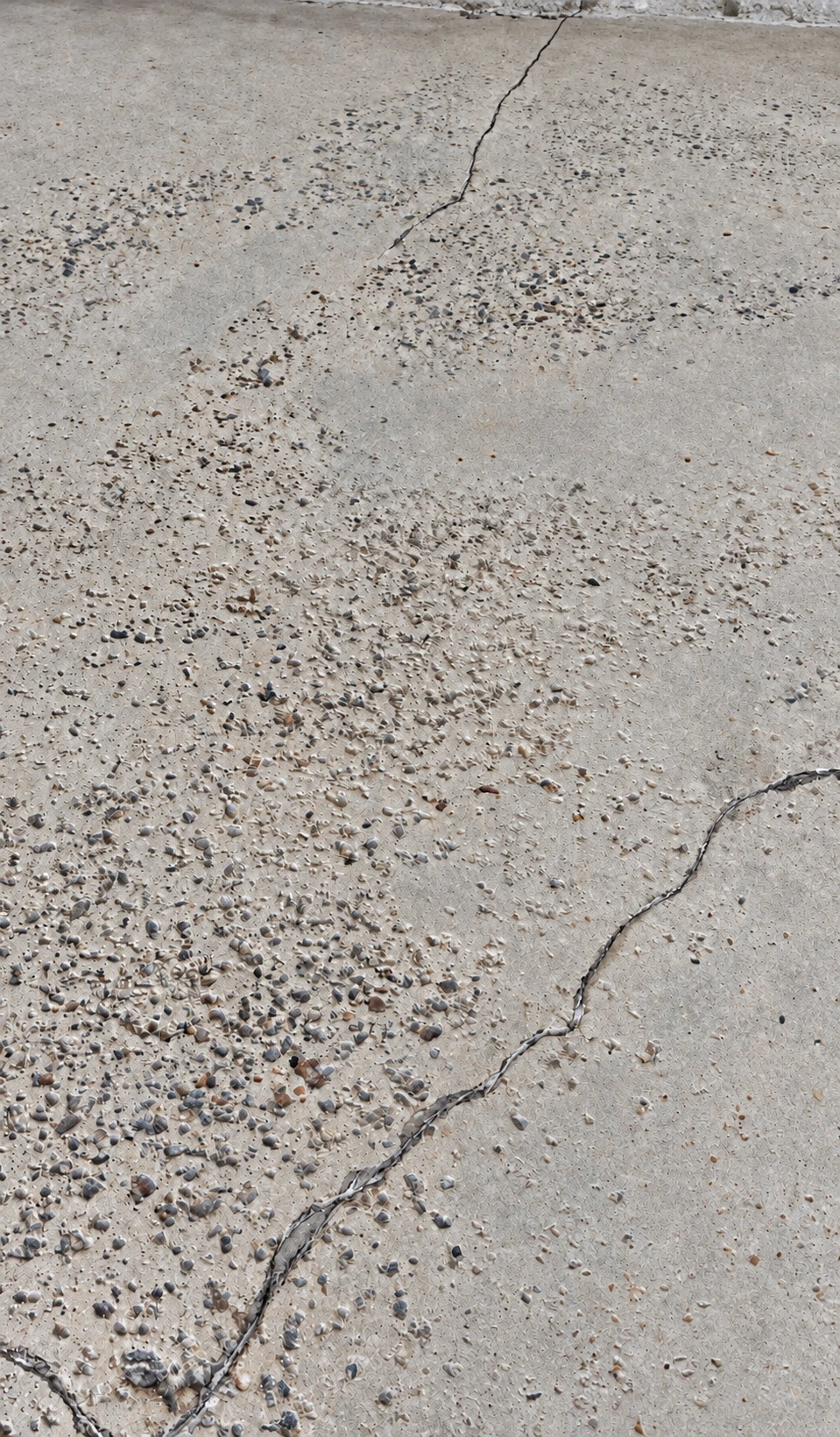
- Are there shallow flakes, pits, or loose edges?
- Is the damage isolated to tire paths or spread across the floor?
- Are cracks stable, widening, or affected by movement?
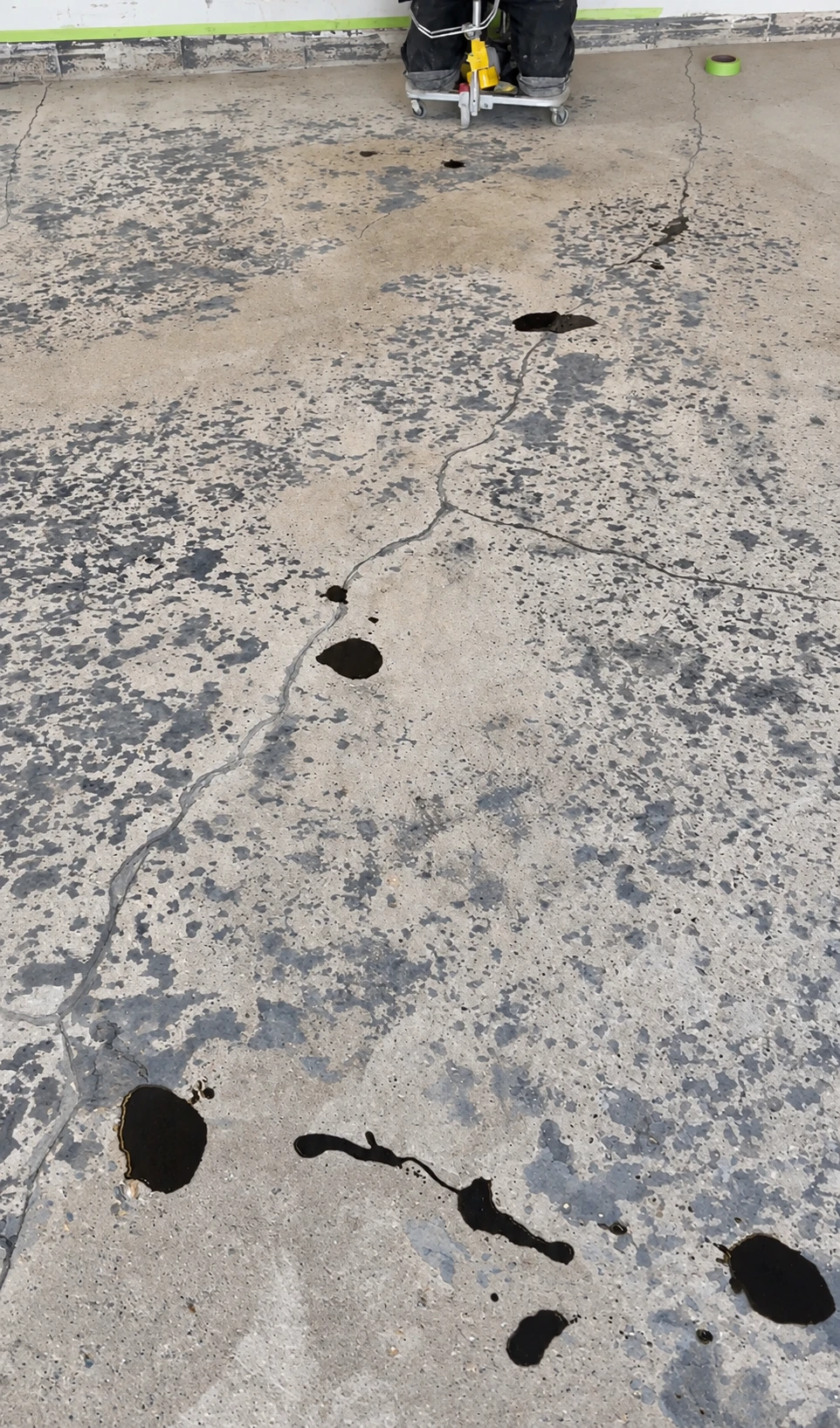
- Is there oil, tire residue, old sealer, adhesive, or a previous coating?
- Does the slab show signs of moisture-related pressure or dampness?
- Are there low areas that hold slush and meltwater?
Salt residue can be cleaned. Weak concrete requires preparation and, in some cases, repair before a floor coating system is considered.
Why bare garage concrete gets worse over time
The top layer of a garage slab takes the full impact of traffic, abrasion, winter grit, cleaning, and changing temperatures. Once that surface becomes more porous or starts to scale, it becomes easier for contaminants and moisture to remain in the concrete. This can create a cycle:
- Salt and slush enter the garage.
- Moisture sits on the slab in tire paths and low spots.
- The surface dries unevenly, leaving residue behind.
- Freeze-thaw cycles and traffic stress act on weak areas.
- Surface paste begins to dust, pit, or scale.
- The damaged surface holds more dirt and is harder to clean.
This is why a garage floor coating in Innisfil should be treated as a concrete-protection decision, not a paint purchase. A coating system can only perform as well as the prepared concrete beneath it.
The common mistake: coating over salt-affected concrete
A garage floor can look clean after pressure washing or a strong degreaser, but that does not confirm it is ready for coating. Surface contaminants, weak concrete, old sealers, moisture conditions, and unresolved cracks can all affect bonding. The shortcut is to clean the floor and roll on a coating. The proper process begins with the slab:
- Inspect the concrete for scaling, cracks, spalls, contamination, and prior coatings.
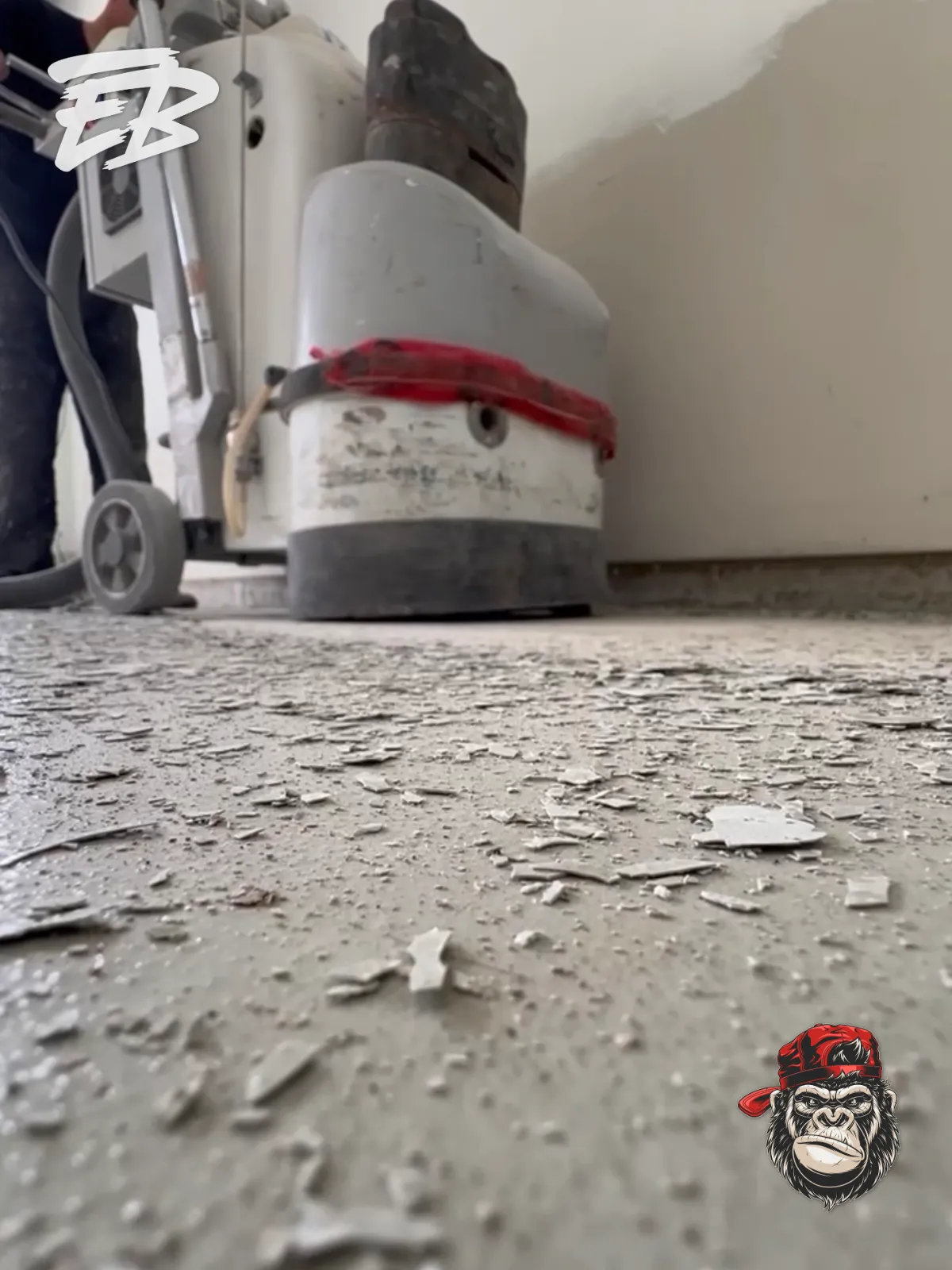
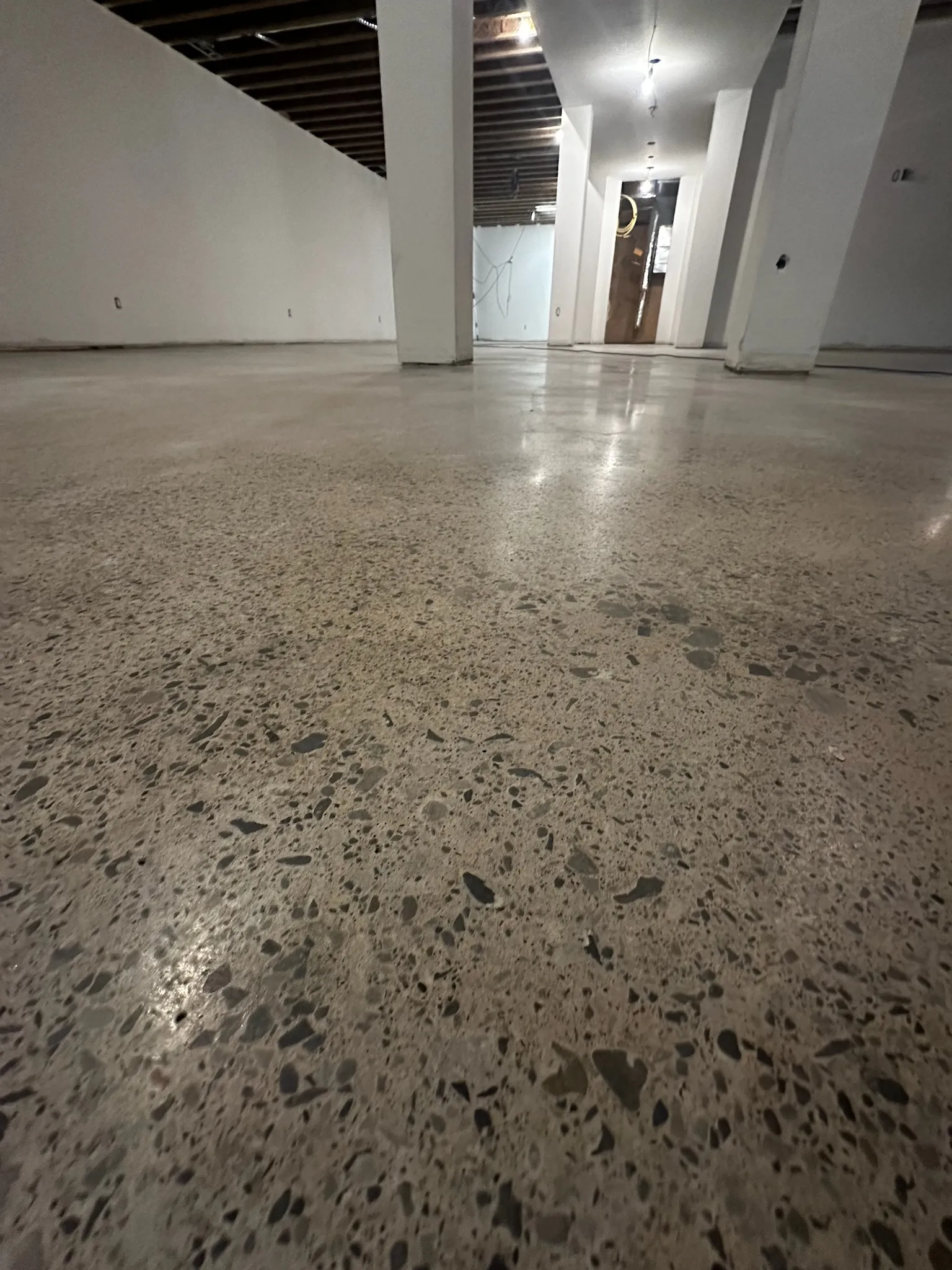
- Mechanically diamond grind the surface to remove weak material and create the required profile.
- Repair compatible cracks and surface defects.
- Evaluate moisture concerns where the slab condition or project history indicates a risk.
- Select a primer, body coat, decorative layer, and topcoat that suit the garage’s use.
- Confirm curing, access, and maintenance expectations before installation.
Mechanical preparation matters because it creates a sounder surface for the system to bond to. Acid etching or a quick cleaning process does not provide the same level of control over weak surface material, existing residue, or concrete profile.
What a proper Innisfil garage floor system can include
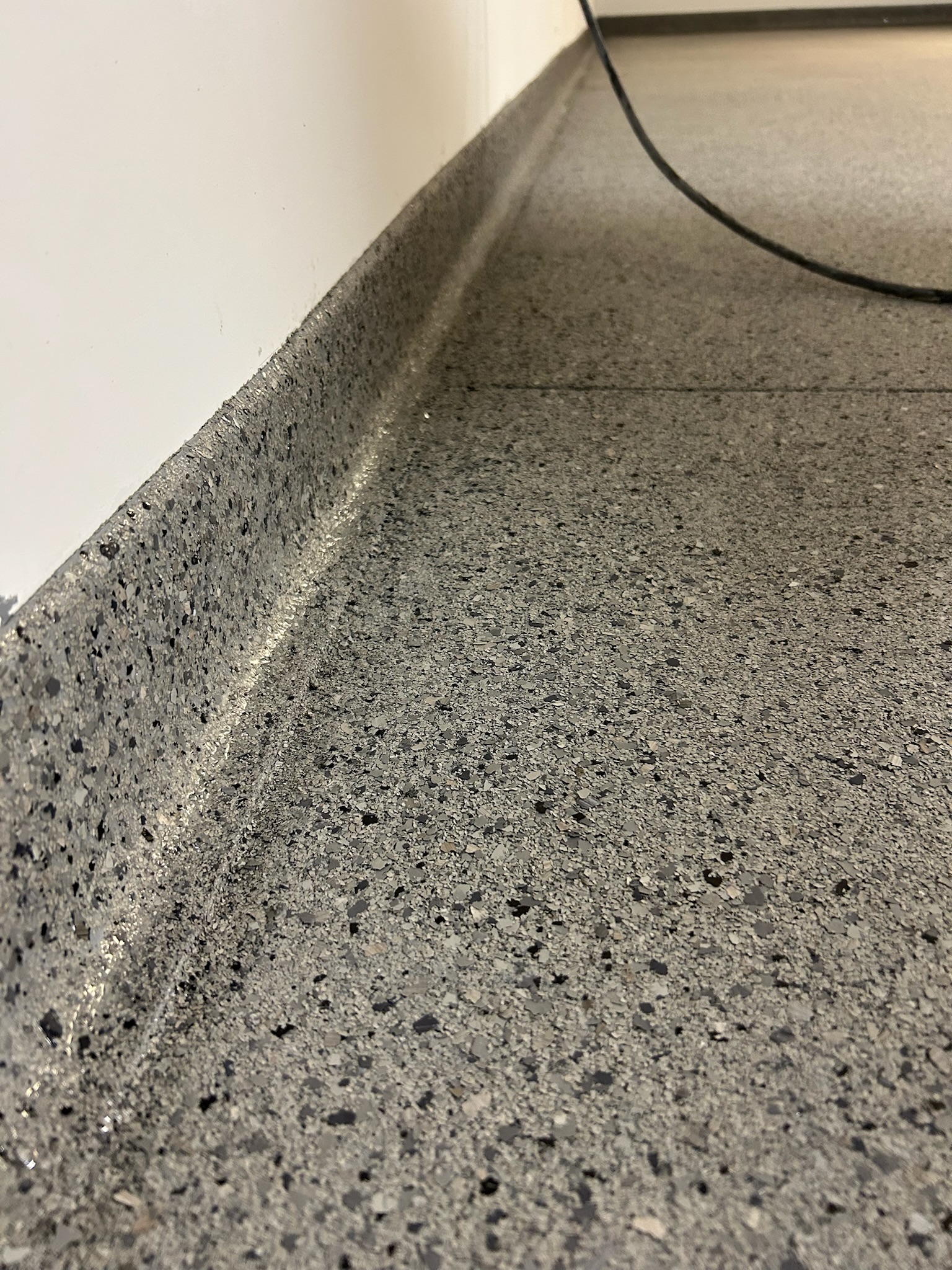
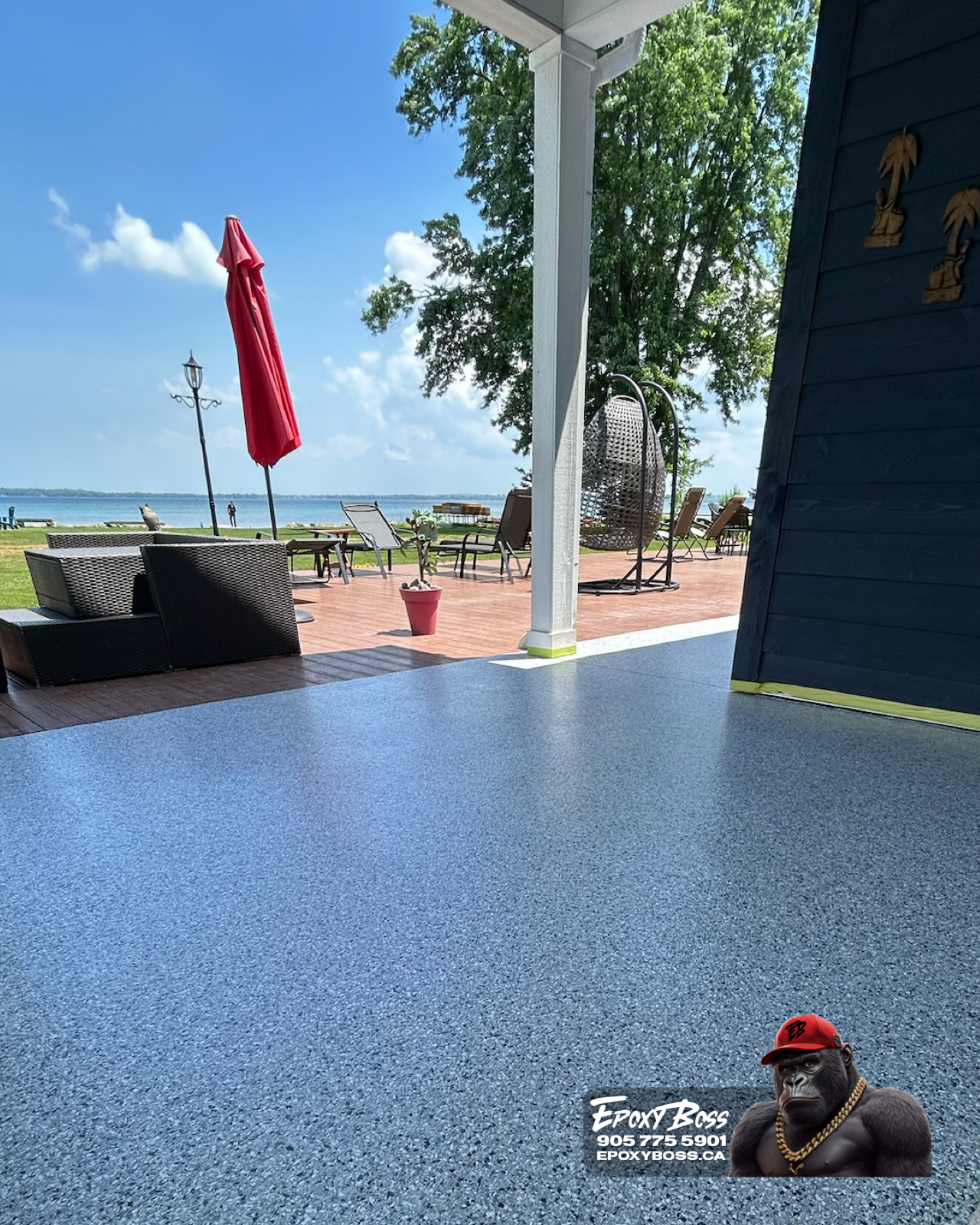
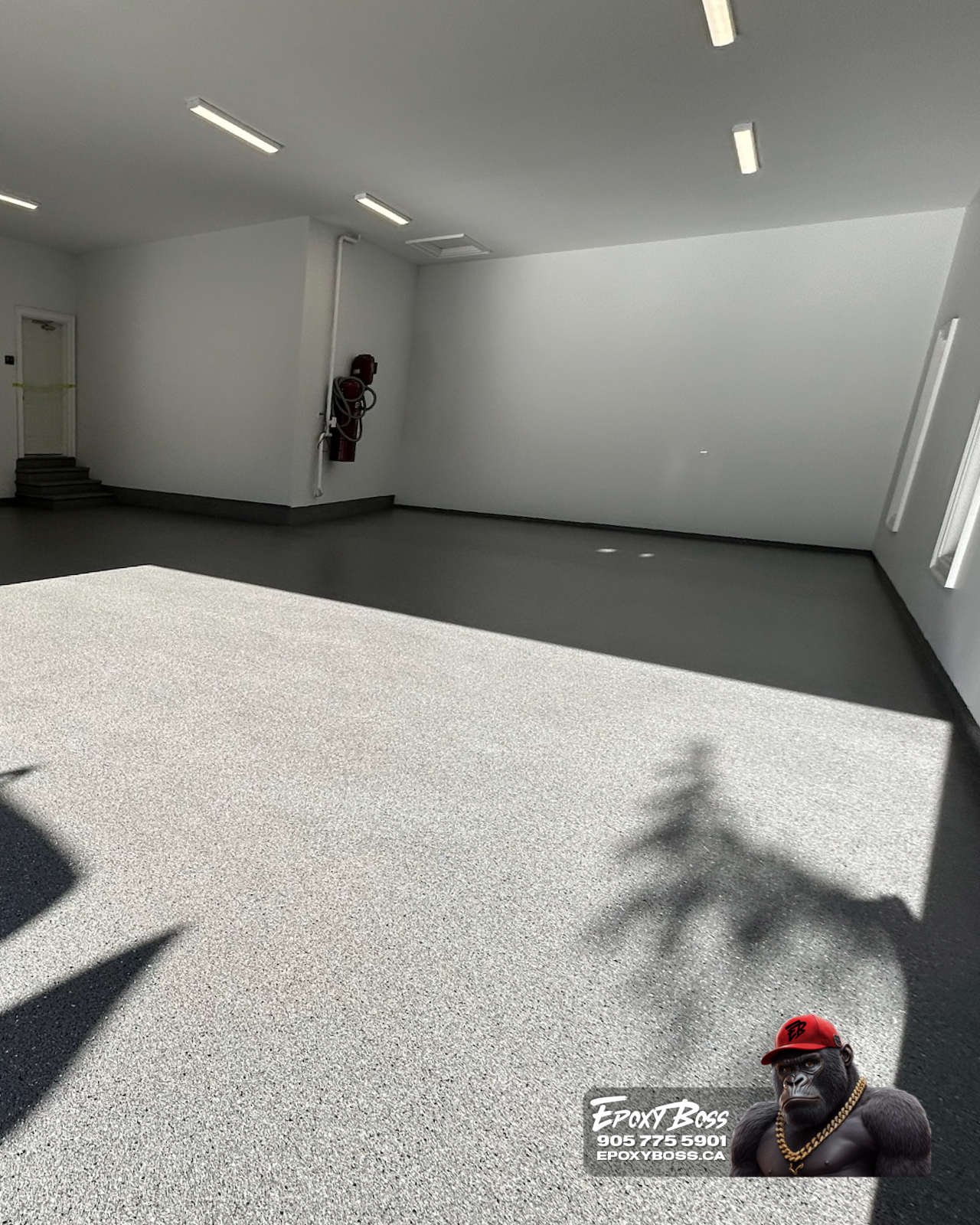
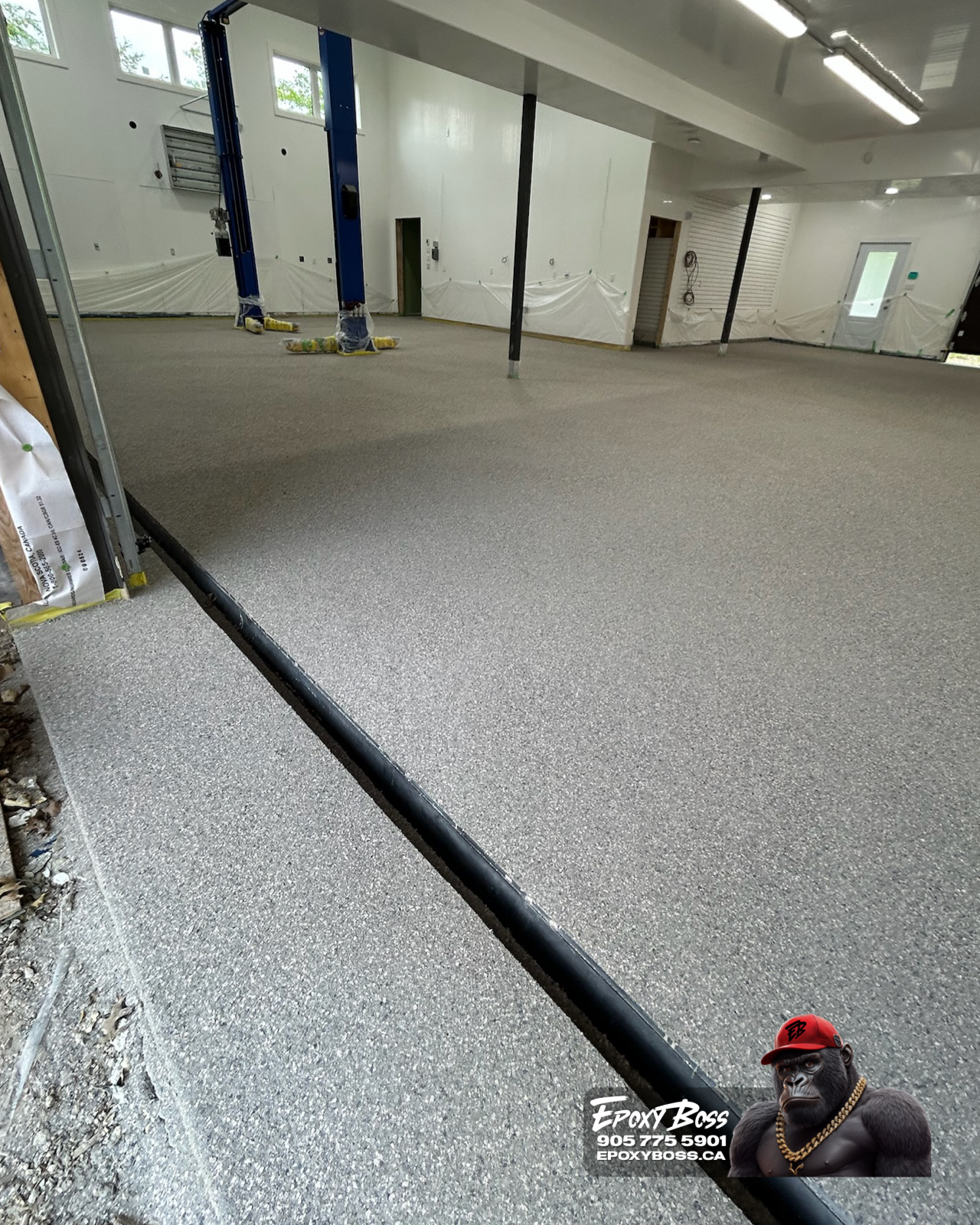
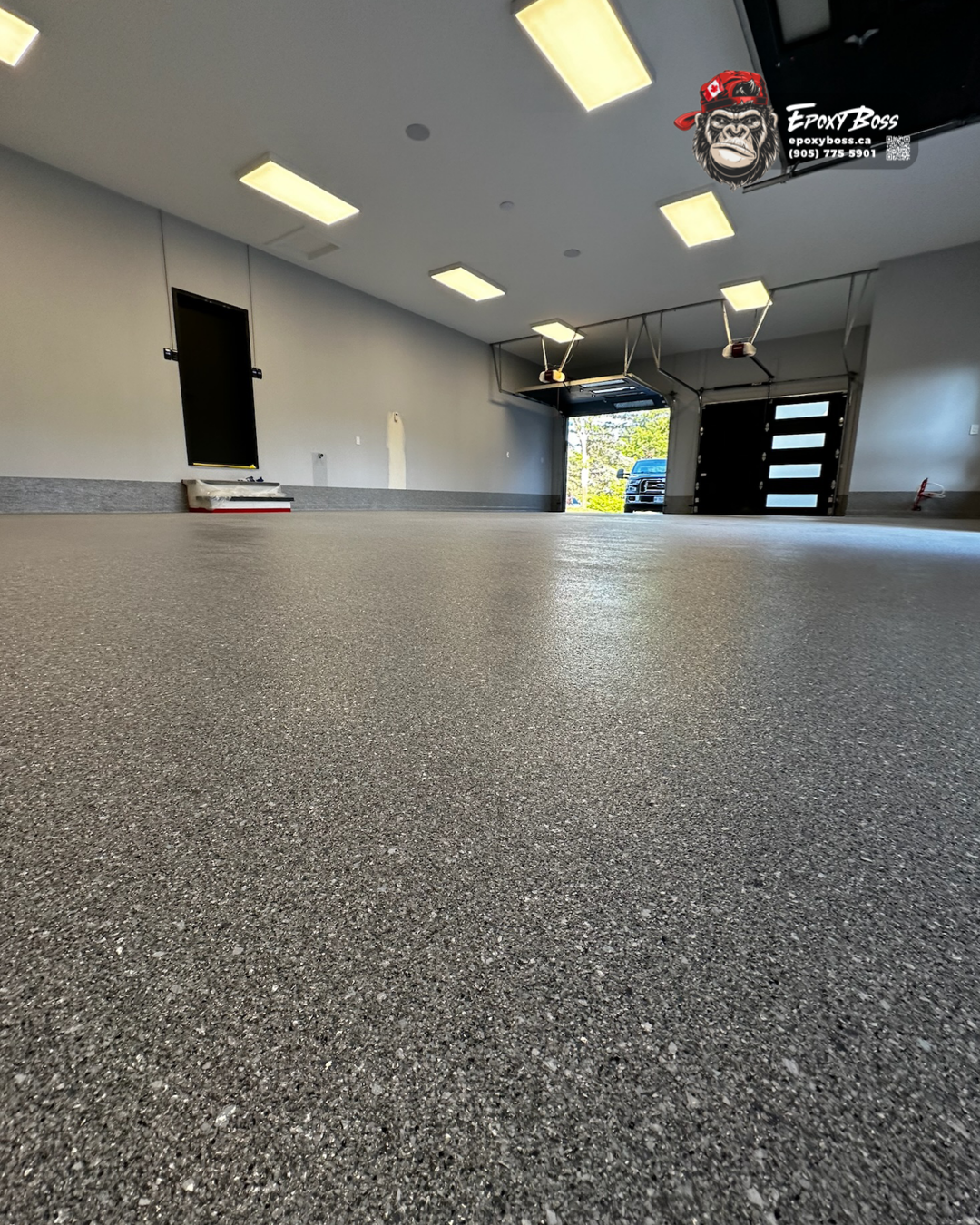
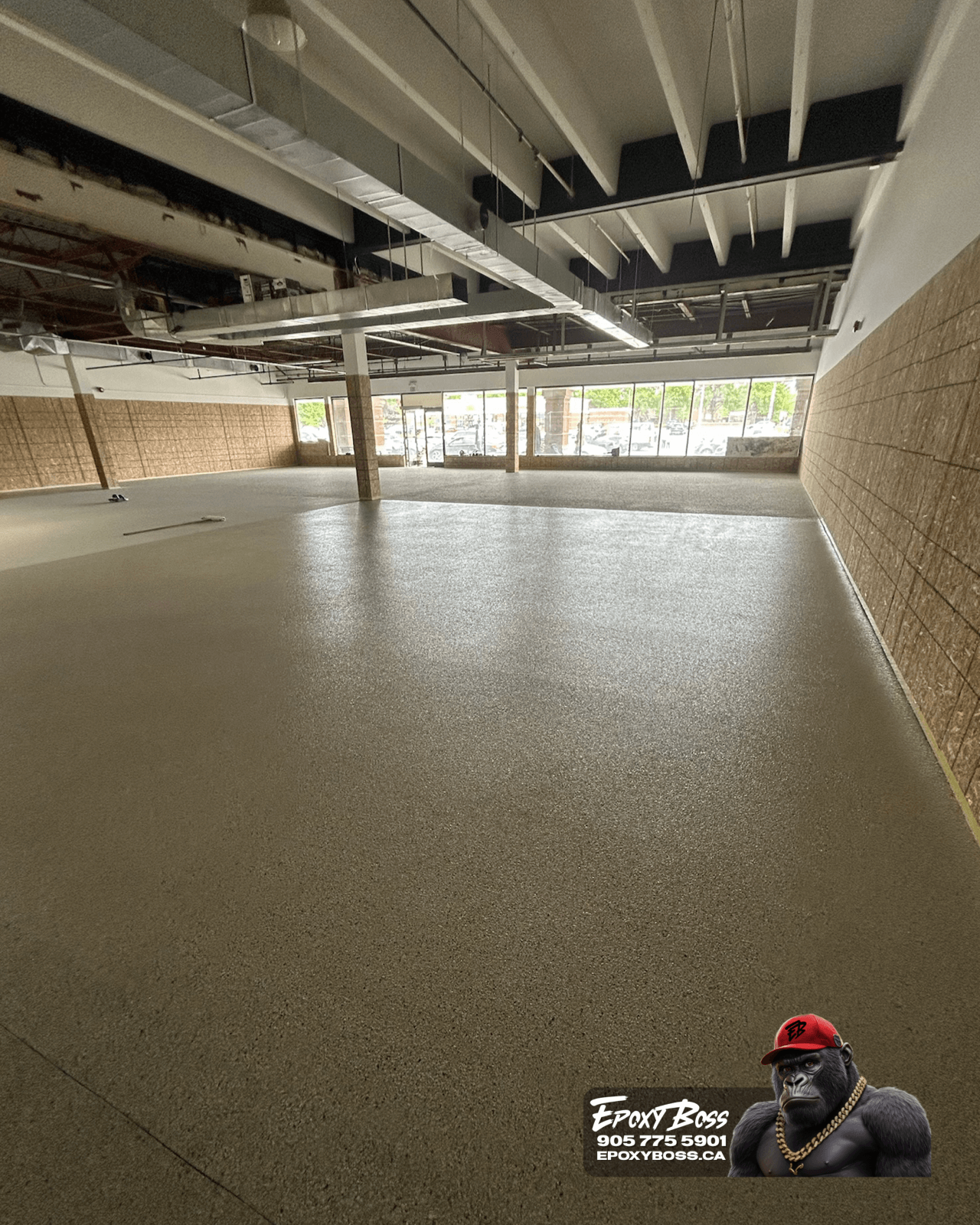
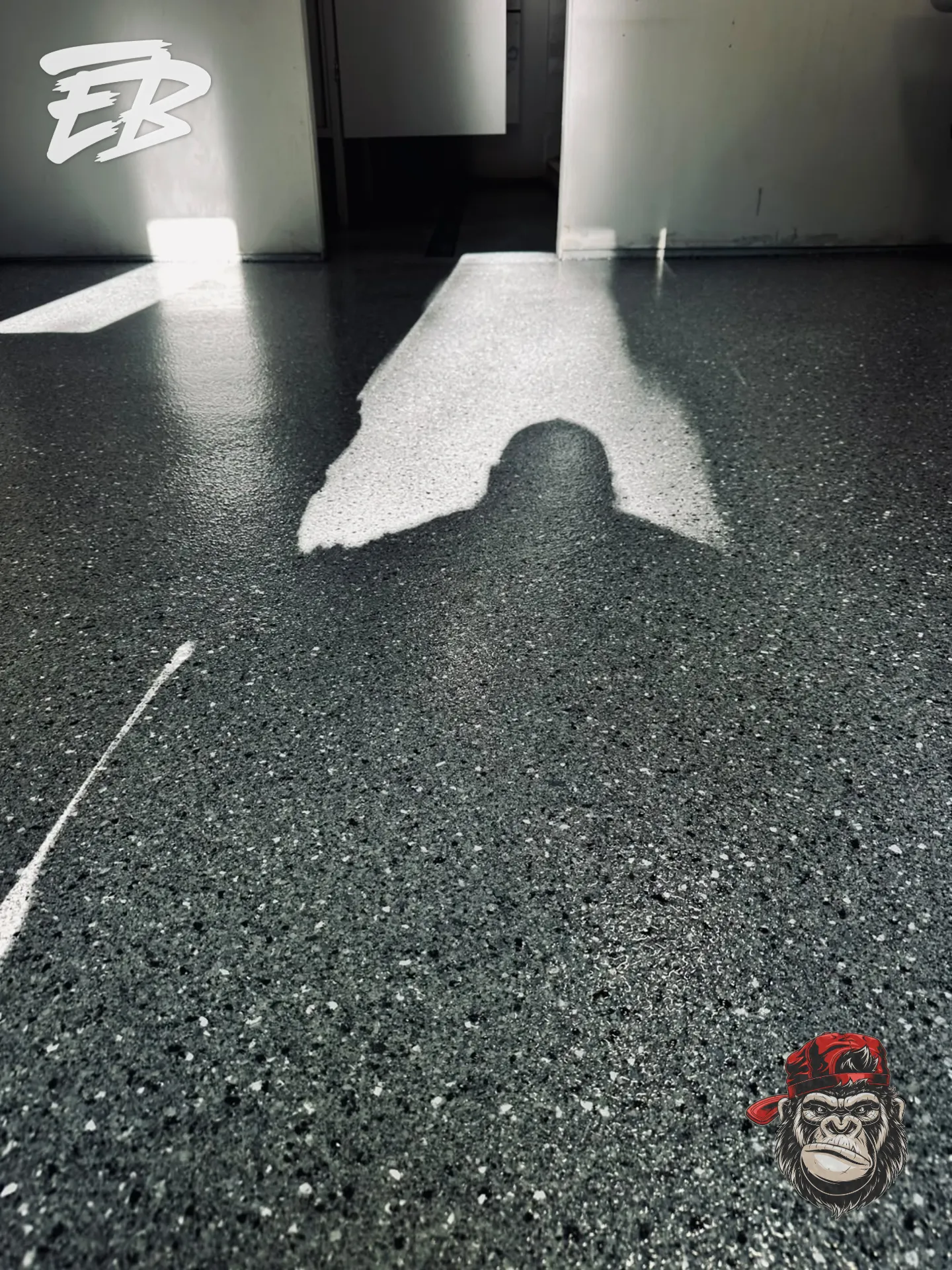
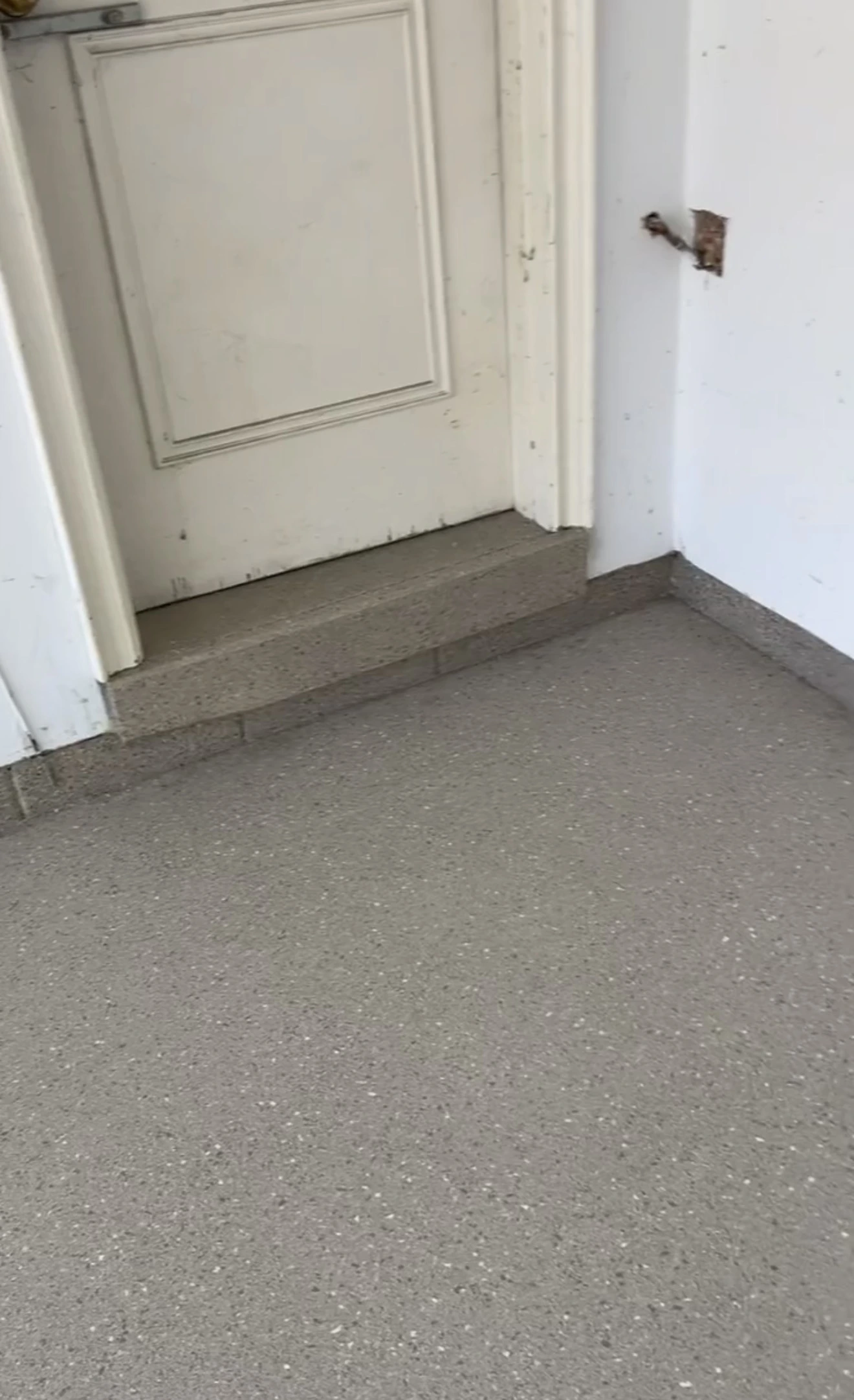
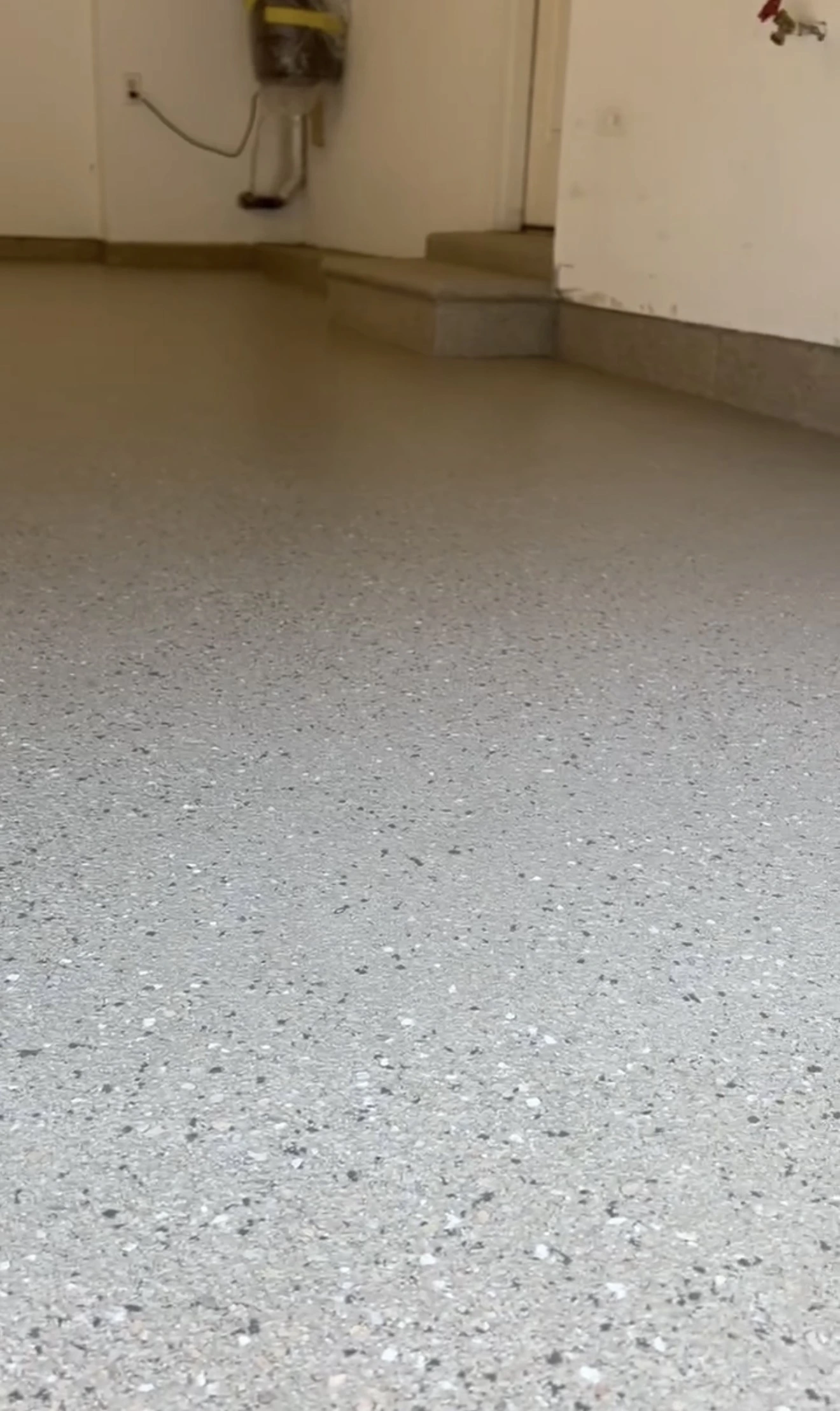
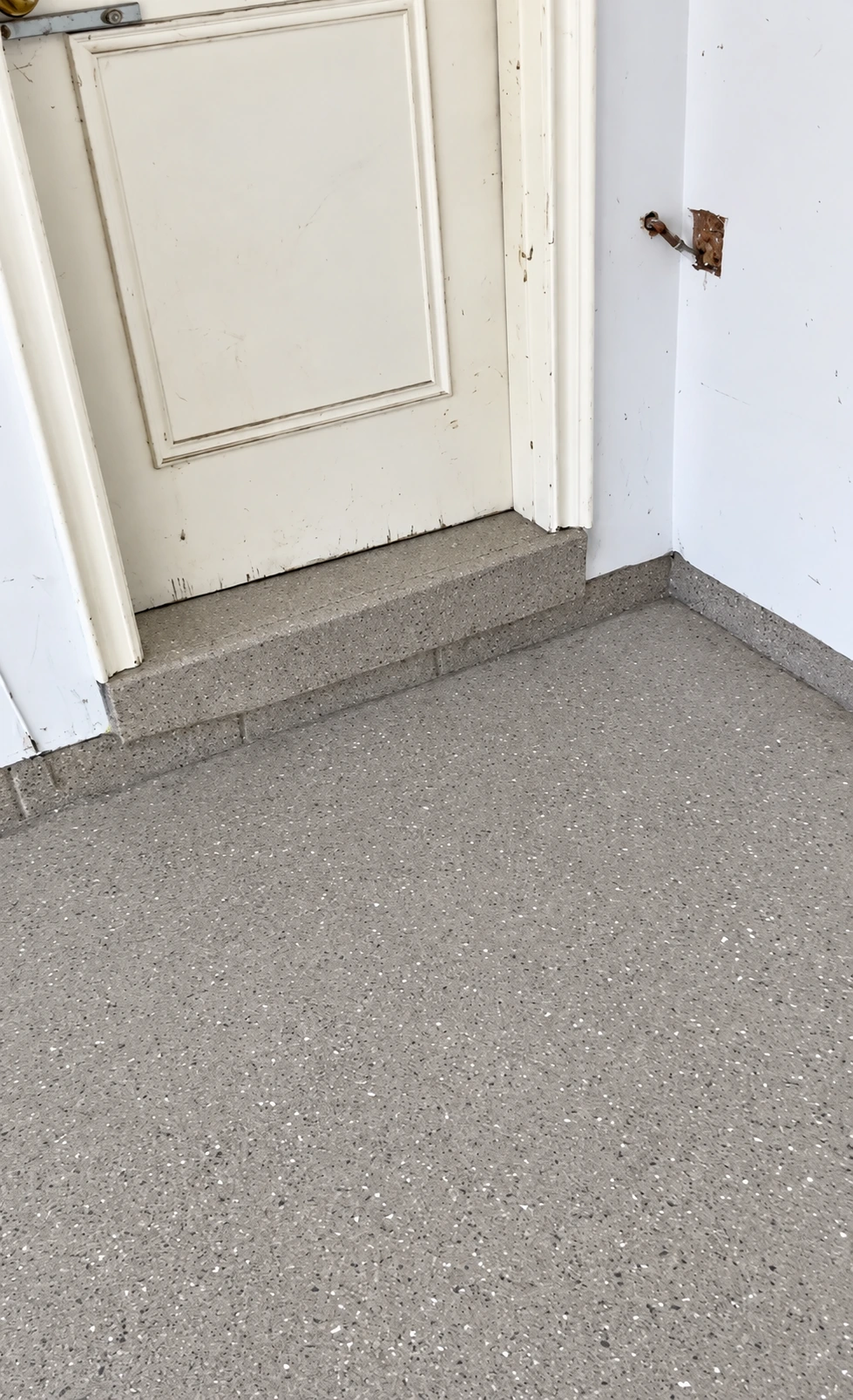
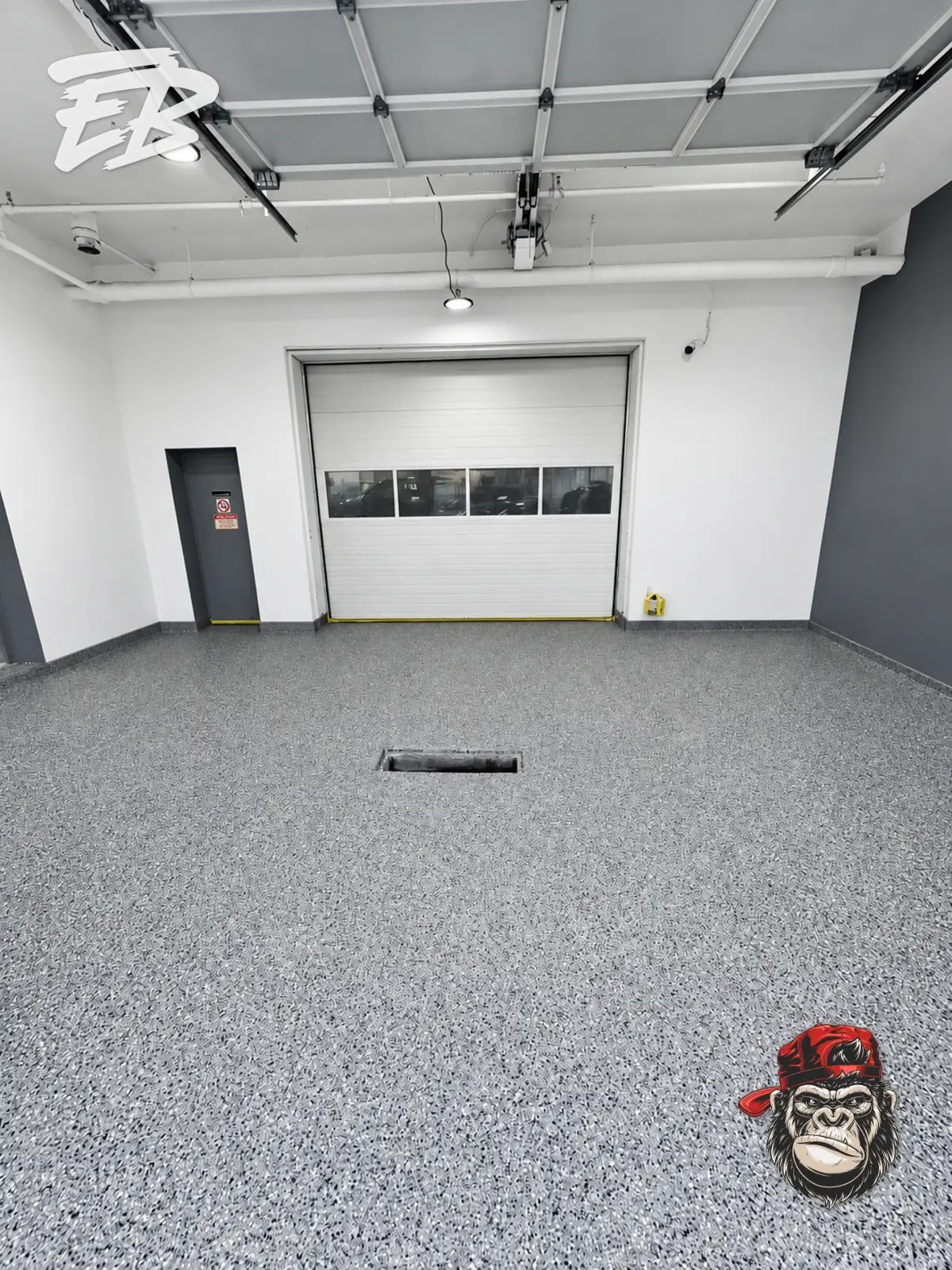
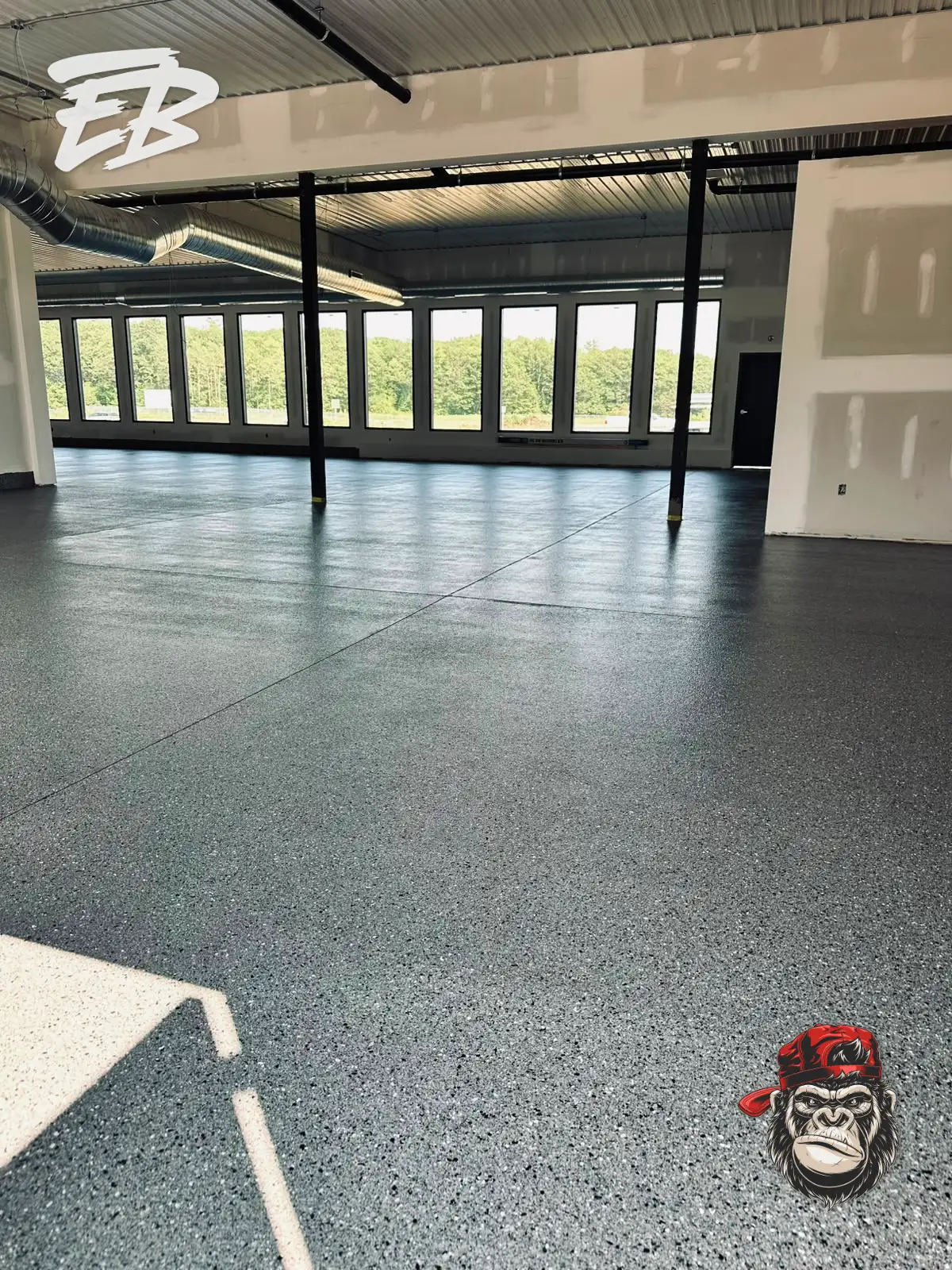
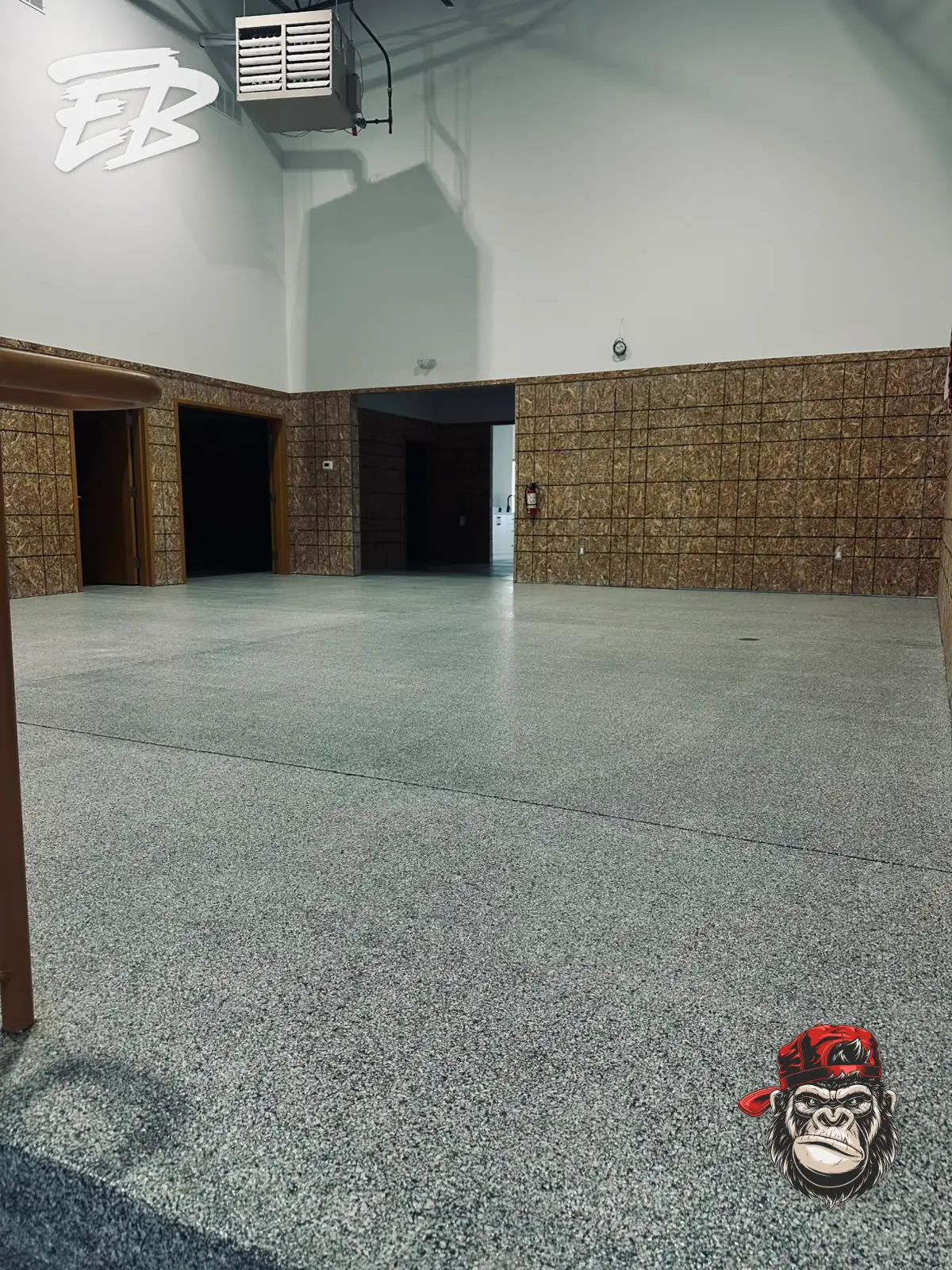
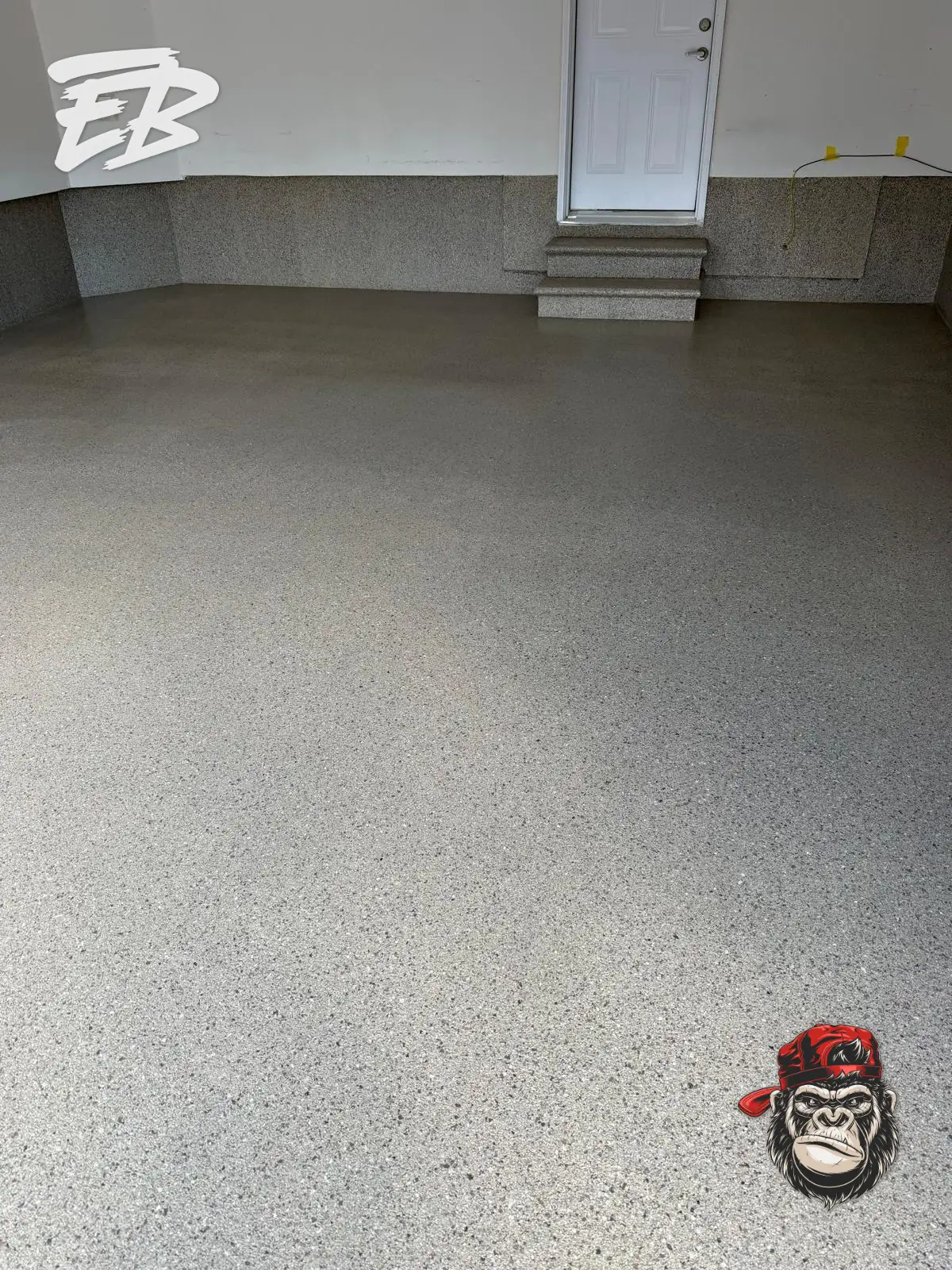
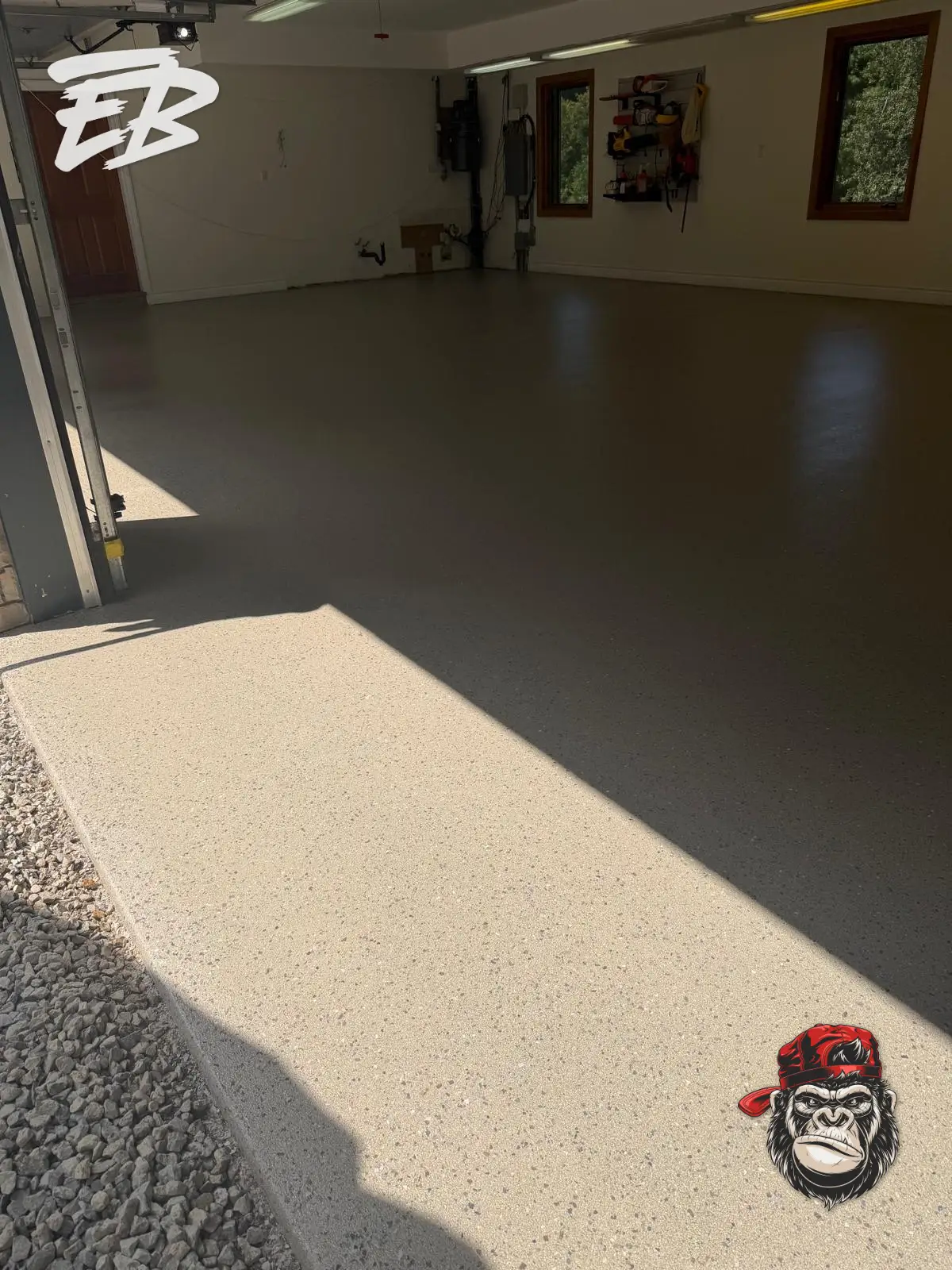
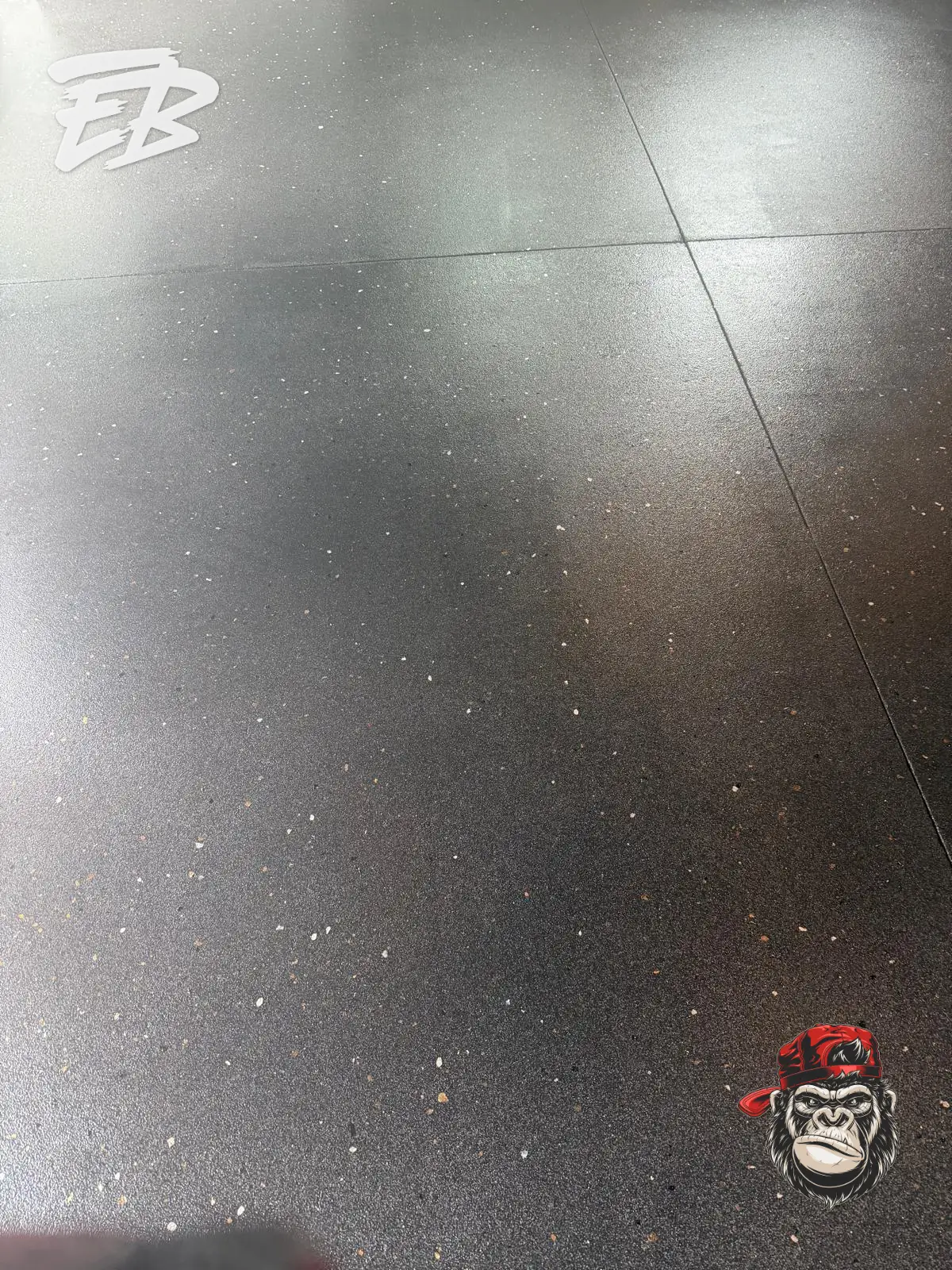
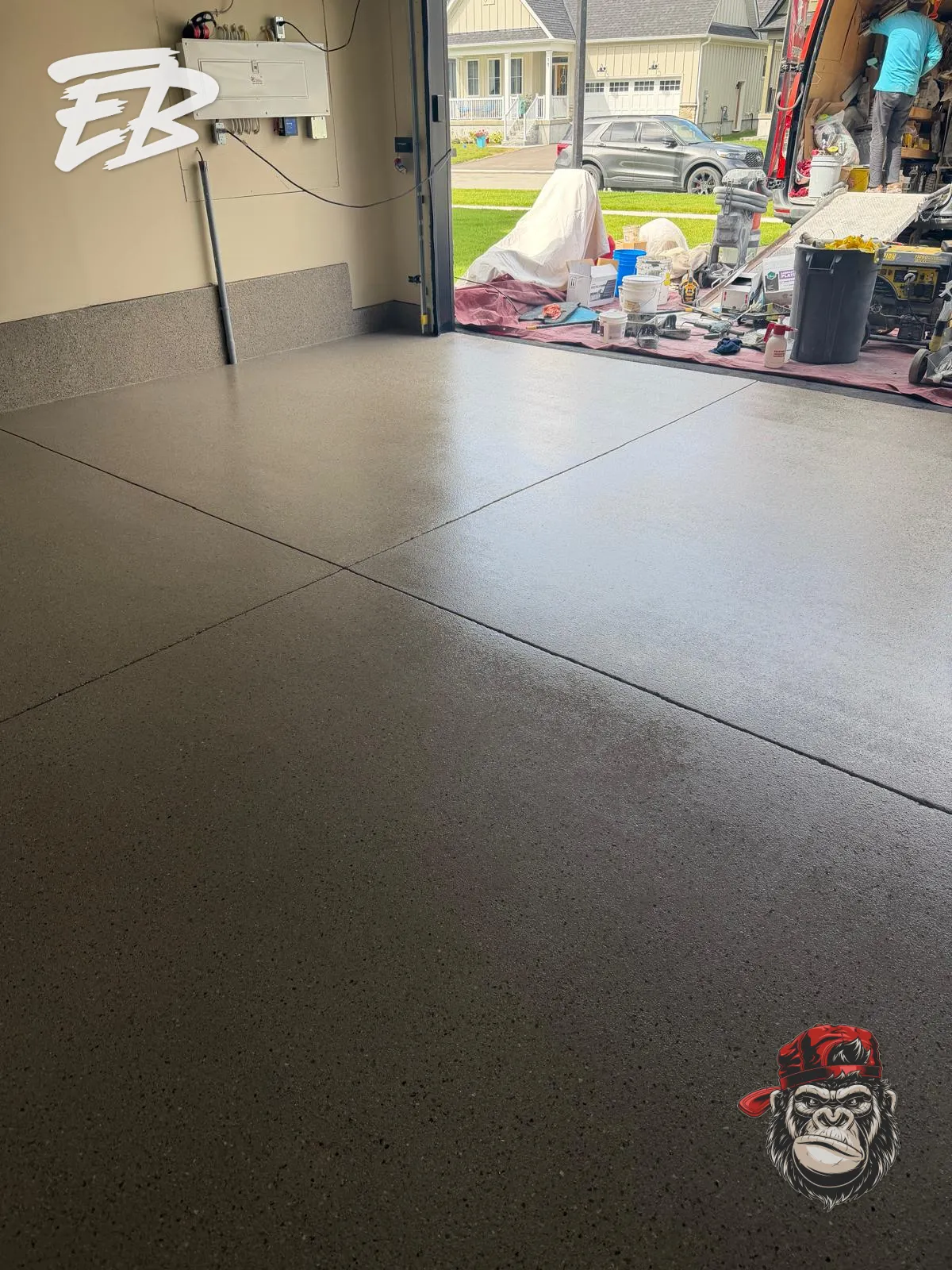
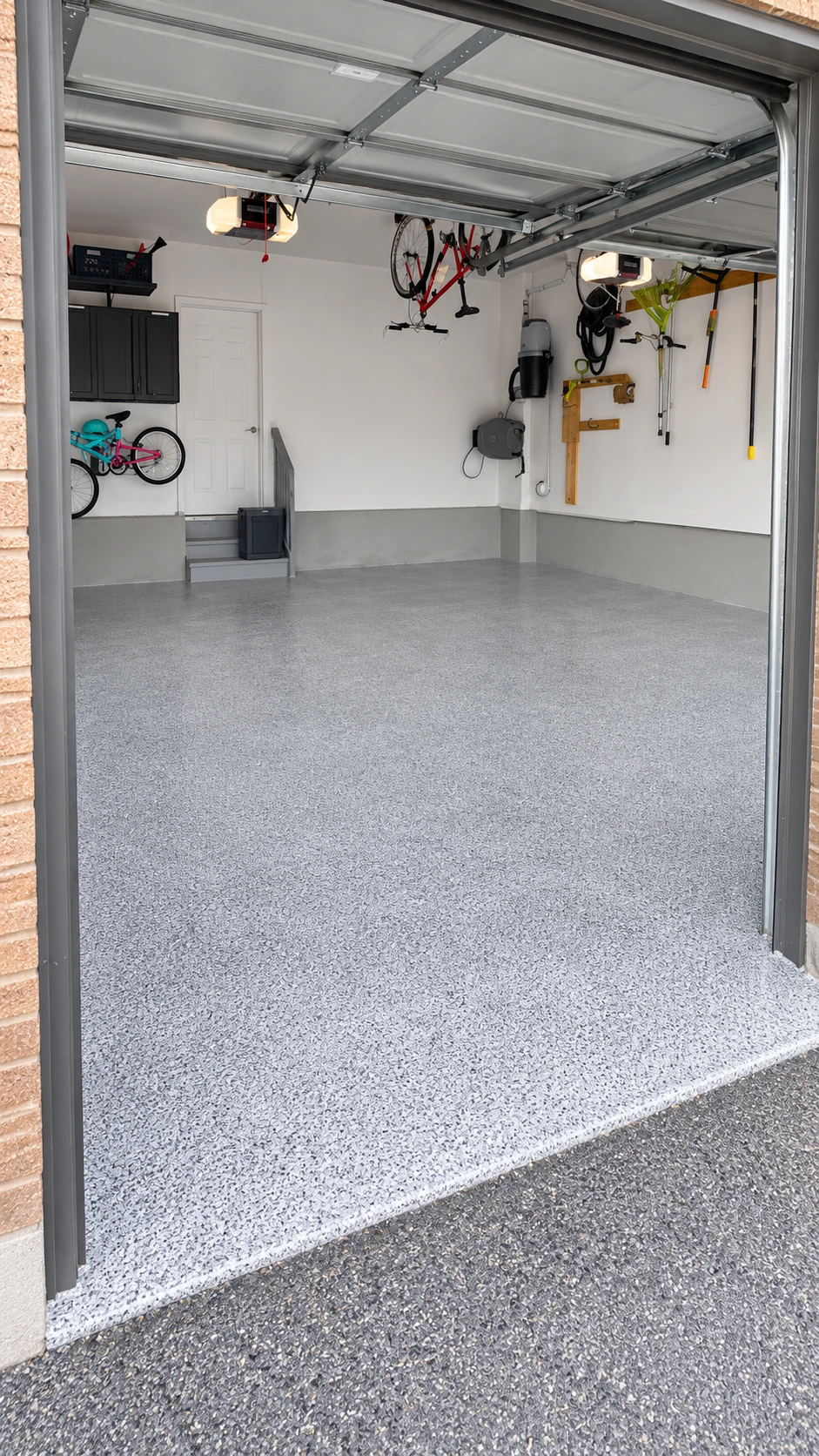
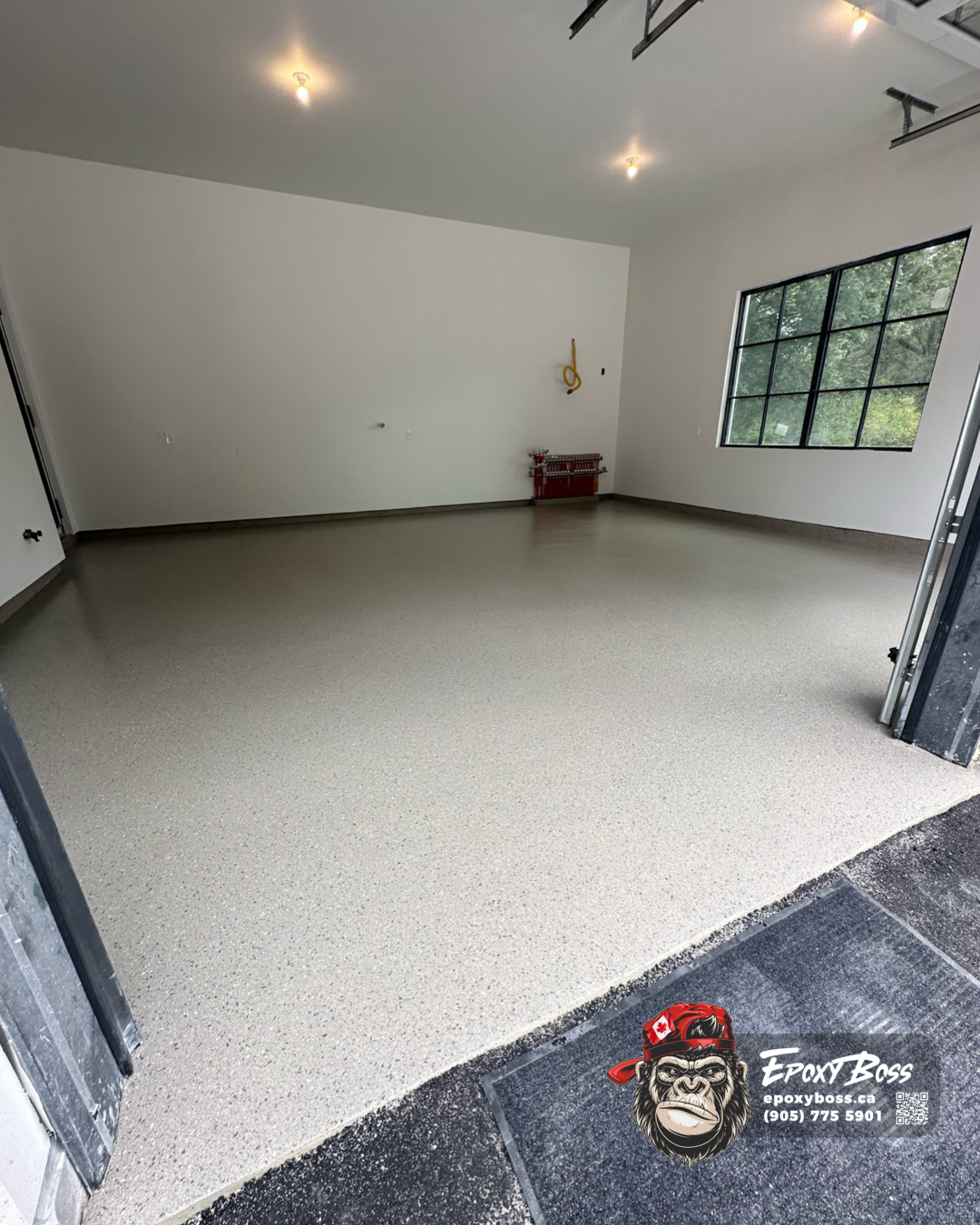
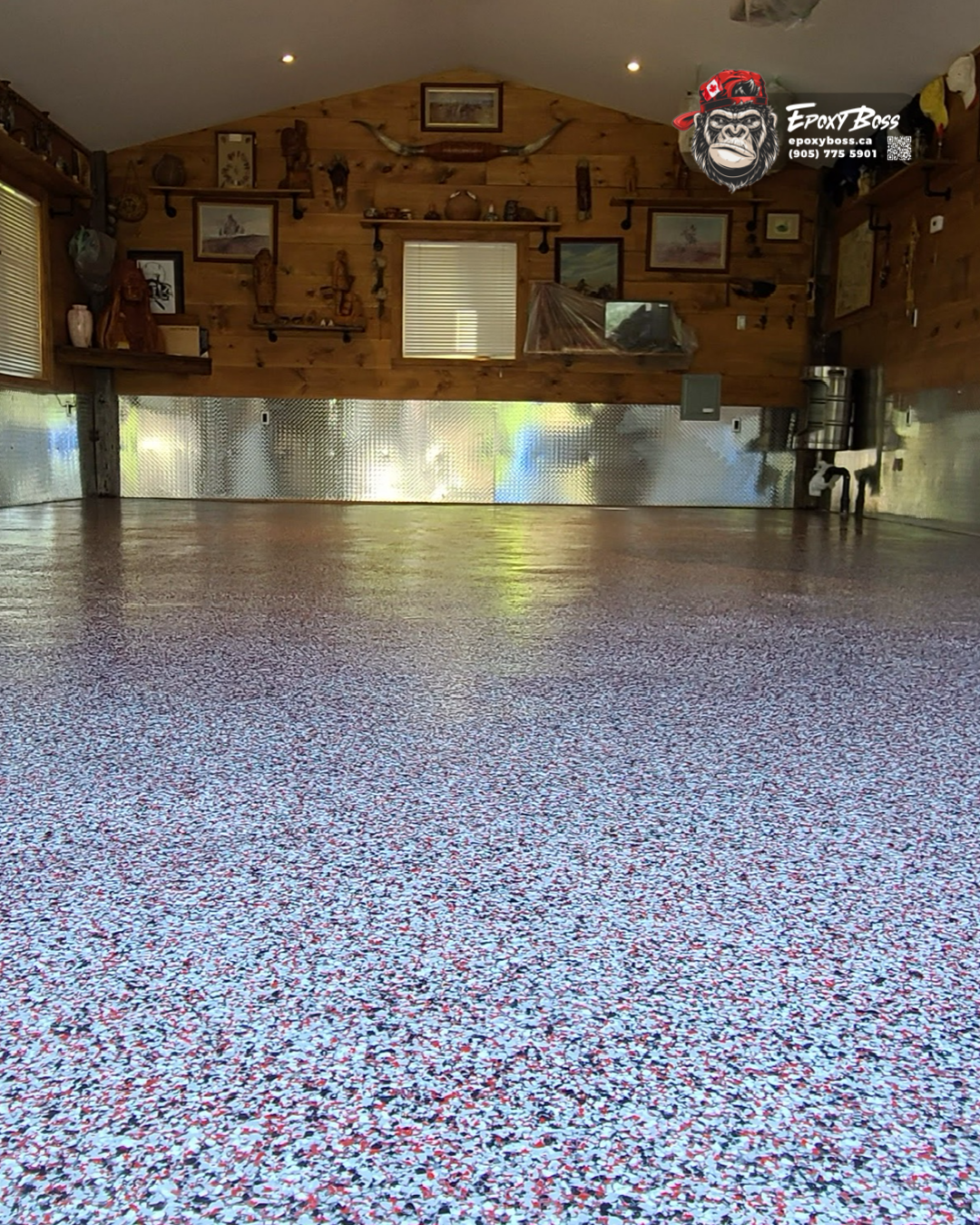
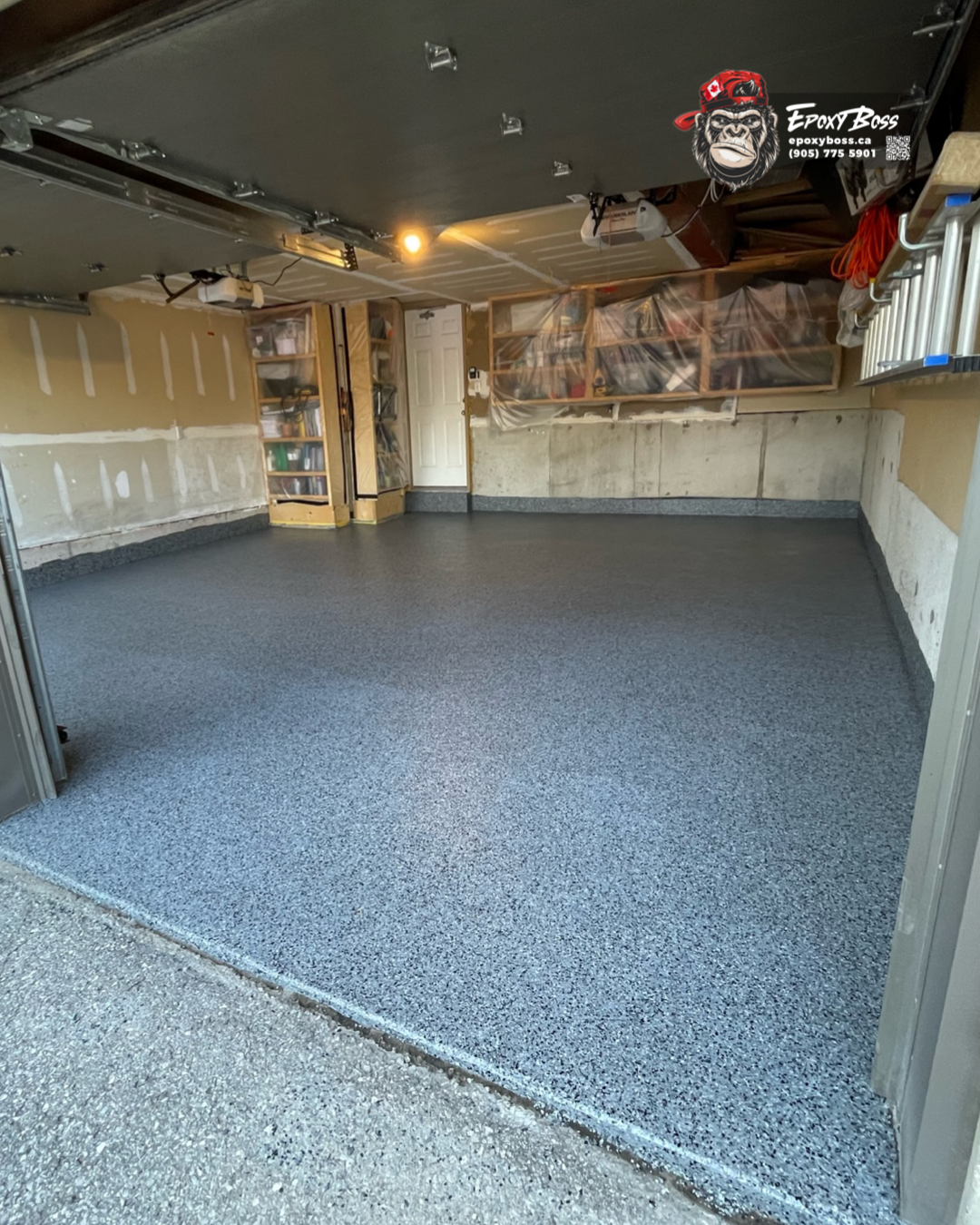
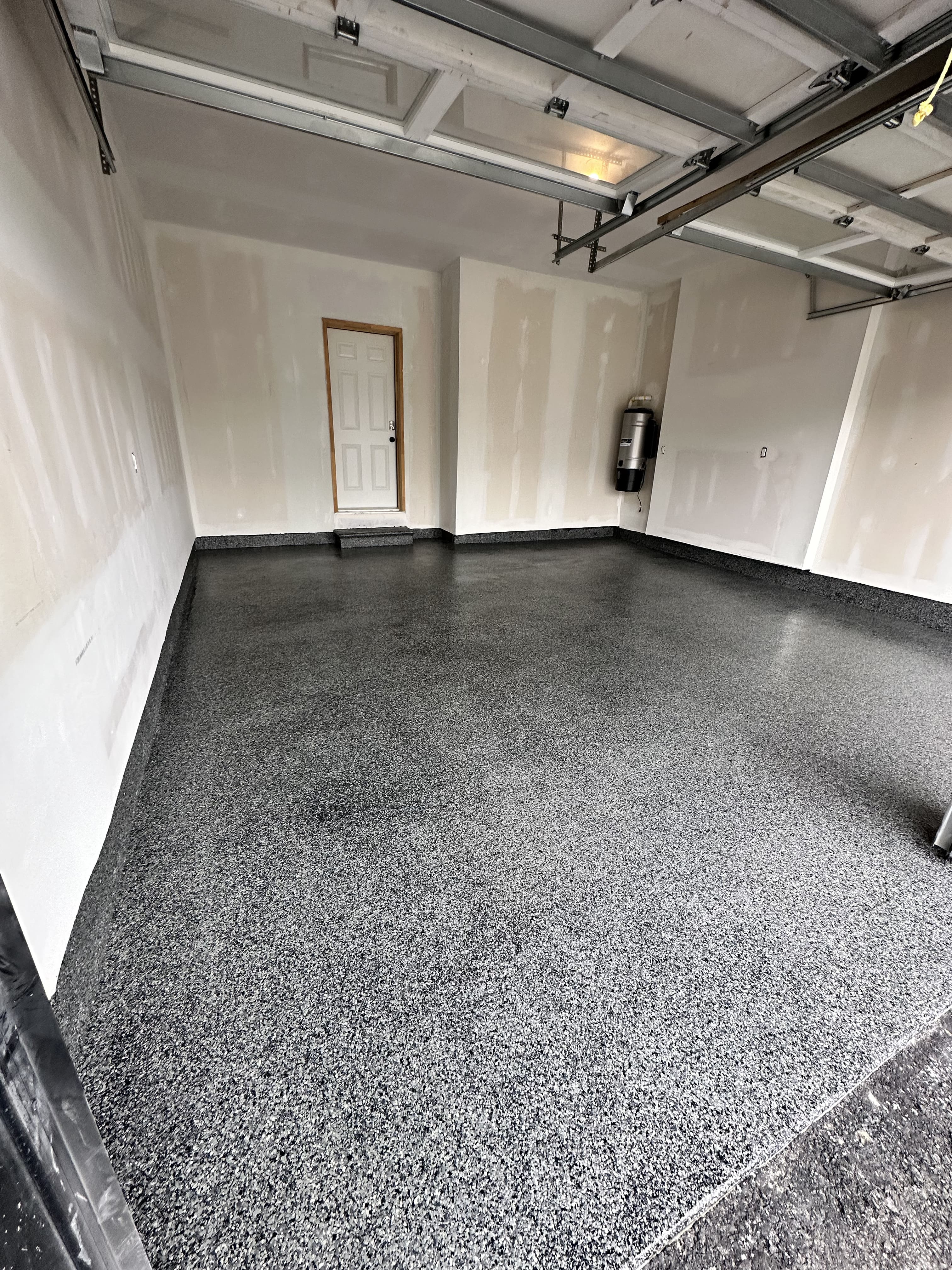
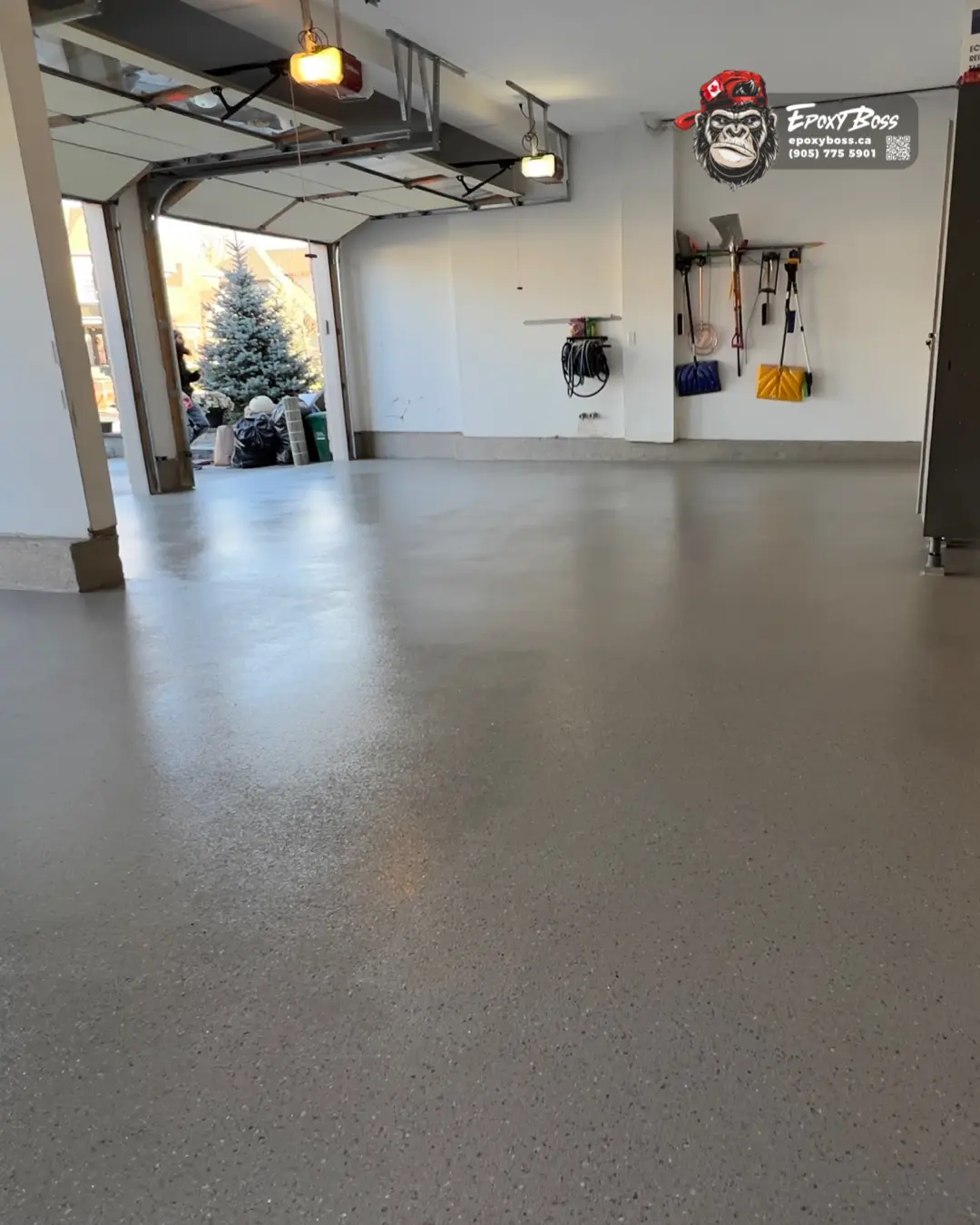
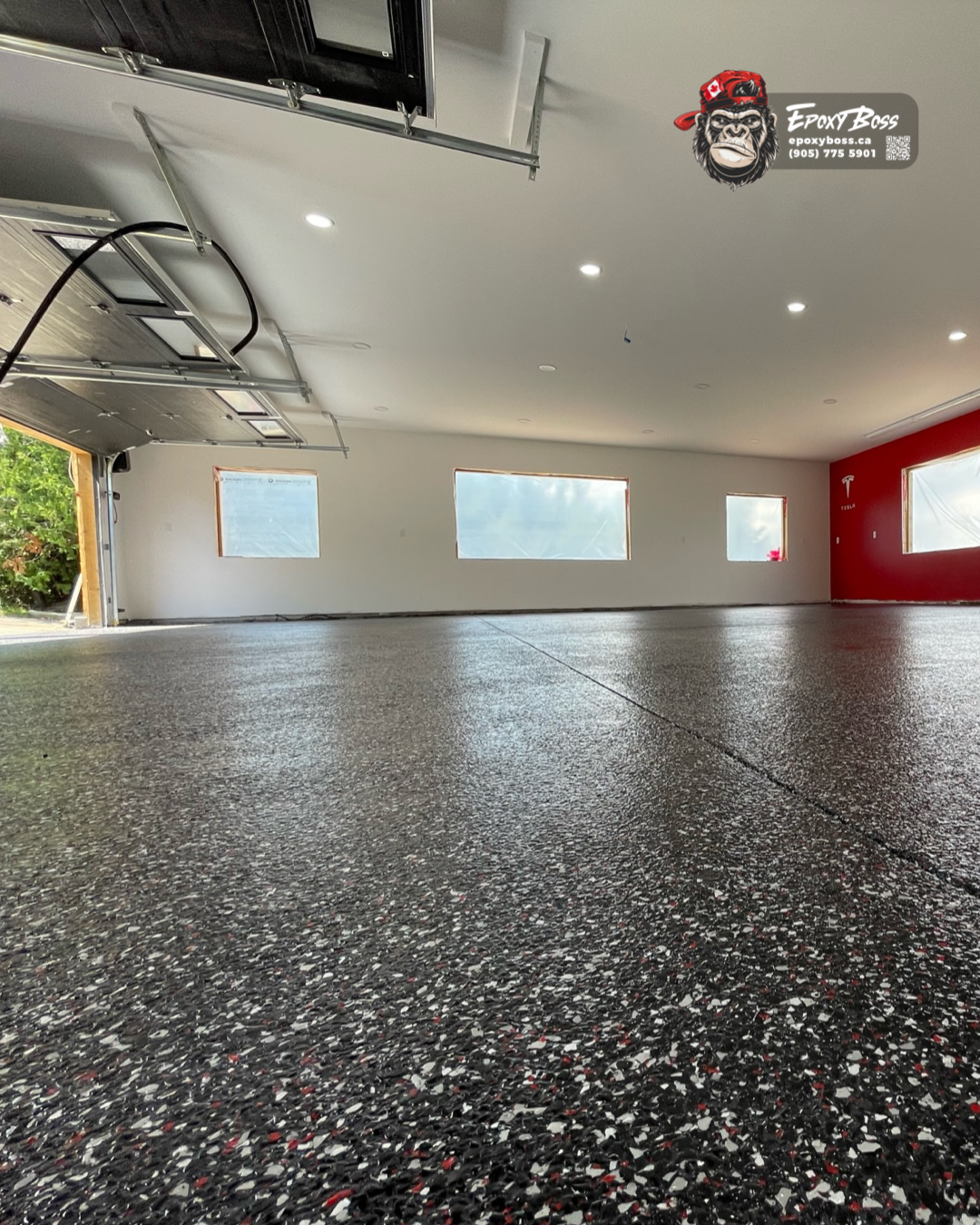
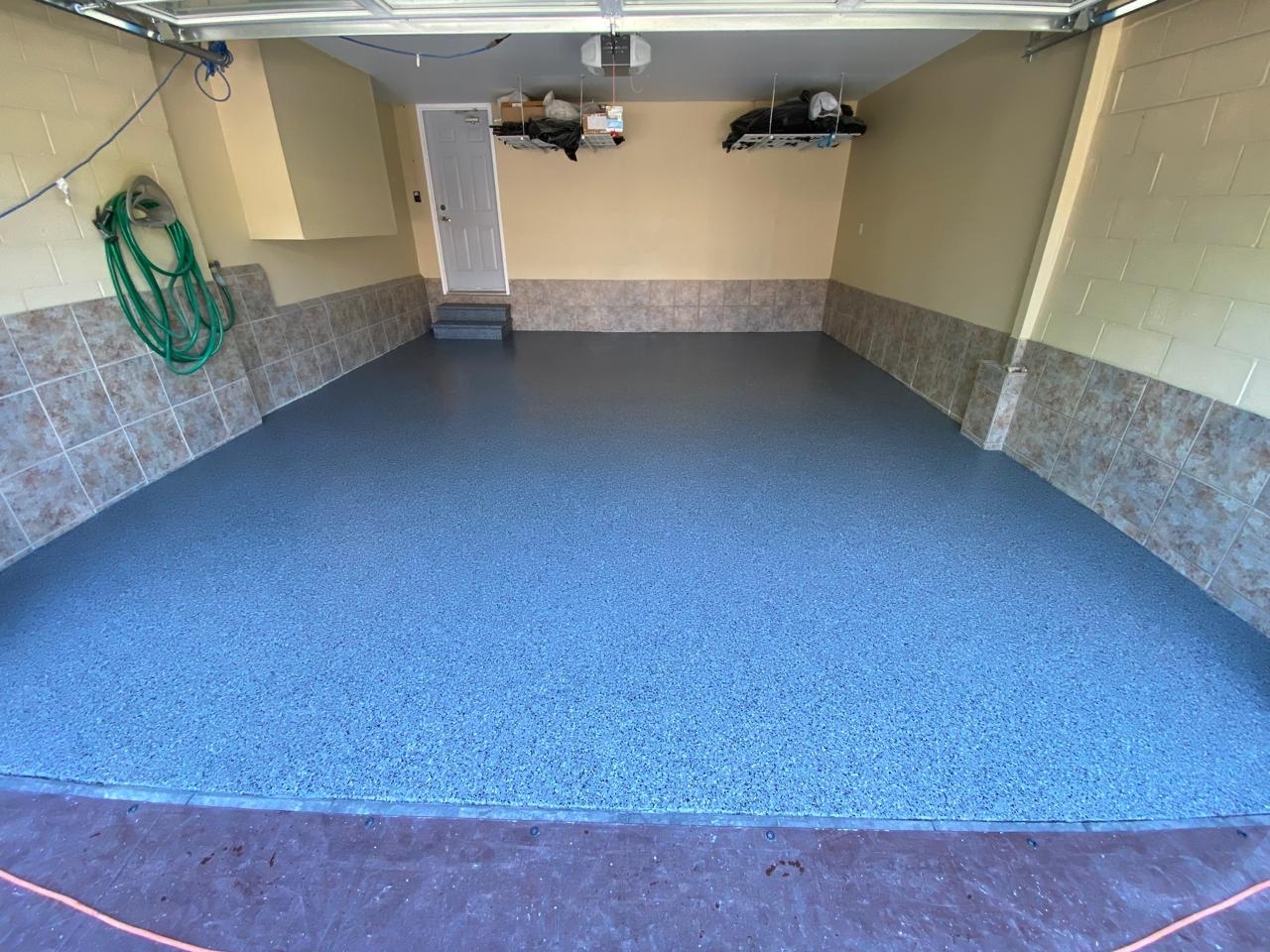
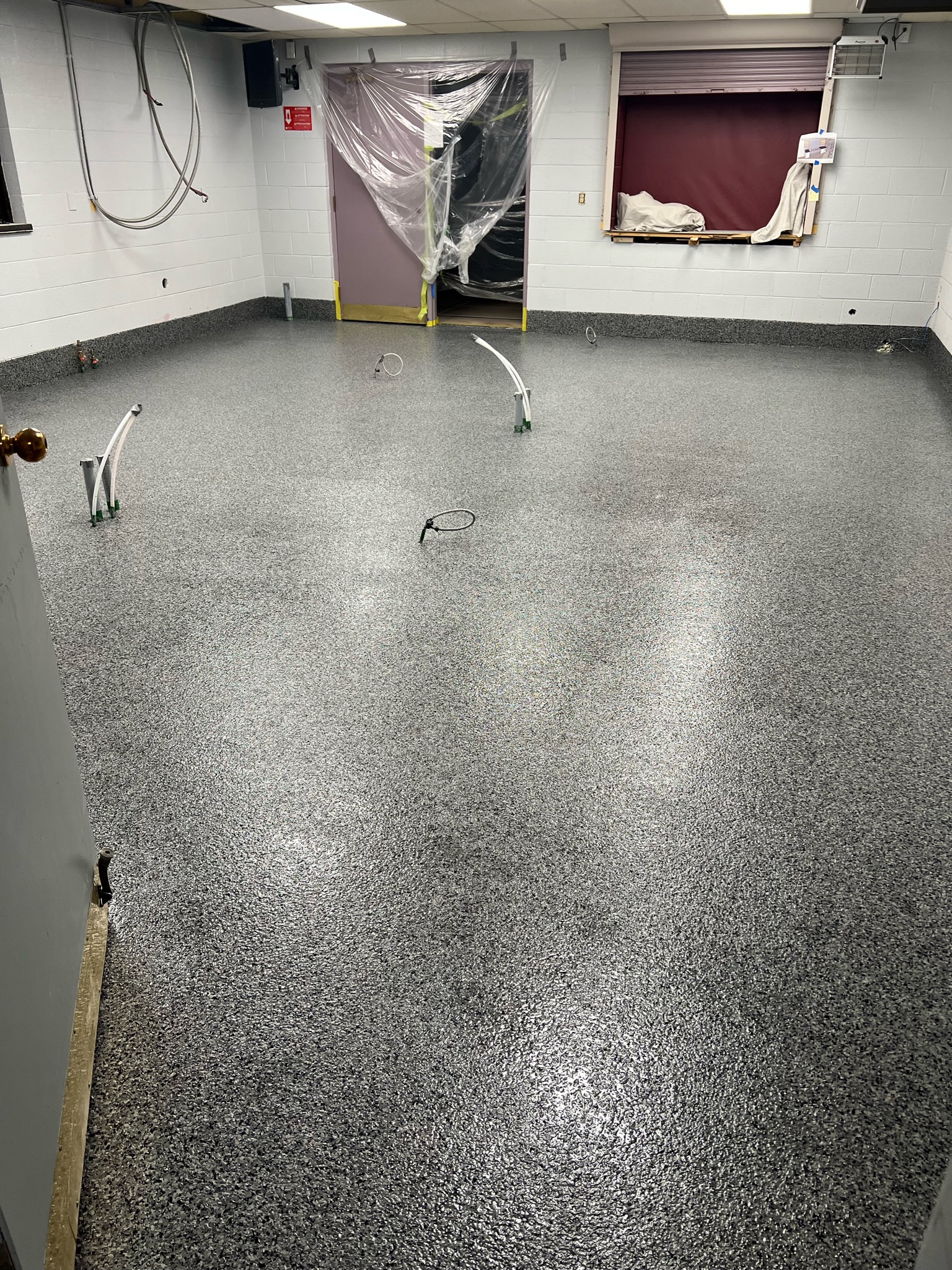
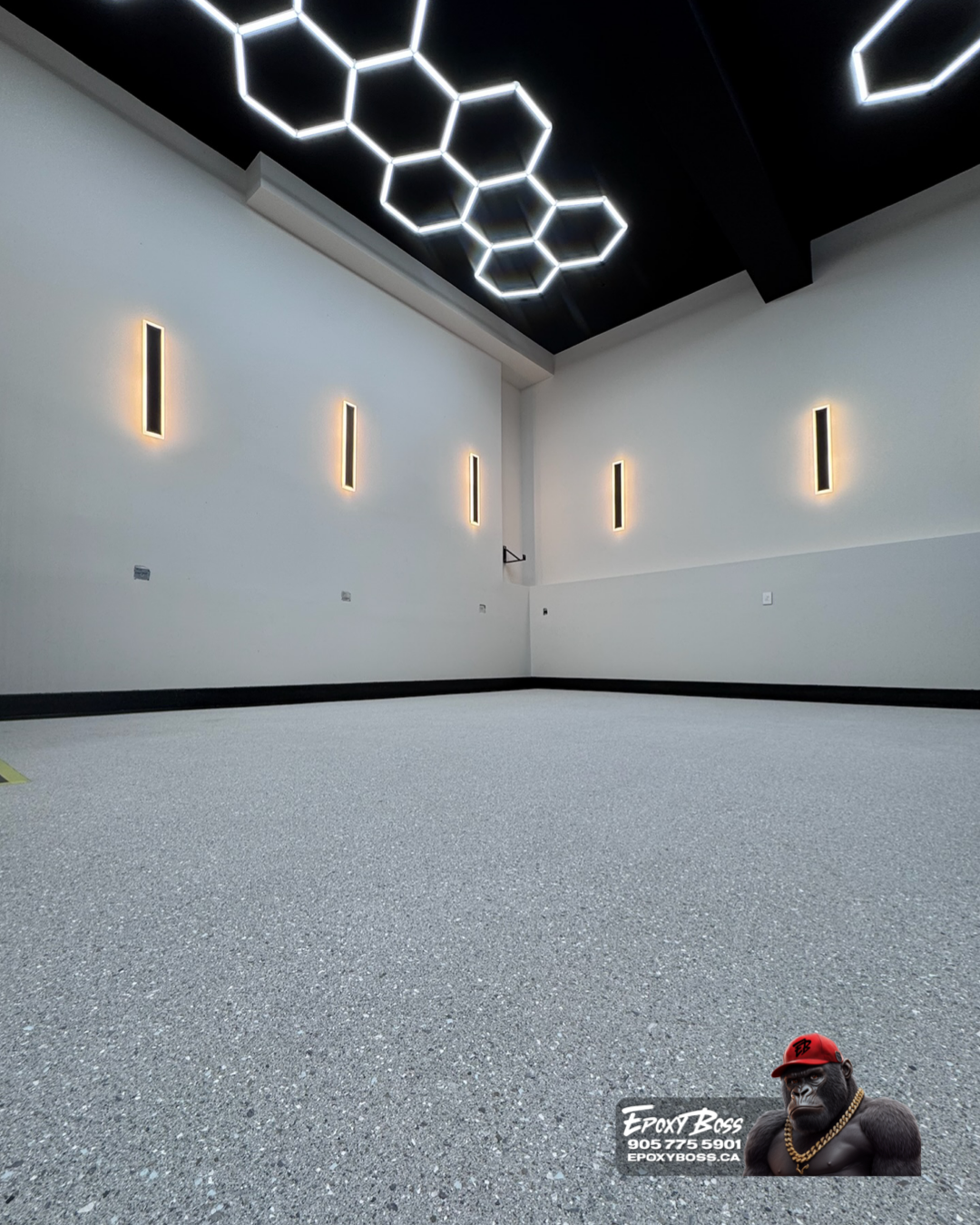
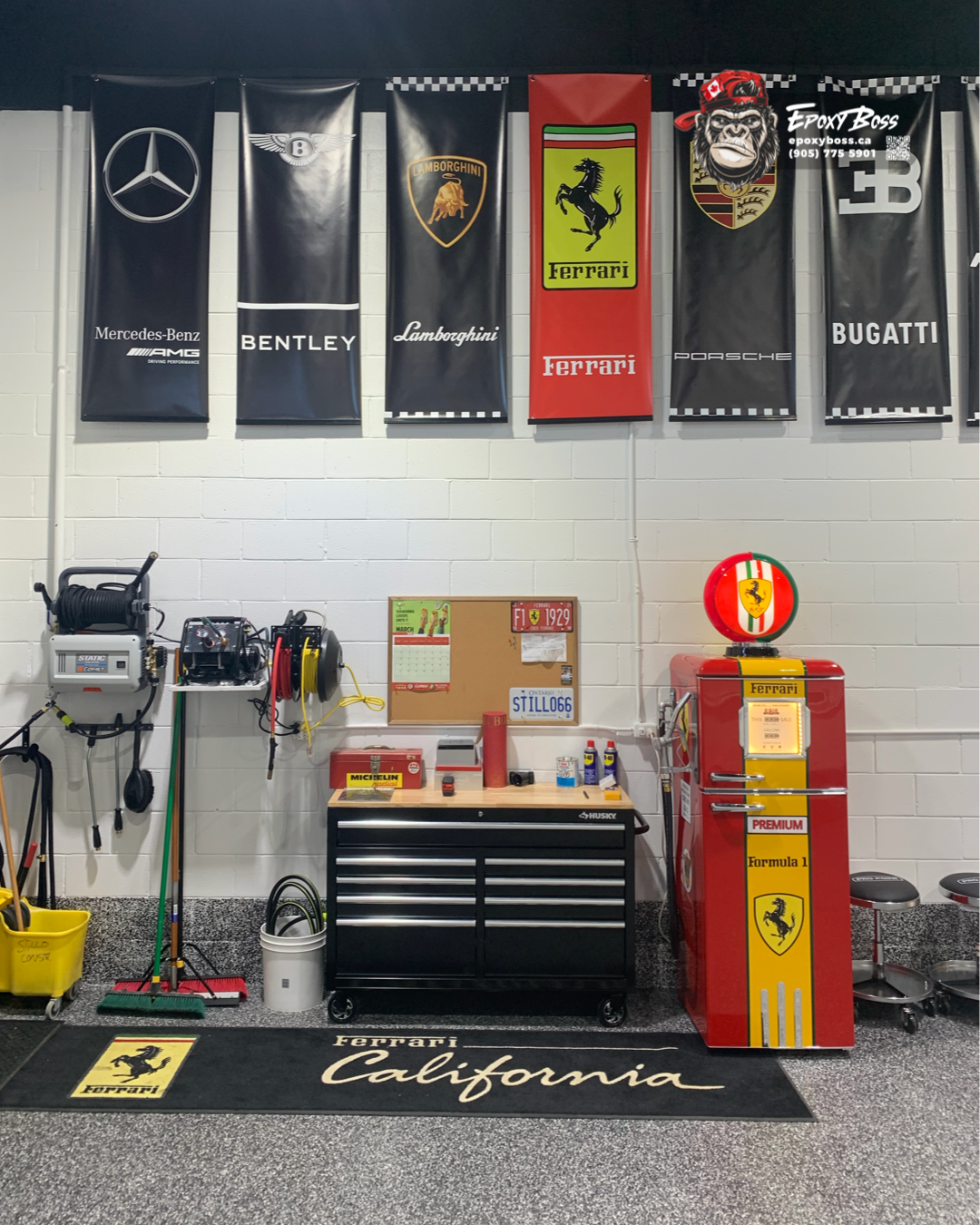
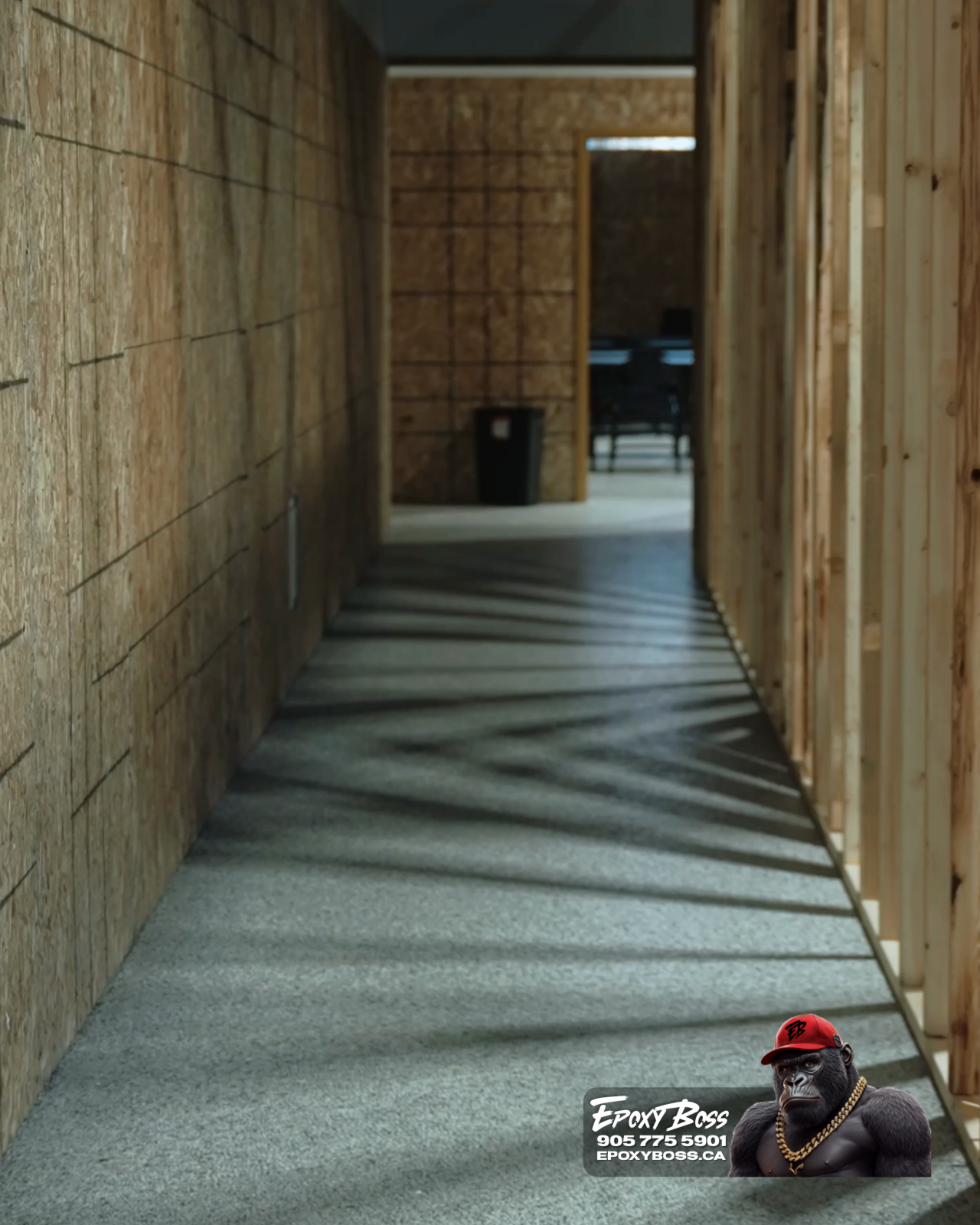
The final system depends on the slab and the homeowner’s priorities. For many garages, a full-broadcast flake system is a practical option because it creates a textured, decorative finish that is easier to maintain than bare concrete and helps visually manage ordinary dust and wear. A typical garage system may include:
1. Diamond-ground concrete preparation
The floor is mechanically prepared to remove weak surface material, open the concrete profile, and create a clean substrate for the coating system.
2. Crack and surface repair
Cracks, small spalls, and transitions are reviewed before coating. Repair materials and methods depend on whether the issue is cosmetic, stable, moving, deep, or connected to a joint.
3. Compatible primer or base layer
The first resin layer is selected around the concrete condition and the specified system. This is not a universal step with one product for every garage.
4. Full-broadcast decorative flake
Vinyl flake is broadcast into the receiving coat to create colour variation, texture, and a more forgiving day-to-day garage finish.
5. Protective polyaspartic or urethane topcoat
A compatible topcoat provides the final protective layer. The choice depends on the system, expected traffic, cleaning routine, UV exposure at open doors, and required finish. Epoxy provides a strong body layer in many garage systems. A compatible polyaspartic topcoat can provide the final protective finish. The system works as a complete assembly: preparation, repair, resin layers, decorative finish, and topcoat.
Can road-salt damage be repaired before coating?
Often, yes - but the scope depends on how deep the deterioration has gone. Light dusting, minor pits, and isolated surface defects may be addressed through mechanical preparation and compatible repair before coating. More extensive scaling, loose concrete, major spalls, moisture-related issues, or movement at cracks and joints may require a broader restoration scope. A coating should not be used to bridge over unsound concrete. It should be installed after the damaged material has been identified and properly addressed. That is also why two garages with the same square footage can require different scopes. One may need standard preparation and a flake system. Another may need additional grinding, crack repair, moisture mitigation, removal of an old coating, or correction of deteriorated areas before the system can be installed.
How to reduce salt exposure on a bare or coated garage floor
A protective floor system helps simplify maintenance, but it does not eliminate the value of basic winter care. During winter:
- Remove accumulated slush instead of allowing it to sit for days.
- Sweep road grit regularly to reduce abrasion.
- Use mats cautiously; trapped moisture below a mat can still affect the floor if it remains wet for extended periods.
- Rinse or clean salt residue using the maintenance method appropriate for the floor system.
- Avoid aggressive cleaners or chemicals unless they are approved for the installed finish.
- Watch tire paths, cracks, and low areas for changes after winter.
If the garage is currently bare concrete, this maintenance can slow surface wear. If the floor is coated, it helps preserve the intended finish and makes it easier to identify any developing issue early.
Is a garage floor coating worth it in Innisfil?
For a homeowner who uses the garage for parking, storage, hobbies, or a workshop, a professionally specified system can make the space cleaner, easier to maintain, and better protected from the repeated exposure common in Ontario winters. The value is not only visual. It is in creating a protective, maintainable surface after the concrete has been properly assessed and prepared. The right question is not, “Which coating is fastest?” The right questions are:
- Is the concrete sound enough to coat?
- What repairs are required first?
- Is moisture a concern?
- Will the system suit salt, tire traffic, cleaning, and the way the garage is used?
- What preparation is included in the scope?
For a garage floor coating in Innisfil, these questions determine whether the finished floor is a practical long-term improvement or simply a temporary cosmetic layer.
Frequently asked questions
Does road salt permanently damage garage concrete?
Not always. Salt residue can be cleaned, and sound concrete can tolerate normal winter exposure. Damage becomes more likely when the slab has a weak or porous surface and is repeatedly exposed to salt, moisture, freeze-thaw conditions, and traffic.
Can I coat a garage floor that has white salt marks?
Possibly, but the floor should first be assessed and mechanically prepared. White marks alone do not identify the cause or confirm that the concrete is suitable for coating.
Will a flake garage floor hide old concrete imperfections?
A full-broadcast flake finish can make minor visual variation less noticeable than a solid-colour finish. It does not replace crack repair, removal of loose concrete, or proper surface preparation.
What is the best garage floor coating for Ontario road salt?
There is no single system that fits every garage. A preparation-first resinous system with compatible layers and a protective topcoat is selected around the slab condition, traffic, cleaning routine, and exposure. The existing concrete determines the scope.
How do I get a quote for garage floor coating in Innisfil?
Send Epoxy Boss three to five clear photos of the garage, the approximate square footage, your Innisfil address or nearby area, and any details about cracks, old coatings, salt damage, or moisture concerns. That gives us a practical starting point for discussing the concrete condition, system options, expected scope, and timeline.
Request an Innisfil garage floor assessment
If your bare garage floor is showing dusting, pits, cracks, salt residue, or worn tire paths, start with the concrete—not the colour chart. Epoxy Boss Inc. provides preparation-first garage floor coating systems in Innisfil and nearby Simcoe County communities. We assess the slab, identify the preparation and repair work required, and recommend a compatible system for the way your garage is used.

.webp)

.jpeg)
.jpeg)
.jpeg)
.jpeg)
.webp)

.jpeg)
.png)
.png)