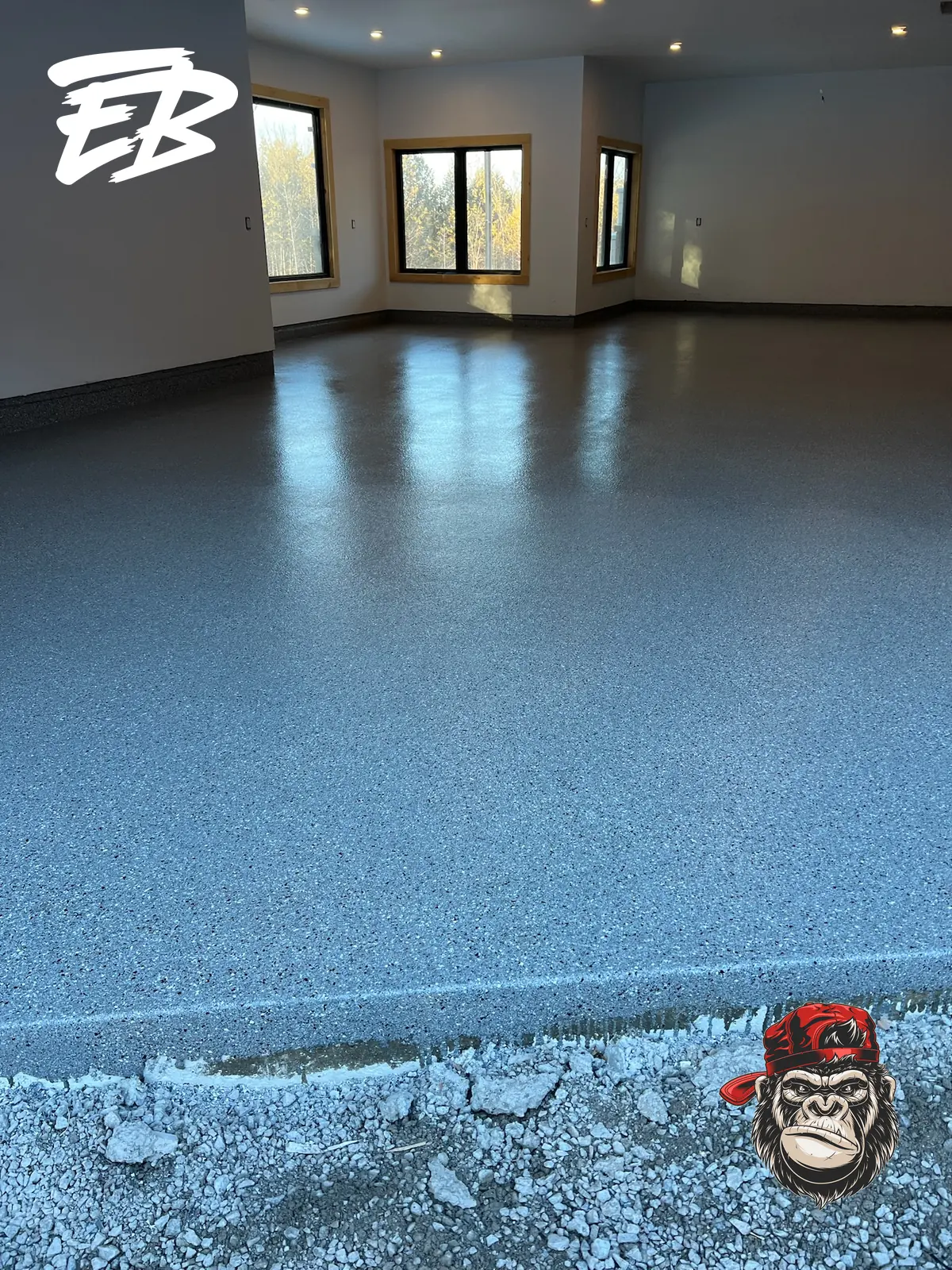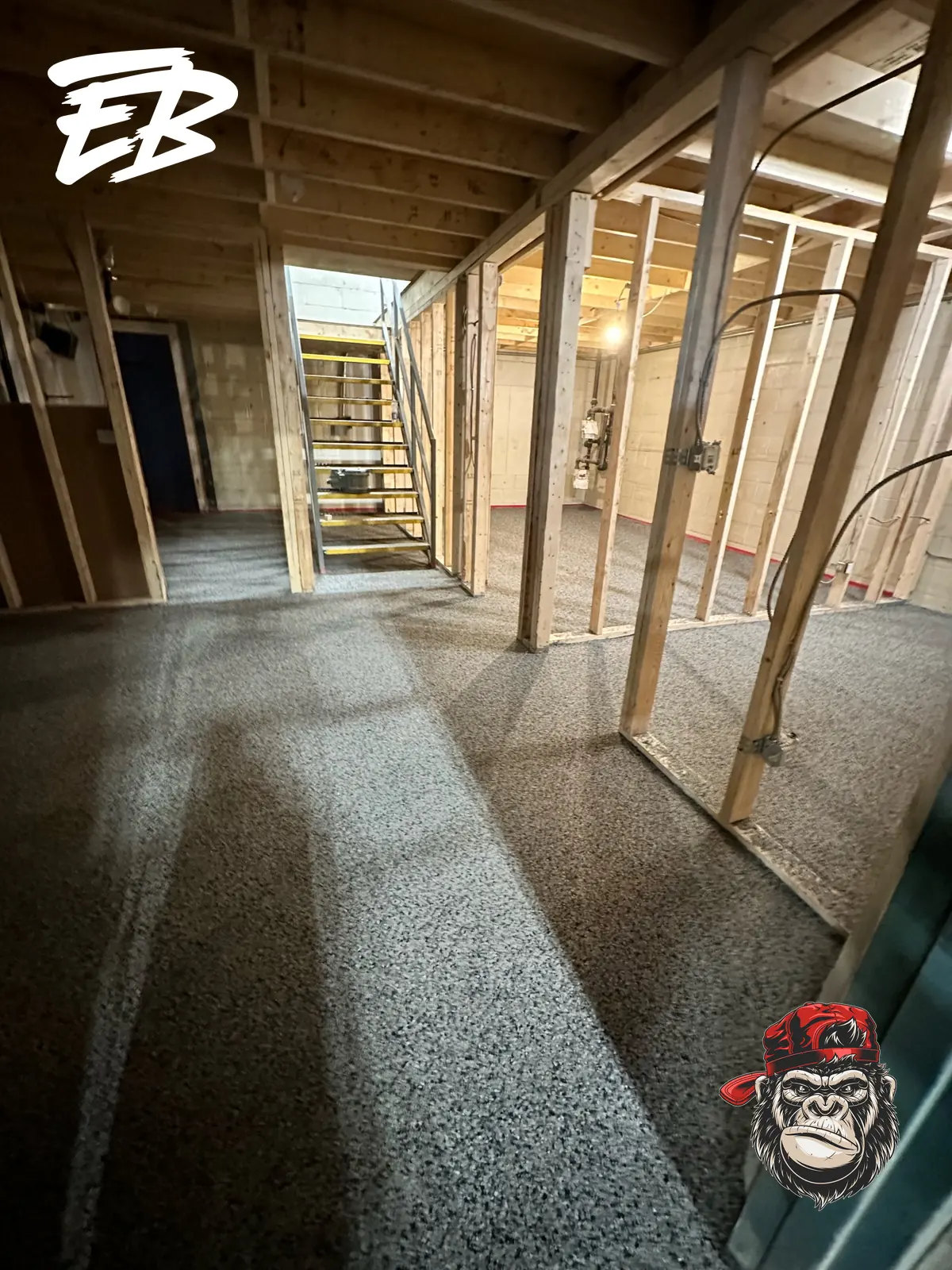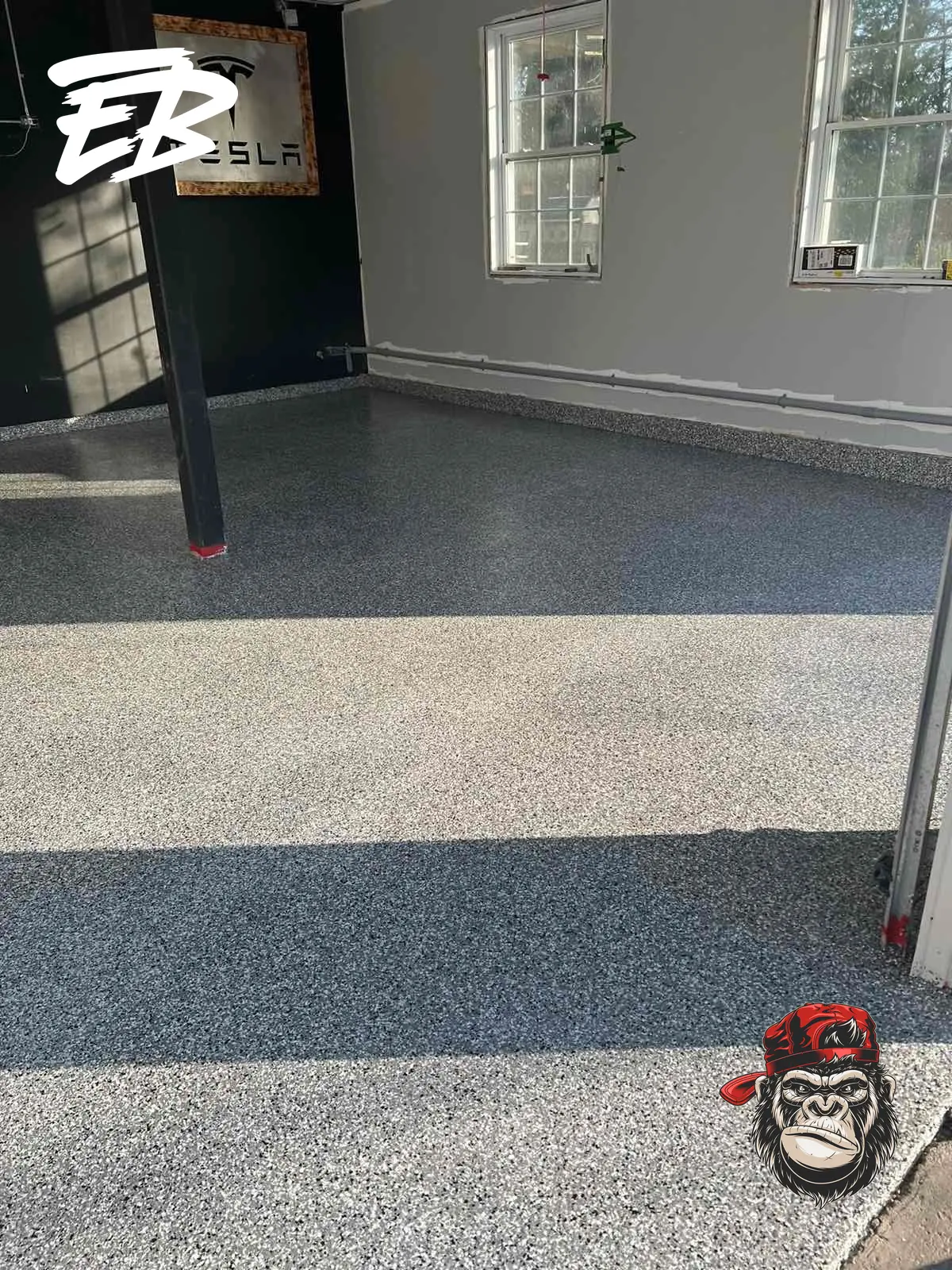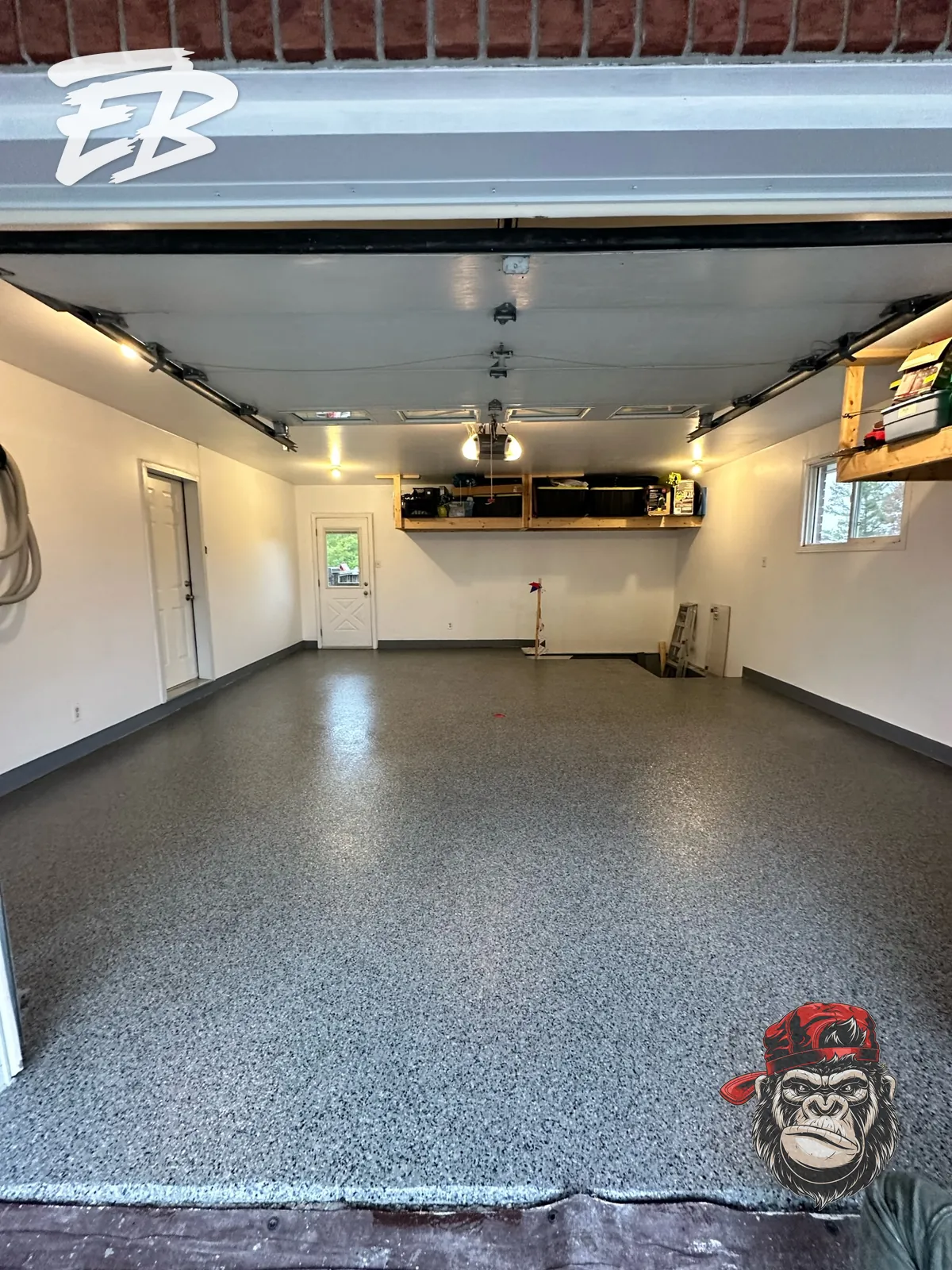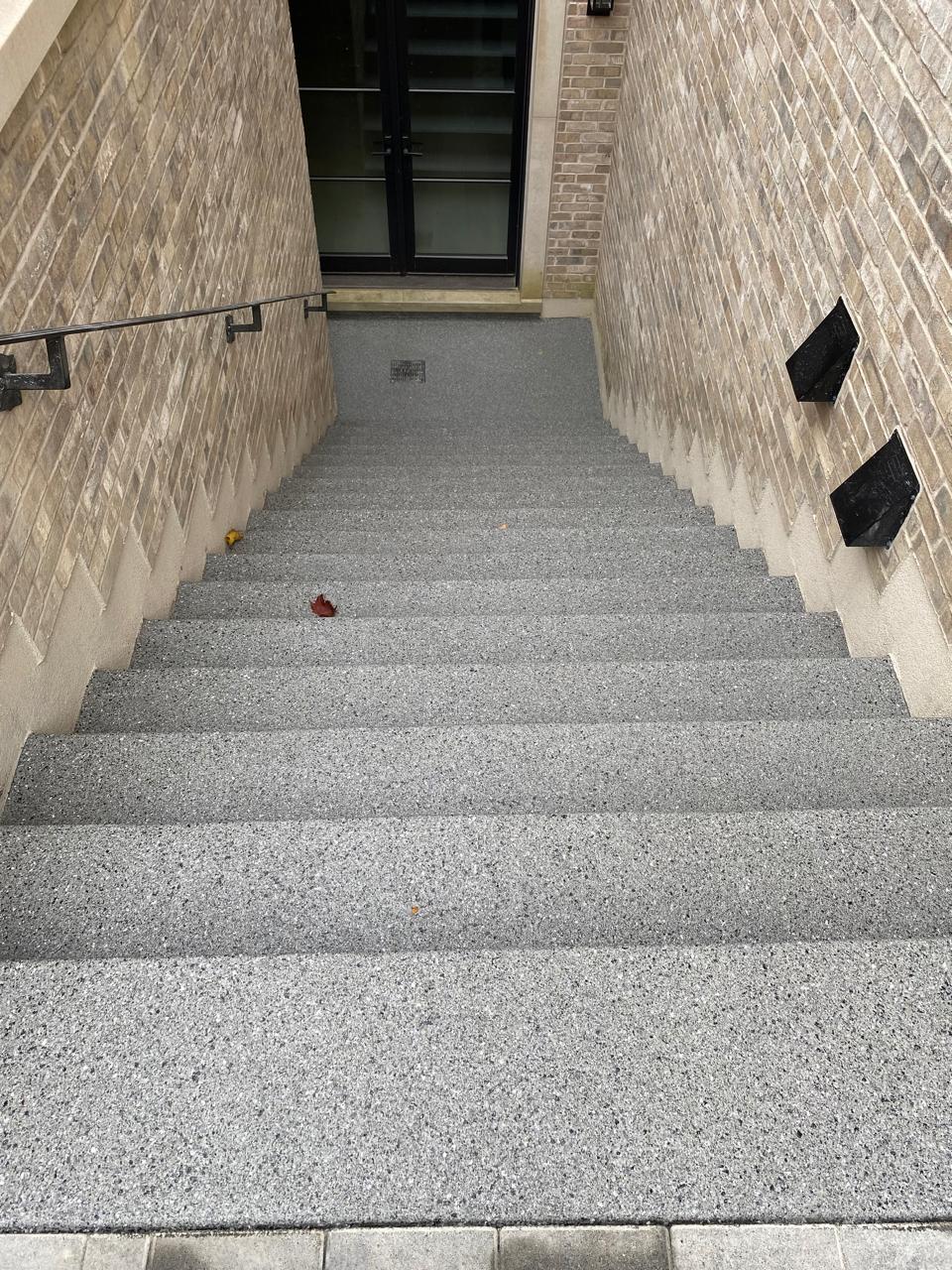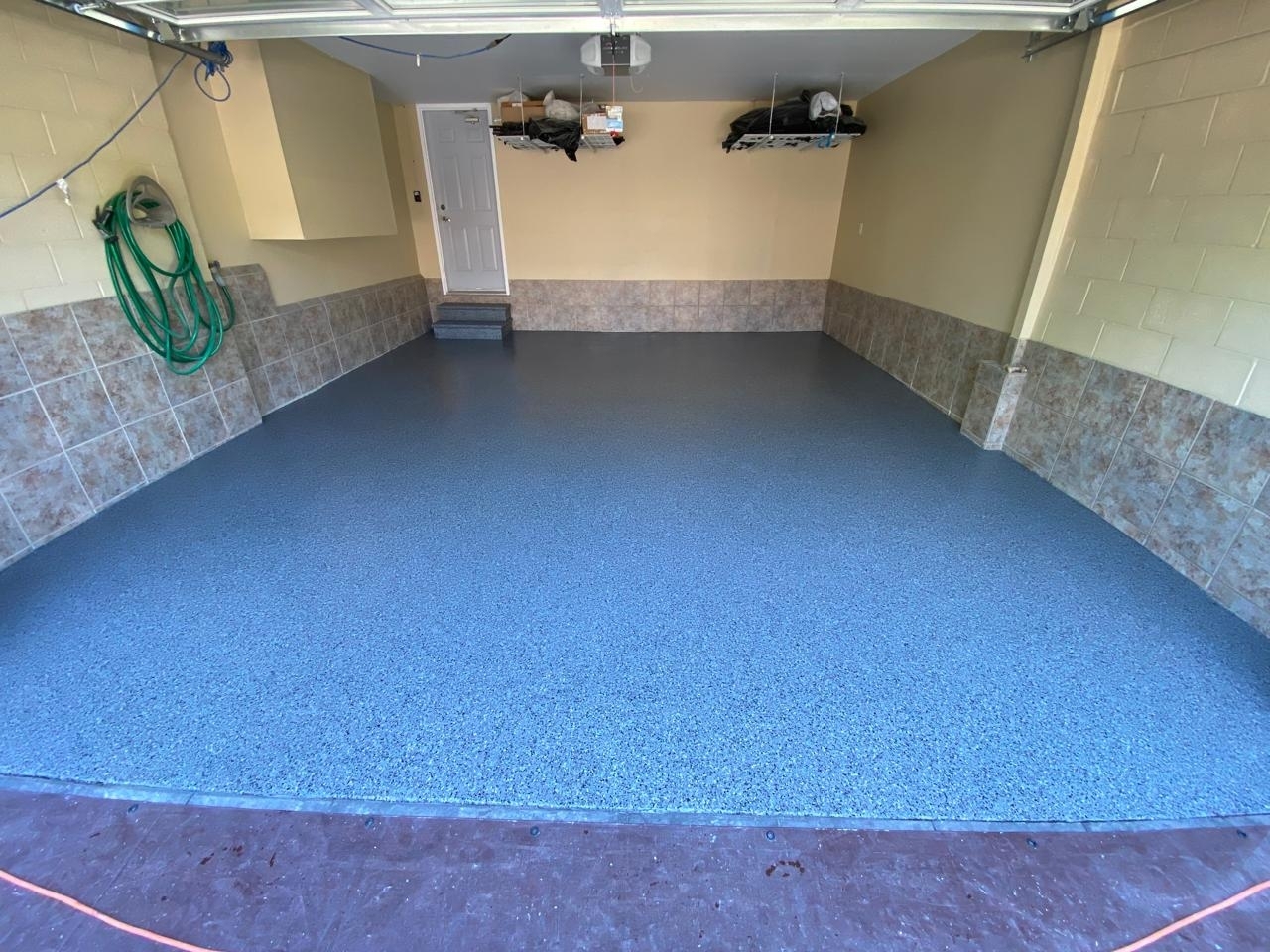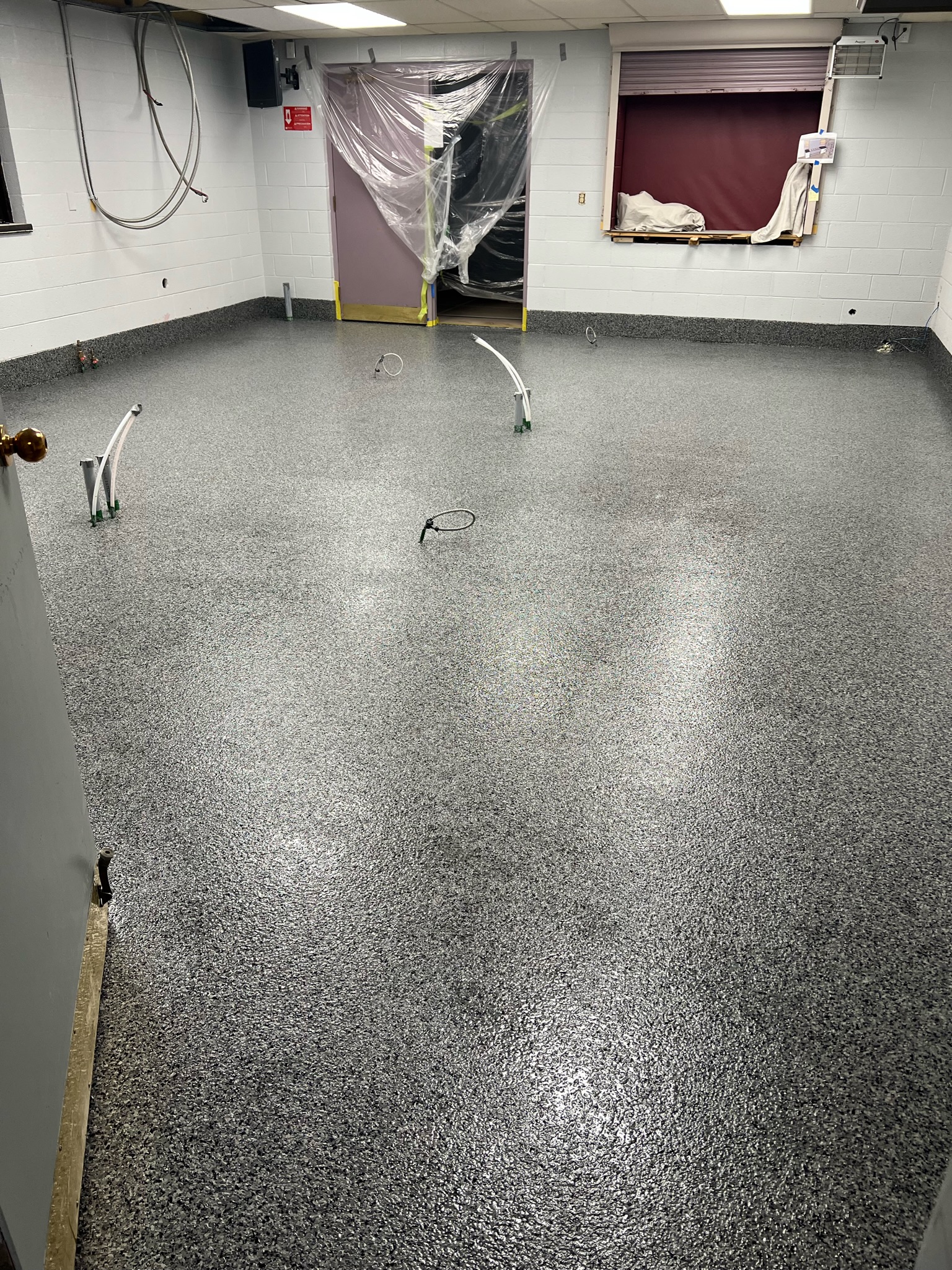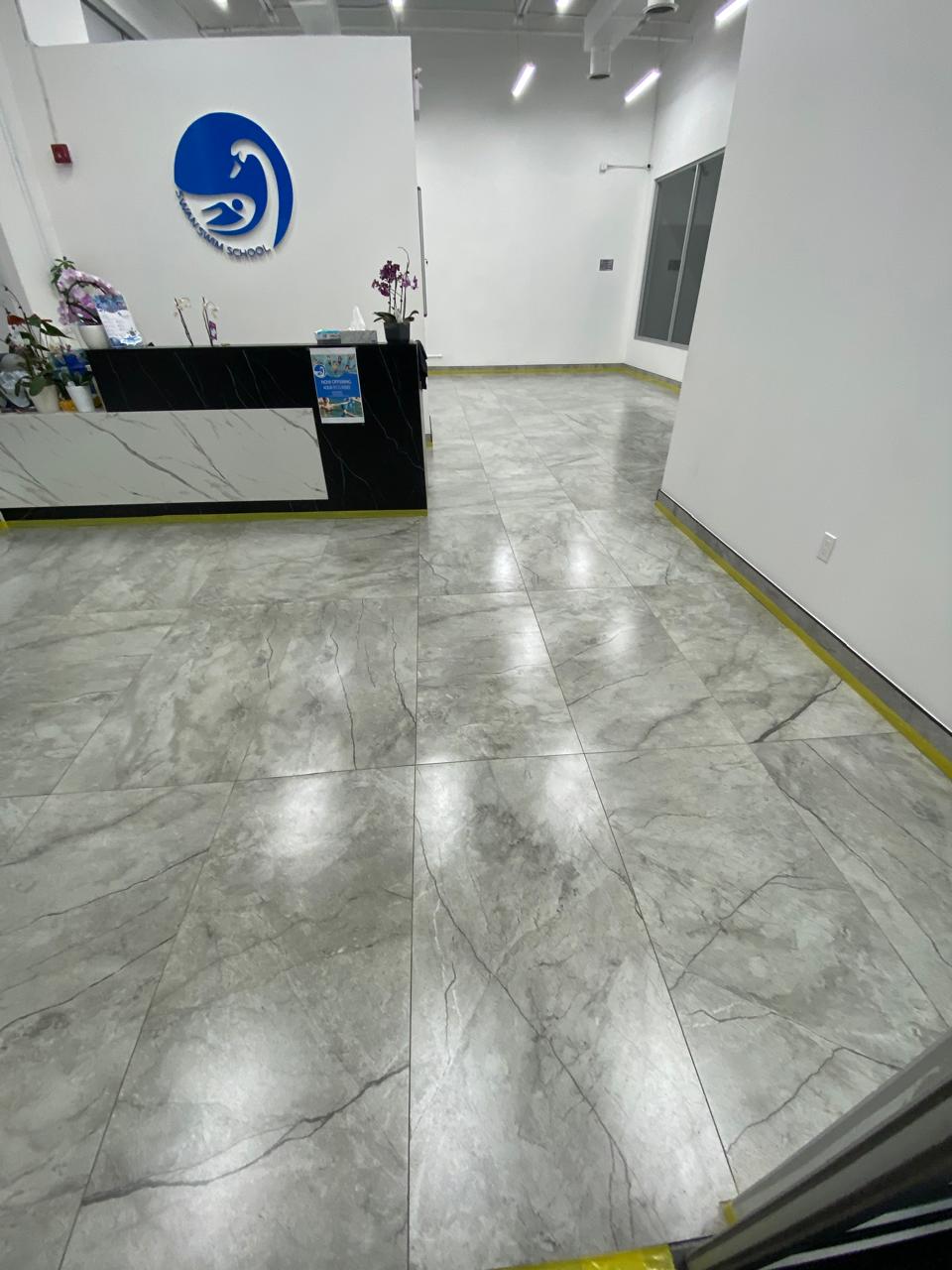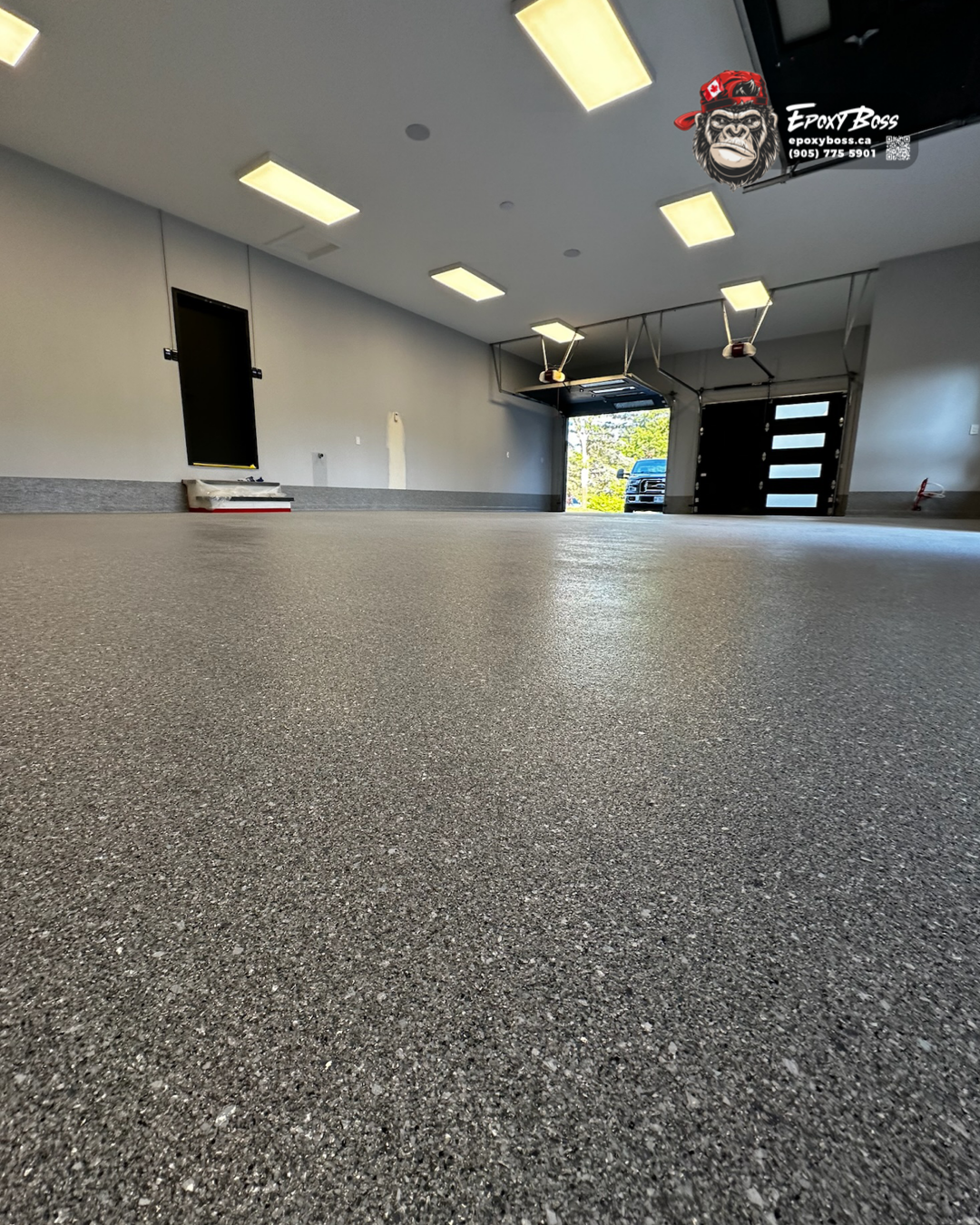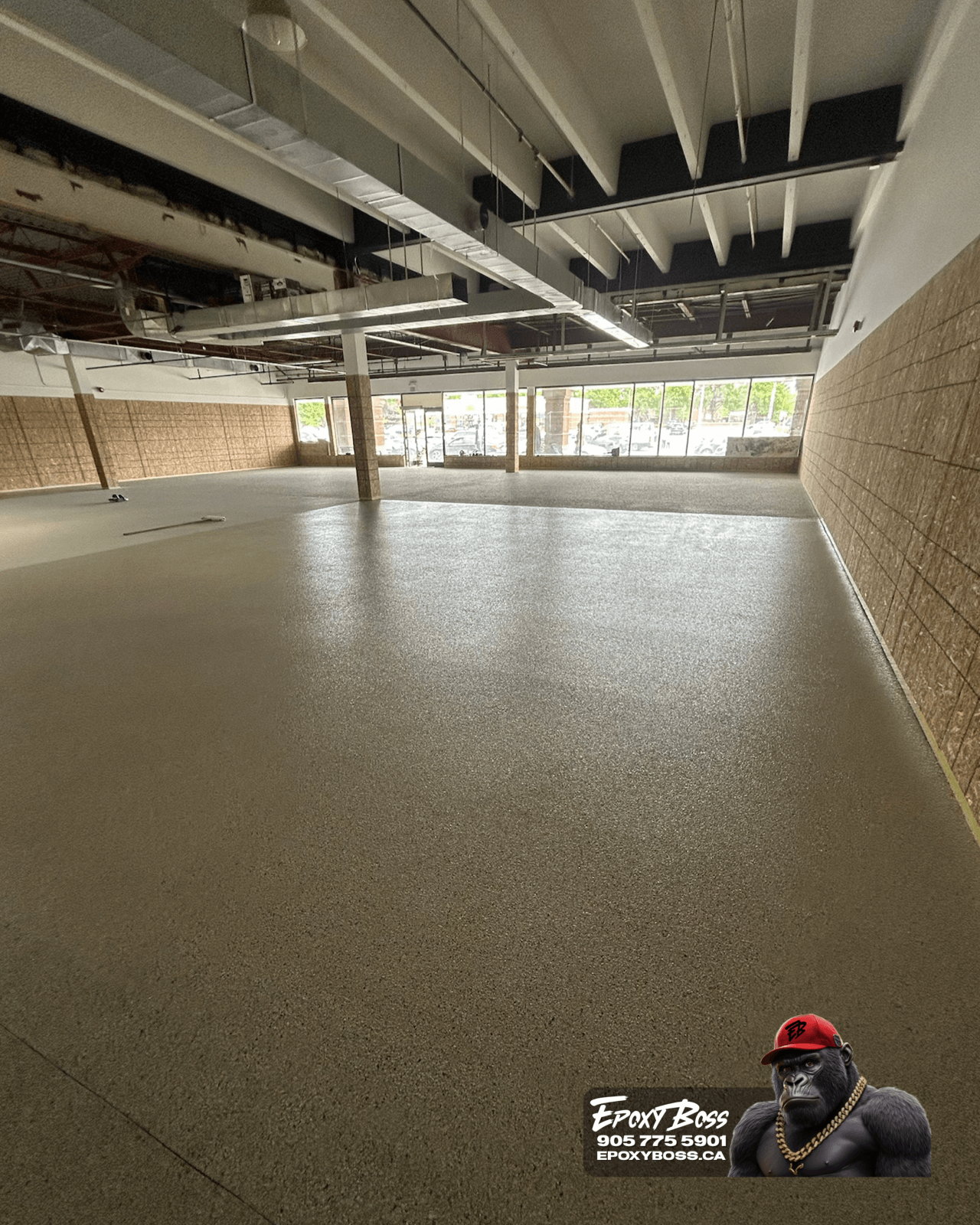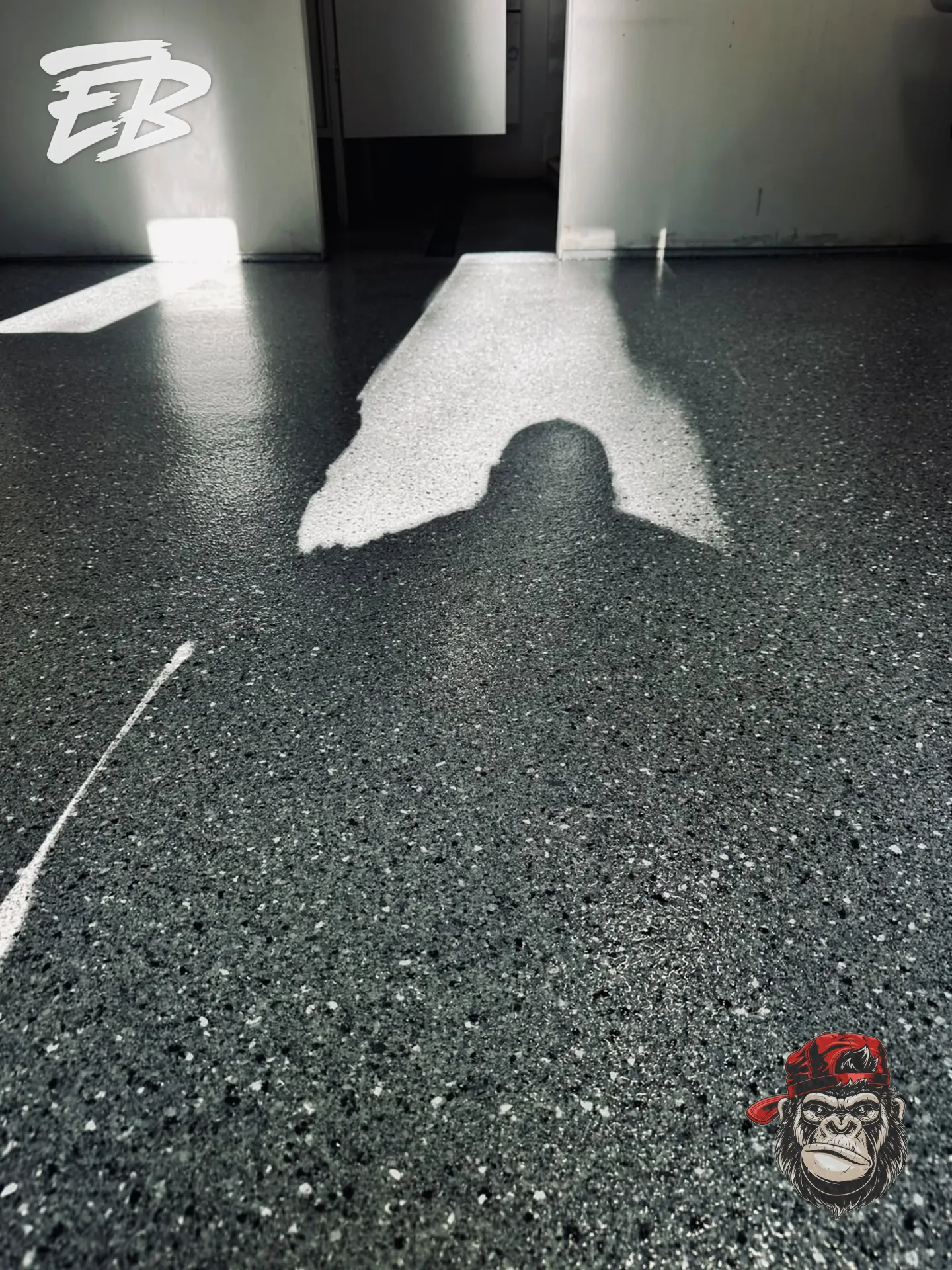

Concrete sealing and concrete coating are different treatments. A penetrating sealer soaks into the concrete and repels water and salt without changing the look much; a topical sealer forms a thin clear film; a resin coating is a thicker, multi-layer system (such as epoxy with flake and a polyaspartic topcoat) that covers and protects the surface. In Innisfil, Barrie, Orillia and the rest of Simcoe County, the right choice depends on whether the slab is inside or outside, how much salt and traffic it sees, and the look you want.
This guide compares the options for driveways, walkways, patios, garages and basements, and explains when to seal and how often.
A quick note on "seal coating"
"Seal coating" usually refers to asphalt driveway sealcoat. This guide is about concrete: poured driveways, walkways, porches, patios, garage floors and basement slabs.
The three main options
Penetrating sealers
Silane, siloxane and similar water repellents soak into the pores of the concrete and react to make the surface repel water and the salt it carries. They leave little or no film, so they keep the natural look and texture and do not make the surface slippery. Silicate densifiers are a related family that harden the surface and are often used in polishing. Penetrating sealers are commonly chosen for exterior concrete that sees freeze-thaw cycles and road salt.
Topical sealers
Acrylic and some epoxy or urethane sealers form a thin clear film. They add sheen or a "wet look" and some stain resistance, but the film wears with traffic and needs reapplying. Outside, glossy films can become slippery when wet and can trap moisture if applied too heavily.
Resin coatings
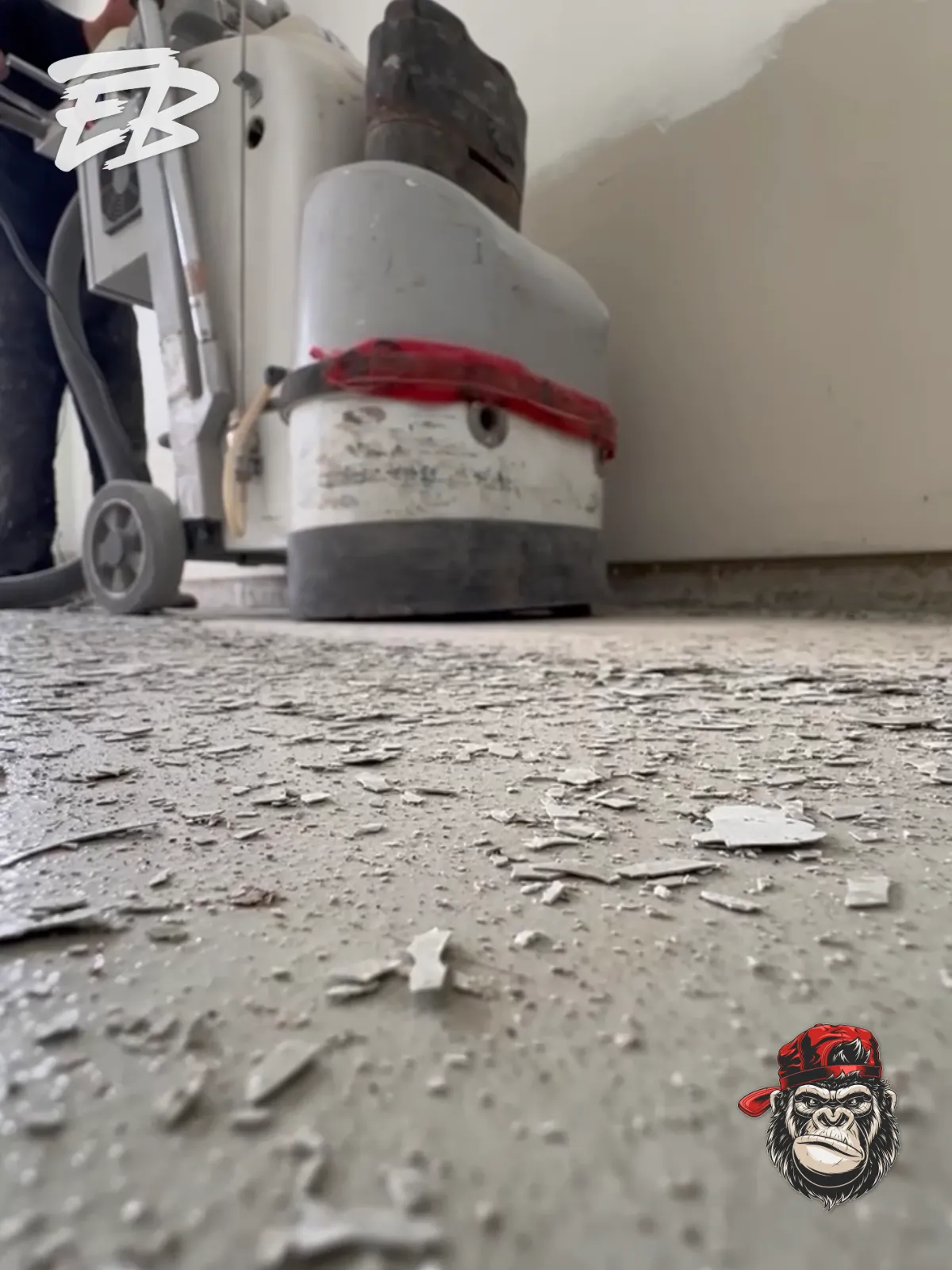
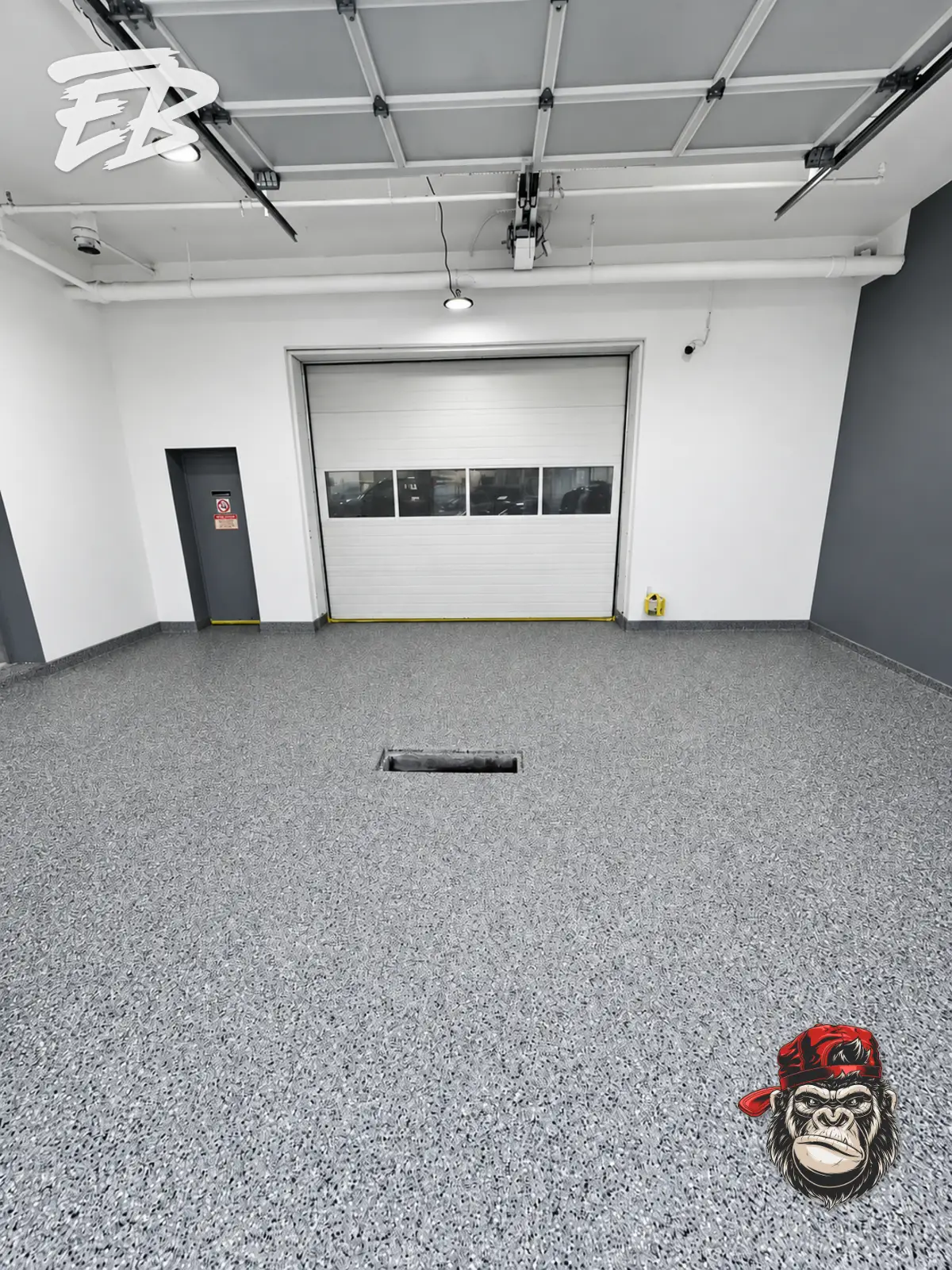
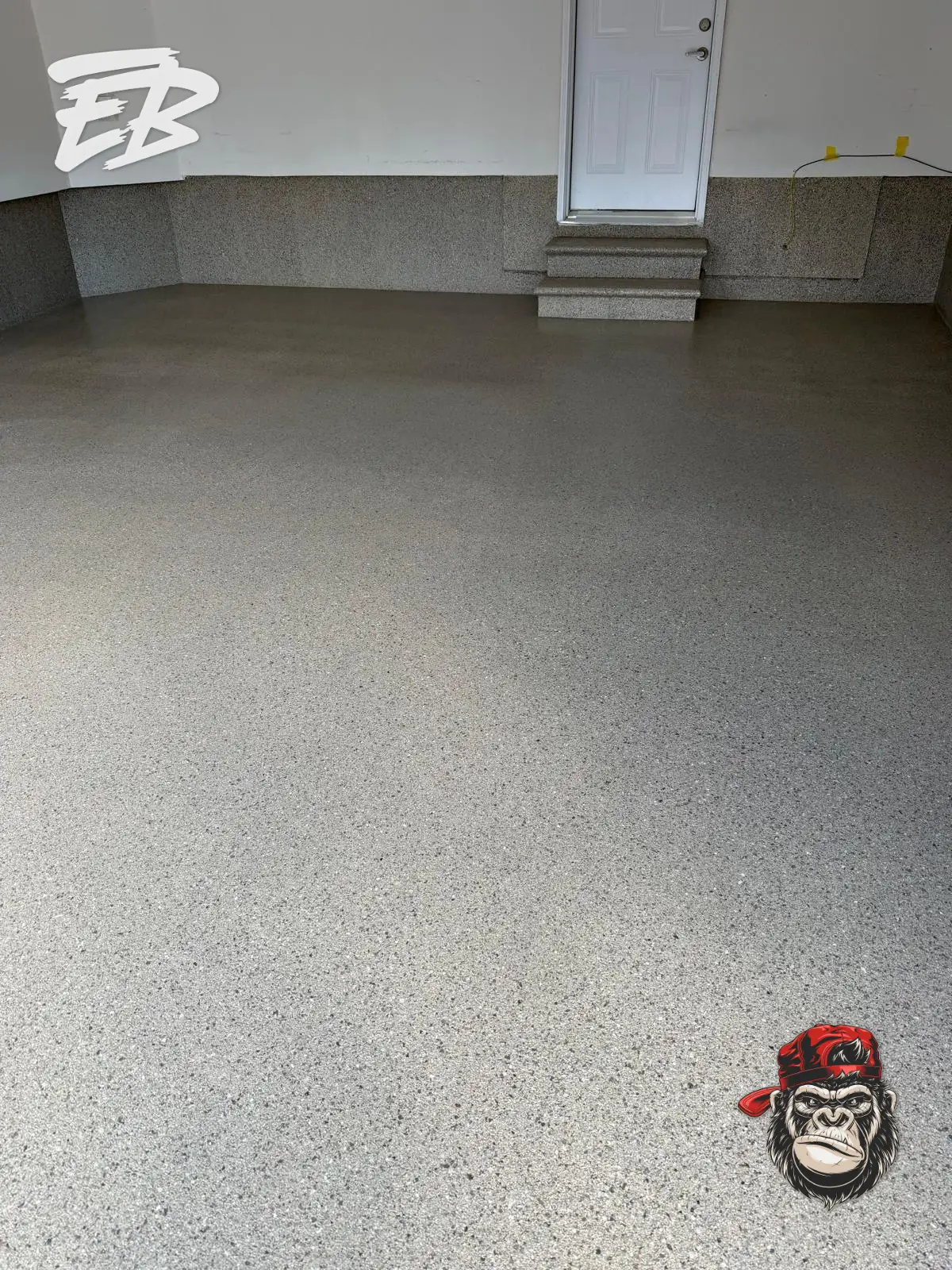
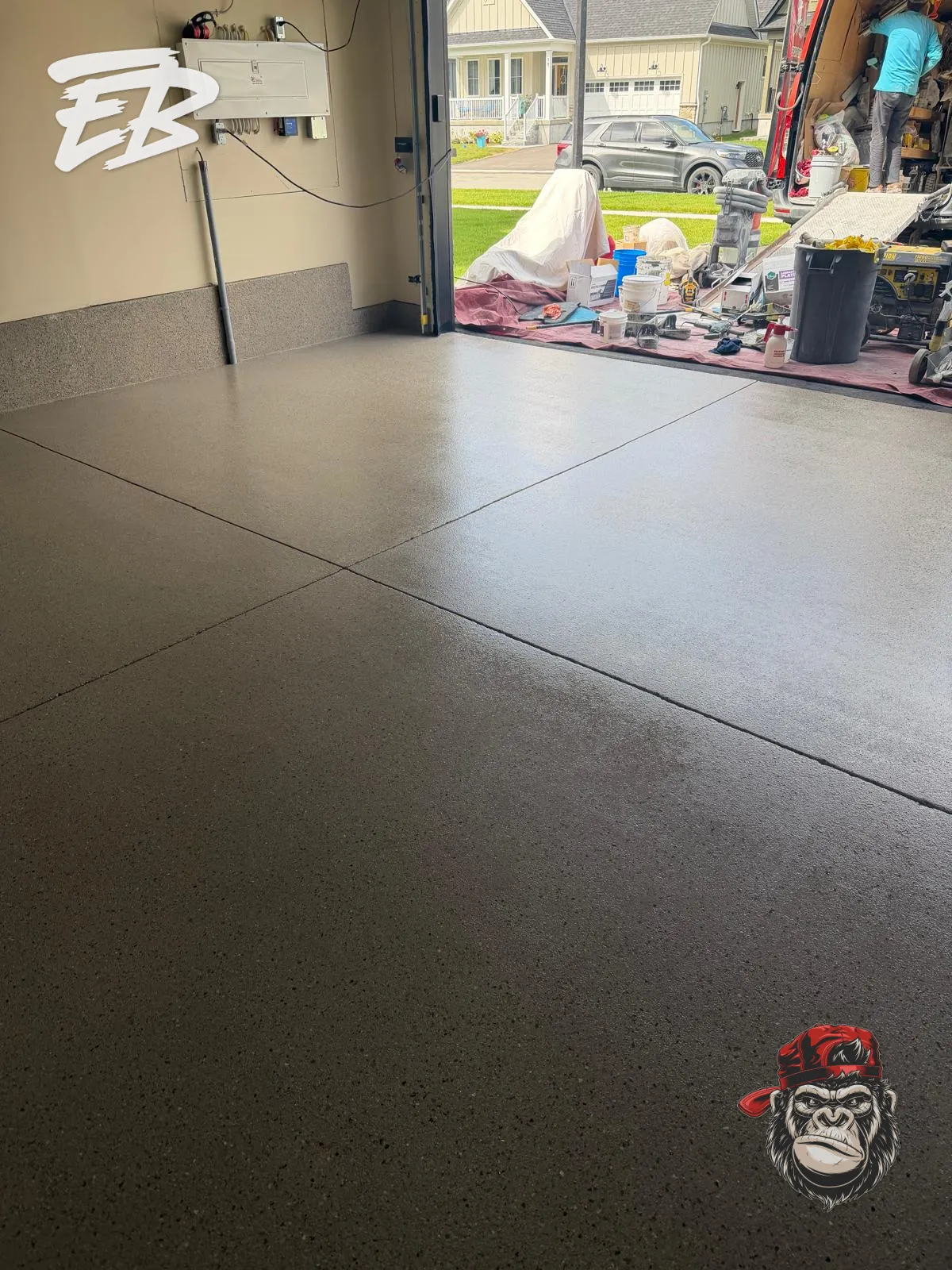
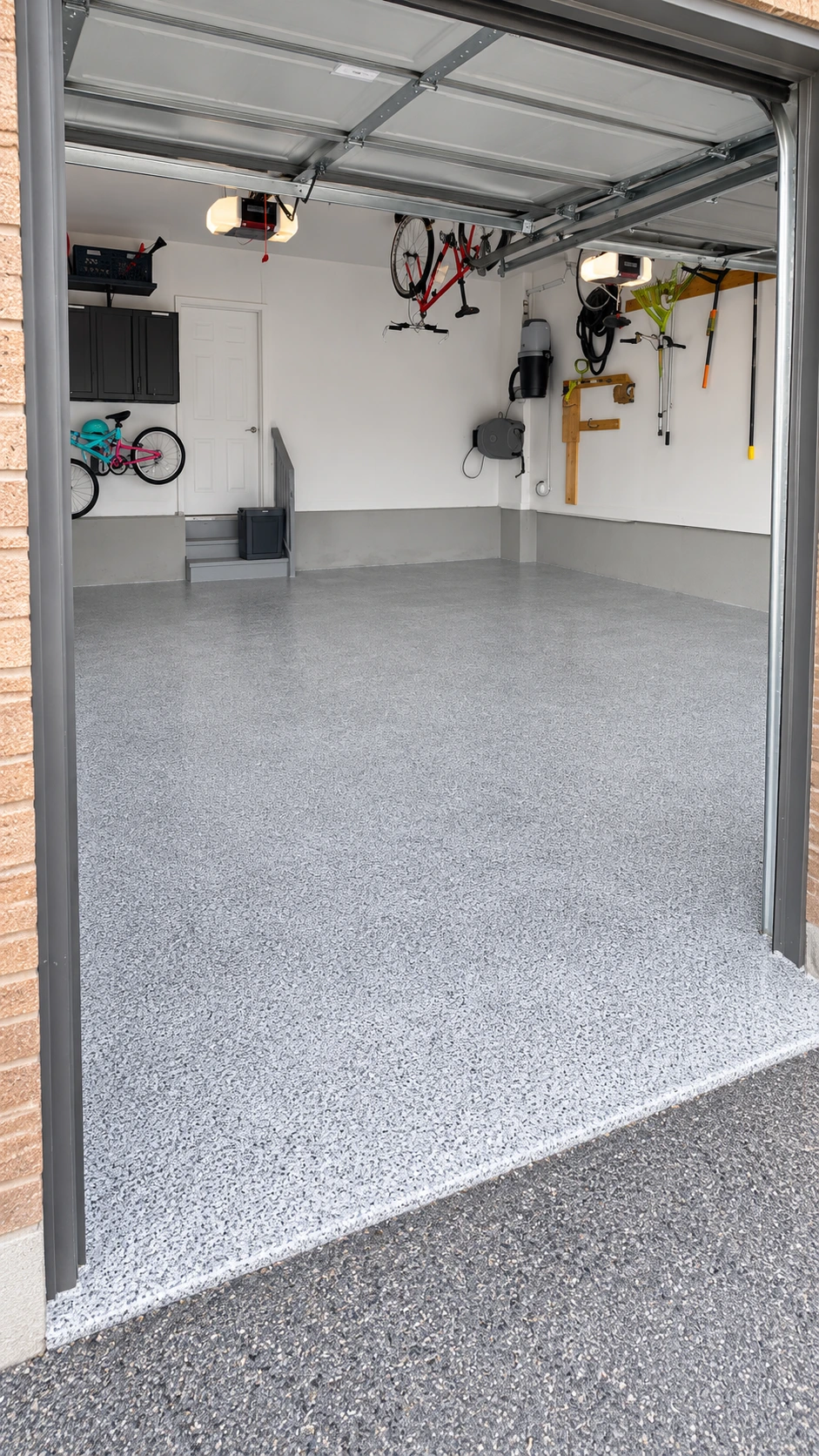
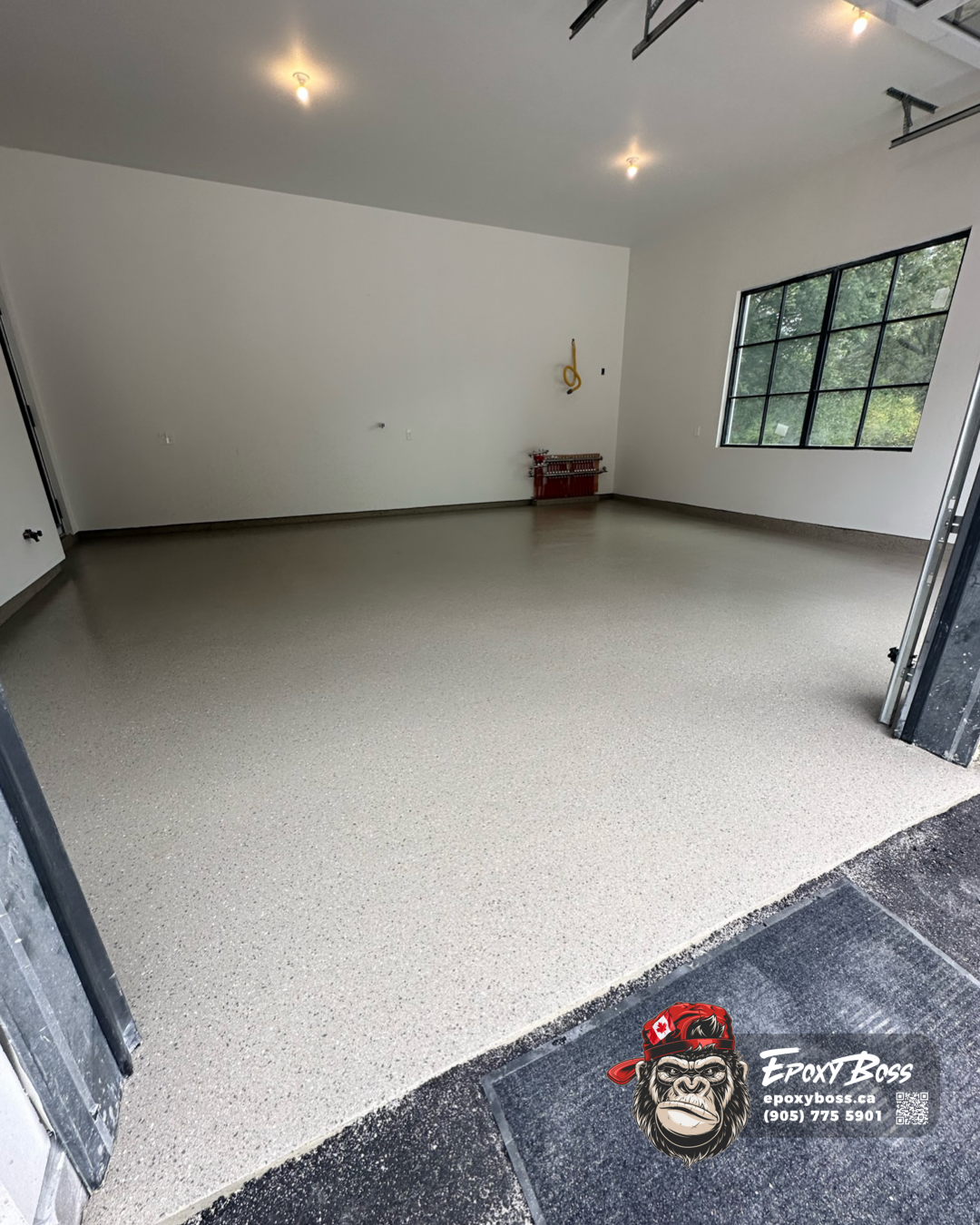
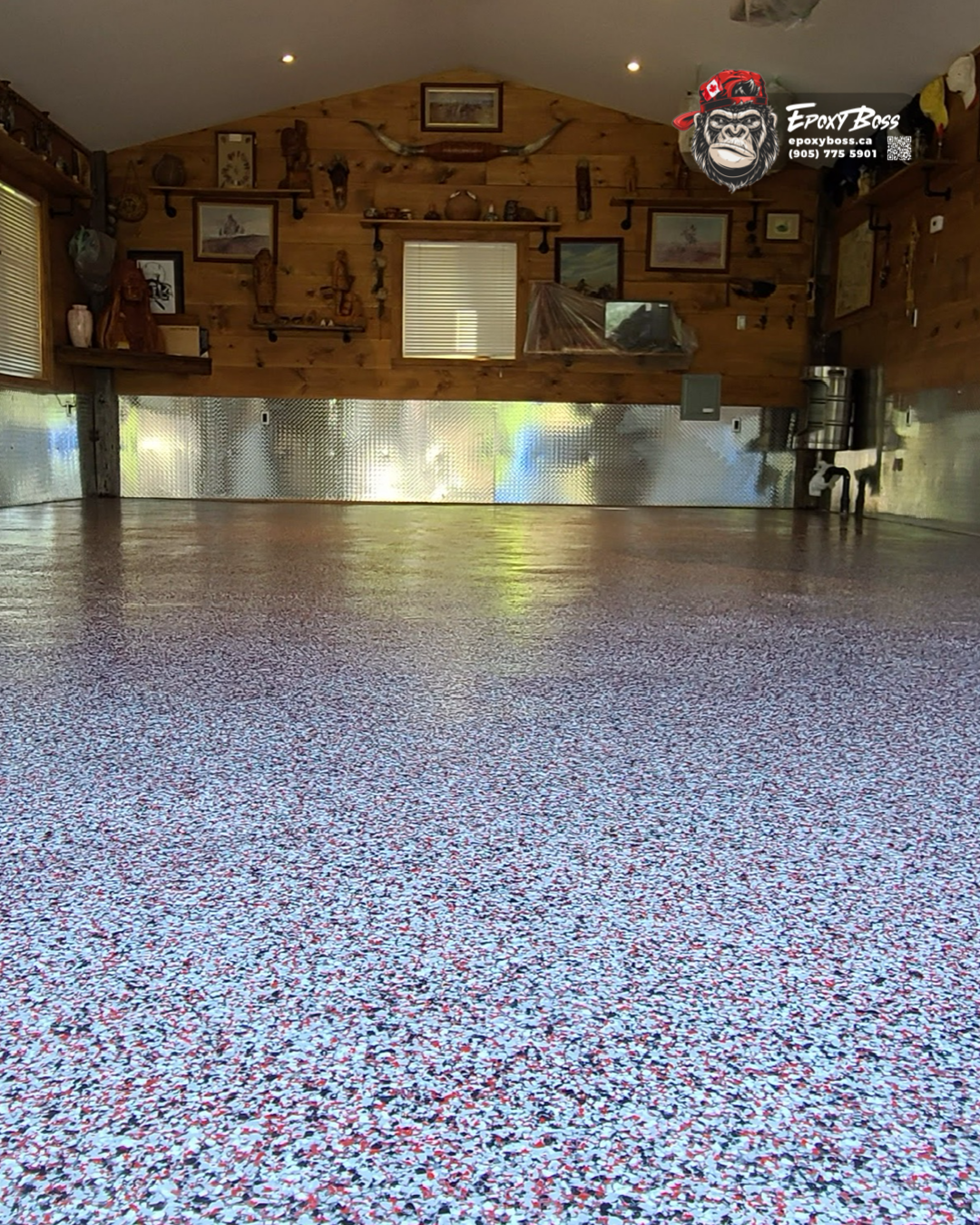
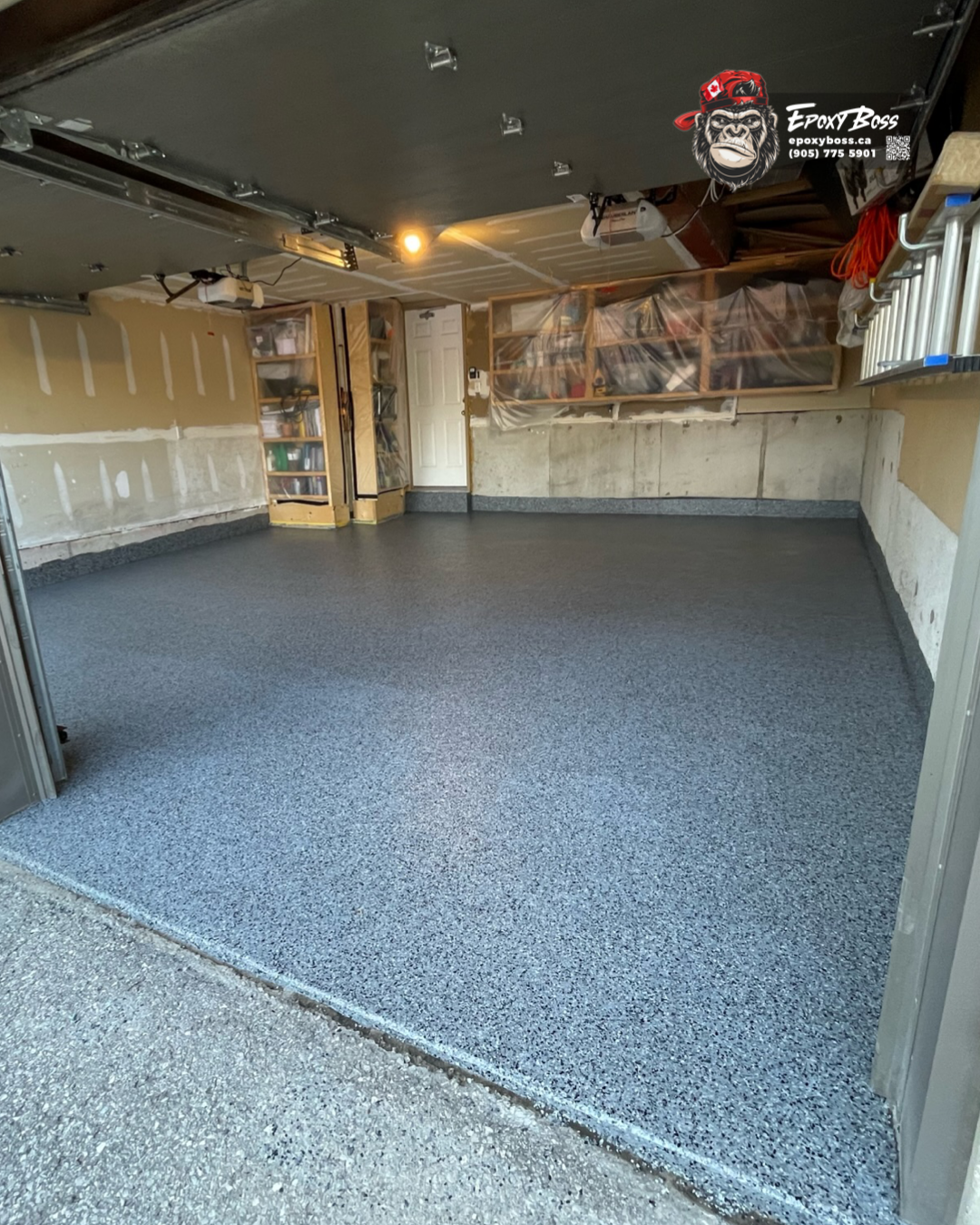
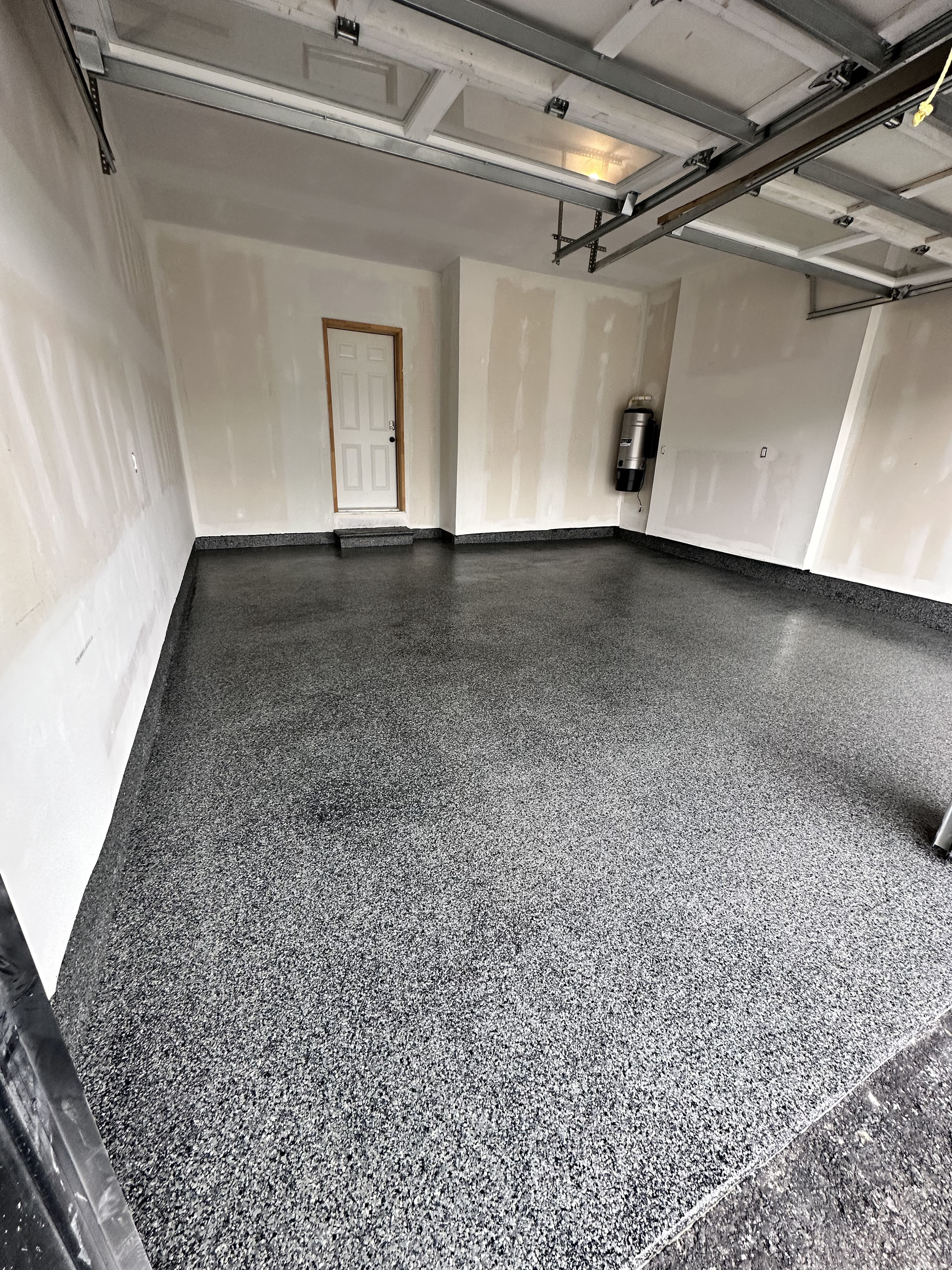
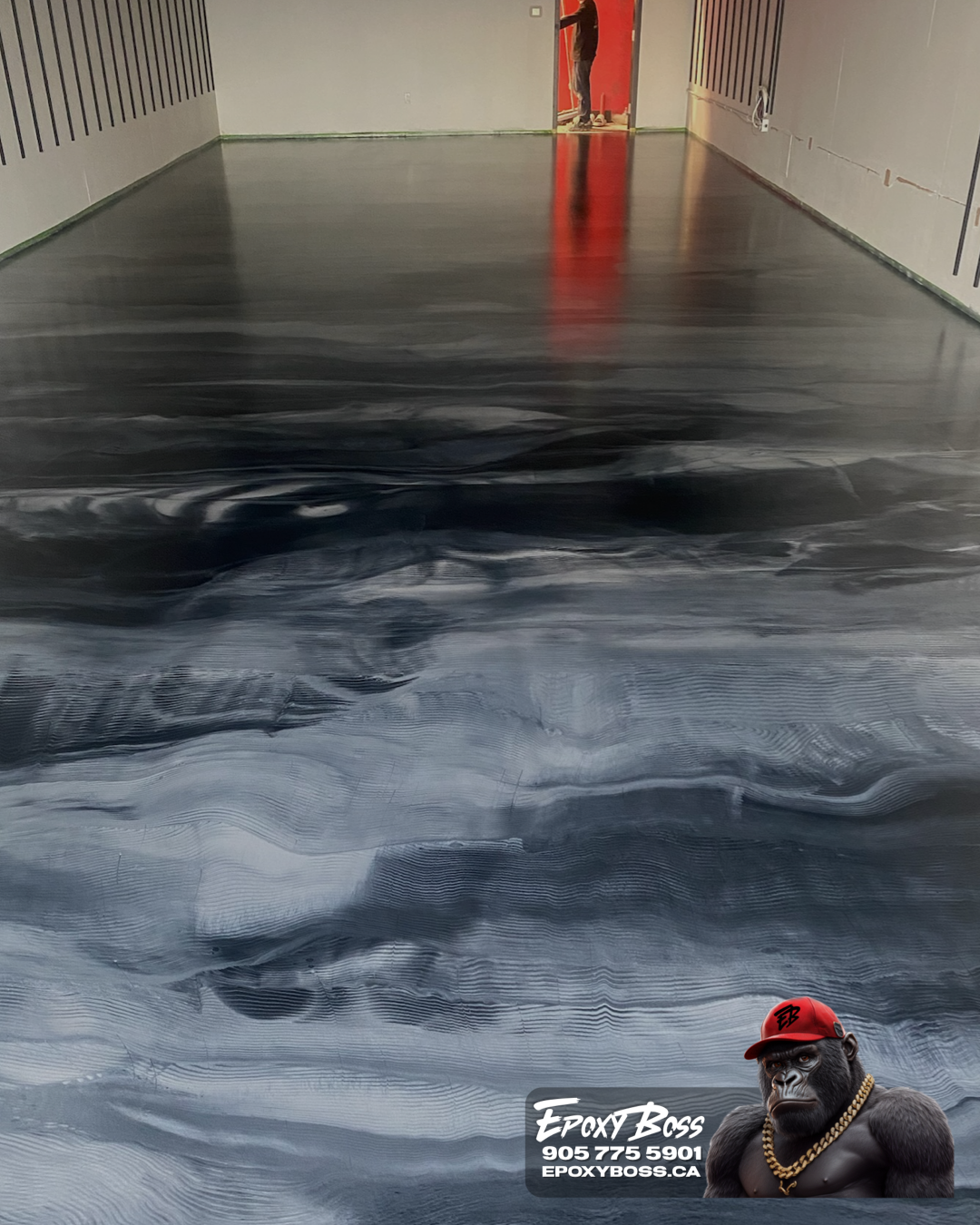
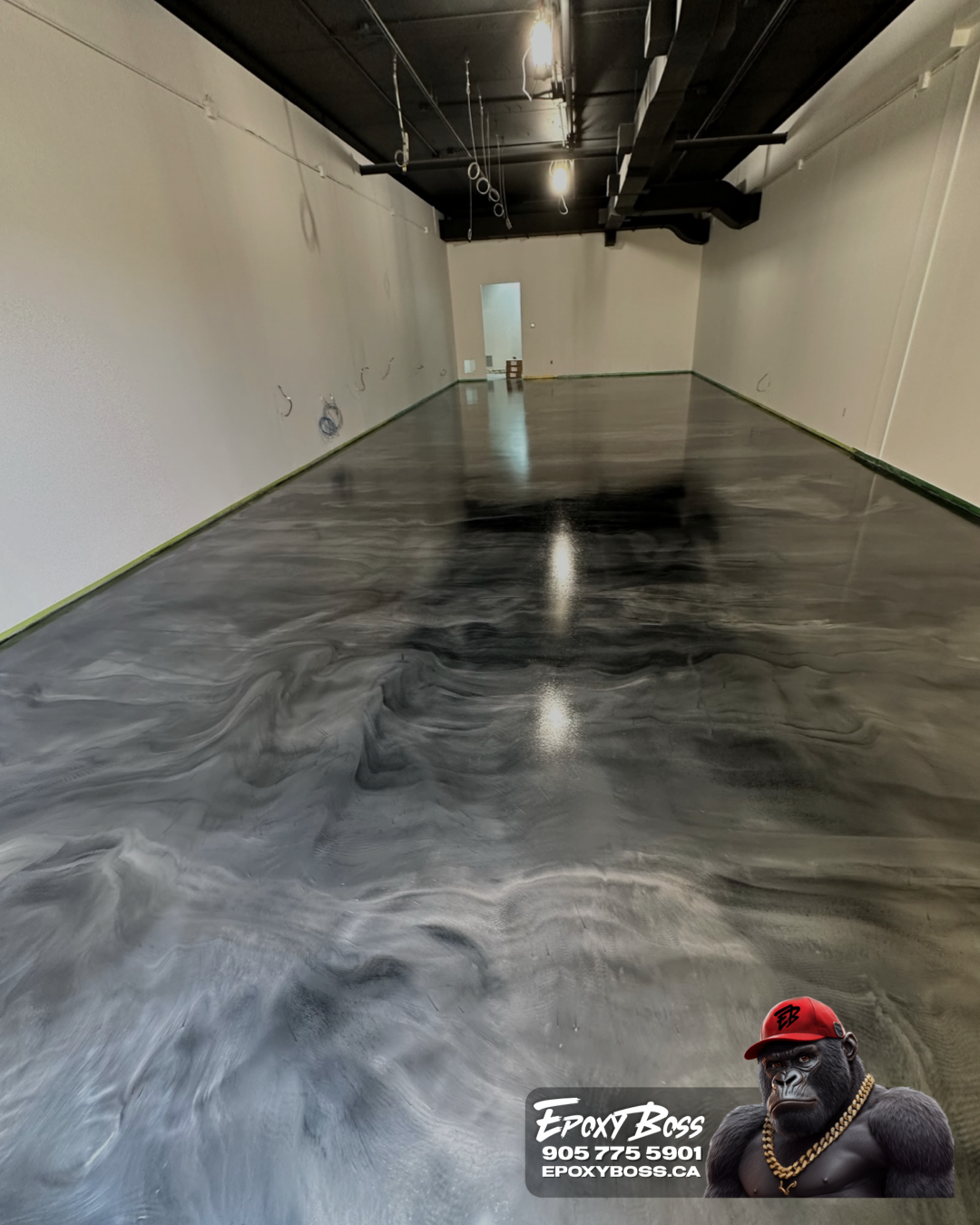
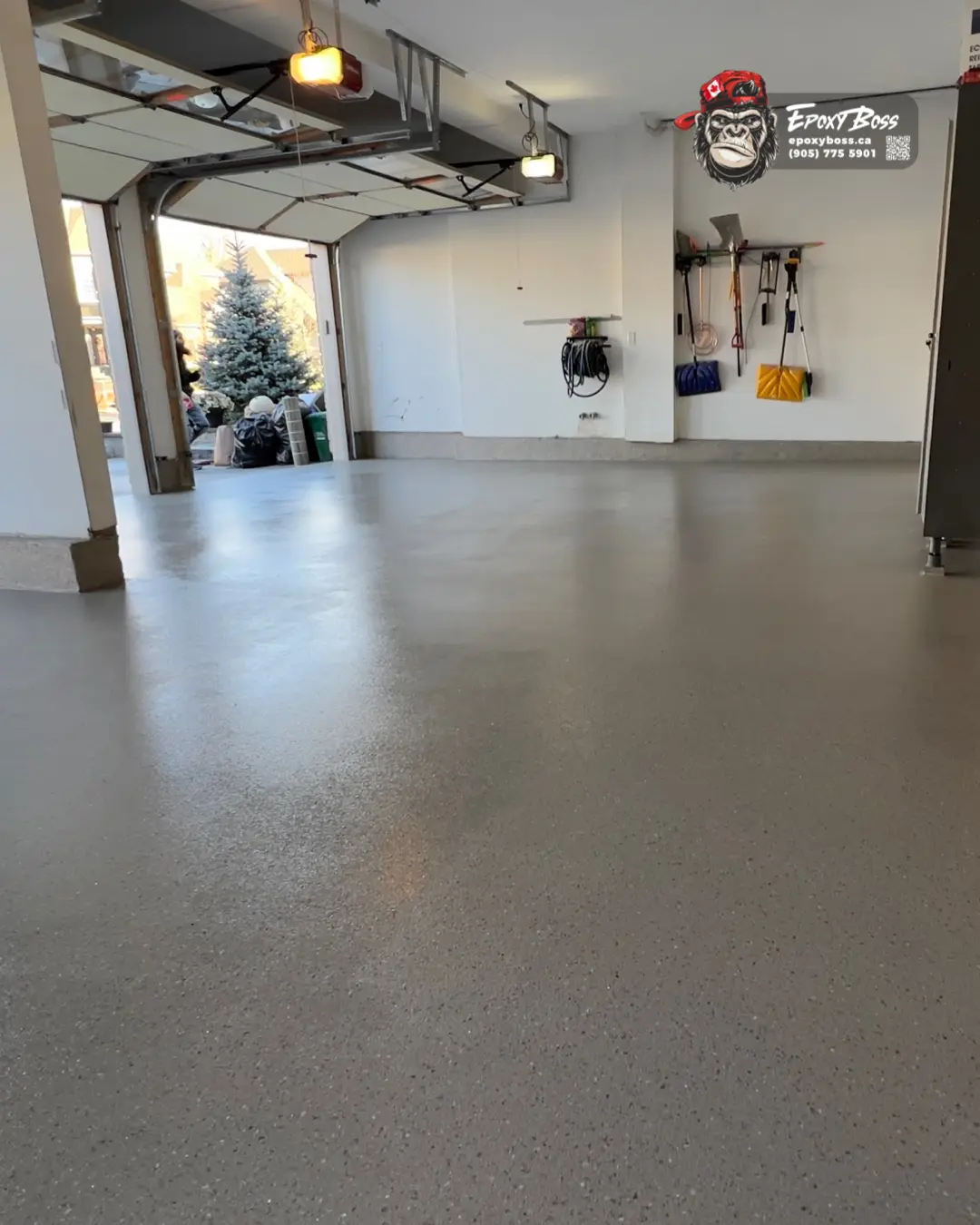
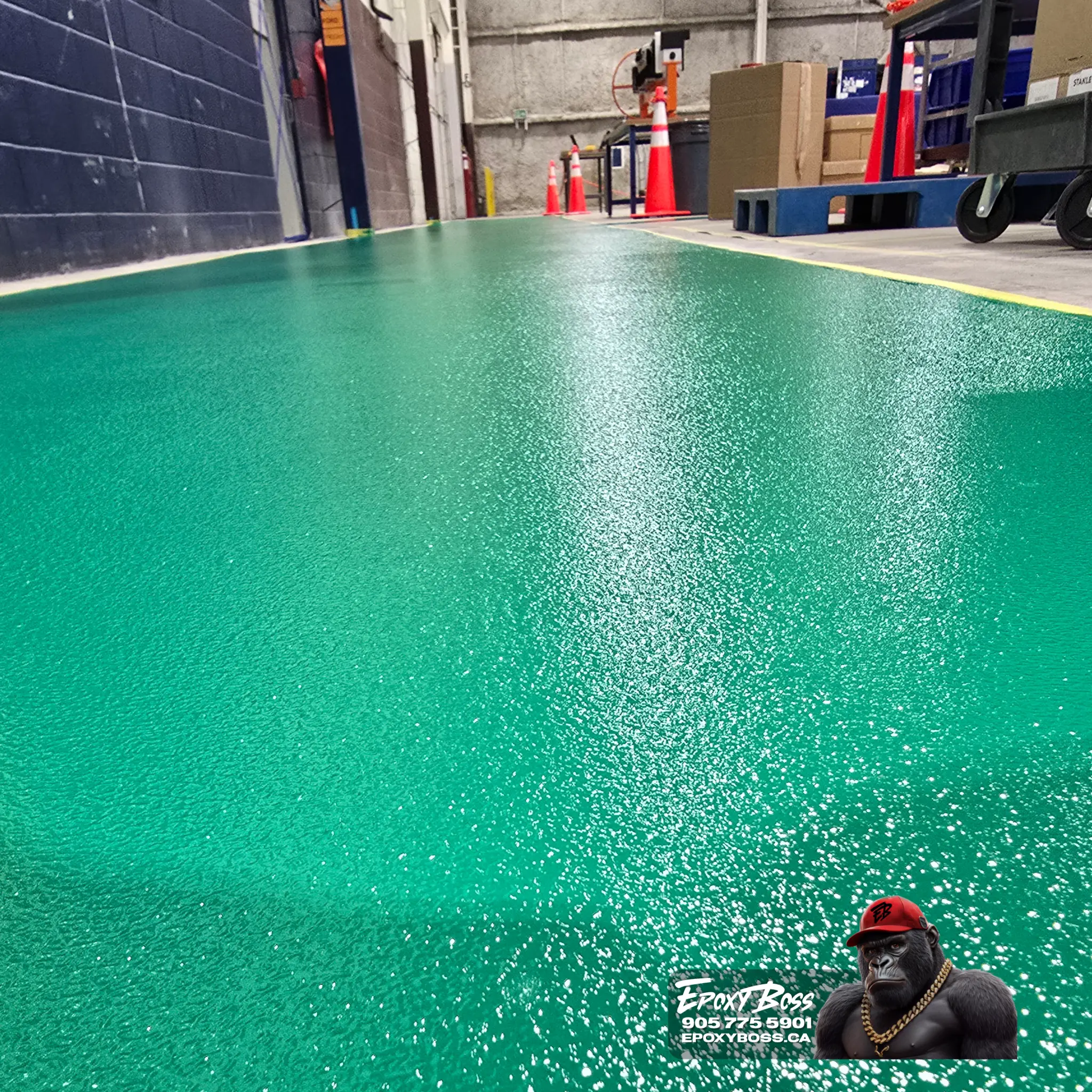
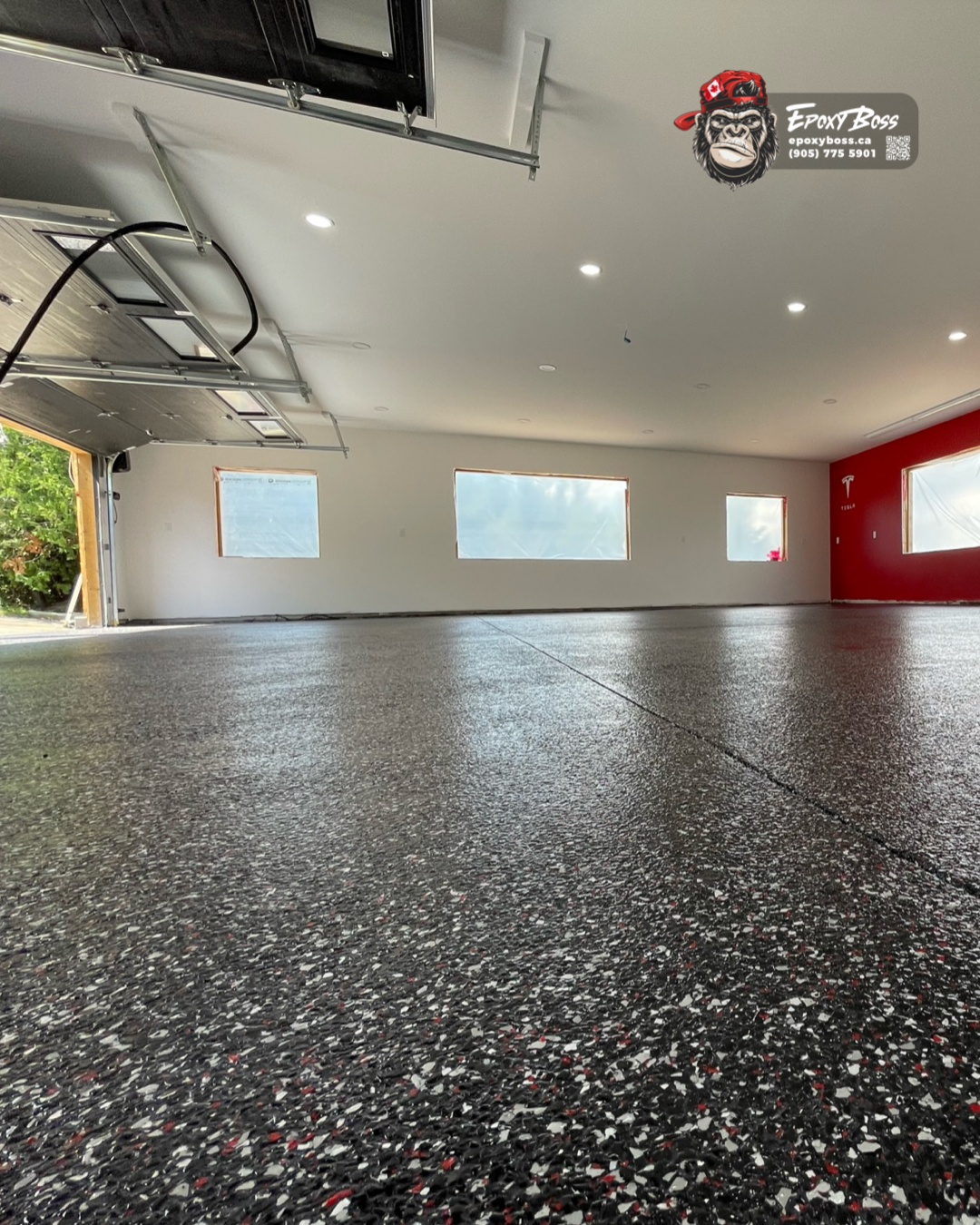
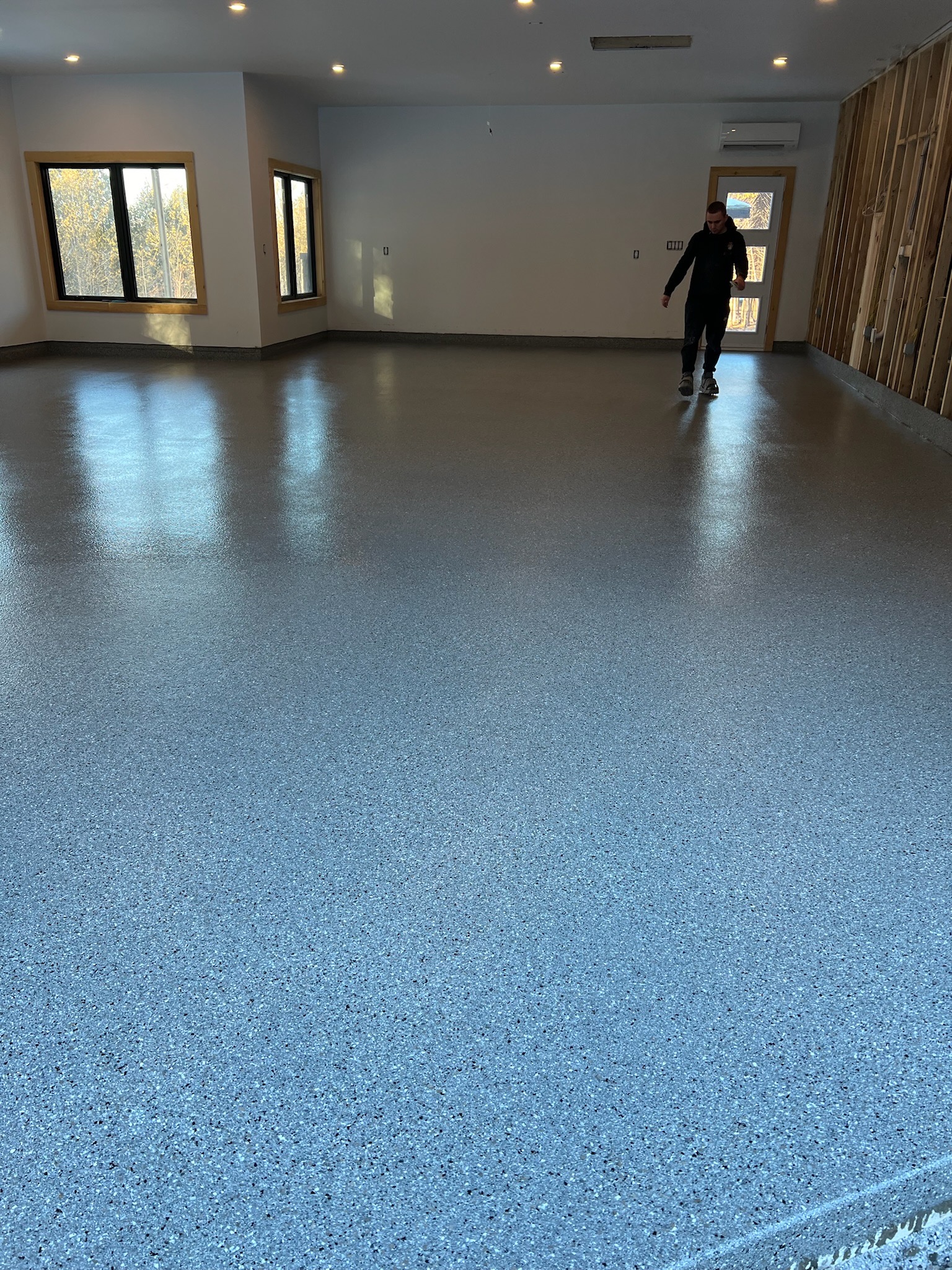
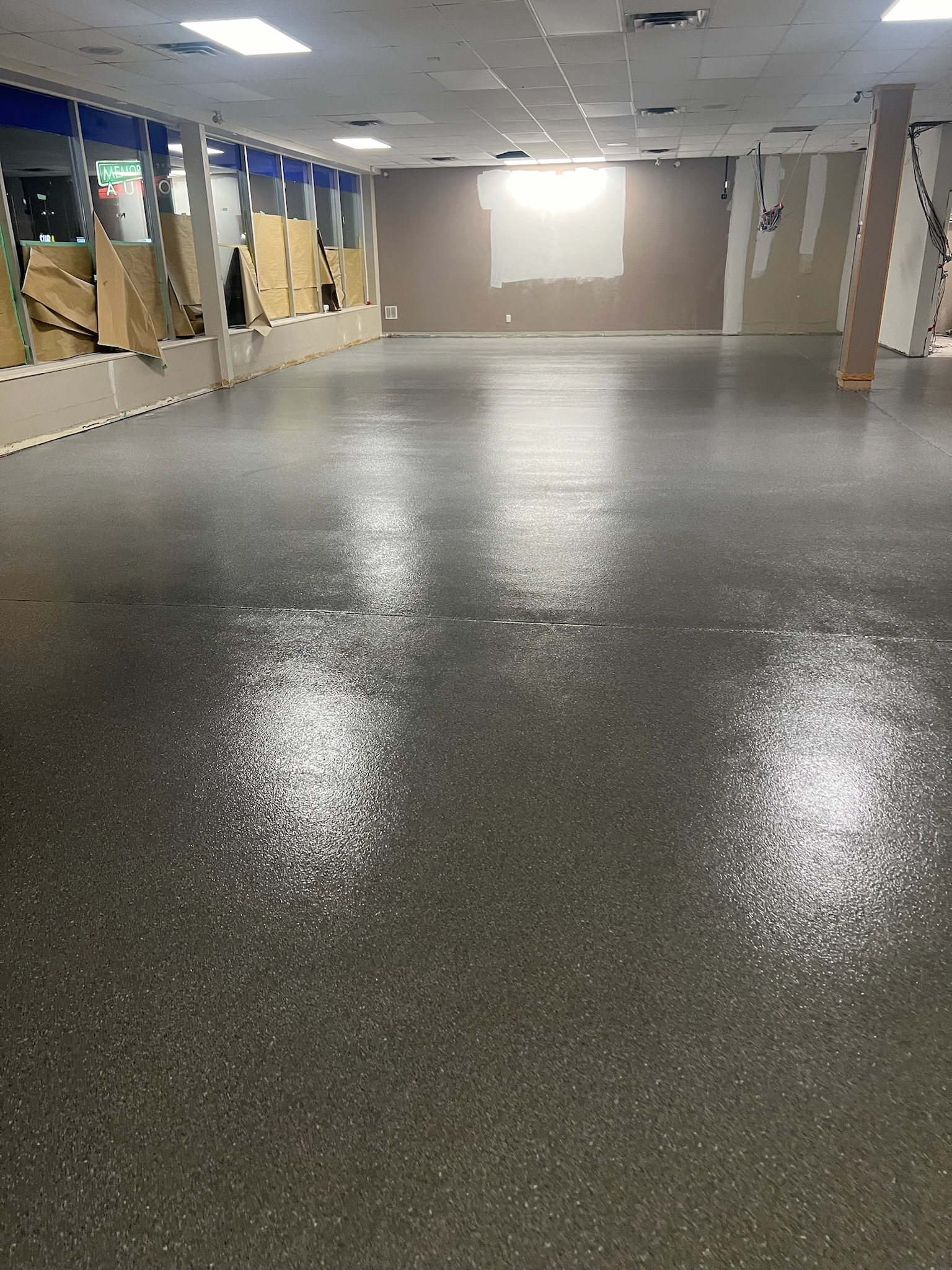
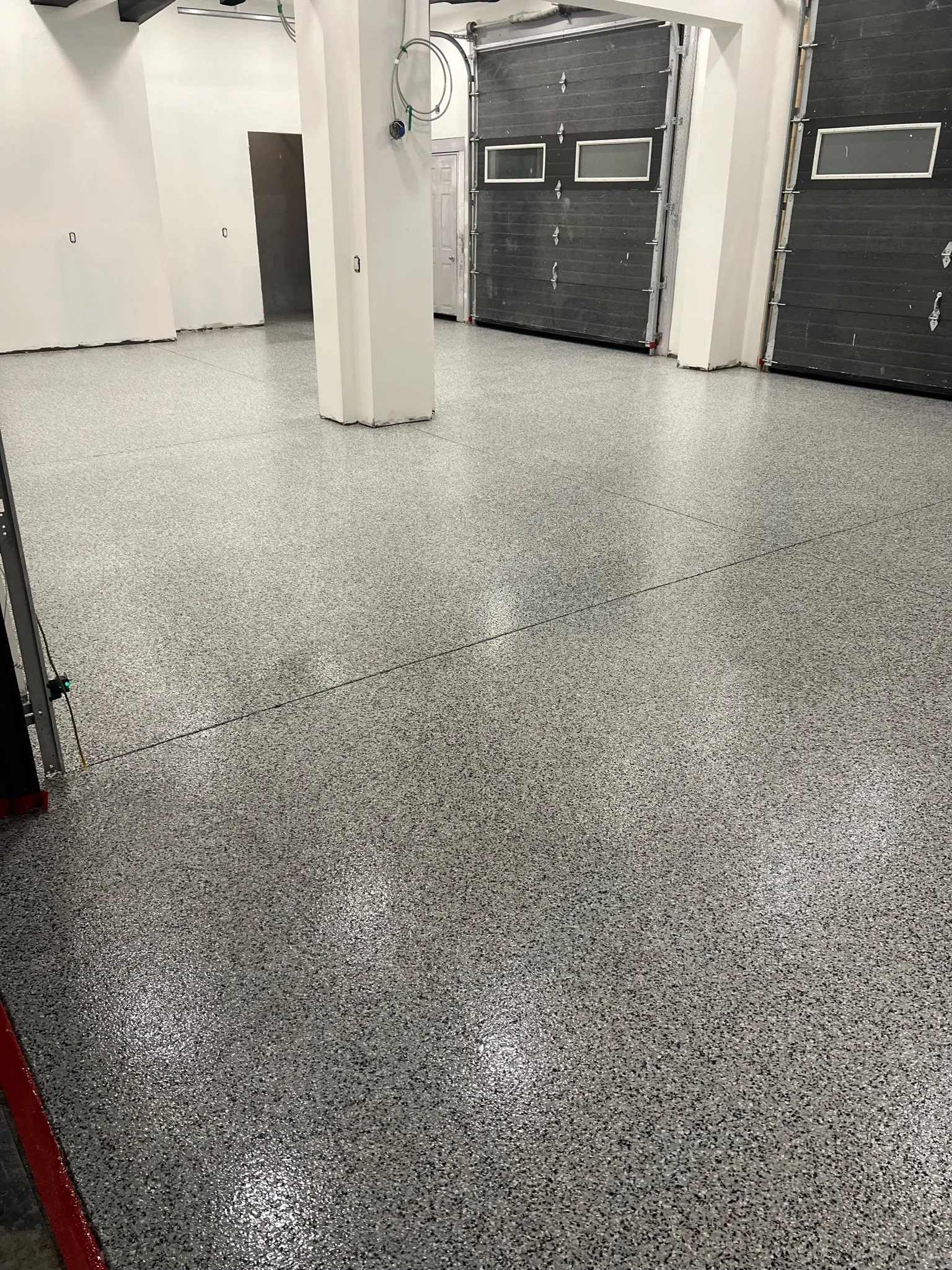
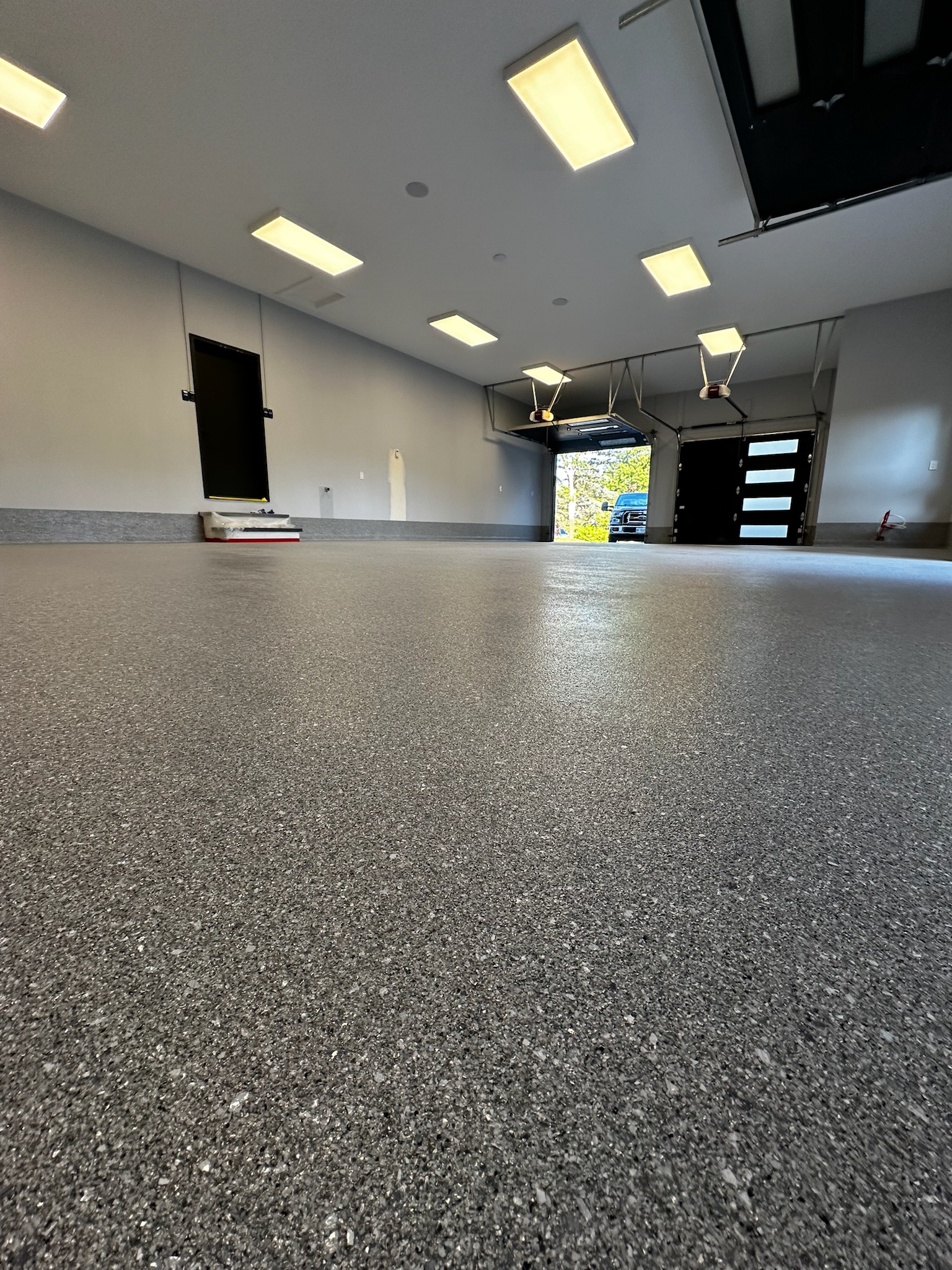
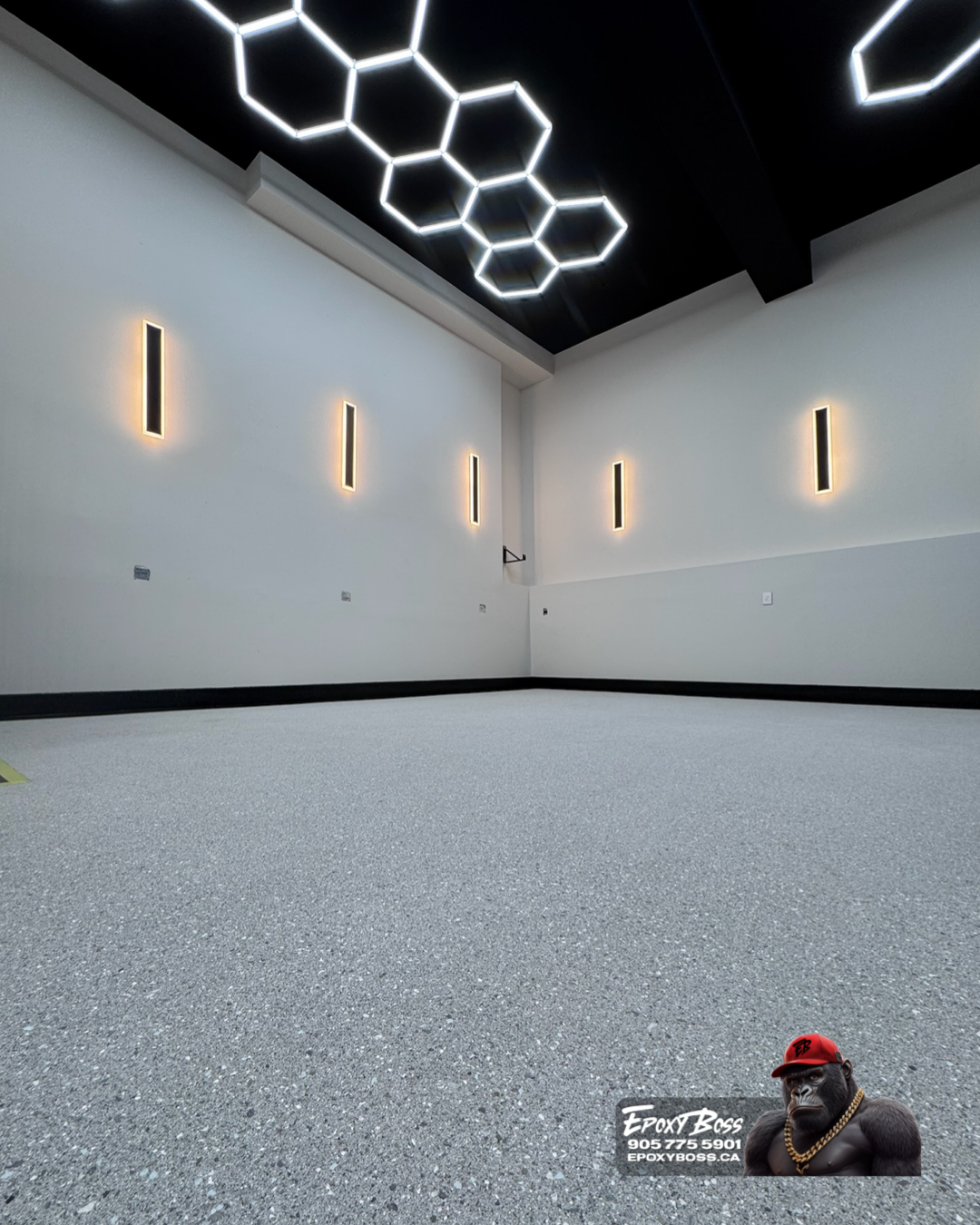
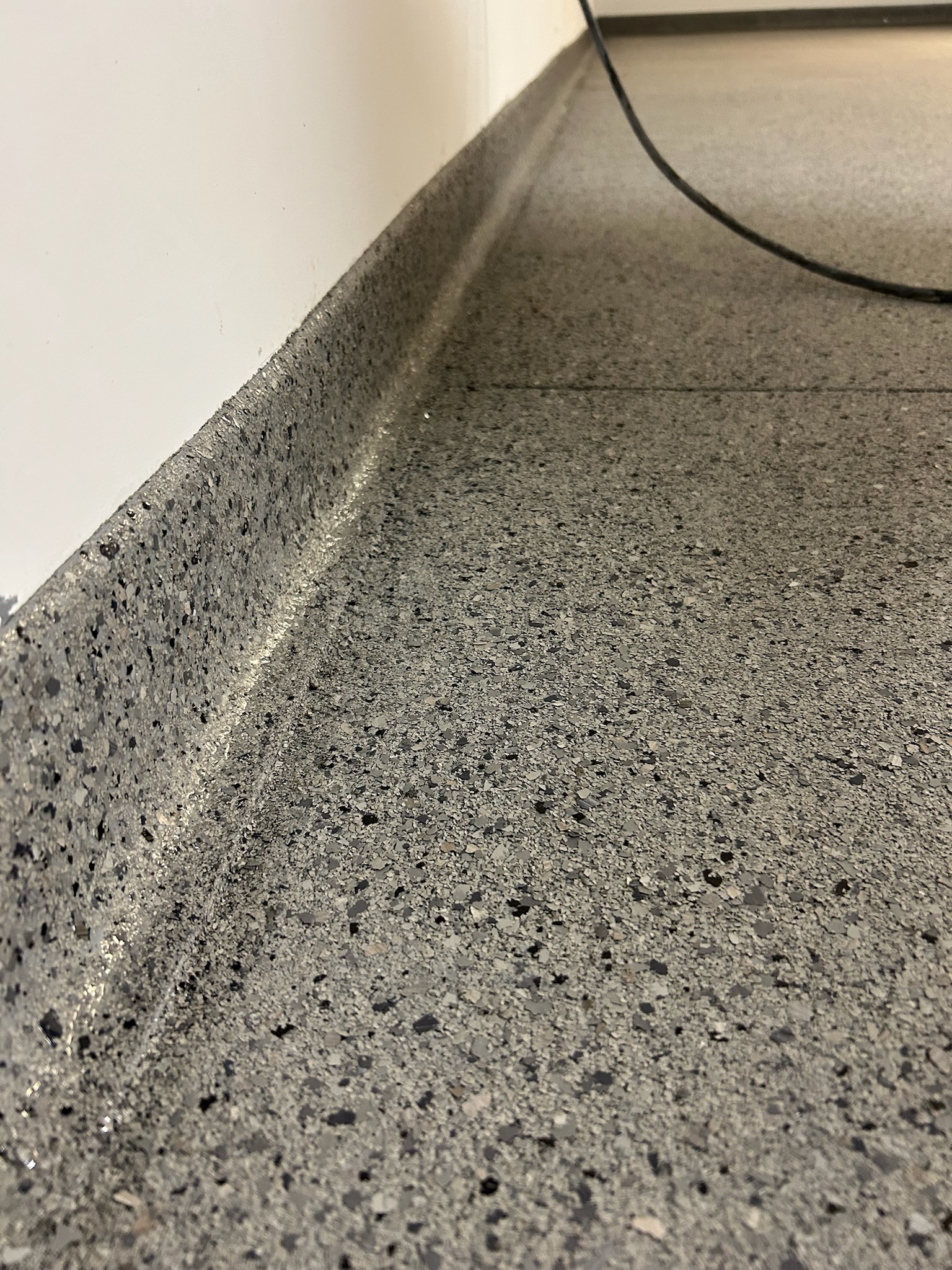
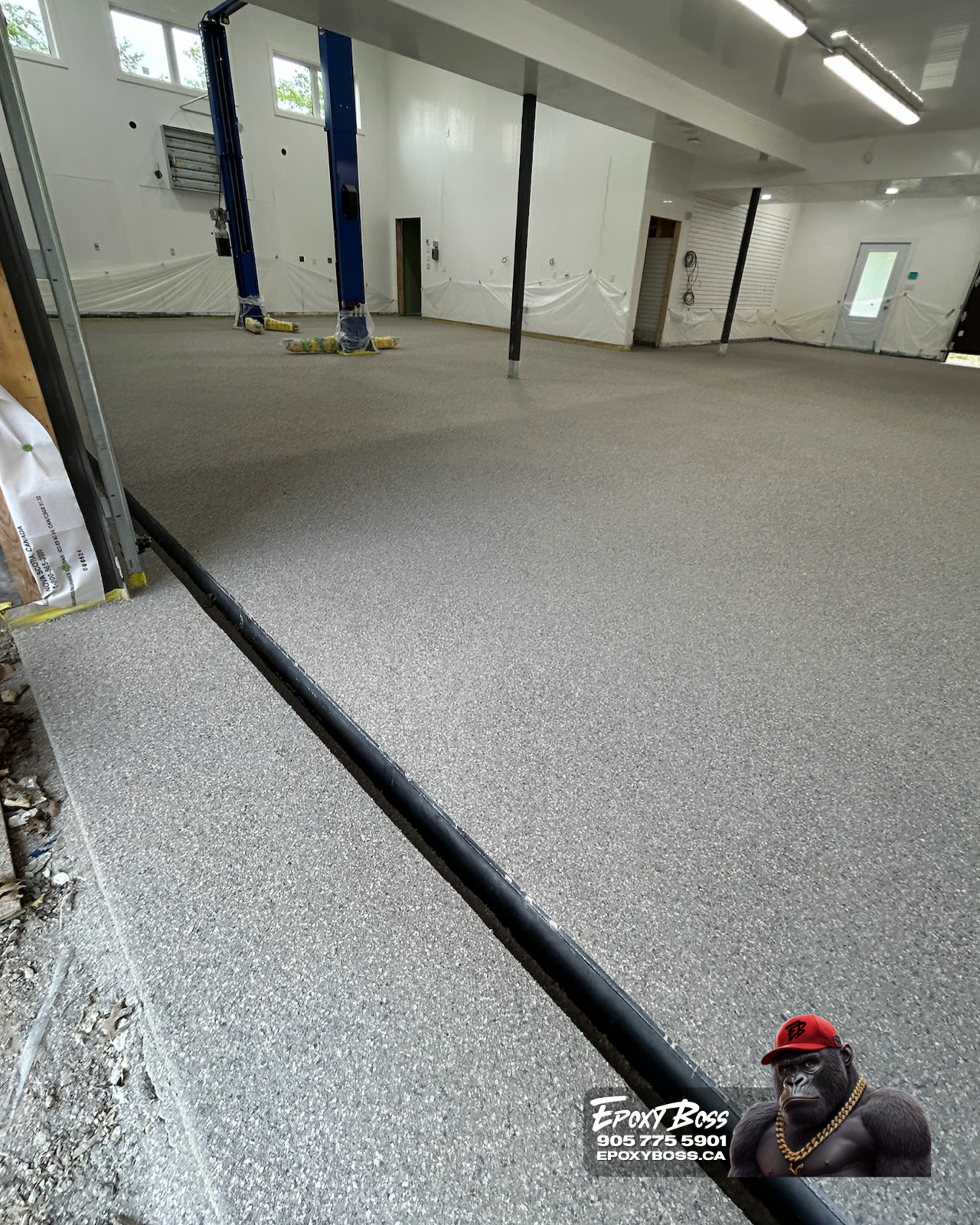
A coating is a full system: mechanical preparation, repairs, a base coat, optional flake or quartz and a clear topcoat. It is much thicker than a sealer and changes the appearance completely. Coatings are the usual choice for garage floors, basements and some porches and patios. See our concrete coating service and the full-broadcast flake floor guide.
Options at a glance
- Look: penetrating sealers keep the natural concrete look; topical sealers add sheen or a darker "wet" tone; coatings change the colour and texture completely.
- Thickness: penetrating sealers leave little or no film; topical sealers leave a thin film; coatings build a much thicker multi-layer surface.
- Slip: penetrating sealers barely change surface texture; glossy topical films can be slippery when wet; coatings can be textured with flake, quartz or additives.
- Moisture: penetrating sealers let concrete breathe; topical films and coatings are less tolerant of moisture coming up from below.
- Upkeep: sealers are reapplied periodically; coatings are cleaned and, when needed, topcoated.
Which option for which surface
Driveways and walkways
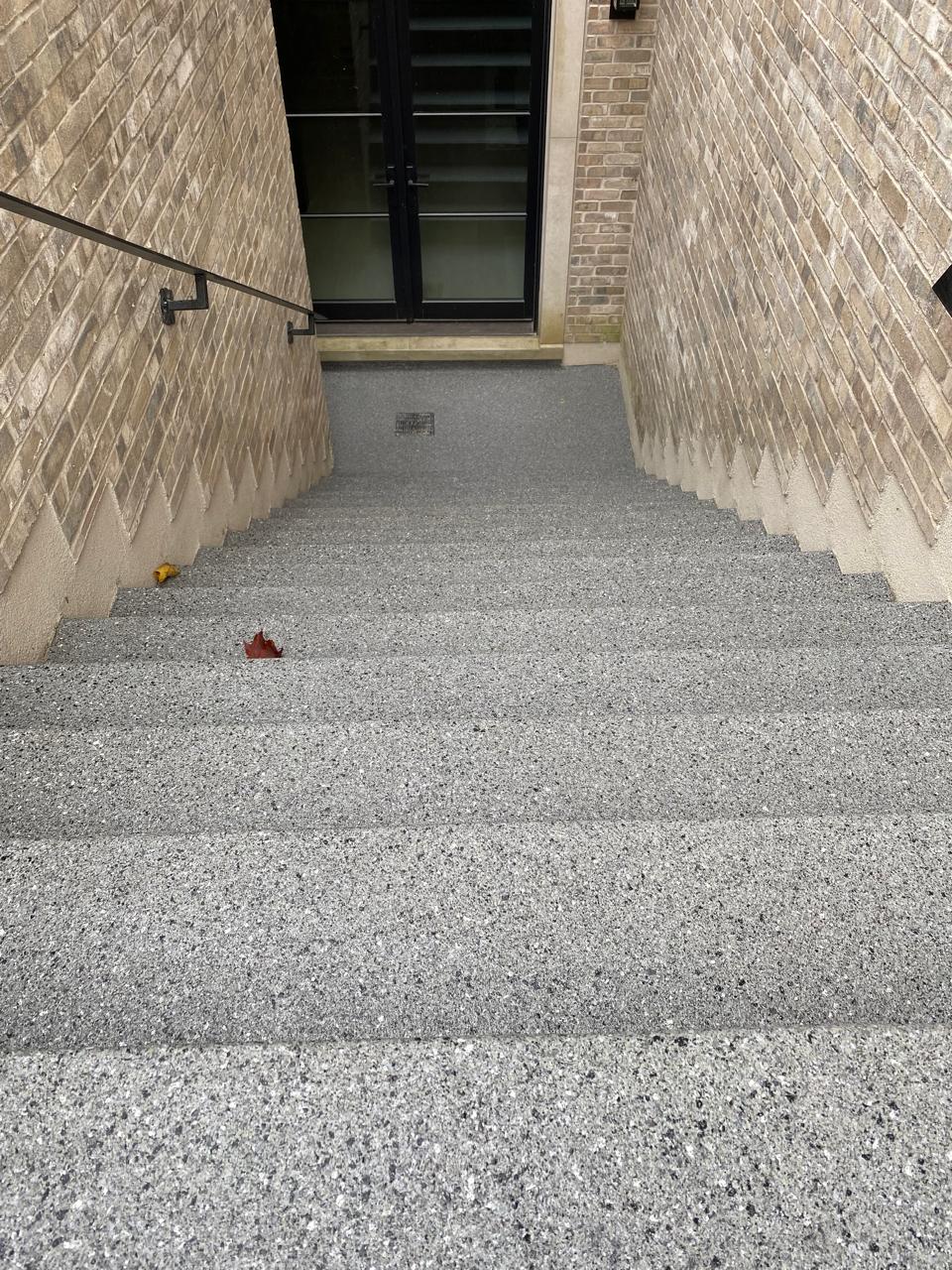
Exterior concrete in Simcoe County faces snow, ploughing, de-icing salt and repeated freeze-thaw cycles. Road salt is used so heavily in Canada that Environment and Climate Change Canada maintains a code of practice for managing road salts. A breathable penetrating sealer is the common choice here because it reduces water and salt uptake without creating a slippery film. Our driveway coatings page and the article on shot blasting a concrete driveway cover preparation options.
Porches and patios
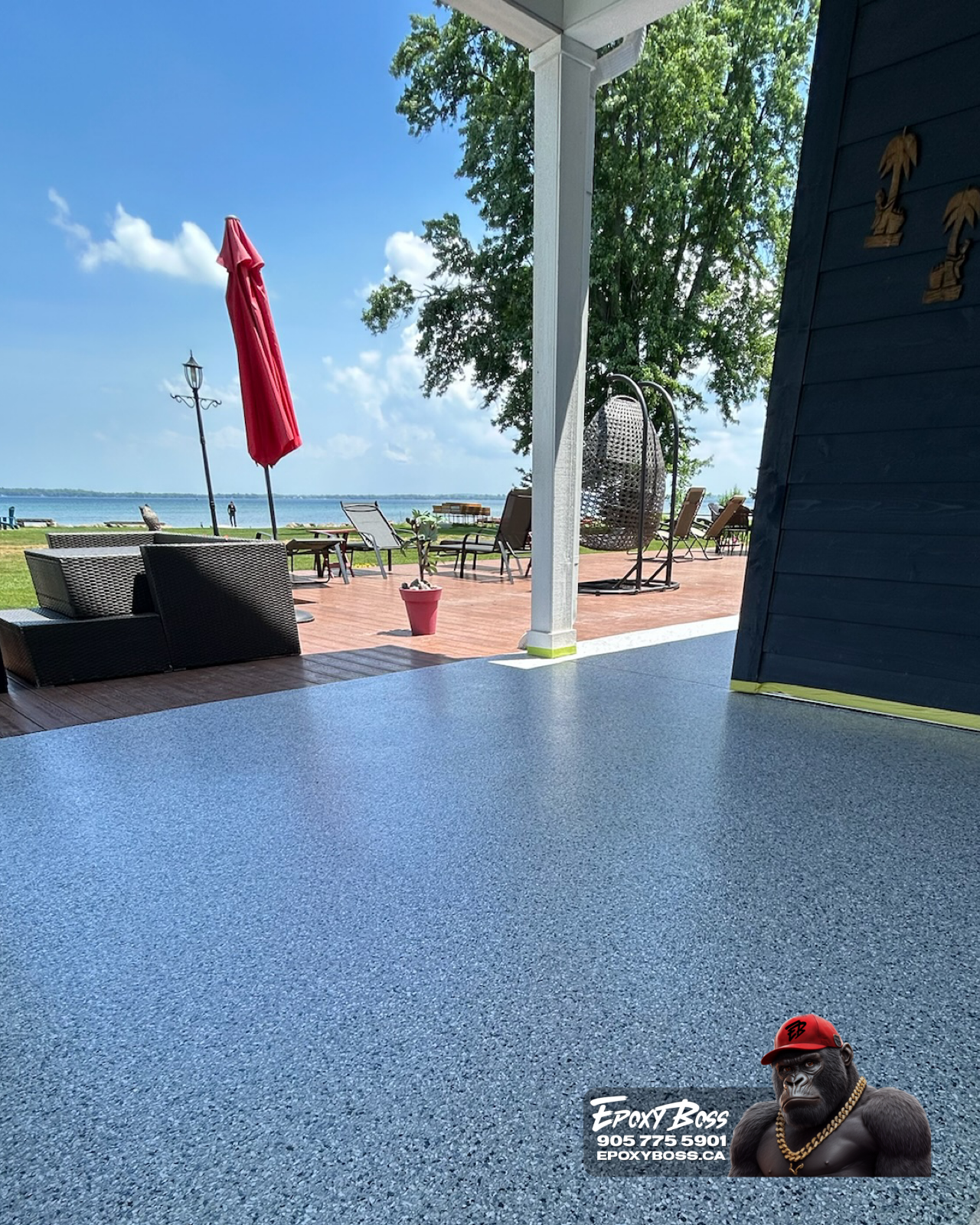
Covered or partly covered porches and patios can take either a penetrating sealer or a UV-stable decorative coating, depending on the look you want and how exposed they are. Coatings outdoors must be UV-stable and textured for grip. Flake makers offer lines designed for outdoor use; Torginol's product range includes a UV-focused flake for driveways, patios and porches. See exterior polyaspartic coatings and patio coatings.
Garage floors
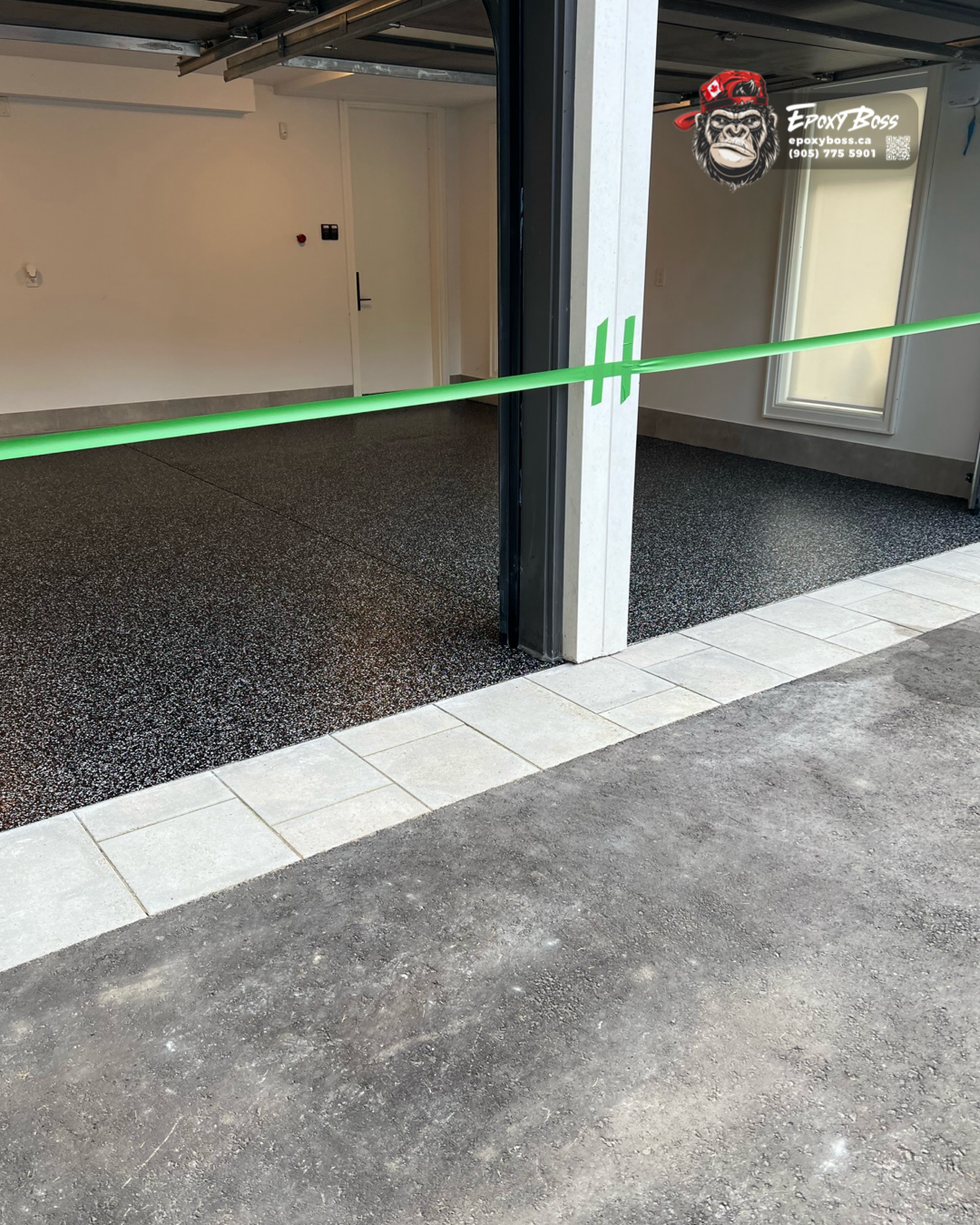
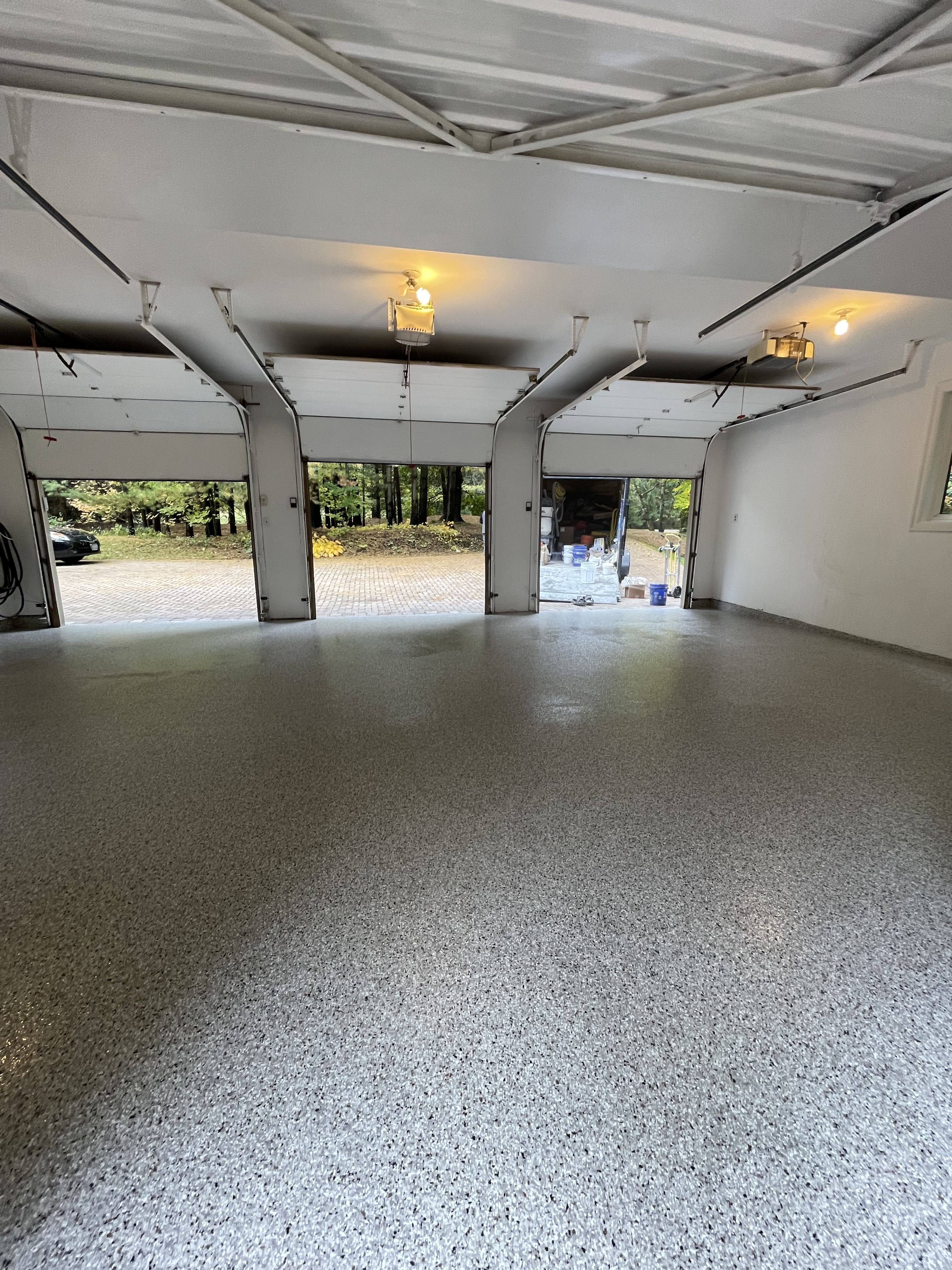
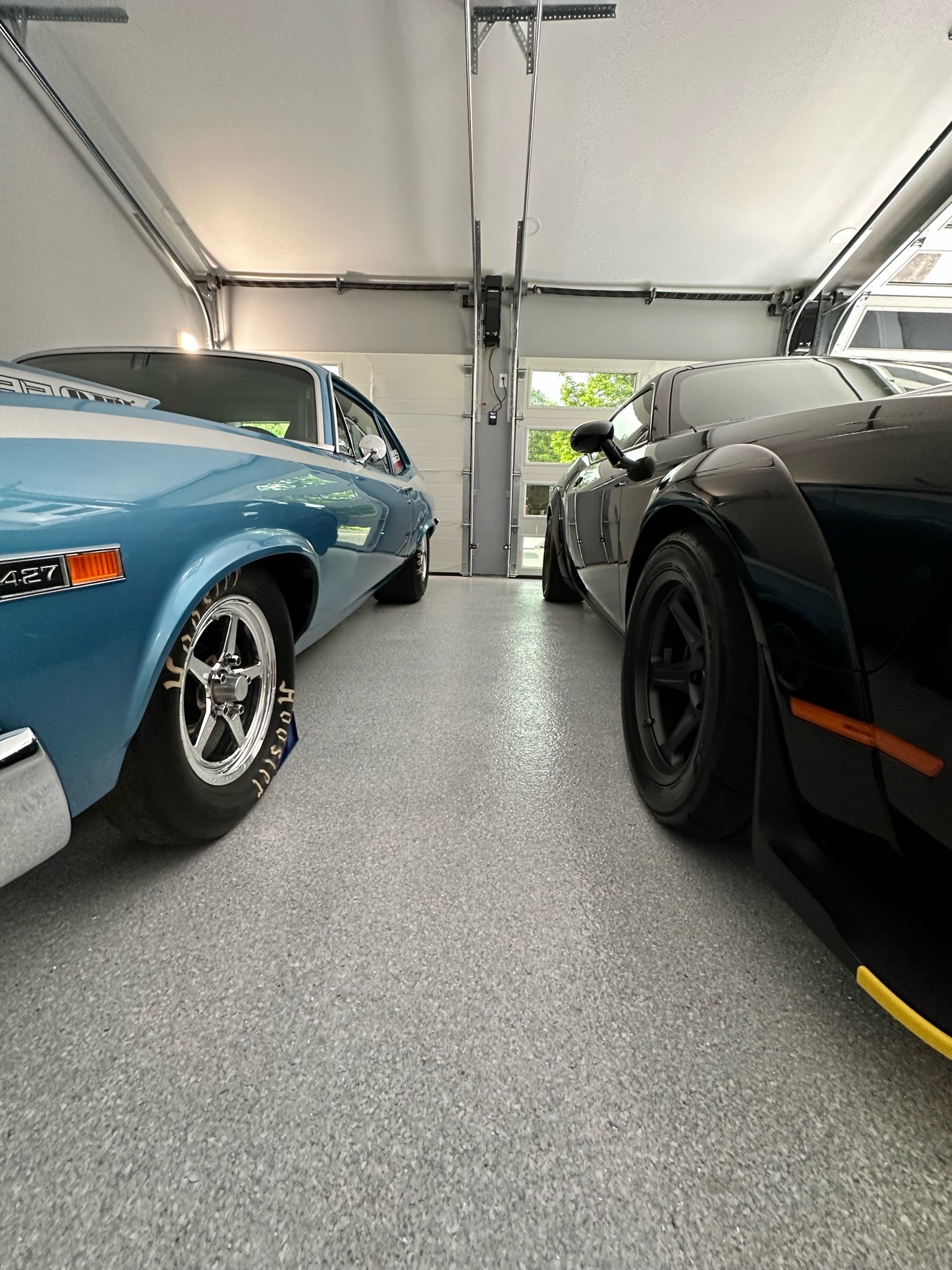
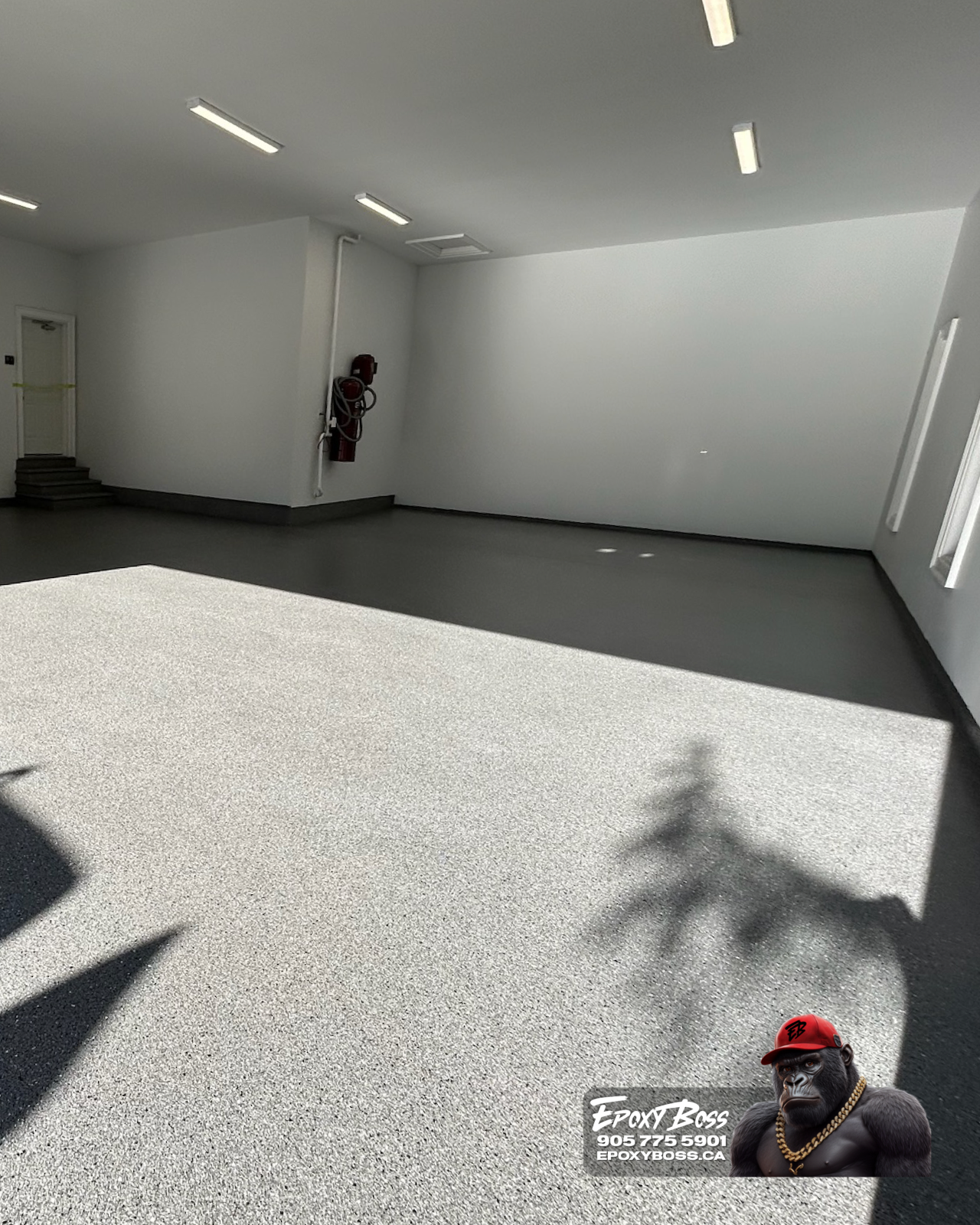
A sealer alone gives limited protection against hot tires, oil and salt brine sitting on the slab all winter. Most homeowners who want real protection and an easy-to-clean surface choose a coating. Read what road salt does to bare concrete and our garage floor coating cost guide.
Basements and interior floors
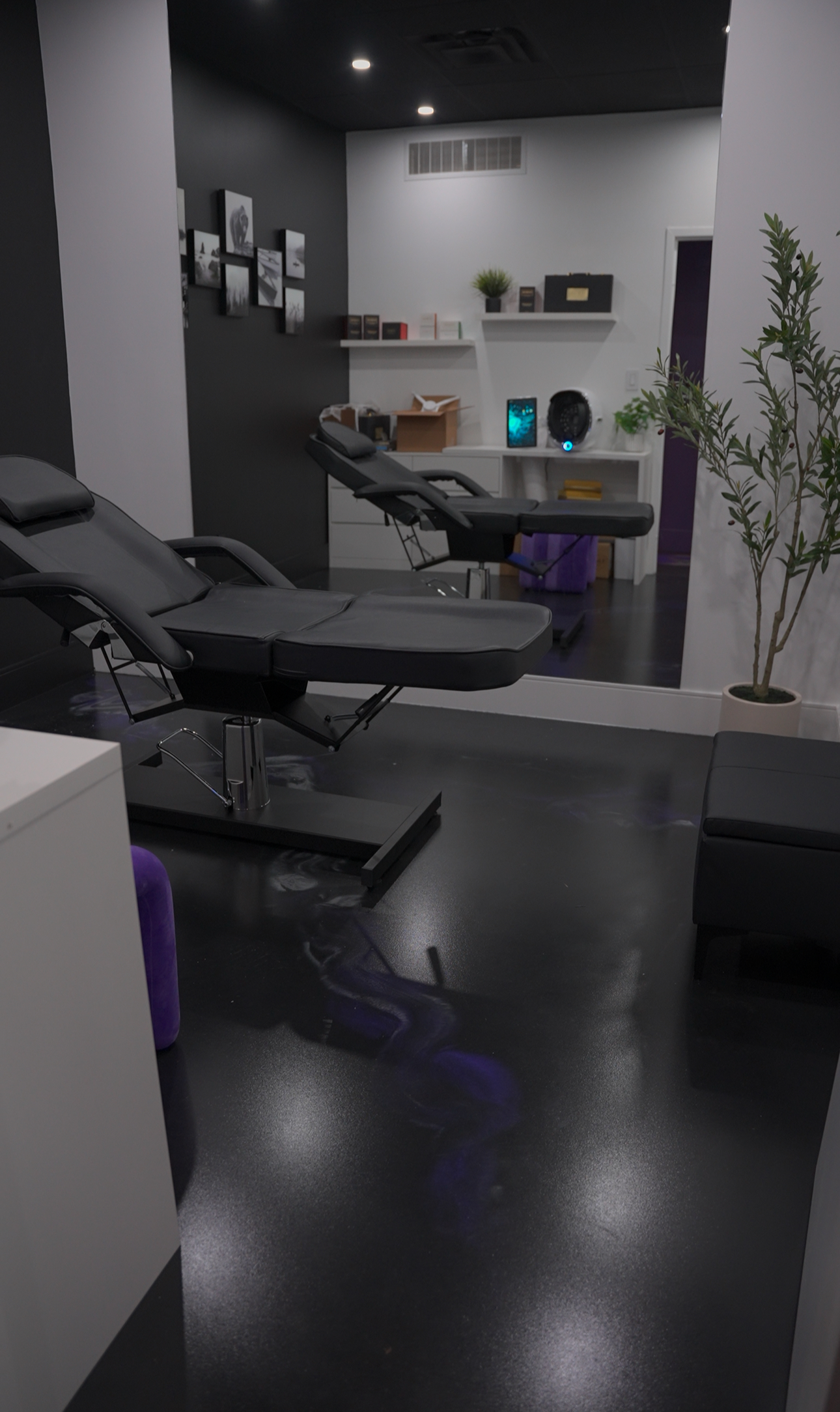
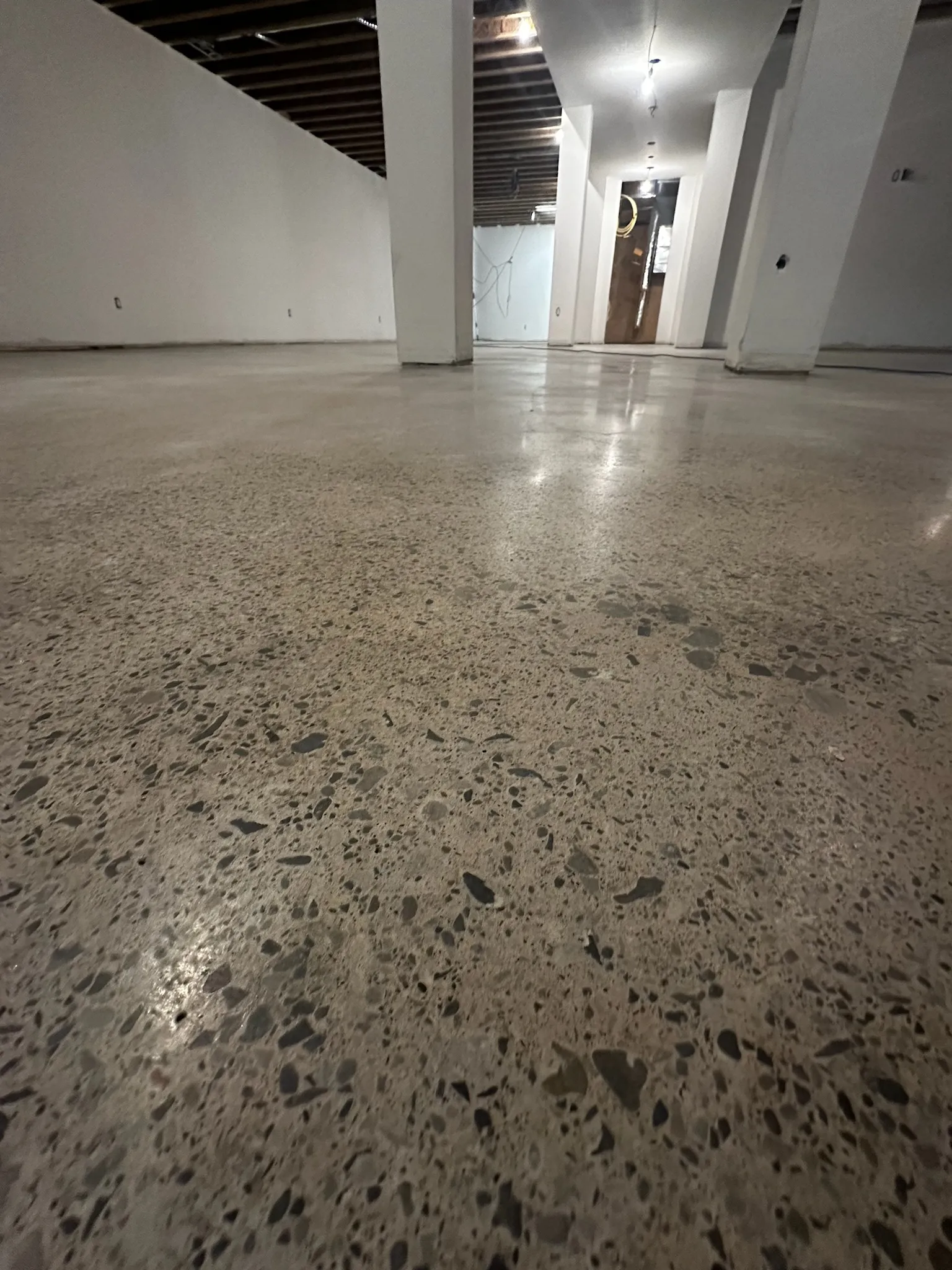
A clear sealer or grind-and-seal finish can control dust and give a clean concrete look. Polished concrete and coatings are the other options. Compare them in polished concrete vs epoxy.
Commercial entrances and walkways
Shops, offices and multi-unit buildings in Simcoe County have the same winter exposure as homes, with more foot traffic and more salt. Exterior walkways usually suit penetrating sealers, while interior entrance areas and vestibules often benefit from a textured coating or grind-and-seal finish that can be cleaned easily through the winter. Walk-off matting at the door helps either option last.
When to seal concrete in Simcoe County
- New concrete: many sealer manufacturers ask for new concrete to cure for several weeks first. Follow the product's guidance.
- Season: late spring to early fall usually gives the best conditions. The concrete must be dry, and air and surface temperatures must stay within the product's range during application and cure.
- Before winter: sealing in late summer or early fall means the surface is protected before the first salt of the season.
How often to reseal
It depends on the product, traffic and exposure. Penetrating sealers typically last longer than topical films, which wear faster in traffic lanes. A simple check is to sprinkle water on the surface: if it soaks in and darkens the concrete quickly rather than beading, it may be time to reseal. Coatings are maintained differently, by cleaning and, when needed, refreshing the topcoat.
Preparation still matters
Sealers work best on clean, sound concrete. Old peeling sealer, oil, efflorescence and loose material should be removed first, and surface damage repaired. Badly scaled or spalled concrete may need repair before any sealer or coating. See scaling, pitting and spalling.
Frequently asked questions
Is sealing concrete the same as coating it?
No. Sealers are thin or penetrating treatments that protect the existing surface; coatings are multi-layer systems that cover and change it.
Will a sealer stop salt damage completely?
No treatment makes concrete immune, but a good penetrating sealer reduces water and salt uptake, which helps limit freeze-thaw and salt-related scaling.
Can I seal my garage instead of coating it?
You can, but protection is limited. For a garage that sees salty cars every winter, a coating usually performs better.
Do you serve my town?
Yes. We are based in Innisfil and serve Innisfil, Barrie, Orillia and the rest of Simcoe County, as well as the GTA, York Region, Halton, Durham and Muskoka.
Book a free floor assessment
Epoxy Boss has been based in Innisfil since 2019. Call (905) 775-5901 or request a free floor assessment, and we'll recommend a sealer or coating for your concrete with a written quote in Canadian dollars.