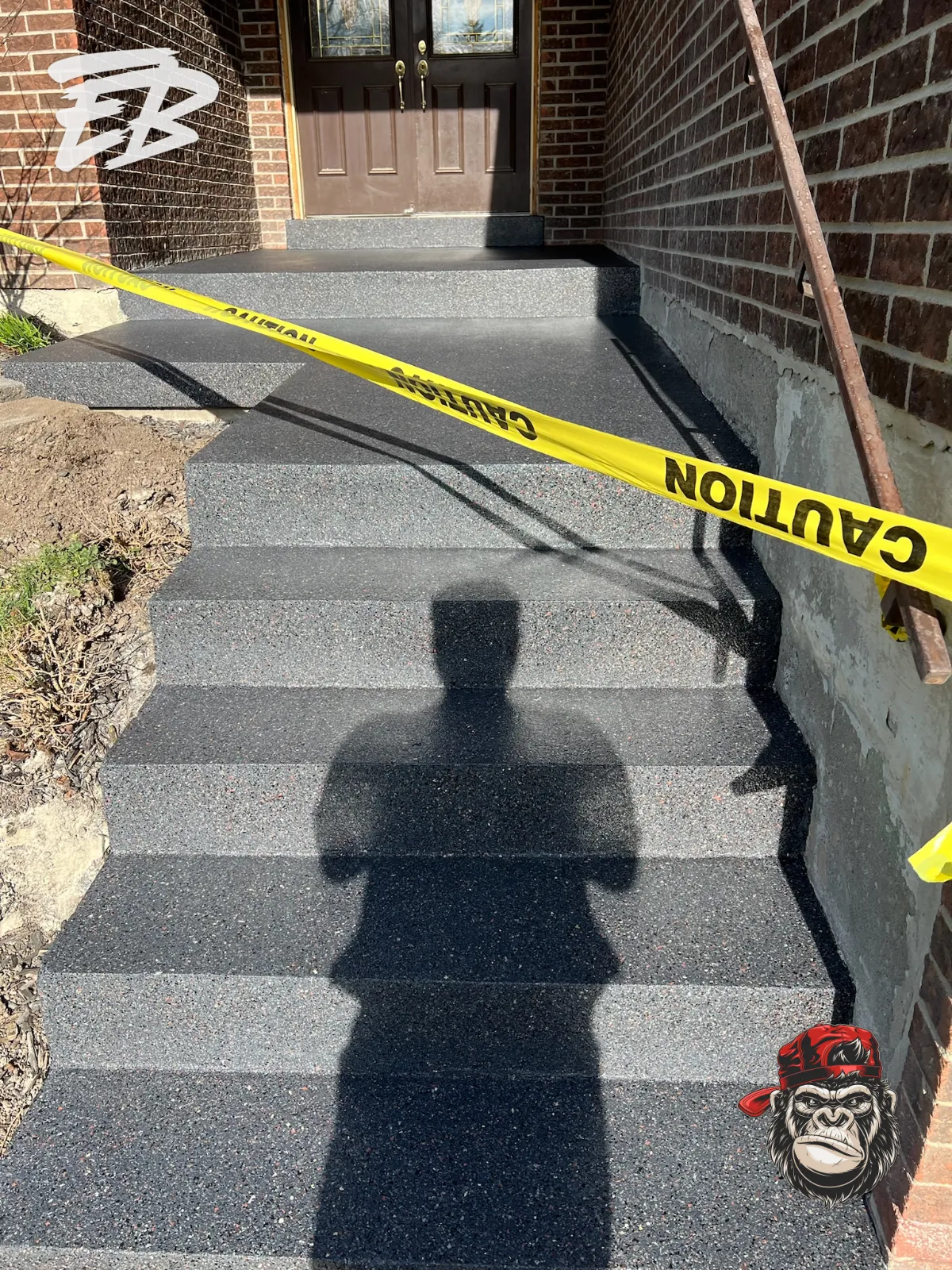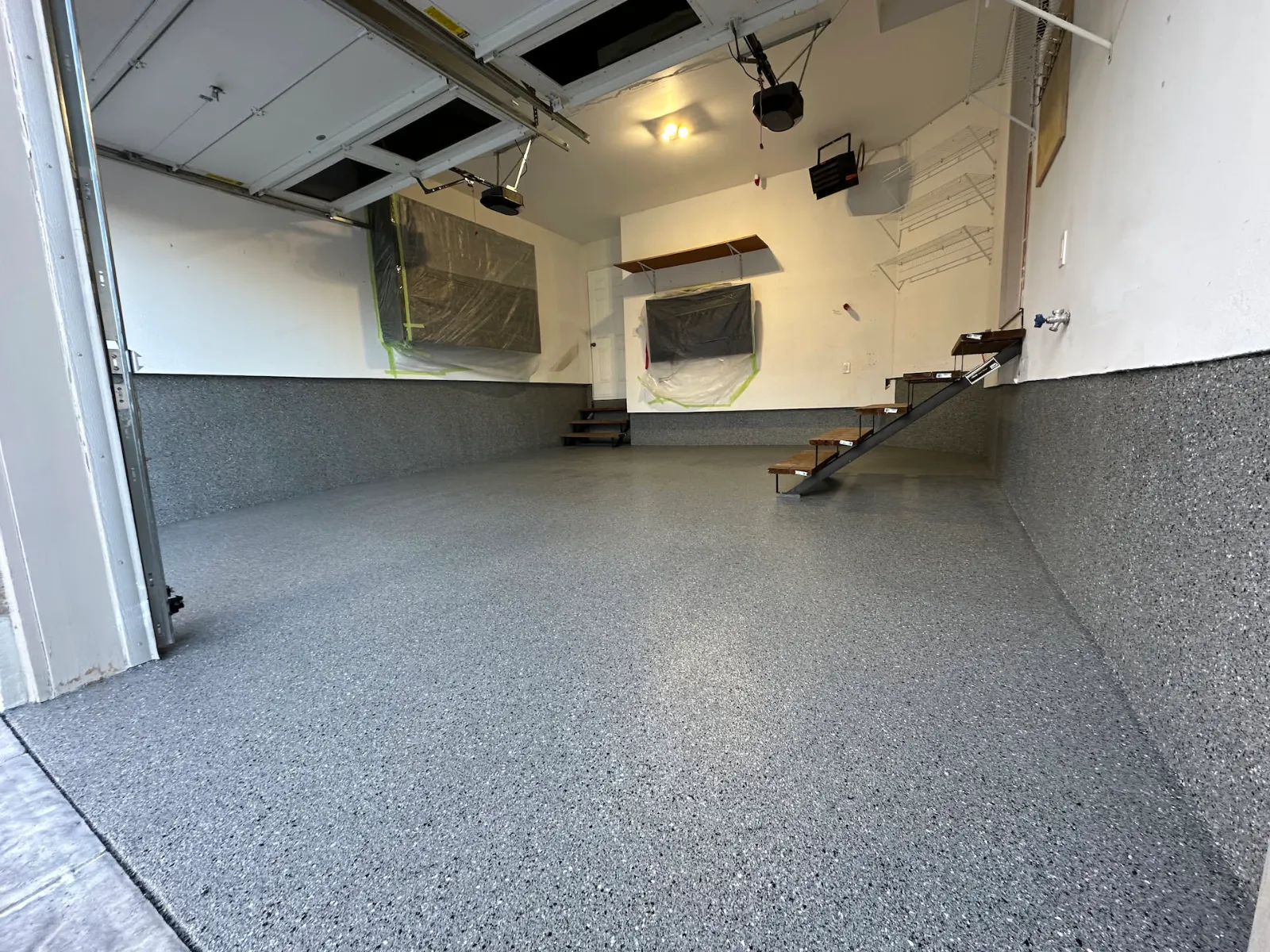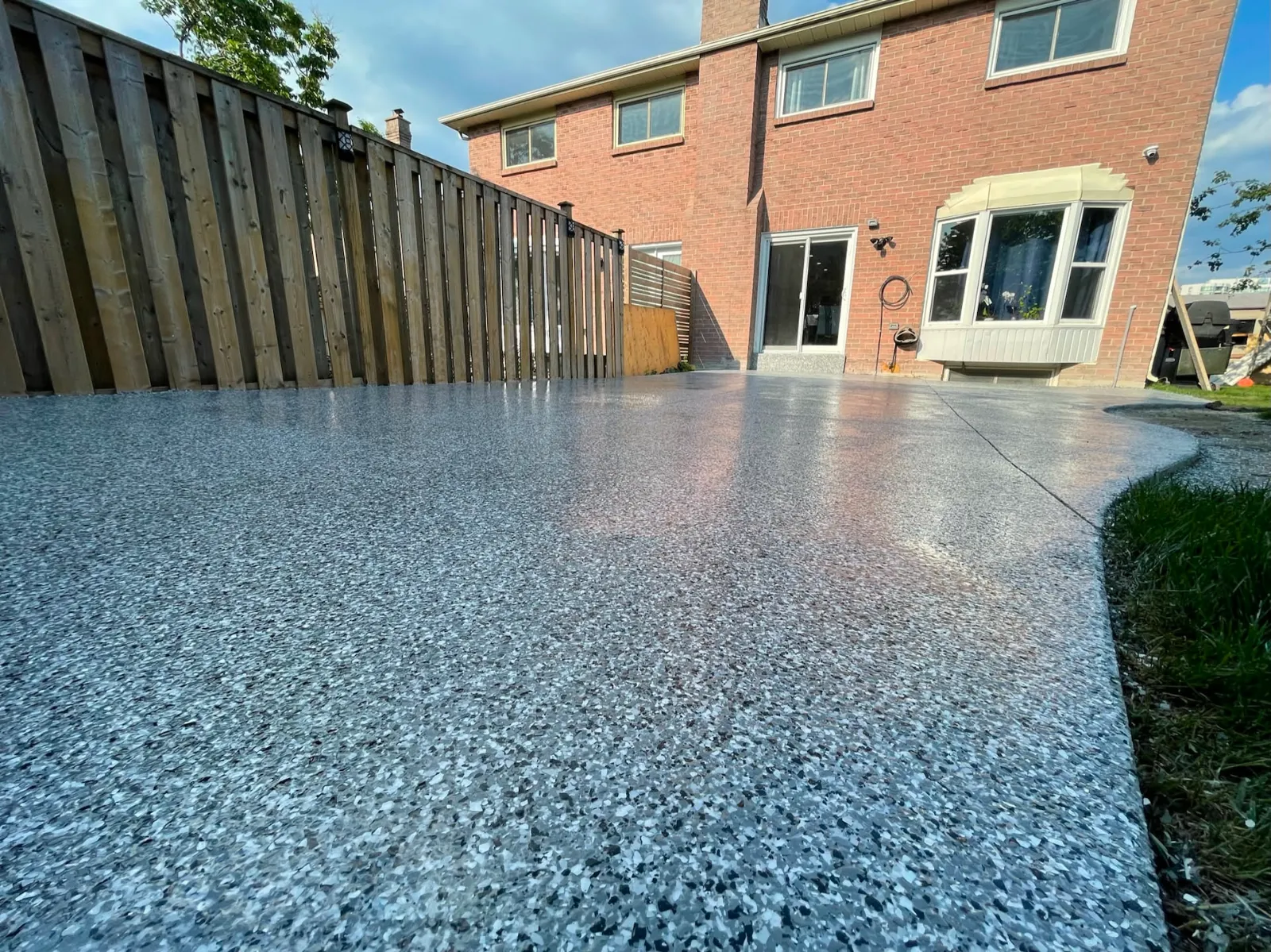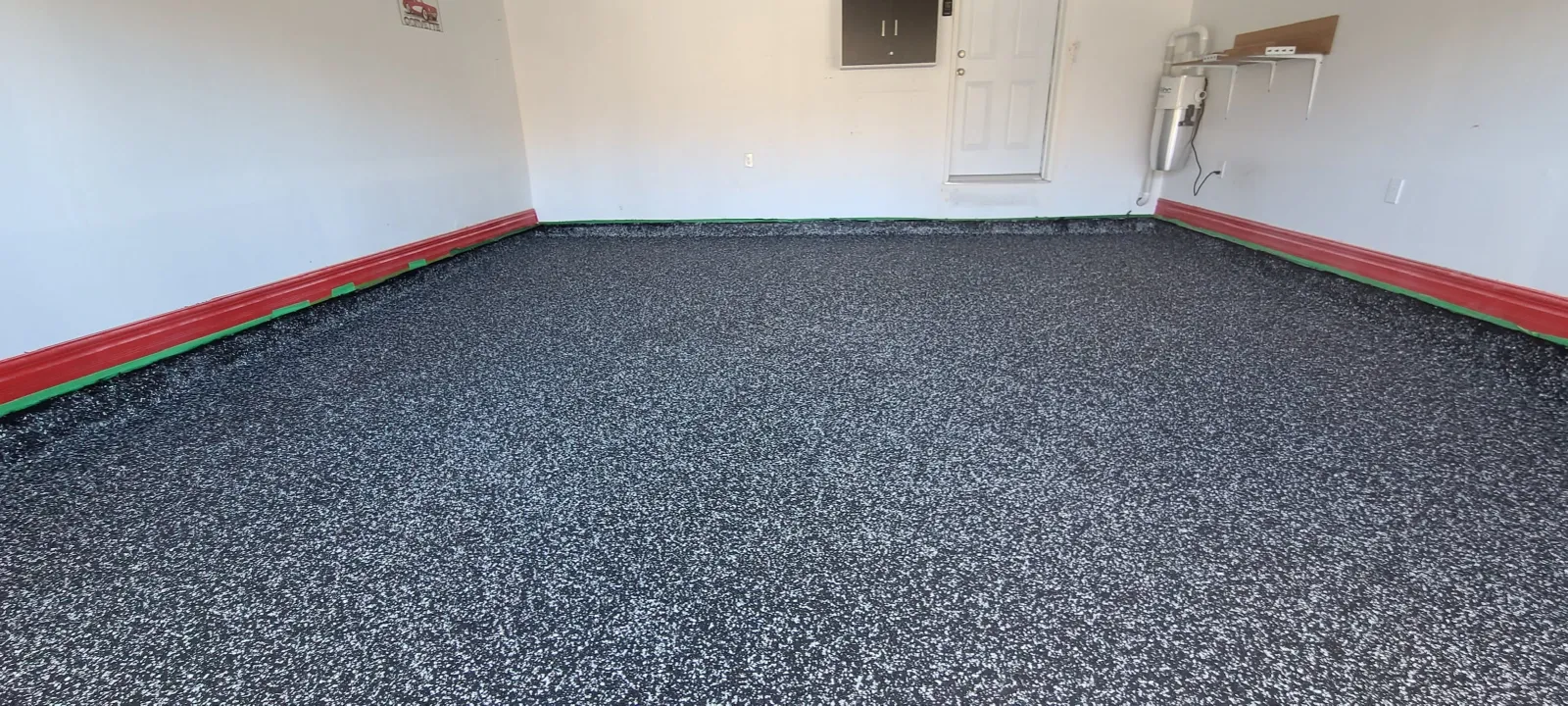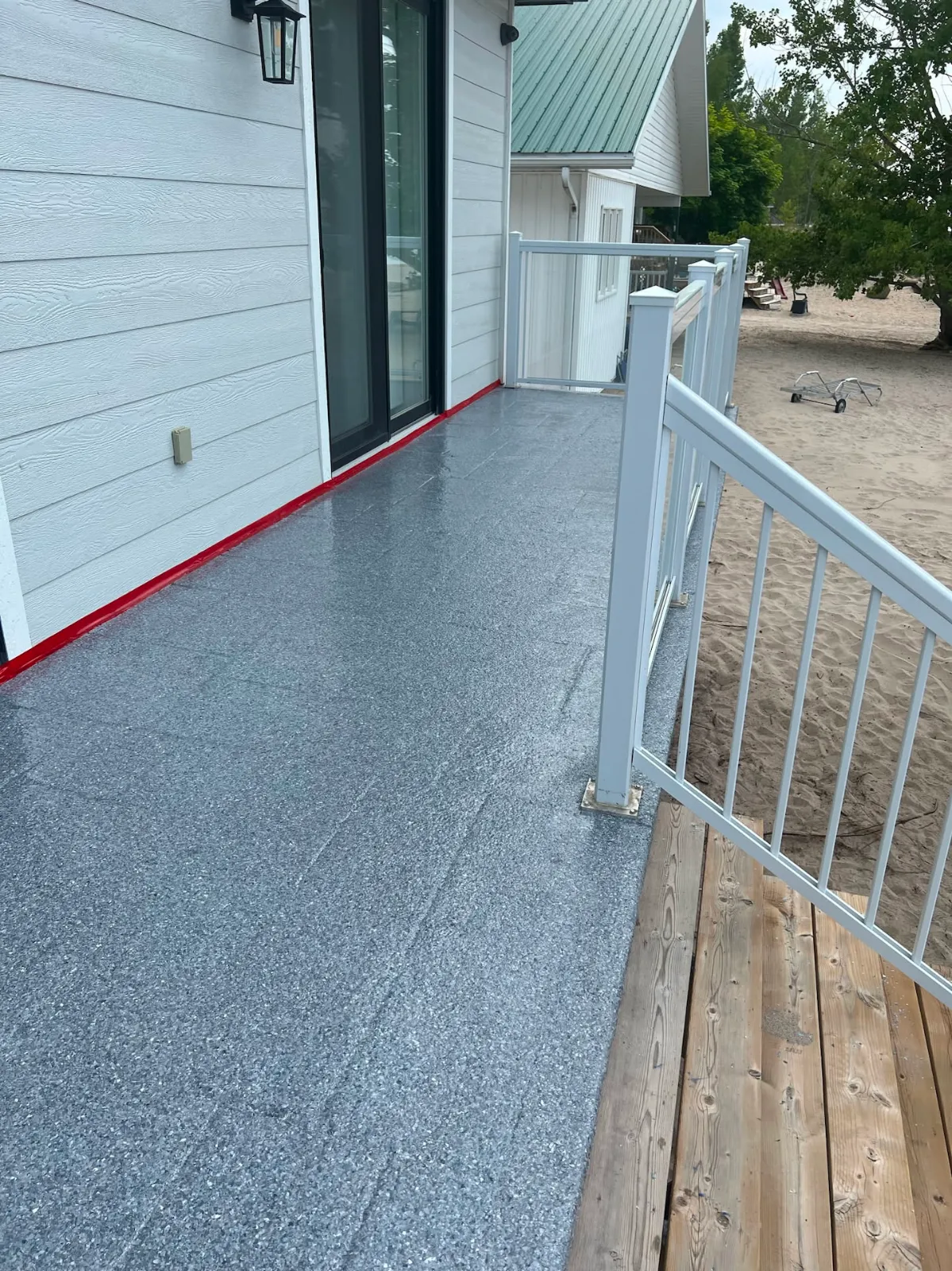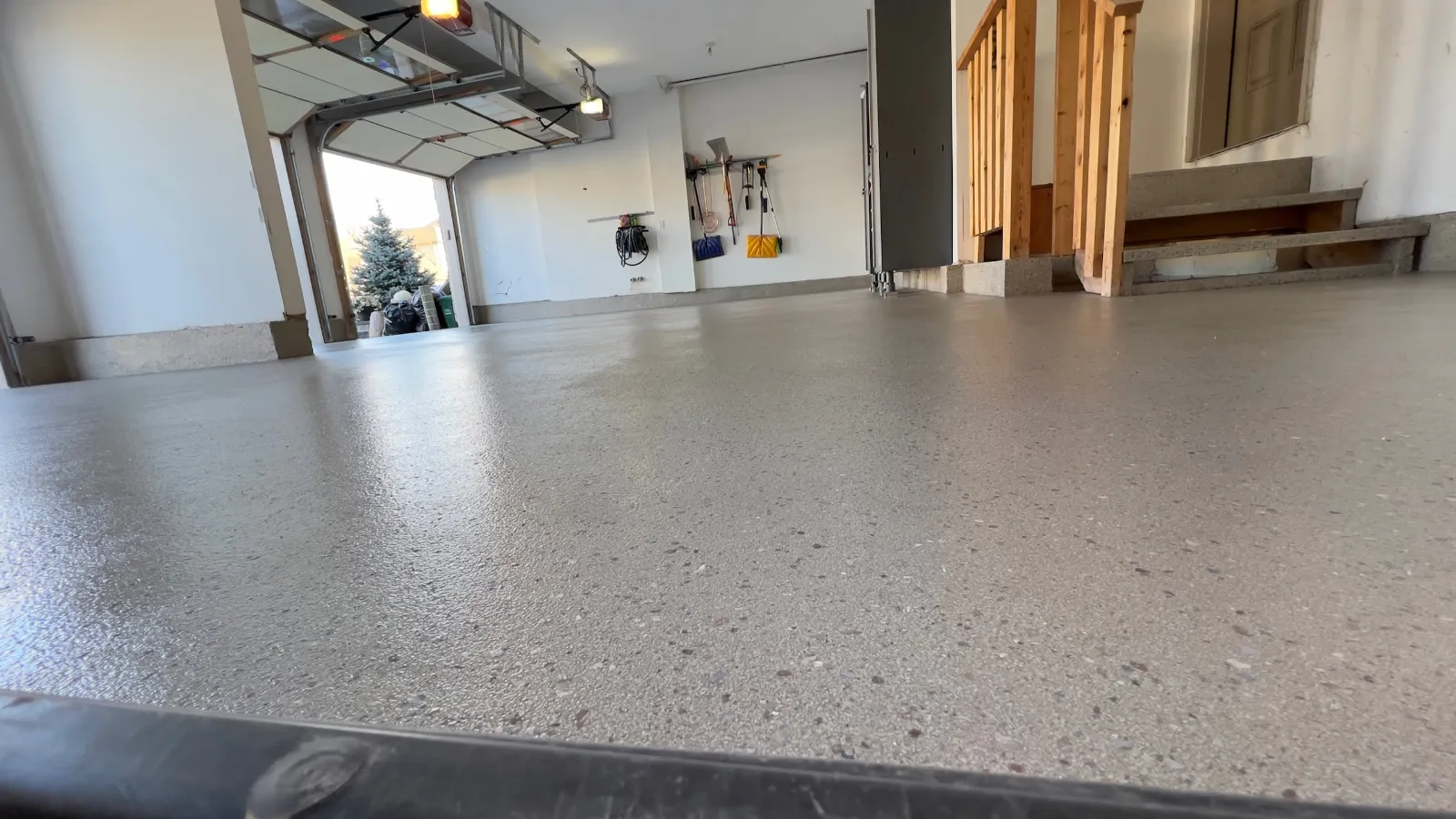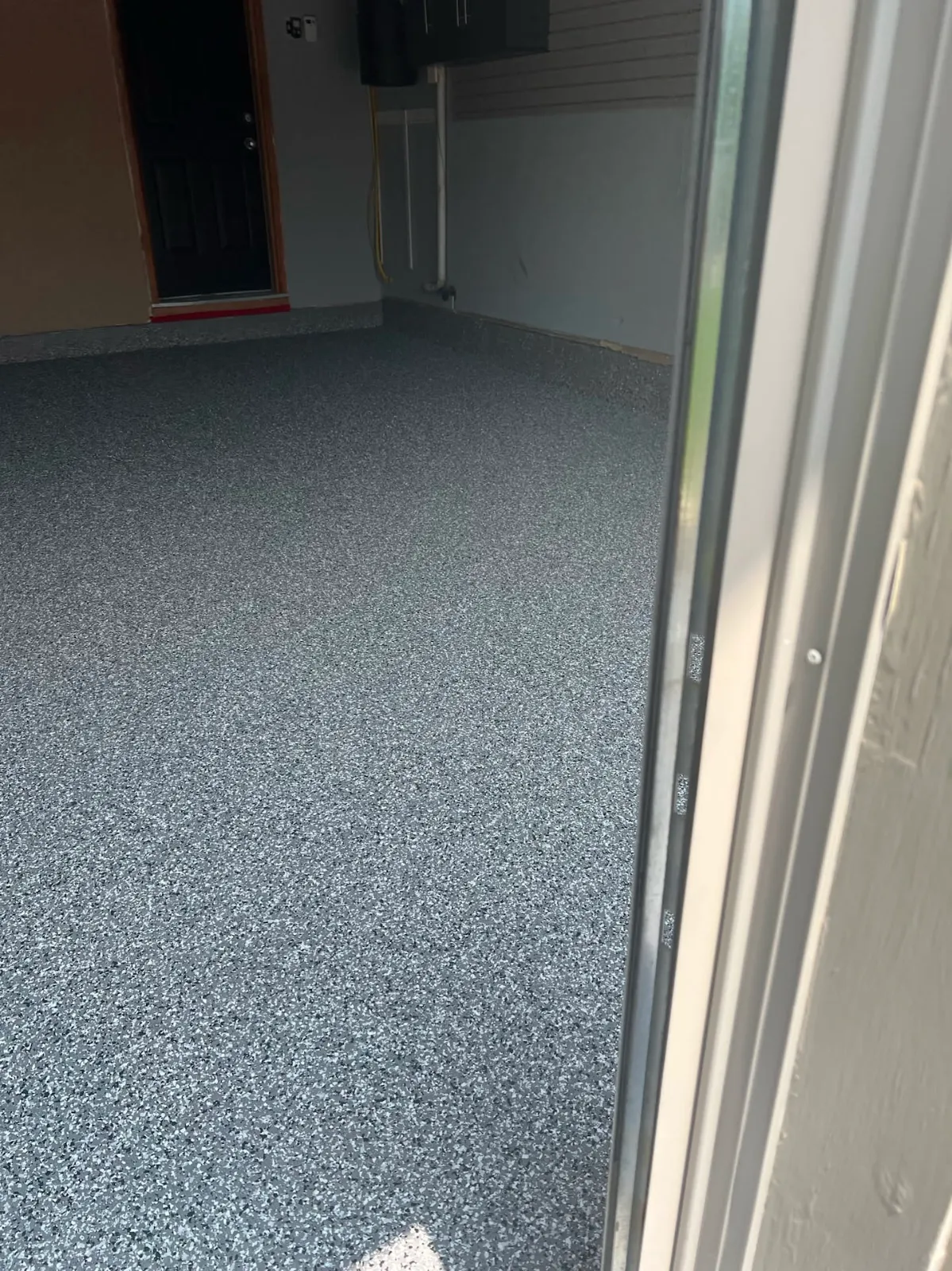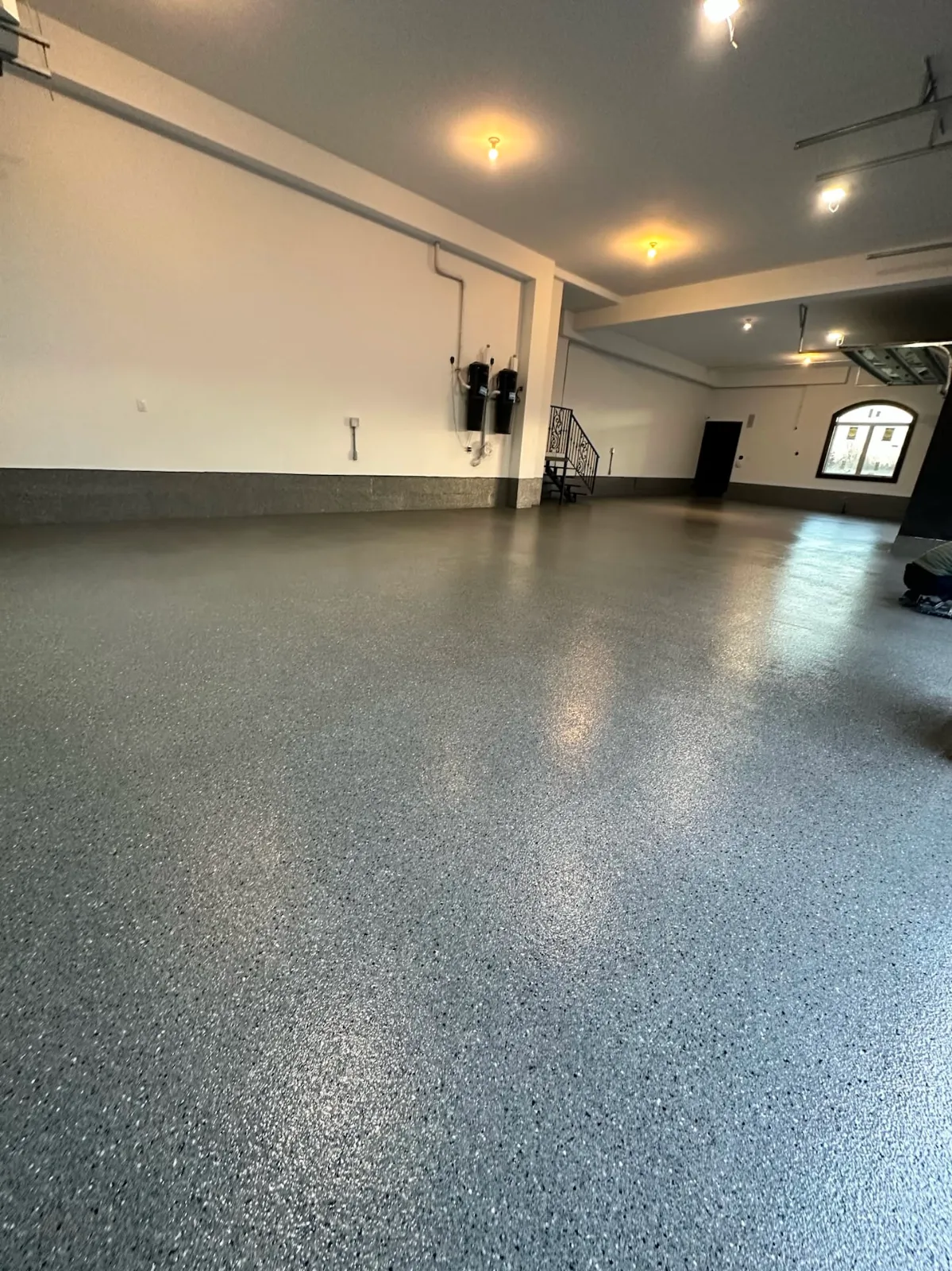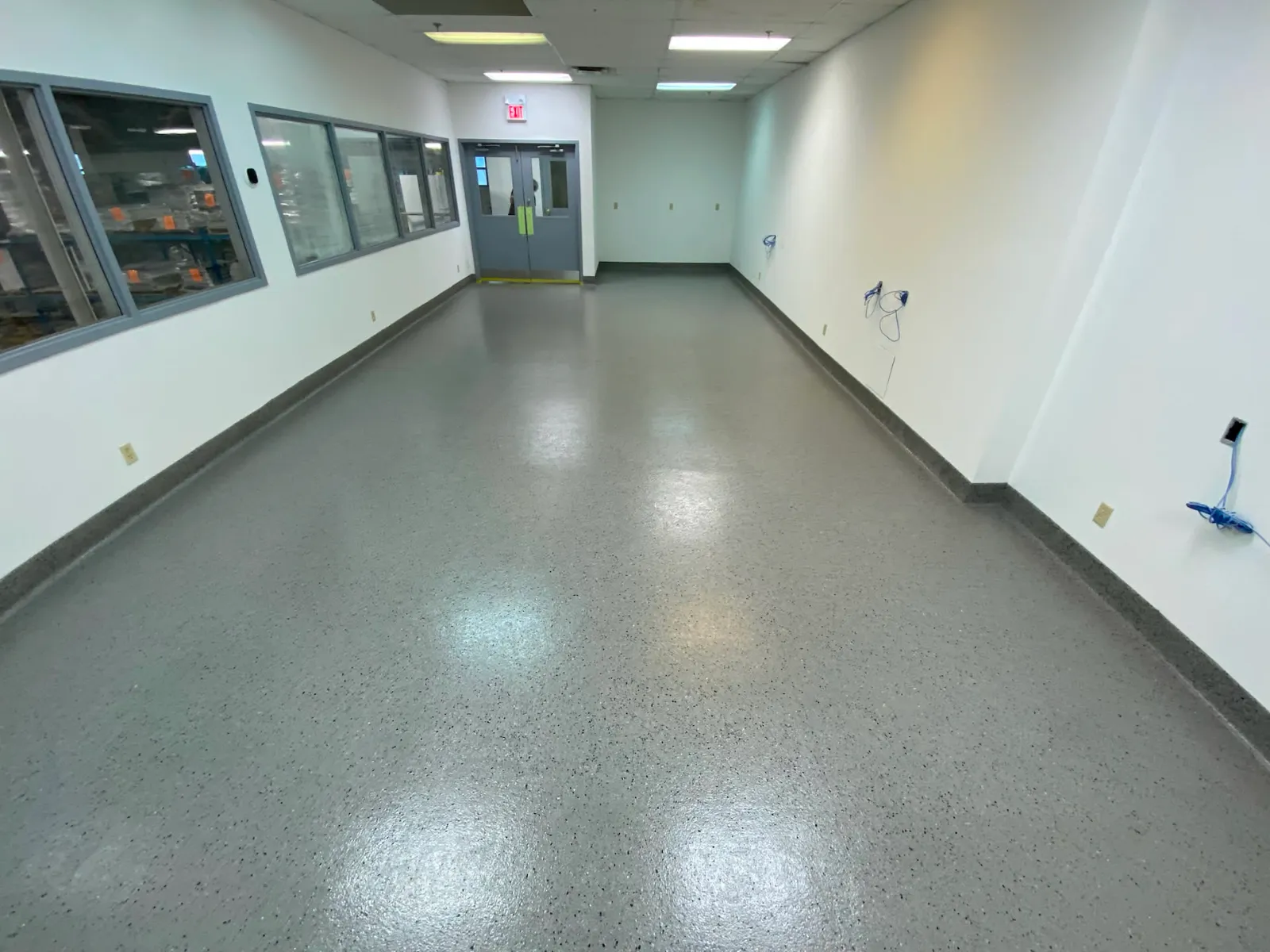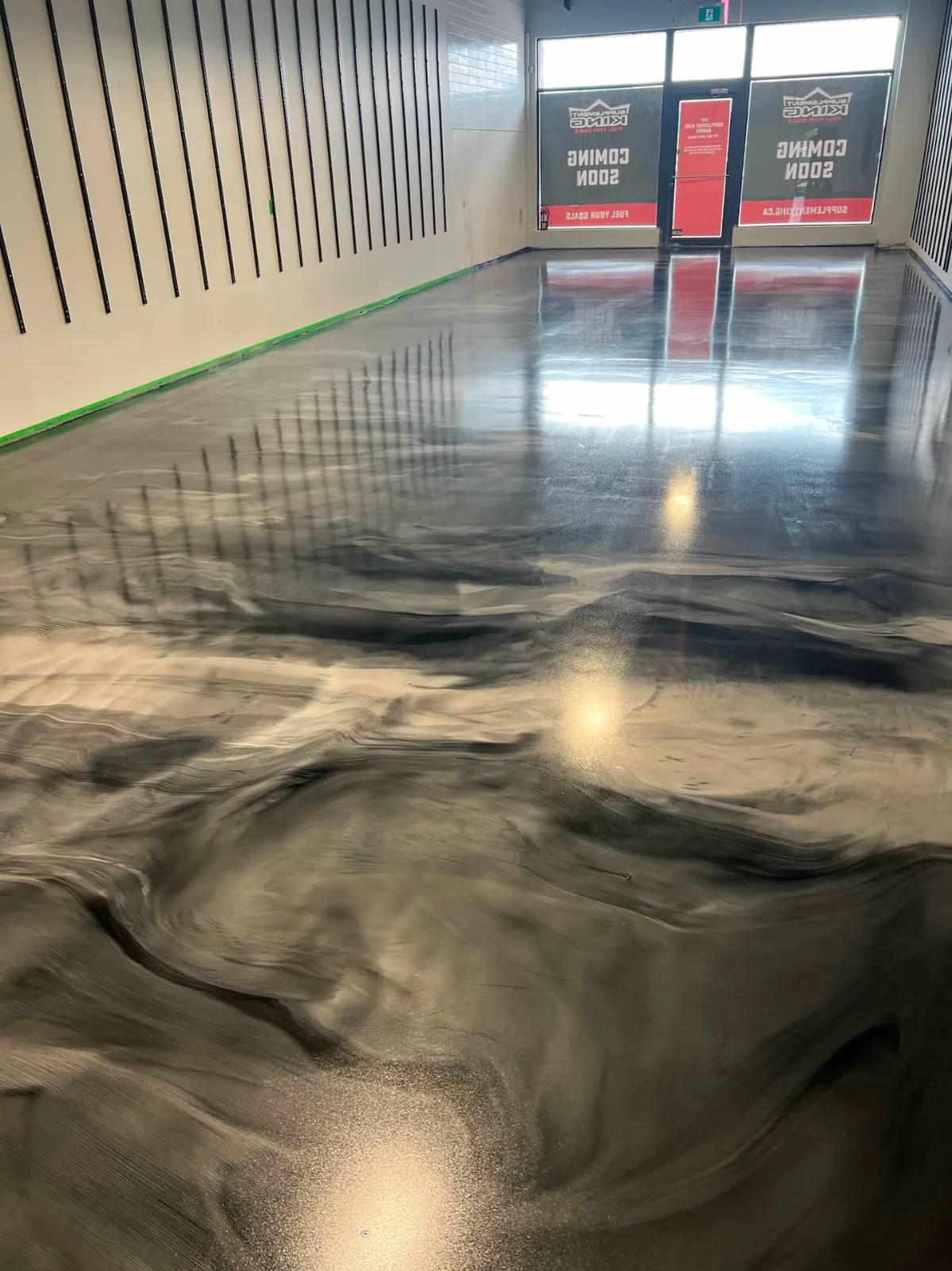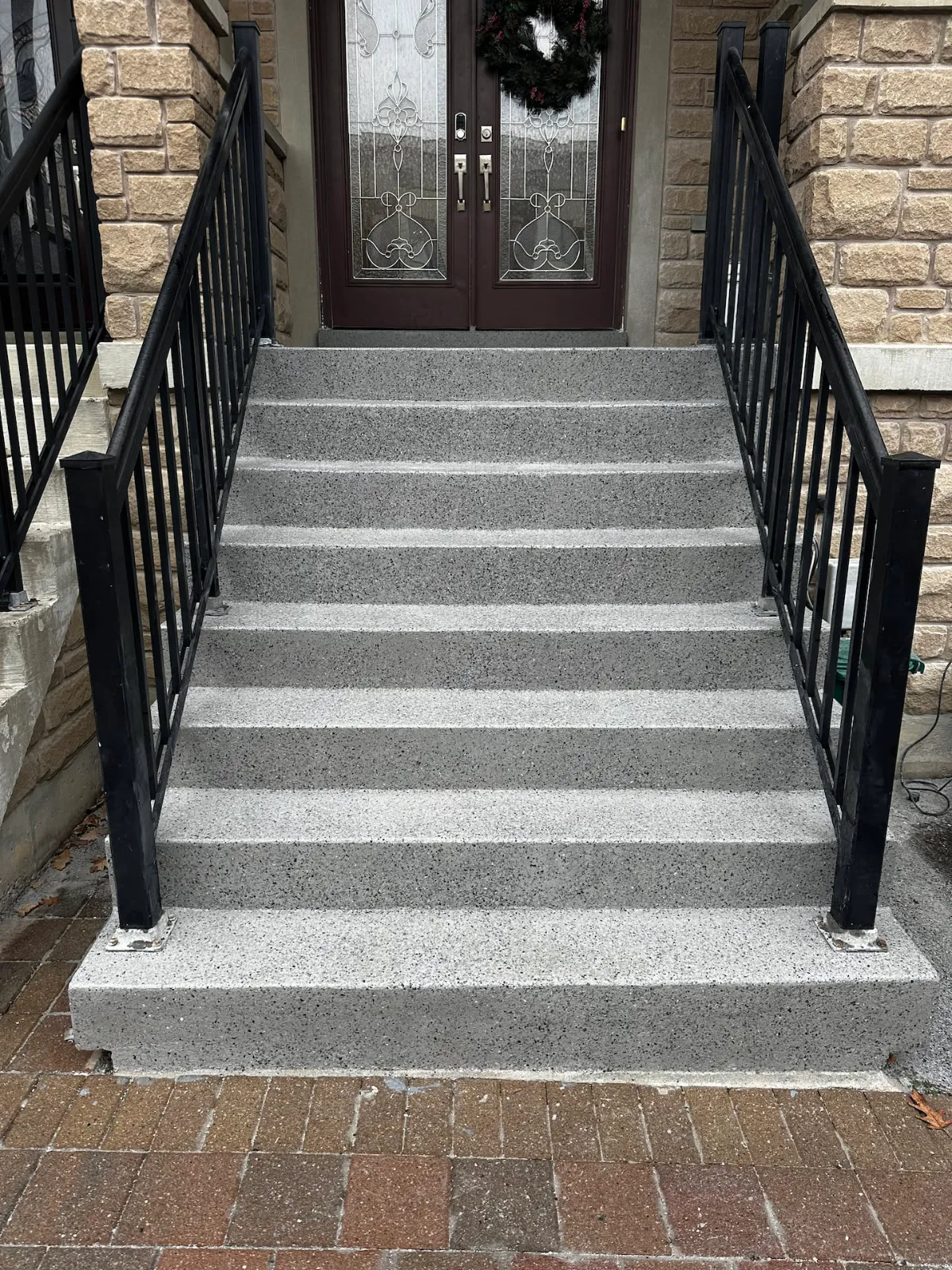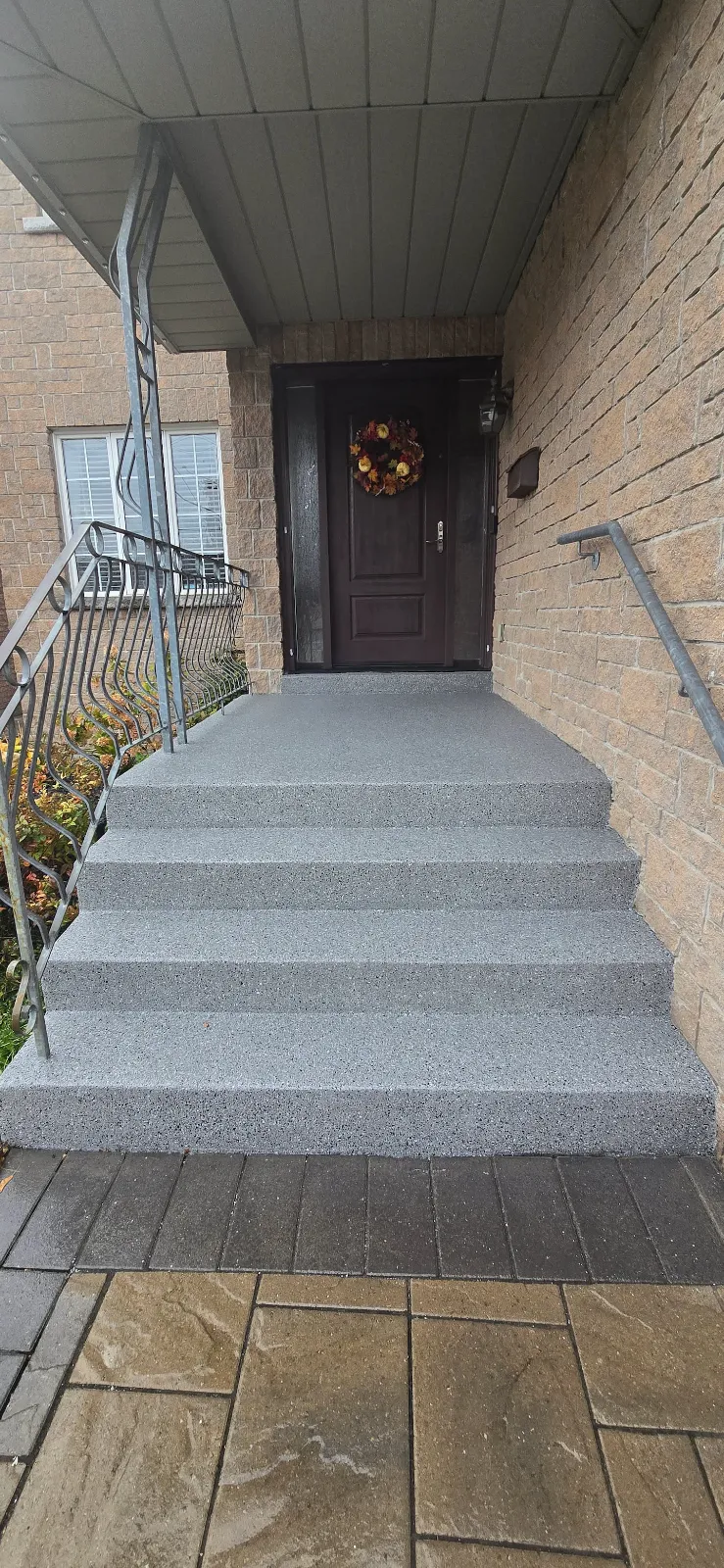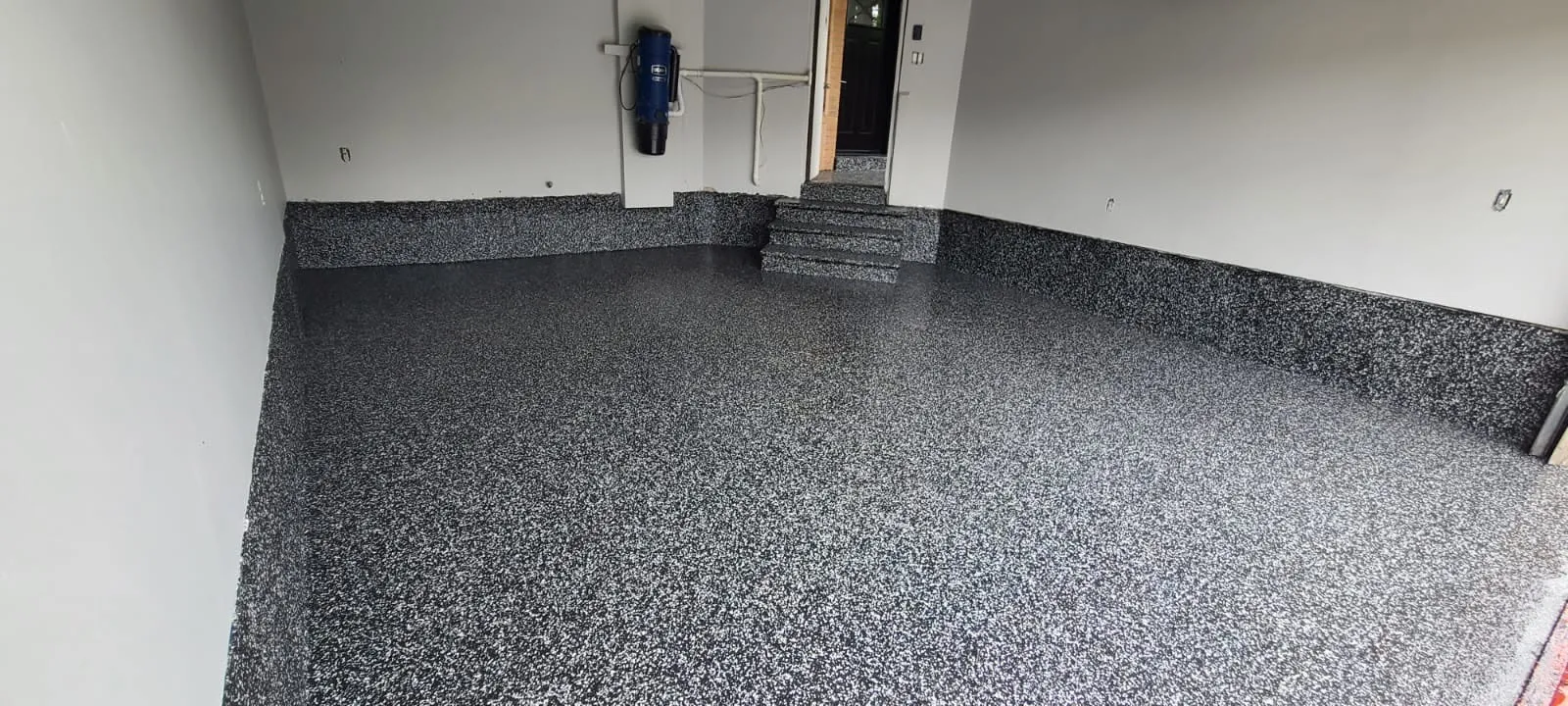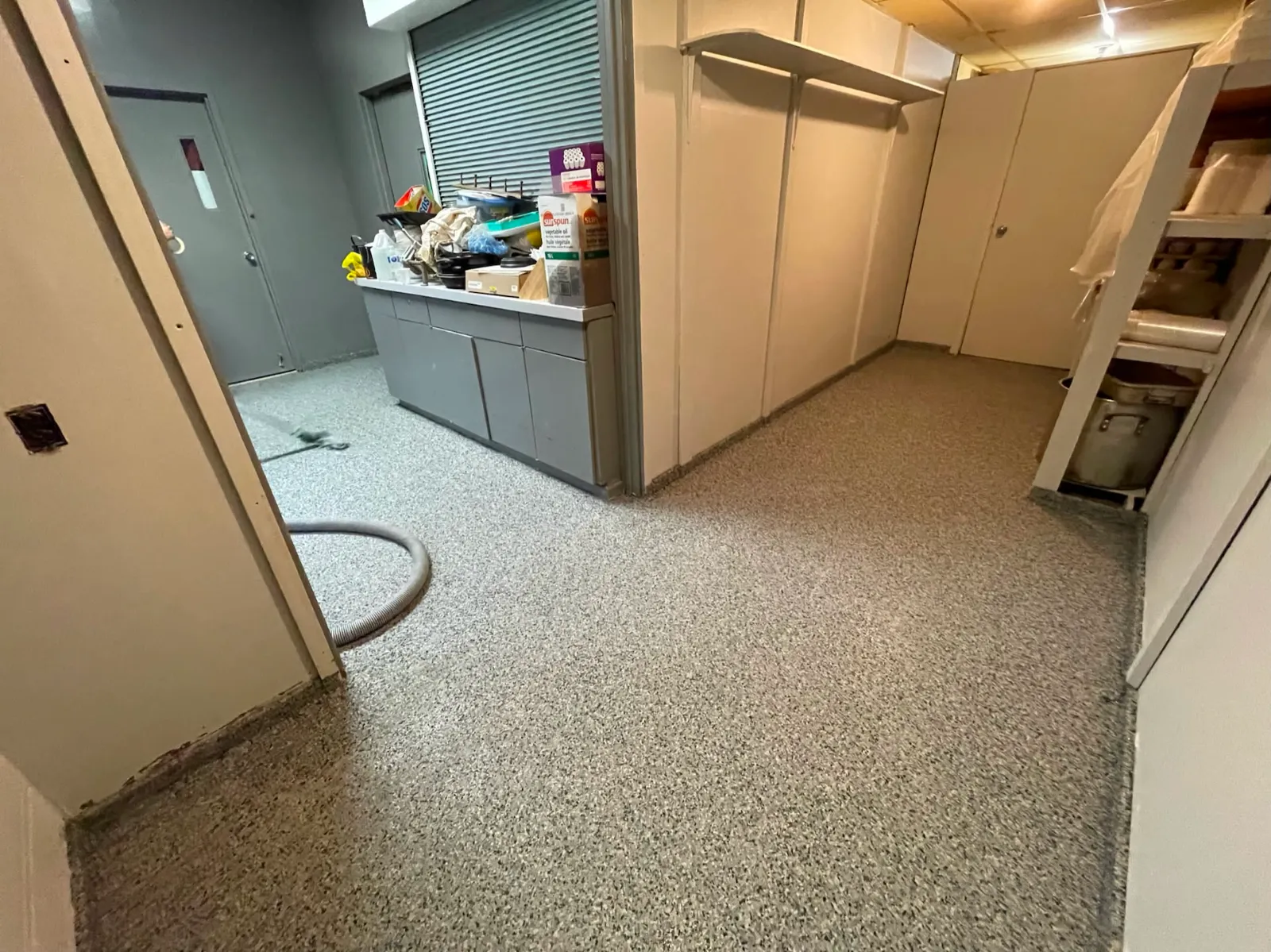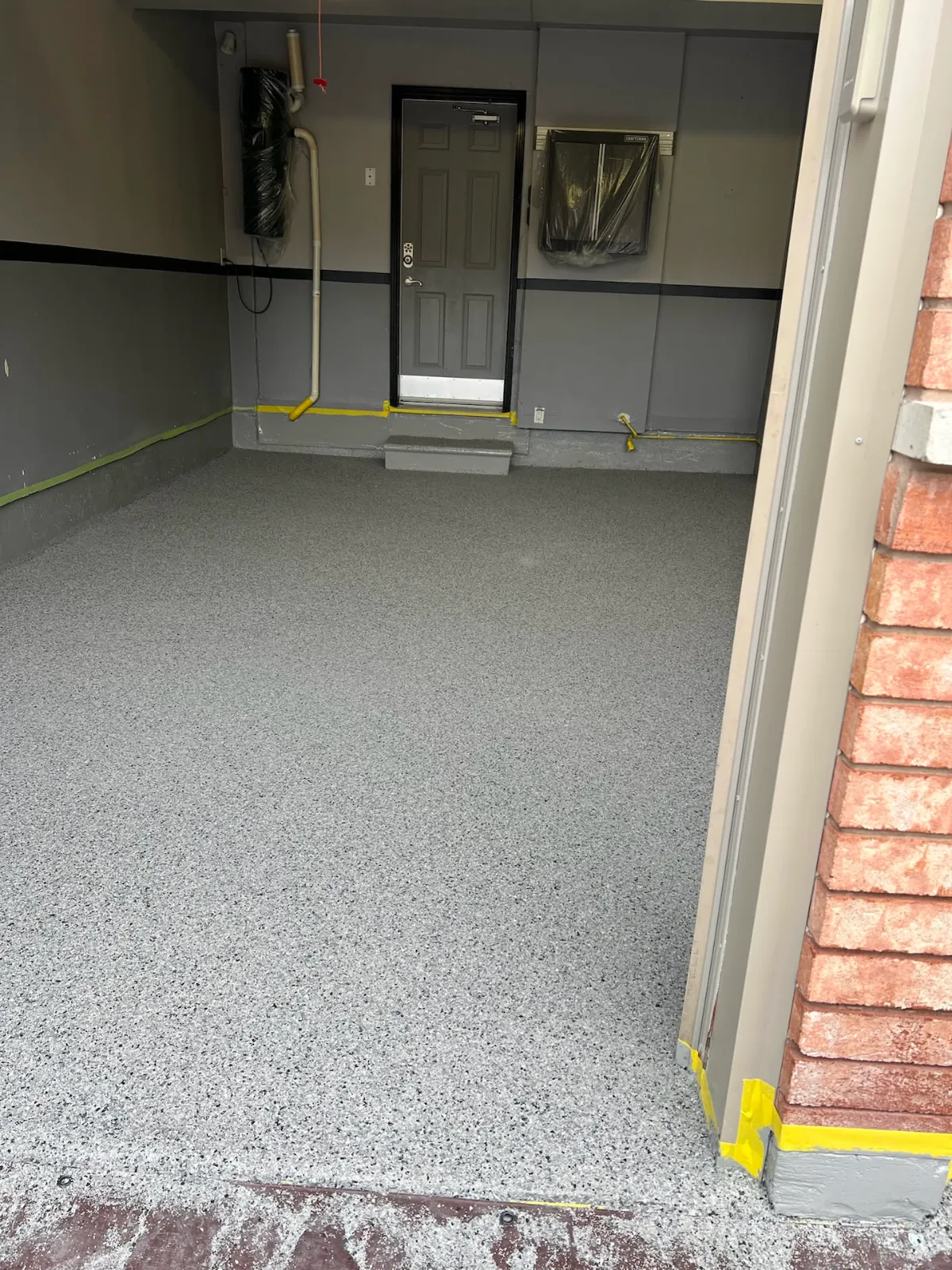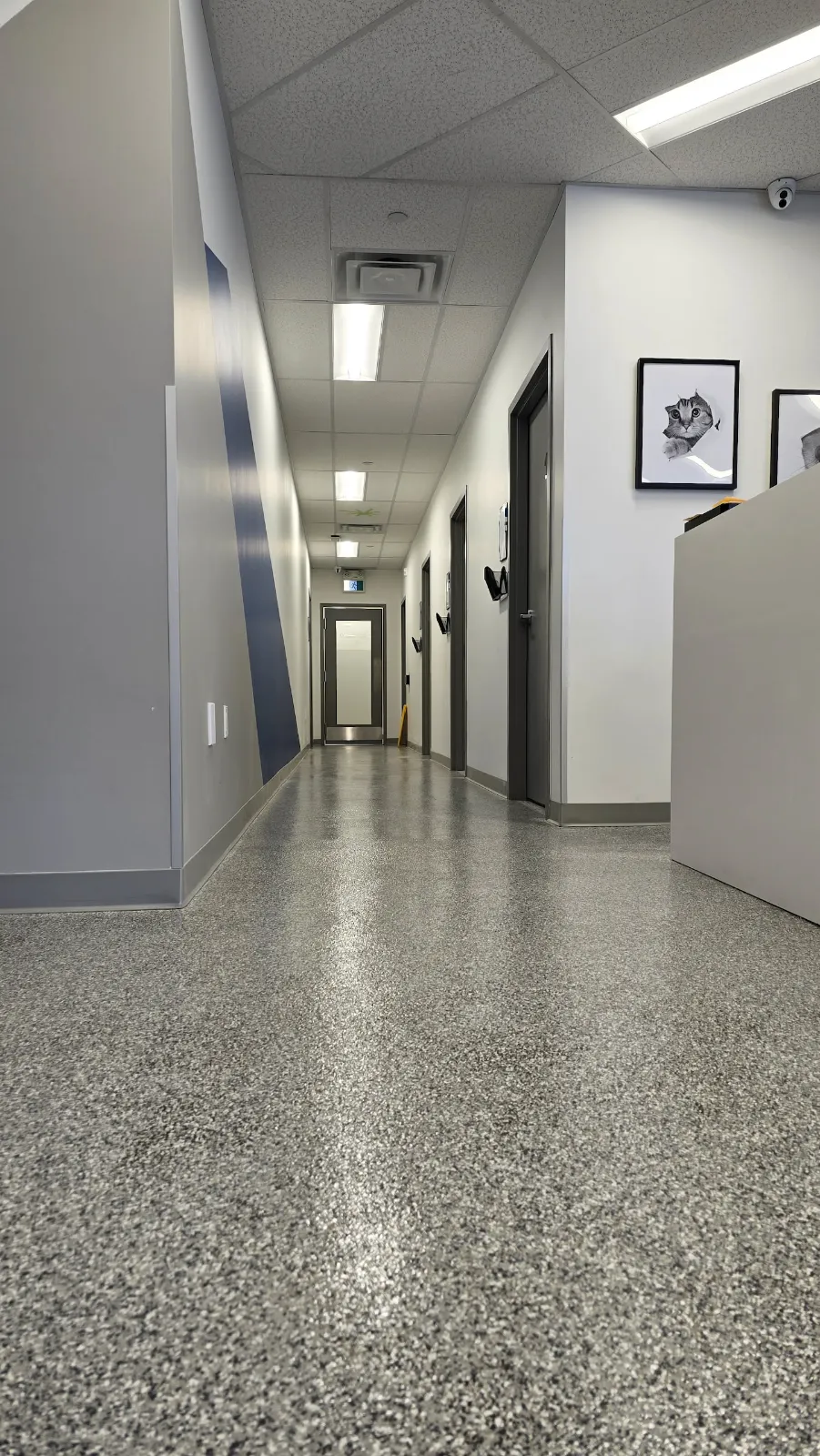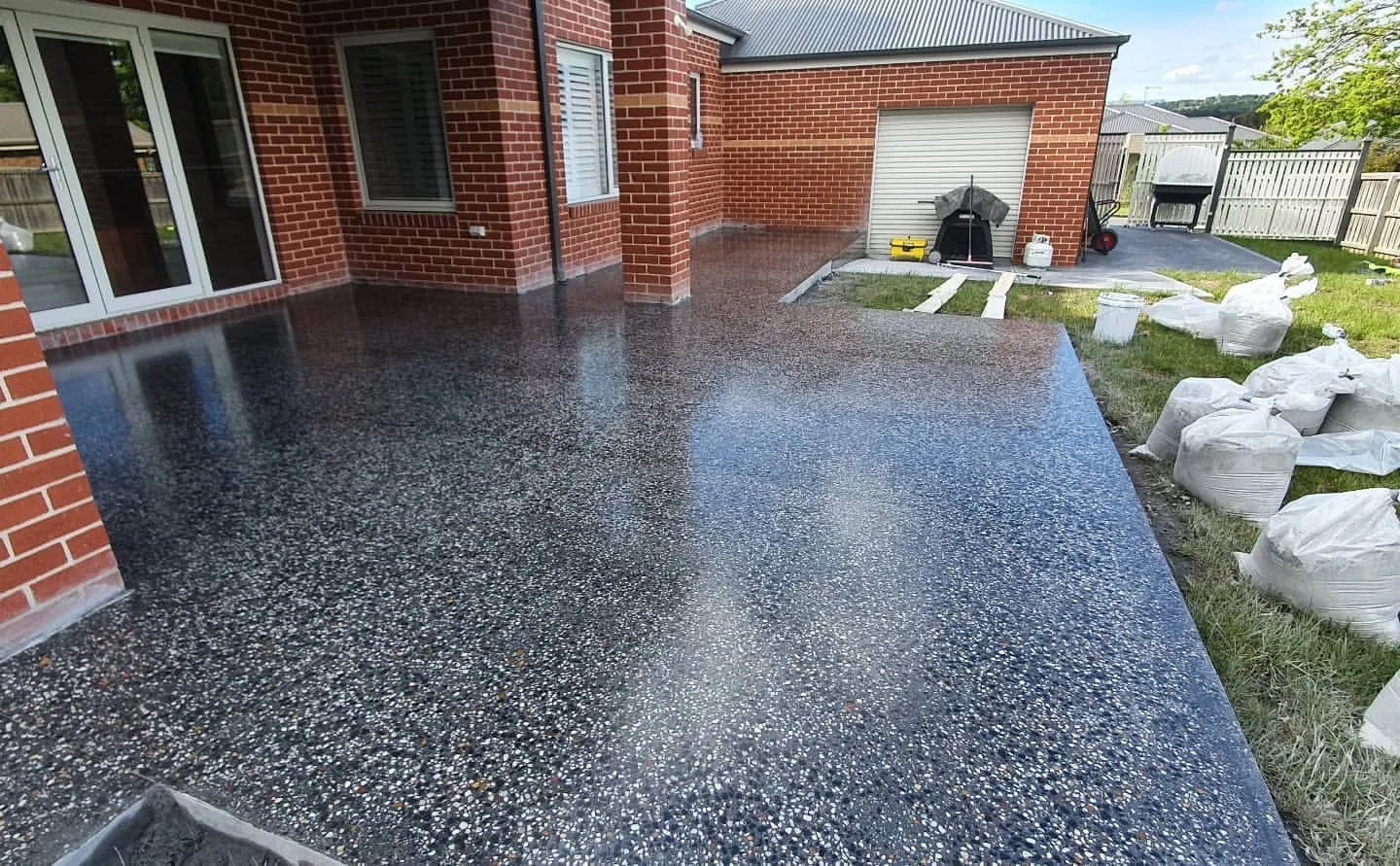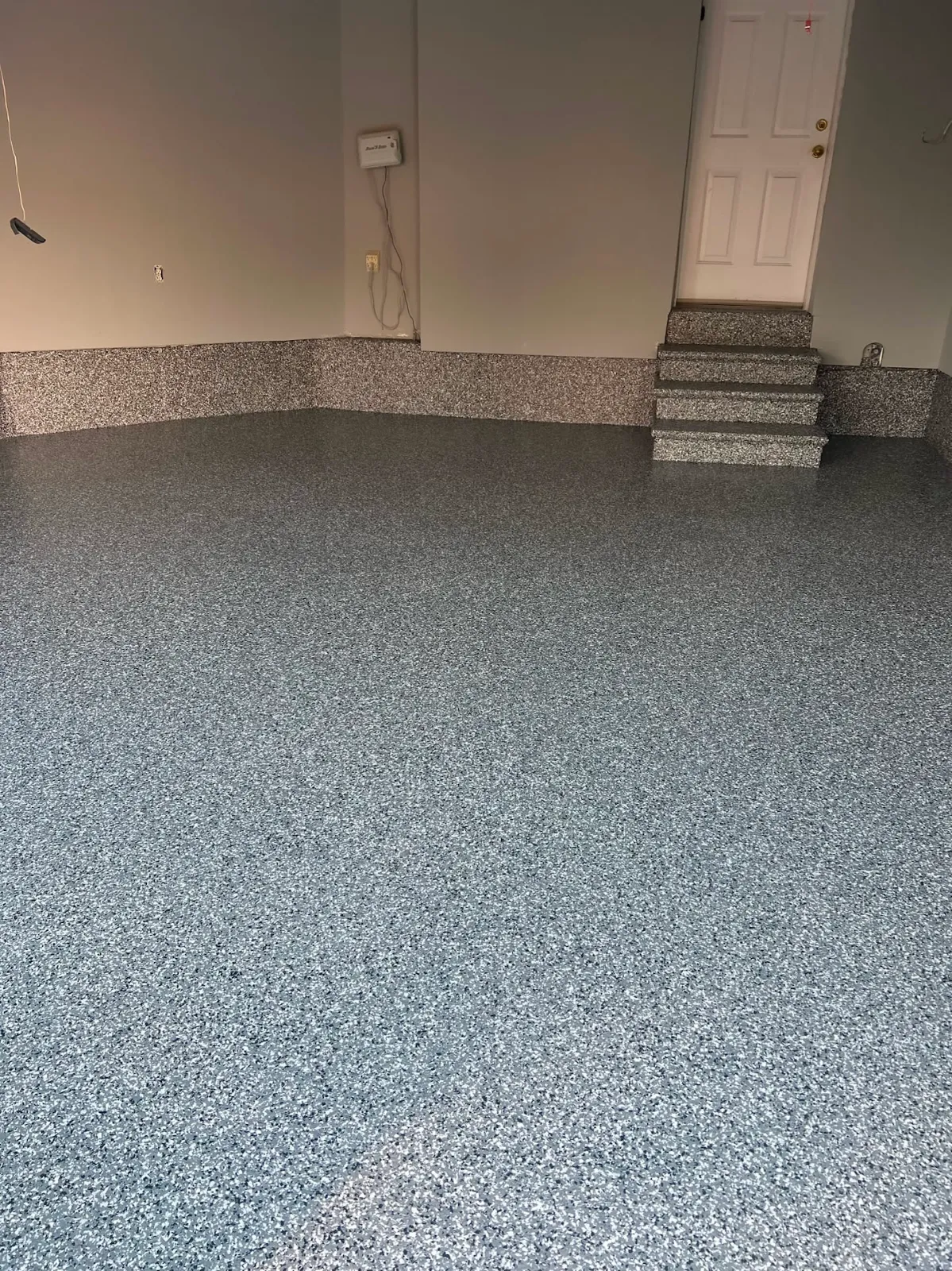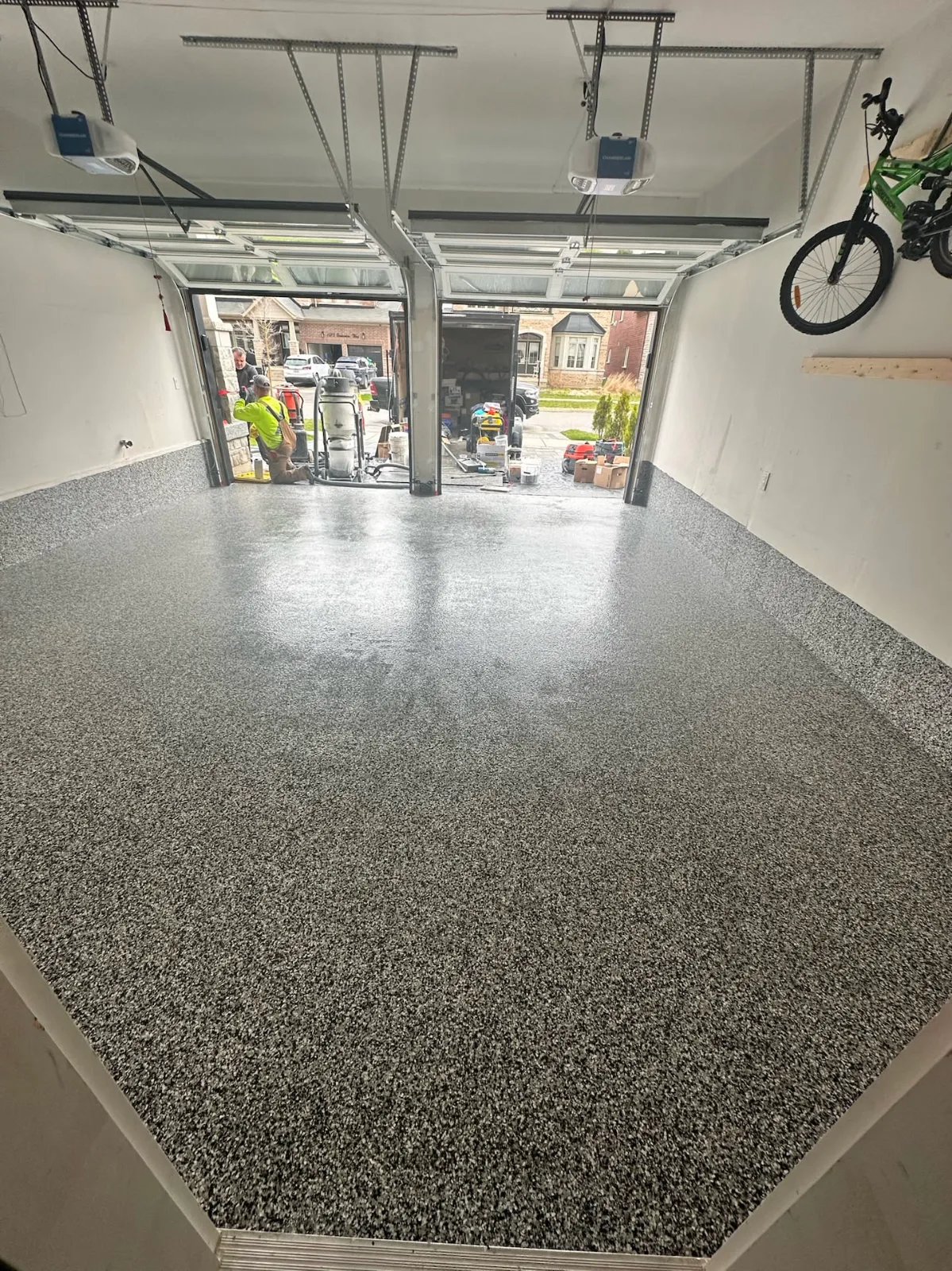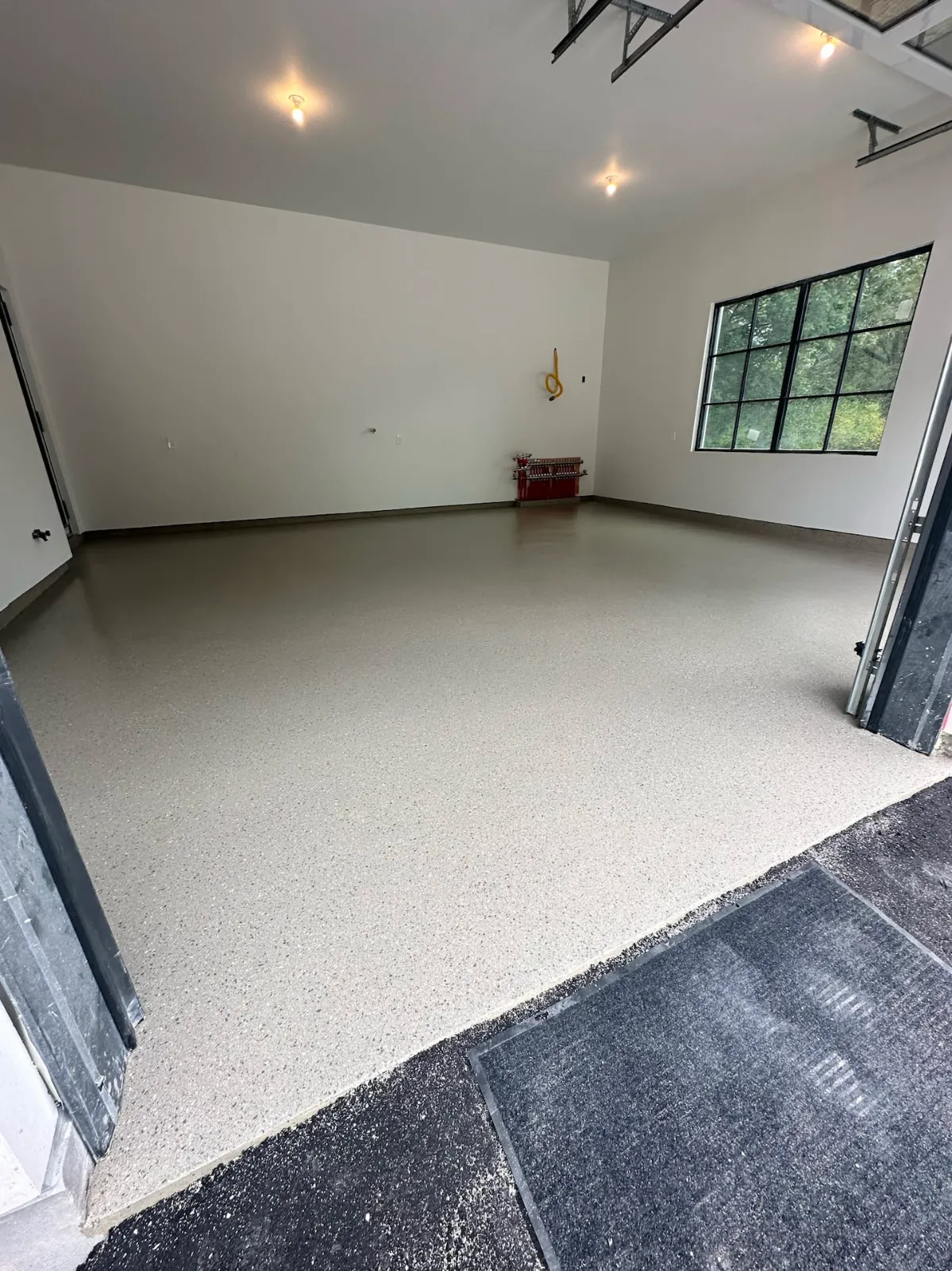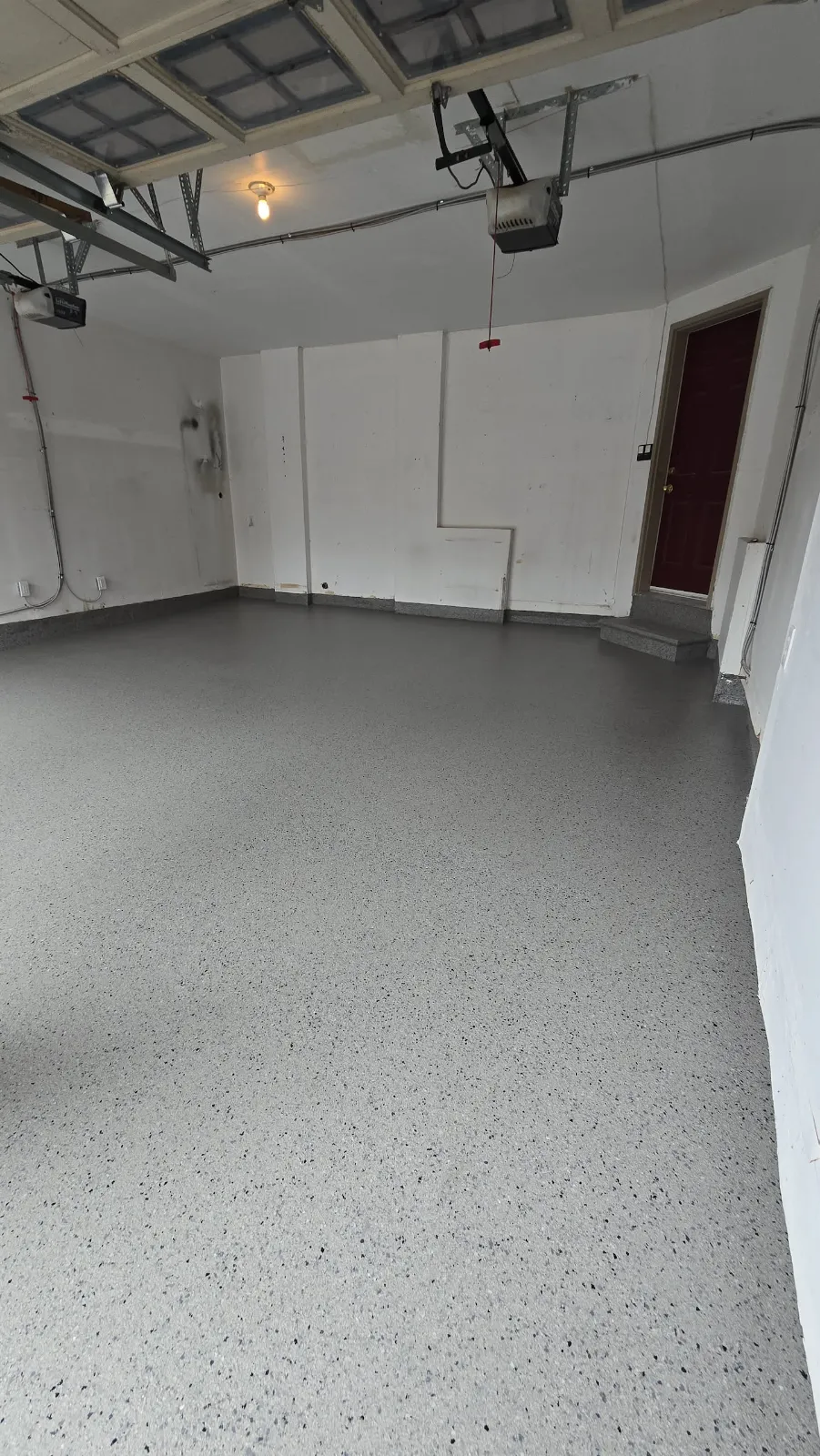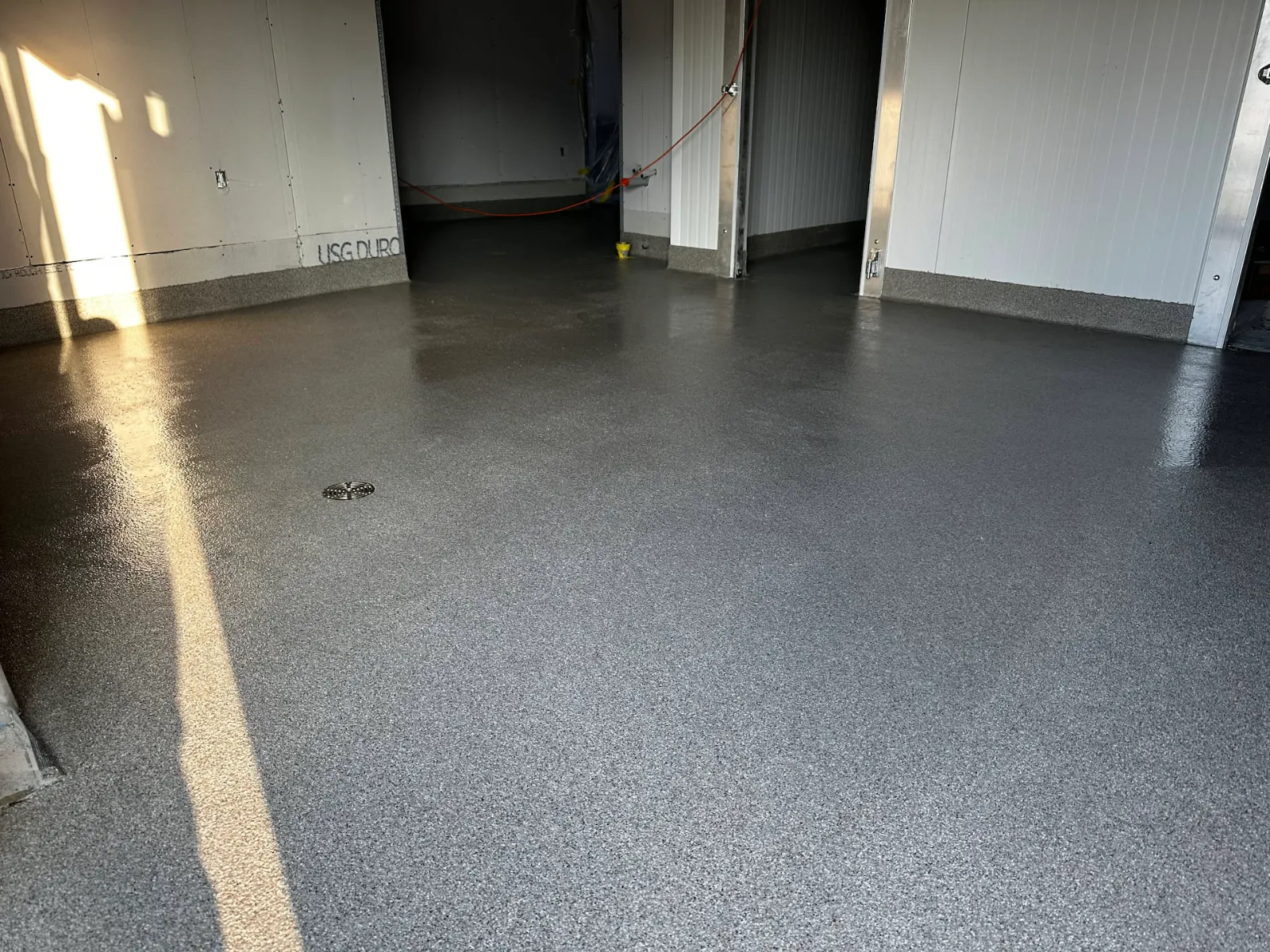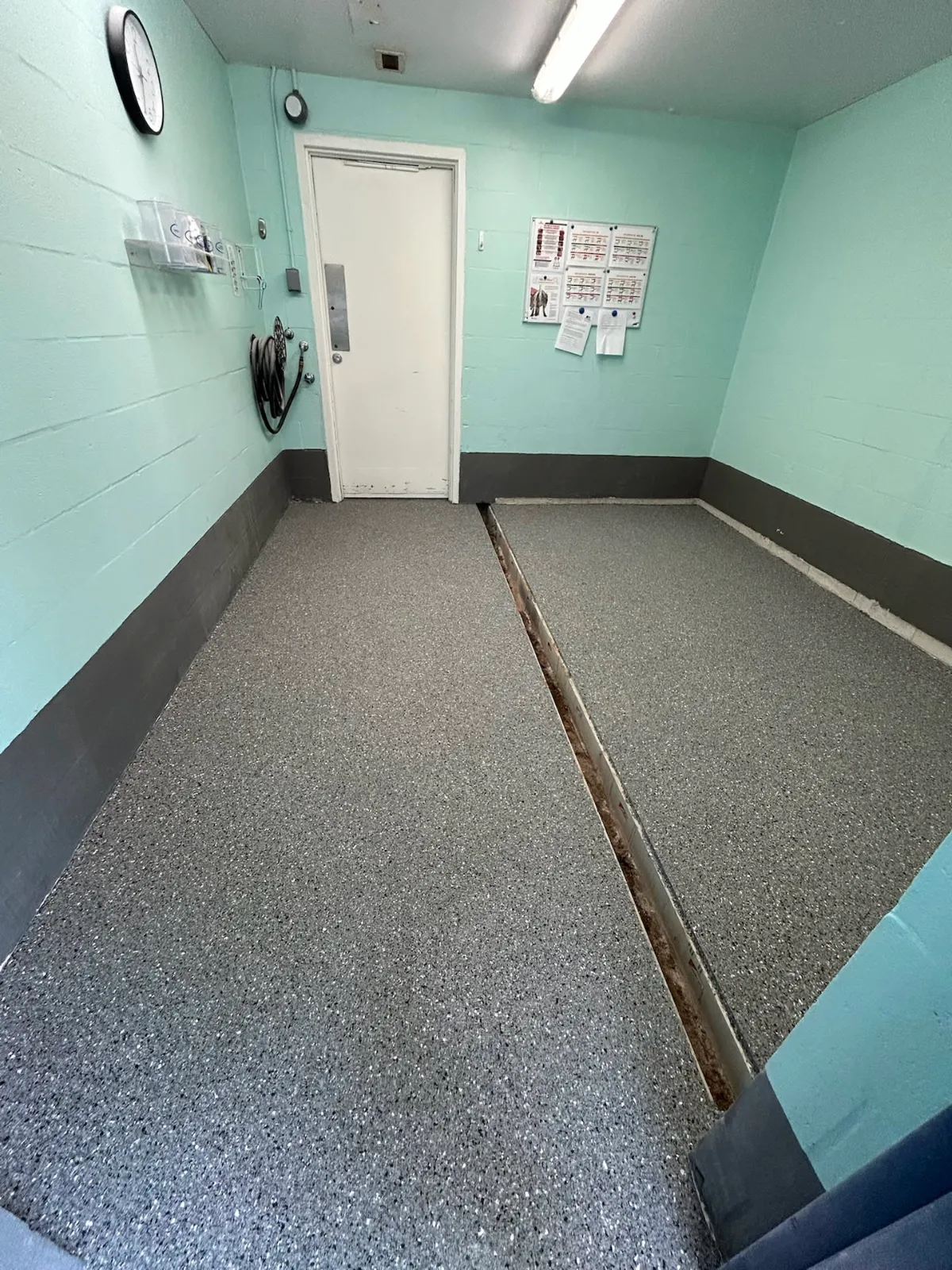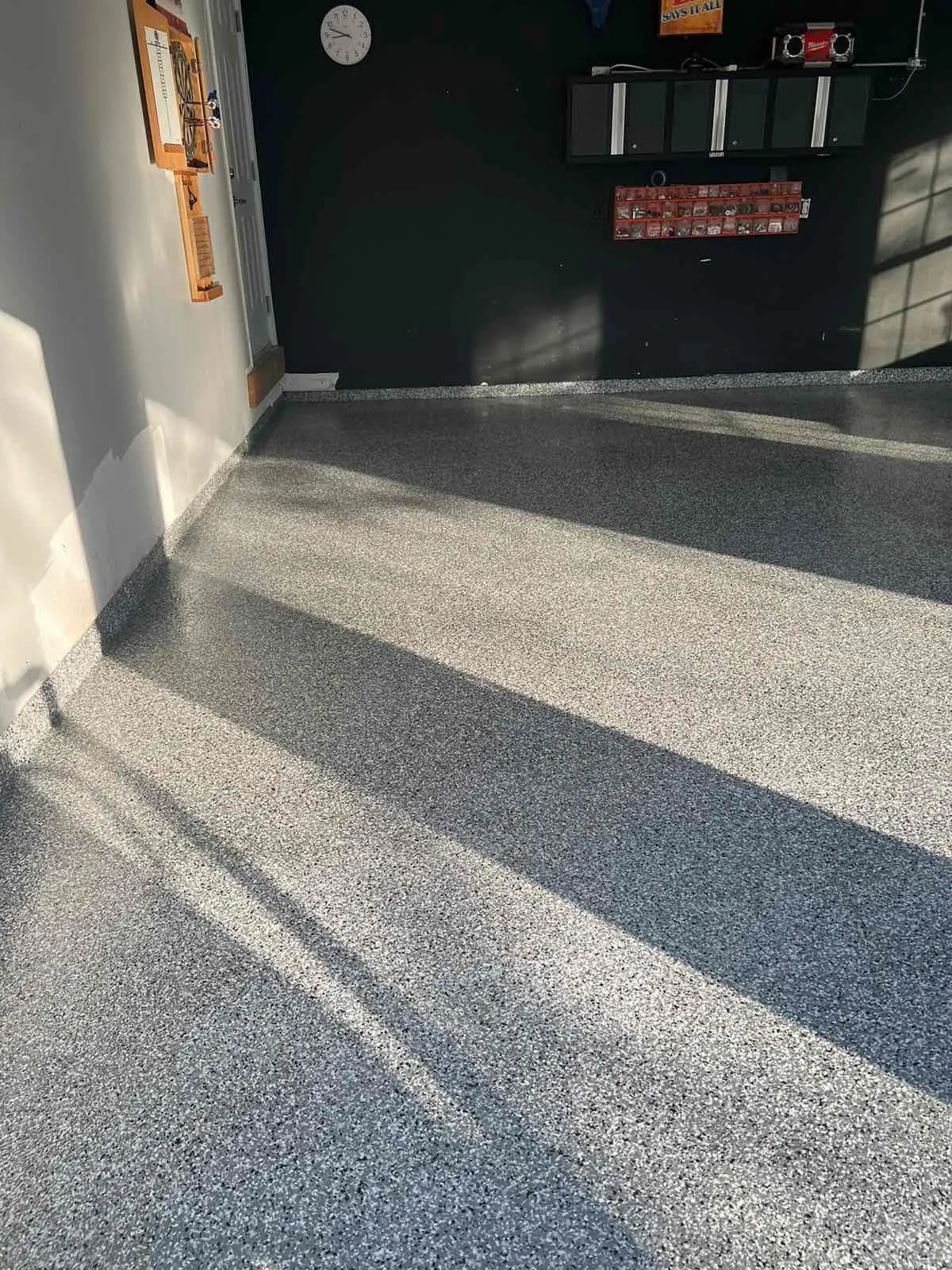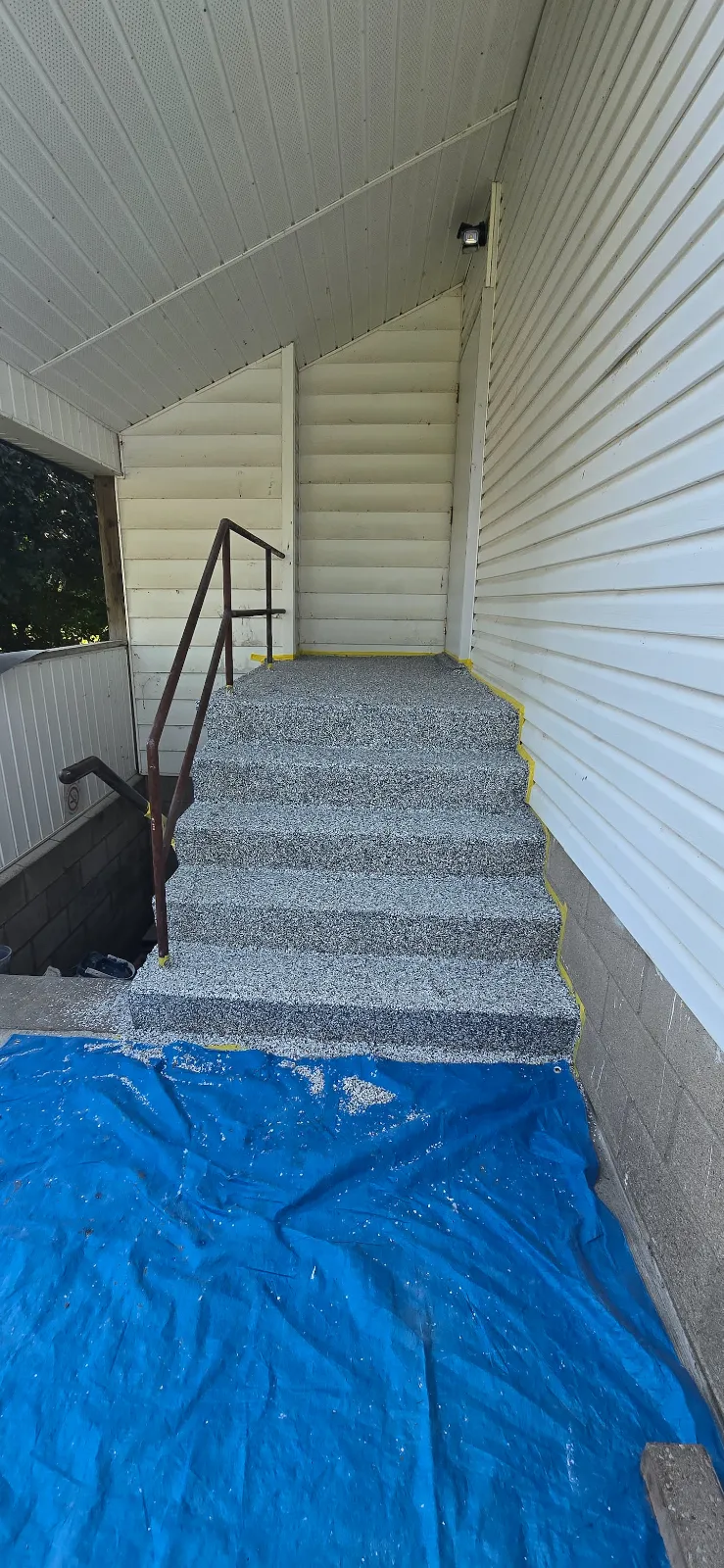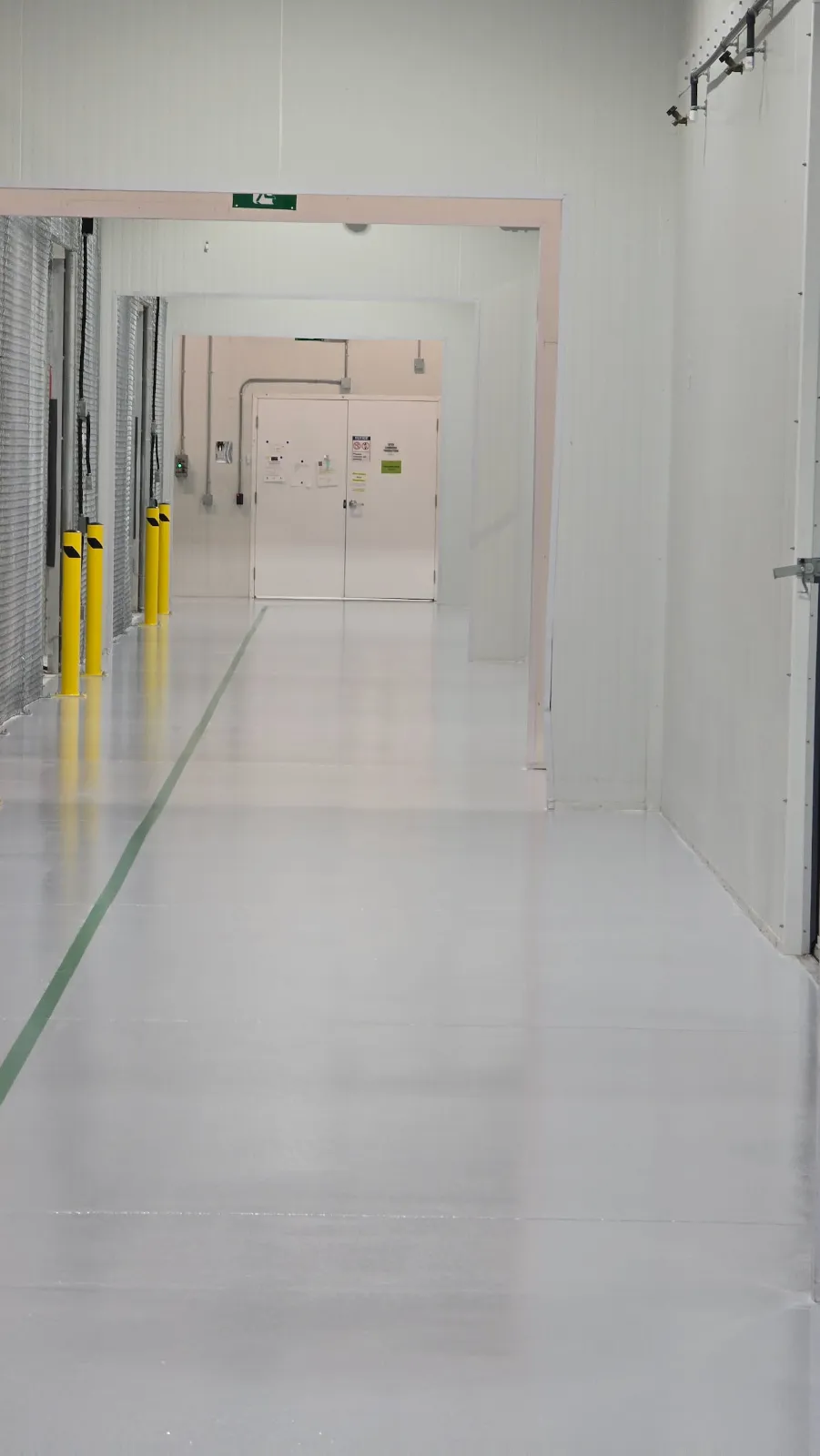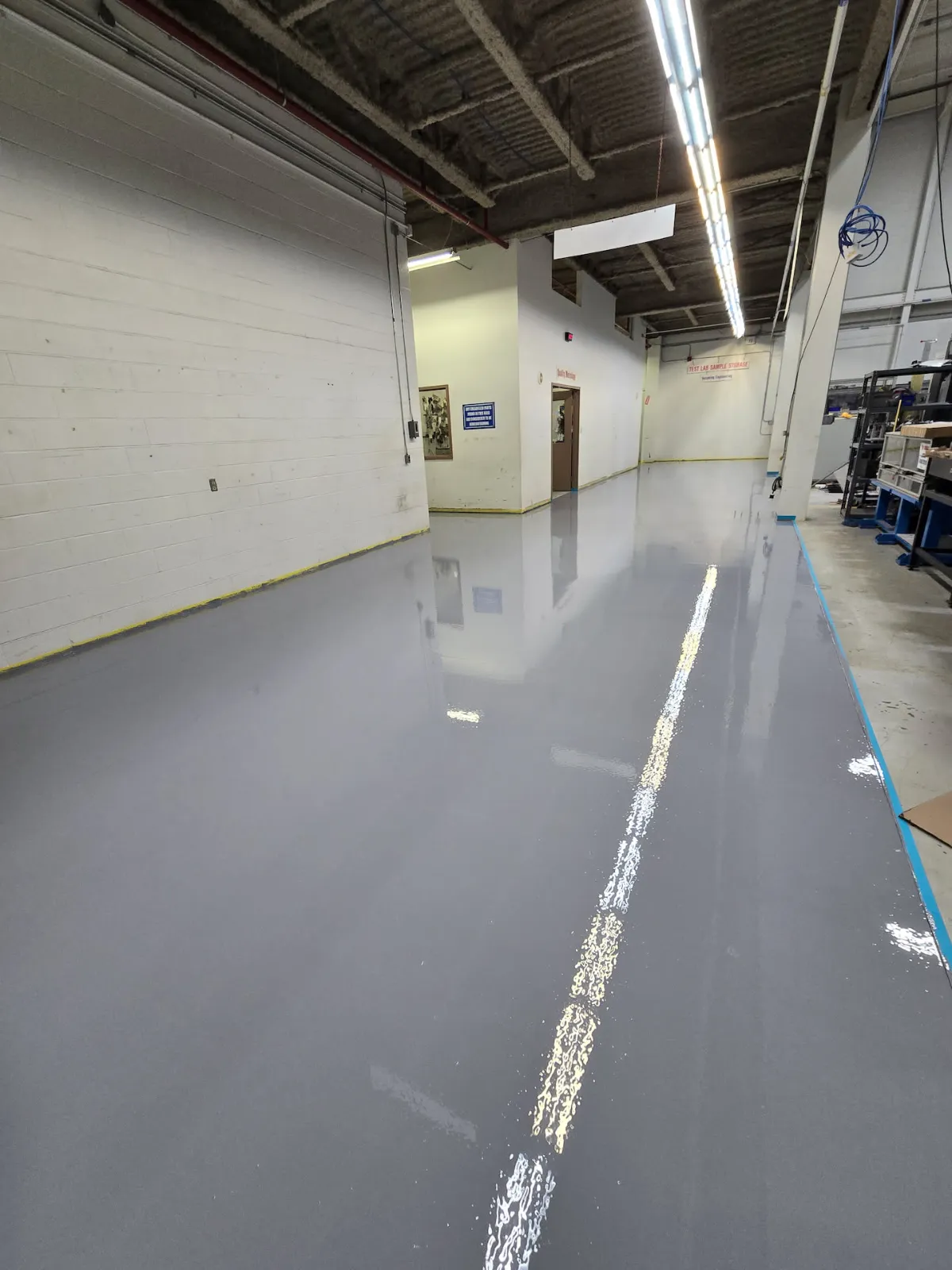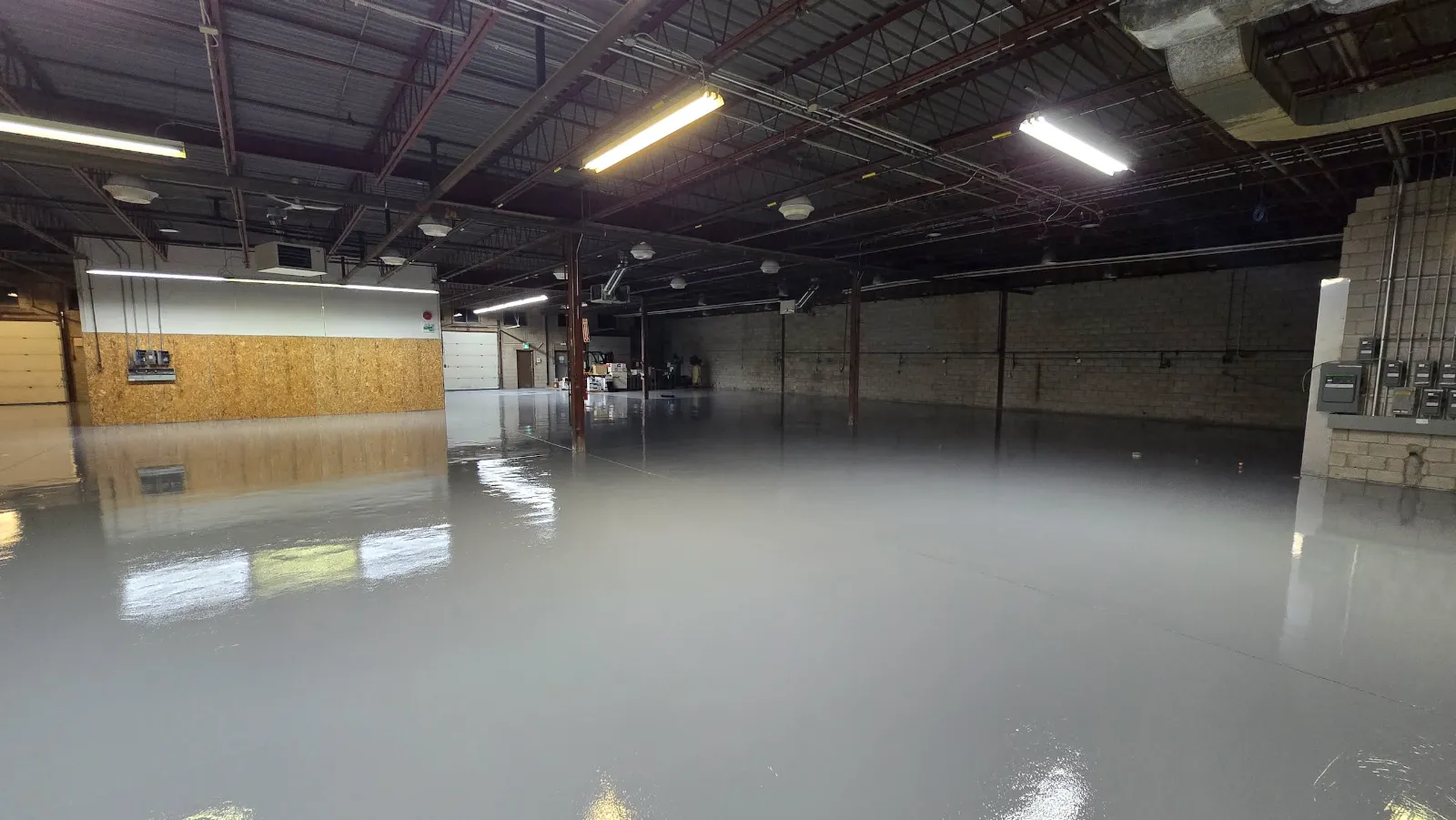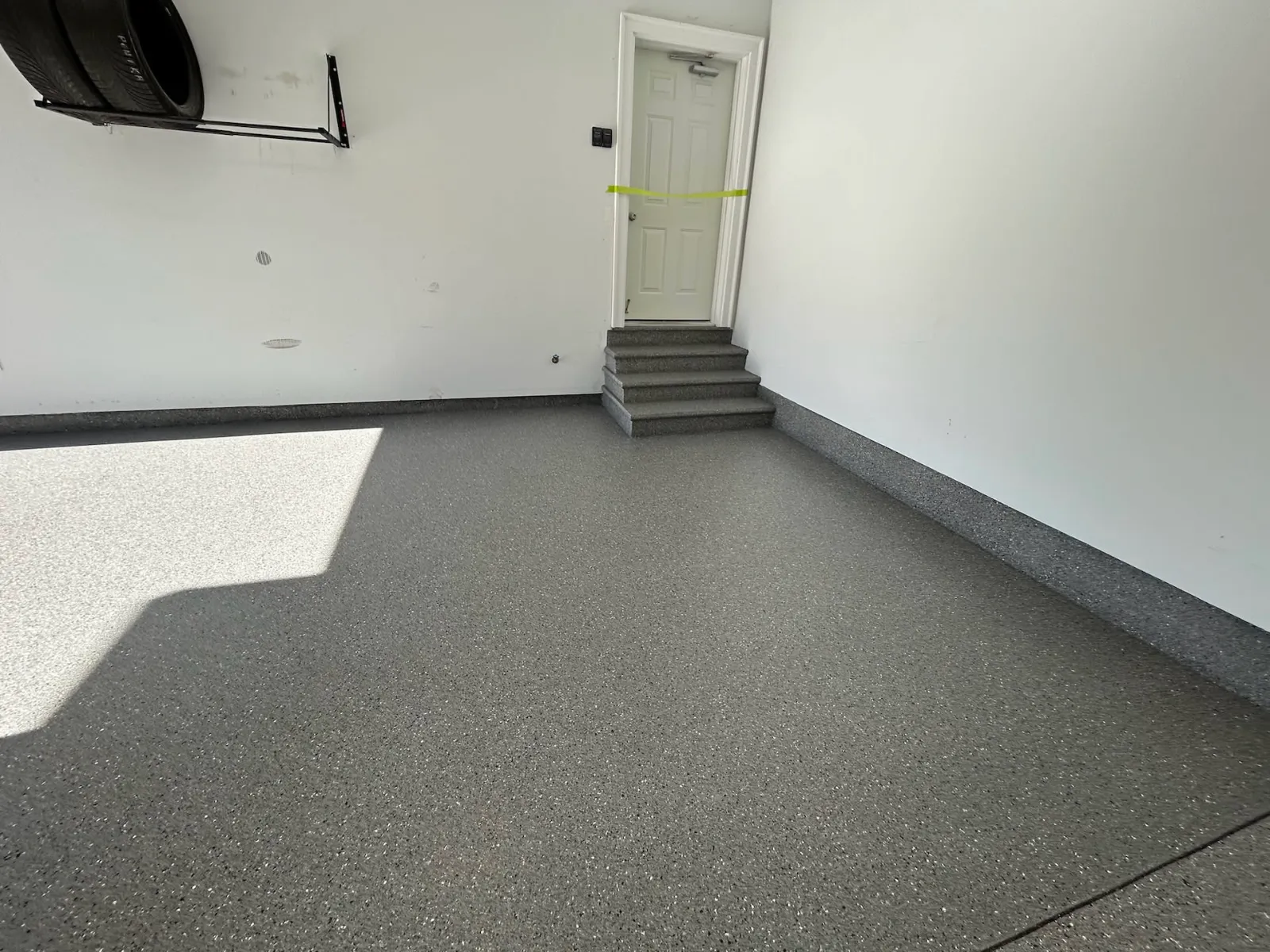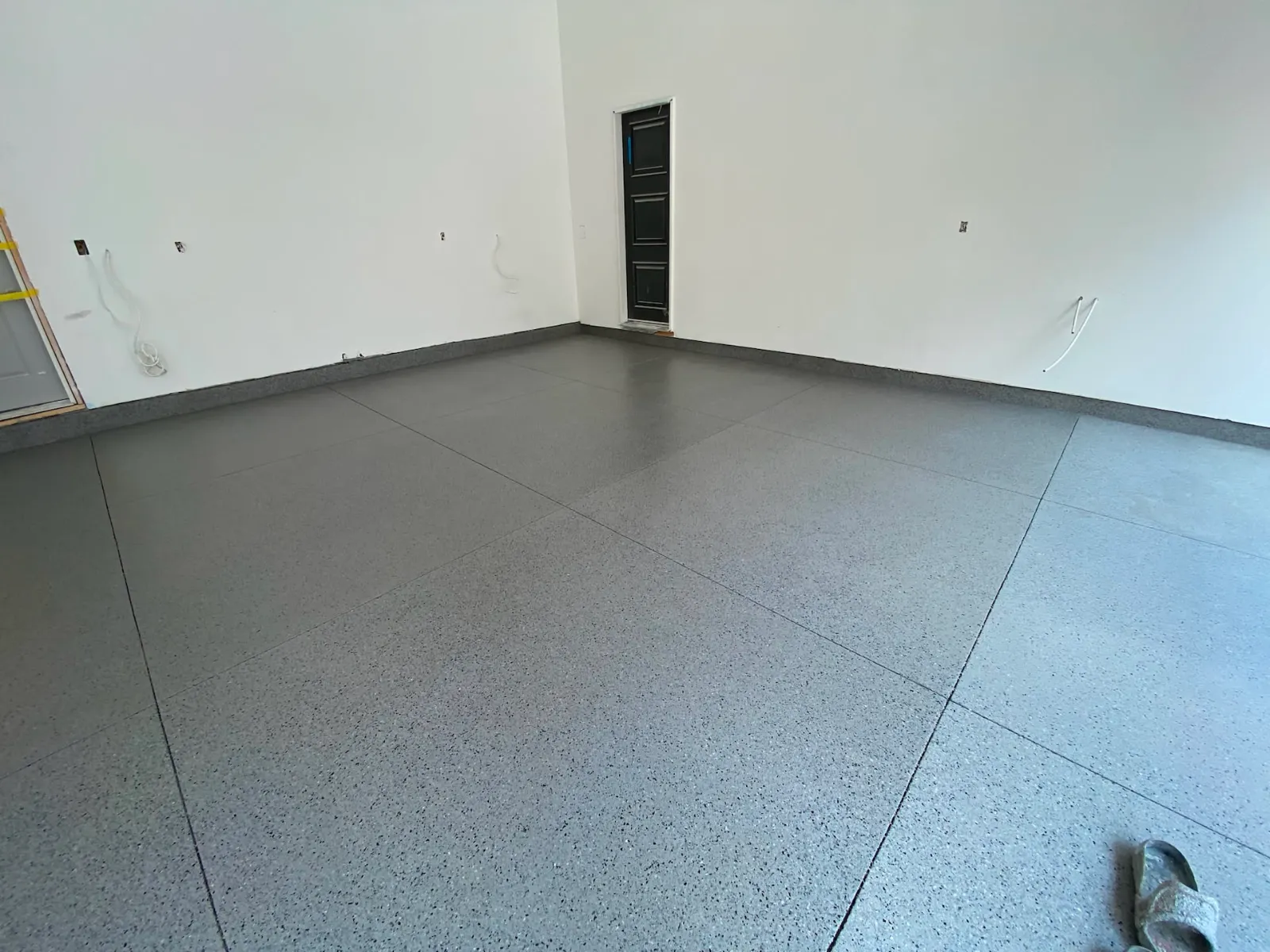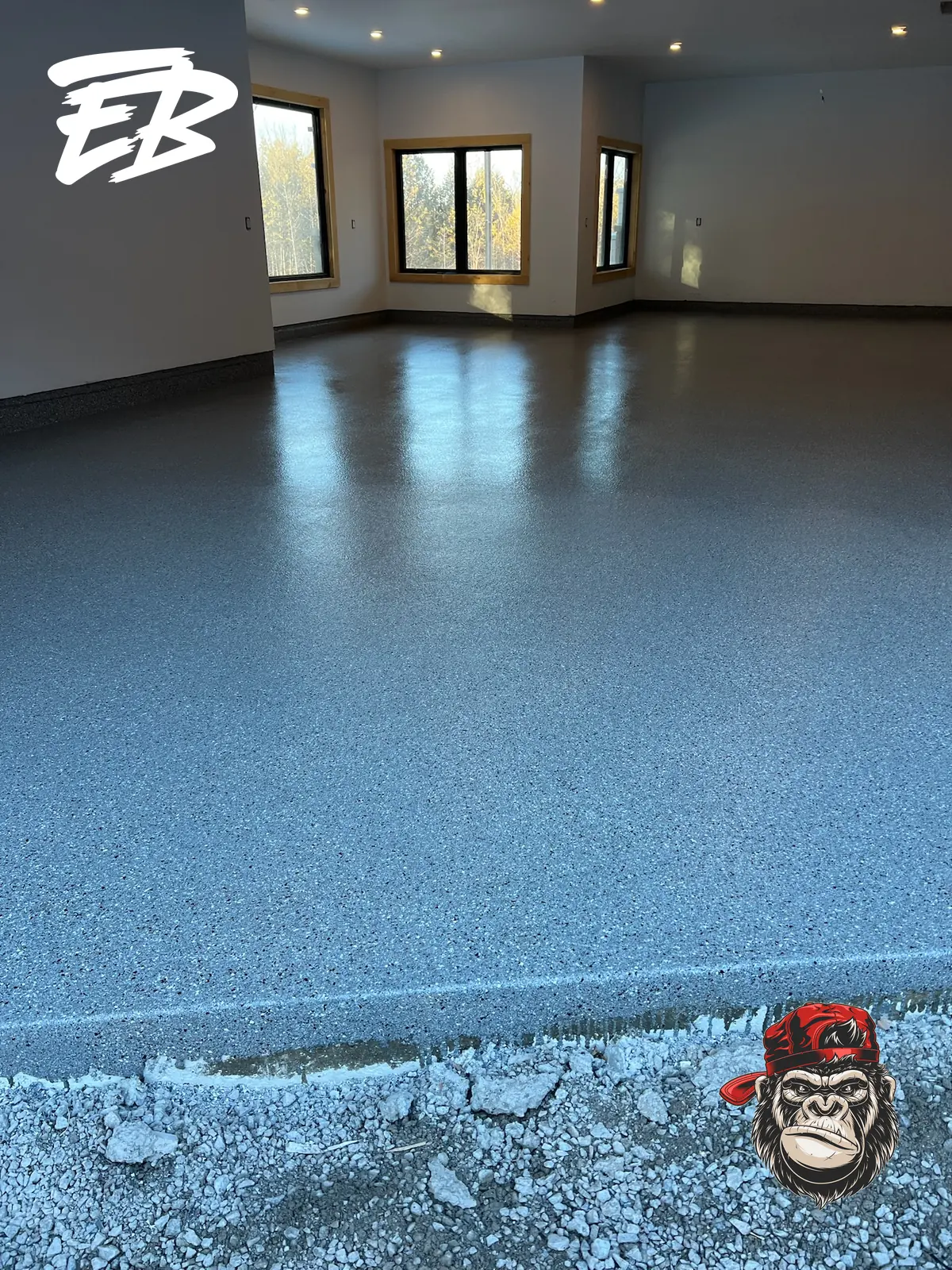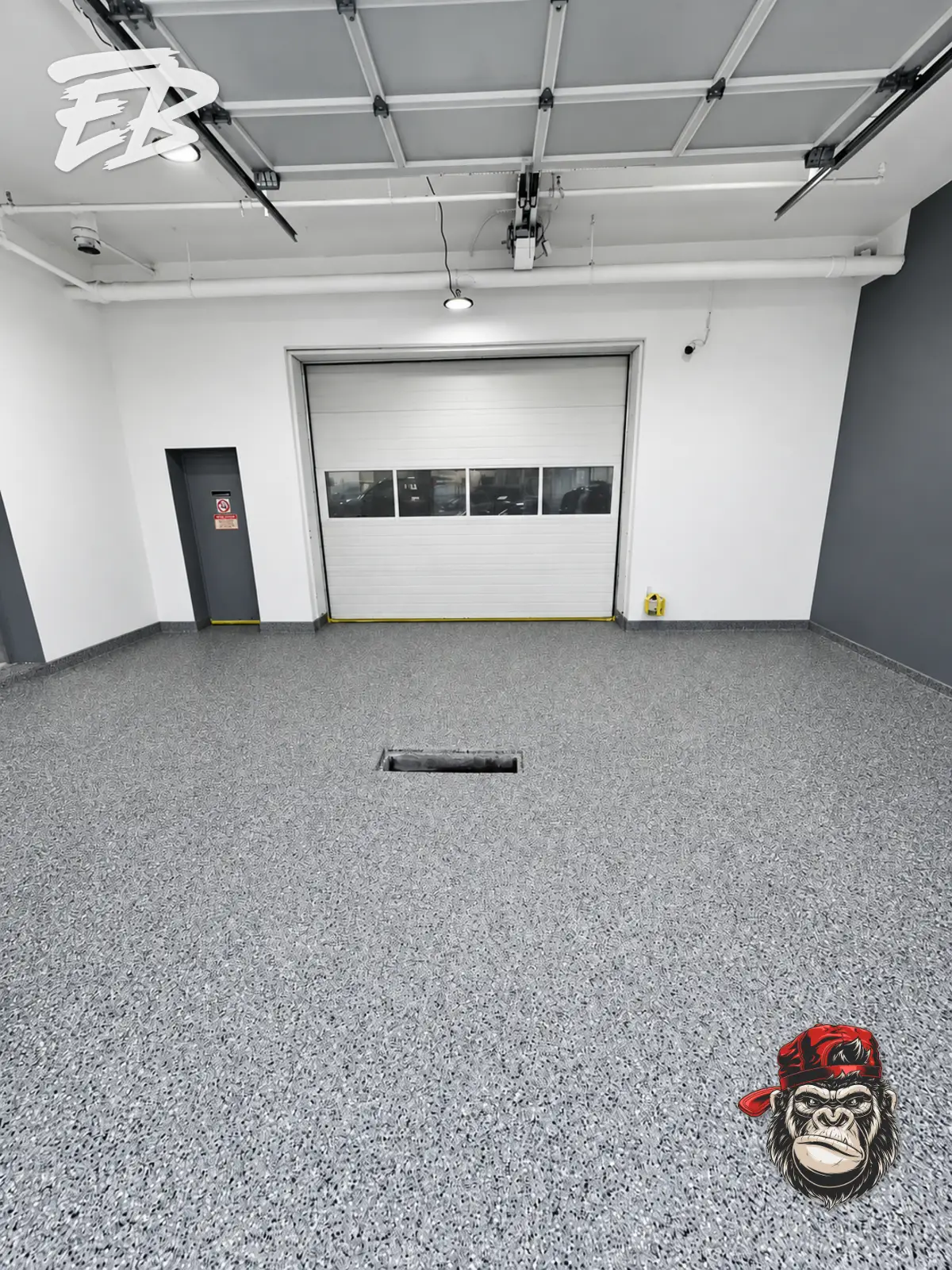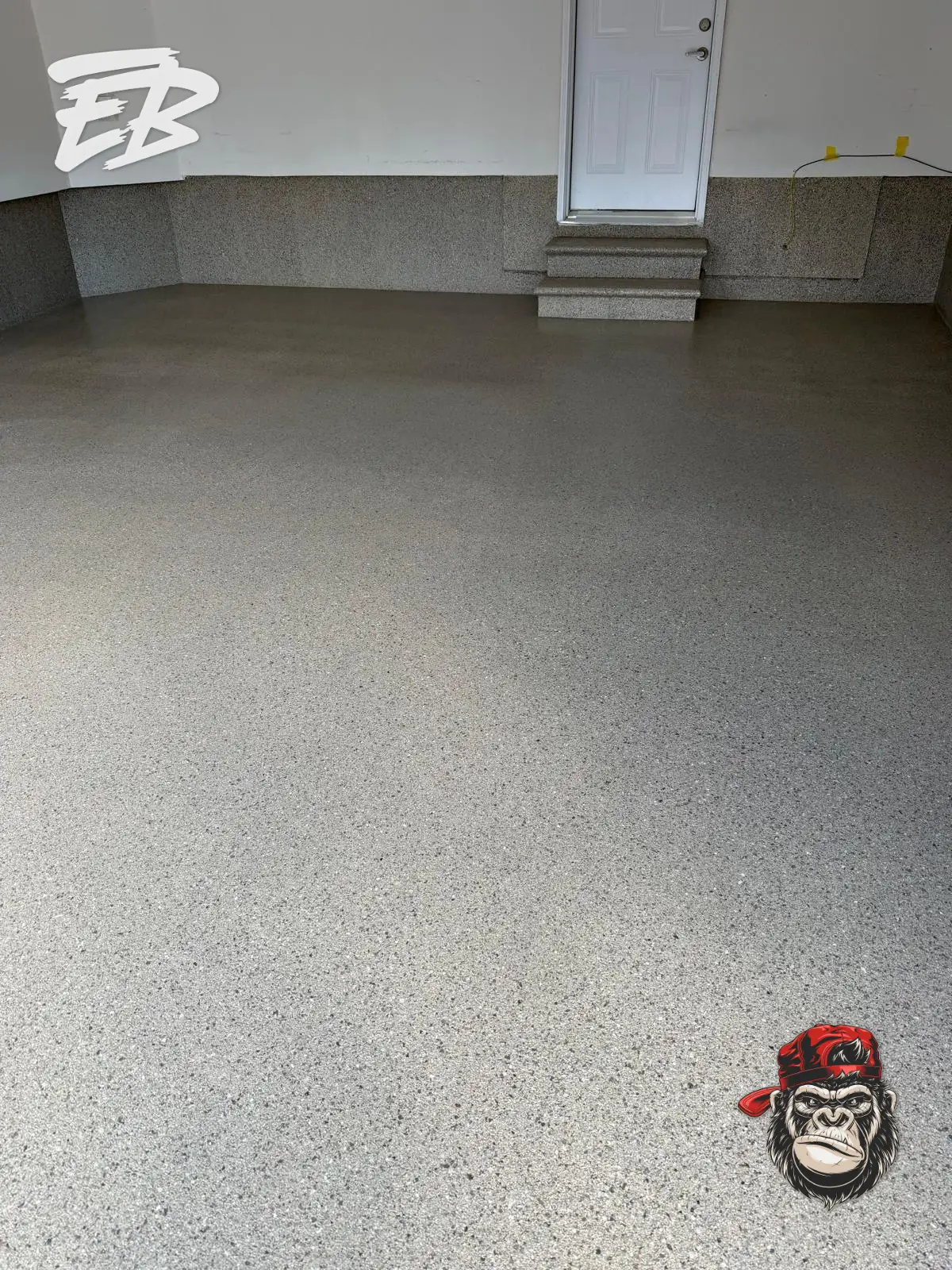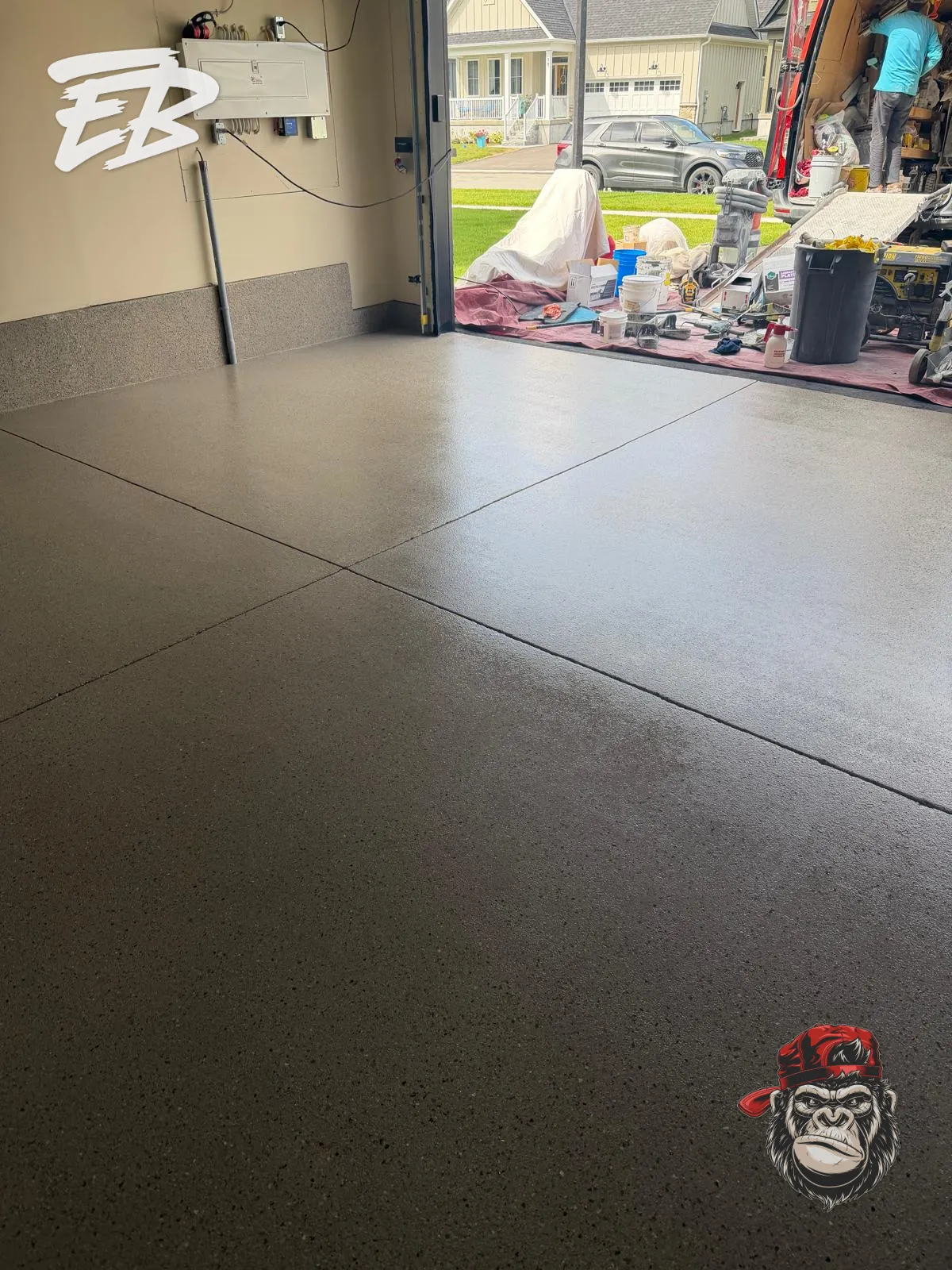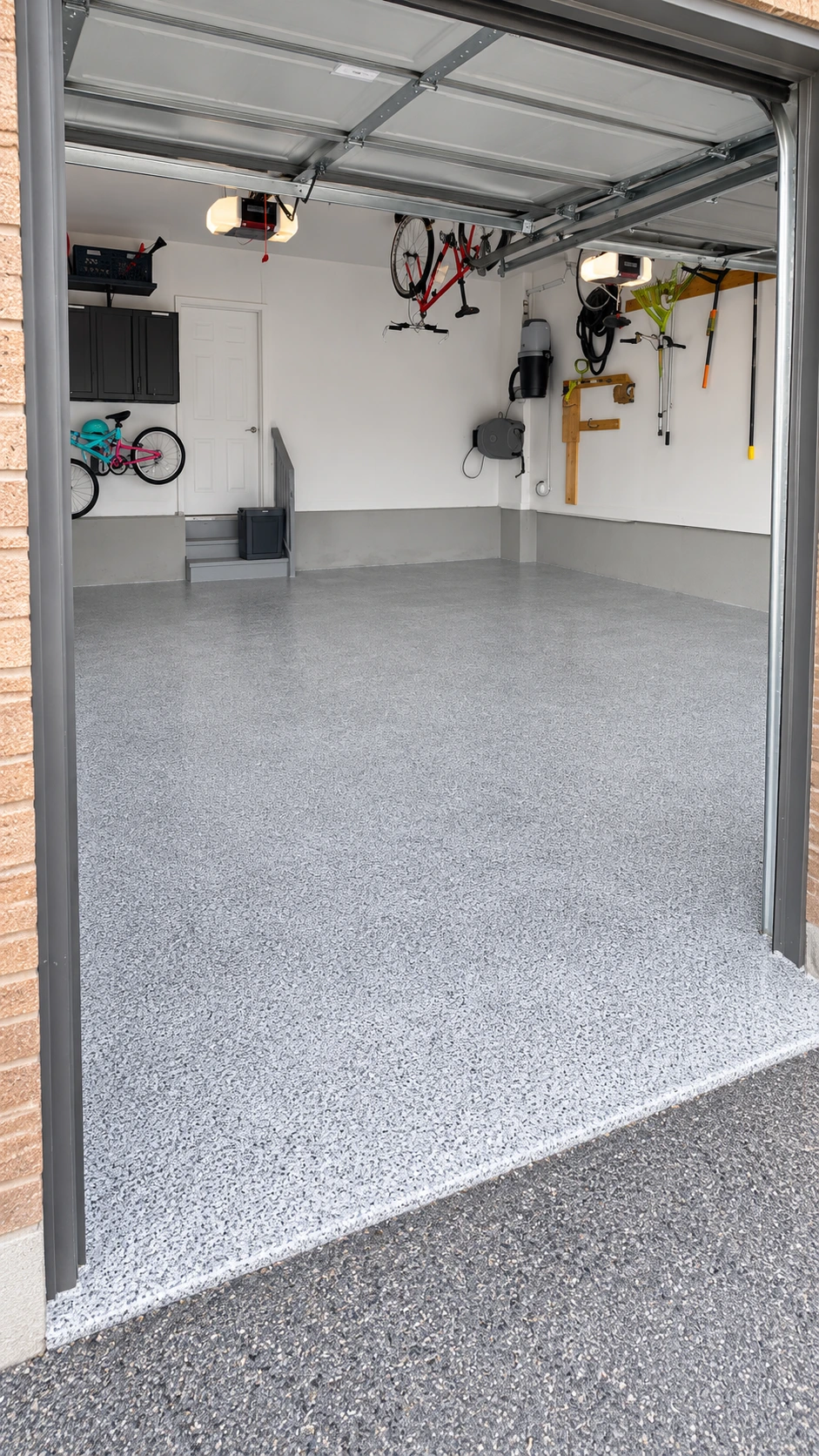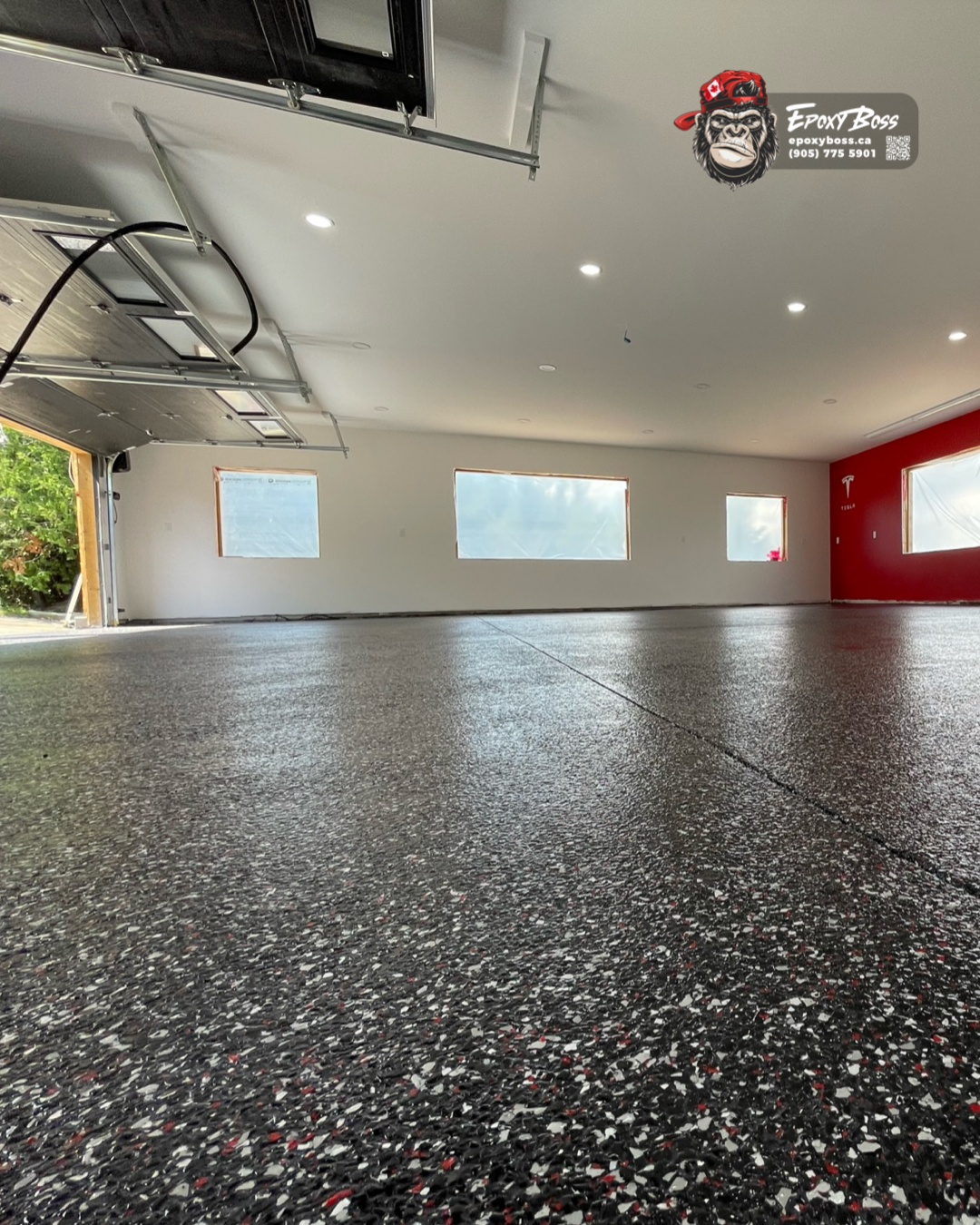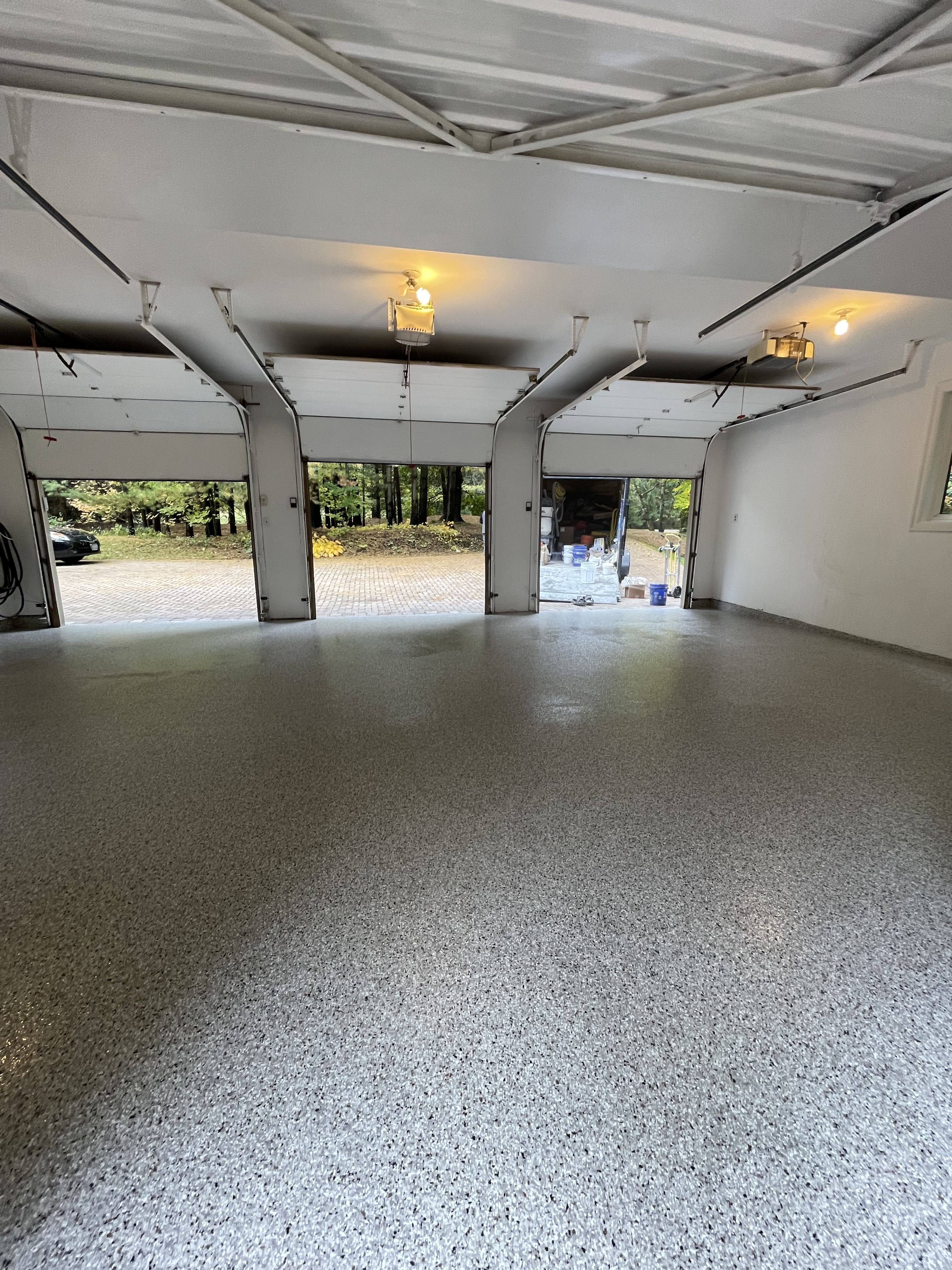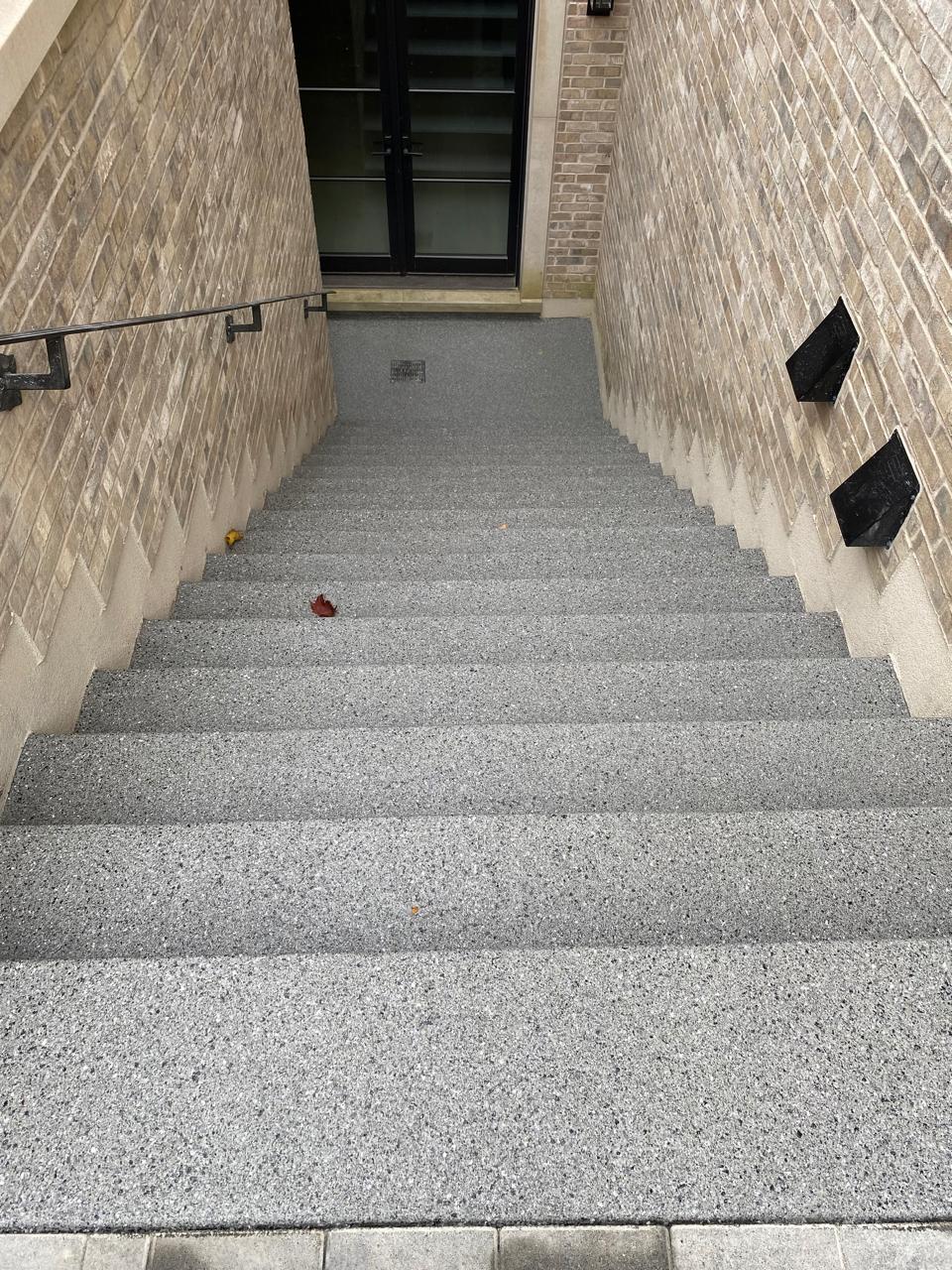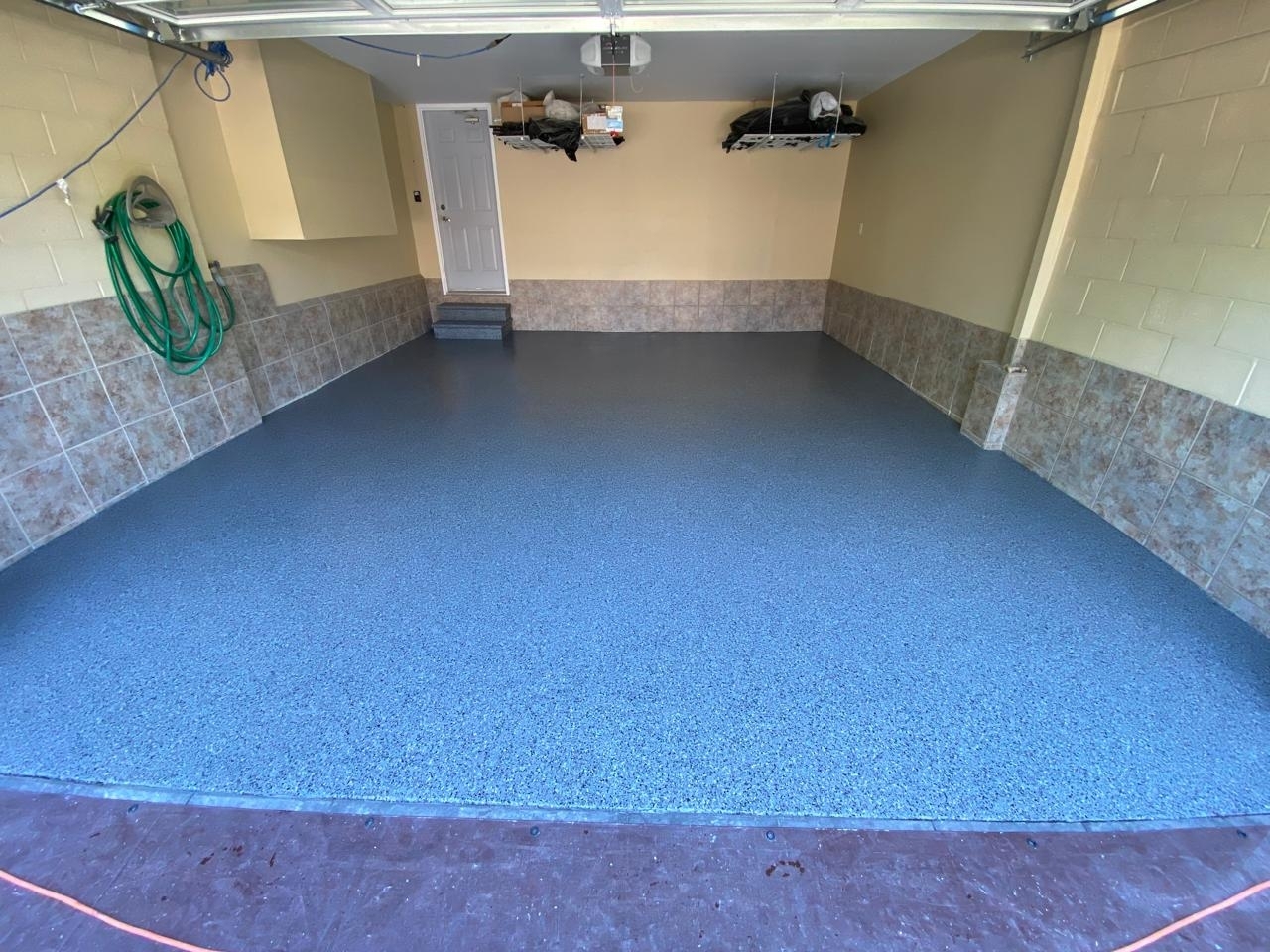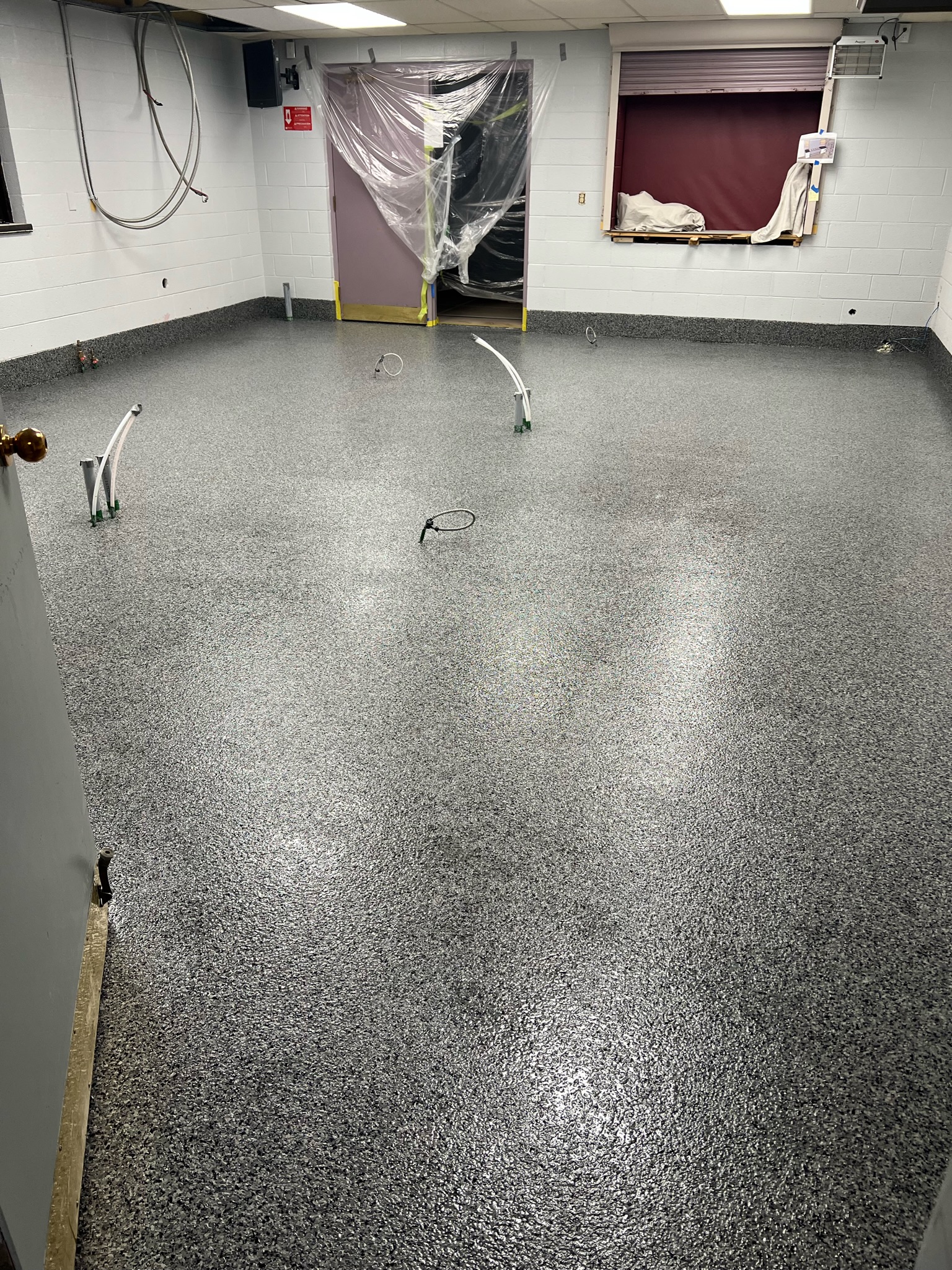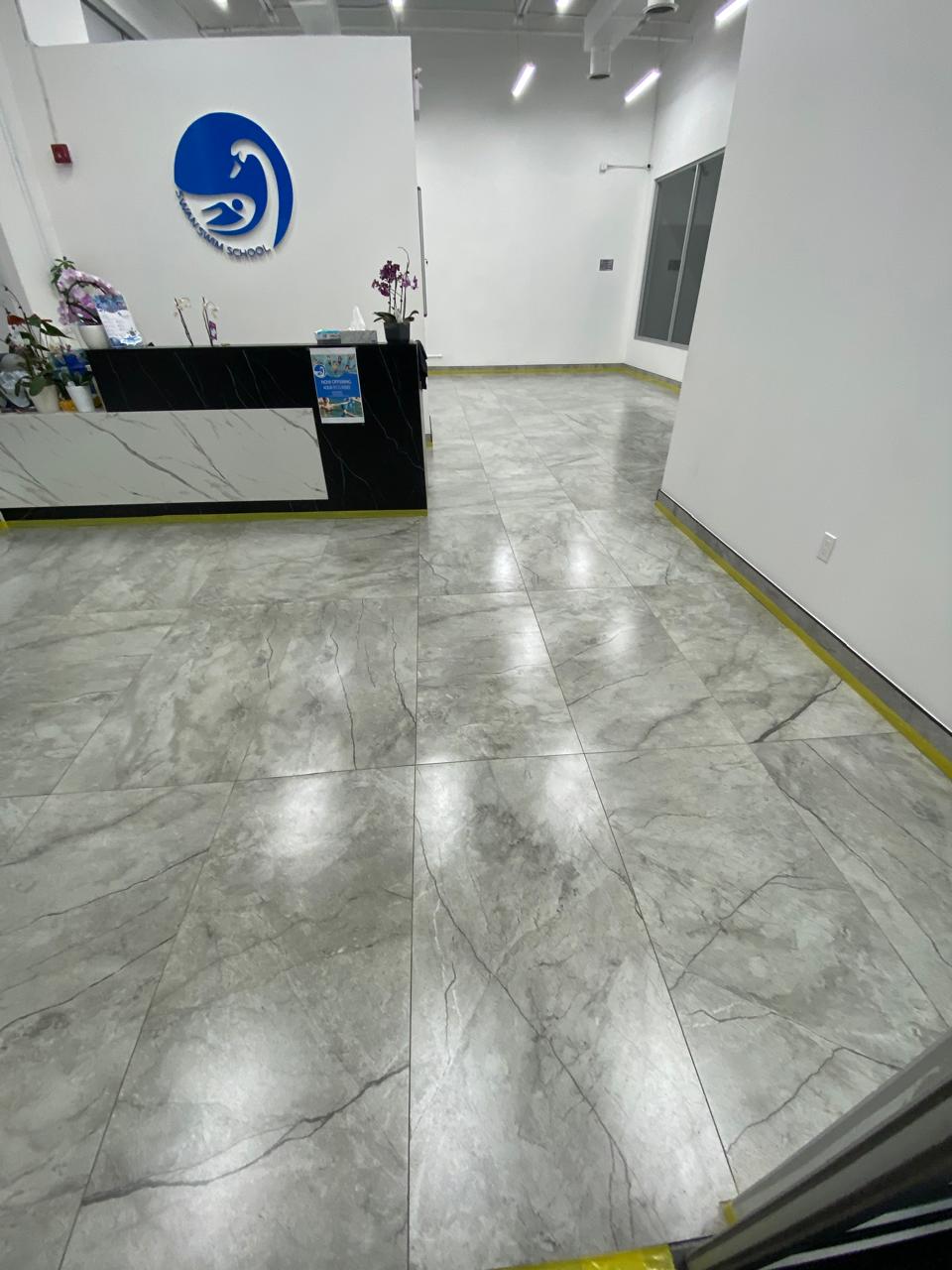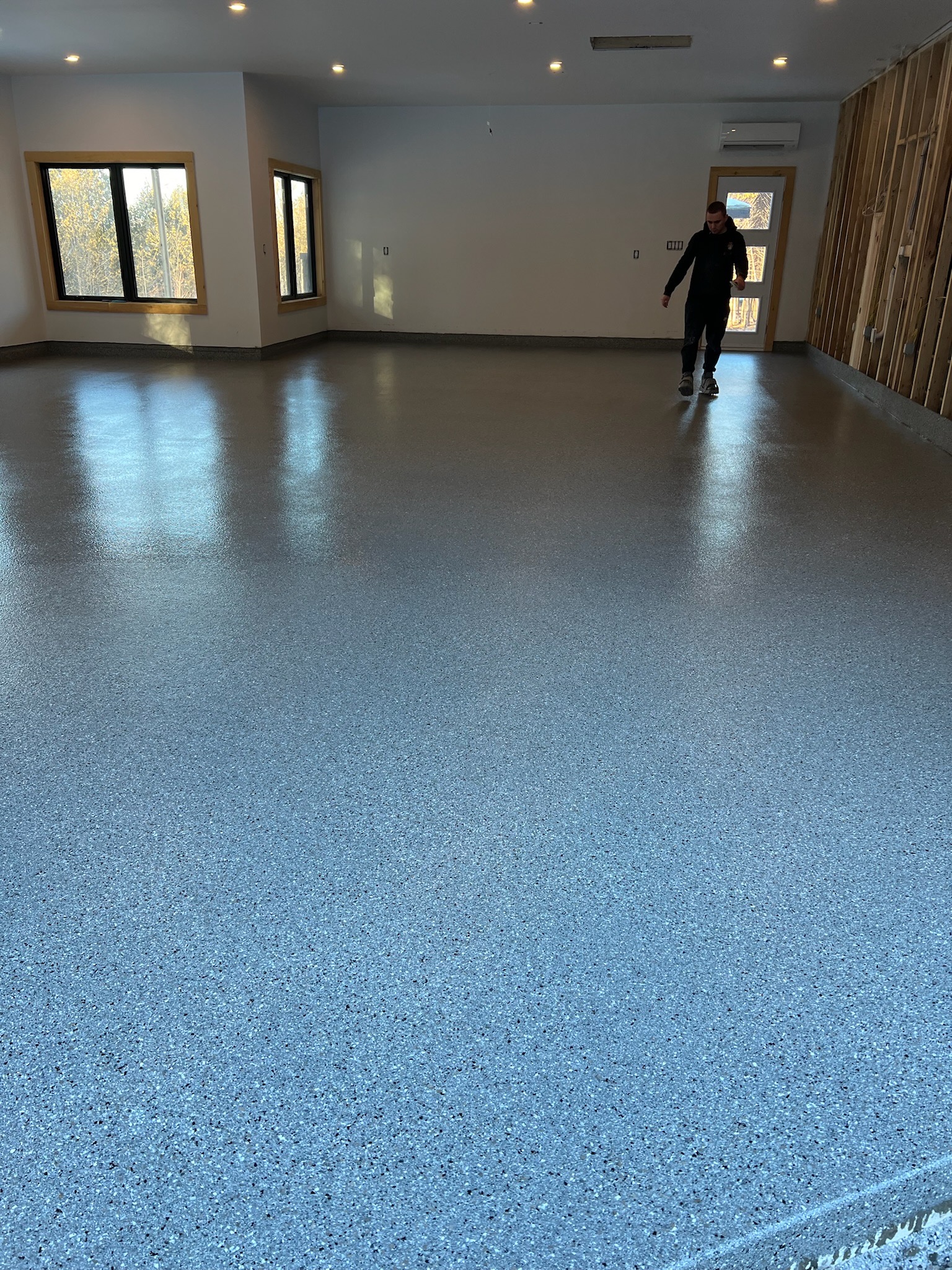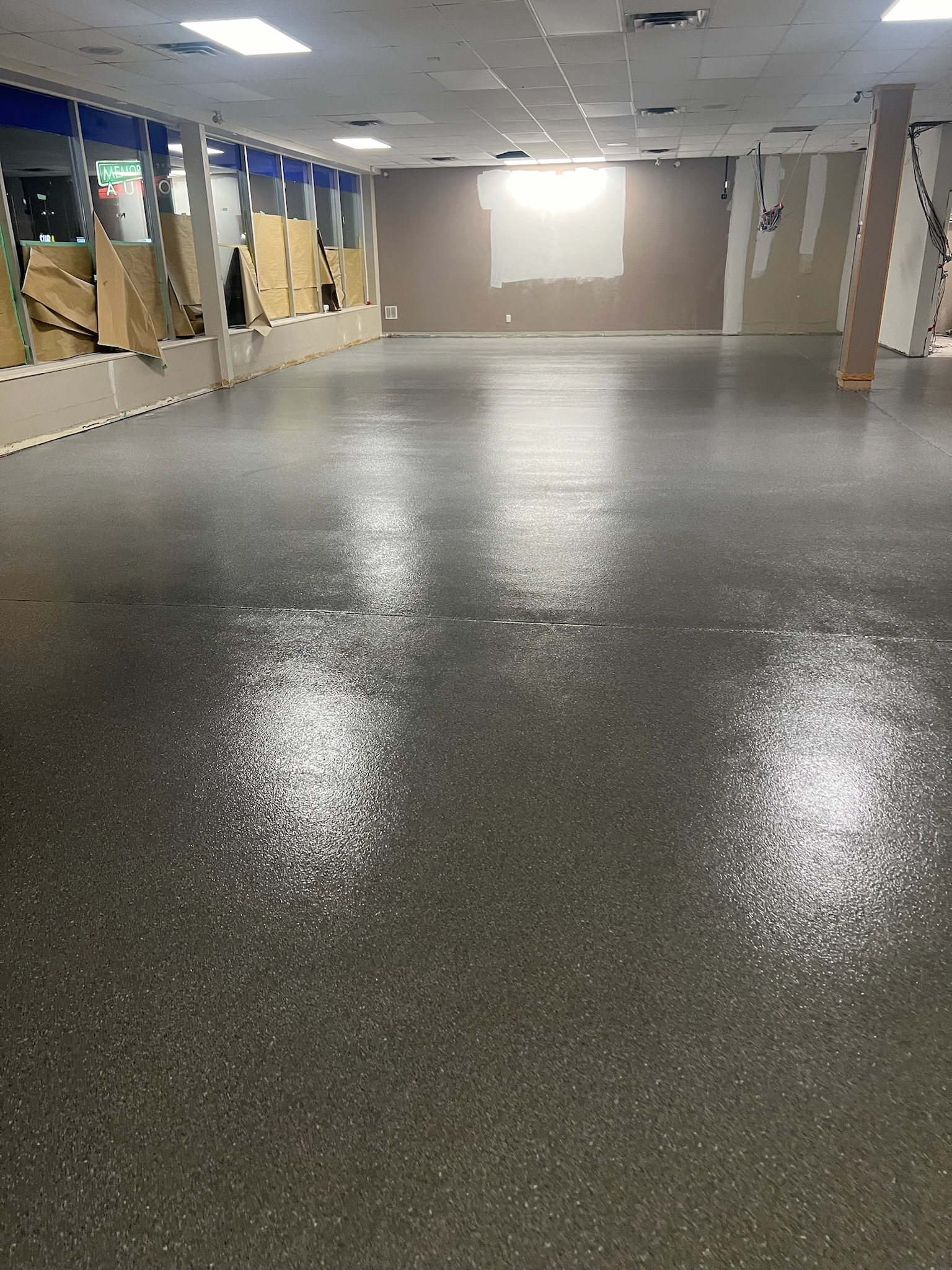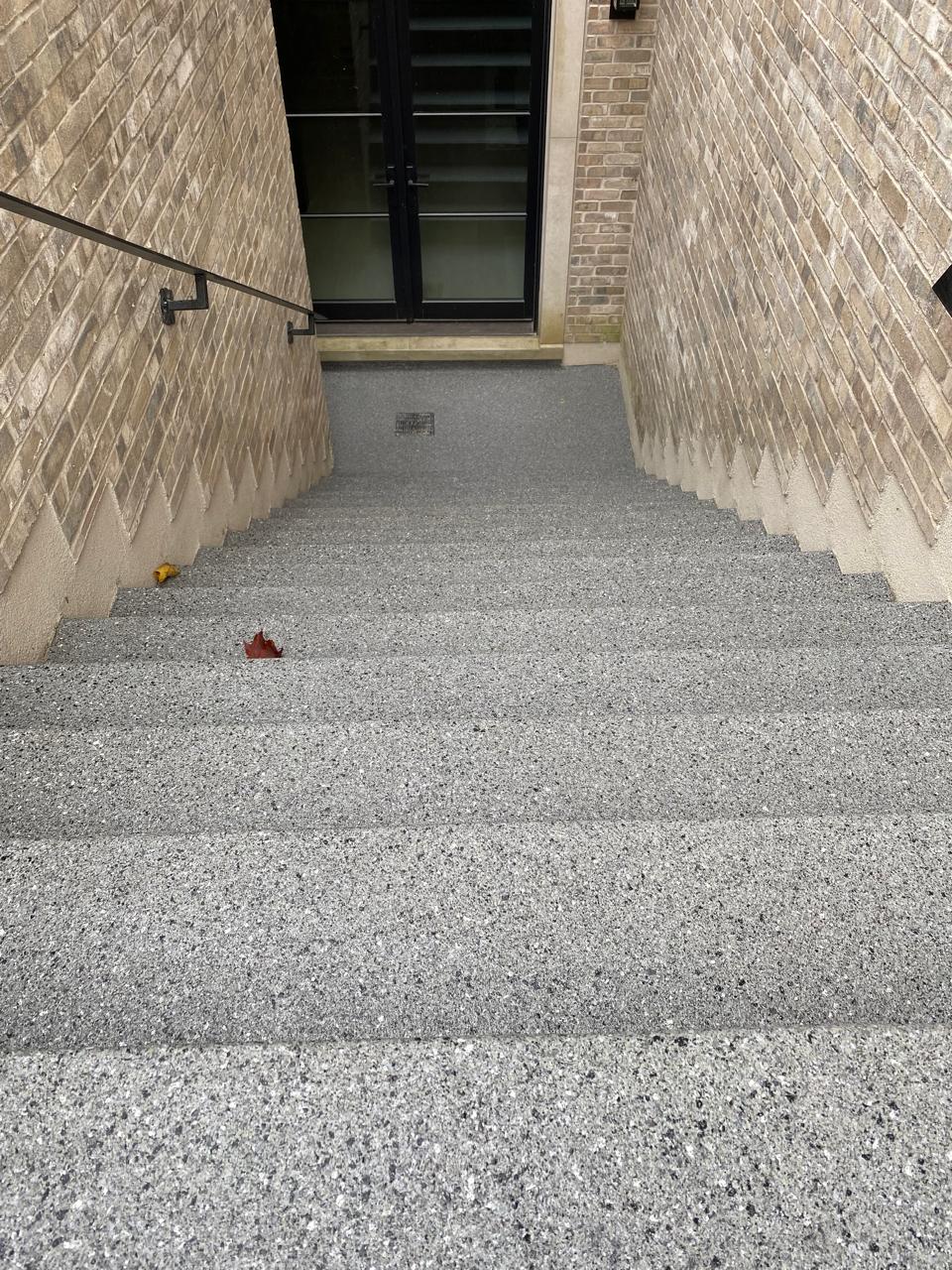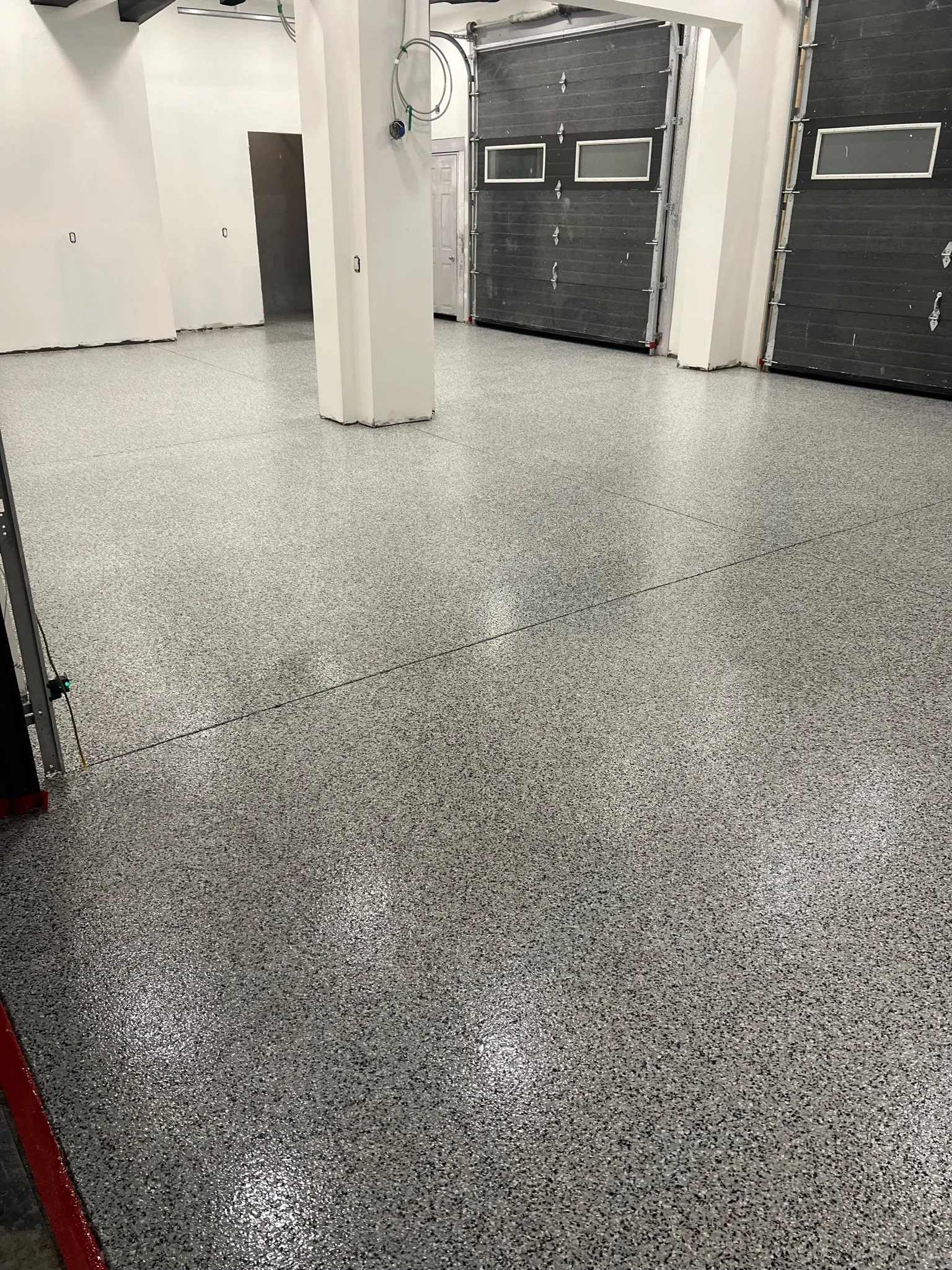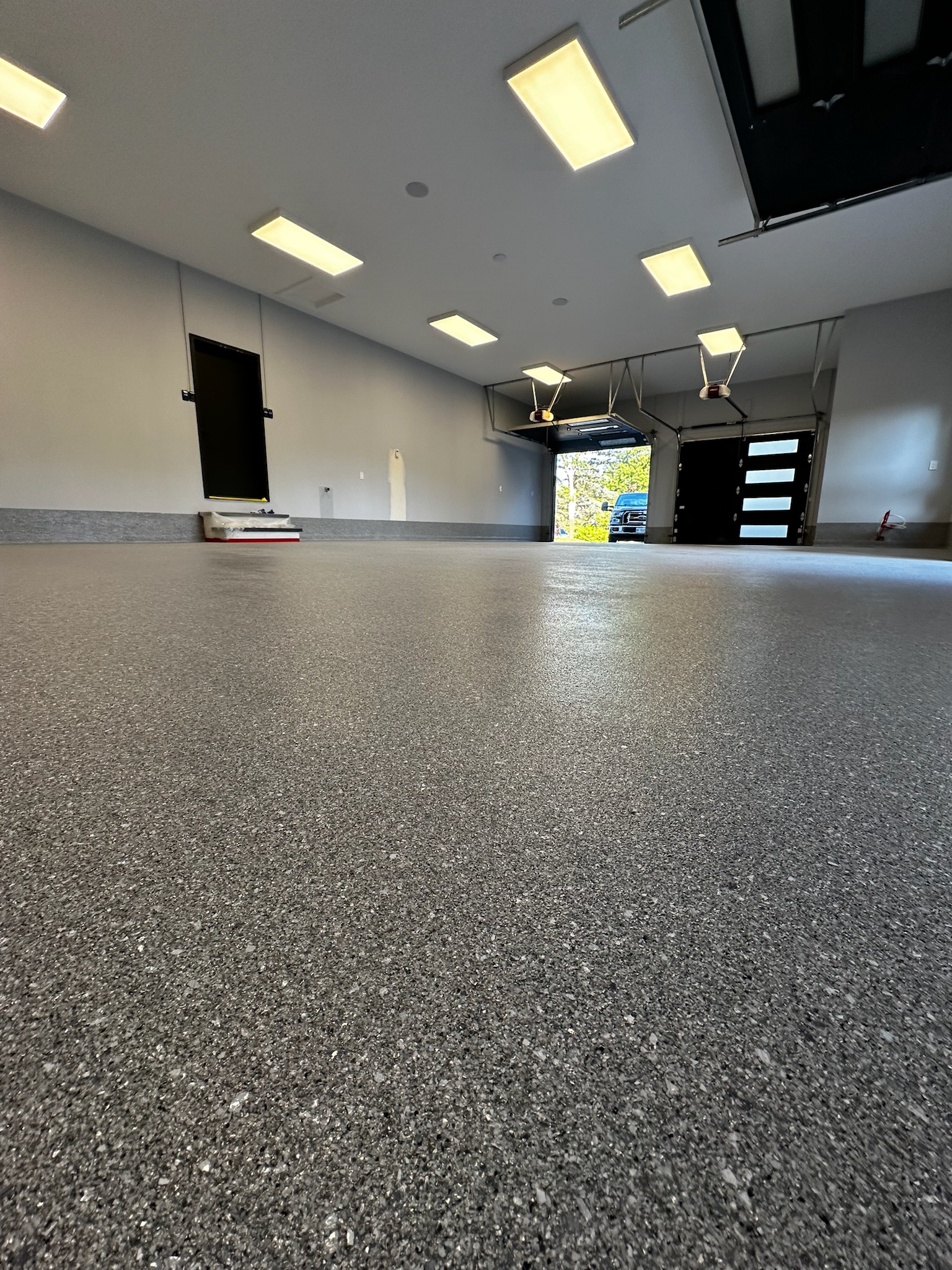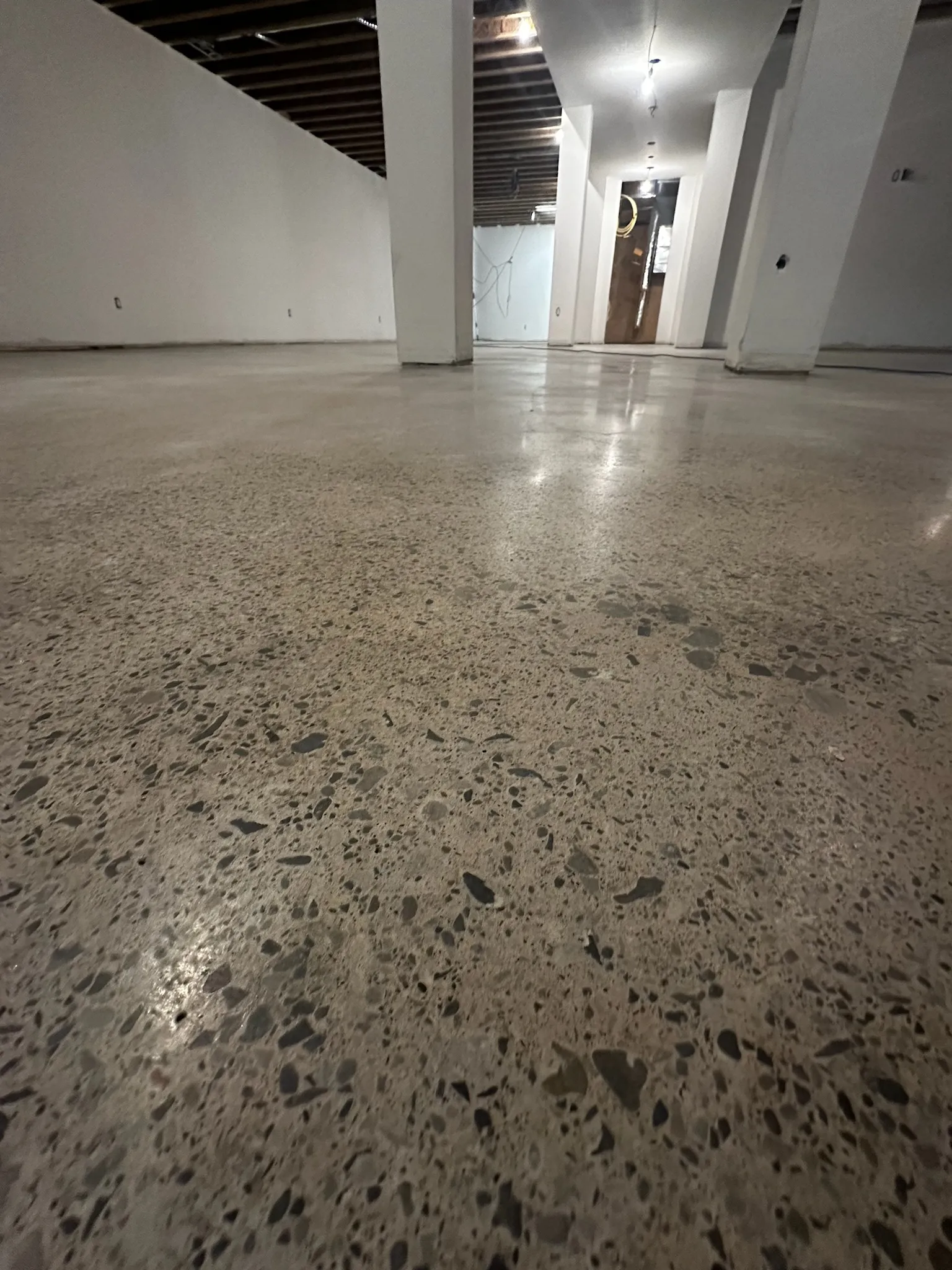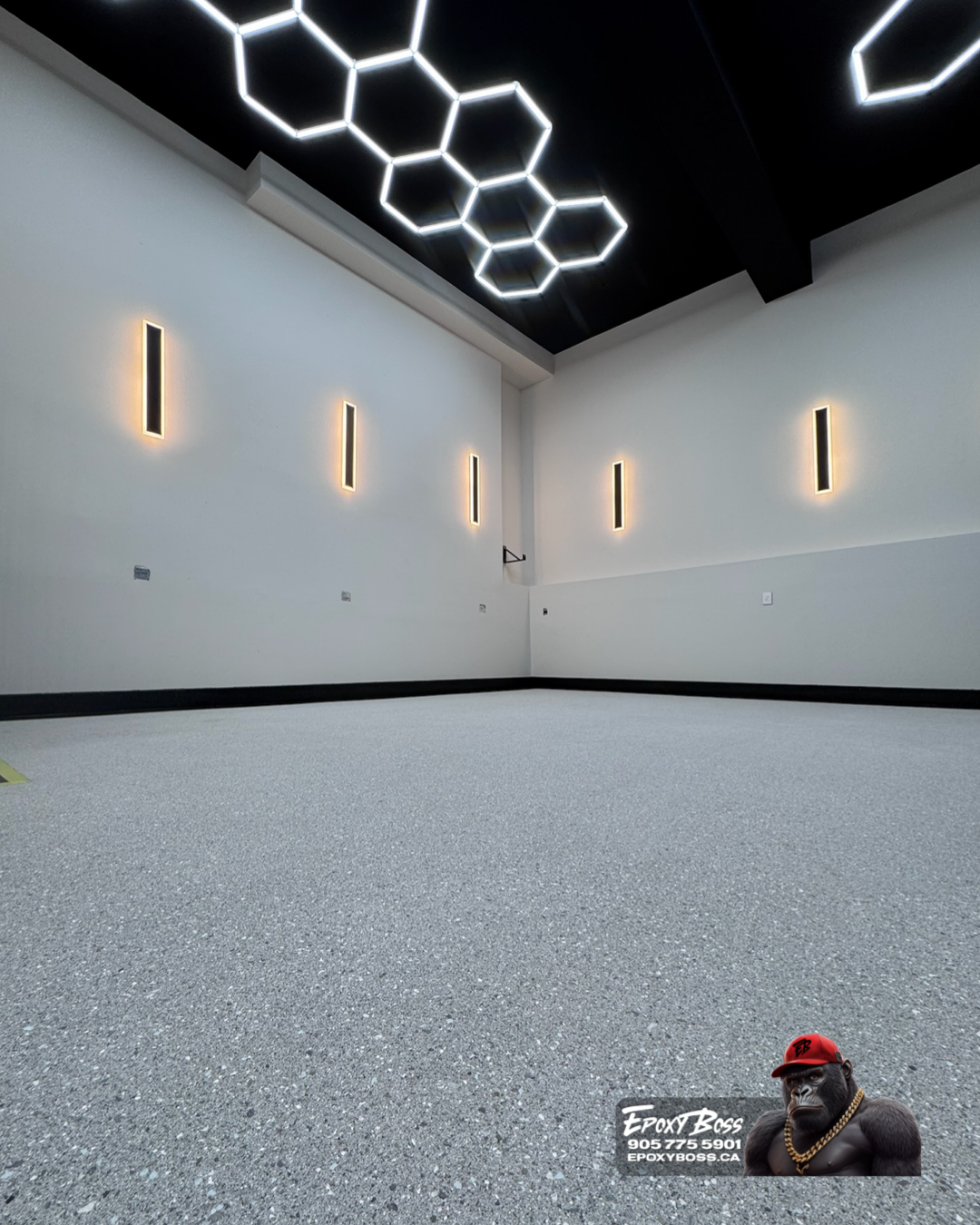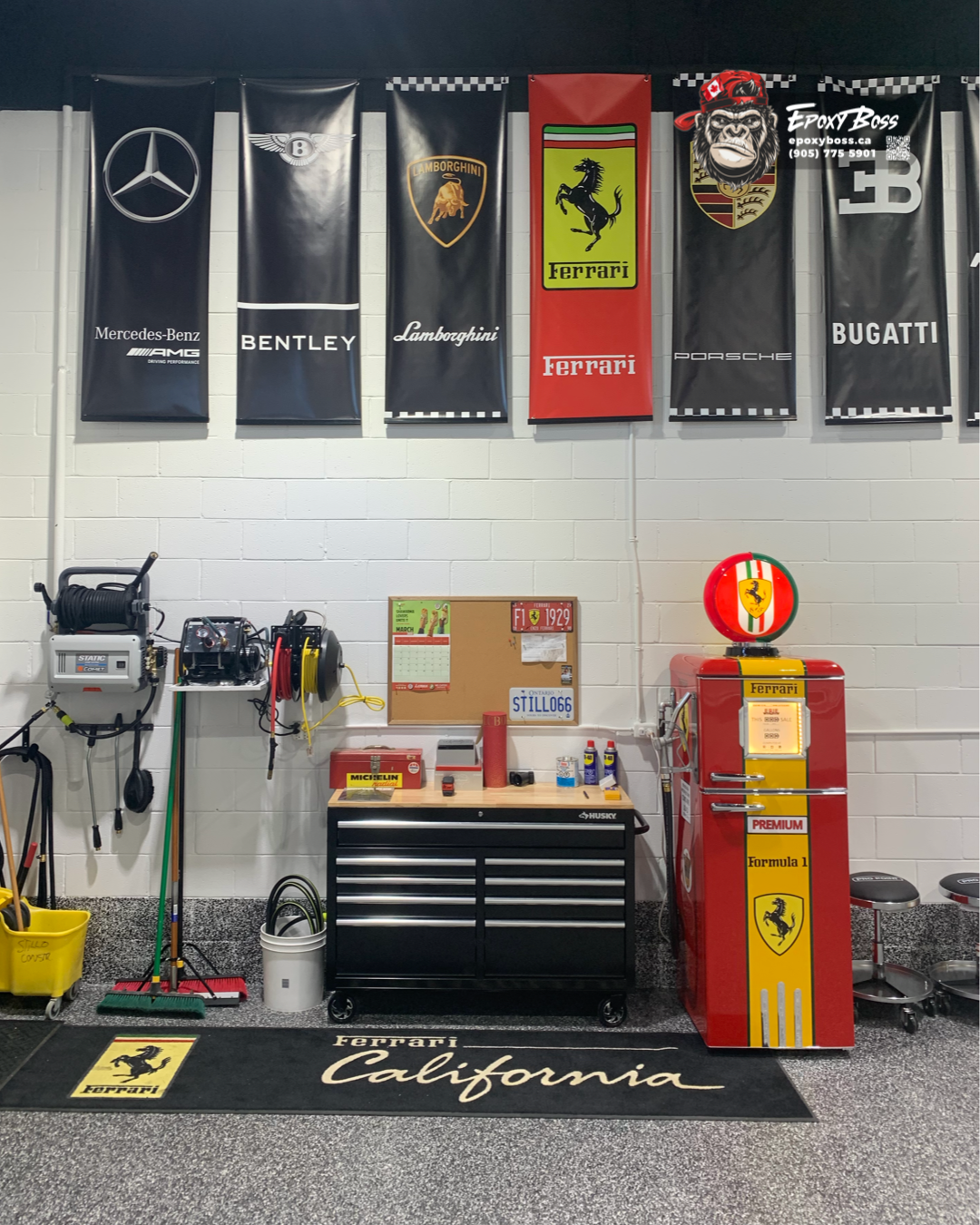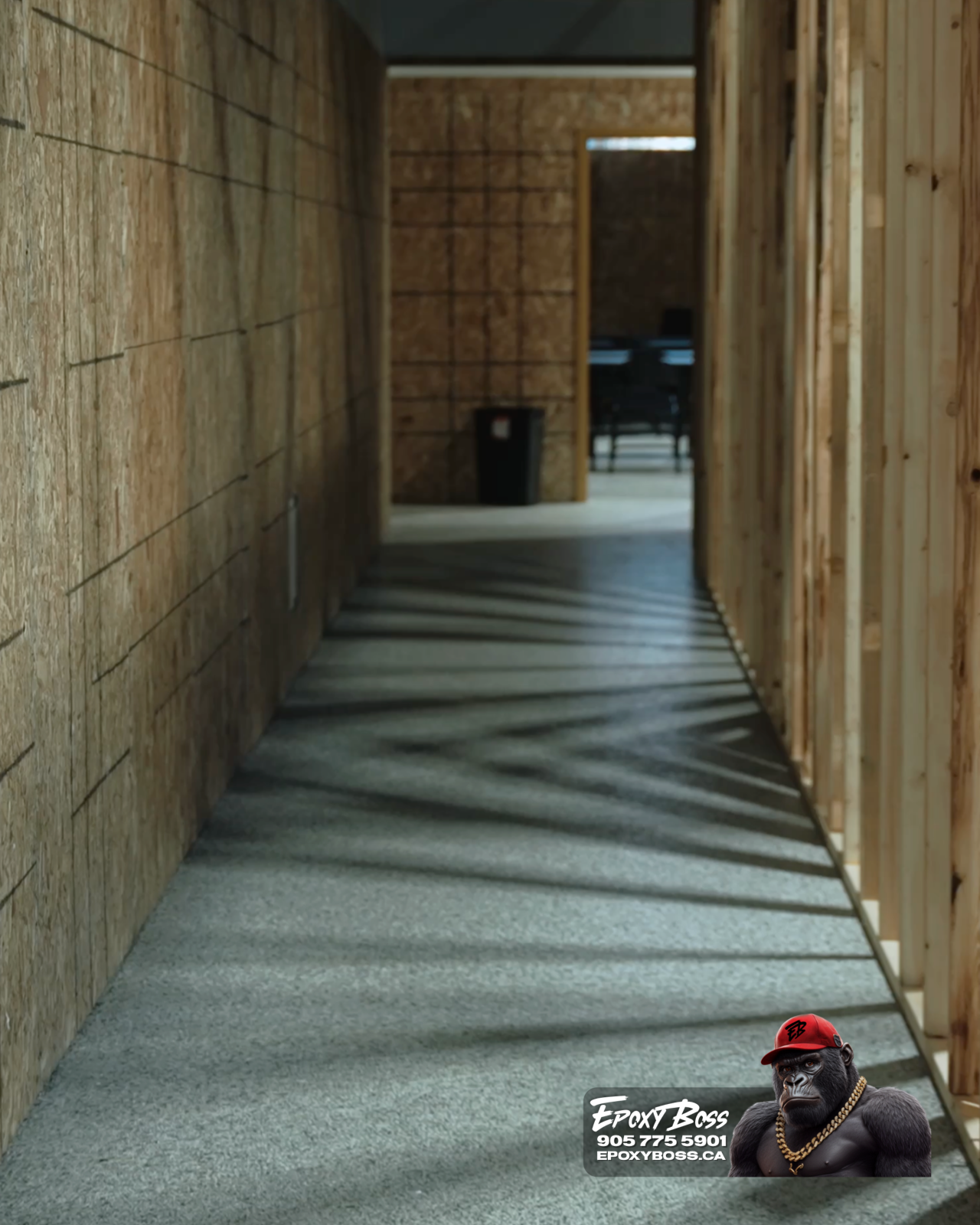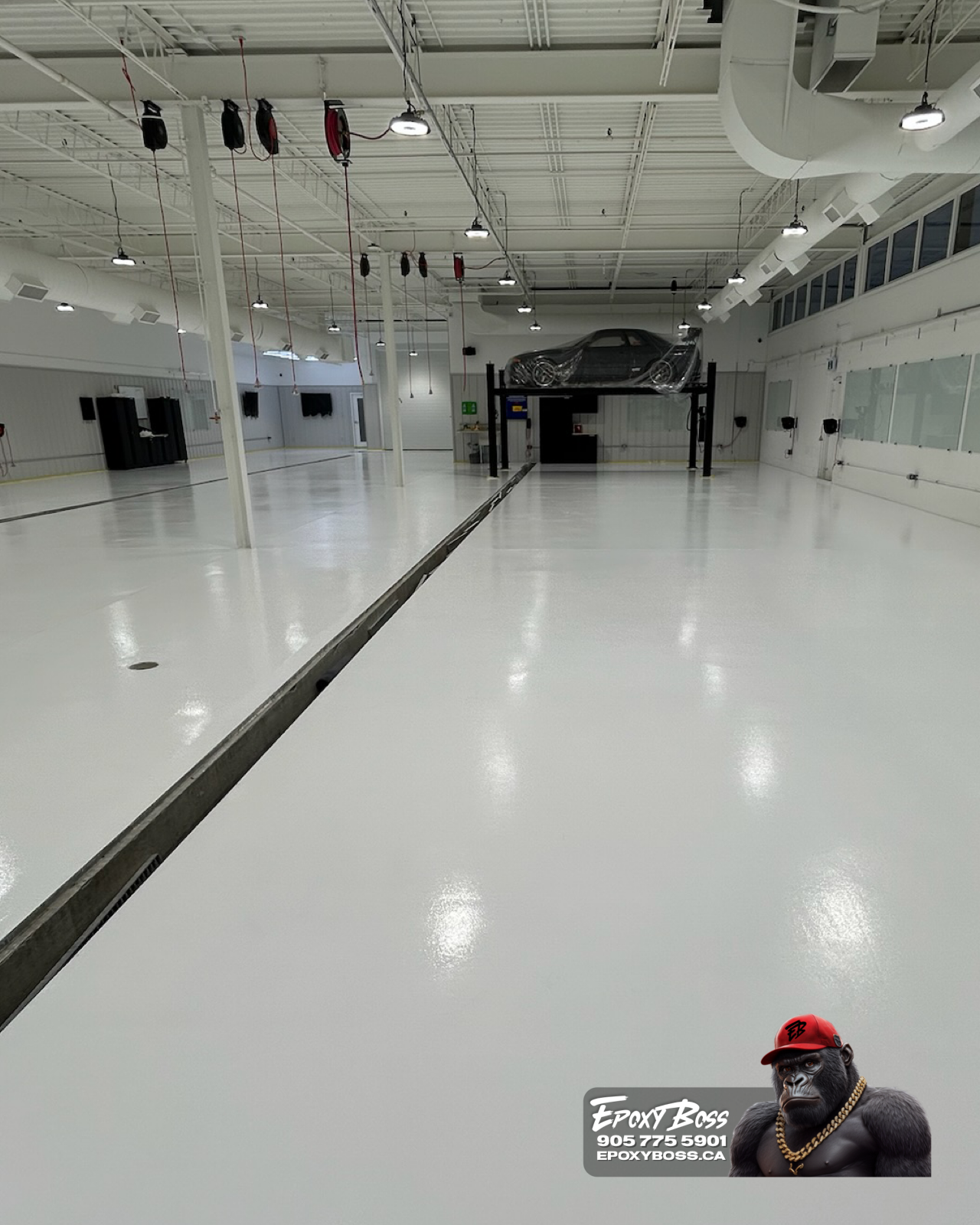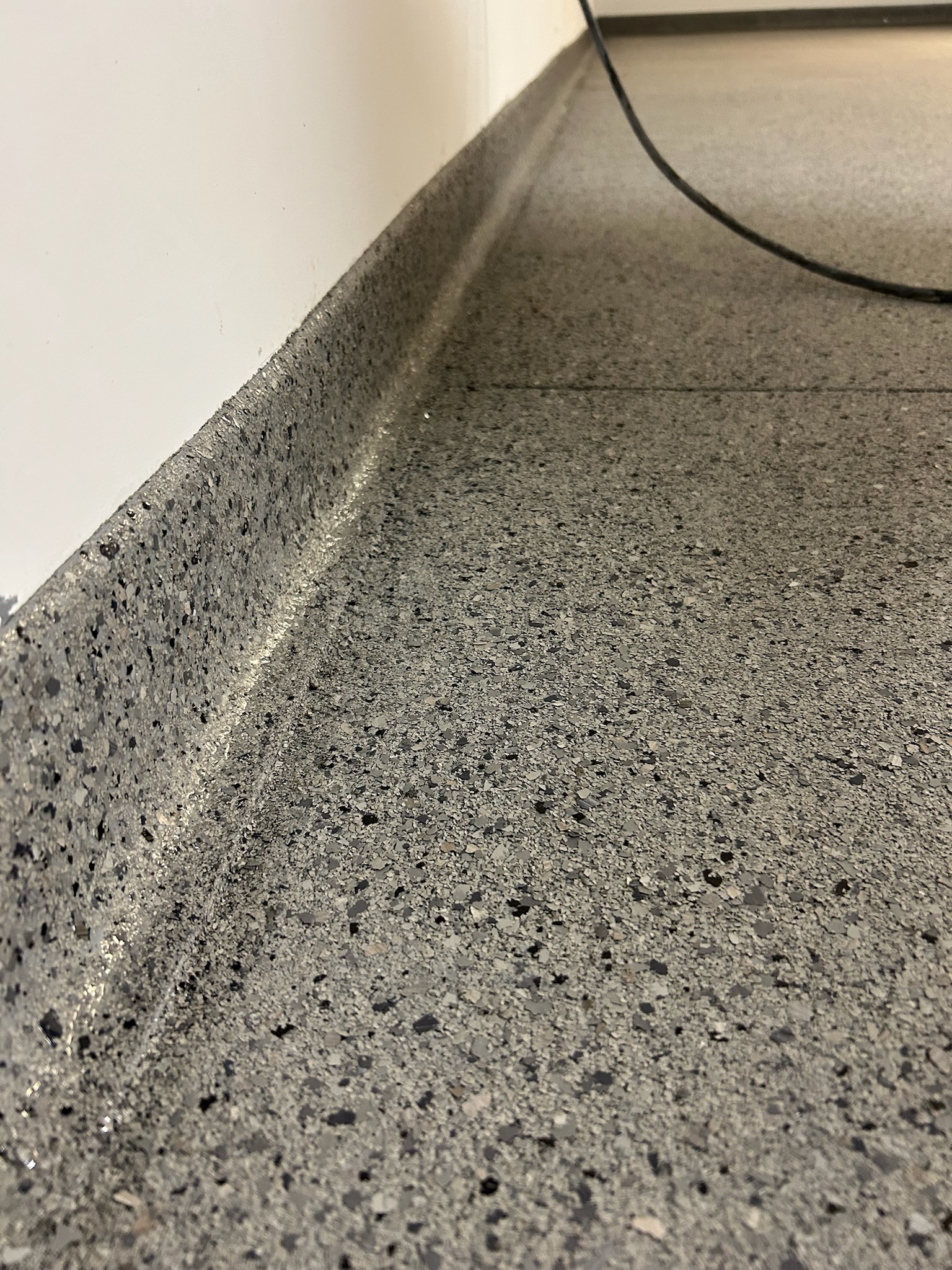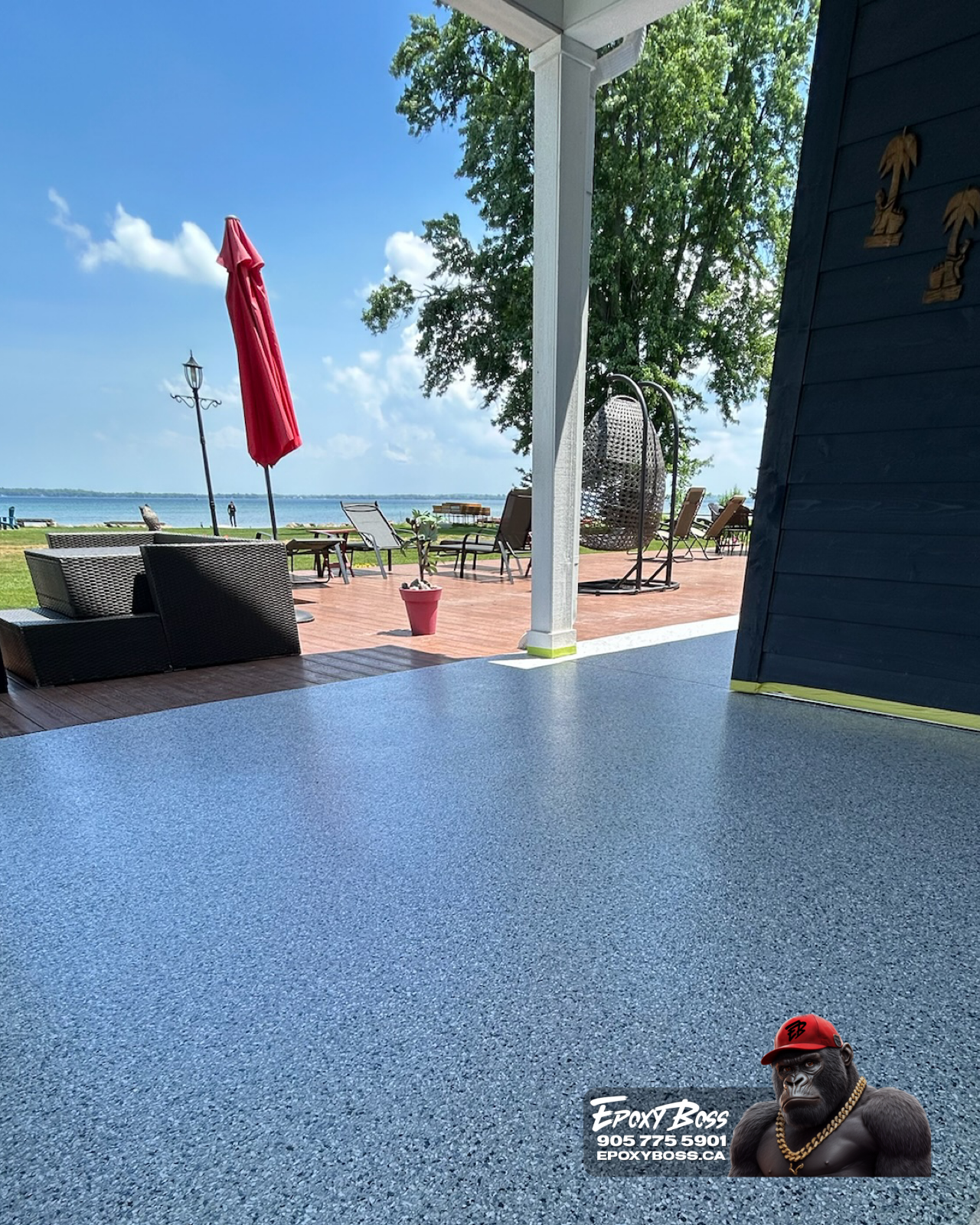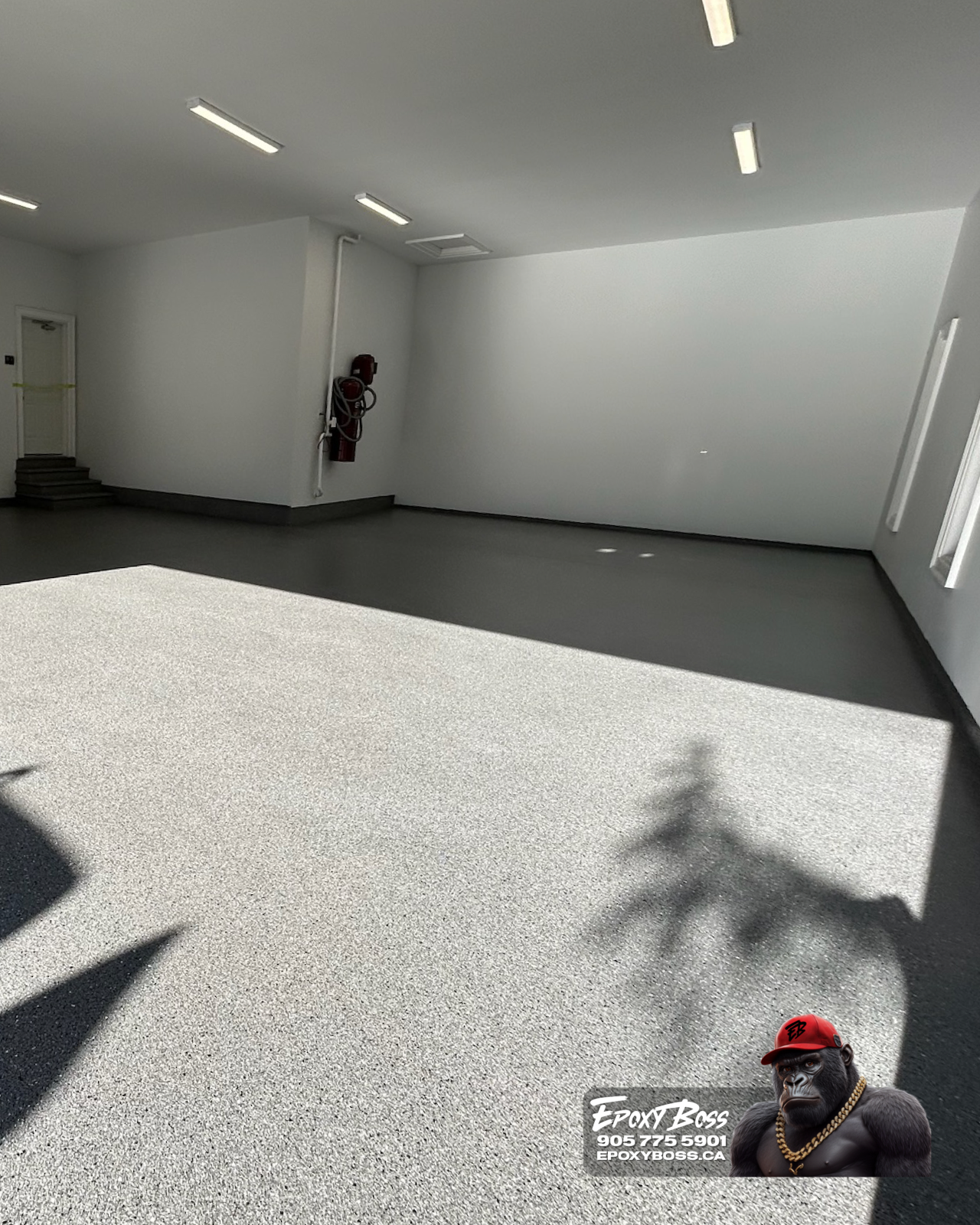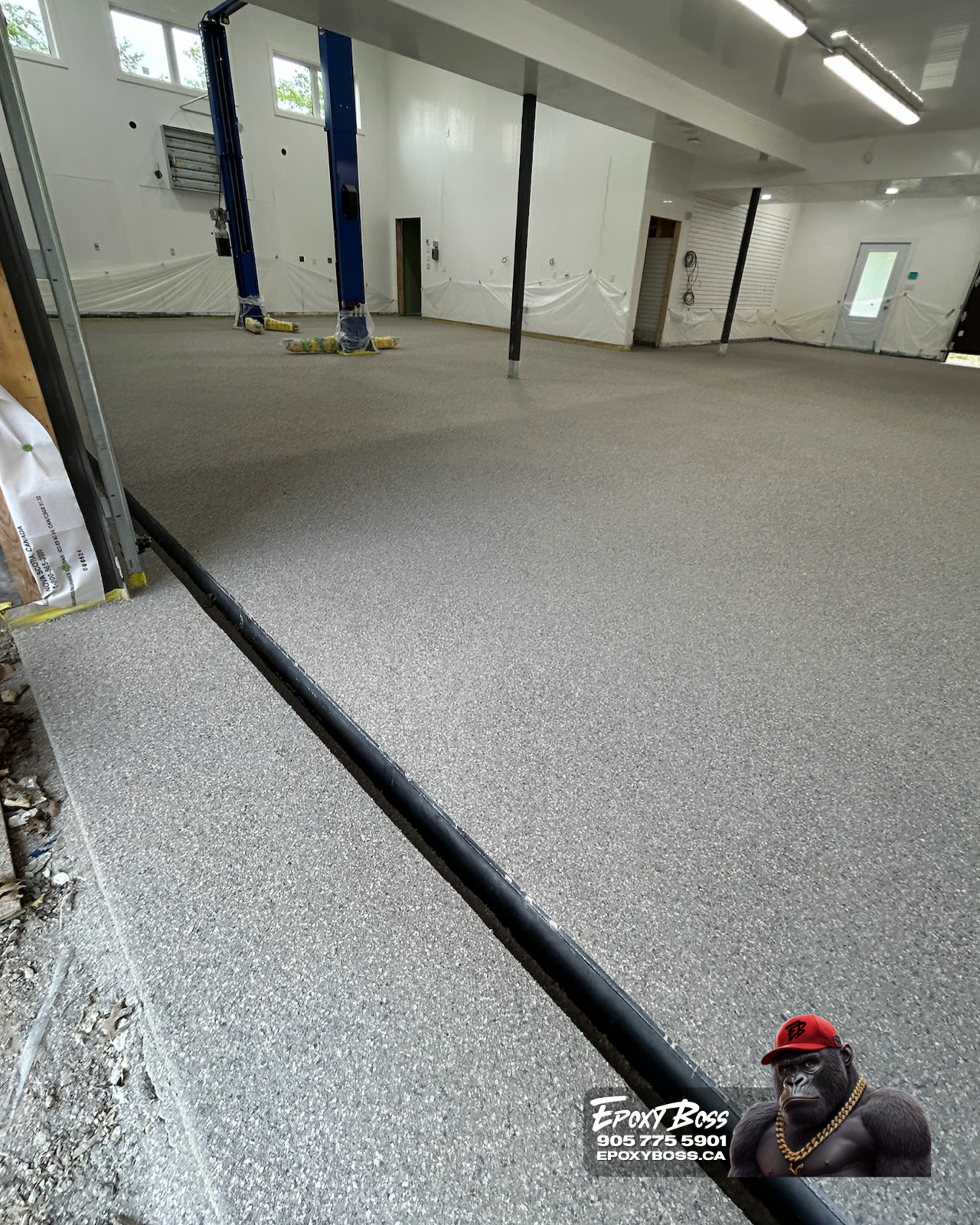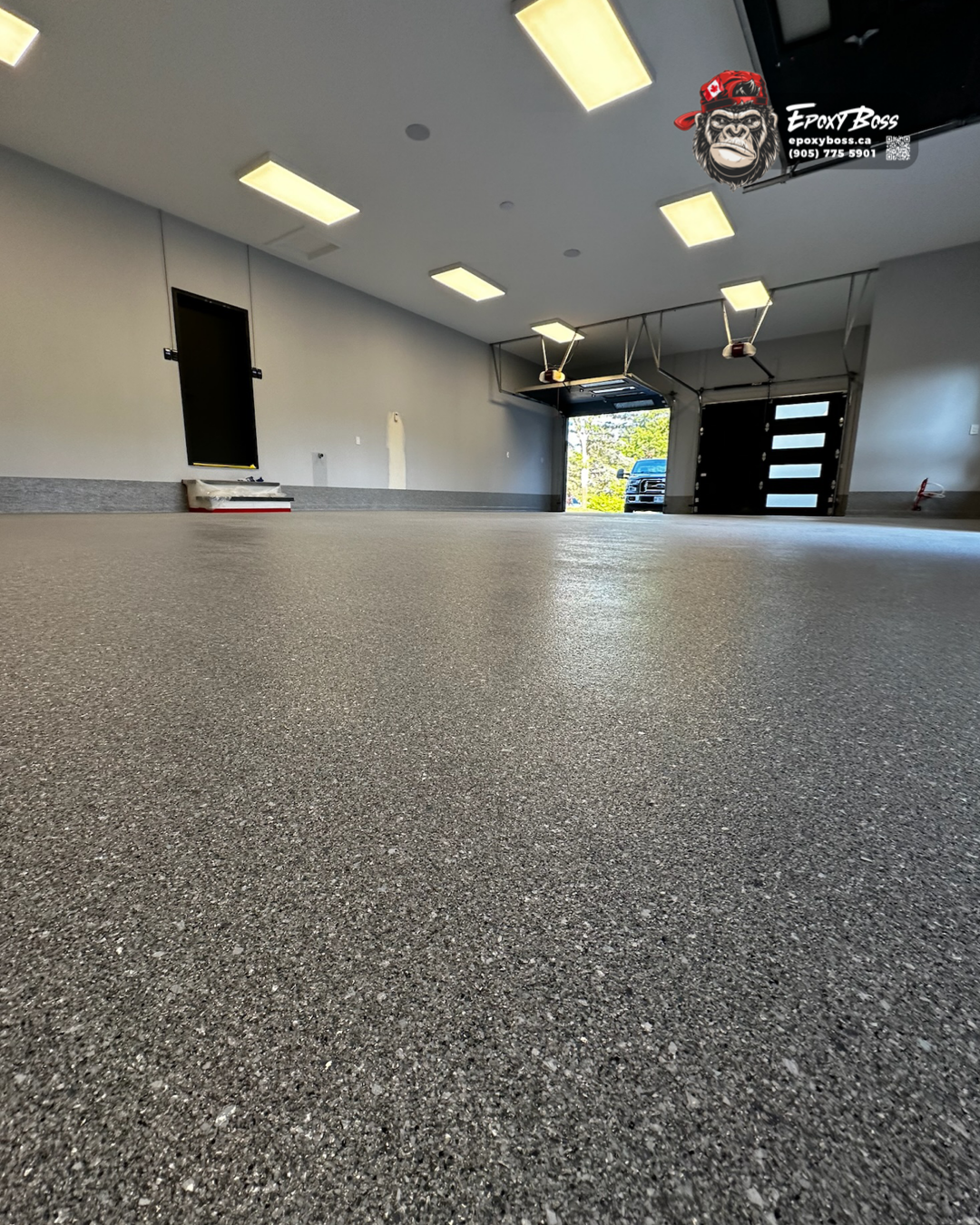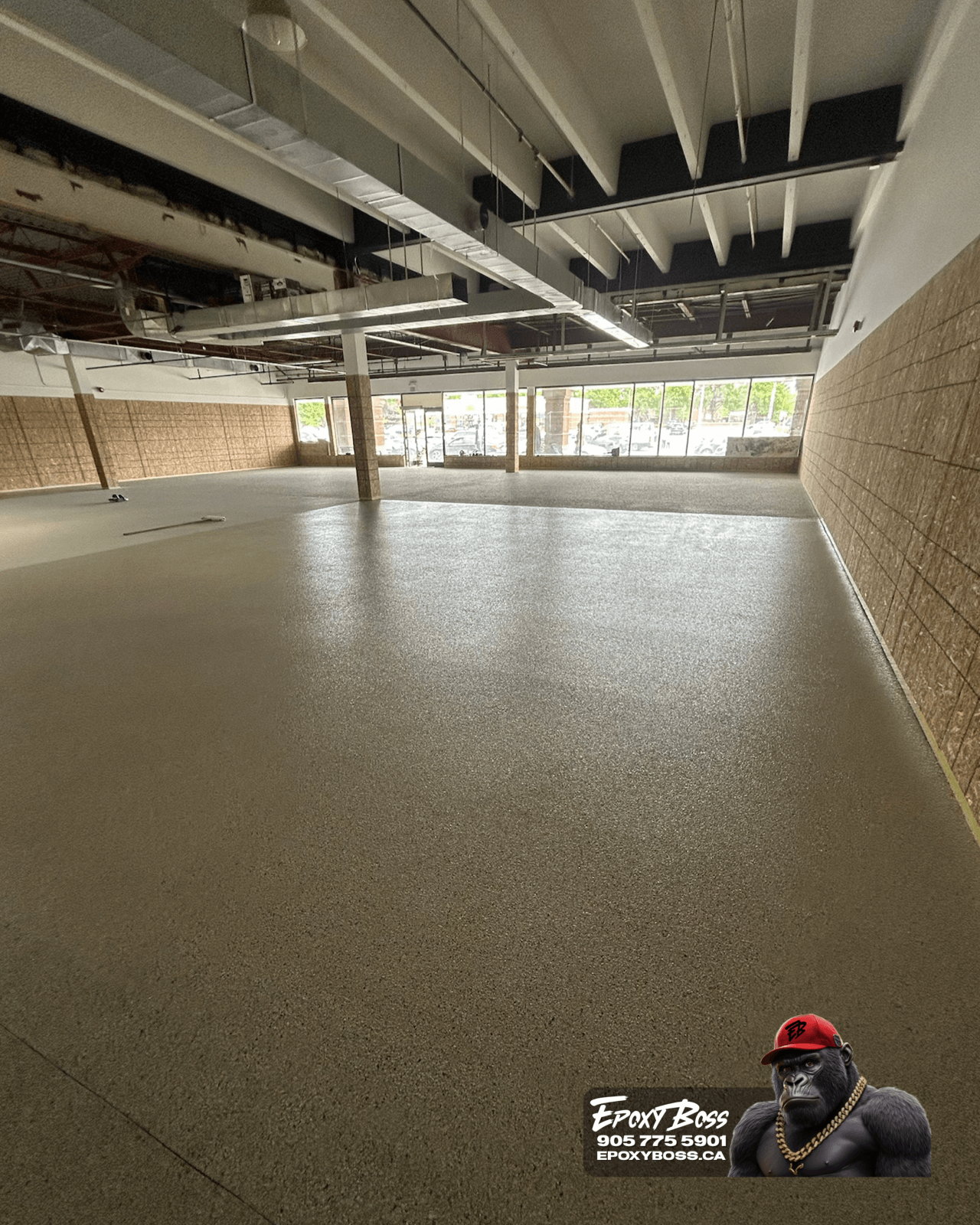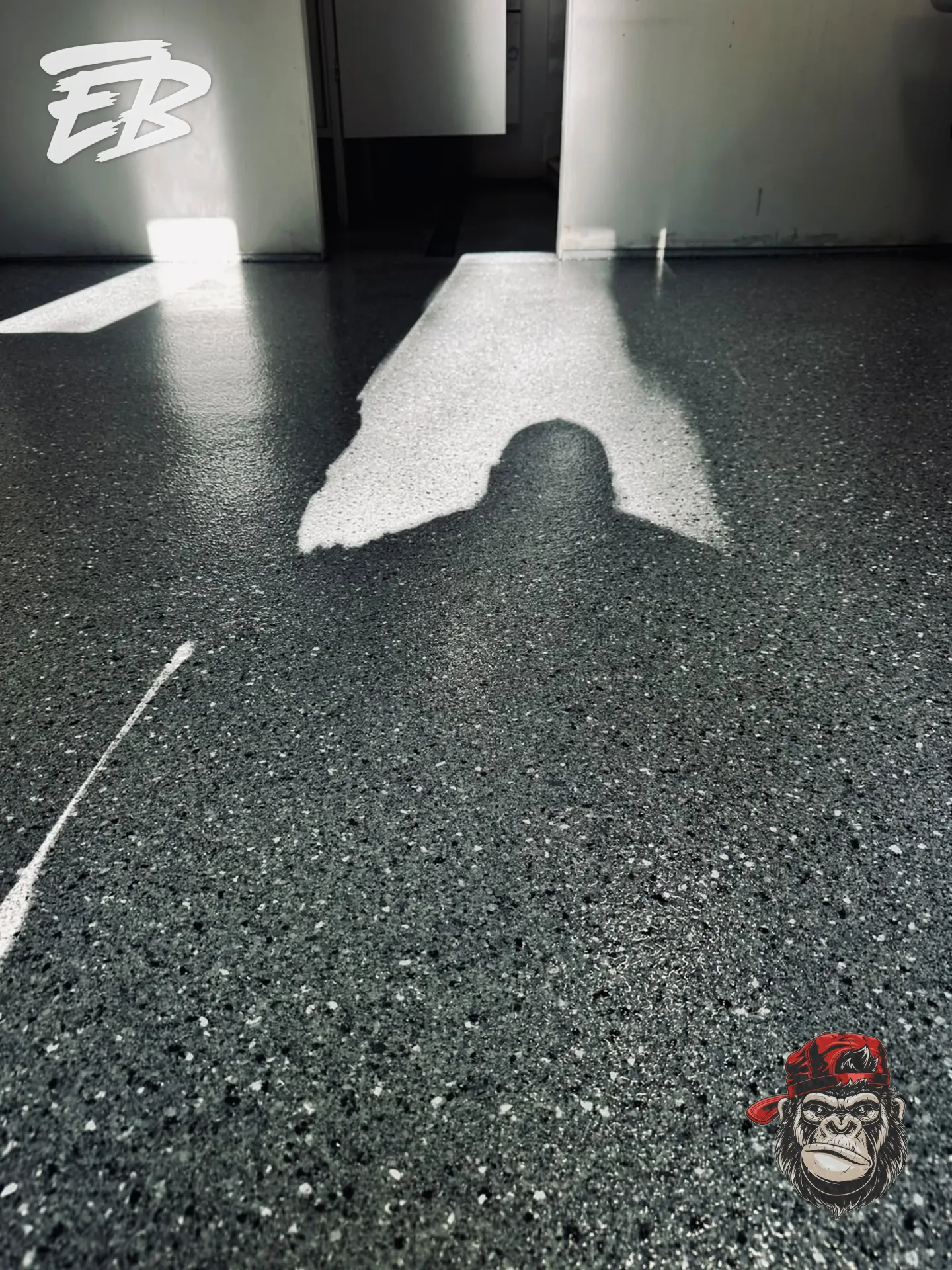
An epoxy floor can work well inside a house wherever there is a concrete slab and the room benefits from a seamless, easy-to-clean surface: basements, laundry and utility rooms, home gyms, workshops and mudrooms are the most common. Epoxy resin flooring is not usually installed over wood subfloors in living areas, and it is not a fit for every room. Success depends on the slab's moisture, its condition and choosing a finish that suits how the room is used.
This guide covers where epoxy resin flooring for homes works best in Ontario, what to check before coating an interior slab and which finishes suit which rooms.
Can you put an epoxy floor inside a house?
Yes, on concrete. Resinous coatings are designed to bond to prepared concrete, so they are most at home on basement slabs, slab-on-grade rooms and garages converted to living or hobby space. Over plywood or other wood subfloors, movement and deflection make standard floor coatings a poor fit, and other flooring is usually the better choice.
Indoor residential rooms also have advantages over garages: little or no road salt, more stable temperatures and less direct sunlight. That opens up more decorative options, such as metallic epoxy, that are less practical in a working garage.
Rooms where epoxy resin flooring works best
Basements
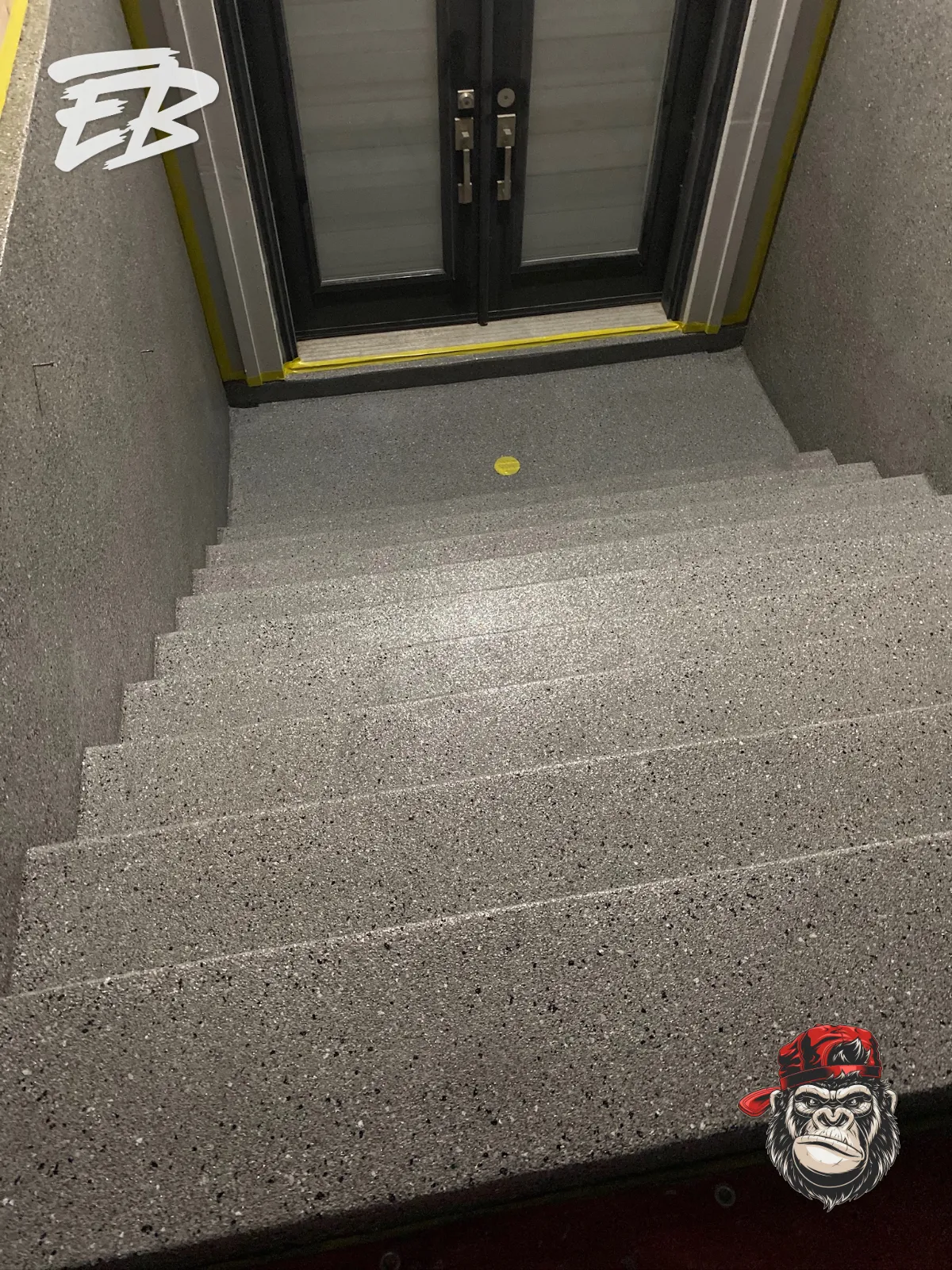
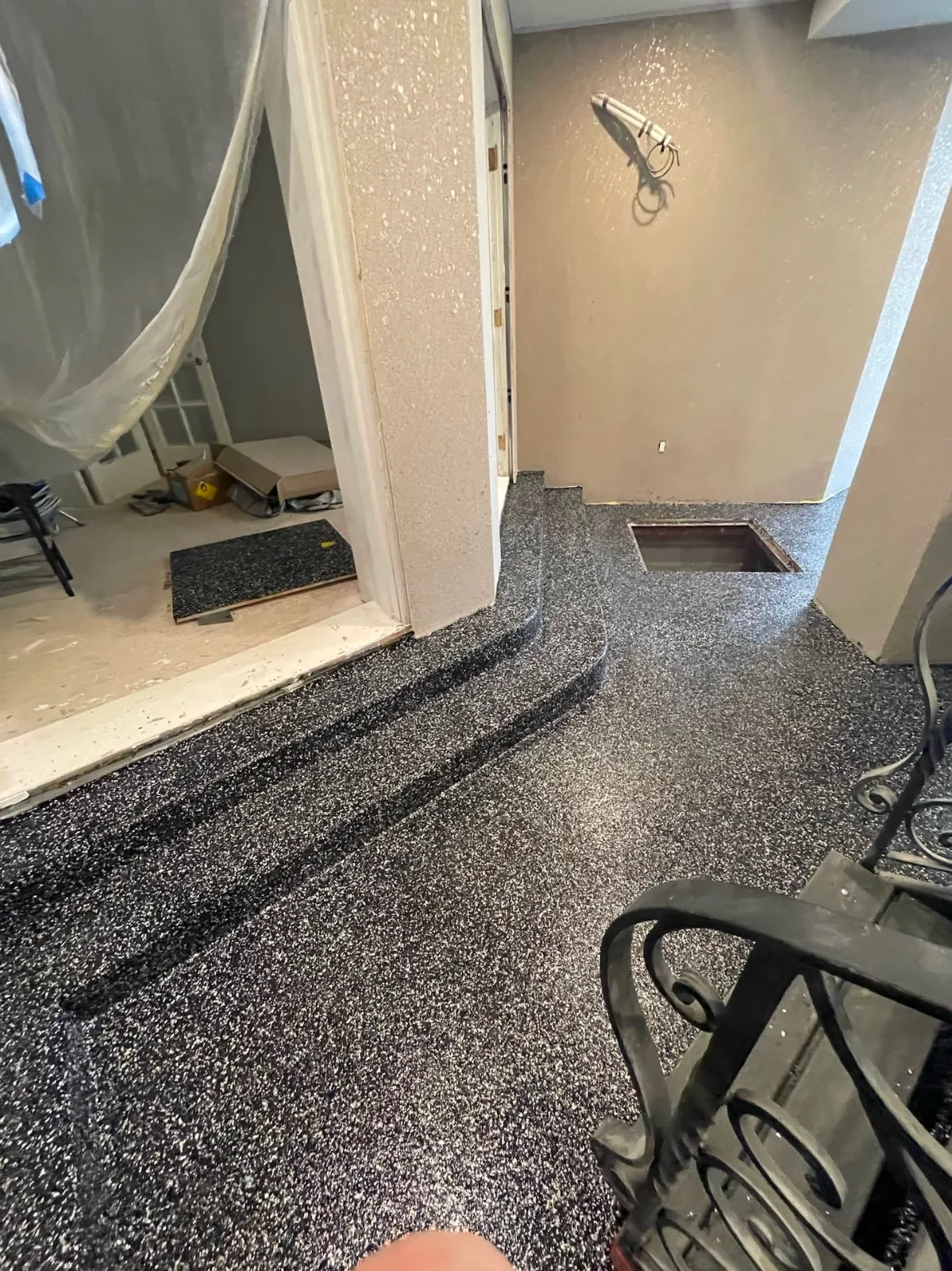
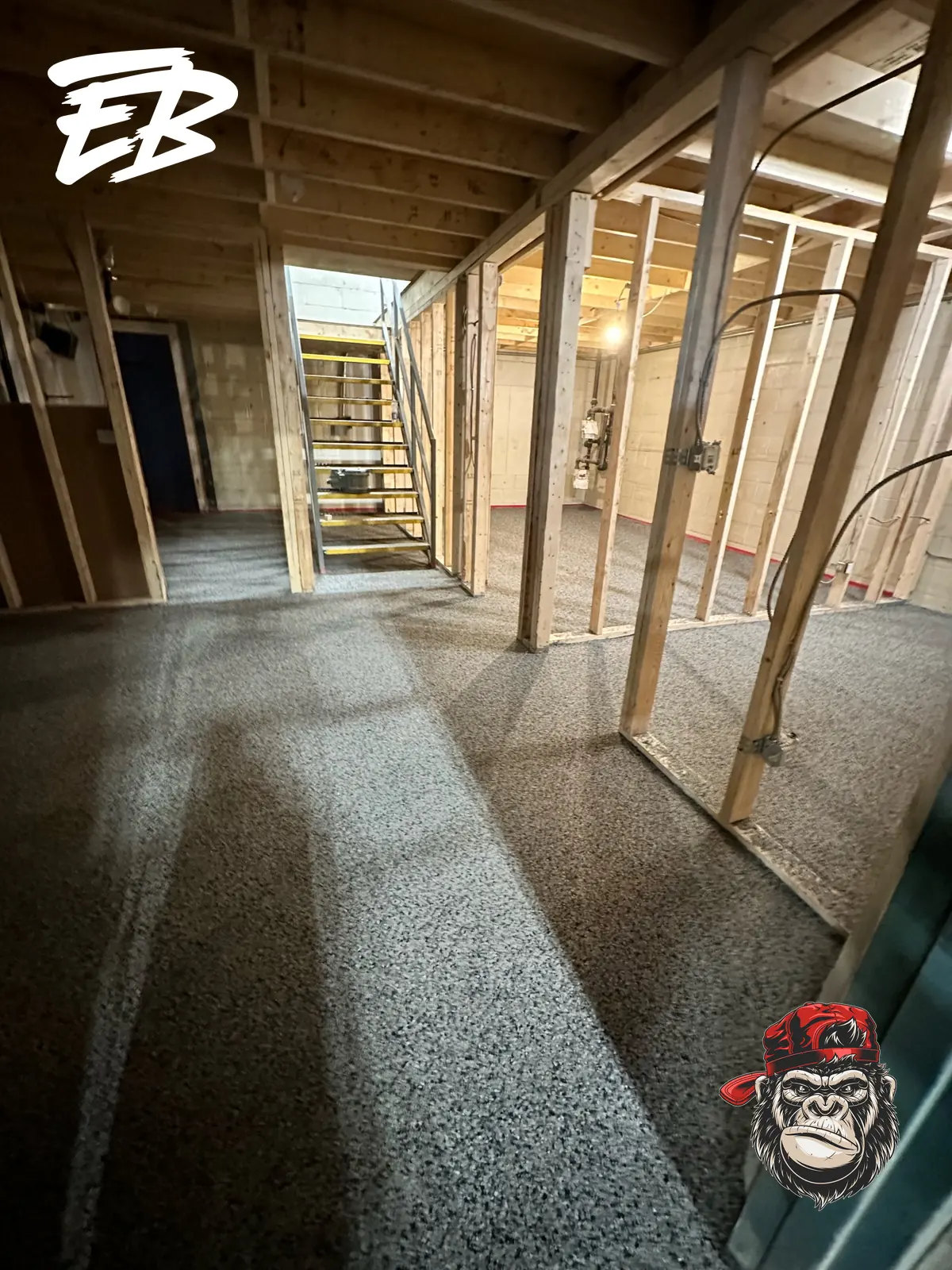
The most common interior use. A coated basement slab is easier to clean than bare concrete, does not hold odours the way carpet can, and gives a finished look for storage, rec rooms, gyms and hobby space. The key risk is moisture: a slab can look dry while moisture vapour passes through it. We cover this in detail in basement floor coatings and moisture, and our basement and indoor coatings page shows the options.
Laundry and utility rooms
Water heaters, furnaces, washers and utility sinks all bring the risk of drips and spills. A continuous resin surface is easy to wipe and does not have grout lines. Drains, doorways and penetrations need proper detailing, and a coating does not fix an active leak.
Home gyms
A coated slab under a gym gives a cleanable base. In lifting areas, rubber mats are still recommended on top to absorb impact; a coating is a protective finish, not shock absorption.
Workshops and hobby rooms
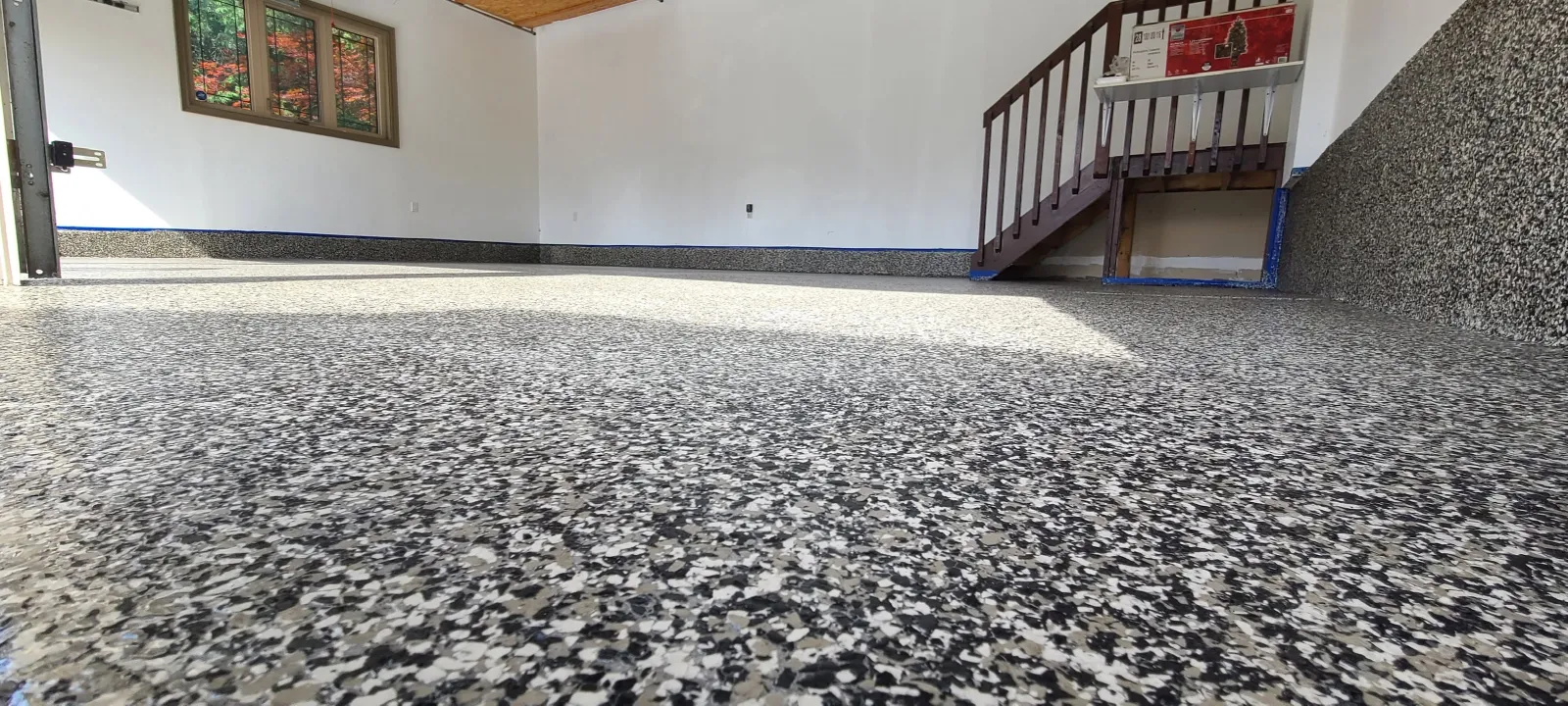
Paint, oil and tools are easier to clean up on a sealed surface. Older workshop slabs often have absorbed oil or paint that needs thorough mechanical preparation first.
Mudrooms and lower-level entries
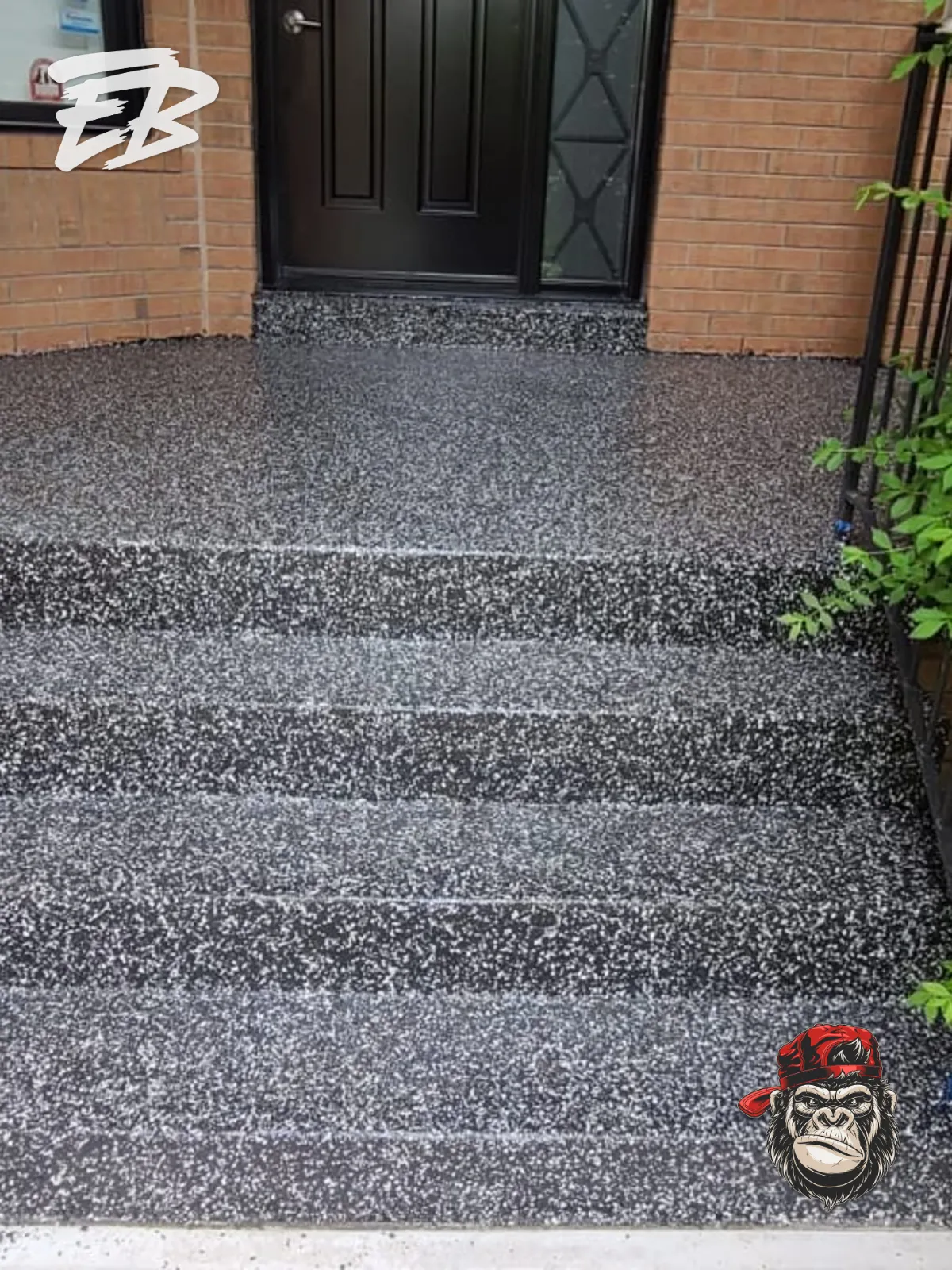
Wet boots, salt and grit make these demanding rooms. Texture matters more than gloss here; flake or quartz broadcast floors give more grip than a smooth finish.
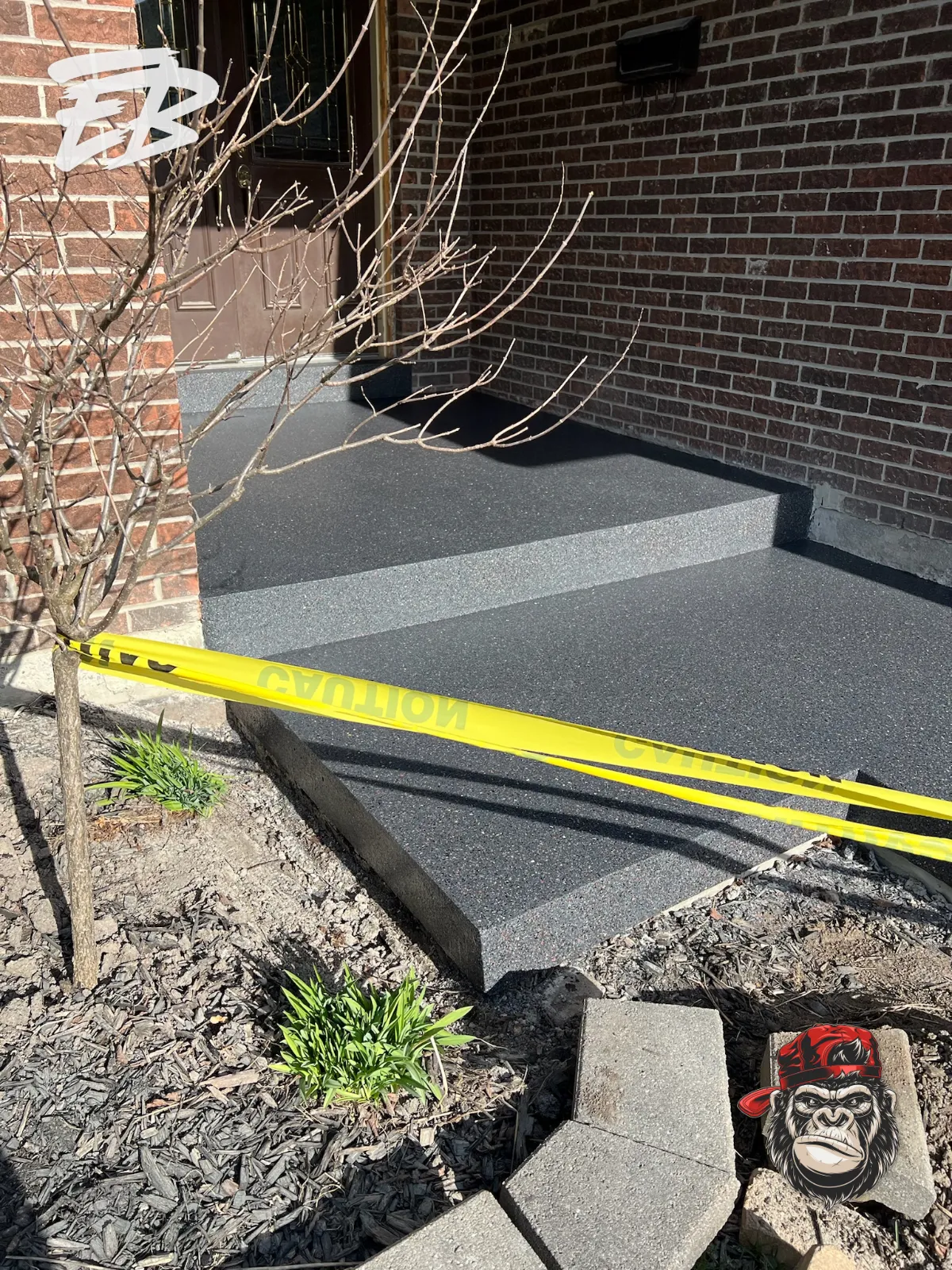
Covered porches and three-season rooms
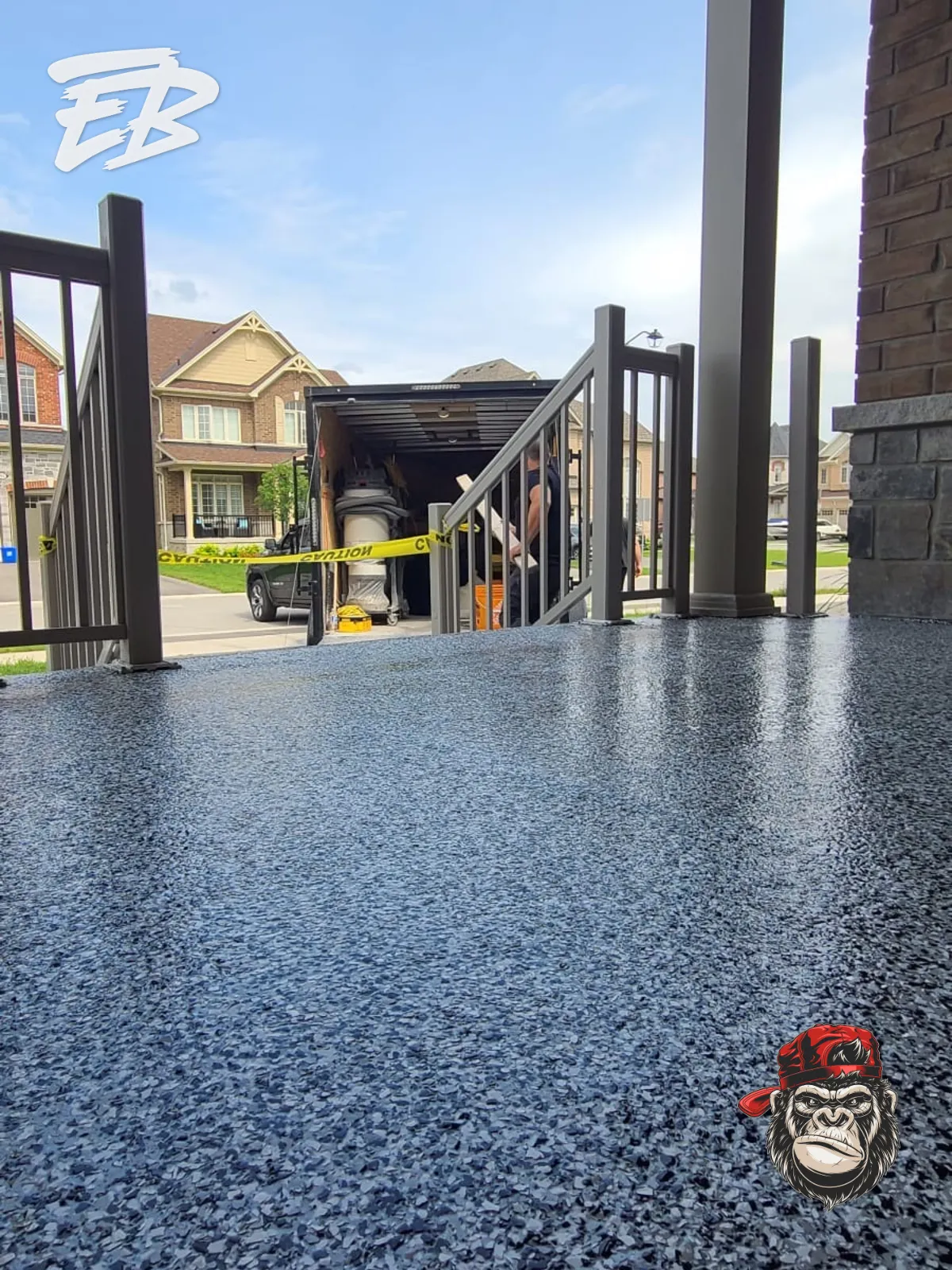
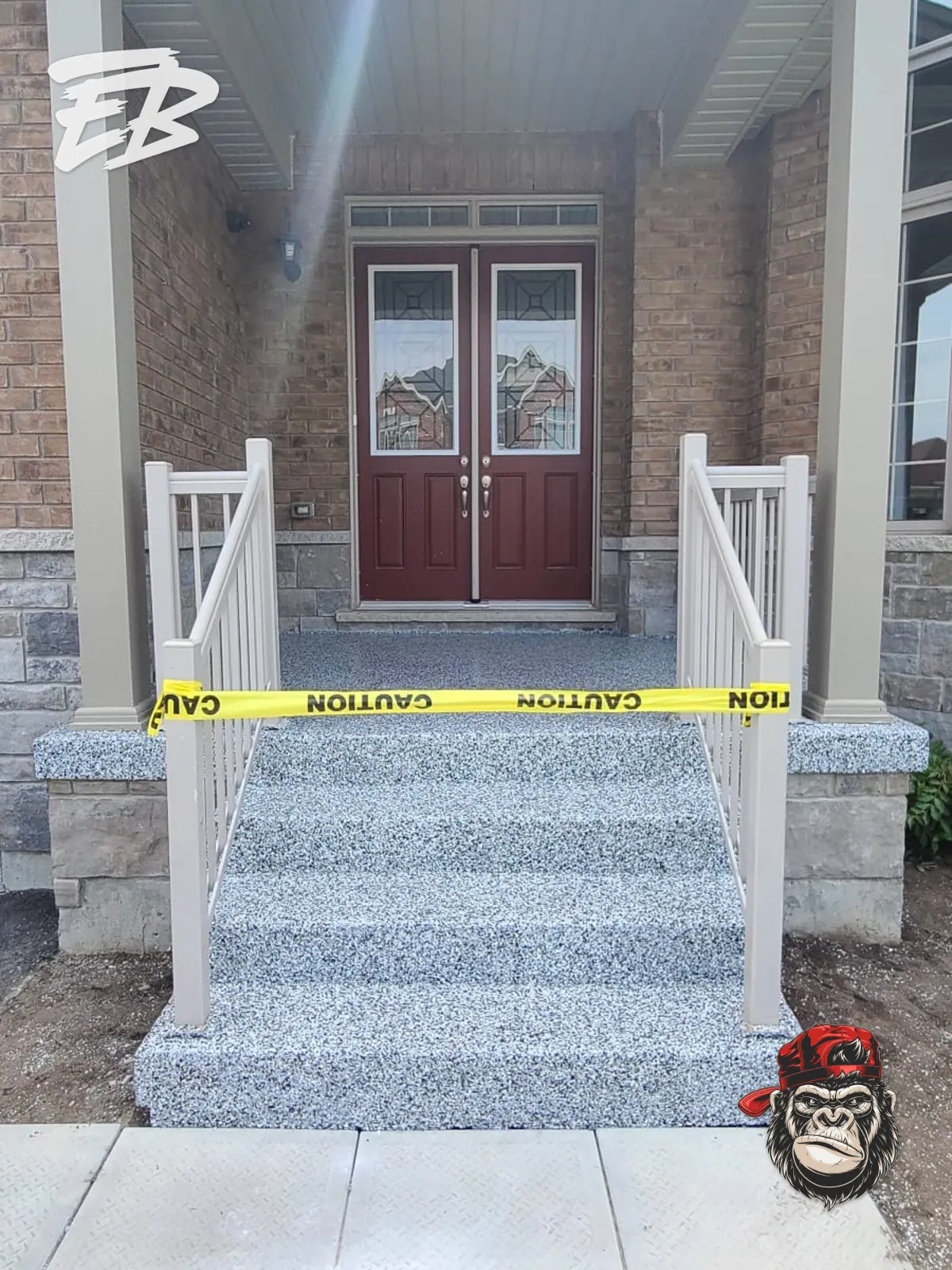
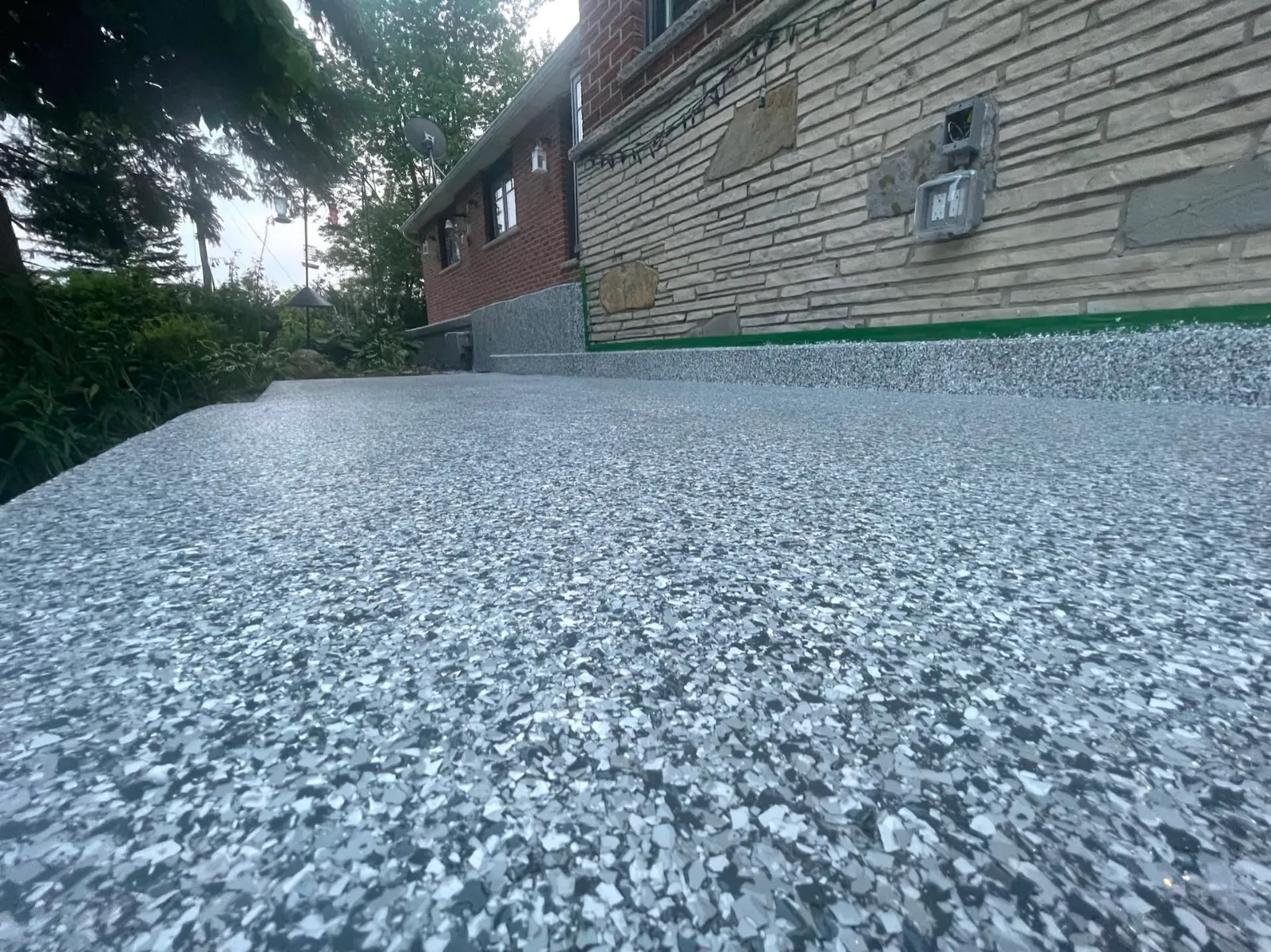
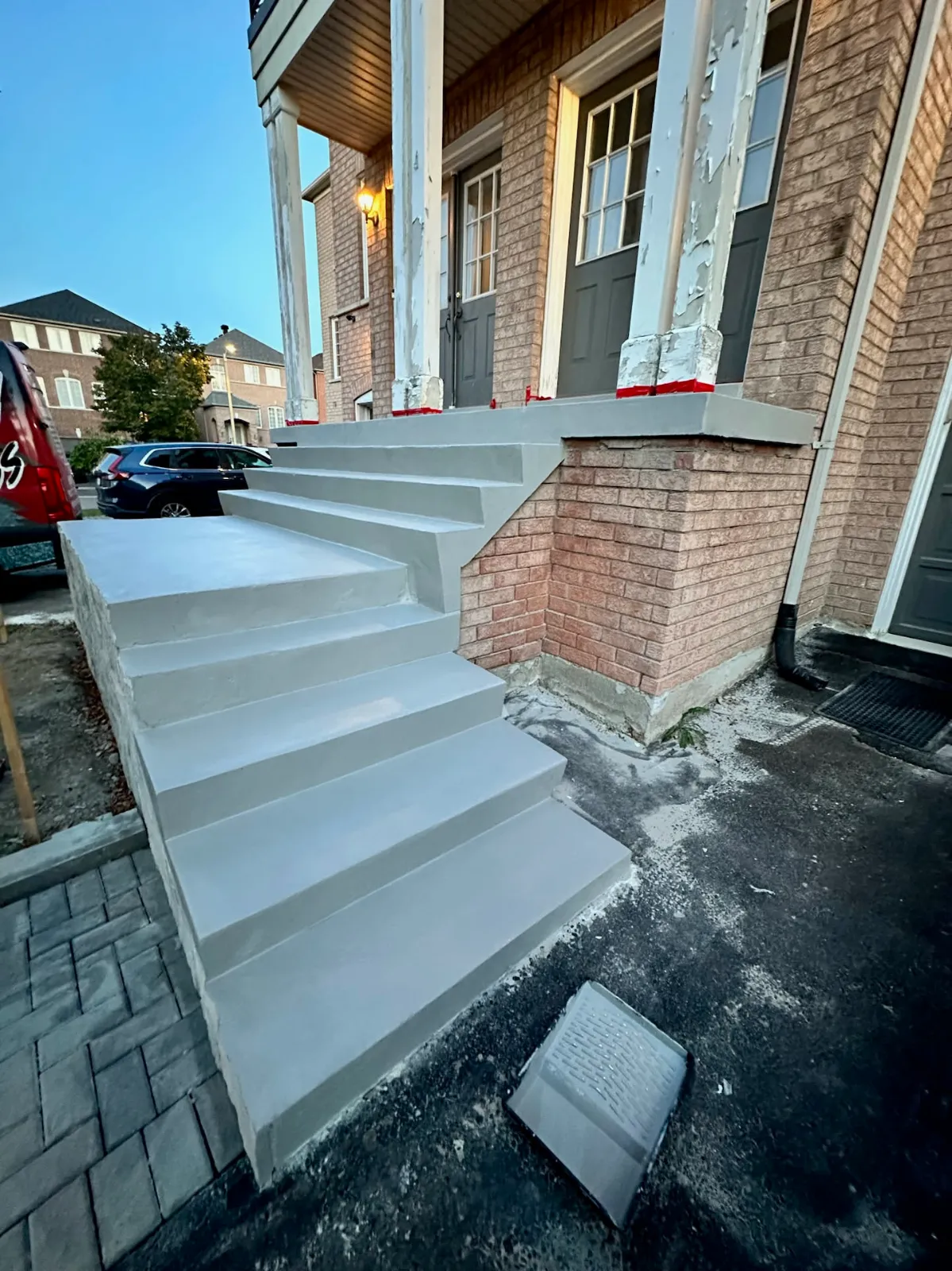
Possible, but these are semi-exterior. Sun exposure, temperature swings and water mean the system must be UV-stable and detailed for drainage. See our porch coatings page.
Choosing a finish for each room
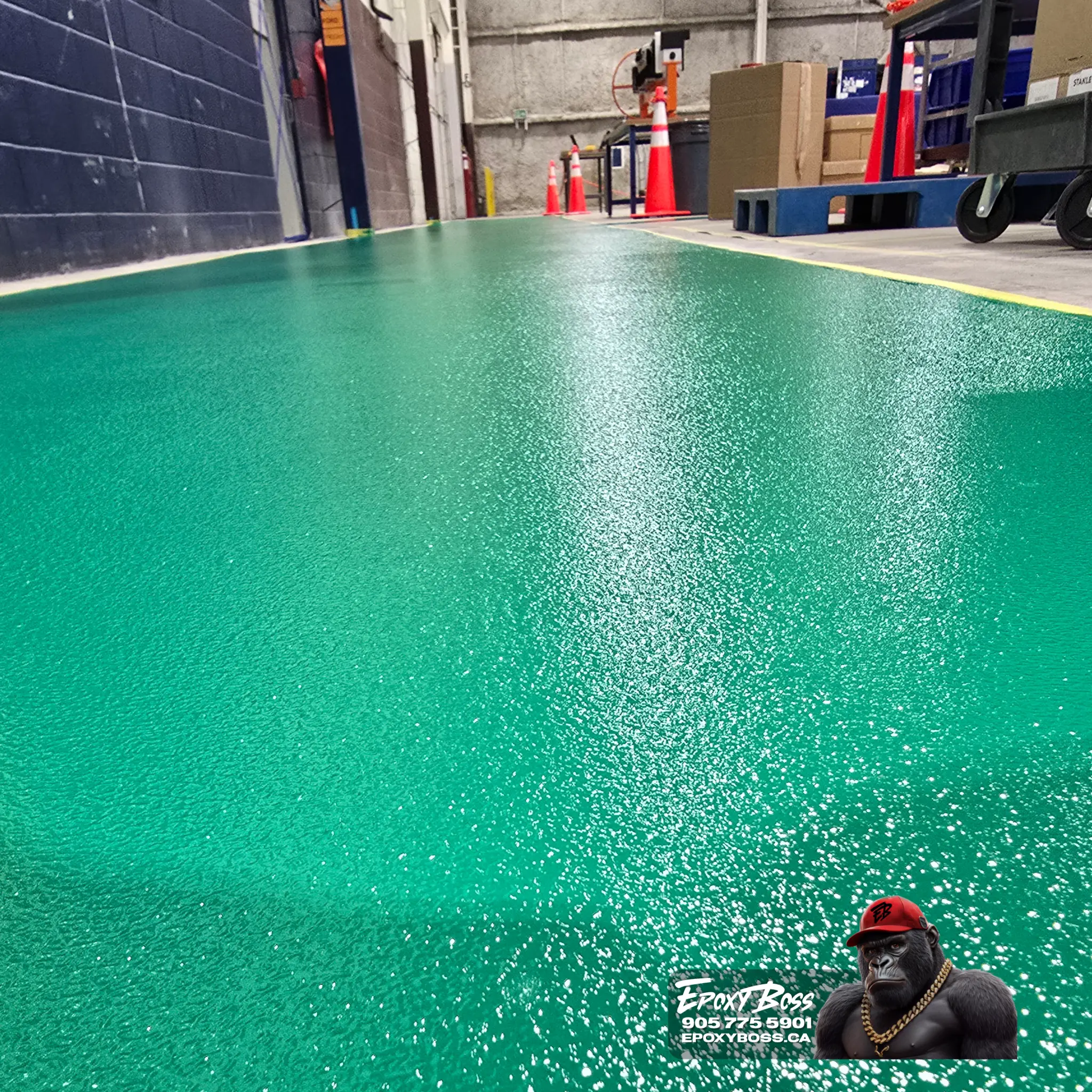
- Solid colour: clean and modern for basements, laundry rooms and gyms. See solid colour epoxy flooring.
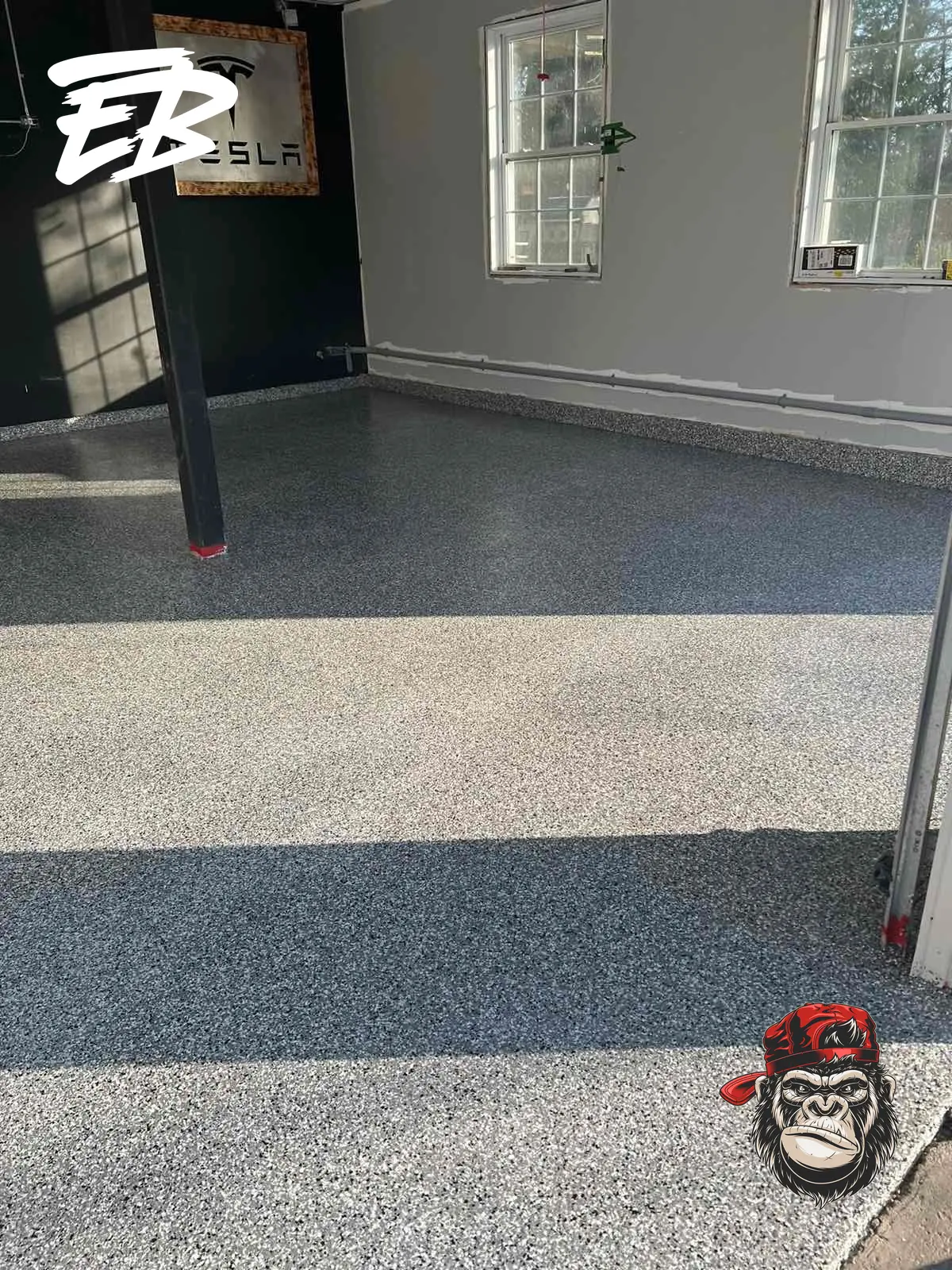
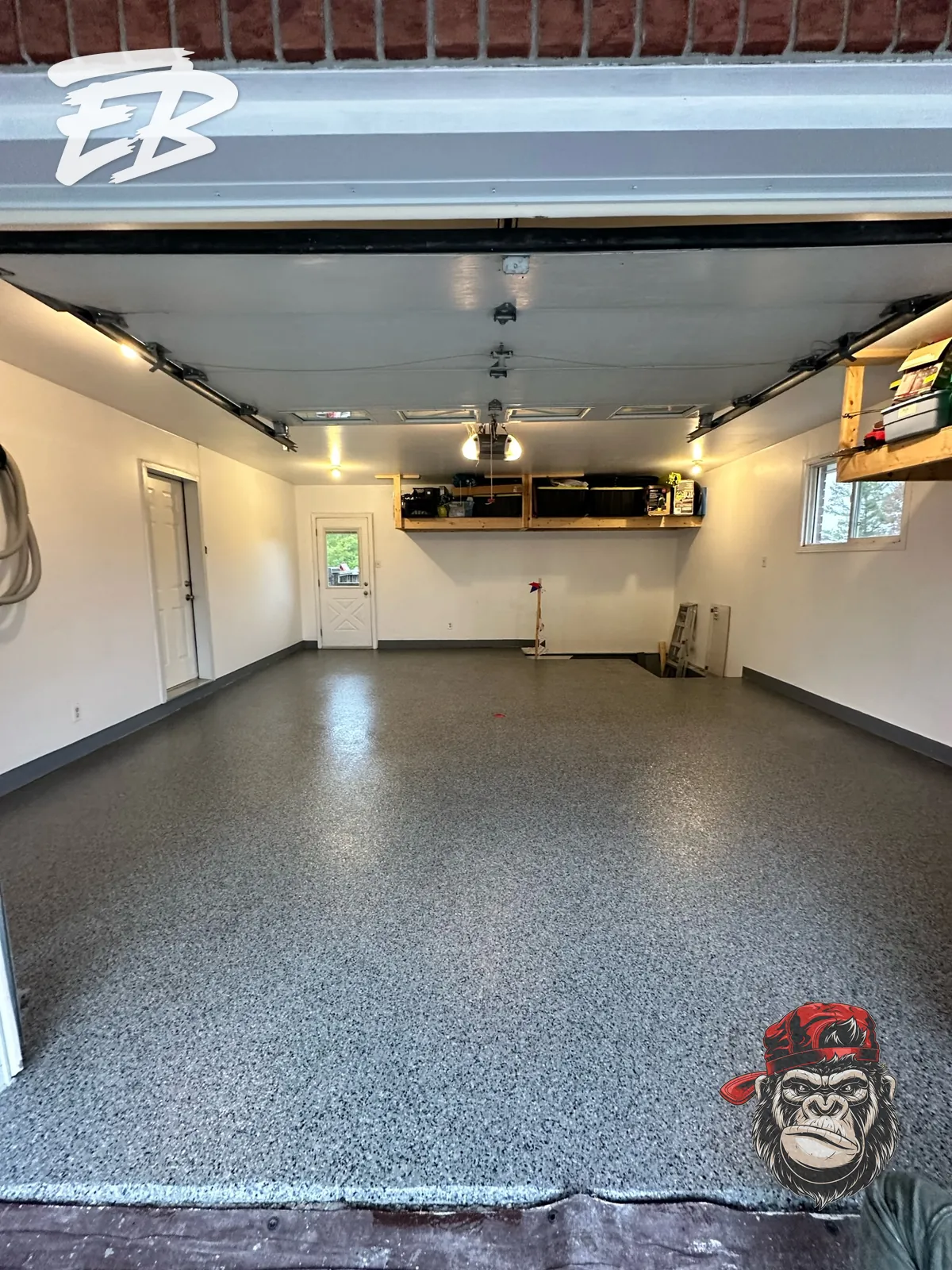
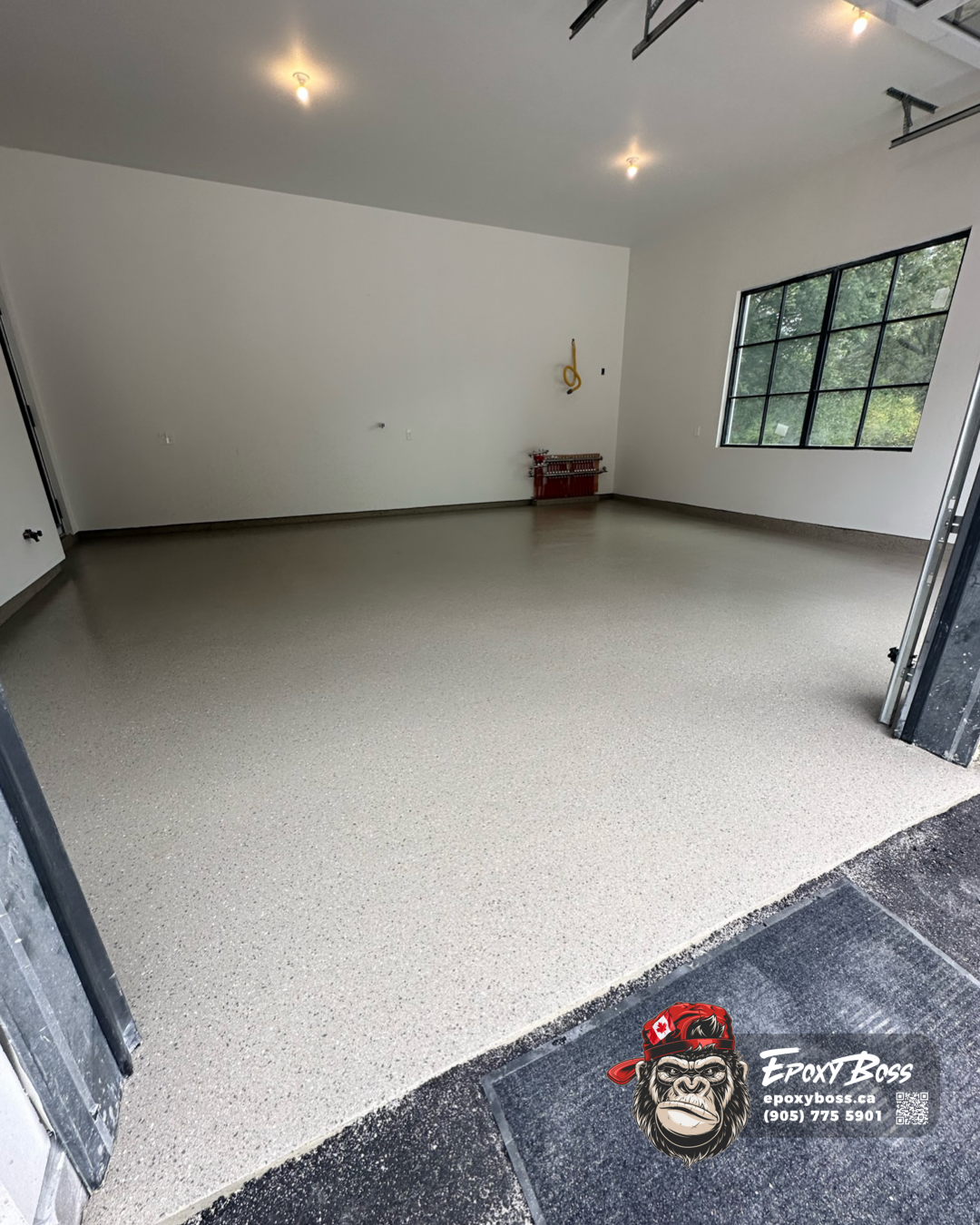
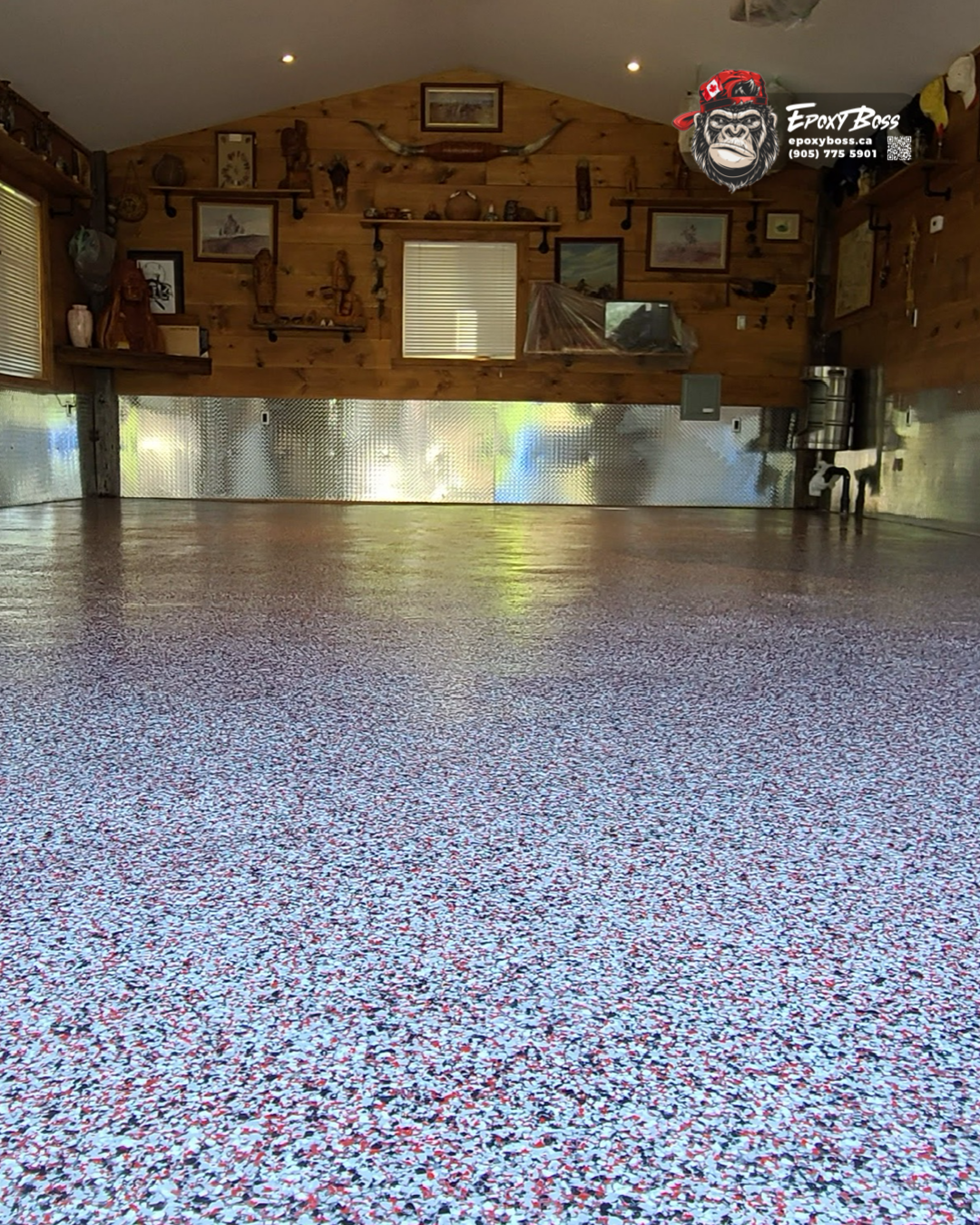
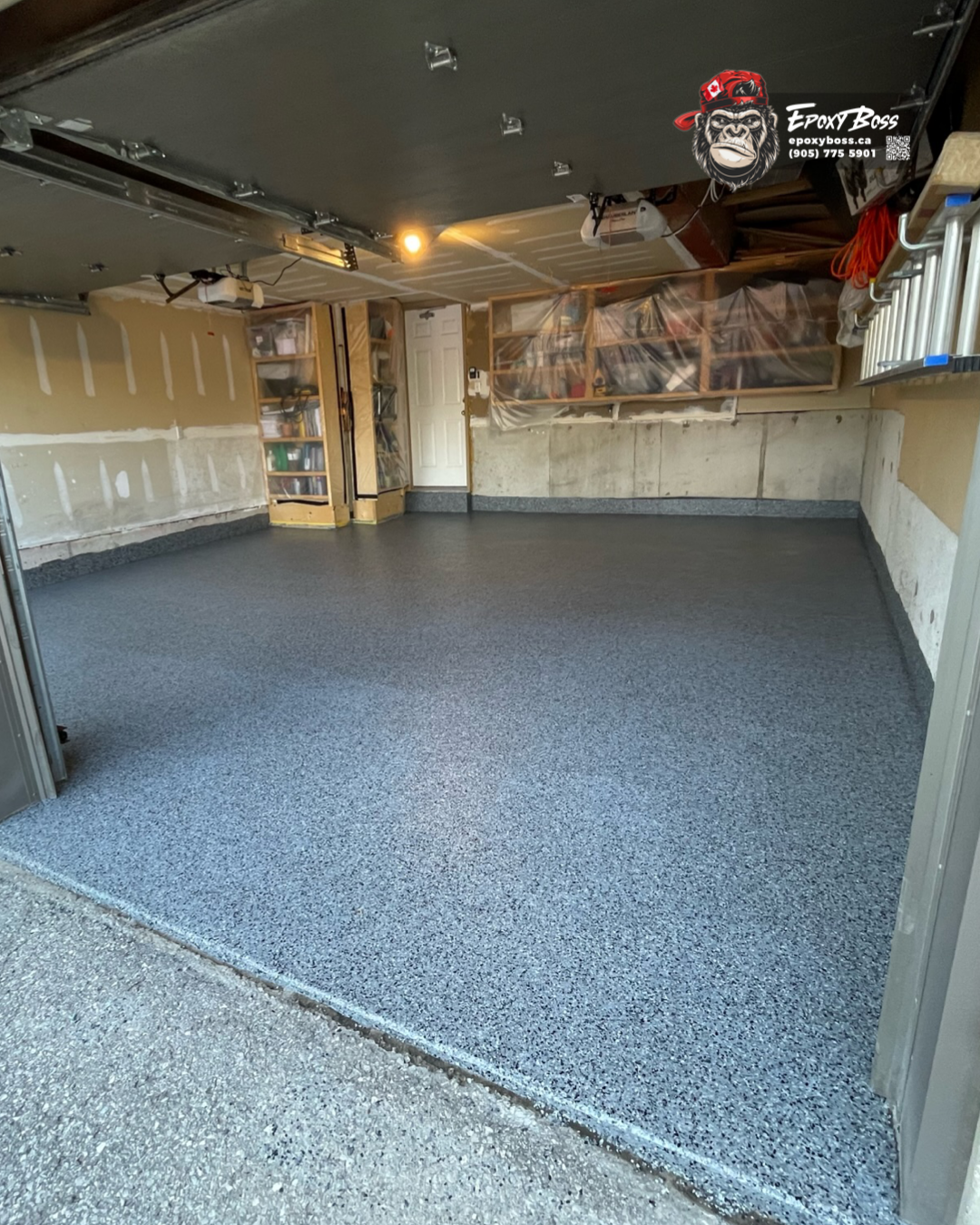
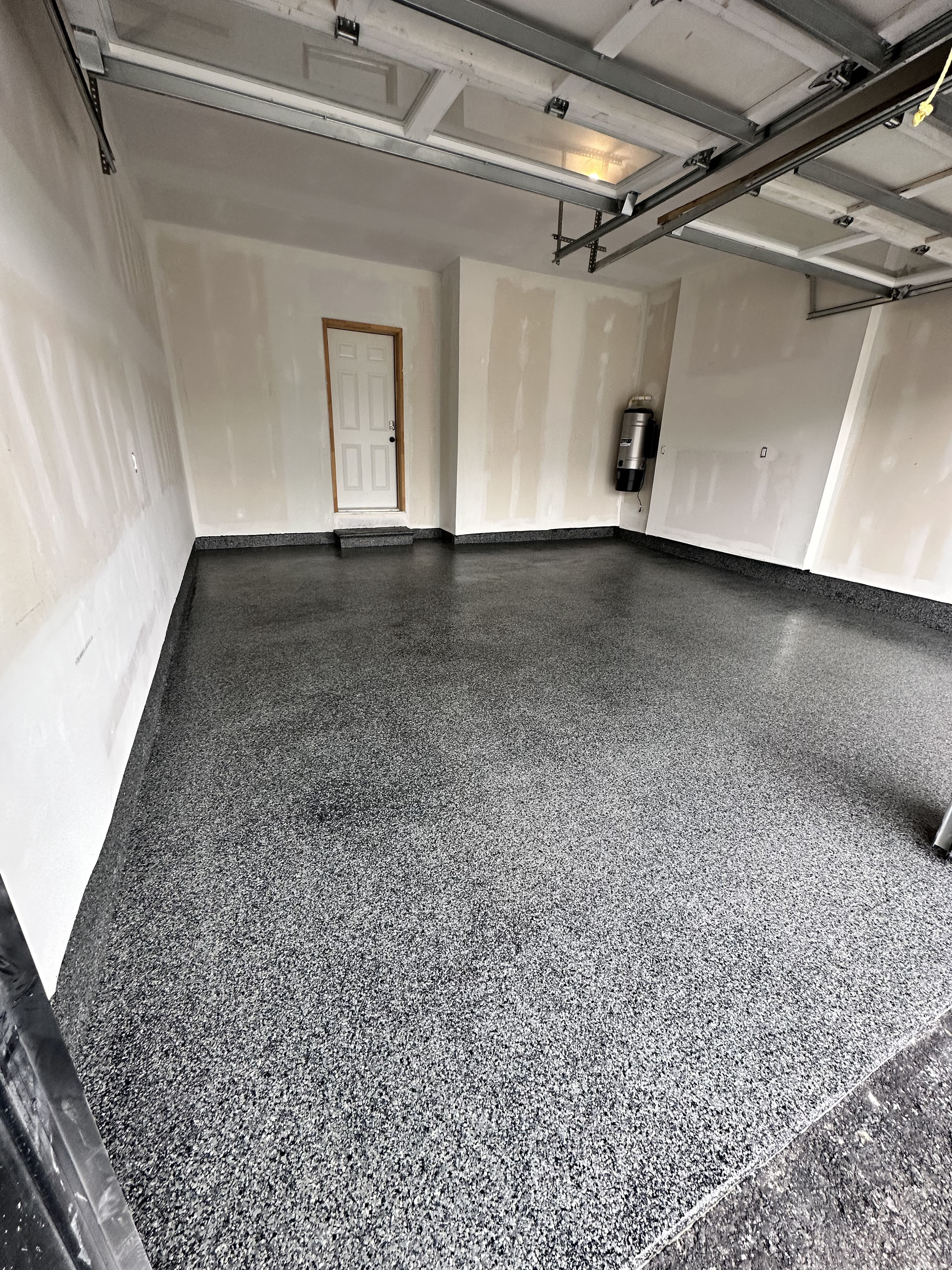
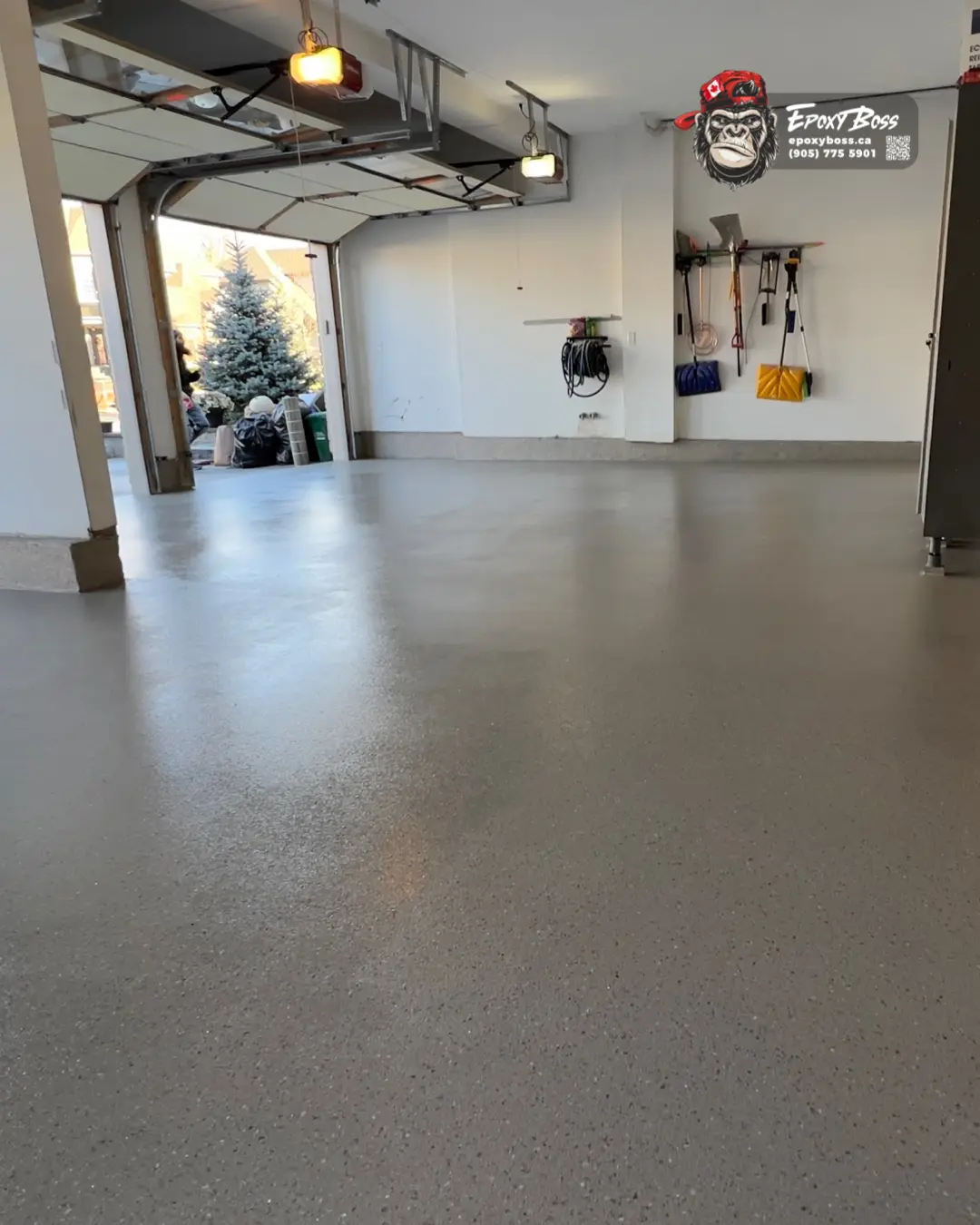
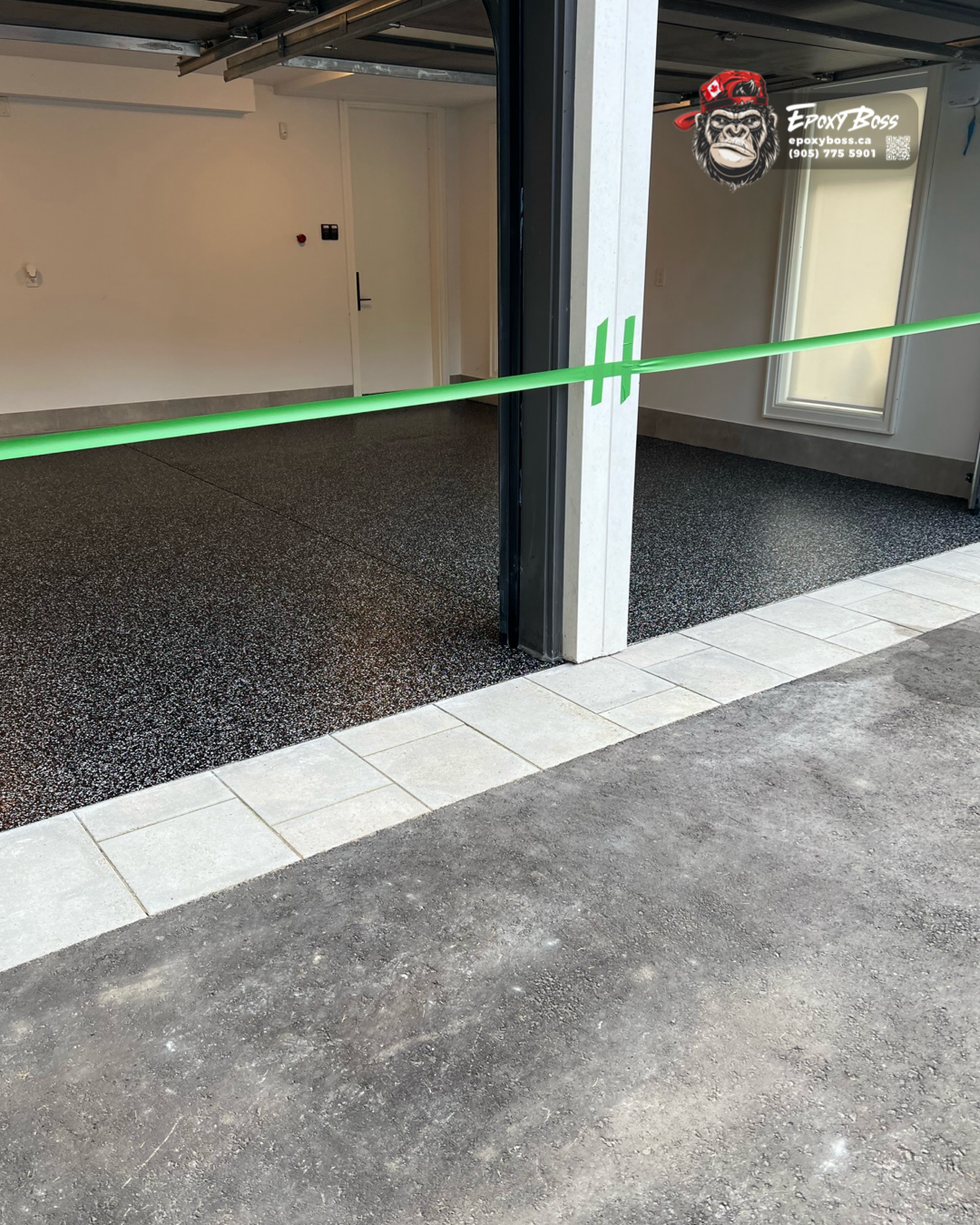
- Flake: textured, forgiving of dust and wear, good for mudrooms, workshops and busy basements. See flake epoxy flooring.
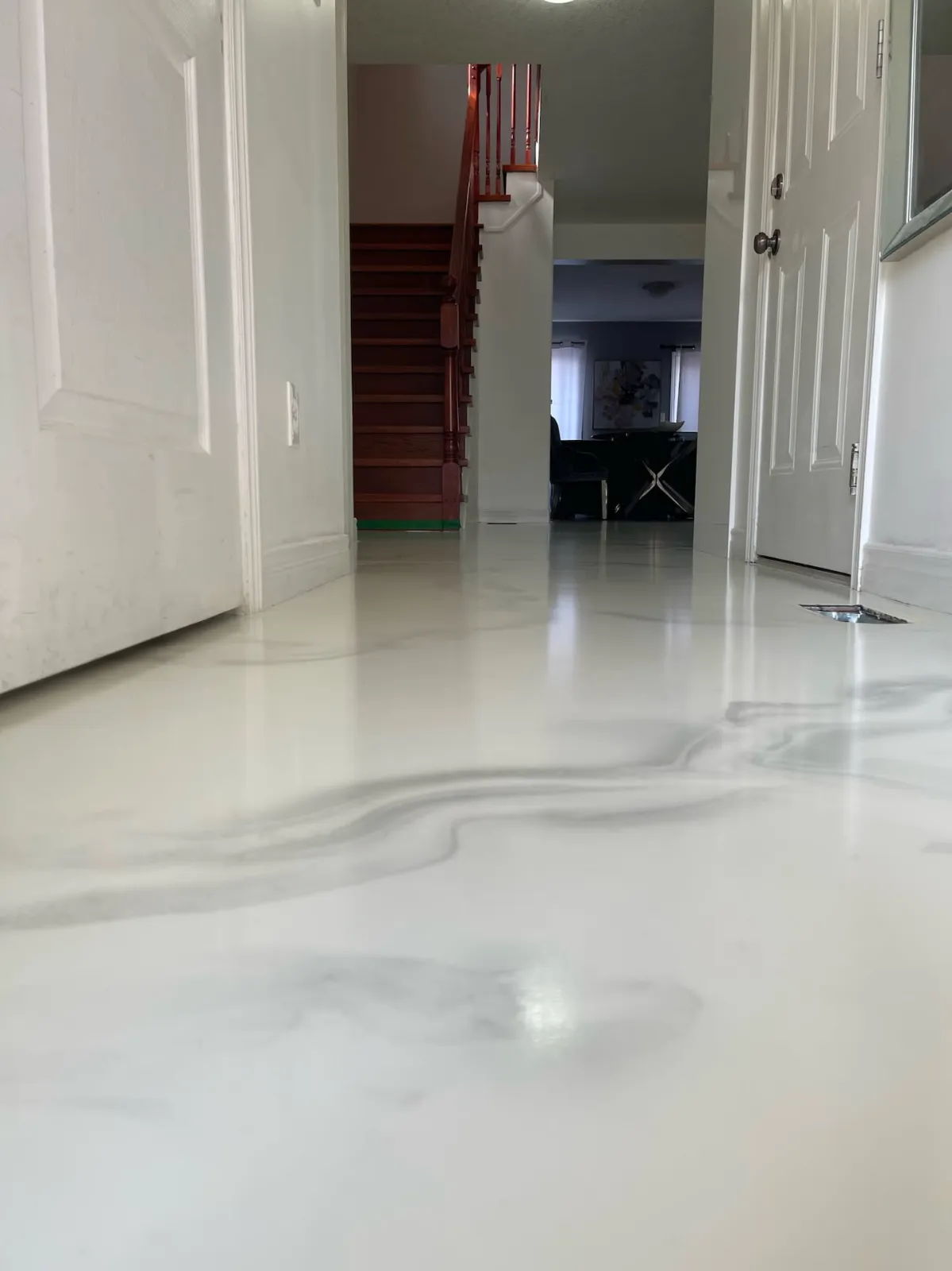
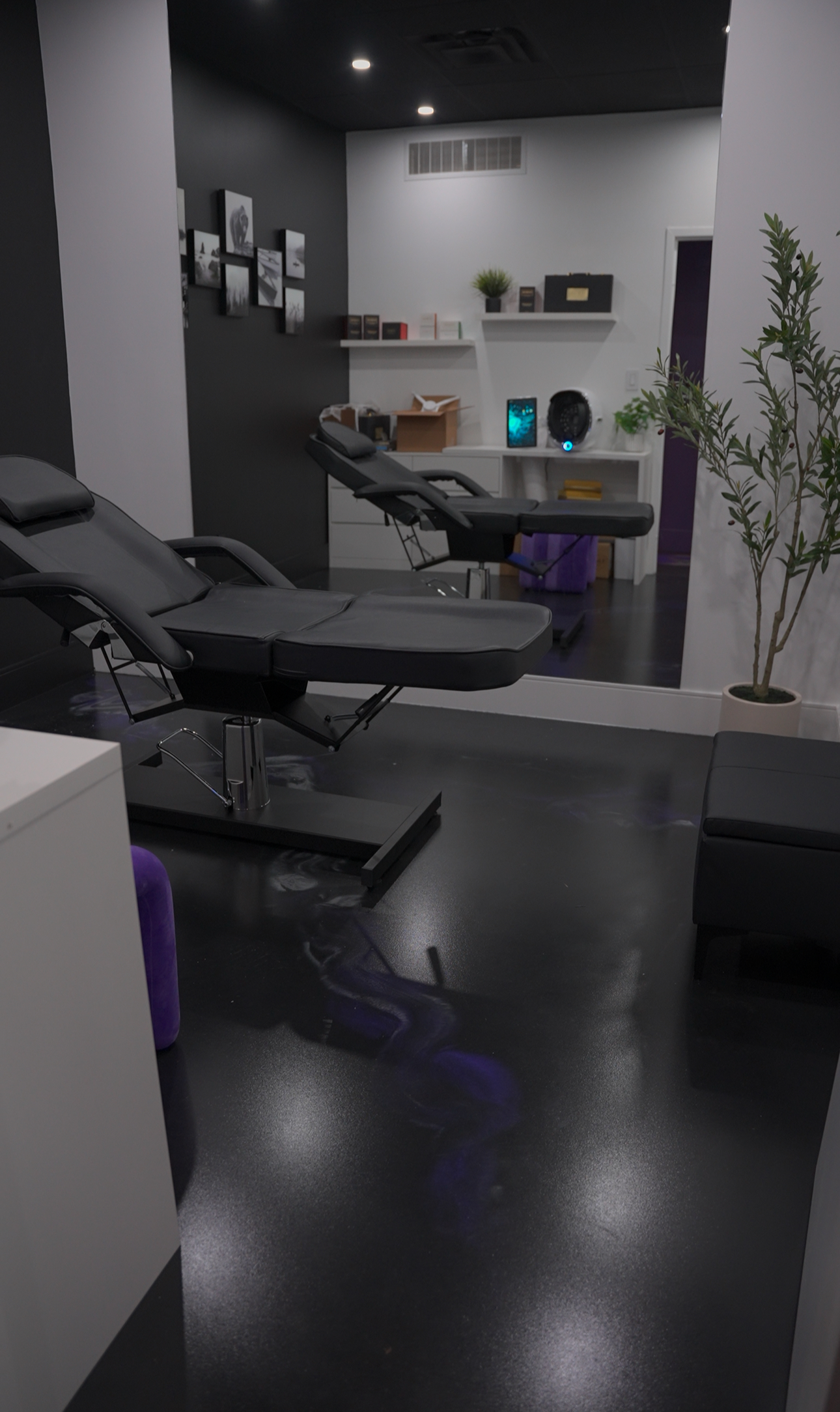
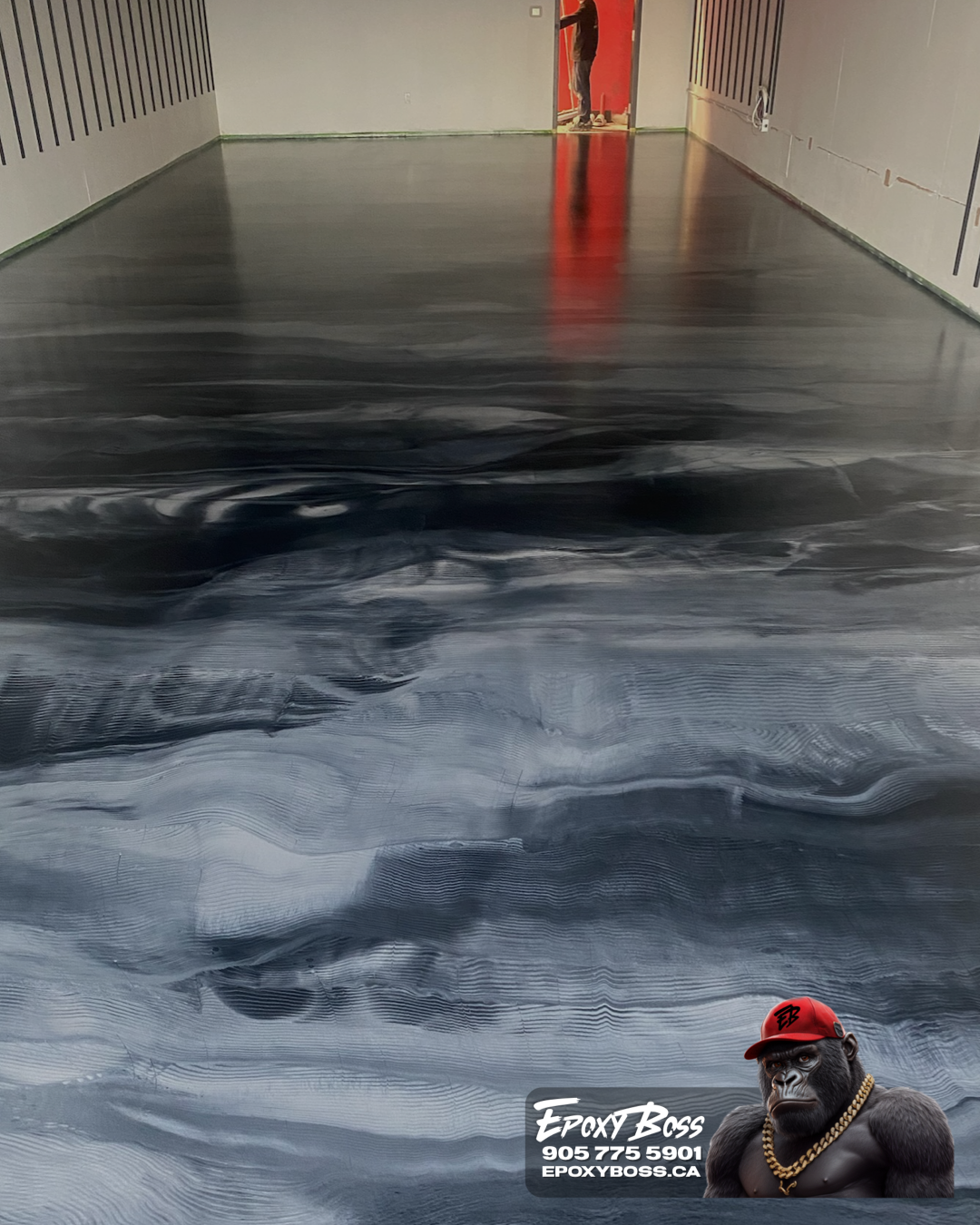
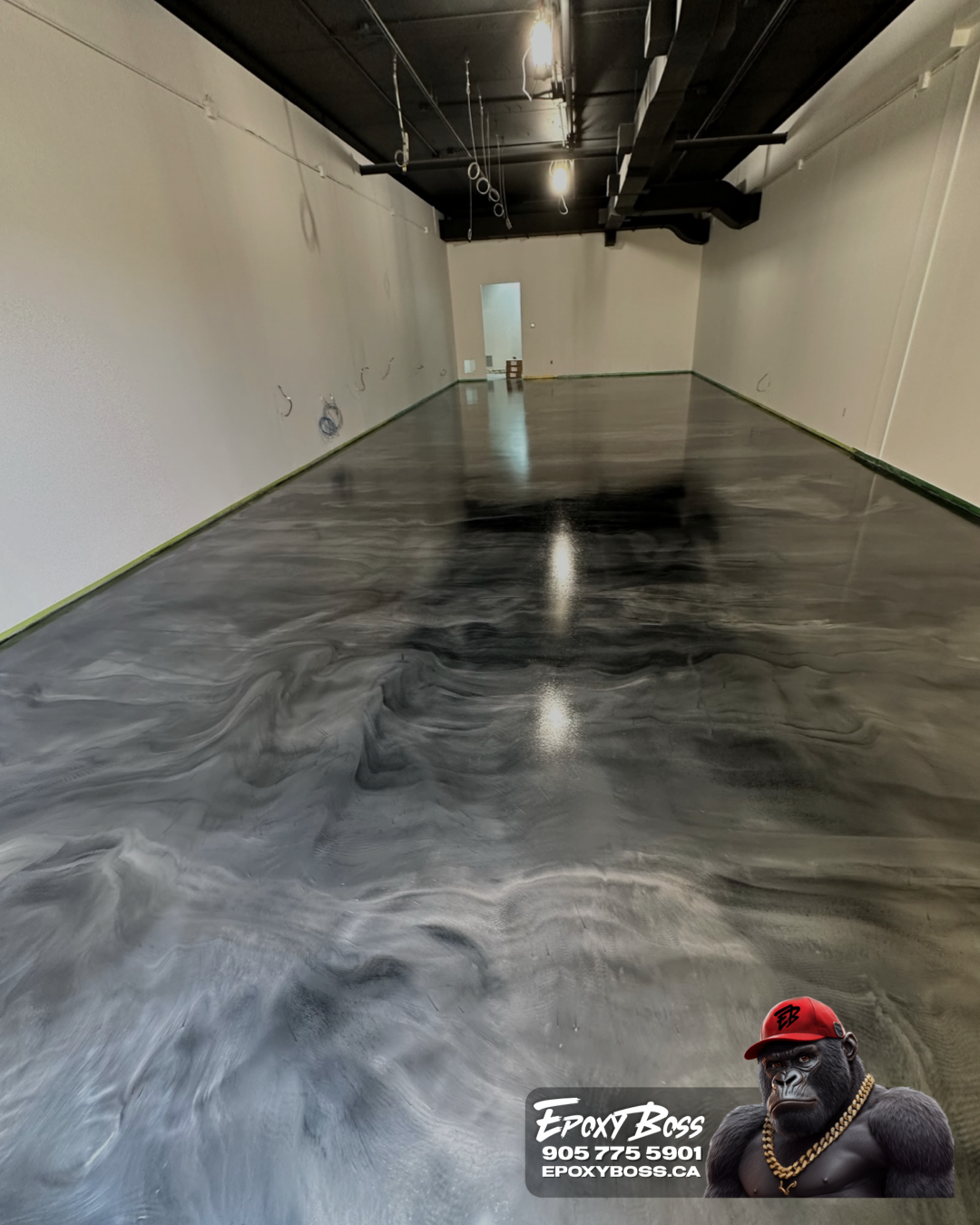
- Metallic: a marbled, high-gloss decorative look for finished basements and feature rooms. See metallic epoxy flooring.
- Polished or ground-and-sealed concrete: an alternative where you want the look of concrete itself. Compare in polished concrete vs epoxy.
What the slab needs before coating
Moisture testing
Basement and slab-on-grade concrete should be assessed for moisture before coating. Common methods include the in-situ relative humidity test in ASTM F2170. If readings exceed the coating's limit, a moisture-mitigating primer may be specified where the manufacturer supports it.
Removing old flooring residue
Paint, carpet glue, tile mastic and old sealers must come off. See coating and adhesive removal.
Cracks and joints
Stable cracks can be repaired as part of preparation. Moving joints need a flexible detail rather than being bridged with a rigid coating. Our crack repair guide explains the difference.
Mechanical preparation
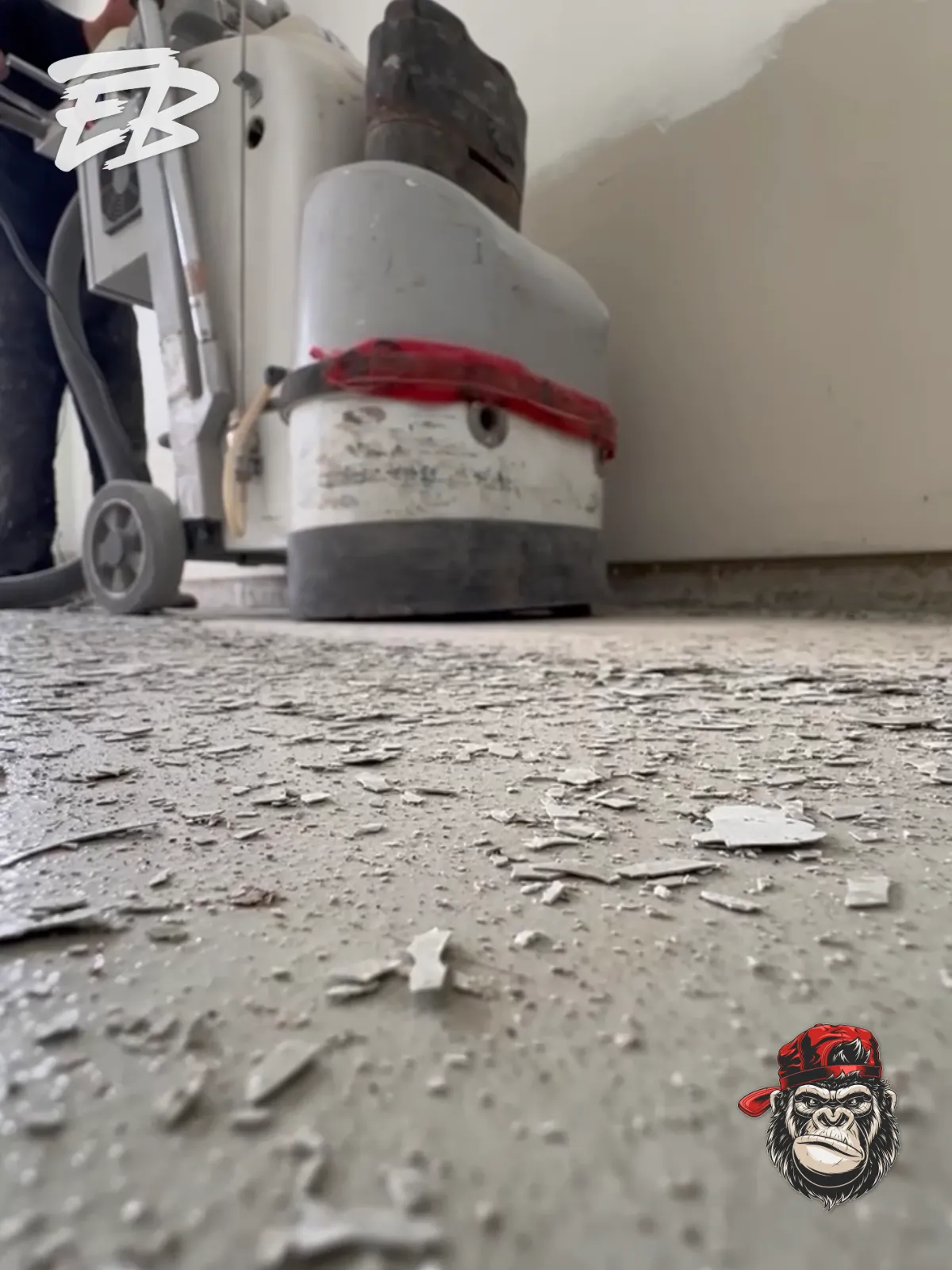
The slab is diamond ground with dust extraction to create the profile the coating needs. Indoors, dust control matters even more.
Indoor air and occupied homes
Many residential systems have low odour once cured, but some products do have odour during installation. Ventilation, keeping doors closed to living areas and following the product's cure times are part of planning an indoor job. If you are also thinking about radon in your basement, Health Canada's Radon Reduction Guide for Canadians notes that sealing openings may help lower levels, but a floor coating is not a substitute for testing and proper mitigation.
Frequently asked questions
Is epoxy flooring good for a house?
On a sound, dry concrete slab, yes, especially in basements, utility rooms, gyms and workshops. It is not suited to wood subfloors.
Is an epoxy floor cold underfoot?
It takes on the temperature of the slab beneath. Basement floors feel cool year-round; area rugs or in-floor heating installed before coating can help.
Can epoxy go over in-floor heating?
Coatings can be installed over heated slabs in many cases, but heat must be managed during installation and cure. The product data sheet and the heating system's details decide.
Will it add value to my home?
We don't make resale claims. Many homeowners choose it because it makes a utility space more usable and easier to keep clean.
Book a free floor assessment
Epoxy Boss is based in Innisfil and has coated residential concrete since 2019 across the GTA, York Region, Simcoe County, Halton, Durham and Muskoka, including Barrie. Explore our residential concrete coating options, call (905) 775-5901, or request a free floor assessment for a written quote in Canadian dollars. Choosing an installer? Read what to check before choosing a contractor.