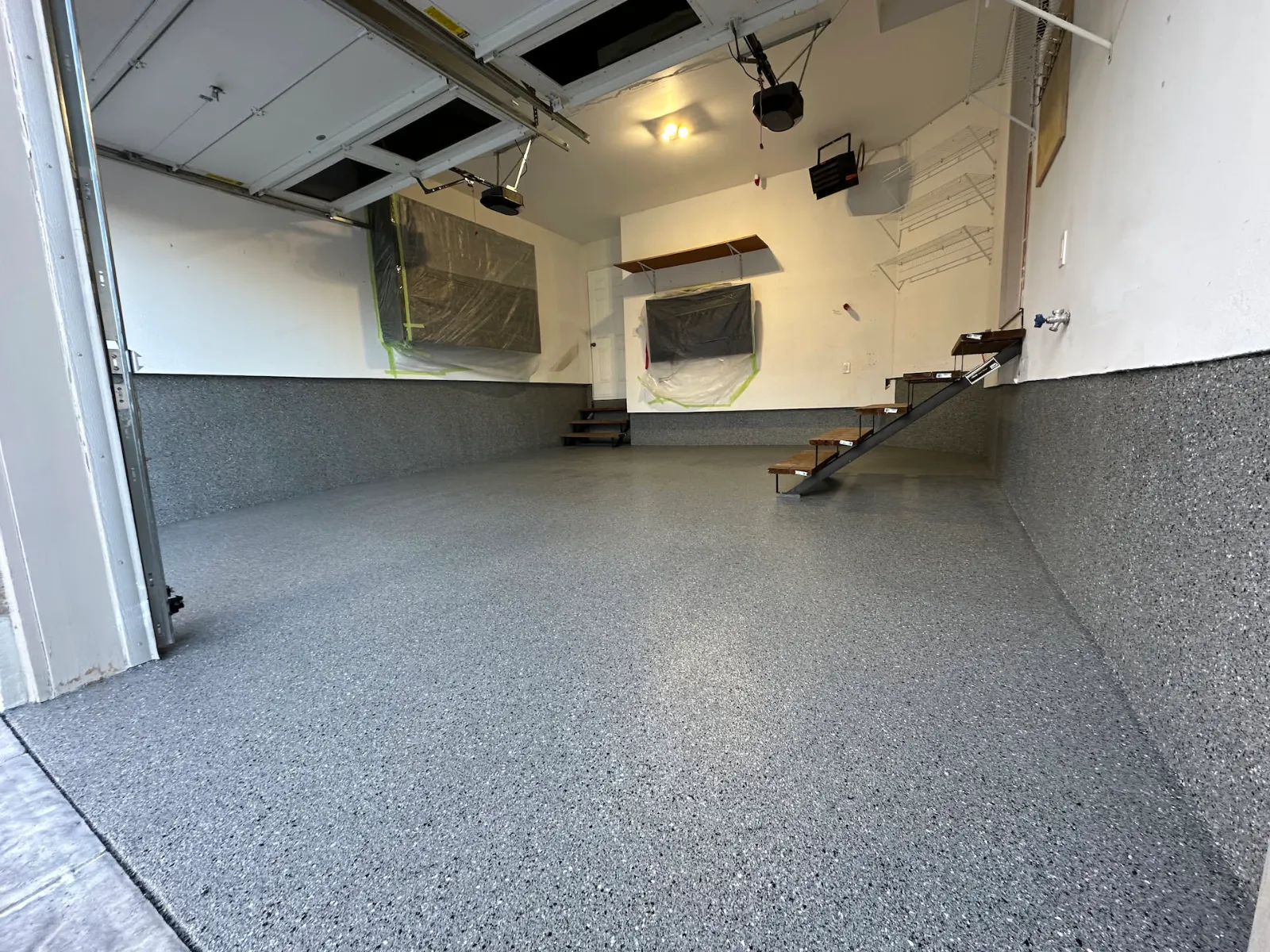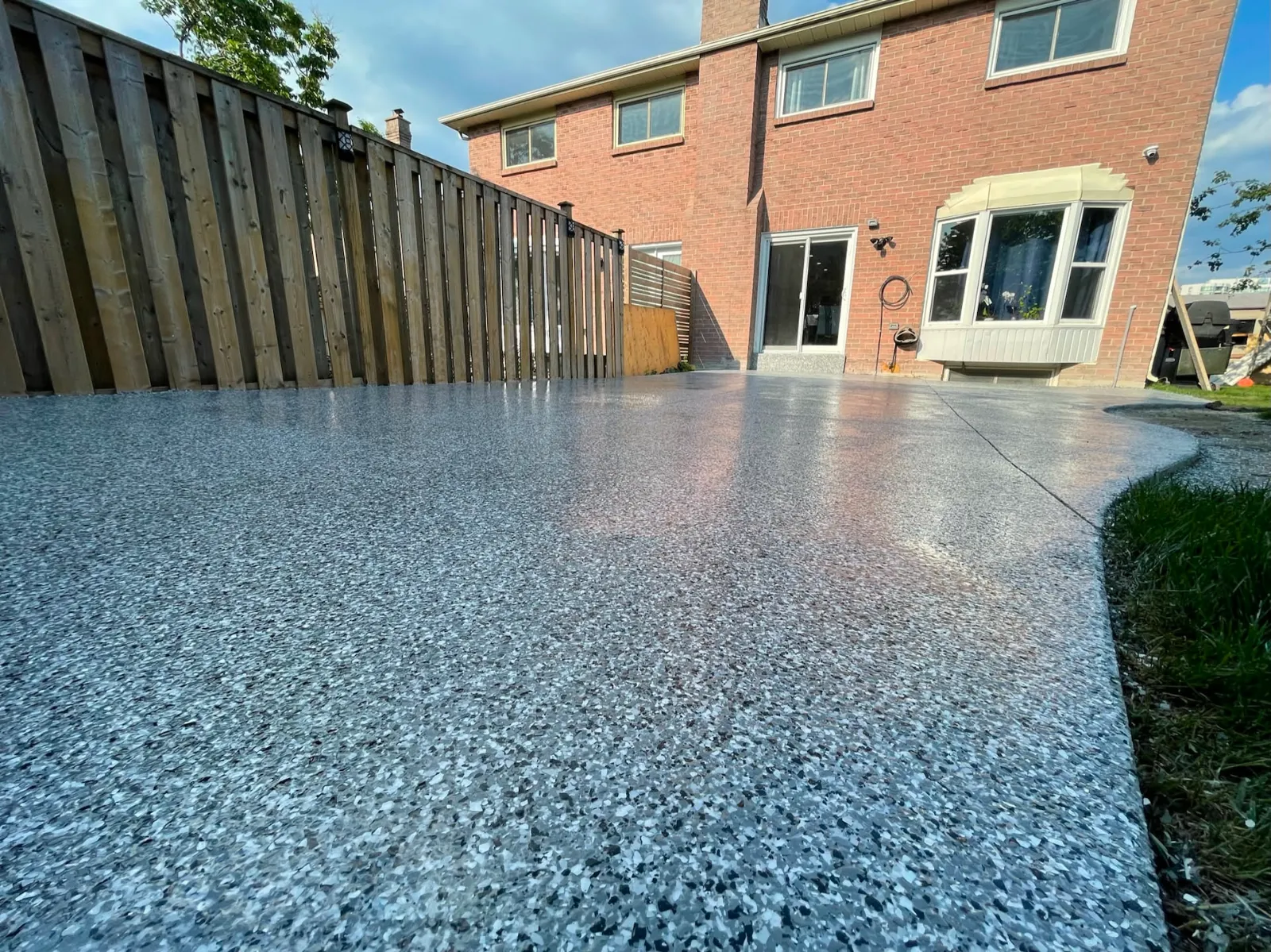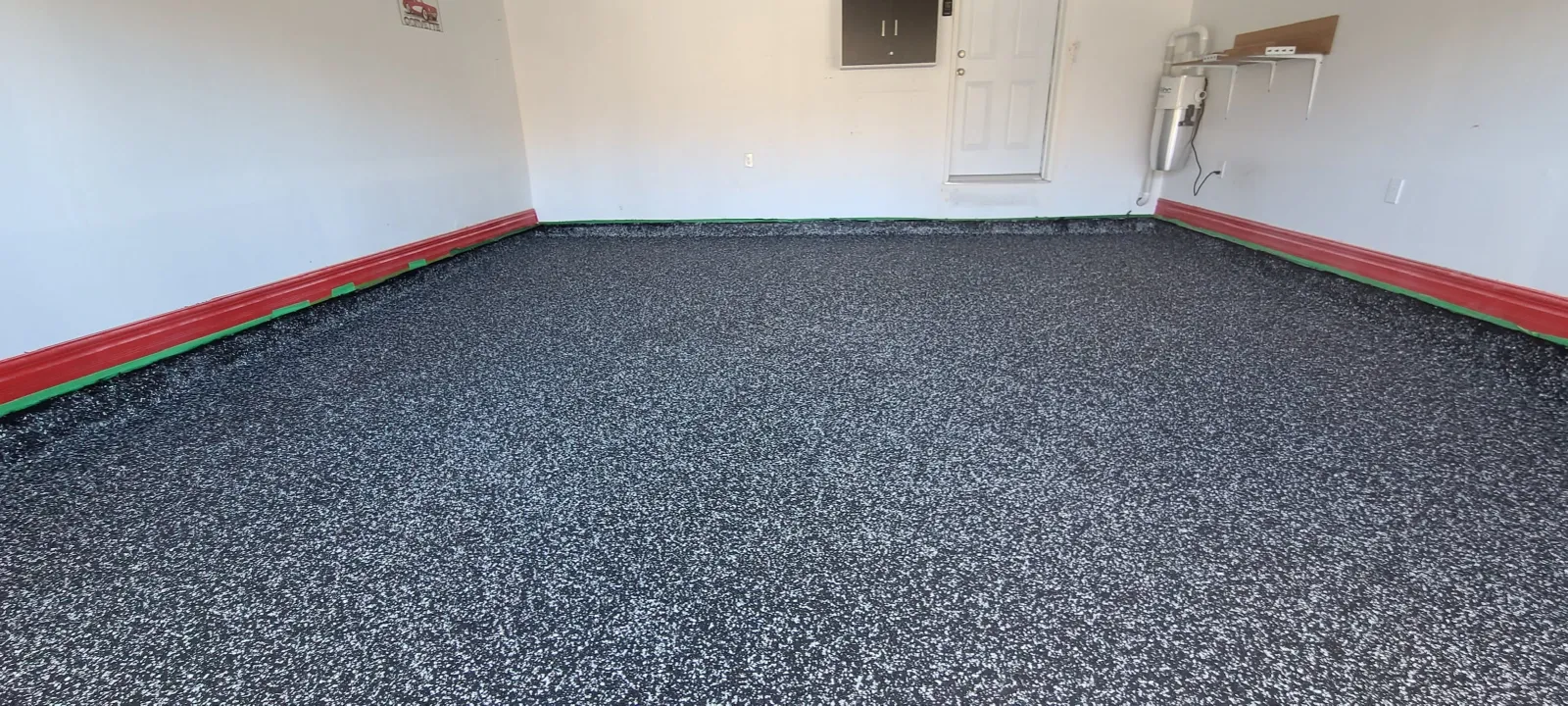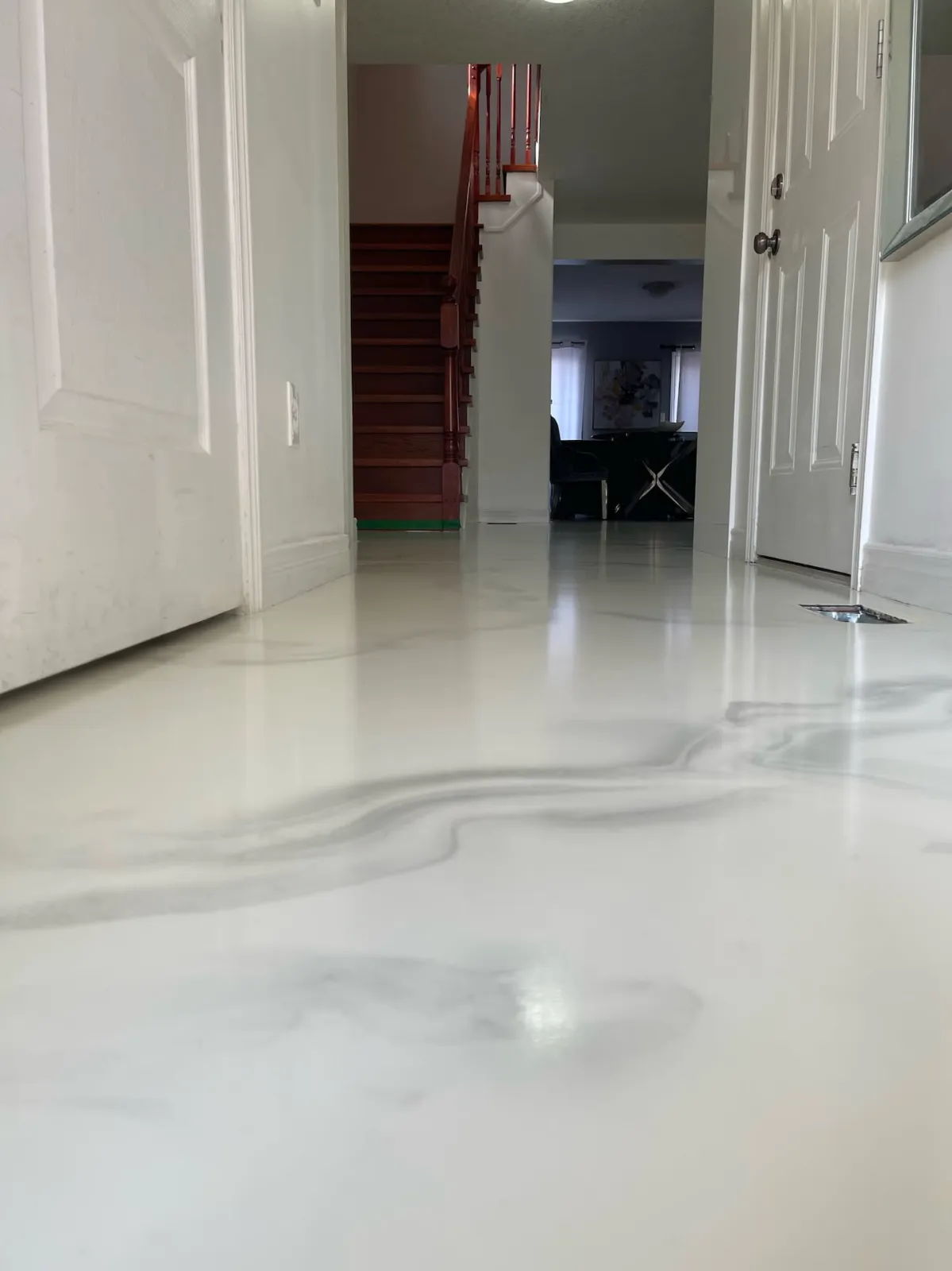

Epoxy flooring in Mississauga is a resin coating bonded to a properly prepared concrete floor, most often in garages, basements and workshops. The coating is only as sound as the prep underneath it, so diamond grinding, crack repair and a moisture check matter more than the colour you pick. Epoxy Boss Inc. quotes Mississauga floors in writing and backs every project with a 5-year limited warranty in writing.
What epoxy flooring in Mississauga actually involves
Epoxy is a two-part resin. When the parts are mixed they cure into a hard, continuous layer that bonds to concrete. On a home floor it usually comes as a system of layers rather than one coat: a primer or base coat, a decorative layer, and a clear topcoat for wear and cleaning.
Mississauga homes have a few things in common that shape the work. Many garages and basements sit on builder-grade slabs with hairline cracks, control joints and years of tire marks, oil or old paint. Winters bring road salt and meltwater into garages, and basements deal with seasonal humidity. A coating has to be chosen and installed with those conditions in mind.
Epoxy Boss is based in Innisfil and has operated since 2019. We are WSIB insured, and our crews install more than 10,000 sq ft every month, from single homes to facilities over 100,000 sq ft. That mix means a homeowner's garage gets the same attention to preparation as a larger commercial floor.
Garage floors: where most Mississauga projects start
A garage is the hardest-working floor in most houses. It sees hot tires, dripped fluids, de-icing salt, dragged tools and temperature swings. Bare concrete is porous, so it absorbs stains and salt and can dust or flake at the surface over time.
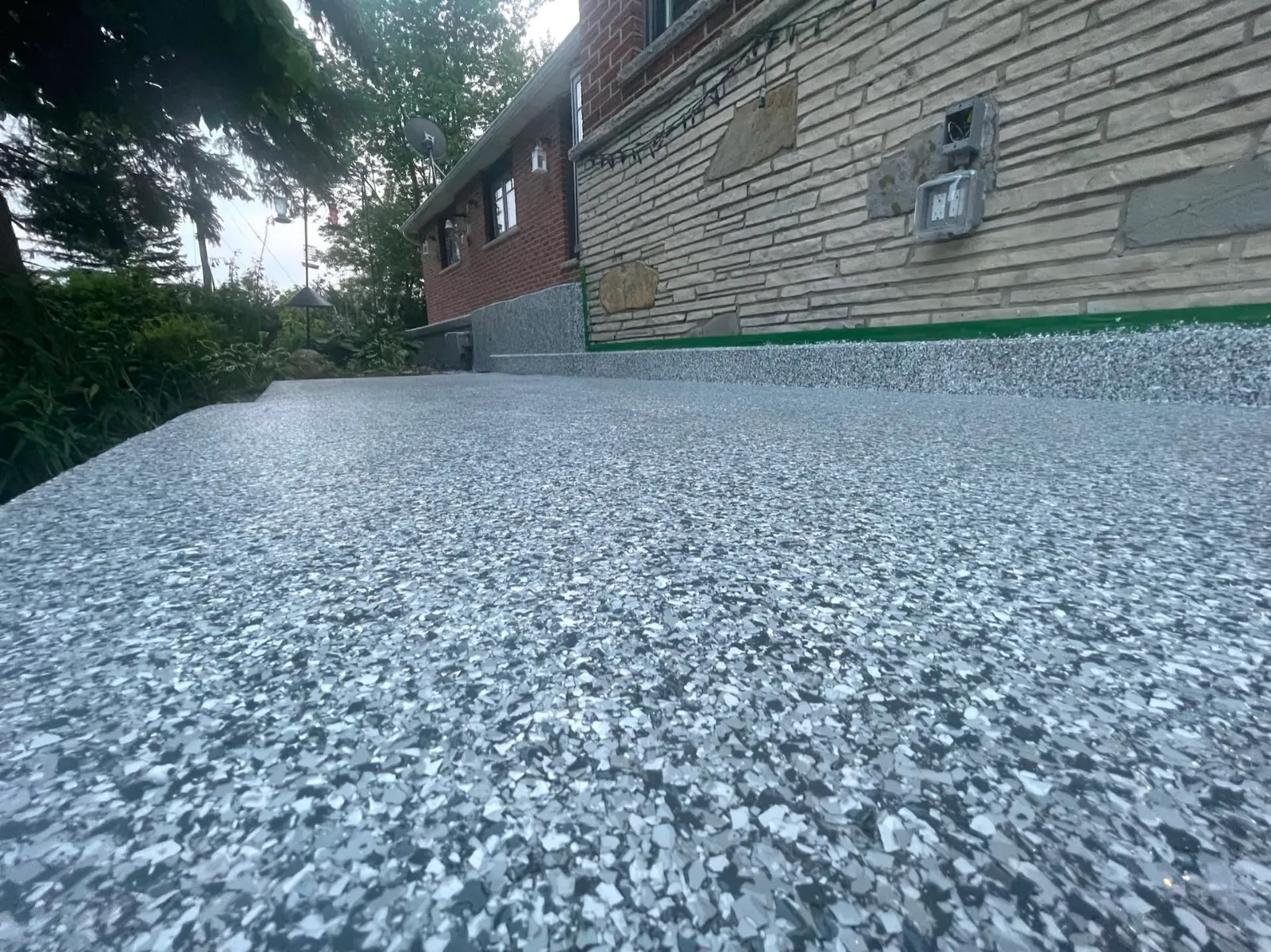
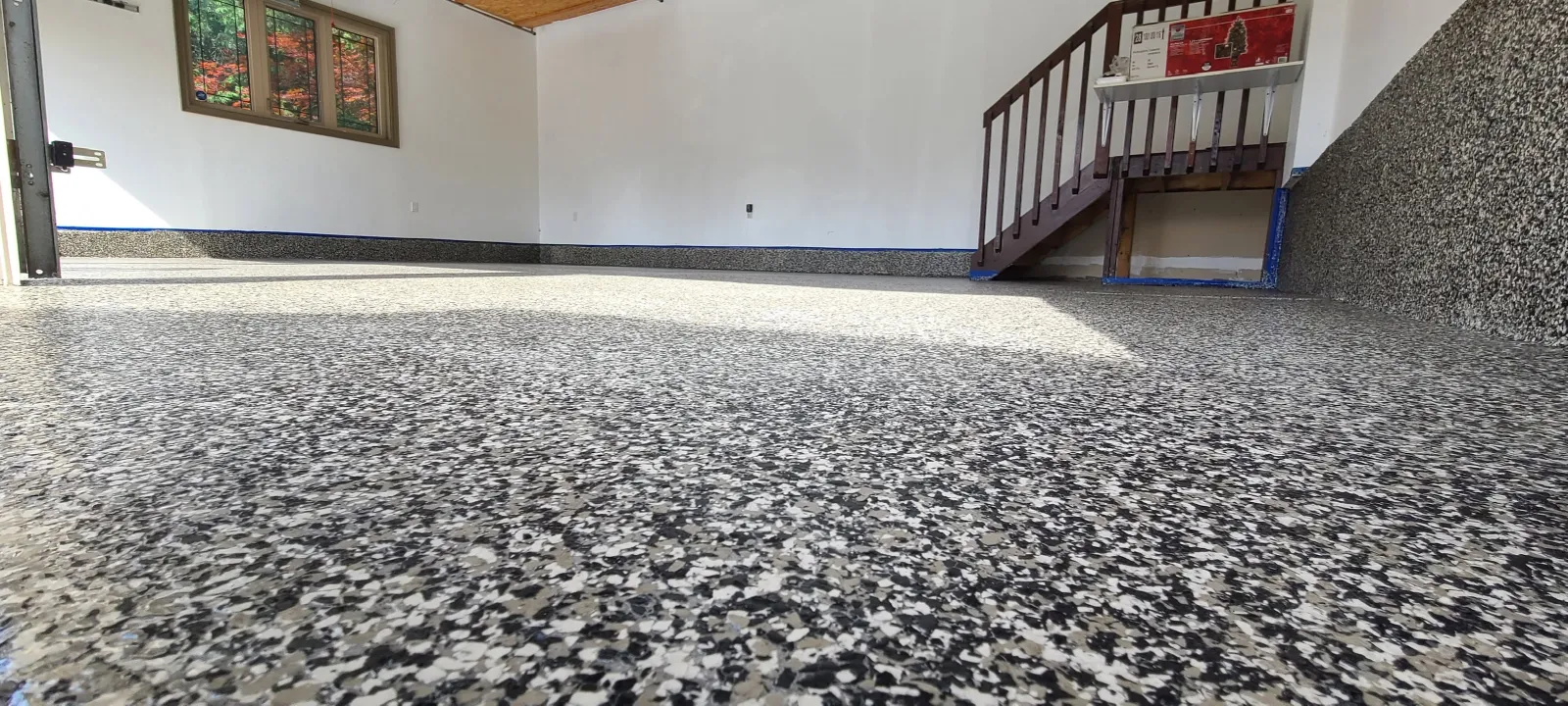
A decorative flake system is the usual homeowner choice. Coloured flakes are broadcast into a wet base coat, the excess is removed after curing, and a clear topcoat locks everything in. The flakes hide small surface imperfections and add texture underfoot. If you want to see how the layers go together, our full-broadcast flake garage floors guide walks through the build.
Garage floors also raise a few questions worth settling before you book:
- Are there cracks, spalled patches or old coatings that need to be repaired or removed first?
- Do you want the coating carried up the walls or over steps?
- Is the garage heated, and will it be lived in or used as a workshop?
- Which topcoat suits how you use the space?
Basements: moisture decides the plan
Basement slabs are different from garage slabs. They are in contact with the ground, and moisture can move up through concrete as vapour even when the floor looks dry. If that moisture is not accounted for, it can push on a coating from below and contribute to bubbling or peeling.
That is why testing comes before product selection. Before choosing a system, it helps to know what to test for moisture and how a moisture-tolerant primer fits in. The answer depends on the slab's age, the drainage around the house, and whether the basement is finished or still open.
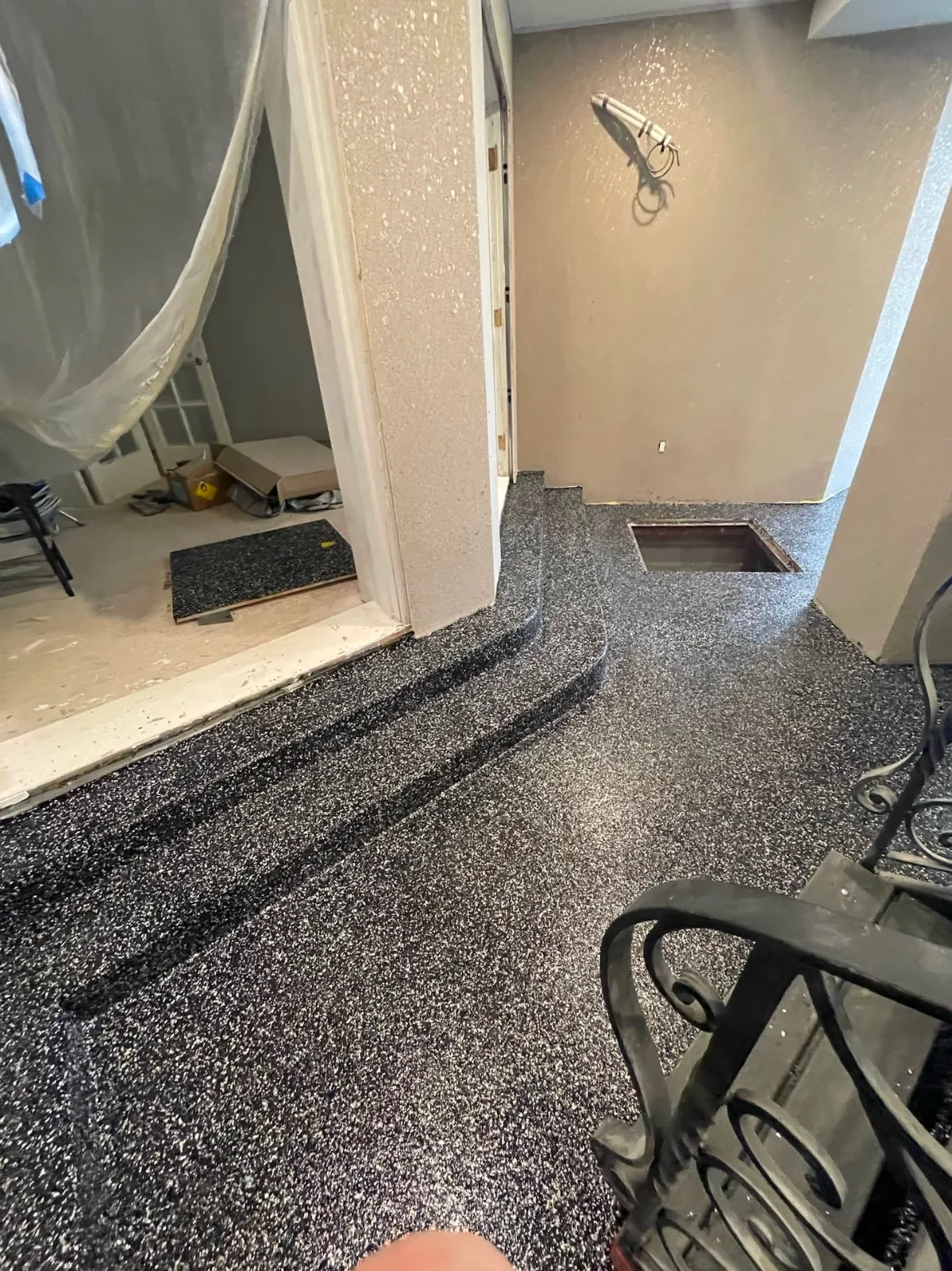
Timing matters too. If you are finishing a basement, the floor is best planned alongside the rest of the renovation, not after walls and trim are in. Basements can also take a flake or solid-colour system with a cove base where the floor meets the wall, which gives a clean, easy-to-wipe edge.
Shops and workshops: built for heavier use
A home workshop, detailing bay or small commercial shop asks more of a floor than a typical garage. Rolling tool chests, jacks, chemicals and constant foot traffic all test the coating. A system for that kind of space may use a thicker build, a harder topcoat or a texture that keeps the floor from getting slippery when wet.
Epoxy Boss crews are trained for industrial environments and can work around active operations, including overnight and weekend installs. If you run a business in the city, our guide to commercial epoxy flooring in Mississauga covers scheduling and planning in more detail.
How is a concrete floor prepared before epoxy?
Preparation is where most coating failures start, and it is the step homeowners see least. Epoxy needs a clean, open, roughened surface to grip. Painting over a smooth, dirty or sealed slab is a common reason coatings lift later.
- Grinding. Diamond grinding removes surface contamination and old coatings and gives the slab a profile the resin can bond to. We explain why we favour it over acid etching in our post on acid etching versus diamond grinding.
- Repairs. Cracks, pits and damaged joints are filled and levelled so they do not telegraph through the finish.
- Cleaning. Dust is removed so the primer meets bare concrete and not a film of powder.
- Moisture and condition checks. The slab is assessed before coating, especially in basements and older garages.
For a deeper look at this stage, read our overview of concrete surface preparation for epoxy floors.
How much does epoxy flooring cost in Mississauga?
We do not publish a flat per-square-foot price here, because the honest answer is that it depends on the floor. The main factors are:
- The size of the area and how many separate sections it has.
- The condition of the concrete, including cracks, damage and old coatings that must be removed.
- The system you choose, such as solid colour, flake, quartz or metallic.
- Extras like stairs, walls, cove base or a moisture-mitigation primer.
- Access and scheduling, including after-hours work for commercial spaces.
Reading our garage floor coating cost guide will help you see how those factors add up, and our garage floor cost calculator gives a starting point. A written estimate after we assess the floor is the only reliable number. All pricing is in Canadian dollars.
Epoxy, polyaspartic or polished concrete?
Epoxy is not the only option, and it is not right for every floor. Polyaspartic coatings are a related technology often used as a topcoat or a faster-curing system, and polished concrete skips the coating altogether. Which one fits depends on the use, the slab and the look you want. Our polyaspartic coating guide explains where it differs from epoxy, and we are happy to recommend an alternative if it suits your floor better.
What should you ask a Mississauga epoxy contractor?
- How will the floor be prepared, and by what method?
- How will moisture be checked, especially in a basement?
- Is the estimate itemized, and does it list the layers of the system?
- Is the company insured, including WSIB coverage?
- What does the warranty cover, and is it in writing?
At Epoxy Boss, every project closes with a written warranty and a compliance-style closeout report. The warranty is a 5-year limited warranty in writing, and the limits are spelled out, so you know what is covered.
Epoxy flooring in Mississauga: frequently asked questions
Does epoxy flooring work in a Mississauga garage through winter?
A properly prepared and installed coating handles the cold, salt and moisture a garage sees better than bare concrete. Temperature during installation matters, though, because resins cure differently in cold conditions. Ask your installer how they manage that.
Can epoxy go over cracked or stained concrete?
Often yes, once the cracks are repaired and the stains and old coatings are ground off. Deep damage or contamination may need extra work, which an on-site assessment will show.
Is epoxy suitable for a basement?
It can be, but moisture testing comes first. If vapour is moving through the slab, a suitable primer or a different system may be needed.
Can Epoxy Boss work on commercial shops in Mississauga?
Yes. Our crews are trained for industrial environments and can schedule overnight and weekend installs to work around active operations.
Request a free estimate in Mississauga
If you are planning a garage, basement or shop floor in Mississauga, we would be glad to look at it with you. You can request a free estimate online, call (905) 775-5901 or email info@epoxyboss.ca. We will review the slab, explain the options in plain language, and put the scope and warranty in writing.