
Before Road Salt Season: An Innisfil Garage Floor Check
Before road salt season, take 15 minutes to check your Innisfil garage floor. Look for dusting, pits, cracks, peeling coating, damp areas, and signs that salt water has been sitting in tire paths. Note whether the garage is heated. Most findings are repairable. The important part is identifying weak concrete, old failed coating, or moisture before a new floor system is installed. If an unheated garage cannot stay within the temperature requirements of every product layer during installation and cure, booking for spring is often the better decision.
Why does fall matter for Innisfil garage floors?
Fall is the last stretch before your garage floor faces a winter of road salt, slush, grit, freeze-thaw cycles, and tire traffic. The Town of Innisfil uses salt on main roads and treated sand on secondary routes. That means many garages receive both chloride-containing meltwater and abrasive grit. Bare concrete can absorb moisture and salts, while grit wears the surface in tire paths and at the overhead door. Read the Town of Innisfil snow-clearing information. An October inspection also gives you a useful baseline. Photograph any damaged areas now. If the same spots are worse in April, you have a clear record of what changed over winter.
Your 15-minute garage floor check
Move vehicles out, sweep the floor, and inspect it in daylight. Hold a flashlight low across the surface; this makes changes in texture, peeling edges, shallow pits, and raised repairs easier to see Mark concerns with painter’s tape and take three photos:
- The whole garage floor
- The worst damaged area
- A close-up of the surface
Look for:
- Dusting: fine concrete powder on the surface or under tires
- Pitting: small holes, rough areas, or surface loss
- Cracks: especially near joints, the door threshold, steps, or tire paths
- Peeling coating: curled edges, loose flakes, bubbles, or exposed concrete
- Dark or damp areas: particularly near walls, drains, and door openings
- Salt staining: white residue, scaling, or rough concrete where slush melts
- Old paint or DIY coating: areas that are lifting, soft, worn, or uneven
A taped plastic-sheet test can suggest that moisture is moving through a slab, but it does not measure the moisture level or determine whether a coating system is suitable. A professional moisture test is needed before choosing a primer or coating system.
Should you coat your garage floor this fall or wait until spring?
The correct installation time depends on the concrete and the garage environment—not the calendar alone. Every layer in a floor system has minimum application and cure conditions. That includes the slab temperature, air temperature, humidity, repair materials, primer, receiving coat, broadcast flakes, and topcoat. For example, one polyaspartic topcoat used in compatible systems is rated for application from -10°C to 30°C with humidity below 80%. However, the topcoat rating is only one part of the decision. The slab, base coat, crack repairs, and full cure window determine whether the complete system can be installed safely. A heated garage can often be prepared and coated through fall or winter if conditions remain stable. An unheated garage may still be suitable in mild weather, but only when the slab and air can stay within the requirements for every layer. If they cannot, reserve a spring installation date rather than risking a poor bond. Common fall findings in Innisfil garages The most common issues we see before winter are worn tire paths, pitting inside the overhead door, and old paint or DIY coatings beginning to lift.
Pitting inside the garage door
Salt-laden slush often melts and refreezes where vehicles stop just inside the garage. Over time, the near-surface concrete can become rough, weak, or pitted.
Typical repair approach: mechanically prepare the concrete to sound material, repair the damaged areas, then build the coating system over a properly prepared surface.
Peeling paint or DIY coating
A coating applied to concrete that was only cleaned, pressure-washed, or acid-etched may not have enough mechanical profile to bond long term.
Typical repair approach: remove failed coating mechanically. A new system should not be installed over loose or poorly bonded material.
Dusting in tire paths
Concrete dusting can point to wear, a weak surface layer, or deterioration from traffic and moisture exposure.
Typical repair approach: inspect the surface strength on site and remove weak material by diamond grinding before repairs and coating installation.
Dark patches near a wall or low area
Dark concrete, a damp smell, white mineral residue, or moisture under a taped plastic sheet can indicate moisture movement through the slab.
Typical repair approach: perform appropriate moisture testing. If readings require it, specify a compatible moisture-mitigation primer before the coating system.
A coating that stays tacky
A floor that remains tacky days after installation may indicate a mixing, application, or curing problem. It should be investigated before any recoat is considered.
https://epoxyboss.ca/blog/road-salt-and-your-garage-floor-in-innisfil-what-it-does-to-bare-concrete
What a properly prepared garage floor system includes
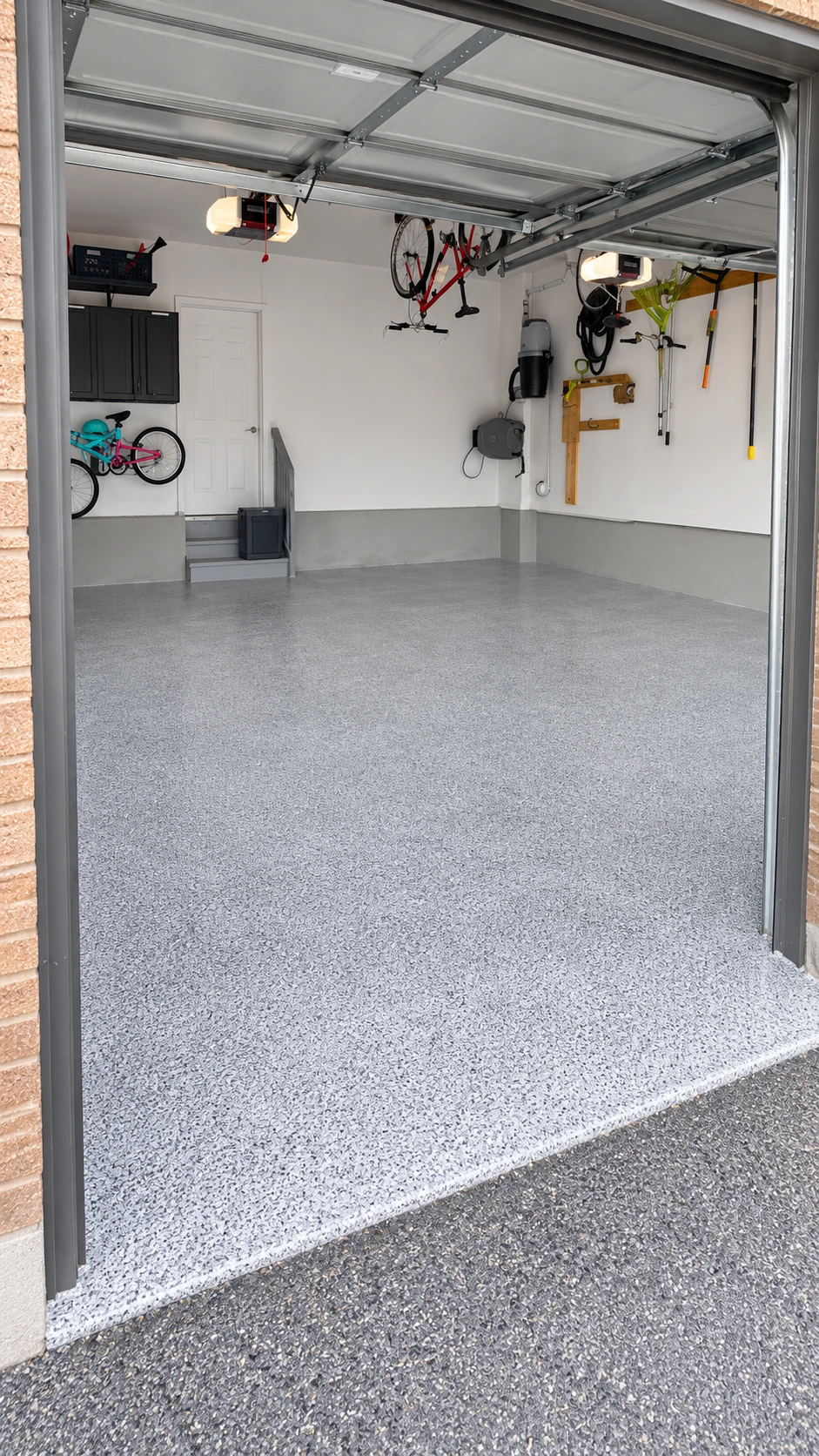
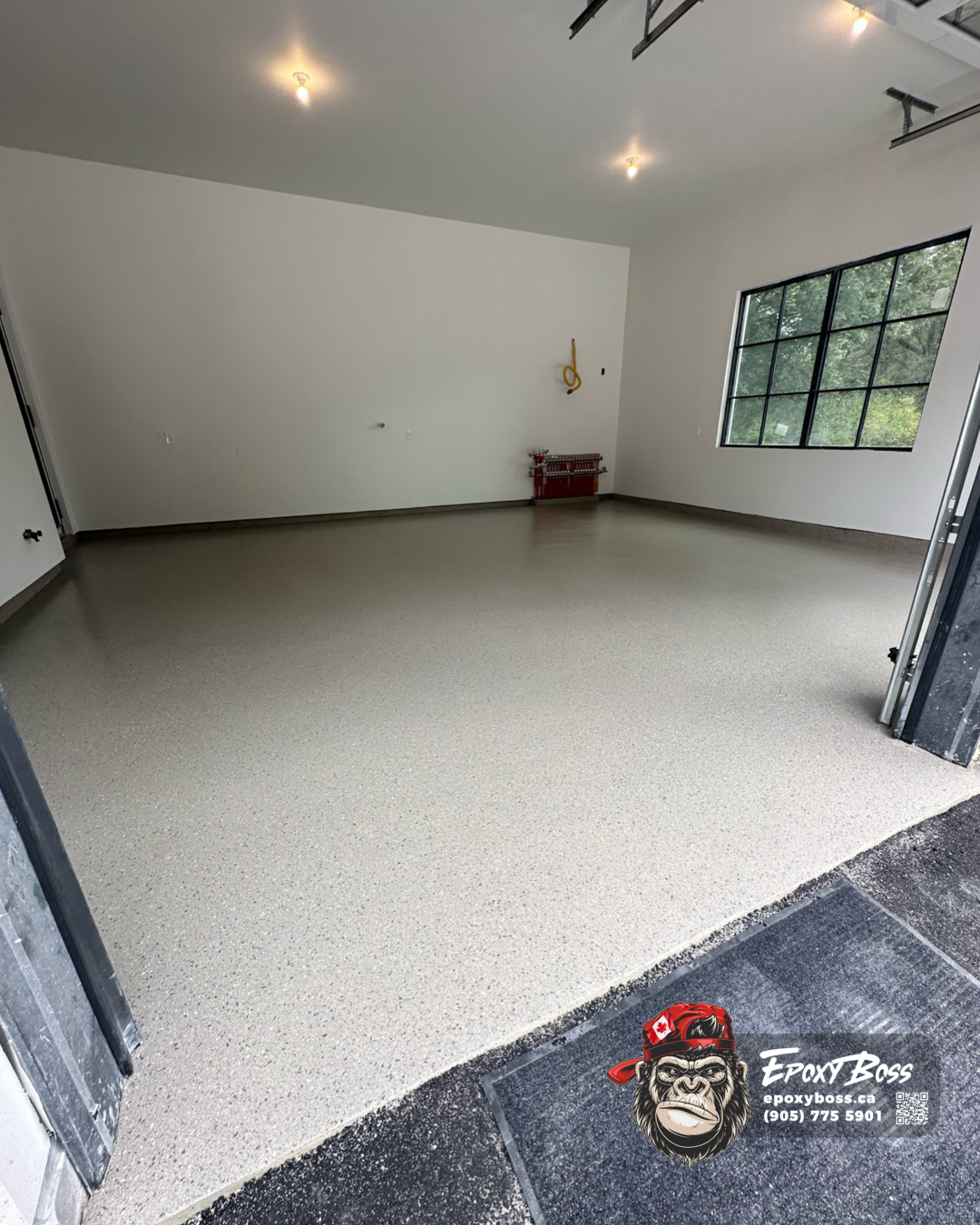
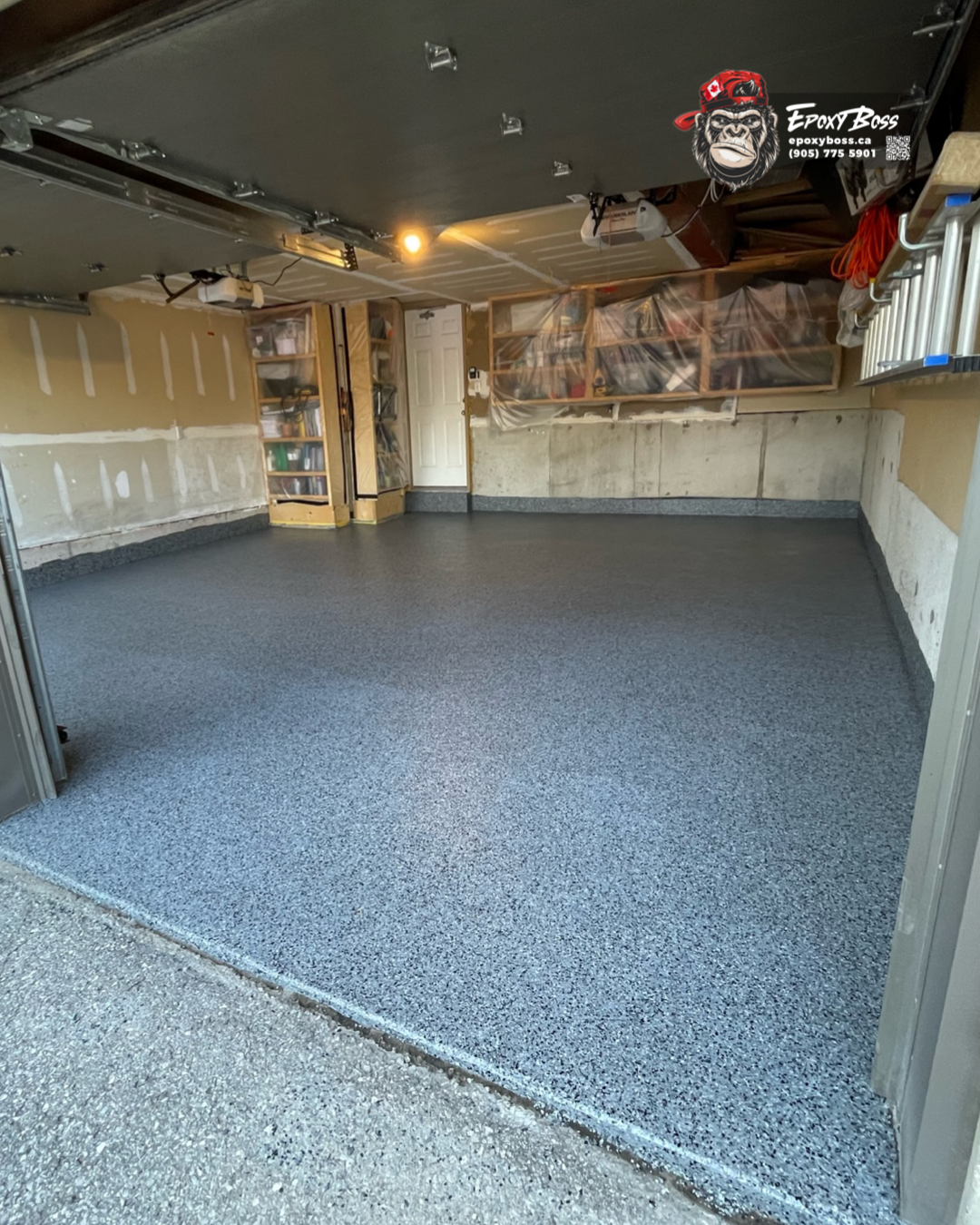
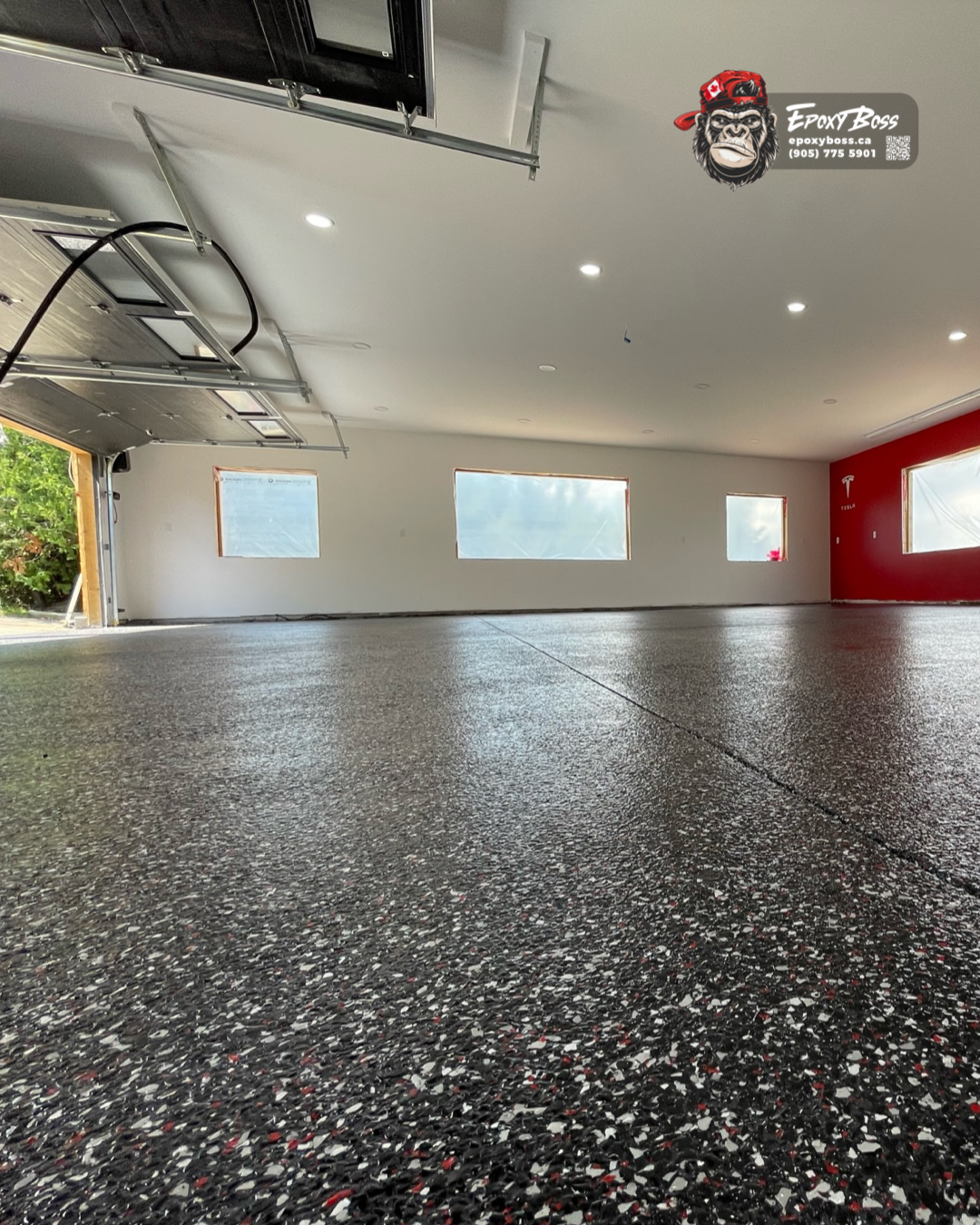
A decorative flake floor is not simply paint plus flakes. The finished floor depends on the concrete below it. For a typical full-flake garage floor, the process may include:
- Diamond grinding to create the required concrete surface profile
- Crack, pit, joint, or threshold repair as needed
- Primer or moisture-control layer where conditions require it
- A pigmented receiving coat
- Full broadcast decorative flakes
- A compatible clear protective topcoat
- Slip-resistance additive where specified
The exact specification should be based on the concrete condition, moisture behaviour, garage use, temperature conditions, and required finish.
https://epoxyboss.ca/projects/failed-flake-garage-floor-rescue-in-bradford-ontario
Questions to ask before booking a garage floor installer
The answers should be clear before work begins.
- Will the concrete be diamond-ground, or only cleaned or etched?
- How will moisture be evaluated before coating?
- How are cracks, joints, pits, and the door threshold treated?
- What are the minimum temperatures for every layer of the system?
- What happens if old coating removal or additional concrete repair is required?
- When can the floor be walked on and driven on?
- What does the written warranty cover, and what does it exclude?
Frequently asked questions
Is it too late to coat a garage floor in October in Innisfil?
Not necessarily. A heated garage can often be coated through fall and winter when the slab and air temperature remain within the requirements for each product layer. An unheated garage can be coated only when conditions stay suitable through preparation, application, and cure. If they cannot, spring is the better installation window.
Can a garage coating be installed over salt-damaged concrete?
Only after weak, contaminated, or deteriorated concrete has been removed and repaired. A coating can bond only as well as the concrete beneath it. Proper mechanical preparation is essential.
How do I know whether my slab has a moisture problem?
Dark areas, a damp odour, efflorescence, or moisture under a taped plastic sheet are warning signs—not final test results. A professional moisture assessment determines whether a moisture-mitigation primer or another system adjustment is needed.
Will a flake floor protect concrete from road salt?
A properly bonded coating helps keep salt water on the surface, where it can be cleaned, rather than allowing it to soak into bare concrete. It does not repair moving cracks or structural slab issues, and salt residue should still be removed during winter.
How long before I can park on a new garage floor?
Typical cure times are often about 24 hours for foot traffic and 48–72 hours before vehicle traffic, depending on the products, temperature, and system design. Your installer should provide the exact cure schedule for your floor.
Request an Innisfil garage floor assessment
Send us three photos: one of the full garage, one of the worst area, and one close-up. Tell us whether the garage is heated and how you use the space.
We will explain what is visible, what needs an on-site check, and whether a fall installation or spring booking is the right fit.
Epoxy Boss serves Innisfil, Alcona, Lefroy, Cookstown, Stroud, Gilford, and Big Bay Point.


.png)
.png)