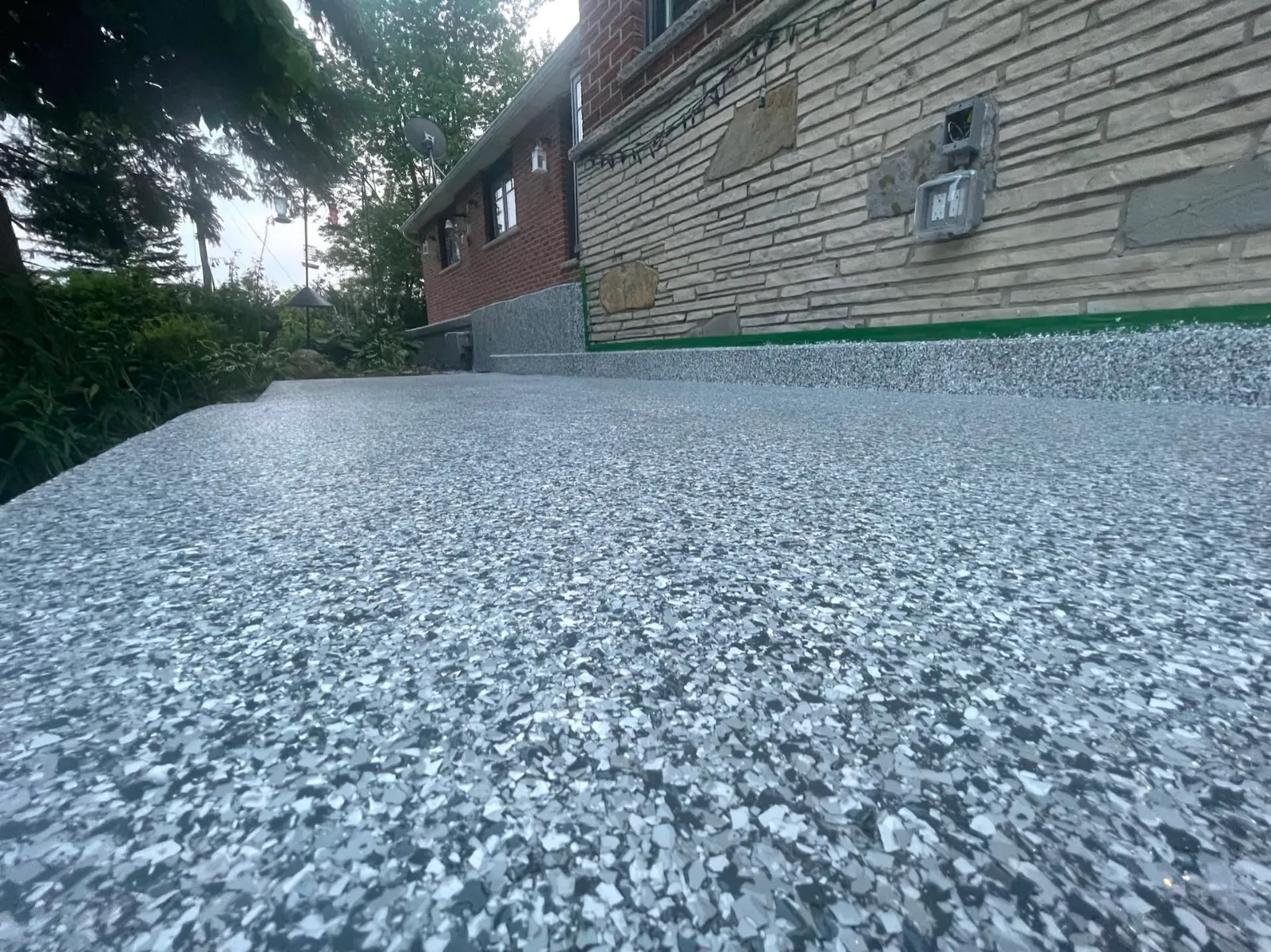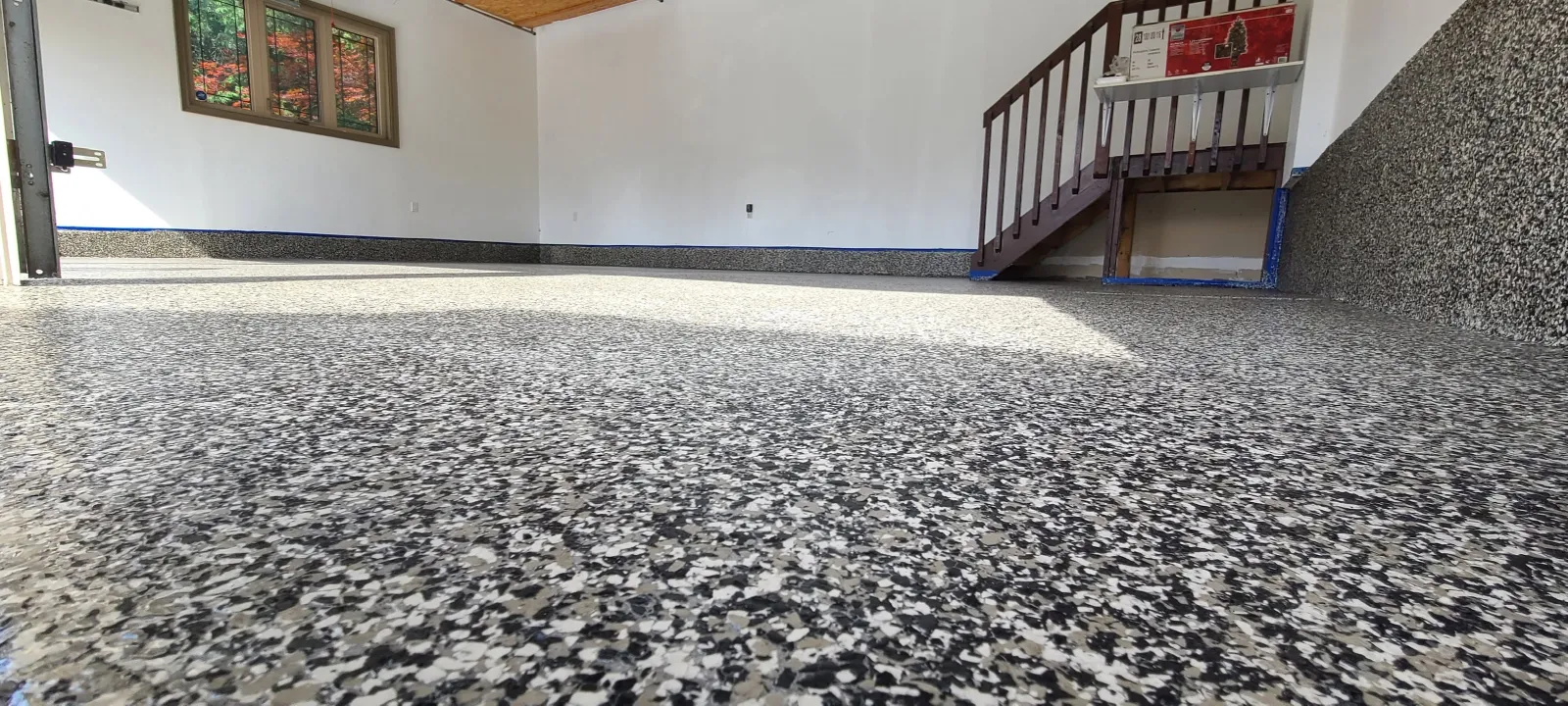
Hot tire pickup on a garage floor happens when warm tires soften or pull at a coating that is not bonded well enough to the concrete, so the coating lifts off in patches under the tires. It is usually a bond or system problem, not a tire problem. Poor surface preparation, moisture in the slab, and a coating that is too thin or unsuited to vehicle traffic are the most common causes.
What Is Hot Tire Pickup?
Hot tire pickup is a failure pattern. After a drive, tires are warm and heavy, and they sit on one spot of the floor. If the coating has a weak bond, the tire can grab it as the car moves. The result is small peeled spots, raised edges or whole patches that come away from the concrete, often right where the tires park.
It is most obvious in a garage because the same spots take the same load, day after day, through Ontario's wet, salty winters. A coating that looks fine in the middle of the floor can fail first at the tire positions, where heat, weight, moisture and de-icing salt all meet.
Many homeowners first see it as light marks or a tacky feel, then as lifting. If you are already seeing peeling, our guide to epoxy floor peeling covers how failed coatings are assessed and repaired.
Why Does Hot Tire Pickup Happen?
It rarely has one cause. Most failures come from a combination of the factors below, and the coating gets blamed for what is often a preparation problem.
1. The coating never bonded properly
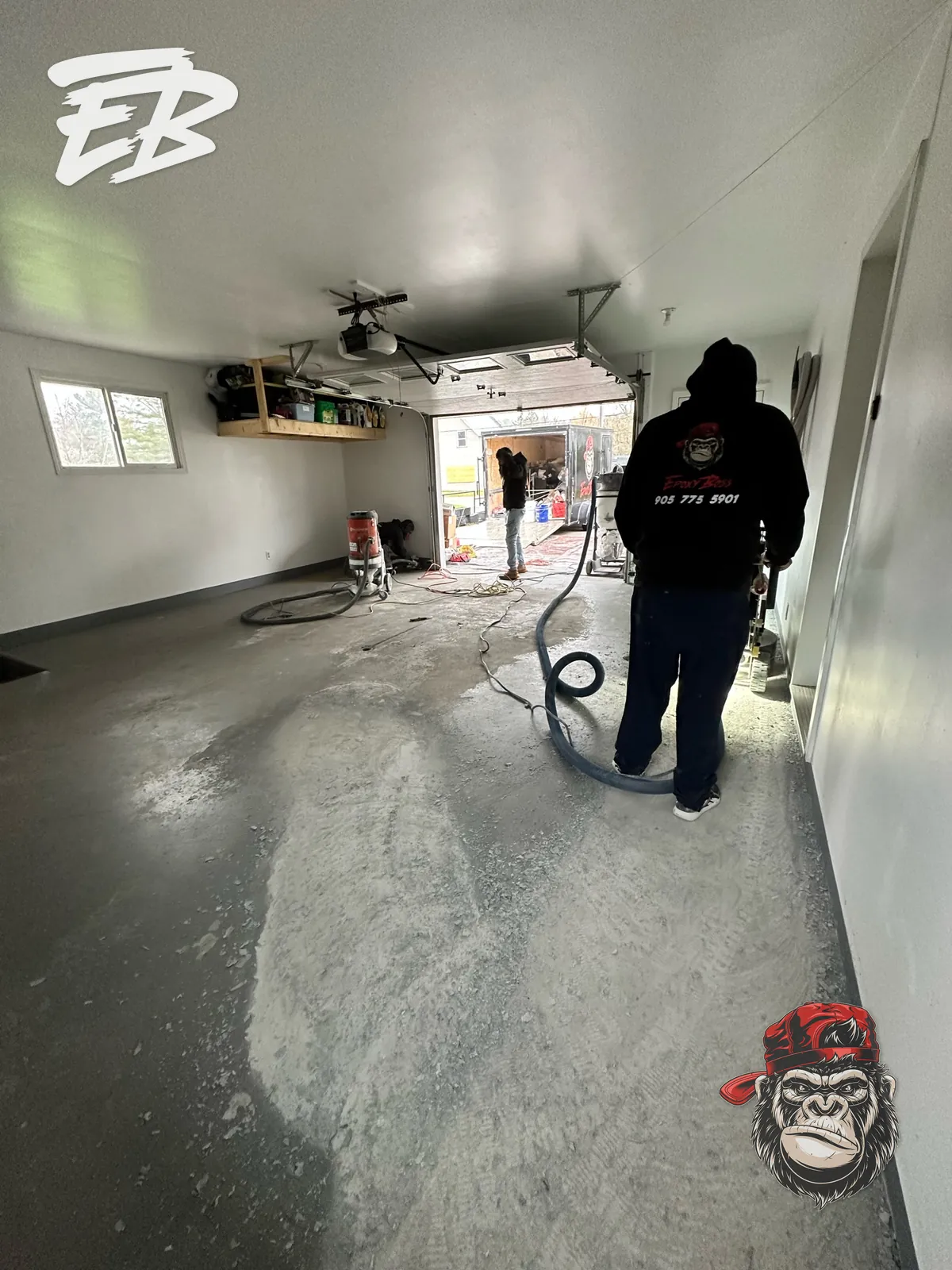
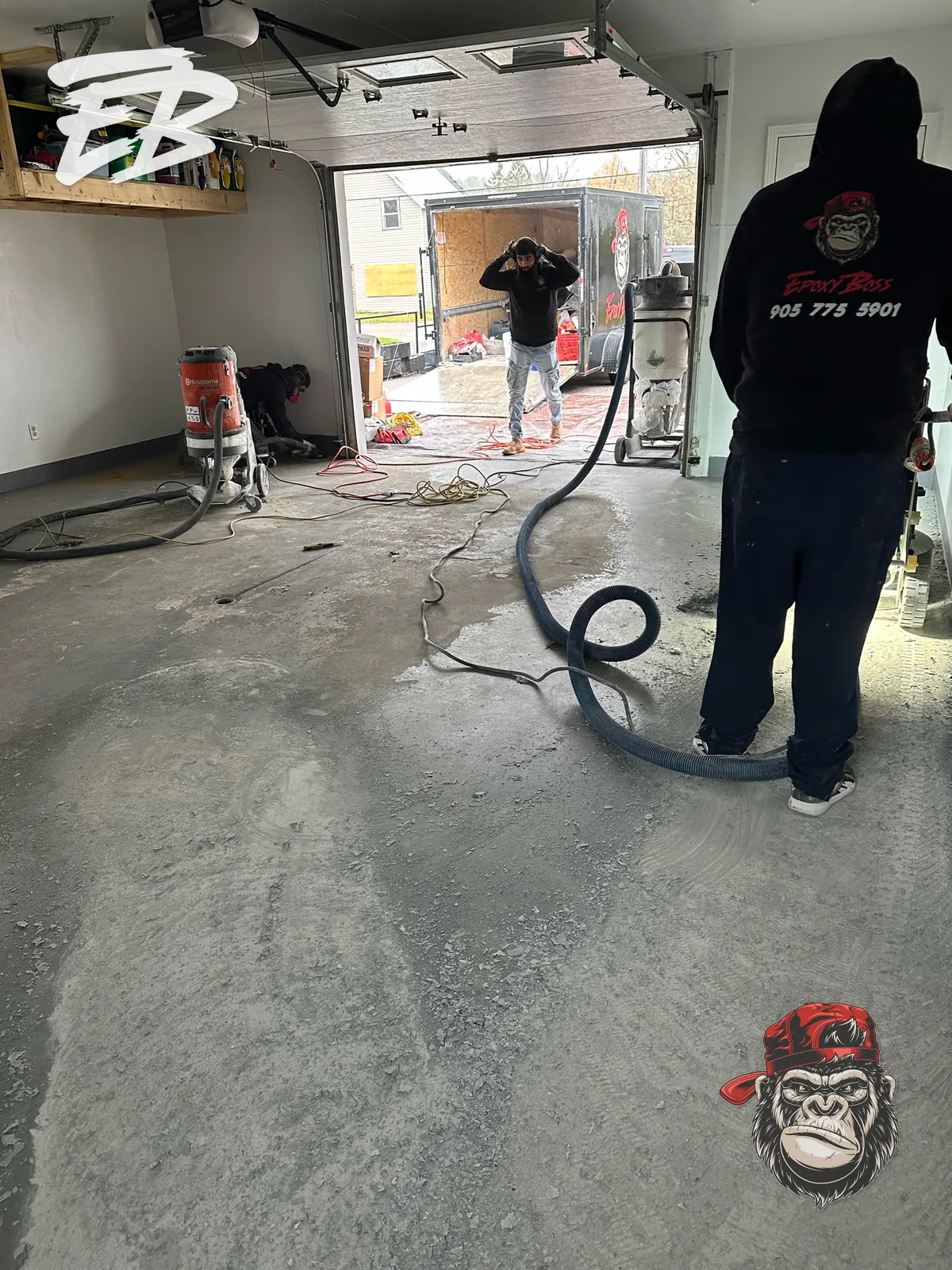
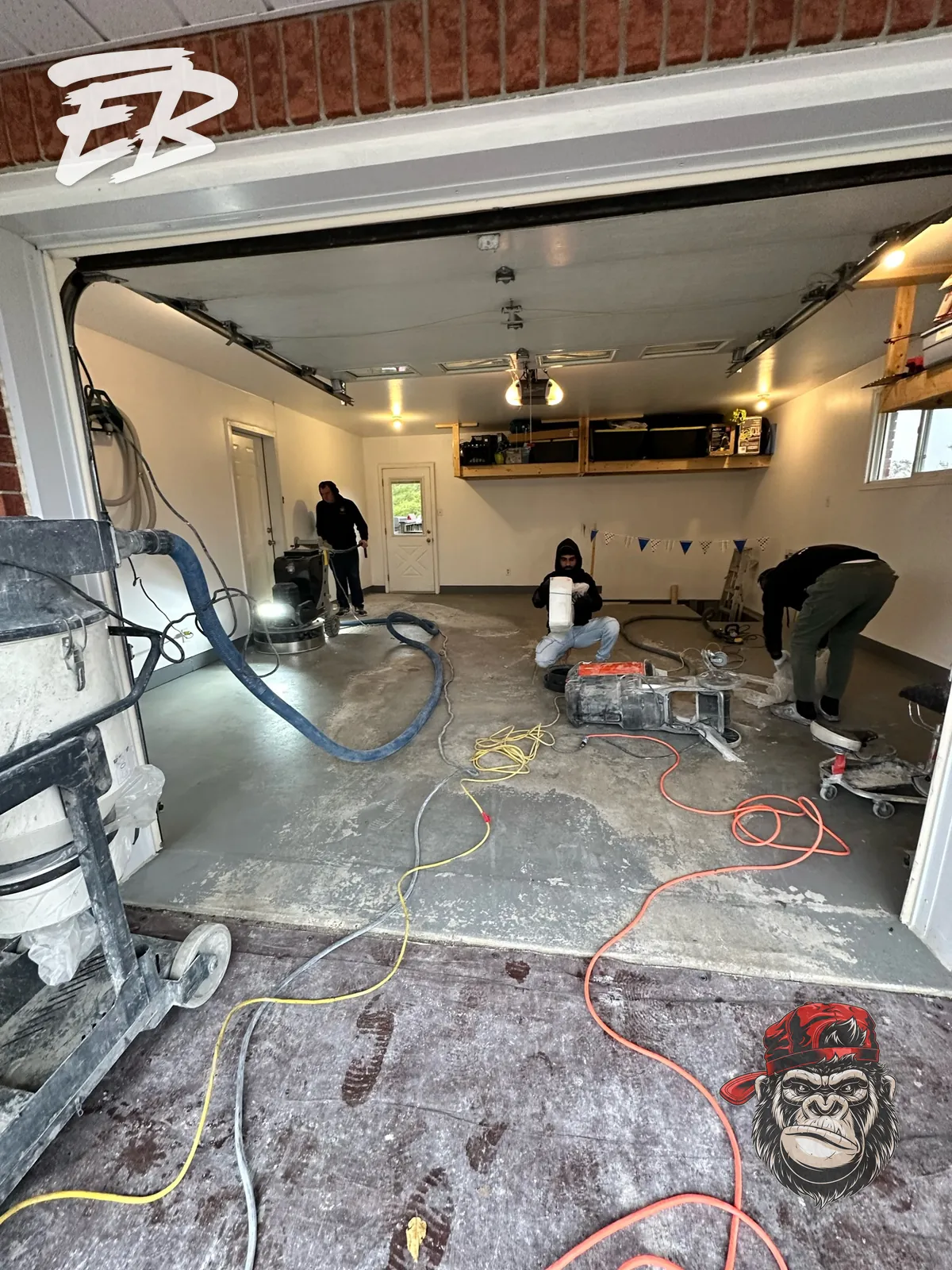
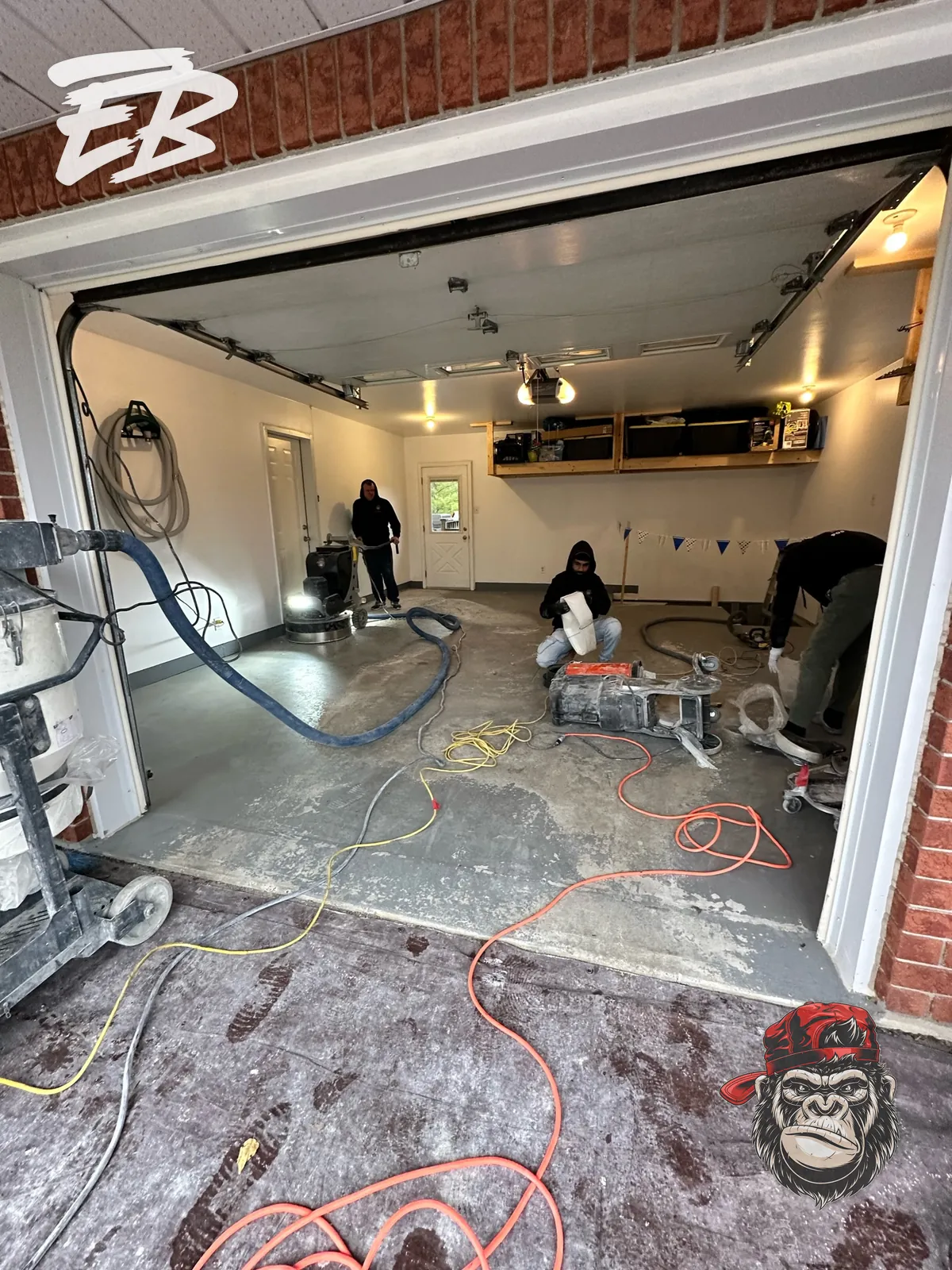
Concrete needs a clean, open, textured surface so a coating can grip it. Sealers, curing compounds, oil, old paint and laitance (the weak surface layer on concrete) all get in the way. Acid etching and light scuffing often leave a surface that is too smooth or too contaminated for a coating to hold under a heavy, warm tire. Mechanical profiling, such as diamond grinding, removes that weak layer and gives the coating something to grip. If you want the reasoning in more detail, see our article on why we don't recommend acid etching.
2. Moisture is coming up through the slab
Concrete is porous. Where a slab lets moisture vapour move upward, it can build pressure under a coating and weaken the bond from below. A warm tire adds heat and weight on top of that, so the weakened spot is where the coating gives way first. Testing the slab before choosing a system is the sensible way to find out whether a moisture-tolerant primer is needed.
3. The wrong product, or too little of it
Not every garage coating is built for vehicle traffic. Thin, water-based or rolled-on paints and some DIY kits are designed for light duty. Under a warm, loaded tire they can soften, mark or lift. Film thickness, resin type and the topcoat all affect how a floor handles heat and pressure.
4. Cold, damp or rushed application
Coatings need suitable temperature, humidity and cure time to develop a proper bond and hardness. If a floor is driven on too soon or was applied in poor conditions, it may never reach its intended performance. Cure times depend on the product, the temperature and the humidity.
5. An older, tired coating
A coating that has aged, chalked or been repeatedly patched can lose adhesion over time. Tire pickup is sometimes the first sign that the whole floor is nearing the end of its service life, not only the spots under the tires.
Which Garage Floor Coatings Resist Hot Tire Pickup?
No coating is immune, and anyone who promises otherwise is overselling. What matters is the full system: the prep, the primer, the body coat and the topcoat. That said, some systems are better suited to vehicle traffic than basic paint.
Epoxy systems
Epoxy is a two-part resin known for strong adhesion to properly prepared concrete and good build thickness. A well-installed epoxy base is a common foundation for garage floors. On its own, epoxy can be sensitive to UV light and may yellow in sunny spots, so it is often paired with a protective topcoat.
Polyaspartic systems
A polyaspartic floor coating is a fast-curing, UV-stable resin often used as a topcoat or as part of a full system. Many homeowners consider it for garages because it cures quickly and is made for abrasion and UV exposure. It still depends on correct prep and conditions. A polyaspartic layer over a poorly prepared slab can fail like anything else.
Flake systems with a urethane or polyaspartic topcoat
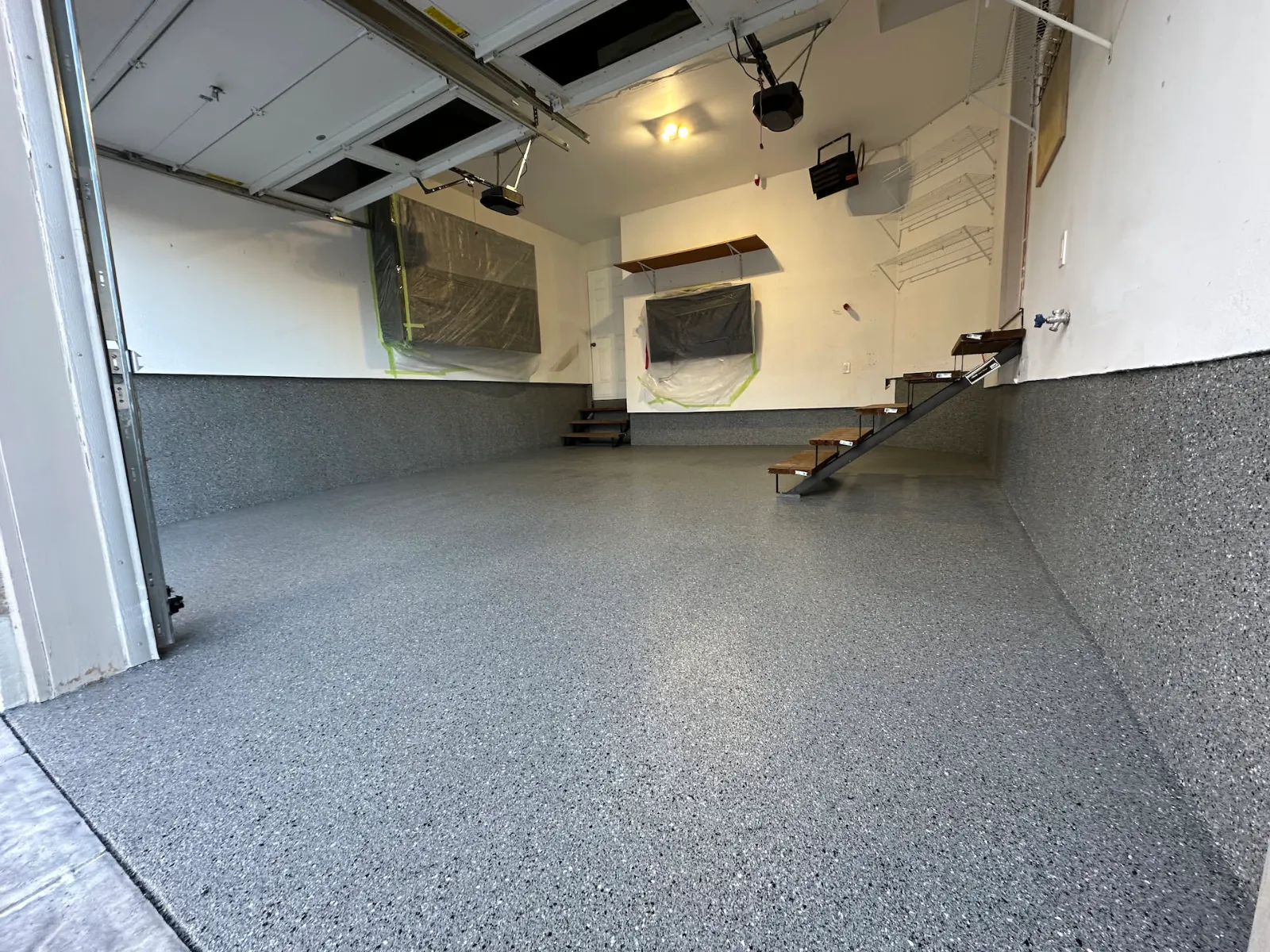
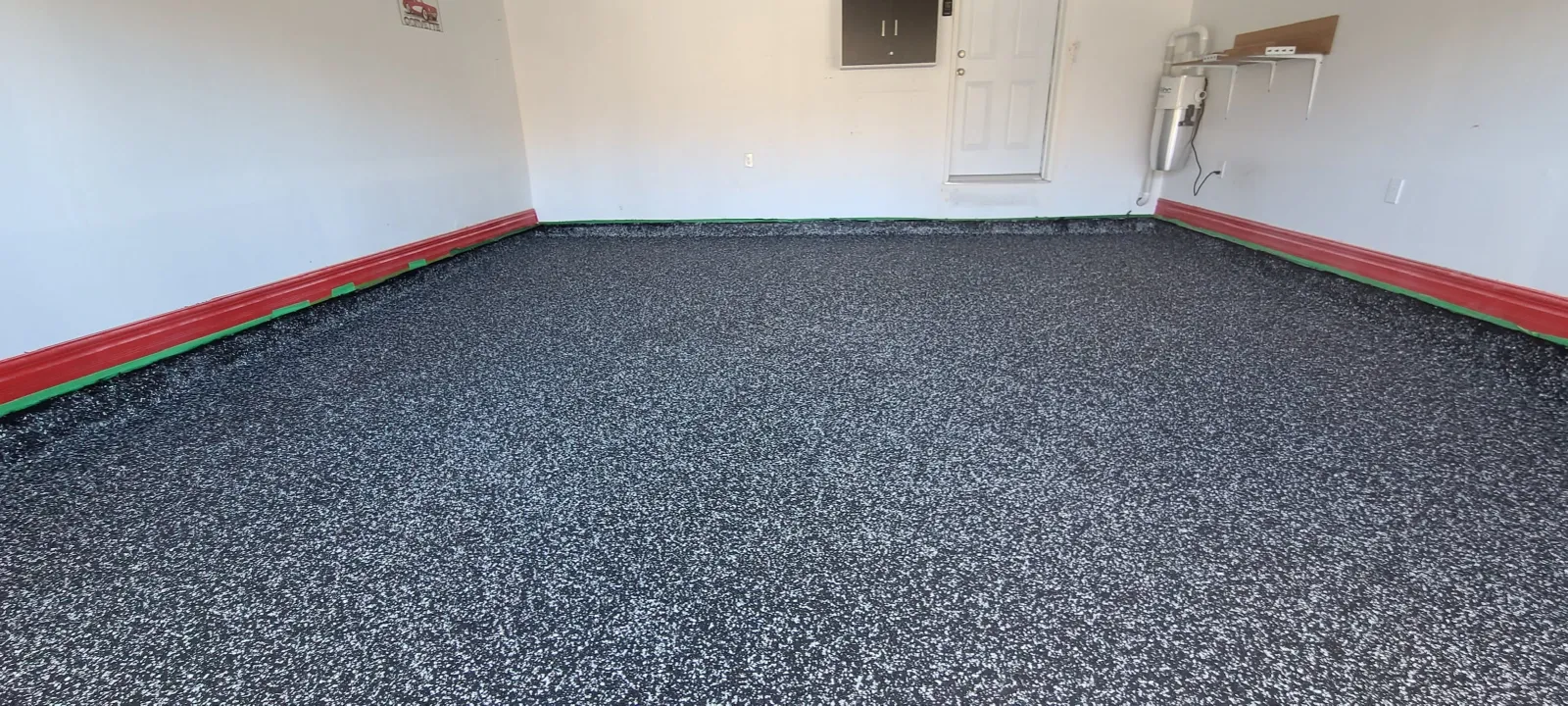
A decorative flake system is built in layers: a base coat, flakes broadcast into it, and one or more clear topcoats. The flakes add texture and hide dirt, and the clear topcoats seal the surface. The topcoat chemistry matters for chemical, abrasion and heat behaviour, which is why our explainer on aliphatic urethane topcoats is worth reading before you decide.
If you are weighing chemistries, this comparison of polyurea, polyaspartic and epoxy explains how they differ.
Can You Fix a Garage Floor With Hot Tire Pickup?
Usually yes, but not by painting over it. Recoating on top of lifted or poorly bonded material tends to repeat the failure. The affected areas need to be assessed first.
- Find the cause. Check for moisture, contamination, thin coverage or an old coating that has let go.
- Remove what is loose. Any coating that is not firmly bonded needs to come off, and sometimes the whole floor does.
- Repair the concrete. Cracks, pitting and scaling should be dealt with before anything new goes down.
- Re-profile the surface. Grinding creates a clean, textured surface for the new system.
- Rebuild with a suitable system. Choose a primer, body coat and topcoat suited to your slab and how you use the garage.
Whether a floor can be recoated or has to be stripped depends on how well the existing coating is bonded and what is under it. Our guide on whether you can resurface a floor with cracks, stains and old paint explains how that call is made.
How Do You Lower the Risk After Coating?
Good habits help a properly installed floor, though they do not replace a proper installation.
- Follow your installer's written instructions on when you can walk and drive on the floor.
- Rinse off road salt and slush during winter instead of letting it dry on the surface.
- Wipe up oil, fuel and other spills promptly.
- Use a soft brush or a non-abrasive mop for cleaning, and avoid harsh solvents unless the installer approves them.
- Do not park a car that has just been driven hard on a floor that is still curing.
What to Ask a Contractor Before You Coat
Because hot tire pickup is mostly a preparation and system issue, the questions you ask matter more than the colour you pick.
- How will the concrete be prepared, and will it be mechanically ground?
- Will the slab be checked for moisture before a system is chosen?
- What are the primer, body coat and topcoat, and why were they chosen for a garage?
- How are cracks and damaged areas repaired first?
- What does the written warranty cover, and for how long?
Epoxy Boss Inc. is based in Innisfil, Ontario, has operated since 2019, and is WSIB insured. Every project closes out with a written warranty (5-year limited), a compliance-style closeout report and ongoing support. Cost depends on floor size, condition, repairs and system choice. For a rough range, see our garage floor coating cost guide.
Frequently Asked Questions
Is hot tire pickup caused by the tires or the coating?
It is usually the coating system. Warm tires expose a weak bond, but the root cause is typically poor preparation, moisture, a thin or unsuitable product, or an aged coating.
Does epoxy or polyaspartic handle hot tires better?
Both can perform well when they are installed over properly prepared concrete as part of a suitable system. Neither is a guarantee. The prep, moisture control, thickness and topcoat matter as much as the resin name.
Can I fix hot tire pickup by recoating the spots?
Spot patching rarely lasts if the underlying bond is weak. The failed areas generally need to be removed and the surface re-profiled before new material goes down.
How long should I wait before parking on a new coating?
It depends on the product, the temperature and the humidity. Your installer should give you written return-to-service instructions for your specific floor.
If your garage floor is lifting under the tires, or you want to coat it so that it does not, we can look at the slab, explain what is causing the problem and recommend a suitable system. You can request a free estimate online, call (905) 775-5901 or email info@epoxyboss.ca.