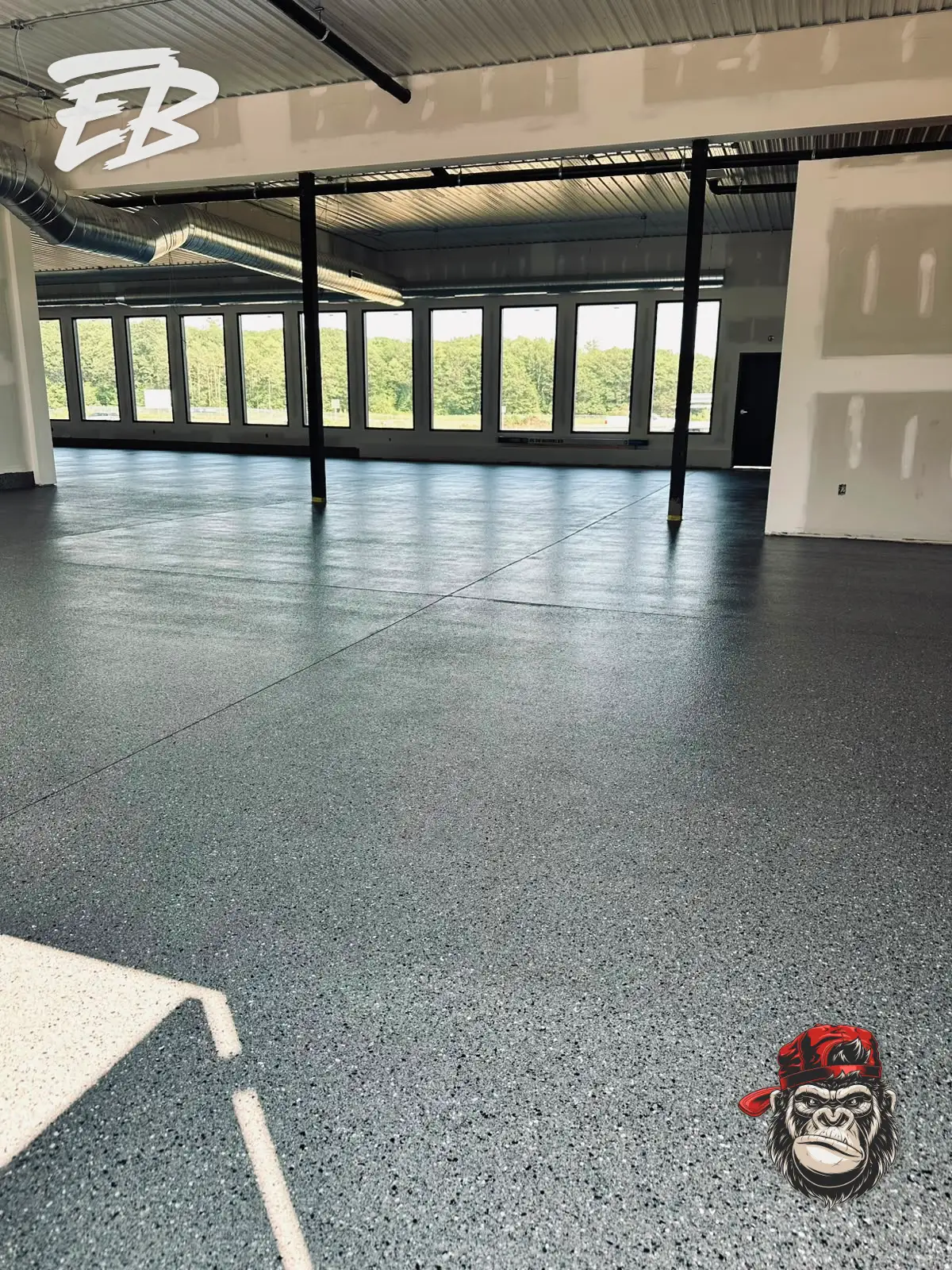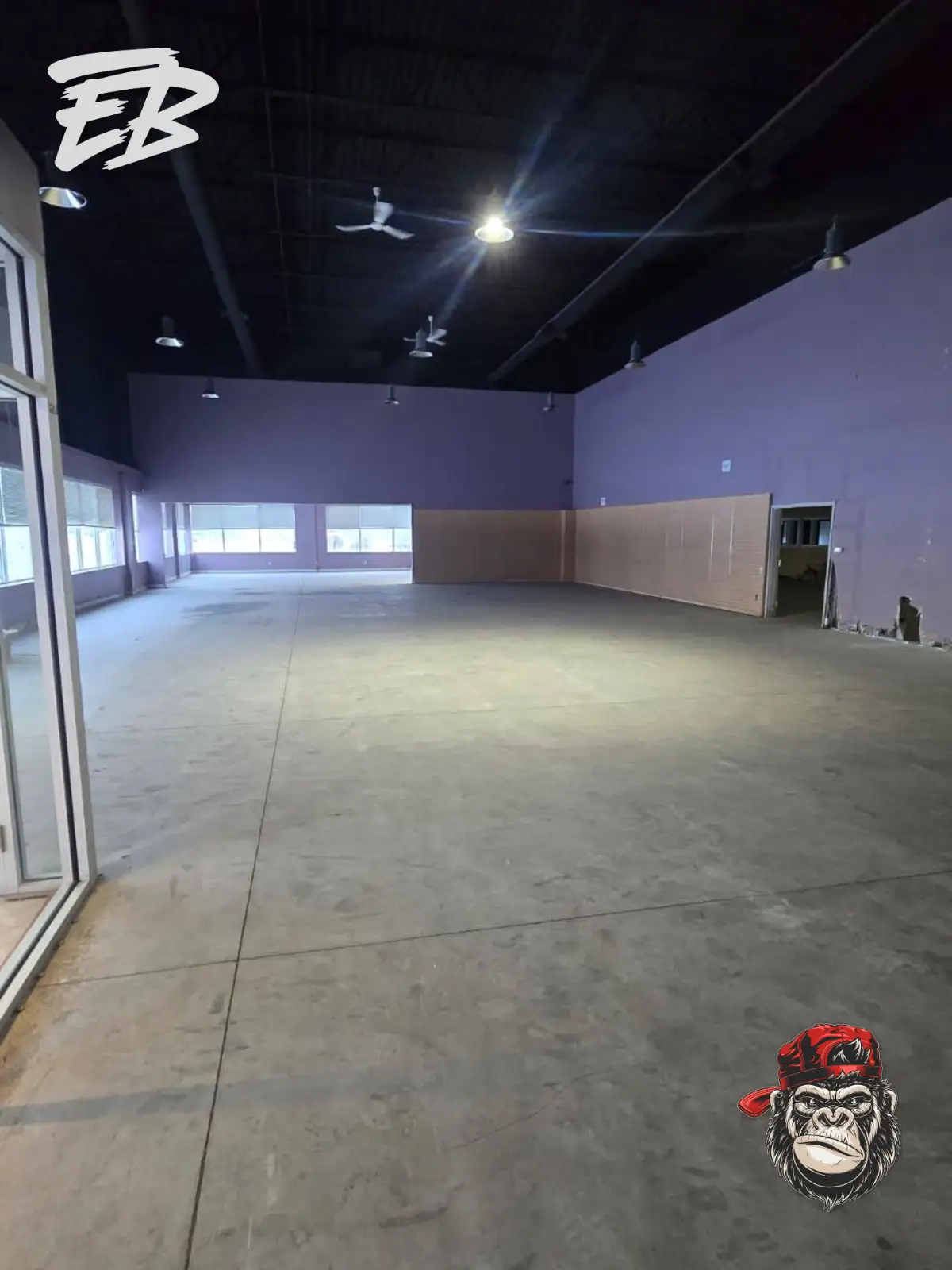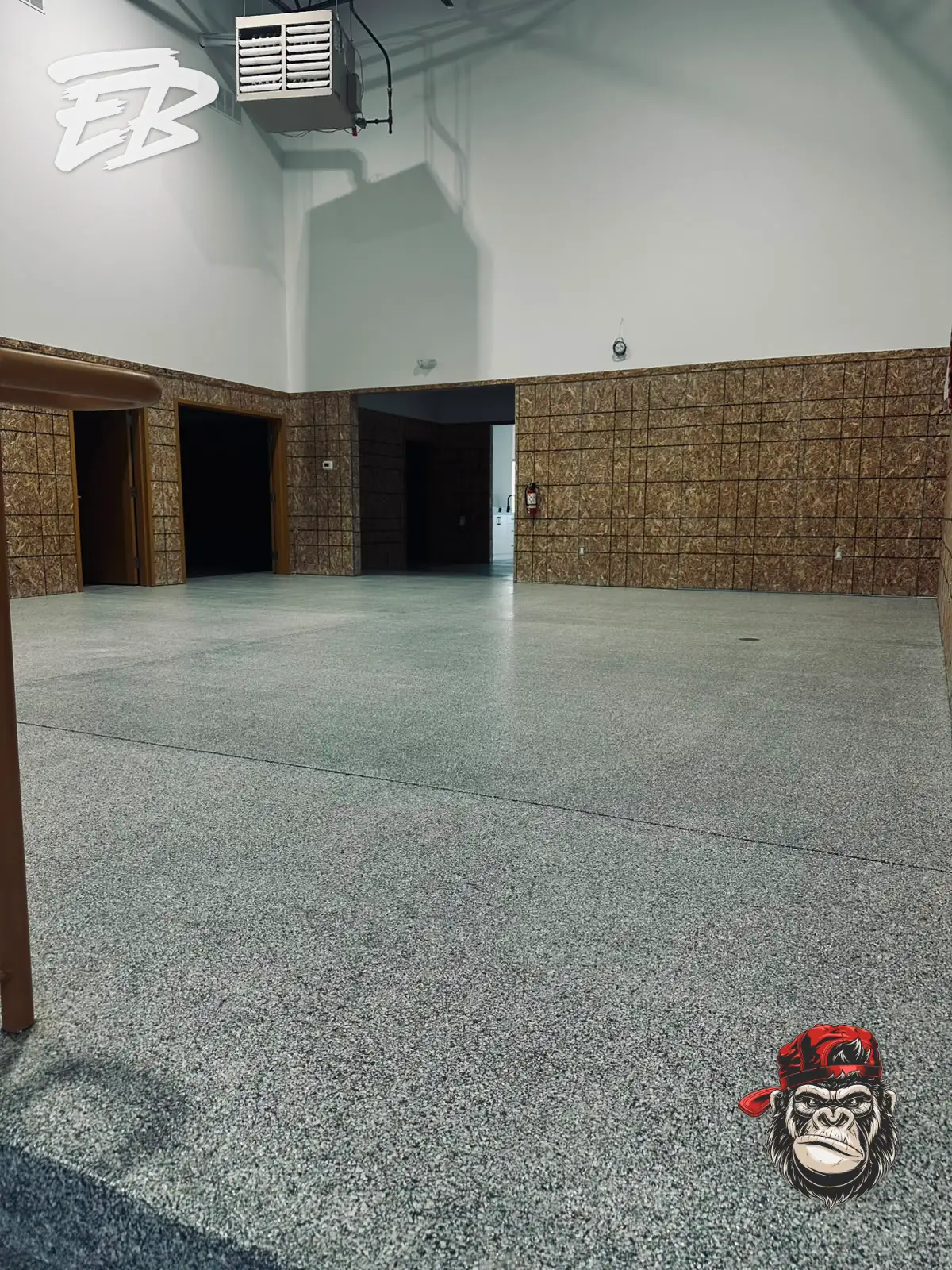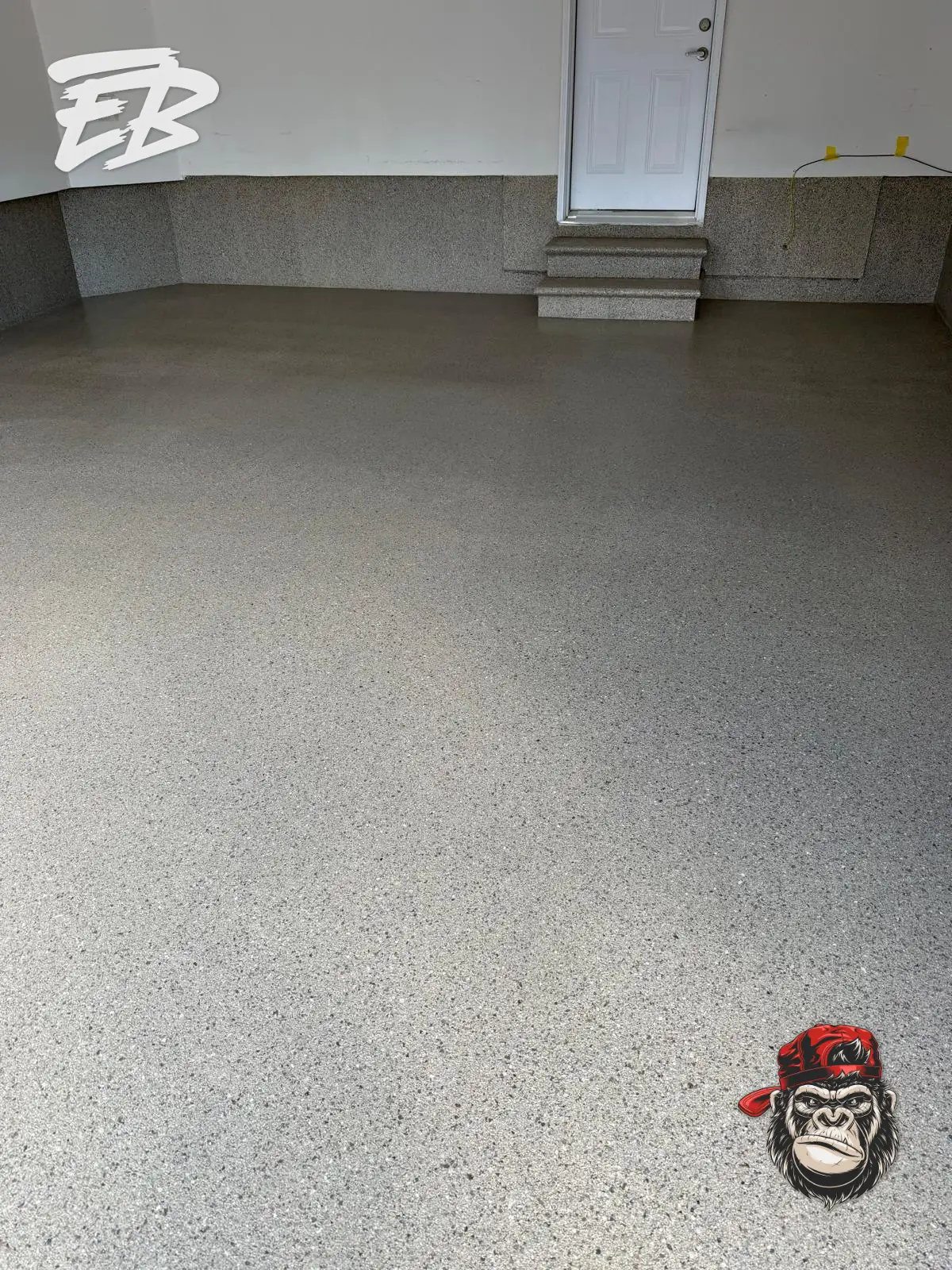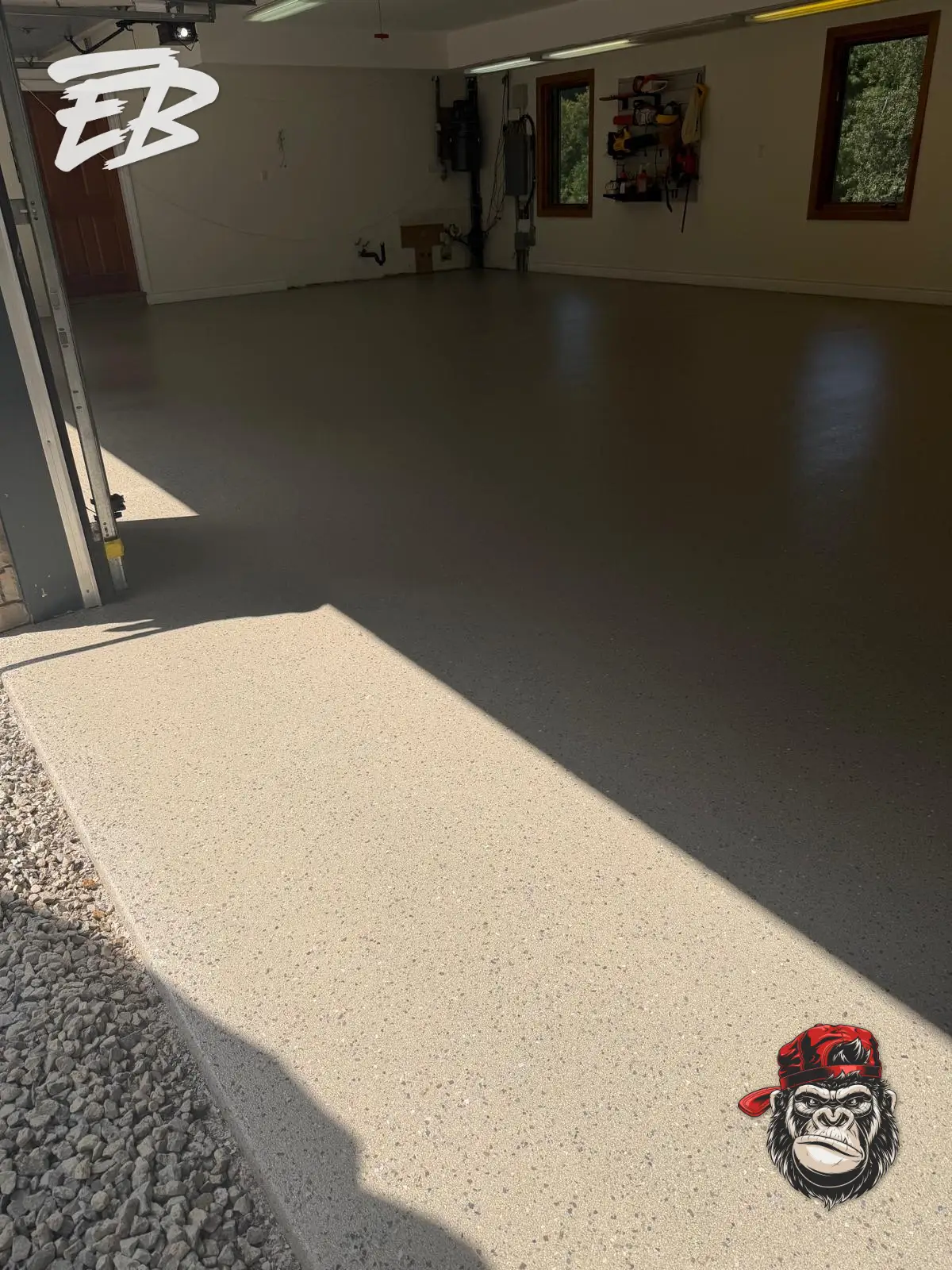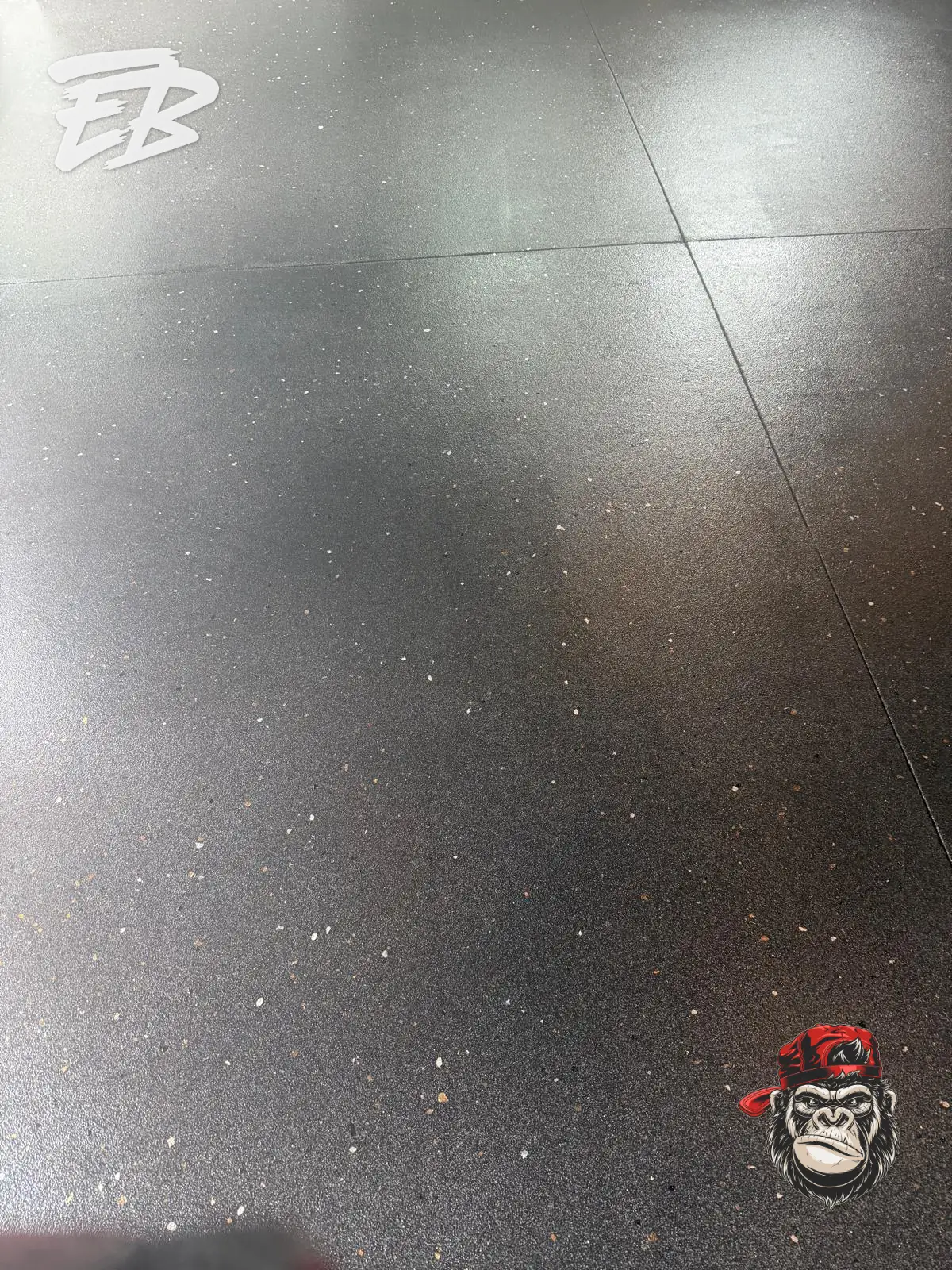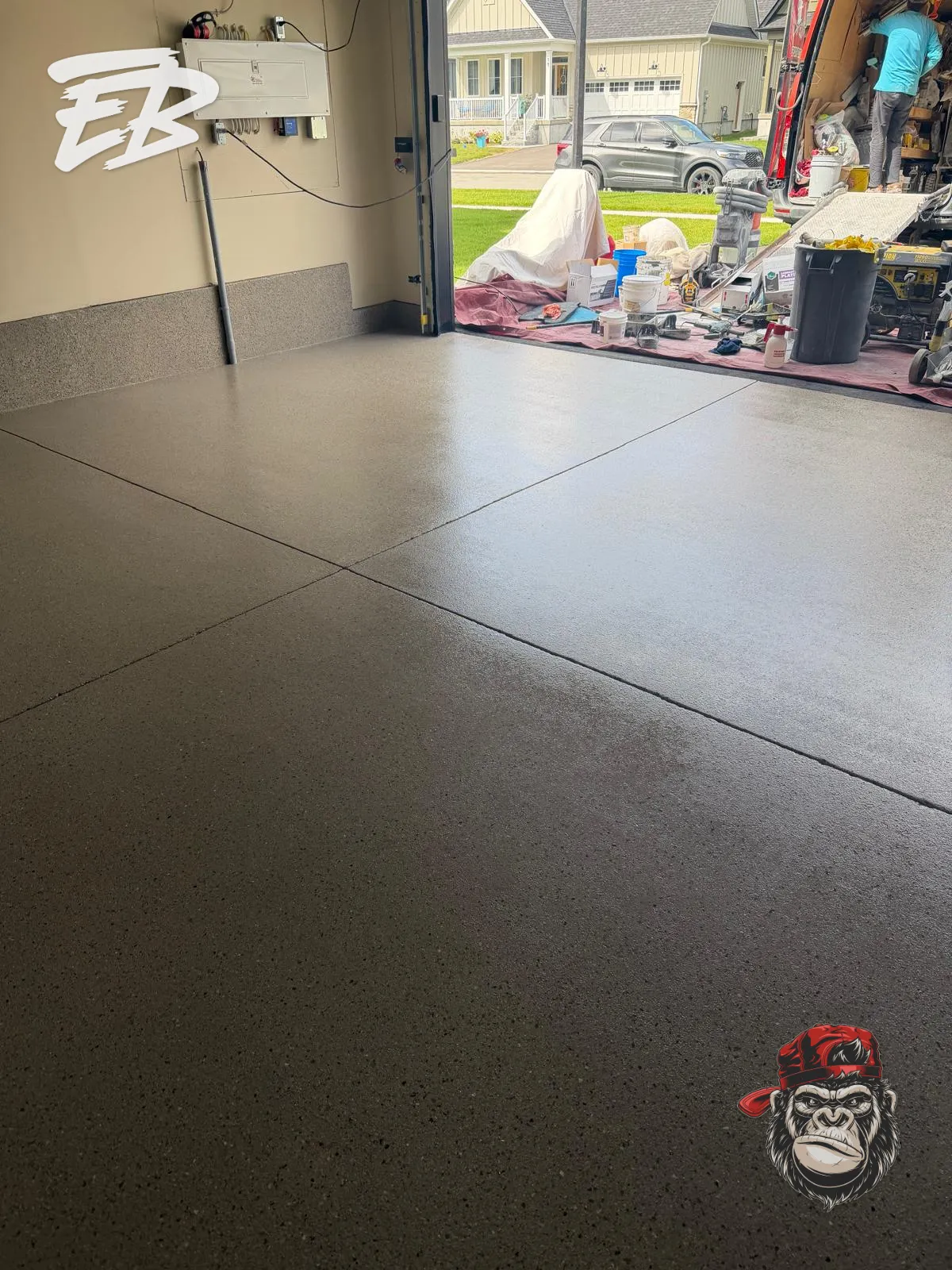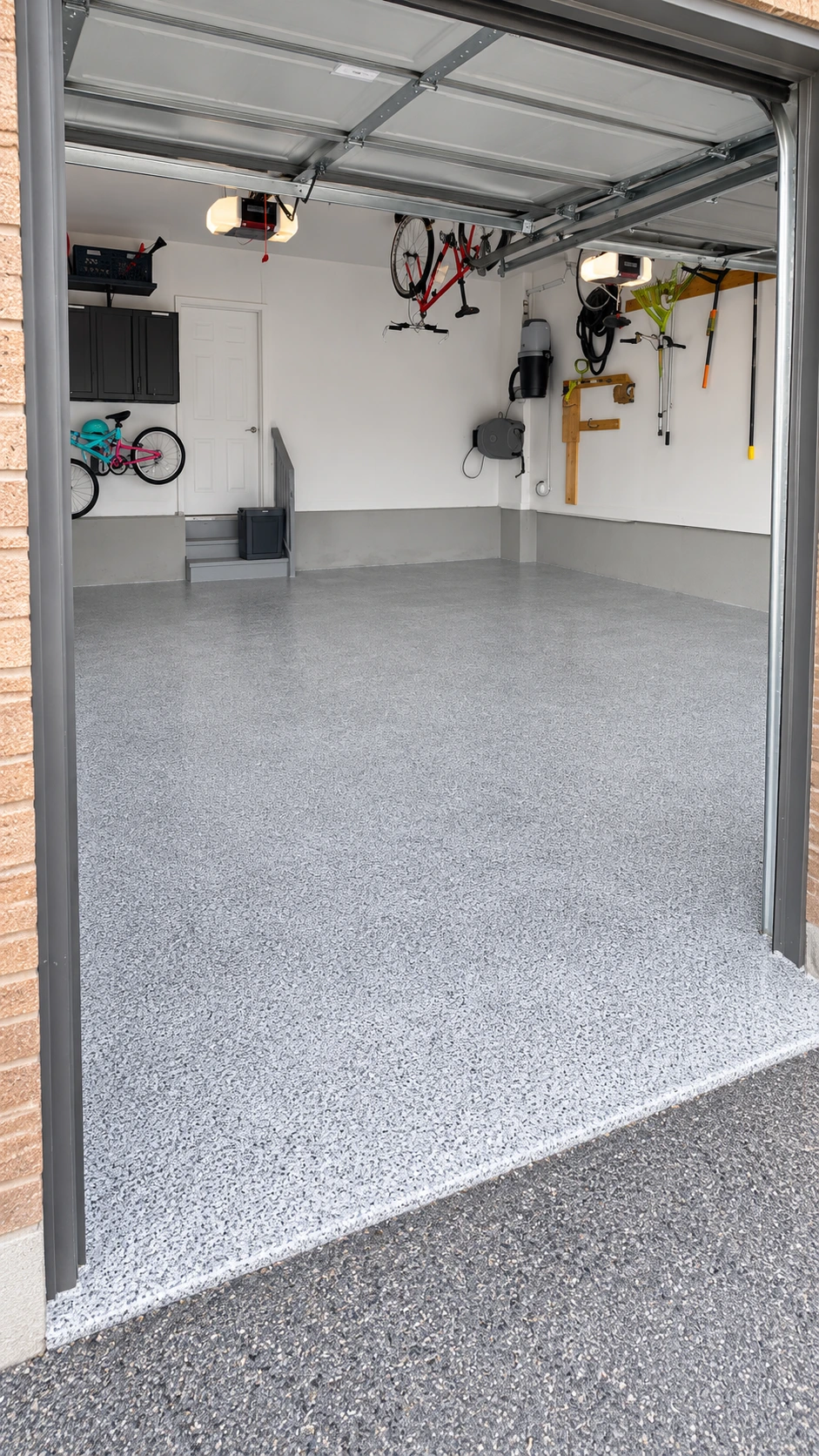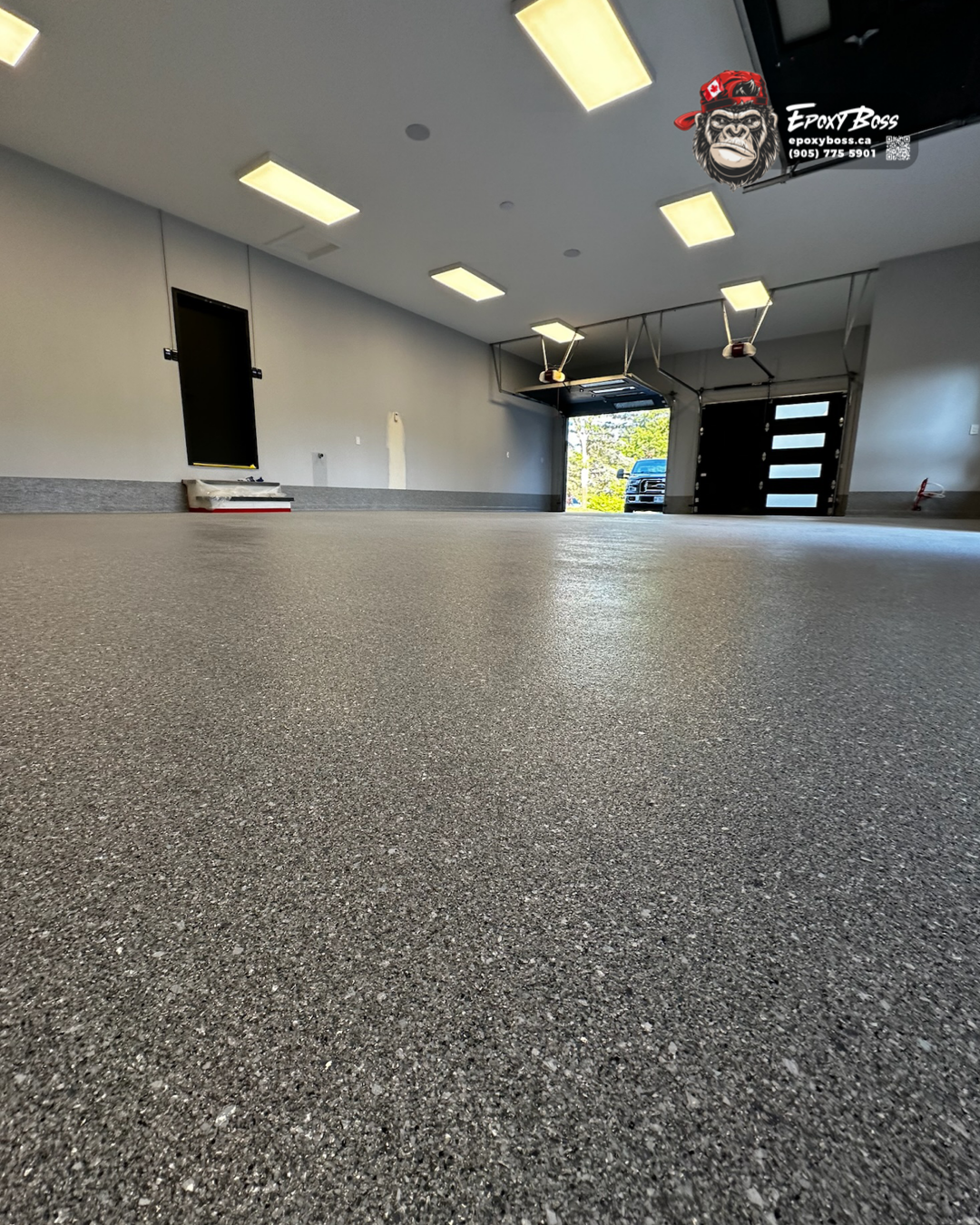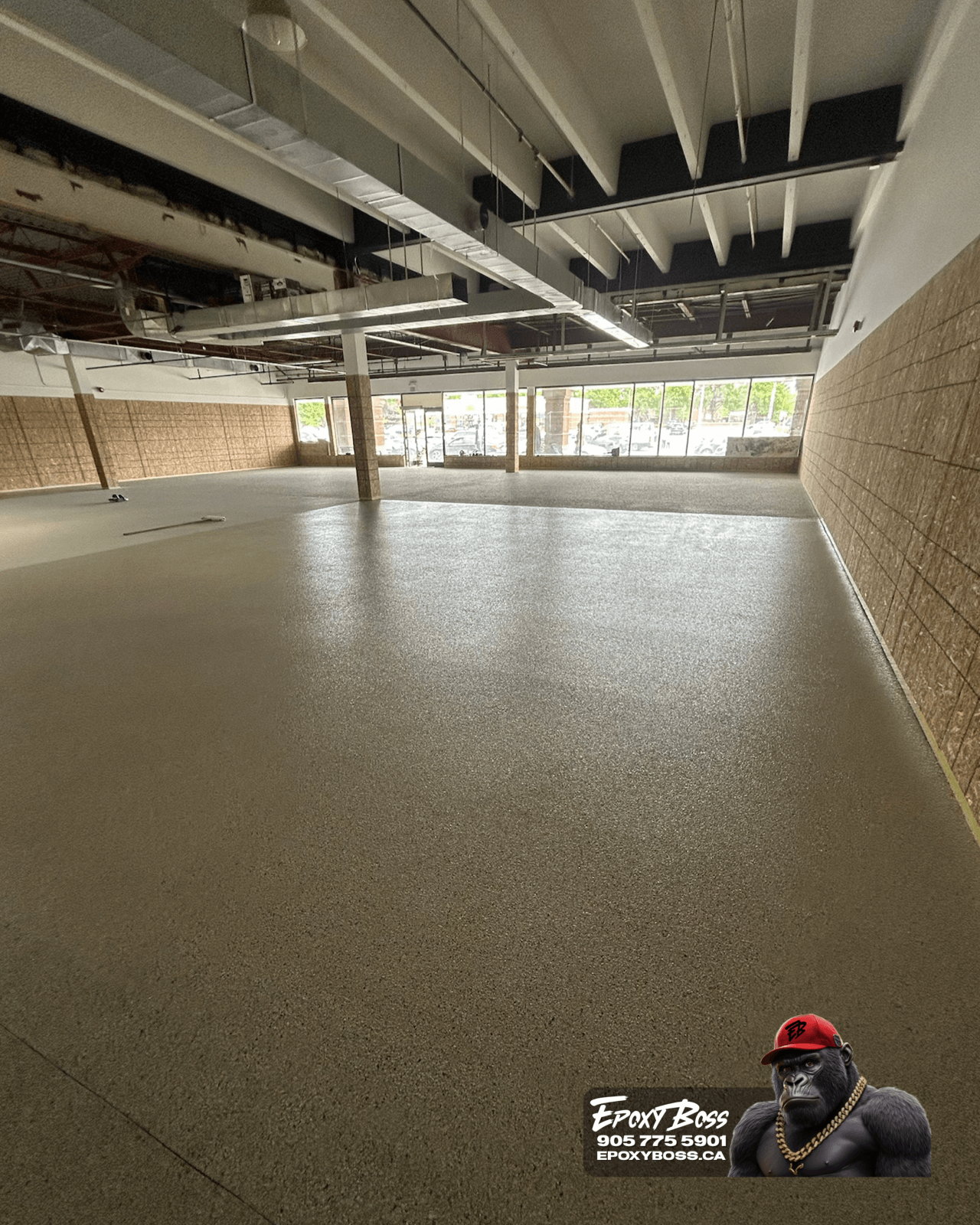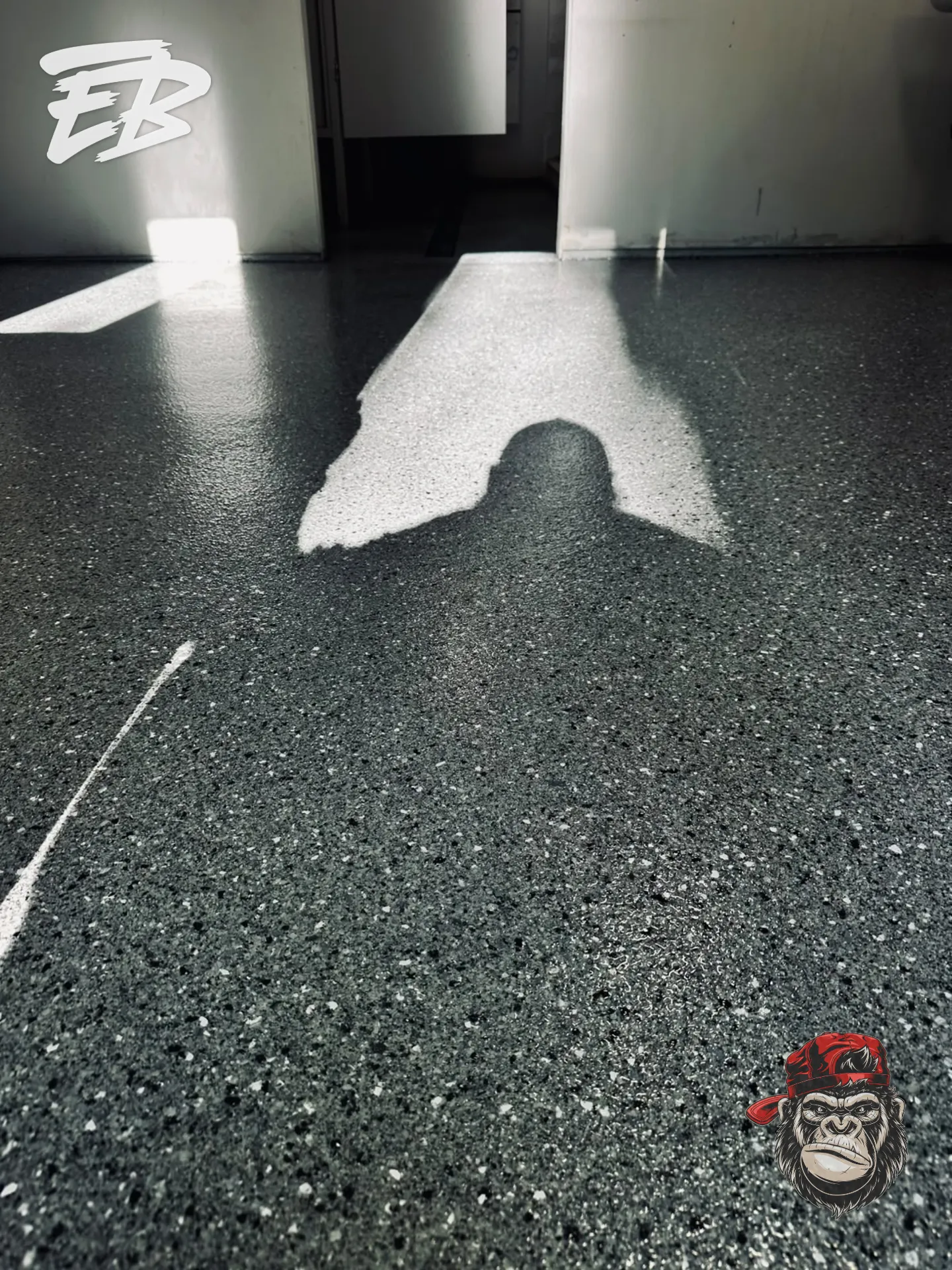
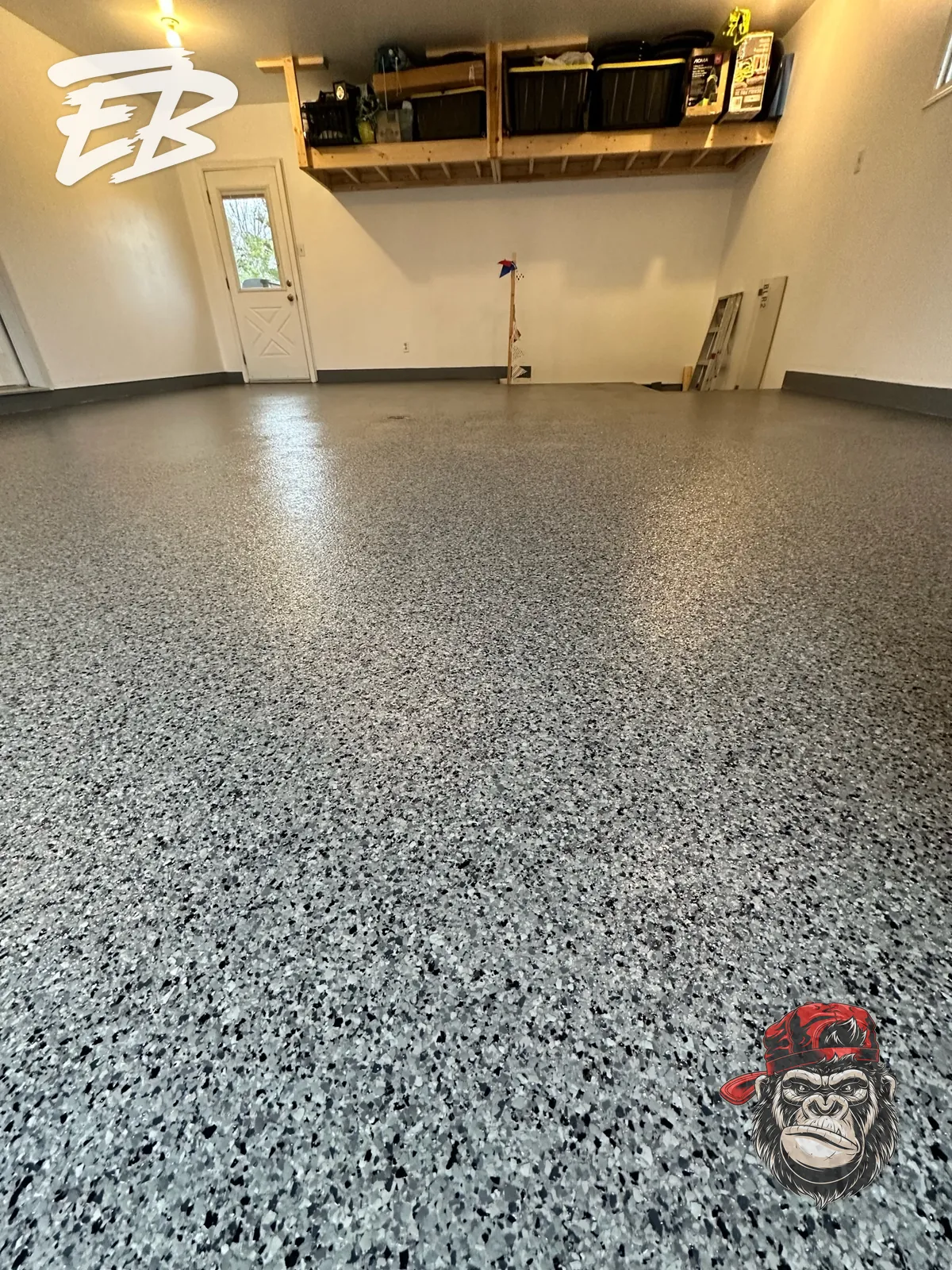
The price of a garage floor coating in Innisfil is not determined by square footage alone. The size of the garage matters, but the concrete condition, preparation requirements, repairs, chosen system, access, and finishing details usually have a greater effect on the final scope than colour selection.
A sound two-car garage with clean concrete and minor repair needs is a different project from a garage with salt-related surface wear, old coating failure, oil contamination, large cracks, moisture concerns, stairs, vertical wall details, or difficult access. Both may be called “garage floor coating,” but they do not require the same preparation or material build-up.
For planning purposes, Ontario garage coating projects can range broadly, often around CAD $4–$12 per square foot, while a typical 600–750 sq. ft. garage may fall roughly within CAD $3,000–$9,000+ depending on its condition and system. These are planning ranges, not a quote. An accurate price requires review of the slab and the requested scope.
The short answer: what changes the price?
The main cost drivers are:
- Garage size and layout.
- Concrete condition.
- Diamond grinding and surface preparation requirements.
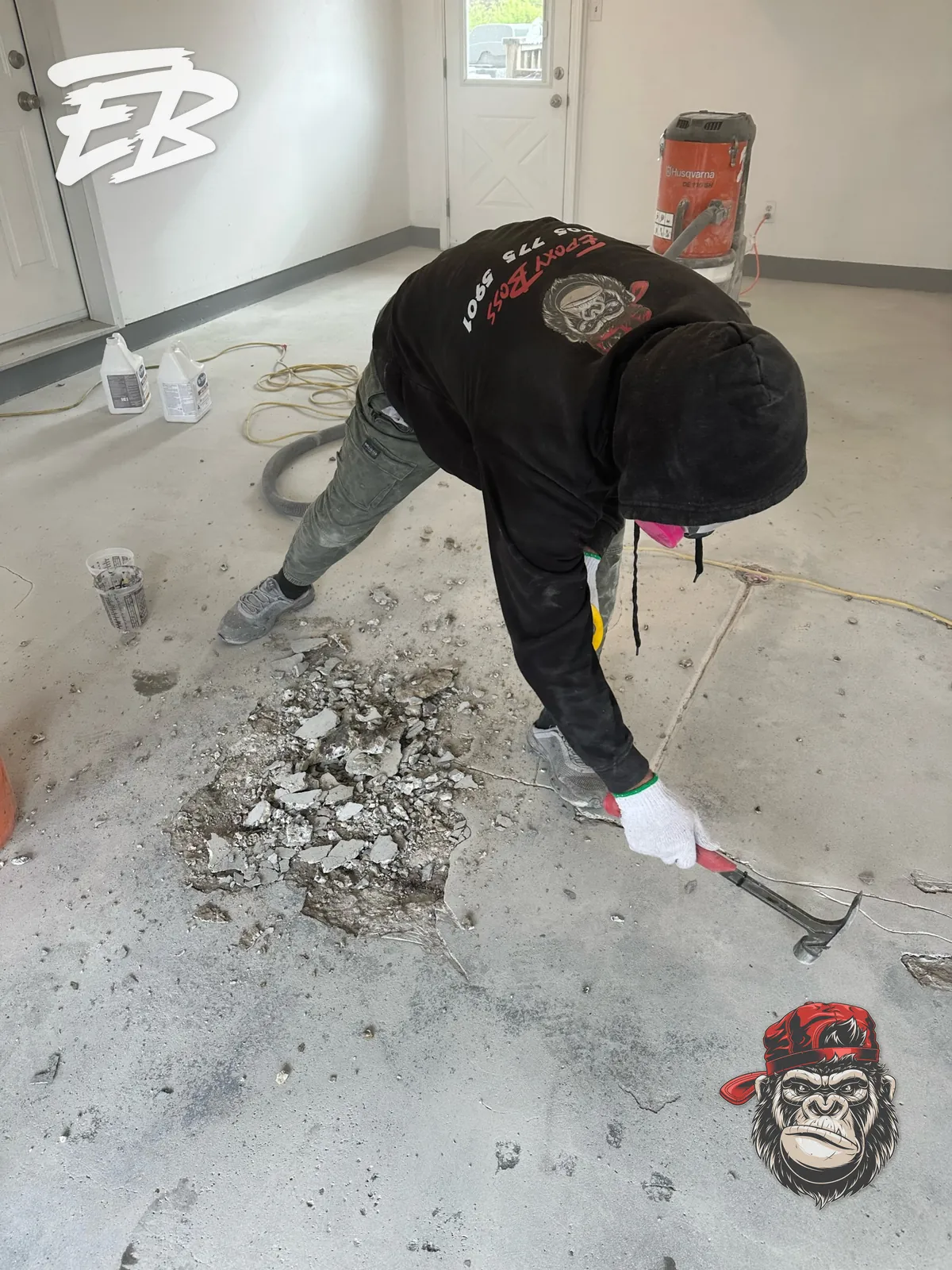
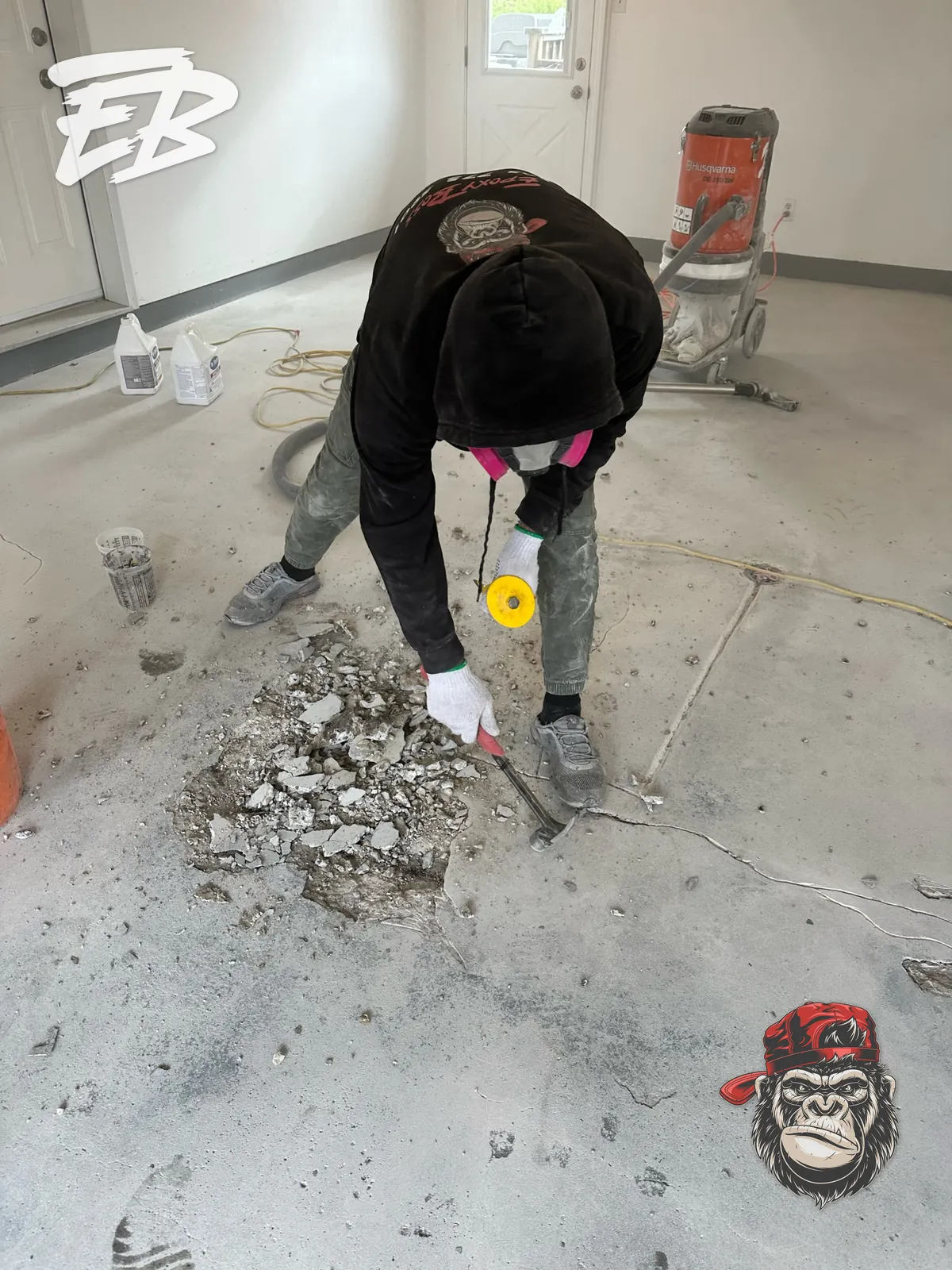
- Crack, joint, spall, and edge repair.
- Old coating removal.
- Oil, tire residue, or other contamination.
- Moisture evaluation or mitigation requirements.
- System type and number of resin layers.
- Decorative flake, solid-colour, metallic, or quartz finish.
- Topcoat and traction requirements.
- Stairs, vertical walls, stem walls, thresholds, and transitions.
- Access, scheduling, cure requirements, and garage use.
A transparent quote should explain these items clearly. It should not simply show one number per square foot without describing what is included in the preparation and coating system.
1. Garage size and layout
Square footage is the starting point because it affects labour time, material quantity, and installation planning. But two garages with the same floor area can have very different pricing.
A simple rectangular garage with open access is generally more straightforward than a garage with:
- Multiple rooms or divided bays.
- Double pre-cast stairs.
- Storage platforms or built-in cabinetry.
- Heavy shelving that must be moved.
- Tight thresholds and perimeter details.
- Numerous floor drains, curbs, or transitions.
- Vertical wall coating or stem-wall details.
Small garages can also have a higher cost per square foot because equipment setup, preparation, protection, mobilization, and cleanup are required regardless of the floor size.
For this reason, the total project scope matters more than using square footage as the only comparison point.
2. The existing concrete condition
The slab condition is one of the most important pricing factors.
Bare concrete is not always ready for coating just because it looks clean. Innisfil garages often see road salt, snowmelt, tire traffic, storage loads, and seasonal temperature changes. Over time, the concrete can become dusty, porous, pitted, cracked, stained, or weak in localized areas.
Before a system is installed, Epoxy Boss reviews:
- Surface dusting or scaling.
- Cracks and joint lines.
- Small pits, spalls, and damaged edges.
- Tire-path wear.
- Salt residue and winter exposure.
- Previous patches or repairs.
- Oil or chemical contamination.
- Existing paint, sealer, epoxy, or failed coating.
A sound slab may need standard diamond grinding and localized repair. A weak or deteriorated slab may require additional preparation and repair before the resinous system can be installed.
That difference changes the price because the floor must be made ready to bond—not simply covered.
3. Diamond grinding and surface preparation
Preparation is not an optional add-on. It is part of the floor system.
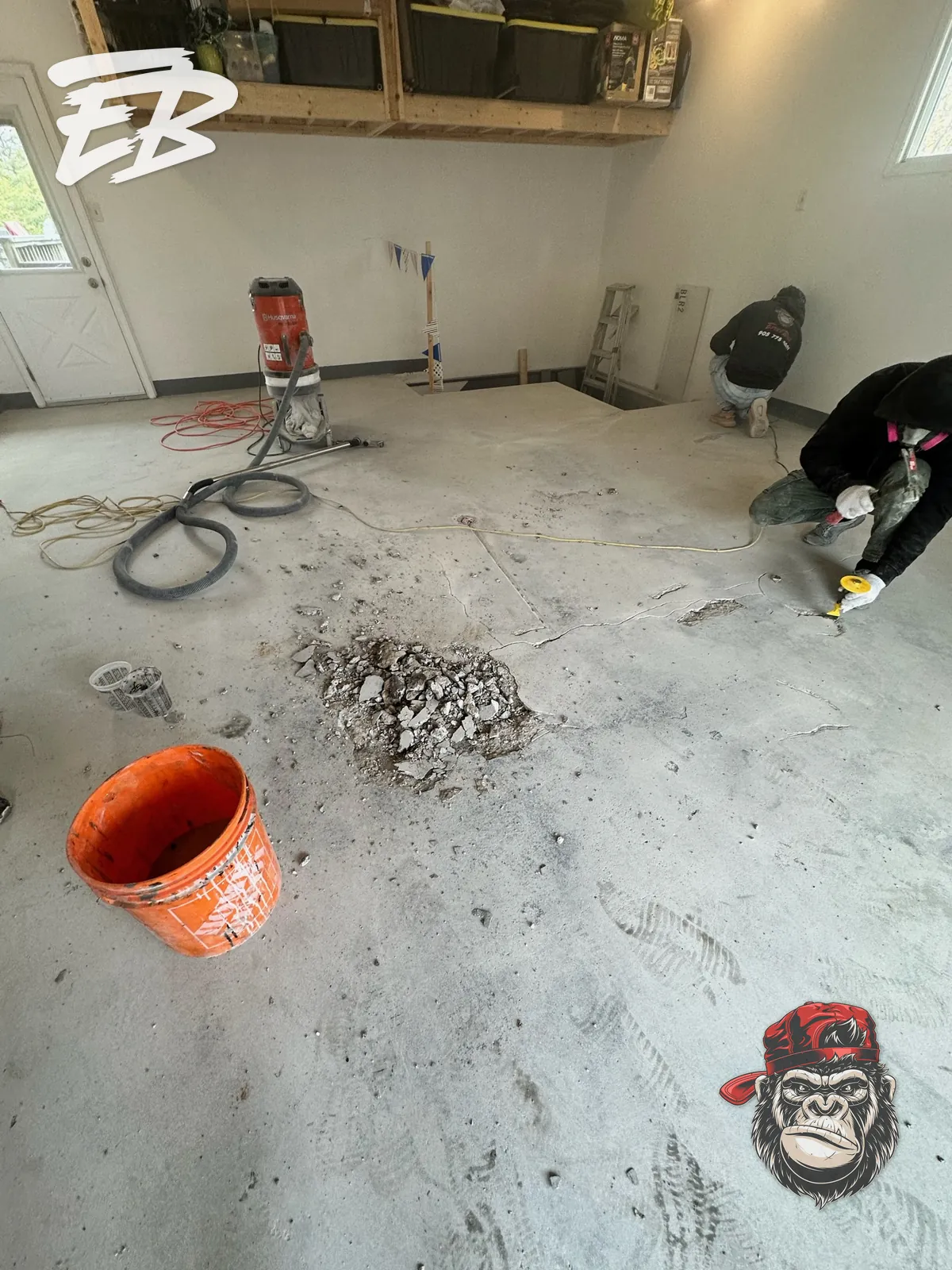
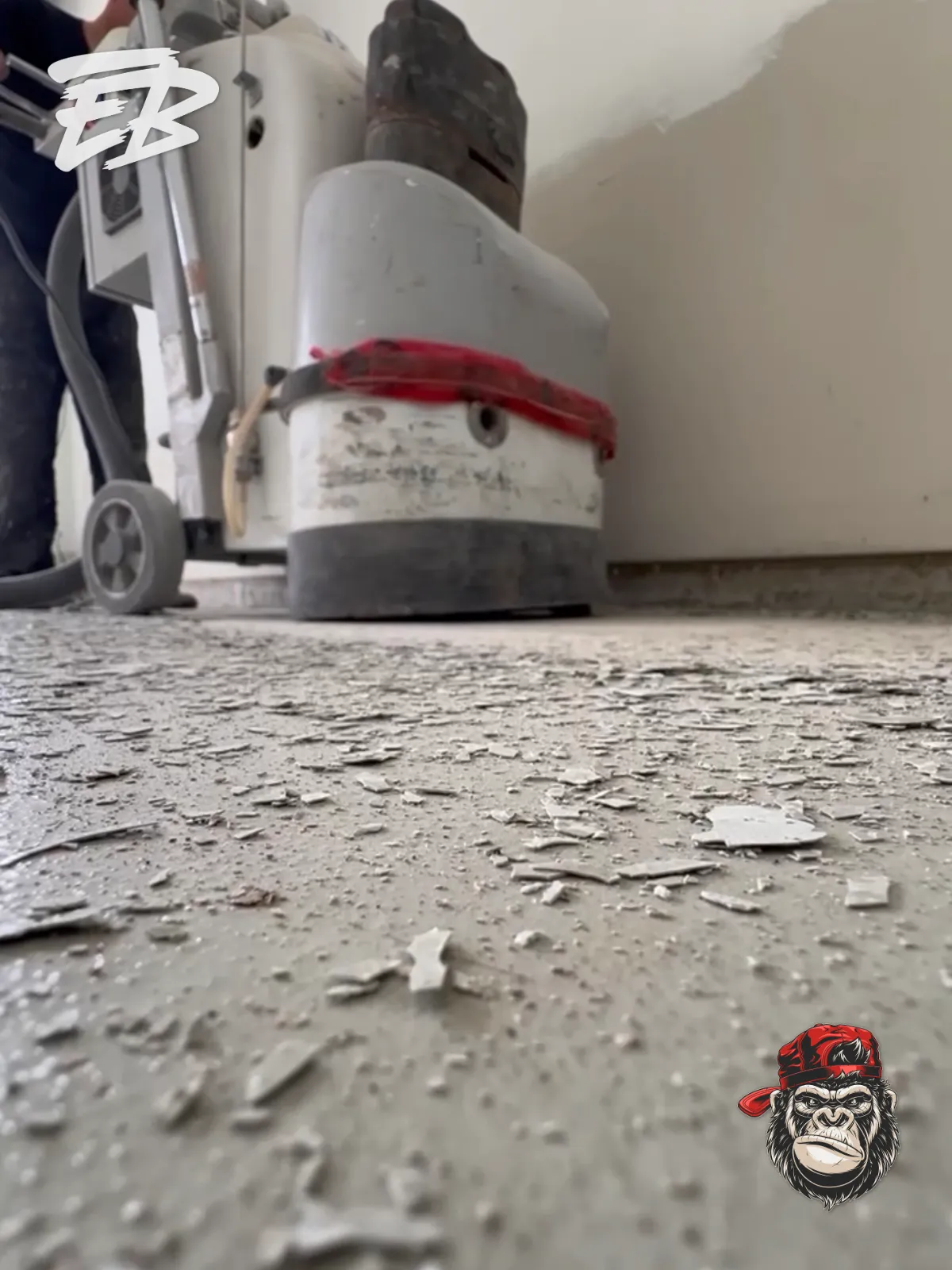
Epoxy Boss uses mechanical diamond grinding to remove weak surface material, open the concrete profile, and prepare the slab for the selected coating assembly. The amount of grinding required depends on the concrete condition and what is already on the floor.
Preparation can become more involved when the garage has:
- Old paint or a previous coating.
- Thick sealer or adhesive residue.
- Surface contamination.
- Weak or chalky concrete.
- Areas of scaling or spalling.
- Uneven patches from earlier repairs.
- A failed coating that needs to be mechanically removed.
A floor that needs removal and re-preparation is not comparable to a clean bare slab. This is why two estimates can look different even when the garages are similar in size.
The scope should identify whether the price includes standard grinding, coating removal, repair, or any additional preparation required after inspection.
4. Crack repair, joint treatment, and surface repairs
Cracks are common in garage slabs, but they are not all the same.
Some are narrow and stable. Others are wider, connected to joints, affected by movement, or surrounded by weak concrete. The repair method depends on what the crack represents and how the coating system will transition across it.
Additional work may be needed for:
- Prepared crack filling.
- Surface spalls and chipped edges.
- Deep pits or damaged concrete.
- Threshold repairs.
- Pre-cast stairs.
- Stem walls and vertical details.
- Areas where the floor meets the driveway or exterior concrete.
A full-flake system can make a prepared floor look more uniform, but decorative flake does not replace proper repair. If the underlying concrete needs work, that work belongs in the scope.
5. Old coating removal
Removal is a separate scope factor because a previous coating can hide important information about the concrete below it.
The existing floor may have:
- Peeling or loose coating.
- A coating that is still bonded in some areas.
- Multiple layers from earlier installations.
- Paint, sealer, glue, or adhesive.
- Inconsistent texture or unknown material history.
The correct approach depends on what is found. In some cases, localized preparation may be possible. In others, complete mechanical removal is the more practical route because the bond of the old system is uncertain or the concrete needs to be inspected directly.
A new coating system should not be priced as though the existing floor is bare concrete when removal is required.
6. Moisture conditions and substrate behaviour
Moisture is another reason a flat price can be misleading.
Concrete can be affected by its age, location, past exposure, drainage, seasonal conditions, or the materials previously applied to it. If the slab shows moisture-related concerns, the coating system may need a different primer, a vapour-reduction layer, or a broader review before installation.
Moisture evaluation does not mean every garage needs a moisture barrier. It means the slab condition should be considered before committing to a system.
This is especially relevant when there is a history of:
- Previous coating failure.
- Persistent damp-looking areas.
- Blistering or bubbling.
- Salt and snowmelt exposure.
- Floor coverings that trapped moisture.
- Slab repairs or patchy concrete.
The right solution depends on the property. A moisture-related scope should be explained clearly rather than added as a generic product line.
7. The coating system you choose
The system type affects both the appearance and the number of layers required.
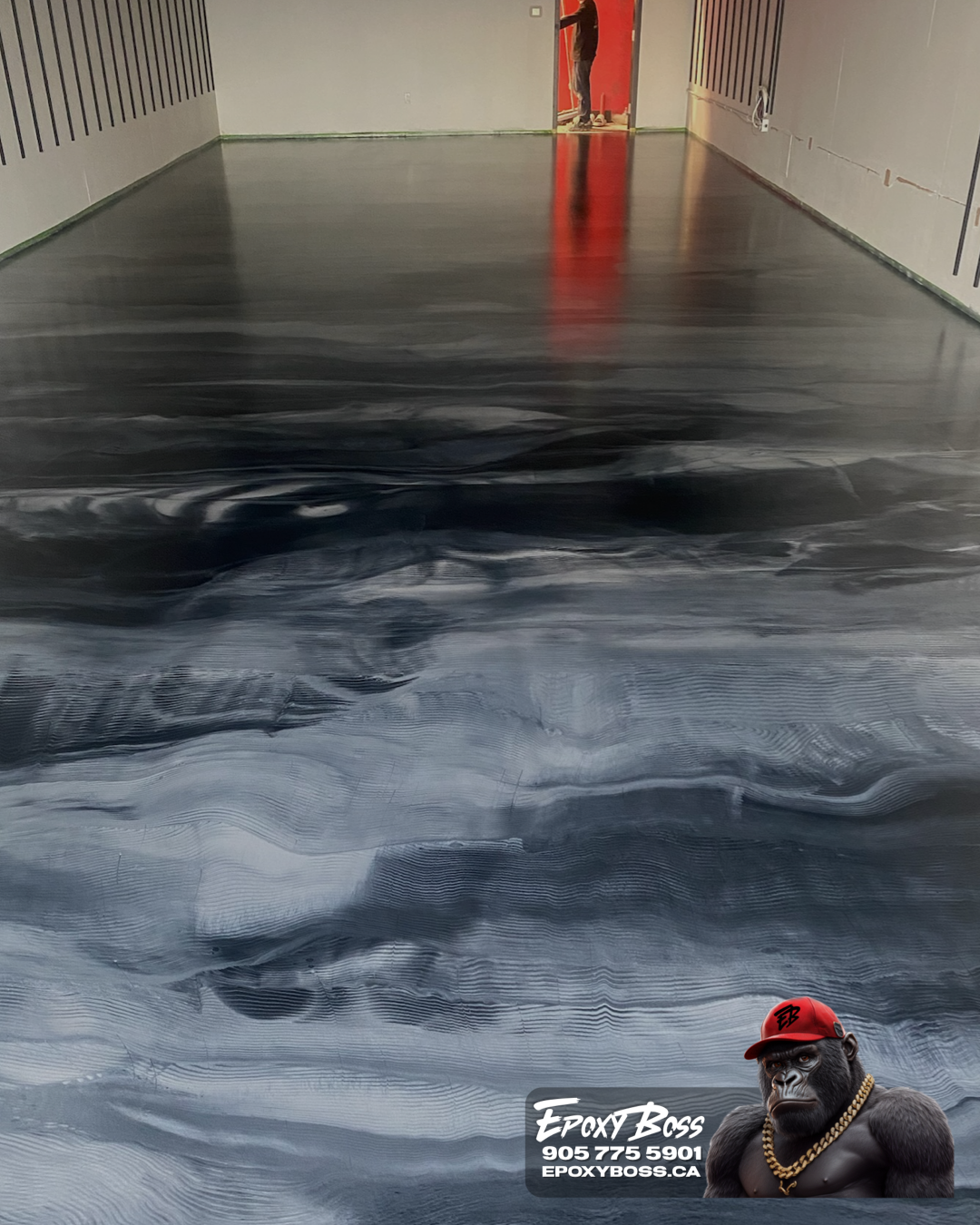
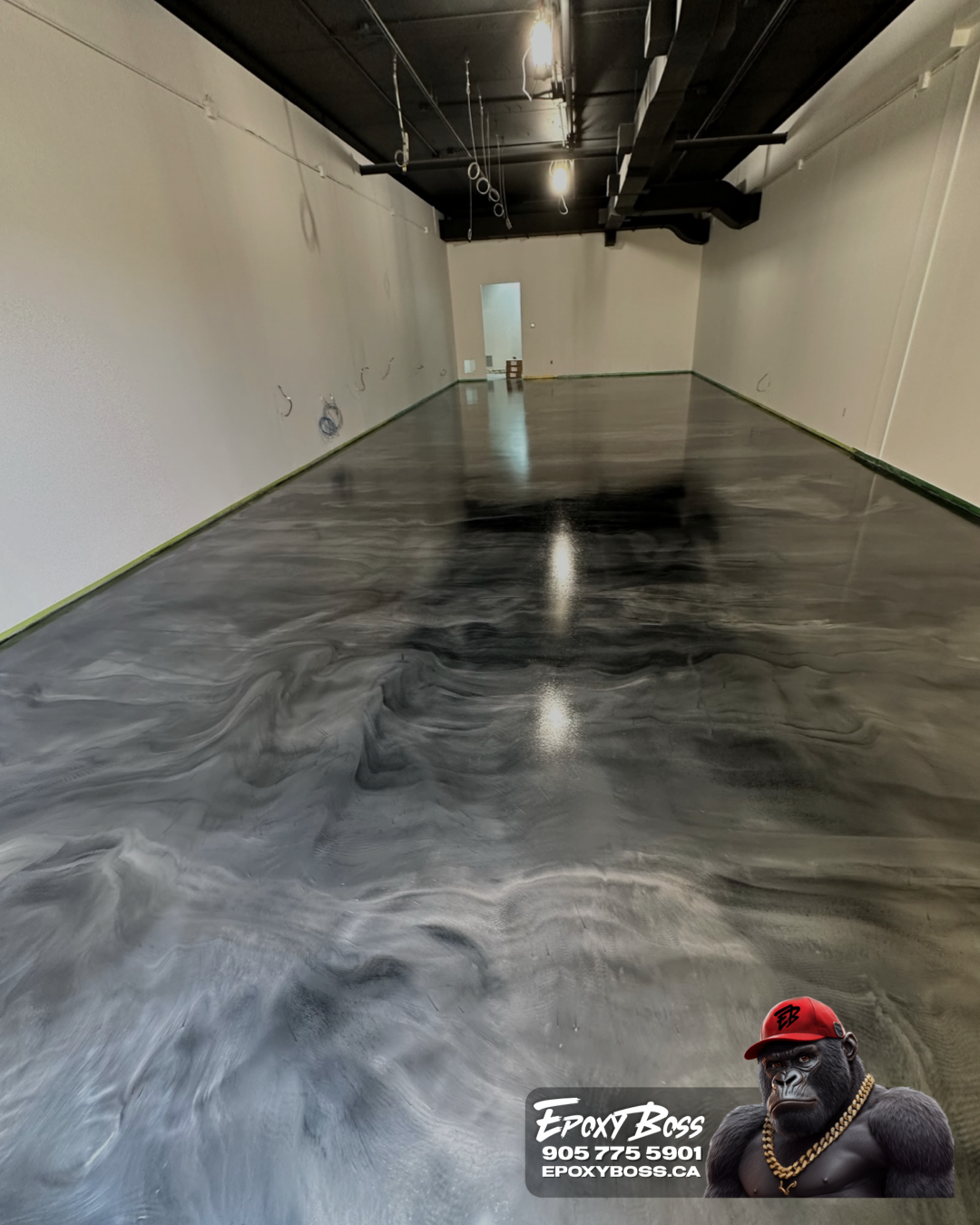
A garage floor can be specified as a solid-colour coating, decorative flake system, metallic epoxy floor, or another compatible resinous assembly. Each has different material, labour, preparation, and finishing requirements.
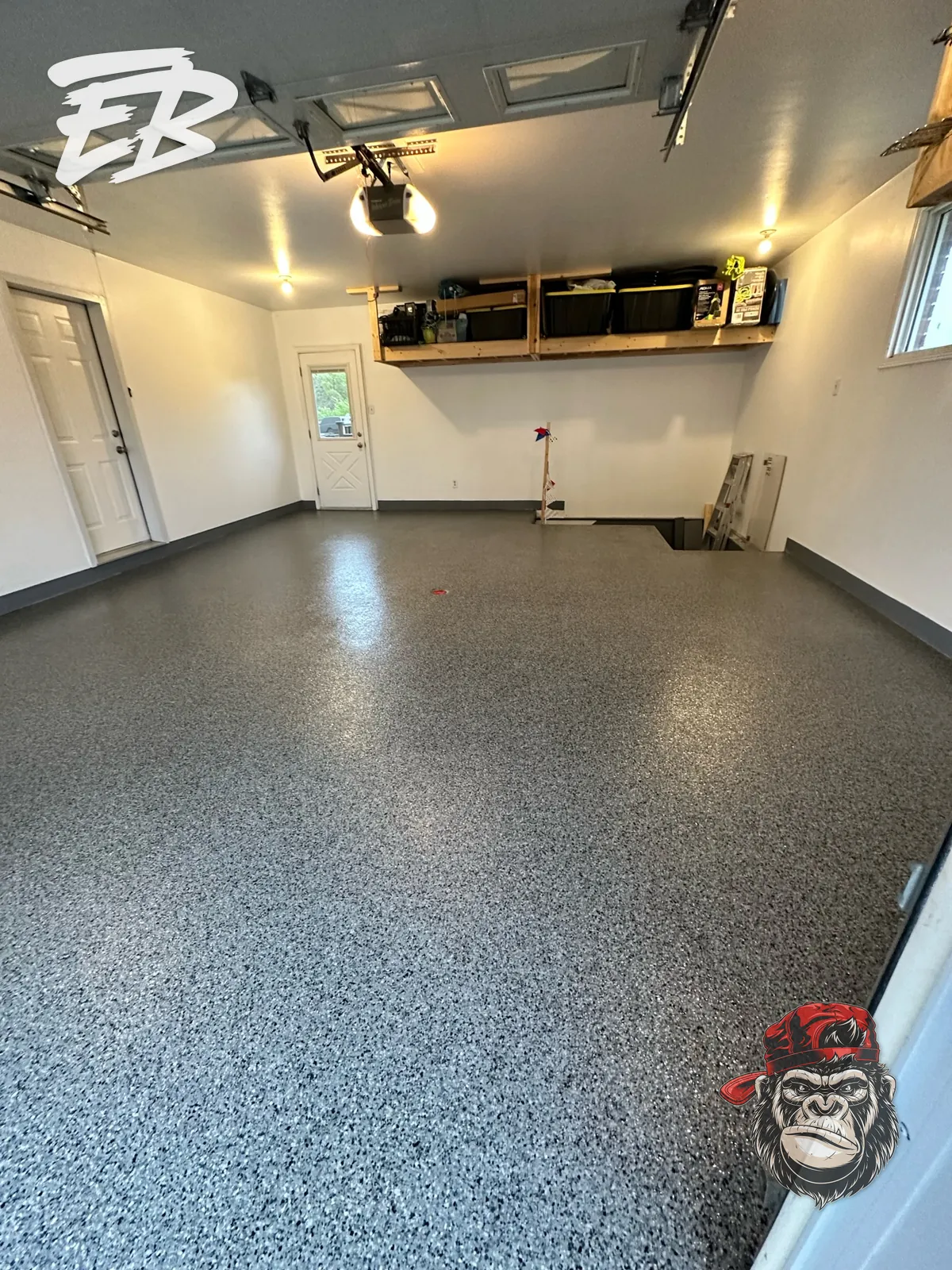
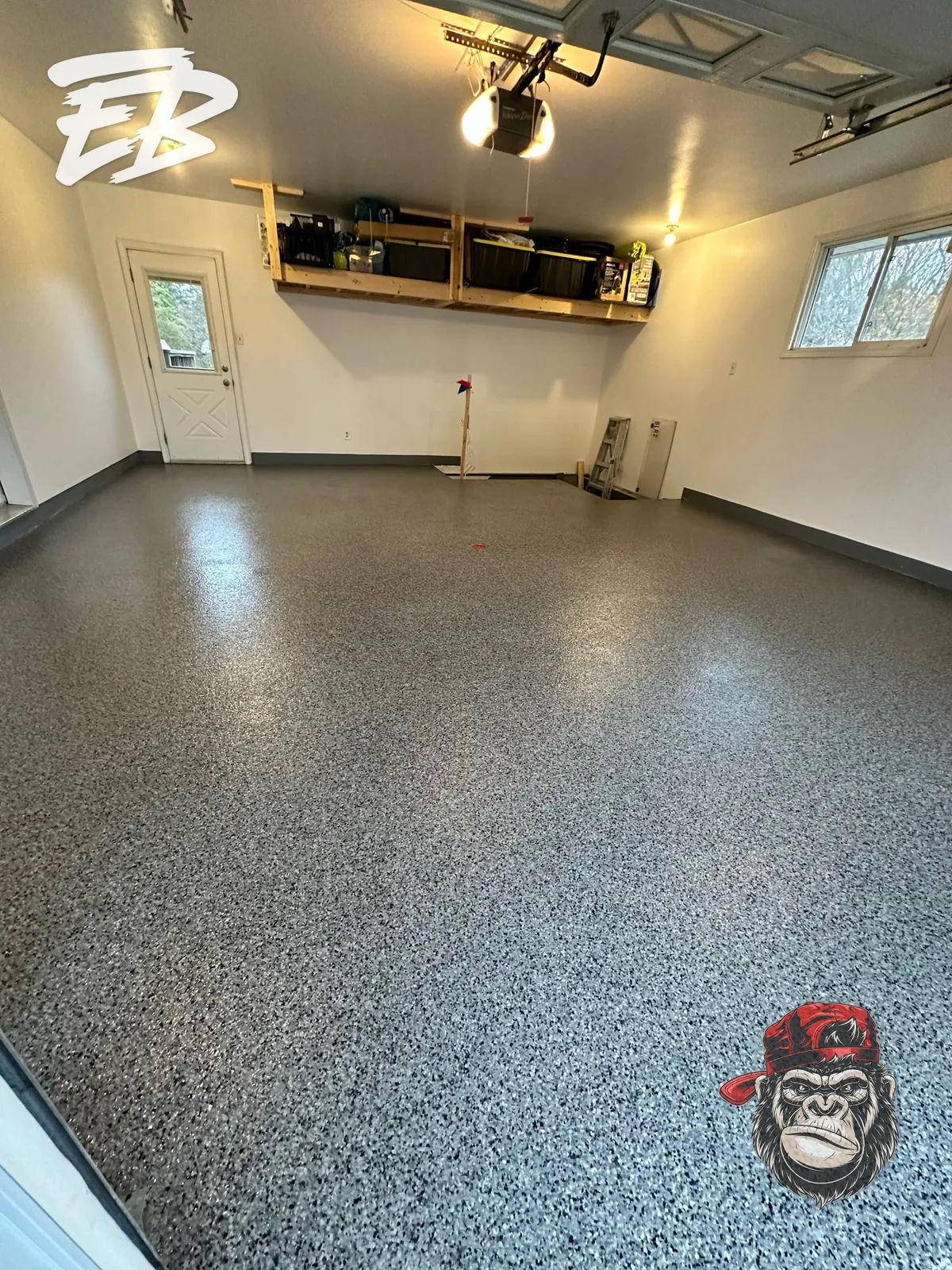
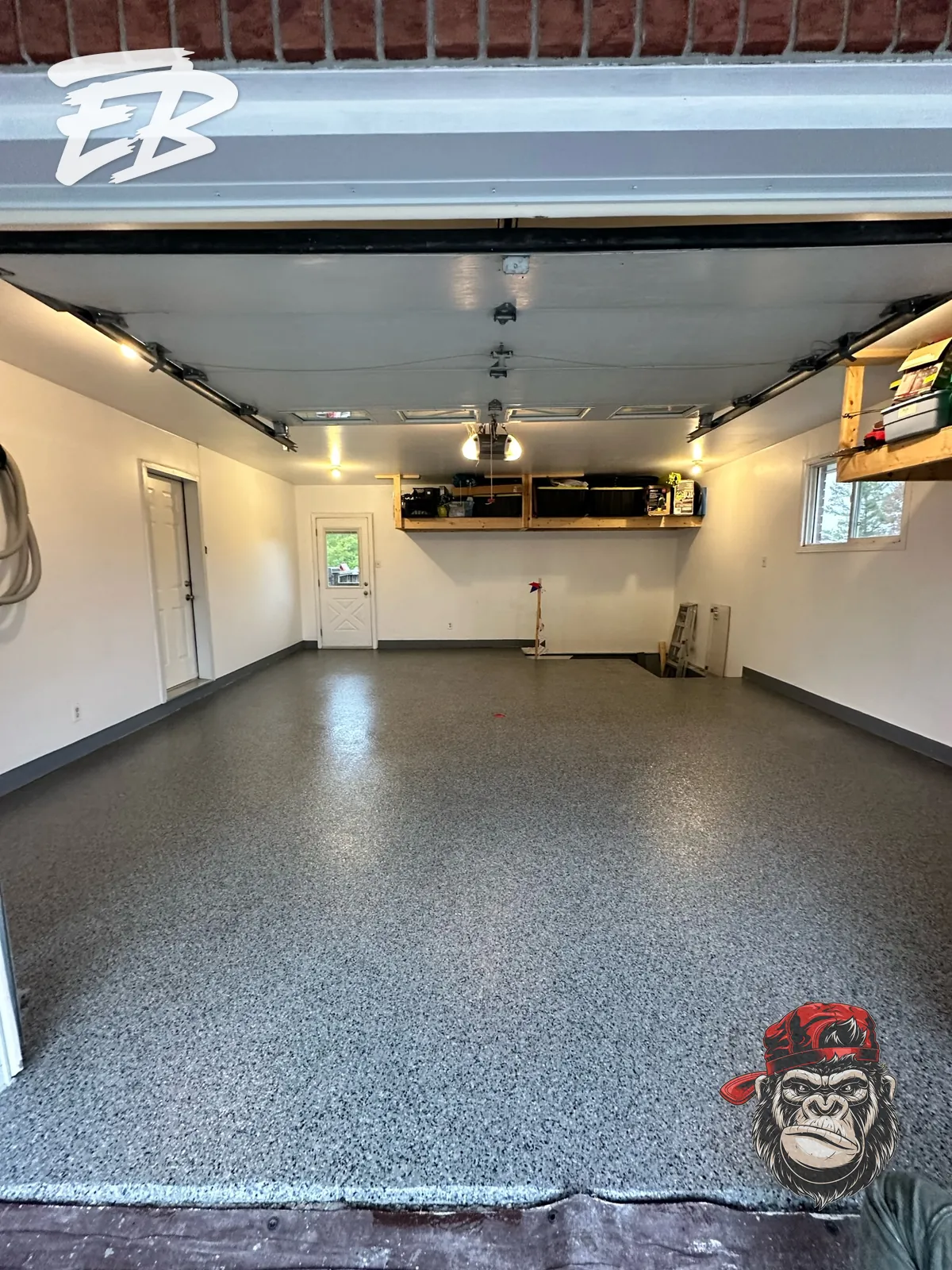
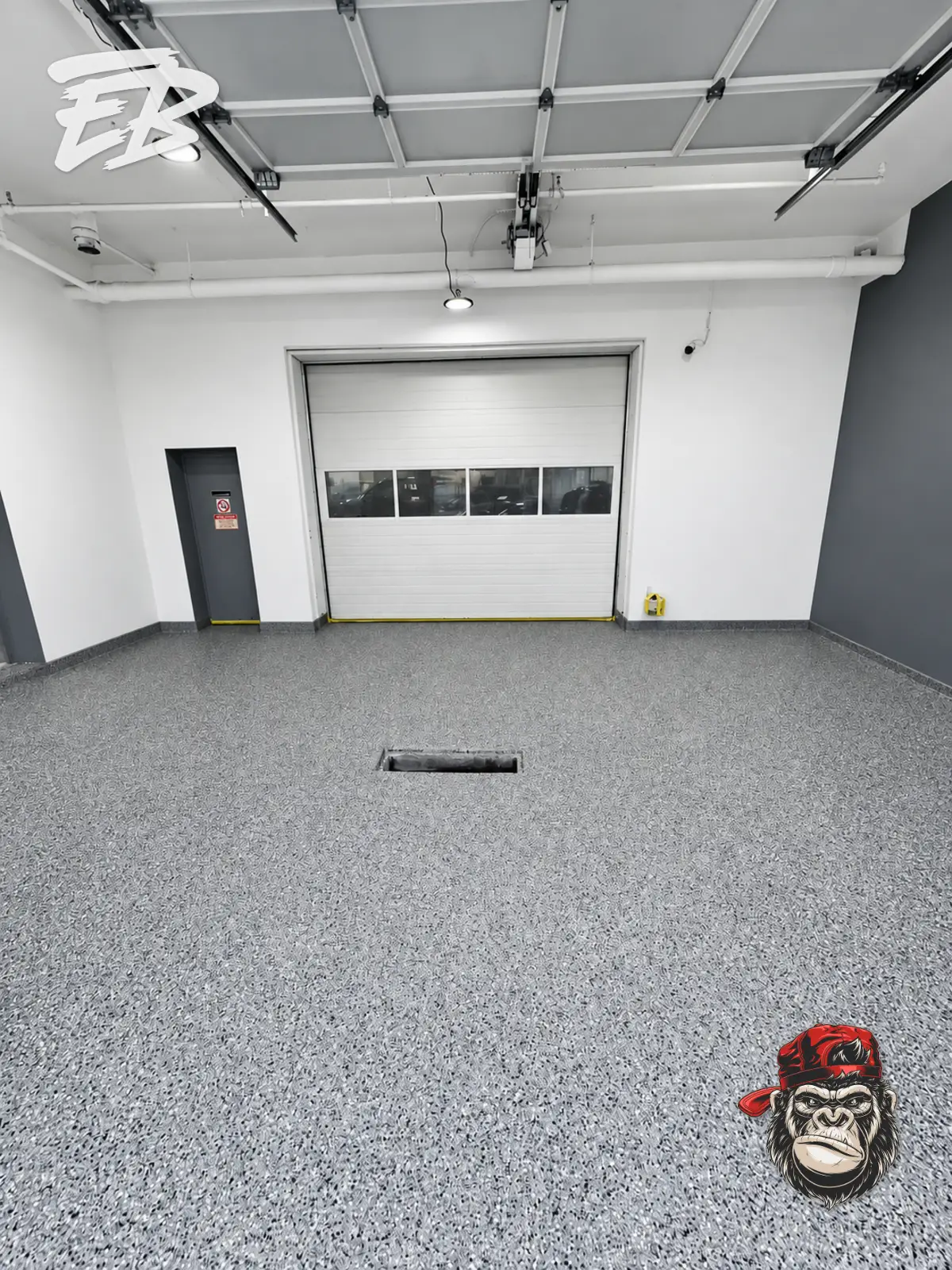
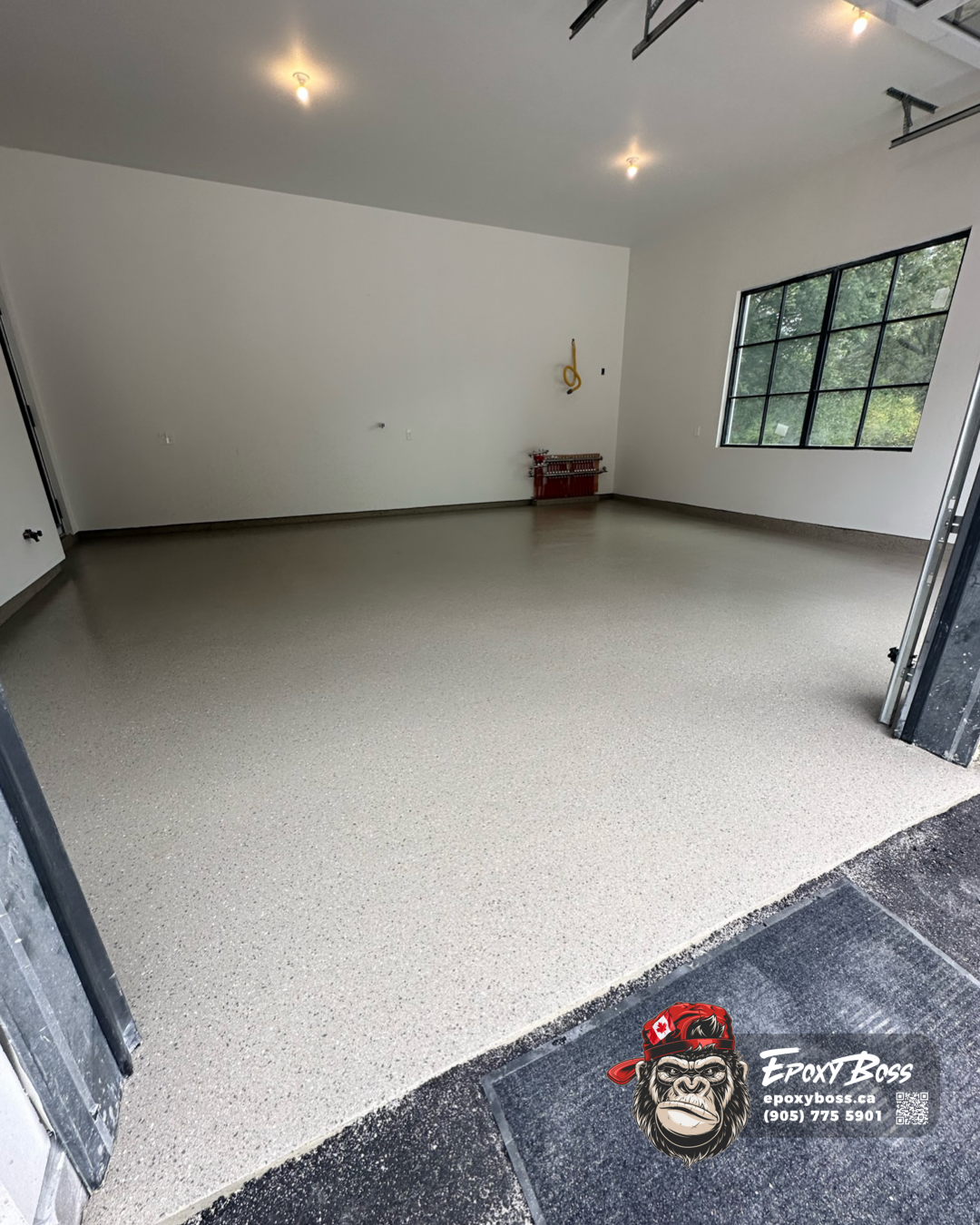
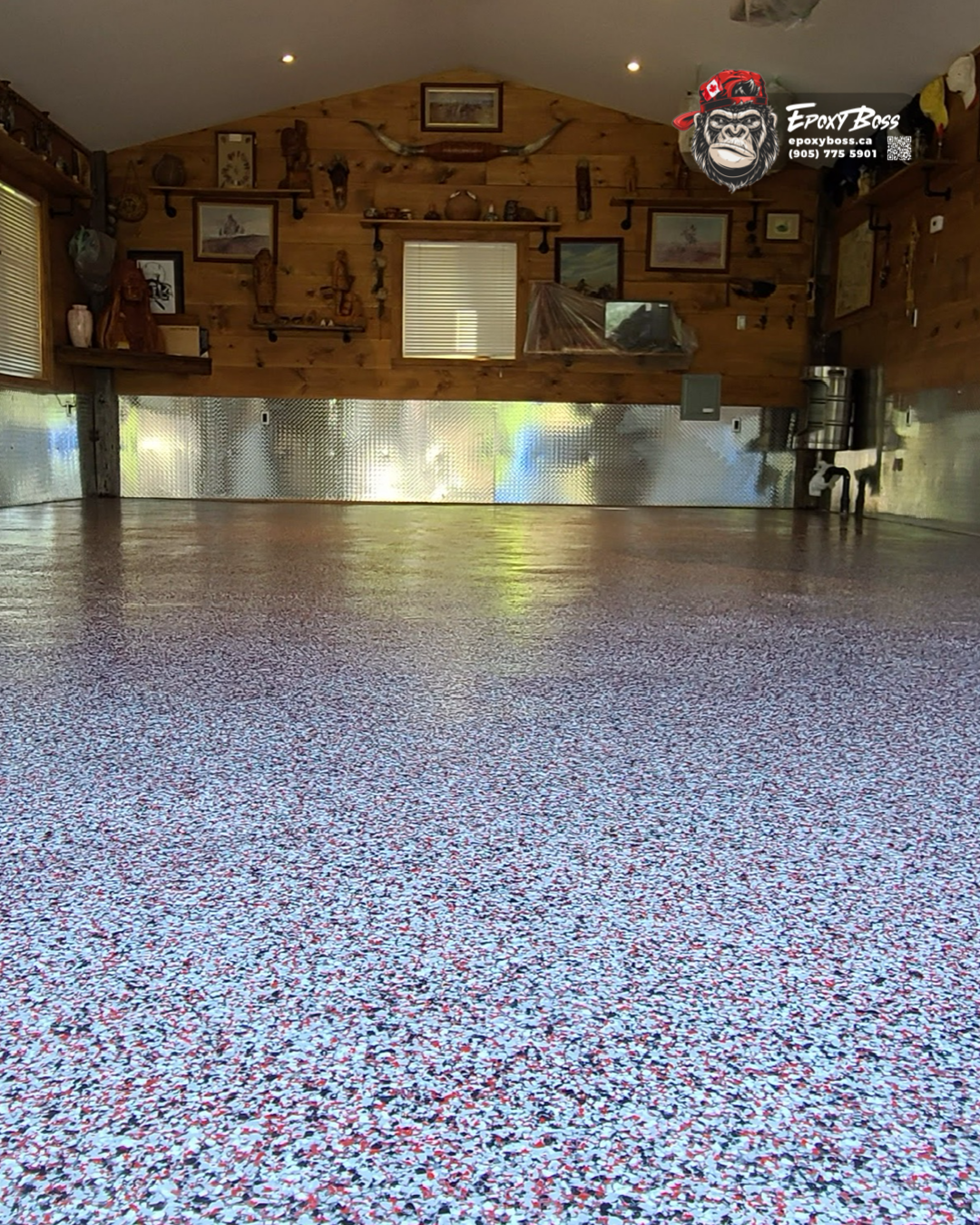
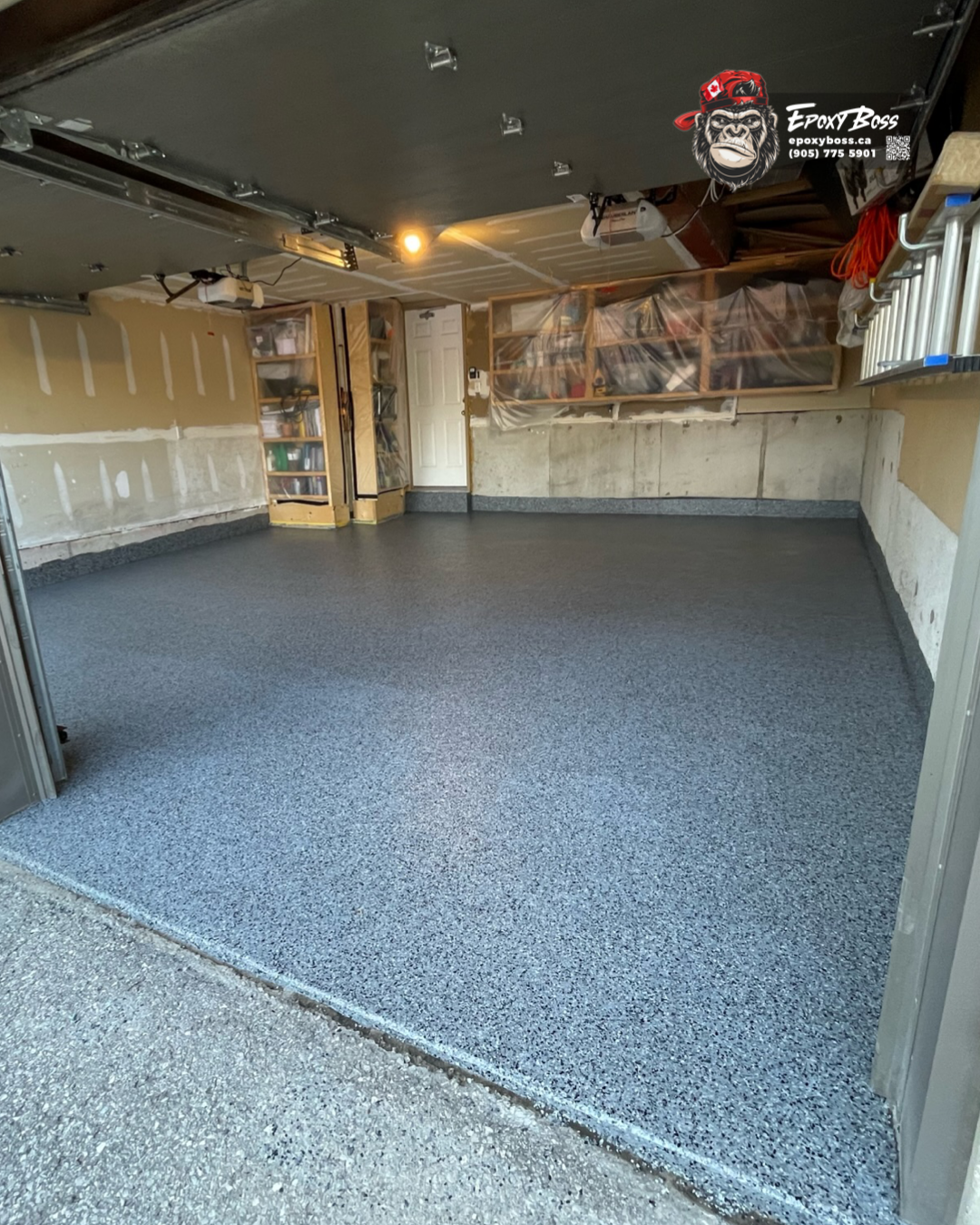
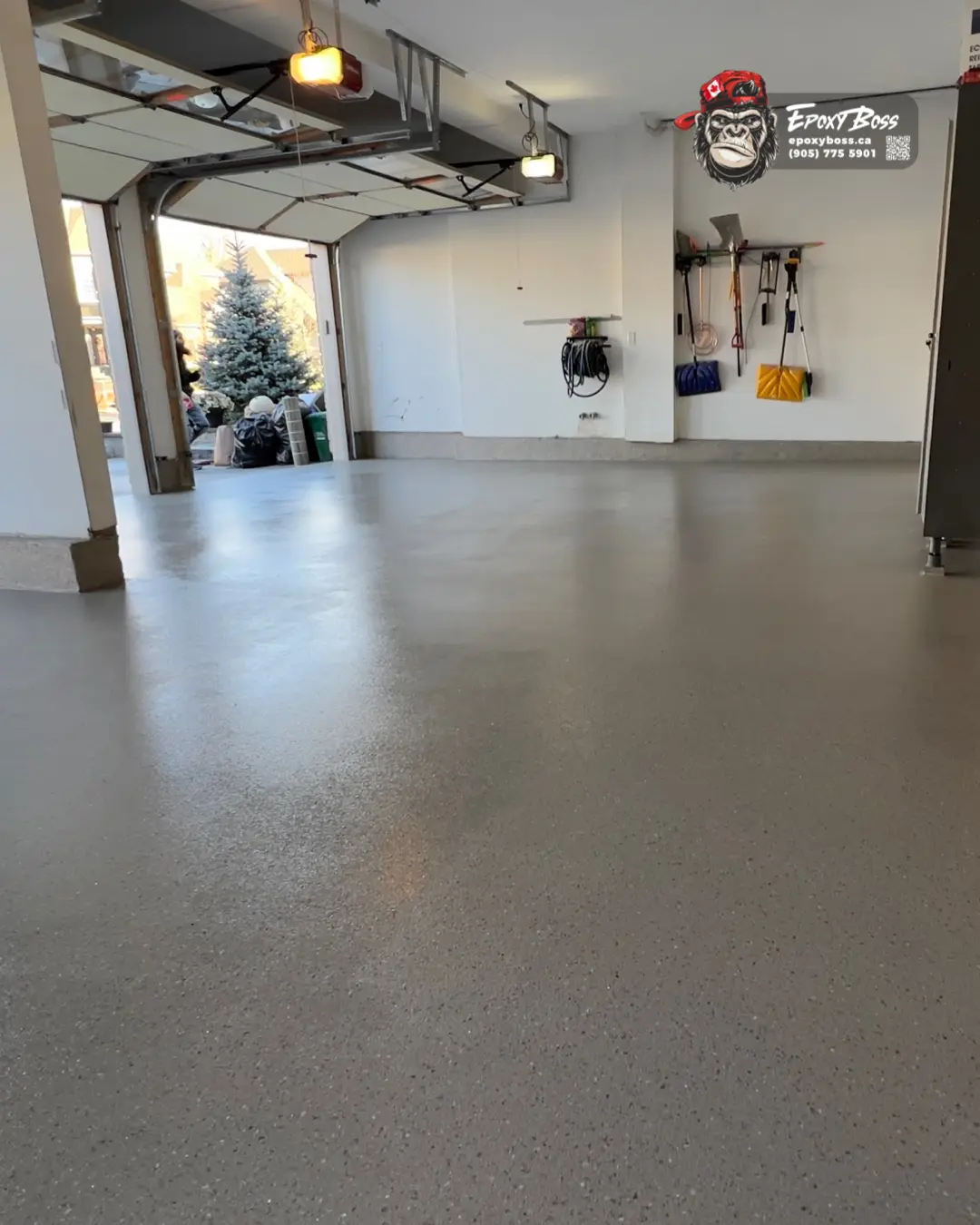
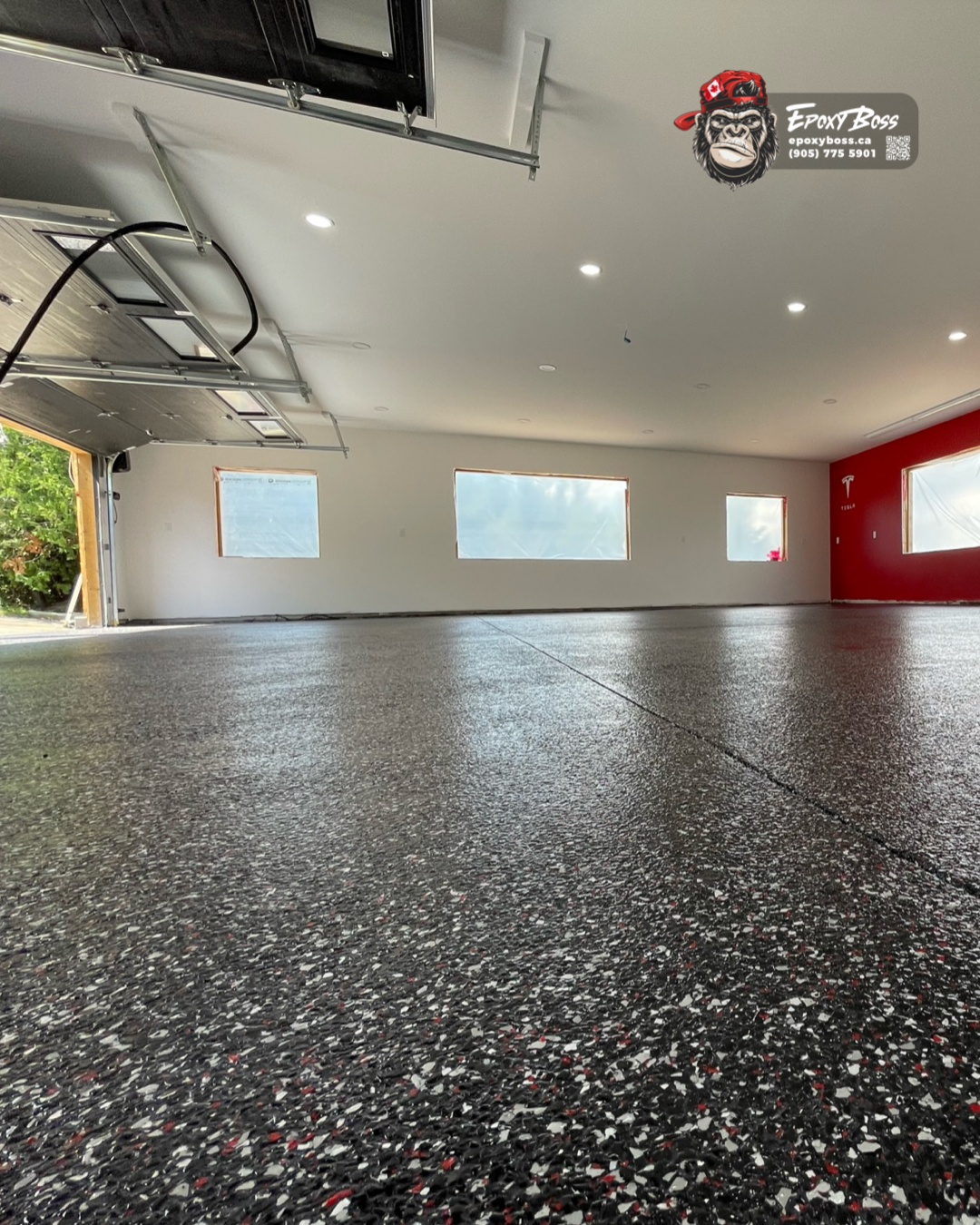
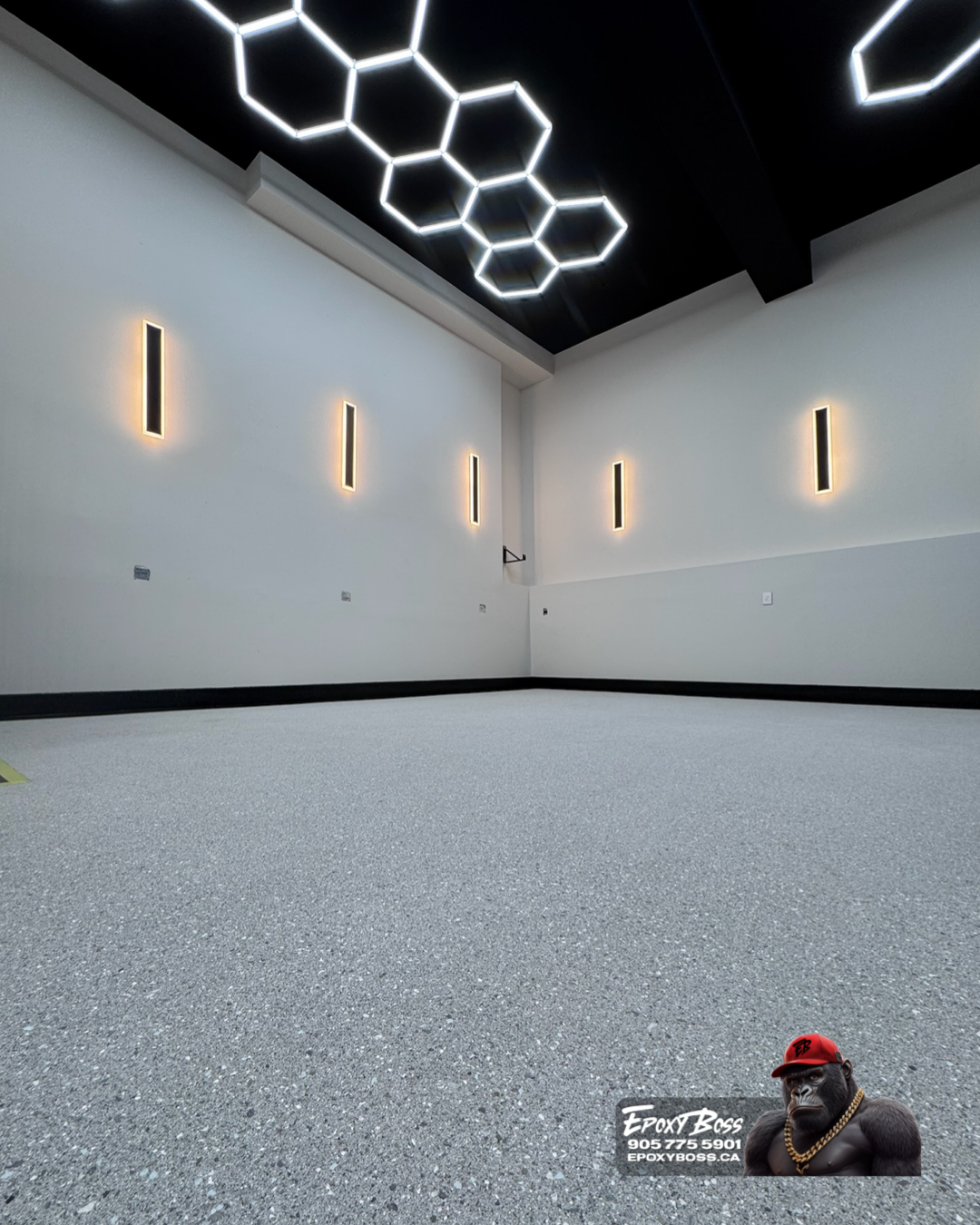
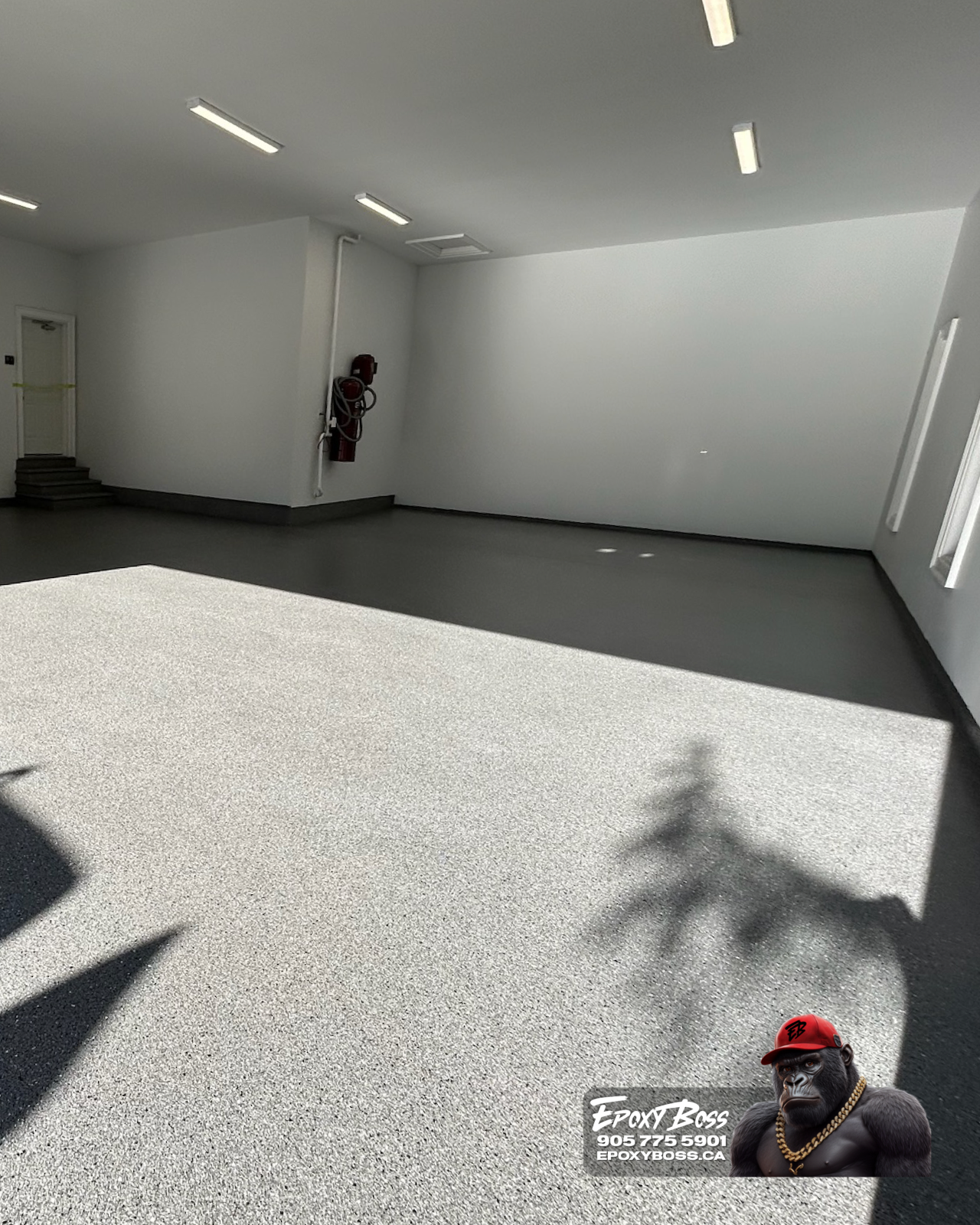
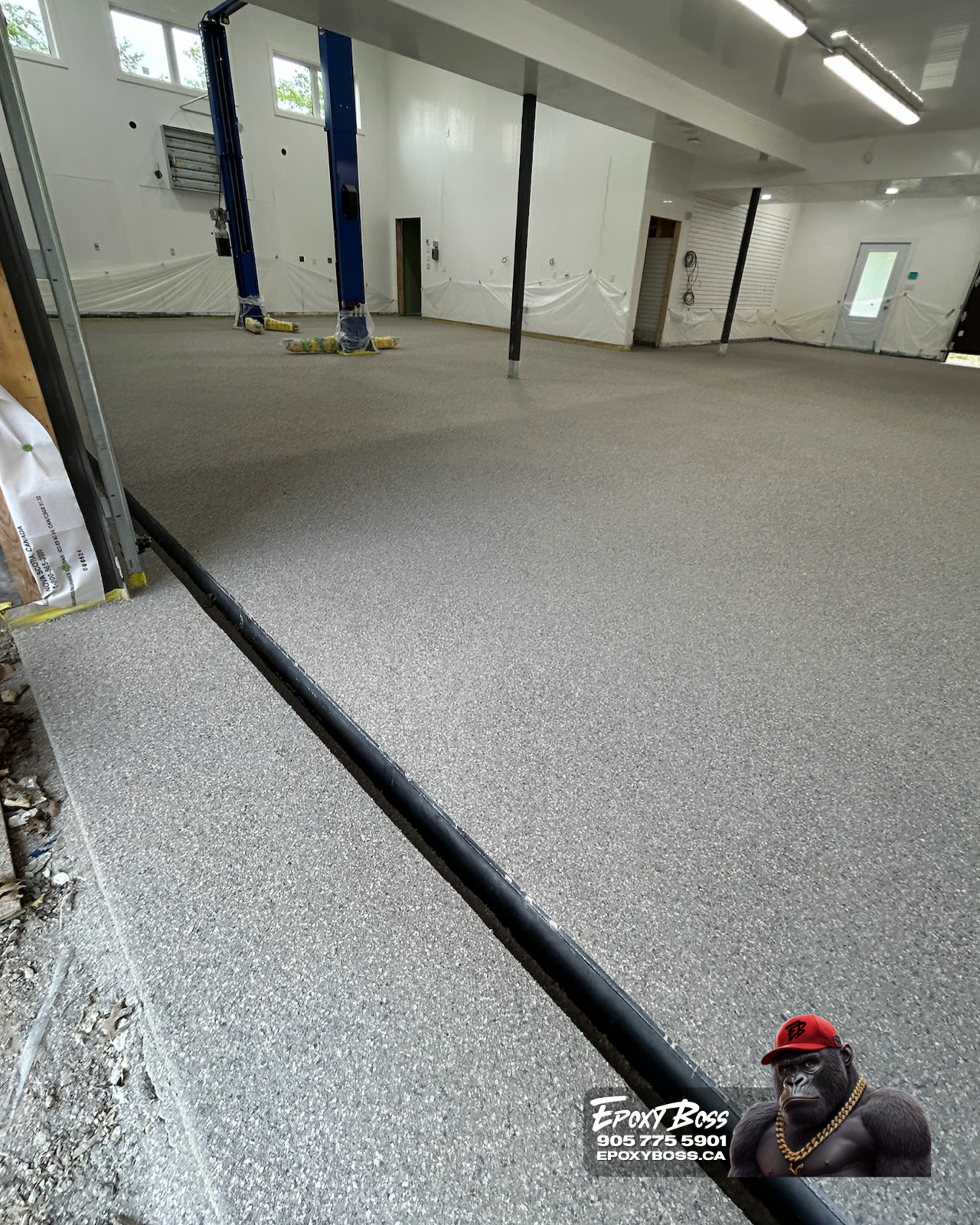
For many Innisfil garages, a full-broadcast flake system is selected because it creates a textured, multi-tone, practical finish for vehicle traffic, storage, hobbies, and winter use.
A typical full-flake assembly may include:
- Diamond grinding and concrete preparation.
- Crack and surface repair where required.
- A compatible primer or pigmented resinous base coat.
- Full broadcast decorative flake.
- Scraping and vacuuming of excess flake.
- A compatible polyaspartic or urethane topcoat.
- Fine traction additive where the selected finish and use require it.
The system is priced as an assembly. A quote that lists only “epoxy coating” does not explain the actual build-up or confirm the final protective layer.
8. Flake blend, colour, and final finish
Colour affects the project, but it is rarely the main pricing driver.
The more important question is whether the selected finish suits the garage’s use and maintenance expectations. A full-flake floor generally uses more material and more installation stages than a simple single-colour coating because the flake is broadcast, scraped, vacuumed, and sealed beneath a clear topcoat.
The final finish can also be influenced by:
- Flake blend and colour direction.
- Desired sheen.
- Topcoat selection.
- Traction level.
- Wall, stair, or vertical detail.
- Decorative borders or transitions.
Epoxy Boss helps homeowners select a finish that works with the garage, lighting, and intended use. The process starts with the concrete and scope, then moves to the appearance.
9. Stairs, walls, thresholds, and vertical details
Garage floors are not always limited to the horizontal slab.
Many projects include additional areas such as:
- Pre-cast stairs.
- Vertical wall sections.
- Stem walls.
- Door thresholds.
- Side-entry transitions.
- Small landing areas.
- Foundation edges.
These details take more time than an open floor because they require careful preparation, masking, repairs, and coating application. They should be listed separately in a transparent quote so the homeowner knows exactly what is included.
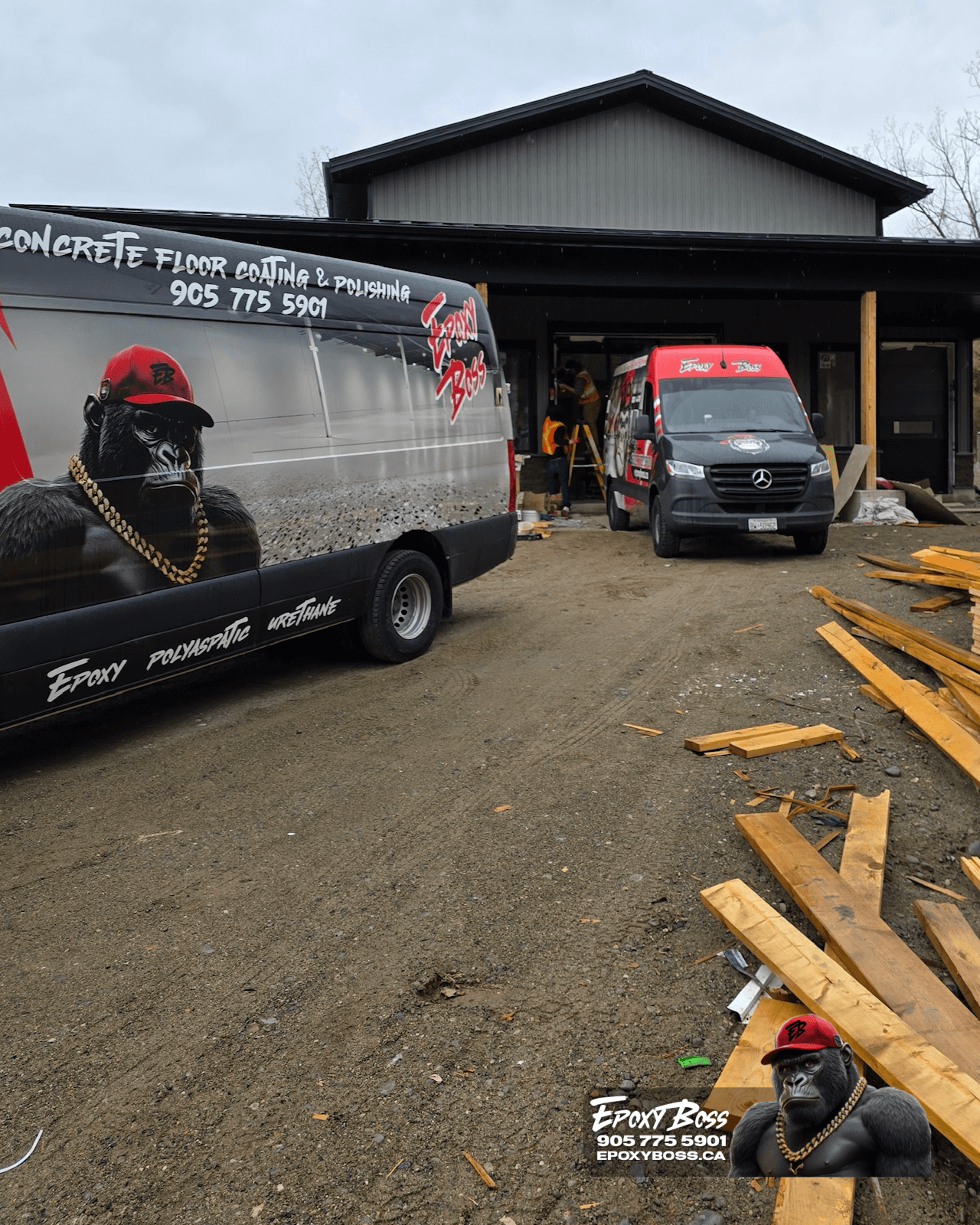
A documented Innisfil Epoxy Boss project included a 393 sq. ft. garage floor, 155 sq. ft. of vertical wall detail, and double pre-cast stairs. That is a different scope from a standard open garage floor, even before the flake system and topcoat are considered.
10. Access, scheduling, and the way the garage is used
Access affects installation planning.
The quote can change when a garage has heavy storage, vehicles that cannot be moved, limited access, or a schedule that requires specific coordination. The expected curing and return-to-service period also needs to be discussed before installation, especially for households that rely on the garage every day.
Other planning factors can include:
- Whether the garage must be fully emptied.
- Vehicle relocation.
- Storage and shelving.
- Weather-sensitive exterior transitions.
- Access for equipment and material handling.
- The homeowner’s timeline.
- Whether the floor is used as a workshop, gym, storage area, or vehicle bay.
A professional scope should make these expectations clear before work begins.
What should be included in a garage floor coating quote?
A useful quote should identify the work, not only the total.
Look for clear information on:
- Garage area and included details.
- Concrete preparation method.
- Crack and surface repair allowance or scope.
- Removal of old coating, if applicable.
- Moisture-related considerations, where relevant.
- Selected primer, base coat, decorative layer, and topcoat.
- Flake system or finish type.
- Stairs, walls, edges, and transitions.
- Expected access and curing requirements.
- Maintenance expectations.
This makes it easier to compare scopes accurately. The lowest number is not always the lowest scope; sometimes preparation, repairs, topcoat protection, or critical details have simply been excluded.
Frequently asked questions
What is the average cost of garage floor coating in Innisfil?
Pricing varies with the garage size, slab condition, preparation needs, repairs, system design, and finishing details. As a general planning range, Ontario garage coating projects can range from approximately CAD $4–$12 per square foot. A site-specific quote is more reliable than a flat online rate.
Is full-flake flooring more expensive than a basic coating?
It can be, because it involves a decorative flake broadcast, removal of excess flake, and a clear protective topcoat. The final price still depends on the concrete preparation and the chosen system.
Does crack repair cost extra?
It can. The scope depends on the type, size, depth, movement, and number of cracks or damaged areas. Small repairs and extensive concrete restoration are not the same work.
Does a previous coating increase the price?
Often, yes. If an old coating, paint, sealer, or adhesive needs to be removed, that preparation must be included before the new system can be installed.
Can I get an estimate from photos?
Photos are a useful first step. They help identify visible cracks, coating failure, salt exposure, surface wear, and layout details. A final scope may still require an onsite review, especially where moisture, old coatings, or extensive deterioration are involved.
Request an Innisfil garage floor coating assessment
For a practical starting point, send Epoxy Boss 3–5 clear photos of the garage, the approximate square footage, your Innisfil location or nearby area, and any details about cracks, old coating, road-salt exposure, or moisture concerns.
We will help you understand what the concrete needs, what is included in the scope, and which garage floor coating system is appropriate for your property.